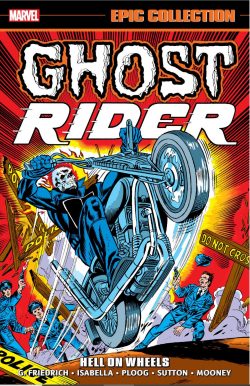
Ghost Rider Epic Comics volume 1: Hell on Wheels 1972-1975


By Roy Thomas, Gary Friedrich, Tony Isabella, Marv Wolfman, Doug Moench, Len Wein, Mike Ploog, Tom Sutton, Jim Mooney, Herb Trimpe, Sal Buscema, Ross Andru  & various (Marvel)
ISBN: 978-1-3029-4611-1 (TPB/Digital edition)

Win’s Christmas Gift Recommendation: Rousing Redemptive Comic Classics… 8/10

At the end of the 1960s American comic books were in turmoil, much like the youth of the nation they targeted. Superheroes had dominated for most of the decade; peaking globally before explosively falling to ennui and overkill. Older genres such as horror, westerns and science fiction returned, fed by radical trends in movie-making where another, new(ish) wrinkle had also emerged: disenchanted, rebellious, unchained Youth on Motorbikes seeking a different way forward.

Green Lantern/Green Arrow, Jack Kirby’s Jimmy Olsen, Captain America and many others took the Easy Rider option to boost flagging sales – and if you’re interested the best of the bunch was Mike Sekowsky’s tragically unfinished mini-masterpiece of cool Jason’s Quest in Showcase. At Marvel – still reeling from The King’s defection to DC/National in 1970 – canny Roy Thomas green-lit a new character combining that freewheeling, adolescent-friendly biker-theme with the all-pervasive supernatural furore then gripping the globe.

Back in 1967, Marvel published a western masked hero named Ghost Rider: a shameless, whole-hearted appropriation of the cowboy hero creation of Vince Sullivan, Ray Krank & Dick Ayers for Magazine Enterprises from 1949 to 1955. They both utilised magician’s tricks to fight bandits by pretending to be an avenging phantom of justice.

Scant years later, with the Comics Code prohibition against horror hastily rewritten – amazing how plunging sales can affect ethics – scary comics came back in a big way. A new crop of supernatural superheroes and monsters began to appear on the newsstands, supplementing the ghosts, ghoulies and goblins already infiltrating the formerly science-only scenarios of the surviving mystery men titles.

In fact, the lifting of the Code ban resulted in such an avalanche of horror titles (new stories and reprints from the first boom of the 1950s), in response to the industry-wide down-turn in superhero sales, that it probably caused a few more venerable costumed crusaders to – albeit temporarily – bite the dust.

Almost overnight nasty monsters (and narcotics – but that’s another story) became acceptable fare on four-colour pages and with a parade of pre-code reprints making sound business sense, the creative aspect of contemporary fascination in supernatural themes was catered to by adapting popular cultural icons before risking whole new concepts on an untested public.

As always in entertainment, the watch-world was fashion: what was hitting big outside comics would be incorporated into the mix as soon as possible. When proto-monster Morbius, the Living Vampire debuted in Amazing Spider-Man #101 (October 1971) and the sky failed to fall in, Marvel moved ahead with a line of shocking superstars – beginning with a werewolf and a vampire – before chancing something new: a spectral biker who could tap into both Easy Rider’s motorcycling chic and the prevailing supernatural zeitgeist.

The all-new Ghost Rider peeled out in Marvel Spotlight #5 (August 1972 and following western hero Red Wolf in #1 and the afore-hinted Werewolf by Night in #2-4).

This canny compendium collects those earliest flame-filled exploits: adventures from Marvel Spotlight #5-12, Ghost Rider #1-11 and a terror-tinged guest shot in Marvel Team-Up (#15), spanning August 1972 to April 1975, and the comics thrills, spills and chills begin with that landmark first appearance: an eerie tale of double-dealing and desperation introducing stunt bike Johnny Blaze, his fatally flawed father-figure Crash Simpson and Johnny’s devout and devoted girlfriend, sweetly innocent Roxanne Simpson.

Plotted by Thomas, scripted by Gary Friedrich and stunningly illustrated by Ploog, ‘Ghost Rider’ sees carnival cyclist Blaze sell his soul to the devil in an attempt to save his foster-father Crash from cancer. As is the way of such things, Satan follows the letter but not spirit of the contract and Simpson dies anyway, but when the Dark Lord later comes for Johnny, his beloved virginal girlfriend Roxanne intervenes.

Her purity prevents the Devil claiming his due and, temporarily thwarted, Satan spitefully afflicts Johnny with a body that burns with the fires of Hell every time the sun goes down…

At first haunting the night and terrorising thugs and criminals, the traumatised biker soon leaves the Big City and heads for the solitary deserts where – in ‘Angels From Hell!’ – the flaming-skulled fugitive joins a biker gang led by enigmatic Curly Samuels: in actuality a resurrected agent of Satan attempting to destroy the protective Roxanne to claim Blaze’s soul.

No prizes for guessing Curly’s true identity then, since the next chapter (inked by Frank Chiaramonte) is entitled ‘Die, Die, My Daughter!’

The origin epic concludes with a monumental battle against ‘…The Hordes of Hell!’ (offering a rather uncomfortable artistic collaboration by Ploog & Jim Mooney), spawning a torturous Cold War détente between the still nightly-transforming Blaze and the Lord of Lies, as well as introducing a new eldritch enemy in Native American Witch Man Snake-Dance

With Marvel Spotlight #9 the tragically undervalued Tom Sutton took over pencilling – with inks by Chic Stone – for ‘The Snakes Crawl at Night…’ as Medicine Man magic and demonic devil-worship combine to torment Blaze just as Roxanne goes west looking for him. To further confound the accursed cyclist, Satan decrees that although he must feel the pain, no injury will end Johnny’s life until his soul resides in Hell – which comes in very handy when Roxanne is sacrificed by Snake-Dance and the Ghost Rider has to battle his entire deviant cult to rescue her…

In #10, ‘The Coming of… Witch-Woman!’ (Friedrich, Sutton & Mooney) opens with Blaze a fugitive from the police and rushing dying Roxanne to hospital. Meanwhile back on the Reservation, tensions remain high as Snake-Dance’s daughter Linda Littletrees reveals her own connection to Satan, culminating in a devastating eldritch assault on Blaze in #11’s ‘Season of the Witch-Woman!’ (inked by the incomparable Syd Shores).

That cataclysmic conflict continued into Ghost Rider #1 (cover-dated September 1973), further extending the escalating war between Blaze and the Devil and using the conflict to introduce a new horror-hero who would take over the biker’s vacant slot in Spotlight.

Linda Littletrees isn’t so much a Satan-worshipping witch as ‘A Woman Possessed!’, but when her father and fiancé Sam Silvercloud call in Boston-based exorcist Daimon Hellstrom, they are utterly unprepared for the kind of assistance the demonologist offers.

With Roxanne slowly recuperating and Blaze still on the run, Ghost Rider #2 depicts the bedevilled biker dragged down to Hell in ‘Shake Hands With Satan!’ (Mooney & Shores) before the saga concludes in Marvel Spotlight #12 with the official debut of ‘The Son of Satan!’ courtesy of Friedrich, Herb Trimpe & Frank Chiaramonte, revealing Hellstrom’s long-suppressed inner self is a brutal scion of the Infernal Realm eternally at war with his infernal father.

The liberated Prince of Hell swiftly rushes to Blaze’s aid – although more to spite his sire than succour the victim – and, with his own series off to a spectacular start – continues to take the pressure off the flaming-skulled hero. Ghost Rider #3’s ‘Wheels on Fire’ (by Friedrich, Mooney & John Tartaglione) sees fresh directions explored with more mundane menaces and contemporary antagonists like the outlaw gang of biker Big Daddy Dawson who kidnaps the still frail Roxanne…

Blaze also learns how to create a spectral motorcycle from the Hellfire that perpetually burns through his body: a most useful trick considering the way he treats conventional transport…

Eager to establish some kind of normal life, wanted fugitive Blaze accepts a pardon from the State Attorney General in GR #4’s ‘Death Stalks the Demolition Derby’ (Vince Colletta inks) in return for infiltrating a Las Vegas showman’s shady operation, leading to another supernatural encounter, this time against a demonic gambler dubbed Roulette in ‘And Vegas Writhes in Flame!’ by the transitional creative team of Marv Wolfman, Doug Moench, Mooney & Sal Trapani.

A rising star, Ghost Rider next joined Spider-Man to battle a demented biker bad-guy in Marvel Team-Up #15 (November 1973, by Len Wein, Ross Andru & Don Perlin) which introduced lame-duck villain The Orb. Maimed and disfigured years previously confronting Crash Simpson, he seeks belated revenge against his heirs in ‘If an Eye Offend Thee…’ but should have waited until Blaze’s travelling roadshow was far away from superhero-stuffed New York City and its overly protective friendly neighbourhood webslinger…

Back at Ghost Rider #6 Tony Isabella, Gary Friedrich, Mooney & Trapani hit the kickstart hard in a perhaps ill-considered attempt to convert the tragic haunted biker into a more conventional superhero. ‘Zodiac II’ sees Blaze stumble into a senseless fight with a man possessing all the powers of the Avengers’ arch-nemeses. However, there’s a hidden Hellish component to the mystery as Blaze discovers when reformed super-villain turned TV star Stunt-Master turns up to help close the case and watch helplessly as the one-man Zodiac falls foul of his own diabolical devil’s bargain in ‘…And Lose His Own Soul!’ (Isabella, Mooney & Jack Abel).

A final confrontation – of sorts – commences in #8 as ‘Satan Himself!’ comes looking for Johnny’s soul, enacting a foolproof scheme to force Roxanne to rescind her protection. She finally does so as the Hell-biker battles Inferno, the Fear-demon (and most of San Francisco) in game-changing epic ‘The Hell-Bound Hero!’

Here Blaze is finally freed from his satanic burden by the intervention of someone who appears to be Jesus Christ

The cover of issue #10 (by Ron Wilson & Joe Sinnott) featured GR battling The Hulk, but a deadline cock-up delayed that tale until #11 with the reprinted origin from Marvel Spotlight #5 filling those pages. Gil Kane & Tom Palmer reinterpreted the scene for their cover on #11 as the issue which closes this first tome finally details ‘The Desolation Run!’ (by Isabella, Sal Buscema, Tartaglione & George Roussos).

When Johnny joins a disparate band of dirt-bikers in a desert race, he collides with the legendarily solitary and short-tempered Green Goliath and learns who his true friends are…

I said “closes” but there’s always a few appetising extras on offer and this high-octane compendium compounds the chilling action with the August 1972 Marvel Bullpen Bulletins page announcing the debut of the Biker Ghost Rider plus house ads; design sketches by Ploog and John Romita; an eerie back-cover from FOOM #7 featuring early Ploog visualisations of the Blazing Biker and a stunning selection of original art pages by Ploog & Chiaramonte, Mooney & Shores, Gil Kane & Frank Giacoia, Romita, Kane & Palmer, and Andru & Perlin.

The 1990s saw these classics frequently reprinted and here Marvel Tales #254 provides 3 pin-ups by Jae Lee, Jan Harpes & Renee Witterstaeter plus a cover by Brian Stelfreeze, as well as The Original Ghost Rider reprint series cover gallery: offering art by Mark Teixeira, Jimmy Palmiotti, Javier Saltares, Andy Kubert, Joe Quesada, Jan Anton Harps, Kevin Maguire, Brad Vancata, Mark Pacella, Jeff Johnson, Dan Panosian, Ploog, Klaus Janson, Michael Bair, Darick Robertson, Chris Bachalo, Bill Wylie, Walter McDaniel, Andy Smith, Manny Galan & Scott Koblish, Gary Barker, Kris Renkewitz & Andrew Pepoy, bringing the fearsome fun to a close for now…

One final note: backwriting and retcons notwithstanding, the Christian boycotts and moral crusades of a later decade were what compelled the criticism-averse and commercially astute corporate Marvel to “translate” the biblical Satan of these tales into generic and presumably more palatable demonic creatures such as Mephisto, Satanish, Marduk Kurios and other equally naff downgrades. However, the original intent and adventures of Johnny Blaze – and spin-offs Daimon Hellstrom and Satana – respectively Son and Daughter of Satan – tapped into the period’s global fascination with Satanism, Devil-worship and all things Spookily Supernatural which had begun with such epochal breakthroughs as Rosemary’s Baby (Roman Polanski’s 1968 film more than Ira Levin’s novel) so remember these aren’t your feeble bowdlerised “Hell-lite” horrors.

These tales are about the real-deal Infernal Realm and a good man struggling to save his soul from the worst of all bargains – as much as the revised Comics Code would allow – so brace yourself, hold steady and accept no supernatural substitutes…
© 2022 MARVEL.
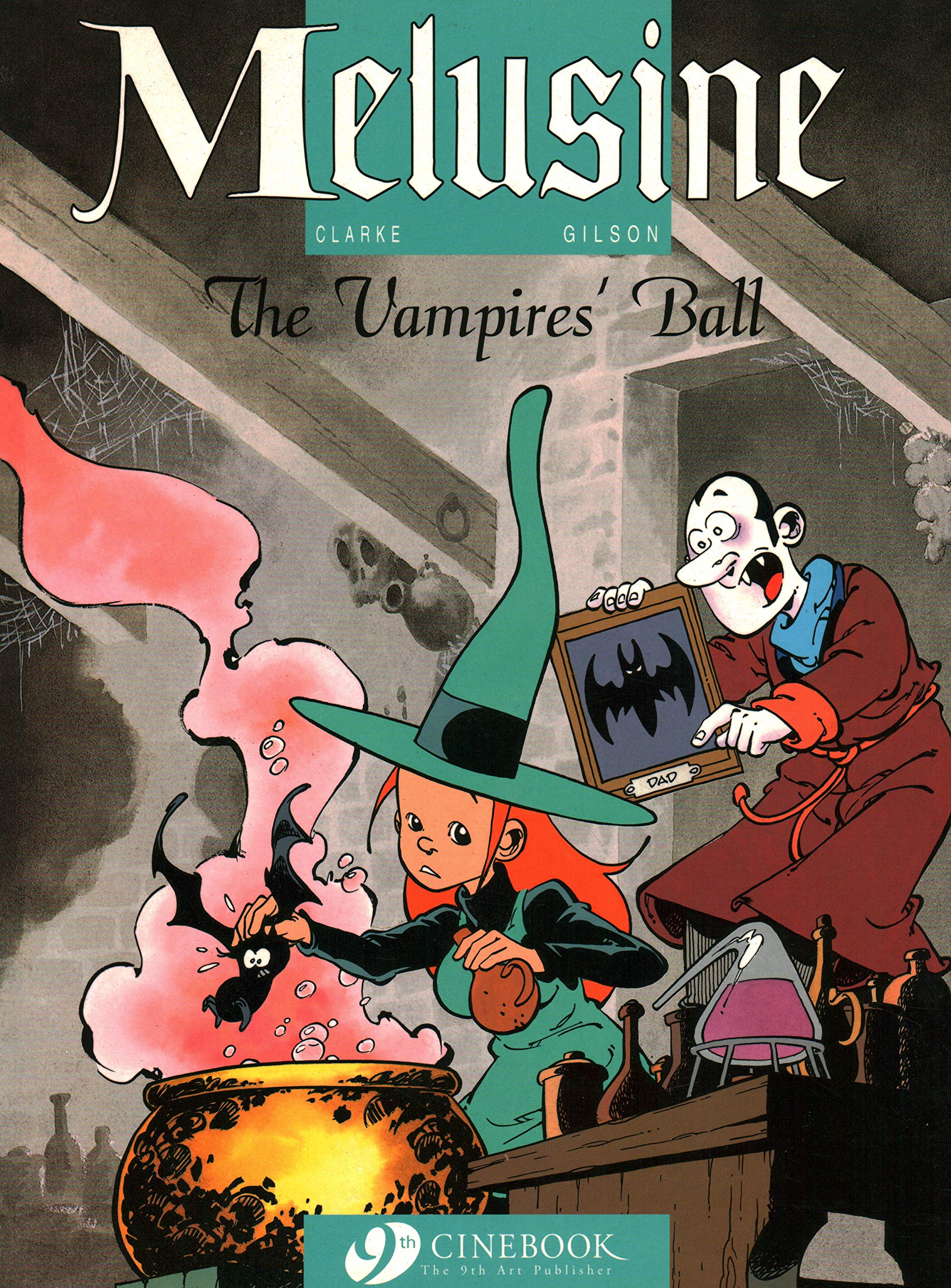
Mélusine volume 3: The Vampires Ball


By Clarke & Gilson, coloured by Cerise and translated by Jerome Saincantin (Cinebook)
ISBN: 978-1905460694 (Album PB/Digital edition)

Witches – especially cute and sassy teenage ones – have a long and distinguished pedigree in fiction. One of the most engaging first appeared in legendary Belgian magazine Le Journal de Spirou in 1992. Mélusine is actually a sprightly 119-years old and spends her days – and many nights – working as an au pair/general dogsbody to a most ungracious family of haunts and horrors inhabiting a vast monster-packed, ghost-afflicted chateau. It pays her bills whilst she diligently studies to perfect her craft at Witches’ School…

The long-lived much-loved feature is presented in every format from one-page gag strips to full-length comedy tales, all riffing wickedly on supernatural themes and detailing her rather fraught life, filled with the demands of the appallingly demanding master and mistress of the castle and even her large circle of exceedingly peculiar family and friends.

The strip was devised by writer François Gilson (Rebecca, Cactus Club, Garage Isidore) and cartoon humourist Frédéric Seron – AKA Clarke – whose many features for the all-ages LJdS and acerbic adult humour publication Fluide Glacial include Rebecca, Les Cambrioleurs, Durant les Travaux, l’Exposition Continue… and Le Miracle de la Vie.

Under pen name Valda, Seron also created Les Babysitters and as Bluttwurst Les Enquêtes de l’Inspecteur Archibaldo Massicotti, Château Montrachet, Mister President and P.38 et Bas Nylo.

A former fashion illustrator and nephew of comics veteran Pierre Seron, Clarke is one of those insufferable guys who just draws non-stop and is unremittingly funny. He also doubles up as a creator of historical and genre pieces such as Cosa Nostra, Les Histoires de France, Luna Almaden and Nocturnes – apparently he is free from the curse of having to sleep…

Collected editions began appearing annually or better from 1995, with the 27th published in 2019. Thus far five of those have transformed into English translations thanks to the fine folk at Cinebook.

Originally released on the Continent in 1996, Le bal des vampires was the second Mélusine album, setting the scene delightfully for newcomers as the majority of content is comprised of 1- or 2-page gags starring the sassy sorceress who makes excessive play with fairy tale and horror film icons, conventions and themes.

When brittle, moody Mélusine isn’t being bullied for her inept cleaning skills by the matriarchal ghost-duchess running the castle, ducking cat-eating monster Winston, dodging frisky vampire The Count or avoiding unwelcome and often hostile attentions of horny peasants and over-zealous witch-hunting priests, the domestic enchantress can usually be found practising spells or consoling and coaching inept, un-improvable and lethally unskilled classmate Cancrelune.

This sorry sorceress-in-training is a sad case: her transformation spells go awfully awry, she can’t remember incantations and her broomstick-riding makes her a menace to herself, any unfortunate observers and even the terrain and buildings around her…

At least Mel’s boyfriend is a werewolf, so he only troubles her a couple of nights each month…

This turbulent tome features the regular procession of slick sight gags and pun-ishing pranks but also features some longer jocular jaunts such as the fate of a rather rude knight in armour, a brush with what probably isn’t a poltergeist in the Library and Mel’s unfortunate experience with daunting dowager Aunt Adrezelle’s patented Elixir of Youth…

Wrapping up a barrage of ghostly gaffes, ghastly goofs and grisly goblin gaucheries is the sordid saga of the eternal elite at their most drunkenly degenerate, as poor Mélusine is not only expected to organise and cater ‘The Vampires’ Ball’ but has to stick around and handle the explosive clean-up for those especially intoxicated Nosferatus who tend to forget why the revelry has to die down before dawn…

Wry, sly, fast-paced and uproariously funny, this compendium of arcane antics is a great taste of the magic of European comics and a beguiling delight for all lovers of the cartoonist’s art. Read before bedtime and don’t eat any hairy sweets…
Original edition © Dupuis, 2000 by Clarke & Gilson. All rights reserved. English translation 2007 © Cinebook Ltd.

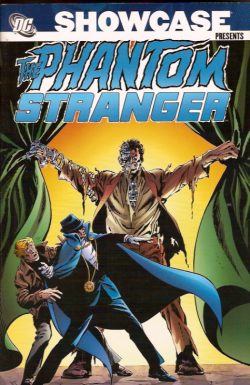
Showcase Presents The Phantom Stranger volume 2


By Bob Haney, Len Wein, Marv Wolfman, Arnold Drake, Michael J Pellowski, Steve Skeates, David Michelinie, Paul Levitz, Gerry Conway, Marty Pasko, Jim Aparo, Gerry Talaoc, Michael Kaluta, Mike Grell, Fred Carrillo, Bernard Baily, Ross Andru/Mike Esposito, Dick Dillin, Tony DeZuñiga, Bill Draut, Romeo Tanghal, Dick Giordano, Bob Layton & various (DC Comics)
ISBN: 978-1-4012-1722-8 (TPB)

The Phantom Stranger was also one of the earliest transitional heroes of the Golden Age of comics, created at the very end of the first superhero boom as readers moved from costumed crimefighters to other genres such as mystery, crime, war and western tales. A trench-coated, mysterious know-it-all, with shadowed eyes and hat pulled down low, he would appear, debunk a legend or foil a supernatural-seeming plot, and then vanish again.

He was coolly ambiguous, never conclusively revealed as man, mystic or personally paranormal. Created by John Broome & Carmine Infantino, who produced the first story in Phantom Stranger #1 (August/September 1952 – Happy Anniversary, Mystery Man!) and most of the others, the 6-issue run also boasted contributions from Jack Miller, Manny Stallman and John Giunta. The last issue was cover-dated June/July, 1953, after which he vanished.

Flash-forward to the end of 1968. The second superhero boom is rapidly becoming a bust, and traditional costumed heroes are dropping like flies. Suspense and mystery titles are the Coming Thing and somebody – probably unsung genius E. Nelson Bridwell – has the bright idea of reviving Phantom Stranger.

He was the last hero revival of DC’s Silver Age and the last to win his own title: another graduate of a star-studded later run in Showcase. After only one appearance in #80 (cover-dated January/February 1969) he returned in his own comic three months later. This time, he found an appreciative audience, running for 41 issues over seven years.

Rather than completely renovate the character, or simply run simple reprints as DC had when trying to revive espionage ace King Faraday (in Showcase #50-51), editor Joe Orlando had writer Mike Friedrich & artist Jerry Grandenetti craft a modern framing sequence around a partial reprint, and – in a masterstroke of print economy – reintroduced another lost 1950s mystery hero to pad out the comic, and provide a rationalist’s contemporary counterpoint.

Dr. Terrence Thirteen was a parapsychologist known as the Ghost Breaker. He predated the Stranger, with his own feature in Star-Spangled Comics (#122-130; November 1951-July 1952). With fiancée (later wife) Marie, the parapsychologist roamed America and the world, debunking supernatural hoaxes and catching mystic-themed fraudsters, a vocal and resolute cynic imported whole into the modern series as a foil for the Stranger.

(Follow Me… For I Am…) The Phantom Stranger launched with a May/June 1969 cover-date. By the end of 1972, the horror/mystery boom had stabilized, and was a key component of both DC and Marvel’s mainstream output, with fantasy and sword & sorcery adventurers also scoring well with fans. However, the glory days of huge comic book print-runs were gone forever. And yet, although a depleted force, superhero comics did not disappear as many older heads suspected they might, and an initially unwieldy amalgam, the horror-hero, soon became a useful crossover sales tool.

Never as common as Marvel’s burgeoning pantheon of spooky crusaders, the most successful and enduring of DC’s supernatural stalwarts were Swamp Thing and Phantom Stranger. This sequel mammoth monochrome tome concludes that impressive second incarnation, incorporating not only his crossover trips into the greater DCU, but also rare appearances that closed his career …until he was resurrected post Crisis on Infinite Earths.

Spanning April/May 1970 to Winter 1978, this collects The Brave and the Bold #89 & 98; Justice League of America #103; Phantom Stranger #22-41; DC Super-Stars #18 and House of Secrets #150, blending a popular taste for blood and horror with traditional mystery man derring-do…

The magic begins with an impressive chiller from Bob Haney, Ross Andru & Mike Esposito originally seen in Batman team-up vehicle The Brave and the Bold (#89, April/May 1970). ‘Arise Ye Ghosts of Gotham’ sees a religious sect return to the city that had driven them out two centuries previously, only to awaken the vengeful spirits of their banished ancestors until pacified by our initially squabbling heroes.

The Stranger’s rerise in Brave and the Bold (#98, October/November 1971) was a more recognisably spooky tale, superbly crafted by Haney & Jim Aparo. ‘Mansion of the Misbegotten!’ is a twist-ridden riot of demon-cults, scheming plots and contemporary-cinema styled possession carefully exploiting the global obsession with Satanism that began with Rosemary’s Baby and peaked with The Exorcist. Here the Gotham Guardian finds himself outwitted, outmatched and in dire need of assistance to foil a truly diabolical force threatening the life of his godson.

Following on is ‘A Stranger Walks Among Us!’ by Len Wein, Dick Dillin & Dick Giordano, as the haunted hero saves Halloween and the World’s Greatest Superheroes from a magical murder plot. He was consequently offered membership in the Justice League of America (in issue #103 of their comic, December 1972) but seldom made any meetings or took a turn on monitor duty…

In the same month, his solo adventures featured ‘Circle of Evil’ (Phantom Stranger #22, by Wein & Aparo), wherein a coalition of evil calling itself the Dark Circle initiates a master plan: attacking the hero through blind psychic – and notional love-interest – Cassandra Craft. At the back of the book, Ghost-Breaker Dr. Thirteen exposes another hoary hoax in Steve Skeates & Tony DeZuñiga’s ‘Creatures of the Night’. These counterpoints to eldritch adventure – although usually excellent – were rapidly reaching their sell-by date, and very soon Thirteen would be battling real monsters he couldn’t rationalize away…

‘Panic in the Night!’ in #23 saw the Stranger and Cassandra in Paris, battling analogues of the Phantom of the Opera and Hunchback of Notre Dame whilst gathering an unlikely ally for the imminent final clash with the Dark Circle. However, great as this yarn is, the real gem is the back-up feature which transformed Terry Thirteen.

‘The Spawn of Frankenstein!’ saw the discovery of an ice-entombed man-monster lead to dark personal tragedy. When Thirteen’s colleague Victor Adams attempted to revive the legendary literary beast, it resulted in his death and Thirteen’s wife Marie being beaten into a coma. Vengeance-crazed, the Ghost-Breaker resolved to hunt down and destroy the monster, utterly unaware – and perhaps uncaring – that the beast was both rational and wholly innocent of any misdeed.

Written by Marv Wolfman and illustrated by the unique talent of Michael Kaluta, this debut promised much, but the feature was plagued by inconsistency. Phantom Stranger #24 (March/April 1973) offered the epic conclusion of the Dark Circle war as the Stranger and Cassandra defrayed the ‘Apocalypse!’ in the shadow of Mount Corcovado (that’s the one with the Jesus statue “Christo Redentor” overlooking Rio de Janeiro) with old foes Tannarak and Tala, Queen of Darkness along for the spectacular and long-overdue ride…

Wolfman & Kaluta’s The Spawn of Frankenstein continued as the revived revenant opted to revenge itself upon Victor Adams for dragging him back to cruel, unwanted life by returning the favour and resurrecting the dead scientist.

A fresh tone and resumption of episodic, supernatural triage marked issue #25 as the Man in the Hat confronted a voodoo cult in ‘Dance of the Serpent’ (Wein – from an idea by Michael J Pellowski – & Aparo), whilst Kaluta ended his run on Frankenstein with another untitled tale wherein Rachel Adams (wife of the departed Victor) was kidnapped by Satanists before being rescued by the monster; leading into #26’s crossover ‘From Dust Thou Art…’

Here Wein, Wolfman & Aparo teamed the Monster and the Stranger against demons seeking earthly bodies.

The radical change was completed with the next issue as innovative horror-anthology artist Gerry Talaoc replaced the sleekly realistic Aparo (moved to The Brave and the Bold for a long career illustrating Batman), whilst journeyman mainstay Arnold Drake assumed the writer’s seat on the stranger. He introduced another long-term nemesis in deeply disturbed psychiatrist/parapsychologist ‘Dr. Zorn: Soul-Master!’

This driven meddler callously warped his patients and performed illicit experiments for the US Military-Industrialist Complex: a far more insidious and freshly contemporary threat in tune with modern mores. Thwarted but seldom defeated, he constantly returned to bedevil the Stranger.

Skeates and legendary veteran Bernard Baily (Golden Age co-creator of Hourman and The Spectre) now helmed Frankenstein, with ‘The Terror and the Compassion’ seeing the misunderstood beast stumble into a commune that is actually a demonic coven intent on blood sacrifice and raising the devil…

‘The Counterfeit Madman!’ by Drake & Talaoc saw the Stranger explore the mind of mad-dog killer Johnny Ganz. Was the young offender a true psychopath or a cunning crook pretending to be a multiple-personality sufferer? Was there another innocent victim trapped inside the killer’s skull with him? An element of moral ambiguity had been added by Drake, layering later adventures with enticing, challenging dilemmas absent from most comic fiction and only matched by Steve Gerber’s challenging work on Man-Thing.

Back-up ‘Night of the Snake God’ was a more traditional tale which continued Frankenstein’s battle against the hippie cult in a solid, if undemanding manner.

Zorn resumed his unscrupulous scientific explorations of the supernatural in PS #29’s ‘The Devil Dolls of Dr. Z!’, whilst matters barely progressed at all in ‘The Snake-God Revealed!’, which saw the Spawn of Frankenstein lose momentum – and story-space – as his strip was reduced to 6 pages. The next issue contained more contemporary chills in ‘The Children’s Crusade!’ as a modern Pied Piper lures a town’s youngsters into his charismatic cult whilst ‘Turn-about!’ concludes – and not before time – the Spawn of Frankenstein’s run.

Issue #31 (June-July 1974) offers an exotic yarn dealing with the aftermath of the Vietnam war as a disgraced US “general” smuggling drugs for a local warlord awakens a slumbering demon in ‘Sacred is the Monster Kang!’ The Stranger’s tales were usually 12-pages long at this period, but the back-up feature that originally filled up the comics – The Black Orchid – is not included in this volume.

Bill Draut, one of the Stranger’s earliest illustrators returned in #32’s ‘It Takes a Witch…!’: an old-fashioned scary whodunit, whilst superstar-in-waiting Mike Grell illustrated a Dr. Zorn vehicle guest-starring Boston Brand. In ‘Deadman’s Bluff!’, the ghost’s protracted hunt for his own murderer ended as usual in frustration, but an antagonistic partnership was established for the future…

Talaoc was back in #34 for ‘A Death in the Family!’ wherein a “clean” brother is compelled to assume control of the family business – running an organised crime mob. His guilt is further compounded when his dead sibling returns from the grave to give him some pointers. Increasingly, the Stranger was becoming a mere witness to supernatural events in his own series, so perhaps it’s no coincidence that this issue featured a return for the more hands-on Dr. Thirteen (wife Marie cured and both of them ignoring that brief stint of Frankensteinian tragedy).

‘…And the Dog Howls Through the Night!’ is another straightforward yet gripping adventure from Skeates & DeZuñiga, which had probably been sitting in a drawer for years before publication.

‘The Demon Gate’ was writer David Michelinie’s debut tale, with the Stranger targeted by derivative Dr. Nathan Seine – who wanted to siphon off the hero’s mystic energy and soul to cure his dying wife. Like ‘Crimson Gold’, a deadly African treasure hunt for Nazi treasure in #36, it briefly betokened a more active role for the immortal wanderer.

Drake & Paul Levitz scripted ‘Images of the Dead’ in Phantom Stranger #37: another highly charged moral quandary with a young artist forced to commit reprehensible crimes to earn money for his wife’s hospital bills…

Talaoc made way for fellow Filipino artist Fred Carrillo with issue #38, as Dr Seine sought to extract bitter vengeance in Levitz’s ‘The Curse of the Stalking Skull’. The new creative team brought back Boston Brand for ‘Death Calls Twice for a Deadman’: a last-ditch effort to revive dwindling sales. Also including Batman villain The Sensei, it signalled a belated return to the company’s over-arching continuity, but was too little, too late.

Deadman also co-starred in #40’s ‘In the Kingdom of the Blind’ and #41’s concluding chapter (February-March 1976) ‘A Time for Endings’ as Seine sought to bring Elder Gods to Earth using long-absent Cassandra Craft as a medium. With that tale’s finish the series ended and the Stranger all-but vanished until the winter of 1978 and a giant-sized tale from DC Super-Stars #18.

‘Phantom Stranger and Deadman’ (by Gerry Conway, Marty Pasko, Romeo Tanghal, Dick Giordano & Bob Layton) was an extended Halloween extravaganza with the supernatural champions – and Dr. Thirteen and Tala in attendance – attempting to eradicate an infestation of demons infiltrating the comic book Mecca of the season: Rutland, Vermont (long associated in both Marvel and DC titles as the only place to be on the Eve of All Hallows).

One final tale appeared a few months later in the 150th issue of House of Secrets (February-March 1978) wherein Conway & Talaoc related a generational tale of restless evil in ‘A God by any Other Name.’

Here, the Stranger and Dr. Thirteen united to complete the work of Rabbi Samuel Shulman and Father John Christian who, in the dire environs of London, 1892, had joined spiritual forces to destroy the World’s first malignant machine intellect Molloch. Sadly, those Satanic Mills had a habit of being rebuilt by greedy men…

More than most, The Phantom Stranger is a strong character and concept at the mercy of pitiless fashion. Revived as the 1960s closed on a wave of interest in the supernatural, and seemingly immune to harm, he struggled to find an audience in the general marketplace before direct sales techniques made publishing a less hit-or-miss proposition. However, blessed with a cohort of talented creators, the stories themselves have proved to be of lasting quality, and would so easily transfer to today’s television screens that I wonder why they haven’t yet (and no, that doesn’t mean animated appearances or cameos on the Swamp Thing series). Mystery, exotic locales, forbidden monsters spectacular effects, a medallion and a cool hat: C’mon, you know you’d watch it…

But until then you’ll have to thrill and scare yourselves with these fantastic tales.
© 1970, 1971, 1972, 1973, 1974, 1975, 1976, 1978, 2006 DC Comics. All Rights Reserved.

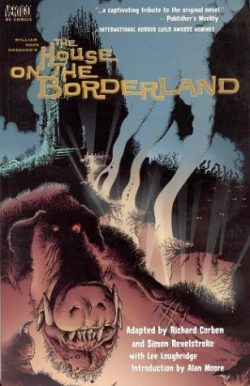
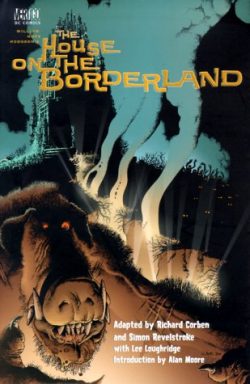
The House on the Borderland


By Simon Revelstroke, Richard Corben & various (Vertigo)
ISBN: 978-1-56389-545-6 (HB) 978-1-56389-860-8 (TPB)

So, what’s better, the book or the movie?

This is a highly charged question with only one answer: “It depends”.

Adapting works from one medium to another is always contentious, and often ill-advised – but the only fair response has to be both highly personal and broadly irrelevant. Just because I don’t like any X-Men films doesn’t make them bad, just as my deep love and admiration for the works of Oliver Postgate & Peter Firmin doesn’t make me six years old (no matter how much I’d like it to be true!).

The real issue is whether an adaptation treats the original fairly or callously exploits it – and make no mistake: 99.5 % of all reworkings are done with money in mind. Half of that other percent point is a genuine desire to proselytise: a mission to “bring the original to the masses” whilst the fractional remainder is an artist’s desire to interpret something that moved them in their own arena of expertise: for years I yearned to adapt Hodgson’s Carnacki the Ghost-Breaker/Ghost-Finder short stories into graphic novel format. I’m not dead yet and there might still be time unless someone more talented gets there first…

The author of those tales, as well as the source material for this excellent graphic novel from underground comix legends Simon Revelstroke & Richard Corben, is the brilliant William Hope Hodgson. Son of a poor parson, he was born in 1877, and took to sea at 14. In 1899 to make a living he turned to photography and writing. He was an early devote of physical culture (a bodybuilder) and patriot. Aged 40, he died in the Fourth Battle Ypres, sometime between the 17th and 19th of April 1918. Literature is the poorer for his premature departure.

Hodgson’s stories are dark and moody explorations of terrors internal and ghastly, against a backdrop of eternal, malignant forces beyond human comprehension ever waiting to take the incautious, unwary or overly-inquisitive. As Alan Moore describes in his Introduction here, Hodgson was the point-man for a new kind of story.

The gothic ghost-story writers and high fantasists of Victorian publishing gave way as the century turned to such cosmic horrorists as HP Lovecraft, Robert Bloch and Clive Barker, but with such epics as The Night Land and The House on the Borderland, Hodgson lit the way. His too-brief catalogue of works stands as a beacon of pervasive unease and outright terror and why he’s not a household name I simply can’t fathom. His career was cut tragically short in the trenches, but unlike so many of them he faded into relative obscurity and never bloomed into posthumous posterity…

Rather than religiously translate his masterpiece, Revelstroke & Corben truncated and marginally updated the novel, concentrating on what can actually be visualised – so much of Hodgson’s power comes from the ability to stir the subconscious brain – and in fairness, could be called a companion rather than adaptation of the original text.

October, 1952 in the rural hamlet of Kraighten in the Republic of Ireland. Two English students on a walking tour accidentally provoke the locals and must flee for their lives. They are chased to a ramshackle, desolate ruin on the edge of a crumbling abyss, a misty ravine which harks back to a long-forgotten time.

In the bracken they find an old journal. Scared and still hiding, they begin to read the words of Byron Gault, who in 1816 moved himself, his sister Mary and his faithful hound into the infamous but irresistibly inexpensive old house. Of horrors both physical and otherwise that attacked them and the incredible, infinity-spanning journey that resulted…

How this tale proceeds is a treat I’ll save for your own consumption. This adaptation was nominated for Best Graphic Novel of the Year by the International Horror Guild in 2003. It is not, Can Not be the original book. So get both if you can, read both and revel in what makes each unique to their own form, rather than where they can conveniently overlap and coincide.
© 2000 Simon Revelstroke and Richard Corben. All Rights Reserved.

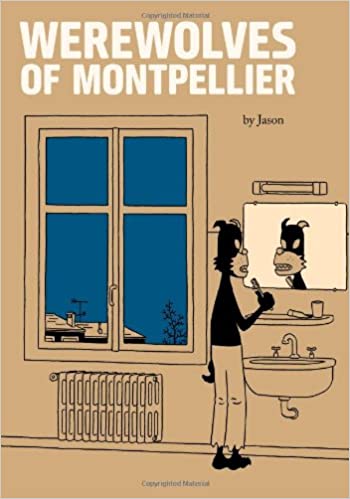
Werewolves of Montpellier


By Jason, translated by Kim Thompson (Fantagraphics Books)
ISBN: 978-1-60699-359-0 (HB/Digital edition)

Jason is secretly John Arne Saeterrøy: born in Molde, Norway in 1965 and an overnight international cartoon superstar since 1995 when his first graphic novel Lomma full ay regn (Pocket Full of Rain) won Norway’s biggest comics prize A Sproing Award.

He won another in 2001 for the series Mjau Mjau and by 2002 was almost exclusively producing graphic novels. Now a global star, he has won many more major awards from such disparate regions as France, Slovakia and the USA.

Rife with his signature surreality, this novella was first released in 2010; populated with cinematic, darkly comic anthropomorphs and featuring more bewitching ruminations on his signature themes of relationships and loneliness, viewed as ever through a charmingly macabre cast of bestial movie archetypes and lost modern chumps.

Here he focuses on the hollow life of expatriate Swede Sven, a purposeless artist who has gravitated into a stagnant, romance-lite existence in a provincial French town. Sven fritters away his days just like his close friend Audrey – another listless intellectual looking for the right lady to love.

The only thing quickening his pulse these days is the occasional nocturnal foray over the rooftops: burglarizing houses dressed as a werewolf. Unfortunately, Montpellier already has a genuine lycanthrope community and they don’t look kindly upon gauche parvenus intruding into their world with criminal cosplay…

This post-modern short-&-spooky fable unfolds in Jason’s beguiling, sparse-dialogued, pantomimic progressions delivering resonances of Hitchcock’s bubbly comedy-thrillers, quirkily blended with Bergman’s humanist sensibilities. The enchantingly formal page layouts are rendered in his minimalist evolution of Hergé’s Claire Ligne style: solid blacks, thick lines and settings of seductive simplicity augmented here by a stunning palette of stark pastels and muted primary colours.

Jason’s work always jumps directly into the reader’s brain and heart, deftly probing the nature of “human-ness” by using the beastly and unnatural to ask persistent and pertinent questions. Although the clever sight-gags are less prominent here, his repertory company of “funny-animal” characters still uncannily displays the subtlest emotions with devastating effect, proving again just how good a cartoonist he is.

This comic tale is best suited for adults but makes us all to look at the world through wide-open childish eyes. Jason is instantly addictive and a creator every serious fan of the medium should move to the top of the “Must-Have” list. Buy, borrow or even steal it if you must, but be aware that actions have consequences… even for faux monsters…
© 2010 Jason. All rights reserved.

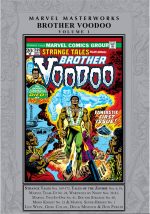
Brother Voodoo Marvel Masterworks volume 1


By Len Wein, Doug Moench, Roy Thomas, Marv Wolfman, David Anthony Kraft, Roger Slifer, Roger Stern, Scott Lobdell, Jean-Marc Lofficier, Randy Lofficier, Gene Colan, Don Perlin, Jim Mooney, Tony DeZuñiga, Ron Wilson, Marshall Rogers, Vicente Alcazar, Fred Hembeck, Geoff Isherwood & various (MARVEL)
ISBN: 978-1-3029-2923-7 (HB/Digital edition)

In 1968 the consciousness-raising sporting demonstration of Black Power at the Olympic Games politicised a generation of youngsters. By this time a few comics companies had already made tentative but concerted efforts to address what were national and socio-political iniquities. Nevertheless, issues of race and ethnicity took a bloody long time to filter through to still-impressionable young minds avidly absorbing knowledge and attitudes via four-colour pages that couldn’t even approximate the skin tones of African-Americans.

As with TV and films, breakthroughs were small, incremental and too often reduced to a cold war of daringly liberal “firsts.” Excluding characters in 1940s-1950s jungle themed comic books, Marvel clearly led the field with a recurring character: historically impossible Gabe Jones, a black soldier in Sgt. Fury’s Howling Commandos – debuting in #1 (May 1963).

Technically, he was beaten to that dubious honour by DC’s Jackie Johnson. Created by Robert Kanigher & Joe Kubert, the negro prizefighter joined Sgt Rock’s Easy Company in late 1961 (Our Army at War #113), but it was years before he was a regularly-seen character…

By the way, so unlikely a character was ol’ Gabe in 1963 that he was – without even consulting editor Stan Lee – helpfully re-coloured Caucasian at the printers who didn’t realise his ethnicity but just knew that he just couldn’t be non-white. Jones was eventually followed by actual black superheroes Black Panther in Fantastic Four #52 (July 1966), and the Falcon in Captain America #117 (September 1969). America’s first hero or colour to helm his own title had come and gone (largely unnoticed) in a little remembered or regarded title from Dell Comics. Debuting December 1965 and created by artist Tony Tallarico & scripter D.J. Arneson, Lobo was a wild west gunslinger battling injustice just like any cowboy would.

Arguably the greater breakthrough was Joe Robertson, City Editor of the Daily Bugle: an erudite, brave, proudly ordinary mortal distinguished by his sterling character, not costume or skin tone. He debuted in Amazing Spider-Man # 51 (August 1967), proving in every panel thereafter that the world wouldn’t end if black folk and white folk shared the same spaces…

This big change slowly grew out of raised public awareness during a terrible time in US history: even worse than today’s festering social wounds and agonisingly commonplace occurrences of cops claiming to misjudge immediate life-or-death situations, perilous racial pressures and a seemingly constant, officially policy of Black Lives Not Mattering. These tragedies occur unpardonably often the UK too, so we’ve nothing to be smug about…

Britain has suffered race riots since the Sixties, leaving simmering scars that only comedians and openly racist politicians dare to talk about. Things today don’t seem all that different, except the bile and growing taste for violence is turned towards European accents, or health workers as well as brown skins, and now includes non-white sectarian aggravation too…

As the 1960s became a newer, darker decade, more positive and inclusive incidences of ethnic characters appeared in the USA, with DC finally getting an African-America hero in John Stewart (Green Lantern #87 December 1971/January 1972) – although his designation as a replacement Green Lantern might be construed as more conciliatory and insulting than revolutionary.

The first DC hero with his own title was Black Lightning. He didn’t debut until April 1977, although Jack Kirby had introduced Vykin in Forever People #1, the Black Racer in New Gods #3 (March and July 1971) and Shilo Norman as Scott Free’s apprentice (and eventual successor) in Mister Miracle #15 (August 1973). A month later there was Dr. Jericho Drumm: Brother Voodoo

It was a turbulent time culturally, but it was also a life-or-death moment for comics. The American industry was in turmoil if not meltdown, much like the youth of the nation they courted. With costs of production skyrocketing, every title had to be a success and no one seemed clear on what audiences wanted…

Superheroes had dominated for most of the 1960s: peaking globally before explosively falling to ennui and overkill. Traditional genres like horror, westerns, romance and science fiction returned, fed by radical trends in movie-making where another wrinkle had emerged: films by and for African American audiences. Most called them “Blacksploitation” films…

Marvel was already a pioneer in diversity. As well as a plethora of white Christian males there were pagan gods, female characters (a few but not for long), extraterrestrials, native Americans, Atlanteans and monsters spearheading their own features. Why not another black lead with roots in multiple of genres at once?

Contemporary Blaxsploitation cinema and novels had fired up commercial interests throughout America, and in that miasma of outlandish dialogue, daft outfits and barely concealed – if justified – outrage, an angry black man with a shady past and questionable morals must have felt like a sure-fire hit to Marvel’s bosses. Luke Cage, Hero for Hire launched in the summer of 1972. A year later, Black Panther finally got his own series in Jungle Action #5 and Blade: Vampire Hunter debuted in Tomb of Dracula #10 (July 1973. Surely there was room for more?

Astonishingly soon after, with the Comics Code prohibition against horror hastily rewritten (amazing how plunging sales can affect ethics), scary comics returned in force and a fresh crop of supernatural superheroes and monsters began appearing on newsstands to supplement the ghosts, ghoulies and goblins already infiltrating the once science-only scenarios of the surviving Fights ‘n’ Tights titles.

In fact, the lifting of the Code ban resulted in such an avalanche of horror titles in response to the industry-wide downturn in superhero sales, that it probably caused a few more venerable costumed crusaders to – albeit temporarily – bite the dust.

Almost overnight nasty monsters – both new and reprinted from the1950s (and narcotics; but that’s another story) became acceptable fare on four-colour pages. Whilst a parade of pre-code reprints made sound business sense, the creative aspect of the contemporary fascination in supernatural themes was catered to by adapting popular cultural icons, before risking whole new concepts on an untested public. Oddly the last Code-embargoed genre – Crime comics – never figured in this particular populist revival…

As always in entertainment, the watch-world was fashion: what was hitting big outside comics was to be incorporated into the mix as soon as possible. When proto-horror Morbius debuted in Amazing Spider-Man #101 (cover-dated October 1971) and the sky failed to fall in, Marvel moved ahead with a line of shocking superstars.

They began with a traditional werewolf and a vampire before chancing something new: a haunted biker who tapped into both Easy Rider’s freewheeling motorcycling chic and the prevailing supernatural zeitgeist. Recycling an old western’s title, the all-new Ghost Rider debuted in Marvel Spotlight #5, August 1972. He had been preceded by western hero Red Wolf in #1 and the aforementioned Werewolf by Night in #2-4. From these beginnings spooky floodgates opened to such an extent there was even room for non-white stars like The Living Mummy and our star turn today…

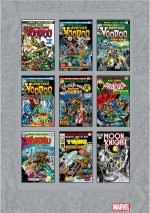
This quirky compendium collects Brother Voodoo’s earliest exploits from a time when he was equal parts tragic outsider and in-joke laughing stock and long before he was reclaimed as a major hero and rebooted as Doctor Voodoo. These adventures from Strange Tales #169-173, Tales of the Zombie #6 &10, Marvel Team-Up #24, Werewolf by Night #38-41, Marvel Two-in-One #41, Doctor Strange #48, Moon Knight #21, Marvel Super-Heroes #1 and Doctor Strange: Sorcerer Supreme #16, 17, 20 also include extracts from Tomb of Dracula #34-37: epically spanning cover-dates September 1973 to August 1990. The mystic materials are preceded by an informative Introduction from Ron Wilson on how the series came to be and his editorial origins…

Built from an idea by then Editor-in-Chief  Roy Thomas, with defining input from Stan Lee, John Romita and eventual assigned creators Len Wein & Gene Colan, the end result was a complex and convoluted affair spread out over a number of issues. It’s also fair to say that there’s a lot of dialogue and some notions that haven’t fared well as we’ve become a more inclusive society. If you can’t temper your modern sensibilities in the face of well-meaning but dated attitudes, it might be best to look elsewhere for evidence of role models for young black readers…

Brother Voodoo was a series that took its time to tell a tale, and we need to remember that the idea was to create a hero who could have lots of adventures for as long as possible: a new Doctor Strange or Spider-Man or Daredevil, created at a moment when society and the comic industry were in utter turmoil. Lots of good ideas debuted and died unfulfilled, only to blossom again in years to come…

With their hero ready to launch, Marvel capitalised on the times as much as possible. The company had launched a wave of new titles (many of them cost-effective reprint anthologies) and restored defunct titles to crowd rival publishers off newsstands. Cover dated May 1968, Strange Tales #168 was officially the last issue of a prestigious horror book that had run from the 1951 before becoming a vehicle for The Human Torch, Doctor Strange and Nick Fury, Agent of S.H.I.E.L.D. in the 1960s. When Marvel the top-selling brand in 1968, its numbering had carried on for Doctor Strange’s first solo title.

Cover dated September 1973, the book was revived after a 5-year hiatus as a try-out title, kicking off with Brother Voodoo who occupied #169-174, after which The Golem, classic horror reprints and Jim Starlin’s landmark reinterpretation of Adam Warlock took the magazine to its ultimate oblivion in 1975.

Enough background now: let’s get down among the dead men…

The drama commences in the eponymous ‘Brother Voodoo!’ (Wein, Gene Colan & Dan Adkins), as a UN special investigator lands in Haiti and is saved from murderous ambush by an oddly-garbed man with incredible powers, emerging from clouds of smoke amidst thunderous frenetic drum beats. Accompanied by elderly aide Bambu, the stranger escorts Dr Maitland to safety even as his mind flashes back to how it all began…

Years ago, Jericho Drumm abandoned his brother Daniel and family heritage as voodoo priests for the rationalism, wealth and acclaim of the USA. Almost 20 years later, celebrated psychologist Dr. Drumm returned to Haiti to witness his brother’s murder by magic. Daniel had taken his brother’s destined place as houngan (voodoo priest) of his people but was dying from a curse laid by evil loa (spirit)/serpent god Damballah

Utterly disbelieving, Jericho was helpless to prevent his brother’s death and his own subsequent humiliation by Damballah, and after swallowing his civilised pride sought out Daniel’s teacher Papa Jambo to accept his fate, learn the lore and accept the onerous responsibilities of protecting the world from evil magic. Now splitting his time between his Caribbean homeland and his practice in the French Quarter of New Orleans, Dr. Jericho Drumm ministers to the world’s unknown ailments and hidden horrors…

The origin flashback extended to the next issue with a ‘Baptism of Fire!’ tracing Jericho’s accelerated course of study and triumphant battle against the loa lord. Amongst his many new gifts, the power that tipped the balance was his eerie ability to channel his dead brother’s power and soul: a chilling tactic possible because Daniel now lived within him…

We return to the present with ST #171 and learn why the UN is under attack in Haiti when ‘March of the Dead!’ (with Frank Giacoia inking Colan’s gloriously beautiful, increasingly scary pencils) sees Drumm attacked by the walking dead.

Thanks to the Comics Code, at this time the literal word “zombie” was banned in newsstand publications, compelling writers and editors to take torturous steps to do their job. Marvel’s monochrome magazines used the term with impunity and without sanction, but for the mainstream colour titles, Wein had to coin a new appellation, which is why Brother Voodoo here clashes with “zuvembies” in a graveyard. You couldn’t make it up, could you?

These specific “soulless ones” prowl at the command of sinister Baron Samedi, sabotaging much-needed industry providing jobs for the impoverished nation. The tale catapults BV into the heart of Marvel continuity as the true perpetrators are exposed as far-from-supernatural assailants and one of the MU’s greatest threats to life and liberty…

Dick Giordano inked #172 and 173 as the hero returns to Louisiana. Seeking to assist a woman targeted by mystic malevolence, in ‘Fiend in the Fog!’, police chief’s daughter Loralee Tate is singled out by voodoo villain and cult leader Black Talon and Drumm is inexorably drawn into a massive conspiracy demanding a ‘Sacrifice Play!’ and the initially unwelcome aid of local legend Mama Limbo. The spooky thrills culminate in a do-or-die battle with the Talon’s tribe and Brother Voodoo’s defeat and capture, resulting in a painful cliffhanger since the series ceased here with April 1974 episode…

Mere months later, the already drawn conclusion resurfaced in one of those aforementioned mature Marvel magazines. The Black Talon tale concluded in July’s Tales of the Zombie #6, with Doug Moench scripting Wein’s plot and Frank Chiaramonte inking Colan – who always worked best in monochrome. ‘End of a Legend!’ exposes devious duplicity and reaps a rich harvest of destruction when Drumm breaks loose and unleashes all his power…

He then appeared in New York, joining Spider-Man in Marvel Team-Up #24 (August 1974) in a Wein yarn illustrated by Jim Mooney & Sal Trapani: a decidedly offbeat hero haunting the Big Apple to quash a Manhattan murder cult in ‘Moondog is Another Name for Murder’

Almost one year later, Brother Voodoo returned as Tales of the Zombie #10 delivered ‘The Resurrection of Papa Jambo!’ (March 1975, by Moench & Tony DeZuñiga) wherein Jericho Drumm’s long-departed tutor is forcibly revived by malign Dramabu, the Death-Lord. As the revered savant stalks the shanty towns of Haiti, claiming sacrificial fodder for his power-hungry new master, the harassed hero and Bambu return to their roots and make some hard decisions to save their people…

Following that yarn, Brother Voodoo joined Marvel’s own ranks of the living dead: reduced to occasional cameos and guests shots in other series. Represented here in excerpts from The Tomb of Dracula #34-37 (July to October 1975 as crafted by Marv Wolfman, Colan & Tom Palmer), the houngan visits the Brazilian Amazon, rescuing vampire hunter Frank Drake from an army of zuvembies unleashed by the Transylvanian terror. Times and tastes were changing, with superheroes again ascendent, and the horror fad fading. Soon, only The Tomb of Dracula would remain…

Lovingly realised by Moench & Don Perlin, former furry hit Werewolf by Night had ridden the storm longer than most: deftly adapting to new trends and ideas by allowing character and not plot dictate the course. An earlier arc depicting Haiti holding a cure for lycanthrope Raymond Coker was revisited and an extract here from WBN#38 (May 1976) sets up an epic intervention and unfolding wonder as Coker now requests the aid of Brother Voodoo…

Cover-dated July, Werewolf by Night #39 reveals ‘Some Are Born to the Night’ as – after being visited by a trinity of infinite beings who threaten to alter his existence forever – wild werewolf Jack Russell is hurled into a life-changing crisis. The celestial visitants are also in touch with Coker as he squats in a hut in far off Haiti, and even appear to Russell’s sister Lissa and girlfriend Topaz.

The “Three Who Are All” are manoeuvring players into a game of cosmic consequences and when Jack gets home, he finds Coker and Drumm waiting. No sooner are introductions made than another army of zuvembies attack and Russell learns that Some are Born to the Night!’

Portentous proclamations of unfulfilled destinies propel the adventurers and Topaz back to Haiti where they are abducted and taken to an infernal pit nurturing a shocking travesty of life with resurrected wizard/old enemy Dr. Glitternight in charge of Souls in Darkness’…

Revealed in WBN #41 as an ex-member of the gestalt once called “Five Who Are All”, the villain’s obsessive monster-making is explained before his attempts to dominate reality are spectacularly thwarted through the return of a missing fourth being and the indomitable resistance of Jack and Brother Voodoo in ‘…And Death Shall Be the Change’

Key to their eventual triumph is the moment when Russell discovers how to transform into a werewolf fully in control of his mental faculties day or night. Returning to America, the Werewolf-by-Choice naturally became a superhero and moved to New York, but for Jericho Drumm it was time to fade into the shadows once more…

Marvel Two-in-One #41 (July 1978) sees David Anthony Kraft, Ron Wilson & Pablo Marcos close an open case where The Black Panther had vanished whilst fighting a “zombie-vampire” stalking New York’s streets and abducting prominent African Americans. Here, concluding chapter ‘Voodoo and Valor!’ sees Drumm volunteer his specialised services to BenThe ThingGrimm to save T’Challa, and end the crisis. The trail takes them to Uganda for a confrontation with Doctor Spectrum and far deadlier crazed killer Idi Amin

Jumping to August 1981 and Doctor Strange #48, Roger Stern, Marshall Rogers & Terry Austin reveal how the voodoo vigilante and his passenger Daniel are possessed by minor god Damballah and require ‘The Power of Dr. Strange’ to restore them to sanity and safety, after which Moon Knight #21 (July 1982) is paid a visit by ‘The Master of Night Earth!’

Crafted by Moench, Vicente Alcazar, John Tartaglione & Bob Camp. This dark delight sees the Fist of Khonshu join Brother Voodoo in Haitian port city Mirebalais. Battling gunrunners before colliding with a thug possessed by Daniel Drumm, the lunar avenger is soon helping head off a revolution: one fought by zuvembies on zombie alligators fighting for a greedy politician with voodoo training…

May 1990 brought giant anthology Marvel Super-Heroes (Spring Special) #1 and buried deep inside Scott Lobdell, Fred Hembeck & Dell Barras detailed short done-in-one saga ‘Don’t Do that Voodoo You Do So Well’ with Drumm saving hurricane victims and unexpectedly encountering again a lost love from his youth…

Contemporaneously, Drumm scored a short back-up series in Doctor Strange: Sorcerer Supreme (April-August 1990) seen here as ‘The Book of the Vishanti: The Mark of the Vodû! Part I-III’ as featured in issues #16-17 and 20. A way of reinventing the hero whilst revisiting and revising his origins, the serial by Roy Thomas, Randy & Jean-Marc Lofficier and illustrator Geoff Isherwood, Mickey Ritter reprised the Brother’s career and legacy, whilst laying out how the history and practise of voodoo slotted into Marvel’s cosmology. and continuity.

With covers by Romita, Gil Kane, Giordano, Giacoia, Rich Buckler, Ernie Chan, Earl Norem, Palmer, Keith Pollard, Bill Sienkiewicz & Jim Lee, pages of original art by Colan, Kane and a host of forementioned inkers, this tome also offers contemporary house ads, info pages on Brother Voodoo and Black Talon from The Official Handbook of the Marvel Universe and the 2008 cover of Essential Marvel Horror volume 2. These are supplemented by full creator biographies, ‘Introducing Brother Voodoo!’ – a heavily illustrated feature by Tony Isabella from Tales of the Zombie #2 in anticipation of his imminent debut in Strange Tales #169 and ‘Brother Voodoo Lives Again’ from TotZ #5 discussing his move out of colour comics.

Definitely not everybody’s role model or anyone’s “Great White Hope”, Brother Voodoo remains a noble experiment and intriguing concept that still offers great enjoyment and astounding art for those who like their fun challenging and off centre.

Don’t let silly prejudice make you miss out on something special…
© 2021 MARVEL.

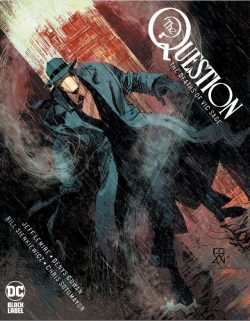
The Question: The Deaths of Vic Sage


By Jeff Lemire, Denys Cowan, Bill Sienkiewicz, Chris Sotomayor, Willie Schubert & various (DC Comics)
ISBN: 978-1-7795-0558-3 (HB/Digital edition)

One of DC’s best 1980s comics series was – for the longest time – out of print and unavailable digitally. It more or less still is, except for a prohibitively expensive Omnibus edition, and if you have strong arms and a big budget you should really track those stories down, whilst the rest of us wait for more reasonable trade paperbacks and eBook editions…

As devised and delivered by Steve Ditko in the 1960s – as he sank ever more deeply into the Objectivist philosophy of Ayn Rand – The Question was Vic Sage: a driven, implacable, justice-obsessed journalist seeking out crime and corruption uncaring of the consequences.

The Charlton “Action-Line Hero” was acquired by DC when the Connecticut outfit folded and was the template for compulsive vigilante Rorschach when Alan Moore & Dave Gibbons first drafted the miniseries that would become the groundbreaking Watchmen.

The contemporary rumour-mill had it that since the creators couldn’t be persuaded to produce a spin-off Rorschach comic, DC went with a reworking of the Ditko original…

As revised by writer Denny O’Neil and illustrators Denys Cowan & Rick Magyar, Vic Sage was an ordinary man pushed to the edge by his obsessions, using his fists and a mask that made him look utterly faceless to get answers (and justice) whenever standard journalistic methods failed. After a few minor appearances around the DC universe, Sage got a job in the town where he grew up and resumed his campaign for answers…

Always more cult hero than classic crusader, The Question revival carved a unique niche for itself as “comics grew up” post Crisis on Infinite Earths and Watchmen. The character was periodically radically rebooted and reimagined, but here scripter Jeff Lemire (Sweet Tooth, The Underwater Welder, Trillium, Black Hammer, Descender, Ascender, Gideon Falls, Essex County) returns to O’Neil’s canon to tell a revelatory tale of reincarnation, zen mystery and undying evil. The project was part of DC’s latest high end mature reader imprint Black Label: released as four single issues before becoming a spiffy hardback with a digital equivalent…

Hub City is a hell-hole, the most corrupt and morally bankrupt municipality in America. Mayor Wesley Fermin is a slick, degenerate crook, but real power resides in his Special Counsel Holden Malick, political cronies, a hand-picked gang of “heavies” and the largely corrupt and racist police force…

Originally, Sage was supported by college lecturer Aristotle “Tot” Rodor: the philosopher-scientist who created his faceless mask and other gimmicks as well as being a sounding board for theories and plans and ethical bellwether. He remains so here but is also increasingly challenging his former pupil’s motives and methods…

After being killed by Fermin’s forces The Question was revived and retrained by O’Neil’s other legendary martial arts creation, Richard Dragon, Kung Fu Fighter . A year passed and a reenergised, faceless avenger began cleaning up Hub City…

The saga opens with the city rushing into chaos and the Question busting a brothel trafficking children to city officials. Later, when reporting the raid on his TV show, Sage ambushes former lover Myra Fermin (the mayor’s sister and oblivious City Alderman) with the fact that the Councilman he left for the cops has mysteriously been erased from all official reports. Shocked and outraged, Fermin continues deluding herself about her brother and the administration, but the damage has been done and she starts looking where she shouldn’t…

When Malick arrives to clean up the mess, Sage notices a ring the politico wears: something old and somehow deeply disturbing…

Tot is no help, but the ring sticks in Sage’s mind and eventually he uncovers a historical organisation called the Hub City Elder Society that all wore such symbols and draws some telling conclusions to today’s political elite…

Hot on the trail he moves, unaware that events are converging into a dark miracle. At the exact moment The Question uncovers an ancient den of occult ceremony, an innocent black man is gunned down by a racist cop and Myra Fermin bursts in on her beloved brother committing savage atrocities on a bound captive. The concatenation of blood climaxes as The Question finds an old faceless mask with a bullet hole through the forehead in a cavern under the city. It’s not one of his, but he is assaulted by a wave of memories and images of supernal evil when he holds it…

Barely conscious, he retreats from the underground lair into streets awash with blood as a protest march becomes a race riot. Urged by Tot to go on TV to calm the tide, all Sage can think of is finding Dragon and getting some metaphysical first aid…

What he gets is doped, as the hermit applies zen hoodoo and drugged tea, despatching the unwilling rationalist sceptic on a vision quest into the past…

Sage awakens in the wilderness that will one day be his home town, bare-footed and wearing a faceless mask…

In Hub City 1886, Viktor Szasz is a blacksmith desperately seeking to escape the vile acts he committed as a soldier fighting the Comanche, in a frontier outpost well on its way to becoming truly civilised. Silent and solitary Viktor intervenes when negro settler Irving Booker and his family are repeatedly harassed and ultimately murdered by the local priest and his devout flock. Szasz reverts to his gun-toting ways to save or avenge them but is outmatched until rescued by a red-headed Indian woman. She shares some secrets about true evil, most notably that a mystical “Man with a Thousand Faces” can only be killed by someone named “Charlie”.

Delirious and experiencing hallucinations of himself in different times, agnostic Szasz still refuses to believe in devils, which is probably why the thing in pit under the town gets the drop on him…

In 1941, Hub City private eye Charlie Sage groggily looks at his notebook, where someone has written “Man with no face” and “man with a thousand faces???”. Blaming too much booze, he cleans himself up whilst glimpsing flashes of unknown dead people and adds “red-haired woman” to the page for no reason he can think of…

When red-haired walk-in client Maggie Fuller hires him to investigate her brother Jacob’s disappearance, he has no idea it will be his last case. They are both union organisers and prime targets for the bosses and the city officials they own, and before long the shamus has annoyed all the wrong people, ending up attacked by thugs wearing fancy rings…

Even his one pal on the Police Force – veteran patrolman “Tot” – can’t help him. But does reluctantly pass him a file full of juicy potential prospects for Fuller’s absence. Still enduring staggering western visions and brutal flashforwards, Charlie becomes lost in civil violence in three eras, and succumbs to another ring-wearer ambush.

The PI awakes in a subterranean chapel in the middle of some kind of crazy black mass, meets a devil and is never seen again…

Awaking from his vision-quest, present-day Sage leaves Dragon, set on sorting his city’s real world distress: braving riot and savage, premeditated retaliation by the administration and cops hungry to put the rabble back in their place. Unable to stop the carnage with his fists, The Question instead uses mass media to deliver a stunning counterstroke, turning the tables and critically destabilising Firmin and Malick.

He also has Tot build a permanent solution to the thing in the pit under Hub City, but has gravely underestimated the horror and indeed his own childhood connection to it…

Even after overcoming the odds, the illusion of victory is tenuous and insubstantial, leaving The Question still looking for answers in all the wrong places…

This book also offers covers and a gallery of variants by Cowan, Sienkiewicz & Sotomayor, Lemire & Marcelo Maiolo; Eduardo Risso; Howard Chaykin & Gustavo Yen, Andrea Sorrentino plus Cowan & Sienkiewicz’s sketchbook section ‘Questionable Practises’ with roughs, finished pencils pages and covers, portraits, finished pre-colour inks, unused cover art and creator bios.

Combating Western dystopia with Eastern Thought and martial arts action is not a new concept, but here the problems of a society so utterly debased that the apocalypse seems like an improvement are also lensed though a core of absolutism. Is man good? Is there such a thing as True Evil? What can one man do?

Who’s asking..?

Although the creators keep the tale focused on dysfunction – social, societal, civil, political, emotional, familial and even methodological – the core motivation for today’s readers has shifted, with the horror show that is and always has been Hub City now arguably attributed to an eternal supernatural presence. Regulation masked avenger tactics don’t work in such a world, and some solutions require better Questions…
© 2019, 2020 DC Comics. All Rights Reserved.

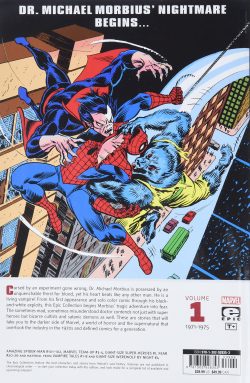
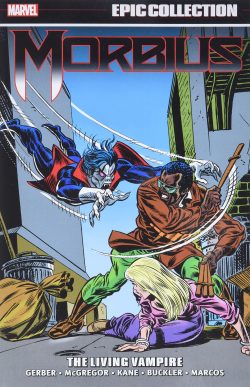
Morbius Epic Collection volume 1: The Living Vampire 1971-1975


By Roy Thomas, Steve Gerber, Don McGregor, Gerry Conway, Mike Friedrich, Doug Moench, Gil Kane, Pablo Marcos, Ross Andru, Paul Gulacy, P. Craig Russell, Tom Sutton, Rich Buckler, Luiz Dominguez, Virgil Redondo, Mike Vosburg, Frank Robbins & various (DC Comics)
ISBN: 978-1-3029-2835-3 (TPB/Digital edition)

One of the most crucial aspects defining classical horror archetypes and characters is tragedy in equal amount to fear and violence. Frankenstein’s monster and werewolves are more victims than villains and even true predators like Dracula wed desire to necessity to underpin their dark depredations. This factor was the prime driver of Marvel’s many misunderstood monster stars in the early 1970s, and none more so than doomed researcher Michael Morbius who surrendered his humanity in service of physical survival and paid the price in shame, regret and guilt every time his thirst resurged….

This century’s transition of Marvel’s print canon to every size of screen seems unstoppable and with their pioneering horror hero/villain now a film presence, the company released a wave of collections to support the release. The most comprehensive and contextually crucial are the Epic Collections revisiting his life in more or less chronological order.

This initial titanic tome re-presenting Amazing Spider-Man #101-102; Marvel Team-Up #3-4; Giant-Size Super-Heroes #1; (Adventure into) Fear #20-26; Giant-Size Werewolf by Night #4, and pertinent material from Vampire Tales #1-8, cumulatively comprising cover-dates October 1971 to April 1975. It traces the science-spawned nosferatu through debut, guest villain shots and ultimately to his time in the spotlight as a confirmed horror hero…

It all begins with The Amazing Spider-Man #101: the second chapter in an anniversary trilogy tale begun by Stan Lee, Gil Kane & Frank Giacoia which saw the wallcrawler accidentally mutate himself and gain four extra arms…

Roy Thomas takes over with ‘A Monster Called… Morbius!’ as our 8-limbed arachnid oddity desperately seeks a way to reverse his condition. Whilst hiding out in Dr. Curt Connors’ Long Island home/lab, Peter Parker stumbles across a costumed horror who drinks human blood. The newcomer has just reached shore fleeing from a ship that he left a charnel house. Making matters even worse is Connors’ sudden arrival in scaly savage form of The Lizard. Suddenly surprised and always enraged, the saurian attacks, set on killing all intruders…

Amongst the many things banned by the Comics Code Authority in 1954 were horror staples zombies, werewolves and vampires, but changing tastes and spiralling costs of the era were seeing superhero titles dropping like flies in a blizzard.

With interest in suspense and the supernatural growing globally , all publishers pushed for a return to scary comics, and the covert introduction of a “Living Vampire” in superhero staple Spider-Man led to another challenge to the CCA, the eventually revision of the Code’s horror section and a resurgent rise of supernatural heroes and titles.

For one month Marvel also experimented with double-sized comic books (DC’s switch to 52-page issues lasted almost a year: August 1971 to June 1972 cover-dates). Thus, Amazing Spider-Man #102 featured a bombastic 3-chapter blockbuster brawl beginning with ‘Vampire at Large!’ wherein the octo-webspinner and anthropoid reptile joined forces to hunt a science-spawned bloodsucker after discovering a factor in the bitey brute’s saliva could cure both part-time monsters’ respective conditions.

‘The Way it Began’ abruptly diverges from the main narrative to present the tragic tale of Nobel Prize winning biologist Michael Morbius and how be turned himself into a haunted night-horror in hopes of curing his fatal blood disease, before ‘The Curse and the Cure!’ brought a blistering conclusion: restoring the status quo and requisite appendage-count…

Gerry Conway assumed the writer’s role for the third appearance of the living (not dead; never ever undead but “Living”, okay?), breathing humanoid predator who drank blood to live, in Marvel Team-Up #3 (July 1972). Illustrated by Ross Andru & Giacoia) it saw Spidey and Human Torch Johnny Storm hunting a resurgent Morbius after he attacks student Jefferson Bolt and somehow passes on his plague of thirst.

The conflicted scientist still seeks a cure and tracks old colleague Hans Jorgenson to Parker’s college, but his now-vampiric servant Bolt wants just what all true bloodsuckers want in ‘The Power to Purge!’

The horror was still acting the villain in MTU #4, as the Torch was replaced by most of Marvel’s sole mutant team (The Beast having gone all hairy – and solo – in another science-based workaround to publish comic book monsters who were anything but supernatural) in ‘And Then… the X-Men!’

This enthralling thriller was magnificently illustrated by Kane at the top of his game and inked by Steve Mitchell, with the webslinger and X-Men at odds while both hunting the missing Jorgenson. After the unavoidable butting of heads, the heroes united to overcome Morbius and left him for Professor Charles Xavier to contain or cure…

Sadly, as we already know, his Nobel Prize-winning research only led to the death of his greatest friend and colleague, the abandonment of his true love and an unlife sentence as a rampaging killer…

Like Hawkeye, The Punisher, Wolverine and many others, Morbius followed the classic Marvel character arc and tradition of villain-turned-hero, but he fits far more in the mould of Doctor Doom, Magneto, The Hulk and Namor the Sub-Mariner: a driven protagonist whose needs and agendas generally set him apart from and in conflict with society and civilisation. Despite his every wish and effort, Morbius is repeatedly forced to feed on humanity: a victim of his own mutated body.

As the superhero decline continued and horror bloomed, Morbius found refuge in Marvel’s black-&-white magazines. Designated mature material, these titles skated around Comics Code rules, offering adult scenes and themes and an early home for numerous horror stars, barbarians like Conan and Kull, as well as more sophisticated superhero fare for The Punisher, Mockingbird, Moon Knight and others.

Vampire Tales #1 launched in August 1973 with ‘Morbius’ as lead feature. Following the painted cover by Esteban Maroto, contents page and vintage vamp movie still, a moody monochrome shocker by Steve Gerber & Pablo Marcos details the bloodsucker’s relocation to Los Angeles and immersion in its wild night life scene as he searches for former lover Martine… Instead he became entangled with sinister swinger Carolyn: a satanic cultist looking for recruits …and victims…

Lured to a séance with spiritualist Madame Laera, Morbius is intended to feed a demon but instead turns the tables on his attackers…

The bloody predator was a constant presence there, but in this instance story-sense overrules chronology and that first outing is followed by a return to four-colour publishing with a classic monster team-up from Giant-Size Super-Heroes #1 (June 1974).

With the monster boom in full swing, Marvel during this period flooded newsstands with horror antiheroes. Morbius had already launched in his own newsstand, code-sanctioned series but is here cannily paired with another of  the Amazing Spider-Mans’s eeriest enemies in a double-length epic as ‘Man-Wolf at Midnight!’ (Conway, Kane & Mike Esposito) finds John Jameson again gripped by murderous moon-madness. Now, however, the tormented former astronaut was controlled by the Living Vampire and used to help the bloodsucker secure a possible cure for his appalling condition ‘When Strikes the Vampire!’

The saga then shifts to (Adventure into) Fear #20 (cover-dated February 1973). The title had previously hosted the macabre Man-Thing, and his/its promotion to a solo title gave Morbius opportunity to spread his own (glider) wings. Spawned by scripter Mike Friedrich and artists Paul Gulacy, Jack Abel & George Roussos, ‘Morbius the Living Vampire!’ revealed how the bloodsucker escaped X-Men captivity before moving to Los Angeles to live (whenever possible) off victims who deserved his voracious bite.

The initial tale also set up a bizarre relationship with Rabbi Krause and Reverend Daemond who sought to cure him, before one was exposed as a human devil, catapulting Morbius into intergalactic conflict that had shaped humanity over millennia.

That began in Fear #21 as ‘Project: Second Genesis!’ – by Gerber, Kane & Vince Colletta – sees Morbius ordered to consume a most remarkable little girl by Daemond. Despite his best intentions and all his moral compunctions, the vampire succumbs to temptation and attacks the child Tara only to face her super-powered future-self.

He is then reluctantly recruited by a cult of alien technologists who claim to have shepherded homo sapiens from barbarism to civilisation. These “Caretakers” are trying to create a race of supermen but are losing a secret war with Daemon.

By the time Morbius returns to the reverend’s fold however, the mage and his acolyte – Martine – have summoned cat demon Balkatar to destroy the Living Vampire…

Illustrated by Rich Buckler & Luis Dominguez ‘…This Vampire Must Die!’ finds Morbius easily overwhelmed before the victorious demon abruptly defies Daemond, bringing his foe to another realm – The Land Within – to become a very grim saviour. His kind breed but do not die and their king wants Morbius to cull the overcrowded herd by acting as an invited apex predator…

A little fan side note: this storyline fed into Gerber’s later arcs in The Defenders and Guardians of the Galaxy so continuity completists should pay close attention…

Instead the appalled vampire escapes and discovers he is on another planet, standing ‘Alone Against Arcturus!’ (Fear #23, by Gerber, P. Craig Russell & Colletta). The world has been devastated by genetic conflagration and is now populated by automatons, cyborgs and mutants who were once the same race as the Caretakers. They long only for death…

Realising the same unresolved conflict is currently unfolding on Earth, Morbius employs alien technology and volunteer “meals” to ‘Return to Terror!’ and his birthworld in #24 (October 1974, and inked by Jack Abel). Tragically the ship crash lands in front of Blade the Vampire Slayer

Morbius has still not met an actual vampire and thinks he’s fighting a crazy man whilst Blade believes he’s facing a blood sucker from space and the brutal clash ends inconclusively. In the aftermath Morbius treks back to LA to find the war between Daemond and the Caretakers has intensified…

We now travel back to October 1973 for a run of Vampire Tales appearances starting with #2 and ‘The Blood Sacrifice of Amanda Saint!’ with Don McGregor, Buckler & Marcos revealing how a potential snack becomes an unlikely and enduring ally after devil cult Demon-Fire targets her.

Forced into the role of rescuer and defender, Morbius endures mystery, monsters, the torture of a toxic family and his own taste of American Gothic as he unceasingly defends Amanda whilst tearing apart a mystic secret society entwined around a culture in decline and modern American mythology.

The fightback begins with ‘Demon Fire!’ (#3 February 1974 and inked by Klaus Janson), moves mercilessly on to Malevolence, Maine and the ‘Lighthouse of the Possessed’ (April 1974, illustrated by Tom Sutton) to repel more monstrosities and turn back a ‘Blood Tide!’ (#5 June, Buckler & Ernie Chua/Chan)…

Morbius took a break in #6 – represented here by the cover and ‘Frontispiece’ – before we resume in Malevolence, Maine with #7, asking ‘Where is Gallows Bend and What the Hell Am I Doing There?’ before events shamble to a chilling conclusion in #8 (December 1974, limned by Mike Vosburg & Frank Chiaramonte) at ‘High Midnight’ presenting a final clash with hidden manipulators Apocalypse and Death-Flame and a return to less complex exploits in the colour comics…

The monochrome madness was supported  throughout by painted covers from JAD, Boris, & Maroto and was all augmented by essays, photo-features and material from the magazines.

Also cover-dated December 1974, Fear #25 sported a Gerber plot and Doug Moench script  for Frank Robbins & Frank Giacoia to illustrate. After briskly recapitulating the Caretakers of Arcturus storyline ‘And What of a Vampire’s Blood?’ rapidly brings events to a conclusion as Morbius’ presence triggers a premature final battle between the ancient schemers, Daemond, Martine, Tara,  and the freshly-hatched Children of the Comet, resulting in ‘A Stillborn Genesis!’ (Moench, Robbins & Giacoia in #26, February 1975) and an abrupt change of direction…

That’s for the next volume however, whilst here we enjoy a crossover clash from April 1975’s Giant-Size Werewolf by Night #4 which brings the story portion of this pulse-pounding package to a close with a long-delayed and anticipated clash with fellow hostage to macabre fortune Jack Russell.

Cursed with uncontrolled lycanthropy under a full moon, and also a California kid, he endured ‘A Meeting of Blood’ (by Moench & Virgil Redondo) after the mutated biologist tracks Martine following Daemond’s destruction and discovers a possible cure for his own exsanguinary condition.

Unfortunately, the chase brings him into savage and inconclusive combat with a certain hairy hellion and the solution is forever lost…

This initial outing comes with a wealth of extras beginning with 9 house ads from 1973-1974; editorial page ‘Mail it to Morbius’ from Fear #21; un-inked original art pages by Kane; full art originals by Gulacy & Abel, Russell, Colletta & Abel; cover art by Kane, Giacoia, John Romita Sr., and Ron Wilson.

The compendium concludes with cover reproductions of Marvel Treasury Edition #14 (1977: front by Kane & Giacoia, back by Romita Sr., plus contents page by Dave Cockrum); #18 (1978: front & back by Bob Budiansky & Chan); cover galleries of Marvel Tales – #234 (Todd McFarlane), #252 (Marshal Rogers) and 253 (Moebius & Sylvain) – Spider-Man Megazine #3-4 (Ron Frenz/Stuart Immonen), Spider-Man Strange Adventures (Steve Lightle) and Marvel Selects: Spider-Man #2-3 4 (Mike Wieringo).

Compelling, complex, dark, often daft and always fretfully poised on the tightrope between superhero shenanigans and antihero angst, Morbius is one of Marvel’s most fluid and versatile characters, and can honestly promise something to please every type of fan or casual reader. Moreover, there’s even better to come that won’t work unless you take a big bite out of this tempting tome.
© 2021 MARVEL.

Almost Silent


By Jason, translated by Kim Thompson (Fantagraphics Books)
ISBN: 978-1-606-99315-6 (HB/Digital edition)

John Arne Saeterrøy, who works under the pen-name Jason, was born in Molde, Norway in 1965, and appeared on the international cartoonists’ scene at age 30 with his first graphic novel Lomma full ay regn (Pocket Full of Rain) which won that year’s Sproing Award (Norway’s biggest comics prize).

He followed with the series Mjau Mjau (winning another Sproing in 2001) and in 2002 turned almost exclusively to producing graphic novels. Now an international star, he has won seven major awards from such disparate regions as France, Slovakia and the USA.

Here the fine folks at Fantagraphics collected four of his earliest graphic novels in a superb hardback companion to the 2009 classic [Low Moon] which provides more of Jason’s surreal and cinematic, darkly hilarious anthropomorphic ruminations on his favourite themes of relationships and loneliness, viewed as ever through a charmingly macabre cast of silent movie archetypes, cinematic monsters and sad sack chumps.

Told in pantomimic progressions rather than full stories – and often as classical chase scenes reminiscent of Britain’s The Benny Hill Show – the wonderment begins with breakthrough album ‘Meow, Baby’ wherein a mummy goes walkabout from his museum sarcophagus encountering bums and gamins, vampires, aliens, angels, devils, skeletons and cops – always so many cops – in hot pursuit…

This primarily monochrome collection is called Almost Silent because it mostly is. Moreover, what dialogue appears is never informative or instructive, merely window dressing. The artwork is displayed in formalised page layouts rendered in a minimalist evolution of Hergé’s Claire Ligne style: solid blacks, thick lines and settings of seductive simplicity unwinding like an unending, infinite zoetrope show. These early works are collections of gags and situations more experienced than read.

A second untitled tale follows the perceived social inadequacies of males hungry for love: a werewolf, caveman – complete with courting cudgel, a Martian, Frankenstein’s monster and even Elvis. All try and die in the modern dating whirl…

The next sequence introduces cannibal ghouls and a movie-buff Travis Bickle/Arnold Schwarzenegger wannabe also starving for acceptance, and continues with the bleakly comedic ‘Return of the Mummy’ and a delightfully tongue in cheek pastiche of Tintin and Blake and Mortimer entitled ‘The Mummy’s Secret’, featuring the entire ghastly cast, before ending with a fascinating selection of 3-panel gag strips.

The next featured volume is ‘Tell Me Something’: a more ambitiously visual outing that acknowledges its antecedents and influences by using silent movie dialogue cards instead of word balloons. It follows a plucky heroine as she searches for affection in all the wrong places with her Harold Lloyd-like would-be beau. Also in attendance are the usual cast of filmic phenomenons…

‘You Can’t Get There from Here’ concentrates mainly on the 1930s movie Frankenstein cast: the monsters, their equally artificial wives, their lovelorn and covetous creators and even the Igors: misshapen, wizened assistants also all seeking that one special person – or thing. Here the art is supplanted by the startling and highly effective addition of bronze inks for a compelling duo-tone effect that sits oddly well with the beast’s bittersweet search for his stolen, bespoke bride.

We conclude with a rather riotous adventure romp. ‘The Living and the Dead’ details a perfect first date interrupted by the rising of the unquiet dead and end of civilisation in the rotting teeth of carnivorous zombies on their final march – possibly the funniest and most romantic yarn in the whole book.

Jason’s work always jumps directly into the reader’s brain and heart, using the beastly and unnatural to ask gentle questions about basic human needs in a wicked quest for answers. That you don’t ever notice the deep stuff because of the clever gags and safe, familiar “funny-animal” characters should indicate just how good a cartoonist he is.

His comic tales are strictly for adults but allow us all to look at the world through wide-open childish eyes. He is a taste instantly acquired and a creator any fan should move to the top of the “Must-Have” list, so consider this superb hardback your guaranteed entry into his fabulous fun world…
© 2009 Jason. All rights reserved.

One Beautiful Spring Day


By Jim Woodring (Fantagraphics Books)
ISBN: 978-1-68396-555-8 (TPB/Digital edition) 978-1-68396-588-6 (slipcased HB)

There have always been uniquely gifted, driven comics creators who defy categorisation… or even description. My picks for that elite pantheon of artisans includes Kirby, Ditko, Segar, Hergé, Herriman, Will Eisner, Osamu Tezuka, Robert Crumb, Daniel Clowes, Franquin, Frank Bellamy, Basil Wolverton, Mort Meskin, Kim Deitch, Joe Kubert, Carmine Infantino, Eric Bradbury, Frank Hampson, Tony Millionaire, Alex Niño, Neal Adams, Richard Corben, Wally Wood and a few others who all brought something utterly personal and universally influential to their work just beyond the reviewer’s skills (mine certainly) to elucidate, encapsulate or convey.

They are all perfect in their own way and so emphatically wonderful that no collection of praise or analysis can do them justice. You just have to read their stuff for yourself.

Arguably at the top of that distinguished heap of graphic glitterati sits Jim Woodring. It’s a position he has maintained for years and appears capable of holding for generations to come.

Woodring’s work has always been challenging, funny, spiritual, grotesque, philosophical, heartbreaking, beautiful and extremely scary. Moreover, even after reading and believing that sentence you will still be absolutely unprepared for what awaits the first time you encounter any of his books – and even more so if you’ve already seen everything he’s created.

Celebrated as a cartoonist, animator, fine artist, toy-maker and artistic Renaissance man, Woodring’s eccentric output has delighted far too small and select an audience since 1980 and his official mini-comics forays. Born in Los Angeles in 1952, Woodring suffered delusions and hallucinations as a child and regularly believed his parents wanted to kill him.

These traumas seemingly sensitized and attuned him to symbolism and pictorial expression as well as opening him to assorted philosophies and belief systems. The young lad managed his “apparitions” by drawing them as strips in the waking world where he had control of them. Overcoming problems with school, drugs and alcohol, Woodring was eventually diagnosed with autism and prosopagnosia, but by then he had a discovered the power of Art.

He turned his life around through his own determination and by the inspiration of comics masters like Kirby, Ernie Bushmiller, Gil Kane and Crumb, classical fantasists such as Pieter Brueghel, Hieronymus Bosch and particularly Salvador Dali, and the animations of the Fleischer Brothers, Tex Avery and Walt Disney.

Woodring found surcease from a lifetime of punishing dreams by pictorializing nightmares and through following Buddhism, Taoism and the Hindu philosophy of Vedanta. After working as a farm labourer, garbageman and TV cartoon animator – with occasional comics side jobs like colouring the Roy Thomas/Gil Kane adaptation of the Ring of the Nibelungs, illustrating 1997’s Smokey the Bear, Friend of the Forest, and scripting stints on Aliens and Star Wars – Woodring began fully sharing the messages from his subconscious. He had begun self-publishing his autobiographical, “autojournal” comics in 1980, and seven years later was picked up by Fantagraphics Comics and thereafter all of us…

Readers who avidly adored his groundbreaking, oneirically autobiographical magazine Jim and its notional spin-off series Frank (with graphic novel Weathercraft winning The Stranger 2010 Genius Award for Literature) were joined by fans of Tantalizing Stories, Seeing Things or more mainstream features like his Star Wars and Aliens tales for Dark Horse Comics but, always, there was the promise of greater surprises in his next story…

An accomplished storytelling technician these days, Woodring grows rather than constructs solidly surreal, abstractly authentic, wildly rational, primal cartoon universes, wherein his meticulous, clean-lined, sturdily ethereal, mannered blend of woodblock prints, R. Crumb landscapes, expressionist dreamscapes, religious art and monstrous phantasmagoria all live and play …and far too often, eat each other.

His stories follow a logical, progressional proto-narrative – often a surging, non-stop chase from one insane invention to the next – layered with multiple levels of meaning yet totally devoid of speech or words, boldly assuming the intense involvement of the reader will complete the creative circuit.

This compelling collection is available digitally but works best as the spiffy vellum-cased archival paperback or limited edition boxed hardback: each iteration a superbly recomposed compilation combining earlier segments of his constantly unfolding and refolding saga, now justifiably treated as a treasured artefact… and ideal gift…

Gathered – or maybe corralled – here are the previously-published contents of Congress of the Animals, Fran and Poochytown, all deftly rearranged and supplemented by a hundred pages of new and previously unseen material.

Set in the general environs of Woodring’s wickedly warped other place – “The Unifactor” – here is a wild, weird and welcome return to a land of constant change and intense self-examination, where all motives are suspect and all rewards should be regarded as a trap. And here cheerfully upbeat Frank goes for another exceptionally eventful walk in the sunshine…

Laminating this vertiginous vehicle with an even crueller patina is lovelorn tragedy and loss as Fran adds to the ongoing tribulations of dog-faced Frank: her own perilous perambulations of innocence lost displays pride, arrogance, casual self-deceit, smug self-absorption and inflated ego as big as her former beau’s and leads to a shattering downfall just as punishing.

Put bluntly, Fran was Frank’s wonderful girlfriend and through mishap, misunderstanding, anger and intolerance he lost her. Now, no matter what he does or wheresoever he wanders with his faithful sidekicks at his side, poor Frank just can’t make things right and perfect and good again. Through madcap chases, introspective exploration and the inevitable direly dreadful meetings and menacings in innumerable alternate dimensions, True Love takes a kicking …and all without a single word of dialogue or description.

Here, the drawn image is always king, even if the queen has gone forever – or is it just a day?

Many Woodring regulars return, as both Krazy Kat-like ingénues work things out on the run through a myriad of strange uncanny places. There are absolute mountains of bizarre, devilish household appliances, writhy clawing things, toothy tentacle things and the unspeakable Thingy-things inhabiting the distressingly logical traumic universe.

Jim Woodring’s work is not to everyone’s taste or sensibilities – otherwise why would I need to plug his work so earnestly? – and, as ever, these drawings have the perilous propensity to repeat like cucumber and make one jump long after the book has been put away, but he is an undisputed master of graphic narrative and affirmed innovator, always making new art to challenge us and himself. His is a dreamscape of affable terror and he is can make us love it and leave us hungry for more.

Are you feeling peckish yet…?
© 2022 Jim Woodring. This edition © 2022 Fantagraphics Books. All rights reserved.