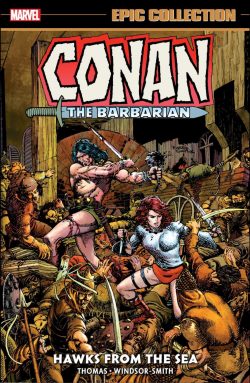
Conan the Barbarian Epic Collection: volume 2: Hawks from the Sea 1972-1973


By Roy Thomas & Barry Windsor-Smith, with Michael Moorcock, James Cawthorn, Gil Kane, John Buscema, Sal Buscema & various (Marvel)
ISBN: 978-1-3029-2655-7 (TPB)

Win’s Christmas Gift Recommendation: Sensational Sagas for All Seasons… 9/10

During the 1970’s the American comic book industry opened up after more than 15 years of cautiously calcified publishing practises in response to the censorious oversight of the self- inflicted Comics Code Authority: created to police the publishers’ product after the industry suffered its very own McCarthy-style 1950s Witch-hunt.

One of the first genres revisited was Horror/Mystery comics and from that sprang adapted pulp legend Conan the Cimmerian, via an anthological yarn in Chamber of Darkness #4, whose hero bore deliberate thematic resemblance to the Barbarian. It was written by Roy Thomas and drawn by Barry (now Windsor-) Smith, a recent Marvel find, and one who was gradually breaking out of the company’s all-encompassing Jack Kirby house-style.

Despite some early teething problems – including being cancelled and reinstated in the same month – the comic book adventures of Robert E. Howard’s brawny warrior soon became as big a success as the revived prose paperbacks which had heralded a world resurgence in tales of fantasy and the supernatural.

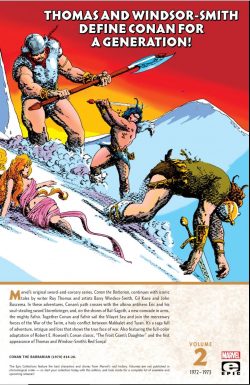
After decades away, the brawny brute recently returned to the Aegis of Marvel, subtitled “the Original Marvel Years” due to the character’s sojourn with other publishers and intellectual properties rights holders. This second selection of groundbreaking action fantasy yarns features the contents of Conan the Barbarian #14-26 spanning March 1972-May 1973 – a period when the character was swiftly becoming the darling of the Comics world – and features two creators riding the crest of that creative wave. Digitally remastered and available in trade paperback or digital formats, these absorbing arcane adventures sparked a revolution in comics and a franchising empire in my youth, and are certainly good enough to do so once again.

As we hurtle back in time approximately 12,000 years into a forgotten age of wonders, the dramas open with a classic map of ‘The Hyborean Age of Conan’ plus an accompanying quote I’m sure every devoted acolyte already knows by heart…

The fabulous pictorial fantasy resumes with a tempestuous transatlantic team-up as Conan meets Michael Moorcock’s groundbreaking icon Elric of Melniboné in a 2-part tale freely adapted by Thomas, Windsor-Smith & Sal Buscema from a treatment by the British cult author and his frequent collaborator James Cawthorn.

Elric was a landmark of the Sword & Sorcery genre: last ruler of a pre-human civilization. The denizens of Melniboné were a race of cruel, arrogant sorcerers: dissolute creatures in a slow, decadent decline after millennia of dominance over the Earth.

An albino, Elric VIII, 428th Emperor of his line, is physically weak and possessed of a brooding, philosophical temperament, caring for nothing save his beautiful cousin Cymoril, even though her brother Prince Yrrkoon openly lusts for her and his throne.

Elric doesn’t even really want to rule, but will execute his duty. He is the only one of his race to see the newly evolved race of Man as a threat to the Empire and owns – or is possessed by – black sword Stormbringer: a magical blade which drinks the souls of its victims to feed their vitality to the albino.

His life is all blood and tragedy, exacerbated by his despised dependence on the black sword and his sworn allegiance to the chimerical Lord of Chaos Arioch…

Heady stuff for those simpler comic book times: the “White Wolf “was the complete antithesis of roistering lusty, impetuous Conan, who was drawn into a trans-dimensional conflict after rescuing old associate Zephra from marauding Chaos Warriors in ‘A Sword Called Stormbringer!’

She was the daughter of Zukala: a wizard who strangely bore no animosity towards the barbarian youth who had shattered his power and maimed his face the last time they clashed. In fact, the mage wanted to hire Conan to stop rival wizard Kulan Gath from rousing a sleeping demon queen from another realm…

The promise of much gold convinces the normally magic-averse warrior to accept the commission and soon he and Zephra are riding hard for the lake beneath which lies Terhali of Melniboné. They are unaware that Xiombarg, Queen of Swords (and rival Lord of Chaos) has despatched her own warriors to intercept them. As they near the haunted mere, the humans meet a gaunt, eerie albino with his own reasons for seeking out Terhali.

After a violent misunderstanding, Conan and Elric call a suspicious truce, intent on stopping Kulan Gath, his patron Xiombarg and a small army of Chaos killers. However, once the unlikely trio of world savers reach submerged city Yagala, they find ‘The Green Empress of Melniboné!’ is wide awake and intends making her apocalyptic mark on the Hyborian Age…

It takes the callous intervention of Arkyn, Lord of Order and Zephra’s willing sacrifice to end the emerald menace before the heartsick heroes part: each riding towards his own foredoomed destiny…

Conan #16 featured a sort-of reprint in ‘The Frost Giant’s Daughter’: a haunting, racy tale written by Howard and originally adapted in black-&-white for Savage Tales #1. It was slotted into the monthly schedule here after Windsor-Smith first resigned – citing punishing deadlines and poor reproduction values of the now monthly title.

The original monochrome magazine was an early attempt to enter the more adult market, so when it was reprinted, Smith’s art had to be judiciously censored to obscure some female body parts youngsters might be corrupted by. Even so, it remains a beautiful piece of work job by Smith and comes with another map of ‘The Hyborian Age of Conan’.

The artist’s resignation triggered a frantic scrabble for a replacement, which happily brought forth avid R.E. Howard fan Gil Kane, who lent his galvanic dynamism to a stunning 2-part adaptation of a prose short story originally starring Celtic hero Black Turlogh O’Brien…

Inked by Ralph Reese, ‘The Gods of Bal-Sagoth’ opens as Conan clashes once again with former foe and current pirate chief Fafnir, before the ship they ride in founders in a storm. As the only survivors, Cimmerian and Vanirman wash ashore on a mist-enshrouded island and fall into a savage power struggle between ambitious castaway Kyrie – who claims to be the incarnation of goddess Aala – and High Priest Gothan who rules the oldest kingdom in the world through sorcery and his puppet King Ska…

Now, the faux deity employs an ancient prophecy concerning two warriors from the sea to make her play, but only slaughter and cataclysm result after the insurgency releases ‘The Thing in the Temple’ (inked by Dan Adkins)…

Clearly refreshed and re-inspired, Windsor-Smith returned with #19 for a defining magnum opus, wherein the Cimmerian and Fafnir – last survivors of drowned Bal-Sagoth – are picked up and pressed into service with the invasion fleet of a power-hungry prince…

Developed and adapted from Howard’s lost historical classic The Shadow of the Vulture, the War of the Tarim was a bold epic embroiling the still-young wanderer in a Holy War between city-state Makkalet and expansionist the Empire of Turan, led by ambitious Prince Yezdigerd. He would become a bitter, life-long enemy of our sword-wielding swashbuckler.

‘Hawks of the Sea’ opens slowly as the outlanders learn the ostensible reason for the conflict – the abduction of the current fleshly receptacle of Living God Tarim – but soon kicks into high gear when Yezdigerd’s initial beachhead in Makkalet is repulsed by sorcery. Only Conan’s inimitable prowess and ingenuity allows any survivors to escape back to the relative safety of their ships…

The Cimmerian later joins a commando raid to steal back the man-god and meets a “temple-wench” who turns out to be the city-state’s embattled queen. The mission goes bloodily awry when Machiavellian high priest Kharam-Akkadunleashes the citadel’s ‘Black Hound of Vengeance!’ Barely surviving the beast’s fury, Conan returns to Yezdigerd’s flagship where – upon discovering what the invaders have done with their own burdensome wounded – he maims the Turanian prince and jumps ship…

Grandeur and terror spike with ‘The Monster of the Monoliths!’ (inked by Adkins, P. Craig Russell, Val Mayerik & Sal Buscema) as Conan – at risk of his life – defects to besieged Makkalet and is promptly commissioned by ineffectual King Eannatum to ride through the lines with a small company of men and seek allies and assistance amongst the Queen’s noble but distant family.

Little does he realise he’s been judged expendable but a worthwhile sacrifice for an arcane antediluvian horror from beyond the mortal realms… but then again, little does the loathsome travesty of nature understand the nature of the man it’s been offered…

Conan the Barbarian #22 was a reprint, represented here by the cover and a ‘Special Hyborian Page Pin-up! before inkers Adkins & Chic Stone and the dream-team restart hostilities in ‘The Shadow of the Vulture!’: setting the scene and introducing trend-setting warrior Red Sonja, a female mercenary who would take fantasy fans by storm, especially since the next chapter, ‘The Song of Red Sonja’ – drawn, inked & coloured by Windsor-Smith – became one of the most popular and reprinted stories of the decade. It went on to win the 1973 Academy of Comic Book Arts Awards in the Best Individual Story (Dramatic) category, but was also the restless illustrator’s colour comic swansong…

On his departure, Thomas commenced a long and fruitful partnership with John Buscema, who, in fact, had been Thomas’s first choice to draw Conan, but was deemed by then-publisher Martin Goodman too valuable to waste on a mere licensed property…

Issue #25 introduced Big John via ‘The Mirrors of Kharam Akkad’ (inked by brother Sal and the legendary John Severin): incorporating a loose adaptation of Howard’s King Kull tale The Mirrors of Tuzun Thune while setting the pieces in play for a spectacular conclusion…

The war ended in raw, grimly ironic fashion in ‘The Hour of the Griffin!’ – inked by Ernie Chua (nee Chan) – and swiftly silenced all the nay-sayers who claimed that Conan would die without its original artist…

Even greater heights would be scaled in the months and years to come…

Also included in this grand grimoire of graphic thrills are another map; 16 pages of original art and covers by Windsor-Smith and Kane plus fascinating documents from the Comics Code Authority, listing art changes needed before they allowed ‘The Frost Giant’ Daughter’ to be published, as well as “before-&-after” changes demanded for ‘The Song of Red Sonja’.

This treasure trove then closes with a selection of past collection covers  by John Buscema & Marie Javins and John Cassaday & Laura Martin.

Stirring, evocative, deeply satisfying, this is one of the best collections in a superb series of a paragon of adventurers. What more does any red-blooded, action-starved fan need to know?
© 2020 Conan Properties International, LLC (“CPI”)

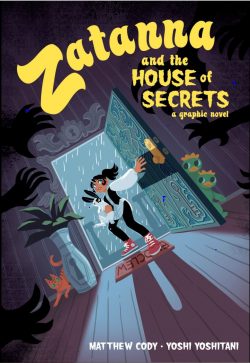
Zatanna and the House of Secrets – A Graphic Novel


By Matthew Cody, Yoshi Yoshitani & various (DC Comics)
ISBN: 978-1- 4012-9070-2 (TPB)

Win’s Christmas Gift Recommendation: Timeless and Magical… 9/10

In recent years DC has opened up its shared superhero universe to generate Original Graphic Novels featuring its stars in stand-alone adventures for the demographic unfortunately dubbed Young Adult. To date, results have been rather hit or miss, but when they’re good, they are very good indeed…

An ideal example is this cheery chiller reinterpreting the formative years of DC’s mystic marvel Zatanna byconcentrating on her early relationship with her oh-so-mysterious parents…

As I’m sure you already know, Zatanna has been around since the 1960s, and boasts an impressive heritage going back to the first moments of comic book superheroes…

With Julius Schwartz and John Broome, writer extraordinaire Gardner Fox invented the Silver Age of comics and laid the foundations of the modern DC universe. They were also canny innovators and Fox was one of the earliest proponents of extended storylines which have since become so familiar to us as “braided crossovers.”

A lawyer by trade, Fox began his comics career in the Golden Age on major and minor features, working in every genre and for most companies. One of the B-list strips he scripted was Zatara; a magician-hero in the Mandrake manner who had fought evil and astounded audiences in the pages of Action and World’s Finest/World’s Best Comics for over a decade, beginning with the very first issues…

He fell from favour as the 1940s ended, fading from memory like so many other outlandish crime-crushers. In 1956, Schwartz & Co reinvented the superhero genre, reintroducing costumed characters based on the company’s past pantheon. Flash, Green Lantern, Hawkman and The Atom were refitted for the sleek, scientific atomic age, and later their legendary predecessors were reincarnated, returning as champions of an alternate Earth.

The experiment became a trend and then inexorable policy, with enduring heroes Superman, Batman, Green Arrow, Aquaman and Wonder Woman retrofitted to match the new world order. The Super Hero was back and the public’s appetite for more seemed inexhaustible.

For their next trick, Fox & Schwartz turned to the vintage magician and presumably found him wanting. However, rather than condemn him to Earth-Two, they instead created the first “legacy hero” by having Zatara reported long-missing with a dutiful daughter, set on a far-reaching quest to find him. Zatanna debuted in Hawkman #4 (October-November 1964) illustrated by the great Murphy Anderson in a tale entitled ‘The Girl who Split in Two’. From that yarn, she moved on to a string of guest shots, winning her own occasional series and becoming a mainstay of the Justice League and greater DCU.

Scripted by children’s author Matthew Cody (Powerless, Super, Villainous) and illustrated by concept artist Yoshi Yoshitani in their debut graphic novel – with letters by Ariana Maher – this stylish spooky shocker is available in paperback and eBook editions. It resets continuity so that she is now a vivacious schoolgirl living in a rather foreboding manse with her stage magician dad. Her mother has been gone for a long time, lost to sickness, but Zatanna and her rabbit Pocus are pretty much happy and normal…

Everything changes one day at school after a pack of bullies are inexplicably changed during a confrontation. On returning home, she overhears a charged conversation between her dad and.. Someone… in his workshop. When he is called away, over-inquisitive Zatanna breaks in and discovers evidence that her mother Sindella is still alive.

Angry and betrayed, she breaks curfew to attend a school dance and encounters a weird kid who steals a key from Pocus’ collar. When she finally gets back to their dilapidated domain she finds the house bizarrely altered and the weird kid already there, cowering behind a bossy woman calling herself the Witch Queen. When Zatara abruptly confronts them all, his daughter’s life changes forever…

Suddenly catapulted into a world where magic is real and deadly dangerous, the feisty girl learns that her father is a true sorcerer: caretaker of magical preserve The House of Secrets and a vast reservoir of arcane power. Sadly, that cannot save him from the cruel Queen and her son Klarion the Witch Boy, and with his defeat Zatanna is trapped in a dread domicile where all reality is overwhelmed by eldritch chaos. Thankfully, Pocus is now able to verbally explain a few facts and rules whilst giving her a crash course in making magic: arming her for a lifechanging duel with cosmic forces and catastrophic showdown with the malefic invaders.

That encompasses redeeming Klarion, rescuing her dad, defeating the Queen and embracing her destiny, but along with newfound responsibility for the House of Secrets comes an incredible unexpected reward…

Bold, beguiling and deliciously uplifting, this magical rite of passage is a slick reinvention  of Zatanna’s wondrous worlds and a rousing reminder that there is magic everywhere.
© 2020 DC Comics. All Rights Reserved.

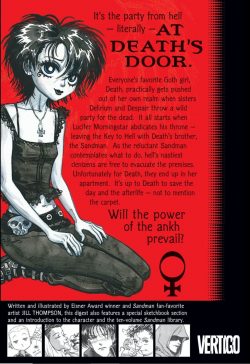
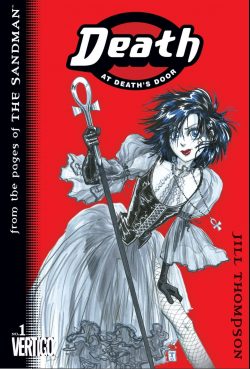
Death: At Death’s Door


By Jill Thompson (DC/Vertigo)
ISBN: 978-1-56389-938-6 (PB)

In 2003, multi-talented Jill Thompson crafted a canny alternative look to the overwhelmingly successful (and imminently televisual) Sandman as reimagined by Neil Gaiman, giving the esoteric eidolon a radical manga treatment for an intriguing reinterpretation of pivotal events from the landmark fantasy series.

During Sandman: Season of Mists Dream Lord Morpheus sought to liberate an old lover from Hell, whence he banished her ten thousand years previously. His confrontation with Lucifer took an unexpected turn when the Lord of the Damned promptly abdicated. Shutting Hell down, he liberated all the demons and souls in punishing bondage, gifting the infernal realm place and the responsibility of it all to the Sandman.

Repercussions of those events resounded for years through the Vertigo corners of the DC Universe – and ultimately onto our TV screens – and here Thompson’s sharp, light tale details background events that might have happened “off-camera” during those tumultuous times.

As Morpheus entertains embassies from gods and devils all eager to obtain the supernatural lebensraum of the Underworld, his sister Death has a couple of problems of her own.

Primarily, deprived of an abode, the damned dead souls from Hell are all turning up on her doorstep, but almost as troubling is the fact that her untrustworthy sisters Desire and Delirium have decided to turn the whole mess into an excuse for the wildest party in the Universe…

Cutesy comedy hi-jinks coupled with chilling suspense and fantasy make for an uncomfortable mix but Thompson makes it work, although the end result might not be to every modern fan’s taste.

Available in monochrome paperback and digital formats, later editions also offer a text afterword/Introduction ‘Death’, samples from Thompson’s sketchbook and a folksy recommended reading list of other books starring Dream, Death and the other Endless.
© 2003 DC Comics. All Rights Reserved.

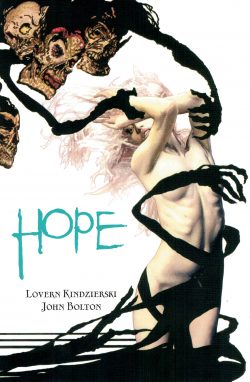
Hope and Hell’s Flaw – Shame books 4 and 5


By Lovern Kindzierski, John Bolton & Todd Klein (Renegade Arts Entertainment)

ISBN: 978-1-98782-548-0 (Hope TPB) ISBN: 978-1-98890389-7 (Hell’s Flaw TPB)

Comics are unequivocally a visual medium and that’s never more ably demonstrated than in a seductively bewitching allegorical fable from writer Lovern Kindzierski, painter John Bolton and letterer Todd Klein.

The story began with three Original Graphic Novels released between 2011 and 2013, before the entire epic was housed in its proper setting: a lavish and sublime full-colour hardback tome, liberally garnished with beguiling bonus features and all the usual digital equivalents.

So, if you’re sitting comfortably with all the doors locked and windows covered, let’s begin with a swift reprise…

Once upon a time in Conception a benevolent but homely witch named Mother Virtue spent all her days doing little favours and grand good deeds for the ordinary and unfortunate, and for these kind actions she was beloved by all. Spiritually, she was probably the most perfect woman in the world, but as for her looks…

She lived life well, growing old and content, but one day, after decades of joyous philanthropy, a single selfish thought flashed idly through her mind: a momentary longing for a daughter and wish for it to be true, that she might be a mother in fact as well as name…

The weak moment was instantly exploited by malign Shadow of Ignorance Slur. Through dark magics, he impregnated the champion of Good with a vile seed of evil, bragging to the wise-woman that her wish-made daughter would be a diabolical demon deserving the name Shame…

Deeply repenting that selfish whim and dreading horrors yet to come, Mother Virtue transformed her idyllic cottage in the woods into a floral prison; a Cradle reluctantly repurposed to isolate and eventually contain the thing growing in her belly. The miserable matron-to-be also assembled Dryads to care for and guard the baby. Once Virtue finally births Shame, she leaves the devil’s burden to be reared in the mystical compound, where it grows strong and cruel but so very beautiful…

After much concentrated effort, however, minions of Shame’s sire breach Cradle’s green ramparts and school the child in vile necromancy to ensure her dire, sordid inheritance. With malefic potency, Shame refashions her guardians into something more pliable and appropriately monstrous…

As the devil’s daughter physically ripens, Slur himself comes to his evil child and through him Shame learns the terrifying power of sex. With the aid of an infernal incubus which has stolen seed from many men, she quickens a child in her own belly and eventually births a beautiful baby girl.

Into that infant Slur pours Mother Virtue’s soul; gorily ripped from the despondent dotard’s aging carcase at the moment of her granddaughter’s delivery. Even the nunnery Virtue had locked herself within was no proof against the marauding Shadow of Ignorance…

With her despised mother now her own child, securely bound within the floral penitentiary, Shame goes out into the world to make her mark…

Pursuit took up the story sixteen years later. Infant Virtue has grown strong and lovely, despite every effort of malformed, mystically mutated Dryads and Shame’s own diabolical sorcery toiling constantly but to no effect in a campaign of corruption, making every day of her young life a savage test of survival. This daily failure makes Shame – now elevated by her own evil efforts to queen of a mortal kingdom – furious beyond belief.

When not burning witches and wise women who might threaten her absolute domination, or having her armies ravage neighbouring realms, the haughty hell-spawn spies upon her offspring/ancestor with infernal devices, but is always bitterly disappointed and enraged….

Elsewhere, a valiant knight lies dying and mournfully bids his afflicted son Merritt farewell. With his last breaths, the swift-failing father dreads how his foolish, naïve, beloved boy will fare in a world ruled by the Queen who has ended him…

The hopeless dreamer is stubborn above all else and – when Merritt discovers the vegetable hell-mound of Cradle – stories his mother told him long ago run again through his head. Odd, inexplicable yearning compels him to overcome appalling arcane odds and break in. He liberates the beautiful prisoner… although she actually does most of the work…

Freed from Cradle, Virtue’s mystic might blooms. Far away, Shame reels. Slur cares little for his daughter but much for his plans: disclosing Merritt is Destiny’s wild card: a Sword of Fate who could reshape the future of humanity. Of course, that depends on whose side he joins…

The young heroes near the capital but are ambushed. After a tremendous mystic clash, Merritt awakens in a palace with a compelling dark-haired vision ministering to his every need and desire. Meanwhile, far below in a rank, eldritch dungeon, Virtue languishes, patiently adjusting plans…

This eldritch esoterically erotic epic concluded with Redemption as Merritt fell deeper under the sultry sway of the dark queen, devolving into her submissive tool of human subjugation, whilst Virtue languished in fetid squalor, weaving intricate magic with the paltry, debased materials at hand…

In the Queen’s arms, Merritt remains a child shaped by his mother’s bedtime stories. When Virtue contacts him, he readily sneaks down to her cell, dreams of nobility and valiant deeds filling his addled head…

With a final confrontation between mother and daughter imminent, Virtue sends Merritt to Hell on a vital quest to recover the Hope of the World. His triumphant return saves the kingdom and redeems the downcast…

As with all great fairy tales, justice is delivered and the world is set right side up again, with Shame dead, Slur confined to the Pit and pure reborn soul Hope in charge…

But what actually happens on the first day of “Happy Ever After”? The answer comes as the initial trilogy is extended via a second tranche of Original Graphic Novels, with Kindzierski & Bolton picking up their eldritch tapestry again in Hope…

The day after Shame’s dismemberment and descent to Hell, chaos and uprising grips the kingdom, forcing Merritt and rebel wisewoman Miss Grace to escort bewildered Hope to safety outside the castle. The war has been won but evil cannot die and the rioting crowds are almost as much a danger as the Queen’s remaining stooges and free-roaming satanic spirits. Moreover, the child’s unschooled mystic force makes her a danger to herself and all around her…

Transporting her to the peaceful countryside fills Merritt with memories of his childhood and reveals what happened to his own mother, subsequently provoking Grace to review her own chequered past. Both have suffered grievously from Shame’s actions, and have no idea that the monster is still active in Hell, manipulating ghosts and demons to effect her return to Earth using the infernal contamination that used to be Cradle…

In the forests, Hope sees visions of forthcoming atrocity, which confirmed by Grace’s scrying, force the caravan to divert towards the once-green hell and meet the threat head on…

To Be Continued…

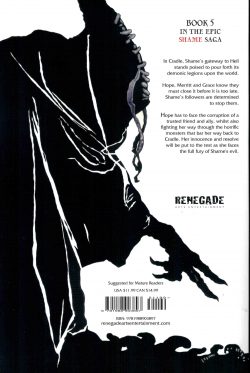
Fifth volume Hell’s Flaw resumes the epic quest, as Shame marshals her forces to secure the pathway from Hell to the living world, while the wary, weary band of heroes struggles to the verdant hellmouth.

Their way is blocked demonic forces too horrible to bear, but Grace has learned to tap Hope’s raw magic to fight them off. Slowly though, she becomes more controlling, her promises to teach the child somehow never materialising, although her need for her as a living battery constantly increases. Eventually, however, during a truly formidable assault, Hope asserts herself to save Merritt and the entire course of the quest changes…

In Hell, Shame’s own cunning endeavours have borne black fruit and she is ready to return…

To Be Concluded…

Epic and fanciful, the fairy tale trappings mask a most mature examination of Good and Evil, and the shimmering photorealistic expressionism of John Bolton’s lush painting transforms the familiar settings of fantasy standards and set-pieces into visions truly bleak and bizarre, perfectly complementing the grim, earthily seedy meta-reality of Kindzierski’s script.

Dark and nasty yet packed with sumptuous seductions of every stripe, the salutary saga of Shame is every adult fantasist’s desire made real and every comic fan’s most fervent anticipation in one irresistible package…

Hope, Hell’s Flaw and Shame: the series conceived and written by Lovern Kindzierski. The story, characters, world and designs are © Lovern Kindzierski, John Bolton and Renegade Arts Canmore Ltd.

Necromantic


By Lovern Kindzierski, David Ross, Geof Isherwood, Chris Chuckry & Taylor Esposito (Renegade Arts Entertainment)
ISBN: 978-1-98890-369-9 (TPB) eISBN: 978-1-98890-373-6

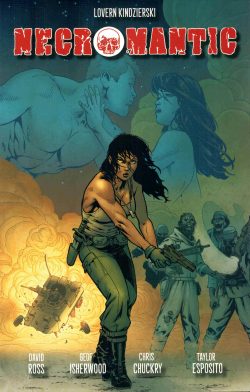
Real and fictionalised espionage tales are equally gripping when done well, and modern drama demands a healthy dose of genre cross-fertilisation. A perfect example catering to modern tastes is this opening salvo from Lovern Kindzierski (author of the Shame trilogies, Underworld, VMT and colourist of most of your favourite US superhero comics) and veteran illustrators David Ross (Star Wars; X-Men; Alpha Flight; Rai) and Geof Isherwood (Suicide Squad; Conan the Barbarian; Silver Surfer; Doctor Strange). In case you’re wondering, the crucial backroom boys here are Chris Chuckry on colours, and Taylor Esposito delivering calligraphic sound, captions and dialogue…

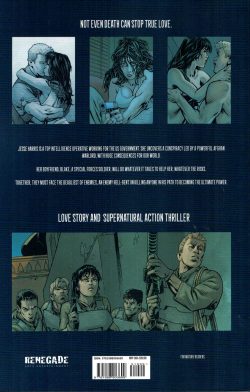
This rowdy, raunchy introductory action-fest reveals a critical turning point in the life of top-gun US Special Forces operative Jesse Harris whose latest successful mission in North Africa is forever blighted in ‘Love’s Labour’s Lost’ after she learns that her beloved Blake Williams has been killed in action.

Harris goes to pieces in ‘Much Ado About Nothing’: not simply from grief and anger, but also because she still sees him. It’s the kind of situation she has secretly endured and ignored since childhood, when she first discovered a facility for seeing and talking to people no one else can see…

Dragged out of shattering despondency by fellow ISA agent Rich Boon, she takes a “soft” mission in Afghanistan, only to find herself dragged to the edge of hell and a bittersweet reunion with Blake. In the course of her duties, she realises the local governor/warlord is a mortal agent of infernal demons pressganging recently deceased human souls into a legion intended to oust the devil, and install a new lord of the Damned. To aid the recruitment program, still-breathing Prince Minyar has bolstered his brutal living forces with rampaging zombies and ruthless killer ghosts only Jesse can perceive…

Facing modern arms and ancient devils revelling in another chance to spill blood, her team are swept away in ‘A Midsummer Night’s Dream’, but Harris gains valuable intel from the King’s vizier – an enslaved spirit determined to end the horrific recruitment program – and eventually a blessed ally when Blake escapes the Pit to render assistance and battle beside her to deliver earth and the afterlife from ‘The Tempest’…

Savage, fast-paced and strictly for adult eyes only, Necromantic is a blockbuster thrill-ride for the action-movie generation and a manic joy for those who still crave their cathartic release in print of digital comics form.
© Lovern Kindzierski and Renegade Arts Canmore Ltd. 2020

Deitch’s Pictorama


By Kim, Simon & Seth Kallen Deitch (Fantagraphics Books)
ISBN: 978-1-560979-52-4 (TPB)

There may be something to this DNA stuff. Eugene Merril “Gene” Deitch (August 8th 1924-April 16th 2020) was a revered, Oscar-winning animator, filmmaker and cartoonist who worked on or created timeless classics like Popeye, Tom & Jerry, Munro, Tom Terrific and Nudnik, whilst his first son Kim has been at the forefront of comics’ avant-garde since the days of the Counter Culture and “underground commix” scene. Kim’s brothers Simon and Seth Kallen have both made their mark in the popular creative arts. Then again, maybe it’s simply growing up exposed to open-minded creativity that makes exemplary artists and artisans…

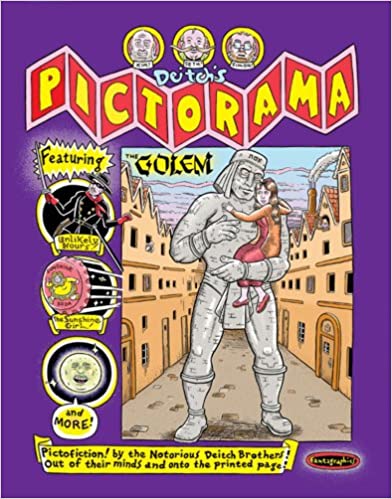
In this classic collaborative venture the Deitch boys crafted a graphic narrative oddity that is both compelling and utterly captivating. Cunningly combining heavily illustrated prose, comics, calligraphy, illustrative lettering, cartooning and plain old strips, the five tales herein contained blend into a tribute to the versatility of illustrated storytelling in all its variations.

It begins more-or-less traditionally with ‘the Sunshine Girl’: a potent and beguiling paean to bottle caps and the all-consuming collecting bug, promptly followed by intriguing prose-ish fantasy, ‘The Golem’. This salutary account in turn leads into the disturbing ‘Unlikely Hours’, and whimsical shaggy (talking) dog story ‘Children of Aruf’.

Wisely leaving the very best until last, the Picto-fictorial fun concludes with the superbly engaging and informative semi-autobiographical ‘The Cop on the Beat, the Man in the Moon and Me’: a particular treat for anyone interested in the history of comics and popular music.

Naturally I’ve been as vague as I can be, because this is a book that revels and rejoices in storytelling, with half the artistry and all the joy coming from reading it for yourself, so – as long you’re an older reader – you should do just that.
© 2008 Gene, Kim, Seth Kallen and Simon Deitch. All Rights Reserved.


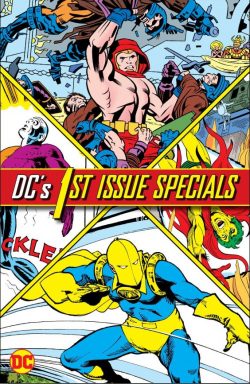
DC’s First Issue Specials


By Jack Kirby, Joe Simon & Jerry Grandenetti, Bob Haney & Ramona Fradon, Robert Kanigher & John Rosenberger, Michael Fleischer & Steve Ditko, Mike Grell, Martin Pasko & Walter Simonson, Gerry Conway & Frank Redondo, Mike Vosburg, Denny O’Neil & various (DC Comics)
ISBN: 978-1779501776 (HB)

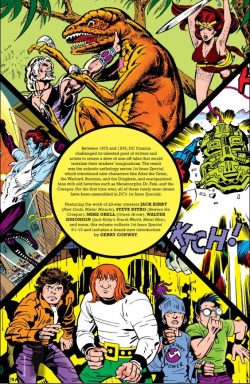
Nobody knows where ideas come from, but at least in comics it’s easy to see how they turn out. Mainstream companies have always favoured try-out vehicles – like Gold Key’s Four Color; Magazine Enterprises’ A-1; DC’s Showcase and The Brave and the Bold; Charlton Bullseye; Marvel Premiere and Marvel Spotlight – and the principle was a sound one, graphically depicted in every first issue. In the late 1950s, editors at National/DC were apparently bombarded with readers’ suggestions for new titles and concepts and the only possible way to feasibly prove which would be popular was to offer test runs and assess the fans reactions. The results kickstarted the Silver Age and introduced dozens of immortal, profitable characters and concepts…

When the comic book revolution seemed to be fading out in the mid-1970s it was revived in part by innovative scheduling and a new awareness of the need to experiment, leading to this sturdy hardback/digital compilation of some genuine hits and near-misses…

Originally printed as 1st Issue Special #1-13, spanning April 1975 to April 1976, it’s supplemented by then-Editor Gerry Conway’s revelatory Introduction ‘If at First You Don’t Succeed’.

Famed for his larger-than-life characters and gigantic, cosmic imaginings, Jack Kirby was an astute, imaginative, spiritual man who had lived through poverty and gangsterism, the Depression, Post-War optimism, Cold War paranoia, political cynicism and the birth and death of peace-seeking counter-cultures. He was open-minded and utterly wedded to the making of comics stories on every imaginable subject. He always believed sequential narrative was worthy of being published as real books beside mankind’s other literary art forms. It’s a genuine shame he didn’t live long enough to see today’s vibrant and vastly varied graphic novel industry.

On ending his third sojourn at the company – just prior to returning to Marvel for 2001: A Space Odyssey/Machine Man, Captain America, Black Panther and more – Kirby unleashed a bunch of new options for DC to expand and capitalise on over the coming decades. Other than Kobra – which was hastily reworked by other hands and given its own series – they all appeared in the new Comics Showcase.

Debuting in the debut 1st Issue Special #1 and inked by D. Bruce Berry, ‘Atlas the Great!’ harks back to the dawn of human civilisation and the blockbusting travails of mankind’s first super-powered champion in a bombastic and tantalizing Sword & Sorcery yarn.

Kirby’s collaborations with fellow industry pioneer Joe Simon always produced dynamite concepts, unforgettable characters, astounding stories and huge sales, no matter what genre avenues they pursued. They blazed trails for so many others to follow; reshaping the nature of American comics with their innovations and sheer quality. Simon & Kirby offered stories shaped by their own sensibilities: always testing fresh ideas and avenues. They chased ideas for comics nobody else ever had before, identifying gaps and probing potential.

Although junior plutocrat Richie Rich had been coining it for Harvey Comics for decades, Simon and old collaborator Jerry Grandenetti looked for drama as well as laughs in the set-up and came up with ‘The Green Team: Boy Millionaires’ for the second 1st Issue.

Here magnate minors The Commodore (shipping), JP Houston (oil) and Cecil Sunbeam (moviemaker) are joined by black shoeshine boy Abdul Smith after a banking error turns the industrious lad into an instant parvenu. Dedicated to adventure and social advancement, the kids then unwisely back ‘The Great American Pleasure Machine’…

The first of a string of potential revivals follows as Metamorpho the Element Man returns courtesy of fabled originators Bob Haney & Ramona Fradon. ‘The Freak and the Billion-Dollar Phantom’ sees Rex Mason seeking to thwart the vengeful schemes of a ghost betrayed by America’s Founding Fathers and resolved to destroy Washington DC.

For #4, Robert Kanigher, John Rosenberger & Vince Colletta introduce a truly novel but now unfortunately dated concept in ‘Lady Cop’.

Earnest, well-meaning and immaculately rendered by the criminally-underappreciated Rosenberger, the tale of college student Liza Warner – who survives a serial killer and takes control of her life by becoming a police officer – is rather heavy-handed, but addresses in ‘Poisoned Love’ issues of controlling boyfriends, parental abuse, underage sex and venereal disease with a degree of mature understanding we’d be hard-pressed to see these days. I think she was one of the few characters still dormant since her debut…

Kirby – with Berry – returned in #5 (August 1975) to revise his own Golden Age stalwart safari guide Paul Kirk replaced by a frustrated lawyer. This passing of a torch sees a devout evil-crusher working for an ancient justice-cult retire: beguiling his nephew – Public Defender Mark Shaw – to become the latest super-powered ‘Manhunter’ battling ancient wickedness with alien super-tech…

A rare but welcome digression into comedy manifested as ‘The Dingbats of Danger Street’ disgraced 1st Issue Special #6, with Mike Royer inking a bizarre and hilarious revival of Kirby’s Kid Gang genre starring four multi-racial street urchins united for survival and annoying the heck out of cheesy thugs and surreal super threats like Jumping Jack and The Gasser…

Steve Ditko’s startling psychedelic avenger The Creeper debuted in early 1968, parlaying his premier in Showcase #73 into a superb but brief run in Beware the Creeper before being cancelled with the sixth issue (March/April 1969) – by which time Ditko had all but abandoned his creation. It was fun and thrilling and – unlike many series which folded at that troubled time – even provided an actual conclusion, but somehow wasn’t satisfactory or what the public wanted.

This was a time when superheroes went into steep decline, with supernatural and genre material regaining prominence throughout the industry. With Fights ‘n’ Tights comics folding all over, Ditko concentrated again on Charlton’s mystery line, the occasional horror piece for Warren and his own projects…

In the years his own comic was dormant, the Creeper enjoyed numerous guest shots in other comics, which established that the city he prowled was in fact Gotham. When Ditko returned to DC in the mid-1970s, 1st Issue Special snapped him up.

Issue #7 (October 1975) gave the quirky crusader another shot at stardom in ‘Menace of the Human Firefly’ written by Michael Fleisher and inked by Mike Royer. It saw reinstated TV journalist Jack Ryder inspecting the fantastic felons in Gotham Penitentiary just as manic lifer Garfield Lynns breaks jail to resume his interrupted costumed career as the master of lighting effects.

By the time the rogue’s brief but brilliant rampage is over, the Creeper has discovered something extremely disturbing about his own ever-evolving abilities…

The story wasn’t enough to immediately restart the rollercoaster, but a few years later DC instituted a policy of giant-sized anthologies and the extra page counts allowed a number of lesser lights to secure back-up slots and shine again. Written and drawn by Ditko, The Creeper became a regular in World’s Finest Comics…

During the troubled 1970s the American comics industry suffered one of the worst of its periodic downturns and publishers desperately cast about for anything to bolster the flagging sales of superhero comics.

By revising their self-imposed industry code of practice (administered by the Comics Code Authority) to allow supernatural and horror comics, publishers tapped into the global revival of interest in spiritualism and the supernatural, and as a by-product opened their doors to Sword-and-Sorcery as a viable genre with Roy Thomas & Barry Windsor-Smith’s take on R. E. Howard’s Conan the Barbarian an early exemplar.

DC launched a host of titles into that budding market but although individually interesting nothing stuck until First Issue Special #8.

With The Warlord, popular Legion of Super-Heroes artist Mike Grell launched his pastiche, homage and tribute to Edgar Rice Burroughs’s works (particularly Pellucidar – At the Earth’s Core) which, after a rather shaky start (just like Conan, the series was cancelled early in the run but rapidly reinstated) went on to become for a time DC’s most popular title.

Blending swords, sorcery and super-science with spectacular, visceral derring-do, the lost land of Skartaris is a venue expertly designed for adventure: stuffed with cavemen, warriors, mythical creatures, dinosaurs and scantily-clad hotties. How could it possibly fail?

The magic commences with ‘Land of Fear!’ as in 1969, U2 spy-pilot Colonel Travis Morgan is shot down whilst filming a secret Soviet base. The embattled aviator manages to fly his plane over the North Pole before ditching, expecting to land on frozen Tundra or pack-ice on the right side of the Iron Curtain.

Instead, he finds himself inside the Earth, marooned in a vast, tropical jungle where the sun never sets. The incredible land is populated by creatures from every era of history and many that never made it into the science books. Plunging head-on into the madness, the baffled airman saves an embattled princess from a hungry saurian before both are captured by soldiers. Taken to the city of Thera, Morgan is taught the language by fellow captive Tara and makes an implacable enemy of the court wizard Deimos. After surviving an assassination attempt the pair escape into the eternal noon of the land beneath the Earth.

Within months Morgan had his own-bimonthly title written, pencilled and inked by Grell.

Another delayed reaction revival in #9 saw Golden Age mage ‘dr. fate’ reintroduced and revamped thanks to arch stylists Martin Pasko & Walter Simonson.

A brilliant imagination and, by his own admission, more designer than artist, Simonson broke through in the standard manner in the early 1970s by illustrating short stories for DC’s anthology comics – a valuable and much-missed proving ground for budding talent. Whilst working on Fritz Leiber’s licensed property Fafhrd and the Gray Mouser for the seminal Sword of Sorcery comic-book, he was commissioned by Archie Goodwin to illustrate groundbreaking, award-winning Manhunter feature for Detective Comics and instantly catapulted to the forefront of comics creators.

Here he and Pasko reintegrate the best elements of the Golden Age run as the master of magic battles accursed and murderous Egyptian mummy Khalis, who seeks to turn back time and unmake the world. The tale allowed the artist to stretch himself and explore his increasing fascination with patterns, symbols and especially typography. It’s a cracking good read too, which redefined and repositioned Fate for decades to come.

Simon & Grandenetti, with Creig Flessel, used #10 to unleash ‘The Outsiders’, a band of truly creepy freaks united by Doctor Goodie/Doc Scary to save the ugly, unwanted and persecuted from bigotry and intolerance after which ‘Code Name: Assassin’ sees Conway expand his concept of Good Bad Men (which created The Punisher) as augmented telekinetic Jonathan Drew declares war on crime and death to evil in a tantalising yarn-of-its-time illustrated by Frank Redondo & Al Milgrom. Assassin would eventually resurface as a Superman villain.

Starman is a character and property DC regularly revises, and First Issue Special #12 (March 1976) saw one of the most radical reinterpretations as Conway, Mike Vosburg & Royer introduce Mikaal Tomas: point-man for an imminent alien invasion of Earth. What could possibly make him betray his people, his duty and his true love to abruptly switch sides and fight for humanity?

The last try-out in this run was without doubt the most significant. Not only did the tale lead to an new series, but it also cemented New Genesis, Apokolips and especially ultimate villain Darkseid as pivotal to the further unfolding of the DCU. The characters have never been long absent from the continuity.

When Kirby moved back to DC in 1970, he created one of the most powerful concepts in comics history. His Fourth World inserted a whole new mythology into the existing DC universe and blew the minds of a generation of readers. Starting with Superman’s Pal Jimmy Olsen, he revived the 1940s kid-team The Newsboy Legion; introduced large-scale cloning in the form of The Project, and hinted the city’s gangsters had otherworldly backers. He then moved on to the Forever People, New Gods and Mister Miracle: an interlinked triptych of projected miniseries forming an epic mosaic.

These titles introduced rival races of gods – dark and light – risen from the ashes of a previous Armageddon to battle forever. And then their conflict spread to Earth…

Kirby’s concepts, as always, fired and inspired his contemporaries and successors. The gods of Apokolips and New Genesis have become a crucial foundation of the DC universe, surviving numerous revisions and retcons periodically bedevilling continuity-hounds.

Many major talents have dabbled with the concept over the years and many titles have come and gone starring Kirby’s creations. It all began with the final 1st Issue Special #13 and ‘Return of the New Gods’.

Almost before the dust had settled from Jack’s departure back to Marvel, his greatest creation was revived. With Conway plotting, Denny O’Neil scripting & Vosburg rendering a resurrection of the uncompleted saga, ‘Lest Night Fall Forever!’sees modern war god Orion battling Apokolyptian enemies on Earth as his wicked sire seeks again the anti-Life Equation. It’s time to assemble a new team and rush to humanity’s aid…

With covers by Kirby, Grandenetti, Fradon, Rosenberger & Dick Giordano, Ditko, Grell, Joe Kubert and Ernie Chan, plus apposite text features from original issues accompanying each tale telling ‘The Story Behind the Story’, this is a true gem for fans that will also impress newbies looking for the odd timeless thrill….
© 1975, 1976, 2020 DC Comics. All Rights Reserved.

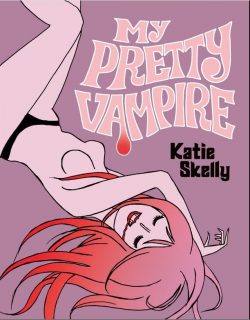
My Pretty Vampire


By Katie Skelly (Fantagraphics Books, Inc.)
ISBN: 978-1-68396-020-1 (HB) 978-1-68396-194-9 (PB)

Illustrator Katie Skelly hails from Brooklyn by way of Bethlehem, Pennsylvania and caught the comics bug early, thanks to her newsstand owner dad. Her Barbarella-inspired series Nurse, Nurse began after graduating from Syracuse University with a BA in Art History and becoming a postgrad at City College of New York.

Thanks to her inquisitive insights, striking art style and potent narrative voice, Skelly has been the subject of many gallery shows and is a star on the global lecture circuit.

My Pretty Vampire was her first graphic novel. Released in 2017 it is a psychedelia-tinged, torrid terror tome – again inspired by Jean-Claude Forrest but also horror-meister director Dario Argento – and followed by Operation Margarine, The Agency and 2020’s historical reappraisal of an infamous murder-pact Maids.

All her works ask uncomfortable questions about the role and permitted position of women in society, as seen through exploitation genres of mass entertainment, and that’s never been more effectively seen than in this “semi-autobiographical” tome (available in present-worthy luxury hardback and accessible eBook formats) recounting the story of Clover, who was a spoiled rich brat until she was turned by a vampire. It did nothing for her disposition and four years later she is a prisoner in a gilded cage, forced to subsist on ox blood as her controlling brother Marcel keeps her “safe”.

Clover has other ideas: most significantly, feeding on what vampires are supposed to…

Finally, she makes her move, escaping up into the grimy sordid world of daylight, downtown sleaze and booze, drugs and debauched walking snacks. Innocently slaughtering her way across town, Clover is pursued by a canny mortal cop, who fixes all of Marcel’s mortal world problems, but his dogged pursuit is methodical and far too slow…

As the naively innocent killer luxuriates in her freedom, the world inexorably closes in and she realises she needs to change…

Amusingly raunchy, stunningly psychedelic and deviously asking very pointed questions about personal liberty and the constricting power of love as a tool of control, My Pretty Vampire is a vivid splash of vibrant, gory fun every contemplative connoisseur of sexual politics and social inequity will adore.
© 2017 Katie Skelly. This edition © 2017 Fantagraphics Books, Inc.

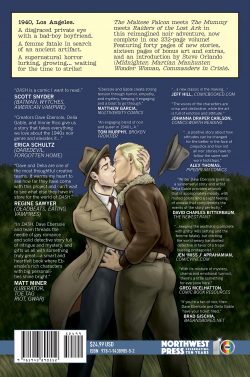
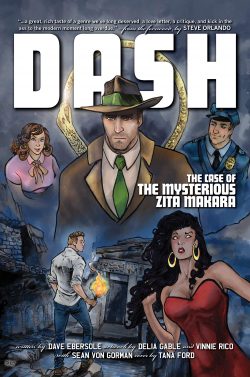
Dash: The Case of the Mysterious Zita Makara


By Dave Ebersole, Delia Gable, Vinnie Rico, Sean Von Gorman, Tana Ford, Josh Lester & various (Northwest Press)
ISBN: 978-1-94-389055-2 (TPB) eISBN 978-1-94-389056-9

The 1930s were a golden age of fantasy fiction, particularly in the genres of pulp adventure, crime stories and supernatural horror. As such it’s a time period accessible to some degree by most modern consumers of escapist entertainment. It was also a time of great hypocrisy, social conservatism – except in the arts and politics – and enforced conformity.

All that gets a great big “So What?” in this deliriously rambunctious melange of mixed media forms wherein writer Dave Ebersole and illustrator Delia Gable finally complete their long-delayed epic tale of boozy, proudly unrepentant queer private eye Dashell Malone, who cautiously negotiates the hostile environment of pre-WWII Los Angeles and outraged former colleagues from the LAPD in search of the mystic horror that destroyed the man he loved…

It all begins in 1940 when exotic and sultry Zita Makara hires him to act as go-between in a shady deal. She is exceptionally unforthcoming with useful details and not a little annoyed at his easy resistance to her charms and attentions… much to the amusement of Dash’s sassy but efficient secretary Cindy Crenshaw…

The PI’s attention is further derailed by the return of his lover, shady ne’er-do-well Johnny Plinketts, so when his diligent investigations of Zita take him to a travelling Egyptian antiquities exhibition, Dash is totally unprepared for the appalling consequences. Dash still has friends on the force – such as patrolman Sal McGillicutty – who is there to break the shocking news that “Plink” has been found dead in incredible circumstances. Moreover, he’s not the first. LA has become the hunting grounds for a ghastly beast…

A convenient suspect for bigoted detective Bruno Perez, Dash is eventually released and falls into a depression until Cindy and Sal get him moving on finding the real killer, but before long the trail leads to an ancient Egyptian heretic cursed by the gods and an undying predator active for ages. This terror has been methodically preparing to turn back time and remake the world and Plink was not only his latest meal but also deeply involved in the plot from the start…

As events spiral and supernatural Hell inescapably comes to Earth, Dash is thrust into the role of mystic avenger and saviour of humanity, but it’s a job the grieving shamus neither wants nor feels qualified to handle…

Augmented by an effusive Introduction and appreciation from Steve Orlando, the book also includes a background-packed ‘Interlude’ from Ebersole and artist Vinnie Rico, as well as a trio of brief ‘Further Cases’.

‘The Case of the Man in the Mask’ (art by Sean Von Gorman) sees Dash dismantle a devious blackmail scheme, whilst Rico’s ‘The Case of the Best Friend on the Police Force’ traces the story of LAPD officers Malone and McGillicutty before Cindy’s origins are explored in ‘The Case of the Wisecracking Secretary’ (Rico again). Rounding up the fun is early promotional art, Afterwords and thank-yous, plus a recipe section inviting you to “make the cocktails you just read about” in ‘You Don’t Have to Drink, But If You Do… Drink Well!’

A superbly engaging romp in the manner of The (1999) Mummy whilst tipping its battered, dusty fedora to classics of film noir and latter-day pulp homages like Raiders of the Lost Ark and Hooten and the Lady, this is a splendid excursion categorically proving that not all rugged he-men get the girl in the end…
© 2020 Dave Ebersole. Dash co-created by Dave Ebersole and Delia Gable. All rights reserved.

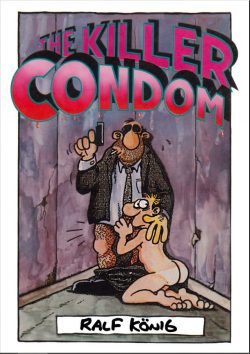
The Killer Condom and Down to the Bone


By Ralf König: translated by Jim Steakley and Jeff Krell (Northwest Press/Ignite! Entertainment)
ISBN: 978-0-96563-238-6 (Killer Condom PB) 978-0-96563-239-3 (Down to the Bone PB)
Digital editions by Northwest Press – no ISBN

Standard Disclaimer: These comedy stories contain rude words, explicit nudity, depictions of graphic and hilarious sexual situations and normal non-Biblical lifestyles. If any of these are likely to offend, what the hell are you doing here anyway?

I’d like to think that most social problems humanity suffers from can be fixed by a little honesty and a lot of communication – especially when it comes to relationships. Being able to laugh together probably helps too. In regard to sexual politics and freedom it’s an attitude Germany adopted decades ago. As a result, the country has an admirable record of acceptance of the LGBTQIA+ community and a broad penetration (yes, I’m awful! And Not Funny!) of gay comics into the general population.

Undisputed king of home-grown graphic novels is Ralf König, a multi-award-winning cartoonist, filmmaker and advocate with almost fifty titles – such as Suck My Duck; Santa Claus Junior; Prototyp; Archetyp; Antityp and Stehaufmännchen– under his belt.

He was born in August 1960 and came out in 1979, crafting an unceasing parade of incisive and hilarious strips and sagas set in and around the nation’s ever-evolving gay scene. Much to his own surprise, he discovered that his work had vaulted the divide from niche market to become a staple of popular mass market book sales. Many of his works have been rereleased as eBooks from Northwest Press.

The two volumes covered here were major sellers all over the world: blending the sordid shock-chic of 1970s American crime films and TV shows like Dirty Harry, The Warriors or Kojak and schlocky Sci Fi-horror (as in Scanners or Critters) with absurdist humour and the delicious notion of New York’s toughest Top Cop being Out, Loud and obnoxiously Proud…

First released in Britain in 1991 and wholly embracing the conceit of being an art house movie, The Killer Condom originally debuted in 1987 as Kondom des Grauens: a whole-hearted genre spoof introducing disgraced and disgraceful New York detective Luigi Macaroni, called on by his reluctant and harassed boss to solve a rash of gory emasculations plaguing the area around the notorious pay-by-the-hour Hotel Quickie.

Brash, gruff and deliberately sleazy, Macaroni is too good a cop to get rid of, despite his brazen attitude, and begins to work just like in every other case his straight colleagues won’t touch. However, as he investigates the brutal street scene he quickly realizes that no human agency is biting the dicks off an escalating stream of unfortunate sinners…

When he picks up a rent boy for a little relief, they too go to the Quickie and soon face terror beyond imagination and every man’s darkest nightmare…

Crafted at a time when HIV/AIDS was ravaging the gay community and scaring the pants off the wider world, this darkly trenchant satire adds a bizarre codicil to the still-ongoing debate about safe sex and condom use, but remains at its core an outrageously funny romp for grown-ups. In 1996, it and sequel Down to the Bone were adapted as a German comedy horror movie, latterly released in America as Killer Condom.
The Killer Condom © 1988 by Editions Kunst der Comics/Ralf König. Revised Edition © 2009, Published by Ignite! Entertainment. All rights reserved.

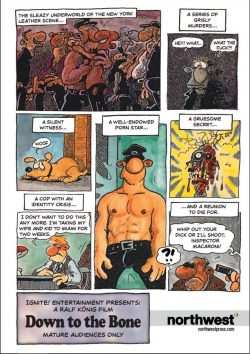
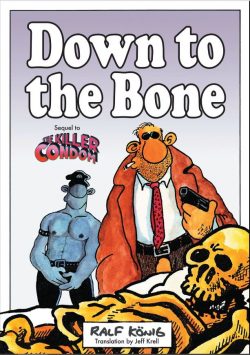
Down to the Bone emerged in 1990. As Bis Auf die Knochen, it heralded the triumphant return of Detective Inspector Macaroni – an even-more embittered man following his failure to maintain a loving relationship. It’s New Year’s in New York and the city is darker and nastier than ever. In the dead of winter, a fresh horror stalks the streets…

When a man hungry for negotiable affection encounters an oddly familiar “leatherman” hooker, it turns into the last trick of his life. Meanwhile, celebrity restauranteur Joe Baluga meets a similar fate, as does another hapless John triggering another campaign of atrocity in the mouldy, worm-infested Big Apple.

This time, it’s not dicks that are disappearing: now entire bodies are being instantly reduced to bleached skeletons and the Captain needs the department’s top Queer to stop the rot. As the third victim is the wealthy son of an infamous billionaire, and just to be safe, the embattled chief assigns painfully straight whitebread Detective Brian Plumley to assist him – affording Macaroni an irresistible opportunity to play pranks and reaffirm his reputation as a total bastard…

As they trawl the leather bars and other outposts of “the scene” they quickly establish an apparent link to the gay porn industry. But other than providing the inspector with a celebrity hook-up, the investigation stalls until a bizarre find proves that what they’re all hunting is far from human…

From there the pieces swiftly fall into place and the escalating horror leads back to an old case involving carnivorous latex prophylactics. With bodies still dropping, Macaroni and a far-more woke Plumley track down an old mad scientist and his ghastly creation and encounter a deranged fundamentalist determined to enforce Biblical mandates at all costs…

Wry, witty, coarsely hysterical, these books marry the surly, unsavoury thrills of urban cop fiction with a bawdily outrageous whimsy that sadly won’t appeal to everybody, but if you love big raucous ludicrous belly laughs with your thrills and chills, these might well become some of your favourite reads.
Down to the Bone © 1990 by Editions Kunst der Comics/Ralf König. Revised Edition © 2011, and published by Ignite! Entertainment. All rights reserved.