The Book of Human Insects


By Osamu Tezuka translated by Mari Morimoto (Vertical)
ISBN: 978-1-935654-20-9 (HB) 978-1935654773 (PB)

Win’s Christmas Gift Recommendation: An Ideal Chiller to Disturb these Dark and Lonely Nights… 9/10

There aren’t many Names in comics. Lots of creators; multi-disciplined or single focussed, who have contributed to the body of the art form, but we don’t have many Global Presences whose contributions have affected generations of readers and aspirants all over the World, like a Mozart or Michelangelo or Shakespeare. There’s just Hergé and Jack Kirby and Osamu Tezuka.

Tezuka was born in Osaka Prefecture on November 3rd 1928 and, as a child, suffered from a severe illness which made his arms swell. The doctor who cured him inspired the boy to study medicine, and although Osamu began his professional drawing career while still at university, he persevered with his studies and qualified as a doctor too. As he faced a career crossroads, his mother advised him to do the thing that made him happiest…

Tezuka never practiced as a healer but the world was gifted with such classic cartoon masterpieces as Tetsuwan Atomu (Astro-boy), Kimba the White Lion, Buddha, Adolf and literally hundreds of other graphic narratives. Along the way, Tezuka incidentally pioneered, if not actually created, the Japanese anime industry.

Able to speak to the hearts and minds of children and adults equally, his works range from the childishly charming to the unsettling – and even terrifying. In 1970-1971 he produced the stark and moody psycho-thriller Ningen Konchuuki for Akita Shonen’s Play Comic, detailing the inexorable rise of a truly different kind of monster for the burgeoning audiences who were growing up and demanding more mature manga fare.

This superb monochrome 364-page hardback/trade paperback and digital delight opens with ‘Spring Cicada’ as failed and broken designer Ryotaro Mizuno ponders the incredible success of golden girl Toshiko Tomura; a bright young thing who has just scooped a major literary prize for her first novel.

Across town, a broken-down derelict also toasts her success whilst in a lonely garret a girl hangs from the end of a noose…

Mizuno confronts Toshiko in her moment of triumph, telling her failed author Kageri Usuba has committed suicide. Their tense exchange is observed by muck-raking journalist Aokusa…

Convinced he’s on to something, the reporter perseveres and discovers Toshiko is a modern renaissance woman: emerging from obscurity to become a celebrated actress while still in her teens, she graduated to directing before becoming an award-winning designer. Abruptly she metamorphosed again, writing the stunning novel The Book of Human Insects. Still in her twenties, there seems to be nothing the angelic girl cannot do…

Further enquiry leads the obsessed newsman to her desolate rural home where the uncanny genius presents an entirely different, almost wanton aspect. Moreover, she keeps there a very creepy waxwork of her dead mother…

Toshiko catches the professional voyeur and agrees to an interview, but before that meeting Aokusa is accosted by shambling drop-out Hyoroku Hachisuka, a once-prominent stage-director who imparts the true story of Toshiko’s resplendent rise to fame and fortune.

Once, the universally approved-of, wholesome girl was a small, timid creature who inveigled her way into his theatre company. Once there, she attached herself like a lamprey to the star, learning her ways and mannerisms. A perfect mimic, Toshiko not only acquired the actress’s skills but also seemed to suck out her talent and inspiration. When the former star quit, Toshiko replaced her…

She performed that same slow consumption with the entire company and then turned her attentions to the director…

Moreover, the seemingly helpless waif was utterly amoral, using sex, slander and perhaps even murder to achieve her ends, which were always short-term: she had no goals or life ambitions, but merely flitted from victim to victim like a wasp seeking its next meal…

Ignoring the warning, Aosuka persists, discovering promising writer Usuba once had a room-mate named Toshiko whom she accused of plagiarising her novel…

Intriguingly, the lonely writer’s recent suicide occurred in extremely suspicious circumstances…

During a TV interview, Toshiko accidentally meets Mizuno again. Revealed as one of her earliest victims, can he possibly be the only man she ever loved?

In ‘Leafhopper’ Aosuka uncovers another of Toshiko’s secrets when he meets for the first and last time her shady associate Arikawa – a murderous anarchist who cleans ups the lovely mimic’s potential embarrassments – just as she tries to renew her relationship with the bitter and far wiser Mizuno.

Toshiko also meets war criminal and right-wing “businessman” Sesson Kabuto who immediately discerns her true nature and keeps a fascinated but wary professional distance from her…

Toshiko operates almost instinctively and according to immediate desire, but she has a terrifying capacity to clean up any potentially damaging loose-ends. After seducing Arikawa she spectacularly removes him during a political assassination and uses the affair to promote her next book…

Meanwhile Mizuno spirals further into despondency until he meets a prostitute who looks like Toshiko and finally finds redeeming true love – of a sort…

Toshiko almost overreaches her abilities when she is arrested by South Korean security forces in ‘Longhorn Beetle’ but is rescued and forced into marriage by a man every inch her ruthless, remorseless equal. This propels her to even more inspired acts of perversion and survival – which consequentially endanger the wellbeing of everybody in Japan – before ‘Katydid’ brings the unique drama to a shocking, bloody, poignant and utterly unexpected conclusion…

Murder-mystery, Greek Tragedy, trenchant melodrama, serial-killer horror story and much more, this supremely adult tale has hardly dated at all since its release and offers a chilling image of those hidden invisible predators who have supplanted vampires, witches and werewolves in the dark corners of our communal consciousness.

The beautiful maiden as lure and amoral predator possibly began with this truly disturbing tale and the story is one which will stay with readers long after the final page is turned…

“God of Manga” Osamu Tezuka died in 1989 but with ever more of his copious canon being released in English there’s plenty of brilliant material for all ages, intellects and inclinations to admire and adore, so why not start right here, right now.

Accept no imitations…
© 2011 by Tezuka Productions. Translation © 2011 by Mari Morimoto and Vertical, Inc. All rights reserved.

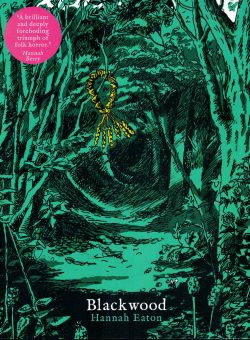
Blackwood


By Hannah Eaton, (Myriad Editions)
ISBN: 978-1-908434-71-5 (PB) eISBN: 978-1-908434-72-2

It’s all about personal tastes in the end, but when I assessed the many horror-themed and Halloween-adjacent review copies despatched from kind creators, PR sentinels and hopeful publishers this month (thank you one and all!), from very early on I knew we had to end on this one. Read on, read Blackwood itself and learn just why…

As nations and cultures, we all think we’re special, but every so often a piece of art comes along and you think “no other nationality could have produced this…” That’s an especially inescapable conclusion after indulging in the glorious melange that is this intriguing annal of Albion.

Rendered and reproduced as soft and subtle pencil drawings, Blackwood is quintessentially English: channelling our beloved countryside, quirky folk of different classes (co-existing if not actually living in harmony), witchcraft, cosy murder-mysteries, corrupt councils, devil-worshipping mystic masons, ordinary people well in over their heads, inbred insularity and racism, an extremely reserved, controlled sense of events getting away from you. There’s also a chilling sense that there’s always more going on under the surface of civility and respectability than meets your eye…

Best of all, as this tale of identical rural murders occurs simultaneously 65 years apart, we get to see – up close and personal – just how much and how little society has changed, especially when the modern-day killing draws in troublesome nosy strangers from outside the community… and even foreigners…

Augmented by an Afterword detailing the generational tale’s real-world inspirations, this is a yarn that only comes from gifted, thoughtful artists like Hannah Eaton (check out Naming Monsters while you’re at it) who have seen a bit of the world before settling down to devise their own.

Channelling delicious notes of Gary Spencer Milledge’s Strangehaven and the first series of Gracechurch, this very human-scaled drama is funny, scary and seductively compelling, like the best Scandi-dramas, but with tea and a Victoria Sponge all laid on.

Is Blackwood a heartfelt paean to a forgotten place and time or a devious attack on oppressive social structures and change-based bias that still hold us apart and down? Yes, no, maybe and mind your own business. It is a chilling, delightful and utterly compelling mystery that, once read, will not be forgotten.

So, go do that then, right?
© Hannah Eaton 2020. All rights reserved.

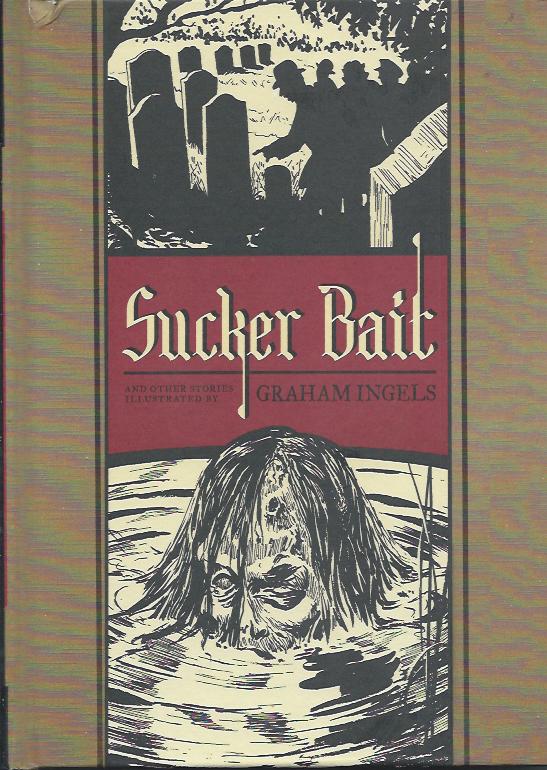
Sucker Bait and Other Stories


By illustrated by Graham Ingels, written by Al Feldstein with Ray Bradbury & Bill Gaines (Fantagraphics Books)
ISBN: 978-1-60699-689-8 (HB)

For most people who have heard of them, EC Comics mean one thing only: shocking, appalling, stomach-turning horror. Moreover, the artist they’re probably picturing – even if they can’t name him – is Graham Ingels, who wryly sighed his work “Ghastly”…

The company began in 1944 when comicbook pioneer Max Gaines – presumably seeing the writing on the wall – sold the superhero properties of his All-American Comics company to half-sister National/DC, retaining only Picture Stories from the Bible. His plan was to produce a line of Educational Comics with schools and church groups as the major target market.

He augmented his flagship title with Picture Stories from American History, Picture Stories from Science and Picture Stories from World History but the worthy projects were all struggling when he died in a boating accident in 1947.

As detailed in the comprehensive closing essay of this superb graphic compilation (‘Crime, Horror, Terror, Gore, Depravity, Disrespect for Established Authority – and Science Fiction Too: the Ups and Downs of EC Comics’ by author, editor, critic and comics fan Ted White), his son William was dragged into the company by unsung hero and Business Manager Sol Cohen who held the company together until the initially unwilling Bill Gaines abandoned his dreams of being a chemistry teacher and transformed the ailing Educational enterprise into Entertaining Comics…

After a few tentative false starts and abortive experiments copying industry fashions, Gaines took advantage of his multi-talented associate Al Feldstein, who promptly graduated from creating teen comedies and westerns into becoming Gaines’ editorial supervisor and co-conspirator.

As they began co-plotting the bulk of EC’s stories together, they changed tack, moving in a boldly impressive fresh direction. Their publishing strategy, wisely utilising the most gifted illustrators in the field, was to tell a “New Trend” of stories aimed at older and more discerning readers, not the mythical semi-literate 8-year-old all comicbooks ostensibly targeted.

From 1950 to 1954 EC was the most innovative and influential publisher in America, dominating the genres of crime, horror, war and science fiction and originating an entirely new beast: the satirical comicbook…

Feldstein had started life as a comedy cartoonist and, after creator/editor Harvey Kurtzman departed in 1956, Al became Mad‘s Editor for the next three decades…

This seventh volume of the Fantagraphics EC Library gathers a mind-boggling selection of Feldstein’s most baroque and grotesquely hilarious horror stories – most co-plotted by companion-in-crime Gaines – and all illuminated by the company’s enigmatic yet unsurpassed master of macabre mood, in a lavish monochrome hardcover or digital edition packed with supplementary interviews, features and dissertations.

It begins with historian and lecturer Bill Mason’s touching and revelatory commentary ‘Mr. Horror Builds his Scream House’ before dipping into this diary of disgust and dread with ‘Hook, Line, and Stinker!’ (Vault of Horror #26, August/September 1952): the tale of a spinster’s vengeance after she finds the gentleman she’s been affianced to for fifteen years spends his weekends in the arms of a young floozy rather than on his precious – and fictitious – fishing trips…

The most memorable assets of EC’s horror titles were the uniquely memorable hosts whose execrable wisecracks bracketed each fantastic yarn. The Vault-Keeper, Crypt-Keeper and Old Witch were the company’s only returning characters during the New Trend era, becoming beloved favourites of the “Fan Addict” readership. Haunt of Fear #14 (July/August 1952) revealed the shocking and hilarious origins of the scurvy sorceress herself in a sublime pastiche of the Christian Nativity dubbed ‘A Little Stranger!’…

A murderous elephant trainer’s infidelities come back to haunt him in circus chiller ‘Squash… Anyone?’ (Tales From the Crypt #32, October/November 1952), whilst in that same month, in Vault of Horror #27, a rat-infested kingdom where starving peasants are tormented by their over-stuffed queen provide grisly meat for ‘A Grim Fairy Tale!’

‘Chatter-Boxed!’ (Haunt of Fear #15, September/October 1952) is a superb blend of maguffins as a man terrified of premature burial takes special steps to ensure he’s never buried alive, but even after factoring in that his wife is always gabbing on the phone, there’s one element he could never have foreseen…

Next follows a wealth of material published in titles cover-dated December 1952/January 1953, beginning with ‘Private Performance’ from Crime SuspenStories #14, wherein a burglar witnesses a murder in an old Vaudevillian’s home before hiding in exactly the wrong place, whilst ‘None but the Lonely Heart!’ (Tales from the Crypt #33) reveals the ultimate downfall of a serial bigamist and black widower.

‘We Ain’t Got No Body’ (Vault of Horror #28), ghoulishly revels in the vengeance of a man murdered by fellow train commuters before ‘Sugar ‘n Spice ‘n…’ (Shock SuspenStories #6) toys wickedly with the fable of Hansel and Gretel, proving some kids get what they deserve…

A pioneering surgeon is blackmailed for decades by his greatest triumph in ‘Nobody There!’ (Haunt of Fear #16, November/December 1952), whilst ‘Hail and Heart-y!’ (from Crime SuspenStories #15 February/March 1953) sees a lazy husband driving his enduring wife to exhaustion and over the edge by feigning disability, before Ingels superbly captures the macabre eccentricity of Ray Bradbury’s story of a crusty dowager too mean to stay decently dead in ‘There Was an Old Woman!’ – from Tales from the Crypt #34 (February/March).

That same month Vault of Horror #29 featured ‘Pickled Pints!’, as unscrupulous rogues buying cut-rate blood from winos push their plastered pumps a little too far, after which Haunt of Fear #17 (January/February) offers the acme of sinister swamp scare stories in ‘Horror We? How’s Bayou?’: a tale of rural madness and supernatural revenge long acclaimed as the greatest EC horror story ever crafted…

An irritated and merciless mummy stalks an Egyptian dig in ‘This Wraps it Up!’ (Tales from the Crypt #35, April/May 1953; the same month Vault of Horror #30 told a truly chilling tale of human retribution when the good citizens of a small town finally find the writer of cruel poison-pen letters in ‘Notes to You!’, after which ‘Pipe Down!’ (Haunt of Fear#18, March/April) goes completely round the bend to describe how a young wife and handsome plumber get rid of her rich old man… and what the victim does about it…

Bradbury’s disturbing yarn ‘The Handler’ was adroitly adapted in Tales from the Crypt #36 (June/July) depicting how an undertaker’s secret liberties – inflicted upon the cadavers in his care – came back to haunt him, whilst over in Vault of Horror #31 that month ‘One Good Turn…’ revealed one little old lady’s gruesome interpretation of the old adage, and Haunt of Fear #19 (May/June 1953) discloses the incredible lengths some men will go to in order to kill vampires in eponymous shocker ‘Sucker Bait!’…

From August/September, ‘The Rover Boys’ in Tales from the Crypt #37 is a purely bonkers tale of brain transplantation gone wild, whilst Vault of Horror #32 offers up more traditional fare with ‘Funereal Disease!’, describing how a murdered miser gets back what he loves most, and ‘Thump Fun!’ (Haunt of Fear #20, July/August) archly revisits Poe’s Tell-Tale Heart whilst adding a little twist…

‘Mournin’ Mess’ (Tales from the Crypt #38, October/November) is a stylish and clever mystery about rich men funding a paupers graveyard – and why – whilst over in Vault of Horror (#32) ‘Strung Along’ depicts the revenge marionettes inflicted on the greedy woman who murdered their elderly puppeteer before the artistic arcana all ends with ‘An Off-Color Heir’ (Haunt of Fear #21, September/October 1953) and the salutary tale of an artist’s wife who discovers just too late her man’s habits and horrific heritage …

Adding final weight to the proceedings is S.C. Ringgenberg’s biography of the tragic genius ‘Graham Ingels’, the aforementioned history of EC and a comprehensively illuminating ‘Behind the Panels: Creator Biographies’ feature by Mason, Spurgeon and Janice Lee.

The short, sweet but severely limited output of EC has been reprinted ad infinitum in the decades since the company died. These astounding stories and art not only changed comics but also infected the larger world through film and television and via the millions of dedicated devotees still addicted to New Trend tales.

However, the most influential stories are somehow the ones least known these days. Although Ingels turned his back on his comics career, ashamed of the furore and frenzy generated by closed-minded bigots in the 1950s, his incredible artistic talent and narrative legacy are finally gaining him the celebrity he should have had in life.

Sucker Bait is a scarily lovely tribute to the sheer ability of an unsung master of comics art and offers a fabulously engaging introduction for every lucky fear fan encountering the material for the very first time. Whether you are an aging fear aficionado or callow contemporary convert, this is a book you should have…
Sucker Bait and Other Stories © 2014 Fantagraphics Books, Inc. All comics stories © 2014 William M. Gaines Agent, Inc., reprinted with permission. All other material © 2014 the respective creators and owners.

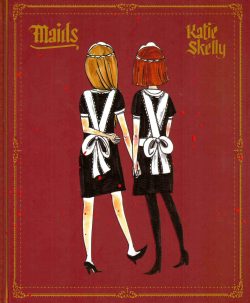
Maids


By Katie Skelly (Fantagraphics Books)
ISBN: 978-1-68396-368-4 (HB)

Sorry for the brief interruption. Disease and deadlines are things you just don’t dick with…

With Halloween pretty much on hold this year, our annual humour/horror fest has been pretty much decimated too. However, if you stretch a point, most of the recommendations over the next few days will qualify…

Illustrator Katie Skelly hails from Brooklyn by way of Bethlehem, Pennsylvania and caught the comics bug early, thanks to her newsstand owner dad. Her Barbarella inspired series Nurse, Nurse began after graduating from Syracuse University with a BA in Art History and becoming a postgrad at City College of New York.

Thanks to her inquisitive insights, striking art style and potent narrative voice, Skelly has been the subject of many gallery shows and is a star on the global lecture circuit.

Her first graphic novel – again inspired by Jean-Claude Forrest but also horror-meister director Dario Argento – was My Pretty Vampire (2017), supplanted by the collection Operation Margarine and The Agency. All her works ask uncomfortable questions about the role and permitted position of women in society as seen through exploitation genres of mass entertainment, and that’s never been more effectively seen than in this “semi-autobiographical” tome (available in present-worthy luxury hardback and accessible eBook formats) recounting the true-crime story of the Papin sisters.

History says that on February 2, 1933, former convent girls Christine and Léa (working as maids for the wealthy Lancelin family in Le Mans) one night bludgeoned and stabbed to death Madame Léonie to and her daughter Genevieve. The case was open and shut but became a Cause Célebre in France after reports of the killers’ early lives and years of service and physical abuse became public. Intellectuals championed them and the case was cited as a perfect example of the dangers of inequality and privilege…

Here, Skelly brings her own incisive interpretation to the case, and it’s a little gem that you will find hard to put down and impossible to forget…
© 2020 Katie Skelly. This edition © 2020 Fantagraphics Books, Inc. All rights reserved.

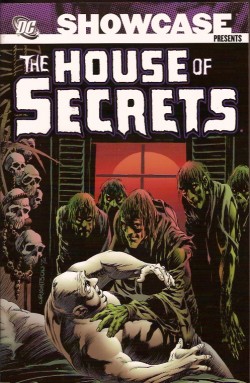
Showcase Presents House of Secrets volume 2


By E. Nelson Bridwell, Bill Meredith, Jack Oleck, John Albano, Lore Shoberg, Sergio Aragonés, Sheldon Mayer, Raymond Marais, Steve Skeates, Bill Riley, Maxene Fabe, Arnold Drake, George Kashdan, Michael Pellowsky, Gerard Conway, Michael Fleisher, Doug Moench, David Michelinie, Gerry Boudreau, Bernie Wrightson, Nestor Redondo, Jack Katz, Tony DeZuñiga, Michael Kaluta, Nick Cardy, Jack Sparling, Vic Catan, Tom Palmer, Mike Sekowsky, Alfredo Alcala, Alex Niño, June Lofamia, Frank Redondo, Abe Ocampo, Luis Dominguez, Ruben Yandoc, E.R. Cruz, Quico Redondo, Rico Rival, Virgilio Redondo, George Tuska, Jim Aparo, Gerry Taloac, Bernard Baily, Jess Jodloman, Fred Carrillo, Flor Dery, Romy Gamboa, Rudy Nebres, Frank Bolle, Nick Cardy, Mike Sekowsky, Ramona Fradon, Gerry Boudreau, George Evans, Arthur Suydam & various (DC Comics)
ISBN: 978-1-84856-472-5 (TPB)

With superheroes on the decline again in the early 1970s, four of the six surviving American newsstand comicbook companies (Archie, Charlton, DC, Gold Key, Harvey and Marvel) relied increasingly on horror and suspense anthologies to bolster flagging sales. Even wholesome Archie briefly produced Red Circle Sorcery/Chillers comics and their teen-comedy core moved gently into whimsical tales of witchcraft, mystery and imagination.

DC’s first generation of mystery titles had followed the end of the first Heroic Age when most of the publishers of the era began releasing crime, romance and horror genre anthologies to recapture the older readership which was drifting away to other mass-market entertainments like television and the movies. As National Comics in 1951, the company bowed to the inevitable and launched a comparatively straightlaced anthology – which nevertheless became one of their longest-running and most influential titles – with the December 1951/January 1952 launch of The House of Mystery.

When a hysterical censorship scandal led to witch-hunting hearings attacking comicbooks and newspaper strips, the industry panicked, adopting a castrating straitjacket of stringent self-regulatory rules and admonitions.

Even though mystery titles produced under the aegis of the Comics Code Authority were sanitised and anodyne affairs in terms of shock and gore, reader appetite for suspense was still high, and in 1956 National introduced sister title The House of Secrets which debuted with a November-December cover-date.

Supernatural thrillers and monster stories were dialled back into marvellously illustrated, genteel, rationalistic, fantasy-adventure vehicles which nonetheless dominated the market until the 1960s when the super-hero (which had begun a renaissance after Julius Schwartz reintroduced the Flash in Showcase #4, 1956) finally overtook them. Green Lantern, Hawkman, the Atom and a host of other costumed cavorters generated a gaudy global bubble of masked myrmidons which even forced the dedicated anthology suspense titles to transform into super-character split-books with Martian Manhunter and Dial H for Hero in House of Mystery and Mark Merlin – later Prince Ra-Man – sharing space with anti-hero Eclipso in House of Secrets.

When the Cape ‘n’ Cowl craziness peaked and popped, Secrets was one of the first casualties and the title folded with the September-October 1966 issue.

However, nothing combats censorship better than falling profits and at the end of the 1960s the Silver Age superhero boom busted again, with many titles gone and some of the industry’s most prestigious series circling the drain …

This real-world Crisis led to the surviving publishers of the field agreeing to loosen their self-imposed restraints against crime and horror comics. Nobody much cared about gangster titles at the time but as the liberalisation coincided with another bump in public interest in all aspects of the Great Unknown, the resurrection of scary stories was a foregone conclusion and obvious “no-brainer.”

Thus, with absolutely no fanfare at all, The House of Secrets rose again with issue #81, (cover-dated August-September 1969) just as big sister The House of Mystery had done a year earlier.

Under a spookily bold banner declaiming “There’s No Escape From… The House of Secrets”, creators veteran and neophyte churned out a massive deluge of spooky, creepy, wryly tongue-in-cheek and often truly scary tales, all introduced by the innocuous and timid Abel; caretaker of a ramshackle, sentient old pile temporarily located somewhere in the Dark Heart of the USA…

This second enthralling and economical monochrome Showcase compendium collects the chilling contents of issues #99-119, spanning August 1972 – September 1973, and also features a stellar selection of covers from artists Michael Kaluta, Bernie Wrightson, Nick Cardy, Jack Sparling and Luis Dominguez.

‘Welcome to the House of Secrets’ by E. Nelson Bridwell & Wrightson began another pensive package of terrors after which ‘Beyond His Imagination’ by Bill Meredith & Nestor Redondo sees a comicbook artist travel to the other side of death in search of inspiration, after which ‘Beat the Devil’ (Jack Oleck, Jack Katz & Tony DeZuniga) dealt with a religious thief who repented too late before ‘Goodbye, Nancy’ by John Albano, Vic Catan, Frank Redondo & Abe Ocampo saw a lonely child go to lethal lengths in her attempts to find a playmate…

A huge boost to the battered American industry at his time was the mass hiring of top Filipino artists whose stylish realism, experience in many genres and incredible work ethic made them an invaluable and highly influential factor of the horror boom. This collection especially is positively brimming with their superb illustrative excellence.

First in issue #100 however is ‘Round-Trip Ticket’ by Lore Shoberg & Tom Palmer, wherein a hippy truth-seeker learns a little more about alternate lifestyles than he bargained for. These comics chillers were frequently leavened by the mordant and wordless cartoon gags of the legendary Sergio Aragonés, who here contributes a trio of gems starring ‘Cain & Abel’before Oleck, Mike Sekowsky & DeZuñiga reveal the fate of an escaped convict who briefly became ‘The Man Who Stopped Time!’ After a page of ‘Abel’s Fables’ cartoons by Shoberg, Oleck & Alfredo Alcala brought the issue to a close with period Voodoo yarn ‘Rest in Peace’…

Clever science fiction courtesy of Sheldon Mayer & Alex Niño opened#101 as ‘Small Invasion’ tells a tale of love, double-cross and vengeance when an alien infiltrator discovers true romance whilst preparing to destroy humanity, after which ‘The Sacrifice’ (Oleck & June Lofamia) pitted Witch against Warlock in a game as old as time…

Aragonés’ ‘Cain & Abel’ page then precedes ‘Hiding Place’ by Raymond Marais & Ruben Yandoc, with a murderous gangster picking the wrong home to invade after which an ‘Abel’s Fables’ page by Shoberg brings the issue to a close.

‘Make a Wish’, by Oleck & E.R. Cruz, led in #102 as a troubled boy periodically escapes the real world – until well-meaning adults take him in hand, whilst ‘The Loser’ (Oleck, Quico Redondo & Ocampo) details a hen-pecked husband who can’t even get his revenge right, and bracketed between a brace of Aragonés’ ‘Abel’s Fables’ Albano & Nestor Redondo shone with the salutary romantic chiller starring ‘A Lonely Monstrosity’…

House of Secrets #103 began with a tale on con men and time travel in ‘Waiting… Waiting… Waiting’ by Mayer & Rico Rival, whilst ‘No Bed of Roses’ (Albano & Sparling) told a unique tale of reincarnation and revenge, before a post-apocalyptic revelation proved that man could never change in ‘The Village on the Edge of Forever’ by Steve Skeates & Niño, before Aragonés wrapped another issue with one of his ‘Cain & Abel’ pages.

In #104, ‘Ghosts Don’t Bother Me… But…’ from Mayer & Nestor & Virgilio Redondo told the sorry story of a hitman who found that his victims didn’t always rest in peace, whilst ‘The Dead Man’s Doll’, by Bill Riley & Alcala, and book-ended by two ‘Abel’s Fables’ by Aragonés & Albano, saw a beloved puppet take vengeance for his owner when the frail fellow was murdered by his uncaring carers, whilst ‘Lend Me an Ear!’ by Oleck & George Tuska saw merciless college pranksters hoisted on their own petard after playing in a morgue…

Issue #105 featured ‘Vampire’: an effective game of Ten Little Indians played out in an old Nevada mine by Maxene Fabe & Gerry Taloac, the gloriously dry ‘Coming Together!’ (Skeates & Jim Aparo) which showed that courage wasn’t everything when demons invaded a small town, and a great old-fashioned murdered man’s revenge yarn in ‘An Axe to Grind’ by Skeates & Alcala, whilst #106, after a magical ‘Welcome to the House of Secrets’ by E. Nelson Bridwell & Wrightson, opened with ‘The Curse of Harappa’ (Fabe & Yandoc) as a man dedicated to wiping out superstition found it wasn’t all nonsense, after which ‘The Island of No Return’ by Albano & Niño displayed the epitome of monstrous abiding terror, and Oleck and Alcala closed the show with a turn-of-the-century joker getting his just deserts in ‘This Will Kill You’.

In #107 Alcala illustrated Oleck’s ‘Skin Deep’: a dark tale of magic masks and ugly people in New Orleans and, after an Aragonés ‘Cain & Abel’, Arnold Drake’s hilarious hen-pecked howler ‘The Night of the Nebish!’ before ‘Winner Take All’ by Skeates & Bernard Baily restores some lethal gravitas to the proceedings when a greedy tramp learns too late the life-lesson of when to let go…

In #108 ‘Act III Eternity’ by George Kashdan & Jess Jodloman describes how a washed-up thespian unsuspectingly took method acting to unfortunate extremes whilst ‘A New Kid on the Block’ (Fabe & Rival) found a new wrinkle in the hoary legend of revivified mummies and ‘The Ghost-Writer’ by Riley & Taloac saw a dissolute author finally pay for taking undeserved credit during his successful career. This issue also featured two more bleak and black ‘Abel’s Fables’ by Aragonés.

HoS #109 held two longer tales; ‘Museum of Nightmares’ by Michael Pellowsky, Fabe & Alcala, in which animated waxworks haunted the last case of a great detective whilst in ‘…And in Death there is No Escape!’, (Albano & Niño) a callous bluebeard and actor of towering ego at last regretted the many sins that had led him to physical immortality and infamous renown. Issue #110 opened with an entertaining vampire tale in ‘Domain of the Dead’ by Oleck & Fred Carrillo, continued with supernatural murder-mystery ‘Safes Have Secrets Too’ by Pellowsky, Fabe & Flor Dery and finished on a beguiling high note with Oleck & Taloac’s ‘Possessed’ as a simple farmer searched in all the wrong places for a deadly witch…

Gerard Conway & DeZuñiga provided a haunting tale of lonely lighthouses and other worlds in #111’s ‘A Watchtower in the Dark’, after which ‘Hair-I-Kari’ by Fabe & Romy Gamboa told a sordid tale of a magic baldness cure and Michael Fleisher & Taloac recounted a bold adventurer’s quest to defeat death in ‘The Land Beyond the Styx!’

In #112 ‘The Witch Doctor’s Magic Cloak’ by Fleisher & Rudy Nebres explored the grotesque consequences of alternative medicine and limb regeneration, after which Conway & Luis Dominguez pastiched Sherlock Holmes to great effect in ‘The Case of the Demon Spawn!’ whilst #113 opened with an all-out monster mash in the delightfully dark ‘Not So Loud – I’m Blind!’ by Doug Moench, Nick Cardy & Mike Sekowsky and after another Aragonés ‘Abel’s Fables’ Oleck & Nestor Redondo unleashed a truly nasty tale of child vampires in ‘Spawns of Satan’ …

HoS #114 led with Fleisher & Frank Bolle’s ‘Night Game’ – a chilling sports-story of corruption in hockey and murder on ice – and close with the same writers’ ‘The Demon and the Rock Star!’, concerning one Hell of a comeback tour and illustrated by Talaoc, whilst #115 featured ‘Nobody Hurts my Brother!’ by Drake & Alcala: a tale of once-conjoined twins who shared each other’s hurts but not morals, after which ‘Remembered Dead’ (Kashdan & Niño) dealt with a wax museum guard’s unhealthy attachment to one of the exhibits, and ‘Every Man my Killer!’, by Kashdan and Nardo & E.R. Cruz, followed a tormented soul the entire world wanted dead…

‘Like Father, Like Son’ by Oleck & Nestor Redondo in #116 followed the rise and fall of a 18th century peasant who sold more than his soul for wealth, love and power, and ‘Puglyon’s Crypt’ by David Michelinie & Ramona Fradon explored with delicious vivacity the obsession of a man determined never to suffer premature burial…

House of Secrets #117 opened with a tale of medieval feuds and bloody vendettas that inevitably led to ‘An Eye for an Eye’ (Oleck & Ernie Chan), whilst ‘Don’t Cry for Uncle Malcolm’ Gerry Boudreau & Niño provided a phantasmagorical glimpse at the power of modern Voodoo, after which another couple of Aragonés ‘Abel’s Fables’ bracket a wickedly ironic vignette entitled ‘Revenge For the Deadly Dummy!’ by Skeates Alcala.

The sinister magic of Hollywood informs the chilling delayed vengeance saga ‘The Very Last Picture Show’ by Fleisher & George Evans which opens #118, after which a ghostly ‘Turnabout’ (Skeates & Quico Redondo) proves too much for a cunning murderess, and Oleck & Fradon display a different look at leprechauns in ‘Nasty Little Man’…

This compendium concludes with issue #119 and ‘A Carnival of Dwarfs’ by Fleisher & Arthur Suydam, wherein an unscrupulous showbiz impresario comes between a gentle old man and his diminutive friends, and wedged between two final ‘Cain & Abel’ pages by Aragonés, Pellowsky, Kashdan & Alcala proved that primitive people are anything but when a callous anthropologist provided an ‘Imitation Monster!’ for an isolated tribe and lived to regret his foolishness…

If you crave witty, beautifully realised, tastefully splatter-free snippets and sagas of tension and imagination, not to mention a huge supply of bad-taste, kid-friendly cartoon chills, book your return to the House of Secrets as soon as you possibly can…
© 1972, 1973, 1974, 2009 DC Comics. All Rights Reserved.

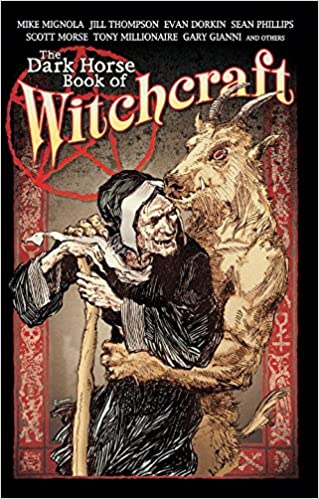
Dark Horse Book of Witchcraft


By Tony Millionaire, Mike Mignola, Clark Ashton Smith, Jim & Ruth Keegan, Mark Ricketts, Scott Morse, Evan Dorkin, Gary Gianni, Paul Lee, Sean Phillips, Jill Thompson & various; edited by Scott Allie (Dark Horse)
ISBN: 978-1-59307-108-0 (HB)

Scary stories have always been a staple of comics, and anthology collections invariably offer fearsome fun and the biggest Boo for your buck so I’m taking a skittish return peek at one that has definitely stood the test of time. It would be great if Dark Horse either re-released it – or at least offered it digitally…

Following a bucolic Introduction by series editor Scott Allie, this glorious hardback grimoire of ghoulish delights and funny fables opens with an illustrated extract from ‘Macbeth’ (guess witch bit) chillingly adapted by Tony Millionaire, after which comics and movie fans get a treat all their own.

This captivating “Book of…” mystery compilation is part of a series spinning out of legendary monster-hit Hellboy, and ‘The Troll Witch’ – by Mike Mignola – presents a terrific vignette of the hulking demon foundling who visits Norway in 1963 and has a tense conversation with a very peculiar Wise-woman.

Next up is a classic prose short story by Weird Tales horror star Clark Ashton Smith. Illustrated by Gary Gianni, ‘Mother of Toads’ offers the chilling and ghastly feudal tale of a lusty peasant, love philtres and the consequences of cavorting with strange women who live far off the beaten track…

Editor Scott Allie and artists Paul Lee and Brian Horton briefly abandoned their Devil’s Footprint series to recount the chilling choice of ‘The Flower Girl’ who, pushed to the limits by her diabolically spoiled and obnoxious little sister, is offered a vile solution by a neighbour with very dark secrets of her own…

Set in Louisiana in 1838 ‘The Gris-Gris’, by Jim & Ruth Keegan, blends the rich dark earth of voodoo with the theme of witchcraft as a cowardly Southern Gentleman picks the wrong crone to trifle with when trying to cheat his way out of a duel of honour, after which 1938 Mississippi hosts the ‘Golden Calf Blues’, by Mark Ricketts & Sean Phillips, exploring the power of an accursed guitar and the Devil’s Music to seduce the supposedly righteous…

‘The Truth About Witchcraft’ is an extended and fascinating interview with attorney, advocate and Wiccan High Priestess Phyllis Curott, after which the comics wonderment resumes with a stunning tale from the height of the infamous “Witch Trials” in ‘Salem and Mary Sibley’ by Scott Morse, before everything ends in an engaging and hilarious romp wherein the neighbourhood mutts and a deeply confused cat join forces to thwart the Forces of Darkness and the local coven of Crones in ‘Unfamiliar’, scripted by Evan Dorkin and magnificently rendered by Jill Thompson.

As anthologies go, horror and mystery are never out of style and collections like this serve as the ideal vehicle for pulling resistant readers into our world of comics. When they can be this diverse whilst maintaining such a staggering level of craft, variety and quality, they should be mandatory for any proselytizing fan, and hold pride of place on any aficionado’s bookshelf.
Dark Horse Book of Witchcraft ™ and © 2004 Dark Horse Comics, Inc. All rights reserved. All interior stories and features © their respective copyright holders.

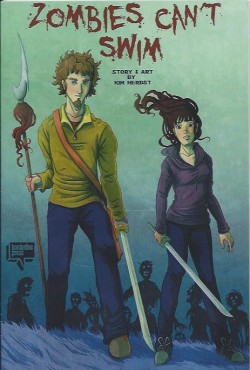
Zombies Can’t Swim


By Kim Herbst (Borderline Press)
ISBN: 978-0-99269-726-6 (PB)

It’s pretty certain now that we can’t escape the our own – metaphorical – oncoming Zombie Apocalypse, since dealing with the shambling horrors has even been added to the “What Would You Do…?” topic list of idle pub chatter and polite dinner party conversation, right below “… if you had a million dollars?” and “…if you had a month to live?” but still above “…if you were irresistible to the opposite sex?”…

British publishing house Borderline Press sagely took those idle musings and gave them concrete form in a deliciously wry and whimsical horror fantasy that is sublimely enchanting and gloriously engaging.

Kim Herbst was born in Taipei and taught to toddle in Tokyo before learning how to slaughter the Undead growing up tough in New Jersey. After graduating the Illustration course at the Maryland Institute College of Art, she moved to San Francisco and pursued a commercial art career, with various illustrations in children’s educational books, magazines like GamesTM and Rhode Island Monthly, plus covers for Boom! Studios, all whilst pursuing the day-job drawing for mobile games company Juicebox Games.

Her first full comics extravaganza, Zombies Can’t Swim apparently developed out of a casual conversation with her fiancé whilst sitting on a hill in idyllic rural Japan, and that’s where this mordantly gripping, breakneck-paced visualisation of that idle chat begins as big hulking him and cute little her are compelled to continue their debate on the run. That’s because assorted apparitions and rampaging reanimated revenants are trying to make the couple the next appetiser in an orgy of unending consumption…

In a country where guns are scarce, motor cars can be stolen on every street corner and fantastically lethal exotic medieval weaponry can be found in any museum, the fantasy within a fantasy follows our philosophical debaters in a gruesomely gory two-player re-enactment of every zombie flick you’ve seen in the last decade as the famished Dead keep Walking towards them and the young romantics make their way towards some sort of safe haven.

Amidst frantic combat, abortive rescues, crashed copters and incipient immolation, the frantic morsels make a decision. Japan is an island so if they head for the harbour and steal a boat, they’ll be safe.

After all everybody knows Zombies Can’t Swim…

This wild and witty two-colour tome is a brief and vivid vignette all horror fans will adore: captivating cathartic, violently vicarious fun against a foe everybody knows it’s okay to kill (Kill again? Put an end to? Unmember? Render finally harmless?) but sharp enough to blur the lines between fearful frenzy and frantic frolic.
© Kim Herbst 2014.

Black is the Color


By Julia Gfrörer (Fantagraphics Books)
ISBN: 978-1-60699-717-8 (PB)

There’s never been a better time to seek out dark and imaginative horror comics tales and the genre has seldom been better represented than with this eerie yet elegiac historical fantasy from Julia Gfrörer.

She hails from Portland, Oregon – having been born in 1982 and raised in historic Concord, New Hampshire. She studied Painting and Printmaking at Seattle’s Cornish College of the Arts and first began turning heads a few years ago with her thoughtfully terrifying comicbooks Flesh and Bone and Too Dark to See as well as appearances in Thickness, Arthur Magazine, Black Eye, Study Group Magazine and Best American Comics.

The author brings a gift for sensitive emotional scrutiny and quirkily macabre understatement to this slim monochrome tome (finally available in digital formats) detailing the last days of a marooned mariner and the strange creature who temporarily adopts him…

It begins in the middle of the ocean as sailors Xavier and Warren are approached by the Captain’s Mate. The voyage is going badly. Storms have battered the frail wooden vessel and provisions are low. As they were the last to join the ship’s company, the crew expects the pair to calmly get into the dinghy and drift away, giving the rest some slim chance of survival…

Xavier is already quite ill and Warren enquires why they can’t just be shot, but nobody wants a murder on their already-benighted souls…

Cast adrift and enduring harsh exposure, the pair float aimlessly. Hardship and privation soon end Xavier, but as angry, resentful Warren languishes in the boat awaiting his own death, he thinks he hears singing in the night. Soon he’s soon conversing with a woman who seems to know impossible things – such as how and what his far-away wife and child are doing…

More than half convinced he’s gone mad, he continues his strange delirious conversations with her, all the while certain that his life is slowly ebbing away. She won’t save Warren but the sea siren is quite content to stay with him as he expires, sharing intimate memories.

…And far away across the waves, his former shipmates sail helplessly into another storm as mermaids gather to watch…

Bleak, beautiful and lyrically elegant, this oddly mesmerising, gently scary, utterly visual yarn tellingly explores pride and loneliness but is cunningly underpinned by wry, anachronous humour and a cleverly memorable conclusion which will delight fans of mystery and imagination and lovers of beguiling illustration.
© 2013 Julia Gfrörer. This edition © 2013 Fantagraphics Books, Inc. All rights reserved.

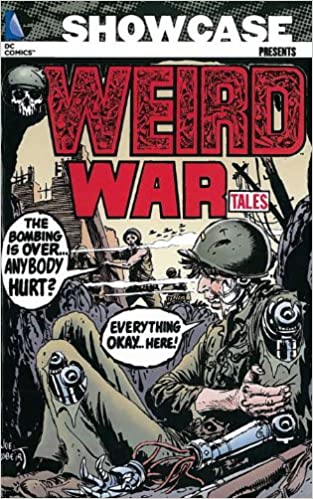
Showcase Presents Weird War Tales volume 1


By Robert Kanigher, Bob Haney, Bill Finger, Sheldon Mayer, Jack Oleck, Len Wein, Marv Wolfman, Joe Kubert, Carmine Infantino, Dennis O’Neil, Russ Heath, Mort Drucker, Frank Thorne, Alex Toth, Reed Crandall, Sam Glanzman, John Severin, Howard Chaykin, Ed Davis, Frank Robbins, Nestor Redondo, George Evans, Alex Niño, Russ Heath, Neal Adams & various (DC Comics)
ISBN: 978-1-4012-3694-6 (TPB)

American comicbooks just idled along rather slowly until the invention of Superman provided a flamboyant new genre for heroes and subsequently unleashed a torrent of creative imitation and imaginative generation for a suddenly thriving and voracious new entertainment model.

Implacably vested in World War II, these gaudily-attired mystery men swept all before them until the troops came home, but as the decade closed more traditional themes and heroes began to resurface and eventually supplant the Fights ‘n’ Tights crowd.

Even as a new generation of kids began buying and collecting, many of the first fans who had retained their four-colour habit increasingly sought more mature themes in their pictorial reading matter. The war years and post-war paranoia had irrevocably altered the psychological landscape of the readership and as a more world-weary, cynical young public came to see that all the fighting and dying hadn’t really changed anything.Their chosen forms of entertainment (film, theatre and prose as well as comics) increasingly reflected this.

To balance the return of Western, War, Crime and imminent Atomic Armageddon-fuelled Science Fiction, comics created new genres. Celebrity tie-ins, madcap escapist or teen-oriented comedy and anthropomorphic funny animal features sprang up, but gradually another of the cyclical revivals of spiritualism and a public fascination with the arcane led to a wave of impressive, evocative and shockingly addictive horror comics.

There had been grisly, gory and supernatural stars before, including a pantheon of ghosts, monsters and wizards draped in superhero trappings but these had usually been victims of circumstance: The Unknown as a power source for super-heroics. Now focus shifted to ordinary mortals thrown into a world beyond their ken with the intention of unsettling, not vicariously empowering the reader.

Almost every publisher jumped on an increasingly popular bandwagon, with B & I (which became the magical one-man-band Richard E. Hughes’ American Comics Group) launching the first regularly published horror comic in the Autumn of 1948, although their Adventures Into the Unknown was technically pipped by Avon. The book and comics publisher had released an impressive single issue entitled Eerie in January 1947 but didn’t follow-up with a regular series until 1951.

Classics Illustrated had already secured the literary end of the medium with child-friendly comics adaptations of The Headless Horseman, Dr. Jekyll and Mr. Hyde (both 1943), The Hunchback of Notre Dame (1944) and Frankenstein (1945) among others.

If we’re keeping score this was also the period in which Joe Simon & Jack Kirby identified another “mature market” gap and invented Romance comics (Young Romance #1, September 1947) but they too saw the sales potential for spooky material, resulting in the seminal Black Magic (launched in 1950) and boldly obscure psychological drama anthology Strange World of Your Dreams (1952).

The company which would become DC Comics bowed to the inevitable and launched a comparatively straight-laced anthology that nevertheless became one of their longest-running and most influential titles with the December 1951/January 1952 launch of The House of Mystery.

After the hysterical censorship debate which led to witch-hunting Senate hearings in the early 1950s was curtailed by the industry adopting a castrating straitjacket of self-regulation, titles produced under the aegis of the Comics Code Authority were sanitised, anodyne affairs in terms of Shock and Gore, but the audience’s appetite for suspense was still high and in 1956 National introduced sister titles Tales of the Unexpected and House of Secrets.

Stories were dialled back from uncanny spooky yarns to always marvellously illustrated, rationalistic fantasy-adventure vehicles and, eventually, straight monster-busting Sci Fi tales which dominated the market into the 1960s. That’s when super-heroes – which had gradually enjoyed their own visionary revival after Julius Schwartz reintroduced the Flash in Showcase #4 – finally overtook them.

Green Lantern, Hawkman, the Atom and a growing coterie of costumed cavorters generated a gaudy global bubble of masked mavens which forced previously staunchly uncompromising anthology suspense titles to transform into super-character books. Even ACG slipped tights and masks onto its spooky stars.

When the caped crusader craziness peaked and popped, superheroes began dropping like Kryptonite-gassed flies. However, nothing combats censorship better than falling profits and, at the end of the 1960s with the cape-and-cowl boom over and some of the industry’s most prestigious series circling the drain, the surviving publishers of the field agreed to revise the Comics Code, loosening their self-imposed restraints against crime and horror comics.

Nobody much cared about gangster titles but, as the liberalisation coincided with yet another bump in public interest concerning supernatural themes, the resurrection of scary stories was a foregone conclusion and obvious “no-brainer.”

Even ultra-wholesome Archie Comics re-entered the field with their rather tasty line of Red Circle Chillers…

Thus, with absolutely no fanfare at all, horror comics came back and quickly dominated the American market for more the next half decade. DC led the pack: converting House of Mystery and Tales of the Unexpected into supernatural suspense anthologies in 1968 and resurrecting House of Secrets a year later.

Such was not the case with war comics. Tales of ordinary guys in combat began with the industry itself and although mostly sidelined during the capes-&-cowls war years, quickly began to assert themselves again once the actual fighting stopped.

National/DC were one of the last publishers to get in on the combat act, converting superhero/fantasy adventure anthology Star Spangled Comics into Star Spangled War Stories the same month it launched Our Army at War (both cover-dated August 1952). They repurposed All-American Comics into All-American Men of War a month later as the “police action” in Korea escalated.

They grew the division slowly but steadily, adding Our Fighting Forces #1 (November 1954) – just as EC’s groundbreaking combat comics were vanishing – and in 1957 added GI Combat to their portfolio when Quality Comics got out of the funnybook business.

As the 1950s closed however, the two-fisted anthologies all began incorporating recurring characters such as Gunner and Sarge – and latterly Pooch – from Our Fighting Forces #45 on, (May 1959), Sgt Rock (Our Army at War #83 (June 1959) and The Haunted Tank (G.I. Combat #87, April/May 1961). Soon all DC war titles had a lead star or feature to hold the fickle readers’ attention.

The drive to produce superior material never wavered however, hugely aided by the diligent and meticulous ministrations of writer/editor Robert Kanigher.

In America after the demise of EC Comics in the mid-1950’s and prior to the game-changing Blazing Combat, the only certain place to find controversial, challenging and entertaining American war comics was DC. In fact, even whilst Archie Goodwin’s stunning but tragically mis-marketed quartet of classics were waking up a new generation of readers in the 1960s, the home of Superman, Batman and Wonder Woman was a veritable cornucopia of gritty, intriguing and beautifully illustrated battle tales presenting warfare on a variety of fronts and from many differing points of view.

Whilst the Vietnam War escalated, 1960s America increasingly endured a Homefront death-struggle pitting deeply-ingrained Establishment social attitudes against a youth-oriented generation with a radical new sensibility. In response the military-themed comicbooks from National Periodical Publishing, as it then was, became even more bold and innovative…

However, the sudden downturn in superheroes led to some serious rethinking here and although the war titles maintained and even built sales, they beefed up the anthological elements.

Thus in 1971 a title combining supernatural horror stories with bombastic battle yarns in an anthological setting seemed a forgone conclusion and sure thing to both publishers and readers alike and this economically epic monochrome tome collects the contents of Weird War Stories #1-21 (cover-dated September/October 1971 to January 1974), offering a broad blend of genre mash-ups for readers with a taste for the dark and uncanny to relish.

The series launched in a 52-page format combining new material with adapted reprints featuring a veritable Who’s Who of top flight creative talent – both seasoned veterans and stars in waiting – and #1 saw Editor Joe Kubert writing and illustrating an eerie linking story entitled ‘Let Me Tell You of the Things I’ve Seen’ as a lost GI meets the personification of Death (the title’s long-term narrator in various blood-stained uniforms) who tells him a few stories…

The reaper begins with ‘Fort Which Did Not Return!’ by Kanigher & Russ Heath, as originally seen in GI Combat #86, detailing how a bomber continues its mission even after the crew bail out, following up with all-new ‘The Story behind the Cover’ wherein Kubert reveals how a shunned German soldier carried on his duties after death…

From Star Spangled War Stories #71 (July 1958) Bob Haney & Kubert revealed ‘The End of the Sea Wolf!’ as a sadistic U-Boat captain is sunk by one of his own earlier victims, whilst SSWS #116 (August/September 1964) originally debuted France Herron & Irv Novick’s ‘Baker’s Dozen’, with a fresh-faced replacement to a super-superstitious platoon battling to prove he’s not their unlucky thirteenth man…

The issue ends with that lost GI realising just who has been telling tales in Kubert’s ‘You Must Go!’…

The reprints included in these early issues were all taken from a time when supernatural themes were proscribed by the Comics Code Authority, but even so they all held fast to eerie aura of sinister uncertainty – the merest hint of the strange and uncanny to leaven the usual blood and thunder of battle books…

In Weird War Tales #2 Kubert reprised his bridging vehicle as ‘Look… and Listen…’ sees a crashed Stuka pilot meeting a ghastly stranger at a battle-torn desert oasis before ‘Reef of No Return’ (Haney & Mort Drucker from Our Fighting Forces #43, March 1959) details a determined frogman’s most dangerous mission before Kanigher & Frank Thorne’s new WWI silent saga ‘The Moon is the Murderer’ proves that overwhelming firepower isn’t everything…

Kubert’s ‘Behind the Cover’ features a prophetic dream and terrifying telegram after which ‘A Promise to Joe!’ (Kanigher & Novick, G.I. Combat #97 (December 1962-January 1963) sees a dead gunner seemingly save his friend from beyond the grave after which the superb ‘Monsieur Gravedigger’ – by Jerry DeFuccio & the legendary Reed Crandall – follows the follies of a sadistic Foreign Legionnaire who pushes his comrades too far…

Cartoonist John Costanza delivers some gag-filled ‘Military Madness’ and Kubert & Sam Glanzman offer a fact-packed ‘Sgt. Rock’s Battle Stations’ about ‘The Grenadier’ before Bill Finger, Ross Andru & Mike Esposito examine a young recruit’s rite of passage and development of ‘The Face of a Fighter’ (Our Fighting Forces #25, September 1957) before ‘Oasis’ concludes the sorry saga of that downed Aryan airman…

American Naval Aviators ditching at sea were the unwilling audience for Death’s stories as WWT #3 opens with Kubert’s ‘Listen…’

The roster starts with ‘Been Here Before!’ (Finger, Andru & Esposito, G.I. Combat #44 January 1957) as a soldier under fire turns his mind back to boyhood games to save the day, after which we see an aerial battle and parachute drop from the perspective of ‘The Cloud That Went to War!’ (Our Fighting Forces #17, January 1957) courtesy of Dave Wood, Andru & Esposito).

More Costanza comedy from ‘The Kreepy Korps!’ precedes an early tale by relative newcomers Len Wein & Marv Wolfman, ably illustrated by Heath as both cave tribes and modern soldiers battle to possess ‘The Pool’, before the artists’ earlier collaboration with Bob Haney reveals how ‘Combat Size!’ is all a matter of mental attitude in a tale first seen in Our Army at War #66 (January 1958).

Glanzman’s ‘Battle Album’ explains ‘Flying Guns’, after which a finny friend helps a US submarine sink an aircraft carrier in Finger & Drucker’s ‘Pilot for a Sub!’ (Our Army at War #68, March 1958) and the issue ends as Kubert sends a ‘Lifeboat’ for those tragic aviators…

The fourth issue opens with Kubert’s final linking tale as a ‘Gypsy Girl’ and her family find wounded soldier Tony after his buddy runs off to get a medic. They kindly offer to pass time with him, sharing stories such as ‘Ghost Ship of Two Wars’ (Kanigher & Novick from All-American Men of War #81, September 1960) wherein an obsessed WWI pilot seemingly slips into 1944 while pursuing of his unbeatable arch-enemy the Black Ace.

‘Time Warp’ by Kanigher & Gene Colan originally appeared as ‘The Dinosaur Who Ate Torpedoes!’‘ in Star Spangled War Stories #123 (October/November 1965 and part of the uniquely bizarre War That Time Forgot series), pitting US frogmen against colossal sea-going saurians, after which ‘The Unknown Sentinel’ (by author unknown & Mort Meskin from House of Mystery #55, October 1956) saves the lives of two soldiers lost on manoeuvres on America’s most famous battlefield.

Glanzman then offers one of his magnificently engaging autobiographical USS Stevens vignettes with the all-new, elegiac ‘Prelude’ before Kubert wraps up his chilling drama as ‘I Know Them to be True’ sees medics arriving to find Tony a much-changed man, leaving Costanza to close things down with a laugh and some ‘Military Madness’…

Weird War Tales #5 opens with Haney & Alex Toth providing the book-end tale of ‘The Prisoner’ held by Nazis in Italy. Seeking a way out, he recalls tales of escape such as ‘The Toy Jet!’ (Haney & Heath from All-American Men of War#78, March/April 1960), a chilling psychological thriller about an interned pilot in North Korea, and ‘Human Trigger’(Herron, Andru & Esposito, Star Spangled War Stories #18, February 1954) which shows how a soldier lying on a mine deftly saves his own life…

Herron & Carmine Infantino then reveal how an American spy is forced to ‘Face a Firing Squad!’ (SSWS #14, November 1953) and Norman Maurer instructs with the history of ‘Medal of Honour: Corporal Gerry Kisters’ while Willi Franz & Heath detail the victory of a ‘Slave’ in Roman times before Haney & Toth offer a final release in ‘This Is It!’

Issue #6 saw Weird War drop to a standard 36-page package and take a step into tomorrow with Haney & Toth’s battlefield test of ‘Robots’. Wolfman & Frank Thorne expanded the theme in ‘Pawns’ as humans and mechanoids finally decide who works for whom whilst ‘Goliath of the Western Front!’ (Herron, Andru & Esposito from SSWS #93 (October/November 1960) features a giant mechanical Nazi and an American David who finally does for him, before Haney & Toth settle all debate with the conclusive ‘Robot Fightin’ Men’…

Wolfman & Kubert combined to provide thematic bookends for issue #7, beginning with ‘Out of Action’ and wounded GIs awaiting the worst and trading tales like William Woolfolk, Jerry Grandenetti & Joe Giella’s ‘Flying Blind’ (Our Army at War #12 July 1953) as a wounded pilot is forced to trust someone else for the first time in his life if he wants to land his burning jet. Kanigher & Kubert’s ‘The 50-50 War!’ (All-American Men of War #41, January 1957) finds sporting rivals forced to help each other after both suffer injuries on an alpine mission, with Costanza adding more welcome levity through his ‘Military Hall of Fame’…

‘The Three GIs’ (Finger & Heath, SSWS #62, October 1957) riffs smartly on those monkeys who respectively can’t see, hear and speak and the Purple Heart yarns end with Wolfman & Kubert’s chilling ‘I Can’t See’…

From #8, editorial control switched to the mystery division under the control of Joe Orlando and with it the reprints were shelved in favour of all-original material as publication frequency graduated from six times a year to monthly.

This all German-focused issue begins with a gruesome ‘Guide to No-Man’s Land’ (probably written by assistant editor E. Nelson Bridwell and illustrated by Tony DeZuñiga) before moving on to ‘The Avenging Grave’ by Kanigher & DeZuniga with SS officers learning too late the folly of desecrating the dead of WWI. Anonymously scripted ‘Thou Shalt Not Kill!’– with art by Steve Harper & Neal Adams – then sees more gloating Nazis facing a vengeful golem…

Kanigher & DeZuñiga return to reveal the fate of an arrogant 1916 air ace in the skies over No-Man’s Land in ‘Duel of the Dead’ before the artist’s ‘Epilogue’ wraps things up…

Weird War Tales #9 invites us to ‘Enter the Portals of War’ in an introduction drawn by Howard Chaykin, swiftly followed by a trio of Kanigher yarns illustrated by the cream of DC’s Filipino artists.

‘The Promise’ was limned by Alfredo P. Alcala, telling a tale in two eras as both Teutonic knights in 1242 and German tankers seven centuries later fail to cross frozen Lake Chud, whilst Gerry Talaoc renders the disastrous end of deathly, determined ‘Blood Brothers! during the American Civil War and incomparable Alex Niño details ‘The Last Battle’between East and West before Chaykin pops back to declare ‘Death, the Ultimate Winner’.

Sheldon Mayer & Toth open WWT #10 with a deliciously whimsical ghostly love story in ‘Who is Haunting the Haunted Chateau?’ before Raymond Marais & Quico Redondo change the tone as a Death-Camp commandant returns after the war to salvage his ill-gotten gains from ‘The Room that Remembered’, whilst Wein & Walter Simonson – on the artist’s pro comics debut – reveal why invading Nazis shouldn’t abuse the town idiot, incurring the wrath of ‘Cyrano’s Army’…

Always experimental, the creative team of Mayer, DeZuñiga, Alcala, Talaoc & Niño tried their hand at a time-twisting complete adventure for issue #11. Occurring on ‘October 30′ over 99 years beginning in 1918, the tale compares the progress of an ambitious German General granted a wish for glory by a treacherous spirit of war with three ghostly Americans determined to fix a long-standing mistake whatever the cost…

DeZuñiga draws the introduction to #12, featuring tales of ‘Egypt’ starting with Kanigher & Talaoc’s tale of an ancient warlord who learned to regret spitting on the ‘God of Vengeance’, whilst ‘Hand of Hell’ (Kanigher & DeZuniga) sees Anubis similarly deal with one of Rommel’s least reputable and most sadistic deputies. Arnold Drake & Don Perlin then switch locales to Roman Britain where a centurion takes an accidental time-trip and ultimately overthrows the Druids in ‘The Warrior and the Witch-Doctors!’…

Weird War Tales #13 opens with ‘The Die-Hards’ by Oleck & Nestor Redondo, with Nazis realising there are even worse killers than they haunting their latest conquered village, before Drake & Niño determine that ‘Old Samurai Never Die’ when a would-be shogun offends the patron spirit of Bushido. ‘Loser’s Luck’ – by Michael J. Pellowski, George Kashdan & DeZuñiga – details the harsh choices facing the unfortunate winners of the next, last war…

Mayer, DeZuñiga & Alcala reunite in #14 to tell an eerie tale of doomed love and military injustice from the days before Pearl Harbor which begins with a ‘Dream of Disaster’, incorporates a deadly flight with a ‘Phantom for a Co-Pilot’ and marines who arrive ‘Too Late for the Death March!’ before finally meetingThe Ghost of McBride’s Woman’ and vindicating an unsung hero…

A little boy enamoured of war’s glory learns a lesson in WWT # 15 when his dead grandfather takes him back to WWI to see how ‘“Ace” King Just Flew in from Hell’ (Drake & Perlin) before Oleck & Talaoc reveal the doom of ‘The Survivor’of a Viking raid which offends a sorceress, and Oleck & Alcala detail the shocking fate of a fanatical crusader who succumbs to ‘The Ultimate Weapon’ of a Saracen wise man…

Drake & Alcala describe transplant science gone mad in #16’s ‘More Dead than Alive!’, whilst the first of a Niño double bill sees him delineate ‘The Conquerors’ (scripted by Oleck) who eradicate humanity – but not the things that predate on them – before Drake’s ‘Evil Eye’ sees a little boy inflict hell’s wrath on both Allies and Axis alike…

In #17, Kanigher & George Evans disclose how a dishonourable French Air Ace is punished by ‘Dead Man’s Hands’before Pellowski, E. Nelson Bridwell & Ernie Chan reveal how a murdered soldier is avenged by ‘A Gun Named Marie!

WWT #18 has Drake & DeZuñiga sketch the brief career of ‘Captain Dracula!‘ as he marauds through (mostly) German forces in Sicily before Mayer & Talaoc return for the cautionary tale of a greedy German sergeant in France whose avarice makes him easy prey for the ‘Whim of a Phantom!’

Drake & Talaoc start #19 with the full-length story of the agent who infiltrates the Nazi terror weapon known as ‘The Platoon That Wouldn’t Die!’, whilst #20 reverts to short stories with Oleck & Perlin’s ‘Death Watch’ of a doomed coward who should have waited one more day before deserting, Drake & Alcala’s period saga of a witchcraft vendetta in ‘Operation: Voodoo!’ and their Battle of Britain chiller wherein a burned-out fighter pilot learns ‘Death is a Green Man’…

This blockbusting blend of military mayhem, magical melee and martial madness concludes with Weird War Tales #21 and ‘One Hour to Kill!’ by Drake & Frank Robbins, wherein an American soldier is ordered to go back in time to assassinate Leonardo Da Vinci and prevent the invention of automatic weapons. Mayer & Bernard Baily then detail just how a foul-up GI becomes an unstoppable hero ‘When Death Took a Hand’…

Classily chilling, emotionally intense, superbly illustrated, insanely addictive and Just Plain Fun, this is a deliciously guilty pleasure that will astound and delight any lover of fantasy fiction and comics that work on plot invention rather than character compulsion.
© 1971, 1972, 1973, 2012 DC Comics. All Rights Reserved.


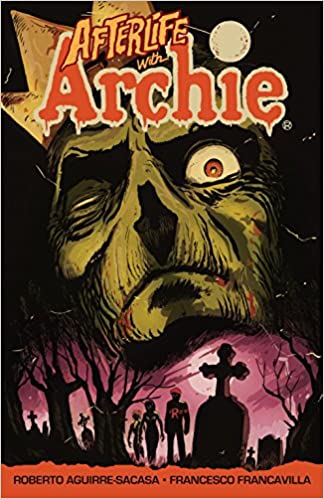
Afterlife with Archie


By Roberto Aguirre-Sacasa & Francesco Francavilla (Archie Comics)
ISBN: 978-1-61988-908-8 (TPB)

For nearly 80 years Archie Andrews has epitomised good, safe, wholesome fun, but the company has always been a deviously subversive one. Family friendly iterations of superheroes, spooky chills, sci fi thrills and genre yarns have always been as much a part of the publisher’s varied portfolio as the romantic comedy capers of America’s clean-cut teens.

As you probably know, Archie has been around since 1941, spending most of those years chasing both the gloriously attainable Betty Cooper and wildly out-of-his-league debutante Veronica Lodge, whilst best friend Jughead Jonesalternately mocked and abetted his romantic endeavours and rival Reggie Mantle sought to scuttle every move…

As crafted over the decades by a legion of writers and artists who’ve skilfully created the stories of teenage antics in and around the idyllic, utopian small town of Riverdale, these timeless tales of decent, upstanding, fun-loving kids have captivated successive generations of readers and entertained millions worldwide.

To keep all that accumulated attention riveted, the company has always looked to modern trends with which to expand upon their archetypal storytelling brief. In times past they cross-fertilised their stable of stars through such unlikely team-ups as Archie Meets the Punisher, Archie Meets Glee, Archie Meets Vampirella or Archie Meets Kiss, whilst every type of fashion fad and youth culture sensation have invariably been accommodated into and explored within the pages of the regular titles.

In 2013 the publishers took an extraordinarily bold and controversial step which paid huge dividends, creating the biggest sales sensation in the company’s history… thus far.

It all began with a variant cover for Life with Archie #23 with illustrator Francesco Francavilla (Black Beetle, Zorro,Detective Comics, Captain America, Guardians of the Galaxy etc.) providing a moody spoof EC zombie graveyard scene. The variant was a sensation and cognitive cogs began to turn at the editorial offices…

When playwright, TV scripter and comicbook scribe Roberto Aguirre-Sacasa – whose many successes include Say You Love Satan, The Mystery Plays, 4: Marvel Knights Fantastic Four, Nightcrawler, Big Love, Sensational Spider-Man and Glee amongst others – got involved, it wasn’t long before a strange new enterprise was hatched.

Archie Comics is no stranger to horror titles. In the 1970s the company created sub-imprint Red Circle for anthology terror tales during a supernatural boom time, before converting the line to superhero features as the decade progressed.

They even had a resident star-sorceress in Sabrina the Teenage Witch…

However, whereas that venture was decidedly a newsstand project, the proposed 21st century endeavour took the company into uncharted waters.

When it was released, 5-issue miniseries Afterlife With Archie was available solely through Direct Sales outlets and the first title in the company’s history to carry a parental advisory; “Rated Teen +”…

The sinister saga was an outright sensation, selling hugely and garnering phenomenal critical approval from sources as far-ranging as Salon, Fangoria, The Plain Dealer and NPR (National Public Radio) as well as all the usual comics review pundits. Each issue spawned further printings in a desperate race to keep up with demand…

I’m not going to dwell much on the plot, but suffice to say it doesn’t stray far from the time-honoured scenaria of the best sort of teen horror movies – minus the gratuitous sex and oafish dependence on guns – but it does hone all those tropes and memes to a superbly gripping point by inflicting them upon a beloved and intimately understood cast we all think we know…

It all starts one dark and ghastly midnight with Jughead hammering on the door of Sabrina’s house. A hit-and-run driver has killed the boy’s beloved pet Hot Dog and he needs her to bring him back…

Even with the arcane aid of her spooky eldritch elders the attempt fails, compelling a deeply moved Sabrina to try a spell she knows she should not and engendering for herself a most hideous punishment…

The next day, school starts out pretty much normal. Everyone is hyped about the upcoming Halloween Dance, although loud, obnoxious Reggie seems painfully preoccupied with some guilty secret and Juggie is absent…

Concerned, Archie stops in for a visit to find his friend in a bad way. The always voracious boy is weak and sickly and his arm is infected from a nasty bite. Hot Dog just sits far back in the dark under the house, growling and snarling…

That night at the Gym the party is in full swing, with kids tricked out in all their innocent gory glory. As usual, tensions are high between Betty and Veronica, Dilton and Chuck are furiously debating the merits of their favourite scary movies and Devil-may-care Reggie is still acting strange…

Things take a dark turn once Jughead appears. His costume is amazing, like a scarecrow Zombie King. As yet nobody knows he’s already eaten one of the chaperones…

The shocking scenes soon start, and lifelong friends begin falling thick and fast. With no choice but to accept the impossible, Archie leads the stunned, surviving students to the fortress-like Lodge Mansion, with the inexorably growing army of infectious dead closely following…

With danger all around, tensions lead to many revelations, as years of suppressed feelings are finally exposed like raw nerves.

Although safe within the palatial citadel, the grieving Andrews boy needs to get out and discover what has happened to his parents and the rest of the town. As yet nobody is aware that one of the cowering kids is already carrying the unstoppable necromantic taint of the grave…

Bold, uncompromising, suspenseful, powerfully shocking and genuinely scary, this yarn is also astoundingly moving (there’s nobody more sentimental than a comicbook geek, but I’m not ashamed to admit that twice during this tale I teared up and had to reach for the tissues) as it takes a cast as familiar as your own family and puts them through hell and into damnation.

Literally nobody is safe and by the end of this first story-arc – comics fan or not – you will be gobsmacked and hungry for more.

Happily, there is a Book 2…

This grim graphic grimoire – available in paperback and digital editions – also comes with an unholy host of extras, beginning with the story behind the phenomenon in ‘Covers from the Darkside’ which discusses the genesis of the project, a full gallery of the 22 covers, variants and subsequent reprint covers by Francavilla, Tin Seeley, Andrew Pepoy, Tito Peña, Robert Hack and Jason Millet and is rounded off with ‘Sketches of the Dead’ which reproduces Francavilla’s glorious pencil layouts for much of the entire 5-chapter saga…

Dark gripping fun and one of the very best comicbook horror stories ever created, Afterlife with Archie is a brilliant experience no Funnybook Fan or Fear Aficionado should miss.
© 2014 Archie Comic Publications, Inc. All rights reserved.