Black Max volume 1


By Frank S. Pepper, Ken Mennell, Eric Bradbury, Alfonso Font & various (Rebellion Studios)
ISBN: 978-1-78108-655-1

Win’s Christmas Gift Recommendation: Astounding Air Ace Action… 9/10

It’s time for another sortie down memory lane for us oldsters and, hopefully a new, untrodden path for fans of the fantastic in search of a typically quirky British comics experience.

This stunning paperback (and eBook) package is another stunning nostalgia-punch from Rebellion’s superb and ever-expanding Treasury of British Comics, collecting all episodes of seminal shocker Black Max.

The strip debuted in the first issue of Thunder and ran the distance – spanning October 17th 1970 – 13th March 1971. It then survived cancelation and merger, continuing in Lion & Thunder until that magazine finally died.

This book carries those stories, beginning with March 20th up to May 8th 1971 and the period perils are rounded out with a brace of longer yarns taken from Lion & Thunder Holiday Special 1971 and Thunder Annual 1972. These eerie enthralments are preceded by a warmly reminiscent Introduction from Font that adds a very human dimension to the freaky flying thrills.

The series is typical of the manner in which weekly periodicals functioned back then: devised by screenwriter, veteran Editor and ubiquitous scripter Ken Mennell (Cursitor Doom, Steel Claw, The Spider and so many more) with the first episode limned by the company’s star turn for mood and mystery Eric Bradbury (Invasion, The Black Crow, Cursitor Doom, Hookjaw, House of Dolman and dozens more). Then the whole kit and kaboodle was handed off to another team to sink or swim with, which they did until 1974: a most respectable run for a British comic

The attrition rate of British comic strips bore remarkable similarities to casualty figures…

This particular serial was well-starred: the developing writer was the legendary Frank S. Pepper. He’d begun his professional comics career in 1926 and by 1970 had clocked up a few major successes such as Dan Dare, Rockfist Rogan, Captain Condor, Jet-Ace Logan and Roy of the Rovers to name but a very, very few.

Even the series illustrator Alfonso Font – a relative newcomer – was a ten-year veteran, albeit mostly for European publications. Based in Spain, he worked not just for Odhams/Fleetway but on strips for US outfits Warren and Skywald and on continental classics such as Historias Negras (Dark Stories), Jon Rohner, Carmen Bond, Bri D’Alban, Tex Willer, Dylan Dog and more…

Because of the episodic nature of the material, generally delivered in sharp, spartan 3-page bursts, I’m foregoing my usual self-indulgent and laborious waffle and leaving you with a précis of the theme… and what a cracker it is…

In 1917 the Great War is slowly being lost by Germany and her allies and in the Bavarian schloss of Baron Maximilien von Klorr, the grotesque but brilliant scientist and fighter ace has devised a horrific way to tip the scales back in favour of his homeland…

His ancient family have long had an affinity with bats and the mad man has bred a giant version that will fly beside him to terrify and slaughter the hated English…

The only problem is that his beloved monsters are vulnerable to gunfire so he must keep that as a most secret weapon…

That scheme is imperilled on a weekly basis by thoroughly decent young Brit Tim Wilson. A former performer in a peacetime flying circus, the doughty lad is possibly the best acrobatic flyer on the Western Front and narrowly escapes his encounter with the colossal chiropteran…

Of course, he cannot convince his superiors of the fearsome bio-weapon’s existence, but the Baron knows he’s out there and devotes an astonishing amount of time and effort to killing the lad – when not butchering Allied fliers and ground troops in vast numbers.

As the cat-&-mouse game escalates, both men suffer losses and achieve victories but the odds seem to shift after von Klorr finally manages to mass-produce his monsters, supplemented by ever more incredible inventions like his flying castle…

Most strikingly, some of Tim’s most fervent support comes from the ordinary German soldiers enslaved to the Baron’s vile program…

As previously stated, this initial collection also includes two longer, complete stories from seasonal specials. The first comes from Lion & Thunder Holiday Special 1971: an extra-sized summer treat which revealed how crashed English aviator Captain Johnny Craig experienced a night of extreme terror in the bio-horror filled home of Black Max, whilst Thunder Annual 1972 revealed how Captain Rick Newland of the Royal Flying Corps sought bloody revenge for the brutal bat-winged butchery of his comrades…

These strip shockers are amongst the most memorable and enjoyable exploits in British comics: smart, scary and beautifully rendered. This a superb example of war horror that deserves to be revived and revered.
© 1970, 1971, 1972, 1973 & 2018 Rebellion Publishing Ltd. Black Max and all related characters, their distinctive likenesses and related elements are ™ Rebellion Publishing Ltd. All Rights Reserved.

Boneyard in Color, Volume 1


By Richard Moore (NBM)
ISBN: 978-1-56163-427-9

Happy Día de Muertos to all of you who celebrate the occasion. Here’s something that might appeal to you today…

Boneyard was an award-winning comicbook that ran 28 issues between 2001 and 2009. It was subsequently collected as a series of monochrome albums and eventually seven full-colour collections between 2005-and 2010. Most volumes are still readily available online.

It’s been on hiatus since 2010 and I, for one, miss it something fierce. Surely it’s time for a re-issue and even some new stories, yes?

Young Paris – don’t call him Michael, he hates it – may finally have had a turn of good luck. Not only has he inherited some property from his reclusive grandfather, but the residents of picturesque little hamlet Raven Hollow are desperate to buy it from him, sight unseen. Nonetheless he makes his shambolic way there and finds that it’s not all so cut and dried.

The property in question is a cemetery named The Boneyard and not everything within its walls is content to play dead…

There’s Abby, a beautiful vampire chick, a foul-mouthed skeleton, a demon with delusions of grandeur, a werewolf who thinks he’s a cross between James Dean and the Fonz, a witch, a hulking Frankenstein-type monster and even talking gargoyles over the gate.

Most worrying of all: There’s even a voluptuous (married) amphibian who adds worlds of meaning – and assorted shades of grey – to the phrase “predatory man-eater.”

The place is a veritable refuge for the restless dead and every sort of Halloween horror, but somehow the residents all seem far more human in attitude and friendly in manner than the increasingly off-kilter townsfolk whose desperate measures to make Paris sell up prove that not all monsters haunt graveyards.

Reprinting issues #1-4 of the independent comic book in full-process colour, this is a charming, sly, funny and irresistibly addictive book, a warm-hearted comedy of terrors that is one the best humour series to come out of the States since Charles Addams first started reporting from that spooky old house in the 1940s.

This is a must-have for Horrorists, Humorists and especially Romantics with an open mind, which can even be read by younger teenagers. Get hunting, amigos…
© 2002, 2005 Richard Moore. All Rights Reserved.

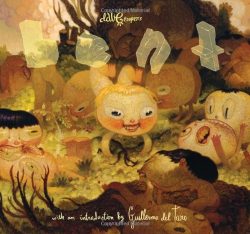
I Luv Halloween Volume 1


By Keith Giffen & Benjamin Roman (TokyoPop)
ISBN: 978-1-59532-831-1

Are you sick? Are you depraved, demented or just plain ‘not right’?

If So, it’s not necessary – but it won’t hurt either – if you pick up this darkly wicked little tome to reaffirm your skewed view of reality.

First seen in 2005, it spawned two further paperback volumes, a hardback Ultimate Edition in full-colour and, latterly, eBook editions (similarly converted from moody monochrome to gaudy sunset shades and blood-spatter hues thanks to the tender ministrations of Michael Kelleher and Glasshouse Graphics…

This holiday is primarily one where kids of varying ages go mooching about begging for sweets and threating mayhem. It used to be about predatory monsters roaming the land, terrorising the citizenry and making mischief. Here, those worlds collide and collude…

Every Halloween, Finch, Moochie, Pig Pig, Bubbles and Squeek, Li’l Bith, Mush and the rest of the kids get together for their annual sugar-coated loot-fest.

But this year it’s all botched up from the get-go ’cause the very first old lady they accost just gives them fruit, and everyone knows if you don’t get candy right from the start it’s nothing but rubbish all evening.

Drastic steps have to be taken, or else this Halloween is ruined…

You don’t know drastic until you see what this band of masked reprobates get up to. These are not your average trick-or-treaters…

Along the way you’ll also meet that friendly old policeman, the vicious, bullying older kids and that really stacked chick who lives next door as well as her doofus boyfriend. See their ultimate fates and give thanks it’s just a comic!

And as the night unfolds – with each kid given his/her/its own chapter to play in – we’ll see that theirs is a very bleak and nasty kind of fun with a vicious undercurrent to the shenanigans. You might even call it tragic…

Comics veteran Keith Giffen flexes his comedy – and bad taste – muscles in an irresistible confection that would win nodding approval from Charles Addams and the producers of any self-respecting splatter movie. The jovial malice is uniquely captured by the totally enchanting art of Benjamin Roman, whose inexplicably charming grotesques are the stuff of any animation studio’s dreams. If you don’t believe me just check out the stupefying Sketchbook section and frankly alarming Creator Bio feature…

Toys based on these sick puppies will sell and sell and sell – if you can bear to liberate them from any stout packaging or go to sleep in the same room as them…

If you have no fear of the dark, if you love a gross joke, have a soft side that can be hit by a brilliantly sad twist or two and especially if you don’t care what your immediate family or the clergy think of you, then you really want to read this book. Over and over and over and over again. Amen…
© 2005 Keith Giffen & Benjamin Roman. All Rights Reserved.

Creepy Presents Alex Toth


By Alex Toth, with Archie Goodwin, Gerry Boudreau, Rich Margopoulos, Roger McKenzie, Doug Moench, Nicola Cuti, Bill DuBay & Steve Skeates and Leopoldo Durañona, Leo Summers, Romeo Tanghal, Carmine Infantino & various (Dark Horse Comics)
ISBN: 978-1-61655-692-1 (HB)                    eISBN: 978-1-63008-194-2

Win’s Christmas Gift Recommendation: A Festive Flurry of Fearsome Fun… 9/10

Once upon a time the short complete tale was the sole staple of the comicbook profession, where the intent was to deliver as much variety and entertainment fulfilment as possible to the reader. Sadly, that particular discipline is all but lost to us today…

Alex Toth was a master of graphic communication who shaped two different art-forms and is largely unknown in both of them.

Born in New York in 1928, the son of Hungarian immigrants with a dynamic interest in the arts, Toth was something of a prodigy and after enrolling in the High School of Industrial Arts, doggedly went about improving his skills as a cartoonist.

His earliest dreams were of a strip like Milton Caniff’s Terry and the Pirates, but his uncompromising devotion to the highest standards soon soured him on newspaper strip work when he discovered how hidebound and innovation-resistant the family-values based industry had become whilst he was growing up.

At age 15 he sold his first comicbook works to Heroic Comics and, after graduating in 1947, worked for All American/National Periodical Publications (who would amalgamate and evolve into DC Comics) on Dr. Mid-Nite, All Star Comics, The Atom, Green Lantern, Johnny Thunder, Sierra Smith, Johnny Peril, Danger Trail and a host of other two-fisted fighting features.

On the way he dabbled with newspaper strips (see Casey Ruggles: the Hard Times of Pancho and Pecos) and confirmed that nothing had changed…

Constantly aiming to improve his own work, he never had time for fools or formula-hungry editors who wouldn’t take artistic risks. In 1952 Toth quit DC to work for “Thrilling” Pulps publisher Ned Pines who was retooling his prolific Better/Nedor/Pines comics companies (Thrilling Comics, Fighting Yank, Doc Strange, Black Terror and others) into Standard Comics: a comics house targeting older readers with sophisticated, genre-based titles.

Beside his particularly favourite inker Mike Peppe and fellow graphic artisans Nick Cardy, Mike Sekowsky, Art Saaf, John Celardo, George Tuska, Ross Andru & Mike Esposito, Toth set the bar incredibly high for a new kind of story-telling. In a cavalcade of short-lived titles dedicated to War, Crime, Horror, Science Fiction and especially Romance, the material produced was wry, restrained and thoroughly mature.

After Simon & Kirby invented love comics, Standard, through artists like Cardy and Toth and writers like the amazing and unsung Kim Aamodt, polished and honed the genre, regularly turning out clever, witty, evocative and yet tasteful melodramas and heart-tuggers both men and women could enjoy.

Before going into the military, where he still found time to create a strip (Jon Fury for the US army’s Tokyo Quartermaster newspaper The Depot’s Diary) Toth illustrated 60 glorious tales for Standard; as well as a few pieces for EC and others.

On his return to a different industry – and one he didn’t much like – Toth split his time between Western/Dell/Gold Key (Zorro and many movie/TV adaptations) and National (assorted short pieces, Hot Wheels and Eclipso): doing work he increasingly found uninspired, moribund and creatively cowardly.

Soon he moved primarily into TV animation: character and locale designing for shows such as Space Ghost, Herculoids, Birdman, Shazzan!, Scooby-Doo, Where Are You? and Super Friends among many others.

He returned sporadically to comics, setting the style and tone for DC’s late 1960’s horror line in House of Mystery, House of Secrets and especially The Witching Hour and illustrating more adult fare for Warren’s Creepy, Eerie and The Rook.

In the early 1980s he redesigned The Fox for Red Circle/Archie, produced stunning one-offs for Archie Goodwin’s Batman or war comics (whenever they offered him a “good script”) and latterly contributed to landmark or anniversary projects such as Batman: Black and White.

His later, personal works included European star-feature Torpedo and the magnificently audacious Bravo for Adventure!: both debuting at the independent magazine publishing company owned by Jim Warren.

Alex Toth died of a heart attack at his drawing board on May 27th 2006.

The details are fully recounted in Douglas Wolk’s biographically informative Foreword, as are hints of the artist’s later spells of creative brilliance at DC Comics, the growing underground movement and nascent independent comics scene…

The erudite and economical Mr. Evanier even finds room to describe and critique the differing art techniques Ditko experimented with during his brief tenure…

Whilst working for Warren (only intermittently and between 1965 and 1982) Toth enjoyed a great deal of editorial freedom and cooperation. He produced 21 starkly stunning monochrome masterpieces – many self-penned or written by fellow legend Archie Goodwin – and all crafted without interference from the Comics Code Authority’s draconian and nonsensical rules.

They ranged from wonderfully baroque and bizarre fantasy, to spooky suspense and science fiction yarns, limited only by the bounds of good taste… or at least as far as horror tales can be…

The uncanny yarns appeared in black-&-white magazine anthologies Creepy (# 5-7, 9, 75-80, 114, 122-125, 139) and Eerie (2, 3, 64, 65 and 67), affording the master of minimalism time and room to experiment with not only a larger page, differing styles and media, but also dabble in then-unknown comics genres…

Those lost Warren stories were gathered into this spectacular oversized (284 x 218 mm) hardback compendium (or assorted eBook formats): part of a series of all-star artist compilations – which also include Rich Corben, Bernie Wrightson, Steve Ditko amongst others – and begins here – after an appreciative Foreword from critic and historian Douglas Wolk – with the short shockers from Creepy.

Moodily rendered in grey wash-tones ‘Grave Undertaking’ comes from Creepy #5 (October 1965). Scripted by Goodwin the period piece relates the shocking comeuppance of a funeral director who branches out into providing fresh corpses for the local medical school, after which December issue #6 provides insight into ‘The Stalkers’ as a troubled soul seeks psychoanalytic help for the hallucinations of aliens plaguing him…

Prophetic visions play a part in ‘Rude Awakening!’ (#7, February 1966) as man flees omens of being gutted by a madman before Toth reverts to his minimalist line style for ‘Out of Time’ (#9 June). Here a murderous mugger seeks sanctuary for his latest crime and ends up making a devil’s bargain…

A long absence ended in November 1975 as Creepy #75 heralded a wealth of new stories from Toth, beginning with the Gerry Boudreau written crime-thriller ‘Phantom of Pleasure Island’ wherein a mob-owned San Diego funfair is plagued by a sinister sniper. Private Eye Hubb Chapin is on the case, but his dogged determination to find the killer opens a lot of festering sores his client should have left well alone…

Spectacularly experimental and powerfully stark, ‘Ensnared!’ scripted by Rich Margopoulos; #76, January 1976) is another paranoiac psychodrama with science fictional underpinnings before Toth begins writing his own stories in Creepy #77 (February) with a wash and tone tour de force depicting the strange fate of missing air mail pilot ‘Tibor Miko’ in 1928.

March’s issue #78 continued the tonal terrors with another 1920s tale exposing the stunning secret of a celluloid icon in ‘Unreeal!’ before we storm into Indiana Jones territory with ‘Kui’ (#79, May) as a couple of anthropologists make the holiday find of a lifetime on a deserted tropical island…

This tranche of Toth treats ends with ‘Proof Positive’ from June’s issue #80 wherein a gang of fraudulent patent lawyers and their ruthless honeytrap pay the ultimate price for gulling the wrong inventor…

When Toth returned in January 1980 his first story was another chilling collaboration with old comrade Archie Goodwin. Creepy #114’s ‘The Reaper’ was rendered in overpowering scratchy line and solid blacks, detailing how a virologist with six months to live decides he’s not dying alone and leaving a world of idiots behind him…

Issue #122 (October 1980) found Toth inking veteran illustrator Leo Duranona for the Roger McKenzie-scripted civil war yarn ‘The Killing!’ Here a Northern party occupying a mansion enduring conflicting passions of lust and vengeance before death inevitably settles all scores.

Doug Moench writes, Leo Summers draws and Toth inks & tones ‘Kiss of the Plague!’ (#123, November) as a welter of grisly murders slowly subtracts the inhabitant of a seemingly accursed house after which ‘Malphisto’s Illusion’ (#124, January 1981) finds Nichola Cuti, Alexis Romero (AKA Romeo Tanghal) & Toth explaining in grisly detail just how a stage magician pulls off his greatest trick and #125’s ‘Jacque Cocteau’s Circus of the Bizarre’ (McKenzie, Carmine Infantino & Toth) maintains the entertainment motif with a short shocker about a freak show like no other…

Toth’s last Creepy appearance was another collaboration with Goodwin. Issue #139 (July 1982) again featured the master’s moodily macabre tone painting in a grim post-apocalyptic rumination on ‘Survival!’

Toth’s tenure on companion anthology Eerie #2 was relatively brief and began with the second issue (March 1966). ‘Vision of Evil’ was the first of two Goodwin tales limned in tone and bold line, revealing the fate of an overly-arrogant art collector who couldn’t take no for an answer, whilst #3’s ‘The Monument’ (May 1966) saw an equally obnoxious architect accidentally engineer his own doom by stealing ideas from an old idol…

Eerie #64 offered intolerance, fear and sentiment in equal measure in ‘Daddy and the Pie’ (written by Bill DuBay). In Depression era America a very alien stranger is made welcome by one hard-up family despite the barely repressed hostility of his neighbours…

A very modern monster’s exploits comprise the end of this stupendous collection as Steve Skeates pens a wry tale of serial killers and doughty detectives in old London town. ‘The Hacker is Back’ (#65 April) depicts a maniac’s return to slaughter after a decade’s hiatus and leads to an inconclusive resolution before ‘The Hacker’s Last Stand!’ (#67 August) find forces of law and order overwhelmed by a killing spree unlike any other…

This voluminous volume has episodes which terrify, amaze, amuse and enthral: utter delights of fantasy fiction with lean, stripped-down plots and a mordant tone which lets the art set the tone, push the emotions and tell the tale, from times when a story could end sadly as well as happily and only wonderment was on the agenda, hidden or otherwise.

These stories display the sharp wit and dark comedic energy which epitomised both Goodwin and Warren, channelled through Ditko’s astounding versatility and storytelling acumen: another cracking collection of his works not only superb in its own right but also a telling affirmation of the gifts of one of the art-form’s greatest stylists.

This is a book serious comics fans would happily kill, die or be lost in a devil-dimension for…
Creepy, the Creepy logo and all contents © 1965, 1966, 1975, 1976, 1980. 1981, 1982, 2015 by New Comic Company. All rights reserved.

Misty Volume 2: featuring The Sentinels & End of the Line


By Malcolm Shaw, Mario Capaldi, John Richardson & various (Rebellion)
ISBN: 978-1-78108-600-1

Win’s Christmas Gift Recommendation: Sinister Thrills and Treats for Every Stocking… 9/10

Like most of my comics contemporaries I harbour a secret shame. Growing up, I was well aware of the weeklies produced for girls but would never admit to reading them. My loss: I now know that they were packed with some great strips by astounding artists and writers, many of them personal favourites when they were drawing stalwart soldiers, marauding monsters, evil aliens or strange superheroes (all British superheroes were weird and off-kilter…).

I actually think – in terms of quality and respect for the readership’s intelligence, experience and development – girls’ periodicals were far more in tune with the sensibilities of the target audience, and I wish I’d paid more attention to Misty back then…

Thus, I’m delighted to share another peek at superb comics fare from a British publication every bit as iconoclastic and groundbreaking as its contemporary stablemate 2000AD, albeit not as long-lasting…

Despite never living up to expectations – for all the traditional editorial reasons that have scuppered bold new visions since the days of Caxton – Misty was nothing like any other comic in the British marketplace.

Girls’ comics always had a history of addressing modern social ills and issues but this Girls’ Juvenile Periodical viewed events and characters through a lens of urban horror, science fiction, moody historical mysteries and tense suspenseful dramas. It was also one of the best drawn comics ever seen and featured stunningly beguiling covers by unsung legend Shirley Bellwood, a veteran illustrator who ought to be a household name because we’ve all admired her work in comics and books since the 1950s – even if we’ve never been privileged to see her by-line…

Unlike most weeklies, Misty was created with specific themes in mind – fantasy, horror and mystery – and over its too-short existence specialised in a string of usually self-contained features serialised like modern graphic novels, rather than ever-unfolding, continuing adventures of star characters.

Although adulterated from comics legend Pat Mill’s original grand design, Misty launched on February 4th 1978 and ran until January 1980 whereupon it merged with the division’s lead title Tammy, extending its lifeline until 1984. As was often the case, the brand lived on through Annuals and Specials, which ran from 1979 until 1986…

Another in the unmissable series working under the umbrella of The Treasury of British Comics, this second compact monochrome softcover compilation offers two more complete part-work novellas from the comic’s canon of nearly 70 strip sagas, starting off with the time-bending, socially aware saga The Sentinels.

Scripted by Malcolm Shaw (Misty‘s Editor and writer of dozens of strips in Britain and Europe) and illustrated by the wonderful and much travelled Mario Capaldi (Care Bears, James Bond Junior, Zorro, Thundercats, The Famous Five, A Christmas Carol and dozens of strips for Misty, Tammy, Hurricane, Eagle, Jinty, TV Action, Roy of the Rovers and others), The Sentinels leads off here.

The eerie tale of privation, intolerance, family discord and alternate universes originally ran between February 4th and April 22nd 1978 and revealed how in Birdwood on a post-war estate stood two identical tower blocks.

At least, once upon a time they were. Now whilst one is still a gleaming modern tribute to high rise modernism, somehow its twin sister had devolved into squalor and misuse: a sky-high slum tenants fled from and where apparently people vanished never to be seen again. The council had been under pressure to demolish the failing tower for years…

One day as Jan Richards comes home she learns that her family have been evicted from home. After exhausting all avenues, her mum and dad refuse to let the family be broken up and the kids put into care so they break into the evil block and begin squatting in one of the flats…

Almost immediately bizarre things start happening: Jan meets her dad in places he can’t be, she sees visions out of the windows that can’t possibly be true – and aren’t when she goes outside to check – and then her beloved dog Tiger attacks her…

The uncanny experiences continue as the squatters make the most of their new lives but Jan’s anxiety only increases. When at last she discovers the incredible secret of the ramshackle Sentinel sister, the result is the loss of her father, valiant, noble Tiger and best friend Sally and finding herself trapped in a Britain where evil reigns triumphant…

Potent, suspenseful and wickedly edgy, The Sentinels seamlessly blends powerful social commentary with traditional themes of loss and female agency whilst telling a chilling tale of parallel world peril. How this was never made into a film or Kids thriller series in the vein of Timeslip, Chocky or Children of the Stones is utterly beyond me – and it’s still not too late, as the tale’s themes are more relevant today than they’ve ever been…

From the same year (but serialised between August 12th and November 18th) and illustrated by the great John Richardson, End of the Line is a more traditional yarn of paranoia and loss, again scripted by the taken far too early Malcolm Shaw and once more presenting a story with plenty of contemporary parallels.

Richardson was a highly gifted artist with a light touch blending Brian Lewis with Frank Bellamy: a veteran visual storyteller who worked practically everywhere in Britain from 2000AD (Mean Arena, The V.C.s) to DC Thomson (Pussy Muldoon) to Marvel UK, as well as national newspapers (Amanda) and for specialist magazines such as Custom Car, Super Bike and Citizen’s Band. Here, his deft touch provides a smooth transition between slick modernity and Victorian moodiness in the saga of Ann Summerton.

The teenager and her mum are still coming to terms with the loss of breadwinner Andrew Summerton, even though he’s been gone two years now. He was one of seven men who perished in the construction of super-deep new London subway The Windsor Line.

Mum has moved on enough to be considering marriage to the deeply unpleasant “Uncle” Neville Chandler, but Ann just doesn’t like him…

Today the family are guests at the grand opening of the line, and invited to ride on the first scheduled journey along the Windsor. It’s a PR disaster however as Ann collapses in hysterical panic. She claims to have seen her dad and the other lost engineers slaving in a tunnel off the main route…

Despite the ministrations of doctors and the chiding abuse of Neville, Ann can’t get the image out of her mind. Despite the very real threat of psychological incarceration she returns to the tube again and again and uncovers evidence of a much earlier attempt to build a railway tunnel on the same route. The Prince Albert line also suffered a catastrophic collapse and was abandoned in Victorian times…

Ann eventually convinces a local reporter there might be something in the story, but when he goes missing – one amongst a slowly growing tide of disappearances – she decides to take action herself and is soon propelled into a world of nightmare and the private fiefdom of an ancient madman who has created a kingdom of the damned beneath the streets of the modern metropolis…

Evocative and dripping tension, End of the Line is a classic horror-mystery to delight anyone with a love of gothic mood and historical adventure…

Augmenting the strip thrills and chills is a reconditioned text feature appendix revealing how ‘…Your Face is Your Fortune…’ with an extended exploration of the prognosticatory clues a person’s feature reveal about them…

This engaging and tremendously compelling tome is another glorious celebration of a uniquely compelling phenomenon of British comics and one that has stood the test of time. Don’t miss this fresh chance to get in on something truly special and splendidly entertaining…
The Sentinels and End of the Line are © 1978 & 2017 Rebellion Publishing, Ltd. All Rights Reserved. Misty is ™ Rebellion Publishing, Ltd. and © Rebellion Publishing, Ltd. All Rights Reserved.

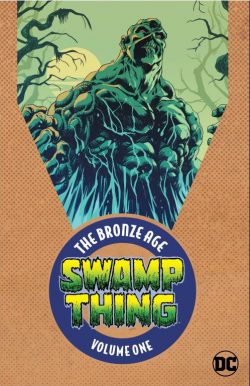
Showcase Presents The House of Secrets volume 1


By Mike Friedrich, Gerry Conway, Marv Wolfman, Len Wein, Steve Skeates, Robert Kanigher, Raymond Marais, Sam Glanzman, Jack Kirby, Mark Evanier, Jack Oleck, Mary Skrenes, Jerry Grandenetti, Bill Draut, Jack Sparling, Dick Dillin, Dick Giordano, Werner Roth, Neal Adams, Sid Greene, Alex Toth, Mike Royer, Mike Peppe, Don Heck, Wally Wood, Ralph Reese, John Costanza, Gil Kane, George Tuska, Gray Morrow, Ross Andru & Mike Esposito, Michael Wm. Kaluta, Rich Buckler, Bernie Wrightson, Al Weiss, Tony DeZuñiga, Jim Aparo, Sergio Aragonés, Nestor Redondo, Jose Delbo, Adolfo Buylla & various (DC Comics)
ISBN: 978-1-4012-1818-8

It’s the time for over-eating and spooky stories so let’s pay a visit to a much-neglected old favourite…

American comicbooks started slowly until the creation of superheroes unleashed a torrent of creative imitation and invented a new genre.

Implacably vested in the Second World War, the Overman swept all before him (and very occasionally her or it) until the troops came home and the more traditional genres resurfaced and eventually supplanted the Fights ‘n’ Tights crowd.

Although new kids kept on buying, much of the previous generation of consumers also retained their four-colour habit but increasingly sought older themes in the reading matter. The war years altered the psychological landscape of the world and as a more world-weary, cynical young public came to see that all the fighting and dying hadn’t really changed anything, their chosen forms of entertainment (film and prose as well as comics) reflected this.

As well as Westerns, War and Crime comics, celebrity tie-ins, madcap escapist comedy and anthropomorphic funny animal features were immediately resurgent, but gradually another of the cyclical revivals of spiritualism and public fascination with the arcane led to them being outshone and outsold by a wave of increasingly impressive, evocative and shocking horror comics.

There had been grisly, gory and supernatural stars before, including a pantheon of ghosts, monsters and wizards draped in mystery-man garb and trappings (The Spectre, Mr. Justice, Sgt. Spook, Frankenstein, The Heap, Sargon the Sorcerer, Zatara, Monako, Zambini the Miracle Man, Kardak the Mystic, Dr. Fate and dozens of others), but these had been victims of circumstance: The Unknown as a power source for super-heroics.

Now the focus shifted to ordinary mortals thrown into a world beyond their ken with the intention of unsettling, not vicariously empowering, the reader.

Almost every publisher jumped on the increasingly popular bandwagon, with B & I (which became the magical one-man-band Richard E. Hughes’ American Comics Group) launching the first regularly published horror comic in the Autumn of 1948. Technically though Adventures Into the Unknown was actually pipped by Avon who had released an impressive single issue entitled Eerie in January 1947 before at last launching a regular series in 1951.

By this time worthy monolith Classics Illustrated had already long milked the literary end of the medium with adaptations of The Headless Horseman, Dr. Jekyll and Mr. Hyde (both 1943), The Hunchback of Notre Dame (1944) and Frankenstein (1945) among others.

If we’re keeping score this was also the period in which Joe Simon & Jack Kirby identified another “mature market” gap and invented the Romance comic (Young Romance #1, September 1947) but they too saw the sales potential for macabre mood material, resulting in the seminal anthologies Black Magic (launched in 1950) and boldly obscure psychological drama vehicle Strange World of Your Dreams (1952).

Around that time the company that would become DC Comics bowed to the inevitable and launched a comparatively straight-laced anthology that nevertheless became one of their longest-running and most influential titles with the December 1951/January 1952 launch of The House of Mystery.

When the hysterical censorship scandal which led to witch-hunting hearings (feel free to type Senate Subcommittee on Juvenile Delinquency, April-June 1954 into your search engine at any time… You can do that because it’s apparently a free country now) was curtailed by the industry adopting a castrating straitjacket of self-regulatory rules.

Horror titles produced under the aegis of the Comics Code Authority were sanitised and anodyne affairs in terms of Shock and Gore but since the appetite for suspenseful short stories was still high, in 1956 National introduced sister title House of Secrets which debuted with a November/December cover-date.

Plots were dialled back into marvellously illustrated, rationalistic, fantasy-adventure vehicles which would dominate the market until the 1960s when superheroes (which had started to creep back in 1956 after Julius Schwartz began the Silver Age of comics by reintroducing the Flash in Showcase #4,) finally overtook them.

Green Lantern, Hawkman, the Atom and a slew of other costumed cavorters generated a gaudy global bubble of masked mavens which even forced the dedicated anthology suspense titles to transform into super-character split-books, with Martian Manhunter and Dial H for Hero monopolising House of Mystery whilst Mark Merlin – later Prince Ra-Man – sharing space with Eclipso in House of Secrets.

When caped crusader craziness peaked and popped, Secrets was one of the first casualties. The title folded with #80, the September/October 1966 issue.

However, nothing combats censorship better than falling profits and by the end of the 1960s the Silver Age superhero boom was over, with many titles gone and some of the industry’s most prestigious series circling the drain…

This real-world Crisis led to surviving publishers of the field agreeing to loosen their self-imposed restraints against crime and horror comics. Nobody much cared about gangster titles anymore but as the liberalisation coincided with another bump in public interest in all aspects of the Worlds Beyond, the resurrection of scary stories was a foregone conclusion and obvious “no-brainer.”

Even ultra-wholesome Archie Comics re-entered the field with their rather tasty line of Red Circle Chillers…

Thus, with absolutely no fanfare at all House of Secrets was resurrected with issue #81, cover-dated August/September 1969 – just as big sister The House of Mystery had done a year earlier.

Under a bold banner declaiming “There’s No Escape From… The House of Secrets”, writer Mike Friedrich, Jerry Grandenetti & George Roussos introduced a ramshackle, sentient old pile in ‘Don’t Move It!’ after which Bill Draut limned the introduction of bumbling caretaker Abel (with a guest-shot by his murderous older brother Cain from HoM) in ‘House of Secrets’.

The portly porter then kicked off his storytelling career with the Gerry Conway & Jack Sparling yarn ‘Aaron Philip’s Photo Finish!’ and the inaugural issue was put to bed with a Draut limned ‘Epilogue’…

HoS #82 is a largely Conway scripted affair as Draut drew both ‘Welcome to the House of Secrets‘ and the ‘Epilogue’, whilst cinema shocker ‘Realer Than Real’ was illustrated by Werner Roth & Vince Colletta.

Written by Marv Wolfman, ‘Sudden Madness’ was a short sci fi saga from the brush of Dick Giordano, whilst Conway regaled us with ‘The Little Old Winemaker’ (Sparling art): a salutary tale of murder and revenge. ‘The One and Only, Fully-Guaranteed, Super-Permanent, 100%’ is Wolfman again and realised by Dick Dillin & Neal Adams – a darkly comedic tale of domestic bliss and how to get it…

After Draut & Giordano’s ‘Welcome to the House of Secrets‘ piece, superstar Alex Toth made his modern HoS debut with the Wolfman-written fantasy ‘The Stuff That Dreams are Made Of’, Mikes Royer & Peppe visualised the sinister love-story of ‘Bigger Than a Breadbox’ before Conway & Draut revived time-honoured gothic menace for a chilling fable ‘The House of Endless Years’.

Conway & Draut maintained the light-hearted bracketing of the stories as #84 began with ‘If I Had but World Enough and Time’ (Len Wein, Dillin & Peppe), a cautionary tale about too much television. The tension grows with Wolfman & Sid Greene’s warning against wagering in ‘Double or Nothing!’ and Steve Skeates, Sparling & Jack Abel’s utterly manic parable of greed ‘The Unbelievable! The Unexplained!’, before Wein & Sparling mess with our dreams in ‘If I Should Die before I Wake…

Cain and Abel acrimoniously open HoS #85 after which Wein & Don Heck disclose what happens to some ‘People Who Live in Glass Houses…’ whilst art-legend Ralph Reese illustrates Wein’s daftly ironic ‘Reggie Rabbit, Heathcliffe Hog, Archibald Aardvark, J. Benson Babboon and Bertram the Dancing Frog’…

John Costanza contributed a comedy page entitled ‘House of Wacks’ and Conway, Gil Kane & Neal Adams herald the upcoming age of slick and seductive barbarian fantasy with the gloriously vivid and vital ‘Second Chance’.

Issue #86 featured the eerily seductive ‘Strain’ with art by George Tuska, a powerful prose puzzler ‘The Golden Tower of the Sun’ written by Conway with illustrations from Gray Morrow, after which the writer and Draut tug heartstrings and stun senses in the moving, moody madness of ‘The Ballad of Little Joe’…

The issue ends with an episode of the peripatetic, post-apocalyptic, ironic occasional series ‘The Day after Doomsday’ courtesy of Wein & Sparling.

The chatty introductions and interludes with Abel were gradually diminishing to make way for longer stories and experimental episodes such as #87’s ‘And in the Darkness… Light’; sub-divided into ‘Death Has Marble Lips!’, a sculptural shocker from Robert Kanigher, Dillin & Giordano; sinister sci fi scenario ‘The Man’ from Wolfman, Ross Andru & Mike Esposito and excellent weird pulps pastiche ‘The Coming of Ghaglan’ by Raymond Marais & talented newcomer Michael Wm. Kaluta.

Much the same was #88’s dread duo ‘The Morning Ghost’ by Wolfman, Dillin & Frank Giacoia and ‘Eyesore!’ by Conway & Draut.

Most of the covers were the magnificent work of Neal Adams but HoS #89 sports a rare and surprisingly effective tonal image by Irv Novick (although attributed here to Gray Morrow): a gothic romance special with period thrillers ‘Where Dead Men Walk!’ – drawn by Morrow – and ‘A Taste of Dark Fire!’ from Conway & Heck.

This latter tale debuted Victorian devil-busting duo Father John Christian and Rabbi Samuel Shulman who appeared far too infrequently in succeeding years (see also Showcase Presents the Phantom Stranger volume 2).

Tuska illustrated Skeates’ futuristic thriller ‘The Distant Dome’ in #90, whilst Wolfman, Rich Buckler & Adams described the short, sharp lives of ‘The Symbionts’, after which Mike Friedrich & Morrow end this SF extravaganza with the perplexing tale of ‘Jedediah!’

Issue #91 was almost entirely Conway scripted and led with a South American revolutionary rollercoaster ‘The Eagle’s Talon!’ illustrated by Grandenetti & Wally Wood. Sparling limned faux-factual feature ‘Realm of the Mystics’, after which writer/artist Sam Glanzman produced a potent parable of alienation in ‘Please, Don’t Cry Johnny!’ and Murphy Anderson wrapped up the wonderment with Conway’s deadly doppelganger drama ‘There are Two of Me… and One Must Die!’

Issue #92 was one of those rare moments in comics when all the factors are in perfect alignment for a major breakthrough. Cover-dated June/July 1971, the 12th anthological issue of House of Secrets cemented the genre into place as the industry leader as Len Wein & artist Bernie Wrightson produced a throwaway thriller set at the turn of the 19th century. Here gentleman scientist Alex Olsen is murdered by his best friend and his body dumped in a swamp.

Years later his beloved bride, now the unsuspecting wife of the murderer, is stalked by a shambling, disgusting beast that seems to be composed of mud and muck…

‘Swamp Thing’ was cover-featured – also eerily illustrated by Wrightson – striking an instant and sustained chord with the buying public. It was the bestselling DC comic of that month and reader response was fervent and persistent. By all accounts the only reason there wasn’t an immediate sequel or spin-off was that the creative team didn’t want to produce one.

Eventually however, bowing to interminable pressure, and with the sensible idea of transplanting the concept to contemporary America, the first issue of Swamp Thing appeared on newsstands in the Spring of 1972. It was an instant hit and an immortal classic.

The remaining pages in that groundbreaking HoS issue aren’t bad either, with Jack Kirby & Mark Evanier scripting the psychodrama ‘After I Die’ for old Prize/Crestwood Comics stable-mate Bill Draut to illustrate, whilst ‘It’s Better to Give…’ by Virgil North (AKA Mary Skrenes) provided an early chance for Al Weiss & Tony DeZuñiga to strut their superbly engaging artistic stuff.

The issue ends with a sudden shocker by Conway & Dillin entitled ‘Trick or Treat’

House of Secrets #93 (August/September 1971) saw the title expand from 32 to 52 pages – as did all DC’s titles for the next couple of years, opening the doors for a magnificent period of new material married to the best of the company’s prodigious archives for an appreciative, impressionable audience.

Jim Aparo made his HoS debut in the Skeates scripted spook-fest ‘Lonely in Death’ and so did macabre cartoonist Sergio Aragonés in ‘Abel’s Fables’, after which the reprint bonanza began with ‘The Curse of the Cat’s Cradle’ (originally from My Greatest Adventure #85) stupendously depicted by Alex Toth.

Jack Abel’s ‘Nightmare’ was followed by golden oldie ‘The Beast from the Box’; courtesy of Nick Cardy and House of Mystery #24, after which Lore (Shoberg) contributed a page of ‘Abel’s Fables’ before the entertainment ended with the chilling ‘Never Kill a Witch’s Son!’ by John Albano & DeZuñiga, rounding out the fearsome fun in period style…

Issue #94 began by revealing ‘The Man with My Face’ (art by Sparling) and ‘Hyde… and Go Seek!’ by Wein & DeZuñiga, whilst ‘The Day Nobody Died’ (George Roussos; Tales of the Unexpected #9) and ‘Track of the Invisible Beast!’ (Toth from House of Mystery #109) provided vintage voltage before another Aragonés ‘Abel’s Fables’ and ‘A Bottle of Incense… a Whiff of the Past!’ by Francis (Gerry Conway) Bushmaster, Weiss & Wrightson closed proceedings in devilishly high style…

Albano & Heck showed domesticity wasn’t pretty in ‘Creature…‘, everybody got a nasty case of chills in ‘And Thing That Go Bump in the Night!’ (credited to Sparling but probably Tuska & Win Mortimer) before ‘The Last Sorcerer’ (Bernard Baily from HoM #69) and ‘The Phantom of the Flames!’ – a rare DC illustration job for the great Joe Maneely from HoM #71.

The dark dramas close with Jack Oleck and Nestor Redondo’s ‘The Bride of Death’. Issue #95 also included a couple of Lore’s ‘Abel’s Fables’, a Sparling ‘Realm of the Mystics’ and a Wein & Sparling ‘Day after Doomsday’.

‘World for a Witch’ by Oleck & Draut opened the next peril-packed issue, followed by a high-tension, high-tech Toth reprint ‘The Great Dimensional Brain Swap’ (HoS #48) and Wein, Dillin & Jack Abel’s ‘Be it Ever So Humble…’ whilst Oleck & Wood’s ‘The Monster’ describes a different kind of horror.

‘The Indestructible Man’ (by unsung master-draughtsman Bill Ely, and originally seen in Tales of the Unexpected #12) closes the show. Also lurking within this issue is another agonisingly funny Aragonés ‘Abel’s Fables’ contribution…

The penultimate issue in this sparkling collection – incomprehensibly still the only way to access these chilling classics – led with classical creep-show ‘The Curse of Morby Castle’ by Sparling after which Skeates & Aparo return to ‘Divide and Murder’ and Aragonés strikes again in ‘Abel’s Fables’.

Blasts from the past ‘The Tomb of Ramfis’ (HoM #59, by the fabulous John Prentice) and ‘Dead Man’s Diary’ (drawn by Ralph Mayo for HoM #46) are demarcated by another trenchant Wein & Sparling ‘Day after Doomsday’, before Jose Delbo delineates a manic monster-fest entitled ‘Domain of the Damned’.

The last issue in this magnificent monochrome compendium opens with a glorious intro page from Mark Hanerfeld & Kaluta, after which the artist entrancingly illustrates Albano’s tough-as-nails-thriller ‘Born Losers’ and Toth illuminates the ‘Secret Hero of Center City’ (originally seen in HoM #120).

After one more Aragonés ‘Abel’s Fables’ Wein, Mikes Roy & Peppe reveal why ‘The Night Train Doesn’t Stop Here anymore!’ and another John Prentice treat is served up in ‘The Fatal Superstition’ (HoM #35) before the great Adolfo Buylla celebrates the end of the affair in grisly fashion with ‘Happy Birthday, Herman!’

These terror-tales captivated the reading public and critics alike when they first appeared and it’s no stretch to posit that they probably saved the company during one of the toughest downturns in comics publishing history. Now their blend of sinister mirth, classic horror scenarios and suspense set-pieces can most familiarly be seen in such children’s series as Goosebumps, Horrible Histories and their many latterday imitators.

If you crave beautifully realised, tastefully splatter-free sagas of mystery and imagination, not to mention a huge supply of bad-taste, kid-friendly cartoon chills, book your stay at the House of Secrets as soon as you possibly can…
© 1969, 1970, 1971, 1972, 2008 DC Comics. All Rights Reserved.

Alien: The Illustrated Story


By Archie Goodwin & Walter Simonson, from a screenplay by Dan O’Bannon and a story by Dan O’Bannon & Ronald Shusett (Heavy Metal/Futura)
ISBN: 978-0-93036-842-5                  978-1-78116-595-9 (Titan Books Facsimile 2012)

Alien was released in 1979 and utterly redefined the science fiction cinema genre. It pretty much did the same for horror stories too.

Creeping in on the back of the jolly adventuring romps of the Star Wars phenomenon and its shiny, happy, Valerian rip-offs “homages”, Dan O’Bannon’s dark tale and Ridley Scott’s grimly meticulous vision reintroduced the vital element of apocalyptic terror that had been absent from the medium since the headiest, most utterly paranoiac days of 1950s B-Movies.

You know the plot: a bunch of interstellar miners are diverted by their untrustworthy bosses to a lost planet where they find an extraterrestrial shipwreck. One of the humans is infected by something uncanny and beyond the explorers’ meagre imaginings and brings aboard a ghastly killer that grows and hides and changes. Picking off the crew one by one, it cannot be stopped, escaped from or killed…

Lots of films have had comics adaptations: good bad or indifferent. Very few have ever come as close to capturing the stunning, senses-overloading feel – rather than the plot or look or detail – of the source material, although all of those too are well-catered for in this slim but superb graphic extravaganza from the award-winning creative team of Archie Goodwin & Walt Simonson (see Manhunter: The Special Edition for perhaps their ultimate moment of comics collaboration).

Spectacular, engrossing, visually innovative (in both storytelling and lettering/calligraphic effects) and absolutely absorbing, this hard-to-find gem – either in the original US edition from Heavy Metal Productions, this mass-market UK edition from Futura, or any of the later reissues in a variety of formats and sizes – is a true landmark of comics, long overdue for a definitive release with plenty of bonus features and preferably only in the original large, square European Album format please…
© 1979 by Twentieth Century-Fox Film Corporation. All rights reserved.

Rip M.D.


By Mitch Schauer, Mike Vosburg, Michael Lessa, & Justin Yamaguchi (Lincoln Butterfield/Fantagraphics Books)
ISBN: 978-1-60699-369-9

Here’s a dark gem that sadly got missed by the greater reading public when it first came out in 2010, but as it’s the season for revenants and resurrections…

Ripley Plimt is a bright lad with a hobby. Ever since he can remember he has adored classic monster movies. He’s an absolute expert on trivia, minutiae and lore. Now he’s eleven and all grown up he’s come to one inescapable conclusion… it’s all true!

When the kind-hearted lad mends a little bat’s broken wing one night it changes his life forever. Bitten by the fixing bug (but not the bat – that would be ungracious) little Rip applies his unsuspected new skills to repairing the mouldering zombie corpse that shows up later – with the understanding and grudging approval of his parents and Uncle Will.

Soon needy werewolves, protoplasmic blobs and ghost cats are all turning up to complicate the creepy kid’s life…

The only real flies in the ointment are repulsive mortal kids Pretoria and Stanley DeMann, who used to live in Rip’s house and are prepared to go to extraordinary, murderous lengths to force the easy-going Plimpt family out…

Their millionaire dad is even worse, orchestrating a campaign of very human terror to get his way, almost driving Rip to abandon his unconventional dreams. However, the unscrupulous autocrat has some dark secrets of his own and Limbo the dead cat and a pretty little vampire girl know how best to exploit them…

Writer, artist, producer, designer and Emmy® Award-winning animator Mitch Schauer (creator of Angry Beavers and Freakazoid!, and supervising director of the Super Hero Squad Show) is a founding member of Lincoln Butterfield, an independent animation company also comprising Robert Hughes and painter Michael Lessa.

Comics veteran Mike Vosburg, who inked Schauer’s pencilled art here, has a glittering prize or two himself: as well as his funnybook career (Savage She-Hulk, G.I. Joe, Lori Lovecraft), he won his own Emmy® for directing Spawn cartoons and was chief storyboard artist for the Narnia movie franchise as well as dozens of movies and shows you’ve loved over the years.

Co-producing this snazzy graphic novel with electrically eclectic comics publisher Fantagraphics Books is LB’s first foray into print – but hopefully not their last.

With painted colour effects from Lessa & Justin Yamaguchi and including a wonderful developmental art section, this spectacular, spooktacular romp is a fabulously punchy, action-packed, wickedly funny treat for kids of all ages that will leave every reader voraciously hungry for more…
© 2010. All Rights Reserved. A joint production between Fantagraphics Books and Lincoln Butterfield.

Diabolo Volume 1


By Kei Kusunoki & Kaoru Ohashi (TokyoPop)
ISBN: 978-1595322326

This powerful and engrossing urban horror tale with classical supernatural overtones features the exploits of two mysterious young men, Ren and Rai, as they attempt to help ordinary people enmeshed in the sinister coils of the supernatural.

Years previously, two little boys were supposed to have killed a young girl in the apartment building where Chiaki lives. That’s why it’s half empty and the people that do live there are all weird.

Home is not her only problem. School is awful and her parents are acting strange and her boyfriend won’t talk to her and her period is really, really late…

When she meets Ren and Rai, she discovers a whole new and unsuspected world. The boys sold their souls to the demonic Diabolo – who specialises in buying the souls of children – but like all Devil’s Bargains they were cheated, and now they use the powers they’ve been granted to thwart the fiend’s schemes.

But there’s a deadline. All the devil’s clients become insane murderous monsters on their eighteenth birthdays. The boys have less than a year before they must kill each other…

And that’s just the introductory background: The two boys’ mission to save other victims from making their mistake is simply a vehicle to tell modern horror/adventure stories in a chilling urban setting with ordinary people as the stars, and it works very well indeed.

The action is finely balanced by an oppressive atmosphere not often present in Manga, but which superbly enhances the tension, allowing the beautiful clean drawing style to enhance rather than dilute the aura of fore-doomed intensity. This is a highly recommendable treat for supernatural thrill-fiends.
© 2001 Kei Kusunoki & Kaoru Ohashi. All Rights Reserved. English text © 2004 TOKYOPOP Inc.

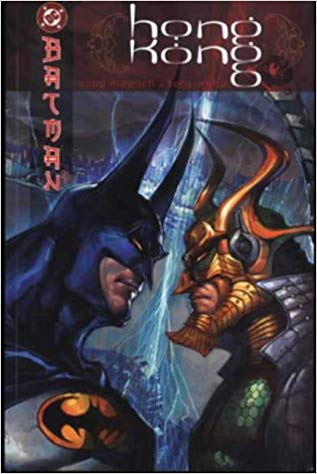
Elseworlds Batman volume 2


By Doug Moench, Kelley Jones, John Beatty & Malcolm Jones III (DC Comics)
ISBN: 978-1-4012-6982-1

During the 1990s DC regrouped and rebranded its frequent dalliances with alternate reality scenarios under the copious and broad umbrella of a separate imprint. The Elseworlds banner and credo declared that heroes would be taken out of their usual settings and put into strange places and times – some that have existed, or might have existed, and others that can’t, couldn’t or Shouldn’t exist…

Here a recent reissue (originally released in 2007 as Batman Vampire – Tales of the Multiverse) and now available in paperback and eBook editions collects a trilogy of unlikely Batman stories that began with a literary cross-pollination of the type publishers seem so in love with.

Crafted by Doug Moench, Kelley Jones and Malcolm Jones III, Batman and Dracula: Red Rain was and remains is a genuinely creepy adventure of heroism and sacrifice. Here the Lord of Vampires moves into Gotham City and turns the city into a hellscape unimaginable to behold.

Desperate to save his home, the Dark Knight is forced to ally himself with “good vampires” in an attempt to stop Dracula. It can’t be a spoiler to reveal that he also has to sacrifice his life and his humanity before the threat to his beloved city is ended…

This tale was a great success when it was first released in 1991; a minor gothic masterpiece, both philosophical and tension drenched, with the sleek, glossily distorted artwork of Jones & Jones III creating a powerful aura of foredoomed predestination. It alone is well worth the price of admission.

And that is a very good thing because the two sequels are a possibly unnecessary indulgence.

Batman: Bloodstorm (1994, with the somehow more visually hygienic John Beatty replacing Malcolm Jones III as inker) sees a devasted-but-still-hanging-on Gotham protected by a vampiric Batman.

The Dark Nosferatu now combines his crime-fighting mission with dispatching those bloodsuckers who escaped the cataclysmic events of Red Rain. Tragically, he is a tortured hero suffering the agonies of the damned, struggling perpetually with his unholy thirst, but is determined nonetheless never to drink human blood.

However, when the Joker assumes command of the remaining vampire packs and attempts to take control of Gotham, not even the hero’s greatest friends and a lycanthropic Cat-Woman can forestall Batman’s final fate…

And yet Batman’s eternal rest is thwarted and stolen from him after the heartsick Alfred Pennyworth and desperate Commissioner Jim Gordon recall the Batman from his tomb in Batman: Crimson Mist.

Moench, Jones & Beatty recount a bleak but predictable saga (originally released in 1999) of a beleaguered metropolis overrun by super-criminals since the caped Crusader went to his reward.

So, when his faithful manservant brings him back, the faithful retainer is horrified to find the now corrupted hero is just another malevolent, blood-hungry beast. One who plans to save Gotham by slaughtering every criminal still breathing in it…

Only a bizarre alliance of good men and monstrous villains can rectify this situation before humanity itself pays the awful price…

These stories take the concept of Batman as scary beast to logical extremes – and far beyond – but although well drawn and thoughtfully written, the sequels lack the depth and intensity of the initial tale and feel too much like most sequels – just an attempt to make some more money.

If you’re a superhero fan at least in this volume you have the real deal, so buy it and just treat the last two thirds as bonus material. If you’re a sucker for stylish bloodbaths and dramatic scarlet-drenched suspense, however, there’s plenty here for you to wade through and wallow in…
© 1991, 1994, 1999, 2016 DC Comics. All Rights Reserved.