The Magician’s Wife


By Jerome Charyn & François Boucq, with Foreword by Drew Ford (Dover Comics & Graphic Novels)
ISBN: 978-0-486-80049-3

Although all comics evolved from products designed to appeal to a broad variety of age ranges, we have finally reached a stage in our culture where individual stories and collaborations always intended by their creators to appeal to older or intellectually select audiences are now commonplace and acceptable.

What that means in simple terms is that complex, controversial and challenging graphic narratives which have come and largely gone unheralded now have an ideal opportunity to reach the mass audiences they were intended for and who deserve them…

A sublime case-in-point is this astounding, groundbreaking and compellingly wonderful transatlantic collaboration originally released in 1986, and which shone brightly but briefly; winning immense critical acclaim and glittering prizes from the comics cognoscenti yet barely troubling the mass public consciousness within or outside our particular art form’s bubble. Now after nearly thirty years in fabled obscurity it gets another chance to become the universally lauded masterpiece it deserves to be…

La Femme du magicien by American crime author and graphic novelist Jerome Charyn (Johnny One-Eye, I Am Abraham, Citizen Sidel series, Bitter Bronx: Thirteen Stories) and French illustrator François Boucq (Bouncer, Sente, Bouche de diable, Billy Budd, KGB) won numerous awards at the Angoulême International Comics Festival and elsewhere and even enjoyed a rare English Language translation in 1988 before dropping out of comics consciousness. Now their breakthrough masterpiece is back, visually remastered and re-translated by Charyn himself.

Following a piquant personal reminiscence in the Foreword by Dover Editor Drew Ford and intimate insights from the author in ‘A Note to the American Reader’ the twice-told tale begins, draped in dangerous and disturbing overtones of magic realism and tracing a chillingly unique co-dependent relationship between a servant’s daughter and a mercurial, mother-oppressed young man who always wanted to make magic …

Events begin to unfold in Saratoga Springs in 1956 as a weary jockey stumbles into an eerie old house and befriends precocious little Rita, daughter of the cook/housekeeper. The florabundant old pile is redolent of suppressed hostility and perilously-pent tensions, with a macabre old harpy ruling the roost but also teems with strange sights and obscure illusions thanks to the creepy son of the house’s owner.

Edmund is a scary and charming teenager who knows lots of legerdemain and many tricks of the prestidigitator’s art…

Little Rita daily lives with a host of animals (real or imagined?) but is only truly disturbed by Edmund’s outrageous attentions. He says it’s the proper way for a magician to court his future bride…

Feeling distressingly like observers of grooming-in-action, we see the child is fascinated by his hot-and-cold attentions, making her shocking discovery of Edmund’s callous sexual dalliances with her blowsy, lumpen mother all the more hurtful…

Four years later they are in Moscow, having escaped the crushing atmosphere of the old house and the forbidding matriarch. Rita’s mum is Edmund’s Famulus Mrs Wednesday, a living prop and stage assistant enduring a barrage of humiliating transformations and subtly guided and controlled by Edmund’s harsh declarations of love as Rita wonderingly watches from the wings, gradually maturing into a beautiful young toy.

By 1962 she is the centre of attention in theatres all around the world and Edmund’s intentions have become blatant. The grand gesture comes in Paris where in an act of extraordinarily callous cruelty he demotes faithful, doting Mrs Wednesday to the role of Rita’s Dresser and makes the teenaged daughter his co-star and assistant – to the lustful appreciation of the huge theatre audiences who seem captivated by his remarkably imaginative but savagely mortifying conjuring act…

Edmund has been personally educating Rita for years, but something strange happens on stage in London in 1963 when his precious “Miss Wednesday”, in the middle of his signature shameful hypnosis game, suddenly transforms into a monstrous beast apparently beyond the magician’s control…

They married in Munich in 1967 but the wedding night was marred by Rita’s memories of what her husband used to so blatantly do with her mother. Moreover, the axis of power seems to have shifted and Rita is increasingly the one calling the shots…

The crisis comes later when Rita’s mother is found mysteriously dead and the daughter’s long-suppressed passions explode…

Some time afterward, Rita is a waitress in a New York City Diner just trying to forget. Sadly her looks make her a target for both scuzzy lowlifes and simple-minded, paternalistic protectors and only the fact that cops frequent the eatery keep her even marginally safe. Haunted by ghosts and memories, she pushes her luck one night crossing through a park and is attacked by her most persistent admirers. It’s only after she viciously fights them off that a disturbing apparition manifests…

She feels pursued from all sides – by her attackers keen on silencing her, a kindly war veteran who wants to keep her safe and a persistent if painfully familiar vision – and Rita’s life spirals out of control. When Edmund seemingly shows up, a savage monster starts slaughtering visitors to the park and peculiar French detective Inspector Verbone takes an interest in her, apparently possessing impossible secrets and arcane insights when he arrives at her ratty apartment.

When events spiral to a bloody and so very unjust conclusion, Rita flees, taking a bus to Saratoga where she finds some very familiar folk and a cataclysmic, elemental and hallucinatory climax waiting for her…

Bizarre, baroque, phantasmagorical and wickedly playful, this is a story that can’t really be deconstructed, only ridden like a maddened, stampeding horse and then pondered at leisure while your bruises heal. If you like your mysteries complex and inexplicable and your love stories dauntingly bleak and black, you really should make the acquaintance of The Magician’s Wife…
© 1987 Jerome Charyn and François Boucq. Introduction © 2015 Jerome Charyn. Foreword © 2015 Drew Ford. All rights reserved.

The Magician’s Wife will be released November 27th 2015 and is available for pre-order now. Check out www.doverpublications.com, your internet retailer or local comics-store or bookshop.

Showcase Presents Weird War Tales volume 1


By Robert Kanigher, Bob Haney, Bill Finger, Sheldon Mayer, Jack Oleck, Len Wein, Marv Wolfman, Joe Kubert, Carmine Infantino, Dennis O’Neil, Russ Heath, Mort Drucker, Frank Thorne, Alex Toth, Reed Crandall, Sam Glanzman, John Severin, Howard Chaykin, Ed Davis, Frank Robbins, Nestor Redondo, George Evans, Alex Niño, Russ Heath, Neal Adams & various (DC Comics)
ISBN: 978-1-4012-3694-6

Win’s Christmas Gift Recommendation: Inventive, Intense and Intoxicating… 9/10

American comicbooks just idled along rather slowly until the invention of Superman provided a flamboyant new genre of heroes and subsequently unleashed a torrent of creative imitation and imaginative generation for a suddenly thriving and voracious new entertainment model.

Implacably vested in World War II, these gaudily-attired mystery men swept all before them until the troops came home, but as the decade closed more traditional themes and heroes began to resurface and eventually supplant the Fights ‘n’ Tights crowd.

Even as a new generation of kids began buying and collecting, many of the first fans who had retained their four-colour habit increasingly sought more mature themes in their pictorial reading matter. The war years and post-war paranoia had irrevocably altered the psychological landscape of the readership and as a more world-weary, cynical young public came to see that all the fighting and dying hadn’t really changed anything, their chosen forms of entertainment (film, theatre and prose as well as comics) increasingly reflected this.

To balance the return of Western, War and Crime and imminent Atomic Armageddon-fuelled Science Fiction comics, celebrity tie-ins, madcap escapist or teen-oriented comedy and anthropomorphic funny animal features sprang up, but gradually another of the cyclical revivals of spiritualism and a public fascination with the arcane led to a wave of impressive, evocative and shockingly addictive horror comics.

There had been grisly, gory and supernatural stars before, including a pantheon of ghosts, monsters and wizards draped in superhero trappings but these had been victims of circumstance: The Unknown as a power source for super-heroics. Now focus shifted to ordinary mortals thrown into a world beyond their ken with the intention of unsettling, not vicariously empowering the reader.

Almost every publisher jumped on an increasingly popular bandwagon, with B & I (which became the magical one-man-band Richard E. Hughes’ American Comics Group) launching the first regularly published horror comic in the Autumn of 1948, although their Adventures Into the Unknown was technically pipped by Avon. The book and comics publisher had released an impressive single issue entitled Eerie in January 1947 but didn’t follow-up with a regular series until 1951.

Classics Illustrated had already secured the literary end of the medium with child-friendly comics adaptations of The Headless Horseman, Dr. Jekyll and Mr. Hyde (both 1943), The Hunchback of Notre Dame (1944) and Frankenstein (1945) among others.

If we’re keeping score this was also the period in which Joe Simon & Jack Kirby identified another “mature market” gap and invented Romance comics (Young Romance #1, September 1947) but they too saw the sales potential for spooky material, resulting in the seminal Black Magic (launched in 1950) and boldly obscure psychological drama anthology Strange World of Your Dreams (1952).

The company which would become DC Comics bowed to the inevitable and launched a comparatively straight-laced anthology that nevertheless became one of their longest-running and most influential titles with the December 1951/January 1952 launch of The House of Mystery.

After the hysterical censorship debate which led to witch-hunting Senate hearings in the early 1950s was curtailed by the industry adopting a castrating straitjacket of self-regulation, titles produced under the aegis of the Comics Code Authority were sanitised, anodyne affairs in terms of Shock and Gore, but the audience’s appetite for suspense was still high and in 1956 National introduced sister titles Tales of the Unexpected and House of Secrets.

Stories were dialled back from uncanny spooky yarns to always marvellously illustrated, rationalistic fantasy-adventure vehicles and, eventually, straight monster-busting Sci Fi tales which dominated the market into the 1960s. That’s when super-heroes – which had gradually enjoyed their own visionary revival after Julius Schwartz reintroduced the Flash in Showcase #4 – finally overtook them.

Green Lantern, Hawkman, the Atom and a growing coterie of costumed cavorters generated a gaudy global bubble of masked mavens which forced previously staunchly uncompromising anthology suspense titles to transform into super-character books. Even ACG slipped tights and masks onto its spooky stars.

When the caped crusader craziness peaked and popped, superheroes began dropping like Kryptonite-gassed flies. However nothing combats censorship better than falling profits and, at the end of the 1960s with the cape-and-cowl boom over and some of the industry’s most prestigious series circling the drain, the surviving publishers of the field agreed to revise the Comics Code, loosening their self-imposed restraints against crime and horror comics.

Nobody much cared about gangster titles but, as the liberalisation coincided with yet another bump in public interest concerning supernatural themes, the resurrection of scary stories was a foregone conclusion and obvious “no-brainer.”

Even ultra-wholesome Archie Comics re-entered the field with their rather tasty line of Red Circle Chillers…

Thus, with absolutely no fanfare at all horror comics came back and quickly dominated the American funnybook market for more the next half decade. DC led the pack: converting House of Mystery and Tales of the Unexpected into supernatural suspense anthologies in 1968 and resurrecting House of Secrets a year later.

Such was not the case with war comics. Tales of ordinary guys in combat began with the industry itself and although mostly sidelined during the capes-&-cowls war years, quickly began to assert themselves again once the actual fighting stopped.

National/DC were one of the last publishers to get in on the combat act, converting superhero/fantasy adventure anthology Star Spangled Comics into Star Spangled War Stories the same month it launched and Our Army at War (both cover-dated August 1952) and promptly repurposing All-American Comics into All-American Men of War a month later as the “police action” in Korea escalated.

They grew the division slowly but steadily, adding Our Fighting Forces #1 (November 1954) – just as EC’s groundbreaking combat comics were vanishing – and in 1957 added GI Combat to their portfolio when Quality Comics got out of the funnybook business.

As the 1950s closed however the two-fisted anthologies all began to incorporate recurring characters such as Gunner and Sarge – and latterly Pooch – from Our Fighting Forces #45 on, (May 1959), Sgt Rock (Our Army at War #83 (June 1959) and The Haunted Tank (G.I. Combat #87, April/May 1961) and soon all DC war titles had a lead star or feature to hold the fickle readers’ attention. The drive to produce superior material never wavered however, hugely aided by the diligent and meticulous ministrations of writer/editor Robert Kanigher.

In America after the demise of EC Comics in the mid-1950’s and prior to the game-changing Blazing Combat, the only certain place to find controversial, challenging and entertaining American war comics was DC. In fact, even whilst Archie Goodwin’s stunning but tragically mis-marketed quartet of classics were waking up a new generation of readers in the 1960s, the home of Superman, Batman and Wonder Woman was a veritable cornucopia of gritty, intriguing and beautifully illustrated battle tales presenting warfare on a variety of fronts and from many differing points of view.

Whilst the Vietnam War escalated, 1960s America increasingly endured a Homefront death-struggle pitting deeply-ingrained Establishment social attitudes against a youth-oriented generation with a radical new sensibility. In response the military-themed comicbooks from National Periodical Publishing, as it then was, became even more bold and innovative…

However the sudden downturn in superheroes at the end of the 1960s led to some serious rethinking here and although the war titles maintained and even built sales they beefed up the anthological elements.

Thus in 1971 a title combining supernatural horror stories with bombastic battle yarns in an anthological setting seemed a forgone conclusion and sure thing to both publishers and readers alike and this economically epic monochrome tome collects the contents of Weird War Stories #1-21 (cover-dated September/October 1971 to January 1974), offering a broad blend of genre mash-ups for readers with a taste for the dark and uncanny to relish.

The series launched in a 52-page format combining new material with adapted reprints featuring a veritable Who’s Who of top flight creative talent – both seasoned veterans and stars in waiting – and #1 saw Editor Joe Kubert writing and illustrating an eerie linking story entitled ‘Let Me Tell You of the Things I’ve Seen’ as a lost GI stumbles into the personification of Death (the title’s long-term narrator in various blood-stained uniforms) who tells him a few stories…

The reaper began with ‘Fort Which Did Not Return!’ by Robert Kanigher & Russ Heath as originally seen in GI Combat #86, detailing how a bomber continued its mission even after the crew bailed out and followed up with all-new ‘The Story behind the Cover’ wherein Kubert revealed how a shunned German soldier carried on his duties after death…

From Star Spangled War Stories #71 (July 1958) Bob Haney & Kubert revealed ‘The End of the Sea Wolf!’ as a sadistic U-Boat captain was sunk by one of his own earlier victims whilst SSWS #116 (August/September 1964) originally saw France Herron & Irv Novick’s ‘Baker’s Dozen’ with a fresh-faced replacement to a super-superstitious platoon battling to prove he’s not their unlucky thirteenth man…

The issue ends with that lost GI realising just who has been telling tales in Kubert’s ‘You Must Go!’…

The reprints included in these early issues were all taken from a time when supernatural themes were proscribed by the Comics Code Authority, but even so they all held fast to eerie aura of sinister uncertainty – the merest hint of the strange and uncanny to leaven the usual blood and thunder of battle books…

In Weird War Tales #2 Kubert reprised his bridging vehicle as ‘Look… and Listen…’ saw a crashed Stuka pilot meeting a ghastly stranger at a battle-torn desert oasis before ‘Reef of No Return’ (by Haney & Mort Drucker from Our Fighting Forces #43, March 1959) detailed a determined frogman’s most dangerous mission and Kanigher & Frank Thorne’s new WWI silent saga ‘The Moon is the Murderer’ proved that overwhelming firepower isn’t everything…

Kubert’s ‘Behind the Cover’ featured a prophetic dream and terrifying telegram after which ‘A Promise to Joe!’ (Kanigher & Novick, G.I. Combat #97 (December 1962-January 1963) sees a dead gunner seemingly save his friend from beyond the grave and the superb ‘Monsieur Gravedigger’ – by Jerry DeFuccio & the legendary Reed Crandall – follows the follies of a sadistic Foreign Legionnaire who pushed his comrades too far…

Cartoonist John Costanza delivers some gag-filled ‘Military Madness’ and Kubert & Sam Glanzman offer a fact-packed ‘Sgt. Rock’s Battle Stations’ about ‘The Grenadier’ before Bill Finger, Ross Andru & Mike Esposito examine a young recruit’s rite of passage and development of ‘The Face of a Fighter’ (Our Fighting Forces #25, September 1957) after which ‘Oasis’ concludes the sorry saga of that downed Aryan airman…

American Naval Aviators ditching at sea were the unwilling audience for Death’s stories as WWT #3 opens with Kubert’s ‘Listen…’

The itinerary starts with ‘Been Here Before!’ (Finger, Andru & Esposito, G.I. Combat #44 January 1957) as a soldier under fire turns his mind back to boyhood games to save the day after which we see an aerial battle and parachute drop from the perspective of ‘The Cloud That Went to War!’ (Our Fighting Forces #17, January 1957 by Dave Wood, Andru & Esposito).

More Costanza comedy from ‘The Kreepy Korps!’ precedes an early tale by relative newcomers Len Wein & Marv Wolfman, ably illustrated by Russ Heath as both cave tribes and modern soldiers battle to possess ‘The Pool’, before the artists earlier collaboration with Bob Haney reveals how ‘Combat Size!’ is all a matter of mental attitude in a tale first seen in Our Army at War #66 (January 1958).

Glanzman’s ‘Battle Album’ explains ‘Flying Guns’ after which a finny friend helps a US submarine sink an aircraft carrier in Finger & Drucker’s ‘Pilot for a Sub!’ (Our Army at War #68, March 1958) before the issue ends as Kubert sends a ‘Lifeboat’ for those tragic aviators…

The fourth issue opens with Kubert’s final linking tale as a ‘Gypsy Girl’ and her family find wounded soldier Tony after his buddy runs off to get a medic. They kindly offer to pass time with him sharing stories such as ‘Ghost Ship of Two Wars’ (Kanigher & Novick from All-American Men of War #81, September 1960) wherein an obsessed WWI pilot seemingly slips into 1944 while pursuing of his unbeatable arch-enemy the Black Ace.

‘Time Warp’ by Kanigher and Gene Colan originally appeared as ‘The Dinosaur who Ate Torpedoes!’‘ in Star Spangled War Stories #123 (October/November 1965 and part of the uniquely bizarre War That Time Forgot series), pitting US frogmen against colossal sea-going saurians, after which ‘The Unknown Sentinel’ (by author unknown & Mort Meskin from House of Mystery #55, October 1956) saves the lives of two soldiers lost on manoeuvres on America’s most famous battlefield.

Glanzman then offers one of his magnificently engaging autobiographical USS Stevens vignettes with the all-new elegiac ‘Prelude’ before Kubert wraps up his chilling drama as ‘I Know Them to be True’ sees medics arriving to find Tony a much changed man, leaving Costanza to close things down with a laugh and some ‘Military Madness’…

Weird War Tales #5 opens with Haney & Alex Toth providing the book-end tale of ‘The Prisoner’ held by Nazis in Italy. Seeking a way out he recalls tales of escape such as ‘The Toy Jet!’ (Haney & Heath from All-American Men of War #78, March/April 1960), a chilling psychological thriller about an interned pilot in North Korea, and ‘Human Trigger’ (Herron, Andru & Esposito, Star Spangled War Stories #18, February 1954) which shows how a soldier lying on a mine deftly saves his own life…

Herron & Carmine Infantino then reveal how an American spy is forced to ‘Face a Firing Squad!’ (SSWS #14, November 1953) and Norman Maurer instructs with the history of ‘Medal of Honour: Corporal Gerry Kisters’ and Willi Franz & Heath detail the victory of a ‘Slave’ in Roman times before Haney & Toth offer a final release in ‘This Is It!’

Issue #6 saw Weird War drop to a standard 36 page package and take a step into tomorrow with Haney & Toth’s battlefield test of ‘Robots’. Wolfman & Thorne expanded the theme in ‘Pawns’ as humans and mechanoids finally decided who worked for whom whilst ‘Goliath of the Western Front!’ (Herron, Andru & Esposito from SSWS #93 (October/November 1960) featured a giant mechanical Nazi and an American David who finally did for him, before Haney & Toth settled all debate with the conclusive ‘Robot Fightin’ Men’…

Wolfman & Kubert combined to provide thematic bookends for issue #7, beginning with ‘Out of Action’ with wounded GIs awaiting the worst and trading tales like William Woolfolk, Jerry Grandenetti & Joe Giella’s ‘Flying Blind’ (Our Army at War #12 July 1953) as a wounded pilot was forced to trust someone else for the first time in his life if he wanted to land his burning jet, whilst Kanigher & Kubert’s ‘The 50-50 War!’ (All-American Men of War #41, January 1957) finds sporting rivals forced to help each other after both suffer injuries on an alpine mission, with Costanza adding more much-needed levity through his ‘Military Hall of Fame’…

‘The Three GIs’ (Finger & Heath, SSWS #62, October 1957) riffs smartly on those monkeys who respectively can’t see, hear and speak and the Purple Heart yarns end with Wolfman & Kubert’s chilling ‘I Can’t See’…

From #8 editorial control switched to the mystery division under the control of Joe Orlando and with it the reprints were shelved in favour of all-original material as publication frequency graduated from six times a year to monthly.

This all German-focused issue begins with a gruesome ‘Guide to No-Man’s Land’ (probably written by assistant editor E. Nelson Bridwell and illustrated by Tony DeZuniga) before moving on to ‘The Avenging Grave’ by Kanigher & DeZuniga with SS officers learning too late the folly of desecrating the dead of WWI, whilst anonymously scripted ‘Thou Shalt Not Kill!’ – with art by Steve Harper & Neal Adams – sees more gloating Nazis facing a vengeful golem…

Kanigher & DeZuniga then return to reveal the fate of an arrogant 1916 air ace in the skies over No-Man’s Land in ‘Duel of the Dead’ before the artist’s ‘Epilogue’ wraps things up…

Weird War Tales #9 invites us to ‘Enter the Portals of War’ in an introduction drawn by Howard Chaykin, swiftly followed by a trio of Kanigher yarns illustrated by the cream of DC’s Filipino artists.

‘The Promise’ was limned by Alfredo P. Alcala, telling a tale in two eras as both Teutonic knights in 1242 and German tankers seven centuries later fail to cross frozen Lake Chud, whilst Gerry Talaoc renders the disastrous end of deathly, determined ‘Blood Brothers!’ during the American Civil War and the incomparable Alex Niño details ‘The Last Battle’ between East and West before Chaykin pops back to declare ‘Death, the Ultimate Winner’.

Sheldon Mayer & Toth open WWT #10 with a deliciously whimsical ghostly love story in ‘Who is Haunting the Haunted Chateau?’ before Raymond Marais & Quico Redondo change the tone as a Death-Camp commandant returns after the war to salvage his ill-gotten gains from ‘The Room that Remembered’ whilst Wein & Walter Simonson – on the artist’s pro comics debut – reveal how invading Nazis shouldn’t have abused the town idiot and incurred the wrath of ‘Cyrano’s Army’…

Always experimental, the creative team of Mayer, DeZuniga, Alcala, Talaoc & Niño tried their hand at a time-twisting complete adventure for issue #11. Occurring on ‘October 30′ over 99 years beginning in 1918, the tale compares the progress of an ambitious German General granted a wish for glory by a treacherous spirit of war with three ghostly Americans determined to fix a long-standing mistake whatever the cost…

DeZuniga draws the introduction to #12, featuring tales of ‘Egypt’ starting with Kanigher & Talaoc’s tale of an ancient warlord who learned to regret spitting on the ‘God of Vengeance’, whilst ‘Hand of Hell’ (Kanigher & DeZuniga) saw Anubis similarly deal with one of Rommel’s least reputable and most sadistic deputies, after which Arnold Drake & Don Perlin switch locales to Roman Britain where a centurion takes an accidental time-trip and ultimately overthrows the Druids in ‘The Warrior and the Witch-Doctors!’…

Weird War Tales #13 opens with ‘The Die-Hards’ by Jack Oleck & Nestor Redondo, with Nazis realising there are even worse killers than they haunting their latest conquered village before Drake & Niño determine that ‘Old Samurai Never Die’ when a would-be shogun offends the patron spirit of Bushido and ‘Loser’s Luck’ by Michael J. Pellowski, George Kashdan & DeZuniga details the harsh choices facing the unfortunate winners of the next, last war…

Mayer, DeZuniga & Alcala unite in #14 to tell an eerie tale of doomed love and military injustice from the days before Pearl Harbor which begins with a ‘Dream of Disaster’, incorporates a deadly flight with a ‘Phantom for a Co-Pilot’ and marines who arrive ‘Too Late for the Death March!’ before finally meeting ‘The Ghost of McBride’s Woman’ and vindicating an unsung hero…

A little boy enamoured of war’s glory learns a lesson in WWT # 15 when his dead grandfather takes him back to WWI to see how ‘“Ace” King Just Flew in from Hell’ (Drake & Perlin) after which Oleck & Talaoc reveal the doom of ‘The Survivor’ of a Viking raid which offends a sorceress, and Oleck & Alcala detail the shocking fate of a fanatical crusader who succumbs to ‘The Ultimate Weapon’ of a Saracen wise man…

Drake & Alcala describe transplant science gone mad in #16’s ‘More Dead than Alive!’, whilst the first of a Niño double bill sees him delineate ‘The Conquerors’ (scripted by Oleck) who eradicate humanity – but not the things that predate on them – before Drake’s ‘Evil Eye’ sees a little boy inflict hell’s wrath on both Allies and Axis alike.

In #17 Kanigher & George Evans disclose how a dishonourable French Air Ace is punished by ‘Dead Man’s Hands’ before Pellowski, E. Nelson Bridwell & Ernie Chan show how a murdered soldier is avenged by ‘A Gun Named Marie!

WWT #18 has Drake & DeZuniga sketch the brief career of ‘Captain Dracula!‘ as he marauds through (mostly) German forces in Sicily before Mayer & Talaoc reunite for the cautionary tale of a greedy German sergeant in France whose greed makes him easy prey for the ‘Whim of a Phantom!’

Drake & Talaoc started #19 with the full-length story of the agent who infiltrated the Nazi terror weapon known as ‘The Platoon That Wouldn’t Die!’ whilst #20 reverted to short stories with Oleck & Perlin’s ‘Death Watch’ of a doomed coward who should have waited one more day before deserting, Drake & Alcala’s period saga of a witchcraft vendetta in ‘Operation: Voodoo!’ followed by their Battle of Britain chiller wherein a burned out fighter pilot learns ‘Death is a Green Man’…

This blockbusting blend of military mayhem, magical melee and martial madness concludes with Weird War Tales #21 and ‘One Hour to Kill!’ by Drake & Frank Robbins wherein an American soldier is ordered to go back in time to assassinate Leonardo Da Vinci and prevent the invention of automatic weapons before Mayer & Bernard Baily show just how a foul-up GI became an unstoppable hero ‘When Death Took a Hand’…

Classily chilling, emotionally intense, superbly illustrated, insanely addictive and Just Plain Fun, this is a deliciously guilty pleasure that will astound and delight any lover of fantasy fiction and comics that work on plot invention rather than character compulsion.
© 1971, 1972, 1973, 2012 DC Comics. All Rights Reserved.
Gabriel


By Jim Alexander, David Hill & Mick Trimble (Planet Jimbot)
No ISBN

Win’s Christmas Gift Recommendation: A Home-Grown Feast of Wonders… 8/10

There’s a wonderful intensity to creator-owned comic tales which is all too often lacking in slicker projects from major outfits with all the financial resources in the world at their fingertips.

When just the right creative elements are in place it can be like seeing The Buzzcocks playing live at a sweaty, heaving college gig in 1976 but then going home to watch to “Ever Fallen In Love (With Someone You Shouldn’t’ve)”, all seamlessly schmaltzed-out and over-produced to buggery by some cosmetically-enhanced, über-styled photogenic twinkie on X-Factor…

Past masters of getting the very best out of finite resources, fresh talent and strong ideas, Jim Alexander and his compadres at Planet Jimbot (whose new periodical release APP-1 will star in our next Small Press Sunday feature) have been crafting superbly enthralling graphic narratives for a wee while now and have recently added to their roster this smart, magnificently chilling – and, arguably, cheekily blasphemous – intellectual challenge to complacent Christianity…

Packaged as a slim, starkly effective monochrome trade paperback, Gabriel is an archly askew urban drama touted as “a true story taking place in an alternative Scotland”. The only noticeable difference I can see is that demons and angels are real and regularly meddle in mortal lives and matters.

…That and the fact that the Church is still supremely powerful: publicly operating its own secret service and special police force which supersedes regular Rozzers in matters both spiritual and temporal…

Writer Alexander’s prodigious back catalogue includes Calhab Justice and other strips for 2000 AD, Star Trek the Manga, GoodCopBadCop and bunches of stuff for The Dandy, DC, Marvel, Metal Hurlant, plus loads of other places and here – bolstered by carefully understated illustrator David Hill (Luther: Echoes of the Hammer) – he turns his mercurial imagination to troubled soul Stewart Gabriel: a poor sinner in another Glasgow with more than his fair share of burdens…

Stewart is an introspective, isolated chap who doesn’t want any bother but has trouble relating to his surviving relations. That’s not uncommon, but he’s also afflicted with terrible dreams of past lives and demonic darkness. Perhaps it’s all because he and his estranged wife Donna are trying to get a shameful, nigh-sacrilegious divorce…

Of course that major doctrinal misdemeanour can’t explain why he is somehow being irresistibly drawn to scenes of carnage and chaos involving the extremely excessive Saint Templar Church militia or why he’s suddenly started walking through walks, doors and other solid objects and even blinking out and rematerialising at scenes of infernal atrocity…

Glasgow is under siege these days: not just from increasingly violent protestors demanding sexual equality and abortions but also reeling from a series of savage serial killings by a particularly gruesome and determined demon.

The beast has decidedly dark “mommy-issues” and is gleefully causing a stink and slaughtering the faithful, especially if they’re partial to a little sin or hypocrisy…

In the higher ecclesiastical echelons, the synod of church leaders known as the Living Saints are fiercely debating how best to quell The Abomination’s sanguine spree and when one of their number prophetically divines Gabriel’s name in connection to the crisis and moves to have him brought in for a little inquisition, the demon is listening…

Despite the growing movement agitating for personal freedoms and responsibilities, this is still a world with no need for faith.

God is. The Devil is. Nobody is asked to believe anything because the spiritual is in fact all physical. So why does Gabriel believe there’s something going on that can’t be explained?

With chaos in the streets, events spiral to bloody climax when The Beast invades the church sanctum and confronts Gabriel, Donna and the Living Saints with a testament and revelation of his own…

First seen in the fabled 1990s thanks to much-missed pioneering publisher Caliber, this modern Mystery Play has been properly remastered for the 21st century and concludes here with an all-new palate cleansing whimsical addendum deftly illustrated by Mick (Bloodfellas) Trimble.

Set six months later, ‘I Am the Resurrection’ follows a good-natured beardy-bloke as he spends one eventful day and night washing the feet of hookers, avoiding death and giving dodgy traders in Temple Market a bit of a kicking. Naturally he ends up in jail – the regular nick, not the Templars’ stronghold – and has a remarkable interview with dying priest Father Salmon, who felt so very much better after giving the stranger the all-clear…

Things only really start to make sense after the unworldly weirdo pops by Gabriel’s place…

Smart, incisive and fictively fascinating, Gabriel builds a brilliantly enticing world before asking all the right questions and offering just enough answers to make readers hungry for a sequel.

This is another dark delight for all those who seek some intellectual meat in their reading matter, so why not break bread here and now?
Gabriel © 2015 Jim Alexander (story) and David Hill (art). I Am the Resurrection © 2015 Jim Alexander (story) and Mick Trimble (art).
Planet Jimbot has a splendid online shop so why not check out: https://www.etsy.com/uk/listing/244444294/gabriel-tpb

Heart in a Box


By Kelly Thompson & Meredith McClaren (Dark Horse)
ISBN: 978-1-61655-694-5

Win’s Christmas Gift Recommendation: A Fearsome Mature Fable for the Family Season… 8/10

Let’s face it kids, Love Hurts and this mesmerising modern parable demonstrates that maxim with stunning audacity and devilish charm as author Kelly Thompson (Storykiller, The Girl Who Would be King, Jem and the Holograms) and illustrator Meredith McClaren (Hinges) take a young woman on a harsh yet educative road trip to learn a life lesson regarding ill-considered wishes and Faustian bargains…

After young Emma had her heart broken by her unforgettable “Man with No Name” she foolishly listens to an insistent stranger who promises to make the shattering pain go away forever.

He’s as good as his word, too, but within nine days Emma realises that what she feels after he’s worked his magic is absolutely nothing at all and that’s even worse than the agony of loss and betrayal which nearly ended her…

The aggravating Mephistophelean advisor – she calls him “Bob” – is still popping in however, and promptly offers her a way to can reclaim the seven shards of sentiment/soul she threw away. There will of course be a few repercussions: as much for her as those folks who have been enjoying the use of a little feeling heart ever since Emma so foolishly dispensed with it and might not want to relinquish that additional loving feeling…

But as she doggedly travels across America, hunting down those mystically reassigned nuggets of passion, she discovers not only how low she’ll stoop to recover what’s hers but also where and when all the moral boundaries she never thought she had can’t be bent, bartered or broken…

A dark delight, Emma’s literal emotional journey takes her into deadly danger, joyous cul-de-sacs and life-changing confrontations with her past and future in a clever reinvigoration of one of literature’s oldest plots and probably mankind’s most potent and undying philosophical quandaries…

Funny, sad, scary and supremely uplifting Heart in a Box is a beguiling rollercoaster ride to delight modern lovers and every grown-up too mature to ever be lonely or dependent…
© 2013, 1979 Semi-Finalist Inc. & Meredith McClaren. All rights reserved.

Zombillenium volume 3: Control Freaks


By Arthur de Pins (NBM)
ISBN: 978-1-56163-956-4

Arthur de Pins is a British-born French filmmaker, commercial artist and Bande Dessinées creator whose strips – such as adult comedy Peccadilloes (AKA Cute Sins) and On the Crab – have appeared in Fluide Glacial and Max.

In recent years his superbly arch and beautifully illustrated supernatural horror-comedy Zombillénium has become his greatest success (keep your eyes peeled for the upcoming movie!): a truly addictive comics cult classic which began in 2009 (serialised in Spirou from #3698 on) and has now filled three albums released in English thanks to Canadian publisher NBM.

Rendered with beguiling style and sleek, easy confidence, the unfolding saga details the odd goings-on in a horror theme park run by real monsters and operated by capitalistically-inclined infernal powers and, with this latest volume, we finally get to peek behind the curtain a little to see who – and what – is pulling the strings…

Zombillenium is a truly magical entertainment experience celebrating all aspects of the spooky and supernatural, where (human) families can enjoy a happy day out rubbing shoulders with werewolves and witches and all breeds of bogeyman. Of course, those enthralled visitors customers might not laugh so hard if they knew all the monsters were real, usually hungry and didn’t much like humans … except in a culinary fashion…

The inaugural volume introduced hard-working, humane Director/vampire Francis Von Bloodt, newly-reborn Aurelian Zahner (a pathetically inept thief until he expired at the park and returned transformed into a demonic indentured employee of the business) and quirky British Witch Gretchen: a young newcomer interning at the park whilst secretly advancing her own agenda.

As they individually toiled away at the vast entertainment enterprise its true nature was slowly revealed: for unwary, unlucky mortals the site is a conduit to the domain of the damned and its devilish overlord Behemoth: an intolerant horror ever-hungry for fresh souls…

For the uncanny undead workers in Zombillenium, conditions of employment worsen every day: it is one of the least profitable holiday destinations on Earth and The Board are always threatening to make sweeping changes…

Despite the incredible bargaining power of the many monster Trade Unions, the only way out of a Zombillenium contract is the True Death and a final transition to Hell; yet for some reason the shop-stewards prefer to blame Aurelian for all their woes and seem determined to drive him out.

Stuck between a rock and a hot place, Zahner gradually adapts to his new (un)life of constant sorrow and grows closer to Gretchen after she shares with him her own life-story; revealing what he has become whilst disclosing what she’s really doing at the Park. The big boob has no idea how much she left out…

The saga moves into apocalyptic high gear with Control Freaks as Gretchen’s private plot gathers pace after she makes contact with a loved one currently confined in Hell. The bold sorceress promises a seemingly impossible liberation before sneaking out, whilst in the mortal world a long-dreaded day dawns and all the arcane artisans and supernatural staff quail at some really Big News…

A Consultant has been despatched to “observe” how the park is run but everybody from Von Bloodt to the Shop-Stewards know that elite vampire Bohémond Jaggar de Rochambeau is actually here to take the business by the throat and shake things up. They have no idea just how much everything is about to change…

One of the most unfortunate aspects of the fearsome funfair is that any human who dies on Zombillenium property is instantly reborn as a monster, owned by Behemoth and compelled to work eternally in the theme park until the master takes them below. Under Francis’ governance that’s been wisely offset by a set of stringent rules, the first of which states that no employee is ever allowed to attack a human…

Jaggar has other ideas. Before long he has impetuously killed a little girl and delivered in no uncertain terms the new working time directives to Francis and the astounded staff. The Park is a pump designed to generate money for the shareholders and a steady supply of souls to Behemoth. Now the old, timid tolerant ways championed by Von Bloodt have been superseded by more robust policies which demand bigger returns on both sides of the investment…

The news is met with mixed feelings by the workforce: most are scared, appalled and resistant. For some however it’s the opportunity they’ve long argued for: a chance to feed and feast and hunt all those obnoxious yet tasty human morsels…

With isolated attacks reported all over the park Aurelian suddenly goes into a rage-fuelled meltdown and Gretchen uses his colossal rampage to trigger an evacuation of Zombillenium. Casualties are kept to a minimum even though Jaggar is openly egging on the demonically transcendent Zahner to cut loose. With the park emptied by panic, however, the cutthroat Consultant is temporarily stymied…

Unfortunately, his new business model very much piques the greedy interest of the Board and before long Francis is out and Jaggar is Director; actively encouraging the killing of unattached or unaccompanied humans, who now come in droves to the most exciting entertainment experience in the world.

It’s all too much for ambulatory Egyptian Mummy Aton who enlists the aid of change-resistant union boss Sirius Jefferson to orchestrate an inspired industrial action which closes the Park. Management’s retaliation is swift, decisive and infernally effective and, as Gretchen and Aurelian get a message from an ally in Hell, in Jaggar’s Zombillenium irrevocable lines are drawn for a final battle to win the stilled hearts and captive souls of the enslaved employees…

To Be Continued…

One of the most engaging candidates in a burgeoning category of seditiously mature and subversively ironic horror-comedies, this superb and deliciously arch tale combines pop-cultural archetypes with smart and sassy contemporary insouciance and a solid reliance on the verities of Nature, Human and not…

Sly, smart, sexy and scarily hilarious, Zombillenium achieves that spectacular trick of marrying slapstick with satire in a manner reminiscent of Asterix and Cerebus the Aardvark, whilst easily treading its own path. You’ll curse yourself for missing out and if you don’t there are things out there which will. © Dupuis 2013 by De Pins. All rights reserved.

Something at the Window is Scratching


By Roman Dirge (Titan Comics)
ISBN: 978-1-78276-349-9

Win’s Christmas Gift Recommendation: Gloriously Skewed, Marvellously Inventive… 10/10

Roman Dirge is the multi-award winning, creatively twisted auteur behind the epically eccentric and deliriously disquieting Lenore: the Cute Little Dead Girl, but like quicksand and scabs he also has a hidden, softer, side.

Way back in 1998 he first compiled a compendium of poetic paeans to the weirder side of life, death and all points betwixt; all superbly synched with a wealth of his uniquely unsettling, chillingly cute Graphic Grotesques and this has now been remastered and re-released as part of Titan Comic’s sinisterly sublime full-colour hardback line archiving his entire canon.

Scaring and simultaneously delighting kids with poetry has always been a popular sport and this turbulent tome echoes with the ghosts of such luminaries as Roald Dahl, Edward Lear, Ogden Nash and Berke Breathed (he’s not actually dead yet, but his kids stuff is so good, he’s certain to be one day…) as it exposes a host of hidden wonders ranging from single page epigrams to extended verse sagas, beginning with ‘The Coo Coo Lady’ whose love for her clock knew no bounds and was – apparently – mutual, before a brief digression reveals the secrets of making ‘Critter Pie’ after which vampiric brothers settle a long-held beef in ‘The Sideways Man’…

The eponymous ‘Something at the Window is Scratching’ details the death of a certain mythological creature and the lengths to which a guilty lad goes to adopt its orphaned child, whilst bear-loving ‘Mr. Seephis’ miscalculates the amount of mutuality they might afford him and ‘Little Lisa Loverbumps’ learns a thing or two about swimming safety…

‘Peter the Pirate Squid’ gets very little time to prosper before ‘The Ghost in the Spider’ exposes a most mismatched pair of travellers whilst ‘Pear Head Man and Bread Boy’ and

‘The Alien Ballerina’ both come and go with astounding alacrity after which we all share every parent’s nightmare – just how to deal with a dying pet – in ‘The Bunny Came Back’…

The nautical misadventure of ‘The Captain’ and the infinite recursiveness of ‘Devil Bunny’ segue neatly into a doomed love between ‘The Reindeer and the Bumble Bee’ whilst old wisdom decrees – and proves – ‘Weird Family Weird Baby’ and a salutary warning is offered by the unlucky temporary inhabitant of ‘Fly Paper’…

Negotiation and resistance both prove pointless when a little bear is drawn into the ‘Dance of the Bedbugs’ but undead performers ‘Boodini and Choobie’ don’t really care, whilst neither ‘The Guy With a Thing on his Head’ or pumpkin imperilled ‘Eddie Poe’ can muster the energy to join in with the game proposed by ‘Mr. Pork Chop’ to end this eerie epistle of eclectic eccentricity.

And don’t think scrutinising all ‘About the Author’ will give you any idea about where this kind of carton craziness comes from…

Wittily weird, gorily gregarious and darkly hilarious, these vivid verses and portentous pictures blend bleak-edged charm with absurdist abstractions and arcane attractions to create visual mood music and Goth-toned glee for the culturally sated; reprising the mordant merriment of Charles Addams’ cartoons as so readily revisited by mirthful modern macabrists like Tim Burton, Jhonen Vasquez (Squee!, Johnny the Homicidal Maniac and who here provides and enthusiastic, confusiastic Foreword), Ted Naifeh & Serena (Gloom Cookie) and Jill “Scary Godmother” Thompson.

These odd odes are an unwholesome treat for kids of all ages with a taste for the richer, darker, more full-bodied flavours of life and its inevitable final consequences.

Ever so much better for you than absinthe, idolatry or unsanctioned unicorn safari …
Something at the Window is Scratching ™ & © 2015 Roman Dirge. All rights reserved.

If You Steal


By Jason (Fantagraphics Books)
ISBN: 978-1-60699-854-0

Christmas Gift Recommendation: A comics lover’s dream made real… 9/10

Jason is secretly John Arne Saeterrøy: born in Molde, Norway in 1965 and an overnight international cartoon superstar since 1995 when his first graphic novel Lomma full ay regn (Pocket Full of Rain) won that year’s Sproing Award (Norway’s biggest comics prize). He won another Sproing in 2001 for the series Mjau Mjau and in 2002 turned almost exclusively to producing graphic novels.

A global star among the cartoon cognoscenti, he has won many major awards from all over the planet. Jason’s work always jumps directly into the reader’s brain and heart, utilising the beastly and unnatural to gently pose eternal questions about basic human needs in a soft but relentless quest for answers. That you don’t ever notice the deep stuff because of the clever gags and safe, familiar “funny-animal” characters should indicate just how good a cartoonist he is…

The stylised artwork is delivered in formalised page layouts rendered in a minimalist evolution of Hergé’s Claire Ligne style, solid blacks, thick outlines and settings of seductive simplicity – augmented by a deft and subtle use of flat colour which enhances his hard, moody, suspenseful and utterly engrossing Cinema-inspired world.

The superbly understated art acts in concert with his dead-on, deadpan pastiche repertoire of scenarios which dredge deep from our shared experience of old film noir classics, horror and sci fi B-movies and other visual motifs which transcend time and culture, and the result is narrative dynamite.

This latest hardback compilation collects eleven new short yarns and opens with the eponymous and eerie ‘If You Steal’, wherein cheap thug Paul perpetually risks everything and the one person who keeps him feeling alive in search of quick cash, only to lose it all in the end after which ‘Karma Chameleon’ finds a small desert community dealing with the discovery of a giant, carnivorous and extremely predatory lizard which nobody seems able to see. Good thing masturbation-obsessed boffin Dr. Howard Jones and his long-suffering daughter Julia are in town…

The deliciously wry and whimsically absurdist Samuel Beckett spoof ‘Waiting for Bardot’ then segues neatly into a dashing mystery of masked derring-do as ‘Lorena Velazquez’ eventually tires of waiting for her ideal man to finish off a necessarily interminable and horrific army of villains prior to doling out a maiden’s traditional rewards whilst a fugitive murderer narrates his own paranoia-fuelled downfall after his ‘New Face’ briefly tempts him with love and the never-to-be-achieved promise of peace and safety…

A series of six faux horror comics covers combines to relate the trials of chilling romances in ‘Moondance’ and the classic fear theme extends into a rip-roaring battle against the undead in ‘Night of the Vampire Hunter’ and ‘Polly Wants a Cracker’ follows the other unique career path of artistic legend/assassin-for-hire Frida Kahlo whilst a junkie musician pushes his luck against some very bad guys because ‘The Thrill is Gone’ before ‘Ask Not’ takes a trawl through history from Stonehenge in 2583 BC to Salon de Provence in 1554 AD (courtesy of Nostradamus) to 1960s Cuba, revealing the truth behind the assassination of JFK and Abraham Lincoln and what parts Lee Harvey Oswald and Jack Ruby actually played in that millennial plot: a parallel worlds yarn like no other…

The book ends with a stunning, deeply moving graphic examination of dementia which is both chilling and oddly-heart-warming as aging Emma deals with the scary creatures who keep taking away the names of things in ‘Nothing’, proving once more that behind the innocuous-seeming cartoons and contemporary fairy tale trappings Jason’s work is loaded with potent questions…

If You Steal resonates with Jason’s favourite themes and shines with his visual dexterity, and skewed sensibilities. disclosing a decidedly different slant on secrets and obsessions. Primal art supplemented by sparse and spartan “Private Eye” dialogue, enhanced to a macabre degree by solid cartooning and skilled use of silence and moment, all utilised with devastating economy, affords the same quality of cold, bleak yet perfectly harnessed stillness which makes Scandinavian crime dramas such compelling, addictive fare.

These comic tales are strictly for adults yet allow us all to look at the world through wide-open young eyes. They never, however, sugar-coat what’s there to see…
If You Steal is © 2015 Jason. All rights reserved.

Zombillenium: Volume 1: Human Resources


By Arthur de Pins (NBM)
ISBN: 978-1-56163-850-5

Arthur de Pins is a British-born French filmmaker, commercial artist and Bande Dessinées creator whose strips – like adult comedy Peccadilloes (AKA Cute Sins) and On the Crab – have appeared in Fluide Glacial and Max. His beautifully illustrated Zombillénium began serialisation in Spirou #3698 (2009) and has filled three albums to date which are being released in English thanks to Canadian publisher NBM.

Rendered in a beguiling animated cartoon style, the saga features stories set in a theme park, run by the revived dead and operated for unspecified reasons by nebulous demonic powers.

Zombillenium is a truly magical entertainment experience celebrating all aspects of horror and the supernatural, where families can enjoy a happy day out rubbing shoulders with werewolves and witches and all manner of bogeymen. Of course, the customers might not laugh so much if they knew all those monsters were real, usually hungry and didn’t much like humans … except in a culinary fashion…

The first volume introduced Director Francis Von Bloodt, newly-created monster Aurelian Zahner (a former human and pathetically inept thief) and oddly secretive young British Witch Gretchen – who is “only” an intern at the park – all toiling away at a place which reeks of inhospitable working conditions.

The employees are literally little more than slaves and conditions continually threaten to get worse: Zombillenium is one of the least-profitable holiday destinations on Earth and “the Board” are always threatening to make draconian changes…

Despite the incredible power of the Zombie Trade Union, the only way out of a Zombillenium contract is the True Death and for some reason the shop-stewards blame Aurelian for all their woes and are determined to drive him out.

As Zahner adapted to his new indentured (un)life, Gretchen once shared a strict confidence with him, relating her life-story, revealing what he has actually become and explaining what she is really doing at the Park. The big boob has no idea what and how much she left out…

Human Resources begins amidst seething and escalating local troubles even as an obnoxious family find their day-trip to the park plagued by minor mishaps, missed turns and lost opportunities until they come across Aurelian out jogging. He graciously offers to guide them through the ever-shifting roads to their destination…

Little Tim’s “present” has already driven mum and dad back into their old, well-practised arguments but the lad is too busy being fabulously spooked and enthralled by the ever-so-convincing “performer” sitting beside him in the back. They’re all equally unaware of the tensions mounting in the human town just beyond the attraction.

In this region unemployment is 25% but the only even-remotely thriving concern refuses to hire anyone local. Animosity and suspicion has led to vandalism and worse, but would the ill-informed protestors even apply for jobs if they were offered? After all, the primary qualification for employment at the park is a total lack of all medically-recognised life-functions…

As Aurelian gives Tim the VIP tour, Gretchen passes by and is shocked to realise that the kid’s mum is not all she seems to be. When the surly and abrasive visitor then attacks one of the smaller employees and is taken into custody, Von Bloodt too is taken aback: he knows the bullying, bossy virago from somewhere long ago…

There’s not really time however to solve her baffling mystery though, since a fresh crisis is brewing. A few hours earlier animated skeleton Sirius Jefferson went for a bike ride and was abducted by disgruntled, unemployed skinheads. Using portions of his dismantled anatomy they have since surreptitiously invaded the complex workings under Zombillenium carrying explosives and determined to wreak havoc.

Most critical of all is that little Tim has gone missing. Despite a big search by all the staff not engaged in tracking down the saboteurs, the kid just can’t be found. Then, in a moment of aghast clarity, the Vampire-In-Charge realises exactly who his mother is and why the boy must never, ever meet radical young demon Astaroth: the prime advocate and most strident supporter the sport of human hunting, who bears an uncanny but horrifyingly explicable resemblance to the missing child…

From this point on things can only go badly, and not all Gretchen, Aurelian and Von Bloodt’s efforts might be enough to prevent chaos turning into bloody Pandemonium…

One of the most engaging candidates in a burgeoning category of seditiously mature and subversively ironic horror-comedies, this superb and deliciously arch tale will appeal to fans of such films as Hotel Transylvania and Igor and such graphic narrative classics as Boneyard, Rip M.D. and especially Melusine or The Littlest Pirate King, all of which combine pop-cultural archetypes with smart and sassy contemporary insouciance.

Sly, smart, sexy and scarily hilarious, Zombillenium achieves that spectacular trick of marrying slapstick with satire in a manner reminiscent of Asterix and Cerebus the Aardvark, whilst easily treading its own path. You’ll curse yourself for missing out and if you don’t there are things out there which will.
© Dupuis 2011. © NBM, 2014 for the English translation.

Baltimore, or, the Steadfast Tin Soldier & the Vampire


By Mike Mignola & Christopher Golden (Dark Horse)
ISBN: 978-1-61655-803-1

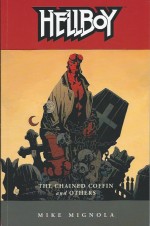
As well as being involved with some of the very best superhero yarns of the late 20th century, Legendary fantasist and comics-creator Mike Mignola has carved himself a splendid and memorable niche in the industry’s history by revitalising the sub-genre of horror-heroes via such macabre mayhem-mavens as Hellboy, B.P.R.D. and Lobster Johnson, creating his own very special dark place where thrill-starved fans can wallow in all things dire and dreadful…

Clearly he has far more ideas than he can successfully manage in one lifetime. As well all those sequential art endeavours he has expressed a deep and abiding love for the classical supernatural-thriller medium through illustrated prose novels such as Joe Golem and the Drowning City (co-crafted with long-time writing associate Christopher Golden) and this potent tribute to the writings of pioneers of the dread and uncanny H. P. Lovecraft, August Derleth and Clark Ashton Smith, with perhaps just a touch of Jack London…

Baltimore, or, the Steadfast Tin Soldier & the Vampire was first released as a luxurious Random House hardback 2007 and the captivatingly dark, doom-drenched blend of martial steampunk and classic vampire horror-yarn subsequently led to Mignola & Golden sporadically concocting further exploits of the titular hero in comics form from 2010 onwards, beginning with 5-issue miniseries Baltimore: The Plague Ships, illustrated by Ben Stenbeck.

This sturdy oversized paperback edition from Dark Horse re-presents that initial textual sortie into the outer reaches of imagination whilst also offering a brace of chilling comicstrip shockers by Mignola, Golden and Stenbeck culled from the 2013 one-shot Baltimore: The Widow and the Tank.

With constant and effective allusion to Hans Christian Andersen’s heartbreaking fairytale The Steadfast Tin Soldier, the eerie epic relates the transformative tale of dutiful if unimaginative Scion of Albion Lord Henry Baltimore who answered England’s call to arms in 1914 only to be severely wounded during the battles in Ardennes.

When he fell history took a horrific turn which began when the terrified officer awoke amongst a crater full of dead men being fed on by ghastly bat-like vampires who had for centuries abandoned their predator roles for the safer niche of clandestine carrion-feeders. When the appalled aristocrat lashed out, taking an eye from the leech prematurely consuming his life’s blood, it roused the creature and its disgusting brethren to a fury of vengeance-taking which cost Baltimore his entire family, unleashed a plague which decimated all humanity and roused a demonic force intent on reclaiming the Earth after contentedly quiescent millennia…

The one thing the obsessed Nosferatu’s sustained campaign of cruelty did not do was break Baltimore. Instead it honed the once-effete and ineffectual product of civilisation into an unstoppable hammer to smash the reawakened vampiric forces wherever they could be found – although not before the world was reduced to a pitiful, disjointed and primitive killing field on the edge of utter obliteration…

For most of the novel Baltimore is an enigmatic, unknown force far from the spotlight, given shape and form by three strangers who meet in a befouled hostelry in broken city at the behest of a man they have all benefited from knowing…

As the day passes, former Army Surgeon Dr. Lemuel Rose, merchant seaman Demetrius Aischros and Baltimore’s childhood companion Thomas Childress Jr. compare notes on the currently missing monster-hunter and share their own horrendous intimate brushes with various agencies of diabolism that have left all three maimed, wary but resolutely prepared for the worst the magical realms can throw at them. Or so they think…

Constructed like a portmanteau novel as a series of linked short stories and told in the manner of Victorian after-dinner raconteurs, the drama and tension build slowly but inexorably towards the inevitable appearance of the transformed and unwavering vampire-killer and a confrontation years in the making and steeped in the blood of millions…

Ponderous, inexorable, moodily despondent and completely captivating, this aggregation of singular horrors experienced alone and perpetual perils shared is complemented by two short comics vignettes illustrated with cool understatement by Ben Stenbeck.

‘The Widow’ harks back to the days after the plague brought The Great War to a unofficial halt when Baltimore returned to England in search of a new breed of gore-drinker hiding amidst the mortal populace, whilst the second episode sees the implacable hunter ally temporarily with a bloodsucker to escape even worse paranormal predators lurking around ‘The Tank’.

Moreover the scintillating saga contained within this supremely satisfyingly tome is graced with 146 grittily monochrome full, half, third and quarter-page illustrations by Mignola to complete a joyous homage to the necromantic good old days.

Miss it at your peril, fright fans…
© 2007, 2015 Mike Mignola and Christopher Golden. All rights reserved.

Abe Sapien: The Drowning


By Mike Mignola & Jason Shawn Alexander (Dark Horse)
ISBN: 978-1-59582-185-0

Hellboy is a creature of vast depth and innate mystery; a demonic baby summoned to Earth by Nazi occultists at the end of Word War II but subsequently raised, educated and trained by democracy-loving parapsychologist Professor Trevor “Broom” Bruttenholm to destroy unnatural threats and supernatural monsters as the chief agent for the Bureau for Paranormal Research and Defense.

After decades of unfailing, faithful service the big red rover became mortally tired and resigned. Itinerantly roaming the world, he still managed to encounter strange deaths and weird happenstances, never able to outrun trouble or his sense of duty.

This book is not about him.

The collection under review here instead notionally features the first solo exploit of his trusty amphibian associate Abe Sapien: a valiant yet deeply unsure and insecure champion whose origins and experience with those occult occasions typically handled by the Enhanced Talents Task Force are at this time still largely theoretical…

Originally released as a 5-part miniseries from February to June, 2008, The Drowning is scripted by creative head honcho Mike Mignola and moodily realised by Jason Shawn Alexander who also provides a fabulous and informative Abe Sapien Sketchbook at the back of this full-colour walk – or is that swim? – on the weird and wild side. Also involved in this tribute to black arts is letterer Clem Robins with the magical colours coming from Dave Stewart.

The action opens with a glimpse into demonic deeds of the past as, in 1884, occult detective Edward Grey boldly and bombastically defeats mighty warlock Epke Vrooman before sinking his hellish ship sixty miles off the French coast near the former leper-colony of Isle Saint-Sébastien.

In (contemporary) 1981 Hellboy is gone from the B.P.R.D. and Chief Bruttenholm pushes reticent Abe into leading a milk-run mission to retrieve the fabulous, lore-laden Lipu Dagger Queen Victoria’s Most Special Agent used to end the malevolent mage almost a century before.

With experienced agents already in place, all the merman has to do is dive deep and fetch back the prize artefact. Sadly, with magic nothing is ever easy…

As the on-site proceedings get underway none of the B.P.R.D. team are aware that unquiet spirits are already undertaking their own recovery mission and whilst horrific monsters intercept Abe at the sunken wreck, back on land an ancient crone puts into motion the ceremony she has waited her entire life to complete…

By the time the battered aquatic investigator struggles ashore almost everyone on Saint-Sébastien is dead and a pack of wizened devils are attempting to resurrect their diabolical master. Cut off from the outside world and unable to pass this mess on to somebody more qualified, Abe is flailing until the old woman takes charge, instructing him in some deeper truths about the Isle, the god the benighted inhabitants chose to worship and what truly moved and motivated Epke Vrooman on the last night of his former life…

Armed with appalling information and the knowledge that there’s no one to save the day, the neophyte agent turns to face his greatest challenge and worst nightmares…

Mignola has an incredible knack for creating powerfully welcoming mythologies and this escapade effectively dragged Abe Sapien out of the overwhelming shadow of satanic superstar Hellboy and the B.P.R.D. and set him on his way as a celebrated solo star.

Potent, powerful and utterly drenched in uncanny atmosphere, this is a terrific tale of an irresistible horror hero to haunt your dreams.
© 2008 Mike Mignola. All rights reserved. All key and prominently featured characters ™ Mike Mignola.