Agent 13: Acolytes of Death – A TSR Graphic Novel


By Flint Dille, Buzz Dixon & Dan Spiegle (TSR)
ISBN: 0-88038-800-5

Tactical Studies Rules was a backroom venture started in 1973 by Gary Gygax and Don Kaye which they grew into the monolithic role-playing and recreational fantasy empire TSR, Inc. revolutionising home entertainment in the days before cheap home computers and on-line video games.

Beginning with formally published scenarios and rules for Dungeons and Dragons, Cavaliers and Roundheads and others including gaming versions of Marvel Comics characters, Movies, TV shows and cartoon classics like Rocky and Bullwinkle, they swiftly branched out into figures and miniatures, magazines, models, table-top war games, fantasy fiction, collector card-sets and inevitably comics – firstly licensing their properties to companies like DC (Dragonlance, Forgotten Realms, Advanced Dungeons and Dragons and many more before inevitably creating their own line of comicbook and graphic novel “Modules” in the 1990s, based on their own game product, licensed properties such as Indiana Jones, Buck Rogers and even their critically acclaimed fantasy novels.

One of my very favourites is an everything-and-the-kitchen-sink period pulp action romp based on their kids novel series Agent 13: the Midnight Avenger (by Flint Dille and David Marconi) which shamelessly blended elements of the Shadow, Indiana Jones and Mandrake the Magician with classic horror and conspiracy thrillers to produce frantic fast-paced adventures of international intrigue and supernatural suspense set in the days before World War II.

Acolytes of Death is actually the second graphic novel volume (its predecessor Agent 13: the Midnight Avenger adapted to comics form the two novels The Invisible Empire and The Serpentine Assassin) but works as stand-alone saga which finds the indomitable super-spy, trained in the mysteries of ancient Lemuria, engaging his world-wide band of undercover operatives in a deadly quest.

It’s 1939 and at stake is humanity itself as immortal villain and would-be global dictator Itsu nears the end of his undying life. Preparing to enact an arcane ritual to renew his sinister eldritch energies, he convenes all the forces of darkness subject to his will: secret societies, witches, zombies and the world’s first vampire, to seek out the ideal venue for his unholy rebirth…

He has to be stopped: after all, just one of his wicked schemes is manipulating the nations of the Earth into another World War. He has other plans he hasn’t even started yet…

Agent 13’s uncanny powers are a result of his having been trained by the Brotherhood; Itsu’s cult of wizards and ninja-like Jinda Warriors, but the heroic tough guy rebelled and has been destroying these instigators of terror and chaos ever since…

Now in a rollercoaster race from Soviet Russia to Spain to New Orleans, 13, his dedicated associates and the sultry, morally ambivalent mercenary China White struggle to prevent the Dark Savant’s ultimate triumph, but can 13 trust his allies and the omens when so much is at stake…?

Fast-paced, far-fetched, joyous and frenetic, this is pure non-stop, action-packed nonsense of the sort beloved by fans of summer blockbuster movies, stirring and silly but utterly engrossing. The script rattles along and the incredible art by unsung genius Dan Spiegle (ably augmented by letterer Carrie Spiegle and colourist Les Dorscheid) is mesmerising in its expansive majesty.

Published in the extravagant, sleekly luxurious over-sized 285mm x 220mm European album format, this tantalising tome, as a graphic “module” also contains a fold-out map, counters, gaming data and background as well as a rule-set, just in case you and some judiciously selected friends feel like having a go at changing the spectacular ending…
© 1990 TSR, Inc. All Rights Reserved. Agent 13 is a trademark owned by Flint Dille and David Marconi.

Rip M.D.


By Mitch Schauer, Mike Vosburg, Michael Lessa, & Justin Yamaguchi (Lincoln Butterfield/Fantagraphics Books)
ISBN: 978-1-60699-369-9

Here’s a post-Christmas cracker that will delight monster-fans of all ages and signals a welcome return to upbeat and clever kids’ fiction.

Ripley Plimt is a bright lad with a hobby. Ever since he can remember he has adored classic monster movies. He’s an absolute expert on trivia, minutiae and lore. Now he’s eleven and all grown up he’s come to one inescapable conclusion… it’s all true!

When the kind-hearted lad mends a little bat’s broken wing one night it changes his life forever. Bitten by the fixing bug (but not the bat – that would be ungracious) he applies his unsuspected new skills to repairing the mouldering zombie corpse that shows up later – with the understanding and grudging approval of his parents and Uncle Will – and soon needy werewolves, protoplasmic blobs and ghost cats are all turning up to complicate his life.

The only real flies in the ointment are repulsive mortal kids Pretoria and Stanley DeMann, who used to live in Rip’s house and are prepared to go to extraordinary, murderous lengths to force the easy-going Plimpt family out…

Their millionaire dad is even worse and orchestrates a campaign of very human terror to get his way, almost driving Rip to abandon his unconventional dreams. However, the unscrupulous autocrat has some dark secrets of his own and Limbo the dead cat and a pretty little vampire girl know how best to exploit them…

Writer, artist, Producer, designer and Emmy® Award-winning animator Mitch Schauer (creator of Angry Beavers and Freakazoid!) is a founding member of Lincoln Butterfield, an independent animation company also comprising Robert Hughes and painter Michael Lessa. Comics veteran Mike Vosburg, who inked Schauer’s pencilled art here, has a glittering prize or two himself: as well as his funnybook career, he won his own Emmy® for directing Spawn cartoons and is chief storyboard artist for the Narnia movie franchise. Co-producing this snazzy graphic novel with electrically eclectic comics publisher Fantagraphics Books is LB’s first foray into print – but surely not their last.

With painted colour effects from Lessa and Justin Yamaguchi and including a wonderful development art section, this spectacular, spooktacular romp is a fabulously punchy, action-packed, wickedly funny treat for kids of all ages that will leave every reader voraciously hungry for more…

© 2010. All Rights Reserved. A joint production between Fantagraphics Books and Lincoln Butterfield.

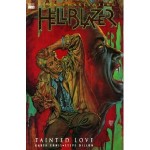
Hellblazer: The Fear Machine


By Jamie Delano and various & (Vertigo)
ISBN: 978-1-84576-880-5

You’ve either heard of John Constantine by now or you haven’t, so I’ll be as brief as I can. Originally created by Alan Moore during his groundbreaking run on Swamp Thing, he is a mercurial modern wizard, a chancer who plays with magic on his own terms for his own ends. He is not a hero. He is not a nice person. Sometimes though, he’s all there is between us and the void.

Given his own series by popular demand, he premiered in the dying days of Reaganite Atrocity in the US but at the height of Thatcherite Barbarism in England, so as we’re singing the same song now (but with second-rate Britain’s Got Talent cover-artists as leaders) I thought I’d cover a few old gems that might be regaining their relevance in the days ahead…

In 1987 Creative Arts and Liberal attitudes were dirty words in many quarters and the readership of Vertigo was pretty easy to profile. Jamie Delano began the series with relatively safe horror plots, introducing us to Constantine’s unpleasant nature, chequered history and odd acquaintances but even then discriminating fans were aware of a joyously anti-establishment political line and wild metaphorical underpinnings.

Skinheads, racism, Darwinian politics, gruesome supernature and more abound in the dark dystopian present of John Constantine – a world of cutting edge of mysticism, Cyber-shamanism and political soul-stealing. In Delano’s world the edges between science and magic aren’t blurred – they simply don’t exist.

Some terrors are eternal and some seem inextricably tied to a specific time and place: The Fear Machine (collecting issues #14-22 of the mature readers monthly comicbook) is an engrossing extended epic which began when the wizard went on the run after the tabloid press pilloried him as a Satanist serial killer in ‘Touching the Earth’ (by Delano, Richard Piers Rayner & Mark Buckingham).

Forced to flee his inner London comfort-zone he is adopted by a band of neo-pagan Travellers (apparently as responsible for all the ills plaguing society in the 1980s and 1990s as fat people and immigrants are today…) and journeys through the heartland of Britain.

Going native amongst the drop-outs, druggies, bath-dodgers and social misfits Constantine buddies up with an immensely powerful psychic girl named Mercury and her extremely engaging mum, Marj, but even amidst these freewheeling folks he can feel something nasty building. The first inkling occurs in ‘Shepherd’s Warning’ when Mercury discovers an ancient stone circle has been fenced off by a quasi-governmental company named Geotroniks. Someone is trying to shackle Mother Earth’s circulatory system of Ley lines…

Meanwhile elsewhere, people are compelled to kill and mutilate themselves and Geotroniks is watching and taking notes…

When police raid the Travellers campsite in ‘Rough Justice’ Mercury is abducted and imprisoned in a secret complex where the mind’s limits and the Earth’s forces are being radically tested. Cutting edge stuff… if only the subjects and observing scientists can be persuaded to stop committing suicide…

Mike Hoffman illustrated the fourth chapter, ‘Fellow Travellers’ as Constantine headed back to London for help in finding Mercury and uncovering the secrets of Geotroniks. He gains a horrific insight when the train he’s on is devastated by a psychic assault which makes all the passengers destroy themselves…

‘Hate Mail & Love Letters’ (with art by Buckingham & Alfredo Alcala) begins two months later. Marj and the travellers are hiding in the Highlands with a fringe group called the Pagan Nation, led by the mysterious Zed – an old friend of the wily trickster. Constantine keeps digging, but across the country suicide and self harm are increasing. Society itself seems diseased, but at least the Satanist witch hunt has been forgotten as the Press rage on to their next sanctimonious cause celebré…

Touching base with his few police contacts and pet journalists the metropolitan mage soon stumbles into a fresh aspect of the mystery when a Masonic hitman begins removing anyone who could be of use to his enquiries in ‘The Broken Man’. Saving journalist Simon Hughes from assassination in a particularly exotic manner guaranteed to divert attention from his politically damaging investigations, Constantine finds new clues that a the psychic horror and social unrest are all being orchestrated by reactionary aspects of the government and a sinister “Old Boy network”…

And somewhere dark and hidden Mercury’s captors are opening doors to places mortals were never meant to…

As the Pagan Nation’s priestesses work their subtle magics to find the missing girl and save humanity’s soul, a disgusting, conglomerate beast-thing is maturing, made from fear and pain, greed and suffering and deep black despair: provoking a response from and guest-appearance by Morpheus, the Sandman, and prompting Constantine, Hughes and possibly the last decent copper in London to go hunting…

Picking up another recruit in the form of KGB scientist Sergei, events spiral ever faster as the Freemasons – or at least their “Magi Caecus” elite – are revealed to be organising the plot in ‘Betrayal’, combining Cold War paranormal research, economic imperialism, Thatcherite divisive self-gratification and the order’s own quasi-mystical arcana to create a situation in which their guiding principles will control society and the physical world. It nothing more than a greedy power-grab using blood and horror to fuel the engines of change…

All pretence of scientific research at Geotroniks is abandoned in ‘The God of All Gods’ as Masonic hitman Mr. Webster goes off the deep end, ignoring his own Lodge Grandmaster’s orders to abort the project amidst an increasing national atmosphere of mania, determined to free the fearful thing they’ve created and unmake the modern world at all costs. Constantine’s allies are all taken and the wizard is left to fight on alone.

Knee deep in intrigue, conspiracy and spilled guts, humanity seems doomed unless Constantine’s band of unhappy brothers and a bunch of Highland witch women can pull the biggest, bloodiest rabbit out of the mother of all hats in the spectacular conclusion ‘Balance’…

The heady blend of authoritarian intransigence, counterculture optimism, espionage action, murder-mystery conspiracy theories and ancient sex-magic mix perfectly to create an oppressive tract of inexorable terror and smashed hope before the astounding climax forestalls if not saves the day of doom, in this extremely impressive dark chronicle which still resonates with the bleak and cheerless zeitgeist of the time.

This is a superb example of modern horror fiction, inextricably linking politics, religion human nature and sheer bloody-mindedness as the root cause of all ills. That our best chance of survival is a truly reprehensible exploitative monomaniac seems a perfect metaphor for the world we’re locked into…

Clever, subversive and painfully prophetic, even at its most outlandish, this tale jabs at the subconscious with its scratchy edginess and jangles the nerves from beginning to end. An unmissable feast for fear fans, humanists and political mavericks everywhere…

© 1989, 2008 DC Comics. All Rights Reserved.

Cycle of the Werewolf


By Stephen King, illustrated by Berni Wrightson (Land of Enchantment/Signet/New English Library)
ISBNs deluxe hardback edition: 0-9603828, paperback 978-0-45005-878-3

Not so much a novel as a serial of connected short stories Cycle of the Werewolf is comprised of a dozen discrete episodes describing a series of brutal killings which occur in the isolated New England town of Tarker’s Mills, Maine. The clue is in the title but for the terrified inhabitants it’s some while before the penny drops and the Full Moon Murderer is correctly profiled as a supernatural hairy slavering monster and not a bunch of accidents of a malicious human madman…

Divided into twelve chapters, the blood-soaked year is lavishly illustrated by comics legend Berni Wrightson in 12 lush and gory colour paintings, 12 moody black and white pen drawings and another dozen stunning monochrome spreads to delineate the changing months. It is some of his best work ever and seems to be to mark the moment he switched from pen and ink disciple of EC horror maestro “Ghastly” Graham Ingels and became a paint and colour illustrator in his own right.

The controversial project – most King followers don’t like this tale very much – began life as a proposed horror-calendar but grew and evolved into a terrifying picture book novella, initially released as a collectors edition hardcover in 1983, with a limited signed edition also available. The story was filmed as Silver Bullet in 1985 and released in a mass-market paperback edition by Signet in the US and New English Library here.

Moreover comics fans aren’t the only continuity completists and I should mention that one of the survivor’s of King’s vampire classic Salem’s Lot meets a grisly end here as May’s victim, whilst the inclusion of peripatetic preacher Father Callahan means that technically Cycle of the Werewolf is a part of King’s Dark Tower/Wheel of Ka sequence of novels.

Whereas the oversized hardback I’m reviewing might be a little difficult to find – but not impossible – the illustrated Signet softcover edition is pretty common, and speaking as someone who’s not the biggest devotee of King’s horror writing, I can honestly say that as supernatural chillers go this story ain’t that bad, whilst the art is completely astounding.
This edition © 1983 Land of Enchantment. Text © 1983 Stephen King. Illustrations © 1983 Berni Wrightson. All rights reserved.

Master of Rampling Gate


By Anne Rice, adapted by Colleen Doran (Innovation)
ISBN: 978-1-56521-009-7

Usually I’m a big advocate of the purity of original material over adaptations – never ask my opinions on movies made from comics, for example – but every so often a piece of reworked work transcends not only its origins but even the source material itself.

Such a gem is the Colleen Doran interpretation of a short Anne Rice vampire tale which was first published in Redbook in 1982 tenuously attached to the author’s ponderous Vampire Lestat universe but set in England in the 14th and 19th centuries.

1888: Richard and Julie Rampling are travelling to the country seat they have jointly inherited on the passing of their father. The journey is tainted with trepidation and apprehension as their sire made them swear on his deathbed to have the estate razed to the ground.

As the train brings them closer they reminisce on odd events that have occurred over the years, and on arriving at the beautiful manse their hesitation in executing the last wish increases. The mere thought of obliterating such a serene and beautiful setting is appalling whilst getting rid of the many generations of retainers who still service Rampling Gate is too painful to countenance. Yet their father was adamant: the house is a place of hidden horror and must be eradicated.

As their fact-finding mission proceeds the seductive lure of the house works its magic on Julie and even Richard feels the ancient call and struggles to comprehend why his obligation must result in loss of such a wondrous and compelling inheritance. A sensitive girl with aspirations to be a writer, Julie is inspired by the majestic environment but when her brother uncovers some old journals she becomes consciously aware of an ancient presence that has permeated and protected the estate for half a millennium.

Moreover the undying master has made his desires and intentions appallingly clear…

Slow and moody, this somewhat shallow tale is elevated to glittering heights by the chromatic dazzle of Doran’s artwork which treats the pages as brilliant, impossibly perfect concoctions reminiscent of stained glass window designs. All trace of terror is subdued by the inevitable culmination of Julie’s fascination with the hidden creature and the upbeat (at least for a vampire romance story) conclusion makes this slim book more dream than nightmare.

Impressive, understated and effectively brief, Master of Rampling Gate is a lost delight for those dark winter nights and one no fantasy fan will care to miss.
â„¢ & © 1991 Anne O’Brien Rice. Cover art © 1991 John Bolton. Adaptation and interior art 1991 Innovation Corp. All rights reserved.

Neil Gaiman’s Neverwhere


Adapted by Mike Carey & Glenn Fabry (Vertigo)
ISBN 1-84576-353-X

Just as he was reaching the narrative heights with his comics works Neil Gaiman wrote a six part television series for the BBC which met with mixed responses from the not-necessarily overlapping audiences of print and TV. Neverwhere had plenty of literary antecedents but its contemporary setting and post-punk attitude clearly caused a few confusions, whilst the legendary BBC budget “make-do-and-mend” policy and financial restrictions left the show looking far less impressive than the writing and acting warranted (a superficial viewer prejudice which still deprives far too many potential fans from taking the pre-1989 Dr. Who series as seriously as they should…)

Concocted by Gaiman and comedian Lenny Henry – long-time comics fan – the show was broadcast on BBC 2 in 1996 and was soon forgotten, but they eventually returned to the concept and it was adapted, restored and expanded as a novel which became a substantial hit (most recently re-published in 2006 in an “Author’s Preferred Text” edition). The core concepts have also been referenced in some of Gaiman’s subsequent fiction.

In 2005 the story was adapted to comics form by Mike Carey and Glenn Fabry as a 9-part miniseries from Vertigo and this compilation graphic novel seems to be the ultimate and most comfortable arena for this engaging urban quest into the dark and hidden side of cities and civilisation.

Abridged and distilled rather than adapted from the novel, Neverwhere recounts the journey and fate of harassed would-be yuppie Richard Mayhew who, against his fiancée’s wishes, stops to help a young homeless girl they find collapsed on the streets of London.

The frail, Goth-like waif calls herself Door and reveals that she is running for her life. Unfortunately that life is a mystical, metaphysical, subterranean analogue of reality notionally located under the sewers beneath our feet. Populated by the lost and forgotten, indigents, outcasts and creatures of legend and fevered fantasy this world is both seductive and dangerous. Moreover, once on those hidden paths mere mortals almost never return…

Door is the last of House Portico, a dynasty once powerful in “London Below” but all dead now. Her family’s relentless enemies have followed her to the world above and when Mayhew is threatened by thugs-for-hire Messrs Croup and Vandemar, pressing him for her location, he inadvertently crosses over, becoming forgotten and eventually invisible to his old friends and acquaintances.

As Door assembles allies to combat the plot against her, Mayhew is dragged along; a well-meaning innocent determined to win back his old life by completing a quest to cross Night’s Bridge, defeat Croup, Valdemar and their hidden master, overcome the fearsome Beast of London and win the support of the supreme power of this underworld: the Angel called Islington.

The path is long and hard however and Mayhew isn’t sure if he and the orphan Door can trust such unique, uncompromising companions as the derelict Iliaster, the Marquis de Carabas, Lord Rat-Speaker, Old Bailey and Hunter. Most importantly, should he win his heart’s desire, is Mayhew even aware of what it might truly be…?

Clever and engaging this dark romance is packed with tension, drama and the lure of the arcane and exotic, skilfully wrangled by Carey and Fabry into a pretty, enthralling package. This is a solid comics treat for full-on fans and tantalised dabblers alike.

© 2005, 2006 Neil Gaiman. All Rights Reserved.

Vlad the Impaler: the Man Who Was Dracula (paperback edition)


By Sid Jacobson & Ernie Colón (Plume/Penguin Group USA)
ISBN: 978-0-452-29675-2

Win’s Christmas Gift Recommendation: 8/10: Perfect spin on the seasonal traditional terror tales

Here’s a handy “heads-up” Horrible History hint if you’re looking for an ideal Christmas gift for your horrors at home: an economical softcover edition of one of the best graphic biographies of 2009 unleashed just in time to read in front of the Yule Log.

As writer and editor, Sid Jacobson masterminded the Harvey Comics monopoly of strips for younger American readers in the 1960s and 1970s, co-creating Richie Rich and Wendy, the Good Little Witch among others, before working the same magic for Marvel’s Star Comics imprint, where he oversaw a vast amount of family-friendly material; both self created – such as Royal Roy or the superb Planet Terry – and a huge basket of licensed properties.

In latter years he has worked closely with fellow Harvey alumnus Ernie Colón on such thought-provoking graphic enterprises as The 9/11 Report: a Graphic Adaptation (2006) and its 2008 sequel, After 9/11: America’s War on Terror. In 2009 their epic Che: a Graphic Biography was released: separating the man from the myth of Ernesto Guevara de la Serna, universal icon of cool rebellion.

Ernie Colón was born in Puerto Rico in 1931: a creator whose work has been loved by generations of readers. Whether as artist, writer, colourist or editor his contributions have benefited the entire industry from the youngest (Monster in My Pocket, Richie Rich and Casper the Friendly Ghost for Harvey Comics, and many similar projects for Marvel’s Star Comics), to the traditional comicbook fans with Battlestar Galactica, Damage Control and Doom 2099 for Marvel, Arak, Son of Thunder and Amethyst: Princess of Gemworld, the Airboy revival for Eclipse, Magnus: Robot Fighter for Valiant and so very many others.

There are also his sophisticated experimental works such as indie thriller Manimal, and his seminal genre graphic novels Ax and the Medusa Chain. Since 2005 he’s been hard at work on the strip SpyCat for Weekly World News.

Jacobson and Colón together are a comics fan’s dream come true and their bold choice of biography and reportage as well as their unique take on characters and events always pays great dividends. Vlad the Impaler is by far their most captivating project to date: a fictionalised account of the notorious Wallachian prince who was raised by his enemies as a literal hostage to fortune, only to reconquer and lose his country not once, but many times.

The roistering, bloody, brutal life of this Romanian national hero and basis of Bram Stoker’s Count Dracula, is a fascinating, baroque, darkly funny yarn, capturing a troubled soul’s battle with himself as much as the Muslim and Christian superpowers that treated his tiny principality as their plaything.

With startling amounts of sex and violence this book makes no excuses for a patriot and freedom fighter who was driven by his horrific bloodlust and (justifiable?) paranoia to become a complete beast: clearly the very worst of all possible monsters – a human one.

Sharp, witty, robust and engaging, with a quirky twist in the tale, this is a good old-fashioned shocker that any history-loving gore-fiend will adore.

Text © 2009 Sid Jacobson. Art © 2009 Ernie Colón. All rights reserved.

Walking Dead volume 1: Days Gone Bye


By Robert Kirkman & Tony Moore (Image)
ISBN: 978-1-58240-672-5

In advance of the television debut and sarcastically smug in the knowledge that at least one American University is now offering Zombie Studies as part of its curriculum, I think it’s about time that I turned my winnowing gaze on the most critically successful comicbook on the subject of the restless and infinitely hungry horrors that have recently captivated the global imagination.

The Walking Dead began in 2003 as an unassuming black and white monthly from Image Comics, once a cooperative of comics media darlings that has since evolved into a welcome clearing house of good ideas and different concepts that bigger publishers are too commercially timid to risk releasing. Writer Robert Kirkman and artist Tony Moore took the tried and trusted format pioneered by George A. Romero in his 1968 satirical shocker Night of the Living Dead, and stripped it of its sensationalistic brutality and anti-war sub-text, producing a very human and scarily passionate exploration of human nature under extreme and sustained duress.

In that light if zombie invasions are a metaphor for Life During Wartime then Walking Dead is more about civilians than soldiers and explores the Spirit of the Blitz rather than the last ditch heroics of Dunkirk or the Alamo.

The series has won many awards and, since 2004, been collected into numerous editions including 13 trade paperbacks each containing six issues, six deluxe hardbacks with a dozen issues each and bonus material, three omnibus editions with two years of material in each and even a Compendium volume containing the first 48 issues. There’s even a book of covers planned but I don’t know if that’s out yet… Being an old purist with weak wrists, I’m plumping for the very first trade edition for this graphic novel review.

Rural Kentucky cop Rick Grimes is shot whilst apprehending a rampaging felon with his friend and deputy Shane. He awakes from a coma in a deserted hospital littered with dead bodies and, whilst weakly making his way outside, discovers that not all the corpses are staying dead.

Chased by aggressively hungry but slow-moving zombies in various stages of decomposition Rick flees town and makes his way to the family home. His wife and son are missing but before he can search he is overwhelmed by Morgan Jones and his little boy Duane, fugitives from the undead plague which has overwhelmed the entire planet.

They bring Rick – and us – up to speed on the situation, explaining how to kill the monsters and relating all the news on the creatures that was broadcast before the media outlets were overrun. Most importantly, they reveal that uninfected humans have been advised to relocate to major cities. Knowing his wife had family in Atlanta, Rick tools up with weapons and supplies from the police station and sets off after his missing loved ones – even though Morgan clearly prefers to take his chances out in the wilds…

Experiencing all manner of sedate horrors Rick eventually reaches the big city but the scene is one of desolate carnage. The zombies are everywhere and when he is surrounded his own death looks certain until he is rescued by Glenn, a young man scavenging supplies for a small band of survivors hidden outside the city.

Shocks come thick and fast when the Rick finds wife Lori, son Carl and former deputy Shane are all part of the disparate group. They have been roughing it in a camp formed of assorted motor vehicles, living off the land, and waiting to be rescued or killed.

Also, something significant has happened between Shane and Lori…

Tensions amongst the survivors build as cold weather encroaches, resources diminish and the erratically wandering zombies gradually close in on the camp. Moreover, the unspoken friction between Rick, Lori and Shane is inexorably building and after an unusually heavy assault that kills two of their number results in a bitterly tragic climax…

Despite the trappings of dark, bloody horror, this is a series about humanity: its foibles, frailnesses, fallibilities and formidable resilience. Ancient anxieties such as ravenous unreasoning monsters rub alongside more modern bogeymen such as fear of the disease, and all the sins of humanity still plague the dwindling humans in this supremely underplayed gem, especially in Tony Moore’s deceptively comforting clean lined art; subversively enhancing the ghastly situation with quiet power and smooth grey-tone embellishments.

Whatever format you prefer this distinctly different horror show is one that will take your breath away and leave you so very hungry foe more…

© 2005, 2006 Robert Kirkman. All Rights Reserved.

Showcase Presents House of Mystery volume 1


By various (DC Comics)
ISBN: 978-1-4012-0786-1

American comicbooks started slowly until the creation of superheroes unleashed a torrent of creative imitation and invented a new genre. Implacably vested in the Second World War, the Overman swept all before him (and the very occasional her) until the troops came home and older genres supplanted the Fights ‘n’ Tights crowd.

Although new kids kept up the buying, much of the previous generation also retained their four-colour habit but increasingly sought older themes in the reading matter. The war years altered the psychology of the world, and as a more world-weary, cynical young public came to see that all the fighting and dying hadn’t really changed anything their chosen forms of entertainment (film and prose as well as comics) reflected this. As well as Western, War and Crime comics, madcap escapist comedy and anthropomorphic funny animal features were immediately resurgent, but gradually another periodic revival of spiritualism and interest in the supernatural led to a wave of increasingly impressive, evocative and even shocking horror comics.

There had been grisly, gory and supernatural stars before, including a pantheon of ghosts, monsters and wizards draped in mystery-man garb and trappings (the Spectre, Mr. Justice, Sgt. Spook, Frankenstein, The Heap, Sargon the Sorcerer, Zatara, Dr. Fate and dozens of others), but these had been victims of circumstance: the unknown as a power source for super-heroics. Now the focus shifted to ordinary mortals thrown into a world beyond their ken with the intention of unsettling, not vicariously empowering, the reader.

Almost every publisher jumped on the increasingly popular bandwagon, with B & I (which became the magical one-man-band Richard E. Hughes’ American Comics Group) launching the first regularly published horror comic in the Autumn of 1948, although Adventures Into the Unknown was technically pipped by Avon who had released an impressive single issue entitled Eerie in January 1947 before launching a regular series in 1951, by which time Classics Illustrated had already long milked the literary end of the medium with adaptations of the Headless Horseman, Dr. Jekyll and Mr. Hyde (both 1943), The Hunchback of Notre Dame (1944) and Frankenstein (1945) among others.

If we’re keeping score this was also the period in which Joe Simon and Jack Kirby identified another “mature market” gap and invented the Romance comic (Young Romance #1, September 1947) but they too saw the sales potential for spooky material, resulting in the seminal Black Magic (launched in 1950) and boldly obscure psychological drama anthology Strange World of Your Dreams (1952).

The company that would become DC Comics bowed to the inevitable and launched a comparatively straight-laced anthology that nevertheless became one of their longest-running and most influential titles with the December 1951/January 1952 launch of The House of Mystery. When the hysterical censorship scandal which led to witch-hunting hearings (feel free to type Senate Subcommittee on Juvenile Delinquency, April- June 1954 into your search engine at any time… You can do that because it’s ostensibly a free country now) was curtailed by the industry adopting a castrating straitjacket of self regulatory rules HoM and its sister title House of Secrets were dialled back into rationalistic, fantasy adventure vehicles, and even became super-hero tinged split-books (With Martian Manhunter and Dial H for Hero in HoM, and Eclipso sharing space with Mark Merlin and later Prince Ra-Man in HoS).

However nothing combats censorship better than falling profits and at the end of the 1960s the Silver Age superhero boom stalled and crashed, leading to the surviving publishers of the field agreeing to loosen their self-imposed restraints against crime and horror comics. Nobody much cared about gangster titles but as the liberalisation coincided with another bump in global interest in all aspects of the Worlds Beyond, the resurrection of scary stories was a foregone conclusion and obvious “no-brainer.” Even the ultra wholesome Archie comics re-entered the field with their rather tasty line of Red Circle thrillers…

Thus with absolutely no fanfare at all issue #174, cover dated May-June 1968 presented a bold banner demanding “Do You Dare Enter The House of Mystery?” and reprinted a bunch of admittedly excellent short fantastic thrillers originally seen in House of Secrets from the heady days when it was okay to scare kids. Staring off was ‘The Wondrous Witch’s Cauldron’ (HoS #58) by an unknown writer and compellingly illustrated by the great Lee Elias, another uncredited script ‘The Man Who Hated Good Luck!’ limned by Doug Wildey and the only new feature of the issue – one which would set the tone for decades to come.

Page 13 was a trenchantly comedic feature page scripted by Editor and EC veteran Joe Orlando and cartooned by manic Hispanic genius Sergio Aragonés. It stated quite clearly that whilst the intent was to thrill, enthral and even appal it was all in the spirit of sinister fun, and gallows humour was the order of the day. The comic then concluded with a Bernard Baily tale of the unexpected ‘The Museum of Worthless Inventions’ (from #13) and concluded with the Jack Miller, Carmine Infantino & Mort Meskin fantasy fable ‘The Court of Creatures’ (a Mark Merlin masterpiece from HoS #43).

The next issue can probably be counted as the true start of this latter day revenant renaissance, as Orlando revived the EC tradition of slyly sardonic narrators by creating the Machiavellian Cain, “caretaker of the House of Mystery” and raconteur par excellence. Behind the first of a spectacular series of creepy covers from Neal Adams lurked another reprint ‘The Gift of Doom’ (from HoM #137, illustrated by George Roussos) followed by ‘All Alone’, an original, uncredited prose chiller.

After another Page 13 side-splitter, Aragonés launched his long-running gag page ‘Cain’s Game Room’ and the issue closed with an all-new new comic thriller ‘The House of Gargoyles!’ by veteran scaremongers Bob Haney and Jack Sparling.

With format firmly established and commercially successful the fear-fest was off and running. Stunning Adams covers, painfully punny introductory segments and interspersed gag pages (originally just Aragonés but eventually supplemented by other cartoonists such as John Albano, Lore Shoberg and John Costanza. This feature eventually grew popular enough to be spun off into bizarrely outrageous comicbook called Plop! – but that’s a subject for another day…) supplied an element of continuity to an increasingly superior range of self-contained supernatural thrillers. Moreover, if ever deadline distress loomed there was always a wealth of superb old material to fill in with.

HoM #176 led with spectral thriller ‘The House of No Return!’ by an unknown writer and the great Sid Greene and young Marv Wolfman (one of an absolute Who’s Who of budding writers who went on to bigger things) teamed with Sparling on the paranoiac mad science shocker ‘The Root of Evil!’

Another reprinted masterpiece of form from Mort Meskin (see From Shadow to Light for more about this unsung genius of the art-form) led off #177, ‘The Son of the Monstross Monster’ having previously appeared in House of Mystery #130. and 1950’s fearsome fact page was recycled into ‘Odds and Ends from Cain’s Cellar’ before Charles King and Orlando’s illustrated prose piece ‘Last Meal’ and dream team Howie (Anthro) Post and Bill Draut produced a ghoulish period parable in ‘The Curse of the Cat.’

Neal Adams debuted as an interior illustrator – and writer – with a mind-boggling virtuoso performance as a little boy survived ‘The Game’, after which Jim Mooney’s spooky credentials were recalled with ‘The Man Who Haunted a Ghost’ (first seen in HoM #35) and E. Nelson Bridwell, Win Mortimer & George Roussos delineated an eternal dream with ‘What’s the Youth?’ and ‘Cain’s True Case Files: Ghostly Miners’ closed the issue.

Bridwell contributed the claustrophobic ‘Sour Note’ in issue #179 rendered by the uniquely visionary Jerry Grandenetti and Roussos and the next generation of comics genius begun with the first Bernie Wrightson creepy contribution. ‘Cain’s True Case Files: The Man Who Murdered Himself’ was scripted by Marv Wolfman and is still a stunning example of gothic perfection in the artist’s Graham Ingels inspired lush, fine-line style.

This exceptional artists issue also contains the moody supernatural romance ‘The Widow’s Walk’ by Post. Adams & Orlando – a subtle shift from schlocky black humour to moody supernatural tragedy that would undoubtedly appeal to the increasingly expanding female readership. The issue ends with another fact feature ‘Cain’s True Case Files: The Dead Tell Tales’.

Going from strength to strength House of Mystery was increasingly drawing on DC’s major artistic resources. ‘Comes a Warrior’ which opened #180, was a chilling faux Sword & Sorcery masterpiece written and drawn by the da Vinci of Dynamism Gil Kane, inked by the incomparable Wally Wood, and the same art team also illustrated Mike Friedrich’s fourth-wall demolishing ‘His Name is Cain Kane!’ Cliff Rhodes and Orlando contributed the text-terror ‘Oscar Horns In!’ and Wolfman & Wrightson returned with the prophetic vignette ‘Scared to Life’ An uncredited forensic history lesson from ‘Cain’s True Case Files’ closed the proceedings for that month.

‘Sir Greeley’s Revenge!’ by Otto Binder and drawn by the quirkily capable Sparling was a heart-warmingly genteel spook story, but Wrightson’s first long story – a fantastic reincarnation saga entitled ‘The Circle of Satan’, scripted by Bob Kanigher, ended #181 on a eerily unsettling note and #182 opened with one of the most impressive tales of the entire run. Jack Oleck’s take on the old cursed mirror plot was elevated to high art as his script ‘The Devil’s Doorway’ was illustrated by the incredible Alex Toth. Wolfman and Wayne Howard then followed with ‘Cain’s True Case Files: Grave Results!’ an Orlando limned house promotion and the nightmarish revenge tale ‘The Hound of Night!’

Oleck and Grandenetti opened #183 with ‘The Haunting!’, ‘Odds and Ends from Cain’s Cellar’ returned with ‘Curse of the Blankenship’s and ‘Superstitions About Spiders’ and Wolfman & Wrightson contributed ‘Cain’s True Case Files: The Dead Can Kill!’ before the canny teaming of Kanigher with Grandenetti and Wally Wood resulted in the truly bizarre ‘Secret of the Whale’s Vengeance.’ The next issue saw the triumphant return of Oleck & Toth for the captivating Egyptian tomb raider epic ‘Turner’s Treasure’ and Bridwell, Kane & Wood for a barbarian blockbuster ‘The Eyes of the Basilisk!’

House of Mystery #185 saw caretaker Cain take a more active role in the all-Grandenetti yarn ‘Boom!’, Wayne Howard illustrated the sinister ‘Voice From the Dead!’ and veteran Charlton scribe Joe Gill debuted with ‘The Beautiful Beast’: a lost world romance perfectly pictured by EC alumnus Al Williamson. Next issue topped even that as Wrightson illustrated Kanigher’s spectacular bestiary tale ‘The Secret of the Egyptian Cat’ and Neal Adams produced some his best art ever for Oleck’s poignant tale of imagination and childhood lost ‘Nightmare’. Nobody who ever adored Mr. Tumnus could read this little gem without choking up… and as for the rest of you, I just despair…

Kanigher & Toth produced another brilliantly disquieting drama in ‘Mask of the Red Fox’ to open #187, and Wayne Howard was at his workmanlike best on ‘Cain’s True Case Files: Appointment Beyond the Grave!’ before John Celardo & Mike Peppe apparently illustrated the anonymous script for the period peril ‘An Aura of Death!’ (although to my jaded old eyes the penciller looks more like Win Mortimer…)

Another revolutionary moment began with the first story in #188, cover dated September-October 1970. Gerry Conway got an early boost scripting ‘Dark City of Doom’, a chilling reincarnation mystery set in both contemporary times and Mayan South America as the trailblazer for a magnificent tidal wave of Filipino artists debuted. The stunning art of Tony DeZuniga opened the door for many of his talented countrymen to enter and reshape both Marvel and DC’s graphic landscape and this black and white compendium is the perfect vehicle to see their mastery of line and texture…

Wrightson was responsible for the time-lost thriller ‘House of Madness!’ which closed that issue whilst Aragonés opened the proceedings for #189, closely followed by Kanigher, Grandenetti & Wood’s ‘Eyes of the Cat’ and a 1953 reprint drawn by Leonard Starr, ‘The Deadly Game of G-H-O-S-T‘ (from HoM #11) before another Charlton mystery superstar premiered as Tom Sutton illustrated Oleck’s ‘The Thing in the Chair’.

Kanigher and Toth teamed for another impeccable graphic masterwork in ‘Fright!’, Albano filled Cain’s Game Room and Aragonés debuted another long-running gag page with ‘Cain’s Gargoyles’ and this issue ended with a Salem-based shocker ‘A Witch Must Die!’ (by Jack Miller, Ric Estrada & Frank Giacoia). Issue #191 saw the official debut of Len Wein who wrote the terrifying puppet-show tragedy ‘No Strings Attached!’ for Bill Draut and DeZuniga returned to draw Oleck’s cautionary tale ‘The Hanging Tree!’ before Wein closed the show paired with Wrightson on ‘Night-Prowler!’ a seasonal instant-classic that has been reprinted many times since.

John Albano wrote ‘The Garden of Eden!’, a sinister surgical stunner, made utterly believably by Jim Aparo’s polished art, and Gray Morrow illustrated Kanigher’s modern psycho-drama ‘Image of Darkness’ and superhero veteran Don Heck returned to his suspenseful roots drawing Virgil North’s monstrously whimsical ‘Nobody Loves a Lizard!’

Wrightson contributed the first of many magnificent covers for #193, depicting the graveyard terrors of Alan Riefe & DeZuniga’s ‘Voodoo Vengeance!’, whilst Bill Draut skilfully delineated the screaming tension of Francis X. Bushmaster’s ‘Dark Knight, Dark Dreams!’

For #194, which saw House of Mystery expand from 32 to 52 pages – as did all DC’s titles for the next couple of years, opening the doors for a superb period of new material and the best of the company’s prodigious archives to an appreciative, impressionable audience – the magic began with another bravura Toth contribution in Oleck’s ‘Born Loser’ swiftly followed by the Russ Heath illustrated monster thriller ‘The Human Wave’ (from House of Secrets #31), a Jack Kirby monster-work ‘The Negative Man’ (House of Mystery #84) before Oleck and the simply stunning Nestor Redondo (see also The Bible: DC Limited Collectors Edition C-36) closed the issue and this first volume with the metamorphic horror ‘The King is Dead’.

These terror-tales captivated the reading public and comics critics alike when they first appeared and it’s no exaggeration to posit that they may well have saved the company during the dire downward sales spiral of the 1970. Now their blend of sinister mirth and classical suspense situations can most usually be seen in such series as Goosebumps, Horrible Histories and their many imitators. If you crave beautifully realised, tastefully, splatter-free sagas of tension and imagination, not to mention a huge supply of bad-taste, kid-friendly creepy cartooning The House of Mystery is the place for you…

© 1968-1971, 2006 DC Comics. All Rights Reserved.

Marvel Zombies 2


By Robert Kirkman, Sean Phillips & Arthur Suydam (Marvel)

ISBN: 978-0-7851-2545-7
With the nights drawing in and assorted haunts roaming the land I thought I’d follow-up a previous graphic novel review with another nervous peek at one of modern Marvel’s most successful niche-franchises: a canny blend of gratuitous sarcasm, knowing, measured respect for canonical comicbook lore and sheer necrophilic bravado starring the departed-but-not-gone denizens of an alternate Marvel Universe.

In Marvel Zombies: Dead Days a dire extra-dimensional contagion ravaged Earth, and heroes, villains and all creatures in-between were eradicated by fearsomely frightful and discomfortingly familiar flesh-eating superheroes who weren’t so different from the ones we all know – except for a rapacious, all consuming taste for living flesh that only paused when there was no-one and nothing left to eat…

Against all odds a small band of mortals and mutants survived the catastrophe and the subsequent manic hunts of the zombies for one last morsel of living meat… until an ill-considered visit by the Silver Surfer and Galactus. These cosmic paragons were, after a cataclysmic struggle, utterly consumed by the undead super-humans, but not before the walking dead’s ranks were reduced to six – Tony Stark, Luke Cage, Giant-Man, Spider-Man, Wolverine and the Hulk.

Engorged on the extra-galactic planet-eater’s cosmic power and with all other food sources apparently consumed the cosmic sextet abandoned Earth: for the next forty tears they scoured their entire dimension, killing and eating every thing and every civilisation they could find, on the way swelling their ranks with the dead infected carcasses of intergalactic powerhouses Gladiator, Phoenix, Firelord and Thanos who had all fallen in battle against the unstoppable horrors.

Now, with the universe emptied of all life, but still just as ravenously, insatiably hungry, the zombies turned back towards Earth, intending to use the Fantastic Four’s old trans-dimensional travel technology to find a new universe – and eat that too.

In four decades the Earth’s meagre survivors had developed into a small but by no means viable colony, led by the aged T’Challa, onetime superhero Black Panther. With the aid of mutant machinesmith Forge he had welded an uneasy alliance between Humans, Homo Superior and another more startling faction: zombies who had lost their appetite for flesh…

It would seem that if the undead don’t taste flesh for long enough the irresistible hunger fades – a fact that was slowly becoming apparent to some of the cosmic zombies making their way back home through a universe cleansed of all life…

Life on Earth was no picnic either. Despite the end of the world, species tension remained undiminished and a civil war was brewing, human against mutant, fomented by the insanely ambitious Malcolm Cortez, leader of the long-gone Magneto’s Acolytes. An assassination attempt on T’Challa precipitated a final crisis, but when the cosmic undead arrived, intent on escaping to fresh hunting grounds, they discovered one last tasty snack just waiting there to tide them over on their intended journey…

However some of the monsters, tempted by the sight of hunger-free zombies battling beside their proposed last meal, change sides…

By no means as bleakly black and comedic as the first volume, this story thunders along as a far more cohesive tragic adventure, with a diminished gratuitous death-toll, coherent characterisation, genuine dramatic tension and spectacular action replacing the shock tactics and mordant slapstick of earlier tales: more a “What If?” crossover than a stand-alone, exploitative event, and the gripping saga ends on a moody downbeat that promises more and even better to come…

This book, reprinting the comicbook miniseries Marvel Zombies 2 #1-5, also includes the wealth of alternate and variant cover reproductions by painter Arthur Suydam whose astounding pastiche images of pictorial landmarks from Marvel’s decades-long-history has done so much to make the series a commercial success.

Although still very much a one-trick pony, there seems to be no way to sate the avid appetite of fans for these tales, which depend greatly on a deep familiarity with the regular Marvel pantheon, a fondness for schlock horror and the cherished tradition of superheroes fighting each other. Not for the squeamish or continuity-purist hardliners, there are certainly loud laughs, poignant pauses and frissons of fear awaiting the open-minded reader…

© 2007, 2008 Marvel Publishing, Inc, a subsidiary of Marvel Entertainment, Inc. All Rights Reserved.