Iznogoud Rockets to Stardom


By Goscinny and Tabary (Cinebook)
ISBN: 978-1-84918-092-4

For the greater part of his too-short lifetime (1926-1977), René Goscinny was one of the most prolific and most-read writers of comic strips the world has ever seen. He still is.

Among his most popular comic collaborations are Lucky Luke, Le Petit Nicolas and, of course, Asterix the Gaul, but there were so many others, such as the dazzling, dark deeds of a dastardly usurper whose dreams of diabolical skulduggery perpetually proved to be ultimately no more than castles in the sand…

In the wake of the Suez crisis, the French returned to the hotly contested deserts when Goscinny teamed with sublimely gifted Swedish émigré Jean Tabary (1930-2011) – who numbered Richard et Charlie, Grabadu et Gabaliouchtou, Totoche, Corinne et Jeannot and Valentin le Vagabond amongst his other hit strips – to detail the innocuous history of imbecilic Arabian (im)potentate Haroun el-Poussah.

However it was the strip’s villainous foil, power-hungry vizier Iznogoud who stole the show – possibly the conniving little blackguard’s only successful heist.

Les Aventures du Calife Haroun el Poussah was created for Record; the first episode appearing in the January 15th issue. 1962. A minor hit, it subsequently jumped ship to Pilote – a comics magazine created and edited by Goscinny – where it was artfully refashioned into a starring vehicle for the devious little ratbag who had increasingly been hogging all the laughs and limelight.

Like all great storytelling, Iznogoud works on two levels: for the youngsters it’s a comedic romp with adorably wicked baddies invariably hoisted on their own petards and coming a-cropper, whilst older, wiser heads can revel in pun-filled, witty satires and marvellously surreal episodic comic capers.

This same magic formula made its more famous cousin Asterix a monolithic global success and, just like the saga of the indomitable Gaul, the irresistibly addictive Arabian Nit was originally adapted into English by master translators Anthea Bell & Derek Hockridge who made those Roman Follies so very palatable to British tastes.

As always the deliciously malicious whimsy is heavily dosed with manic absurdity, cleverly contemporary cultural critiques and brilliantly delivered creative anachronisms which serve to keep the assorted escapades bizarrely fresh and hilariously inventive.

Insidious anti-hero Iznogoud is Grand Vizier to affable, easy-going Caliph of Ancient Baghdad Haroun Al Plassid, but the sneaky little toad has loftier ambitions, or as he is always declaiming “I want to be Caliph instead of the Caliph!”…

The retooled debuted in 1968, and quickly became a massive European hit, with 29 albums to date (carried on by Tabary’s children Stéphane, Muriel and Nicolas), his own solo comic, a computer game, animated film, TV cartoon show and even a live-action movie.

In 1977 after Goscinny’s death, Tabary began scripting his own sublimely stylish tales, switching to book-length complete adventures, rather than the compilations of short, punchy vignettes which typified the collaborations.

The fifth Dargaud collection (and the seventh volume published by Methuen in 1980), Des Astres pour Iznogoud, was originally released in 1969, and here it’s the eighth explosively outrageous Cinebook album, offering an astoundingly absurd quintet of short tales with the Vile Vizier on top form as he schemes to seize power from his sublimely oblivious Lord and Master.

The eternal struggle resumes with eponymously anachronistic Iznogoud Rockets to Stardom’, wherein the Vizier’s bumbling, strong-arm crony Wa’at Alahf is in the bazaar listening to a storyteller extolling the virtues of brilliant inventor Ahstroh Nautikhal. That clever old tinkerer has apparently built a machine which can travel to the stars…

After sharing the tale with his mean master, the big oaf is soon following the Vizier into the city as Iznogoud tracks down the rather insubordinate innovator. The little monster is delighted to hear that the machine works and even happier to find that Nautikhal has no way of bringing his towering rocket back to Earth…

Moreover the normally grudging Caliph is delighted at a thought of a trip to the edge of creation, but since he’s too lazy to walk to the rocket Iznogoud has to bring the five-storey high ship to the palace… by camel train…

And even after that mammoth feat of determined optimism the impatient villain still has to wrestle with the tricky and unpredictable black-powder propellant which never seems to ignite when it’s supposed to…

The pun-punctuated comedy of errors is followed by a sneaky dose of inspired iniquity entitled ‘Iznogoud’s Pupil’ as the Vizier conspires to become personal tutor to Prince B’oufaykhar, son of the incredible short-tempered and violent Sultan Pullmankar…

The scheme is wickedly simple: if he makes the prince miserable, the Sultan will destroy the Caliph and he can take over. Unfortunately the Vizier has never met a brat as spoiled as B’oufaykhar nor anybody who possessed a genie like the formidable and terrifying Djinn Rummih…

The broad slapstick gives way to mystic mayhem when far-travelled Klot Ed Krim of Tartary sells the infamous schemer an amulet that makes dreams come true. Sadly, the operating instructions for ‘The Tartar’s Talisman’ are rather specific and one can’t always dream about what one wants to, even if you eat the strangest things before bedtime…

On discovering an old law which states no Caliph may rule if he’s crazy, Iznogoud finds an assuredly infallible method to secure his ambitions in ‘My Hat!’. Getting hold of a magic hat which makes the wearer instantly insane is not a problem, but getting the Caliph to put it on is. In fact, as the dire deed is attempted at a birthday party it’s inevitable that the only one not to act like a mad hatter is happy-go-lucky Haroun Al Plassid…

The frantic antics conclude with a reality-warping riot as the Vile Vizier accidentally saves an ensorcelled wizard and is rewarded with a magic pencil. Whatever is rendered with the arcane implement will be forever banished to a desert island when the drawing is ripped up, and instantly Iznogoud begins capturing the Caliph’s likeness…

Sadly the upset usurper is no artist and his own ineptitude is Haroun’s greatest defence against ‘Dark Designs’ so there’s nothing for it but to get drawing lessons from the Caliphate’s greatest artist Tahbari al Tardi, a man far too eager and helpful for his own good…

Just such witty, fast-paced hi-jinks and craftily crafted comedy set pieces have made this addictive series a household name in France where “Iznogoud” is common term for a certain type of politician: over-ambitious, unscrupulous – and frequently insufficient in inches (or should that be centimetres?).

Desiring to become “Caliph in the Caliph’s place” is a popular condemnation in French, targeting those perceived as overly-ambitious and, since 1992 the Prix Iznogoud is awarded annually to “a personality who failed to take the Caliph’s place”.

Its nominees are chosen from prominent French figures who have endured spectacular failures in any one year and been given to the likes of Édouard Balladur (1995) and Nicolas Sarkozy (1999). The jury panel is headed by politician André Santini, who gave himself one after failing to become president of Île-de-France in regional elections in 2004.

When first released in Britain during the late 1970s and 1980s (and again in 1996 as a periodical comicbook) these tales made little impression, but certainly now this snappy, wonderfully beguiling strip has finally and deservedly found an appreciative audience among today’s more internationally aware, politically jaded comics-and-cartoon savvy Kids Of All Ages…

Original edition © Dargaud Editeur Paris, 1969 by Goscinny & Tabary. All rights reserved. This edition published 2011 by Cinebook Ltd.
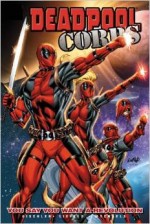
Deadpool Corps volume 2: You Say You Want a Revolution


By Victor Gischler, Rob Liefeld, Marat Mychaels & various (Marvel)
ISBN: 978-0-7851-4827-2

Stylish killers and moody mercenaries have always been popular fictional protagonists, and light-hearted, exuberant bloodbath comics will always find an appreciative audience…

Deadpool is Wade Wilson: an inveterate, unrepentant hired killer who survived cancer and genetics experiments which left him a grotesque bundle of scabs, scars and physical abnormalities but also practically immortal, invulnerable and capable of regenerating from any wound. He is also a many-times-over certifiable loon…

The wisecracking high-tech “Merc with a Mouth” was created by Rob Liefeld & Fabian Nicieza for New Mutants #97, another product of the “Weapon X” project which created Wolverine and so many other mutant/cyborg super-doers. His first shot at solo stardom came with a couple of miniseries in 1993 (Deadpool: the Circle Chase & Sins of the Past) but it wasn’t until 1997 that he finally won his own title, which blended fourth-wall-busting absurdist humour (a la Ambush Bug and Warner Brothers cartoons) into the mix, thereby securing his place in Marvel’s top rank.

Since then he has become one of the company’s iconic, nigh-inescapable stars, perennially undergoing radical rethinks, identity changes, reboots and more before always – inevitably – reverting to irascible, irreverent, intoxicating type in the end…

In this iteration – and following events too ludicrous to mention – Wilson united with a quartet of alternate Deadpools from very different parallel Earths (a buxom female Lady Deadpool, killer pre-teen Kidpool, a floating masked cranium from Marvel’s Zombiverse dubbed Headpool and a costumed mutt who answers to Dogpool (and sometimes “Cujo”) to form the strangest team in Marvel’s history (and yes, that includes Pet Avengers).

What Has Gone Before: a bizarre concatenation of circumstances has resulted in Deadpool and Co saving creation from the sentience-sucking Awareness.

For this they have been rewarded by the Elders of the Universe with a starship (the “Bea Arthur”) and a set of one-use only wishing rings. They’re having fun and don’t want to go home yet, but as card-carrying mercenaries the unlikely champions can never have enough spending money…

Collecting Deadpool Corps #7-12 (December 2010 to May 2011 by Victor Gischler, pencillers Liefeld and Marat Mychaels with inkers Adelso Corona & Cory Hamscher) the manic mayhem continues with a wickedly cruel spoof of blockbuster movie Avatar.

Framed through insanely clever fiddling with the narrative technique of flashbacks, the story resumes with the carnival of killer fools accepting a huge commission from the vast and unscrupulous Omega Confederation…

Paradise planet Kagan 7 is a beautiful wonderland of flora and fauna inhabited – or perhaps safeguarded – by the deeply spiritual, jungle-dwelling, blue-skinned warrior-race known as the Krook.

Sadly, to cost-effectively get at the planet’s mineral wealth, the Confederation had to enslave the Krook and turn them into miners. Now the ungrateful sods are rebelling and demanding their planet back so the Omega board would like somebody to go and quietly remove all the ringleaders so the peons can get back to digging up all that lovely platinum…

Taking out the alien legion of mercs hired by the rebels is no problem, but the natives themselves – especially the extremely hot daughter of the bombastic king – prove too much for the Crazy Corps and soon they are desperately bargaining for their own lives…

Said deal boils down to the Deadpools switching sides and running the revolution against the Omega Confederation. The murderers from a multiplicity of Earths have no qualms about switching sides: the problems only occur after Wade starts boffing the mercilessly manipulative Princess Teela who then convinces her highly sceptical father that to survive as an independent, free world the unspoiled Arcadian paradise needs to modernise and commercialise … just a bit…

Wade’s thinking something reserved and classy, properly in tune with the environment: Hospitals, swish eateries, a complex of skyscraper hotels, spa resorts and golf courses… y’know, like Las Vegas in space…

As Deadpool starts a crass telethon campaign to raise galactic awareness of the poor Krooks’ plight, a tidal wave of tree-huggers from across the universe converge on the endangered paradise to support the latest cause célèbre. Elsewhere the Omega Confederation board decide that something nasty needs to be done to the contractors who took their cash and failed to deliver…

On Kagan 7 so many donations are coming in the Imperial Senate recognises the new world and inducts it into the Galactic Economic Community. The first part of that procedure is to set up a Central Bank of Krook and advance several thousand tons of gold so the latest member of the club can suitably set up a proper trading profile…

Wade is so stunned with loot-shock he doesn’t even notice when the Omega’s death-squads start attacking. Luckily old girlfriend and legendary arms-smuggler The Broken Blade arrives to save they day whilst stocking the newborn world’s defences with the latest in super-ordinance.

She’s a little less than ecstatic when she discovers Wade’s been making time with a plush and primitive princess…

The social evolution of the Krook isn’t going smoothly either. Whilst Teela ruthlessly embraces everything flashy, new and civilised, dear old dad just wants his world back the way it was before all the outworlders came. Soon father and daughter are spearheading two separate armies in a savage civil war – beamed live into quintillions of homes all over known space – and the Deadpool Corps have picked opposing sides to help keep the slaughter quotient high.

All poor Wade can think about, however, is several thousand tons of gold just waiting to be salvaged and taken back to Earth…

And in the background the Omega Confederation are still working on ways to take back their mining operation and kill everybody who has defied them…

Displaying with extreme clarity how the cure can be worse than the disease, the last hurrah of the Deadpool Corps again blends a minimum of plot with an overabundance of sharp gags, snappy one-liners, shtick, shlock and slapstick as the trans-dimensional terrorisers bumble, fumble and smart-mouth their way across the galaxy and over a mountain of oddly-shaped corpses until finally they at last go their separate ways…

Surreal, wickedly irreverent and excessively violent in the grand Bugs Bunny/Road Runner tradition, Deadpool Corps is frat boy foolish and frequently laugh-out-loud funny: a wonderfully antidote to the cosmic angst and emotional Sturm und Drang of most contemporary Fights ‘n’ Tights comics, but again pays lip service to being a notionally normal Marvel milestone by also offering a full cover gallery by Liefeld and variant by Skottie Young…
© 2010, 2011 Marvel Characters, Inc. All rights reserved.

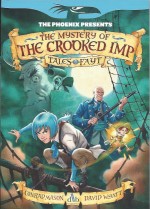
The Mystery of the Crooked Imp – Tales of Fayt


By Conrad Mason & Neill Cameron (David Fickling Books)
ISBN: 978-1-910200-42-1

In January 2012 Oxford-based family publisher David Fickling Books launched a traditional anthology comics weekly aimed at girls and boys between 6 and 12 which revelled in reviving the good old days of picture-story entertainment intent whilst embracing the full force of modernity in style and content.

Each issue still offers humour, adventure, quizzes, puzzles and educational material in a joyous parade of cartoon fun and fantasy. In the years since its premiere, The Phoenix has gone from strength to strength, winning praise from the Great and the Good, child literacy experts and the only people who really count – the astoundingly engaged kids and parents who read it…

That same year “The Little Company that Could” also began publishing a trilogy of excellent children’s fantasy novels starring the strange denizens of a fantastic place called Port Fayt.

Conrad Mason’s enchanting saga of life’s underbelly in a bustling commercial harbour situated at the other end of the Ebony Ocean is wonderfully redolent of Sir Terry Pratchett’s sublime Discworld – both in tone and scope.

The seething dock community – shared by humans, trolls, elves, fairies, magicians and so many other sorts of fey folk and night people – is revealed though the continuing exploits of The Demon’s Watch – a pan-species band of volunteer police who do what the lackadaisical constables of the official Dockside Militia cannot or will not…

Trade is king in Port Fayt and the “Blackcoats” mustered by the dominant and immensely powerful Trading Companies are supposed to arrest pickpockets, smugglers and other business-harming riffraff, but the ordinary citizenry have far more faith in the Watch’s shark-tattooed brotherhood of bluecoats who do good because it’s right and not because they’re (badly) paid to…

Supplementing the prose novels, this superb graphic outing is magically illustrated by David Wyatt (Peter Pan in Scarlet, the Larklight Trilogy, Mortal Engines, assorted tomes of the aforementioned Mr. Pratchett and J.R.R. Tolkien amongst others) and opens with an informative background lecture in ‘Crafty Crocklewick’s Giude to Port Fayt’: a potted history complete with detailed and annotated maps of the region and its more infamous landmarks such as Manticore Playhouse, The Brig and Bootle’s Pie Shop – HQ and front office of the Demon’s Watch.

Their latest case opens one sparkling midnight when a band of desperate fairies hold up a coach and steal a very unusual human baby. It is most odd: fairies are notorious thieves but generally their preferred loot is sugar, not infants with sparkly eyes…

Next morning the child’s parents enjoy a visit from the Demon’s Watch offering assistance, but the wealthy Rattigans seem more annoyed than upset over little Clarence‘s abduction and, whilst half-ogre Captain Newton, troll brothers Frank and Paddy Bootle, ancient elf Old Jon and young magician Hal quiz them, wise and crafty young apprentice Tabitha gets the impression their maid Joanna knows more than she’s letting on…

Soon however the Watch are tracking down the carriage driver – a dwarf by the name of Whelk – but there are still a few unanswered questions to ponder. For instance: where was the baby going in a coach at midnight and why weren’t the parents with him?

For that matter why haven’t these wealthy types called in the Militia?

The investigation leads to insalubrious inn the Rusty Anchor but when they arrive the Watch discover Whelk expiring with a cutlass in his guts. Leaving Hal and Tabitha to tend the dying dwarf, they pursue the assailants and Tabs catches Whelk’s dying words: “the crooked imp”…

In the crowded alleyways below they confront a most motley crew of blackguards and a ferocious battle ensues until late-arriving Tabs joins in and distracts Newton enough so that the killer clowns can escape…

As the elder watchmen ponder the mysteries, downhearted Tabs prowls the market, sulking whilst buying the cakes she’s been despatched for until she encounters a frantically fleeing fairy named Spoon. The flighty fool has become the target of an obsessive and hungry seagull and is most grateful for her help in escaping the feathered fiend. She even spends a little precious time getting acquainted with the self-proclaimed “Free Fairy”…

When they part company Tabs goes back to Pie Shop and Spoon goes home where his formidable mum makes him help feed that appalling human baby they snatched for their human client…

Captain Newton meanwhile has taken his team into the seamiest dives in Port Fayt in search of information, but no one knows of a Crooked Imp. Wily old elf Jeb does know something of a band of garish thugs however. They sound like the nasty cutthroats employed by a maniacally bonkers troll gang-boss known as The Actor…

As Jeb fills them in on the monster’s likely lair – an old abandoned playhouse in the Marlinspike Quarter – the suspect is currently taking a meeting with an extremely dangerous client of his own: one nasty enough to give even a psychopathic troll pause and one who really, really wants the baby he was promised…

When the Watch tool up for a serious fight with The Actor’s crew Tabs is furious at being left behind again, but soon finds a new clue when Joanna turns up with a rather dubious ransom note for Clarence. It has been signed by the Free Fairies…

Whilst Tabs frantically hunts down Spoon, at the playhouse The Actor and his frankly terrifying employer are still engaged in heated debate when Newt and the lads storm in for a final dust-up. All manner of pointless carnage ensues but when our heroes return, bloodied, unbowed but without either Actor or Clarence, they find that Tabitha has discerned the secret of the Crooked Imp…

The Watch soon rescue Clarence and solve the case of his kidnapping, but it only leads to even greater danger as the role of the Actor and intentions of his eerie employer – as well as the ghastly Rattigans – is finally revealed. However before they can close the case the maniacs turn the tables on our heroes, capturing them all and attempting to make them walk the plank into a nest of artificial sharks. Once again it’s up to Tabs to save the day, so it’s a good thing she has Spoon and that crazy seagull on her side…

Topped off with a foreboding promise of Things to Come and a handy set of information pages on the Demon’s Watch, this boisterous blockbuster is bright, breezy and packed with pies and punch-ups: a rip-roaring mystery yarn that’s furious fun for the entire family. Grab this and prose novels The Demon’s Watch, The Goblin’s Gift and The Hero’s Tomb and surrender to Fayt…

Text © Conrad Mason 2015. Illustrations © David Wyatt 2015.
The Mystery of the Crooked Imp will be released on April 2nd 2015 and is available for pre-order now.

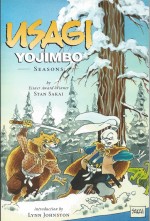
Usagi Yojimbo book 11: Seasons


By Stan Sakai (Dark Horse Comics)
ISBN: 978-1-56971-375-8

Usagi Yojimbo first appeared in Stan Sakai’s The Adventures of Nilson Groundthumper and Hermy, in 1984’s furry ‘n’ fuzzy folk-fest Albedo Anthropomorphics #1. He soon graduated to a stirring solo act in Critters, Amazing Heroes, Furrlough and Munden’s Bar back-up strips in Grimjack.

In 1955, when Sakai was two years old, the family moved from Kyoto, Japan to Hawaii. Growing up in a cross-cultural paradise he graduated from the University of Hawaii with a BA in Fine Arts, before leaving the state to pursue further studies at Pasadena’s Art Center College of Design in California.

His early forays into comics were as a letterer – most famously for the inimitable Groo the Wanderer – before his nimble pens and brushes found a way to express his passion for Japanese history, legend and the filmic works of Akira Kurosawa and his peers, inspirationally transforming a proposed story about a human historical hero into one of the most enticing and impressive fantasy sagas of all time.

And it’s still more educational, informative and authentic than any dozen Samurai sagas you can name…

Although the deliriously expansive period epic stars sentient animals and details the life of a peripatetic Lord-less samurai eking out as honourable a living as possible by selling his sword as a Yojimbo (a bodyguard-for-hire – and, while we’re at it, “Usagi” literally translates as “rabbit”), the milieu and scenarios all scrupulously mirror the Edo Period of Japan – roughly 16th and 17th century AD by our reckoning – whilst simultaneously referencing other cultural icons from sources as varied as Zatoichi to Godzilla.

Miyamoto Usagi is brave, noble, industrious, honest, sentimental, gentle, considerate, artistic, empathetic, long-suffering and conscientious: a rabbit devoted to the tenets of Bushido, he is simply unable to turn down any request for help or ignore the slightest evidence of injustice. As such, his destiny is to be perpetually drawn into an unending panorama of incredible situations.

This evocative and enticing eleventh monochrome medieval masterpiece gathers Dark Horse Comics’ Usagi Yojimbo comicbook (volume 3) #7-12, and the hue-less, line art contents of Usagi Yojimbo Color Special #4 (Green Persimmon).

Following a fondly effusive Introduction from cartoonist Lynn (For Better or For Worse) Johnston, the ever-unfolding adventure resumes with ‘The Withered Field’ as our wandering hero watches swordmaster Nakamura Koji. The former fencing instructor to Lord Hikiji wants to test himself against Ueno, head of the Surodoi School, but the master is absent and his arrogant, haughty students refuse to summon him despite the old man’s succession of victories against them all…

Usagi had also desired to test his skills but instead listens to the incredibly dexterous Koji’s tragic story. Once an important warrior of impeccable status, he was bested in a duel by an unconventional itinerant samurai who rejected the traditional forms of fencing.

Shamed by the defeat Koji took up the Warrior’s Pilgrimage, travelling the land testing and perfecting his skill whilst preparing for a rematch.

As they chat sixteen Surodoi students ambush them, resolved to excise their failure by killing the wanderers. United against the dishonourable attackers, Usagi and Koji efficiently despatch them all and the swordmaster comments on his new friend’s unique combat style…

Once, Miyamoto was simply the son of a small-town magistrate before spending years learning the Way of Bushido from a stern, leonine master who was as much hermit as teacher. The lad learned not just superior technique and tactics, but also Katsuichi‘s creed of justice and restraint which would serve him well throughout his turbulent life…

When Ueno returns he is outraged by his disciples’ presumption and further incensed after finding the bodies of his prodigal pupils. He seeks out Koji and finds him calmly walking with a rabbit ronin. Determined to restore his good name, he grants Koji the long-deferred honour of a duel…

The battle is a wonder of form, grace and precision but upon its grisly conclusion the victorious Koji turns upon Usagi. Having seen his companion fight, the swordmaster has recognised the style which defeated him so long ago and must test himself against it once more.

Unable to dissuade him, the rabbit gives his utmost but is resoundingly defeated. Koji has no intention of killing him and instead tasks Usagi with carrying a message and challenge to his reclusive sensei: the triumphant swordmaster will meet Katsuichi a year hence at a specified place to decide finally and forever whose skill is the greatest…

‘A Promise in the Snow’ then sees the rabbit rover stumble upon a robbery and prevent the death of a merchant. The trader is grievously wounded however and his little daughter Fumiye begs the ronin to carry the rapidly expiring Araki to his home a half-day’s journey away.

The task is an arduous one over avalanche-prone mountains with starving wild beasts and numbing cold sapping his energies and good intentions with every step. Despite nigh-overwhelming odds little Fumiye insistently urges Usagi on, but when he finally brings Araki to safety the rescuer receives a stunning shock…

Political intrigue blossoms once again when a wounded messenger carrying an astounding document staggers into a temple in ‘The Conspiracy of Eight’. Inside Usagi is visiting his new friend Sanshobo and is present when the priest finds a pledge signed by eight High Lords agreeing to rise up against the Shogun. The messenger wears the livery of “Shadow Lord” Hikiji and has been struck down by assassin’s arrows…

Ambitious Hikiji’s name is not amongst the signatories and his role in the scheme cannot be guessed, but Sanshobo knows that the letter will result in great bloodshed whether the conspirators, Shadow Lord or Shogun possesses it. Proof of his contention comes when a band of samurai lay siege to the temple compound, demanding the surrender of the messenger…

As snows fall and temperatures plummet, priest, postulants and ronin enact a furious defence of the sanctuary but ultimately a lone ninja steals the document and brings it to an unsuspected fourth party with her own reasons for keeping it quiet.

Neko ninja clan-chief Chizu secretly prays that this time her erstwhile ally Usagi will keep his nose out of her business …

‘Snakes and Blossoms’ offers a brace of flashback tales wherein the Yojimbo, calmly recuperating as Sanshobo’s guest, finds a moment to share some old stories with his new friend.

‘Hebi’ harks back to a time when the ronin and his crusty companion Gennosuké (an irascibly bombastic, money-mad, bounty-hunting, conniving thief-taking rhino with a heart of gold) were caught in a storm and took shelter in an almost abandoned temple. Gen had to kill a huge, vicious snake to get there but once inside things became even more dangerous as the beast’s demon wife impersonated a nun to get close enough to exact vengeance…

A far more educational parable follows as ‘The Courage of the Plum’ reveals how impulsive student Usagi learned a life-lesson from Katsuichi-sensei one cold spring just as the winter snows began to melt…

After a rousing pin-up the drama recommences with ‘Return to Adachi Plain’ (inked by Sergio Aragonés) as the perpetual nomad’s path brings him back to the battlefield where his karma was decided forever…

Mere months after completing his tutelage with Katsuichi, Usagi was recruited to the personal retinue of Great Lord Mifunė. He advanced quickly and was soon a trusted bodyguard too, serving beside the indomitable and legendary Gunichi. It was a time of great unrest and war was brewing…

In his third year of service, the castle was attacked by Neko ninja assassins and, although the doughty heroes managed to save their master, the Lord’s wife Kazumi and heir Tsuruichi were murdered. Realising ambitious rival Lord Hikiji was responsible, MifunÄ— declared war…

The epic conflict ended on the great Adachigahara Plain when MifunÄ—’s general Todo switched sides and the betrayed Great Lord fell. At the crucial moment Gunichi also broke, fleeing to save his own skin and leaving Usagi to preserve the fallen Lord’s head – and honour – from shameful desecration…

With no master to serve, Usagi became a ronin and began his endless Warrior Pilgrimage…

Far away another portentous interlude occurs as a simple peasant is saved by a dark stranger from a cruel and murderous samurai as they all shared passage between islands in ‘The Crossing’.

Jei is a veritable devil in mortal form, believing himself a “Blade of the Gods”, chosen by the Lords of Heaven to kill the wicked. The maniac makes a convincing case: when he first met Usagi the diabolical spearman was struck by lightning and still survived.

Still pursuing his crusade against evil, Jei has adopted an orphan girl Keiko to aid him, but after saving a life he then perceives it to be an evil one too – as apparently is every other passenger on the unlucky vessel…

A fascinating exploration of warrior spirit is depicted as a defeated general goes deep undercover as farmer in ‘The Patience of the Spider’. Ikeda and his most trusted lieutenants survived the fall of their Lord, adopted a peasant lifestyle and are biding their time until they can rise again to expunge their shameful defeat.

But months turn to decades and the General fully grows into his new role – perhaps too much so…

Usagi resurfaces again when a band of cutthroats at an inn initially select him as a prospective victim before switching sights to another, more affluent-seeming traveller. The rogues soon learn the error of their ways as the enigmatic Oyama Tadanori wipes them out with ease.

Later the stranger encounters Usagi and the ronin recognises ‘The Lord of the Owls’ as an infamous cursed warrior reputed to be able to see death in a person’s eyes. He is not happy to hear the taciturn figure warn him that they will meet again…

More secrets of the Conspiracy of Eight are revealed in ‘The First Tenet’ when Chizu’s deputy Kagemaru exposes her part in the incriminating letter’s theft to Hikiji’s untrustworthy facilitator Lord Hebi. Infuriatingly some wily ninja has doctored the document and the conspirators remain practically anonymous…

Later, as Hebi’s entourage is attacked by assassins, Kagemaru just happens to be nearby with a band of faithful ninjas who rapidly despatch the assailants. It’s not so much the surprise of the counterattack that routs the rogues as shock that the man who hired them is now leading the defence of Hebi…

Attention returns to the Yojimbo as he passes the devastated mansion of Lady Takagi and recalls how, in the aftermath of the Dragon Bellow Conspiracy, he, Gen and female warrior Tomoe were rushing back to inform benevolent young Lord Noriyuki that the crisis had been averted.

After battling their way past hostile forces they were offered a night’s respite by the noble lady but ‘The Obakéneko of the Geishu Clan’ was a were-beast intent on murder and worse and it took all the ronin’s might and plenty of luck to survive until daylight…

The spellbinding storytelling concludes with espionage mystery ‘Green Persimmon’ as a dying samurai of Noriyuki’s Geishu clan entrusts Usagi with a strangely glazed ceramic fruit which simply must reach the young Lord at all costs.

The fragile porcelain artefact attracts the attention of numerous thugs, cutthroats and hired killers but as the Yojimbo carves his way across the country he is unable to fathom its purpose. Only when he meets Tomoe does the Green Persimmon surrender its incredible secret…

This medieval monochrome masterwork concludes with a ‘Gallery’ of seven superb covers to wrap things up with artistic aplomb.

Despite changing publishers a few times the Roaming Rabbit has been in continuous publication since 1987, with over 30 books and collections so far. He has guest-starred in many other series (most notably Teenage Mutant Ninja Turtles and its TV incarnation) and even almost made it into his own small-screen show.

There are high-end collectibles, art prints, computer games and RPGs, a spin-off sci-fi comics serial and lots of toys. Sakai and his creation have won numerous awards both within the Comics community and amongst the greater reading public.

Fast-paced yet lyrical, informative and funny, Usagi Yojimbo also bristles with tension and thrills and frequently breaks your heart with astounding tales of pride and tragedy.

Simply bursting with veracity and verve, it is the perfect comics epic: a monolithic magical saga of irresistible appeal to delight devotees and make converts of the most hardened haters of “funny animal” stories.
© 1996, 1997, 1999, 2004 Stan Sakai. Usagi Yojimbo is a registered trademark of Stan Sakai. All rights reserved.

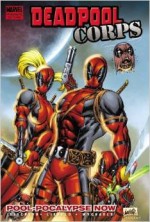
Deadpool Corps volume 1: Pool-Pocalypse Now


By Victor Gischler, Rob Liefeld, Marat Mychaels & various (Marvel)
ISBN: 978-0-7851-4825-8

Stylish killers and mercenaries craving something more than money have long made popular fictional protagonists, and light-hearted, exuberant bloodbath comics will always find an appreciative audience…

Deadpool is Wade Wilson (yes, a thinly disguised knockoff of Slade Wilson AKA Deathstroke the Terminator; get over it – DC did): an inveterate, unrepentant hired killer who survived cancer and genetics experiments that left him a grotesque bundle of scabs, scars and physical abnormalities but also practically immortal, invulnerable and capable of regenerating from any wound.

He is also a certifiable loon…

The wisecracking high-tech “Merc with a Mouth” was created by Rob Liefeld & Fabian Nicieza, debuting in New Mutants #97, another product of the “Weapon X” project which created Wolverine and so many other mutant/cyborg super-doers. He got his first shot at solo stardom with a couple of miniseries in 1993 (Deadpool: the Circle Chase & Sins of the Past) but it wasn’t until 1997 that he finally won his own title, which blended fourth-wall-busting absurdist humour (a la Ambush Bug and Warner Brothers cartoons) into the mix and secured his place in Marvel’s top rank.

Since then he has become one of Marvel’s iconic, nigh-inescapable characters, perennially undergoing radical rethinks, identity changes, reboots and more before always – inevitably – reverting to irascible, irreverent, intoxicating type in the end…

Here, following events too ludicrous to mention, Wilson has linked up with a quartet of alternate Deadpools from very different alternate Earths and formed the strangest team in Marvel’s history (and yes, that includes the Pet Avengers).

Collecting Deadpool Corps #1-6 (June-November 2010) the manic mayhem begins with the 5-part ‘Disrespect Your Elders’ (by Victor Gischler, penciller Liefeld and inker Adelso Corona) as the new comrades – Wilson, the strikingly female Lady Deadpool, killer bad boy and errant pre-teen Kidpool, a floating masked cranium from the Marvel Zombiverse dubbed Headpool and a costumed mutt who answers to Dogpool – are hired by the Elder of the Universe known as The Contemplator to expunge a horrific threat to creation…

From a universe preceding The Big Bang an unstoppable force has manifested which absorbs intelligence. Thousands if not millions of planets have succumbed to the power of The Awareness, their sentience and independence subsumed into a slavish nullity. Protected as they are by their own innate, intrinsic imbecility, Contemplator wants the Deadpools to go kill it…

In a bit of a dudgeon over their selection is another Elder calling himself The Champion. The mightiest physical specimen in existence feels the honour of saving universal intellect should be his, but although he’s no big brain either he just isn’t in the Wilson squad’s league…

Whizzing across the cosmos in the super ship “Bea Arthur” – with plenty of pit-stops in the skeeviest bars, cantinas and dives for information and violent recreation – the team soon confront and readily outwit their brawny rival…

Forced to take a different tack, Champion teams up with fellow Elder The Gardener to remove his insufferable rivals but is utterly astounded by their response. Somehow elected their leader, “Championpool” readies himself for glorious combat before again finding himself humiliatingly outsmarted by the Terran morons and stranded on a dead-end world whilst they fly off to reap all the glory…

Tracking the menace involves going undercover, drinking, beating up lots of aliens, shopping and even colluding and cohabiting with legendary star smuggler The Broken Blade, but eventually they near the end of their quest…

More a superb succession of gags than a plot, the adventure follows the Crazy Corps as they bumble and smart-mouth their way across the universe until finally they confront The Awareness and despite – or rather because of – their uniquely skewed mentalities, triumph in the strangest way possible…

Rewarded with wishing rings by the exultant Contemplator, the Silly Squad stay in space where this initial compilation concludes with the bombastic ballad of ‘The Blue Buccaneer’ (illustrated by Marat Mychaels & Jaime Mendoza).

Trading on their intergalactic reputation as badasses-for-hire, the Deadpool Corps accept a commission to wipe out a pirate band preying on interstellar commerce, necessitating Lady Deadpool going undercover in the most shocking – to her at least – of disguises, uncovering the most unexpected of old acquaintances leading the perilous privateers…

Surreal, wickedly irreverent and excessively violent in the grand Bugs Bunny/Road Runner tradition, Deadpool Corps is frat boy foolish and frequently laugh-out-loud funny: a wonderfully antidote to the cosmic angst and emotional Sturm und Drang of most contemporary Fights ‘n’ Tights comics but pays lip service to being a notionally normal Marvel milestone by also offering a full covers-&-variants gallery by Liefeld and sketch variant by Ed McGuinness…
© 2010, 2011 Marvel Characters, Inc. All rights reserved.

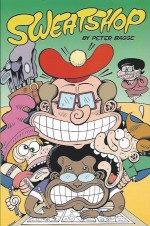
Sweatshop


By Peter Bagge with Stephen DeStefano, Bill Wray, Stephanie Gladden, Jim Blanchard, Johnny Ryan & Joanne Bagge (Fantagraphics Books)
ISBN: 978-1-60699-812-0

More generally known for his compulsively challenging (I so loathe that word “alternative”) strip material for mature audiences, cartooning legend Peter Bagge (Neat Stuff, Hate, Buddy Bradley, Everybody is Stupid Except for Me and Other Astute Observations) once found himself courted by the highest echelons of the comicbook mainstream and it resulted in two extremely different but delightfully enjoyable comedy ventures.

As he explains in his trenchant Afterword ‘Sweatshop: The Whys and What Fors’, forward-looking DC editor Joey Cavalieri accidentally oversaw the release of two overwhelmingly successful graphic novels – Bizarro Comics and Bizarro World – crafted by a host of Indie cartoonists and was asked/allowed to follow up the venture with something else in the same vein.

Bagge and Gilbert Hernandez had previously put together an intriguing and manically enticing, all-ages cartoon romp for the grievously underserved juvenile girls market (see Yeah!) for mainstream industry leader DC under their WildStorm imprint, and the company wanted to have another go.

Unable to commit to the punishing deadlines of a monthly comicbook solo, the cartoonist created his own sweatshop team to equitably distribute the workload and – after more dithering, ducking and diving – the saga of aging and indolent strip veteran Mel Bowling was born…

Naturally the feature was not what DC expected and the series was cancelled after #2, but due to the time lag involved, by then a full half dozen issues were completed. As with Yeah!, the compiled tales have now found their true spiritual home in these more enlightened graphic times as a sparky, spunky full-colour paperback collection from Fantagraphics, so you can at last profit from DC’s errors…

The premise is wickedly simple: Mel is the creator of successful family strip Freddy Ferret and officially has been for decades. However, with such an icon securely established, the crusty curmudgeon no longer does anything himself but “oversees” a studio of pathetic young hopefuls, doing their time and paying their dues before fame inevitably catches up with them all.

Acting as office manager and long-suffering interface between the modern world and the reactionary living fossil is Mel’s beleaguered spinster sister Millie who tries to keep the ship steady whilst the “creator” sits on his duff dreaming up increasingly more awful catch phrases and commissioning merchandising tat…

Scripted throughout by Bagge and coloured by his long-time collaborator and wife Joanne, the wryly seditious insider hilarity commences with the news that Mel has at last been nominated for a prestigious industry award. Pencil artist and closet superhero fanboy Alfred Post, creepily abrasive loner inker Nick Calamari and shy, quirky letterer Carrie cannot believe the trash they’ve been generating has garnered enough support for a Ham Fisher Prize but Millie is harbouring a secret.

Fed up with her brother’s annual carping and bitching, she’s pulled a few duplicitous strings to get him on the shortlist, but as far as the kids are concerned it’s a disaster: Mel was always appallingly mean when he wasn’t nominated, but now that he could actually lose something he’s never won and always wanted, they communally dread the next month…

Mel is gloating in advance, convinced he’s finally going to get one over on cartoon competitor and golf rival Wayne Goodman but the night of the ‘The “Hammies”’ (illustrated by Bagge) proves to be the train-wreck everybody – except Mel – expected… ‘The New Recruit’ (drawn by Stephen DeStefano) then introduces freshly hired gag writer Elliot: a hip ‘n’ cool, radical lefty wannabe who’s only killing time until his dope new strip Word Up! hits big.

Sadly the vegan newcomer’s ideals and stomach take a major hit after Mel treats his team to lunch at The King’s Trough – the nastiest old-school burger bar in town – where Mel’s effusive views on race and youth kill what’s left of Elliot’s appetite…

The tale is complemented by a trio of shorts illustrated from Bill Wray disclosing the efforts of the unsung juniors in ‘The New Guy’ (by Nick),‘Carrie’s Comic Diary 6/10’ and Alfred’s costumed crusader ‘The Peerless Penciller’…

Bagge & Wray then collaborate on ‘A Traitor in Our Midst’ as Nick starts disseminating cruel spoofs of Freddy Ferret and blames Elliot when Mel finds them. Typically, the fallout is not at all what the creepy inker anticipated…

DeStefano & Wray then delineate ‘Carrie’s Time’ as the letterer’s Indie diary strip is optioned for an animation show. Mel’s jealous interference at first seems selfish but there’s a few surprises in store for everybody concerned, after which Wray solos on ‘Carrie’s Comic Diary Storyboards’, detailing why this particular show was never going to fly…

‘Behold, the Peerless Penciller’ (DeStefano art) then focuses on shy, retiring Alfred as Millie encourages him to follow his superhero dreams: even self-publishing his comicbook for him. Following a hilarious cameo from Charles Burns the depressed kid listens to the wrong advice and tries to change his beloved Fights ‘n’ Tights style to chase the Manga comics dragon…

‘Millie the Enabler’ (drawn by Stephanie Gladden and inked by Jim Blanchard) then reveals the pressure the unappreciated sister is under as a romantic interest enters her life. Mel’s constant neediness almost scuppers the relationship until Carrie offers to pinch hit for her…

This chapter is accompanied by a page of “Alfred’s” manga doodles courtesy of that man Wray…

Johnny Ryan joins the team to illustrate ‘The Wrong Dates’ after Elliot correctly assesses his male co-workers as virgins and Carrie decides to help the unlovely – and possibly unlovable – comic geeks out by arranging meetings with some of her unattached female friends.

‘Freddy Gets “Edgy”’ (Gladden & Blanchard) finds Elliot at last a published strip cartoonist, prompting Mel to consider updating the ever-unchanging Ferret. First though he’s going to hire a focus group to evaluate the proposed changes…

‘A Convention to Remember’ is an all-Bagge affair as Mel is gulled into attending a Comics Expo. He was told he was to be Guest of Honour, but the organisers never said he would be the only one…

Drowning amidst a sea of nerds, pimples, body-odour, desperation and fanaticism, the sweatshop team individually experience their private hells (meek Alfred adopted by a sexy fan chick, Carrie finding her very own stalker and Nick having to talk to people) until somebody suggests setting Neil Gaiman’s pants on fire…

In ‘I Have No Son!’ (illustrated by Ryan), the salutary glimpses into our magic universe come to a close when the kids discover the grotesque bum regularly dumpster-diving outside the studio has a personal connection to Mel. However, there’s far more going on than meets the eye – or the nostrils – and a distressing reunion leads to soft-hearted Carrie befriending the bum’s mum in ‘The Ex’ (Gladden & Blanchard).

Before too long she knows why Mel divorced her…

A wicked cruel “Nick Calamari” sidebar (by Wray again) details ‘It’s the Adventures of… The Meddler starring Miss Carrie Big Buttinsky’ and the gloriously baroque carton Commedia dell’arte concludes with ‘Mel + Irene’s First Date’ (Gladden & Blanchard) which harks back to Spring 1973 when a shy, aspiring cartoonist made the rather rash move that started his little empire going…

Barbed, raucous and superbly outrageous, this marvellous warts-and-all comedic comics-industry expose is an ideal object and object lesson for everyone who ever considered indulging in the funniest of funny businesses.
© 2015 Peter Bagge. This edition © 2015 Fantagraphics Books Inc.

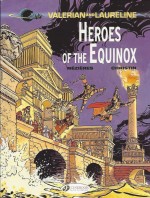
Valerian and Laureline book 8: Heroes of the Equinox


By Méziéres & Christin, with colours by E. Tranlé; translated by Jerome Saincantin (Cinebook)
ISBN: 978-1-84918-213-3

Valérian and Laureline is the most influential science fiction comics series ever created; an innovation-packed, Big-Ideas bonanza stuffed with wry observation, knowing humour, intoxicating action and underpinned throughout by sardonic sideswipes at contemporary mores and prejudices.

Valérian: Spatio-Temporal Agent debuted in weekly Pilote #420 (November 9th 1967) and was an instant hit. It swiftly evolved into its current designation as his feisty, fire-headed female sidekick developed into the equal partner – and eventually scene-stealing star – of light-hearted, fantastically imaginative, visually stunning, time-travelling, space-warping fantasies.

Nevertheless the so-sophisticated series always found room to propound a satirical, humanist ideology and agenda, launching telling fusillades of political commentary and social satire to underpin the astounding imagination of the space opera.

At first the tough, bluff, taciturn affably, capable – if unimaginative – by-the-book space cop just did his job: tasked with protecting official universal chronology (at least as per Terran Empire standards) by intercepting or counteracting paradoxes caused by incautious time-travellers.

When Valérian landed in 11th century France during debut tale ‘Les Mauvais Rêves (‘Bad Dreams’ and infuriatingly still not translated into English), he was rescued from doom by a capable young woman named Laureline. He brought her back to the 28th century super-citadel and administrative capital, Galaxity, where the indomitable firebrand took a crash course in spatiotemporal operations and began accompanying him on his missions.

Heroes of the Equinox was originally serialised in the monthly Pilote (issues #M47 to M50 from 21st March to June 27th 1978) before being collected later that year as eighth album Les héros de l’équinoxe: a sparkling, over-the-top spoof of superheroes and political ideologies which also found time and space to take a good-natured, gentle poke at the eternal battle of the sexes.

Spectacularly visual and imaginatively designed, the story starts as a quartet of vastly disparate planetary champions depart for the distant and distressed world of Simlane, where an ancient and cultivated civilisation is experiencing a uniquely tragic crisis…

The heroes comprise three dedicated – almost fanatical – supermen whilst Galaxity – far more concerned with courting public opinion than actually helping – have packed off a handy and presently unoccupied Spatio-Temporal agent named Valerian, just to show willing…

With Laureline mocking him for the entire trip, Earth’s Prime Champion touches down on Simlane to be greeted by a crowd of effusive oldsters from a glorious city of once magnificent but now crumbling edifices with an incredible story to tell.

The inhabitants of the derelict tourist trap are uniformly old and sterile and desperately need a new generation of children to repopulate the world, but their manner of achieving their goal is unique. For the lifetime of their civilisation, every hundred equinoxes the best and bravest males of Simlane venture to isolated Filine, Island of Children in a fierce and often deadly competition. The winner then somehow spawns a whole new generation who sail back on little boats to re-people the world.

That didn’t go entirely according to plan last time so the planetary leaders have invited four prime specimens from other worlds to do the necessary this time – much to the anger and dismay of a creaky host of crotchety, doddering indigenous old would-be sire-heroes…

At the packed but painfully weathered Great Theatre the assembled geriatrics are treated to a destructive floor show as the brazen alien warriors display their prowess. Bombastic Irmgaal of Krahan is a godlike superman wielding a flaming sword whilst proletarian technological wonder Ortzog of worker’s paradise Boorny reveals the power of a united people through his blazing, flailing chains. Mystic nature boy Blimflim of elysian, arcadian Malamum calmly displays the gentle irresistibility of the spirit harnessed to willpower. Each couldn’t be more different yet the result of each display is catastrophic destruction.

When eager eyes turn to Galaxity’s representative, Valerian simply shoots a chip off a distant stone cornice with his blaster… to tumultuous disinterest…

Dwarfed by the Herculean alien supermen, he shambles off to prepare for the great contest and dawn finds him with his fellow contestants ready to brave the stormy skies for the grand prize and glory…

This is one of the most visually extravagant and exuberant of all the albums, with a huge proportion of the book dedicated to the fantastic foursome overcoming their particular challenges and monstrous foes in astounding demonstrations of bravura puissance and awesome might… well, three of them anyway. The earthman’s travails are generally nasty, dirty smelly and ingloriously dangerous…

Eventually however all the warriors prove themselves a credit to their particular lineage and system before facing one final test. It’s in the form of a simple question: “If you sired the next generation how do you envision their future?”

Each strange visitor propounds a glorious agenda of expansion according to the customs and principles of his own culture but it’s the rather diffident and lacklustre vision of the Terran slacker that wins the approval of the incredible being who is the eternal mother of Simlane’s repopulation…

When the trio of failed supermen wash up on the shores of the city, the people realise who has fathered their soon-to-arrive new sons and daughters and patiently wait for the equinox tide to bring them over.

Laureline, horrified to discover that each successful father is never seen again, quickly sails to the Island of Children and navigates the trials which so tested the wonder men with comparative ease. She arrives at the misty citadel atop Filine in time to see an army of disturbingly familiar-looking toddlers tumble into little sailboats…

Broaching the idyllic paradise further she finally meets the Great Mother and sees what the breeding process has made of her reprehensible, sleazy, typically male partner…

Reaching an accommodation with the gargantuan progenitor, Laureline negotiates the release of her partner and they are soon winging home to Terra, with him having to listen to just what she thinks of him whilst praying Galaxity’s medical experts can make him again the man he so recently was…

Sharp, witty and deliciously over-the-top, this tale is a wry delight, spoofing with equanimity human drives, notions of heroism and political and philosophical trendiness with devastating effect. Whether super-heroic fascism, totalitarian socialism or even the woolly mis-educated, miscomprehendings of new age eco-fundamentalists who think aromatherapy cures broken legs or that their kids are too precious to be vaccinated and too special to share herd immunity, no sacred cow is left soundly unkicked…

However, no matter how trenchant, barbed, culturally aware and ethically crusading, Valerian and Laureline stories never allow message to overshadow fun and wonder and Heroes of the Equinox is one of the most entertaining sagas Méziéres & Christin ever concocted, complete with a superb sting in the tale…

Between 1981 and 1985, Dargaud-Canada and Dargaud-USA published a number of selected albums in English (with a limited UK imprint from Hodder-Dargaud) under the umbrella title Valerian: Spatiotemporal Agent and this was the fourth, translated then by L. Mitchell.

Although this modern Cinebook release boasts far better print and colour values plus a more fluid translation, total completists might also be interested in tracking down the 1983 edition too…
© Dargaud Paris, 1978 Christin, Méziéres & Tran-Lệ. All rights reserved. English translation © 2014 Cinebook Ltd.

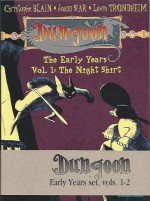
Dungeon: the Early Years Set (volume 1: The Night Shirt: volume 2: Innocence Lost)


By Joann Sfar & Lewis Trondheim, art by Christophe Blain, translated by Joe Johnson (NBM)
Set ISBN: 978-1-56163-932-1

As crafted by prolific artisans Joann Sfar (Professeur Bell, Les olives noires, The Rabbi’s Cat) and Lewis Trondheim (La Mouche, Kaput and Zösky, Little Nothings) with assorted associates of their New Wave-ish collective of bande dessinée creators most often seen under the aegis of independent publisher L’Association, the Donjon saga has generated more than thirty interlinked volumes since it launched in 1998 and has become far more than a mere cult hit all over the world.

These slim, translated and re-released tomes form a small sub-division of a vastly generational, eccentrically raucous and addictively wacky franchise which melds starkly adult whimsy to the fantastic worlds of fantasy fiction, and the Early Years tomes (now available as a complete set) fill in some historical gaps which might have puzzled occasional readers of Dungeon Parade, Zenith, Monstres and Twilight.

There’s this magic castle, in a fantastic land of miracles, see, and it’s got a dungeon…

But before that citadel was constructed there was the debauched, bureaucratised and grimly frenetic urban hellhole of Antipolis, greatest and most appalling city on the strange world of Terra Amata…

Illustrated in compellingly frenetic style by Christophe Blain, it all begins with volume one and the origin of ‘The Night Shirt’. Young Hyacinthe De Cavalerre is the scion of an esteemed and noble – if provincial – house and line. The world is changing however; shifting from feudal aristocracy and blood-privilege to a civilisation based on mercantilism, greed and bureaucracy.

Thus a father dispatches his dreamy boy to the capital to study, residing with an estranged uncle to learn the rules of the New Age. The boy’s dreams of literary glory soon founder after an encounter with monstrous “Brutes” in the forest and are forever dashed when faced with the filth and unbridled avarice of the city…

At least he has made one friend: learned fellow traveller Doctor Hippolyte is also heading to Antipolis, determined to petition the city council to free a gigantic Arboress the municipality intends to burn alive as part of their upcoming carnival celebrations…

Literally negotiating their way into the fetid metropolis the travellers separate, and Hyacinthe makes his way to the mansion of wheelchair-bound Count Florotte and has a tense encounter with a serpentine – if mannish – seductress who teasingly offers to teach him how to use his sword.

His uncle calls her Alexandra; a valued – if occasional – employee…

Wearily settling in that night the young man is roused by screams and rushes to the aid of a serving girl being cruelly assaulted by an arrogant bully who boasts that no one will to come to her aid. When the boy intervenes he is casually rebuffed and shamefully leaves. The villain is Michael, his uncle’s most valued deputy and the one Hyacinthe has been indentured to…

Despondently returning to his room the boy then makes the acquaintance of the house elves as they busily steal his golden jacket buttons…

The next day Michael begins the fiscal and social education of his new charge, having Hyacinthe carry the huge bag of gold Florotte regularly dispenses for bribing officials to leave his various business enterprises alone. The lad is horrified to see the system used to throw Hippolyte in jail after failing to convince the town council to spare the captive tree-woman…

Michael celebrates by dragging the lad to an insalubrious tavern and getting plastered. The feline factotum knows Alexandra too…

After carrying the soused villain home, the furious, fanciful boy comes to a bizarre decision and returns to the dark streets, draped in a big blouse, waving his sword and wearing a mask…

More by luck than skill he breaks Hippolyte out of his noisome cell and the pair flee through the city. The flight is particularly easy as someone is killing all the guards and impediments in their path…

Soon they see Alexandra, dispatching more men, and the still-unnamed crusader gallantly rushes to her aid. She is more than a little charmed, even as she saves the neophyte from his own impetuous folly…

After she vanishes Hyacinthe attempts to get Hippolyte out of the city but the scholar refuses to leave without the Arboress. Forced to leave him hidden inside the gigantic tree-woman, the exhausted little hero staggers home and stumbles upon one of Michael’s more devilish schemes. The reprobate is taking gold from the elves to stop his own workers dynamiting the ground under Antipolis…

Some businessmen have plans to build a vast subway system beneath the city and have hired Blasters to blow up or expand the already in situ elf tunnels. Michael is taking cash from the little people to “stop” the project he’s actually expediting. He’s even crass enough to boast to Hyacinthe that they have over-paid him…

Scrupulously honest, the lad determines to return the extra gold but upon reaching the bowels of the city he accidentally causes a huge detonation which kills the Blasters, earning the undying devotion of the elves…

On reaching the house again he is horrified to find the mastermind behind the subway scheme is his own uncle and the elder doesn’t care how many suffer or die to accomplish his grand design…

Later as the Carnival begins, besotted Hyacinthe follows Alexandra and discovers what she does for Florotte: as the finest killer in the Guild of Assassins she is invaluable in his business dealings. When the heartbroken boy confronts her on the matter he painfully learns just how good she is at her job…

Battered and probably delirious, he determines to save her from herself and is astonished to find an army of elves awaiting him in his room. Blasters have returned in force and the wee folk have decided to abandon their underground homes for somewhere less busy…

Donning his commodious crime-busting costume, the lad chooses to do some good by saving Hippolyte and the Arboress. Accompanied by the elves he heads for the enclosure where the remarkably strong little people offer to carry the all-but-immobile tree-woman for their beloved “Nightshirt”. Soon, under cover of colossal carnival floats, the fugitives are heading for the wild woods surrounding the city…

After the carnage of a breakneck chase and unlikely triumph, Arboress and elves are invited to live in the castle of Hyacinthe’s father and a new story begins sometime later with the boy now a dutiful student attending the University of Antipolis.

When newcomer Alcibiades joins the class of prominent Dr. Fontaine, he is soon taken under the lad’s generous wing, experiencing the heady freedom of student life where Hyacinthe is the butt of the organ-juggling jokes of the Necromancy undergraduates. He regularly blows off steam prowling the dark streets, dishing out justice as the infamous urban legend The Night Shirt…

Utterly besotted with Alexandra, one night he spies on her and observes a passionate tryst with the vile Michael. Sadly the villain observes him back and a violent rooftop duel ensues…

Barely escaping with his life Hyacinthe heads home where his uncle has a favour to ask. Fontaine is a strenuous critic of Florotte’s proposed subway and, since a succession of “gifts” have not swayed the scientist’s opinions, perhaps the student might have a quiet word with his teacher?

The interview does not go well and despondent Hyacinthe opts to visit his father in the country rather than return to Florotte’s mansion. Enjoying the break, the lad lapses from unrequitable love of Alexandra and suffers a frustrating dalliance with a young lady named Elise. This leads to a violent battle between forest monsters and the Night Shirt…

Wounded and bleeding he is rescued by the elves who give him a pipe with magic tobaccos which temporarily impart a host of strange powers and abilities. When he returns to Antipolis, Fontaine has been murdered and Night Shirt has claimed responsibility…

Resolved to clear his alter ego’s name, things go quite badly for the boy until Alexandra deals herself in to save the little oaf from himself, but in the end justice is only served and the real killer exposed after sensible Elise takes over…

The saga continued in Volume 2: Innocence Lost as some time later future supreme Dungeon-Keeper Hyacinthe prowls the night as a far more effective masked vigilante. The Night Shirt’s nocturnal adventures are however seriously curtailed by his still-unrequited inamorata Alexandra.

Her violent disdain does not stop her from sharing her unbridled passions – and a rather painful social disease – with the poor fool. Visiting old friend Dr. Hippolyte at the rapidly expanding country castle for advice (and possible medical solutions) he meets fair Gabrielle Olivet and offers to accompany her as she travels to join her fiancé in far-off Necroville.

However during a stopover in lawless, rabbit-infested frontier town Zedotamaxim, she is falsely arrested by over-officious sheriffs and trusts Hyacinthe to engineer her release by fetching her intended – prominent lawyer Eustace Ravin – from the wilds of the charnel hamlet…

Sadly once Hyacinthe gets there Eustace proves to be a rather faithless gadabout who couldn’t care less about Gabrielle’s plight. By the time he convinces the rogue of his duty it’s too late and she has been sold to the biggest brothel in Antipolis.

Determined to set things right The Night Shirt realises he’s going to need the assistance of the kind of people he usually fights…

Second story After the Rain is set many years later when aging and now dissolute Hyacinthe is a middle-aged, unhappily married roué. Set in his ways and terminally unhappy the former Night Shirt is enticed into making a comeback by clever and strangely superhuman Doctor Cormor who must battle greed and the establishment itself to stop completion of the infernal subway being dug through the unstable pile of detritus that forms the bedrock of the city.

Perhaps it is less a noble quest than the return of slinky Alexandra that fires up the weary hero, but when inevitable disaster strikes will Hyacinthe be ready or able to cope?

Featuring the catastrophic events which destroyed Antipolis and sparked the creation of the modern Dungeon of Terra Armata this is perhaps the most effective yarn in the franchise’s vast scope and span…

The inhabitants of this weirdly surreal universe include every kind of anthropomorphic beast and bug as well as monsters, demons, mean bunnies, sexy vamps and highly capable women-folk who know the true (lack of) worth of a man. This is an epic saga of cynically world-weary political intrigue, played as an eternal and highly amusing battle of the sexes, with tongues planted firmly in cheeks – and no, I won’t clarify or specify…

Comprising in total four translated French albums – ‘Donjon Potron-Minet: Le Chemisede la Nuit’, ‘Un Justicier dans L’Ennui, ‘Une Jeunesse Qui S’Enfuit’ and ‘Apres La Pluie’ – this baroque bunch of barbaric books comprise a delightfully absurd, earthy, sharp, poignant and brilliantly outlandish romp that’s a joy to read with vibrant, wildly eccentric art as moody as Dark Knight, as jolly as Rupert Bear and as anarchic as the best of Leo Baxendale.

Definitely for grown-ups with young hearts, Dungeon is a near-the-knuckle, illicit experience which addicts at first sight, but for fuller comprehension – and added enjoyment – I’d strongly advise buying all the various incarnations which are happily also currently available as collectors’ sets…

© 2001-2006, 2014 Delcourt Productions-Trondheim-Sfar-Blain. English translation © 2005 and 2009 NBM. All rights reserved.

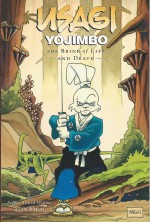
Usagi Yojimbo book 10: The Brink of Life and Death


By Stan Sakai (Dark Horse Comics)
ISBN: 978-1-56971-259-7

Usagi Yojimbo (“rabbit bodyguard”) first appeared as a background character in Stan Sakai’s The Adventures of Nilson Groundthumper and Hermy, which premiered in 1984 amongst assorted furry ‘n’ fuzzy folk Albedo Anthropomorphics #1. He subsequently graduated to a solo act in Critters, Amazing Heroes, Furrlough and the Munden’s Bar back-up series in Grimjack.

In 1955, when Sakai was two years old, the family moved from Kyoto, Japan to Hawaii. Growing up in a cross-cultural paradise he graduated from the University of Hawaii with a BA in Fine Arts, before leaving the state to pursue further studies at Pasadena’s Art Center College of Design in California.

His early forays into comics were as a letterer – most famously for the inimitable Groo the Wanderer – before his nimble pens and brushes found a way to express his passion for Japanese history, legend and the filmic works of Akira Kurosawa and his peers, inspirationally transforming a proposed story about a human historical hero into one of the most enticing and impressive fantasy sagas of all time.

And it’s still more educational, informative and authentic than any dozen Samurai sagas you can name…

Although the deliriously peripatetic and expansive period epic stars sentient animals and details the life of a peripatetic Lord-less Samurai eking out as honourable a living as possible by selling his sword as a Yojimbo (bodyguard-for-hire), the milieu and scenarios all scrupulously mirror the Feudal Edo Period of Japan (roughly 16th – 17th century AD by our reckoning) whilst simultaneously referencing other cultural icons from sources as varied as Zatoichi to Godzilla.

Miyamoto Usagi is brave, noble, industrious, honest, sentimental, gentle, artistic, empathetic, long-suffering and conscientious: a rabbit devoted to the tenets of Bushido, he is simply unable to turn down any request for help or ignore the slightest evidence of injustice. As such, his destiny is to be perpetually drawn into an unending panorama of incredible situations.

This evocative and enticing tenth black-&-white blockbuster collects yarns from Dark Horse Comics’ Usagi Yojimbo series (volume 3), #1-6 plus additional tales from issues #13, 15 and 16 from the previous Mirage iteration, aligning epic sagas of intrigue with brief vignettes attending to more plebeian dramas and even the occasional supernatural thriller, all tantalisingly tinged with astounding martial arts action and drenched in wit, irony, pathos and even true tragedy…

Following a heartfelt and enthusiastic Introduction from comics author Kurt Busiek, the ever-unfolding yarn resumes with a handy recap in ‘Origin Tale’ summarising the valiant wanderer’s fraught life to date before ‘Kaisō’ finds Miyamoto Usagi befriending a seaweed farmer who’s experiencing a spot of bother with his neighbours…

At peace with himself amongst hard-toiling peasants, Usagi becomes embroiled in their escalating battle with a village of rival seaweed sellers – previously considered helpful and friendly – and soon realises scurrilous merchant Yamanaka is fomenting unrest between his suppliers to make extra profit…

‘A Meeting of Strangers’ in a roadside hostelry introduces a formidable female warrior to the constantly expanding cast as the Lepine Legend graciously offers a fellow weary mendicant the price of a drink. A professional informer then sells Usagi out to the still-smarting Yamanaka and the lethally capable Inazuma has ample opportunity to repay her slight debt to the Rabbit Ronin when he’s ambushed by an army of hired brigands…

Far away a portentous interlude occurs as a simple peasant and his granddaughter are attacked by a band of bandits. The belligerent scum are about to compound extortion and murder with even more heinous crimes when a stranger with a ‘Black Soul’ stops them…

Jei is a veritable devil in mortal form, believing himself a “Blade of the Gods”, chosen by the Lords of Heaven to kill the wicked. The maniac makes a convincing case: when he stalked Usagi the manic monster was struck by a fortuitous – or possibly divinely sent – lightning bolt and still survived.

Still keen to continue his crusade, the monster deals most emphatically with the criminals before allowing orphaned granddaughter Keiko to join him…

Despite – or perhaps because – it is usually one of the funniest comics on the market, occasionally Usagi Yojimbo can brilliantly twist readers’ expectations with tales that rip your heart apart.

Such is the case with ‘Noodles’ as the nomadic Ronin meets again street performer, shady entertainer and charismatic pickpocket Kitsune who has begun plying all her antisocial trades in a new town just as eternally-wandering Usagi turns up.

The little metropolis is in uproar at a plague of daring robberies and when the inept men employed by Yoriki (Assistant Commander) Masuda try – and painfully fail – to arrest the long-eared stranger as a probable accomplice, the ferociously resistant ronin earns the instant enmity of the pompous official.

Following the confrontation, a hulking, mute soba (buckwheat noodle) vendor begins to pester the still-annoyed rabbit and eventually reveals he’s carrying the elegant Kitsune in his baskets…

Astounded the Yojimbo renews his acquaintance with her before the affable thieves go on their way, but trouble and tragedy are just around the corner…

The town magistrate is leaning heavily on his Yoriki to end the crime wave but has no conception that Masuda is actually in the pay of a vicious gang carrying out most of the thefts. What they all need a convincing scapegoat to pin the blame on and poor dumb peasant Noodles is ideal – after all, he can’t even deny his guilt…

With a little sacrificed loot planted, he becomes the perfect patsy and before Usagi and Kitsune even know he’s been taken, the simple fool has been tried and horrifically executed…

‘Noodles Part 2’ opens as they frantically dash for the public trial and almost immediate crucifixion but pickpocket and ronin can do nothing to save the innocent victim. All they can do is swear to secure appropriate vengeance and justice…

In sober mien the rabbit roves on, stumbling into a house of horror and case of possession as ‘The Wrath of the Tangled Skein’ finds Usagi returning to a region plagued by demon-infested forests. Offered hospitality at a merchant’s house he subsequently saves the daughter from doom at the claws of a demonic Nue (tiger/fox/pig/snake devil).

He is almost too late however and only alerted to a double dose of danger when a Bonze (Buddhist Priest) arrives to exorcise the poor child… just like the one already praying over the afflicted waif upstairs…

This duel with the forces of hell leads into ‘The Bonze’s Story’ as Usagi strikes up a friendship with the true priest and learns how misfortune and devotion to honour compelled elite samurai Sanshobo to put aside weapons and war in search of greater truths and inner peace…

Political intrigue and explosive espionage resurface in ‘Bats, the Cat, & the Rabbit’ as Neko ninja chief Chizu re-enters Usagi’s life, fleeing a flight of rival Komori (bat) ninjas. The winged horrors are determined to take a scroll containing the secrets of making gunpowder and after a tremendous, extended struggle the exhausted she-cat cannot believe her rabbit companion is willing to hand it over. She soon shrugs it off. After all the Komori have fallen into her trap and quickly regret testing the purloined formula …

The peripatetic Yojimbo then walks into a plot to murder Great Lord Miyagi involving infallible unseen assassin Kuroshi at ‘The Chrysanthemum Pass’. He is simply aiding karma to a just outcome despite overwhelming odds and a most subtle opponent… This chronicle then sees a return engagement with the lethally adept Inazuma when ‘Lightning Strikes Twice’…

The hunted woman is always at the heart of a storm of hired blades trying to kill her, but during one peaceful moment she finds a little time to share with a fellow swordsmaster the instructive tale of a dutiful daughter who married the wrong samurai and, by exacting rightful vengeance upon his killer, won the undying hatred of a powerful lord…

Despite changing publishers a number of times, the Roaming Rabbit has been in continuous publication since 1987, with more than 30 collections and books to date. He has guest-starred in many other series (most notably Teenage Mutant Ninja Turtles and its TV incarnation) and nearly made it into his own small-screen show.

There are high-end collectibles, art prints, computer games and RPGs, a spin-off sci-fi comics serial and lots of toys. Sakai and his creation have won numerous awards both within the Comics community and amongst the greater reading public.

Fast-paced yet lyrical, informative and funny, the saga alternately bristles with tension and thrills and frequently crushes your heart with astounding tales of pride and tragedy, evil and duty.

Bursting with veracity and verve, Usagi Yojimbo is the perfect comics epic: a monolithic magical saga irresistibly appealing that will delight devotees and make converts of the most hardened haters of “funny animal” stories.
© 1998 Stan Sakai. Usagi Yojimbo is a registered trademark of Stan Sakai. All rights reserved.

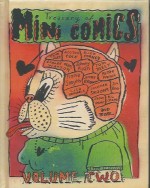
Treasury of Mini Comics volume 2


By many and various, edited by Michael Dowers (Fantagraphics Books)
ISBN: 978-1-60699-807-6

The act of stringing pictures and/or words together is something almost everybody has done at some stage of their lives. It’s a key step in the cognitive path of children and, for an increasing number of us, that compulsive, absorbing euphoria never goes away.

Whilst many millions acquiesce to the crushing weight of a world which stifles the liberation of creativity, turning a preponderance of makers into consumers, a privileged, determined few carry on: drawing, exploring, and in some cases, with technology’s help, producing and sharing.

Michael Dowers, the force behind not only this compilation but also Brownfieldpress and Starhead Comix, adores the concept of crafting and disseminating mini comics and his books Newave!- The Underground Mini Comix of the 1980 and volume one of this series described and reproduced hundreds of examples: spotlighting with enticing, encouraging exuberance those incurably driven artisans who came out of the “anything goes” 1960s and 1970s Underground Commix movement still craving a vehicle of expressly personal expression.

Such creators aren’t really in it for the money – although a few have moved on to find a modicum of mainstream comics fame, at least – and, in an era before computers, they found time to write, draw and compile artwork (small press people are notoriously generous, contributing to projects at the drop of a hat) before laboriously photocopying, cutting, folding, stapling and then distributing the miniscule marvellous results.

Just by way of definition: most mini comics were and still are home-produced pamphlets using borrowed – or when necessary paid for – print processes. The most popular format was an 8½ x 11inch sheet, folded twice, and printed at local copy-shops (or clandestinely churned out on school/work repro systems like early Xerox, Photostat, Mimeo or Spirit Banda machines) on any paper one could lay hands on.

Because they weren’t big, they were called “mini commix”. Inspired, no?

Thanks to a seemingly inexhaustible modern appetite for such uniquely individualistic endeavours here’s a superb sequel tome – one more massive paper brick of fun (848 monochrome and colour pages, 178 x 127mm) – compiling and sharing many of the very best mini masterpieces from the 1970s to right here, right now…

Many key figures in the proliferation of this uniquely eloquent people’s medium are included here, not only through examples of their groundbreaking work, but also through statements, interviews and fond reminiscences.

If human beings have access to any kind of reproductive technology they seemingly cannot resist making copies of their own private parts or creating their own comics, and here content comes from all over the North American continent – and even beyond – covering everything from superhero spoofs, monster-mashes, robot rampages, animal antics, autobiography, recreational drugs, religious, spiritual and philosophical diatribes and polemics, surreal experimental design and just plain fun stories, chatter and gags: all as sexually explicit, violent, strident or personally intimate as their creators wanted them to be…

As usual I’ll deliver here my standard warning for the easily offended: this book contains comic strips never intended for children. If you are liable to be offended by raucous adult, political and drug humour, or illustrated scenes of explicit sex or unbelievable comedy violence, don’t buy this book and stop reading this review. You won’t enjoy any of it and might be compelled to cause a fuss.

I’ll probably cover something far more wholesome tomorrow so please come back then.

It all starts with Michael Dowers’ introduction wherein he brings the history of the sub-medium up to date and posits a connection with the legendarily scandalous “Gentlemen’s under-the-counter” publications known as Tijuana Bibles which livened up life for our forebears in the early part of the 20th century with explicit and illegal cartoon cavortings featuring famous stars of screen and newspaper strips.

That proposition is upheld and further explored following ‘The Hundred Year Old New Waver in “Damn Punks Got it Easy Today”’: a hilarious graphic diatribe (dis)courtesy of Brad W. Foster from Time Warp #3 (2007) after which a genuine, authentic and anonymous Tijuana Bible inclusion offers erotic relief to ‘The Van Swaggers’.

Then follows a batch of modern tributes and reinterpretations beginning with masked wrestler/guitarist The Crippler by Fiona Smyth (2007) and the astoundingly disturbing, politically punishing ‘Obliging Lady’ from Ethan Persoff & Scott Marshall’s The Adventures of Fuller Bush Man & John McCain (2009)…

A splendid faux pastiche of the original pamphlets, Hairy Crotch & Rim Johnson in ‘The Interview’ is an anonymous entry from 1995, whilst Lilli Loge abandons the form but ramps up the spirit for the tale of a girl and her slave in ‘A Blessing in Disguise’ from Ben & Jenny from 2009.

That same year clean-cut Euro icon Lucky Luke got homo-erotically spoofed as ‘Hunky Luke in Calamity Jack’ by Anna Bas Backer after which Antoine Duthoit (2013) plunders Jim Woodring’s style and character cast for the outrageous Spank.

From 1972 Trina Robbins delivers classic pastiche ‘Sally Starr Hollywood Gal Sleuth’ solving a “Minit Mystery” whilst Bob Conway offers classic cartoon capers ‘Out to Lunch’ and ‘Chicken Shit’ in 1980’s Tales of Mr. Fly, and David Miller & Par Holman venerate the disaffected teen outsider experience in a blast of vignettes in Punkomix #1 from 1982.

Clark Dissmeyer laments the life of a Two-Fisted Cartoonist (#1 1983) after which Steve Willis’ 1983 Sasquatch Comix #3 details a strange encounter in the wild woods and R.K. Sloane & Jeff Gaither noxiously explore a life in hell with Fresh Meat from 1985.

A genuine small press big noise reveals all in the ‘Jeff Nicholson Interview’ after which the creator’s infamous cartoon polemic Jeff Nicholson’s Small Press Tirade (1989) still proves to be astoundingly powerful and the ‘Dan Taylor Interview’ segues neatly into some of his superbly eclectic Shortoonz from 1990 and the deliciously vulgarian Unleashed #1 from 2010.

John Trubee’s 1990 Vomit! #1 is a captivating manifesto of the politically baroque and philosophically bizarre whilst from 1992 Jason Atomic’s Wongo Batonga pt. 2 gloriously celebrates the magnificent freedom of superheroic imagination in a lengthy explosion of power-packed battles before Patrick Dowers explores human diversity in Marvels of the Sideshow Freaks.

Corn Comics #1 (Marc Bell, 1993) provides a hilarious laugh-ride of bitter twisted types after which the ‘Tom Hart Interview’ precedes his wittily poignant 1993 slice-of-life saga Love Looks Left and all-star line-up J.R. Williams, Pat Moriarity & R.L. Crabb collaborate on the 1994 cautionary tale ‘Devil Stay Away From Me’.

Impishly shocking Ellen Forney & Renée French then reveal how The Exquisite Corpse Bakes a Pie (1994), after which a ‘Molly Kiely Interview’ is stunningly supplemented by her rendition of a bevy of female music and movie icons who all possessed that indefinable sense of Sass! (1995).

Jeffrey Brown’s 1998 paean to hopelessness and confusion ‘To Wenatchee’ is followed by Pshaw’s whimsical story of a little robot in The One Eyed World (1999) after which ‘Colin Upton Presents A Short Guide To the Care and Production of Mini-Comics’ provides everything anyone needs to know about making story-art stories.

Contemporary cartoon wild child Johnny Ryan 2002 exposes guilty secrets from Shouldn’t You Be Working? #5, before the ‘Souther Salazar Interview’ leads to the artist’s wide-ranging ‘In Case of Emergency Only’ (2003) and Max Clotfelter’s eerily post-apocalyptic Snake Meat #1 from 2004.

Her smartly evocative 2004 Science Fiction Affliction is preceded by an ‘Alison Cole Interview’ after which Thought Cloud Shrines from 2007 perfectly displays Theo Ellsworth’s astounding graphic imagination and meticulous penmanship; gifts shared by Lisa Hanawalt and revealed in a stunning fashion parade of freaks in Stay Away From Other People from 2008, augmented by her hilarious ’12 Things To Do When you Are Stuck in Traffic’.

Travis Millard’s ‘Sad Dad’ introduces a deucedly depressing modern pantheon in Who Let the Gods Out (2008) whilst Bobby Maddness explores a variety of baffling annoyances in Too Small Comics #2 (2010) and Esther Pearl Watson describes a ghastly future populated solely by pop stars and fashion models in Eric Parris World from 2009.

The marvellous Jim Rugg contributes a stunning and outrageous pop at America’s dumbest President and most moronic national symbol in the delirious ‘Rambo 3.5’ (2009) after which, from 2010, Donald & Daniel Zettwoch mesmerise with their incredible personal history of phone exchange technology in ‘Cut Lines and Intricate Minds’ as seen in Tel-Tales #1 and Tom Neely employs dozens of bootlegged Popeyes in a surreal spinach-fuelled Battle Royale for his Doppelgänger…

The ‘Jason T. Miles Interview’ leads naturally enough into his 2010 tale of terror ‘Dump’ from Pines 3.

The irrepressible manga marvel DJ Cat Gosshie goes through a series of adorable “totally-street” trans-Pacific short story syncopations as delineated by Harukichi in 2011 before Pakito Bolino then relates the hyperkinetic end of everything with the ‘Male of the Future’ from D.O.C. (2012)

DemonDust #10 by Bernie McGovern (2012) lyrically explores the poetry of atomic theory and human interactiveness whilst from the same year Shuttlecakes reveals the stunning dexterity and artistic facility of Susan Belle before the ‘Caroline Paquita Interview’ leads to her seductively gender-political compilation Womanimalistic #3 from 2013 to close the monochrome section of this collection.

However, following the ever-so-useful ‘Artist website and contact info’ pages, there’s even more compelling cartoon self-expression all crafted to make use of carefully considered colour, commencing with Kristyna Baczynski’s travails of a pretty kitty in ‘Nine Lives’ from 2012, Leah Wishnia’s disturbing exploration of women’s lives from Spithouse #1 (2008) and an even more distressing tale of psychological brutality from Nick Bertozzi in ‘5/4’ from 2000 before Ethan Persoff concludes the challenging cartoon content with a stunning graphic potpourri from Plastic Tales and Stories #2.

This tremendous tome features some of the host of pioneering craftsmen who worked in the self-printing movement which became today’s thriving Alternative/Small Press publishing industry as well as the current internet comics phenomenon, and this book has incredible appeal on an historical basis.

However, that’s really not the point: the real draw of such collections is that creativity is addictive, good work never pales or grows stale and the great stories and art here will make you keen to have a go too.

I’ve done it myself, for fun – even once or twice for actual profit – and it’s an incredible buzz (I should note that I am still married to a wife not only tolerant but far more skilled and speedy in the actual “photocopy, cut, fold, staple” bit of the process and willing, if not keen, to join in just so she might occasionally be with the compulsive dingbat she married…)

The sheer boundless enthusiasm and feelgood rewards of intellectual freedom from making such comics celebrated in this astoundingly vast, incredibly heavy and yet still pocket-sized hardback is a pure galvanic joy that will enchant and impel every fan of the art-form: as long as they’re big enough to hold a pencil, old enough to vote, and strong enough to lift the book.
Treasury of Mini Comics volume 2 © 2015 Michael Dowers and Fantagraphics Books. All contents © 2013 their respective creators or authors. All rights reserved.