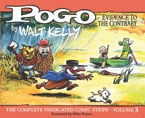
Pogo – The Complete Syndicated Comic Strips volume 3: Evidence to the Contrary


By Walt Kelly, edited by Carolyn Kelly & Eric Reynolds (Fantagraphics Books)
ISBN: 978-1-60699-694-2

Win’s Christmas Gift Recommendation: Possibly the Best Comic Strip Collection in the World… 10/10

Books of this stature and calibre are worth buying and reading at every moment of every day, and rather than waste your valuable time with my purely extraneous blather, you should just hit the shops or online emporia and grab this terrific tome right now.

If you still need more though, and aren’t put off by me yet, I’m honoured to elucidate at some length…

Walter Crawford Kelly Jr. was born in 1913 and began his cartooning career whilst still in High School as artist and reporter for the Bridgeport Post. In 1935 he moved to California and joined the Disney Studio, working on animated short films and such features as Dumbo, Fantasia and Pinocchio.

His steady ascent was curtailed by the infamous animator’s strike in 1941. Refusing to take sides, Kelly quit, moving back East and into comicbooks – primarily for Dell who held the Disney funnybook license amongst others at that time.

Despite his glorious work on such popular people-based classics as the Our Gang movie spin-off, Kelly preferred and particularly excelled with anthropomorphic animal and children’s fantasy material.

For the December 1942-released Animal Comics #1 he created Albert the Alligator and Pogo Possum, wisely retaining the copyrights to the ongoing saga of two affable Bayou critters and their young African-American pal Bumbazine. Although the black kid soon disappeared, the animal actors stayed on as stars until 1948 when Kelly moved into journalism, becoming art editor and cartoonist for hard hitting, left-leaning liberal newspaper The New York Star.

On October 4th 1948, Pogo, Albert and an ever-expanding cast of gloriously addictive, ridiculously exuberant characters began their strip careers, appearing in the paper six days a week until the periodical folded in January 1949.

Although ostensibly a gently humorous kids feature, by the end of its New York Star run (reprinted in Pogo: the Complete Syndicated Comic Strips volume 1) the first glimmerings of an astoundingly barbed, boldly satirical masterpiece of velvet-pawed social commentary had begun to emerge…

When the paper folded Pogo was picked up for mass distribution by the Post-Hall Syndicate, debuting on May 16th 1949 in selected outlets across the nation. A colour Sunday page launched January 29th 1950 and both were produced simultaneously by Kelly until his death in 1973 and thereafter by his talented wife and family until the feature was at last laid to rest on July 20th 1975.

At its height the strip appeared in 500 papers in 14 countries and the book collections – which began in 1951 – eventually numbered nearly 50, collectively selling over 30 million copies… and all that before this Fantagraphics series even began…

In this third and much delayed (due to the sudden death of much missed editor and publisher Kim Thompson) volume of a proposed full dozen reprinting the entire Kelly canon of the Okefenokee Swamp critter citizenry, undoubtedly the main aspect of interest is the full-on comedic assault against possibly the greatest danger and vilest political demagogue America ever endured, but the counterattack against witch-hunter Senator Joe McCarthy is merely one of the many delights in this stunning mix of free expression and wild and woolly whimsy…

This colossal and comfortingly sturdy landscape compilation hardback (boasting three-hundred-and-fifty-six 184 x 267mm pages) includes the monochrome ‘Daily Strips’ from January 1st 1953 to December 31st 1954, and the Sundays – in their own full-colour section – from January 4th to December 26th of the same years.

Supplemental features this time comprise a Foreword from ward winning cartoonist Mike Peters (Mother Goose & Grimm), a wealth of deliriously winning unpublished illustrations and working drawings by Kelly and utterly invaluable context and historical notes in R.C. Harvey’s ‘Swamp Talk’ which also compellingly, almost forensically, details the rise and fall of rabblerousing “red-baiter” Joe McCarthy and how Kelly courageously opened America’s fight back against the unscrupulous, bullying chancer (and the movement for which he was merely a publicity-hungry figurehead) with an unbeatable combination broadside of ridicule and cool disdain…

The closing regular biographical feature ‘About Walt Kelly’ by Mark Evanier is supplemented by a comprehensive ‘Index of the Strips’ and a gloriously inspired selection of ‘Noteworthy Quotes’ to fill out the academic needs of the readers, but of course the greatest boon here is the strips and characters themselves.

Kelly was a masterful inventor of engaging and endearing personalities, all of whom carried as many flaws as virtues. The regular roll call (which some commentators reckon to be as many as 1000) included gentle, perpetually put-upon and bemused possum Pogo, boisterous, happily ignorant alligator Albert, dolorous, sensitive Porkypine, obnoxious turtle Churchy La Femme, lugubrious hound Beauregard Bugleboy, carpet-bagging Seminole Sam Fox, pompously ignorant know-it-all Howland Owl, sveltely seductive skunk Miz Mam’selle Hepzibah, long suffering matron Miz Beaver, maternal Miz Groun’chuck and her incomprehensible, bitey baby Grundoon plus all the other bugs, beasts and young’uns of the swamp, but the author’s greatest strength lay in his uniquely Vaudevillian rogues, scoundrels and outright villains.

The likes of Tammanany Tiger, officious Deacon Mushrat, sinister, sycophantic beatnik communist Catbirds Compeer and Confrere, sepulchral Sarcophagus MacAbre, sloganeering P.T. Bridgeport and a trio of brilliantly scene-stealing bats named Bewitched, Bothered and Bemildred were perfect confections to illustrate all manner of pestilential pettifogging, mean manners and venal self-serving atrocities as they intermingled and interfered with the decent folk volubly enduring the vicissitudes of such day to day travails as love, marriage, comicbooks, weather, rival strips, fishing, the problem with kids, the innocent joys of sport, cadging food, making a living and why neighbours shouldn’t eat each other…

In this volume the topics of exotically extravagant conversation include the longevity and worth of New Year’s Resolutions, the scandalous behaviour of Porkeypine’s kissing-thief Uncle Baldwin, a get-rich scheme involving dirt and opening shots at the burgeoning phenomenon of commercial television. However the gradual conversion of the Deacon’s Boy Bird Watchers society into a self-policing vigilante committee looking out for strangers and making sure all the citizens are right thinking and true looking would quickly insinuate itself into every corner of the feature…

The anti-foreigner sentiment peaks following the arrival of Deacon Mushrat’s old pal The Hon. Mole MacCarony; a blind, self-aggrandizing politico determined to root out all (undisclosed) threats, enforce conformity and stamp out the diseases obviously carried by strangers.

The xenophobic dirt-digger was based on Nevada Senator Patrick McCarran who briefly shaped paranoid public opinion on a platform of severely restricting immigration and implementing the speedy deportation of all communists and non-Americans.

Things got much darker – and therefore more effectively ludicrous – with the arrival of Mole’s malicious and ambitious associate Simple J. Malarkey whose bullying tactics soon began to terrify his fellow bigots as much as the increasingly outraged, off-balance citizens…

Eventually the villains fell out and triggered their own downfall with the mortified Deacon sheepishly denying his part in the fiasco. Peace and (in)sanity returned and with sunny days ahead weather-prognosticating frog Picayune debuted, but suffered a great loss when Albert accidentally ingested the amphibian’s pal Halpha – an amoeba who actually did all the meteorological messing about…

Voracious Albert generally swallowed a lot of things, but his biggest gaffe probably occurred after meeting Roogey Batoon, a pelican impresario who – briefly – managed Flim, Flam and Flo: a singing fish acted billed as the Lou’siana Perches…

Many intriguing individuals shambled into view at this time: Ol’ Mouse and his tutorial pal Snavely (who taught worms how to be cobras and rattlers), cricket-crazed British bugs Reggie and Alf and family icons Bug Daddy and Chile, but the biggest mover and shaker to be introduced was undoubtedly a sporty Rhode Island Red chicken named Miss Sis Boombah.

The formidable biddy was a physically imposing and prodigiously capable sports enthusiast (and Albert’s old football coach), who wandered in as survey taker for “Dr. Whimsy‘s report on the Sectional Habits of U.S. Mail Men” (a brilliant spoof of the societally sensational Kinsey Report on sexual behaviour in America) but her arrival also generated a succession of romantic interludes and debacles which eventually led to a bewildered Mushrat proposing marriage before leaving her in the lurch and disappearing into the deepest parts of the swamp…

Mole had already reared his unseeing head again, causing only minor mischief, but when the marriage-averse Deacon encountered the terrifying Malarkey lurking in hiding with sinister acolyte Indian Charlie (who bears a remarkable resemblance to then current US Vice-President Richard Nixon) the scene was set for another savage and often genuinely scary confrontation…

That’s also exactly what Miss Boombah had in mind as she set out with Bewitched, Bothered and Bemildred to hunt down the scoundrel who had left her in the lurch at the church…

Other story strands and insane interludes include such epic mini sagas as the hunt for an abducted puppy – lampooning TV cop series Dragnet – and a long session on the keeping and proper sharing of secrets, much ado about gossip and the art of being a busybody.

Most memorable of all though are Churchy’s sudden predilection for dressing up as pretty little blonde girl, perpetually visiting Martians and poor Pogo’s oddly domestic recipe for A Bombs…

In his time satirical supremo Kelly unleashed his bestial spokes-cast upon many other innocent, innocuous sweethearts such as J.Edgar Hoover, the John Birch Society and the Ku Klux Clan, as well as lesser lights likes Hubert Humphrey, Lyndon B. Johnson and – with eerie perspicacity – George W. Romney (U.S. Secretary of Housing and Urban Development, Governor of Michigan and father of some guy named Mitt), but nothing ever compared his delicious and devilish deconstruction of “Tailgunner Joe” in the two extended sequences reprinted here…

Kelly’s unmatched genius lay in his seemingly effortless ability to lyrically, if not vivaciously, portray through anthropomorphic affectation and apparently frivolous nonsense language comedic, tragic, pompous, infinitely sympathetic characters of any shape or breed, all whilst making them undeniably human.

He used that gift to readily blend hard-hitting observation of our crimes, foibles and peccadilloes with rampaging whimsy, poesy and sheer exuberant joie de vivre. Generally though he usually toned down the satirical scalpels for the magnificently imaginative ‘Sunday Funnies’: concentrating instead on fantastic and unfailingly hilarious serial fables and comedy romps.

Some of the best he ever conceived conclude this volume, beginning with the epic saga of little faun Melonbone whose search for the Fountain of Youth inadvertently caused Sam Duck to revert to an egg. The distraught drake’s wife was not best pleased at having to hatch her own husband out at her age (she was no spring chicken)…

Churchy and Albert then fell afoul of sharp toothed tot Grundoon as the kid’s inability to converse led the alligator to accidentally swallow his turtle pal, after which the animal crackpots all got very lost for a long time in their own swampy backyard…

Howlan Owl’s latest get-rich-quick scheme – digging to China – resulted in his and Albert’s reluctant consultation of an Atlas and the shocking conclusion that the Russians had taken over Georgia.

The panicked reaction of the chumps then led to their accidentally awakening an oversleeping bear who decided to start celebrating Christmas in the middle of August. Eventually everybody caught up to him just in time for the true Yule event…

After the usual New Year’s shenanigans, 1954 really took hold as everyone’s favourite alligator tried to recount the amazing exploit of ‘King Albert and the 1001 Arabian Knights of the Round Table’ – despite each listener’s evident and express disinterest – before Howlan and Churchy became compulsively embroiled in a furious feud over pugilism.

Soon thereafter Albert was mistaken for a monster after getting his head stuck in a cauldron. Sadly, once the alligator was finally extricated from the calamitous cookpot, other unhappy folk become the infernal alembic’s’s unwilling method of locomotion…

No sooner did that catastrophe conclude than the whole sorry fiasco promptly kicked off again with a lovesick octopus now playing transient chapeau to a succession of unfortunate and duly startled swamp critters …

The hairy, scaly, feathered, slimy folk of the surreal swamp lands are, of course, inescapably us, elevated by burlesque, slapstick, absurdism and all the glorious joys of wordplay from puns to malapropisms to raucous accent humour into a multi-layered hodgepodge of all-ages delight – and we’ve never looked or behaved better…

This stuff will certainly make you laugh; it will probably provoke a sentimental tear or ten and will certainly satisfy your every entertainment requirement. Timeless and ineffably magical, Pogo is a giant not simply of comics, but of world literature and this magnificent third tome should be the pride of every home’s bookshelf, right beside the other two.

…Or, in the popular campaign parlance of the all politically astute critters – “I Go Pogo!” and so should you.

Pogo Vol. 3: Evidence to the Contrary and all POGO images, including Walt Kelly’s signature © 2014 Okefenokee Glee & Perloo Inc. All other material © 2014 the respective creator and owner. All rights reserved.
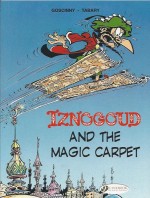
Iznogoud and the Magic Carpet


By Goscinny and Tabary (Cinebook)
ISBN: 978-1-84918- 044-3

For the greater part of his too-short lifetime (1926-1977) René Goscinny was one of the most prolific and most-read writers of comic strips the world has ever seen. Incredibly, he still is.

Among his most popular comic collaborations are Lucky Luke, Le Petit Nicolas and, of course Asterix the Gaul, but there were so many others, such as the dazzling, dark deeds of a dastardly usurper whose dreams of diabolical skulduggery perpetually proved to be ultimately no more than castles in the sand…

Scant years after the Suez crisis, the French returned to the hotly contested deserts when Goscinny teamed with sublimely gifted Swedish émigré Jean Tabary (1930-2011) – who numbered Richard et Charlie, Grabadu et Gabaliouchtou, Totoche, Corinne et Jeannot and Valentin le Vagabond amongst his other hit strips – to detail the innocuous history of imbecilic Arabian (im)potentate Haroun el-Poussah.

However it was the strip’s villainous foil, power-hungry vizier Iznogoud who stole the show – possibly the conniving little imp’s only successful coup.

Les Aventures du Calife Haroun el Poussah was created for Record; with the first episode appearing in the January 15th issue. 1962. A minor hit, it subsequently jumped ship to Pilote – a comics magazine created and edited by Goscinny – where it was artfully refashioned into a starring vehicle for the devious little ratbag who had increasingly been hogging all the laughs and limelight.

Like all great storytelling, Iznogoud works on two levels: as a comedic romp with adorably wicked baddies invariably hoisted on their own petards and coming a cropper for the youngsters, whilst older, wiser heads revelled in the pun-filled, witty satire of marvellously accessible episodic comic capers.

The same magic formula had made its more famous cousin Asterix such a global success, and just like the saga of the indomitable Gaul, this irresistibly addictive Arabian nonsense is adapted here by master translators Anthea Bell & Derek Hockridge who made those Roman Follies so very palatable to the English tongue.

Moreover the deliciously malicious whimsy is always heavily laden with manic absurdity and brilliantly delivered creative anachronism which keeps the assorted escapades bizarrely fresh and inventive.

Insidious anti-hero Iznogoud is Grand Vizier to affable, easy-going Caliph of Ancient Baghdad Haroun Al Plassid, but the sneaky little toad has loftier ambitions, or as he is always declaiming “I want to be Caliph instead of the Caliph!”…

The retooled series launched in Pilote in 1968, and soon became a massive European hit, with 29 albums to date (carried on by Tabary’s children Stéphane, Muriel and Nicolas), his own solo comic, a computer game, animated film, TV cartoon show and even a live-action movie.

When Goscinny died in 1977 Tabary began scripting his own sublimely stylish tales (from the 13th album onwards), switching to book-length complete adventures, rather than the compilations of short, punchy vignettes which typified the collaborations.

This sixth Cinebook album was actually the ninth French album (released in 1973 as Le Tapis Magique) with the lead tale ‘The Magic Carpet’ an exceptional, extended 20-page epic bolstered by a triumvirate of shorter yarns and prefaced as ever with a handy catch-up profile page of the usual suspects…

It all starts in glorious bustling Baghdad where the verminous Vizier unaccountably encounters a few famous faces (moonlighting from their day jobs in TinTin) before returning to his plotting on how to remove the gentle, isolated and very dim obstacle to power Haroun Al Plassid…

It’s the corpulent oaf’s birthday and a thought finally occurs to employ impecunious Fakir Khaledonyahn to make a very special kind of rug. Flying carpets are no big deal in the empire and the skies of Baghdad are crammed with them, but the Fakir’s are extraordinary.

They only travel one way. Anybody standing on one of these when the trigger word is pronounced takes a flight to who-knows-where and never returns…

Who-knows-where is actually Ancient Peking and soon the venerably inscrutable and imperturbable citizens there are having their legendary patience tested as carpet after carpet arrives because untrusting Iznogoud continually demands proof of concept before parting with cash whilst the gullibly hapless Caliph can’t get the hang of the magic word his trusted advisor wants him to repeat…

The sharply convoluted pun-punctuated yarn is followed by a sneaky dose of inspired iniquity dubbed ‘Incognito’. The well-meaning Caliph has no idea of the depredations Iznogoud inflicts upon the populace in his name or that his beloved people fear, despise and revile the Caliphate because of excessive taxes, prisons filled with tortured citizens and schools empty of children.

When chimerically inquisitive Haroun Al Plassid decides to go out amongst the populace in all his regal splendour he is disappointed and surprised to find the streets utterly deserted by the terrified common folk. Asking his precious Iznogoud for advice the Commander of the Faithful is then convinced to sneak out alone dressed as a common beggar.

Unable to believe his luck the vile Vizier quickly briefs his bumbling, long-suffering crony Wa’at Alahf and orders the guards to throw any beggars who approach the palace into the deepest dungeon.

On his fact finding mission the shabby Caliph learns a lot he doesn’t like and determines to fix things as soon as he gets back. Unfortunately being a newcomer in his own city he gets lost…

Soon Iznogoud is going insane with the suspense. Al Plassid should be back and languishing in jail by now but as long as he’s out there somewhere the coup cannot begin. Thus the despot-in-waiting and his flunky are forced to disguise themselves as beggars and steal out into Baghdad to search for their missing lord.

In the meantime the Caliph has had the brilliant notion of asking for directions and shambles home just as the Guard is being changed. Nobody even notices the scruffy indigent as he wanders back to his apartments and becomes again The Caliph.

In the city the tired and frustrated plotters give up and head for home, just as the order to arrest all beggars becomes law…

Sheer broad slapstick-riddled farce is the secret ingredient of the perfectly paced saga of ‘The Tiger Hunt’ when Iznogoud convinces his boss to go for a low key safari – just him, the Vizier and faithful Wa’at Alahf, armed with bows and blunt arrows – to bag the perfect bedside rug.

Typically, the murder plot goes hideously awry as a succession of hunters provide perfectly suitable, already skinned rugs to the happy ruler and the only living apex predators they can find are just not interested.

Forced to improvise Iznogoud finally resorts to digging a huge pit but whilst he’s at the bottom of it Haroun at last finds a way to really tick off a tiger – just before it tumbles into a great big hole in the ground…

The manic mirth concludes with ‘The Box of Souvenirs’ as a visitor from distant Nippon visits fabulous Baghdad with a strange device. Judoka Karate is a destitute tourist whose incredible hand-held cube can turn solid objects into two-dimensional pictures.

Instantly sensing an opportunity Iznogoud, after much spirited dickering, acquires the mystic souvenir maker, but hasn’t fully considered the details. To turn a jug or jewel or Caliph into a black and white image the object has to be the proper distance from the lens and keep completely still for a minute or two.

Confident he can cope, the Vizier has utterly underestimated Haroun Al Plassid’s mayfly attention span and ingrained vanity which has led to big mirrors being placed all over the palace…

Just such witty, fast-paced hi-jinks and craftily crafted comedy set pieces have made this addictive series a household name in France where “Iznogoud” is common term for a certain type of politician: over-ambitious, unscrupulous – and frequently not that tall.

When first released in Britain in the 1970s (and again in 1996 as a periodical comic book) these tales made little impression, but certainly now this snappy, wonderfully beguiling strip has finally found an appreciative audience among today’s more internationally aware, politically jaded comics-and-cartoon savvy Kids Of All Ages…
Original edition © Editions TABARY 1991, by Goscinny & Tabary. All rights reserved. This edition published 2010 by Cinebook Ltd.

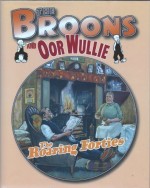
The Broons and Oor Wullie: The Roaring Forties


By R.D. Low & Dudley D. Watkins (DC Thomson)
ISBN: 978-0-85116-804-3

Win’s Christmas Gift Recommendation: How the Holidays Must Be Celebrated… 10/10

The Broons is one of the longest running newspaper strips in British history, having run almost continuously in Scottish newspaper The Sunday Post since its first amazing appearance in the March 8th 1936 edition: the same issue which launched mischievous and equally unchanging wee laddie Oor Wullie.

Both the boisterous boy and the gregariously engaging working class family were co-created by journalist, writer and editor Robert Duncan Low in conjunction with DC Thomson’s greatest artist Dudley D. Watkins and, once the strips began to be collected in reprint editions as Seasonal Annuals, those books alternated stars and years right up to the present day.

Low (1895-1980) began at DC Thomson as a journalist, rising to the post of Managing Editor of Children’s Publication and launching, between 1921 and 1933, the company’s “Big Five” story papers for boys: Adventure, The Rover, The Wizard, The Skipper and The Hotspur.

In 1936 his next brilliant idea was the “Fun Section”: an 8-page pull-out comic strip supplement for national newspaper The Sunday Post. The illustrated accessory launched on 8th March and from the outset The Broons and Oor Wullie were the clear stars…

Low’s shrewdest notion was to devise both strips as comedies played out in the charismatic Scottish idiom and broad unforgettable vernacular where, supported by features such as Auchentogle by Chic Gordon, Allan Morley‘s Nero and Zero, Nosey Parker and other strips, they laid the groundwork for the company’s next great leap.

After some devious devising in December 1937 Low launched the first DC Thomson weekly comic. The Dandy was followed by The Beano in 1938 and early-reading title The Magic Comic in 1939.

War-time paper shortages and rationing sadly curtailed the strip periodical revolution, and it was 1953 before the next wave of cartoon caper picture paper releases. The Topper started the ball rolling again (with Oor Wullie in the logo and masthead but not included in the magazine’s regular roster) in the same year that Low & the great Ken Reid created Roger the Dodger for The Beano…

Low’s greatest advantage in the early days was his prolific illustrator Dudley Dexter Watkins, whose style – more than any other – shaped the look of DC Thompson’s comics output until the bombastic advent of Leo Baxendale shook things up in the mid-1950s.

Watkins (1907-1969) had started life in Manchester and Nottingham as a genuine artistic prodigy before entering Glasgow College of Art in 1924. It wasn’t long before he was advised to get a job at burgeoning, Dundee-based DCT, where a 6-month trial illustrating boys’ stories led to comic strip specials and some original cartoon creations.

Percy Vere and His Trying Tricks and Wandering Willie, The Wily Explorer made him a dead cert for both lead strips in the Sunday Post‘s new Fun Section and, without missing a beat, Watkins later added The Dandy‘s Desperate Dan to his weekly workload in 1937, eventually adding The Beano‘s placidly outrageous Lord Snooty seven months later.

Watkins soldiered on in unassailable triumph for decades, drawing some of the most lavishly lifelike and winningly hilarious strips in comics history. He died at his drawing board on August 20th 1969.

For all those astonishingly productive years he had unflaggingly drawn a full captivating page each of Oor Wullie and The Broons every week, and his loss was a colossal blow to the company.

DC Thomson reprinted old episodes of both strips in the newspaper and the Annuals for seven years before a replacement was agreed upon, whilst The Dandy reran Watkins’ Desperate Dan stories for twice that length of time.

An undeniable, rock-solid facet of Scots popular culture from the start, the first Broons Annual (technically Bi-Annual) had appeared in 1939, alternating with Oor Wullie – although, due to wartime paper restrictions, no annuals were published between 1943 and 1946 – and for millions of readers a year cannot truly end without them.

So What’s the Set Up?: the multigenerational Broon family inhabit a tenement flat at 10 Glebe Street, in the timelessly metafictional Scottish industrial everytown of Auchentogle (or sometimes Auchenshoogle), based in large part on the working class Glasgow district of Auchenshuggle. As such it’s an ideal setting in which to tell gags, relate events and fossilise the deepest and most reassuring cultural archetypes for sentimental Scots wherever in the world they might actually be residing.

As is always the case, the adamant, unswerving cornerstone of any family feature is long-suffering, understanding Maw, who puts up with cantankerous, cheap know-it-all Paw, and a battalion of stay-at-home kids comprising hunky Joe, freakishly tall Hen (Henry), sturdy Daphne, pretty Maggie, brainy Horace, mischievous twins Eck and the unnamed “ither ane” plus the wee toddler referred to only as “The Bairn”.

Not officially in residence but always hanging around is gruffly patriarchal buffoon Granpaw – a comedic gadfly who spends more time at Glebe Street than his own cottage and constantly tries to impart decades of out-of-date, hard-earned experience to the kids… but do they listen…?

Offering regular breaks from the inner city turmoil and a chance to simultaneously sentimentalise, spoof and memorialise more traditional times, the family frequently repair to their But ‘n’ Ben (a dilapidated rustic cottage in the Highlands) to fall foul of the weather, the countryside and all its denizens: fish, fowl and farm-grown…

As previously stated, Oor Wullie also debuted on 8th March 1936 with his collected Annuals appearing in the even years.

The basic set-up is sublimely simply and eternally evergreen, featuring an imaginative, good-hearted scruff with a talent for finding trouble and no hope of ever avoiding parental retribution when appropriate…

Wullie – AKA William MacCallum – is the archetypal rascal with time on his hands and can usually be found sitting on an upturned bucket at the start and finish of his page-a-week exploits.

The regular cast includes Ma and Pa, local copper P.C. Murdoch, assorted teachers and other interfering adults who either lavish gifts or inflict opprobrium upon the little pest and his pals Fat Bob, Soapy Joe Soutar, Wee Eck and others…

The Roaring Forties was released in 2002 as part of a concerted drive to keep the earlier material available to fans: a lavish and sturdy hardback compilation (still readily available through internet vendors) offering a tantalising selection of strips from 1940-1949, covering every aspect of contemporary existence except a rather obvious one.

Although for half the book World War II was a brutal fact of life, it barely encroached upon the characters’ lives except perhaps in the unexplained occasional shortages of toys, sweets and other scrummy comestibles…

The parade of celtic mirth begins with – and is regularly broken up by – a number of atmospheric photo-features such as a celebration of film stars of the period in ‘A Nicht at the Picters’ (three glamour-studded showings) and ‘Cartoon Capers’ which reproduces a wealth of one-off gag panels from The Sunday Post by such luminaries as Carmichael, Eric Cook, Campbell and Housley, whilst ‘Whit’s in The Sunday Post Today?’ gathers a selection of the era’s daftest news items.

The endless escapades of the strip stars comprise the usual subject-matter: gleeful goofs, family frolics and gloriously slapstick shenanigans including plumbing disasters, fireplace fiascos, food foolishness, dating dilemmas, appliance atrocities, fashion freak-outs, exercise exploits and childish pranks by young and old alike…

Punctuated by editorial extras, such as ‘Correction Corner’ offering an intriguing look into the strips’ creative process and ‘Dinnae Mention the War’ which reprints a selection of morale-boosting ads and items, are rib-tickling scenes of sledding and skating, stolen candies, torn clothes, recycled comics, visiting circuses, practical jokes, and social gaffes: stories intended to take our collective mind off troubles abroad, and for every thwarted romance of poor Daphne and Maggie or embarrassing fiasco focussed on Paw’s cussedness, there’s an uproarious chase, riotous squabble and no-tears scrap for the little ‘uns.

With snobs to deflate, bullies to crush, duels to fight, chips to scoff, games to win and rowdy animals (from cats to cows) to avoid at all costs, the timeless gentle humour and gently self-deprecating, inclusive fun and frolics make these superbly crafted strips and endlessly entertaining serving of superbly nostalgic an unmissable treat.

So why not return to a time of local blacksmiths and coalmen, best china and full employment, neighbours you knew by first names and trousers that always fell apart or were chewed by goats? There are even occasional crossovers to marvel at here with Wullie and Granpaw Broon striving to outdo each other in the adorable menace stakes…

Packed with all-ages fun, rambunctious slapstick hilarity and comfortably domestic warmth, these unchanging examples of happy certainty and convivial celebration of a mythic lost life and time are a sure cure for post-modern glums… and you can’t really have a happy holiday without that, can you?
© D.C. Thomson & Co., Ltd. 2002.

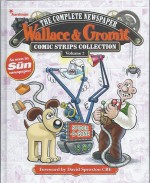
Wallace & Gromit – The Complete Newspaper Comics Strips Collection volume 2: 2011-2012


By various (Titan Comics)
ISBN: 978-1-87276-082-5

Win’s Christmas Gift Recommendation: a Grand New Christmas Tradition… 10/10

Hard though it is to believe, Wallace & Gromit have been delighting us for nearly 25 years and this second extremely engaging newspaper strip compilation – originally published 2011-12 – again attests to just how much a cornerstone of British culture the potty putty pair have become.

The quintessentially English cheese-chasing chaps were originally conceived as an Art School graphic novel for the student Nick Park, before the Plasticene lure of movement and sound redirected the concept to the world of animation.

With the films a global multi-media phenomenon, the animator’s ingenious inventors went full circle bringing the dog and his old boy to cartoon album audiences. After years of perpetually pining for more Wallace & Gromit, the public were then given a big treat when Aardman and Titan Comics put their collective creative noggins together and produced a daily, full-colour comic strip to run in Red-Top tabloid The Sun.

Easily overcoming some early controversy about the suitability of the sometimes saucy venue, Wallace & Gromit debuted on Monday 17th May, 2010, establishing a regular weekly adventure format which comprised six complete, stand-alone gags in traditional format (three panels: Set-up, Delivery, Punchline!) that built to one full storyline.

The tone is always bright and breezy, inventive family fare with all the film-originated regulars in play and the emphasis squarely focused on weird science, appalling puns and the beloved traditions of British sitcoms and farce.

…And Cheese. Mountains and mountains of fermented milk-curd mirth…

Following a foreword of fond remembrance from animator and Aardman co-founder David Sproxton CBE, the witty workouts of nutty northern boffin Wallace and his incomparable best-of-breed working dog Gromit, in their preferred environs of scenic 62 West Wallaby Street, Wigan, start with ‘Library Mate 5000’ wherein a hastily constructed robotic shelf-filler soon proves too much for the staff and readers, after which ‘Pick of the Litter’ finds the likely lads inadvertently changing the nature and face of the Mayor’s clean-up campaign whilst the ‘Lazy Reader 3000’ proves no help at all when Wallace tries to bluff his way into wonderful Wendolene‘s new book club…

As ever there’s a host of howling in-jokes scattered throughout the strips such as scholarly Gromit’s quirky reading habits (Mansfield Bark, Bleak Doghouse, Larry Potter and the Half Blood Prince Charles Spaniel, etc…) as well as a glorious parade of pained and hangdog expressions on the haunted hound’s hard-pressed, long suffering snout, such as seen when a blow to the head inflicts Wallace with ‘Am-cheesy-a‘ or, after the inventor is happily restored to what passes for normal, he misconstrues a sewing moment at Wendolene’s shop for a frenzied scissors attack in ‘D is for Dummy’…

As always the strips are accompanied by a wealth of double-page photo-spreads taken from the original animated features and after the first of these the movie themes continue in ‘Not Matinee Idles’ when W & G take over a failing cinema and attempt to augment the viewing experience with a little technology…

‘The Umpire Strikes Back’ then finds the canny craftsman regretting building a tinker-toy tennis partner whilst a bit of a cellar clearout leads to a cash bonanza in ‘Car Boot’ prompting our heroes to open their own cleaning business utilising the formidable yet ultimately useless ‘Washinator 600′.

Following another photo-op poster the vacation season finds Wallace testing to destruction his cybernetic camping kit in ‘Climb Any Mountain’ and designing a most troublesome vegetable labyrinth in ‘Mazed and Confused’ before succumbing to the invention-proof vicissitudes of a British ‘Heatwave’. When that results in ‘Coughs and Sneezes’ good old Gromit proves more of a remedy than the robot nurse Wallace constructs…

A film set poster leads to a spate of camera creativity and the making of a remarkable ‘Home Movie’ before the lads head for ‘The Grand Tour of Cheese’. The first stop is naturally Wensleydale, after which week two finds them on the continent scouting out France and (mis)hap-pily stocking up on Camembert and Brie inevitably ending up in Holland for ‘The Grand Tour of Cheese #3’.

An intimate poster or Wallace in romantic mood segues neatly into the balding boffin’s brief flirtation with ‘Street Art’, physical fitness in ‘One Dog and his Man’, the perils of barbeque in ‘Garden Party’ and ballooning in ‘Pup Pup and Away’.

Wallace and Wendolene share an romantic poster moment before the comic capers resume with ‘Polly Wants a Cracker (with Cheese)’ as the boys try to capture an escaped Macaw, whilst a haircut for Gromit inspires a new grooming robot, but ends up in ‘Hairs and Disgraces’.

A scheme to build toys for kids in hospital goes strangely awry but ends well on Halloween in ‘Night of the Living Bears’, but there’s no such saving grace when Wallace devises a Magic-o-tron for children’s parties in ‘The Entertainer’. At least his chickens derive some benefit from the wildly inappropriate ‘Rooster Booster 800’…

An industrious photo-spread leads into a week of frantic fiddling with a mechanoid drinks dispenser in ‘Tea Party’, after which the lads turn their skills to trapping ‘The West Wallaby… Wallaby!’ and latterly solving traffic congestion with their mobile, multi-decker ‘Easy Parker’ garaging invention.

They then turn into detectorists to unearth a fabulous lost horde (of cheese) in ‘Treasure Hunters’ and, after another poster break, construct something to take the drudgery out of present shopping in ‘That’s a Wrap’ before foiling a bold robbery attempt by evil penguin Feathers McGraw in ‘T’was the Night Before Christmas…’

A cold snap offers an opportunity to make some dirty money with a chimney cleaning gimmick in ‘Soots You!’ and leads to a bout of hang-gliding in ‘Blown Off Course’, before – after another photographic interlude – ‘Driving Ambition’ details the inventor’s attempts to start his own mass transportation system.

‘Foreign Exchange’ introduces the lads’ oddly similar French cousins Waltier et Bagget whilst in ‘Encounters of the Furred Kind’ Gromit has a brush with a dog from outer space and saves his boss from a big mistake babysitting a python as part of his ‘Pet Hotel’ venture…

Following another poster ‘Bark Life’ depicts the duo’s dealings with a rowdy canine bully before those animated teddy bears pop up again as ‘Wallace’s Grizzly Valentines’, leading to much-needed break on the canals in ‘Straight and Narrow’, despite the boffin’s balmy barge improvements…

Wallace gets completely the wrong idea after attentive Miss Anita Goodman starts pursuing him in ‘Leaping to Conclusions’ and, following another poster-show, returns to sow more chaos through her unruly pet mutt Cuddles in ‘Gromit the Underdog’…

Wallace’s plans to improve Gromit’s favourite chair go predictably haywire in ‘Sofa So Good’ before the tinkerer takes up a new post teaching ‘Evening Classes’, and that short-lived endeavour necessitates a cycling tour only ruined by the inventor’s habit of “fixing” things which aren’t broken in ‘On Yer Bike’…

Easter brings an increased demand for baked goods which the bonkers brainbox tries to meet with his robotic ‘Hot Crossed Bunny’, after which he renovates an old bomber plane and takes the skies in ‘Wallace’s Wings’.

A stint in the Security business leads to skulduggery ‘Behind the Screams at the Museum’, jazzing up old horror films results in more neighbourhood terror in ‘Movie Night’ whilst Gromit eschews exercise for cunning and sheer luck to defeat a canine thug in ‘Dog Fight’ before a national holiday parade leads to out of control dragons and knightly nonsense to catch an fraudulent saint in ‘By George!’

Rounding out this annual of machine-based mirth are the tribulations of wasp nest removal in ‘Sting in the Tail’ and the greatest advancement in the noble game of Cricket ever misconceived with the invention of bombastic bowling machine the ‘Dibbly Dobbly 2000’…

This classy collection closes with informational feature ‘Tomb of the Unknown Artist’ which tells all but reveals nothing of the Creation-by-Committee process which realised (for this edition at least) the mirthful material name-checking scripters Richy Chandler, Robert Etherington, Ned Hartley, Rik Hoskin, David Leach, J.P. Rutter and Rona Simpson, illustrators Jimmy Hansen & Mychailo Kazybrid, inker Bambos and colourist John Burns, all empirically overseen by Aardman’s enigmatic Keeper of the Flame, Cheese and Biscuits: Tristan.

Britain has a grand tradition of converting popular entertainment stars into sterling and memorable comic strip fare which gloriously continues in these superbly inviting, hilariously pun-chy, picture-perfect mini-sagas.

Moreover, all those parents who deliberately avoided the strip because of the paper which carried it no longer have any excuse and should now make this collection a “must have” for the family bookshelf…

WALLACE & GROMIT, AARDMAN, the logos and all related characters and elements are © and ™ Aardman/Wallace & Gromit Ltd. 2014. All rights reserved.

The Power of Tank Girl


By Alan Martin, Rufus Dayglo, Ashley Wood & (Titan Comics)
ISBN: 978-1-78276-064-1

Win’s Christmas Gift Recommendation: … 8/10

By golly, doesn’t time – and the occasional burst of bullets – fly! It’s hard to believe that our recent past is so far away. Back in the garishly gritty 1980s when I was tea-boy on Warrior magazine (still one of the most influential independent comics ever produced) there was a frantic buzz of feverish creativity in the British comics scene which seemed to say that any young upstart could hit the big time.

Possibly the most upstarty of all were art-students Jamie Hewlett & Alan Martin (and, tangentially, Phillip Bond) who prowled the local convention circuit impressing the hell out of everybody with their photocopied fanzine Atomtan. At the back of issue #1 was a pin-up/ad for a dubious looking young lady with a big, Big, BIG gun and her own armoured transport. And now it’s suddenly 30 years later…

Commissioned by Brett Ewins and Steve Dillon for their new publishing venture Deadline (a pop-culture magazine with loads of cool comics strips), the absurdist tales of a feisty, well-armed chick roaming the wilds of a futuristic Australia with her Kangaroo boy-friend Booga caught the imagination of a large portion of the public. There was even a movie…

After many years dallying with a sordid plethora of different publishers, the salty, soldierly slapper found her way to Titan Books – self-appointed custodian of the Best of British strip art – who comprehensively remastered her old adventures and spin-offs into a series of unmissable volumes.

Now as Tank Girl continues to periodically sneak out for further frantic capers, they’ve added another tome to the canon as The Power of Tank Girl gathers recent serial exploits The Gifting, Visions of Booga and The Royal Escape (published in the USA by IDW between November 2007 and September 2010) into one stunning pocket – or is that pouch? – sized compendium of exuberant excess and blood-drenched hilarity…

Scripted throughout by Martin, the mucky-mouthed mania begins with a dash of poesy in ‘The Power’ and a pulsating pin-up before a transcendental epic ‘The Royal Escape’ (with art by the incomparable Rufus Dayglo) opens with ‘Part One: The Golden Egg’ wherein Tank Girl, paramour Booga (a most manly and lovable kangaroo) and gal pals Jackie (Boat Girl), Barney and Jet Girl are moments from death at the guns (and bombs, bayonets, RPGs etc…) of an extremely pissed off but much depleted army.

With their backs to the shattered walls and ammo gone, Jet Girl is forced to throw the last thing she possesses: a mysterious golden egg she has owned since childhood…

The deed somehow turns her semi-catatonic and the mismatched team are forced to split up. As the gritty warriors hunker down, Barney and Jackie go on a mystic quest to recover the egg. The trek takes them up a mountain to meet skeevy shaman Wanka in ‘The Bulldog Breed’ who guides them to an eagle’s nest with a broken eggshell containing a teeny-tiny, very confused Jet Girl…

While they yomp back to the battle, the hard-pressed hold-out heroes are reduced to defending themselves with little more than a ‘Dead Man’s Sandwich’ even as their returning friends stumble across a gigantic statue deep in the Bush.

The monolith looks like Jet Girl and when the weeny wonder finds herself compelled to crawl into it, the statue comes to terrifying life…

Now possessed of an awesome unstoppable walking weapon, the wanderers return in time to make ‘A Terrible Souffle’ of the invading army in a shattering spectacle of intense and sustained carnage…

After a potpourri of covers and groovy pics, odd ode ‘Last of the Jensen Interceptors’ leads into a nostalgic nightmare when Tank Girl determines to attend at all costs a reunion gig by her fave girlhood manufactured Boy-Band in ‘The Funsters Will Play’ (with art by Ashley Wood)…

A procession of fearsome fashion pages comes next as ‘Keys to the Tank’, ‘Booga in Extreme Jungle Wear’, ‘Jet Girl in Stealth Flying Gear’, ‘Barney in Urban Camouflage’ and ‘Cruiser Tank in full Racing Livery’ depict how the most stylish mass-murderers make the scene whilst ‘Tank Girl in Bad Camouflage’ and the concluding chapter ‘Uncle Smiffy’s Tombstone’ returns to strip storytelling to deliver a daft drama disclosing the bloodstained origins of Boat Girl…

Dayglo resumes the arty stuff for Visions of Booga which finds the lovers sucked into a Mafia plot and sent to prison in ‘Falling Angel Blues’. Unfortunately they’re also caught up in the daring escape of the Don’s favourite brother from the prison transport and have to go on the lam from both the cops and the mob.

The best disguise seems to be switching genders but perhaps they haven’t really thought it through…

The pursuit continues and intensifies when they kill one of the Mafioso, accidentally acquiring in the process ultimate mystic panacea the ‘Book of Hipster Gold’ and stumbling onto unhappy diner waitress Barney who just happens to have an old SDKFZ 251 Mittlerer Schutzenpanzerwagen parked out back…

On the run again (but now in a perfectly working Nazi armoured halftrack) the fugitives head for the West Coast where a seasoned hippy dwells. He’s the only person on Earth who can be trusted with the eldritch tome of peace and perfection but as ‘Letters to Earth’ shows, The Mob never quit and hippies – even the sublime and most cool Spanky Smith – aren’t what they used to be.

Still, he does find time to marry Tank Girl and Booga before the bad guys turn up for the blistering and bizarre conclusion ‘Which Cuts the Finest, the Sabre or the Blade of Grass?’…

Following some more covers, The Gifting opens with a batch of illustrated Beat poems extolling ‘Digging the Lonely Eternity’, before a bit of girl goss gets all scatological whilst solving the pressing mystery of ‘The Dogshit in Barney’s Handbag’ (Wood art) after which Martin & Dayglo spin us back to the 1970s for ‘Tank Girl and Friends in Our Glam Day Out’ revisiting such iconic treats as Evel Knievel, Chopper Bikes, Pub Lunches and much, much more, whilst Wood’s go on the art encompasses a ‘Barney Pull-out Poster’ and extended paean to days past ‘X2-38’ which sees Booga lose his heart to a toy raygun from his childhood which becomes his ‘Reason for Living’, before pausing for a brief ‘Tank Girl Haiku’

Dayglo’s smartly rendered ‘Bonko Patrol’ explains the downside of truly heavy ordnance before Wood wanders back to limn another extended battle against evil and ill manners in ‘The Innocent Die First’.

This sterling parable finds Tank Girl and Booga at a luxurious hotel they’ve just purchased, happily whiling away their days insulting the clientele and starting fights until they offend the wrong punter and start a full scale war in ‘Easy Action’. The conflict naturally escalates until the cataclysmic ‘Attack on the Foreskin Bridge Hotel’ ends the dispute in a most unlikely manner…

‘Barney and Jet Girl in Stone Fox Chase’ (Dayglo) then pairs the dynamic duo with Style Icon Adam Ant for a bout of carnage and chaos after which ‘Tank Girl Tat’ offers the kind of merchandise you’ll never see anywhere else and Wood illuminates a quiet night in with nothing to do but ‘Kill Jumbo’…

Booga then plays stage magician to entertain ‘The Kids from 23A’ with horrific results before getting stuck trying to buy lingerie in ‘The Gifting’ and everything wraps up nicely with another selection of moodful poetic meanderings comprising ‘Like a Roast Potato in a Pick-Up Truck’, ‘The Sunshine of Your Arse’, ‘The Ox’ and ‘You Are Loved’…

Never too wedded to the concept of internal logic, chronological order, narrative consistency, linguistic restraint or spelling (so if you’re pedantic be warned!), this latest compote of outrageous and hilarious cartoon phantasmagoria revels in a glorious mud-bath of social iconoclasm, in-yer-face absurdity, decades of British Cultural Sampling and the ever-popular addictive sex ‘n’ violence.

Wildly absurdist, intoxicatingly adorable and packed to the gills with covers, spot art and other pictorial pleasures, The Power of Tank Girl is an ever-so-cool rollercoaster thrill-ride and lifestyle touchstone for life’s incurable rebels and undying Rude Britannians, so if you’ve never seen the anarchic, surreal and culturally soused peculiarity that is Tank Girl, bastard love child of 2000AD and Love and Rockets, you’ve missed a truly unique experience… and remember, she doesn’t care if you like her, just so long as you notice her.
Tank Girl and all related characters are ™ & © 2014 Jamie Hewlett and Alan Martin. All rights reserved.

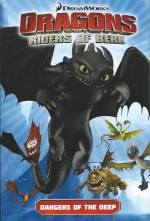
Dreamworks Dragons: Riders of Berk volume 2: Dangers of the Deep


By Simon Furman, Iwan Nazif, Lee Townsend & various (Titan Comics)
ISBN: 978-1-78276-077-1

Win’s Christmas Gift Recommendation: an unmissable Xmas Treat… 8/10

DreamWorks Dragons: Riders of Berk and its follow-up Defenders of Berk comprise one of the most popular kids TV cartoons around. Loosely adapted from Cressida Cowell’s glorious and charming sequence of children’s books, the show is based upon and set between the movies How to Train Your Dragon and its recent sequel.

Of course if you have children you are almost certainly already aware of that already.

Having wowed audiences young and old alike across the globe, the series has also spawned a series of comic albums and the second digest-sized collection by Simon Furman, Iwan Nazif & Lee Townsend (with the colour and lettering assistance of Nestor Pereyra, Digikore, John Charles & David Manley-Leach) is available just in time to fill out a few Seasonal stockings…

The epic follows the astounding adventures of brilliant but introverted boy-hero Hiccup and his unruly kid compatriots of the Dragon Rider Academy as they gleefully roam the skies with their devoted scaly friends getting into trouble whilst generally saving the day.

When not squabbling with each other the trusty teens strive to keep the peace between the vast variety of wondrous Wyrms and isolated Berk island’s bombastic Viking homesteaders.

These days, now that the dragons have all been more-or-less befriended, those duties generally involve protecting the village and farms from constant attacks by far nastier folk such as Alvin the Treacherous and his fleet of piratical Outcasts and, occasionally, fresh unknown horrors…

A masterly maritime romp ensues after a brace of handy information pages reintroducing Hiccup and his devoted Night Fury Toothless, as well as tom-boyish Astrid on Deadly Nader Stormfly, obnoxious jock Snotlout and Monstrous Nightmare Hookfang, portly scholar Fishlegs on ponderous Gronckle Meatlug and the terribly dim yet merrily violent twins Tuffnut and Ruffnut on double-headed Zippleback Belch & Barf…

The salty saga opens one terrible day when the fishing fleets of Berk reach home with their holds empty. With winter coming, the islanders need vast supplies of salted fish to carry them through the cold season, but this year the usually plentiful traditional areas are barren…

After a fraught council meeting Hiccup’s father Chief Stoick declares that every able-bodied adult must set to sea and voyage to the only place the fishermen have not tried: the spookily taboo region known as the Veil of Mists.

Hiccup is nervous – he always is – to see the fleet leave, but his real concern is that Stoick has left him in charge. The lad might be brave and inventive, but he’s nobody’s idea of a commanding presence…

As usual, he’s completely right. Neither young nor old will listen to him and the chores necessary to keep the village going are soon being neglected. Faced with insurmountable odds the temporary chieftain just gives up…

As the adults sail into the terrifying wall of engulfing clouds, Hiccup sees how badly his home town has declined and rallies the only five people who will listen to him. With the dragon-riders on the case things marginally improve, but that changes again after Astrid goes on patrol and discovers a horrifying secret: a gigantic undersea net which has prevented the fish from reaching their usual feeding grounds…

Hurrying back to the Academy she informs the others and Hiccup arrives at a grievous conclusion: the net is part of a scheme to invade Berk…

That terrifying thought is confirmed when the Alvin’s Outcast warships sail into view, intent on pillage and destruction. Instantly decisive, Hiccup lays his plans, despatching Astrid to the Veil of Mists to inform Stoick, whilst he rouses the rest to take over coastal defences and rally the recalcitrant idling youngsters – who would much rather fight than do chores anyway…

Berk’s adults meanwhile are having problems of their own. The trip into the billowing, grey mist wall utterly demoralised them, and that turned to sheer terror when their ships were targeted by a huge, ferocious and hungry Submaripper dragon…

They are barely holding their own when Astrid and Stormfly arrive, but after a frantic pitched battle the victors turn back for Berk, desperately rushing to save their children from Alvin’s invasion.

With ingenious Hiccup in charge, however, Stoick needn’t have worried. Thanks to the dragons, the blockbusting Battle of Berk is not going in Alvin’s favour…

Despite being ostensibly aimed at excitable juniors and TV kids, this sublimely sharp yarn is a smart and engaging fantasy romp no self-indulging fun-fan of any vintage should miss: accessible, entertaining, and wickedly habit-forming.
DreamWorks Dragons: Riders of Berk © 2014 DreamWorks Animation L.L.C.

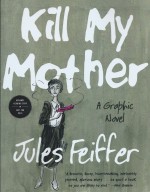
Kill My Mother (Advance Reading Copy)


By Jules Feiffer (Liveright/W.W. Norton)
ISBN: 978-0-87140-314-8

Win’s Christmas Gift Recommendation: Smart, Sharp and Perfectly Put Together… 9/10

Jules Ralph Feiffer has always been much more than “just a comic-book guy” even though his credits in the field are sound and suitably impressive. As well as working with Will Eisner on The Spirit, he created his own Sunday strip ‘Clifford’ (1949-51) before settling at the Village Voice for a Pulitzer Prize winning run.

Novelist, playwright, animator, children’s book creator (why isn’t there a single word or term for those guys?), teacher and screenwriter, he turned his back on cartooning in 2000, but the 42-year run of his satirical comic strip in The Village Voice ranks as some of the most telling, trenchant, plaintive and perspicacious narrative art in the history of the medium.

The strip, originally entitled Sick, Sick, Sick, then Feiffer’s Fables, before simply becoming Feiffer was quickly picked up by the Hall Syndicate and garnered a devoted world wide following, with many collections appearing over the years since the first book in 1958.

His incisive examination of American society and culture, as expressed through politics, art, television, cinema, work, philosophy, advertising and most especially in the way men and women interact, informed and shaped opinions and challenged accepted thought for generations. They were bloody funny and wistfully sad too – and still are today.

However his creative credits extend far beyond the world of print: he was one of the playwrights on stage revue Oh! Calcutta! (with Kenneth Tynan, Edna O’Brien, Sam Shepard, Leonard Melfi, Samuel Beckett & John Lennon) and has created 35 plays, books and screenplays including Carnal Knowledge and Little Murders. In 1961 his animated short feature Munro won an Oscar.

In 1965 he kickstarted acedemic American comic fandom with his celebratory evaluation The Great Comic Book Heroes and in 1979 he was at the forefront of the creation of graphic novels with Tantrum before scripting Robert Altman’s much-undervalued Popeye movie (released a year later).

He has a Lifetime Achievement Award from the Writers Guild of America, was elected to the American Academy of Arts and Letters in 1995, and 2004 saw him inducted into the Comic Book Hall of Fame and simultaneously receive the National Cartoonists Society’s Milton Caniff Lifetime Achievement Award, and 2006 saw him awarded the Creativity Foundation’s Laureate.

Now after years as a cartoonist, illustrator, pundit and educator, at the age of 85 (having been born in the Bronx on 26th January 1929) he has returned to his primary role of storyteller with another gripping and innovative graphic novel.

…And what a yarn he’s spun…

Spanning ten turbulent years, Kill My Mother is a supremely classy tribute to Film Noir, Hollywood Babylon, sexual politics and family secrets, blending the trappings of Dashiell Hammett with the tone, pacing and spark of Preston Sturges and Billy Wilder to tell an extended story of love, murder, jealousy and revenge.

It all begins in ‘Bay City Blues’. It’s 1933 and times are tough. Fifteen year old Annie Hannigan is cutting up, constantly leading poor, gullible sap Artie Folsom into trouble, whilst the mother she despises works all hours for dissolute, dipsomaniac and exceedingly cheap private investigator Neil Hammond.

The odd arrangement developed after the shamus agreed to investigate the murder of Elsie Hannigan‘s husband, whom he constantly refers to as the wrong sort of honest cop.

Events take a dark turn when stylish, exceedingly tall man-eater Mae Longo walks in offering outrageous sums if the shamus can track down a certain woman. The photo she gives him shows a woman remarkably like his coolly aloof new client…

Eddie “the Dancing Master” Longo is a rising star of the fight game who usually employs shady and capable gorilla Tiny Tim Gaffney to handle the more unsavoury problems in his life but Neil claims he knows how to handle him…

In the course of her mean-spirited, casual rebellions Annie gets poor Artie into real trouble when a shoplifting binge results in a pursuit by a store detective far faster than he looks. A very nasty beating is only avoided when an exceptionally tall derelict in an alley lays out the private cop with her carefully concealed baseball bat…

The rattled teen takes the tramp back to the apartment and cleans her up even as Elsie, very much against her will and better judgement, is dragged by soused-as-ever Neil to the Big Fight to see the Dancing Master.

The escapade almost costs her everything…

Her drunken boss’ plan to draw his tall target out of the woodwork also involves poor Elsie and leads to a lot of pain, trouble and strife, whilst Hammond, clearly a dipsomaniac with a death wish, starts dogging mysterious client Mae instead of doing the job he was hired for.

The result is a murder unsolved and unexplained for a decade…

The concluding half of the story resumes in 1943 with ‘Hooray for Hollywood’ as we return to our cast and find them all greatly advanced.

Goonish Artie is a Captain of Marines, successfully battling the Japanese in the Green Hell of the Pacific whilst Annie Hannigan is a writer and media darling. Her sensational hit comedy “Shut Up, Artie” is the most popular radio show in America and broadcast wherever Yanks are posted.

Eddie Longo has made the transition to B-Movie star and Ellen – when not babysitting her obstreperous grandson Sammy – is “Executive Vice President of Pinnacle Studios in charge of Image Security and Maintenance”…

The scary indigent little Annie met in an alley has also cleaned up and moved on. Now she sings torch songs in the Reno Roost as the enigmatic Lady Veil…

Eddy hates his life. The former hard-man boxer is trapped as a song-and-dance hoofer in big, morale-boosting musicals but dreams of major stardom like glamorous He-Man Hugh Patton or even an Academy Award, but is typecast and more under the thumb of the formidable Mae than ever.

The fraught status quo changes after Annie meets the dashing Patton at the Hollywood Canteen, but her romantic elation is crushed soon after when the sponsors call her in to discuss a crisis.

A genuine war hero is suing the show, claiming his life is being made a mockery. Unless she can fix things up with her old pal Artie, the show and her career are over…

Eddie is also near breaking point and Mae is forced to call in the thuggish Gaffney as a minder.

Events begin to spiral to a shocking conclusion when Longo joins a USO tour to the war-torn Pacific Islands. Patton is going too and Annie takes the opportunity to join him, as does her mother in the role of “image maintainer”…

The first port of call is Tarawa; the hellhole where Captain Arthur Folsom is almost single-handedly repulsing the Jap advance…

On the island Artie is overseeing the building of the stage for the visiting stars and marvelling at the stupidity of putting on a show in battleground still hotly contested by enemy forces. In the air above him Ellen has a sharp confrontation with Mae Longo and “bodyguard” Gaffney. The events of ten years ago are still painfully fresh in every participant’s mind.

By the time all the players debark on the island, a devious and supposedly foolproof plan to commit another perfect murder has been hatched, using the Japanese as ideal scapegoats, but intimate killing is far harder than mass slaughter and the scheme soon begins to unravel…

Complex, beguiling, smartly sophisticated, devastatingly witty and peppered with casual shocking violence as every noir thriller has to be, this is a spectacular yarn – available in both hardback and mass market paperback editions – packed with twists and surprises, where nobody is telling the truth and no-one is playing on the side of the angels.

A masterpiece of cool suspense, mature ingenuity and graphic dexterity, Kill My Mother offers a timeless, hearty slice of bravura storytelling that gets better with every re-reading.

If you love crime yarns, comic tales, nostalgia and having your intelligence respected, this is the book for you.
© 2014 Liveright Publishing Corporation.

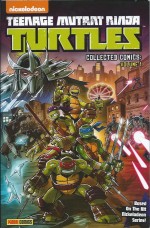
Teenage Mutant Ninja Turtles Collected Comics volume 1


By Ed Caruana, Landry Walker, John-Paul Bove, Erik Burnham, Jack Lawrence, Cosmo White, Bob Molesworth, Jason Cardy & various (Nickelodeon/Panini Comics)
ISBN: 978-1-84653- 615-1

Win’s Christmas Gift Recommendation: What Every Kid Craves… 8/10

Devised by young comicbook creators Kevin Eastman and Peter Laird, the Teenage Mutant Ninja Turtles first appeared in a self-published black & white parody comicbook in 1984.

After spawning an explosive boom in do-it-yourself comics and changing the very nature of the industry, their concept resolved into the ideal example of successful exploitation, expanding to encompass toys, movies, games, food, apparel, general merchandising and especially television cartoons, becoming – and remaining – a globally potent franchise. There’s another movie in the cinemas even as I type this…

In 2012 the third animated TV series – rendered in extremely impressive 3D CGI – launched on Nickelodeon to tremendous world wide approval and is now up to its fourth season.

Such universally popular characters usually filter back into comics as their media stars wax and the TV show generated an Official Teenage Mutant Ninja Turtles Magazine, packed with puzzles, posters, fact files, competitions and some extremely engaging and entertaining strips.

This bold, brassy and bombastic collection gathers the hilarious, action-packed comic chronicles from issues #2 through 13 and 15 – with a few value-added extras thrown in – and sensibly opens with a rehash of the characters’ ‘Origins’ before ‘The Need for Speed!‘ by Ed Caruana, Jack Lawrence and chief colourist Jason Cardy sets the ball rolling when a silly mistake forces romantic Donatello into the most important rescue mission of his life.

After a glitch in computer communication makes him mistakenly believe their human associate April O’Neil has confessed her love for him, in a state of euphoria he responds with a flamboyant gesture.

Unfortunately, by the time he realises the hugely embarrassing error and needs to stop a florist delivering a bonanza bouquet to her, he’s in the middle of a furious fight with the robotic Kraangs who are still insidiously contaminating New York City with the alien Mutagen concoction which had years ago turned a Ninjutsu master into a giant rat and four baby amphibians into the world’s greatest warriors…

‘Podzilla’ then finds our shell-backed saviours battling deranged nemesis and insufferable mad scientist Baxter Stockman whose latest mechanical monstrosity is proof against martial arts mastery but not inventive genius Donnie’s latest innovation. ‘Thief in the Night’ (by Erik Burnham & Bob Molesworth) then sees the quartet battling to save a “magic” sword from Mutagen-warped piscine peril Fishface whilst ‘Slug’ (by Caruana & Molesworth) pits the boys against an uncommon bank robber who accidentally steals some of the ubiquitous ooze and so very slowly reaps the consequences…

Freewheeling Michelangelo saves the day in blistering battle against feral fury Dogbreath thanks to a killer move taught him by a samurai pelican in a ‘Daydream’ (Landry Walker, Caruana & Cosmo White) after which ‘Taken’ (Caruana & Jack Lawrence) finds the turtles’ pet – un-mutated – tortoise Spike at the centre of a kidnap plot involving those incorrigible Kraangs, after which the awesome power of pizza deals a substantial blow to arch-maniac Shredder‘s plans when ‘A Slice of Luck’ (Caruana & White) pits the team against an army of enemies and ticked-off mutant alligator Leatherface…

Donatello’s new stealth wings prove more handicap than advantage when the lads invade Kraang HQ in ‘Dropzone’ (Caruana & Lawrence), but not as much as the citizens of New York after the Turtles visit a pizzeria in ‘Takeout’ (Caruana, John-Paul Bove & Ryan J. Neal)…

In ‘Number One Fan’ (Walker & White) Leonardo trade blows and fanboy trivia with Stockman when they discover a shared love of vintage TV serial Space Heroes during a cataclysmic clash at a movie premiere…

Leo and Raphael later develop an intense and extremely physical rivalry in ‘Own Worst Enemy’ (Bove & Molesworth) but rodentine Master Splinter‘s solution falls far short of the bonding necessitated during a frantic fracas against antagonistic allies Fishface and Dogbreath at a superglue factory…

‘What Goes Up…’ (Bove, Caruana & Lawrence) features a fight in a rooftop jungle hiding veggie-monster Snakeweed, after which Donnie’s latest tinker toy ‘Roboninja’ (Caruana & White) proves more foe than friend after Mikey messes with its controls, whilst in ‘Meet the Dream King’ (Walker, Caruana & Molesworth) the pestiferous Michelangelo is lost in a fabulous but lethal fantasy realm which can only be escaped through the magic of pizza…

The mutant martial arts mirth and mayhem concludes with ‘Space Captain Leo’ (Walker Caruana & White) as the incurable telly addict suffers a debilitating head injury and starts channelling the valiant Captain Ryan of the Starship Dauntless whilst tracking down the Kraangs and a vast shipment of deadly Mutagen.

His bewildered brothers in arms can barely keep up as the carnage commences…

Wrapping up the all-ages fun is a mesmerising fact-feature ‘Behind the Scenes’ which traces the development of the story pages from rough layouts to full-finished computer-coloured art and also includes a selection of ‘Concept Sketches’ revealing the evolution of Podzilla, Roboninja, Slug and The Dream King.

Fast, furious, fun-filled and funny, this reinvention of the perennial shell-backed sentinels offers a superb slice of excitement and enjoyment – and bizarrely addictive catch-phrases – that will keep kids and adults alike bouncing off the walls with eager appreciation.

Mums: You have been warned…

© 2014 Viacom Overseas Holdings, C. V. All Rights Reserved. Teenage Mutant Ninja Turtles and all related logos and characters are ™ Viacom Overseas Holdings, C. V. Based on characters created by Peter Laird and Kevin Eastman.

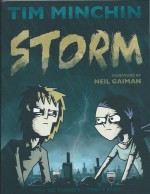
Storm


By Tim Minchin, DC Turner, Tracy King & various (Orion)
ISBN: 978-1-4091-5625-3 (tpb): 978-1-4091-5209-5 (HB): 978-1-4091-5210-1(eBk)

Win’s Christmas Gift Recommendation: a cartoon bible of common sense… 10/10

The world is a magical, wondrous place stuffed with miracles and mysteries.

However there’s not one single atom of it that depends on the eldritch, mystic or supernatural and none of it – or the greater universe around it – is wrought from the efforts of supreme beings or operated on principles of forgotten lore denied us common folk.

It’s all explainable, utterly rational and absolutely subject to revision by us every time we find out or disprove something that previously has been a puzzle. To do otherwise is nothing less than a crime against humanity.

No Gods, no ghosts, no witchcraft, no magic crystals. Got it?

It’s amazing how many people haven’t and how the latest anti-science fad or fashion can cause genuine harm to the world, deprive generally sensible folk of their money and too often make dinner parties a theatre of war…

Tim Minchin is a creative whirlwind and multi-media entertainment polymath originally from Australia who performs musical stand-up comedy, composes award-winning stage musicals like Matilda and acts in hit shows like Jesus Christ, Superstar.

He’s very smart, very funny and doesn’t believe in goblins or faith-healing.

In 2006 his 90-second diatribe ‘If You Open Your Mind Too Much Your Brain Will Fall Out (Take My Wife)’ – a “refutation of the plausibility of astrology, psychics, homeopathy and an interventionist God” impressed and delighted fans. In 2008, after a close encounter with a pontificating new-agey nitwit at a party where the reasonable, rationalist Mr. Minchin politely opted not to contest a stream of bubble-headed nonsense, he took his ire and indignation and turned it into a piece of true inspiration: a beat poem, Socratic dialogue and “anthem for critical thinkers”…

It’s a very funny, edgy slice of entertaining refutation and I-wish-I’d-said-that-ism which was used as the closer for the Ready For This? Tour for more than two years.

In Britain animators/illustrators/producers Dan “DC” Turner and Tracy King saw the show and determined that at all costs they must turn that paean to logic and sense into an animation and, as described in the Introduction by Tim Minchin and the Afterword by Turner and King, after some wheeler-dealing, they did just that.

Storm became an internet sensation with three million hits on YouTube after its launch in 2011, and now the artists and Tim have completely reworked that cartoon sensation into an astoundingly compulsive and scathingly funny graphic novel which opens at an intimate soiree in North London where the narrator and his wife sit down to sup with friends and are force-fed a stream of nonsensical blather by a beautiful girl with a tattoo of a fairy.

Her name is Storm and this time the quiet man she inanely and arrogantly lectures is not going to hold his tongue…

By turns tense, barbed, hilariously evocative and furiously cathartic, this stunning visual feast delivers the barrage of scathing sense we’ve always wanted (but been too polite) to unleash on evolution-deniers, pseudo-scientists, astrological aroma-therapy advocates, vaccination-withholders, ghost-chasers and every other stripe of pontificating irrationalist in a graphic tumult of colour, line and typography that will simultaneously stun and galvanise.

This magnificent reinterpretation also includes a Foreword by Neil Gaiman, Biography pages for Minchin, Turner & King and – because it’s all about the fun – a selection of variant covers by Ricky Earl, Freya Harrison, Andy Herd, Dave “Swatpaz” Ferguson and Stuart Mason & Rachael King which might have graced the issues had this yarn been serialised as comicbooks rather than released as a complete book…

There has been and always will be a valuable and cherished place for fantasy, imagination and all the wild and woolly boggles and phantasms of a rich realm of tradition and ignorance. Indeed I believe it’s absolutely necessary for every child to be fully acquainted with all aspects of fairies and spectres and wish-fulfilling rings and lamps, but there comes a time when they must retire to a place of nostalgia and fun, regularly revisited for amusement but never, never, never used to dictate the content of school curricula, divert funds from genuine medical research or be employed as justification to persecute whole sectors of society or even one single “different” individual…

Storm is an edgy pictorial tour de force that will delight and enchant readers who love the funny and fantastic but never forget where the horizons of fantasy end and the borders of imagination begin…

Text © Tim Minchin 2014. Illustrations © Tracy King and Daniel Charles Turner 2014. All rights reserved.
Storm will be published on October 16, 2014 and available in trade paperback and eBook formats as well as in a 1000 copy Limited Edition Deluxe Hardback with extra content.

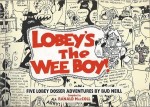
Lobey’s The Wee Boy! – Five Lobey Dosser adventures by Bud Neill


By Bud Neill, compiled by Ranald MacColl (Mainstream Publishing)
ISBN: 1-85158-405-6

Nobody’s ever accused me of being sensitive to the tone of the times, but with all thoughts directed north of the border for so long now, I’ve decided to feature this superbly unique dose of Celtic (more properly Glaswegian) cartoon magic today.

It’s the work of a tragically near-forgotten genius of pen and brush who should rightly be a household name wherever people like to laugh and ponder the absurdity of existence, no matter what flag they fly.

William Neill – forever immortalised as “Bud” – was born in 1911 in Partick just before the family moved to Troon in Ayrshire. He was a typical kid and fell in love with the brash wonder of silent movies – most especially the rambunctious westerns of William S. Hart.

His other great drive was a love of horses, and he could always be found hanging around stables, trading odd jobs for the chance of a few minutes’ riding.

After finishing school the young artistic star won a place at Glasgow School of Art. In the late 1930s Bud briefly emigrated, working in Canada and absorbing the tricks of America’s greatest newspaper cartoonists in their creative heyday.

He served as a gunner during WWII but was invalided out and became a bus driver. These experiences led to his creating a series of pocket cartoons starring the “Caurs & Clippies” of Glasgow’s tramcar system.

By 1944 Bud was drawing for the Glasgow Evening Times: sharp, wry observational pieces starring the city and its inhabitants, characterised by a devastating and instantly enchanting use of the iconic rhythms, vernacular and argot everyone shared.

In January 1949 The Evening News began running the uniquely surreal escapades of his greatest creation. Sheriff Lobey Dosser of Calton Creek was a brilliant inspiration: the adventures of a canny wee lawman in a hauntingly typical western town populated exclusively by Scots (from Glasgow’s Calton district, presumably) living an outrageously domestic, hilariously apt inner city life all whilst tricked out in cowboy hats and six-guns…

Delving deep into the venerable, anarchic and often surreal material of music hall and pantomime, Bud crafted a supremely odd, anachronistically familiar, bizarrely inviting world of solecism masquerading as local events. The series transferred to The Sunday Mail in 1956 where it became so popular that previous, complete strip adventures were collected in instant sell-out, one shilling landscape booklets (all incredibly sought after collectors’ items these days).

Neill died in 1970 but his work steadily continued to garner fans and acquire a mythical status, so by the middle of the decade Glasgow artist and sculptor Ranald MacColl began work on a biography.

That in turn led to a series of graphic collections such as this one and eventually belated recognition for Neill and his most memorable creations.

Bud was subsequently celebrated in exhibitions, galleries and, following Glasgow’s becoming European City of Culture in 1990, two separate bronze statues (Lobey, Rank Bajin and noble steed Elfie in Woodlands Road and, in Homecoming Year 2009, The G.I. Bride and her “Wean” at Partick Station), funded by public donations, Strathclyde Passenger Transport and private sponsors.

Hard to find but so worth the effort, Lobey’s The Wee Boy! gathers the contents of five of those shilling collections in a sensibly narrative chronological – not publication or even creation – order and is packed with informative extras such as MacColl’s fascinating historical and atmospheric Introduction and a hilarious Prologue by Bud himself from 1958, before the astonishing origin of the champion of Calton Creek is revealed in ‘Lobey Dosser: His Life Story’.

On a rare quiet day the grizzled sheriff recounts his early life to a jail full of impressionable young’uns…

Once upon a time in auld Glesca a mother had one bairn too many and the precocious tyke, to spare her further hardship, put his possessions in a hanky on a stick and headed off to make his way in the world.

Although only a few months old, he rejected being fostered out to his mean Auntie Mabel and joined a merchant ship under the tyrannical Captain Blackswite, unaware that the big shouty blackguard was a pirate…

After many exciting years at sea Lobey jumped ship and was befriended by cannibals and their erudite chief Hannibal which led to more exploring, meeting monsters and other strange things before encountering a race of Oxbridge-educated white savages and happily acquiring a rare two-legged horse.

El Fideldo was to become his greatest friend and inseparable companion. Together they made their way to Mexico where the wee wanderer discovered an unsuspected talent for upholding the law and keeping the peace. After cleaning out a nest of vicious banditos the restless pair headed north and soon fetched up in Laredo, Texas where a disastrous love affair with Adoda, formidable daughter of wealthy Whisk E. Glorr, led to a clash with rustlers led by scurrilous Watts Koakin…

His heart broken – even though he had cleaned up the range – Dosser and Elfie kept heading west until they reached Arizona and first met future arch-nemesis Rank Bajin selling out the wagon train he was guiding to the local Sioux…

Rescuing the embattled settlers, Lobey decided to stay with the Scots expats as they built a town in the wilderness.  They called it Calton Creek…

Wild, imaginative and with every daily episode loaded with sight gags, striking slapstick, punishing puns, cartoon in-jokes and intoxicating vernacular, each Lobey Dosser tale was a non-stop carnival of graphic mirth and this terrific tome continues in fine fettle with ‘The Mail Robbery’ wherein nefarious Bajin attempts to incite an Indian uprising amongst the Pawnee of Chief Toffy Teeth and leaves the little lawman to die of thirst in the searing deserts. As the scorched sheriff struggles to survive, the naïve citizens are left to adapt to a protective occupation by flash Yankee G.I.s and airmen…

Sardonic and satirically cutting, the yarn also sports one of the best – and daftest – horseback chases in entertainment history…

Romance and mystery abound in ‘The Secret of Hickory Hollow’ as that Bajin scoundrel buys up the mortgage on Vinegar Hill‘s farm and tries to kick out the old coot and his substantial niece Honey Perz. The villain has got wind of a mineral resource on the property that would make a man as wealthy as the Maharaja of Baroda, or perhaps even a regional Deputy Superintendent of the Coal Board…

When Lobey organises the cash needed to pay off the outstanding loan, Bajin reluctantly resorts to the last resort and begins romancing sweet, innocent, hulking Honey…

It all looks bleak for justice until the sheriff befriends an astoundingly good-looking and wholesome uranium prospector named Hart O’Gold who quickly tickles Honey’s fickle fancy…

However nobody – including ghostly guardian Rid Skwerr – is prepared for the soviet spies behind the entire affair to jump in take over and it needs the timely intervention of mystic imp Fairy Nuff to save their accumulated hash before the Dosser can finally expose the viper in the nest…

The local natives are always up to mischief and ‘The Indian War’ kicks off when the railroad tries to lay track through Pawnee Territory just as Chief Rubber Lugs of the Blackfeet Tribe revisits an old and outstanding grudge with Chief Toffy Teeth.

The ineffectual Captain Goodenough arrives with a division of cavalry to safeguard the white citizenry but matters soon worsen, painfully exacerbated when the folk of Calton Creek take advantage of Lobey’s absence (he’s trying to negotiate with both bunches of bellicose braves) to run Rank Bajin out of town and the hooded hoodlum starts freely peddling weapons to both sides…

…And then Bajin kills Lobey and takes over the town.

…And then…

The last yarn in this monochrome tome of tall tales is the most incredible of all as ‘The “Reform” of Rank Bajin’ sees the vile villain scooting around Calton Creek doing good deeds and selling off his astounding arsenal of wicked weapons and cunning contraband. Baffled, perplexed, confused and not sure what’s going on, Lobey asks Boot Hill haunter Rid Skwerr to spy on the no-longer reprehensible Rank and even love-struck Fairy Nuff gets in on the act.

The astounding truth finally emerges: Bajin has a boy who is growing up honest, so he is selling up and returning to the family he deserted in Borstal Bluffs, Iowa to sort the shameful lad out. Knowing the tremendous vacuum his absence will leave in Calton’s exciting landscape, however, he has a recommendation for a locum arch-enemy for his arch-enemy…

Can this possibly all be true or is the beastly Bajin executing his most sinister scheme yet?

Cunningly absurdist, socially aware, humorously harnessed insanity in the manner of Spike Milligan, Michael Bentine and the immortal Goon Show, the adventures of Lobey Dosser are a brilliant example of comic strips perfectly tailored to a specific time, place and audience which magically transcend their origins to become a masterpiece of the art form.

It’s also side-splitting, laugh-out-loud, Irn Bru spit-take hilarious and really needs to be recollected for today’s audiences.

And of course that’s what I really want: a complete reprinting of these sublimely perfect spoofs.

And once you read some so will you…
© Ranald MacColl 1992. All rights reserved.