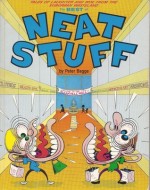
The Best of Neat Stuff


By Peter Bagge (Fantagraphics Books)
ISBN: 0-930193-53-9

Having had such a great time reading Other Stuff the other day I’ve decided to finally spotlight an old and cruelly out of print tome from 1987 that I’ve been meaning to rave about for simply ages: one packed with the superb but far too seldom seen formative appearances of such landmarks of pop culture as Buddy Bradley, Junior and Studs Kirby…

Peter Bagge is prominent these days as a fiery, laser-mouthed, superbly acerbic and well-established, award-winning cartoonist, animator and musician, responsible for incredibly addictive, sharply satirical strips examining contemporary American life, but once upon a time he was just another strident, gifted jobbing cartoonist trying to make a living.

Born in Peekskill, Westchester County, New York on 11th December 1957, he was one of four kids in a ferociously Catholic military family. Like esteemed colleague Robert Crumb a generation earlier, Bagge escaped that emotionally toxic, fight-filled environment as soon as possible, moving to New York City in the mid-1970s to study at the celebrated School of Visual Arts.

He soon dropped out, however, and began working in the vibrant alternative publishing field, producing strips and panels for Punk Magazine, Screw, High Times, East Village Eye (where the first Junior strip debuted), World War Three and others.

Meeting like-minded artists he began self and co-publishing comics and when Crumb saw copies of Comical Funnies – produced with new friend John Holstrom – Bagge was offered space in and eventually the Editorship of the seminal magazine Weirdo in 1983.

He augmented his 3-year tenure there with various paying gigs at Screw, Swank, Video X, Video Games Magazine, The Rocket, Bad News and elsewhere.

In 1984 Bagge relocated to Seattle, Washington State and began his association with alternative/Independent publisher Fantagraphics. The following year his spectacularly idiosyncratic cartoon magazine Neat Stuff launched as a thrice-yearly vehicle of outrageous personal expression and societal observation. His stark, manic, topically surreal strips starring old creations like Studs Kirby, Junior, Buddy Bradleys and Girly Girl soon made him a darling of the emerging West Coast Grunge scene.

Neat Stuff – and its eventual successor Hate – quickly made Bagge a household name… at least in more progressive households…

Neat Stuff ran from 1985-1989 and was a perfect pioneering vehicle for the burgeoning graphic novel market. This early compilation came half-way through the run, dazzled for a little while and then disappeared. Even though much of the anthologised material has since been reprinted in solo editions dedicated to specific members of the eclectic cast, I for one would dearly love to see the series revived, revised and released in some sort of definitive edition…

This glorious monochrome, album-sized compendium of seldom-seen strips is stuffed with deliciously fluid drawings and razor-edged, broadly baroque comedically absurdist observations with incisive, deeply intimate questioning quandaries and observations on living. Don’t panic though: it’s much more fun than it sounds, and the constant confrontations with a changing world everybody was – and still is – increasingly out of step with make for terrifically mature reading fun…

Following Robert Crumb’s informative Introduction ‘Peter Bagge – The R. Crumb of the Eighties’, the crazed cartography begins with a selection of Studs Kirby strips starting with ‘A Few Words from Studs Kirby’, after which philosophical diatribe the quintessential Reagan-Era Oaf establishes his credentials in ‘Studs Kirby Gets Drunk by Himself’ before being sucked whole into a changing consumer society when ‘Studs Kirby Gets Cable TV’…

Girly Girl may be the little lass next door, but that’s simply one more reason to move house. The hyper-active, impulse-control challenged tyke debuted in appalling style with pals Chuckie Boy and the Goon on the Moon in ‘Uh Oh, Here Comes Girly Girl’, before springing back undaunted to take on the rise in civilian journalism (or is it just spying on people) in ‘Candid-Camera-Star-Search-Solid-Gold-This-Is-Your-Life-Lip-Sync-Contest-In-Reverse’ and then proved once and for all just why she will never be ‘Little Miss Popularity’…

Bagge’s greatest hit was always the horrifically dysfunctional traditional values family The Bradleys and these painfully hilarious early forays prove why as ‘Ye Gads, It’s The Bradleys!’ introduces drunken ogre Dad, shrewish Mom and their ghastly progeny Buddy, Babs and Butch who quickly show their true worth as ‘Mother’s Little Helpers’…

Buddy and his shiftless pal Tom take centre stage in ‘Rock ‘n’ Roll Refuge’ when the worthless firstborn goes looking for old LPs at a second-hand record shop, before little Butch passes on the cruel life-coping skills he leaned from his big brother in ‘The Trickle Down Theory’

There then follows a joyously eccentric interlude as we happily focus on sheer exuberant graphic madness with a page of nine ‘Neat Stuff Trading Cards’.

Sheltered Momma’s boy Junior finally leaves the happy maternal nest – although hardly from choice – to find shelter in a far-from-innocuous boarding house in ‘The Cabbage’, where he swiftly packs in a lot of insalubrious second-hand living whilst under the scurvy wing of landlord Mr. Frank.

However ‘The Road to Manhood’ is perilous and soon Junior is going backwards not forward…

Chet and Bunny Leeway debuted in Bad News and eventually became the family stars of Adobe’s Website (see Other Stuff for details), but in the first two untitled strips here those ordinary suburbanites merely discuss domestic matters in their usual manner (kids; never, never, never try this at home – yours or anybody else’s) and assess each other’s musical gifts before Chet discovers the allure of Malls in ‘Life’s A Bitch And Then You Die’.

There’s also a selection of Miscellaneous strips included here beginning with the darkly obsessive ‘Sometimes I Feel Like I’m Going Crazy’, after which ‘Bang the Head that Does Not Bang’ discloses the truth about dads and the teens they ferry to rock concerts, and ‘Minimum Wage Love’ offers insights into mating rituals and first jobs.

It isn’t pretty and the Bitter to Sweet ratio is heavily disproportionate…

There’s more magnificently liberating graphic license on show in ‘Wheeeeee! Whoaa! Woops!!’ whilst dark meta-real revelations abound in the too-true-to-be-factual story of school pressure in ‘The Reject’ – a strip first seen in Weirdo…

Also on show: a fulsome and fascinating background feature – complete with early illustrations – in Origins – an Explanation of the Characters in Neat Stuff, as well as a peachy keen sketch and Bagge Biography to slavishly enjoy in the concluding About the Author featurette…

Bagge has always been about skewering stupidity, spotlighting pomposity and generally exposing the day-to-day aggravations and institutionalized insanities of modern life, and these strips offer a beguiling peek into his formative process: a treat no cartoon-loving shibboleth-tipping rebel should miss…
© 1987 Peter Bagge. Introduction © 1987 R. Crumb. All rights reserved.
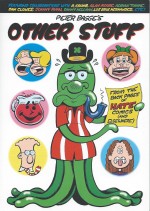
Peter Bagge’s Other Stuff


By Peter Bagge with R. Crumb, Alan Moore, Adrian Tomine, Dan Clowes, Johnny Ryan, Danny Hellman, Gilbert & Jaime Hernadez, Joanne Bagge & various (Fantagraphics Books)
ISBN: 978-1-60699-622-5

You probably know Peter Bagge as the fiery, wise-mouthed, superbly acerbic cartoonist responsible for incredibly addictive, sharply satirical strips about American life that featured in such wonderful magazines as Neat Stuff and Hate, his superbly strident Buddy Bradley stories or even his forays into the more-or-less comics mainstream with such works as DC’s Yeah!

But the graphic ridiculist also has a commercial impetus, whimsical nature, politically active side (as cartoonist and societal commentator for the Libertarian publication Reason) and a secret life outside comics.

Thus this glorious compendium of seldom-seen strips from a variety of publications has been compiled by Fantagraphics, in a (mostly) full-colour softcover collection stuffed with deliciously fluid drawings and razor-sharp polemic, broadly comedic or surreal observations and, as ever, sharply incisive, highly rational and deeply intimate questioning quandaries and observations.

Bagge’s oeuvre is skewering stupidity, spotlighting pomposity and generally exposing the day-to-day aggravations and institutionalized insanities of modern urban life and these strips, from such diverse sources as his own Hate Annuals, Hate Jamboree, Weirdo, El Rios, newspapers such as The Stranger and LA Times as well as publications like Magnet Magazine, Spin, Razor, Discover, Details, Toro, Vice and software company Adobe’s website from the 1980s to the present, offer a fascinating insight into his world, working as they do under the constraints of a client’s prerequisites…

They’re still all outrageously hilarious and powerfully effective though, even when filtered through the lens of cartoon collaborators such as the sparkling pantheon featured here…

Following an extensive, detail-packed explanatory Introduction, the madness begins to unfold in a section collecting all the adventures of classy, racily moderne young broad Lovey (first seen in Hate Annual #1, 2, 4 and 5 and The Stranger from 2000-2004) beginning with ‘Gender-Bending Hyjinx’ progressing to the gloriously distasteful ‘The Gaggle and the Gimp!’ before revealing ‘The Real André’ and indulging in ‘A Party to Forget’…

The music scene gets a wry shellacking in Rock ‘n’ Roll – covering material from 1995-2012 – which opens with a string of ‘Musical Urban Legends Presents’ single-pagers from Magnet including ‘Gnomes are Real’, ‘A Winning Formula’, ‘Dinner with Brian (Part One)’, ‘The Stuff of Genius’, ‘What Price Love?’, ‘Dinner with Brian (Wilson, that is) Part 2’, ‘Little Richard in “Ménage a Whah?!”’, ‘Kiss my Baby’ and ‘Start Spreadin’ the News’ whilst ‘Man with a Vision’ lampoons youthful ambition in a smart strip which originally debuted in Spin.

The chapter then closes with a trio of Beach Boys-themed bad vibrations as ‘Murry Wilson: Rock ‘n’ Roll Dad’ appals in ‘Turn Back the Hands of Time’ (co-created with Dana Gould), meets Charles Manson in ‘Helter Skelter, My Ass’ and treats his son ‘The Meal Ticket’ just as you always suspected he did…

The promised Collaborations cover the period 1996-2002 and mostly come from Hate, finding Bagge working in various roles such as scripter of ‘Me’ illustrated by Gilbert Hernandez, and illustrator of ‘Go Ask Alice’, written by Alice Cooper and appearing in Spin.

‘Shamrock Squid: Autobiographical Cartoonist!’ was drawn by Adrian Tomine, ‘The Hasty Smear of my Smile…’ exposing the sordid life of the Kool-Aid Man was written by Alan Moore & inked by Eric Reynolds, whilst ‘Life in these United States’ was rendered by Daniel Clowes and debuted in Weirdo.

Iconoclastic Johnny Ryan drew ‘Dildobert Joins the Al-Qaeda’, the autobiographical delight ‘What’s in a Name?‘ was illustrated by Danny Hellman, sordid strip spoof ‘Caffy’ was drawn by R. Crumb, ‘Shamrock Squid in Up the Irish!’ was inked by Eric Reynolds and the hilarious ‘The Action Suits Story’ was illustrated by Jaime Hernandez.

There are a number of strips throughout the volume gleefully dissing long-time inker and collaborator Jim Blanchard in such cruel and revelatory epics as ‘Backyard Funnies’ written & pencilled by Reynolds, ‘Don’t Knock It If You Haven’t Tried It’ (written & drawn by Pat Moriarty), ‘Bleachy Blanchard’ written & drawn by Kevin Scalzo, and ‘Harassed Citizen’ written & drawn by Rick Altergott. There’s also the scathing solo effort ‘That Darn Blanchard’ in the introduction pages too…

“True” Facts covers educational (sort of) features such as biographies of scientists from Discover Magazine in 2009. These highlight Robert Brown in ‘I’ll Second That Motion’, Wallace “Gloomy Gus” Carothers in ‘It’s a Wonderful Legacy’, reveal what ‘Mendeleyev Predicts!’, heralds Joseph Priestly as ‘Phlogiston’s Last Champion!’, details Major Walter Reed’s ghastly experiments in ‘Yellow Fever Fever!’ and celebrates ancient Moslem savant Taqi al-Din in ‘Oh, What a Spin I’m In!’

From 1998 ‘So Much Comedy, So Little Time’ (from Details) exposes the festival circuit whilst the autobiographical ‘East Coast, West Coast, Blah, Blah, Blah…’ came from Road Strips in 2005 and ‘Partying with the “Dickster”‘ revealed a truth about Vice President Cheney in a 2007 strip from the LA Times… as did radio expose ‘At the End of the Day…’

‘Stuff I Know about Belgium, by Some Dumb American’, which originated in El Rios in 2010, the savagely self-excoriating ‘What Was Wrong With Us?’ from 2002, the incisive ‘Game Day with the Quarterback’s Wife’ (Toro, 2004) and ‘The Expert’ (Vice, 2006) all explore humanity’s foible-besmirched mundanity, and this collection more or less concludes with a series originally shown as entertainment content on Adobe’s homepage in 2000 before being reprinted in Hate Annual #6.

Restored and re-coloured by Bagge’s most consistent collaborator – his wife Joanne –

The Shut-Ins follows the slow seduction and fall of computer illiterates Chet and Bunny in ‘Meet the Shut-Ins’, ‘Meet Santiago’, ‘Pretty Flowers’, ‘Make the World Go Away’, ‘The Great Indoors’, ‘Withdrawal Symptoms’, ‘Life Among the Earthlings’, ‘A Short-Lived Recovery’, ‘Our Babies’, ‘Irrigation Blues’, ‘The Funeral’, ‘No Good for the ‘Hood”, ‘The Meg Ryan Factor’, ‘Oh, What a Night!’, ‘Taking Stock’, ‘Slowly He Turned’, ‘Rich, Rich, Rich!’, ‘Dot Com Casualties’ and ‘Can I Interest You in Some Fairy Dust?’

Even after all that the cartoon craziness goes on as the designers squeeze in two more lost classics –‘Crazy Exes’ from Spanish GQ in 2000 and, on the back cover, ‘Good Ol’ Posterity’ from Artforum…

Challenging, hilarious, wonderfully shocking and always thought-provoking, Other Stuff in another superbly engaging and entertaining book from a brilliantly inspired social commentator and inquisitor; impassioned, deeply involved and never afraid to admit when he’s confused, angry or just plain wrong. This wonderful use of heart, smarts and ink is one more reason why cartooning is the most potent mode of expression we possess.
© 2013 Peter Bagge, except as noted on the strips themselves. All rights reserved.

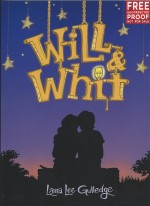
Will & Whit


By Laura Lee Gulledge (Amulet Books)
ISBN: 978-1-4197-0546-5

We’re well into the 21st century now (with no foreseeable chance of ever getting back to sensible proper times) and yet there still aren’t enough good comics for girls.

Yes, they’ve pretty much sewed up the prose-reading marketplace, but within the realms of pictorial sequential narrative the stories are still all pretty much geared up for adolescent males (for which assume any boy from 11 to 108) with material devised to puff up chests, pump up adrenaline and set testosterone a-bubbling.

Don’t get me wrong: I’m not saying females don’t enjoy Sturm, Drang, angst, mindless fighting and overblown physical carnage, only that they can appreciate other aspects of storytelling too. Oranges are not the only projectile to leave a nasty bruise…

Happily, life is not always about battle, struggle, self-doubt, terror and glorious triumph, so it’s wonderful when creators like Laura Lee Gulledge come along to shine a different light into our shadowy ghetto.

Born in 1979, Gulledge is a multi-disciplinary artist who has worked in Education, Scenic Painting, event production and drama, and seamlessly broke into comics with her beguilingly intimate and aspirational visual testament Page by Paige in 2011.

Will & Whit also highlights her penetrating insight and absorbingly imaginative grasp of purely visual metaphor by relating the Rubicon-crossing moment of a young woman coming to terms with personal tragedy and inescapable adulthood, aided only by her own gifts and the truest of friends…

‘Sparks’ introduces 16-year old Wilhelmina “Will” Huckstep who lives with her free-spirited Aunt Elsie; helping run the small town a second-hand shop called Foxxden Antiques during the most eventful summer of their lives.

Artistic, contemplative and backward-looking, Will is introspective and traumatised by bad memories. She thinks of herself as a “passed-down sort of girl”, obsessed with old things and memories, deathly scared of the dark, making lamps as homespun therapy and casting the most interesting and scarily expressive shadows in the world.

Ella Foxx is worries about her ward. It’s just the two of them these days and Will has grown into a tense, insomniac borderline workaholic, even now in the laziest days of summer vacation.

However this year Will is finally going to escape from her Shadow…

It starts in ‘Bright Ideas’ as she visits her best friends Autumn and Noel in nearby Charlottesville. All Will’s pals are creative too. Autumn – daughter of two pushy Indian doctors – is a brilliant puppeteer whilst easy-going Noel is a cordon bleu chef.

It’s his cool little sister Reese‘s thirteenth birthday and they plan to make her a full member of the gang… if she’ll only put down her cellphone for five minutes.

After a lazy day on the river, Will idly wishes for more such days of old-fashioned “unplugged adventure”…

The first ominous news reports about Tropical Storm Whitley begin terrifying folks in ‘Shedding Light’ as Will minds the store and three obnoxious kids come in to check out the “junk shop”.

Snotty Ava, Blake and Desmond are putting on an Arts Carnival in an abandoned building and they’re looking for props, but the poseur tension dissipates after Desmond recognises “Willy-Nilly” as an old chum from Elementary School.

Soon the kids are leaving with loads of great stuff and Will has volunteered Autumn as a performer. Of course the diffident Asian-American girl is not keen but, after Blake ladles on the charm in ‘Foreshadowing’, Autumn’s head is turned and her lifelong silent crush on Noel utterly forgotten…

Des is keen on Will performing too, but she demurs. After all she just makes lamps…

As the storm finally hits in ‘Out Whitted’, Noel is starting to realise what his complacency and lack of boldness has cost him. Even though Ella is in her element making plans and simply coping, Will is concerned that the hurricane is going to cause a blackout, leaving her stuck in the terrifying, all-consuming dark …

All over the region friends and strangers are battening down the hatches and, determined to deal, she occupies herself making a lamp that will save her, but Will’s mind keeps going back to the crash that made her an orphan…

That rash dream of an unplugged life comes true in ‘Will Powered’ as, in the immediate aftermath of the storm, folks come to terms with the lack of electrical power. The kids organise a giant Blackout Bonfire party and cook-out where Noel shows off his culinary craft and bends Will’s ear about their love-struck BFF before forcing her to confront her fears and take control of her imagination.

However, when Ava organises games in the wood, the junior master chef stumbles over Blake and Autumn taking advantage of the cloak of night and realises how much worse than the unknown reality can be…

‘The Dark Side’ finds the phone-less Reese displaying astounding insight as her brother mopes, and her casual conversation with Will prompts the lamp-maker to make an artistic leap in the dark. Soon however Will is consoling Autumn, whose time with Blake ended almost as soon as it began.

Ava and Desmond need help too. With power gone they need someone innovative with light to help the show go on…

Everything comes together ingeniously and perfectly in ‘Shadowboxing’ and leads to a deliciously authentic but satisfying happy ending with all mysteries and conflicts resolved in ‘Illuminated’ and ‘Epilogue’…

Comics as a English-language medium has had many worthy stabs at producing material for the teen/young adult audience and especially that ever-elusive girl readership, ranging through translated manga material, targeted tales from DC’s Minx imprint and evergreen Archie Comics situation comedies, but the lasting hits have always come when creators ignore editorial and marketing demographics and simply concentrated on telling an honest, absorbing story.

That’s why Maus, Persepolis, Hereville and Castle Waiting worked and how Fables, The Tale of One Bad Rat and The Ballad of Halo Jones found an unexpected, devoted female following, and it’s also why this aspirational, incisive, moving, funny and satisfyingly human yarn should find a permanent place beside those celebrated classics.

Text and illustrations © 2013 Laura Lee Gulledge. All rights reserved.
Reviewed from an uncorrected proof copy. Will & Whit will be published on May 7th 2013.

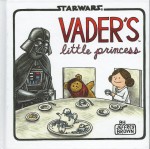
Stars Wars: Vader’s Little Princess


By Jeffrey Brown (Lucas Books/Chronicle Books)
ISBN: 978-1-4521-1869-7

Since its launch in 1977 the Star Wars franchise has spawned an awful lot of comic books, toys, games, countless examples of merchandise and even some more movies. The disciples, followers, fans, adherents and devotees are as helplessly dedicated as Trekkies and Whovians (without, as far as I’m aware, being subject to a demeaning descriptive appellation) and are well on the way to becoming the first religion to actively admit it’s completely fictional.

In 2012 Jeffrey Brown, star of such quirkily irresistible indy comics as Unlikely, Clumsy, Bighead, Funny, Misshapen Body and Incredible Change-Bots, scored his first global best-seller with a hilarious spin on the soft and nurturing side of the Jedi experience in Darth Vader and Son and now – just in time for National Star Wars Day – has expanded the concept with “Episode Three and Three-Quarters” to cover Luke Skywalker’s long-lost, turbulent, truculent twin sister Leia (we don’t call her Ambassador Organa anymore… yet… whatever…) in Vader’s Little Princess.

If we peek behind the midnight cape and ebony re-breather helmet of the long-suffering Lord of the Sith, we can glimpse the dark side for the hard-working single parent trying his best to bring up a rebellious girl child and her rather disappointing brother…

Dear daddy Darth only wants a little peace and quiet to destroy the Rebel Alliance and maybe rule the Galactic Empire, but it’s not easy as we can see in this sublime, full colour hardcover charting the rocky road of his capricious, changeable and charming little madam, from nosy, bossy, know-it-all brat to feisty, capable independent know-it-all college applicant in a series of gloriously arch and whimsical cartoons that will delight young and old alike.

It’s the same oft-told tale of parenthood: one minute she’s knitting you ugly presents, hiding your X-Wing’s keys or making faces behind your back whilst you admonish Grand Moff Tarkin, and the next she’s embarrassed to be seen with you; not taking messages from The Emperor and trying to stop you from even “talking” to that good-for-nothing, obnoxious, sneaky Corellian Solo kid who’s always hanging around…

Of course it’s not all one way traffic: Dads – no matter how important – don’t care about important things like fashion, never like your boyfriends and can be so-ooo embarrassing when you’re trying to impress the cool kids…

Gloriously daft and entrancingly fun, this is a superb treat for fans and unbelievers alike and there’s even the promise of a third volume in the pipeline…

© 2013 by Lucasfilm Ltd. LCC & ® or ™ where indicated. All rights reserved.

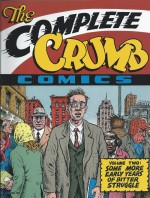
Complete Crumb Comics volume 2: Some More Early Years of Bitter Struggle – New Edition


By Robert Crumb & Charles Crumb, edited by Gary Groth with Robert Fiore (Fantagraphics Books)
ISBN: 978-0-93019-362-1

This book contains controversially clever ideas, outrageously rude drawings, intemperate language, positive drug references and allusions, godless questioning of authority and brilliantly witty, culture-reshaping, personal accounts and opinions.

If you – or those legally responsible for you – might have problems with any of that, please skip this review and don’t buy the book. I’m sure we’ll all know better next time…

Robert Crumb is a unique creative force in the world of cartooning with as many detractors as devotees. His uncompromising, excoriating, neurotically obsessive introspections, pictorial rants and invectives unceasingly picked away at society’s scabs and forever peeked behind forbidden curtains – and all apparently for his own benefit – but he has always happily invited us to share his unwholesome discoveries with anybody with the time and temperament to look…

Way back in 1987 Fantagraphics Books began the nigh-impossible task of collating, collecting and publishing the chronological totality of the tireless artist’s vast output and now, after far too long out-of-print, those engrossing cartoon compendia are being reissued. The earliest volumes have been constantly described as the least commercial but now, with Crumb at last an acknowledged global art-treasure, those volumes are back for your perusal…

The son of a career soldier, Robert Dennis Crumb was born in Philadelphia in 1943 into a functionally broken family. He was one of five kids who all found different ways to escape their parents’ shattering problems, and comics were always paramount amongst them.

As had his older brother Charles, Robert immersed himself in the strips and cartoons of the day; not simply reading but also feverishly, compulsively creating his own. Harvey Kurtzman, Carl Barks and John Stanley were particularly influential, as were newspaper artists like E.C. Segar, Gene Ahern, Rube Goldberg, Bud Fisher, Billy De Beck, George (Sad Sack) Baker and Sidney Smith as well as “straight” illustrators like C.E. Brock and the wildly imaginative, frantically surreal 1930’s Looney Tunes and Merrie Melodies animated shorts.

Defensive and introspective, the young Robert pursued art and torturous self-control through religion with equal desperation. His early spiritual repression and flagrant, hubristic celibacy constantly warred with his body’s urgently growing base needs and desires…

Escaping his stormy family, Crumb married young and began working in-house at the American Greeting Cards Company. He also found like minds in the growing hippie and counterculture movements where he discovered LSD. In 1967 he upped sticks to California to become an early star of the burgeoning Underground Commix scene. As such he found plenty of willing “hippie-chicks” eager to assuage his fevered mind and hormonal body whilst he gradually reinvented the very nature of cartooning with such creations as Mr. Natural, Fritz the Cat, Devil Girl and a host of others.

The rest is history – or perhaps, sociology…

The tortured formative years provided meat for the first collection (The Early Years of Bitter Struggle) and those revelations resume right here, right now as the second volume continues the odyssey to acceptance after ‘The Best Location in the Nation…’; a comprehensive reminiscence and introduction from lifelong confidante Marty Pahls who describes the swiftly maturing and deeply unsatisfied Crumb’s jump from unhappy home to the depressing, dispiriting world of work.

‘Little Billy Bean’ (April 1962) reprises the hapless, loveless nebbish of yore whilst ‘Fun with Jim and Mabel’ revisits Crumb’s first bulky, morally-challenged domestic amazon, after which the focus shifts to her diminutive and feeble companion ‘Jim’. Next, an almost fully-realised ‘Fritz the Cat’ finally gets it on in a triptych of saucy soft-core escapades from R. Crumb’s self-generated Arcade mini-comic project.

From this point onwards, the varied and exponentially impressive breadth of Crumb’s output becomes increasingly riddled with his often hard-to-embrace themes and declamatory, potentially offensive visual vocabulary as his strips grope towards the creator’s long-sought personal artistic apotheosis.

His most intimate and disturbing idiosyncrasies regarding sex, women, ethnicity, personal worth and self-expression all start to surface here…

Working in the production department of a vast greetings card company gave the insular Crumb access to new toys and new inspiration as seen in the collection of ‘Roberta Smith, Office Girl’ gag strips from American Greetings Corporation Late News Bulletins (November 1963-April 1964), followed here by another Fritz exploit enigmatically entitled ‘R. Crumb Comics and Stories’ which includes just a soupçon of raunchy cartoon incest, so keep the smelling salts handy…

A beautiful 10-page selection of sketchbook pages comes next and then a burst of black-&-white and full-colour covers: the satirical 1960 election duel of Kennedy and Nixon, an Arcade gag, 13 letters to Pahls and Mike Britt disguised as ‘Farb’ and ‘Note’ front images as well as a brace of Arcade covers and the portentously evocative front for R. Crumb’s Comics and Stories #1 from April 1964.

The rest of this pivotal collection is given over to 31 more superb pages culled from Crumb’s sketchbooks; a vast and varied compilation that ably displays the artist’s incredible virtuosity and proves that – if he had been able to suppress his creative questing – he could easily have settled for a lucrative career in any one of a number of graphic disciplines from illustrator to animator to jobbing comic book hack.

Crumb’s subtle mastery of his art-form and overwhelming drive to expose and reveal his most hidden depths and every perceived defect – in himself and the world around him – has always been an unquenchable fire of challenging comedy and riotous rumination, and this evocative tome is crucial to understand the creative causes, if not the artistic affectations, of this unique craftsman and auteur.

This superb series, charting the perplexing pen-and-ink pilgrim’s progress, is the perfect vehicle to introduce any (over 18) newcomers to the world of grown up comics, and if you need a way in yourself, seek out this and all the other books in this incomparable sequence as soon as conceivably possible…

Art and stories © 1969, 1974, 1988, 1996, 2013 Robert Crumb. All rights reserved. Introduction © 1988 Marty Pahls.

The Wasteland


By Dave Louapre & Dan Sweetman (Piranha Press/DC Comics)
No ISBN, ASIN: B000UE4MBE

During the anything-goes 1980s the field of comics publishing expanded exponentially with new companies offering a vast range of fresh titles and ideas. To combat the upstart expansion, Marvel and DC also instigated innovative material for those freshly growing markets with the latter colossus especially targeting readers for whom old-fashioned funnybooks were anathema …or at least a long-abandoned childhood flirtation.

DC pioneered new, more mature-oriented niche imprints such as Vertigo and Helix, but undoubtedly some of the most intriguing treats came out of their Piranha Press line, formed in 1989 and re-designated Paradox Press in 1993.

When DC founded this off-key, adult special projects imprint, both the resultant releases and reader’s reaction to them were passionately mixed.

It had long been a Holy Grail of the business to produce comics for people who don’t read comics and, despite the inherent logical flaw, that’s a pretty sound and sensible plan, but the delivery is always problematic.

Is the problem resistance to the medium? Then try radical art or narrative styles, unusual design or typography, and use talent from outside the medium to fill your books: you get some intriguing results, but risk still not reaching a new audience whilst alienating those readers already on board…

This superbly eclectic and overwhelmingly effective collection partially mitigated that risk by using new creators with an already established pedigree outside the comics industry and material which had found a fan-base elsewhere in publishing…

It’s also was one of the best and most wickedly addictive books Piranha produced…

Dave Louapre & Dan Sweetman had worked together since college, producing self-published illustrated stories which they sold direct to local bookstores. This led to a macabre and deliciously dark panel-gag series published in the L.A. Reader and movie magazine Fangoria and the creation of stunningly off-kilter, ironically post-modern and media-celebrated cartoon-fiction analect Beautiful Stories for Ugly Children, which winningly combined outré, edgy domesticity with the aesthetic sensibilities of Jean Paul Sartre, Ambrose Bierce, O. Henry, Charles Addams, Aubrey Beardsley and Gahan Wilson. It was not your average comicbook…

The Piranha Press experiment was always a tenuous dream in a cutthroat business, and though BSFUC was undoubtedly its greatest triumph – 41 delirious issues, some specials and a “Best Of” collection – the imprint was radically restructured in 1992 and Dave and Dan moved on and out to Hollywood.

Before they finally left, however, the company published also The Wasteland: a compilation – with some new material – of that aforementioned gag feature…

Produced as a single captioned panel, the strip offered the trademarked weird ideas and compelling, alluring prose rendered (sur)real via lovely, sketchy, scratchy, frantically evocative monochrome illustrations with the same skewed worldview, supplemented with a heaping helping of mordant Gary Larson wryness added to the mix.

There’s no point my trying to relate the contents of this superb, tragically out-of-print but mercifully still available tome: 128 pages of graphic imagery blending the cute with the grotesque, the mundane with the bizarre and the unexpected with the cheerily distasteful which you just have to see to believe.

All I can do here is tease you with a few atypically typical sample subject-lines such as ‘Men without Women meet Dogs without Snouts’, ‘The Little Cyclops Puppy Nobody Would Play With’, ‘Cheerleaders on Fire’, ‘Lover’s Hop, for the Less-than-Devastated’, ‘The Substitute Executioner’, ‘My Dinner with Medusa’, ‘Jump-Starting the Dog’, ‘We Got Along Swimmingly Once I Learned They Hated Me’, ‘A Day at the Nun Jousts’ ‘Rudolph the Red Light Reindeer’, ‘Zero-Gravity Autopsy’, ‘The Gas Chambermaid’ and ‘Rumble Monks’, and rest assured that some of you will now be unable to rest until you experience the sheer creative anarchy for yourselves…

Happy Easter, comic fans…
The Wastelands © 1989 Dave Louapre & Dan Sweetman. All Rights Reserved.

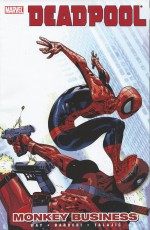
Deadpool volume 4: Monkey Business


By Daniel Way, Carlo Barberi, Tang En Huat, Dalibor Talajić & various (Marvel)
ISBN: 978-0-7851-4531-8

Bloodthirsty, stylish killers and mercenaries craving something more than money have long made for popular comics protagonists. Deadpool is Wade Wilson (and yes he is a thinly disguised knockoff of DC’s Slade Wilson AKA Terminator: get over it – DC did), a hired killer and survivor of genetics experiments that have left him a scarred, grotesque bundle of scabs, scars and physical unpleasantries but practically invulnerable and capable of regenerating from any wound.

The wisecracking high-tech “Merc with a mouth” was created by Rob Liefeld and Fabian Nicieza, debuting in New Mutants #97, another product of the Canadian “Weapon X” project which created Wolverine and so many other mutant/cyborg super-doers. He got his first shot at solo stardom with a couple of miniseries in 1993 (Deadpool: the Circle Chase & Sins of the Past) but it wasn’t until 1997 that he finally won his own title, which blended 4th-wall busting absurdist humour (a la Ambush Bug) into the mix and secured his place in Marvel history.

Since then he has come and gone with frightening frequency, undergoing radical rethinks, identity changes and reboots, but always inevitably reverting to irascible, irreverent, intoxicating type in the end…

This gloriously continuity-light and baggage-free romp collects issues #19-22 of Deadpool volume 4 and also includes the (originally digital) One-Shot origin tale of Simian Sensation and World’s Greatest Assassin Hit-Monkey, all from 2010.

A sucker for sentiment and plagued with an urge to be better than he is, in the extended saga ‘Whatever a Spider Can’ (Daniel Way, Carlo Barberi, Juan Vlasco & Sandu Florea), Wade Wilson has decided to give up the murder-for-profit business model in favour of a life as a conventional superhero, but lacks both a mentor and commitment. Thus in ‘Start Spreadin’ the News’ he turns up in New York City looking to learn the ropes from a far-from-welcoming web-spinner, just as Spider-Man discovers a massacre in the back of his favourite Deli…

Wrong conclusions are reached on all sides: the copious blood-spatter indicates a killer who hops about and shoots from walls and ceiling and the wall-crawler knows it wasn’t him…

Tracking down Deadpool – who has set his incredible healing factor the nigh-impossible task of saving his intestines and dignity from the effects of forty street-vendor hotdogs – the Amazing Arachnid takes a lot of convincing before he believes the Merc wasn’t responsible for the murders… but only the merest hint to stay well downwind of the reformed killer’s turbulent digestive process…

After Wade examines the crime scene he has only one suggestion as to the actual perpetrator: a stone-cold killer who’s a legend in the assassin community and never takes just one job per city. Moreover he only goes after really unique targets like a hit-man with a healing factor…

The four-handed hunter has other killers in his sights too and, as Spider-Man and Deadpool bicker and snipe, Hit-Monkey is dispassionately dispatching a couple of cops using their positions for ruthless gain. Soon however he has tracked down Wade and it seems the only way to stop the anthropoid assassin is to just let him shoot the Merc with the mouth until he finally shuts up…

Sadly the simian soon learns that it takes more than just bullets to keep Wade down, and Spider-Man becomes an unwilling pawn and collateral damage in Deadpool’s sorry excuse for a plan to get the monkey off their backs forever…

In the explosive aftermath of the killers’ final confrontation Wade sneaks out of town and heads south, only to have his bus hijacked by cops pretending to be robbers in rural Georgia. Unfortunately, them Good Ol’ Bad Boys has a electrically-charged super-hick on their side and, when the astonished Deadpool finally recovers, the keen wannabe-hero resolves to clean up the county in ‘Do Idiots Dream of Electric Stupidity?’ (with art by Tang En Huat.

Luckily, even though it is really hard to tell the good guys from the robber scum in Dukes of Hazzard territory, the former killer has unsuspected help from the most unlikely sources…

The remainder of this slim engaging tome is given over to the anthropoid super-star discovery of the decade…

Something of an overnight sensation, ‘Hit-Monkey’ quickly graduated to an online solo story on Marvel Digital Comics Unlimited and that weirdly moving eponymous origin tale was rapidly reprinted in comicbook format in April 2010, written by Way and illustrated by Dalibor Talajić.

The fabled furball’s history was revealed as, years ago, a desperate killer for hire fled the authorities in the heart of a chilling Asiatic winter and almost died before being found by loving monkeys living near and often within the hot springs of a mountain thermal pool.

All but one of the simians welcomed the human in their wordless, loving way, and that young dissident assiduously watched the interloper, keenly observing as the human practised all his killing arts in preparation for the day when the cops and soldiers would find him.

When they finally came and the winter night erupted into hot brutal butchery, there was only one to avenge the slaughter – and he was far from human as he extracted his bitter brand of justice…

Although staying close to his superhero roots and the X-franchise that spawned him, Deadpool is more often than not a welcome break from the constant sturm und drang of his Marvel contemporaries: weird, wise-cracking, and profoundly absurd on a satisfyingly satirical level. This is a great reintroduction to comics for fans who thought they had outgrown the fights ‘n’ tights crowd.

Including covers and variants by Jason Pearson, Marko Djurdjevic & Frank Cho, this frenetic blend of light-hearted, surreal, fighting frolics and incisive, poignant relationship drama is absolutely compulsive reading for dyed-in-the-wool Fights ‘n’ Tights fans who might be feeling just a little jaded with four-colour overload.
© 2010 Marvel Characters, Inc. All rights reserved.

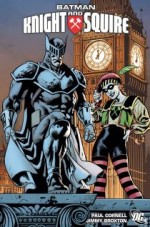
Batman: Knight and Squire

Batman - Knight and Squire
By Paul Cornell & Jimmy Broxton with Staz Johnson (DC Comics)
ISBN: 978-1-4012-3071-5

British Dynamic Duo Knight and Squire first appeared in the cheerfully anodyne, all-ages 1950s – specifically in a throwaway story from Batman #62 (December 1950/January 1951) – as ‘The Batman of England!’

Earl Percy Sheldrake and his son Cyril returned a few years later as part of seminal assemblage ‘The Batmen of All Nations!’ (Detective Comics #215 January 1955) – a tale retrieved from the ranks of funnybook limbo in recent times and included in Batman: Black Casebook – with sequel ‘The Club of Heroes’ appearing in World’s Finest Comics #89, July-August 1957. That one’s reprinted in Showcase Presents World’s Finest volume 1.

The characters had languished in virtual obscurity for decades before fully entering modern continuity as part of Grant Morrison’s build-up to the Death of Batman and Batman Incorporated retro-fittings of the ever-ongoing legend of the Dark Knight dynasty…

They floated around the brave New World for awhile with guest shots in places like Morrison’s JLA reboot and Battle For the Cowl before finally getting their own 6-issue miniseries (December 2010 – May 2011), courtesy of scripter Paul Cornell and artist Jimmy Broxton (with some layout assistance from Staz Johnson), who rather bit the hand that fed them by producing a far from serious, but captivating quirky and quintessentially English frolicsome fantasy masterpiece.

It all begins, as most things boldly British do, down the pub. However The Time in a Bottle is no ordinary boozer but in fact the favourite hostelry for the United Kingdom’s entire superhuman community: the worthy and the wicked…

Hero and villain alike can kick back here, taking a load off and enjoying a mellow moment’s peace thanks to a pre-agreed truce on utterly neutral ground, all mystically enforced by magics and wards dating back to the time of Merlin…

As the half-dozen chapters of ‘For Six’ open it’s the regular first Thursday of the month – and that’s an in-joke for Britain’s comics creator community – with the inn abuzz with costumed crusaders and crazies, all determined to have a good time.

Cyril Sheldrake, current Earl of Wordenshire and second hero to wear the helm and mantle of The Knight, sends his trusty sidekick Beryl Hutchinson – AKA The Squire – to head off a potential problem as established exotics Salt of the Earth, The Milkman, Coalface, The Professional Scotsman and the Black and White Minstrels all tease nervous newcomer The Shrike.

He’d do it himself but he’s chatting with Jarvis Poker, the British Joker…

The place is packed tonight in honour of visiting yank celebrity Wildcat, and a host of strange, outrageous and even deadly patrons all bustle about as Beryl chats to the formerly cocky kid who’s also getting a bit of grief because he hasn’t quite decided if he’s a hero or villain yet…

She’s giving him a potted history of the place when the customary bar fight breaks out but things take an unconventionally dark turn and an actual attempted murder occurs. It would appear that two of these new gritty modern heroes have conspired to circumvent Merlin’s pacifying protections…

Each original issue was supplemented with a hilarious text page which here act as chapter breaks, so after ‘What You Missed If You’re A Non-Brit’ (a glossary of national terms, traits, terminology and concepts adorned with delightful faux small ads), the tale continues as Beryl and Cyril spend a little down-time in rural Wordenshire where the local civilians tackle the insidious threat of The Organ Grinder and his Monkey so as not to bother the off-duty Defenders.

However the pair do rouse themselves to scotch the far more sinister schemes of inter-dimensional invader Major Morris and the deadly Morris Men…

That’s supplemented by the far-from-serious text feature ‘What Morris Men are Like’…

The saga then kicks into high gear with the third instalment as Britain’s Council for Organised Research announces its latest breakthrough.

C.O.R.’s obsessively romantic Yorkist Professor Merryweather had no idea that her DNA reclamation project would lead to a constitutional crisis after she reconstituted Richard III, but it seems history and Shakespeare hadn’t slandered the Plantagenet at all. The wicked monarch was soon fomenting rebellion, using his benefactor’s technology to resurrect equally troublesome tyrants Edward I, Charles I, William II and the ever-appalling King John and even giving them very modern superpowers…

Of course Knight, Squire and her now besotted not-boyfriend Shrike were at the vanguard of the British (heroic) Legion mustered to fight for Queen and Country and repel the concerted criminal uprising…

Following a history lesson on ‘Cabbages and Kings’, Beryl invited the Shrike back to the Castle for tea, teasing and some secret origins, but things went typically wrong when Cyril’s high tech armour rebelled, going rogue and attacking them all.

The text piece deals with ‘Butlers and Batmen’ before it all goes very dark when lovable celebrity rogue Jarvis Poker gets some very bad news from his doctor and a terrifying follow-up visit from the real Joker.

The CampCriminal was desperately concerned about his national legacy but GothamCity’s Harlequin of Hate is just keen on increasing his ghastly and frankly already astronomical body-count. First on the list is that annoying Shrike kid, but the American psycho-killer has big, bold, bizarre plans to make the UK a completely good guy-free zone…

Broken up with a two-part ‘The Knight and Squire Character List’, it all culminates and climaxes with a spectacular and breathtaking showdown after the malevolent Mountebank of Mirth goes on a horrendously imaginative hero-killing spree that decimates the Costumed Champions of Albion: a campaign so shocking that even Britain’s bad-guys end up helping to catch the crazed culprit…

Rewarding us all for putting up with decades of “Gor, blimey guv’nor” nonsense in American comics whilst simultaneously paying the Yanks back for all those badly researched foggy, cobbled-rooftops-of-London five minutes from Stonehenge stories which littered every aspect of our image in the USA, this witty, self-deprecating, action-packed and deucedly dashing outing perfectly encapsulates all the truly daft things we noble Scions of Empire Commonwealth love and cherish about ourselves.

Stuffed with surreal, outrageous humour, double entendres, quirky characters, catchphrases and the comedy accents beloved by us Brits – Oh, I say, Innit Blud? – and rife with astonishingly cheeky pokes at our frankly indefensible cultural quirks and foibles, this is the perfect book for anyone who loves grand adventure in the inimitable manner of Benny Hill, Monty Python and the Beano.

Also included are covers and variants from Yanick Paquette & Michel Lacombe and Billy Tucci & HiFi, plus a wealth of working art, character designs and sketches by Jimmy Broxton and an unpublished spoof cover in tribute to the immortal Jarvis Poker…

Buy this book. It’s really rather good. Oh, go on, do: you know you want to…
© 2011, DC Comics. All Rights Reserved.

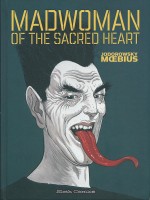
Madwoman of the Sacred Heart


By Jodorowsky & Moebius, translated by Natacha Ruck & Ken Grobe (Sloth Publishing)
ISBN: 978-1-908830-01-2

Here’s a modern masterpiece of comics creativity at last available to English-speaking audiences, one of the most intriguing and engaging works by two creative legends of sequential narrative. To some people, this superb piece of thought provoking fiction might be shocking or blasphemous however, so if you hold strong views on sex or religion – especially Christianity – stop right now, spare yourself some outrage and come back tomorrow.

Alejandro Jodorowsky Prullansky is a filmmaker, playwright, actor, author, comics writer, world traveller, philosopher and spiritual guru, born in Tocopilla, Chile in 1929. He is most widely known for his films Fando y Lis, El Topo, The Holy Mountain, Sante Sangre, The Rainbow Thief and others, as well as his vast comics output, such as Anibal 5, (created whilst living in Mexico) Le Lama blanc, Aliot, The Meta-Barons, Borgia and more, co-created with some of South America and Europe’s greatest artists. His nigh decade-long collaboration with Moebius on the Tarot-inspired adventure  The Incal (1981-1989) completely redefined and reinvented what comics could aspire to and achieve.

Best known for his violently surreal avant-garde films, loaded with highly-charged, inspird imagery blending mysticism and “religious provocation” and his spiritually informed fantasy and science fiction comics, Jodorowsky is also fascinated by the inner realms and has devised his own doctrine of therapeutic healing: Psychomagic, Psychogenealogy and Initiatic massage. He still remains fully engaged and active in all these creative areas today.

Jean Henri Gaston Giraud was born in the suburbs of Paris in 1938 and raised by his grandparents. In 1955 he attended the Institut des Arts Appliqués where he became friends with Jean-Claude Mézières who, at 17, was already selling strips and illustrations to magazines such as Coeurs Valliants, Fripounet et Marisette and Spirou. Giraud apparently spent most of his time drawing cowboy comics and left after a year.

In 1956 he travelled to Mexico, staying with his mother for eight months, before returning to France and a full-time career in comics, mostly westerns such as Frank et Jeremie for Far West and King of the Buffalo, A Giant with the Hurons and others for Coeurs Valliants in a style based on French comics legend Joseph “Jijé” Gillain.

Giraud spent his National Service in Algeria in 1959-1960, where he worked on military service magazine 5/5 Forces Françaises and, on returning to civilian life, became Jijé’s assistant in 1961, working on the master’s long-running (1954-1977) Western epic Jerry Spring. A year later, Giraud and Belgian writer Jean-Michel Charlier launched the serial ‘Fort Navajo’ in Pilote #210, and soon its disreputable, anti-hero lead character Lieutenant Blueberry became one of the most popular European strips of modern times. In 1963-1964, Giraud produced strips for satire periodical Hara-Kiri and, keen to distinguish and separate this material from his serious day job, first coined his pen-name “Moebius”.

He didn’t use it again until 1975 when he joined Bernard Farkas, Jean-Pierre Dionnet and Philippe Druillet – all rabid science fiction fans – to become the founders of a revolution in narrative graphic arts as “Les Humanoides Associes”. Their groundbreaking adult fantasy magazine Métal Hurlant utterly enraptured the comics-buying public and Giraud again wanted to utilise a discrete creative persona for the lyrical, experimental, soul-searching material he was producing: series such as The Airtight Garage, The Incal (with Alejandro Jodorosky) and the mystical, dream-world flights of sheer fantasy contained in Arzach…

To further separate his creative bipolarity, Giraud worked inks with a brush whilst the futurist Moebius rendered with pens. Both of him passed away on March 10th 2012.

Jodorowsky and Moebius’ second groundbreaking co-creation was originally released in three albums from Les Humanoïdes Associés as La Folle du Sacré CÅ“ur (1992), Le Piège de l’irrationnel (1993) and Le Fou de la Sorbonne (1998) before the saga was collected into one massive, ecstatic and revolutionary volume in 2004.

The company’s American arm Humanoids, Inc. translated it into English in 2006, which forms the basis for this comprehensive new edition from fledgling British publisher Sloth Comics.

Professor Alan Mangel is a world-renowned aesthete, deep thinker and chief lecturer at the celebrated Sorbonne. As such he is the focus of much student attention – particularly female – but none as fervent as that of the insular, fanatically bible-bashing Christian and deeply disturbed Elisabeth.

When the teacher’s shrewish wife Myra denounces, shames and impoverishes him at the moment of his greatest triumph, the arrogantly cerebral, proudly austere, violently chaste and determinedly sexually abstinent Mangel loses the awed respect of his once doting students and disciples who shun his once overcrowded classes and even mock and assault him.

Only Elisabeth remains devoted to him but she has designs both carnal and divine on the aging, flabby, secular, lapsed and born-again Jew. To make matters worse, when she throws herself at him and is repulsed, this awakens the philosopher’s own lustful youthful libido which takes form as a gadfly ghost constantly urging him to indulge in acts of vile debauchery and rampant lust.

Eventually the pressure is too great and Mangel agrees to meet Elisabeth at the Church of the Sacred Heart. The journey there is awful: even the universe seems set against him as rude taxi-drivers, a mad old lady tramp and even dogs further humiliate the broken old man.

In the holiest part of the church Elisabeth again attempts to seduce the long sterile and wilfully impotent Alan, explaining that her researches have revealed him to be the biblical Zacharias reborn, destined to impregnate her with a son: the Prophet John who would in turn herald the rebirth of Jesus…

Again the rational scientist baulks at her words but Elisabeth promises a miracle and when Mangel’s horny, ghostly other self “possesses” him the dotard loses control and finally gives the mad girl what she’s been begging for…

Plagued with shame and remorse, still tormented by his inner letch and broke, Mangel resumes lecturing and slowly rebuilds his reputation until one day Elisabeth returns, her nude body declaring her to be forever the property of Alan Zacharias Mangel. She is three months pregnant with the sterile man’s baby and has already recruited the St. Joseph who will help them fulfil their sacred mission…

The divinely-dispatched protector, a drug addict and petty criminal previously called Muhammad, already has a line on The Mary: she’s his girlfriend Rosaura, currently imprisoned in a secure mental hospital. She’s also in a coma…

Dragged against the will he no longer seems capable of exerting, Mangel experiences his latest ongoing tribulation when St. Joseph breaks The Mary out with the aid of a gun and his distressed guts give way to what will be, for all of the chosen ones, an uncomfortable and prolonged period of stress-related explosive diarrhoea…

Against all his rational protests and worries, things just seem to keep falling into place for the pilgrims. Rosura is no longer comatose, and they get away without a single problem – if you don’t count the olfactory punishment the Professor’s rebellious innards are repeatedly inflicting upon them all…

“Mary” is the most ravishing creature he has ever seen, but as crazy as her friends. When she cavorts naked in a field during a midnight thunderstorm, frantically imploring God to impregnate her with the second Jesus, Mangel’s lustful ghost again overtakes him and he surreptitiously copulates with the wildly bucking lascivious loon…

The next day reality hits hard when he reads of two nurses executed when the comatose daughter of an infamous Columbian drug baron was abducted from a certain institution…

The second chapter opens with the four fugitives hiding out in a lavish seaside house and Mangel – as always – arguing with both his priapic phantom and rationalist conscience. His so impossibly, imperturbably, persuasive companions are untroubled: they are simply passing the days until the birth of John the Baptist and the Second Coming of Christ…

The next crisis is pecuniary as the lavish spending of the trio soon exhausts the Professor’s funds and they are reduced to their last 100 franc note…

Elisabeth is unconcerned and simply places a bet with it. Operating under divine guidance the horse race wins the quartet three and half million Francs, but before the reeling rationalist can grasp that, there’s another insane development as Mary/Rosaura declares herself to be the Androgynous Christ – both male and female – reborn and made manifest to save us all.

She still looks devastatingly all-woman however, and when she kisses the old fool and sends him back to the Church of the Sacred Heart to “obtain” a vial of holy Baptismal oil, he goes despite himself, arguing all the way with his imaginary sex-obsessed younger self.

It’s another humiliating and deranged debacle. The famous house of worship is hosting an ecumenical convention of argumentative theologians of all religions and that self-same crazy woman is still there, claiming to be God and challenging them all.

After driving them away she even tries to have sex with the bewildered fallen philosopher who barely escapes with the stolen oil. The worst of it all is that, based on recent evidence, Mangel can’t even say with any certainty that the ill-smelling harridan isn’t telling the truth…

Driving back through the fleshpots of the city with his ghost tempting him every inch of the way, the weary savant is dragged back to appalling reality by a newspaper headline declaring that the police have a witness in the murder/abduction of Rosaura Molinares, daughter of the most wanted drug trafficker on Earth.

However, when the nigh-unhinged thinker reaches his sanctuary from reason, the true believers already know. They taped the TV news and show him the witness describing a completely different killer: El Perro, chief hitman of Pedro MolinaresMedellin Cartel…

With the last foundations of precious logic crumbling, Mangel reaches an emotional tipping point and when The Androgynous Christ demands he make love to her, the old fool submits to stress – and his ever-horny spectral alter ego – by surrendering to his lusts. Before long he is in the throes of a bizarre, eye-opening, life-altering four-way love session with all the mad people he has wronged in his head and heart…

The epiphanic moment is rather spoiled when the wall explodes and a cadre of mercenaries working for a rival cartel burst in, looking for Rosaura’s father. They’re followed by the Columbian Secret Service, also hunting the drug lord and quite prepared to kill everybody to find him.

…And they in turn are ambushed by American DEA agents who slaughter everybody in their sights in their desperation to capture Molinares’ daughter and her weirdo friends. The illegally operating Yanks drag their captives to a submarine waiting offshore just as French police hit the beach and El Perro attacks the sub, spectacularly rescuing the quartet and transporting them to safety by helicopter and cargo plane…

The concluding chapter opens with all of France astonished by the kidnapping of its most beloved thinker, even as in a Columbian Garden of Eden a newly-enlightened and happy Mangel and his heavily pregnant Elisabeth prepare for the birth of The Child.

The Androgynous Christ too has changed and grown, easily converting the hard-bitten drug gangsters into a holy army of believers in the redeemer Jesusa…

Top dog Pedro Molinares is dying from cancer and his devoted army are fully, fanatically in tune with Jesusa’s plans, especially after an impossible blood miracle seemingly proves their new leader’s earthbound divinity. Equally astounded, Mangel too reaches a spiritual crisis as he accompanies Elisabeth deep into the jungle to give birth.

Mangel’s journey and ultimate transformation at the hands of rainforest shaman Doña Paz then lead to even more astonishing revelations, changes and shocks that I’m just not prepared to spoil for you…

Controversial, shocking, challenging, fanciful, enchanting and incredibly funny, this a book you must read and will always remember.
™ Les Humanoïdes Associés, SAS, Paris. English version © 2011 Humanoids, Inc., Los Angeles. All rights reserved.

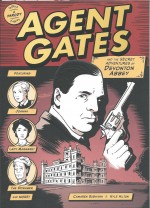
Agent Gates and the Secret Adventures of Devonton Abbey (a Parody)


By Camaren Subhiyah & Kyle Hilton (Andrews McMeel Publishing)
ISBN: 978-1-4494-3434-2

Parody has been a major staple of the comics and cartooning world ever since the days of Hogarth and Cruickshank, so it’s marvellous to see that our colonial cousins are keeping the home fires burning in this sublimely over the top tribute to blockbuster British Television export Downton Abbey, which mingles devastatingly wry observation with outrageously surreal exaggeration to top-hole effect.

I’m not actually a follower or fan of the source material but I know great art and witty writing when I see it, and this supremely daft delight certainly rings both those bells…

The aristocratic Crawhill family has occupied stately Devonton Abbey for centuries and now – in April 1914 – the current Earl Richard is master of a house that consists of his unfortunately American wife Cora, wilful daughters Margaret, Cynthia and Flora. Also firmly in residence is his formidable mother the Dowager Countess Viola; an acid-tongued basilisk who knows all the family’s secrets and is the true ruler of the richly furnished and well-upholstered roost.

Below stairs, although head butler Mr. Larson runs the estate’s affairs, lamed valet and under-butler Jack Gates is also privy to much that goes on and is far more important that most realise…

With the winds of a Great War mustering on the idyllic horizon, unscrupulous German Foreign Minister Gottlieb von Jagow pays a formal visit. The filthy Boche spy and warmonger is well aware that Devonton and its façade of foppish, old-world primness and decadence conceals the clandestine HQ of the British Empire’s Secret Intelligence Service and their exotic super-powered operatives, but has not reckoned on the sheer pluck and determination of the bionic Agent Gates, nor his mysterious handler Agent Hera…

Still, all does not goes as anybody planned and the mad Hun expires before disclosing any useful intelligence. The covert operatives continue blithely on preparing for the visit of Austro-Hungarian Arch-Duke Franz Ferdinand, unaware that traitors and agents of the Kaiser have penetrated into the very heart of the household.

Lord Richard and Lady Cora are far more concerned with prestige, aristocratic rivalries, maintaining the proper niceties regarding their property and their deucedly useless daughters – all far too wrapped up in their silly “causes” such as animal husbandry, parties, any husbandry, marrying cousins, the estate Petting Zoo, Trousers For Women and such déclassé tosh and taradiddle – to concentrate on the things that truly matter.

Happily above and below stairs Lady Viola and Gates are on the case, ensuring the succession of Devonton and safety of the nation by bringing in new if not actually blue blood…

A touch of Bullshot Crummond, a dash of League of Extraordinary Gentlemen and just a hint of Blackadder, not to mention heaping helpings of Richard Hannay and his illustrious True Brit ilk, all served up with lashings of superbly silly hijinx inform this brilliant bash at the award-winning show, with Steampunk plotlines working in perfect tandem with deliriously funny and absurdist stabs and japes involving the perfectly rendered cast of that most proper of serials.

If you love the show enough to see it successfully spoofed or just love outstanding comedy adventure this is a pictorial billet doux to a bygone era that you won’t want to miss…
© 2013 Kyle Hilton and Camaren Subhiyah. All rights reserved.