Dirty Pair: Dangerous Acquaintances


By Toren Smith & Adam Warren (Manga Books)
ISBN: 978-1-900097-06-0 (UK edition)

In the fast and furious future of 2141AD, intergalactic proliferation of human civilisation has led to a monumental bureaucracy, greater corruption and more deadly criminals preying upon the citizens of the United Galactica.

Thus the constant need for extra-special Trouble Consultants: pan-planetary private paramilitary police employed by the 3WA (or Worlds Welfare Work Association) to maintain order in hotspots across the (sort-of) civilised universe…

Kei and Yuri are team #234, officially designated “The Lovely Angels” after their sleek and efficient starship. They are lethal, capable and infallible. Whenever they are deployed, they strike fast and hard and never fail…

However, the collateral damage they inevitably cause is utterly unimaginable and usually makes client worlds regret ever asking for their aid in the first place….

Much to the crisis agents’ disgust and chagrin, the ever-present media have dubbed them “The Dirty Pair” and any planetary government unlucky enough to need them generally regards them less as first choice and more a last resort …

The concept was originated for light novels by Japanese author Haruka (Crusher Joe) Takachiho in 1985 before making the jump to TV, movie and OVA anime. Oddly there was no comics iteration until over a decade later. This situation prompted Adam Warren and Toren Smith of manga translation company Studio Proteus to approach independent publisher Eclipse Comics with an idea for a US comicbook miniseries…

The result was Biohazards; a riot of light-hearted, manic murder and monstrous mayhem which was then swiftly collected in a brash and breezy graphic album. The reprintings from US franchise inheritor Dark Horse (and Manga Books in the UK) heralded a blistering run of wry and raucous adventures that still read as well today as they did when the Japanese comics experience was seen as a rare, quaint and exotic oddity…

In the follow-up Dangerous Acquaintances – originally released as a 5-issue miniseries from Eclipse between June 1989 and March 1990, before first being gathered into a trade paperback in 1991 – the catastrophically unlucky private sector peacekeepers are enjoying a spot of well-deserved downtime on planet Rocinante – a world riotously celebrating its 25th year of independence – when soused-to-the-gorgeous-gills Kei spots an unwelcome but very familiar face…

‘Things Past’ explains that although free, single and over 21, the planet is in turmoil due to the imminent arrival of a host of dignitaries on experimental super liner “The Lyra” (one of only three vessels capable of jumping to warp within a planet’s gravity-well) and the increasingly desperate outrages of terrorist cell United Galactica/Free Rocinate.

None of that means anything to the drunken danger girl: all she can think about is getting her hands on a woman who once betrayed and nearly killed her…

Back when she and Yuri were mere trainee cadets they were constantly and humiliatingly surpassed in every discipline by Shasti. Their rival was a bioroid built by 3WA to be the ultimate Trouble Agent: a tetrad possessing a perfectly designed body and, thanks to multiple uploaded personalities, able to shift instantly between being the ideal warrior, detective, spy or social specialist, amongst others.

She never failed on any mission but there were worries that her schizoid mind-menu might have made her crazy…

Back in the present Kei refuses to calm down and chaotically pursues her target through massing crowds with the constantly complaining Yuri hot on her heels. As ‘Dangerous Acquaintances’ opens, they track Shasti across town and Yuri casts her mind back to their last mission with her, when they were all assigned to bring in a deadly sociopath named Lacombe…

On present-day Rocinante the totally-tanked pursuers catch up with the oblivious target at a shopping plaza in time to see her trading a briefcase with a suspicious-looking bearded stranger. Unfortunately, when they confront her, Shasti has lost none of her combat advantages…

As the bioroid orders her accomplice to flee, Yuri’s mind flashes back to the mission when Shasti’s instability kicked in and she inexplicably proclaimed her love for the lethally compelling Lacombe…

The reverie is shattered as the planet’s Special Police storm in, brutally arresting the Trouble Agents whilst letting their meek-seeming “victim” go, and ‘Unquiet Zone’ finds the furious, sober and mortally hung-over operatives sprung simply because the cops need their cell for more provably-crazy UG/FR fanatics.

As Kei and Yuri hit the streets their fragile ears are bombarded with a public broadcast announcing the imminent arrival of the dignitary-stuffed, treasure-laden “Lyra” and, horrified, they realise where Shasti will strike, even if not what exactly she’s after…

Whilst the determined pair are planning to sneak aboard the wonder-ship, in an opulent hotel room their despised foe is giving her band of revolutionaries a final inspirational pep-talk, but her minds are focused on the moment long ago when she and her team of Trouble Agents cornered Lacombe.

The mission was going perfectly until she switched sides, joining the insanely seductive terrorist and murdering all her comrades. Or so she thought…

On the Lyra, Yuri and Kei have endured all manner of hell, (barely) dressed as hospitality hostesses constantly groped by the great and good of many civilisations. The ruse has however allowed them to find Shasti’s inside man and after a little “enhanced interrogation” he reveals his freedom-loving leader’s plan.

Except, of course, Shasti has been lying to the UG/FR all along. Now in control of the prototype ship, the bioroid activates the lockdown protocols and sealing everybody in. Whilst the still oblivious rebel cadres carve a bloody swathe through the imprisoned plutocrats, she undertakes her true goal: stealing the entire experimental warp section right out of the super-liner…

Locked cabins and robotic security lasers are no match for angry Angels and in ‘One of My Turns’ the apparently unkillable agents bust out and, tooling up with ballistic ordinance from the Lyra’s museum exhibit of ancient weapons, go hunting…

As the suddenly engine-less Lyra plunges to fiery doom at the ‘Ground Zero’ of Rocinante’s capital city, in deep space the engine section module reappears and Shasti waits for a rendezvous with her murderous beloved. She has no idea that the women she betrayed, almost murdered and unforgettably humiliated have made the jump with her and are hungrily approaching to take a decade’s-worth of bloody vengeance…

At once incredibly information-dense and astonishingly addictive, these deliciously daft yet cool, light-hearted cyber-punk space operas offer a solidly satisfying slice of futuristic fantasy to delight all fans of tech-heavy blockbusters. Also included is a pastiche-packed, behind-the-scenes farcical feature as Adam Warren shockingly reveals ‘Just How the Dirty Pair Gets Done!!’ to leaven all that savage comedy with some outrageous silliness…

The digest-sized (210x150mm) UK editions have the tag line “in the tradition of Red Dwarf” and that assessment is not a million miles from the truth – as long as you factor in sexy death-dealing ingénues, sharp socio-political commentary, incomprehensibly skimpy costumes and utter oodles of cartoon carnage.

Brutally wry, explosively funny, hilariously action-packed and extremely spectacular, this is a truly stellar romp to get every sci fi aficionado panting for more.
The Dirty Pair © 1994 Haruka Takachiho. English language version © 1994 Adam Warren and Studio Proteus. All rights reserved.

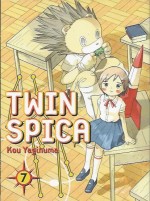
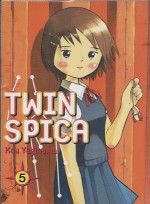
Twin Spica volume 5


By Kou Yaginuma (Vertical)
ISBN: 978-1-935654-02-5

This compellingly intimate paean to the wonder of the stars originated in a poignant short story: Kou Yaginuma’s ‘2015 Nen no Uchiage Hanabi’ (‘2015: Fireworks’), published in Gekkan Comics Flapper magazine in June 2000.

The author subsequently expanded and enhanced his subject, themes and characters into an all-consuming epic coming-of-age spellbinder which wedded hard science and humanist fiction with lyrical mysticism and traditional tales of school-days friendships the inescapable shocks of growing up.

Small, unassuming Asumi Kamogawa always dreamed of going into space. From her earliest moments the lonely child had gazed with intense longing up at the stars, her only companion and confidante an imaginary friend dubbed Mr. Lion.

When she was a year old, the first Japanese space launch ended in catastrophe after rocket-ship Shishigō (“The Lion”) exploded before crashing back to earth on the city of Yuigahama where the Kamogawas lived. Hundreds were killed and many more injured.

Perhaps the cruellest casualty was Asumi’s own mother. Maimed and comatose, the matron took years to die and the long, drawn-out tragedy deeply traumatised her tiny, uncomprehending daughter.

The trauma also crushed her grieving husband who had worked as a designer on the rockets for Japan’s fledgling Space Program.

In the wake of the disaster, Tomoro Kamogawa was assigned by the corporation who had built the ship to head the reparations committee. Guilt-wracked and personally bereaved, the devastated technologist visited and formally apologised to each and every survivor or victim’s grieving family. The experience harrowed and crushed him.

He is certainly no fan of the space program nowm having lost wife, beloved engineering career and his pride to the race for the heavens. Raising his daughter alone, he worked two – and often three – menial jobs at a time for over a decade and cannot countenance losing the very last of his loved ones to the cold black heavens…

In response to the Lion disaster, Japan set up an Astronautics and Space Sciences Academy. After years of passionate struggle and in defiance of her father’s wishes, in 2024 Asumi – an isolated, solitary, serious but determined teenager – was accepted to the Tokyo National Space School. Without her father’s blessing, she reluctantly left Yuigahama and joined the new class.

Amongst the year’s fresh intake were surly, abrasive Shinnosuke Fuchuya (an elementary school classmate who used to bully her as a child back in Yuigahama), jolly Kei Oumi, chilly Marika Ukita and spooky, ultra-cool style-icon and fashion victim Shu Suzuki who all gradually became the shy introvert’s closest acquaintances.

Every day Asumi nudged inexorably towards her goal: the stars. Ever since the crashing rocket had shattered her family, she had drawn comfort from the firmament, with Mr. Lion staring up at the heavens at her side – especially drawn to the twinkling glow of Virgo and the alluring binary star Spica.

And now she was so tantalisingly close…

Small, poor, physically weak but resolutely capable, Asumi endures and triumphs over every obstacle and she still talks with Mr. Lion – who might just be a ghost of a crewman from the Shishigō…

All any student can think of is space travel, but they are harshly and perpetually reminded that most of them won’t even finish their schooling…

At just four feet, eight inches tall Asumi is constantly struggling to meet the arduous physical requirements dictated by the Academy but has already survived far greater problems. She is still adjusting to the busy life of Tokyo, sleeps in tawdry communal women’s dorm “The Seagull”, struggles with many of her classes and subsists on meagre funds, supplemented by part-time jobs.

Individual stories are broken up into “Missions” with volume five covering numbers 19-24, as well as offering an entrancing sidebar autobiographical vignette about the author’s own teenage years.

It begins in the Seagull hostel where mysterious Ukita – who has recently rejected her rich overbearing father’s domination – now resides with Asumi. The solitary girl is subject to strange spells and is clearly suffering from some mystery malady. Only recently, spectral Mr. Lion saw Ukita dump a package of pills off a bridge…

Now he informs concerned Asumi that she has arbitrarily moved into the storeroom but before he can disclose more their mutual attention is diverted by the spectacle of a satellite soaring through the night sky.

Their s turn to romance and the ghost tells of his love – a dalliance which changed his life…

It was summer and he was in third grade when a strange new girl (who looked just like Ukita) moved to a big mansion in the hills for the vacation months…

At the academy next day Oumi is teasing Asumi about a boy. He was part of an anti-space program protest but Asumi was drawn to him and they had a “moment” after he picked up a rocket-shaped trinket she had lost. He also reminded her of a boy from her past who died of cancer during elementary school…

Although she doesn’t know Kiriu yet, the orphan is utterly infatuated with Asumi, and when the bullies at his posh school – North Star High – attempt to take the trinket, the scholarship boy suffers a harsh beating trying to protect the keepsake…

Impetuous Oumi later drags the diffident Asumi to the gates of North Star to arrange a meeting but Kiriu, still smarting from his battle, reacts boorishly and sends the infatuated girl packing. Later, poor long-suffering Fuchuya finds Asumi tearfully watching the stars from a playground…

‘Mission: 20’ begins with unsinkable, meddlesome Oumi researching the survivors of the Lion disaster, trying to get a handle on Kiriu’s overreaction. What she discovers breaks her heart…

As the second year of study begins Fuchaya tries once more to penetrate Ukita’s shield of stoic isolationism as Mr. Lion warns Asumi that he might be away for a while.

As the cadets bury themselves in hard work and study, Oumi one day sees Kiriu leaving the Sunflower Children’s Home and has a heart-to-heart with him about Asumi. The little matchmaker then arranges for her dumbfounded friend to meet the fractious lad…

He’s not there when she visits the orphanage but Asumi is swiftly swamped by Kiriu’s adoring younger “brothers and sisters”. Meanwhile, the quiet scholar is turning the city upside down trying to replace or repair the rocket token smashed by his thuggish classmates…

Asumi eventually finds him scouring parkland outside his school searching for the fragments of the broken toy. As they hunt together he lets slip that once upon a time space was his only dream too…

At her lessons soon after, a package arrives for Asumi. It is the (badly) repaired rocket keychain.

Joy is quickly replaced by sadness and fear as ‘Mission: 21’ opens with a list of students who have been axed from the program. Budget cuts and public opinion have affected the future of astronaut school and although Oumi, Fuchaya, Ukita and Suzuki have made the grade too, only fourteen cadets now comprise the entire Second Year…

Later relaxing in the public Planetarium, Asumi again meets the boisterous youngsters from the Sunflower orphanage and learns lots more about Kiriu before indulging in some shared speculation about life on other worlds. Later she meets always-tense Fuchaya who has a new bee in his bonnet. His latest growth spurt has him worried that might grow too tall to be an astronaut…

His odd behaviour seems justified when the class face their next test: being locked in tiny escape pods for hours to learn their psychological reaction to enforced extended claustrophobia…

Sadly that’s only the first part of the problem. The second half is a survival exercise. When the students finally emerge from the capsules they are all marooned in deep woods. Separated from each other and with only minimal equipment, they have to fight their way to a distant pick-up point…

The whole effort is tough and scary for meek Asumi but elsewhere in the vast forest Ukita has even bigger problems: she’s begun to cough up blood…

In yet another wooded section Mr. Lion is visiting the old summer house of his first love and recalls how he broke all the rules to befriend the lonely sick girl imprisoned there…

The make-or-break endurance test continues in ‘Mission: 22’ as Asumi starts her arduous trek back to civilisation whilst pensive Mr. Lion follows a memory trail to the rocket he built of junk when he was kid.

He had been playing there when the girl from the house first found him. She was quiet and lonely and clearly quite ill. Her name was Marika Ukita…

Decades later another girl with that name is failing fast as ‘Mission: 23’ opens. The spirit of the Lion is lost in reverie, remembering how his Ukita used to sneak away and help build his – no, their – rocket in the woods.

She was fascinated by his tales of space flight and the history of exploration. She told him about the only joyous moment in her life, when her over-protective dad took her to see a play called Beauty and the Beast…

When the big annual fireworks festival was beginning the boy made a lion-mask like the Beast’s to wear, but she never came. He had to break into the mansion to show her. She was very sick but wanted to dance with him…

And in the present, despite constantly doubting herself, Asumi struggles on and perseveres…

The intricate interlocking revelations conclude in ‘Mission: 24’ with Asumi storming towards the finish only to encounter another escape capsule, surrounded by droplets of blood. In another time, if not place, the tragedy of the past climaxes as the boy is confronted by Marika’s father who furiously beats the young intruder…

Later the horrified lad learns more of his friend’s terrible disease when her stern patriarch visits his own dad in a panic. The dying daughter had quietly rebelled when told she was being sent to a Swiss sanatorium for her health. She slipped out of the house when no-one was watching and has vanished. Of course the boy knows where she has gone and rushes off to save her…

To Be Continued…

Although the main event is temporarily suspended there is still more affecting personal revelation in store, as ‘Another Spica’ finds author Yaginuma in autobiographical mode and back in his ambition-free teens, sharing his own romantic travails with a confessor who might also be a phantom king of beasts…

These powerfully unforgettable tales originally appeared in 2003 as Futatsu no Supika and in the Seinen manga magazine Gekkan Comics Flapper, targeting male readers aged 18-30, but this ongoing, unfolding beguiling saga is perfect for any older kid with stars in their eyes…

Twin Spica filled sixteen collected volumes from September 2001- August 2009, tracing the trajectories of Asumi and friends from callow students to competent astronauts and the series has spawned both anime and live action TV series.

Twin Spica has everything: plenty of hard tech to back up the informed extrapolation, an engaging cast, mystery, passion, alienation, angst, enduring friendships and just the right touch of spiritual engagement feeding the wild-eyed wonder; all welded seamlessly into a joyous, evocative, addictive drama.

Rekindling the magical spark of the Wild Black Yonder for a new generation, this is the sublime poetry of science and imagination cast as a treat no imagineer with head firmly in the clouds can afford to miss…

© 2010 by Kou Yaginuma. Translation © 2010 Vertical, Inc. All rights reserved.

This book is printed in the Japanese right to left, back to front format.

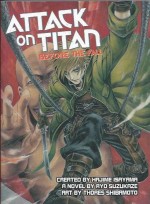
Attack on Titan: Before the Fall (Light Novel)


By Ryo Suzukaze & Thores Shibamoto, translated by Ko Ransom (Vertical)
ISBN: 978-1-939130-86-0

Hajime Isayama’s Shingeki no Kyojin or “Advancing Giants” began life as a manga serial in Kodansha’s Bessatsu Shōnen Magazine in September 2009. As Attack on Titan the phenomenally successful saga has since filled 14 tankōbon collections – with sales in excess of 40 billion copies – and spawned equally popular spin-offs: two manga serials, a “Light Novel” series, an anime TV show, several video games and a forthcoming big-budget live action cinema release.

The core premise of the manga epic concerns an Earth where gigantic monsters have for more than a century predated on humanity, reducing mankind to the population of a small country cowering behind concentric rings of colossal walls…

This initial Light Novel – Before the Fall – pitches the drama back to the earliest days after the conclusion of the initial catastrophic conflict when defeated, nigh-extinct mankind has retreated behind sturdy stone stockades. Inexplicably, the cowering strategy worked and remnant humanity has been left alone for more than a generation.

Described as “prequel of prequels” this fascinating tale describes a time when the monstrous Titans have not been seen for years by the majority of the human race and thus much of complacent humanity has begun to doubt their existence. This attitude has advanced to the point where the common folk mock and deride the dedicated Garrison and Survey Corps which staunchly continue in their duties to protect them whilst conservative elements in the closeted government circles are actively trying to disband the warrior divisions as a means of cutting costs.

Since the retreat a highly strictured society has evolved with plutocratic rulers and fat-cats safely ensconced within the innermost city walls, bureaucracy and military brass inhabiting the second, and the least important members of mankind packed into the outer district of Shiganshina where inventive young armourer and metalsmith Angel Aaltonen lives, devoutly and passionately devising new weapons to end the monsters’ threat – monsters he has never seen but instinctively dreads…

As a Master Inventor of the Workshop District he is always devising fresh ways to improve the striking power of the heroic Survey Corps who regularly voyage outside the monolithic Gate, but Angel feels frustratingly hampered because he knows absolutely nothing about the horrors… except that they are regarded as unkillable.

One other thing he knows. Even though the city dwellers say the Titans don’t exist, something out there kills and maims the rapidly-depleting ranks of the defensive Corps which his best friends and fellow orphans Solm and Maria have dedicated their lives to…

Everything changes however when a deranged cult of Titan-worshippers force open the great Gate as a Survey scouting mission returns, allowing a handily placed horror to rampage through the outer town.

With close observation of the atrocity and the handy discovery of two new natural resources, Angel conceives a device which will forever alter the balance of power between scurrying mortals and the voracious, no-longer-immortal monsters…

What follows is an engaging rite-of passage yarn as Angel grows from idealistic savant to unlikely warrior and potential saviour of humanity, forged in tragedy and tempered by the pressure of a society determined to bury its collective head in the sand…

Moody and engaging, this gripping fantasy tale is augmented by eight stunning full page illustrations in monochrome and colour by Thores Shibamoto that will delight lovers of fantasy fiction and manga masterworks.

© 2014 Hajime Isayama, Ryo Suzukaze. All rights reserved.

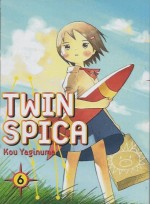
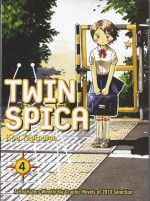
Twin Spica volume 4


By Kou Yaginuma (Vertical)
ISBN: 978-1-934287-93-4

The hungry fascination, hopeful imagination and fevered anticipation of space travel which was an integral component of post-World War II society is the compulsive narrative engine for this inspiring manga epic from Kou Yaginuma, who began his voyage of discovery with his poignant short story ‘2015 Nen no Uchiage Hanabi’ (‘2015: Fireworks’), published in Gekkan Comics Flapper magazine in June 2000.

The author subsequently expanded and enhanced his subject, themes and characters into an all-consuming epic coming-of-age spellbinder blending hard science and humanist fiction with lyrical mysticism and traditional tales of school-days and growing up.

Small unassuming Asumi Kamogawa always dreamed of going into space. From her earliest moments the lonely child had gazed with intense longing up at the stars, her only companion and confidante the imaginary friend Mr. Lion.

When Asumi was a year old, the first Japanese space launch ended in catastrophe when rocket-ship Shishigō (“The Lion”) exploded: crashing back to earth on the city of Yuigahama where the Kamogawas lived. Hundreds were killed and many more injured.

Among the cruellest casualties was Asumi’s mother. Maimed and comatose, the matron took years to die and the long, drawn-out tragedy deeply traumatised her tiny, uncomprehending daughter.

The shock also crushed her grieving husband who had worked as a designer on the rockets for Japan’s fledgling Space Program.

In the wake of the disaster, Tomoro Kamogawa was assigned by the corporation who had built the ship to head the reparations committee. Guilt-wracked and personally bereaved, the devastated technologist visited and formally apologised to each and every survivor or victim’s grieving family. The experience crushed him.

He is certainly no fan of the space program now; having lost his wife, his beloved engineering career and his pride to the race for the heavens. He raised his daughter alone, working two – and often three – menial jobs at a time for over a decade and cannot countenance losing the very last of his loved ones to the cold black heavens…

In response to the Lion disaster, Japan set up an Astronautics and Space Sciences Academy. After years of passionate struggle and in defiance of her father’s wishes, in 2024 Asumi – an isolated, solitary, serious but determined teenager – was accepted to the Tokyo National Space School. Without her father’s blessing, she reluctantly left Yuigahama and joined the new class.

Amongst the year’s fresh intake were surly, abrasive Shinnosuke Fuchuya (an elementary school classmate who used to bully her as a child back in Yuigahama), jolly Kei Oumi, chilly Marika Ukita and spooky, ultra-cool style-icon and fashion victim Shu Suzuki who soon became the shy introvert’s closest acquaintances.

Every day Asumi nudged inexorably towards her goal: the stars. Ever since the crashing rocket had shattered her family, she had drawn comfort from the firmament, with Mr. Lion staring up at the heavens at her side – especially drawn to the twinkling glow of Virgo and the alluring binary star Spica. And now she was so tantalisingly close…

Small, poor, physically weak but resolutely capable, Asumi endures and triumphs over every obstacle and she still talks with Mr. Lion – who might just be the ghost of the Shishigō’s pilot…

All any student can think of is going to space, but they are harshly and perpetually reminded that most of them won’t even finish their schooling…

At just four feet, eight inches tall Asumi is constantly struggling to meet the arduous physical requirements dictated by the Academy but has already survived far greater problems. She is only slowly adjusting to life in Tokyo, sleeps in tawdry communal women’s dorm “The Seagull”, struggles with many of her classes and subsists on meagre funds, supplemented by part-time jobs.

She had also inexplicably incurred the obsessive hostility of astrophysics lecturer Professor Sano. Unbeknownst to Asumi, he had a long-hidden grievance with her father and was determined to kick her out of the school at all costs. Now even his threat has been surprisingly neutralised by high-ranking friends she is still blithely unaware of and the scurrilous martinet has been abruptly replaced by the far more amenable and encouraging Mr. Shiomi …

Individual stories are broken up into “Missions” and this mesmerising fourth volume covers numbers 14-18, and also offers a trio of sidebar stories including another autobiographical vignette about the author’s own teenage years.

‘Mission: 14’ begins with the class reassembling after summer vacation. Asumi and Oumi have returned to the Seagull hostel, but most of their attention is taken up with the even more strenuous new training program.

This semester they are dealing with weightlessness training and again Asumi’s small stature is a hindrance as they all toughen up in the gigantic buoyancy water tank used to teach and refine motor skills in spacesuits.

Although all the students struggle with the arduous regime and humiliating indignities of working for hours without toilet breaks, a more pressing problem for Asumi is the muscle weakness in her left hand. As a telling flashback reveals, the deficit is a result of injuries from the disaster, but back then her new friend Mr. Lion taught her exercises and tricks to strengthen it.

Now she realises she has to start doing them again…

A big shock occurs later when, following revelations about her immense wealth and a clash with her father, the still abrasive Marika Ukita is moves into the Seagull with them…

‘Mission: 15’ finds the class observing a satellite-rocket takeoff at Ogasawara Launch Centre only to encounter a strident demonstration by anti-spaceflight protestors. Although the government is keen to push through a full space program, many people still live in dread of another Lion disaster and feelings run high and scared…

Amongst the demonstrators is a young man who achingly reminds Asumi of a boy she used to know, but when she approaches he is less than friendly…

As she determinedly cracks the books and writes reports, Mr. Lion turns up in a playful mood and offers her some sage advice, even as elsewhere Marika has another unpleasant confrontation with her father who tries to drag her out of the Seagull and Space school…

Later when Asumi goes to the local planetarium for star gazing solace, the mystery boy is there…

More hints into the unique situation of Marika are disclosed in ‘Mission: 16’ as the girl ponders and discards her father’s assertion that she is “not normal”, swearing never to quit. He, unable to convince her and after cruelly cutting her off from all support, secretly pays all her bills and leaves Asumi and Oumi with a huge bag of cash to ensure all his stubborn child’s needs are met…

Later, cool Suzuki takes Asumi on a “date”, but only to show her the secret telescope he has stashed on a rooftop, and when she gets home she finds Marika sleeping and accidentally uncovers another aspect of her enigmatic origins…

Later as the girls struggle with Robot Arm training, Suzuki quizzes Fuchaya about Asumi and learns that she had a boyfriend in Middle School who died of cancer. They both agree that nobody can compete with a dead guy…

Later, wandering through the city, Mr. Lion sees Ukita pensively dump a handful of pills off a bridge…

It’s Christmas during ‘Mission: 17’ so Asumi takes Marika to a shrine. The willowy recluse has never been before, and their journey strangely coincides with the usually befuddled Mr. Lion reliving the time shortly after he died in the crash before again trying to sort the odd scraps into some kind of sensible order.

Clear-headed for the first time he makes his own pilgrimage and movingly bids farewell to someone he had tragically forgotten…

After a day of bonding Asumi then tries to get Marika talking to her dad, but the gesture misfires…

The unfolding epic pauses here with ‘Mission: 18’ as Asumi finds a rocket-shaped trinket which inexplicably links her to her somehow ubiquitous unfriendly mystery boy, after which the girls get their first real taste of the wild blue yonder by enduring an hour of recurring, momentary weightlessness in the training exercise known as the “vomit comet”…

In the disgusting aftermath, the new puke buddies are forced to clean up the jet and Oumi tells Marika of a friend who claims to be able to sense ghosts. She also pointedly asks if Ukita thinks the hostel is haunted. The pensive Marika says nothing but heads straight for Asumi’s private bolt hole…

To Be Continued…

Although the main event is temporarily suspended there are still some more affecting revelations in store, beginning with the ancillary tale ‘This Star Spica’ which again draws on Elementary school days in Yuigahama, where obnoxious little Fuchuya is tasked by his teacher with befriending and looking after that weird, lonely little girl who has an imaginary lion for a friend…

Then ‘Sentimental’ follows young artist Kamoi back down memory lane to his first love Kasumi after the school sweethearts have a brief encounter on a train years later, before ‘Another Spica’ finds author Yaginuma in autobiographical mode and back in his ambition-free teens, enjoying fireworks and relating his own experience with an inspirational, phantom king of beasts…

These powerfully unforgettable tales originally appeared in 2003 as Futatsu no Supika and in the Seinen manga magazine Gekkan Comics Flapper,targeting male readers aged 18-30, but this ongoing, unfolding beguiling saga is perfect for any older kid with stars in their eyes…

Twin Spica filled sixteen collected volumes from September 2001 to August 2009, tracing the trajectories of Asumi and friends from callow students to competent astronauts and the series has spawned both anime and live action TV series.

This sublime serial has everything: plenty of hard science to back up the informed extrapolation, an engaging cast, mystery, frustrated passion, alienation, angst, enduring friendships and just the right touch of spiritual engagement and wild-eyed wonder; all welded seamlessly into a joyous, evocative, addictive drama.

Rekindling the magical spark of the Wild Black Yonder for a new generation, this is a treat no imagineer with head firmly in the clouds can afford to miss…
© 2010 by Kou Yaginuma. Translation © 2010 Vertical, Inc. All rights reserved.

This book is printed in the Japanese right to left, back to front format.

Dirty Pair: Biohazards


By Toren Smith & Adam Warren (Eclipse Books)
ISBN: 1-56060-008-X (softcover), 1-56060-007-1 (hb), 1-900097-04-4 (UK edition)

Here’s something you don’t see every day: a genuine international collaboration that merged the best of Japanese and American sensibilities to create something genuinely appealing and tremendously fun.

In a fast and furious future of 2141AD, intergalactic proliferation of human civilisation has led to a monumental bureaucracy, greater corruption and more deadly criminals preying upon the citizens of the United Galactica.

Thus the constant need for extra-special Trouble Consultants: pan-planetary private paramilitary police employed by the 3WA (or Worlds Welfare Work Association) to maintain order in hotspots across the sort-of civilised universe…

Kei and Yuri are team #234, officially designated “The Lovely Angels” after their sleek and efficient starship. They are lethal, capable and infallible. Whenever they are deployed, they strike fast and hard and never fail…

…Although the collateral damage they propagate is completely unimaginable and usually causes client worlds to regret ever asking for their aid in the first place….

Much to the crisis agents’ disgust and chagrin, the universe knows them best as The Dirty Pair and planetary authorities have to be in the most appalling straits to let them help…

The concept was conceived for light novels by Japanese author Haruka Takachiho (Crusher Joe) in 1985 and quickly made the jump to TV, movie and OVA anime, but there was no comics/manga iteration (until over a decade later), inspiring Adam Warren and Toren Smith of Manga translation company Studio Proteus to approach independent publisher Eclipse Comics with an idea for a comicbook miniseries…

The result was Biohazards; 4 issues (December 1988 to April 1989)of licensed light-hearted, manic murder and monstrous mayhem which was then swiftly collected in a brash and breezy graphic album. The many reprintings from the franchise’s successors Dark Horse in the USA and Manga Books in the UK heralded a blistering run of wry and raucous adventures that still read as well today as they did when the Japanese comics experience was seen as a rare, quaint and exotic oddity…

In ‘Biohazard’ the deadly babes are going about their lawful but excessively violent business – subsequently and of course unintentionally devastating a colossal space station and killing fifty civilians – when a call comes from Alex Goldin, Security Director of corporate paradise Pacifica.

He has a thorny problem to manage: a brutally efficient theft of personality-preserving bio-construct Brainchips and tissues samples, plus the loss of a full-grown clone, is only the latest skirmish between rival bioengineering industrialists Kelvin O’Donnell and Abraham Streib.

The escalating battle between magnates too powerful to censure compels the obsequious and duplicitous Goldin to tread softly. Both men are massive wealth-creators: master-makers of bio-weapons, body augmentations and innovative medicines, but he still doesn’t want anything incurable or unkillable loose on his streets if their economic struggle continues.

The organo-industrialists are both experts in skirting what rules and regulations exist and officially test their wares on their private manufacturing moons but you never know…

The situation is particularly tenuous at present because O’Donnell, thanks to the unfortunate lab accident, is a space-chipmunk.

…Or rather the brainchip encoding his personality currently resides in a Whelan’s Pseudo-Fuzzy in the possession by Streib. When cyborg chief enforcer M97 destroyed O’Donnell’s almost matured Adonis-like new body in the raid, the triumphant genegineer couldn’t resist an opportunity to gloat. After all, with no spare chips, no proper body to put them in and O’Donnell on a leash, surely Streib has finally won…

Triumphant Streib is actually no better off. After similar bioagent “misfortunes” over the years of their rivalry, his organic head is now stuck on a robot body whilst his organics are so messed up he can’t be cloned or brainchipped.

Tracking O’Donnell’s chip to Streib’s private estate, Goldin has called on 3WA and is now stuck with Kei and Yuri. In the final assessment he needs someone from outside the system to rescue O’Donnell’s brainchip and genetic material from Streib without starting a horrific WMD war that will end life on Pacifica…

What could possibly go wrong?

With their enigmatic, electronics-warping alien super-cat Mughi the girls easily infiltrate the vast compound just in time to find Streib employing horrific techno-organic warbeasts to hunt O’Donnell.

Employing the catastrophic violence they are renowned for, the Dirty Pair easily lay waste to the human soldiers and rapacious mechanoids, but rather than turn the little Fuzzy over to Goldin they are cajoled and are convinced by the little cutie to take him to his own lab where he has himself transferred into one of his own trademarked warbeasts.

And up until then the case had been practically catastrophe-free…

‘Complications’ occur when Kei sees the body O’Donnell will eventually return to and gets all girly-fluttery and romantically entangled; allowing herself to be convinced that they should take Streib down for good.

It’s not hard to get Yuri to agree and soon Lovely Angels and wrathful warbeast are breaking into Streib’s main lab citadel.

As the girls convincingly crush all resistance O’Donnell discovers a deliciously illegal bioagent weapon which will prove his rival’s downfall – even in Pacifica’s courts – and asks Yuri to hold onto it as they escape, but in the resultant firefight the canister is breached and she is doused in something very nasty…

Luckily, rather than a disease or toxin it’s “only” a chemical to enhance aggression and violence and ‘Outbreak’ finds Yuri descending into a berserker mode even more dangerous than her regular state; ruthlessly efficient and wildly careless of consequences. Manically outfighting the army and air force despatched to stop them, she and the astounded Kei and O’Donnell soon completely destroy a major population centre before escaping M97 and his fanatically pursuing cohorts…

With Yuri fully recovered from the combat craziness, the Angels decide to take the battle to the arrogantly gloating and seemingly unimpeachable Streib, infiltrating his industrial moon Telek and ultimately reducing it to slag and space dust and free-floating bio-bombs in their own inimitable style.

However there are two more surprises in store: a rather predictable last stab from the stylishly indefatigable M97 and a more personal heartbreak bombshell for Kei once Goldin gets his hands on O’Donnell…

Both incredibly information-dense and astonishingly action-packed, this cool, light-hearted cyber-punk space opera romp is a solidly satisfying slice of Sci Fi magic that will delight all fans of tech-heavy blockbusters, and the book comes with an afterword by co-author Toren Smith – heavily illustrated with Adam Warren sketches – detailing the love of hard science and social extrapolation which flavoured and textured the creators’ trans-Pacific interpretation of Haruka Takachiho’s concept.

The digest-sized (210 x 150mm) UK edition has the tag line “in the tradition of Red Dwarf” and that assessment is not a million miles from the truth, as long as you factor in sexy death-dealing ingénues, wry socio-political commentary, very skimpy costumes and oodles of cartoon carnage.

Fun and frolics future-style: you know you want it…

The Dirty Pair © 1989, 1994 Haruka Takachiho. English language version © 1989, 1994 Adam Warren and Studio Proteus. All rights reserved.

Good-Bye and Other Stories


By Yoshihiro Tatsumi (Catalan Communications)
ISBN: 0-87416-056-1

Don’t believe your loved ones: sometimes size really does make a difference.

Shuffling along my seemingly infinite shelves the other day I spotted a graphic album I haven’t really looked at in years.

It was an album-sized (275x210mm) black-&-white collection of Japanese human-interest dramas translated into English from a Spanish compilation and was, when I bought it, my first introduction to the incredible creative force that is Yoshihiro Tatsumi.

Since then I’ve become familiar with most of his translated works but the other day was the first time that I’ve actually compared the scale of his art in traditional manga formats with the big, bold nigh-abstract expansions of a really expansive page.

The sheer emotional power delivered by going large is just incomprehensible…

Beginning in the 1950s, compulsive storyteller Yoshihiro Tatsumi worked at the edges of the burgeoning Japanese comics industry, toiling for whoever would hire him, whilst producing an absolutely vast canon of deeply personal, agonisingly honest and blisteringly incisive cartoon critiques.

These dissections, queries and homages remorselessly explored the Human Condition as endured by the lowest of the low in a beaten nation and shamed culture which utterly, ferociously and ruthlessly re-invented itself during his lifetime.

Tatsumi was born in 1935 and after surviving war and the reconstruction of Japan he devoted most of his life to mastering – if not inventing – a new form of comics storytelling, now known universally as Gekiga or “Dramatic Pictures”.

This was in contrast to the flashy and fancifully escapist entertainment of Manga – which translates as “Irresponsible” or “Foolish Pictures” – and specifically targeted children in the years immediately following the cessation of hostilities.

If he couldn’t find a sympathetic Editor, Tatsumi self-published his darkly beguiling wares in Dōjinshi or “Vanity projects” where his often open-ended, morally ambiguous, subtly subversive underground comics literature gradually grew to prominence; especially as those bland funnybook-consuming kids grew up in a socially-repressed, culturally-occupied country and began to rebel.

Topmost amongst their key concerns were Cold War politics, the Vietnam War, ubiquitous inequality and iniquitous distribution of wealth and opportunity, so the teen upstarts sought out material that addressed their maturing sensibilities and found it in the works of Tatsumi and a growing band of deadly serious cartoonists with something to say…

Since reading comics beyond childhood was seen as an act of rebellion – like digging Rock ‘n’ Roll a decade earlier in the USA and Britain – these kids became known as the “Manga Generation” and their growing influence allowed comics creators to grow beyond the commercial limits of their industry and tackle adult stories and themes in what rapidly became a bone fide art form.

Even “God of Comics” Osamu Tezuka eventually found his mature author’s voice in Gekiga…

Tatsumi uses art as a symbolic tool, with an instantly recognisable repertory company of characters pressed into service over and again as archetypes and human abstracts of certain unchanging societal aspects and responses. Moreover, he has a mesmerising ability to portray situations with no clean or clear-cut resolution: the tension and sublime efficacy revolves around carrying the reader to the moment of ultimate emotional crisis and leaving you suspended there…

Narrative themes of sexual frustration, falls from grace or security, loss of heritage and pride, human obsolescence, claustrophobia and dislocation, obsession, provincialism, impotence, loneliness, poverty and desperate acts of protest are perpetually explored by a succession of anonymous bar girls, powerless men, grasping spouses, ineffectual loners, wheedling, ungrateful family dependents and ethically intransigent protagonists through recurring motifs such as illness, forced retirement, disabled labourers and sexual inadequacy all lurking in ramshackle dwellings, endless dirty alleyways, tawdry bars and sewers too often obstructed by discarded lives and dead babies…

Following an expansive discourse on ‘Japanese Comics’ by José Mariá Carandell, the well-travelled dramas begin with ‘Just a Man’ as, at the end of his working life, Mr. Manayana is sidelined by all the younger workers: all except kind Ms. Okawa whose kindly solicitousness rekindles crude urgings in the former soldier and elderly executive. With his wife and daughter already planning how to spend his pension, Manayana rebels and blows it all on wine, women and song, but even when he achieves the impossible manly dream with the ineffable Ms. Okawa, he is plagued by impotence and guilt…

‘The Telescope’ then brings a crippled man too close to an aging exhibitionist who needs to be seen conquering young women, leading only to recrimination and self-destruction…

In ‘Life is So Sad!‘ a junior and senior bar girl clean up after the night’s toil, but young Akemi is clumsily preoccupied…

It’s time to visit her husband in prison. He is a changed, fierce and brutalised man and doesn’t believe she has kept herself for him all these years. When he threatens to become her pimp after his release, she is reluctantly forced to take extreme action…

Down in ‘The Sewers’ whilst daily unclogging the city’s mains, a harassed young man finds himself no longer reacting to the horror of what the people above discard: baskets, boxes, babies… even when the deceased detritus is his own…

‘Just Passing Through’ sees Kyoko return to her husband and mother-in-law after an unexplained 2-year absence. Nothing has changed. Her forgiving man froze time on the day she vanished: even the calendar has not moved a single day.

As he patiently rejoices in her return Kyoko realises the horrific passive-aggressive nature of his gesture and heads once more for the door…

‘Progress is Wonderful!’ sees an over-worked sperm donor foolishly allowing his latest “inspiration” to get too close with catastrophic results, after which the semi-autobiographical and eponymous ‘Good-Bye’ describes the declining relationship between prostitute “Maria” – who courts social ignominy by going with the American GI Joes – and her dissolute father; once a proud soldier of Japan’s beaten army, now reduced to cadging cash and favours from her.

Her dreams of escape to America are shattered one day and in her turmoil she pushes her father too far and he commits an act there’s no coming back from…

‘Unwanted’ brings the volume to conclusion by relating the inevitable fate of a placard carrier advertising a seedy massage parlour. Why can he get on with tawdry prostitutes of the street but not his own wife, with her constant carping about her unwanted pregnancy? Why is murder the only rational option?

This epic volume was, it transpires, wholly unauthorised but I was blown away by the seductive and wholly entrancing simplicity of Mr. Tatsumi’s storytelling and bleak, humanist subject matter.

Now that I know just when these stark, wry, bittersweet vignettes, episodes and stories of cultural and social realism were first drawn (between 1969-1977) it seems as if a lone voice in Japanese comics had independently and synchronistically joined the revolution of Cinéma vérité and the Kitchen Sink Dramas of playwrights and directors like John Osborne, Tony Richardson and Lindsay Anderson – not to mention Ken Loach and Joe Orton – which gripped the West in the 1960s and which have shaped the critical and creative faculties of so many artists and creators ever since.

Tatsumi, like Robert Crumb and Harvey Pekar, worked for decades in relative isolation producing compelling, bold, beguiling, sordid, intimate, wryly humorous, heartbreaking and utterly uncompromising strips dealing with uncomfortable realities, social alienation, excoriating self-examination and the nastiest and most honest arenas of human experience. They can in fact be seen as brother auteurs and indeed inventors of the “literary” or alternative field of graphic narrative which, whilst largely sidelined for most of their working lives, has finally emerged as the most important and widely accepted avenue of the comics medium.

These are stories no serious exponent or fan of comics can afford to miss… and they’re even better printed bigger…
© 1987 Yoshihiro Tatsumi. All Rights Reserved.

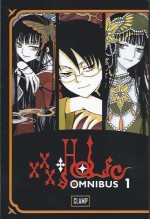
xxxHolic Omnibus volume 1


By Clamp, translated & adapted by William Flanagan and lettered by Dana Hayward (Kodansha Comics)
ISBN: 978-1-61262-591-1

After beginning as an eleven-strong  dojinshi (self publishing or amateur) group in the late-1980s, Kuranpu – AKA CLAMP – eventually stabilised as primarily writer ÅŒkawa Nanase and artists Igarashi Satsuki, Nekoi Tsubaki &  Mokona (Apapa), whose seamless collaborations on such series as Tokyo Babylon, Clamp Detective School, Magic Knight Rayearth, Cardcaptor Sakura, X, Legal Drug, Chobits and many more revolutionised Japanese comics in the 1990s.

Beginning solidly in the shōjo marketplace, the collective quickly began challenging the established forms and eventually produced material for far more mature and demanding readerships. The sales of their 26 different titles to date in collected tankōbon volumes far exceeds 100 million copies.

This monolithic 560 page monochrome magnum opus re-presents the first three volumes of one of their most memorable mystic sienen (made for male readers) masterpieces; one that broke boundaries in Japan by interacting and crossing over a number of the collective’s other ongoing series: specifically Tsubasa: Reservoir Chronicle which we know as Cardcaptor Sakura.

xxxHolic ran from 2003 to 2011, at first sporadically serialised in Kodansha’s Young Magazine before finding a regular home (from June 2010 to its conclusion in February 2011) in Bessatsu Shōnen Magazine.

The epic 19 volume saga has been seen previously in English translation – in America from Del Rey Manga and Tanoshimi in the UK – and naturally there are a wealth of film and TV anime, OVAs, games, light novels and all the other connected media spin-offs available starring the lead characters.

And in case you were wondering the xxx doesn’t stand for sex: in Japanese culture the triple cross merely denotes “fill in the blank”…

The madcap mystery begins when excitable student Kimihiro Watanuki is driven into the wards surrounding a strange shop. He has always had a slight problem he doesn’t like sharing: Watanuki sees spirits. Not just ghosts but all types of supernatural manifestation. In fact something inexplicable and nasty actually chased him into the mystic fence around YÅ«ko Ichihara‘s eccentric little emporium where he is confronted by two creepy little children Moro and Maru…

The eccentric proprietrix then smugly claims it was “hitsuzen” – a naturally fore-ordained event – that brought him and before he can stop her proceeds to read his fortune. Her shop offers divination and stocks curios but her game is granting wishes and the slickly manipulative YÅ«ko swiftly and easily tricks the harassed lad into expressing his desire to be rid of his gift.

In her world services cost and although she instantly grants his wish Yūko explains it will only occur after he had paid for it… with an unspecified amount of lowly indentured servitude…

Thus he becomes an unpaid skivvy, cook and cleaner at the little shop of wonders, sorting the assorted artefacts (many of which are portentous icons in other CLAMP tales) and being lectured by the sublimely arrogant witch. Moreover she keeps adding lessons, losses, breakages and other stuff to his account…

He soon gets an inkling of a deeper game when a customer comes in with a wish and tries to play false with the witch. Despite repeated warnings the client continues to lie and Watanuki eventually sees with his spirit vision the ghastly consequence of being untrue to oneself and Yūko …

His onerous service is punctuated with days at the Cross Private School, but one day after he talks to cute Himawari Kunogi and instantly falls in love, Yūko warns of bad tidings ahead…

The lad still doesn’t trust his new boss – with good reason – but after a forthright lecture on the effects and responsibilities of predestination and of all kinds of divination, she takes him on a magical shopping trip and enigmatic errand to meet another potential customer.

A troubled housewife is addicted to social media and wants to be cured of her computer compulsion, but didn’t know how to proceed. When the exotic woman and her goofy servant turn up unannounced on her doorstep she is willing to do whatever YÅ«ko prescribes but utterly unprepared for the consequences…

One rainy day Watanuki’s culinary and other gifts are particularly tested when the hard-drinking sorceress entertains guests from another dimension – (Syoaran and Sakura from the aforementioned CardCaptor series) in desperate need of sanctuary and something only her constantly moaning apprentice can retrieve from the shop’s capacious and sinister back rooms…

The pair of deceptively cute, animated artefacts he finds are then split up, with one accompanying the guests back to their own realm whilst Yūko retains its twin “Mokona” for future emergencies…

One day a delightful picnic with Himawari is too soon ended because Watanuki has to go back to Yūko, who needs him to have his fortune told by a true expert. However, always working to her own agenda, the witch first treats him to the indulgences of a slick and lovely charlatan before introducing him to the innocuous real thing…

Watanuki’s chances with Himawari take another beating when classmate Shizuka Dōmeki falls under YÅ«ko’s influence. He is tall, clever, good-looking and a star of the archery club, but the witch is more interested in his hidden spiritual powers – and the fact that he makes Watanuki feel furious and inadequate at the same time.

She invites all three of them to a mid-summer ghost-story party at a certain troubled house…

The spooky soiree goes exactly as the sorceress intended and turns terrifyingly real when malignant forces only Watanuki can detect attack. However Dōmeki – who can see nothing amiss – is able to destroy them with his own gift – a hereditary psychic exorcism power- if his rival tells him where to fire his imaginary arrows…

With Himawari now part of YÅ«ko’s circle, Watanuki is constantly furious at both his mistress and the suave, couldn’t-care-less archer-rival, but as summer turns to autumn he slowly learns to make peace with and even grudgingly accept the archer’s presence.

After another encounter with the Sakura heroes the schoolboys are inadvertently drawn into an even scarier team-up when Yūko despatches them to investigate a school where female students meddled with “Angel-San” prophecy magic (like western Ouija board games) and called up something uncontrollable…

The Witch doesn’t bother to accompany them but does insist Watanuki wear a pair of magic animal ears so she can talk to him from the comfort of he couch. It also makes him look like a complete idiot…

The entire school is a deadly trap for the unprepared lads but their valiant efforts call forth an unsuspected protective spirit to cleanse the building. Tragically the archer is slightly wounded saving Watanuki…

Now Himawari is certain to pick him…

As things get back to abnormal another client turns up to have her wish fulfilled but is too arrogant to listen to the seller’s advice. Before long the kids are just too late to prevent a ghastly chain of tragedy caused by her cocky misuse of a genuine mummified Monkey’s Paw…

This monumental compilation concludes with a delightful seasonal short as the still loudly complaining but slowly acclimatising Watanuki finally sees the miraculous side of his gift when he meets and befriends a Kitsune (fox spirit) street food vendor and his delightful cub…

Expansive, enthralling and wickedly funny, xxxHolic is a glorious romp combining whimsy and horror that will delight lovers of fantasy in all forms.

This Omnibus edition is punctuated throughout with text features including ‘Honorifics Explained’, ‘Artifacts and Miscellany’ ‘Translation Notes’, background commentary on crossover guest stars and other CLAMP classics in ‘Past Works’, cultural notes on ‘Ghost Stories in the Summer’, ‘Protective Spirits and Ancestor Worship’ and much more.

xxxHolic Omnibus volume 1 © 2003-2004 CLAMP. Shigatsu Tsuitachi CO., LTD./Kodansha. English translation © 2014 CLAMP. Shigatsu Tsuitachi CO., LTD./Kodansha. All rights reserved.
This book is printed in the traditional ‘read-from-back-to-front’ manga format.

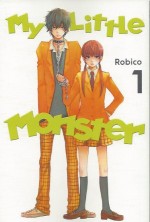
My Little Monster volume 1


By Robico translated by Joshua Weeks (Kodansha Comics USA)
ISBN: 978-1-61262-597-3

Solidly appealing to lovers of traditional  Shōjo (“girls’ comics”) comes a grand and sassy tale of Right Girl, Right Time, Wrong Boy from enigmatic mangaka Robico, dealing with the thorny topic of wasteful distractions at school…

Tonari no Kaibutsu-kun or ‘The Monster Sitting Beside Me’ debuted in Dessert Magazine in 2008 with the first volume of a dozen collections appearing a year later. The serial ran until June 2013 and spawned a highly successful anime adaptation.

Shizuku Mizutani is a schoolgirl determined to succeed. Only one person has ever gotten higher grades than her throughout her entire scholastic career – and she’s still burned up about it – but otherwise she’s solidly – comfortably – set her sights on exceptional achievement and a great job and nothing’s going to force her off her well-planned, carefully projected course.

Her teen travails begin in ‘My Classmate Yoshida-kun’ as she explains how she’s never seen the boy who sits next to her. He got into a fight on his first day and hasn’t come to school since. That was three years ago.

Now for some incomprehensible reason the ideal student is stuck delivering printouts to the epic absconder as a “favour” (bribe) to teacher Saeko-Sensei. She finds him in the skeevy games arcade where he hangs out. Shizuku wasn’t expecting much, but Haru Yoshida fails to live up to even those low expectations.

He’s a veritable wild boy: manic, ill-mannered, actively extremely rude and his associates are little better than thugs and gangsters.

He even attacks her, accusing her of spying on him.

All the school rumours must be true; how he hospitalised three upperclassmen and was suspended…

The ice broken, Saeko then pushes her star student to lure the boy back to school (his suspension being long expired) but when he starts regularly attending tongues start wagging. He then arbitrarily decides they’re friends and begins to follow Shizuku everywhere…

She’s never been more angry or frustrated. He’s always there, distracting her, getting in the way of her future. She can’t stop thinking about him…

Following a brace of humorous of mini-strips ‘I was Running as Fast as I Could!’ and ‘Spot-Billed Duck’ the School Daze resume with ‘I Don’t Hate You’ as the apparently imprinted malcontent begins appearing everywhere she goes and captivatingly showing his softer, fragile side.

Unfortunately he’s painfully gullible and falls for many embarrassing pranks from his classmates which he responds to with devastating violence. Soon he has gained an irresistibly dangerous reputation…

He also seems to start noticing other girls, but why should Shizuku care about that? She’s far more upset to learn that he was the student who beat her test scores and that even after three years of skipping education he’s probably still smarter than her…

And now for some reason she’s finding it impossible to bear down and study, the only thing she used to be good at…

And then Haru kisses her… but decides they can still be friends anyway…

After micro strips ‘Because She’s a Lady’ and ‘It’s Hard Not to Say It’, the main event starts again with ‘Weird’, wherein the wild boy starts displaying the attention span of a mayfly.

Adopting and then palming off a chicken on his newfound friends and tutoring vacuous Asako Natsune so she can avoid going to Afterschool Classes instead of partying are bad enough, but most significantly he utterly ignores the change in their own relationship, or even that they have one…

Two small interludes with ‘Natsume and Haru’ then lead into the final chapter as Shizuku is forced to admit to herself how much Haru has changed her life. However when she finally confesses just how much she likes the annoying, confusing oaf, all he can say in response is that she’s not a ‘Nuisance’…

To Be Continued…

Wrapping things up are two final cartoon vignettes ‘Just as Short’ and ‘That Guy’, plus a Comment from the author and a section of handy Translation notes.

Sweet, cruel and silly by turns, this is a delightful coming of age comedy, brimming with those crucial, critical moments that stay with you for decades after high school ends, but cleverly leavened with light charming characters and situations all superbly illustrated by a master of the genre.

Not everybody’s cup of tea but sheer poetry for those of us who remember love can – and should – be fun.
© 2009 Robico. English translation © 2014 Robico. All rights reserved.

This book is printed in ‘read-from-back-to-front’ manga format.

Wolfsmund volume 3


By Mitsuhisa Kuji, translated by Ko Ransom (Vertical)
ISBN: 978-1935654-96-4

Pseudonymous woman of mystery Mitsuhisa Kuji steps up the pace in this third volume (originally seen in Japanese publication Fellows! from 2009 as Ookami no Kuchi: Wolfsmund and a tankobon edition in 2011) of her gripping and chillingly fatalistic historical drama reinterpreting the legend of William Tell.

Set in 14th century Switzerland, the serial details the struggle of three conquered alpine cantons – Uri, Unterwalden and Schwyz – for freedom and independence from the cruel, oppressive and savagely rapacious Habsburg proto-Empire.

At first this interpretation centred around the monolithic fortress Wolfsmund, situated in the Sankt Gotthard Pass: an impenetrable Keep, barrier and waystation between dangerous mountain passes which dictated and controlled the population’s ability to move – or flee, find allies, gather intelligence or stockpile war materiel.

The triple-castle complex is a crucial trade bottleneck between Germany and Italy, housing a garrison of hard-hearted soldiers commanded by a human devil with an angel’s face.

Wolfram the Bailiff is a sadistic sentinel with an infallible eye for spotting resistance: slaughtering freedom fighters and crushing the people’s hopes with baroque and monstrous flair and ingenuity.

Until now no one has survived falling under his excoriating gaze, but the lust for liberty has grown strong in the hearts of a people pushed too far for too long…

The horrific murderously medieval passion play resumes with ‘Albert and Barbara Part One’ and a spectacular display of martial arts illustration as a brother and sister, creatively maimed on Wolfram’s orders, complete their training of a very special student. Elsewhere in Lugano, on the Italian side of the mountains, the rebel force of “the Eternal Alliance” lay their final plans for taking back their land. Everything depends upon a suicide mission to take the barrier fortress and Walter, the forbidding and guilt-wracked son of the fallen liberator Wilhelm Tell…

The resistance leaders have devised a scheme for the young avenger to climb across the unforgiving mountain peaks whilst his combat-teachers sacrifice themselves as living decoys. Albert and Barbara are keenly resigned to their fate, ignoring Walter’s crushing “Survivor’s Guilt”. He has to get through to coordinate the uprising within the cantons and their lives are just a fair price for victory…

The darkly uplifting parable concludes in ‘Albert and Barbara Part Two’ as the siblings boldly introduce themselves at the gates of Wolfsmund and, by sheer bravado and indomitable courage, invade the castle, chasing Wolfram deep into the bowels of his lair.

Their audacious attack leaves them dead, surrounded by a vast harvest of fallen enemies, and their greatest triumph is that the grinning bailiff’s confident poise is shaken as, in a rush of fury, he realises too late that the true blow against him has been struck elsewhere…

In ‘Walter and the Comrades in Fate’ that realisation is revealed after flashbacks disclose the siblings’ pep talks with the valiant Tell. The scene then switches to show in harrowing detail the mountaineer’s epic re-crossing of the treacherous peaks – an act of unsurpassed heroism balanced by Wolfram’s shrewd assessment that his hidden foe can only be the legendary Wilhelm… or perhaps his missing son…

The closing chapters of this excessively graphic and visually uncompromising saga at last relate a turning of the tide as ‘Hedwig and Wilhelm’ opens with a particularly shocking sequence wherein the sadistic bailiff personally tortures Walter’s mother and younger brother seeking confirmation of his mysterious foe’s identity. The interview proves fruitless and Wolfram feels his master’s growing wrath and impatience when he is summoned to report to the Emperor Leopold…

With rebellion brewing in distant Bavaria the supreme overlord is reluctantly forced to leave the Canton situation in Wolfram’s hands… but he is far from content…

Meanwhile Walter makes his way to the rebel rendezvous where he is informed of his family’s plight. Clandestinely joining the crowds rounded up to observe the macabre and grisly executions, the doom-laden wretch can only watch helplessly as the last of his family are put to death by the grinning monster. He might however draw some shred of solace if he knew the dread which secretly grips the bailiff’s heart…

This volume concludes with the climactic ‘Hilde and the Young Cowhands’ as the long-awaited uprising begins and the populace storms and destroys the barrier station’s Southern fortress. With the castle burning the surviving soldiers flee for Wolfram’s Central Keep, unaware that on the German frontier the Northern Fort is now under attack.

Whilst an enraged mob engages the defenders with a frontal assault, Walter leads another suicidal commando raid, bolstered by the jibes of a wanton woman prepared to sacrifice everything for vengeance…

Hilde is the widow of the leader of a local trades Guild. When her husband fell victim to Wolfram’s games she dedicated herself to avenging him, and with the last of his faithful retainers began a reign of horrific reprisals which earned her the nickname “the Ripper of Schwyz”. Now she and the last two cowhands, infiltrated through the roof of the North Castle by Walter’s climbing skills, grimly make their way down to the ground floor, unstoppable engines of destruction…

When the castle falls, the last Tell understands that he not alone in his guilt, but that some things are greater than human life. And now, with both wings fallen, only Wolfram’s force remains, isolated and trapped in the central keep of Wolfsmund…

To Be Continued…

Never a tale for the faint-hearted, with this volume the saga explodes into stunning savagery, forensically examining the costs of liberty in brutally uncompromising character vignettes and breathtakingly intimate portrayals of death at close quarters.

Harsh, seductively cruel and inspirationally ferocious, this unhappy saga is probably most comfortably enjoyed by older readers and those who already know that not everybody lives happy ever after…

Wolfsmund is printed in the ‘read-from-back-to-front’ manga format.
© 2011 Mitsuhisa Kuji. All rights reserved.

Gold Pollen and Other Stories


By Seiichi Hayashi edited & translated by Ryan Holmberg (Picturebox)
ISBN: 978-1-939799-07-4

When talking about Japanese comics most fans are generally thinking of the mainstream mass-entertainment form which began with Osamu Tezuka in the years following the end of World War II, and which within a generation had grown into a multi-genre print phenomenon adored and compulsively consumed by the greater part of Japan’s population.

However where there’s a mainstream there are always fringes, and the all-pervasive success of commercial manga naturally threw up experimental and alternative publications: the sort of forums and arenas where the most interesting and challenging works of every art form usually first begin…

A companion to the “Ten-Cent Manga” collections, this superlative hardback begins a series celebrating “Masters of Alternative Manga”, with resident Editor, historian and translator Ryan Holmberg offering comprehensive background and fascinating insights into one of the most respected envelope-pushers in the business and presenting a tantalising selection of shorter pieces by a compelling master of evocative sequential narrative.

Avant-garde illustrator, poster artist, filmmaker and poet Seiichi Hayashi was born in 1945 and became a star of Japan’s counterculture movement in the Swinging Sixties. He also created a number of comic strips for alternative periodical Garo during the turbulent late 1960s and early 1970s and four of them grace this captivating collection. His most well known work is probably the wildly experimental romance Red Colored Elegy.

The artist’s flawed and tragic relationship with his mother informed many of his stories and reprinted his insightful personal memoir ‘Azami Light: Childhood Remembrances (1972)’ as well as Holmberg’s contextualizing essay ‘Momoko and Manga: Seiichi Hayashi’s Maternal Roots’.

Each is copiously illustrated with photos, illustrations, covers and formative artworks, providing documentary and commentary to augment the striking strips which make up the largest portion of this volume.

Created at a time of rising Right Wing Nationalism and with Western popular influences such as comicbooks, TV shows and pop music seemingly inundating the nation’s kids, the tales reprinted here also display a broad flavour of cross-cultural contact and pollination, albeit with a ferocious undercurrent of intellectual criticism…

The powerful, deeply moving stories begin with the full, flat-colour ‘Dwelling in Flowers’ (1972): a sly, lyrically wistful examination of fragmenting relationships, followed by the charmingly sinister monochrome ‘Red Dragonfly’ from 1968: an apparently rustic and nostalgic fable of a child’s experience playing at war and observing his mother’s clandestine liaisons…

‘Yamanba Lullaby’ (also 1968) features many anomalous and anachronistic pop culture intruders as it allegorically ponders American influences whilst relating some explosive exploits of legendary heroic “Golden Boy” super-baby Kintarō, his horrific supernatural mater and a host of quirky opponents (giant robots, mad scientists, DC comics superheroes) – all rendered in stark black and white with gory red splashed on as appropriate…

This intriguingly appealing primer ends with the sadly unfinished ‘Golden Pollen’ from 1971. Printed in indigo and red, this is another allegorical foray investigating Nationalism and again co-opts traditional Japanese legends and Buddhist tales: updating the raucous saga of heroic newborn Hinomaru (also the name of the WWII Rising Sun flag) and his demon brother Jaki in their battles against a vast skeletal monster mother…

Holmberg describes in fascinating and forensic detail the origins of the assorted stories, the state of political and social play in Japan and the emotional turmoil which drove the artist to produce such eye-catching, earnest comics but the real draw is the sheer graphic escapism, spectacular storytelling and astoundingly skewed views of a driven, inspired craftsman.

Not for the squeamish, nor the naïve, Gold Pollen and Other Stories is a challenging ride no serous lover of comics will want to miss.

This book is printed in ‘read-from-back-to-front’ manga format.
© 2013 Seiichi Hayashi. Translation and essay © 2013 Ryan Holmberg. All rights reserved.