Black Jack volume 7


By Osamu Tezuka (Vertical)
ISBN: 978-1-934287-60-6

Black Jack is at once a lone wolf hero, troubled genius, passionate outsider and amoral humanitarian combining the indomitable will of Doc Savage with the intellect of Sherlock Holmes and ambivalent, intuitive drive of Dr. Gregory House. Hideously scarred as result of extensive childhood surgery, the unlicensed mercenary medic endures public condemnation and professional scorn, experiencing every genre of storytelling as he continually confronts the cutting edges of medicine.

His esteemed creator Osamu Tezuka was born in Qsaka Prefecture on 3rd November 1928, and as a child suffered from a severe illness that made his arms swell. The doctor who cured him inspired him to study medicine, and although the cartoonist began his professional drawing career while at university, he persevered with his studies and qualified as a doctor too.

Facing a career crossroads, Tezuka’s mother advised him to do the thing that made him happiest. He never practiced medicine but the world was gifted with such classic cartoon masterpieces as Tetsuwan Atomu (Astro-boy), Kimba the White Lion, Buddha, Adolf and literally hundreds of other graphic narratives. Along the way Tezuka incidentally pioneered, if not actually invented, the Japanese anime industry.

Equally able to speak to the hearts and minds of children and adults, Osamu Tezuka’s work ranges from the charming to the disturbing, even terrifying. In 1973 he turned his storyteller’s eye to his college studies and created Burakku Jakku, a lone wolf surgeon living beyond society’s boundaries and rules:  a scarred, heartless mercenary miracle-worker if the price is right, yet still a deeply human wounded soul who works his surgical wizardry from behind icy walls of cool indifference and casual hostility…

One thing should always be remembered when reading these stories: despite all the scientific detail, all the frighteningly accurate terminology and trappings, Black Jack isn’t medical fiction; it is an exploration of ethics and morality with medicine raised to the level of magic… or perhaps duelling.

This is an epic of personal combats, a lone gunfighter battling hugely oppressive counter-forces (the Law, the System, casual human cruelty, himself) to win just one more victory: medicine as mythology, won by a Ronin with a fast car and a Gladstone bag. Elements of rationalism, science-fiction, kitchen sink drama, spiritualism and even the supernatural appear in this saga of Magical Realism that rivals the works of Fuentes and Gabriel García Márquez. But overall these are dramatic, highly addictive comics tales of heroism; and ones that that will stay with you forever.

Volume 7 begins with ‘Guys and Birds’ and pursues a favoured theme in Tezuka’s work: the moral superiority of animals to base humanity, as Black Jack operates on a small boy beloved by the bird of the marshlands. When crooked speculators try to kill the boy for the land rights his feathered friends fight even harder than the super-surgeon to save him…

‘The Gray Mansion’ is a classical gothic horror story which finds him attempting to fix a hideously malformed burns victim despite knowing that his insane patient intends to commit murder as soon as he is again able to grasp a weapon, and ‘A Cat and Shozo’ examines love and madness as the rogue surgeon heals a traumatised man who has replaced his dead family with a pack of devoted felines…

‘The Two Pinokos’ provides another glimpse of the doctor’s past as he sees once more the little girl who provided the template for his own assistant (rebuilt from leftover organs: see Black Jack volume 1 for details). What a shame she and her entire village are dying from toxic waste pollution… ‘Unexploded Bomb’ also looks back as the diagnostic ronin takes a dark revenge on the corrupt officials whose greed destroyed his mother and set him upon his lonely path, whilst ‘Younger Brother’ finds him masquerading as another man’s son, to provide a different kind of medical comfort.

‘High and Low’ is a delightful change of tone as, against all odds, human nature and past experience a lowly worker and a millionaire businessman honour their debts to each other, ‘Goribei of Senjogahara’ is a heart-jarring tale of survival and bestiality, featuring an ape gone rogue and a professional hunter and ‘The Kuroshio: a Memoir’ probes the nature of glory and debts not honoured when a celebrity danger-man puts his latest TV stunt ahead of common humanity…

‘Black and White’ again finds Black Jack caught between feuding gangsters, but this time he’s also competing against a decent young doctor who is everything he once aspired to be, ‘A Hill for One’ has him again champion the rights of a noble beast against repulsive men and in ‘Cloudy, Later Fair’ he has to operate on a mountainside where every move of his scalpel could call down a lethal lightning strike.

The book closes with ‘Hurricane’ as a dying millionaire’s family abandons surgeon and patient to a killer storm and ‘Timeout’ sees the doctor perform a medical miracle but still fail to win justice or peace for his patient…

For many modern readers the highly stylised semi-comical “cartoonish” illustration that Osamu Tezuka chose to work in has proved a conceptual hindrance, not only for these astounding adventures in medical meta-fiction, but for many other of his incredible stories of heroism and fantasy. But in these days of vast art-teams, computer enhancements and a zillion colour effects these carefully crafted black and white pages use a simple symbology, concise, almost diagrammatic illustration (for the graphic scenes of surgery – squeamish folk consider yourselves warned!) and deft design to tell tales that only the most sophisticated consumer can fully appreciate: not because they’re difficult or obscure, but because they hit home and hit hard every time…

The pictures may be soft, seductive and welcoming but the content – and intent – are as hard and uncompromising as a surgeon’s scalpel…

This book is printed in the Japanese right to left, back to front format.

© 2009 by Tezuka Productions. Translation © 2009 Vertical, Inc. All Rights Reserved.
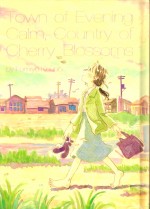
Town of Evening Calm, Country of Cherry Blossoms


By Fumiyo Kouno (jaPress/Last Gasp)
ISBN: 978-0-86719-721-1

First published in 2003/2004 in Japan’s Weekly Manga Action YÅ«nagi no Machi, Sakura no Kuni (Town of Evening Calm, Country of Cherry Blossoms) is an award-winning (2004 Grand Prize for manga, Japan Media Arts Festival and the 2005 Tezuka Osamu Cultural Prize Creative Award) collection of interlinked, generational short stories dealing with the aftermath of the atom bombing of Hiroshima, and particularly the treatment of bomb-affected survivors (“hibakusha”) by a culture that has traditionally shunned imperfection and studiously ignored unpleasant truths. The tale was made into an award-winning feature film and radio serial in 2007.

The project was instigated by an editor rather than Fumiyo Kouno, who is a native of modern Hiroshima, but never considered herself as being affected by the ghastly events of August 6th 1945.

The first story ‘Town of Evening Calm is set in 1955, and follows teenager Minami Hirano as she goes about her daily life in the slowly recovering city. She lives with her ailing mother and sister in a seedy shack, and thinks of those she’s lost: father and two sisters to the bomb and baby brother Asahi who was mercifully staying with rural relatives when the bomb hit.

She hasn’t seen him since: her aunt thought it best to keep the healthy boy away, and subsequently adopted him. The surviving family bravely struggle as seamstresses and clerks, trying to save enough money to visit him. Minami has an admirer; a shy young man named Yutaka Uchikoshi, who tries to shower the quietly independent girl with presents, but ten years after the bomb, the explosion is inexorably still claiming victims. As tragedy looms Minami is unaware that her long-lost brother is coming to see her…

The follow-up ‘Country of Cherry Blossoms’ is divided into two separate tales. The first is set in Tokyo in 1987 with tomboy schoolgirl Nanami Ishikawa railing against her life. She is Asahi’s daughter – a second generation victim – and has never met her hibakusha relatives, but when her brother Nagio is hospitalised she sneaks into his room with new friend Toko Tone and showers him with cherry blossom petals to show him the spring he’s missing, unaware that his asthmatic condition is considered by many to be the taint of the bomb…

Admonished by her grandmother she goes on about her life, but as the family moves nearer the hospital she abruptly loses touch with Toko…

Part two takes up the story in 2004. Asahi has recently retired and moved in with Nanami, when medical graduate Nagio mentions that he has seen Toko at the hospital where he works. Nanami has other things to worry about: Asahi is disappearing for days at a time and she thinks he might be senile…

One day she follows him, and just as years before with Nagio, Toko, a virtual stranger, appears and shares her journey and revelations. The troubled old man is travelling to the rebuilt Hiroshima, driven by an irresistible impulse, and as they follow him Nanami discovers that real reason Toko stopped seeing her family…

Pensive, serene and deftly sensitive, almost elegiac, this book deals with uncomfortable issues by advocating tolerance, understanding and endurance rather than the bombastic unyielding defiance of Keiji Nakazawa’s landmark Barefoot Gen, and the message hits home all the harder for it.

Initially reluctant to produce a work about Hiroshima, Fumiyo Kouno found a strong voice within – and her own unrealised, unexpressed attitudes – when faced with the behaviour still directed toward hibakusha more than five decades later. As she states in the afterword of this superb commemorative hardcover it was “unnatural and irresponsible for me to consciously try to avoid the issue” and she decided that “drawing something is better than drawing nothing at all.”

This quietly magnificent tribute to the truism that “Life goes on” and the proposition that even polite and passive intolerance should always be resisted is a book every politician in the world should read. It also holds a harsh lesson every cosy, comfortable family in existence needs to absorb.
© 2003 Fumiyo Kouno. All Rights Reserved.

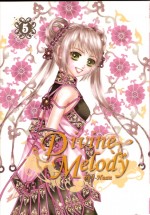
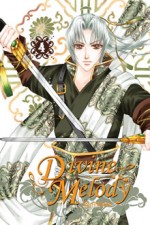
Divine Melody Volume 5


By I-Huan, adapted by Sandra Mak (DrMaster)

ISBN: 978-1-59796-177-6

The extended saga of love and obligation in mythical China steps solidly into the arena of forbidden love in the latest volume of this captivating fantasy romance.

The Celestial Fox-Demons are nearly extinct. Only vixens remain and if they wish to survive as a race, they must propagate their kind at all costs. To add to their woes their beloved leader is also fading; her energies and lifespan almost exhausted. It was this Shifu who first stole the infant deity Cai-Sheng and trained her to transform into a male and sire another generation.

Her plan was exceedingly long-ranging and as centuries passed many Fox Demons grew impatient. Some, like Hui-Niang, renounced their powers and married mortals, whilst haughty Yu-Niang turned to the darkest paths of evil…

Little Cai-Sheng was a lonely child. On the day she escaped from her lessons and met two village children she formed an eternal bond with them. The girl Xiao-Que and boy Duo Xi saved the divine toddler from a dog attack (canines being the mortal enemies of foxes), suffering bloody wounds in her defence. Just in time guardian Hui-Niang appeared and killed the hound, and to thank the humans marked the boy’s torn forehead and the girl’s bitten hand with mystic tattoos. No matter how long, nor how many incarnations passed, their sacrifice would be rewarded.

Promising to meet again tomorrow, the children parted, but time is different for celestial beings and the humans never saw their new friend again. Two centuries passed and Cai-Sheng gained the ability to become a beautiful, magically powerful man at will, but the Chosen One never forgot her joyous day with mortal children, when she was briefly freed of duty and destiny. Reunited now with their current reincarnations – wealthy Su Ping and apprentice exorcist Han Yun-Shi – Cai-Sheng had determined to repay their kindness by acting as matchmaker for the pair.

Unfortunately Ping had seen Cai-Sheng’s male form Qin Cai-Sheng, and become enamoured with “him” whilst Yun-Shi had become smitten with Su Ping – but he also held inexplicable feelings for the “weird girl” Cai-Sheng.

The debased fox-demon Yu-Niang has become a creature of pure malice, haunting Cai-Sheng. She wants the power of Cai-Sheng’s male form and will prey relentlessly on the humans of the city until she gets it. Even though Yu-Niang’s cat familiar is torn between serving Yu-Niang and Cai-Sheng, and is playing a double-game, the wicked fox-demon’s schemes are nearing fruition.

To further complicate her life a Heavenly Envoy named Wei Zi-Qiu has been sent to retrieve and purify Cai-Sheng, or if she has shed mortal blood, to kill her. He too has fallen for her, and tries to cover up the fact that she has slain Yun-Shi’s teacher, the exorcist who killed her childhood guardian Hui-Niang…

We’re deep in soap opera territory in this volume with revelations and ultimata flying thick and fast. The ruthless Taoist exorcist Bai-Leng has shown Yun-Shi who killed his master and revealed that the youth has been marked by a demon for all his future incarnations, before entering into an uneasy alliance with diabolical Yu-Niang to gain his dubious ends. Both divine Zi-Qiu and mortal Yun-Shi have declared their love for Cai-Sheng, but the latter is unaware that she is secretly his very definition of a “monster”.

Zi-Qiu’s superior, Lady Peony, has declared her own love for him, and though he loves Cai-Sheng, the deity is preparing to kill his beloved to save him from himself. Su Ping, enthralled and in deadly danger from predatory Yu-Niang is offered a glimmer of salvation by Bai-Leng, and hapless Cai-Sheng, unable to choose between the her mortal and celestial suitors discovers the tragic origins of her cat-demon familiar Gu-Miao, and sees yet another side of love…

This enchanting shōjo tale of legendary China seems hell-bent on becoming a tragedy of Shakespearean dimensions. I-Huan’s seamless blend of mythology and romantic melodrama is an increasingly complex web of intrigue and passion that appears incapable of a joyous resolution.

This easy combination of passion, comedy and action examines the big issue of Predestination and Free Will, with family expectation always at odds with personal desire. The beautiful, lyrical art perfectly captures this forgotten age as every character becomes a helpless victim of love and their worlds spiral towards a painful, disastrous collision. A lovely series for the fanciful and romantic, this latest volume further indicates that not every Ever After is Happy…

This book is produced in the traditional Japanese format and should be read from back to front and right to left.

© 2006 I-Huan/Tong Li Publishing Co. Ltd. English translation © 2009 DrMaster Publications, Inc. All Rights Reserved.

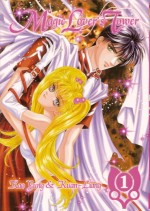
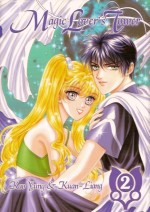
MAGIC LOVER’S TOWER Books 1 & 2


By Kao Yung & Kuan-Ling, translated by Lobelia Cheng and Ailen Lujo (DrMaster)
ISBN: 978-1-59796-153-0 & 978-1-59796-154-7

For romantic comedy in comics form there’s no better place (actually no place at all outside the alternative and small press scenes) than the manga and manhwa marketplace and at least a lot of these stories are readily available in decent translations.

A great example is this brief (2 volume) tale of young Roxanne, a decent, hardworking “plain Jane” school girl in love with the class stud, Logan. Naturally this arrogant bad-boy treats her like dirt…

Her life is made even more miserable by the fact that her older sister recently grew from an ugly duckling to a pretty insufferable swan, and promptly left her behind and alone…

Roxanne’s life changes forever when she frees the Celestial hunk Baphalen from his godly imprisonment in an ancient wall-hanging and he proffers her heart’s desire if she can successfully complete the fantasy tests of Magic Lover’s Tower (a kind of eldritch full-immersion Virtual Reality game and flight simulator).

Should she win her life will change and everything she desires will become real: of course failure could mean death, or worse, make Logan hate her more…

There are the usual cultural barriers for western readers to cross: how people look (appearance and behaviour) is so terrifyingly important in these yarns, as is acceptance and family conformity (although here this does provide many of the better comedy moments), and of course cute and sassy magical animal thingies abound, but there’s also a strong undercurrent of rebellion, a powerful romantic triangle as the seemingly neutral Baphalen plays a hidden game and clever surprise that this grizzled old reviewer certainly didn’t see coming.

This mini-epic is beautifully illustrated and would make an ideal introduction to new readers who’ve long left comics behind but still need a little light fantasy in their lives (and yes, that does mean chicks in general, and your wife or girlfriend in particular,,,)

These books are printed in the traditional Asian front-to-back, right-to-left format.

© 2001 Kao Yung. English translation © 2008 DrMaster Publications Inc. All Rights Reserved.

Black Jack volume 6


By Osamu Tezuka translated by Camelia Nieh (Vertical)
ISBN: 978-1-934287-56-9

Equally able to speak to the hearts and minds of children and adults, Osamu Tezuka’s work ranges from the charming to the disturbing, even terrifying. In 1973 he turned his storyteller’s eye to the realm of medicine and created Burakku Jakku, a lone wolf surgeon living beyond society’s boundaries and rules: a scarred, seemingly heartless mercenary working miracles for the right price yet still a deeply human wounded soul who works his surgical wizardry from behind icy walls of cool indifference and casual hostility…

Born in Qsaka Prefecture on 3rd November 1928, Tezuka suffered from a childhood illness that made his arms swell. Inspired by the doctor who cured him to study medicine, he started his cartooning career at university, and although qualified as a doctor, when faced with a career crossroads, he followed his mother’s advice to do the thing that made him happiest. He never practiced medicine but the world gained such classic cartoon masterpieces as Tetsuwan Atomu (Astro-boy), Kimba the White Lion, Buddha, Adolf and literally hundreds of other graphic narratives. Along the way Tezuka incidentally pioneered, if not created, the Japanese anime industry.

One thing should always be remembered when reading these stories: despite all the scientific detail, all the frighteningly accurate terminology and trappings, Black Jack isn’t medical fiction; it is an exploration of morality with medicine raised to the level of magic… or perhaps duelling.

This is an epic of personal combats, a lone gunfighter battling hugely oppressive counter-forces (the Law, the System, himself) to win just one more victory: medicine as mythology, won by a Ronin with a Gladstone bag. Elements of rationalism, science-fiction, kitchen sink drama, spiritualism and even the supernatural appear in this saga of Magical Realism that rivals the works of Fuentes and Gabriel García Márquez. But overall these are dramatic, highly addictive comics tales of heroism; and ones that that will stay with you forever.

The long overdue series of translated, collected adventures continues in this sixth volume with the bittersweet ‘Downpour’ as Black Jack finds himself trapped on an impoverished island helping a dedicated young doctor, fighting local government corruption and an epidemic, whilst in ‘A Body Turned to Stone’ morality and ethics war with base humanity and smug, religious complacency resulting in an uncommon tragedy.

There’s a message of hope in ‘The Old Man and the Tree’ as a desperate octogenarian battles City Hall to save his oldest friend from demolition, whilst in ‘Twice Dead’ the super-surgeon is called upon to save a criminal suicide so that the state can execute him, and compelled to invent an impossible cure or be imprisoned for practising medicine without a license in ‘Lion-Face Disease’.

The medical profession is held up to harsh scrutiny in ‘Con Man, Aspiring’ when a poor man, at the behest of a scheming doctor, deliberately writes Black Jack a cheque he cannot honour, whilst a rich Texan faces some unpleasant home truths when the surgical Ronin attempts to cure his son of ‘Brachydactyly’. ‘Amidst Fire and Ashes’ sees Black Jack reunite a father and son when he performs delicate surgery under an erupting volcano, ‘Revenge’ sees him outwit the united Medical Board of Japan when they put their wishes before the needs of a patient and even take on the Japanese railway system itself in the poignant yet heart-warming ‘Vibration’.

We enter the realm of pure science fiction as an animal experiment goes incredibly awry in ‘Nadare’ before seeing Black Jack outwit death whilst trapped in a elevator at the bottom of a collapsed building in ‘Three in a Box’, masquerade as one of his greatest rivals in ‘The Substitute’ and in ‘Terror Virus’ – the final tale of this tome – join old foe the euthanizing Dr. Kiriko when the Government embroils them both in a sordid, clandestine scheme involving stolen bio-weapons. As usual Black Jack has the final word…

Thrilling, heart-warming, bitterly insightful and utterly addictive, these incredible stories of a medical wizard in a crass, mundane and hostile world will blow your mind and all your preconceptions of what storytelling can be…

This book is printed in the Japanese right to left, back to front format.

© 2009 by Tezuka Productions. Translation © 2009 by Camelia Nieh and Vertical, Inc. All Rights Reserved.
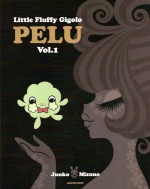
Little Fluffy Gigolo Pelu volume 1


By Junko Mizuno (jaPress/Last Gasp)
ISBN: 978-0-85719-700-6

If you’re over a certain age or have eclectic tastes in art and music you might feel a pang of nostalgia at the work in this intriguing and coyly adult collection, featuring Manga sensation Junko Mizuno’s latest subversively compelling creation.

Since her emergence in 1995, the author has become renowned for combining the appearance of childish innocence or “cuteness” with dark, gory action and unwholesome or stridently clashing and inappropriate content in a sub-genre now dubbed Gothic or Noir kawaii (where kawaii describes cutely drawn protagonists and subjects).

Moreover the skewed sensibilities of her work in such Manga as Cinderalla, Hansel & Gretel, Princess Mermaid and Pure Trance (all available in English language editions) and the as-yet-untranslated Momongo no Isshō (the Life of Momongo) has exploded out of the comics ghetto and been taken up by the larger populace with art exhibitions (Heart Throbs and Tender Succubus), art-books (Hell Babies, Collector File and Flare) and high-end designer toys for adults including plush animals, vinyl figures, stationery, postcards, stickers, original art T-shirts and even a line of erotic products and condoms.

She is scheduled to produce a limited edition My Little Pony figure for a Hasbro charity event and by the time you read this Marvel should have released her first Spider-Man and Mary Jane adventure in the re-launched Strange Tales.

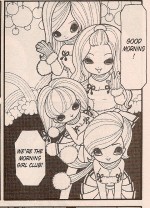
Her self-confessed shojo (“stories for girls”) influenced style also borrows heavily from the imagery of the 1960s and early 1970s, particularly the Graphic Psychedelia that grew out of Pop Art, with huge eyed (admittedly not uncommon in Manga), large-headed girls, drawn to look young – no, not young, but actively, innocently, illicitly under-aged: living in simplified, reduced detail environments.

As previously stated her content is always sharply at odds with her drawing style, like cartoons for toddlers but involving unpleasant visits to the gynaecologist or being eaten by cannibals. Much of her work is in full colour despite the overwhelming preponderance of black and white material in Japan, and this volume (mostly monochrome but with a magically lush colour section) breaks another tradition by using a huge 254 x 201mm page size rather than the usual 188 x 126mm to relate its tales of lonely hearts.

Little Fluffy Gigolo Pelu is another conceptual shocker with a subtle subtext and an overt narrative underpinning, redolent of the naively “Swinging Sixties”. The cute pink planet Princess Kotobuki smells delightful but is invisible to human eyes. On its charming surface dwell nothing but beautiful naked young women and one very lovely, placid purple space hippo: but beware because Space Hippos are carnivorous!

And then there’s Pelu: a fluffy excitable ball of fuzz who questions this idyllic existence. From the hippo Pelu learns of Earth where there are two sexes, not one, and when Pelu learns its own origins (the first chapter is entitled ‘Sex Education on a Fantastic Planet’) it determines to go to the planet of humans and father a baby so it won’t be alone any more…

So begins the charmingly unsettling saga of Gigolo Pelu whose adventures in ‘The Naked Enka Singer’, ‘The Sassy Girl and the Bad Boy’, ‘Beach Maidens’ and ‘The Mysterious High School’ mirror the venerable tale of an Innocent’s road to enlightenment (complete with the loss of the aforementioned innocence), given extra punch by the overwhelming accoutrements of perfect childhood that permeate every atom of the tale.

On Earth the fluffy creature observes human interactions whilst always politely asking if anyone would like to be made pregnant – but love, hate, jealousy, pride, ambition, self-loathing and even murder are hard to grasp until Pelu discovers and befriends a hobo who becomes a valued comrade and teacher.

Everything, especially the many beautiful girls, are drawn in the style of late 1960s Playboy icons, the cartoon stylisations that featured in many movie blockbuster title sequences and especially the psychedelic works of Alan Aldridge and the animated film Yellow Submarine. Anybody British out there who remembers the kids show Crystal Tipps and Alistair, or the hippo from Rainbow, will feel a frisson of nostalgia – which is of course the point. The art is a beautiful velvet trap designed to put the reader in a receptive state so that the author can make her telling points about today’s world.
pelu-pic-2

By co-opting the form of children’s entertainment the author can address fundamental aspects of society in a form intended to shock, subvert, upset and most importantly provoke: hopefully some thought on the readers’ part will be generated beyond the modern shock-reaction to nude young girls and the pre-pubescent idealism and purity that used to be associated with such imagery.

This is a deceptively edgy fantasy with a lot to say about society and relationships – similar to and completely different from Robert Heinlein’s groundbreaking social satire Stranger in a Strange Land, and if enough of the right people read it could have as much impact.
© 2003 Junko Mizuno. All Rights Reserved.

Divine Melody Volume 4


By I-Huan, translated and adapted by Lobelia Cheng & Sue Yang (DrMaster)
ISBN: 978-1-59796-176-9

Time is running out for the Celestial Fox-Demons. Only vixens remain and if they wish to advance their status, let alone survive as a race, they must propagate their kind at all costs. To add to their woes their beloved leader, the Shifu (teacher/leader) who devised the plan to steal the baby girl deity Cai-Sheng and train her to transform into a male and father another generation is fading; her energies and lifespan are almost exhausted.

Her plan was necessarily a very long-ranging one. Over the centuries the Fox Demons had grown impatient. Some, like Hui-Niang, renounced their powers in order to marry mortals, whilst bold Yu-Niang turned to the darkest paths and began to steal little boys as “offerings”…

Little Cai-Sheng was a lonely child. On the day she escaped from her lessons and met two village children she formed an eternal bond with them. The girl Xiao-Que and boy Duo Xi saved the divine toddler from a dog attack (canines are the mortal enemies of foxes), suffering bloody wounds in her defence. Just in time guardian Hui-Niang appeared and killed the hound, and to thank the humans marked the boy’s torn forehead and the girl’s bitten hand with mystic tattoos. No matter how long, nor how many incarnations passed, their sacrifice would be rewarded.

Promising to meet again tomorrow, the children parted, but time is different for celestial beings and the humans never saw their new friend again.

Two centuries passed. Cai-Sheng completed her training and gained the ability to become a beautiful man at will, but the Chosen One had never forgotten her joyous day with mortal children, where she learned of freedom from duty and destiny. Reunited now with their current reincarnations – wealthy Su Ping and apprentice exorcist Han Yun-Sh – she had determined to repay their kindness by acting as matchmaker for the pair.

Unfortunately Ping had seen Cai-Sheng’s male form Qin Cai-Sheng, and become enamoured with “him” whilst Yun-Shi had become smitten with Su Ping – but he also held inexplicable feelings for the “weird girl” Cai-Sheng.

The debased fox-demon Yu-Niang had haunted Cai-Sheng, grown strong on centuries of stolen blood. She also wants the power of Cai-Sheng’s male form and preys relentlessly on the humans of the city. Even though Yu-Niang’s cat familiar is torn between serving Yu-Niang and Cai-Sheng, and is playing a double-game, the wicked fox-demon’s schemes are nearing fruition.

To further complicate her life a Heavenly Envoy named Wei Zi-Qiu has been sent to retrieve and purify Cai-Sheng, or if she has shed mortal blood, to kill her. He too has fallen for her, and tries to cover up the fact that she has slain the exorcist that killed her childhood guardian Hui-Niang…

With volume 4 the plot rapidly advances when Yun-Shi finds a new and decidedly nastier Shifu to train him as an exorcist-priest, Su Ping is possessed by the evil of Yu-Niang, and is in danger of becoming her next murderous familiar, whilst Wei Zi-Qiu and Yun-Shi face-off as rivals and one of them proposes marriage to the bewildered Cai-Sheng…

As an aura of inescapable tragedy falls over this enchanting shōjo tale of legendary China, I-Huan’s flawless blend of mythology and soap-opera moves into high-gear. How this web of intrigue and passion could ever resolve into a happy ending is beyond me. Perhaps it won’t…

This easy combination of passion, comedy and action examines the big issue of Predestination and Free Will, with family expectation always at odds with personal desire. The beautiful, lyrical art perfectly captures a forgotten age as the eternal triangle enlarges to admit another victim of love and their worlds spiral towards a painful, disastrous collision. A lovely series for the fanciful and romantic, this latest volume seems to hint that not all Ever Afters are Happy…

This book is produced in the traditional Japanese format and should be read from back to front and right to left.

© 2003 I-Huan/Tong Li Publishing Co. Ltd. English translation © 2009 DrMaster Publications, Inc. All Rights Reserved.

Divine Melody Volume 3


By I-Huan, translated and adapted by Lobelia Cheng & Sue Yang (DrMaster)
ISBN: 978-1-59796-175-2

Celestial Fox-Demons have almost vanished from the land: only vixens remain and if they wish to advance their status, let alone survive as a race, they must propagate their kind at all costs…

To this end their Shifu (leader/teacher) long ago stole the baby girl deity Cai-Sheng, who with the proper training and refinement would, when grown, be able to transform into a male to father another, superior generation. But this plan was necessarily a very long-ranging one. On the haunted mountain they inhabited the Fox clan grew impatient. Some, like Hui-Niang, renounced their powers in order to marry mortals, whilst bold Yu-Niang began to steal little boys as “offerings”…

Little Cai-Sheng was a bored and very lonely child. One day she escaped from her lessons and met two village children. With the girl Xiao-Que and boy Duo Xi they cavorted and played until a dog attacked the magical child (canines are the mortal enemies of foxes). Brave Duo Xi fought the hound and little Xiao-Que suffered a cruel bite protecting Cai-Sheng. Just in time her guardian Hui-Niang appeared and killed the hound with a well-aimed arrow…

To thank the humans for spilling their blood to defend the chosen child, guardian Hui-Niang marked the boy’s torn forehead and the girl’s bitten hand with mystic marks. No matter how long, nor how many incarnations passed, their sacrifice would be rewarded. Promising to meet again tomorrow, the children parted, but time and duty is different for celestial beings and the humans never saw their new friend again.

Two hundred years passed and Cai-Sheng finished her training. The Chosen One had never forgotten her joyous day with the mortal children, and more importantly, for one glorious afternoon, she learned of freedom from duty and destiny. Centuries later she was reunited with them – or at least their latest reincarnations, beautiful, rich scholar’s daughter Su Ping and apprentice priest/exorcist Han Yun-Shi. To repay them for their kindness Cai-Sheng determined to act as matchmaker for the pair, but Ping had seen Cai-Sheng’s male form Qin Cai-Sheng, and become enamoured with “him”.

Yun-Shi is smitten with Su Ping but can’t understand why the weird girl Cai-Sheng is always hanging around, making herself a nuisance. Moreover, while performing his appointed duties for his disreputable master the apprentice realizes he has a rival in Cai-Sheng’s male form, even if the transforming neo-deity doesn’t…

The debased fox-demon Yu-Niang has haunted Cai-Sheng, grown strong on two centuries of blood taken from boy children. She wants the power tied up in Cai-Sheng’s male form and has begun preying on the humans of the city. Even though Yu-Niang’s cat familiar now (supposedly) serves Cai-Sheng, the wicked fox-demon’s evil schemes are advanced in this third captivating volume as tragedy and death strike, destroying the Chosen One’s oldest friend and protector as well as the only mortal capable of thwarting Yu-Niang’s evil plans…

Cai-Sheng is confused, heartbroken and angry. She wants revenge and justice, but unknown to her the Goddess Lady Peony has informed her celestial envoy Wei Zi-Qiu – who has developed ungodly feelings for Cai-Sheng – that should the Chosen One advance the Fox-Demon cause in any way or harm a human then he must kill her…

This enchanting shōjo tale of legendary China moves into the arena of grand tragedy as events are set in motion that will have disastrous repercussions for all, in Taiwanese creator I-Huan’s flawless blend of mythology and soap-opera. Huan seamlessly blends passion, comedy and action to tell a charming tale of duty versus free-will, and familial expectation battling personal desire. The beautiful, lyrical art perfectly captures the sense of a lost age and the enduring immediacy of three people falling in love in a world spiralling into cataclysm. A lovely series for the fanciful and romantic, this latest volume finally shows the claws beneath the velvety fur…

This book is produced in the traditional Japanese format and should be read from back to front and right to left.

© 2003 I-Huan/Tong Li Publishing Co. Ltd. English translation © 2009 DrMaster Publications, Inc. All Rights Reserved.

Black Jack volume 5


By Osamu Tezuka translated by Camelia Nieh (Vertical)
ISBN: 978-1-934287-55-2

In a creative career that produced over 700 hundred different series and more than 150,000 pages (most of them still infuriatingly unavailable to people who can’t read Japanese), Osamu Tezuka captivated generations of readers across the world with tales of history, fantasy, romance and startling adventure. Perhaps his most intriguing creation is Black Jack, who overcame horrendous injuries as a child, and although still carrying many scars within and without, roams the globe, curing any who can pay his deliberately daunting, exorbitant prices – usually cash, but sometimes in more exotic or metaphysical coin.

He is the ultimate loner, except for Pinoko, a little girl he literally built from the scraps of an early case. Unlicensed by any medical board on Earth, he holds himself to the highest ethical standards possible… his own.

Volume 5 begins with a biting satire on medical ranks and hierarchies in Japan. ‘Hospital’ sees the Director’s chosen favourites (all from his old university) riding roughshod over other staff with no thought to the patients in their care. When a young surgeon is ordered to amputate a concert pianist’s arm, irrespective of objections or medical necessity, the harried neophyte consults the ronin Black Jack…

‘Quite a Tongue’ in a heart-warming parable about Japan’s attitude to disabilities set against the backdrop of children’s national abacus competitions, ‘Asking for Water’ poses some searching questions about family and the care of the elderly and ‘Yet False the Days’ tragically compares little Pinoko’s penchant for adopting strays with the outlaw surgeon’s frustrating attempts to cure a media star’s impossible quadriplegia. THREE TISSUE ALERT!: this story contains sick kittens…

A chance journey on ‘The Last Train’ finds Black Jack travelling with the woman called the Black Queen (see Black Jack volume 1). Married now, she faces an impossible quandary, but reckons without the renegade’s tendency to extreme and unpalatable solutions…

‘There was a Valve!’ is a superb nut-and-bolts medical mystery, featuring the return of the mercy-killing Dr. Kiriko (see ‘Two Dark Doctors’ in Black Jack volume 3) in a startling tale of ethics and conscience whilst the Blind Acupuncturist from volume 1 returns with more unwanted lessons for the maverick medic in ‘Two at the Baths’.

‘Pinoko’s Mystery’ is a delightful comedy of errors featuring a mad bomber, whilst more secrets from Black Jack’s sordid past resurface in the gangster thriller ‘Imprint’ and then he’s placed in an impossible situation by Dr. Kiriko in the tense viral-killer thriller ‘99% Water’.

An aged doctor being forced out of his job comes seeking assistance in ‘The Helper’ whilst in ‘Country Clinic’ Tezuka shows us a different side of the profession through the inspired works of a simple rural practitioner – but of course there’s a sting in this tale too…

‘Wolf Girl’ finds the O.R. outlaw trapped behind the Iron Curtain (remember that?), and rescued by a hideously deformed outcast. Fixing her face proved far simpler than remedying her soul, and in Black Jack’s world far too often no good deed goes unpunished…

‘On a Snowy Night’ ends these tales with an out-and-out yarn of supernatural wonderment, as the renegade doctors performs the greatest achievement of his life, and one nobody will ever know of.

All the troubles and wonders of this world (and sometimes other ones) can be found in medical dramas, and in Black Jack elements of rationalism, science-fiction, kitchen sink drama, spiritualism, criminality and human frailty are woven into an epic of Magical Realism that rivals the works of Fuentes and Gabriel García Márquez. But above all else these dramatic, addictive tales of heroism are pure unadorned entertainment that that will stay with you for the all the days of your life.

This book is printed in the Japanese right to left, back to front format and also contains a superb 12 page teaser for Tezuka’s classic fantasy of alienation Dororo.

© 2008 by Tezuka Productions. Translation © 2008 by Camelia Nieh and Vertical, Inc. All Rights Reserved.

Black Jack volume 4


By Osamu Tezuka translated by Camelia Nieh (Vertical)
ISBN: 978-1-934287-43-9

Unfortunately, for many modern readers the highly stylised semi-comical “cartoonish” illustration that Osamu Tezuka chose to work in has proved a conceptual hindrance, not only for these astounding adventures in medical meta-fiction, but for many other of his incredible stories of heroism and fantasy. But in these days of vast art-teams, computer enhancements and a zillion colour effects these carefully crafted black and white pages use a simple symbology and deft design to tell tales that only the most sophisticated consumer can fully appreciate: not because they’re difficult or obscure, but because they hit home and hit hard every time…

The pictures may be soft, seductive and welcoming but the content – and intent – are as hard and uncompromising as a surgeon’s scalpel…

Black Jack is at once a lone wolf hero, troubled genius, passionate outsider and amoral humanitarian combining the indomitable will of Doc Savage with the intellect of Sherlock Holmes and ambivalent, intuitive drive of Dr. Gregory House. Hideously scarred as result of extensive childhood surgery the unlicensed mercenary medic endures public condemnation and professional scorn, experiencing every genre of storytelling as he continually confronts the cutting edges of medicine.

Volume 4 begins with ‘False Image’ wherein an uncharacteristic visit to a school reunion leads to shocking revelations about Black Jack’s most beloved childhood inspiration, whilst in ‘The Scream’ he teaches a cruel lesson to a wilful schoolgirl whose throat surgery means she must utter no sounds for a year…

Next is a touching and fanciful romance wherein the medical maverick stumbles across a severely wounded bandit in a wind-blown shanty and plays grisly cupid for the ‘Drifter in a Ghost Town’, and then saves his assistant’s newest friend from a unique birth defect in the charming mystery ‘Pinoko Love Story’.

A particularly vicious and spectacular crime leads to a grim mission of mercy in ‘The Sewer Way’, an old friend returns in a new light when a two-fisted sailor demands outrageous skin surgery in the heart wrenching ‘The Seas Smell of Romance’ and a rather jolly cat and mouse duel between a pickpocket and a cop turns deadly serious and nauseatingly nasty when the Yakuza get involved in the tale of ‘Tetsu of the Yamanote Line’.

‘Titles’ finds Black Jack at the heart of an international incident when a visiting Emperor demands to observe Japan’s most persona non grata doctor in action – and won’t take “no” for an answer – whilst a profound tragedy of far more humble folk drives the desperate father in ‘Lost and Found’. He scrapes together every penny he can to pay Black Jack for his wife’s operation – only to lose it all in the city’s accumulated garbage. The “accommodation” they come to will shock you…

An exploding car and a brutally burned little boy drives a loving Yakuza father to incredible sacrifices in a bitter parable of pride and appearance in ‘Burned Doll’, paternal disappointment and childhood dreams taint the tragic lives of an entire family in ‘The Heart of a Giant’ and there’s breathtaking excitement in ‘Gas’ when the outlaw doctor has to race against time – and peristalsis – to retrieve a lethal cyanide capsule from Pinoko’s stomach before it dissolves. Unbelievably, this little gem is as funny as it thrilling!

The overweening pride of top doctors is exposed in ‘From Afar’ as the famed Dr. Bandai ignores true need to pursue celebrity cases: however for Black Jack puncturing such pride is more valuable than money and this book ends with another blend of hilarity and tearful tragedy as Pinoko adopts a revolting and unwelcome ‘Thieving Dog’.

Thrilling, heart-warming, bitterly insightful and utterly addictive, these incredible stories of a medical wizard in a crass, mundane world will blow your mind and all your preconceptions of what storytelling can be…

This book is printed in the Japanese right to left, back to front format.

© 2009 by Tezuka Productions. Translation © 2009 by Camelia Nieh and Vertical, Inc. All Rights Reserved.