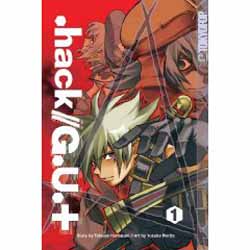
.Hack//G.U.+ Volume 1

.Hack//G.U.
.Hack//G.U.

By Tatsuya Hamazaki & Yuzuka Morita (TokyoPop)
ISBN: 978-1-4278-0635-2

This is a very confusing sequel to a sequel based on a computer game about a computer game. The originals were based on a Japanese anime series called .hack//Roots… and I’m going to stop there with the background stuff because my eyes are starting to bleed. There are three (maybe four by now) game editions and a couple of TV series but that has little relevance to the book I’m holding in my hand.

By the year 2017 a huge multiplayer online game called The World has gripped humanity to such an extent that most of the planet are now continuously lost in a fantasy realm of fighting Avatars – the online personas of players. Most are trapped there with no way out. PKs – Player Killers – hunt and destroy Avatars and more adaptable PKKs have evolved. Player Killer Killers hunt down and slay the predators but not for any moral purpose, they’re just a better test of prowess.

But even if the population is lost in The World (R: 2 to be exact) the real world still impinges. PKK Haseo – AKA “The Terror of Death” – roams the cyber-realm hunting for the PK “Tri-Edge” whose attack on his friend Shino left her in a real coma – an increasingly common event in The World. And covert forces are manipulating the game and the billions of players for some as yet unspecified purpose. What is really going on?

No, I’m serious asking here because I truly am terribly confused. I feel completely unable to comment on the narrative because so much back-story is unavailable to new readers. It seems competent and may be excellent but I just can’t tell. The art however, by Yuzuka Morita is good; fast, slick and strong on action but with a sensitive touch in regard to character interaction.

Impressive looking, this is not a book for the uninitiated.

© 2006 .hack Conglomerate, NBGI. All Rights Reserved. English text © 2008 Tokyopop Inc. All Rights Reserved.
Chinese Hero: Tales of the Blood Sword, Vol 6

Tales of the Blood Sword 6

By Wing Shing Ma (DrMaster Publications)
ISBN13: 978-1-59796-131-8

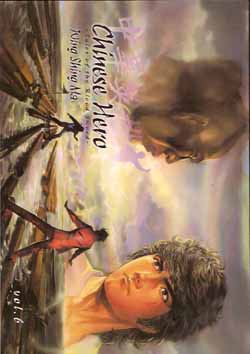
I’ve said it before and it’s still true. Hong Kong comics are beautiful. They’re produced using an intensive studio art-system that means any individual page might be composed of painted panels, line-art, crayons and art pencils, literally anything that will get the job done. And that presumably is to enhance not so much nuances of plot but rather details of the mysticism/philosophy of Kung Fu that my western sensibilities just aren’t attuned to. They are astounding to look at, but don’t expect them to make much sense.

These relentless action classics (originally published by Hong Kong outfit Jademan Comics) have been digitally re-mastered for trade paperbacks. The protagonist, tough, good-looking, Hero Hua, is a husband and father, the latest in a long line of Guardians tasked with protecting a magic sword powered by blood. His line has safeguarded the blade for generations, and the ability to endure personal sacrifice is bred to the bone in him.

When a Gangster tries to steal the Blood Sword, the collateral damage includes most of Hero’s family, launching a vendetta that encompasses half the planet. The villains are thoroughly evil, masters of every fighting art and dirty trick and Hero and his incomprehensibly wide circle of friends and associates – who come and go with dazzling brevity – fight an unceasing battle to preserve the sword and avenge his family.

Because that’s fundamentally what this genre of comic is: One glorious, lavish spectacular exhibition of Kung Fu mastery. Like much of the region’s classic cinema, all other considerations are suborned to the task of getting the fighting started and to keeping it going. If you’re looking for characterisation, sharp dialogue or closure, look elsewhere. If, however, you want Good Guys thumping Bad Guys in extended, eye-popping ways, you might want to give this a go. Be warned though, it is by nature a never-ending story…

This is the sixth volume and to be honest, all sense of logic and continuity has long been abandoned by the creators. Hero, his son and their disparate allies must overcome foes that include a vampire, Q Level Face Card Assassins, the deadly fashionistas of the Nymph Flower Puzzle and a host of other exotic menaces, just to stay alive, and I suspect there’s no real story structure left to get in the way of all the action. Needless to say the book ends on a cliffhanger…

Crafted in a dizzying variety of artistic styles including pen-and-ink, crayon, painted art, even photography, this is a comic about fighting, heavily influenced by the spiritual aspect of Kung Fu. If you prefer a semblance of realism in your fiction this rollercoaster romp is not for you. This is Fighting Fantasy…

Superhero fans might be amazed at the variety of powers a lifetime of knuckle push-ups and bowing can produce, but this is a style of comic wedded to the concept of study and training and will producing literal miracles. It is however, irresistibly exuberant, beautifully illustrated and endlessly compelling. If you’re open to different ways of telling tales you may find yourself carried away on this relentless tide of shallow heroes and non-stop action.

© 2008 Yasushi Suzuki. © 2008 DGN Production Inc.

Manga School With Selina Lin

Manga School with Selina Lin

By Selena Lin (TokyoPop)
ISBN: 978-1-42781-023-6

I don’t know if it’s possible for an entire genre – or possibly culture – to be shallow but the Japanese creators of Manga are obsessed with the word “Cute”. That’s not in any way a value judgement but it does make this rather good beginners manual in the arts of making comics Eastern-style just a wee bit cloying unless you’re the ten year old girl it’s aimed at: and maybe even for them too.

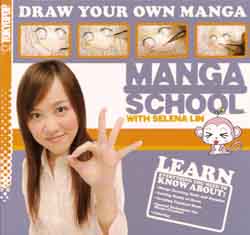
And that’s a genuine pity as this book has a lot of solid advice and information which could benefit any would-be creator who wants to experiment with the medium. Broken down into five basic lessons Manga drawing tools and supplies, Getting Ready to Draw, Creating Finished Work, Special Techniques for Manga Creators, and Colouring. This slim tome covers all the necessary basics with simple instructions (even on the eternal artist’s bugbear Perspective) whilst the section on applying tones with a computer even taught me a few things.

Aimed primarily – if not exclusively – at young girls this is a valuable aid to learning your craft, but maybe you’d best keep a bag of lemon drops handy to counter the sugary taste.

© 2004 Selena Lin. English translation © 2008 TokyoPop Inc. All Rights Reserved.

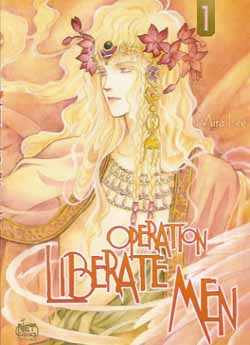
Operation Liberate Men, Book 2

Operation Liberate Men 2

By Mira Lee (NetComics)
ISBN: 978-1-60009-232-9

It’s hard enough to get by as a mannish young girl, better at fighting than dating, and a poor student too, in today’s society, but when you’re also trapped in a parallel dimension where sadistic, autocratic, bullying women have enslaved men, it’s much worse. When you compound that with the shameful fact that the oppressed men who have summoned you to deliver them from bondage are completely oblivious of the fact that you are actually female you can see why young Sooha Jung thinks she might have made a mistake in travelling to this magical realm to liberate the men of the Para Empire.

Falling afoul of the brutal women – also unaware of Sooha’s sex – led to a battle in which the rebel Boy-Toy Ganesha was injured almost fatally. Desperate and on the run, Sooha is captured and imprisoned. As events in the rebel hierarchy proceed without her, Sooha realises that this is not her first contact with the male denizens of the Para Empire. There was an incident long ago when she was a little girl…

There’s a touch of Aubrey Beardsley and the occasional dash of Charles M Schulz in the dreamy artwork that so well delineates this compelling manhwa fantasy. Ending on another cliffhanger this tales continues to grip the reader in fevered anticipation…

© 1997 Mira Lee. All Rights Reserved. English text © 2007 NetComics.

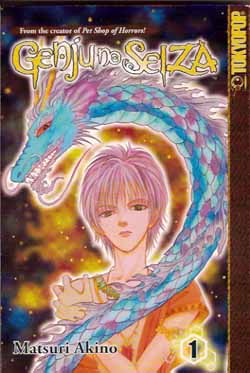
Genju No Seiza, Vol 1

Genju No Seiza

By Matsuri Akino (TokyoPop)
ISBN: 978-1-59816-607-1

There’s a new kid in school but he’s not the type who likes to make waves or get noticed. Meanwhile in the remote mountainous kingdom of Dhalashar, the Chinese have installed a new ruler, Karma the 42nd. The world expects trouble because everybody knows that the new leader is not the true reincarnation of the King. Idly, Fuuto Kamishina ponders the hassle of a kid of fifteen forced to run an entire country. It takes all his energy just to get through a day. And then the giant invisible talking bird tells him that he’s the true king of that faraway land and heir to all the mystical and spiritual powers of the position…

This collection of the first five tales in the acclaimed series introduces the reluctant boy-king and sees him gradually accept his heritage if not his responsibilities. He makes and tragically loses a friend and fellow outsider, takes up with an unconventional scholar and his uniquely disabled lolli-goth ward, speaks with the dead and discovers that other magical servants and guardians are going to keep making his life increasingly difficult.

Somewhat slow-paced and a trifle derivative, this Shoujo fantasy is populated with the usual fashions, castles and coterie of pretty, intense boys that fans expect, but there’s little of the back-biting intrigue that pervades the sub-genre here: At least so far. What there is though, is a dreamy inevitability and spooky sub-text that ought to appeal to mystery fans as well.

Beautifully drawn, but painfully slow, most readers – myself included – will need a few more volumes before a fair and full opinion can be formed.

© 2000 Matsuri Akino. English script © 2006 TokyoPop Inc.

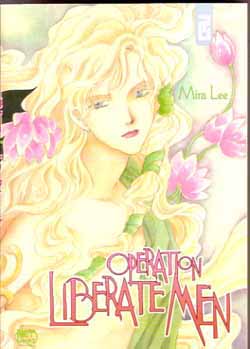
Operation Liberate Men, Book 1

Operation Liberate Men

By Mira Lee (NetComics)
ISBN: 978-1-60009-231-2

Sooha Jung is sixteen and has just failed the High School Admissions Exam. In achievement-oriented, socially conservative South Korea it’s bad enough to be a tomboy who prefers to fight rather than preen or primp or date boys, but now she can add mediocre student to her list of failings. But then the ethereally beautiful and androgynous Ganesha literally bumps into her.

Sooha is unsure if the lovely but weird foreigner is a boy or a girl, but soon decides that’s not as relevant as the fact that he’s completely crazy, claiming to come from another dimension, the Para Empire, where men are slaves and sex objects dominated by sadistic, domineering women. Disbelieving yet inspired by the thought of a world where women are in charge she agrees to “return” with Ganesha. Unfortunately, the story was true and she’s soon trapped on a very alien world. Moreover Ganesha believes she’s the perfect man to lead the downtrodden males of Para to freedom!

Embroiled in a civil war in a fantastical primitive place, Sooha bolts, but soon realises the genuine need of the oppressed in a truly savage society. She also discovers that Ganesha has a secret. As the most beautiful man in the worlds he’s not only a secret freedom fighter but also the cherished, pampered plaything of the truly diabolical Supreme Ruler: a woman known as The Emperor…

Malevolent schemers, Court intrigues, broad humour and a weird take on gender issues elevate this old, old plot and the healthy doses of supernatural conflict countered by Sooha’s Bull-in-a-China-shop temperament makes this tale an unexpected treat. Its nice to see a less-than-deferential, plain girl as lead character for a change and the cliffhanger this first volume concludes on ensures that I’ll be back to see what happens next. Give it a go and perhaps you’ll feel the same way too…

© 2001 Mira Lee. All Rights Reserved. English text © 2007 NetComics.

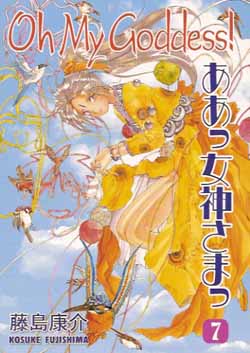
Oh My Goddess! Vol 7

Oh My Goddess! Vol 7

By Kosuke Fujishima (Titan Books)
ISBN13: 978-1-84576-510-1

This volume of the classic manga fantasy romance/comedy of manners finds the mystically afflicted Keiichi still kicking back (as much as is humanly possible) after his semi-domesticated pantheon of goddesses almost destroyed the world. When he accidentally bound the celestial Belldandy to him in a cosmic wrong number incident he knew that there was trouble ahead but he never dreamed that her tag-along sisters were chaos incarnate.

Mischievous Urd believes she now owes him a debt of gratitude and intends to repay it by making him and Belldandy fall properly in love. But in a home filled with meddling deities, and sisters at that, no plan ever works out…

Things are further complicated by the demonic possession of Keiichi’s little sister Megumi by the wicked spirit Mara, the introduction of vacuous himbo boy-toy Senbei, the God of Poverty and Disaster, and the appearance of a new student in the Motor Club our hero spends all his time and money in.

Sora Hasegawa is a different kind of threat: she’s smart and pretty, loves machinery and wears glasses! (In Japanese popular literature and modern fiction there’s a sub-cultural icon called a meganekko or glasses-wearing-girl, who is either a nerd or irresistibly cute and often both. If you need more information set your search engines to look, but don’t touch…). How can the faithful and long-suffering Belldandy compete with this kind of threat?

Beautifully illustrated, consistently charming, this blend of slapstick, fantasy and comedy-of manners is a perennial favourite and a great joy to read. But for the love of Odin, do not start anywhere but with the first volume, and then you’ll have to get ’em all.

This book is printed in the ‘read-from-back-to-front’ manga format.

English language translation © 2008 Dark Horse Comics, Inc.

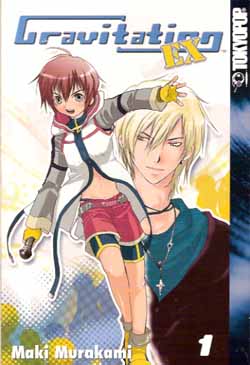
Gravitation Ex, Vol 1

Gravitation Ex

By Maki Murakami (TOKYOPOP)
ISBN: 978-1-4278-0240-8

Enthusiastic, if over-written, sequel to the twelve volume manga series Gravitation which follows the trials and tribulations of popular boy-band (that’s a pun most of you won’t get until later) Bad Luck through the torrid love affair between Shuichi Shindo and Eiri Yuki. This is a Shōnen-ai serial so if you’re not comfortable with pretty lads in love this is not for you, and if you’re looking for the sexually explicit stuff, you’ll be disappointed too as that’s Yaoi fiction. This is a twisty-turny teen romance tale (the lead characters are contextually in their thirties but are drawn much younger).

At the end of Gravitation Shuichi and Yuki had seemingly resolved their tempestuous relationship and settled down -as much as Rock Stars ever do – but with this volume a trip to America brings an amazing and long-term complication into their lives, opening old wounds. Also, in a world full of beautiful hungry people temptation is never far away…

To Western eyes (mine included) this is an uneasy blending of over-the-top slapstick, Rock ‘n’ Roll clichés, cheap soap-opera, and touching, desperate romance, but the series has narrative integrity and many devoted fans. It helps a lot that it is so beautifully illustrated. If you like this sort of thing, to misapply Abraham Lincoln’s legendary adage, this is the sort of thing you’ll like, but trust me on this, without the dozen Gravitation books as a starter, this sequel series will be fairly impenetrable.

This book is printed in the ‘read-from-back-to-front’ manga format.

© 2006 Maki Murakami, GENTOSHA COMICS. English text © 2007 TOKYOPOP Inc. All Rights Reserved.

Andromeda Stories

Andromeda Stories 1

By Keiko Takemiya, story by Ryu Mitsuse (Vertical)
Book 1 ISBN: 978-1-932234-84-8, Book 2 ISBN: 978-1-932234-85-5, Book 3 ISBN: 978-1-934287-04-0

Keiko Takemiya is one of the most revered women working in Japanese comics. Her Kaze to Ki No Uta (an adaptation of Gilbert Cocteau’s The Poem of the Wind and the Trees) which appeared in 1976 is considered the first ever Shounen-ai (young men’s love strip) and the progenitor of that entire genre. Born in 1950, she sold her first work in 1968, working in not just romance and girl’s stories but also science fiction in a grand and epic manner.

This brief series from 1980-1982 has some overtones of Fred Saberhagen’s Berserker novels, and tells the epic generational tale of humanity’s struggle against encroaching and relentless mechanisation by sentient machines programmed to domesticate and protect Man from all threats – especially himself.

Andromeda Stories 2

On the idyllic and spiritual world of Astria, Cosmoralian Prince Ithaca is preparing to marry Princess Lilia when an irresistible mechanical invasion force arrives, programmed to overwhelm and eradicate organic life.

Despite heroic opposition The Enemy inexorably assimilates the human population, and Lilia is forced to flee with her newborn son Prince Jimsa to the desert wastes. There he grows to young manhood surviving ravening wild beasts, bandits and grim adversity, sharpening the immense powers he has developed as the culminating point of three extremely special bloodlines.

And somewhere a twin sister he knows nothing about also matures…

Andromeda Stories 3

The third volume begins with the siblings eventual meeting, carries through to the final fate of Astria and goes on to encompass the intergalactic destiny of the entire human race.

Staggering in scope, this fantasy thriller has classical overtones (and a chilling metaphorical message picked up in James Cameron’s Terminator movie a few years later) delivered in an engagingly florid and poetic style. Working with prose science fiction legend Ryu Mitsuse, Takemiya blazed a trail with this tale and it’s a pleasure to finally see it in an accessible English edition.

© 2008 Keiko Takemiya. Translation © 2008 Magnolia Steele and Vertical, Inc. All Rights Reserved.

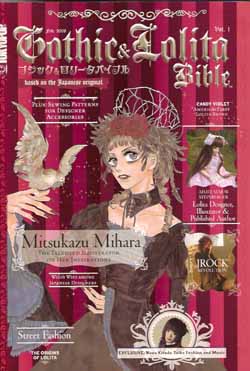
Gothic and Lolita Bible, Vol 1

Gothic and Lolita Bible

By various (TokyoPop)
ISBN: 978-1-42780-347-1

I’m always happy to see new ways to cross the divide between comics – of any nationality – and the broader world so this odd but interesting (to wizened codger me, at least) new art book from those fine people at TokyoPop gets my nod.

For those of you who have no idea what “Gothic” and “Lolita” means in this context, allow me to enlighten you.

Young people–and especially Japanese folk–like to dress up. They call it “Cos Play”. That’s a recreational choice. This book is devoted to a stylisation that probably grew out of that but more directly devolves from music fans copying the way their favourite Visual Kei bands dressed. Visual Kei is a music genre where performers all play in a themed uniform or costume – like the Beatles in 1964 or the Hives last week. This mimicry has become an actual fashion movement in its own right.

The Gothic part is much like what you’re used to, a subculture concerned with alienation, which borrows equal parts from Elizabethan and Victorian/Edwardian clothing styles and vampire imagery ranging from the German Expressionists to Hammer films. There’s lots of black and some red and/or white. Many outsiders assume Goths are obsessed with death and nihilism, and just like when I was a punk in the late 1970’s (don’t visualise, just move on) assume the clothes are a uniform rather than a lifestyle choice. By most accounts Goths are concerned with issues of change, transformation, free expression, conscious eroticism and austere or “cold” beauty.

Lolita in this context means wearing outfits that have visual roots in Victorian and Edwardian children’s clothing or Rococo period fashion and accessories. In Japan Roriita Fasshon is a thriving subculture with many competing companies producing apparel and millions of young people designing their own personal outfits.

The basic kit includes knee length socks or stockings, flounced skirts and dresses, ornate headdresses, blouses and petticoats plus insanely high heel/platform shoes or boots… and very specific make-up. The emphasis is on innocence and idyllic childhood, so there’s often a teddy bear or toy in attendance.

Lolita subdivides into a number of branch styles such as Gothic, Elegant Gothic, Sweet (or amaloli: based on Rococo art styles and heavily influenced by Alice in Wonderland and shojo manga – I said there was a comic connection, didn’t I?), Country (more Dorothy in Oz than Alice in Looking Glass Land), Classic (which is intricate and Baroque influenced) and even Punk.

This oversized tome is filled with translated articles produced between 2004 to 2006 culled from Japanese magazines on the subject as well as original American contributions, hundreds of photos, poetry, fan art and designs, and a rather good complete original manga tale: Till Dawn is by Asumiko Nakamura and details the surreal yet poignant meeting of a Goth boy and a Lolita girl. This edition also includes a set of patterns for the home hobbyist to make their own Loli-Goth accessories.

Not, I suspect, everybody’s cup of tea but an intriguing project that might pull in a few fashion-conscious fans to our weird graphic playground. And all you comic he-men shouldn’t worry; I read the entire thing and felt absolutely no desire to put on a petticoat (what did I say about not visualising…?!)

© 2007 TokyoPop, by arrangement with Index Communications. All Rights Reserved.