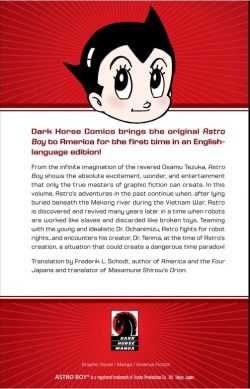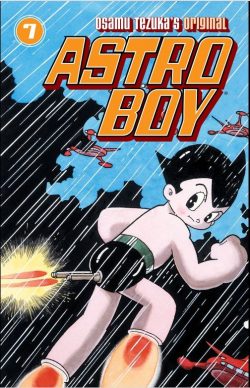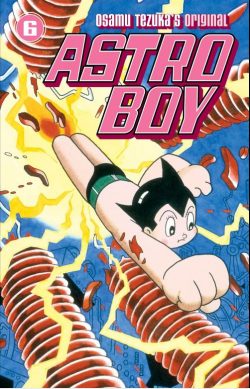
Osamu Tezuka’s Original Astro Boy volume 6 & 7


By Osamu Tezuka, translated by Frederik L. Schodt (Dark Horse Manga)
ISBN: 978-1-56971-681-6 (TPB 6) 978-1-56971-790-5 (TPB 7)

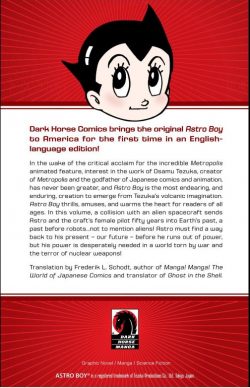
There’s nothing like the real thing. After a range of robotic rapscallions and kid-friendly constructions, here’s a double dose of the original and genuine mechanical marvel of any age…

From beginning his professional career in the late 1940s until his death in 1989, Osamu Tezuka generated an incomprehensible volume of quality work which transformed the world of manga and how it was perceived in his own country and, ultimately, across the globe. Devoted to Walt Disney’s creations, he performed similar sterling service with Japan’s fledgling animation industry.

The earliest stories were intended for children but right from the start Tezuka’s expansive fairy tale stylisations harboured more mature themes and held hidden pleasures for older readers and the legion of fans growing up with his manga masterpieces…

“God of Comics” was born in Osaka Prefecture on November 3rd 1928, and as a child suffered from a severe illness. The doctor who cured him inspired the lad to study medicine, and although Osamu began drawing professionally whilst at university in 1946, he persevered with college and qualified as a medical practitioner too. Then, as he faced a career crossroads, his mother advised him to do the thing which made him happiest.

He never practiced as a healer but the world was gifted with such masterpieces as Kimba the White Lion, Buddha, Black Jack and so many other graphic narratives.

Working ceaselessly over decades, Tezuka and his creations inevitably matured, but he was always able to speak to the hearts and minds of young and old equally. His creations ranged from the childishly charming to the distinctly disturbing such as The Book of Human Insects.

Tezuka died on February 9th 1989, having produced more than 150,000 pages of timeless comics; created the Japanese anime industry and popularised a uniquely Japanese graphic narrative style which became a fixture of global culture.

These monochrome digest volumes (173 x 113 mm in the physical world and any size you like if you get the eBook edition) continue to present – in non-linear order – early exploits of his signature character, with the emphasis firmly on fantastic fun and family entertainment…

Tetsuwan Atomu (literally “Mighty Atom” but known universally as Astro Boy due to its dissemination around the world as an animated TV cartoon and one of post-war Japan’s better exports) is a spectacular, riotous, rollicking sci fi action-adventure starring a young boy who also happens to be one of the mightiest robots on Earth.

The series began in 1952 in Shōnen Kobunsha and ran until March 12th 1968 – although Tezuka often returned to add to the canon in later years, both in comics but in also in other media such as the newspaper strips reprinted and repackaged here. Over that period, Astro Boy spawned the aforementioned global TV cartoon boom, starred in comic book specials and featured in games, toys, collectibles, movies and the undying devotion of generations of ardent fans.

Tezuka frequently drew himself into his tales as a commentator, and in his later revisions and introductions often mentioned how he found the restrictions of Shōnen comics stifling; specifically, having to periodically pause a plot to placate the demands of his audience by providing a blockbusting fight every episode. That’s his prerogative: most of us avid aficionados have no complaints…

Tezuka and his production team were never as wedded to close continuity as fans are. They constantly revised both stories and artwork in later collections, so if you’re a purist you are just plain out of luck. Such tweaking and modifying is the reason this series of collections seem to skip up and down the publishing chronology. The intent is to entertain at all times so stories aren’t treated as gospel and order is not immutable or inviolate.

It’s just comics, guys…

And in case you came in late, here’s a little background to set you up…

In a world where robots are ubiquitous and have won (limited) human rights, brilliant Dr. Tenma lost his son Tobio in a traffic accident. Grief-stricken, the tormented genius used his position as head of Japan’s Ministry of Science to build a replacement. The android his team created was one of the most groundbreaking constructs in history, and for a while Tenma was content.

However, as his mind re-stabilised, Tenma realised the unchanging humanoid was not Tobio and, with cruel clarity, summarily rejected the replacement. Ultimately, the savant removed the insult to his real boy by selling the robot to a shady dealer…

One day, independent researcher Professor Ochanomizu was in the audience at a robot circus and realised diminutive performer “Astro” was unlike the other acts – or indeed, any artificial being he had ever encountered. Convincing the circus owners to part with the little robot, the Prof closely studied the unique creation and realised just what a miracle had come into his hands…

Part of Ochanomizu’s socialization process for Astro included placing him in a family environment and having him attend school just like a real boy. As well as providing friends and admirers the familiar environment turned up another foil and occasional assistant in the bellicose form of Elementary School teacher Higeoyaji (AKA Mr. Mustachio)…

The wiry wonder’s astonishing exploits resume after the now traditional ‘A Note to Readers’ – explaining why one thing that hasn’t been altered is the depictions of various racial types in the stories.

The author was also keen on combining all aspects of his creation into one overarching continuity. This volume opens with ‘“Once Upon a Time” Astro Boy Tales Part 1′ January 24th – December 23rd 1967: reprinting modified strips from the serial that ran in the Sankei newspaper. In his cartoon persona, the God of Comics explains how the cliffhanger ending of the TV series (falling into the sun on a malfunctioning nuclear fusion blocker) never sat well with him.

Filling in gaps, Tezuka here reveals how the depowered robot boy was originally rescued and repaired by insectoid aliens and restored to Earth, but also how he has since rejected that plot twist and replaced it with a new one in ‘Beginning of the Contradiction’…

Now, while enjoying an evening flight over his beloved city, Astro is caught in the explosion of a crashing spaceship. He also saves a locust woman passenger who has taken more-or-less human form. After sharing her tale convoluted tale of romantic woe – involving two males determined to fight to the death for her – Scara Ohara realizes she is marooned on Earth, but that’s not the biggest problem she and her robot rescuer face. When Astro goes for help, he discovers the detonation has cracked the time barrier, plunging them back 50 years to March 1969…

While scouting ancient (by his lights) Tokyo and reeling in shock, Astro meets and befriends a little boy. He soon learns that there are no other true robots in existence and that little Shin-Chan is the world’s greatest beggar.

The diligent mendicant offers the stranded strangers accommodation in his plush house and is astounded when Astro reveals his artificial nature and great dilemma. The mechanoid needs constant atomic fuel top-ups or he will cease to function, but now – decades away from sustenance – is living on borrowed time…

‘Living on Earth 101’ finds Shin-Chan urgently schooling the strangers on the primitive, intolerant world they now live in: building a home, getting jobs as Astro deduces that – if he’s careful – he can live three more years. There are numerous embarrassing and simply dangerous moments where their secret is almost exposed, such as the time he digs up rare gems from inside a volcano but cannot explain how he got them to extremely curious diamond sellers…

Scara cannot understand the concept of work, but easily adapts to the joys of shopping, and lure of “fun” with a succession of attentive men, piling pressure on the sensible robot and triggering an encounter with ruthless thieves and the first of Astro’s contacts with people he will know half a century from “now”.

It’s the birth of the age of automation and Astro regularly meets prototype constructs that painfully remind him of home, where robots are sentient and have equal rights. Here, his kind are considered, silly fantasy, toys and potential job-stealers. Pioneering scientists often work in secret, such as the masked dabbler building his metal men in a secret underground lair.

The Birth of Neva #2′ sees a painfully young Ochanomizu take on the human-seeming weird kid Astro as an assistant… with startling repercussions.

As Scara continues to flounder in a strange world, ‘Baro, the Robot’ finds her at odds with her rescuer after she reveals that on her world, all mechanoids are slaves. Incensed, Astro rockets away, wasting precious energy to ostensibly investigate the rogue nation of Peakok, which has shocked the world with twin announcements: it is now a nuclear power, and its H-bombs are deployed by a robot delivery system…

As Astro enters the sinister police state, President Bundell is already taking charge of scientist Carpon‘s beloved brainchild Baro. The dictator has no idea that the sentient machine has the mind and personality of a human toddler, whilst the nuclear weapon really hates the idea of killing or dying: opinions fortified after meeting and debating with Astro. That all tragically changes when the President murders rebellious Carpon and Baro seeks revenge…

Squandering power, Astro only has six months energy remaining when the next crisis occurs. ‘Scara Disappears’, reveals how the emotionally dislocated alien – growing evermore discontented – flees to the mountains to escape humanity. When the boy bot returns, guilt drives him to investigate Mount Tanigawa, eventually finding Scara has changed shape and joined the bugs living there. With time running out, he and Shin-Chan make contingency plans: a scheme to store Astro’s power-depleted form for the decades necessary to catch up with the technology needed to sustain him, when the moment of total depletion finally comes…

In the meantime, Astro works with young Ochanomizu on developing robots. Faced with constant failure and the fact that society hates and does not want truly autonomous mechanoids, the boffin is despondent and Astro considers sharing his astonishing secret. Suddenly disaster strikes when a building collapses, and the heroic droid sacrifices most of his dwindling reserves to save people trapped in the wreckage. To keep his secret, Astro wears an old robot shell, but the act provokes a crisis as the authorities want the saviour machine that Ochanomizu knows could not have even moved, let alone independently rescued the victims. Revealing his true nature to the Professor, Astro accidentally sparks a national manhunt before falling into the hands of spies with only three days power remaining.

These monstrous thugs have their eyes on another nation’s top-secret technology.

‘The Energy Tube’ could preserve Astro’s existence so he reluctantly agrees to join them and is soon being smuggled out of Japan in a submarine…

This volume ends on a chilling cliffhanger as Astro’s conscience overrides his survival instincts. Refusing to be anybody’s secret weapon, he scuppers the sub and escapes, only to fly into a massacre: US jets bombing peasants. The war in Southeast Asia was in full swing when Osamu Tezuka crafted these stridently anti-war episodes which depicts the Mighty Atom routing American ground and air forces with his last vestiges of energy. When he collapses and is reverently interred, his “corpse” is disturbed and sinks into the Mekong river when the revenge-hungry Americans return to obliterate the village that even ‘The Angel of Viet Nam’ could not save…

To Be Continued…

Osamu Tezuka’s Original Astro Boy Volume 7 offers the same standard preliminaries and The Story Thus Far’ before resuming the Sankei newspaper adventure ‘“Once Upon a Time” with Astro Boy Tales Part 2′ (spanning December 24th1967 to September 27th 1968). Returning to prognostication, the master jumps to ‘The Summer of 1993’ and a world largely at peace and thriving on scientific progress. A dredger in the Mekong plucks a strange doll out of the mud, and – thanks to a handy note attached by Astro Boy – is returned to a certain person in Tokyo.

Little beggar Shin-Chan is now prestigious, powerful businessman Shingo Yamanaka, but he has never forgotten his childhood companion and despite his subordinates suspicious quibbling, spends a fortune on a new energy tube system to repower the inert doll. Marginally successful, the magnate introduces Astro to a world far closer to, but still not his own.

He and his flighty daughter Surume are the only ones who know his secret, and share his woe that although robots are now commonplace, they are still deliberately limited: a worker underclass who “know their place” and always end up on scrap heaps…

With only one day of full power, Astro knows this is not a situation he can fix. Dutiful and loyal, his first action is to check on Scara, who has been with the locusts on Mount Tanigawa for a quarter of a century now. Unsuccessful in this task, he allows Surume to show him the sights, especially the colossal Fun-Zone where humans go to release tensions, Dancing, playing or acting out their frustrated desires to kill in robot-staffed theme parks. Thy have to be careful though, unsupervised robots are illegal and subject to instant destruction if caught in human zones…

Professor Ochanomizu has not been idle. He still seeks to perfect sentient robot creation and his latest success is his pride and joy. However, its advanced nature makes the construct a perfect patsy when criminals frame it for a bold robbery. ‘Robot Chiruchiru in Danger’ finds the nobly stoic automaton on trial for its life. Surume and Astro strive mightily and heroically to save it, but tragedy strikes when the thieves outsmart the robot boy and justice takes a cruelly biased turn…

After turning the tables on the crooks ‘Astro’s Energy Runs Out’ and his day in the sun ends with him again shutting down, this time in the meadow where he had last seen Scara…

More time passes and the story almost comes full circle, as the origins of Astro Boy revisited in ‘Dr. Tenma’ with the tragedy of the deranged genius and his son Tobio expanded to reveal how parental neglect, overwork and compensating guilt all contributed to the construction of the dead boy’s synthetic substitute, and what the obsession to build him actually cost…

A further unknown complication is simultaneously beginning on Mount Tanigawa, where hibernating Scara awakes beside the eroded body of Astro Boy and realises a long-anticipated time-loop paradox is about to occur with two versions of the same person now occupying the same timeline. The solution is horrible, inevitable and ultimately miraculous…

‘The Tragedy of Bailey’ focuses on the robot boy’s painful failure to fit into the Tenma household: his mother’s anxiety and father’s spiralling into madness, and reappearance of aged Professor Ochanomizu, with constantly-baffled “Tobio” stumbling from crisis to crisis before being summarily handed over to a businessman whose behind the scenes dealings had enabled Tenma to complete his resurrection project…

This embroils him in a bizarre doomed plot to force America to recognize robot rights, but end horrifically for pioneering freedom fighter Bailey…

Returned to Japan, Tobio’s relationship with Tenma further deteriorates and ‘Astro Goes to the Circus’ sees time turn a full circle as the Science Minister wearies of the farce and sells his robot boy to inspirationally sadistic circus impresario Hamegg who renames his goldmine star attraction Astro Boy…

Subjected to an escalating round of gladiatorial combats and life-threatening stunts, Astro rebels and runs away, but even personal tragedy and the wiles of Ochanomizu are enough to keep the mighty mech out of Hamegg’s brutal clutches and despite showing his valiant mettle, this tome concludes on another cliffhanger with Astro Boy a battered slave of the worst that humanity can produce…

To Be Continued…

Breathtaking pace, outrageous invention, slapstick comedy, heart-wrenching sentiment and frenetic action are hallmarks of these captivating comics constructions: perfect examples of Tezuka’s uncanny storytelling gifts, which can still deliver a potent punch and instil wide-eyed wonder on a variety of intellectual levels. The melange of marvels is further enhanced here by an older, more sophisticated tone and the introduction of political and social commentary, proving Astro Boy to be a genuine delight for all ages.
Tetsuwan Atom by Osama Tezuka © 2002 by Tezuka Productions. All rights reserved. Astro Boy is a registered trademark of Tezuka Productions Co., Ltd., Tokyo Japan. Unedited translation © 2002 Frederik L. Schodt.

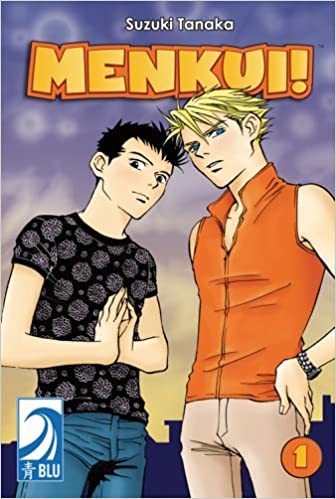
Menkui! Volume 1


By Suzuki Tanaka (Blu/TokyoPop)
ISBN: 1-59816-358-2 (Tankōbon PB)

It’s Pride Month and not all comics are about earthdoom and racial slaughter. Here’s a lost diamond long overdue for another run in the sun – or at least a new English language revival on paper or in digital form…

Here’s a Yaoi story, (romanticised fantasy relationship tales of beautiful young men created for female audiences; like Shonen-Ai but with a more explicit erotic content) although very mild – to the point of chaste gentility – by that standard.

Kotori is a shyly demure young man living in the big shadow of his older brother Kujaku, who’s smarter, prettier and much more successful, however that’s measured in terms of school life. This gentle tale of first love recounts Kotori’s growing confidence and closeness with “Boy-Hottie” Akaiwa whose attentions, though heartfelt, are constantly questioned by the insecure second son.

Set in the crucible of a Japanese high school, populated with a lovely-looking, manipulative bunch of gossips and back-stabbers – Yaoi guys are apparently all the same sort of snotty mean-yet-popular princesses beloved by TV teen soap operas – the tentative pair meander down the path of true love, hampered by eternal obstacles of misapprehension, misunderstanding and the impossible dream of a little privacy.

Funny, unassuming, charmingly and painfully romantic, the main narrative tells a very familiar story but tells it exceedingly well, with minor characters adding to the mix in their own sub-adventures in separate chapters, rather than as scene-stealers in the major text. This can seem a little disconcerting to western sensibilities, but these drastic jumps soon resolve into the big picture, so bear with it.

I personally couldn’t grasp the oddly unwholesome concentration – an almost veiled sexual subtext – regarding the physical attraction between brothers, but I might be reading too much into the family relationships of another culture, so you should really decide for yourselves or trade siblings like I did…

Menkui translates as “shallow” or “superficial” and although this everyday saga of pretty-boy angst might seem to condemn itself with this title, these characters had the potential for a genuinely moving tale. Sadly, the series never got the chance. After running in from July 2000 to June 2003, the series closed abruptly. The tales were released in English as three volumes and are still available if you are a grown-up romantic and desire to continue…
© 2000 Suzuki Tanaka. All Rights Reserved. First published in Japan by BIBLOS Co., Ltd. English text ©2006.

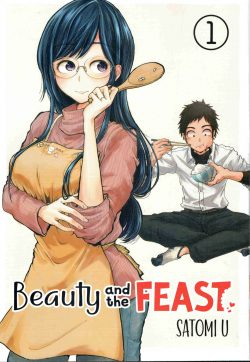
Beauty and the Feast volume 1


By Satomi U, translated by Sheldon Drzka (Square Enix)
ISNB: 978-1-64609-062-4 (Tankōbon PB)

Not all manga is gorily action-packed and overflowing with astoundingly robust wonder warriors or deeply introspective and socially redeeming: some Japanese comics just want you to have a good time and some gentle enjoyment.

Here’s one of those in the form of a jolly and uncomplicated semi rom-com, rich and redolent with cultural confusion and pretty illustration from enigmatic creator Satomi U.

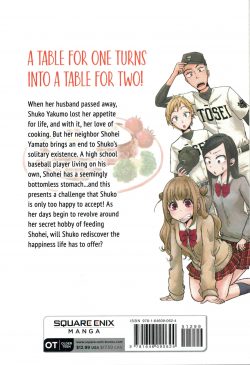
It all begins with a revelation in ‘Yakumo-San Wants to Feed You!’ as pretty widow Shuko Yakumo invites a rather unprepossessing young man into her apartment. It’s not the first time Shohei Yamato has come around from his next door flat and, without preamble or converse, tucks into a vast display of succulent home-cooked food.

He’s a first year High School student at prestigious Tosei Academy, on the equivalent of a baseball scholarship, with strict orders to bulk up. Shohei sees nothing amiss in a stranger and single lady indulging him in a strictly-platonic relationship: feeding up the socially-awkward, tongue-tied baseball prodigy who is unable gain necessary poundage due to a lack of funds…

He doesn’t seem very bright – or even communicative – but sure can pack away the glorious meals she happily produces, apparently, just for the sheer joy of cooking again.

It’s not a normal relationship, but both seem to get what they need out of the ritual…

Determined to be the best she can, the delirious domestic goddess constantly considers new recipes and bigger portions before ‘Yakumo-San Buys a Rice Cooker’ sees a change in the status quo as the human locust gradually shares details of his past before we see what his life currently demands in ‘A Day in the Life of Shohei Yamato’.

‘A Day in the Life of Shuko Yakumo’ moves into new territory as school pressure makes the lad miss a few visits, prompting his culinary custodian to start following him with mobile morsels and picnic treats, culminating in an actual and mutual emotional connection on ‘A Night for Cherry Blossoms’…

An old complication resurfaces as ‘Enter Rui, the Reckless High School Girl’ sees an extremely raucous and proprietary former classmate of the sporting cadet reinsert herself in his life. Little Rui Nishihara believes she’s responsible for Shohei’s accomplishments and intends to be the wife of a major baseball superstar, and instantly recognizes a potential rival in the “old lady” with the big boobs and always-open kitchen…

Given to histrionics, Rui is determined to regain the boy’s attention, and refuses to listen to the advice of her super-sensible best pal Ritsuko Nagai, who calmly and constantly reminds her that she never had it in the first place…

Shuko is largely unaware of the impending storm, spending a day at her husband’s grave and catching up with old friend Yuri who reminds her that ‘Nothing Stays the Same’. It’s a fact hammered home that night when Shohei again decimates her larder, only this time something else – something new – happens…

Supplemented by Bonus Manga ‘A Day in the Life of Rui and Ritsuko’ offering insight into the little firecracker’s backstory; design and fact pages on Shuko, Shohei, Rui and Ritsuko via ‘The Inside Scoop’ before ending on a slapstick excerpt from Satomi U’s ‘Baseball Team Research Journal’, this is a bright, breezy and silly, salivatory saga that will satisfy any cravings for something more tastily intriguing than substantial and heavy.
Beauty and the Feast volume 1 © 2016 Satomi U/SQUARE ENIX CO., LTD. English translation © 2021 SQUARE ENIX CO., LTD. All rights reserved.

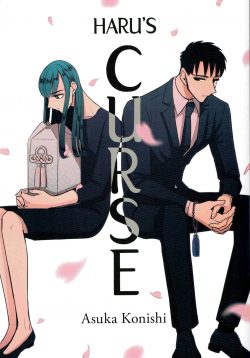
Haru’s Curse


By Asuka Konishi translated by Hannah Airriess (Vertical)
ISBN: 978-1949980264 (Tankōbon PB)

Manga has an unfair reputation for being lightweight and genre-centric in the west, but if that’s true in any way it’s more an artefact of what we’ve seen translated into English rather that an inherent aspect of the form. Here’s a deceptively dark and subtly off-kilter example of my point from Asuka Konishi, who’s most successful offering to date is gangster romance Raise wa Tanin ga li.

Like that remarkable thriller, Haru’s Curse (which first saw life as Haru no Noroi 1 and 2 in Gekkan Komikko Zero Samu from Ichijinsha, Inc.) also examines the Japanese tradition of arranged marriage, but this time in purely emotional terms as it outlines a potent romantic triangle fuelled by filial devotion and societal expectation.

And pressure. Lots and lots of self-imposed, guilt-tinged pressure…

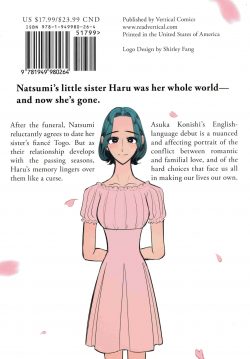
A comedically mature romance with sharp edges and dangerous corners, the relationship blossoms in seasonally-themed chapters which begin with ‘Spring is gone’ as boisterous, overactive underachiever Natsumi Tachibana reels in grief following the death of her beloved younger sister Haru. The shattering sense of loss over her meek, mild eternal soulmate is peppered with anger and shame when she attends the funeral rites and meets again the stiff-necked, stand-offish rich boy her little Haru was forced to become engaged to, but whom she grew to adore…

Although now just an ordinary middleclass family – apart from having a status-diminishing stepmother thanks to father’s scandalous divorce – the Tachibana’s are of a proud and ancient lineage. So, when the matriarch of a spectacular rich banking family wanted a wife for her heir, she didn’t much care which daughter her son Togo Hiragi picked.

Natsumi was just happy it wasn’t her, and quite baffled at the genuine affection Haru felt. However, after Haru’s debilitating disease and tragic demise, the pressure was on again to honour the contract…

A distant and reserved discussion with the emotionless golden boy results in a bizarre devil’s bargain. Togo seems as reluctant to pursue matrimony as she is, but family duty compels them both, and Natsumi is consumed with curiosity as to what her sister ever saw in the big oaf. She accepts the situation on condition that he takes her to every place and re-enacts every date he had with Haru. At least this way, the sisters can be together again, after a fashion…

The campaign begins in ‘July’ and carries on into ‘August’ with all concerned going through the very painful motions, but gradually dislike and shame (Natsumi feels cursed and dreads public scorn for betraying her sister’s memory and “cheating” on her with her fiancé) turns to neutrality and grudging interest.

Events take a surprising twist in ‘September (Parts One and Two)’ after Natsumi finds Haru’s online diary and is forced to make radical changes to her own flighty lifestyle and assessment of her devoted departed…

Small, apparently incidental developments finally bring Togo out of his defensive shell, and by the time ‘November (Part One and Two)’ rolls round a major familial earthquake is set to upset everybody and redefine the future of all concerned in ‘and winter will come’…

The secrets of the changes of stance are explored at the end via a brace of sidebar vignettes. ‘Bonus comic 1 and 2’ reveal how small incidental moments can spark big responses…

At heart a very mature modern romance, Haru’s Curse is a splendid example of how very alike we all are, and how social mores aren’t worth a damn when we’re truly honest with ourselves…
© 2016, 2017 Asuka Nonishi. All rights reserved.

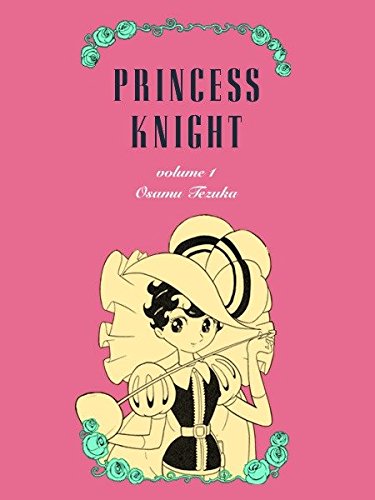
Princess Knight volume 1


By Osamu Tezuka, translated by Maya Rosewood (Vertical)
ISBN: 978-1-935654-25-4 (PB)

Osamu Tezuka revolutionised the Japanese comics industry during the 1950s and 1960s. A devoted fan of the films of Walt Disney, he performed similar sterling service in the country’s fledgling animation industry.

Many of his earliest works were aimed at children, but right from the start his expansive fairy tale stylisations – so perfectly seen in this splendid romp – harboured more mature themes and held hidden treasures for older readers…

Ribon no Kishi or “Knight of the Ribbon” is a series which Tezuka returned to repeatedly during his life and one continued in the 21st century by his disciples. The simple tale has been turned into TV anime seen all over the world (generally known as some variation of “Choppy and the Princess”) and in 2006 became a stage musical.

The serial originated in Kodansha’s Shoujo Korabu (Shōjo Club), running from January 1954 to January 1956, with a generational sequel appearing in Nakayoshi magazine from January 1958 to June 1959. The original tale was updated and revised in 1963-1966, forming the basis of the version in this magnificent tome, translated from the Tezuka Osamu Manga Zenshu Edition 1977.

In 1967-1968, to tie-in with a television adaptation, Tezuka reconfigured the tale with science fiction overtones. Limned by Kitano Hideaki, it ran for a year in Shōjo Friend.

The series is a perennial favourite and classic of the medium and this volume is part of a 2-volume softcover (or digital) English-language edition, containing the first 16 episodes in vibrant monochrome.

‘Once Upon a Time’ opens in Heaven where junior angels are busy with soon-to-be-born souls, installing either blue boy hearts or pink girl hearts to the ante-natal cherubs in their care. Unfortunately, easily distractible Tink (AKA “Choppy” in many foreign iterations) cocks up and one proto-baby gets both…

Tink is dispatched to Earth to retrieve the superfluous metaphysical organ and lands in the feudal kingdom of Silverland, where a most important child is about to be born. The King and Queen desperately desire their imminent first-born be a boy, for no female can rule the country. Should the child be a princess, then vile Duke Duralumin‘s idiot and nastily maladjusted boy Plastic will become heir-apparent.

Thus, due to a concatenation of circumstances, a baby girl with a dual nature spends her formative years pretending to be a prince…

Fifteen years pass before ‘Flowers and Parades’ resumes the saga. Tink has been lax in his mission and Prince Sapphirehas become the darling boy of the kingdom. Duralumin and crafty henchman Sir Nylon have spent the intervening years certain the gallant boy is actually a useless girl, but have been unable to prove it. In that time, Sapphire has grown into a dutiful, beautiful – if androgynous – specimen skilled in riding, sports and all arts martial, but passionately yearns to openly wear the dresses and make-up which are her family’s most intimate secret. When Tink finally reveals himself and exposes the heir’s hidden nature, Nylon overhears…

‘The Carnival’ sees gorgeous Prince Franz Charming pay a royal visit from neighbouring Goldland. Sapphire, aided by her mother and nurse, dons a blonde wig and party frock to clandestinely give vent to her true nature, turning all heads and captivating her regal guest. When she returns to her public identity, all Franz can talk about is the mysterious girl with flaxen hair, blind to the fact that she is sitting beside him…

In ‘The Tournament’, the evil Duke turns a fencing exhibition to his advantage, killing the King and framing Franz for the deed, after which the ‘Prisoner Prince’ is helped to escape by his Flaxen maid. Heir Sapphire accedes to the throne in ‘Coronation’, only to have it all snatched away as the Duke’s latest scheme succeeds beyond all his wildest dreams. Sapphire is publicly exposed as a girl, and her recently widowed mother is accused of betraying the nation by concealing the fact…

Reviled and shunned, mother and daughter are imprisoned with ghastly hunchback jailer Gammer in ‘Sapphire in Coffin Tower’, wherein the distraught girl befriends the vermin of the Keep just as Gammer gets his orders to dispose of his charges. Meanwhile, Tink has been searching high and low for Sapphire…

Narrowly escaping being murdered, the princess becomes a masculine masked avenger of wrongs in ‘Phantom Knight’s Debut’, punishing the wicked men who have ruined her nation since Plastic was enthroned by Duralumin.

In the Palace, the villains look for ways to control the increasingly off-kilter Plastic in ‘The Idiot King’s Bride’. Little do they know that Briar Rose, the fetching companion they’ve acquired, is Sapphire, on an infiltration mission…

When she is inevitably caught, Sapphire’s life takes an even more dramatic turn in ‘Devil’s Whisper’ when terrifying witch Madame Hell materialises, offering her untold wealth and power if she will sell her female heart and nature. Luckily Tink’s angelic power drives the horror off, but is unable to prevent the princess being sentenced to a life of penal servitude in ‘Two by the Quarry’.

Here she again meets Franz, who has long believed Sapphire responsible for his frame-up and imprisonment in Silverland’s dungeons. Nevertheless, the Prince helps Sapphire escape, almost dying in the effort. Soon after the girl is transported to ‘The Witch’s Lair’ and meets Hell’s daughter Hecate, who violently opposes her mother’s scheme to marry her off to Franz. That young worthy, however, has meanwhile recovered from his wounds and is still searching for the flaxen-haired girl, oblivious to her true identity and nature…

Hecate does not want Sapphire’s girlish heart and frees the Princess Knight by turning her into a ‘Grieving Swan’ who is captured by Franz and added to the Royal Flock. The Prince too is being pressured to marry and beget an heir, so when Madame Hell arrives with a huge bribe and a now compliant Hecate the boy’s uncle is keen to cement the nuptial alliance until the ensorcelled swan Sapphire exposes their true natures with Tink’s angelic assistance…

Just as Franz begins to finally notice the similarity of his flaxen dream girl to the freshly restored Sapphire in ‘Two Hearts’ she and Tink are fleeing – right into the clutches of Nylon who is keen to wipe out any loose ends. At the worst possible moment, the angel completes his long mission and reclaims the boy-heart, leaving her helpless, but cannot betray his friend and returns it, consequently losing his place in Heaven…

Together again the pair attempt to rescue Sapphire’s mother from Coffin Tower but are too late. The Queen and Gammer have been taken to Sea Snake Island where vengeful Madame Hell’s dark magic has transformed her into a petrified ‘Stone Queen’.

The drama pauses with Sapphire and Tink adrift on the ocean and encountering brilliant, dashing, gloriously charismatic ‘Captain Blood, Pirate’ who instantly penetrates the princess’ manly disguise, seeing a woman he must marry at all costs…

Princess Knight is a spectacular, riotous, rollicking adventuresome fairy tale about desire, destiny and determination which practically invented the Shoujo (“Little Female” or young girl’s manga) genre in Japan and can still deliver a powerful punch and wide-eyed wonder on a variety of intellectual levels. Still one of the best and most challenging kid’s comics tales ever, it’s a work that all fans and – especially parents – should know.

© 2011 by Tezuka Productions. Translation © 2011 by Mari Morimoto and Vertical, Inc. All rights reserved.

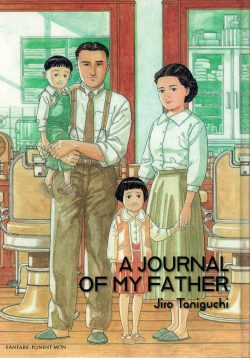
A Journal of my Father


By Jiro Taniguchi translated by Kumar Sivasubramanian with Chitoku Teshima (Fanfare-Ponent Mon)
ISBN: 978-1-91209-743-2 (HB)

Unless you’re a dedicated fan of manga, you probably haven’t heard of Taniguchi Jirō (14th August 1947-11 February 2017). Despite his immense talent as both writer and artist – in 2011, France knighted him a Chevalier of the Ordre des Arts et des Lettres – his “gekiga” work has been slow to reach English speakers since his 1970 debut in Young Comic with Kareta Heya (A Desiccated Summer).

With nearly 50 different series and collections to his credit – originally hard-edge crime like City Without Defense, The Wind of the West is White, Lindo 3, Blue Fighter and Knuckle Wars – the 1990s saw him move into more universal and mature themes with Kamigami no itadaki (The Summit of the Gods), Kamigami no itadaki, and – in 1997, in collaboration with Moebius – Ikaru (Icarus).

He expanded into straight drama with Botchan no Jidai, Inu o Kau and the remarkable A Distant Neighborhood (a major, albeit Belgian, motion picture since 2010).

Joking aside, Mr. Taniguchi was a major force in international comics and now his most personal masterpiece is at last available in English, thanks, I suspect to a career-long and most appreciative French connection. Hopefully, that will extend to digital editions fairly soon …

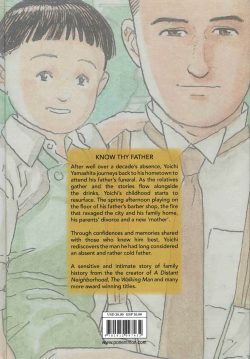
Beguilingly mild, understated and packed with suppressed and repressed emotion, Chichi no Koyami details how a quiet, diligent parent is called back to his home town after years away in Tokyo. Yoichi Yamashita has spent decades away, carving out a life and family for himself while avoiding all contact with his own father.

Now the old man is dead, and the dutiful son returns for the funeral rites. Talking with family and friends, he gradually learns of a man and life he never really knew and, as he re-examines his side of a never-changing story probably repeated in every household in the world, Yoichi reassesses and apply an uncompromising lens of hard-earned experience to the life he made after leaving so long ago.

In dignified, revelatory slices, beginning with ‘A Sunny Place on the Floor’ and ‘Traces of Spring’, he reconsiders his life. ‘Crimson Memories’, ‘New Roads’, ‘My Beautiful Mother’, ‘Summer Recollections’, ‘Separation’ and ‘Another Mother’ fill in details like a detective thriller with all the clues and evoked memories of ‘A Particular Photograph’, ‘My Uncle’s Words’, ‘Revolving Seasons’ and ‘Hometown in Spring’ drawing him into long-delayed emotional metamorphosis and catharsis…

Gentle and lyrical, rendered with staggering visual authenticity and ruthless honesty, this old, old story is mesmerising in its power to move: an emotional tonic every father and son should apply lavishly to their own experience and a truly grown-up picture book we should all use as manual to navigating family life.
Chichi no Koyami by Jiro Taniguchi © Papier/1995 Jiro Taniguchi. All rights reserved. © 2021 Potent Mon for the English language edition.

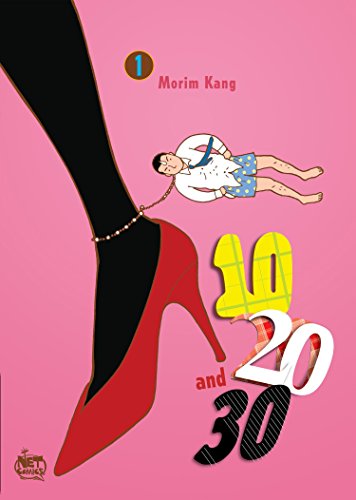
10, 20 and 30 volume 1


By Morim Kang (Net comics)
ISBN 13: 978-1-60009-183-4 (Tankōbon PB)

Some stories are great because of their innovation and novelty, whilst others just tell the same old tale over and over. When these latter tales succeed, it’s solely because of the nuance, skill and artistry with which the commonplace has been shaped to feel fresh and new.

Available in paperback and digital editions, 10, 20, And 30 is an evergreen saga of women and the search for love, tenderly observed, pragmatically and humorously told. Rok Nah is a young teenaged girl (a “10-Something”) going through those difficult years. She has a boyfriend – sort of – but is obsessed with all the other confusions of growing up to deal with.

Her mother Krumb Yoon (“30-Something”) is a widow with a thankless job at a fashion company. Recently, though, the company boss has been taking an inappropriate (but still chaste) interest in her. The “20” part of the equation is Krumb’s niece Belle Woo who has become like an older sister to Rok since her parents all but disowned her for having sex and refusing to get married. As the totally different, yet painfully similar, problems of love confront the three, their natures and unique responses make for an entrancing and addictive read.

Although a standard soap-opera romance in conception, the light treatment and strong characterisations give this Manhwa (manga style comics produced in and for South Korea) a compelling edge that should win it fans across not just the age but also the gender divide…
© 1998 Morim Kang. All Rights Reserved. English text © 2007 NETCOMICS. All Rights Reserved.

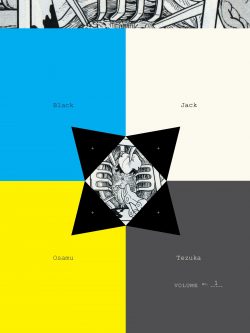
Black Jack volume 1


By Osamu Tezuka, translated by Camelia Nieh (Vertical)
ISBN: 978-1934287-27-9 (Tankōbon PB)

There aren’t many Names in comics. Lots of creators; multi-disciplined or single focussed, who have contributed to the body of the art form, but we don’t have many Global Presences whose contribution have affected generations of readers and aspirants all over the World, like a Mozart or Michelangelo or Shakespeare. There’s just Hergé and Jack Kirby and Osamu Tezuka.

Tezuka was born in Qsaka Prefecture on 3rd November 1928, and as a child suffered a severe illness that made his arms swell. The doctor who cured him inspired him to study medicine, and although Osamu began his professional drawing career while at university, he persevered with his studies and qualified as a doctor too. As he faced a career crossroads, his mother advised him to do the thing that made him happiest. He never practiced as a healer but the world was gifted with such classic cartoon masterpieces as Tetsuwan Atomu (Astro-boy), Kimba the White Lion, Buddha, Adolf and literally hundreds of other graphic narratives. Along the way Tezuka incidentally pioneered, if not created, the Japanese anime industry…

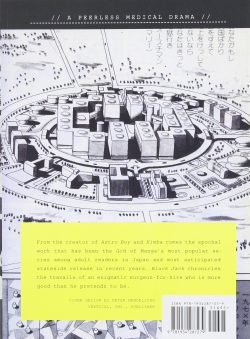
Able to speak to the hearts and minds of children and adults equally, Tezuka’s work ranges from the charming to the disturbing and even terrifying. In 1973 he turned his storyteller’s heart to the realm of medicine and created Burakku Jakku, a lone wolf surgeon living outside society’s boundaries and rules: a scarred and seemingly heartless mercenary working miracles for the right price but also a deeply human wounded soul who makes surgical magic from behind icy walls of cool indifference and casual hostility – think Silas Marner before the moppet turns up or Ebenezer Scrooge before bedtime; except Black Jack never, ever gets soft and cuddly.

These translated, collected adventures – available paperback and digital formats – begin with the frankly startling ‘Is There a Doctor?’, wherein the joyriding son of the richest man in the world is critically injured. The boy’s ruthless father forces Black Jack to perform a full body transplant on an unwilling victim… but the super-surgeon still manages to turn the tables on the vile plutocrat…

Each story is self-contained over about 20 pages, and the second – ‘The First Storm of Spring’ – tells the eerie, poignant tale of a young girl whose corneal transplant has gone strangely awry. Can the handsome boy she keeps seeing possibly be the ghostly original owner of the eye, and if so, what was he truly like?

With ‘Teratoid Cystoma’ the series solidly enters into fantasy territory whilst ramping up the medical authenticity. Tezuka chose to draw in a highly stylised, “Big-foot” manner (he was the acknowledged inventor of the Manga Big-Eyes artistic device) but with increasing dependence on surgical and anatomical veracity, his innate ability to render anatomy and organs realistically truly came to the fore.

A teratonous cystoma occurs when twins are conceived but one of the embryos fails to cohere. Undifferentiated portions of one twin, a limb or organ grows within and nourished by the other. As the surviving twin matures, the enclosed “spare parts” start to distend the body, appearing like a cyst or growth.

For the sake of narrative – and possibly to just plain freak you out – in this story a famous personage wishing total discretion requires the Ronin Doctor to remove a huge growth from her. Many Japanese have a frankly unhealthy prejudice against physical imperfection – for more search “the Hibakusha” – and this case is a much about stigma and position as wellbeing…

The mystery patient’s problem is exacerbated because whenever other surgeons have tried to operate, they have been debilitated by a telepathic assault from the growth. Overcoming incredible resistance, Black Jack succeeds, removing a fully-formed brain and nervous system. Ignoring the disgust of the patient and doctors, he then builds an artificial body for the stunted, sentient remnants; and calls her Pinoko.

‘The Face Sore’ combines Japanese legends of the Jinmenso (intelligent, garrulous tumours) with cases of disfiguring carbuncles and rashes to produce a very scary modern horror story – and by modern, I mean lacking a happy ending…

Pinoko, looking like a little girl (whether she’s a year old or eighteen is a running gag throughout the series) has meanwhile become Black Jack’s secretary/major domo and gadfly. In ‘Sometimes Like Pearls’, she opens a unique parcel addressed to him which leads to some invaluable back-story as the solitary surgeon travels to see his great teacher and learns one final lesson…

‘Confluence’ provides a little twisted romance as the medical maverick loses out on a chance at love when undertaking a radical procedure to save a young woman from uterine cancer, whilst in ‘The Painting is Dead!’ an artist caught in a nuclear test endures a full brain transplant just to be able to finish his painting condemning atomic warmongers.

‘Star, Magnitude Six’ exposes the pompous venality and arrant cronyism, not to mention entrenched stupidity, of hospitals’ hierarchical hegemonies in a tale satisfyingly reminiscent of Steve Ditko’s H series and J series of polemical objectivist parables before the ruthless outlaw surgeon meets his female counterpart in the bittersweet ‘Black Queen.’

‘U-18 Knew’ moves us into pure science fiction territory when the unlicensed doctor is hired by an American medical facility to operate on a vast medical computer that has achieved true sentience, leading to some telling questions about who – and what – defines “humanity.”

An annoying sidebar I feel compelled to add here: For many years broad, purely visual racial stereotypes were common “shorthand” in Japanese comics – and ours, and everybody else’s. They crop up here, but please remember that even at the time this story originated from, this was in no way a charged image; Tezuka’s depictions of native Japanese were just as broad and expressionistic. A simple reading of the text should dispel any notions of racism: but if you can’t get past these decades-old images, just put the book down. Don’t buy it. It’s your loss.

A heartrendingly powerful tale of determination sees a young polio victim almost fail a sponsored walk until an enigmatic stranger with a scarred face bullies, abuses and provokes him to finish. It also provides more clues to Black Jack’s past in ‘The Legs of an Ant’ before this first collection concludes with ‘Two Loves’ as a van driver deprives the greatest sushi artist in the world of his arm and his dreams when he runs him over. The lengths to which the driver goes to make amends are truly staggering… but sometimes Fate just seems to hate some people…

One thing should always be remembered when reading these stories: despite all the scientific detail, all the frighteningly accurate terminology and trappings. Black Jack isn’t medical fiction; it is an exploration of morality with medicine raised to the level of magic… or perhaps duelling.

This is a saga of personal combat, with the lone gunfighter battling hugely oppressive counter-forces (the Law, the System, himself) to win just one more victory: medicine as mythology, battles of a prescribing Ronin with a Gladstone bag.

Elements of rationalism, science-fiction, kitchen sink drama, spiritualism and even the supernatural appear in this saga of Japanese Magical Realism to rival the works of Carlos Fuentes and Gabriel García Márquez. Mostly though, these are highly addictive tales of heroism; ones that that will stay with you forever.
© 2008 by Tezuka Productions. Translation © 2008 by Camelia Nieh and Vertical, Inc. All Rights Reserved.

Spirit of Wonder


By Kenji Tsuruta, translated
ISBN: 978-1-56971-288-7 (Tankōbon PB)

Just re-read this and it’s still great…

Despite carrying all the trappings of a blistering science fiction comedy romp, acclaimed author/illustrator Kenji Tsuruta’s beguiling fantasy Spirit of Wonder is a sweet romantic comedy with genteel, anything is possible sentimental yearning as the driving force.

Set in a charming alternate time and place so like our own world, it follows the Byzantine trials and tribulations of feisty, beautiful tavern owner Miss China and her truly bizarre, indigent and obnoxious upstairs tenants – genuinely bonkers Professor Breckenridge and his gorgeous, hunky assistant Jim Floyd…

Creator Tsuruta (Emanon, Wandering Island) was born in 1961 and studied optical science, intending to pursue a career in photography before happily making the jump to narrative storytelling as manga artist, designer, book illustrator and anime creator.

A lifelong fan of “hard science” science fiction authors like Robert A. Heinlein and the comics of Tetsuya Chiba and Yukinobu (Saber Tiger) Hoshino, Tsuruta began selling his own works in 1986 after years of producing self-published dōjinshi whilst working as an assistant to established manga stars. His short fantasy serial Hiroku te suteki na uchÅ« ja nai ka (‘What a Big Wonderful Universe It Is’) was published in Kodansha’s Weekly Morning magazine and his path was set.

Soon after, he began this enticing, enchanting scientific romance of gently colliding worlds which ran in both Weekly Morning and monthly magazine Afternoon – between 1987 and 1996 – before making the smooth transition to animated features and an award-winning TV series.

This English edition comes courtesy of Dark Horse Comics who published the first few translated episodes as a 5-issue monochrome miniseries in 1995-6.

In a comfortable faux-Victorian milieu, the exotic immigrant Lady China runs the Ten-Kai Tavern in the sleepy yet cosmopolitan port-town of Bristol. The generally peaceful burg hardly ever-changes, but China’s life is one of constant struggle to make a comfortable living, especially as she rents her upstairs rooms to a couple of crackpot deadbeats who continually mess up the place with their idiotic contraptions and persistently fail to pay rent.

The older guy is truly annoying and doesn’t care about anything beyond his latest weird invention but his assistant is a rather sweet and delightful young man who has captured China’s fast-beating heart…

The wonderment begins on another belated rent day with ‘Miss China’s Ring or Doctor Breckenridge and the Amazing Ether Reflector mirror!’ wherein the frustrated landlady is again forced to employ her formidable martial arts skills to get the insufferable scholar’s attention – if not the long-delayed and constantly accruing cash payable.

It’s really not a good time: Breckenridge is entertaining potential investors in his latest creation which promises safe travel to the Moon…

The meeting does not end well and both landlady and tenant depart unsatisfied, whilst in another part of town, Jim – whose responsibilities include doing everything and somehow finding the money to pay for it – is picking up a vital component from pretty “florist” Lily (a girl with amazing connections able to procure anything wayward inventors might ever require).

Unfortunately, China sees the object of her desire spending what should be rent money on a very pretty flower girl and goes ballistic…

Floyd adores China too, but as a typical guy is utterly unable to tell her. He can, however, thanks to his mad mentor Breckenridge and some astounding discoveries left by his own vanished father – another technological miracle man – give her the moon.

Literally…

Jim gives China a ring as a birthday present but she is too furious to care. She wants rent not trinkets from a flighty gadabout. If only she could calm down enough, she would see that the gift is carved from actual moon rock, but beaten into a strategic retreat, Jim realises he needs to make a somewhat grander gesture…

Heartbroken, China falls asleep and is much calmer when she awakes. Bringing her troublesome tenants tea, she looks up into the sky and sees the message Jim has carved into the shining luminous lunar surface…

Stunned and troubled, she moves through the days in a dream. Even with the evidence above his head Breckenridge still can’t get anyone to bankroll him and is driven to unwise acts. Soon the entire world is imperilled by his etheric meddling and the moon is plummeting on a deadly collision course with Bristol.

Luckily, the uniquely physical and practical talents of Miss China are of some use in averting disaster if not setting things totally aright…

‘The Flight of Floyd’ opens with the Mad Professor oafishly seeking to make amends by giving China a flying broomstick, before concluding that he will never understand women. The lovelorn landlady simply wishes she could make Jim pay attention to her, superstitiously wishing upon a shooting star, but the object of her infatuation is preoccupied with completing his missing father’s gravity disrupter and with off-handed tactlessness explains that she’s doing it wrong…

Once again the cause of increasing China’s woes, the hapless Floyd decides to use his Gravitation Gate to make things right – by creating a permanent rain of meteors for the lovely landlady to wish upon, momentarily forgetting that whilst pretty in the evening sky, a bombardment of incandescent rock packs a bit of a punch when hitting terra firma…

The marvellous merriment concludes with ‘China Strikes Back parts 1 and 2, or Doctor Breckenridge and the Astounding Instantaneous Matter Transmitter!’, which finds times hard in Bristol as the town shivers under a blanket of snow, and cash-strapped, customer-starved Lady China is forced to get increasingly heavy with her free-loading lodgers. She is also taking out her bad moods on the townspeople and the few customers still frequenting the inn for food and drinks.

However, when she once again busts in the upstairs door in search of her overdue payments, she finds the Professor and Jim have vanished, taking all their ludicrous junk with them.

They haven’t gone far, however. In fact, they haven’t gone anywhere at all, but simply set up a system by which China’s entrances and exits teleport her to and from an empty set of duplicate rooms, leaving the unscrupulous tinkerers free to stay at the tavern without being bothered.

Sadly, they hadn’t bothered to soundproof the floors of the upper rooms or warn black market tech dealer Lily of their latest innovation and when China discovers the scam – in the most embarrassing manner possible – Jim is forced into a fury of improvisation before he’s able to make things right…

This enchanting blend of Steampunk and gleeful science whimsy is a sharp, wry and fantastically ingenious human drama, filled with gentle good humour and warmth, rendered with such astonishing sensitivity and imagination that the most outrageous scenes appear thoroughly rational, authentic and real – although sadly some people might focus far too much on the innocent, unconscious and completely casual nudity rather than the superb story and characterisations on display.

Filled with extra cover illustrations, pin-ups and an engaging interview with the creator, Spirit of Wonder is a treat for every open-hearted, big-minded romantic and one no fantasy fan should be denied. Let’s hope it will be back in circulation ASAP…
© 1996 Kenji Tsuruta. All rights reserved.

The Book of Human Insects


By Osamu Tezuka translated by Mari Morimoto (Vertical)
ISBN: 978-1-935654-20-9 (HB) 978-1935654773 (PB)

Win’s Christmas Gift Recommendation: An Ideal Chiller to Disturb these Dark and Lonely Nights… 9/10

There aren’t many Names in comics. Lots of creators; multi-disciplined or single focussed, who have contributed to the body of the art form, but we don’t have many Global Presences whose contributions have affected generations of readers and aspirants all over the World, like a Mozart or Michelangelo or Shakespeare. There’s just Hergé and Jack Kirby and Osamu Tezuka.

Tezuka was born in Osaka Prefecture on November 3rd 1928 and, as a child, suffered from a severe illness which made his arms swell. The doctor who cured him inspired the boy to study medicine, and although Osamu began his professional drawing career while still at university, he persevered with his studies and qualified as a doctor too. As he faced a career crossroads, his mother advised him to do the thing that made him happiest…

Tezuka never practiced as a healer but the world was gifted with such classic cartoon masterpieces as Tetsuwan Atomu (Astro-boy), Kimba the White Lion, Buddha, Adolf and literally hundreds of other graphic narratives. Along the way, Tezuka incidentally pioneered, if not actually created, the Japanese anime industry.

Able to speak to the hearts and minds of children and adults equally, his works range from the childishly charming to the unsettling – and even terrifying. In 1970-1971 he produced the stark and moody psycho-thriller Ningen Konchuuki for Akita Shonen’s Play Comic, detailing the inexorable rise of a truly different kind of monster for the burgeoning audiences who were growing up and demanding more mature manga fare.

This superb monochrome 364-page hardback/trade paperback and digital delight opens with ‘Spring Cicada’ as failed and broken designer Ryotaro Mizuno ponders the incredible success of golden girl Toshiko Tomura; a bright young thing who has just scooped a major literary prize for her first novel.

Across town, a broken-down derelict also toasts her success whilst in a lonely garret a girl hangs from the end of a noose…

Mizuno confronts Toshiko in her moment of triumph, telling her failed author Kageri Usuba has committed suicide. Their tense exchange is observed by muck-raking journalist Aokusa…

Convinced he’s on to something, the reporter perseveres and discovers Toshiko is a modern renaissance woman: emerging from obscurity to become a celebrated actress while still in her teens, she graduated to directing before becoming an award-winning designer. Abruptly she metamorphosed again, writing the stunning novel The Book of Human Insects. Still in her twenties, there seems to be nothing the angelic girl cannot do…

Further enquiry leads the obsessed newsman to her desolate rural home where the uncanny genius presents an entirely different, almost wanton aspect. Moreover, she keeps there a very creepy waxwork of her dead mother…

Toshiko catches the professional voyeur and agrees to an interview, but before that meeting Aokusa is accosted by shambling drop-out Hyoroku Hachisuka, a once-prominent stage-director who imparts the true story of Toshiko’s resplendent rise to fame and fortune.

Once, the universally approved-of, wholesome girl was a small, timid creature who inveigled her way into his theatre company. Once there, she attached herself like a lamprey to the star, learning her ways and mannerisms. A perfect mimic, Toshiko not only acquired the actress’s skills but also seemed to suck out her talent and inspiration. When the former star quit, Toshiko replaced her…

She performed that same slow consumption with the entire company and then turned her attentions to the director…

Moreover, the seemingly helpless waif was utterly amoral, using sex, slander and perhaps even murder to achieve her ends, which were always short-term: she had no goals or life ambitions, but merely flitted from victim to victim like a wasp seeking its next meal…

Ignoring the warning, Aosuka persists, discovering promising writer Usuba once had a room-mate named Toshiko whom she accused of plagiarising her novel…

Intriguingly, the lonely writer’s recent suicide occurred in extremely suspicious circumstances…

During a TV interview, Toshiko accidentally meets Mizuno again. Revealed as one of her earliest victims, can he possibly be the only man she ever loved?

In ‘Leafhopper’ Aosuka uncovers another of Toshiko’s secrets when he meets for the first and last time her shady associate Arikawa – a murderous anarchist who cleans ups the lovely mimic’s potential embarrassments – just as she tries to renew her relationship with the bitter and far wiser Mizuno.

Toshiko also meets war criminal and right-wing “businessman” Sesson Kabuto who immediately discerns her true nature and keeps a fascinated but wary professional distance from her…

Toshiko operates almost instinctively and according to immediate desire, but she has a terrifying capacity to clean up any potentially damaging loose-ends. After seducing Arikawa she spectacularly removes him during a political assassination and uses the affair to promote her next book…

Meanwhile Mizuno spirals further into despondency until he meets a prostitute who looks like Toshiko and finally finds redeeming true love – of a sort…

Toshiko almost overreaches her abilities when she is arrested by South Korean security forces in ‘Longhorn Beetle’ but is rescued and forced into marriage by a man every inch her ruthless, remorseless equal. This propels her to even more inspired acts of perversion and survival – which consequentially endanger the wellbeing of everybody in Japan – before ‘Katydid’ brings the unique drama to a shocking, bloody, poignant and utterly unexpected conclusion…

Murder-mystery, Greek Tragedy, trenchant melodrama, serial-killer horror story and much more, this supremely adult tale has hardly dated at all since its release and offers a chilling image of those hidden invisible predators who have supplanted vampires, witches and werewolves in the dark corners of our communal consciousness.

The beautiful maiden as lure and amoral predator possibly began with this truly disturbing tale and the story is one which will stay with readers long after the final page is turned…

“God of Manga” Osamu Tezuka died in 1989 but with ever more of his copious canon being released in English there’s plenty of brilliant material for all ages, intellects and inclinations to admire and adore, so why not start right here, right now.

Accept no imitations…
© 2011 by Tezuka Productions. Translation © 2011 by Mari Morimoto and Vertical, Inc. All rights reserved.