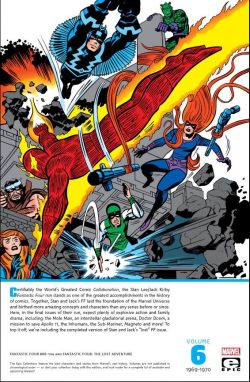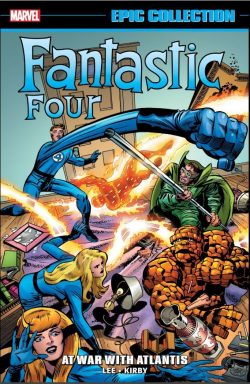
Fantastic Four Epic Collection volume 6 1969-1970: At War with Atlantis


By Stan Lee & Jack Kirby, John Romita, Ron Frenz, Joe Sinnott, Frank Giacoia, John Verpoorten & various (Marvel)
ISBN: 978-1-3029-2202-3 (TPB)

Cautiously bi-monthly and cover-dated November 1961, Fantastic Four #1 (by Stan Lee, Jack Kirby, George Klein & Christopher Rule) was crude: rough, passionate and uncontrolled excitement. Thrill-hungry kids pounced on it and the raw storytelling caught a wave of change starting to build in America. It and succeeding issues changed comics forever. Happy Anniversary!

This epic and extras-packed full-colour compendium – also available in digital editions – gathers issues #88-104 and Annual #7 (cumulatively spanning July 1969 – November 1970) plus Fantastic Four: The Lost Adventure #1 (2008). It covers the final days of the King’s reign on Marvel’s flagship title and shaky transitional start of a new era. And includes diverse bonus treats including a rejected, recovered, recycled tale to delight all aficionados, only finally released in April 2008.

As seen in the ground-breaking premier issue, maverick scientist Reed Richards, his fiancée Sue Storm, their close friend Ben Grimm and Sue’s teenaged brother survived an ill-starred private space-shot after Cosmic Rays penetrated their ship’s inadequate shielding and mutated them all.

Richards’ body became elastic, Sue gained the power to turn invisible, Johnny Storm could turn into living flame whilst tragic Ben shockingly devolved into a shambling, rocky freak. After the initial revulsion and trauma pass, they solemnly agree to use their abilities to benefit mankind and thus was born The Fantastic Four.

Throughout the 1960s the FF was the indisputable central title and most consistently groundbreaking series of Marvel’s ever-unfolding web of cosmic creation: a forge for new concepts and characters at a time when Kirby was in his creative prime and continually unleashing his vast imagination on plot after spectacular plot, whilst Lee scripted some of the most passionate superhero sagas ever seen.

Both were on an unstoppable roll, at the height of their creative powers, and full of the confidence that only success brings, with The King particularly eager to see how far the genre and the medium could be pushed… which is rather ironic since it was the company’s reticence to give the artist creative freedom which led to Kirby’s jumping ship to National/DC in the first place…

And then, he was gone…

Without preamble the magical wonderment resumes with Joe Sinnott inking Fantastic Four #88 which focuses on the five champions (Johnny’s Inhuman girlfriend Crystal had been standing in for Sue who was until recently enjoying a hard-earned maternity leave) back in the USA after defeating Doctor Doom. They are soon looking at an unconventional new house found by determinedly domesticated Mrs. Richards in her perpetual quest to carve out a relatively normal life for her new – and still unnamed – son.

Regrettably the trendy, extremely isolated detached dwelling in ‘A House There Was!’ has been designed by the team’s oldest enemy. No sooner do they all move in than ‘The Madness of the Mole Man!’ turns the deadly domicile against them even as the maniac’s goal of rendering the entire world blind and wiping out the extended heroic family comes within inches of succeeding…

The Thing then takes centre-stage in an extended epic as he is stalked and pressganged to another world when ‘The Skrull Takes a Slave!’ in #90. Abducted to fight in gladiatorial games on a colony world patterned after Earth’s 1920s gangster era, ‘The Thing… Enslaved!’ introduces rival Skrull mobs vying for planetary supremacy and a noble slave destined to slaughter our shanghaied champion. ‘Ben Grimm, Killer!’ efficiently ramps up the tension as Ben Grimm and mechanoid marvel Torgo discover their home-worlds are hostage to their fortunes and ferocity in the arena…

Elsewhere, Reed, Johnny and Crystal have not been idle. While Ben is at ‘The Mercy of Torgo!’ (inked by Frank Giacoia) his Earthly comrades are enacting a desperate plan to swoop in, save him and destroy the Skrulls doom-weapon… a task undertaken and accomplished with great speed and in stunning style…

Fantastic Four #94, began a string of single-issue stories with the doom-laden debut of eldritch babysitter/governess Agatha Harkness in ‘The Return of the Frightful Four!’. The eponymous recalcitrant rogues make a major mistake believing they can catch the FF off-guard by attacking while the heroes are interviewing a new nanny for the latest addition to the Fantastic Family…

At a time when superhero sales were in a slump and magical mystery themes resurgently returned, this rollercoaster ride of action, battle and suspense is most significant for finally giving Sue and Reed’s baby a name – Franklin Benjamin Richards – after literally years of shilly-shallying…

Technological super-assassin The Monocle is resolved to trigger global nuclear Armageddon in #95’s ‘Tomorrow… World War Three!’ – in the middle of which Crystal is astoundingly abducted by her own family – before ‘The Mad Thinker and his Androids of Death!’ (Giacoia inks) once again ambush the team and still prove to be no match for the fab foursome…

A tense and moody episode further cashing in on the growing trend for creepy creatures and supernatural shenanigans manifests as ‘The Monster from the Lost Lagoon!’ in #97, offering a decidedly different take on the horror-movies it gloriously homages as the First Family try to combine a quick tropical vacation with a little rumour-busting sea-beastie hunt…

Both Sinnott and the robotic Sentry Sinister return in #98’s turbulently then-topical ‘Mystery on the Moon!’ as global fervour over the first lunar landing in 1969 (conveniently forgetting, of course, the FF’s own numerous visits to our satellite, beginning with issue #13) results in a cracking yarn wherein the team stop the extra-galactic Kree Empire sabotaging mankind’s first steps into space.

In FF #99 heartsick Johnny Storm at last snaps, invading the hidden home of the Inhumans. His intent is to reunite with his lost love at all costs, but of course, tempers fray, everything escalates and ‘The Torch Goes Wild!’…

With Crystal happily in tow, the 100th anniversary adventure features a daft, extremely rushed but nonetheless spectacular all-out battle against robotic replicas of their greatest enemies in ‘The Long Journey Home!’ Nuff Said!

With the anniversary cataclysmically concluded, issue #101 provides a far more intriguing imbroglio when dastardly criminal combine the Maggia buy the team’s skyscraper HQ in a cunning, quasi-legal ploy to appropriate Reed’s scientific secrets, resulting in total ‘Bedlam in the Baxter Building!’

Fantastic Four #102 sported the first cover not drawn by The King as John Romita (senior) prepared to jump into the artistic hot-seat following Kirby’s abrupt move to the home of Superman, Batman and Wonder Woman.

After an incomprehensibly vast catalogue of creativity an unthinkable Changing of the Guard occurred when the increasingly discontented King of Comics left the House of (mostly his) Ideas for arch-rival National/DC to craft his Fourth World Magnum Opus plus a host of other game-changing comic book classics…

An era ended at Marvel when the King abdicated his seemingly divinely-ordained position. Left to pacify and win back the stunned fans were Lee and a couple of budding talents named Romita and Buscema…

Kirby was not quite gone, however, as he and Sinnott opened an impressive extended epic wherein mutant menace Magneto uses guile and subterfuge to turn ‘The Strength of the Sub-Mariner’ and his undersea armies against the FF and entire surface world…

Romita and inker John Verpoorten took over the story in mid-flow, depicting an embattled America ‘At War with Atlantis!’ before malign Magneto inevitably turns on Namor, inspiring the Prince to ally with the Fantastic Four to prevent the mutant’s dream of ‘Our World… Enslaved!’…

That was more or less the end. Romita drew a couple more issues and eventually John Buscema took up the challenge, although a later issue baffled us fans by inexplicably pairing the new artist with a somehow returned Kirby…

Before that, the cover of all-reprint Fantastic Four Annual #7 brightens our day, as does its contemporary photo-feature, revealing each and every member of the burgeoning Marvel Bullpen.

Fantastic Four #108 contained ‘The Monstrous Mystery of the Nega-Man!’ which “reintroduced” a character never before seen by recycling portions of a near-complete but rejected Kirby tale. This was modified with new sequences illustrated by John Buscema and Romita. In the published story (not included in this volume) the mysterious Janus tapped into the anti-matter power of the Negative Zone once and now “returned” to steal more via the portal in Reed’s lab.

Unfortunately, this attracts the attention of extinction-event predator Annihilus, who had long sought entry into our life-rich universe…

The origins of that yarn are convoluted and circuitous but are eruditely explained by archivist John Morrow in his article ‘Fantastic Four #108: Kirby’s Way’, supplemented by (almost) the entire original story reproduced from photostats of Kirby’s pencils and published pages from #108.

In 2007 those fragments and Kirby’s story notes were used by Lee, Joe Sinnott and Ron Frenz to reconstruct the tales as the King drafted it. The result was ‘Fantastic Four: The Lost Adventure’ which here offers a gloriously tantalising slice of times past as the team (circa 1970) tackle a seemingly schizophrenic super-villain in ‘The Menace of the Mega-Men!’

It doesn’t really fit anywhere into continuity but it is a superbly nostalgic rush for devotees of the classics…

Rounding out the Kirby Kommemorations are a selection of original art pages and covers from issues #88-90, unused cover art, house ads, portfolio and poster art and more: a graphic bonanza no fan could resist.

Epic, revolutionary and unutterably unmissable, these are the stories which made Marvel the unassailable leaders in fantasy entertainment. They remain some of the most important superhero comics ever crafted. Verve, conceptual scope and sheer enthusiasm shine through on every page and the wonder is there for you to share. If you’ve never thrilled to these spectacular sagas then this book of marvels is the perfect key to another – far brighter – world and time.
© 2020 MARVEL.

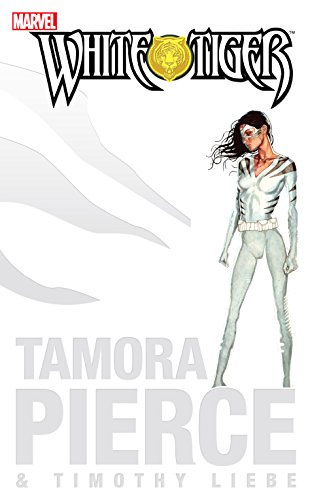
White Tiger: A Hero’s Compulsion


By Tamora Pierce, Timothy Liebe, Phil Briones, Alvaro Rio & various (Marvel)
ISBN: 978-0-7851-2273-9 (TPB)

I’ll try to be brief but bear with me because this might be a little complex for anyone not hardened by 55 years of constant exposure to raw comic-books…

After the mid-1970’s Kung Fu craze subsided Marvel was left with a couple of impressive themed properties (Master of Kung Fu and Iron Fist) and a few that needed some traditional superhero “topping up”. The Sons of the Tiger debuted in monochrome magazine Deadly Hands of Kung Fu: a multi-racial martial arts team who – augmented by three mystic amulets – fought the usual mystic ninja/secret empire types until internal dissent and an obvious lack of creative imagination split them up.

The amulets – a Tiger’s Head and two paws carved from magical jade – passed on to young Hector Ayala who donned all three to become a super-martial artist calling himself the White Tiger. After an inauspicious, short and excessively violent career including team-ups with both Spider-Man and Daredevil, the “first Puerto Rican Superhero” all but vanished until (in a Man Without Fear storyline I’ll get around to reviewing one day) he lost his life…

In the meantime, a new White Tiger had appeared in the 1997 revival of Heroes for Hire: an actual tiger evolved into a humanoid by renegade geneticist the High Evolutionary. In 2003 Kaspar Kole, a black, Jewish cop briefly replaced the Black Panther, becoming the third White Tiger shortly thereafter…

Which finally brings us here as this volume collects the first 6-issue miniseries to feature Angela Del Toro, niece of the first White Tiger; one time cop, de-frocked FBI agent and eventual recipient of the amulets that empowered and doomed her uncle Hector.

Normally I’d steer clear of reviewing a graphic novel like this because by all rights it should be all but impenetrable to non-fans, but novelist Tamora Pierce and co-scripter Timothy Liebe have made the necessary and mandatory recaps and references to other books (particularly the extended Daredevil storyline that dealt with the death of Angela’s uncle and her becoming a costumed vigilante in his memory) relatively painless: a seemingly seamless part of the overall narrative thrust of this tale and one that perfectly suits the action-packed, highly realistic artwork of Phil Briones, Alvaro Rio, Ronaldo Adriano Silva & Don Hillsman.

Angela Del Toro was a high-ranking Federal Agent, but now she’s jobless and bewildered, terrified of becoming just another masked crazy on the streets and skyways of New York City. Luckily, she still has a few friends – both in the legal and extra-legal law enforcement community – and soon links up with a private security firm while sorting out her new double life.

That mostly means coming to terms with being a costumed superhero, stopping a covert cabal of asset-stripping terrorists from turning the USA into a highly profitable war-zone and getting final closure if not revenge on Yakuza prince Orii Sano, the man who killed her partner…

White Tiger: A Hero’s Compulsion is a canny blend of family drama, cop procedural and gritty superhero thriller, with an engaging lead character, believable stakes, just enough laughs and truly sinister baddies who should appeal to the widest of audiences. Fun-filled and frantic with loads of guest-stars, including Spider-Man, Daredevil, Iron Fist, Luke Cage, Black Widow, and such scurrilous dirtbags as the Cobra, the Lizard, Deadpool and the assembled underworld of three continents, this is a read for devotees and dilettantes alike.

Whether cleaning up the mean streets and saving the entire world or just busting heads in her new day job, White Tiger has everything necessary to stay the course, but even if she somehow doesn’t, there will always be this thoroughly fascinating trade paperback and digital book to mark her territory, if not her passing…
© 2006, 2007, 2015 MARVEL. All rights reserved.

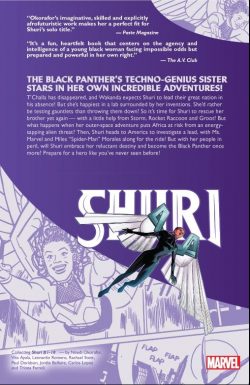
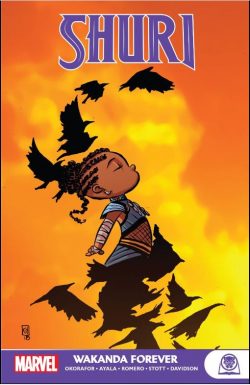
Shuri: Wakanda Forever


By Nnedi Okorafor, Vita Ayala, Leonardo Romero, Paul Davidson, Rachael Stott, Jordie Bellaire, Tríona Farrell, Carlos Lopez, VC’s Joe Sabino & various (Marvel)
ISBN: 978-1-3029-2369-3 (TPB)

Lauded as the first black superhero in American comics and one of the first to carry his own series, the Black Panther‘s popularity and fortunes have waxed and waned since the 1960s when he first attacked the FF (in Fantastic Four #52; cover-dated July 1966) as part of an extended plan to gain vengeance on the murderer of his father.

T’Challa, son of T’Chaka was revealed as an African monarch whose hidden kingdom was the only source of a vibration-absorbing alien metal upon which the country’s immense wealth was founded. Those mineral riches – derived from a fallen meteor which struck the continent in lost antiquity – had turned his country into a technological wonderland.

The tribal wealth had long been guarded by a hereditary feline champion deriving physical advantages from secret ceremonies and a mysterious heart-shaped herb that ensured the generational dominance of the nation’s warrior Panther Cult.

In recent years, Vibranium made the country a target for increasing subversion and incursion. After one all-out attack by Doctor Doom – culminating in the Iron Dictator seizing control of Wakanda – T’Challa was forced to render all Vibranium on Earth inert, defeating the invader but leaving his own homeland broken and economically shattered.

During that cataclysmic clash T’Challa’s flighty, spoiled brat half-sister Shuri took on the mantle of Black Panther, becoming clan and country’s new champion whilst her predecessor struggled with the disaster he had deliberately caused and recuperated from near-fatal injuries.

Despite initially being rejected by the divine Panther Spirit, Shuri proved a dedicated and ingenious protector, serving with honour until she perished defending the nation from alien invader Thanos. When T’Challa resumed his position as warrior-king, one of his earliest tasks was resurrecting his sister. She had passed into the Djalia (Wakanda’s spiritual Plane of Memories) where she absorbed the entire history of the nation from ascended Elders. On her return to physicality, she gained mighty new powers as the Ascended Future…

Since then – thanks to the equally formidable magic of a bravura role in a blockbuster movie – a slightly reimagined Shuri starred in her own series, blending established comics mythology with the fresh characterisation of a spunky, savvy, youthful super-scientist.

Initially written by multi award-winning fantasy author Nnedimma Nkemdili “Nnedi” Okorafor (Binti, Who Fears Death, Broken Places & Outer Spaces, Black Panther: Long Live the King) and illustrated by Leonardo Romero (Hawkeye, Captain America, Doctor Strange), this collection – gathering #1-10 of Shuri (spanning December 2018-September 2019 and available as a trade paperback or digitally) – finds Wakanda in turmoil.

In the aftermath of the nation’s first (official) manned space mission, King T’Challa is ‘Gone’, leaving Shuri to initially revel in the sheer joy and freedom of technological creation. However, the pressures of her family position always bedevil her. If it’s not frequent overtures from a mystery hacker she’s befriended and dubbed Muti or the constant chidings of the Ancestral Spirits who connect her to the Djalia, it’s her unwelcome invitation to join a secret society of women who have covertly steered and safeguarded Wakanda for generations…

The Sisters of the Elephant’s Trunk have a cherished goal: despite the nation recently becoming a constitutional monarchy, they want Shuri to step up in T’Challa’s absence and be the country’s spiritual leader … a new Black Panther…

Her answer in ‘The Baobab Tree’ pleases no one, but she has no time for second thoughts as sister-in-law Storm comes to her with news that T’Challa is now lost in space. The crisis is further compounded after Queen Mother Ramonda also vanishes. When Shuri resorts to spiritual means of locating her missing family, the ritual accidentally catapults her astral personality across the universe and into the vegetable body of a Guardian of the Galaxy…

Trapped but never helpless, Shuri’s brains save the alien heroes from dire peril and a deadly energy, memory and sound-eating bug in ‘Groot Boom’, but her return to Earth brings more trouble as the energy-insectoid follows to cause chaos in ‘Timbuktu’ – thanks in large part to the machinations of opportunist supervillain Moses Magnum. More concerning is the fact that many of her Ascended powers have gone…

With catastrophe all around and the planet in deadly peril, Shuri calls in a favour and Iron Man responds to assist in preventing ‘The End of the Earth’, but ultimately Shuri knows that the call of the Panther cult must be answered no matter what she wants…

The crisis deepens in ‘A Friend in Need’ parts 1 and 2 (illustrated by Paul Davidson & Tríona Farrell) as the reluctant new Black Panther traces a living black hole generator to Brooklyn, USA and shares a perilous romp with second Spider-Man Miles Morales and modern Ms. Marvel Kamala Khan, redeeming genius kid Augustin Torres from a dangerous association with major mag guy Graviton…

Events spiral to a spectacular conclusion as Vita Ayala (Livewire, New Mutants) takes over scripting for #8-10 with Rachael Stott & Carlos Lopez tackling the picture-making. In ’24/7 Vibranium’, that pesky bug resurfaces to imperil Earth prompting a fact-find visit to the Djalia, a fraught confrontation at Wakanda’s Vibranium mines in ‘Godhead’ and an unexpected resolution in ‘Living Memory’ that answers most of Shuri’s questions, restores her powers and sets her up for the next great adventure…

Balancing the fantastic fun and affirmative inspiration, this delightfully angst-free action romp also offers an Afterwordfrom Okorafor; Variant cover gallery by Skottie Young, Jamal Campbell, Carlos Pacheco, Travis Charest, John Tyler Christopher, Afua Richardson (plus movie photo-cover) and Romero design pages.

Wakanda Forever is a fast-moving, funny and supremely inventive delight: a splendidly fresh take on female superheroes that is compulsive reading for any fan of tight continuity, breathtaking action and smart characterisation as well as everyone who fell in love with the super-smart young woman who stole every scene in the Black Panther movie. What are you waiting for?
© 2020 MARVEL.

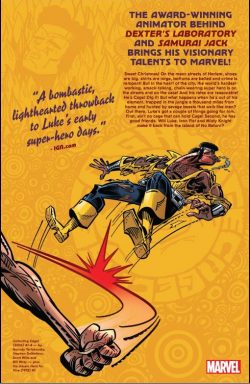
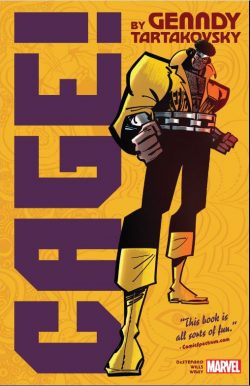
Cage!


By Genndy Tartakovsky, Stephen DeStefano & various (Marvel)
ISBN: 978-0-7851-2786-4 (TPB)

For most of modern history black consumers of popular entertainments enjoyed far too few fictive role models. In the English-speaking world that began changing in the turbulent 1960s and truly took hold during the decade that followed. Many characters stemming from those days come from a cultural phenomenon called Blaxploitation. Although criticised for its seedy antecedents, stereotypical situations and violence, the films, books, music and art were the first mass-market examples of minority characters in leading roles, rather than as fodder, flunkies or flamboyant villains. If you scroll back a bit, you’ll see a rather pompous review by (old, white) me detailing how that groundbreaking era led to the birth of superheroic cultural icon Luke Cage. You should read those stories: they’re rather good.

In 2016, animation superstar Genndy Tartakovsky (Dexter’s Laboratory, Samurai Jack, Hotel Transylvania) reminded readers of something else: those tales were outrageously frantic fun too.

Four-issue miniseries Cage! dials us back to that fabulous mythical moment – or at least 1977 in New York – for a sublimely daft interlude as the street-jivin’ Hero for Hire interrupts roller skating bank robbers before being drawn into an incredible mystery…

Super heroes and top ass-kickers like his friends Misty Knight and Iron Fist are going missing and diligent investigation leads him into nothin’ but trouble…

Soon the bewildered champion is facing off against an army of old enemies, enduring psychedelic enlightenment, and battling simian Professor Soos to liberate the lost defenders and survive a deadly festival of combat on a lost island…

With raucous and rowdy guest appearances from the pre-Dark Phoenix X-Men, Dazzler, Black Panther, Ghost Rider, Brother Voodoo and a host of period stars of the Marvel Pantheon, this timeless delight also includes a full reprint of origin/debut ‘Out of Hell… A Hero!’ (by Archie Goodwin, George Tuska, Billy Graham, Roy Thomas &John Romita Senior) as seen in Luke Cage Hero for Hire #1, plus a stunning covers-&-variants gallery by Tartakovsky, Trevor Von Eeden, Marco D’Alfonso, Joe Quesada, Damion Scott, Bruce Timm, Bill Pressing and Arthur Adams & Paul Mounts

I honestly don’t know what the commissioning editors were thinking, but By Gosh, It Works! This is a superb pastiche and spoof of distant days, packed with fun and frenetic energy. Read it fast with loud music playing and preferably wearing orange rayon slacks. Dig it in paperback or digital, but do, do dig it Baby…
© 2016 Marvel Characters, Inc. All rights reserved.

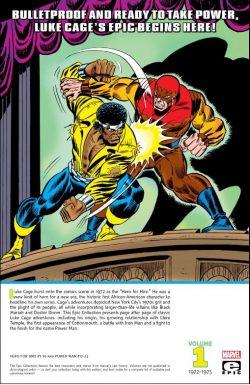
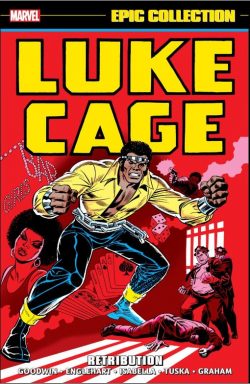
Luke Cage Epic Collection volume 1 1972-1975: Retribution


By Archie Goodwin, Steve Englehart, Tony Isabella, Len Wein, Gerry Conway, Billy Graham, George Tuska, Ron Wilson & various (Marvel)
ISBN: 978-1302928315 (TPB)

In 1968 the consciousness-raising sporting demonstration of Black Power at the Olympic Games politicised a generation of youngsters. By this time a few comics companies had already made tentative efforts to address what were national and socio-political iniquities, but issues of race and ethnicity took a long time to filter through to still-impressionable young minds avidly absorbing knowledge and attitudes via four-colour pages that couldn’t even approximate the skin tones of African-Americans.

As with television, breakthroughs were small, incremental and too often reduced to a cold-war of daringly liberal “firsts.” Excluding a few characters in Jungle comic-books of the 1940s and 1950, Marvel clearly led the field with a black soldier in Sgt. Fury’s Howling Commandos team – the historically impossible Gabe Jones who debuted in #1, May 1963. So unlikely a character was ol’ Gabe that he was re-coloured Caucasian at the printers, who clearly didn’t realise his ethnicity, but knew he couldn’t be un-white.

He was followed by actual negro superheroes Black Panther in Fantastic Four #52 (July 1966), and the Falcon in Captain America #117 (September 1969).

America’s first black hero to helm in his own title had come (and gone largely unnoticed) in a little remembered or regarded title from Dell Comics. Debuting in December 1965 and created by artist Tony Tallarico and scripter D.J. Arneson, Lobo was a gunslinger in the old west, battling injustice just like any cowboy hero would.

Arguably a greater breakthrough was Joe Robertson, City Editor of the Daily Bugle; an erudite, brave and proudly ordinary mortal distinguished by his sterling character, not costume or skin tone. He first appeared in Amazing Spider-Man # 51 (August 1967), proving in every panel that the world wouldn’t end if black folk and white folk occupied the same spaces…

This big change slowly grew out of raised social awareness during a terrible time in American history; yes, even worse than today’s festering social wound, as typified by cops under pressure providing no answer to seemingly constant Black Lives Matter events. Those tragedies occur in the UK too, so we have nothing to be smug about either. We’ve had race riots since the Sixties which left simmering scars that only comedians and openly racist politicians dare to talk about. Things today in don’t seem all that different, except the bile and growing taste for violence is turned towards European accents, or health workers as well as brown skins…

As the 1960s became a new decade, more positive and inclusive incidences of ethnic characters appeared in the USA, with DC finally getting an African-America hero in John Stewart (Green Lantern #87 December 1971/January 1972) – although his designation as a replacement Green Lantern might be construed as more conciliatory and insulting than revolutionary.

The first DC hero with his own title was Black Lightning. He didn’t debut until April 1977, although Jack Kirby had introduced Vykin in Forever People #1 and the Black Racer in New Gods #3 (March and July 1971) and Shilo Norman as Scott Free‘s apprentice (and eventual successor) in Mister Miracle #15 (August 1973).

As usual, it took a bold man and changing economics to really promote change. With declining comics sales at a time of rising Black Consciousness, cash – if not cashing in – was probably the trigger for “the Next Step.”

Contemporary “Blaxsploitation” cinema and novels had fired up commercial interests throughout America, and in that atmosphere of outlandish dialogue, daft outfits and barely concealed – if justified – outrage, an angry black man with a shady past and apparently dubious morals must have felt like a sure-fire hit to Marvel’s bosses.

Luke Cage, Hero for Hire launched in the summer of 1972. A year later, Black Panther finally got his own series in Jungle Action #5 and Blade: Vampire Hunter debuted in Tomb of Dracula #10.

This stunning trade paperback/digital compendium collects the first 23 issues of the breakthrough series: including the moment the series was thematically adjusted to become Luke Cage Power Man and cumulatively spanning June 1972 to February 1975.

The saga begins with Lucas, a hard-case inmate at brutal Seagate Prison. Like all convicts he says he was framed and his uncompromising attitude makes mortal enemies of savage, racist guards Rackham and Quirt, whilst not endearing him to the rest of the prison population such as genuinely bad guys Shades and Comanche either…

‘Out of Hell… A Hero!’ was written by Archie Goodwin and illustrated by George Tuska & Billy Graham – with some initial assistance from Roy Thomas and John Romita Senior – and sees a new warden arrive promising to change the hell-hole into a proper, correctly administered correctional facility. Prison doctor Noah Burstein convinces Lucas to participate in a radical experiment in exchange for a parole hearing, having heard the desperate con’s tale of woe…

Lucas had grown up in Harlem, a tough kid who had managed to stay honest even when his best friend Willis Stryker had not. They remained friends even though they walked different paths – until a woman came between them. To be rid of his romantic rival Stryker planted drugs and had Lucas shipped off to jail. While he was there his girl Reva, who had never given up on him, was killed when she got in way of bullets meant for up-and-coming gangster Stryker…

With nothing to lose Lucas undergoes Burstein’s process – an experiment in cell-regeneration – but Rackham sabotages it, hoping to kill the con before he can expose the illegal treatment of convicts. The equipment goes haywire and something incredible occurs. Lucas – panicked and somehow super-strong – punches his way out of the lab and the through the prison walls, only to be killed in hail of gunfire. His body plunges over a cliff and is never recovered…

Months later, a vagrant prowls the streets of New York City and stumbles into a robbery. Almost casually he downs the felon and accepts a reward from the grateful victim. He also has a bright idea. Strong, bullet-proof, street-wise and honest, Lucas will hide in plain sight while planning his revenge on Stryker. Since his only skill is fighting, he becomes a private paladin… a Hero for Hire…

Making allowances for the colourful, often ludicrous dialogue necessitated by the Comics Code’s sanitising of “street-talking Jive” this is probably the grittiest origin tale of the classic Marvel years, and the tense action continues in ‘Vengeance is Mine!’ as the man now calling himself Luke Cage stalks his target.

Stryker has risen quickly, now controlling a vast portion of the drug trade as the deadly Diamondback, and Cage has a big surprise in store when beautiful physician Claire Temple comes to his aid after a calamitous struggle. Thinking him fatally shot, her surprise is dwarfed by his own when Cage meets her boss.

Seeking to expiate his sins, Noah Burstein runs a rehab clinic on the sordid streets of Times Square, but his efforts have drawn the attention of Diamondback, who doesn’t like someone trying to fix his paying customers…

Burstein apparently does not recognise Cage, and even though faced with eventual exposure and return to prison, the Hero for Hire offers to help the hard-pressed medics. Setting up an office above a movie house on 42nd Street, Cage meets a lad who will be his greatest friend: D.W. Griffith: nerd, film freak and plucky white sidekick. However, before Cage can settle in, Diamondback strikes and the age-old game of blood and honour plays out the way it always does…

Issue #3 introduces Cage’s first returning villain in ‘Mark of the Mace!’ as Burstein – for his own undisclosed reasons – decides to keep Cage’s secret, and disgraced soldier Gideon Mace launches a terror attack on Manhattan. With his dying breath, one of the mad Colonel’s troops hires Cage to stop the attack, which he does in explosive fashion…

Inker Billy Graham graduated to full art chores for ‘Cry Fear… Cry Phantom!’ in #4, as a deranged, deformed maniac carries out random assaults in Times Square. Or is there perhaps another motive behind the crazed attacks?

Steve Englehart took over as scripter and Tuska returned to pencil ‘Don’t Mess with Black Mariah!’ in the next issue: a sordid tale of organised scavengers which debuts unscrupulous reporter Phil Fox: an unsavoury sneak with greedy pockets and a nose for scandal…

The private detective motif proved a brilliant stratagem in generating stories for a character perceived as a reluctant champion at best and outright antihero by nature. It allowed Cage to maintain an outsider’s edginess, but also meant danger and adventure literally walked through his shabby door every issue.

Such was the case with ‘Knights and White Satin’ (Englehart, Gerry Conway, Graham & Paul Reinman) as the swanky, ultra-rich Forsythe sisters hire Cage to bodyguard their dying father from a would-be murderer too impatient to wait the week it will take for the old man to die from a terminal illness.

This more-or less straight mystery yarn (if you discount a madman and killer robots) is followed by ‘Jingle Bombs’ – a strikingly different Christmas tale from Englehart, Tuska & Graham, before Cage properly enters the Marvel Universe in ‘Crescendo!’ after he is hired by Doctor Doom to retrieve rogue androids that had absconded from Latveria. They are

hiding as black men among the shifting masses of Harlem and the Iron Dictator needs someone who can work in the unfamiliar environment. Naturally, Cage accomplishes his mission, only to have Doom stiff him for the fee. Big mistake…

‘Where Angels Fear to Tread!’ (#9) finds the enraged Hero for Hire borrowing a vehicle from the Fantastic Four to play Repo Man in Doom’s own castle, just in time to get caught in the middle of a grudge match between the tyrant and alien invader the Faceless One.

It’s back to street-level basics in ‘The Lucky… and the Dead!’ as Cage takes on a gambling syndicate led by the schizophrenic Señor Suerte, who could double his luck by becoming murderous Señor Muerte (that’s Mr. Luck and Mr. Death to you): a 2-part thriller complete with rigged games and death-traps that climaxes in the startling ‘Where There’s Life…!’ as relentless Phil Fox finally uncovers Cage’s secret…

Issue #12 featured the first of many battles against alchemical villain ‘Chemistro!’, after which Graham handled full art duties with ‘The Claws of Lionfang’ – a killer using big cats to destroy his enemies – before Cage tackles hyperthyroid lawyer Big Ben Donovan in ‘Retribution!’ as the tangled threads of his murky past slowly become a noose around his neck…

‘Retribution: Part II!’ finds Graham and Tony Isabella sharing the writer’s role as many disparate elements converge to expose Cage. The crisis is exacerbated by Quirt kidnapping Luke’s girlfriend, and Seagate escapees Comanche and Shades stalking him whilst the New York cops hunt him.

The last thing the Hero for Hire needs is a new super-foe, but that’s just what he gets in #16’s ‘Shake Hands with Stiletto!’(Isabella, Graham & Frank McLaughlin): a dramatic finale which literally brings the house down and clears up most of the old business.

A partial re-branding of America’s premier black crimebuster began in issue #17. The mercenary aspect was downplayed (at least on covers) as Luke Cage, Power Man – by Len Wein, Tuska & Graham – got another new start during a tumultuous team-up in ‘Rich Man: Iron Man… Power Man: Thief!’

Here the still “For Hire” hero is commissioned to test Tony Stark‘s security by stealing his latest invention. Sadly, neither Stark nor his alter ego Iron Man know anything about it and the result is another classic hero-on-hero duel…

Vince Colletta signed on as inker with #18’s ‘Havoc on the High Iron!’, as Cage takes on a murderous high-tech Steeplejack before the next two issues offer the still-wanted fugitive hero a tantalising chance to clear his name.

‘Call Him… Cottonmouth!’ introduced a crime lord with inside information of the frame-up perpetrated by Willis Stryker. Tragically, that hope of a new clean life is snatched away after all Cage’s explosive, two-fisted efforts in the Isabella scripted follow-up ‘How Like a Serpent’s Tooth…’

Isabella, Wein, Ron Wilson & Colletta collaborated on ‘The Killer with My Name!’ with Cage attacked by old Avengers villain Power Man, who understandably wants his nom de guerre back. He changes his mind upon waking up from the resultant bombastic battle that ensues…

Psychotic archenemy Stiletto returned with his equally high-tech balmy brother Discus in ‘The Broadway Mayhem of 1974’ (Isabella, Wilson & Colletta), subsequently revealing a startling connection to Cage’s origins…

All this constant carnage and non-stop tension had sent sometime-romantic interest Claire Temple scurrying for points distant, and as this collection concludes with LCPM #23, Cage and D.W. go looking for her, promptly fetching up in a fascistic planned-community run by old foe and deranged military terrorist Gideon Mace in ‘Welcome to Security City’(inked by Dave Hunt).

Adding extra value to this sterling selection are a Marvel Bulletins page promo from 1972; unused cover art by Graham, pre-edited, corrected and just plain toned-down pages (LCHFH was one of the most potentially controversial and thus most scrupulously edited books in Marvel’s stable at the time); a House ad from 1974 and Dave Cockrum & John Romita’s Cage entry from the 1975 Mighty Marvel Calendar (March, in case you were wondering). Also on view are original art and covers by Graham, Gil Kane & Mike Esposito (#17 and 20), plus a editorial apology from Steve Englehart over language used in #8 which has been modified for later reprintings… Now you’re intrigued, right?

Arguably a little dated now – me, Genndy Tartakovsky and others in the know prefer the term “retro” – these tales were instrumental in breaking down a major barrier in the complacent, intolerant, WASP-flavoured American comics landscape and their quality and power if not their initial impact remains undiminished to this day. These are tales well worth your time and money.
© 2021 MARVEL.

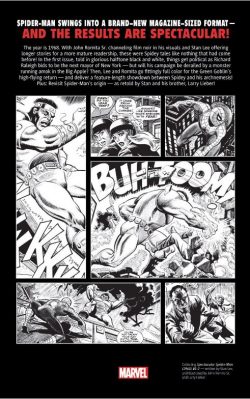
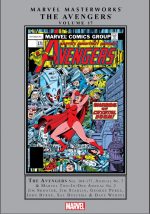
Avengers Marvel Masterworks volume 17


By Jim Shooter, Jim Starlin, Roger Stern, Marv Wolfman, George Pérez, David Michelinie, Bill Mantlo, Mark Gruenwald, Sal Buscema, Dave Wenzel, Tom Morgan & various (Marvel)
ISBN: 978-1302903411 (HB)

The Avengers have always proved that putting all one’s star eggs in a single basket pays off big-time: even when all Marvel’s classic all-stars such as Thor, Captain America and Iron Man are absent, it merely allows the team’s lesser lights to shine more brightly.

Of course, all the founding stars were regularly featured due to the rotating, open door policy, which means that every issue includes somebody’s fave-rave – and the boldly grand-scale impressive stories and artwork are no hindrance either. With the team now global icons, let’s look again at the stories which form the foundation of that pre-eminence.

Re-presenting Avengers #164-177, Avengers Annual #7 plus the concluding half of the legendary crossover epic from Marvel Two-in-One Annual #2 (cumulatively spanning October 1977 to November 1978), these stories again see the team in transition and against the biggest threats ever imagined.

During this period Jim Shooter, having galvanised and steadied the company’s notional flagship, moved on, leaving David Michelinie to impress his own ideas and personality upon the team, even as Cosmic Doomsmith Jim Starlin recruited the team to inscribe an epic ending to his seminal interpretation of tragic antihero Adam Warlock…

Opening this titanic tome is an informative Foreword from scripter Roger Stern, followed by a stunning 3-part saga by Shooter, John Byrne & Pablo Marcos which reinvented one of the team’s oldest adversaries.

It begins in #164 as, after months of speculation and experimentation, the resurrected Wonder Man is finally revealed to have evolved into a creature of pure ionic energy. Elsewhere, aging Maggia Don Count Nefaria recruits Whirlwind, Power Man (the original mercenary who had undergone the same transformative experiment as Wonder Man) and Living Laser to amass plunder for him. This tactic is mere subterfuge…

After the thieves trash a squad of Avengers, Nefaria uses his flunkies’ bodies as templates and power source to turn himself into a literal Superman before attacking the already-battered heroes in ‘To Fall by Treachery!’

The tension builds in #165 as ‘Hammer of Vengeance’ sees the out-powered team fall, only to be saved by elderly speedster The Whizzer who points out that, for all his incredible strength, Nefaria too is an old man with death inevitably dogging his heels…

Panicked and galvanised, the Overman goes berserk, carving a swathe of destruction through the city whilst seeking a confrontation with Thunder God Thor and the secret of his immortality. Before too long he had reason to regret his demands. The surprise arrival of the Thunderer in ‘Day of the Godslayer!’ ends the madman’s dreams but also highlights growing tensions within the victorious team…

This superb thriller is followed by ‘The Final Threat’ (Jim Starlin & Joe Rubinstein) from Avengers Annual #7, wherein Kree warrior Captain Marvel and Titanian mind-goddess Moondragon return to Earth with vague anticipations of an impending cosmic catastrophe.

Their premonitions are confirmed when galactic wanderer Adam Warlock arrives with news that death-obsessed Thanos has amassed an alien armada and built a Soul-gem powered weapon to snuff out the stars like candles…

Broaching interstellar space to stop the scheme, the united heroes forestall the stellar invasion and prevent the Dark Titan from destroying the Sun, but only at the cost of Warlock’s life…

Then ‘Death Watch!’ (Starlin & Rubinstein from Marvel Two-in-One Annual #2) finds Peter Parker plagued by prophetic nightmares, disclosing how Thanos had snatched victory from defeat and now holds the Avengers captive whilst again preparing to extinguish Sol.

With nowhere else to turn, the anguished, disbelieving Spider-Man heads for the Baxter Building, hoping to borrow a spacecraft, unaware that The Thing also has history with the terrifying Titan.

Although utterly overmatched, the mismatched champions of Life subsequently upset Thanos’ plans enough so that the Avengers and the Universe’s true agent of retribution can end the Titan’s threat forever… or at least until next time…

Back in the monthly, an epic of equal import was about to unfold. Shooter’s connection to the series, although episodic, was long-lived and produced some of that period’s greatest tales, none more so than the stellar – if deadline-doomed – saga which occurred over succeeding months: a sprawling tale of time-travel and universal conquest which began in Avengers #167-168 and, after a brief pause, resumed for #170 through #177.

In previous issues a difference of opinion between Captain America and Iron Man over leadership styles had begun to polarise the team. Cracks appeared and tensions started to show in #167 with ‘Tomorrow Dies Today!’ (Shooter, George Pérez & Marcos).

In the Gods-&-Monsters filled Marvel Universe there are entrenched and jealous Hierarchies of Power, so when a new player mysteriously materialises in the 20th century the very Fabric of Reality is threatened…

It kicks off when star-spanning 31st century superheroes the Guardians of the Galaxy materialise in Earth orbit, hotly pursuing cyborg despot Korvac. Inadvertently setting off planetary incursion alarms, their minor-moon sized ship is swiftly penetrated by an Avengers squad, and – after the customary introductory squabble – the future men (Charlie-27, Yondu, Martinex, Nikki, Vance Astro and enigmatic space God Starhawk) explain the purpose of their mission…

Captain America had fought beside them to liberate their home era from Badoon rule and Thor battled the fugitive Korvac before, so peace soon breaks out, but even with the resources of Earth’s Mightiest Heroes, the time travellers are unable to find their quarry…

Meanwhile on Earth, a mysterious being named Michael lurks in the background. At a fashion show staged by the Wasp, he achieves a psychic communion with model Carina Walters before they both vanish…

‘First Blood’ (Avengers #168) stirs up more trouble as Federal liaison and hidebound martinet Henry Peter Gyrich begins making life bureaucratically hot for the maverick team. In Colorado, meanwhile, Hawkeye gets a shock as his travelling partner Two-Gun Kid vanishes before his eyes whilst in suburban Forest Hills, Starhawk – in his female iteration of Aleta – approaches a quiet residence…

Michael/Korvac’s plan consists of subtly altering events as he gathers strength in secret preparation for a sneak attack on those aforementioned Cosmic Hierarchies. His entire plan revolves around not being noticed. When Starhawk confronts him, the villain kills the stellar intruder and instantly resurrects him minus the ability to perceive Michael or any of his works…

The drama screeches to a halt in #169, which declares ‘If We Should Fail… The World Dies Tonight!’ The out of context potboiler – by Marv Wolfman, Sal Buscema & Dave Hunt – sees Cap, Iron Man and the Black Panther scour the planet in search of doomsday bombs wired to the failing heart of a dying man, after which the major mayhem resumes in #170 with ‘…Though Hell Should Bar the Way!’ by Shooter, Pérez & Marcos.

As Sentinel of Liberty and Golden Avenger finally settle their differences, in Inhuman city Attilan, ex-Avenger Quicksilver suddenly disappears even as dormant mechanoid Jocasta (designed by maniac AI Ultron to be his bride) goes on a rampage before vanishing into the wilds of New York City.

In stealthy pursuit and hoping her trail will lead to Ultron himself, the team stride into a trap ‘…Where Angels Fear to Tread’ but nevertheless triumph thanks to the hex powers of the Scarlet Witch, the assistance of pushy, no-nonsense new hero Ms. Marvel and Jocasta’s own rebellion against the metal monster who made her. However, at their moment of triumph the Avengers are stunned to see Cap and Jocasta wink out of existence…

The problems pile up in #172 as Watchdog-come-Gadfly Gyrich is roughly manhandled and captured by out-of-the-loop returnee Hawkeye and responds by rescinding the team’s Federal clearances.

Badly handicapped, the heroes are unable to warn other inactive members of the increasing disappearances even as a squad of heavy hitters rush off to tackle marauding Atlantean maverick Tyrak the Treacherous who is bloodily enacting a ‘Holocaust in New York Harbor!’ (by Shooter, Sal Buscema & Klaus Janson)…

Answers to the growing mystery are finally forthcoming in ‘Threshold of Oblivion!’, plotted by Shooter, with David Michelinie scripting for Sal Buscema & D(iverse) Hands to illustrate.

As the vanishings escalate, the remaining Avengers (Thor, Wasp, Hawkeye and Iron Man – with the assistance of Vance Astro) finally track down their hidden foe and beam into a cloaked starship to liberate the ‘Captives of the Collector!’(Shooter, Bill Mantlo, Dave Wenzel & Marcos)…

After a staggering struggle, the heroes triumph and their old foe reveals the shocking truth: he is in fact an Elder of the Universe who foresaw cosmic doom millennia previously and sought to preserve special artefacts and creatures – such as the Avengers – from the slowly approaching apocalypse.

As he reveals that predicted end-time is here and that he has sent his own daughter Carina to infiltrate the Enemy’s stronghold, the cosmic curator is obliterated in a devastating blast of energy. The damage however is done and the entrenched hierarchies of creation may well be alerted…

Issue #175 began the final countdown as ‘The End… and Beginning!’ (Shooter, Michelinie, Wenzel & Marcos) sees the amassed and liberated ranks of Avengers and Guardians follow the clues to Michael, just as the new god shares the incredible secret of his apotheosis with Carina, before ‘The Destiny Hunt!’ and ‘The Hope… and the Slaughter!’ (Shooter, Wenzel, Marcos & Ricardo Villamonte) depicts the entire army of champions destroyed and resurrected as Michael easily overpowers all opposition but falters for lack of one fundamental failing…

Spread through a series of lesser adventures, the overarching epic ponderously and ominously unfolds before finally exploding into a devastating and tragic Battle Royale that is the epitome of superhero comics. This is pure escapist fantasy at its finest.

Despite being somewhat diminished by the artwork when the magnificent Pérez gave way to less inspired hands and cursed by the inability to keep a regular inker (Pablo Marcos, Klaus Janson Ricardo Villamonte and Tom Morgan all pitched in), the sheer scope of the epic plot nevertheless carries this story through to its cataclysmic and fulfilling conclusion.

Even Shooter’s reluctant replacement by scripters Dave Michelinie and Bill Mantlo (as his editorial career advanced) couldn’t derail this juggernaut of adventure.

If you want to see what makes Superhero fiction work, and can keep track of nearly two dozen flamboyant characters, this is a fine example of how to make such an unwieldy proposition easily accessible to the new and returning reader.

Available in hardback and digital iterations, and supplemented by original cover art by Pérez and Dave Cockrum, contemporary House Ads, editorial material and covers from previous compilations plus an epilogue strip by Mark Gruenwald & Tom Morgan, this archival tome and this type of heroic adventure might not be to every reader’s taste but these – and the truly epic yarns that followed – set the tone for fantastic Fights ‘n’ Tights dramas for decades to come and informed all those movies everybody loves. This tale can still boggle the mind and take the breath away, even here in the quietly isolated and no less dangerous 21st century…

No lovers of Costumed Dramas can afford to ignore this superbly bombastic book, and fans who think themselves above superhero stories might also be pleasantly surprised…
© 2017 Marvel Characters, Inc. All rights reserved.

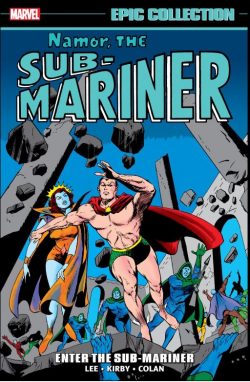
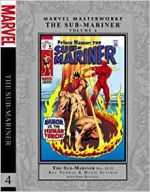
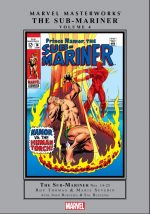
Sub-Mariner Marvel Masterworks volume 4


By Roy Thomas, Marie Severin, John Buscema, Sal Buscema, Jack Katz & various (Marvel)
ISBN: 978-0-7851-5048-0 (HB)

Prince Namor, the Sub-Mariner is the offspring of a water-breathing Atlantean princess and an American polar explorer; a hybrid being of immense strength, highly resistant to physical harm, able to fly and exist above and below the waves. Created by young, talented Bill Everett, Namor technically predates Marvel/Atlas/Timely Comics.

He first caught the public’s attention as part of the elementally appealing fire vs. water headlining team in the October 1939 cover-dated Marvel Comics #1 which became Marvel Mystery Comics with issue #2. He shared honours and top billing with The Human Torch, but had originally been seen (albeit in a truncated monochrome version) in Motion Picture Funnies: a weekly promotional giveaway handed out to moviegoers earlier in the year.

Rapidly emerging as one of the industry’s biggest draws, Namor gained his own title at the end of 1940 (Spring 1941) and was one of the last super-characters to go at the end of the first heroic age. In 1954, when Atlas (as the company then was) briefly revived its “Big Three” (the Torch and Captain America being the other two) costumed characters, Everett returned for an extended run of superb darkly timely fantasy tales, but even his input wasn’t sufficient to keep the title afloat and Sub-Mariner sank again.

When Stan Lee & Jack Kirby began reinventing comic book superheroes in 1961 with the groundbreaking Fantastic Four, they revived the awesome and all-but-forgotten amphibian as a troubled, semi-amnesiac anti-hero. Decidedly more bombastic, regal and grandiose, the returnee despised humanity; embittered at the loss of his sub-sea kingdom (seemingly destroyed by American atomic testing) whilst simultaneously besotted with the FF‘s Susan Storm.

Namor knocked around the budding Marvel universe for a few years, squabbling with other star turns such as the Hulk,Avengers, X-Men and Daredevil, before securing his own series as one half of Tales to Astonish, and ultimately his own solo title.

This fourth subsea selection – available in hardback and eBook editions – collects Prince Namor, the Sub-Mariner #14-25, spanning June 1969 to May 1970 and opens with another heartfelt appreciation and some creative secret-sharing from sometime-scribe and life-long devotee Roy Thomas in his Introduction.

Innovative action and shameless nostalgia vie for attention as Thomas, Marie Severin and Mike Esposito (moonlighting as Joe Gaudioso) decree ‘Burn, Namor… Burn!’ in Sub-Mariner #14, as the Mad Thinker apparently resurrects the original – android – Human Torch and sets him to destroy the monarch of Atlantis. This epic clash was one prong of an early experiment in multi-part cross-overs (Captain Marvel #14 and Avengers #64 being the other episodes of the triptych).

Inked by Vince Colletta, ‘The Day of the Dragon!’ finds Namor back in Atlantis after months away, only to find his beloved Lady Dorma has been abducted by old foe Dr. Dorcas. The trail leads to Empire State University and brutal battle against mighty android Dragon Man…

“Gaudioso” returned for Namor’s voyage to a timeless phenomenon in search of mutated foe Tiger Shark who had conquered ‘The Sea that Time Forgot!’, after which the Sub-Mariner contends with an alien intent on draining Earth’s oceans in ‘From the Stars… the Stalker!’ pencilled in tandem by Severin and Golden Age Great Jack Katz, using nom de plume Jay Hawk.

The saga ends calamitously in ‘Side by Side with… Triton!’ (Thomas, Severin & Gaudioso) as, with the help of the aquatic Inhuman, Namor repels the extraterrestrial assault, but loses his ability to breathe underwater. Now forced to dwell on the surface, the despised Atlantean then crushingly clashes with an old friend in the livery of a new superhero in ‘Support your Local Sting-Ray!’ This bombastic battle yarn also offers a delicious peek at the Marvel Bullpen, courtesy of (ex-EC veterans) Severin and inker Johnny Craig’s deft caricaturing skills…

John Buscema returns for #20, with Thomas scripting and Craig inking a chilling dose of realpolitik. ‘In the Darkness Dwells… Doom!’ sees Namor lured by the promise of a cure to his breathing difficulties into the exploitative clutches of the mad Monarch of Latveria. Trapping the Sub-Mariner and keeping him, however, are two wildly differing concepts…

Informed of Namor’s condition, the armies of Atlantis are marshalled by Dorma and disgraced Warlord Seth in ‘Invasion from the Ocean Floor!’ (art by Severin & Craig) besieging New York and almost invoking a new age of monsters.

As Namor’s malady is treated by Atlantean super-science, a key component of a new Superhero concept begins.

Last of the big star conglomerate super-groups, the Defenders would eventually count amongst its membership almost every hero – and a few villains – in the Marvel Universe. No surprise there as initially they were composed of the company’s bad-boys: misunderstood, outcast and often actually dangerous to know.

The genesis of the team in fact derived from their status as publicly distrusted “villains”, but before all that later inventive approbation linked tales of enigmatic antiheroes as best exemplified by Prince Namor, and the Incredible Hulk. When you add the mystery and magic of Doctor Strange the recipe for thrills, spills and chills became simply irresistible…

Following on from Dr. Strange #183 (November 1969) – which introduced the infernal Undying Ones, an elder race of demons hungry to reconquer the Earth – February 1970’s Sub-Mariner #22 ‘The Monarch and the Mystic!’ brought the Prince of Atlantis into the mix, as Thomas, Severin & Craig relate a moody tale of sacrifice in which the Master of the Mystic Arts apparently dies holding the gates of Hell shut with the Undying Ones pent behind them.

In case you’re curious, the saga concludes on an upbeat note in Incredible Hulk #126 (April 1970). You might want to track down that yarn too…

Even restored to full capacity, there’s no peace for the regal, and Sub-Mariner #23 finds Namor still contending with Dorcas and arch villain Warlord Krang after the human mad scientist uses his power-transfer process to create an Atlantean wonder with the might of killer whales in ‘The Coming of… Orka!’ The slow-witted psycho subsequently sets an army of enraged cetaceans against the sunken city as John Buscema & Jim Mooney step in artistically to depict how ‘The Lady and the Tiger Shark!’ finds Namor enslaved and Dorma making Faustian pacts to save Atlantis.

This scintillating volume concludes with a landmark tale as – restored to rule and ready to be riled – Namor becomes an early and strident environmental activist after surface world pollution slaughters some of his subjects. Crafted by Thomas, Sal Buscema & Mooney, ‘A World My Enemy!’ follows Sub-Mariner’s bellicose confrontation with the UN as he puts humanity on notice: clean up your mess or I will…

From this point on the antihero would become a minor icon and subtle advocate of the issues, even if only to young comics readers…

These tales feature some of Marvel’s greatest artists at their visual peak, with all the verve and enthusiasm still shining through. Many early Marvel Comics are more exuberant than qualitative, but this volume, especially from an art-lover’s point of view, is a wonderful exception: a historical treasure fans will delight in forever.
© 1968, 1969, 2018 Marvel Characters, Inc. All rights reserved.

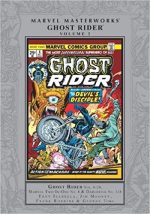
Ghost Rider Marvel Masterworks volume 2


By Tony Isabella, Gary Friedrich, Bill Mantlo, Marv Wolfman, Steve Gerber, Jim Mooney, Frank Robbins, George Tuska, Sal Buscema, Bob Brown, John Byrne & various (Marvel)
ISBN: 978-1-3029-2214-6 (HB)

At the end of the 1960s American comicbooks were in turmoil, much like the youth of the nation they targeted. Superheroes had dominated for much of the decade; peaking globally before explosively falling to ennui and overkill. Older genres such as horror, westerns and science fiction returned, fed by radical trends in movie-making where another, new(ish) wrinkle had also emerged: disenchanted, rebellious, unchained Youth on Motorbikes seeking a different way forward.

Green Lantern/Green Arrow, Jack Kirby’s Jimmy Olsen, Captain America and many others all took the Easy Rider option to boost flagging sales (and if you’re interested, the best of the crop was Mike Sekowsky’s tragically unfinished mini-masterpiece of cool Jason’s Quest in Showcase). Over at Marvel – a company still reeling from Kirby’s defection to DC/National in 1970 – canny Roy Thomas green-lighted a new character who combined the freewheeling, adolescent-friendly biker-theme with the all-pervasive supernatural furore gripping the entertainment fields.

Back in 1967, Marvel published a western masked hero named Ghost Rider: a shameless, whole-hearted appropriation of the cowboy hero creation of Vince Sullivan, Ray Krank & Dick Ayers (for Magazine Enterprises from 1949 to 1955), who utilised magician’s tricks to fight bandits by pretending to be an avenging phantom of justice.

Scant years later, with the Comics Code prohibition against horror hastily rewritten – amazing how plunging sales can affect ethics – scary comics came back in a big way. A new crop of supernatural superheroes and monsters began to appear on the newsstands to supplement the ghosts, ghoulies and goblins already infiltrating the once science-only scenarios of the surviving mystery men titles.

In fact, the lifting of the Code ban resulted in such an avalanche of horror titles (new stories and reprints from the first boom of the 1950s), in response to the industry-wide down-turn in superhero sales, that it probably caused a few more venerable costumed crusaders to – albeit temporarily – bite the dust.

Almost overnight nasty monsters (and narcotics – but that’s another story) became acceptable fare within four-colour pages and whilst a parade of pre-code reprints made sound business sense, the creative aspect of the contemporary fascination in supernatural themes was catered to by adapting popular cultural icons before risking whole new concepts on an untested public.

As always in entertainment, the watchword was fashion: what was hitting big outside comics was incorporated into the mix as soon as possible. When proto-monster Morbius, the Living Vampire debuted in Amazing Spider-Man #101 (October 1971) and the sky failed to fall in, Marvel moved ahead with a line of shocking superstars – beginning with a werewolf and a vampire – before chancing something new with a haunted biker who could tap into both Easy Rider‘s freewheeling motorcycling chic and the prevailing supernatural zeitgeist.

The all-new Ghost Rider debuted in Marvel Spotlight #5, August 1972 (preceded by western hero Red Wolf in #1 and the aforementioned Werewolf by Night in #2-4).

This sturdy hardback and equivalent digital compendium collects more of those early flame-filled exploits: specifically Ghost Rider #6-20 pairing with the Thing in Marvel Two-in-One #8 and a crossover with Daredevil #138, spanning June 1974 to June 1976, and preceded by an informative Introduction in writer Tony Isabella’s ‘The Remembrance Run’…

What Has Gone Before: Carnival cyclist Johnny Blaze sells his soul to the devil in an attempt to save his foster-father Crash Simpson from cancer. As is the way of such things, Satan follows the letter but not spirit of the contract and Simpson dies anyway. When the Dark Lord later comes for Johnny, his beloved virginal girlfriend Roxanne Simpsonintervenes. Her purity prevents the Devil from claiming his due and, temporarily thwarted, Satan spitefully afflicts Johnny with a body that burns with the fires of Hell every time the sun goes down…

Creative team Isabella, Gary Friedrich, Jim Mooney & Sal Trapani hit the kickstart here as GR #6 sees a perhaps ill-considered attempt to convert the tragic haunted biker into a more conventional superhero. ‘Zodiac II’ sees Blaze stumble into a senseless fight with a man possessing all the powers of the Avengers‘ arch-foes. However, there’s a hidden Satanic component to the mystery as Blaze discovers when reformed super-villain turned TV star Stunt-Master turns up to help close the case and watch helplessly as the one-man Zodiac falls foul of his own diabolical devil’s bargain in ‘…And Lose His Own Soul!’ (Isabella, Mooney & Jack Abel).

A final confrontation – of sorts – begins in Ghost-Rider #8 as ‘Satan Himself!’ comes looking for Johnny’s soul, with a foolproof scheme to force Roxanne to rescind her protection. She finally does so as the Hell-biker battles Inferno, the Fear-demon and most of San Francisco in a game-changing epic called ‘The Hell-Bound Hero!’. Here Blaze is finally freed from his satanic burden by the intervention of someone who appeared to be Jesus Christ…

The cover of issue #10 (by Ron Wilson & Joe Sinnott) featured GR battling the Hulk, but a deadline cock-up delayed that tale until #11 and the already included origin from Marvel Spotlight #5 filled those pages. Gil Kane & Tom Palmer reinterpreted the scene for their cover on #11 as the issue finally detailed ‘The Desolation Run!‘ (by Isabella, Sal Buscema, Tartaglione & George Roussos).

As Johnny joins a disparate band of dirt-bikers in a desert race, he collides with the legendarily solitary and short-tempered Green Goliath and learns who his true friends are, after which we divert to Marvel Two-in-One #8, teaming Ben Grimm with the supernatural sensation in a quirkily compelling Yuletide yarn. Crafted by Steve Gerber, Sal Buscema & Mike Esposito ‘Silent Night… Deadly Night!’ sees the audacious Miracle Man attempting to take control of a very special birth in a modern-day stable…

Artists Frank Robbins, Frank Giacoia & Mike Esposito limn Ghost Rider #12 wherein Isabella reveals the fate of World War I fighter ace Phantom Eagle. When Blaze tries to rescue a stranger from a ghostly aerial assault, he soon learns he has innocently thwarted justice and helped the warrior’s murderer avoid the ‘Phantom of the Killer Skies’…

Ghost Rider #13 declares ‘You’ve Got a Second Chance, Johnny Blaze!’ (Isabella, George Tuska & Vince Colletta) as the terms of the hero’s on-going curse are changed again, just as the dissolute biker heads to Hollywood and a promised job as Stunt-Master’s body-double. No sooner has he signed up, however, than Blaze becomes involved with starlet Karen PageDaredevil‘s one-time girlfriend – and a bizarre kidnap plot by super-villain The Trapster.

‘A Specter Stalks the Soundstage!’ features Blaze’s revenge-hungry nemesis The Orb who returns to destroy the Ghost Rider, an action yarn that spectacularly concludes with ‘Vengeance on the Ventura Freeway!’ (illustrated by Bob Brown & Don Heck).

Whilst hanging out on the West Coast Blaze joins new superteam The Champions, but they play no part in Bill Mantlo, Tuska & Colletta’s fill-in yarn ‘Blood in the Waters’, as the Ghost Rider oh, so topically tangles with a Great White Shark in the gore-soaked California surf.

Back on track in #17, ‘Prelude to a Private Armageddon!’ by Isabella, Robbins & Colletta sees a team-up with the Son of Satan wherein fellow stunt-actor Katy Milner is possessed by a demon and only Daimon Hellstrom can help…

The saga continues in ‘The Salvation Run!’ as Blaze must race through the bowels of Hell and relive his own traumatic past before finally saving the day, Katy and his own much-tarnished soul in ‘Resurrection’.

All this time the mystery of Karen’s attempted abduction had percolated through the subplots here, but explosively boil over in Daredevil #138 as ‘Where is Karen Page?’ (by Wolfman, John Byrne & Mooney) reveal the machinations of criminal maniac Death’s-Head to be merely part of a greater scheme involving Blaze, Stunt-Master, the Man without Fear and the homicidal Death Stalker. The convoluted conundrum cataclysmically climaxes in Ghost-Rider #20 with ‘Two Against Death!’ by Wolfman, Byrne & Don Perlin…

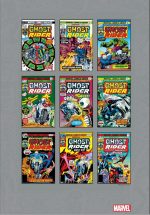
This spooky compendium compounds the chilling action with a cover gallery from repint series The Original Ghost Rider #14-20, and original art covers from Gil Kane to truly complete your fear-filled fun fest.

One final note: backwriting and retcons notwithstanding, the Christian boycotts and moral crusades of a later decade were what compelled the criticism-averse and commercially astute corporate Marvel to “translate” the biblical Satan of these early tales into generic and presumably more palatable or “acceptable” demonic creatures such as Mephisto, Satanish, Marduk Kurios and other equally naff downgrades, but the original intent and adventures of Johnny Blaze – and indeed series spin-offs Daimon Hellstrom and Satana, respectively the Son and Daughter of Satan – tapped into the period’s global fascination with Satanism, Devil-worship and all things Spooky and Supernatural which had begun with such epochal films as Rosemary’s Baby (Roman Polanski’s 1968 film more than Ira Levin’s novel) and remember these aren’t your feeble bowdlerised “Hell-lite” horrors.

These tales are about the real-deal Infernal Realm and a good man struggling to save his soul from the worst of all bargains – as much as the revised Comics Code would allow – so brace yourself, hold steady and accept no supernatural substitutes…
© 2020 MARVEL.

The Human Torch Marvel Masterworks volume 2

By Stan Lee, Larry Ivie, Dick Ayers, Bob Powell, Jack Kirby, Carl Burgos & various (Marvel)
ISBN: 978-0-7851-3505-0 (HB)

Win’s Christmas Gift Recommendation: Evergreen Superhero Frolics… 9/10

Hot on the heels of the Fantastic Four’s stunning success, Stan Lee & Jack Kirby spun the team’s most colourful and youngest member into his own series, eager to recapture the 1940s glory days when the Human Torch was one of the company’s “Big Three” superstars.

This captivating, esoteric and joyously exuberant collection of pure 1960s superhero shenanigans gathers those the latter end of those eclectic but crucial yarns from Strange Tales #118 to 134, (spanning March 1964 to July 1965) and comes with an evocative Introduction from Bruce Canwell before all the hot action kicks off…

Filled with fabulous classics of old school Marvel Fights ‘n’ Tights mayhem and mirth, this particular compendium (available in scarce but sturdy Hardback and assorted eBook formats) is a perfect antidote to angst overload.

Within a year of FF #1, magic-&-monsters anthology Strange Tales became the home for our hot-headed hero as issue #101 saw mostly-typical teenager Johnny Storm start an ancillary solo career. The non-stop riot of adventure begins here with Stan Lee & Dick Ayers highlighting the return of envy-obsessive hyper-intellectual the Wizard who has yet another go at the Flaming Kid in ‘The Man Who Became the Torch!’, an act which consequently nearly kills the Thing and Reed Mister Fantastic Richards besides.

A first brush with Marvel’s soon-to-be core readership came in #119. ‘The Torch Goes Wild!’ details how Commie AgentRabble Rouser mesmerises decent citizens, making them surly and rebellious, after which Jack Kirby pops back for #120 as ‘The Torch Meets Iceman!’: a terrific action-extravaganza with Ayers inks that pretty much closes the glory days of this strip. From then on, despite every gimmick – and occasional burst of sheer inspiration the Bullpen could muster – a slow decline sets in as quirky back-up strip Doctor Strange grew in popularity and cover space…

ST #121 sees Johnny as ‘Prisoner of the Plantman!’ (by Lee & Ayers) and #122 finds a thug, a conman and a crooked yogi all augmented by Dr. Doom and mustered as a woefully inadequate Terrible Trio ordered to launch an ill-conceived attack in ‘3 Against the Torch!’

Strange Tales #123 has a creepy inventor build himself an impressive insectoid exo-suit to get rich the easy way, as – in an effort to boost ratings – The Thing becomes a permanent fixture in ‘The Birth of the Beetle!’

This saga was most notable for the pencil job by Golden Age Human Torch originator Carl Burgos, after which Johnny and Ben tackle a fully re-designed ‘Paste-Pot Pete’ (Ayers inked by Paul Reinman) before going after another old adversary in ‘The Sub-Mariner Must Be Stopped!’

‘Pawns of the Deadly Duo!’ host a fresh assault by the Puppet Master, allied to the Mad Thinker in a smart yarn, after which #127 pits Ben and Johnny against a bizarre and baffling puzzle thanks to ‘The Mystery Villain!’

After a stunning Kirby pin-up of the Thing, the Fantastic Two then unwillingly battle ‘Quicksilver and the Scarlet Witch’in #128 (this one inked by Frankie Ray, AKA Frank Giacoia), as the Homo Superior siblings make an abortive first attempt to quit Magneto‘s Brotherhood of Evil Mutants, after which ‘The Terrible Trio!’ once more fail to impress or assassinate our heroes…

Pop culture at its most opportunistic reeled and staggered with #130 in ‘Meet the Beatles’ (not villains, but actually some sort of popular musical combo of the times, whom they actually didn’t meet at all), although sublime Golden Age artist Bob Powell (with inking from Chic Stone) did take over the art chores for the comedy of errors/crime caper.

Ayers returned to ink #131, a frankly dire Lee script entitled ‘Bouncing Ball of Doom!’, with the Mad Thinker siccing a cybernetic bowling bowl on our torrid twosome before Larry Ivie scripts a capable Space Race thriller in ‘The Sinister Space Trap!’ (inked by Mike Esposito under his Mickey DeMeo alias).

Lee returned for the last two Torch tales in ST #133 and #134: beginning with sharp-looking saga ‘The Terrible Toys’, wherein Puppet Master tries a new modus operandi and closing with ‘The Challenge of… The Watcher!’ (inked by the majestic Wally Wood) wherein Torch and Thing are transported to ancient Camelot to battle time-reaver Kang the Conqueror.

It was clear the writer’s mind was elsewhere, most likely with the new Nick Fury, Agent of S.H.I.E.L.D. strip that would replace the FF pair from Strange Tales #135 onwards.

Wrapping up this memory lane meander is a tantalising cover gallery from the 1974-75 reprint series of Golden and Silver Age Torch Tales, rendered by John Romita, Joe Sinnott, Larry Lieber, Ron Wilson, Frank Giacoia, Gil Kane, Al Milgrom &Vince Colletta, to complete your visit with the hottest duo in early Marvel history.

It’s remarkable to note that as the parent Fantastic Four title grew in scope and quality, the Human Torch’s own series diminished. Perhaps there is something to be said for concentrating one’s efforts or not overexposing your stars. Maybe it was just having Kirby do some plotting? Here, however, what was originally a spin-off for younger readers faded as Marvel found its voice and its marketplace, although there would be periodic efforts to reinvigorate the Torch.

Perhaps the historic value supersedes the quality of most of these strange tales, but there’s still a great deal that’s great about this series and Costumed Drama devotees with a sense of tradition and love of fun will find this book irresistible and unmissable.
© 2020 MARVEL.

The Eternals by Jack Kirby: The Complete Collection


By Jack Kirby & various (Marvel)
ISBN: 978-1-3029-2200-9 (TPB)

Win’s Christmas Gift Recommendation: Monumental Marvel Magic for Movie-Oriented Fun Seekers… 9/10

Jack Kirby was – and remains – the most important single influence in the history of American comics. There are millions of words about what the man has done and meant, and you should read those if you are at all interested in our medium.

Naturally, I’m adding my own two-bobs’-worth, pointing out what you probably already know: Kirby was a man of vast imagination who translated big concepts into astoundingly potent and accessible symbols for generations of fantasy fans. If you were exposed to Kirby as an impressionable kid, he owns you for life. To be honest, the same probably applies whatever age you jump aboard the “Kirby Express”…

For those of us who grew up with Jack, his are the images which furnish our interior mindsets. Close your eyes and think “robot” and the first thing that pops up is a Kirby creation. Every fantastic, futuristic city in our heads is crammed with his chunky, towering spires. Because of Jack, we all know what the bodies beneath those stony-head statues on Easter Island look like, we’re all viscerally aware that you can never trust great big aliens parading around in their underpants and, most importantly, we know how cavemen dress and carnosaurs clash. Kirby’s creations are magical: they all inspire successive generations of creators to pick up the ball and keep running with it…

In the late 1930s, it took a remarkably short time for Kirby and his creative partner Joe Simon to become the wonder-kid dream-team of the newborn comic book industry. Together they produced a year’s worth of pioneering influential monthly Blue Bolt; dashed out Captain Marvel Adventures (#1) for overstretched Fawcett and – after Martin Goodman appointed Simon editor at Timely Comics – co-created a host of iconic characters such as Red Raven, the original Marvel Boy, Mercury, Hurricane, The Vision, Young Allies and of course million-selling mega-hit icon Captain America.

When Goodman failed to make good on his financial obligations, Simon & Kirby were snapped up by National/DC, who welcomed them with open arms and a fat chequebook. Bursting with ideas the staid company were never really comfortable with, the Dynamism Duo were initially an uneasy fit, and were given two moribund strips to play with until they found their creative feet: These were Sandman and Manhunter and they are an amazing feat of breathtaking bravura.

Both features turned both around virtually overnight and, once established, were parcelled off to studio staff as S&K switched to the “Kid Gang” genre they had pioneered at Timely. Joe ‘n’ Jack created wartime sales sensation Boy Commandos and Homefront iteration the Newsboy Legion, before being called up to serve in the war they had been fighting on comic pages since 1940.

Once demobbed, they returned to a very different funnybook business and soon left National to create their own little empire…

Simon & Kirby heralded and ushered in the first American age of mature comics – not just by inventing the Romance comic, but with all manner of challenging modern material about real people in extraordinary situations – before seeing it all disappear again in less than eight years.

Their small stable of magazines – generated for the association of companies known as Prize, Crestwood, Pines, Essenkay and/or Mainline Comics – blossomed and as quickly wilted when the industry abruptly contracted throughout the 1950s. After years of working for others, Simon & Kirby had finally established their own publishing house, producing comics for a far more sophisticated audience, only to find themselves in a sales downturn and awash in public hysteria generated by an anti-comicbook pogrom.

Hysterical censorship-fever spearheaded by US Senator Estes Kefauver and opportunistic pop psychologist Dr. Frederic Wertham led to witch-hunting Senate hearings. Caving in, publishers adopted a castrating straitjacket of draconian self-regulatory rules. Horror titles produced under the aegis and emblem of the Comics Code Authority were sanitised and anodyne affairs in terms of Shock and Gore, even though the market’s appetite for suspense and the uncanny was still high. Crime comics vanished and mature themes challenging an increasingly stratified and oppressive society were suppressed…

Simon quit the business for advertising, but Jack soldiered on, taking his skills and ideas to a number of safer, if less experimental, companies. As the panic abated, Kirby returned briefly to DC Comics where he worked on mystery tales and Green Arrow (at that time a mere back-up, page-filler in Adventure Comics and World’s Finest Comics) whilst concentrating on his long-dreamed-of newspaper strip Sky Masters of the Space Force.

During that period Kirby also re-packaged an original super-team concept that had been kicking around in his head since he and Joe had closed their studio. At the end of 1956, Showcase #6 premiered the Challengers of the Unknown…

After three more test issues the “Challs” won their own title with Kirby in command for the first eight issues. Then a legal dispute with Editor Jack Schiff exploded and the King was gone…

He found fresh fields and an equally hungry-for-change new partner in Stan Lee at ailing Atlas Comics (which had once been mighty Timely) and there created a revolution in superhero comics storytelling…

After just over a decade of never-ending innovation and crowd-pleasing wonderment, Kirby felt increasingly stifled. His efforts had transformed the little publisher into industry-pioneer Marvel but now felt trapped in a rut. Thus, he moved back to DC for another burst of sheer imagination and pure invention.

Kirby always understood the fundamentals of pleasing his audience and strived diligently to combat the appalling state of prejudice about the comics medium – especially from industry insiders and professionals who despised the “kiddies’ world” they felt trapped in.

After his controversial, grandiose Fourth World titles were cancelled, Kirby looked for other concepts which would stimulate his own vast creativity yet still appeal to a market growing evermore fickle. His follow-ups included science fiction themed heroes Kamandi and OMAC, supernatural stalwart The Demon, a run of war stories starring The Losers, and even a new Sandman, co-created with Simon, but although the ideas kept coming (Atlas, Kobra, Dingbats of Danger Street), yet again editorial disputes ended up with him leaving for promises of more creative freedom elsewhere…

Jack Kirby’s return to Marvel in 1976 was much hyped at the time but again turned out to be controversial. His new works and creations found friends rapidly, but his return to earlier creations Captain America and Black Pantherdivided the fanbase.

Kirby was never slavishly wedded to tight continuity, and preferred, in many ways, to treat his stints on titles as another “Day One”: a policy increasing at odds with the close-continuity demanded by a strident faction of the readership…

They were apparently blind to the unfettered, joyous freedom of imagination run wild, the majesty of pulse-pounding thrills and galvanising BIG ART channelling BIG IDEAS!

The end of the 1970s saw Kirby drift into animation: designing characters and scenarios for shows such as Turbo-Teen, Thundarr the Barbarian and even The New Fantastic Four. His comics efforts included graphic novel The Hunger Dogs and Super Powers for DC, and an adaptation of movie The Black Hole for syndicated strip Walt Disney’s Treasury of Classic Tales.

However, his most memorable move was to validate the newly-minted Independent Comics/Direct Sale Market sector where he launched bombastic sci fi shockers Captain Victory and the Galactic Rangers and Silver Star for distributor-turned-publisher Pacific Comics.

For Eclipse, he co-created with Steve Gerber the industry-excoriating symbol of creative rebellion Destroyer Duck (part of a grass-roots campaign that ultimately destroyed the iniquitous work-for-hire business model that had made creators little more than indentured servants for decades).

Let’s return to that final tenure at Marvel though. Despite his ideas frequently clashing with the company continuity, and being editorially sabotaged, his new ideas found an appreciative audience. 2001: A Space Odyssey, Devil Dinosaur and Machine Man broke new ground but his greatest and final contribution was undoubtedly his treatment of a contemporary crypto-science fad: The Eternals…

Now with a blockbuster Marvel movie just waiting on the shelf for punters to come watch it, the eccentric original feature has been squeezed into a trade paperback and digital Complete Collection (containing issues #1-20 and Eternals Annual#1 from June 1976 to January 1978), and is just crying out for you to come get it…

Written and drawn by Kirby withs inks by John Verpoorten, it all begins on ‘The Day of the Gods’, as anthropologist Doctor Damian and his daughter Margo are steered by mysterious guide Ike Harris through an incredible South American temple to discover that aliens inspired and educated the ancients…

Simultaneously, half a world away, diabolical monsters emerge from millennia of self-isolation to resume a war that spans the length of human existence…

And so begins a frantic scrabble as history is rewritten and humanity learns terrible truths: how giant aliens had visited Earth in ages past, sculpting proto-hominids into three distinct species: Human Beings; monstrous, genetically unstable Deviants and god-like super-beings who called themselves Eternals. Moreover, those humungous Space Gods have returned once again to check up on their experiment…

Remember Ike? His real name is Ikaris and he’s an Eternal monitoring how ‘The Celestials!’ will react as they set up to assess their experiment. As a country-sized ship enters Earth orbit, a cadre of mountain-sized aliens set up a monitoring station in the ruins, ignoring humanity, Deviants and Eternals alike, but the monstrous faction who once subjugated mankind and inspired most of our infernal mythology have resolved to destroy their creators whatever the cost…

The plan involve provoking humanity into rash attacks and their warlord Kro unleashes hell as ‘The Devil in New York!’Sadly for him and his vile minions, Ikaris has just left potentially orphaned Margo with capricious party-loving Sersi at her Manhattan apartment just in time to be truly ticked off by ‘The Night of the Demons!’

Mike Royer takes over as series inker with #5 as the solitary Eternals finally respond by having a committee meeting in their isolated citadel ‘Olympia!’ In the meantime, Sersi, Margo and Ikaris have been abducted to the Deviants’ undersea city, invoking a brutal response from warrior princess Thena, excitable speedster Makkari and a novel one from supreme Eternal Zuras who calls a press conference to explain Earth’s real history in ‘Gods and Men at City College!’

As ‘The Fourth Host’ take their mysterious measurements around the world, spy agency SHIELD infiltrates the Space God compound and almost triggers Armageddon, even as in Deviant Lemuria clandestine war within the ruling family endangers ‘The City of Toads’, while introducing two more tormented characters who fit no mould or definition.

The first is comely Ransak, and the other horrific Karkas: but which one is ‘The Killing Machine!’ too savage even for the Deviant arena?

The question remains unanswered as a curious Celestial invades the city in ‘Mother!’ sparking catastrophe and mass evacuation, even as the still-gathering Eternals debate their future in Olympia. The world’s doom-clock then jumps closer to midnight as the Soviets respond precipitately in ‘The Russians are Coming!’ just as the godly Eternals form a psychic gestalt to meet the Space Gods on more equal terms in ‘Uni-Mind!’

An extra-length diversion follows as The Eternals Annual #1 pits recently-relocated Ransak and Karkas against ‘The Time Killers’, after which the mind-blowing Story of Us resumes with human ‘Astronauts’ breaking into the Celestial orbiter, and proving an unreasonable response from the youngest Eternal and a forgotten colossus of human legend…

Presumably in response to publisher pressure, Kirby almost perpetrates a guest appearance from the mainstream Marvel Universe as a college experiment unleashes uncanny cataclysm in ‘Ikaris and the Cosmic Powered Hulk’: a brutal battle leaving the local environs a ‘Disaster Area’ and uncovering a lost terror of antiquity imprisoned in a subterranean ‘Big City Crypt’…

The awesome menace ignores the best the Eternals can muster, but ultimately falls to ‘Sersi the Terrible’, precipitating another crisis as sly, scheming Druig disregards the concerns of his fellow immortals and attempts ‘To Kill a Space God!’, before falling to the sheer determination of Ikaris in ‘The Pyramid’…

And then it stopped. Never a comfortable fit with the rest of the Marvel Universe, the comic explored Kirby’s fascinations with Deities, Space and Supernature through the lens of very human observers. Once the series ended and Kirby left, other creators greedily co-opted the concept – with mixed success – into the company’s mainstream continuity. The concept remade the greater continuity and there’s been duff and excellent reinterpretations ever since.

No matter their merits though, nothing has ever matched The King’s verve, passion or scope and scale…

This volume also includes unused art and covers, character designs, original art pages, pages of Kirby pencils, promotional house ads and editorial pages, plus a gallery of covers from previous collections.

Jack Kirby’s commitment to wholesome adventure, breakneck action and breathless wonderment, combined with his absolute mastery of the comic page and unceasing quest for the Next Big Thrill always makes for a captivating read. His comics should be compulsory for all and found in every home…
© 2020 MARVEL