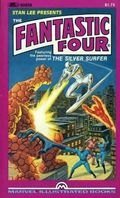
The Fantastic Four – Marvel Illustrated Books


By Stan Lee & Jack Kirby with Joe Sinnott
(Marvel Illustrated Books)
ISBN: 0-939766-02-7

Here’s another look at how our industry’s gradual inclusion into mainstream literature began and one more pulse-pounding paperback package for action fans and nostalgia lovers.

One thing you could never accuse entrepreneurial maestro Stan Lee of was reticence, especially when promoting his burgeoning line of superstars. In the 1960s most adults, – including the people who worked there – considered comic-books a ghetto. Some disguised their identities whilst others were “just there until they caught a break.” Stan, Jack Kirby and Steve Ditko had another idea – change the perception.

Whilst the artists pursued their imaginations waiting for the quality of the work to be noticed, Lee proactively pursued every opportunity to break down the slum walls: college lecture tours, animated TV shows, ubiquitous foreign franchising and of course getting their product onto the bookshelves of “real” book shops.

After a few abortive attempts in the 1960s to storm the shelves of bookstores and libraries, Marvel made a concerted and comprehensive effort to get their wares into more socially acceptable formats. As the 1970s closed, purpose-built graphic collections and a string of new prose adventures tailored to feed into their all-encompassing continuity began to appear.

Whereas the merits of the latter are a matter for a different review, the company’s careful reformatting of classic comics adventures were generally excellent; a superb series of primers and a perfect new venue to introduce fresh readers to their unique worlds.

The project was never better represented than in this classy little Kirby cornucopia of wonders with crisp black and white reproduction, sensitive editing, efficient picture-formatting and of course, three superb yarns from the very peak of Lee & Kirby’s magnificent partnership…

The first story ‘When Strikes the Silver Surfer!’ pitted the bludgeoning, tragic, jealousy-consumed Thing in unabashed, brutal battle with the Silver Surfer, an uncomprehending alien of incomprehensible power, trapped on Earth and every inch a “Stranger in a Strange Land”. When the gleaming godling turned to the Thing’s blind girlfriend Alicia Masters for tea and sympathy, her brooding boyfriend immediately jumped to the wrong conclusion…

Alicia was the pivotal actor in the follow-up two-part tale ‘What Lurks Behind theBeehive’ and the concluding ‘When Opens the Cocoon!’ a sinister saga of science gone mad which served to introduce a menace who would eventually become a major star in Marvel’s firmament.

The action opens as gifted sculptress Alicia is abducted to a technological wonderland where a band of rogue geniuses have genetically engineered the next phase in evolution but now risk losing control of their creation even before it can be properly born… As the Fantastic Four frantically searches for the seemingly helpless girl, she has penetrated the depths of the incredible hive and discovered the secret of the creature known only as “Him”.

Alicia’s gentle nature is the only thing capable of placating the nigh-omnipotent newborn creature (who would eventually evolve into the tragic cosmic voyager Adam Warlock), but as the FF finally arrive to save the day events spiral out of control and imminent disaster looms large…

It’s easy to assume that such resized, repackaged paperback book collections of early comics extravaganzas were just another Marvel cash-cow in their tried-and-tested “flood the marketplace” sales strategy – and maybe they were – but as someone who has bought these stories in most of the available formats over the years, I have to admit that these handy back-pocket versions are among my very favourites and ones I’ve re-read most – they’re just handier and more accessible – so why aren’t they are available as ebooks yet?
© 1966, 1967, 1982 Marvel Comics Group, a division of Cadence Industries Corporation. All rights reserved.

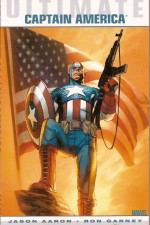
Ultimate Comics Captain America


By Jason Aaron & Ron Garney (Marvel/Panini UK)
ISBN: 978-1-84653-489-8

In 2000, when Marvel hived off portions of their established continuity into a separate, darker, grittier universe more relevant to the video game-playing, movie-watching 21st century readers than the 1960s Lee/Kirby/Ditko ongoing monolith, they started with the most popular characters – Spider-Man and the X-Men – only gradually adding analogues for the remaining characters and trademarks.

Even when the Mighty Avengers finally appeared, renamed the Ultimates in 2002, readers were only sparingly brought up to speed on the assorted back-stories of the alternative heroes and villains – including a remarkably familiar yet staggeringly different “Living Legend of World War II”.

Frail Steve Rogers still underwent radical experimentation to become America’s first super-soldier and after a brief stellar career as the living symbol of his war-beleaguered nation, disappeared in a blazing explosion. He was resurrected from a block of ice in modern times and re-assumed his place at the forefront of masked heroes. However, this Sentinel of Liberty was no costumed boy-scout, but rather a deadly and remorseless warrior: a master strategist and supremely skilled street-fighter always ready to apply the ultimate sanction. In short: a conscienceless killer.

In Ultimate Comics Captain America the eternal soldier is on the trail of rogue states seeking to duplicate the super-soldier serum which created him at the behest of his new government masters, when he is captured and subjected to horrendous torture and indoctrination by a living ghost…

Whilst Steve Rogers slept in the ice, America continued its march to global dominance and when the Vietnam conflict escalated the Military sought to recreate Captain America by transforming starry-eyed patriotic kid Frank Simpson into a living embodiment of the American war machine…

Tragically Vietnam was a different kind of war and Simpson (an iteration of the deeply troubled villain Nuke created by Frank Miller & David Mazzucchelli in Daredevil: Born Again) broke under the weight of the dirty jobs and corrupt missions he was assigned to carry out. One day he walked into the jungle and was never seen again…

Now Simpson is back and has clearly discovered how to duplicate the serum that empowers him; selling it to North Korea, Iran and anybody else dedicated to the downfall of the “the Land of the Free”…

Ignoring official orders to stand down, Steve Rogers hunts his successor – who has already thoroughly defeated him once – only to stumble on the USA’s greatest nightmare. Overmatched, outfought and easily captured by Simpson, Rogers is subjected to a terrifying re-education program that opens his eyes to what his country became whilst he slept and the kind of nation Captain America now stands for…

The stark, savage and nihilistically modern Ultimates Comic universe is well-stocked with dark-and-gritty doppelgangers of the gleaming pantheon crafted by Stan Lee, Jack Kirby and Steve Ditko, but since its inception at the turn of the century, the imprint has resolved into something which can easily stand on its own merits, as seen in this wonderful tale (originally published as Ultimate Comics Captain America #1-4).

With the impending imminent release of the latest Captain America movie, a large number of graphic novel collections starring the Sentinel of Liberty have been commissioned and this brutal, beautiful fable of frustrated idealism and corrupted patriotism is one of the very best of recent vintage, in this, that or any other universe.

Written by Jason (Scalped) Aaron, revisiting the source material of his Vertigo classic The Other Side and stunningly illustrated by Ron Garney, whose art on the mainstream hero (see Captain America: Operation Rebirth) returned the Star-Spangled Avenger to dizzying heights of popularity after decades in the doldrums, Ultimate Comics Captain America is a breathtaking, thought-provoking examination of duty and honour and a fabulously entertaining rollercoaster ride of action and adventure for older readers. It’s also a gloriously accessible tale for anybody approaching the character for the very first time…

Tense, compelling, morally challenging and explosively cathartic, this saga of conjoined yet eternally antagonistic ideologies in savage confrontation is absolute comics gold of the very highest quality: challenging, compelling and wildly satisfying.

™ and © 2011 Marvel Entertainment LCC and its subsidiaries. All rights reserved. A British edition released by Panini UK Ltd.

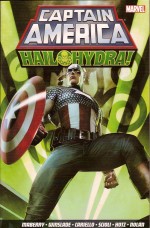
Captain America: Hail Hydra


By Jonathan Maberry, Sergio Cariello, Tom Scioli, Phil Winslade, Kyle Hotz & Graham Nolan (Marvel/Panini UK)
ISBN: 978-1-84653-488-1

Everything changed for a little company called Marvel when, in issue #4 of the Avengers, the assembled heroes recovered the body of US Army Private Steve Rogers floating in a block of ice and consequently resurrected World War II hero Captain America. With this act bridging the years to Timely and Atlas Comics (which had in fact begun with the revival of Sub-Mariner in Fantastic Four #4), Marvel instantly acquired a comforting longevity and potential-packed pre-history: lending an enticing sense of mythic continuance to the fledgling company that instantly gave it the same cachet and enduring grandeur of market leader National/DC.

In 2010, after years of conflicting continuity (and with a movie in the offing), Marvel updated those pivotal events and early future-shocked days in the contemporary world with the stunning re-interpretation Captain America: Man Out of Time before repeating the operation with another generational miniseries: this time following the returned Sentinel of Liberty as he fought an extended campaign against a fearsome and undying foe.

Captain America: Hail Hydra! focuses on five crucial skirmishes fought over the Red, White and true Blue hero’s long years of valiant service wherein the he continually clashed with an organisation of insidious evil and astounding ambition,  with each issue illustrated by a different artist in a pastiche of the relevant time.

The action, illustrated Sergio Cariello, begins in 1944 as Captain America and teen partner Bucky helped German anti-Nazi freedom fighter Trude Lohn smash a plot by the baroquely bonkers, certifiably mad Doctor Geist, who had discovered how to reanimate the dead. During the apocalyptic struggle Cap was injected with the unholy serum and although the triumphant trio succeeded in depriving Hitler of an undead army they had no idea of the sinister scientist’s greater scheme, the ancient society he belonged to or what effect his devil drugs would have on America’s greatest warrior…

Tom Scioli pictured the second instalment in tribute to Jack Kirby, wherein more hints into the history of the cult that would become Hydra were interspersed with Cap’s first days as an Avenger following his half-century enforced hibernation. After reuniting with the now geriatric Trude, he and his new comrades clashed with ex-Nazi Baron Strucker and Geist’s unliving army only to be thoroughly overmatched and outmanoeuvred. The deranged doctor seemed more interested in gathering blood samples from Cap and Thor than winning the battle he had instigated…

A few years later the plan becomes clearer when the Sentinel of Liberty, partner in crime-fighting the Falcon, and African Avenger Black Panther were attacked by an army of zombies attempting to steal the fabled Elixir of Life from a hidden Wakandan repository of knowledge called the Grotto of Solomon. Lavishly rendered by Phil Winslade, the spectacular clash was also lightly dusted with further glimpses of the order’s historic attempts to gather arcane knowledge and artefacts pertaining to their mysterious millennial goal…

For a brief period the US government replaced the Star-Spangled Avenger with a less independent agent and Steve Rogers took the identity of “The Captain”. Kyle Hotz delineates an adventure from those turbulent times as the unencumbered hero tackled Geist’s latest monstrosity and worked with Nick Fury of S.H.I.E.L.D. to get one step ahead of Hydra.

After thwarting a terrifying attack on the heart and soul of America Rogers is forced to consider not only what Geist is truly after but also what his devilish serum might have made of Captain America that fateful night in 1944…

Graham Nolan closes the saga in captivating style as Rogers, now Director of the Avengers, and old partner Bucky (the current Captain America) enlist a garrison of guest stars as they home in on Strucker and Geist just as their incredible seven-thousand year scheme comes to a shocking culmination. Even the World’s Mightiest Heroes would be hard-pressed to overcome the incredible beings Hydra has finally birthed…

This book does have a few niggling plot flaws but nothing so flagrant that it disrupts the overall flow of action and delicious flavour of nostalgia; so unless you’re a dedicated, nit-picking devotee the striking art and rollicking rollercoaster thrills and chills should carry the day nicely, providing a solid dose of immortal, enticing entertainment

Fast-paced, full-on spectacle and clever infilling of the established canon makes Captain America: Hail Hydra! a striking saga that should serve to make many fresh fans for Marvel’s eternally evergreen old soldier.

™ and © 2011 Marvel Entertainment LCC and its subsidiaries. All rights reserved. A British edition released by Panini UK Ltd.

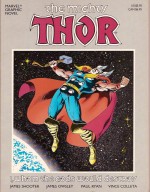
The Mighty Thor: I, Whom the Gods Would Destroy

– a Marvel Graphic Novel

By Jim Shooter, James Owsley, Paul Ryan & Vince Colletta (Marvel)
ISBN: 978-0-87135-268-0

When it was released in 1987, I, Whom the Gods Would Destroy offered a decidedly different take on the bombastic fantasy-hero – which perhaps explains why it has unfairly languished in obscurity ever since…

The plot itself is delightfully simple and fiendishly clever: Thor is an immortal of Asgard with all the responsibilities of a warrior prince and champion of justice. Moreover, he can transform at will into mere mortal iteration Don Blake – a crippled surgeon who revels in the minutiae of humanity, regularly and literally holding people’s lives in his hands…

After Blake loses a patient on the operating table he suffers a debilitating crisis of conscience and begins to question his own Divine right to and manner of existence.

Rebuffing the dutiful pleadings of his betrothed, beloved Lady Sif, he goes thoroughly off the rails, decrying the callous, patronising disregard the gods show to mortals.

After a tawdry fling with a girl in a bar Blake decides to abandon his immortal identity intending to live and die as a man, but the ever-present dangers of city-life soon compel him to become the crime-busting saviour-hero once more. Now, however this heroic role is dull and unappetising to him. He attempts to end his undying life…

Traumatised beyond endurance Blake tries to prove the myriad attractions of raw humanity to celestial Sif, but she cannot understand his fascination and rejects the world of mortals. Not even for him can she embrace or understand mankind…

An emotional Rubicon is confronted and crossed when Blake is once more called to operate on a dying patient. This time it’s a child and if he can’t save her, nobody can…

This compelling drama takes the most macho, two-fisted action-hero of the Marvel Universe and puts him through emotional hell in a tale with no villains where strength is irrelevant and compassion is the only weapon…

I can’t recall when Marvel last published an all-original graphic novel as opposed to a collection of previously printed material, but once they were the market leader with an entire range of “big new stories” told on larger than normal pages (285 x 220mm rather than the comic-sized standard 258 x 168mm of today’s books), featuring not only proprietary characters in out-of-the-ordinary adventures but also licensed assets like Conan, creator-owned properties like Alien Legion and new character debuts.

Nonetheless, their ambitious dalliance with the form in the 1980s and 1990s produced some classy results that the company has seldom come close to repeating since. Whether original concepts, licensed projects or their own properties, that run generated a lot of superb or at least different stories that still stand out today – or would if they were actually in print.

Released in 1987, I, Whom the Gods Would Destroy was conceived by Jim Shooter, written by James Owsley and illustrated by Paul Ryan & Vince Colletta; fitting comfortably into the tightly policed continuity of the mainstream Marvel Universe, just before Walt Simonson reinvigorated the title with issue #337 (for which see Mighty Thor: the Ballad of Beta Ray Bill).

A million miles from the usual Fights ‘n’ Tights, Mallets and Monsters monkey-shines, this thought-provoking, long-neglected tale takes Thor in a totally different direction that will similarly delight and surprise new readers and old fans. A cut above the average and well worth an open-eyed reappraisal, this is a Marvel Masterpiece well worth tracking down…
© 1987 Marvel Entertainment Group/Marvel Characters, Inc. All Rights Reserved.

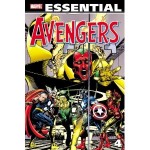
Essential Avengers volume 4


By Roy Thomas, John Buscema, Sal Buscema, Tom Palmer, Neal Adams, Barry Smith & various (Marvel)
ISBN: 978-0-7851-1485-7

The Avengers always proved that putting all one’s star eggs in on single basket paid off big-time; even when all Marvel’s all-stars such as Thor, Captain America and Iron Man were absent, it merely allowed the lesser lights of the team to shine more brightly.

Of course all the founding stars regularly featured due to the rotating, open door policy which meant that most issues included somebody’s fave-rave and the increasingly bold and impressive stories and artwork were no hindrance either.

This monolithic and monumental phonebook-sized fourth tome, collecting the absolute best of the Mighty Avengers‘ world-saving exploits (presenting in crisp, stylish black and white the astounding contents of issues #69-97 of their monthly comic book and the crossover Incredible Hulk #140), confirmed Roy Thomas as a major creative force in comics and consolidated John Buscema’s status as the foremost artist of Marvel’s second age.

These compelling yarns certainly enhanced the reputations of JB’s brother Sal and increased the high profile of the iconoclastic Neal Adams, whose brief stint here, on the X-Men and in a few other select places, set the industry ablaze and spawned a generation of avid artistic imitators…

Opening this epochal tome is ‘Let the Game Begin’ from Avengers #69, by writer Thomas (who wrote all the stories contained here) and illustrated by Sal Buscema & Sam Grainger, wherein the team – Captain America, Yellowjacket, Wasp, Goliath, Iron Man, Vision and Thor – were called to the hospital bedside of ailing Tony Stark just in time to prevent his abduction by the grotesque Growing Man. After battling boldly against the unbeatable homunculus the team were summarily and collectively snatched into the future by old enemy Kang the Conqueror who co-opted the team to act as pieces in a cosmic chess-game with an omnipotent alien called the Grandmaster.

If the Avengers failed the Earth would be eradicated…

Issue #70 and 71 began a fertile period for writer Thomas as he introduced two new teams who would, in the fullness of time, star in their own stellar series: Squadron Supreme and The Invaders.

‘When Strikes the Squadron Sinister!’ saw the Avengers returned to their own time to battle a team of deadly villains (mischievously based on DC’s Justice League of America) and ‘Endgame!’, guest-starring the Black Knight, found the Vision, Black Panther and Yellowjacket dispatched to 1941 to clash with the WWII incarnations of the Sub-Mariner, Human Torch and Captain America…

After foiling Kang’s ambitions the team victoriously returned to the present where Avengers # 72 featured a guest-appearance from Captain Marvel and Rick Jones as ‘Did You Hear the One About Scorpio?’ introduced the menace of super-mob Zodiac, after which ‘The Sting of the Serpent’ (with art by Frank Giacoia & Grainger) pitted the Panther against seditious hate-mongers determined to set New York ablaze, leading to a spectacular and shocking clash between Avengers and Sons of the Serpent in ‘Pursue the Panther!’; the first in a string of glorious issues illustrated by the dream team of John Buscema & Tom Palmer.

The long-missing mutant Avengers Quicksilver and Scarlet Witch returned in #75, desperate to stave off an extra-dimensional invasion and nuclear Armageddon by Conan prototype Arkon the Magnificent in ‘The Warlord and the Witch!’ before the staggering threat was finally thwarted in ‘The Blaze of Battle… the Flames of Love!’ after which a far more mundane and insidious menace manifested when billionaire financier Cornelius Van Lunt almost bankrupted Avengers sponsor Tony Stark, compelling the team to become his ‘Heroes for Hire!’

Sal Buscema popped in to pencil ‘The Man-Ape Always Strikes Twice!’ as the team were targeted by a coterie of vengeful villains competing to join a new league of evil, culminating in a grand clash with the aforementioned anthropoid, Swordsman, Power Man, Living Laser and Grim Reaper in ‘Lo! The Lethal Legion!’, which also heralded the artistic return of Big Brother John.

Marvel introduced its first Native American costumed hero in ‘The Coming of Red Wolf!’ as the Avengers were drawn into a highly personal and decidedly brutal clash between Cornelius Van Lunt and a tribe of Indians he was defrauding. The dramatic dilemma (heralding the team’s entry into the era of “Relevant”, socially conscious tales) divided the team and concluded with Vision, Scarlet Witch and Goliath aiding Red Wolf in ‘When Dies A Legend!’, whilst the remaining team pursued Zodiac.

Sadly the malevolent mob moved first and took the entire island of Manhattan ‘Hostage!’, leaving only the solitary vigilante Daredevil free to save the day, after which Militant Feminism raised its strident head as the Wasp, Black Widow, Scarlet Witch and Madame Medusa were seduced into joining a new team called the Lady Liberators (yes, I know, but the all-male creative team meant well…). However, the Valkyrie who declared ‘Come on in… the Revolution’s Fine!’ had her own sinister agenda that had nothing to do with justice or equality…

Avengers #84 featured part-time paladin Black Knight who was becoming addicted to the bloodthirsty hunger of his Ebony Blade, resulting in an otherworldly confrontation with Arkon and the Enchantress in ‘The Sword and the Sorceress!’ which left half the team lost on a parallel world.

In ‘The World is Not For Burning!’ (inked by Giacoia), Vision, Scarlet Witch and Quicksilver found themselves trapped on an Earth where the Squadron Supreme were the World’s Greatest heroes and a solar Armageddon was only hours away…

‘Brain-Child to the Dark Tower Came…!’ (art by Sal B & Jim Mooney) saw the extremely reluctant allies unite to save a very different world after which, back home, the Black Panther reprised his origin before taking leave of his comrades to assume the throne of his hidden African nation in ‘Look Homeward, Avenger’ (Giacoia & Sal B).

Novelist Harlan Ellison was a very vocal comics fan in the 1970s and occasionally collaborated on Marvel tales. Avengers #88 began a radical adaptation of one his best short stories, beginning with ‘The Summons of Psyklop’ (Ellison, Thomas, Sal Buscema & Mooney) wherein an experiment to cure the Hulk of his destructive nature led to the man-beast’s abduction by a preternatural entity. The saga concluded in The Incredible Hulk #140 (Ellison, Thomas, Herb Trimpe & Grainger) as ‘The Brute… That Shouted Love at the Heart of the Atom!’ saw the Jade Goliath find love and peace in a sub-molecular paradise, only to lose it all…

Avengers #89 began perhaps the most ambitious saga in Marvel’s brief history: an astounding epic of tremendous scope which dumped Earth into a cosmic war the likes of which comics fans had never before seen and creating the template for all multi-part crossovers and publishing events ever since.

It all began relatively quietly as marooned Kree warrior Captain Marvel was finally freed from his prison in the Negative Zone in ‘The Only Good Alien…’ (art by Sal Buscema and Sam Grainger), inadvertently alerting the public to the panic-striking notion that extraterrestrials lurk among us, whilst awakening a long-dormant robotic Kree Sentry which promptly enacted a protocol to devolve humanity to the level of cavemen in ‘Judgment Day’.

Even with Kree heavyweight Ronan the Accuser taking personal charge the scheme was narrowly defeated in ‘Take One Giant Step… Backward!’, but the cat was out of the bag and public opinion had turned against the heroes for concealing the threat of alien incursions.

In a powerful allegory of the Communist Witch-hunts of the 1950s the epic expanded in #92 (Sal B & George Roussos) when ‘All Things Must End!’ saw riots in the streets and political demagogues capitalising on the crisis. Subpoenaed by the authorities, castigated by friends and public, the current team was ordered to disband by their founding fathers Thor, Iron Man and Captain America.

Or were they…?

The plot thickened and the art quality took an exponential leap as Neal Adams and Tom Palmer assumed the chores with the giant-sized #93’s ‘This Beachhead Earth’ as the Vision was nigh-fatally attacked and those same founding fathers evinced no knowledge of having benched the regular team. With Ant-Man forced to undertake ‘A Journey to the Center of the Android!’ to save the Vision’s artificial life, the Avengers become aware of not one but two alien presences on Earth: bellicose Kree and sneaky shape-shifting Skrulls, beginning a ‘War of the Weirds!’ on our fragile globe. Acting too late they were unable to prevent the Scarlet Witch, Quicksilver and Captain Marvel from being abducted by the Skrulls…

‘More than Inhuman!’ in issue #94 embroiled the hidden race of advanced beings called Inhumans in the mix, disclosing that their advanced science and super-powers were the result of genetic meddling by the Kree in the depths of prehistory. Now with their king Black Bolt missing and the nefarious Maximus in charge, the aliens were calling in their ancient markers…

The second chapter ‘1971: A Space Odyssey’ (pencilled by John Buscema) focused on Captain Marvel increasingly pressured to reveal military secrets to his shape-shifting captors as the Skrulls prepared to launch a final devastating attack on their eons-old rivals, whilst on Earth ‘Behold the Mandroids!’ saw the authorities attempt to arrest all costumed heroes…

Avengers #95 ‘Something Inhuman This Way Come…!’ coalesced the disparate story strands as the aquatic Triton helped defeat the Mandroids before beseeching the beleaguered heroes to find his missing monarch and rescue his people from the press-ganging Kree. After so doing, with a solid victory under their belts the Avengers headed into space to liberate their kidnapped comrades and save Earth from becoming collateral damage in the impending Kree-Skrull War…

‘The Andromeda Swarm!’ (with additional inking from Adams and Al Weiss) was perhaps the Avenger’s finest hour, as the small, brave band held off an immense armada of starships, losing one of their number in the conflict, whilst the Kree Supreme Intelligence was revealed to have been pursuing its own clandestine agenda all along and had snatched bewildered sidekick Rick Jones to clinch its terrifyingly ambitious plans.

The astounding final episode ‘Godhood’s End!’ brought the uncanny epic (and this volume) to a perfect end with a literal deus ex machina as the master-plan was finally revealed and the war ended in a costumed hero overload-extravaganza which has never been surpassed in the annals of Fights ‘n’ Tights fiction.

Roy Thomas and John Buscema gloriously led Marvel’s second generation of creators who brilliantly built on and consolidated Lee, Kirby and Ditko’s initial burst of comics creativity: spearheading and constructing a logical, fully functioning wonder- machine of places and events that so many others were inspired by and could add to.

These terrific tales are perfect examples of superheroes done exactly right and also a pivotal step of the little company into the corporate colossus.

© 1967, 1968, 2001 Marvel Characters, Inc. All Rights Reserved.

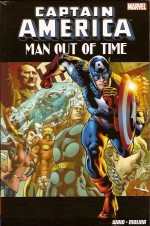
Captain America: Man out of Time


By Mark Waid, Jorge Molina, Karl Kesel & Scott Hanna (Marvel/Panini UK)
ISBN: 978-1-84653-487-4

One of the pivotal moments in Marvel Comics history occurred when the Mighty Avengers recovered a tattered body floating in a block of ice (issue #4, March 1964) and resurrected the World War II hero Captain America. With this act bridging the years to Timely and Atlas Comics begun with the return of the Sub-Mariner in Fantastic Four #4, Marvel confirmed and consolidated a solid, concrete, potential-packed history and created an enticing sense of mythic continuance for the fledgling company that instantly gave it the same cachet and enduring grandeur of market leader National/DC

In 2010, after years of conflicting continuity (and with a movie in the offing) Marvel tasked fan-favourite writer Mark Waid (see Captain America: Operation Rebirth) with updating those pivotal events and early future-shocked days in the contemporary world. Of course that modern milieu is the year 2000, not 1964…

This captivating re-interpretation and updating (collecting the 5 issue miniseries Captain America: Man Out of Time from November 2010-April 2011) opens in the dying days of the war as Steve Rogers and Bucky Barnes are sent from the European frontline to England and an appointment with doom-laden destiny, before seamlessly segueing into the Sentinel of Liberty’s stunned awakening in tomorrow’s world and a meeting with the World’s Mightiest Heroes.

Waid, perfectly complimented by artists Jorge Molina, Karl Kesel & Scott Hanna, wisely leaves the classic adventures largely unchanged, to concentrate on the missing, contemplative moments and personal crises confronting the uncomprehending Steve Rogers, which means that readers completely unaware of the character’s history and exploits might experience a little confusion in places. However, the narrative, although superficially disjointed, is clear-cut enough to counter this and interested new fans can easily fill in the gaps by perusing one of the many available reprint collections, such as Essential Avengers volume 1, which covers the entire period featured here…

In chapter 2 the reeling hero meets ex- Hulk sidekick Rick Jones (an absurdly close double for the departed Bucky), gets a rapid reality check on his new home and finally accepts that there’s no way home for this Old Soldier…

But that’s not strictly true…

Among the many technological miracles his new allies introduce him to is the embryonic science of time-travel and even while battling such threats as the Lava Men and Masters of Evil the unhappy warrior can only think of returning to his proper place and saving his best friend from death…

The old adage “be careful what you wish for” never proved more true than when the time-ravaging Kang the Conqueror attacks: utterly overwhelming the 21st century heroes and casually dispatching Captain America back to 1945. However, his sense of duty, the threat to his new allies and the unpalatable things he had forgotten about “the Good Old Days” prompt Cap into brilliantly escaping his honeyed time-trap and returning to the place where he is most needed before once more saving the day…

Resolved and ready to tackle his Brave New World Captain America is now ready to carve out a whole new legend…

I’m generally less than sanguine about updates and reboots of classic comics material but I will admit that such things are a necessary evil as the years go by, so when the deed is done with sensitivity and imagination (not to mention dynamic, bravura flamboyance) I can only applaud and commend the effort.

Thrilling, superbly entertaining, compelling and genuinely moving Captain America: Man out of Time is a wonderful confection that will delight old aficionados, impress new readers and should serve to make many fresh fans for the immortal Star-Spangled Avenger.

™ and © 2011 Marvel Entertainment LCC and its subsidiaries. All rights reserved. A British edition released by Panini UK Ltd.

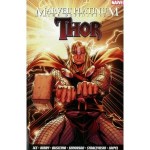
Marvel Platinum: The Definitive Thor


By Stan Lee, Jack Kirby, John Buscema, Walter Simonson, John Romita Jr., J. Michael Straczynski & various (Marvel)
ISBN: 978-1- 84653-481-2

As the new Thor film screened across the world, Marvel quite understandably released a batch of tie-in books and trade paperback collections to maximise exposure and cater to movie fans wanting to follow up with a comics experience. Under the Marvel Platinum/Definitive Editions umbrella this treasury of tales reprints some obvious landmarks from Journey into Mystery #83, Thor #159, 200, 337-339, Thor Volume 2, # 1-2, 84-85 and Volume 3, #3 which, whilst not all being the absolute “definitive” sagas, do provide a snapshot of just how very well the hoary mere-mortal-into-godlike gladiator concept can work.

And just in case you think I’m kidding about the metamorphic riff, remember Billy Batson first became Captain Marvel in 1940, Tommy Preston regularly powered up into Golden Lad from 1945, Tommy Troy began changing into The Fly in 1959 and Nathaniel Adam initially transformed into Captain Atom in 1960 and that’s just the first few I could think of…

In addition to a Stan Lee introduction, this compendium contains an extensive 23 page text features section detailing career overviews, secret origins and technical trivia, maps, and character profile pages culled from assorted issues of the encyclopaedic Marvel Universe Handbook.

The adventure begins with a modest little fantasy tale from one of the company’s ubiquitous mystery anthologies, where, in the summer of 1962 that tried-and-true comicbook concept (feeble mortal into God-like hero) was employed to add a Superman analogue to their growing roster of costumed adventurers.

Journey into Mystery #83 (cover-dated August 1962) featured the debut of crippled American doctor Donald Blake who took a vacation in Norway only to encounter the vanguard of an alien invasion. Fleeing in terror he was trapped in a cave where lay an old, gnarled walking stick. When in his frustration, he smashed the cane into a huge boulder obstructing his escape; his puny frame was transformed into the Norse God of Thunder, the Mighty Thor!

Plotted by Stan Lee, scripted by Larry Leiber and illustrated by Jack Kirby and Joe Sinnott ‘The Stone Men of Saturn’ is pure early Marvel; bombastic, fast-paced, gloriously illogical and captivatingly action-packed. The hugely under-appreciated Art Simek was the letterer and logo designer.

The character grew from that formulaic beginning into a vast, breathtaking cosmic playground for Kirby’s burgeoning imagination with Journey into Mystery inevitably becoming the Mighty Thor (with #126) but in this collection we skip to issue #159 (December 1968) where the peculiarities and inconsistencies of the Don Blake/Thor relationship were re-examined and finally clarified.

In the comic series it began with a framing sequence by Lee, Kirby & Colletta that book-ended a reprint of ‘The Stone Men of Saturn’ in #158, but here ‘The Answer at Last!’ alone suffices to explain how the immortal godling was locked within the frail body of Don Blake: an epic saga which took the immortal hero back to his long-distant youth and finally revealed that the mortal surgeon was no more than an Odinian construct designed to teach the Thunder God humility and compassion…

Next follows ‘Beware! If This be… Ragnarok!’ (#200, June 1972) by Lee, John Buscema & John  Verpoorten, which interrupted an ongoing battle between Thor and Grecian death-god Pluto to adapt the classical Norse myth of the inevitable fall of the Aesir gods; a stunning graphic prophecy which would inform and shape the next few hundred issues of the series.

Thor settled into an uninspired creative lethargy after the departure of Kirby’s imaginative power and subsequently suffered a qualitative drop after Buscema moved on, leaving the series in the doldrums until a new visionary was found to expand the mythology once again…

Or, more accurately, returned as Walter Simonson had for a brief while been one of those artists slavishly soldiering to rekindle Kirby’s easy synthesis of mythology, science fiction and meta-humanist philosophy, but with as little success as any other.

When Simonson assumed the writing and drawing of the title in November1983 with issue #337 – deeply invested in Kirby’s exploratory, radical visionary process – free to let loose and brave enough to bring his own unique sensibilities to the character, the result was an enchanting and groundbreaking body of work (#337-382 plus the Balder the Brave miniseries) that actually moved beyond Kirby’s Canon and dragged the title out of a creative rut which allowed Simonson’s own successors to sunsequently introduce genuine change to a property that had stagnated for 13 years.

This first iconic story-arc ‘Doom!’, ‘A Fool and his Hammer…’ and ‘Something Old, Something New…’from The Mighty Thor #337-339 shook everything up and made the Thunder God a collectible sensation for the first time in a decade. Moreover the entire tale is but the prologue to a stupendous larger epic which actively addressed the over-used dramatic device of the Doom of the Gods that had haunted this series since the mid-1960s…

The story evolves out of a spell inscribed on Thor’s hammer and seen in the character’s very first appearance. When crippled Don Blake was first transformed into the Thunder God he saw on the magic mallet Mjolnir the legend “Whosoever holds this hammer, if he be worthy, shall possess the power of Thor…”

The saga begins when Blake is asked by super-spy outfit S.H.I.E.L.D. to intercept an Earth-bound fleet of starships which refuel themselves by absorbing suns! Hurtling off into deep space the Storm God boarded one vessel only to be defeated in combat by its alien protector, an artificially augmented warrior named Beta Ray Bill. Moreover, as they crashed to Earth the alien somehow co-opted the mystic mallet’s magic and transformed himself into a warped duplicate of Thor, after which Odin mistook Bill for his son and heir, whisking him to Asgard to defend the Realm Eternal from another monstrous threat! And then…

Enough tomfoolery: suffice to say that the action and surprises pile one upon another as the alien revealed that he was the appointed protector of his Korbinite race, the survivors of which are fleeing a horde of demons who destroyed their civilisation and are determined to hunt them to extinction.

And now they’re all heading towards Earth…

After the mandatory big fight Thor and Bill – each with his own hammer – teamed-up to investigate the demons, with confused love-interest Lady Sif along for the rollercoaster ride, discovering in the process a threat to the entire universe. That tale is not included here, resulting in a rather disappointing letdown as the narrative leaps ahead fifteen years to July 1998 and the relaunch of the thunder god in Mighty Thor Volume 2.

‘In Search of the Gods’ and its sequel ‘Deal with the Devil!’ (by Dan Jurgens, John Romita Jr. & Klaus Janson, Volume 2, #1-2) featured the return of Thor and the Avengers after more than a year way from the Marvel Universe, subcontracted out to Image creators Jim Lee and Rob Liefield in a desperate attempt to improve sales after the apocalyptic Onslaught publishing event.

In a spectacular and visually compelling two-parter, the Thunderer was reinstated into the “real” world just in time to fall in battle against the devastating Asgardian artefact known as the Destroyer. As the Avengers struggled on against the unstoppable creature, the godling’s spirit was melded with an innocent killed during the struggle, only to emerge once more with a human alter-ego and a new lease on life…

The second volume concluded with issues #84-85 (November-December 2004, written by Daniel Berman & Michael Avon Oeming, illustrated by Andrea Divito and colourist Laura Villari) which once and for all depicted the Really, Truly, We Mean It End of the Gods and Day of Ragnarok as Thor himself instigated the final fall to end an ceaseless cycle of suffering and destruction, ultimately defeating the ruthless beings who have manipulated the inhabitants of Asgard since time began…

For the full story you’ll need to seek out Avengers Disassembled: Thor whereas this volume’s cosmic comic sagas conclude with the third issue of Thor Volume 3 and ‘Everything Old is New Again’ by J. Michael Straczynski, Olivier Coipel & Mark Morales (November 2007) with the Storm Lord back from the dead, conjoined once more with Don Blake and looking for the displaced citizens of a restored but empty Asgard, which now floats a few dozen feet above the barren flats of Brockton, Oklahoma.

This all-action tale details the clash between Thor and once best-friend Iron Man in a world that has radically changed since the new lord of Asgard’s demise and resurrection…

As a primer or introductory collection for readers unfamiliar with the stentorian Thunderer this book has a lot to recommend it. I’m also keenly aware of the need for newcomers to have his centuries-long saga presented in some form of chronological order, but in all honesty the final result is a little choppy and very much a one-trick pony. With the staggering breadth of characters and variety of adventures that have been generated during Thor’s long career there’s an inescapable aura of missed opportunity to the tome in question.

However, I cannot deny that what does appear is of great quality and thematically an obvious and thoroughly entertaining accompaniment to the cinema spectacle. Most importantly this is a well-tailored device to turn curious movie-goers into fans of the comic incarnation too. If there’s a film sequel, let’s hope that Marvel has plans to include some of the great material by a vast range of creators omitted from this book in a second, more imaginative volume….

™ and © 1962, 1968, 1972, 1983, 1984, 1998, 2004, 2007, 2011 Marvel Entertainment LCC and its subsidiaries. All rights reserved. A British edition released by Panini UK Ltd.

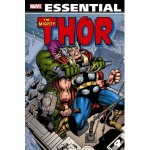
Essential Thor volume 4


By Stan Lee, Jack Kirby, Neal Adams, John Buscema & various (Marvel)
ISBN: 978-0-7851-3076-5

Whilst the constantly expanding Marvel Universe grew ever more interconnected as it matured, with characters literally tripping over each other in New York City, the Asgardian heritage of Thor and the soaring imagination of Jack Kirby had long been drawing the Thunder God away from mortal realms into stunning new landscapes.

With this fourth Essential black and white compendium however, an unthinkable Changing of the Guard occurred as the increasingly discontented King of Comics jumped ship from the House of (His) Ideas for arch-rival DC where he crafted the unfinished magnum Opus of the Fourth World series as well as a number of other game-changing comics classics…

An era ended at Marvel when the King abdicated his seemingly divinely-ordained position. Left to soldier on were Stan Lee and a couple of budding talents named Adams and Buscema…

In case you came in late: disabled doctor Donald Blake took a vacation in Norway only to stumble into an alien invasion. Trapped in a cave, he found an old walking stick which, when struck against the ground, turned him into the Norse God of Thunder! Within moments he was defending the weak and smiting the wicked. Months swiftly passed with the Lord of Storms tackling rapacious extraterrestrials, Commie dictators, costumed crazies and cheap thugs, but these soon gave way to a vast kaleidoscope of fantastic worlds and incredible, mythic menaces.

This iconic transitional compendium encapsulates the absolute zenith of the fantastic feature, reprinting Mighty Thor #167-195, spanning August 1969 to July 1972 with the mighty Thunder God going both forward and back.

At the close of the previous volume Thor had fallen to a berserker rage whilst retrieving his beloved Lady Sif from the naive artificial superman Him: now as this chronicle opens with ‘This World Renounced!’ (by Stan Lee, Jack Kirby & Vince Colletta and a cover by John Romita: the first ever not drawn by Kirby) almighty Odin punishes his son for succumbing to Warrior Madness by exiling him to deep space, where he must atone by locating the enigmatic world-devourer Galactus.

Just before departure however, Thor got to clear up some outstanding old business, including one last confrontation with Loki, Prince of Evil…

The superb George Klein came aboard as inker for ‘Galactus Found!‘ which saw Balder and the Warriors Three safeguarding Earth as Thor roamed the heavens on his lonely mission. As a new threat emerged in Red China, Galactus came to Thor and revealed ‘The Awesome Answer!’ to his origins – pure Kirby Kosmology of truly staggering proportions, whilst back home the terrifying Thermal Man was making things too hot for both his Chinese creators and the Lands of the Free…

In issue #170 ‘The Thunder God and the Thermal Man’ (inked by Bill Everett) found Thor, with mission accomplished, returned to New York only to tumble straight into cataclysmic combat beside his Asgardian comrades against the unstoppable Atomic menace unleashed by the duplicitous Reds. At the height of the struggle Balder, Hogun, Fandral and Volstagg were abducted by Loki and the Norn Queen but nevertheless the Thunder God triumphed…

Alone on Earth Thor faced in short order ‘The Wrath of The Wrecker!’, the body-swapping plot of billionaire Kronin Krask in ‘The Immortal and the Mind-Slave!’ and the earthbound fury of ‘Ulik Unleashed!’ (with the Circus of Crime thrown in for good measure) as well as ‘The Carnage of the Crypto-Man!’ before the last great epic of the Kirby-era began.

Behind a Marie Severin cover ‘The Fall of Asgard!’ saw Balder and Co. escape to confront the assemble hordes of Giants and Trolls marching on the Home of the Gods. With Odin incapacitated by his annual Great Sleep, Loki had seized the throne and Sif called Thor back for perhaps the Last Battle…

‘Inferno!’ (inked by Colletta) saw the folly of the usurper as the terrifying Fire-demon Surtur broke free of his Odinian prison and began its ordained task of burning down the universe. As everything appeared ‘To End in Flames!’ Loki fled to Earth, having first hidden Odin’s sleeping form in the Sea of Eternal Night. Thor led a heroic last stand as Balder invaded the Dimension of Death to rescue the All-Father just as Surtur fired up for the final foray…

Thor #178 is a landmark: the first issue created without Jack Kirby. An obvious fill-in, ‘Death is a Stranger’ by Lee, John Buscema & Colletta, found the Thunderer snatched away from Asgard by the nefarious Abomination to battle the Stranger – an extra-galactic powerhouse who collects unique beings…

The interrupted epic resumed in #179 with ‘No More the Thunder God!’ as Thor, Sif and Balder were dispatched to Earth to arrest Loki. This story was Kirby’s last: he left the entire vast unfolding new mythology on a cliffhanger as the Thunder God was ambushed by his wicked step-brother.

By switching bodies, the Lord of Evil gained safety and the power of the Storm whilst Thor was doomed to endure whatever punishment Odin decreed…

More than any other Marvel strip The Mighty Thor was the feature where Kirby’s creative brilliance matched his questing exploration of an Infinite Imaginative Cosmos: dreaming, extrapolating and honing a dazzling new kind of storytelling graphics with soul-searching, mind-boggling concepts of Man’s place in the universe. Although what followed contained the trappings and even spirit of that incredible marriage, the heart, soul and soaring, unfettered wonder just were not there any longer: nor would they be until 1983 Walt Simonson assumed creative control with #337 (see Mighty Thor: the Ballad of Beta Ray Bill).

‘When Gods Go Mad!’ introduced the totally different style of Neal Adams to the mix, inked by the comfortably familiar Joe Sinnott, as the true Thunder God was sent to Hell and the tender mercies of Mephisto, whilst on Earth Loki used his brother’s body to terrorise the UN Assembly and declare himself Master of the World…

In #181 ‘One God Must Fall’ Sif led the Warriors Three on a rescue mission to the Infernal Realm as Balder struggled to combat the combined power of Thor and malice of Loki until Mephisto was thwarted and a cataclysmic battle of brothers set the world to rights.

The new era truly began with Thor #182 as John Buscema assumed the artistic reins for ‘The Prisoner… The Power… and… Dr. Doom!’ as the Thunder God became entangled in Earthly politics when a young girl entreated him to rescue her missile-designer father from the deadly Iron Monarch. The decidedly down-to-Earth and mismatched melodrama concluded with Don Blake ‘Trapped in Doomsland!’ until Thor could retrieve his mislaid mallet…

Lee & Buscema began their own cosmic saga in #184 and ‘The World Beyond!‘ as a sinister force began devouring the outer galaxies and psychic reverberations began to unravel life on Earth and in Asgard. Sam Grainger inked ‘In the Grip of Infinity!’ as the cosmic calamity intensified whilst ‘Worlds at War!’ revealed the true architect of the conflagration, leading to a desperate last-ditch ploy in ‘The World is Lost!’ and a final clash which led to ‘The End of Infinity!’ (inked by Jim Mooney).

Although vast in scope and quite clever this tale suffers from excessive padding and a plodding, repetitive pace which isn’t helped by a ponderous epilogue in #189 as the Goddess Hela came calling, demanding Thor feel ‘The Icy Touch of Death!’ to pay for all the souls she didn’t get…

After a big chase she was finally dissuaded in ‘…And So To Die!’ but the distraction had once more allowed Loki to seize the Throne and unleash ‘A Time of Evil!’ which he manifested in the form of an unstoppable artificial hunter/killer dubbed Durok the Demolisher. Unleashing his merciless engine of destruction on Earth, Loki gloated at the ‘Conflagration!’ (inked by Grainger) he had instigated…

Gerry Conway came aboard as writer with ‘What Power Unleashed?’ (Sal Buscema inking brother John) to conclude the tale as Balder and Sif enlisted the Silver Surfer to aid the embattled Thunder God as Asgard tottered on the brink of total destruction until Thor could intercede, culminating in ‘This Fatal Fury!’ where the All-Father finally resumed his rightful place.

This pivotal collection concludes unsatisfactorily ‘In the Shadow of Mangog!’ (inked by Colletta) with the first part on another extended odyssey as Thor and friends are dispatched to the ends of the Universe. In his righteous rage Odin had banished Loki to that fantastic world, momentarily forgetting that once there the Prince of Evil might awaken the most vicious, unbeatable monster in the Asgardian universe …

To be continued…

The Kirby Thor will always be a high-point in graphic fantasy, all the more impressive for the sheer imagination and timeless readability of the tales. With his departure the series foundered for the longest time before finding a new identity, yet even so the remaining stories in this volume are still packed with intrigue and action and magnificently rendered by artists who whilst not possessing Kirby’s vaulting visionary passion were every inch his equal in craft and dedication.  This book is still an absolute must for all fans of the medium.

©1969, 1970, 1971, 1972, 2009 Marvel Characters, Inc. All Rights Reserved.
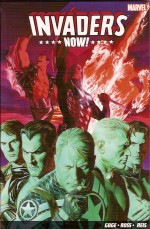
Invaders Now!


By Alex Ross, Christos Gage & Caio Reis (Marvel/Panini UK)
ISBN: 978-1-84653-479-9

During World War II superhuman heroes regularly fought alongside merely mortal men-at-arms and far too often the repercussions of those battles echoed down the years growing stronger and not fading away.

After decades of relative European peace and prosperity one of the worst weapons of the conflict appears to have been rediscovered: an incurable disease which mutates victims into savage, blood-crazed monsters… and in America the survivors and heirs of premiere WWII super-team the Invaders are mystically manipulated into reuniting to relive the most painful event of their auspicious and glorious history.

During the lasts months of the war, with the Allies pushing hard towards Berlin, Captain America & Bucky, the Human Torch & Toro, Sub-Mariner, Spitfire and Union Jack, accompanied by trans-dimensional eldritch vigilante the Vision were battling through Holland when they encountered their Nazi counterparts Masterman, Baron Blood, U-Man, Warrior Woman and Iron Cross.

The Blitzkriegers were protecting Hitler’s top geneticist Arnim Zola, who was about to unleash a monstrous bio-weapon intended to turn the tide of the war… a virus that made civilians and enemy soldiers into bestial maniacs.

Faced with a village full of highly contagious, deranged living weapons, the Invaders had no choice but to sterilise the entire area and euthanise the infected victims…

Now nearly seventy years later Vision has been called back to our Reality as somebody is using magic to turn back time and re-run the whole ghastly affair once more. Moreover, Zola’s deadly virus is back and loose in a world where global transport is commonplace and no place is truly isolated…

This plain and simple, old-fashioned blockbuster romp (collecting the 5 issue miniseries from 2010) combines Alex Ross’s ardent passion for classic superhero comics with modern methodology, funnybook mythology with cosmic horror literature, and contemporary terrorism fiction with timeless action-adventure in a captivating countdown thriller scripted by Christos Gage and effectively illustrated by Caio Reis.

Supremely old-school and breathtakingly in tune with 21st century tastes Invaders Now! delivers a thoroughly gratifying good guys vs. bad guys drama drenched in pure bravura escapism.

All-out vintage Marvel Madness for the modern comics maven: you just know you want it…

™ and © 2010 & 2011 Marvel Entertainment LCC and its subsidiaries. All rights reserved. A British edition released by Panini UK Ltd.

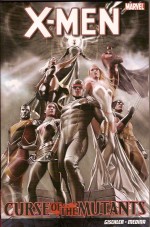
X-Men: Curse of the Mutants


By Victor Gischler, Paco Medina & Juan Vlasco (Marvel/Panini UK)
ISBN: 978-1-84653-480-5

With a property as valuable as the X-Men change is a necessarily good thing, even if you sometimes need a scorecard to keep up. This thoroughly entertaining read (collecting X-Men volume 2 #1-6 and text features from Marvel Spotlight: X-Men: Curse of the Mutants #1) keeps the baggage to a sustainable minimum for non-addicts and concentrates on delivering a tense and fast-paced rollercoaster thriller heavy on action and light on extended sub-plots.

Most of the World’s mutants now live on an island dubbed “Utopia” in San Francisco Bay, welcomed by the easygoing human population and with X-Men team-leader Cyclops running the show. In other news: the planet’s assorted vampire clans have been united after centuries of internecine struggle by Xarus, the son of Dracula who destroyed his own father to succeed to the position of Lord of Vampires…

When a nosferatu suicide-bomber explodes himself in a crowded plaza his re-engineered blood infects many shocked and helpless bystanders with a manufactured virus that inevitably infects and overwhelms any mortal exposed to it. The united night-hunters have declared all-out war on their food-supply, bolstering their ranks without risking being hunted… and one of the first infected is veteran X-warrior Jubilee…

Wolverine leads a scouting mission into the increasingly overrun city and discovers that the campaign is meticulously organised and extremely far advanced. Moreover the new vampire lord has planned ambitiously: a key tactic is to “turn” every mutant on Utopia, providing the would-be conqueror with a compliant army of super-powered blood-sucking storm-troopers. Jubilee has already joined them…

Always genned-up on undead affairs, Blade joins the party and brings the embattled mutants up to speed, but facing impossible odds. With new vampires springing up everywhere Cyclops makes the seemingly insane decision to revive Dracula, despite the Vampire Hunter’s strenuous objections.

And then Wolverine finally succumbs to the manufactured virus and switches sides…

When the Children of the Night make their final assault against the assembled mutant heroes all seems lost… but Cyclops has a cunning plan…

Laced with a profusion of variant covers by such artistic stalwarts as Olivier Coipel, Marko Djurdjevic, Mike Mayhew and John Romita Jr. this is an exhilarating romp that pushes all the right buttons, engagingly written by Victor Gischler and entrancingly illustrated by Paco Medina & Juan Vlasco. If you want fast, furious and fulfilling Fights ‘n’ Tights magic this is a perfect one-shop stop for your edification and delectation.

™ and © 2010 & 2011 Marvel Entertainment LCC and its subsidiaries. All rights reserved. A British edition released by Panini UK Ltd.