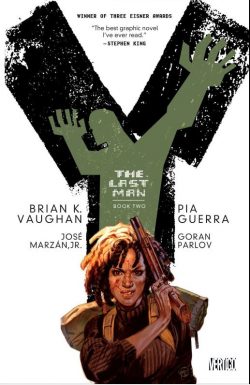
Y: The Last Man Book Two


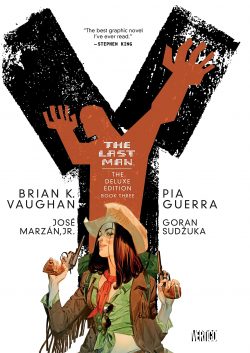
By Brian K. Vaughan, Pia Guerra & José Marzán with Goran Parlov, Paul Chadwick & various (DC/Vertigo)
ISBN: 978-1-4012-5439-1 (TPB)

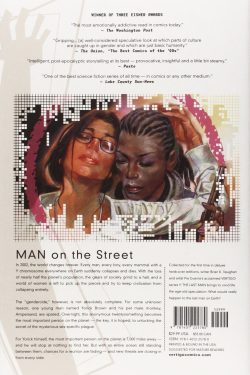
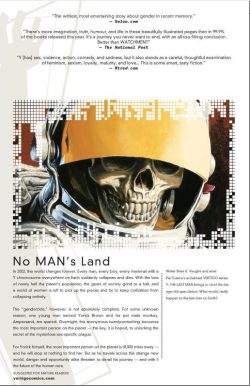
Back in 2002, an old, venerable and cherished science fiction concept got a new and pithy updating in the Vertigo comic book Y: The Last Man. These days it’s more relevant than ever as the premise explores the aftermath and consequences of a virulent global plague.

When it killed every male on Earth, only amateur stage magician, escapologist and all-round slacker goof-ball Yorick Brown and his pet monkey Ampersand survived in a world suddenly and utterly all girl.

Since his politician mother is high in America’s new government, Yorick is condemned to travel with conflicted government secret agent 355 and maverick geneticist Dr. Allison Mann across the devastated American continent to a Californian bio-lab. Mann secretly believes she caused the patriarchal apocalypse by giving birth to the world’s first parthenogenetic human clone, but all the young man can think of is re-uniting with his girlfriend/fiancée Beth, trapped in Australia since the disaster hit.

The trek is slow, fraught with peril and revelation and one none of the voyagers realise has been dogged with covert intrigue from the start. Hard on their heels is a cult of crazed modern “Daughters of the Amazon” determined to eradicate the Y chromosome entirely from planet Earth as well as a team of Israeli commandos whose commander is determined that the Promised Land will have sons again, no matter what the cost. Tragically, they are not the only special interests hunting Yorick…

This second aggregated volume, collecting issues #11-23 from of the monthly comic book and spanning July 2003-August 2004, begins a progression of shorter tales with ‘One Small Step’ illustrated by co-creator Pia Guerra and colourist Pamela Rambo. As the wanderers gradually make their way across a devastated America to the Left Coast the tale picks up from the previous volume with the eagerly-anticipated arrival of three astronauts who have (probably) avoided plague contamination by the simple expedient of being in space when it struck. Moreover, two of them are hulking great healthy men…

With its re-entry capsule diverted to the plains of Kansas and a handily hidden secret government bio-containment facility, the trekkers ally with Russian agent Natalya Zamyatin who has been ordered to retrieve her nation’s last cosmonaut, but duplicity in the White House sets the Israelis on their trail and more bloodshed results in a pyrrhic victory at best…

Following is a 2-part story illustrated by Concrete creator Paul Chadwick with Rambo. ‘Comedy & Tragedy’ examines the roles of Art and Mass Entertainment on a media-deprived populace in the post-plague world. The drama unfolds as a band of strolling players arrive in prim and proper Northlake, Nebraska and upset the applecart with their radical drama about the last man on Earth. The playwright’s inspiration came after her troupe found an impossibly live male monkey lost in the wilds. In the chaos of first night, when three masked strangers burst in a to reclaim the primate, nobody noticed that a ninja was tracking the newcomers…

Having reached Colorado, the travellers pause in their everyday adventures so the increasingly gung-ho Yorick can get medical care for Ampersand. By his very existence, Yorick is a valuable commodity, so must spend most of his time in some form of drag. Rather than risk his discovery needlessly, 355 leaves him with a conveniently adjacent fellow undercover agent (their particular organisation/sect is called The Culper Ring) whilst she and Dr. Mann scavenge for antibiotics in ‘Safeword’ (with art by Guerra & Zylonol)…

It’s no surprise agent 711 has her own agenda. Yorick wakes up naked, tied to a ceiling and subject to a spooky Dominatrix’s specialist attentions. All is not as it seems, though, and an extended – and adults only! – “interview” provides some valuable, if obscure, glimpses of Yorick’s life before the plague.

By the time it’s all over we’ve been given crucial insight into what keeps Yorick going and been introduced to another enigmatic factor in this saga – the deadly agents of rival agency the Setauket Ring…

America is devastated by the plague, but recovery is slower than might be expected. One reason for this is revealed in ‘Widow’s Pass’ (illustrated by Goran Parlov & Zylonol) as the pilgrims reach Queensbrook, Arizona. Following in the bootsteps of their paranoid, survivalist-militia menfolk, a band of traumatised women have blockaded Interstate 40 – the only motorway traversing the broken, isolated halves of the USA – and are starving the country. Believing the Federal Government created the Plague, the “Daughters of Arizona” are retaliating in the only way they know, and as usual Yorick and his companions are soon in the middle of all the trouble…

Ultimately, it’s only brutal, life and character-changing violence that solves the crisis. And once again, the true victims are the innocent bystanders who can’t help but try to help Yorick…

With a stunning cover gallery from J.G. Jones, Aron Wiesenfeld & Massimo Carnevale plus Vaughn’s full script for Y: The Last Man #18, the saga reaches far beyond its clichéd Sci Fi premise in this volume, becoming a smart, ironic and powerful tale to be read on its own terms.

Despite the horrific – and distressingly contemporary – narrative backdrop, Brian K. Vaughn’s tale unfolds at a relatively leisurely pace with plenty of black humour, socio-political commentary and proper lip service paid to the type of society the world would be if abruptly deprived of the majority of its pilots, entrepreneurs, mechanics, labourers, abusers and violent felons, but the action quotient is steadily ramping up. When you ultimately reach top gear, the wait will be worth it…
© 2003, 2004, 2015 Brian K. Vaughan, Pia Guerra. All Rights Reserved.

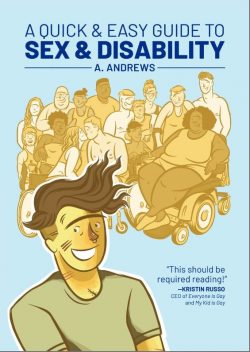
A Quick & Easy Guide to Sex & Disability


By A. Andrews (Limerance/Oni Press)
ISBN: 978-1-62010-694-5 (PB) eISBN: 978-1-62010-706-5

Comic strips are an incredibly powerful tool for education, rendering the trickiest or most complex topics easily accessible. They also have an overwhelming ability to affect and change behaviour and have been used for centuries by politicians, religions, the military and commercial concerns to modify how we live our lives. Here’s a splendid example of the art form using its great powers for good…

The Quick & Easy Guide series has an admirable record of confronting uncomfortable issues with taste, sensitivity and breezy forthrightness: offering solutions as much as awareness or solidarity. Here, disabled cartoonist A. Andrews (Oh, Hey! It’s Alyssa!) shares experiences and highlights situations too many people would prefer never having to think about…

Before we go any further though, let’s just state something that ought to be obvious. Most human beings want and have sex.

Even amongst the majority, that encompasses a variety of preferences, techniques and practices generally undertaken in a spirit of cooperation and carried out on a sliding scale of satisfaction and success for (at least one of) those taking part. The goal however, surely must be mutual gratification for all involved, right?

Sadly, for a large section of humanity, this fundamental function presents many difficulties. Most have been previously addressed in many learned clinical tracts and therapeutically-themed sources but this welcomingly frank cartoon lecture isn’t one of those. It’s a chat session led by a person who’s lived some of those difficulties and who uses passion, humour, common sense and earnest language to cope. Think here not about achieving sex, but rather making your version of sex better, if not best…

After starting out with some daunting statistics from the Center for Disease Control and World Health Organization to establish the state of play for disabled people (Earth’s largest minority group, accounting for 15% of global adult population), Andrews quickly moves to the meat of the matter in ‘Disability Sexuality’.

Defining different forms of disability – congenital, acquired, intellectual and invisible – and outlining intersecting impacts on individuals as well as tackling the differences between sexuality and gender, naturally leads to an examination of ‘Myths About Disabled Bodies’ before revealing the big secret… ‘Communication’…

Following short and pertinent questionnaire ‘Activity Time’, the talk about talking resumes with ‘Instead of … Try This…’ and more sage advice, plus a fascinating ‘Self-Care Plan’ and the value of preparedness and tools, enhancements and toys in ‘Getting Down’, ‘Positioning’ and ‘Aftercare’…

Also included is a listing of additional information and resources in print, podcast and web formats.

I hail from a distant era when we believed understanding led to acceptance, so it’s wonderful to see that the quest to destroy intolerance and ignorance still continues. This witty, welcoming comics guide tackles an issue that really should have been done and dusted decades ago, but until disability (and race and gender and sexuality and body size and even bloody hair colour) lose every shade of meaning and connotation except purely descriptive, books like this one will remain a necessity and utterly welcome…
A Quick & Easy Guide to Sex & Disability ™ & © 2020 A. Andrews. All rights reserved.

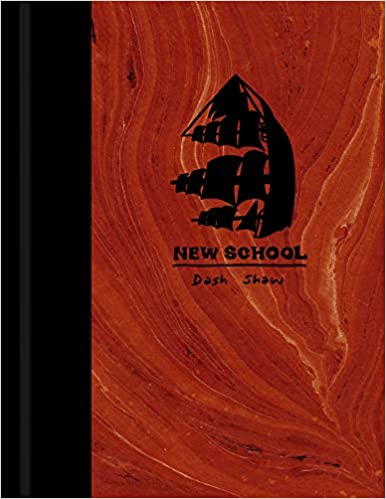
New School


By Dash Shaw (Fantagraphics Books)
ISBN: 978-1-60699-644-7 (HB)

Dash Shaw is a sublimely talented creator with a singular authorial voice and a huge repertoire of styles to call upon. Born in 1983, he is a leading light of a “new wave” (please note no capital letters there) of multi-tasking cartoonists, animators and web content originators whose interests and sensibilities heralded a recent renaissance in graphic narrative.

Like so many, he began young with independently published comics before graduating to paid work. Previous successes include Love Eats Brains, GoddessHead, Garden Head, Mother’s Mouth and the superbly haunting Bottomless Belly Button and Bellyworld.

In 2009 the Independent Film Channel commissioned him to convert his short series The Unclothed Man In the 35th Century A.D. (from comic arts quarterly Mome) into an imaginative and compelling animated series which then translated into an incredibly impressive graphic novel/art book comprising not only the evocative, nightmarish and tenderly bizarre tales but also the storyboards, designs and scripts Shaw constructed to facilitate the transition from paper to screen.

With New School, Shaw’s bold, broad experimentalism found a forward-looking yet chaotically nostalgia-generating fresh mode of communication for the oldest of information-storing, emotion-generating devices…

Here is another unique, achingly visual exploration of family, relationships and even the art of telling stories, at once dauntingly challenging, emotively ambivalent and metaphorically obfuscatory, even as Shaw impossibly pulls an authorial sleight of hand trick which renders this colossal chronicle surprisingly accessible.

Danny is a smart, content, obedient boy who worships his older brother Luke and he is telling us about his life. As our narrator, he only speaks in declarative and pompously declamatory, almost mock-heroic idiom, although his emotional underpinning is oddly off-kilter, like someone high-functioning on the autistic spectrum.

He speaks solely in the present tense even though his story begins with memories of 1990. Moreover, Danny believes he has prophetic dreams such as that one day there will be a movie called Jurassic Park or that the TV actor who plays Captain Picard will one day be the leader of the X-Men in a film…

Their highly-strung father publishes Parkworld – The Quarterly Journal of Amusement Park Industry News and Analysis and is justifiably proud of his sons’ artistic gifts and family fealty, but their solid, stolid lives begin to change in 1994 when Danny takes the credit for a dinosaur drawing Luke created and the devoted boys have a tremendous fight. As a result of the tussle, Danny is temporarily rendered deaf…

Even though his hearing returns, things have changed between the brothers, and soon rebellious Luke is despatched by Dad to the nation of X where an amusement park genius is setting up an incredible new entertainment experience called “Clockworld”.

Ashar Min AKA “Otis Sharpe” is the greatest designer of rides on Earth and – with the backing of X’s government – is turning the entire Asian island-state into a theme park tourist trap. To that end, Sharpe is hiring Americans to teach the X-ians to speak English and learn Western ways – and Dad wants 17-year old Luke there…

Three years younger, dutiful obedient Danny feels betrayed and abandoned, even as he guiltily noses around in his brother’s now-empty room. Two years pass and Luke has not communicated with the family since his departure.

Danny’s future-dreams are troubled. He is apprehensive when Mother and Father inform him he is to visit his brother on X, with the intention of bring their silent first-born home…

However, on arrival at the bustling, strange shore Danny is shocked by how much Luke has changed. Even his speech and dress are lax, debased and commonplace. The once-shining example of probity drinks, swears and fornicates…

Shock follows shock, however, as the newcomer is shown the burgeoning economy and infrastructure growing in the wake of Clockworld’s imminent completion. Moreover, after visiting the New School where Luke teaches, Danny’s joy in reuniting with his beloved sibling is further shaken, when he realises how much he has changed and has no intention of returning to America.

Worse yet, the influence of X and its people also begin to increasingly infect the appalled boy, forcing him to perpetually disgrace himself as his dreams torment him with incredible, impossible visions.

At least he thinks it’s the island making him mean and spiteful or causing him to shamefully stare at the unconsciously libertine, scandalously disporting women…

This book is drenched in the turbulent, reactive, confusing and conflicted feelings of childhood and physically evokes that sense. At 340 pages – all delineated in thick black marker-like lines with hulking faux mis-registered plates of flat colour seemingly whacked willy-nilly on the 279 x216mm pages, this feels like a mega-version of one of those cheap colouring books bought for kids on a seaside holiday in the 1960s. In fact the sheer size of the tome hammers that point home, no matter how grown up your hands now are. The effect even carries over if you opt for the various digital editions…

Strident yet subtle; simplistic whilst psychologically intellectual; viscerally, compellingly bombastically beautiful in a raw, rough unhewn manner, this a graphic tale every dedicated fan of the medium simply must see, and every reader of challenging fiction must read.

It’s big! It’s pretty! It’s different! Buy it!
© 2013 Dash Shaw. This edition © 2013 Fantagraphics Books. All Rights Reserved.

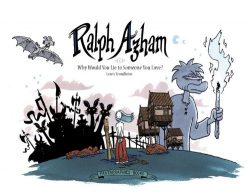
Ralph Azham volume 1: Why Would You Lie to Someone You Love?


By Lewis Trondheim, coloured by Brigitte Findakly and translated by Kim Thompson (Fantagraphics Books)
ISBN: 978-1-60699-593-8 (HB)

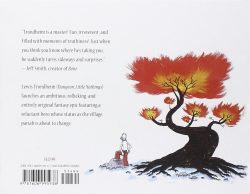
With over 100 books bearing his pen-name (his secret identity is actually Laurent Chabosy), writer/artist/editor and educator Lewis Trondheim is one of Europe’s most prolific comics creators: illustrating his own work, overseeing animated cartoons of adaptations of previous successes such as La Mouche (The Fly) and Kaput and Zösky or editing the younger-readers book series Shampooing for Dargaud.

His most famous tales are such global hits as ‘Les Formidables Aventures de Lapinot’ (translated as The Spiffy Adventures of McConey), (with Joann Sfar) the Donjon series of nested fantasy epics (translated here as the conjoined sagas Dungeon: Parade, Dungeon: Monstres and Dungeon: the Early Years) and his utterly beguiling cartoon diaries sequence Little Nothings.

In his spare time, and when not girdling the globe from convention to symposium to festival, the dourly shy and neurotically introspective savant has written for satirical magazine Psikopat and provided scripts for many of the continent’s most popular artists such as Fabrice Parme (Le Roi Catastrophe, Vénézia), Manu Larcenet (Les Cosmonautes du futur), José Parrondo (Allez Raconte and Papa Raconte) and Thierry Robin (Petit Père Noël).

Trondheim is a cartoonist of uncanny wit, outrageous imagination, piercing perspicacity, comforting affability and self-deprecating empathy who prefers to scrupulously control what is known and said about him…

Originally released by Belgian publisher Éditions Dupuis in 2001, this delicious yarn returns to the genre of anthropomorphic fantasy in a saga of wryly cynical faux-heroism revolving around failed Messiah and all-around disappointment Ralph Azham.

In his mountainous rural village, teenaged slacker Ralph is barely tolerated. He’s lazy, rude to his elders, constantly flouts authority, is always mouthing off and perpetually gets into trouble. Moreover, when he turned blue on the Night of the Double Moon – a certain sign of magical powers and an indicator that one may be the long-awaited Chosen One – he subsequently failed the tests of The Envoy and was ignominiously returned to the village…

Now he’s just an obnoxious waste of space whose only gift is the unnerving ability to tell when someone is pregnant or going to die…

His desolate village is slowly expiring. Situated in a depressing gully and old riverbed, the ramshackle dump comprises barely a dozen families now; the hard subsistence toil gradually forcing the least-dispirited farmers to emigrate to the less hostile but crowded lowlands. Moreover, with the annual visit from the rapacious marauding barbarian horde forever looming, the hamlet has precious little comfort or security to offer its dour citizens.

When the elders send Ralph out on a useless herb-gathering mission so they can have a council meeting without his annoying presence, the pariah is accosted by coquettish, scheming Claire who tries to seduce him and make him take her away from it all. After all, a boy with his gifts could surely make some money in the civilised parts of the world…?

Ralph spurns her and returns to eavesdrop on the village meeting, but when Claire follows and forcefully tries again, her big brother Piatch observes everything and attacks in a vain and pointless effort to defend her long-spent “honour”.

The running fight crashes through the village with many of the indignant elders eagerly joining in. When the well-thrashed Ralph furiously exposes many of their marital secrets, he finds himself confined to the pigsty for two months by the shamed and outraged citizens…

Later that night, his long-suffering father Bastien passes Ralph food and a knife, sadly recalling those distant days when the entire populace thought the boy was their literal ticket to salvation. After all, when the Chosen One was finally found, his mighty powers would totally destroy the terrible threat of predatory conqueror Vom Syrus and save the entire nation.

The whole episode was ill-starred. On their last night together, father and son were trapped in a cave-in and Ralph discovered his unsettling but militarily useless power. Even after they escaped death by suffocation, the airborne pilgrimage to fabled Astolia went tragically wrong – just how bad only Bastien knew for certain – and when the boy was returned to the village the populace’s high expectations soon soured.

They’ve been taking it out on Ralph ever since…

In the pigpen, Claire tries once more to sway the fed-up and furious miracle boy, but he’s already declined one attempt to help him escape. Wastrel Ralph has no intention of ever leaving his doting dad. Later, as Bastien quizzes him on why he’s still there, the alarm is sounded. The Horde is near…

The village is perfectly divided. Exactly half want to fight whilst the others favour abject surrender and throwing themselves on the invaders’ mercies. Unbelievably, now they desperately need Ralph to settle matters as the tie-breaking vote. The outcast is utterly unable to ignore the irony or resist the temptation to make them all squirm, but he is distracted by the ailing Filbert kid. The lad isn’t very well and it is another night of the Double Moon…

When the militant faction proves to be the most determined to win and acquiesces to Ralph’s outrageous and humiliating demands, the vote is cast and the villagers begin building a huge deadfall trap to kill as many Horde raiders as possible, guided by the pariah’s dear old dad, who was once a military engineer.

As the labours progress, further hidden secrets of Ralph’s interesting time in Astolia are revealed, but even as the weary folk return to their homes, the trap is sprung: not by the invaders, but rather one of their own.

Sore loser Mortimer knew that only he was right and thus couldn’t abide by the results of the vote. Surely that’s how Democracy really works?

In the cascade of rocks, little Raoul Filbert is injured and, as the enraged mob hunt for the new village pariah, forgotten Ralph carries the wounded child to the wise woman Auntie Milla. As she tends to the lad, something happens to Ralph too. Soon, he realises that his powers have changed. He can see dead people…

When he meets his father, Ralph realises that the ghost of the Envoy from his long-ago journey is attached to Bastien and soon the awful truth of his boyhood trip to Astolia comes tumbling out…

Milla too was part of the conspiracy, and now, as Ralph realises the horrible, selfish cause for his years of abuse and ostracization, he severs all ties with his father. Suddenly, the alarm sounds and the old soldier rushes back to the village where the Horde has arrived. Dejected Ralph picks up the sleeping Raoul and follows, but in the dark, nobody has noticed that the little lad’s head has turned blue…

In a wild and cataclysmic display of arcane power, Raoul destroys half the village and routs the panicked barbarians, but once they have recovered their wits, Horde outriders give chase. However, when the azure couple are cornered, Ralph’s new gift and the spirits of the pursuers’ previous victims combine to save them all, before a final cataclysm erupts and wipes out the invaders… and most of the village too…

After one final fractious confrontation with the surviving elders, Ralph heads for the plains and summons the latest Astolian Envoy to take him and Raoul to the city where new Chosen Onea are trained. As they prepare to take off on the civil servant’s triple-headed winged reptile, Claire rushes up, demanding to join them. She feels she has the right, since her cat ears and tiger stripes have turned a vibrant shade of blue…

Mesmerising and superbly enjoyable, this still-unfolding epic features a truly intriguing and clay-footed hero in a fantastic world of inescapably shallow and typically callous everyday folk: venal, self-serving and barely worth saving even if a Messiah can be found…

This engagingly sly and witty fantasy adventure tale for grown-ups begins here in a 96-page, full-colour landscape (218x168mm) sturdy hardcover edition (but sadly not in digital editions, if those are your preferred Chosen Ones): another must-not-miss epic masterpiece from one of the world’s greatest comic geniuses.
Contents © DUPUIS 2001 by Trondheim. All rights reserved. This edition © 2012 Fantagraphics Books. All rights reserved.

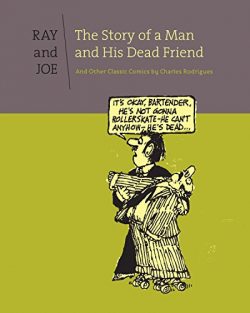
Ray & Joe: The Story of a Man and His Dead Friend and Other Classic Comics


By Charles Rodrigues, Bob Fingerman & Gary Groth (Fantagraphics Books)
ISBN: 978-1-60699-668-3(HB)

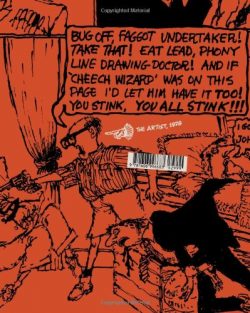
Charles Rodrigues (1926-2004) is arguably one of the most influential – and certainly most darkly hilarious – American cartoonists of the last century.

His surreal, absurd, insane, anarchic, socially disruptive and utterly unforgettable bad-taste doodles were delivered with electric vitality and galvanising energetic ferocity in a number of magazines. He was most effective in Playboy, The National Lampoon (from its debut issue) and Stereo Review: the pinnacle of a cartooning career which began after WWII and spanned almost the entire latter half of the 20th century.

After leaving the Navy and relinquishing the idea of writing for a living, Rodrigues used his slice of the G.I. Bill provision to attend New York’s Cartoonists and Illustrator’s School (now the School of Visual Arts). In 1950, he began schlepping gags around the low-rent but healthily ubiquitous “Men’s Magazine” circuit and found a natural home. He gradually graduated from those glorified girly-mags to more salubrious publications and in 1954 began a lengthy association with Hugh Hefner in a revolutionary new venture even while still contributing to what seemed like every publication in the nation buying panel gags, from Esquire to TV Guide, Genesis to The Critic.

Rodrigues even found time to create three strips for the Chicago Tribune-New York News Syndicate: Eggs Benedict, Casey the Cop and Charlie.

Despite such legitimacies though, the quiet, genteel devout Catholic’s lasting monument is the wealth of truly gob-smacking, sick, subversive, offensive and mordantly, trenchantly wonderful strip-series he crafted for The National Lampoon. Editor Henry Beard sought him out in the earliest pre-launch days of 1969, and offered Rodrigues carte blanche, complete creative freedom and a regular full-page spot. He stayed with the prestigious mag from the 1970 debut until 1993, a mainstay of its legendary comics section…

In this superbly appalling hardback or digital tome – bracketed by informative text pieces ‘Introduction: An Appreciation of a Goddamn Great Cartoonist’ and ‘Biography: Charles Rodrigues’ by passionate devotee Bob Fingerman – the parade of diabolical disgust and fetid fun begins with the eponymous ‘Ray and Joe – the Story of a Man and his Dead Friend’ which follows the frankly disturbing buddy-movie path of Joe – whose death doesn’t upset his wife as much as you’d expect. In fact, when the cadaver’s former pal meekly inquires, she’s more than happy to let Ray keep the body. After all, it’s cheaper than a funeral…

There’s no agenda here: Ray just wants to keep his friend around, even going so far as to have him embalmed and put on roller skates. Of course, most people simply don’t understand…

Rodrigues regularly broke all the rules in these strips: taste, decency, even the contract between reader and creator. Often, he would drop a storyline and return to his notional continuities at a later date. Sometimes he would even stop mid-episode and insert a new strip or gag if it offered bigger chortles or shocks…

Next up is ‘Deirdre Callahan – a biography’: the gut-wrenching travails of a little girl so ugly she could cause people’s eyeballs to explode and make almost everyone she met kill themselves in disgust. Of course such a pitiful case – the little lass with a face “too hideous for publication” – did elicit the concern of many upstanding citizens: ambitious plastic surgeons, shyster lawyers, radical terrorists, enemy agents, bored, sadistic billionaires in need of a good laugh, the mother who threw her in a garbage can before fully examining the merchandising opportunities…

The artist’s most long-lived and inspired creation was ‘The Aesop Brothers – Siamese Twins’, which ran intermittently from the early 1970s to 1986 in an unceasing parade of grotesque situations where conjoined George and Alex endured the vicissitudes of a life forever together: the perennial problems of bathroom breaks, getting laid, enjoying a little “me time”…

In the course of their cartoon careers the boys ran away to the circus to be with a set of hot conjoined sisters, but that quickly went bits-up, after which sinister carnival owner Captain Menshevik had them exhibited as a brother/sister act with poor Alex kitted out in drag.

There’s a frantic escapade with a nymphomaniac octogenarian movie goddess, assorted asshole doctors, Howard Hughes’ darkest secret, a publicity-shy rogue cop, marriage (but only for one of them), their horrendous early lives uncovered, the allure of communism, multiple choice strips, experimental, existential and faux-foreign episodes, and even their outrageous times as Edwardian consulting detectives.

This is not your regular comedy fare and there’s certainly something here to make you blanch, no matter how jaded, strong-stomached or dissolute you think you are…

As always with Rodrigues, even though the world at large hilariously exploits and punishes his protagonists, it’s not all one-sided. Said stars are usually dim and venal and their own worst enemies too…

Hard on their four heels comes the saga of ‘Sam DeGroot – the Free World’s Only Private Detective in an Iron Lung Machine’: a plucky unfortunate determined to make an honest contribution, hampered more by society’s prejudices than his own condition and ineptitude…

After brushes with the mob and conniving billionaires’ wives, no wonder he took to demon drink. Happily, Sam was saved by kindly Good Samaritan Everett, but the gentle giant then force-fed him custard and other treats because he was a patient urban cannibal. Thankfully, that’s when Jesus enters the picture…

During the course of these instalments, the strip was frequently usurped by short guerrilla gag feature ‘True Tales of the Urinary Tract’ and only reached its noxious peak after Sam fell into a coma…

The artist was blessed – or, perhaps, cursed – with a perpetually percolating imagination which drove him to craft scandalously inaccurate Biographies. Included here are choice and outrageous insights into ‘Marilyn Monroe’, ‘Abbie Hoffman’, ‘Chester Bouvier’, ‘Eugene O’Neill’ and ‘Jerry Brown’ as well as ‘An American Story – a Saga of Ordinary People Just Like You’, ‘The Man Without a County’ and ‘Joe Marshall Recalls his Past’…

The horrific and hilarious assault on common decency concludes with a selection of shorter series collected as The Son of a Bitch et al, beginning with an exposé of that self-same American institution.

The Son of a Bitch‘ leads into the incontinent lives of those winos outside ’22 Houston Street’, the ongoing calamity of ‘Doctor Colon’s Monster’, the domestic trauma of ‘Mama’s Boy’ and the sad fate of ‘The “Cuckold”’…

‘The Adventures of the United States Weather Bureau starring Walter T. Eccleston’ is followed by ‘Mafia Tales’ and ‘VD Clinic Vignettes’, after which ‘A Glass of Beer with Stanley Cyganiewicz of Scranton, PA’ goes down smoothly, thanks to the then-contentious Gay question addressed in ‘Lillehammer Follies’, before everything settles down after the recipe for ‘Everett’s Custard’…

Fantagraphics Books yet again struck gold by reviving and celebrating a lost hero of graphic narrative arts in this superb commemoration of a mighty talent. This is an astoundingly funny collection, brilliantly rendered by a master craftsman and one no connoisseur of black comedy can afford to miss; especially in times when we all feel helpless and can only laugh in the face of incompetence, venality, stupidity and death…
All strips and comics by Rodrigues © Lorraine Rodrigues. Introduction & Biography © Bob Fingerman. All rights reserved. This edition © 2011 Fantagraphics Books.

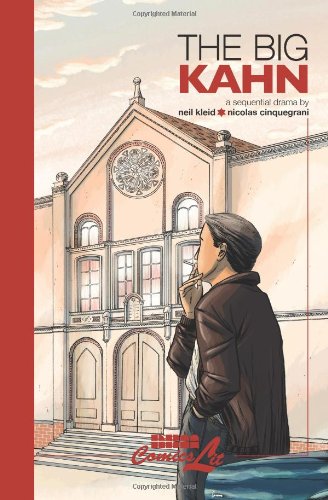
The Big Kahn


By Neil Kleid & Nicholas Cinquegrani (NBM/ComicsLit)
ISBN: 978-1-56163-561-0 (TPB)

When Rabbi Kahn died it shook the close-knit, devout community he had spent four decades building and guiding. Yet despite the best of intentions, his funeral – where first-born son Avi delivers a eulogy and prepares to assume his father’s role – devolves into a shocking shambles. Rebellious, troubled daughter Lea prefers furtive sex in a synagogue broom-closet to her rightful place beside her grieving mother and young Eli is clearly in a state of shock…

So tempers naturally flare when unsavoury gentile Roy Dobbs intrudes upon the event, demanding to see the body of his brother one final time…

With mixed emotions, the surviving family and larger congregation are forced to confront a terrible truth. David Kahn, Holocaust survivor, brilliant rabbinical scholar, wise and loving parent and spiritual glue for an entire community over more than forty years, was in fact Donnie Dobbs: a two-bit grifter and con-man who came to the neighbourhood to fleece the yokels but instead found something better and stayed to grow and blossom…

With his death, everything has changed. The man they all knew was a lie, so doesn’t that mean everything he said and did was too? Surely the children of David Kahn are tarred with the wicked same brush and destined to repeat his thoughts and deeds?

How these implications affect the Kahn children and their broken, bereft mother offers a masterpiece of human scrutiny, depicted with deft skill and great understanding, and the discreet, superbly underplayed monochrome art is effective and compassionate, wisely never intruding into the tale but always providing just what the reader needs to see.

Although not yet available digitally, The Big Kahn is an intriguing, compelling, thought-provoking human drama deserving the widest possible attention: a witty and powerful exploration of truths big and small, set against the backdrop of a traditional Jewish American community, cannily exploring not only faith’s effect on individuals but how mortals shape religion and all the big questions in life and after it…

It’s a subject we can all benefit from contemplating packaged as one of the best dramas you’ll ever read, so make the effort to add this lost gem to your must-own list ASAP…
© 2009 Neil Kleid & Nicholas Cinquegrani.

Sickness Unto Death volumes 1 & 2


By Hikaru Asada & Takahiro Seguchi (Vertical)
ISBN: 978-1-939130-09-9(tankōbon PB vol. 1) 978-1939130105(tankōbon PB vol. 2)

Here’s an intriguing and tragically underrated and sadly forgotten saga deftly examining the devastating effects of despair that still has plenty to say and much to offer…

Takahiro Seguchi’s gripping psychological melodrama Sickness Unto Death is a bleak and enthralling, emotionally complex tale of love, compulsion and dependency, transformed into spellbinding comics by artist Hikaru Asada.

Inspired by Danish philosopher Søren Kierkegaard’s treatise Sygdommen til Døden (The Sickness Unto Death – a Christian existentialist examination of the “Sin of Despair”), this extremely accessible tale began in 2009 as Shi ni Itaru Yamai; serialised in Hakusensha’s fortnightly Seinen magazine Young Animal.

This translated version opens with a Professor standing beside a student over the grave of his first case – and greatest love…

A flashback begins revealing how, as a young man, Kazuma Futaba came to the city to study clinical psychology, and how he was lucky to find lodgings in an old house. However, on his way there he encountered a young girl with white hair suffering a crushing anxiety attack in the street. Although everybody ignored the crippled creature, he rushed to her assistance and happily complied with her desperate need to be held.

‘Emiru’ was impossibly cold to the touch and although both were merely 18 years old, she seemed inexorably gripped by an ancient despondency and overwhelming gloom…

After she recovered, he hurried on to find his new digs in a vast old house, meeting the butler Kuramoto who reveals the place belonged to the orphan Emiru Ariga, a beautiful, vivacious creature who had within the last two years suddenly succumbed to a crushing ‘Despair’ so great it had bleached her hair, triggered drastic weight-loss, weakened her heart and caused her body temperature to fall to far below normal. He describes it as a “terminal illness of the spirit”. She now spends most of her time locked in her room, drawing monsters and waiting to die…

Intrigued, desperate to help but painfully aware of how inexperienced he is, Futaba examines the compliant, barely-living corpse and determines to somehow help her. At least she shows some animation when he is near. Both Kuramoto and his young mistress want Futaba to fix her…

In ‘Haunted Mansion’ the relationship develops further as the student transfers what he learns by day at school into evening therapy. Emiru seems brighter, even though she believes the house harbours ghosts…

When Kuramoto is called away for a few days, he leaves Futaba in charge, but after the frail girl spends too long in a bath, the boy panics. Breaking in, he sees her painfully thin, nude form for the first time. Embarrassed and confused, he dashes away and stumbles upon a mystery room, its door nailed shut with heavy planks.

Emiru sees ghosts: a crying, lonely child and a monster with teeth but no face…

Her sleep is perpetually disturbed, and Futaba – after learning about Night Terrors in class – agrees to ‘Sharing a Bed’, even though he is no longer certain his own motives are strictly professional. Nevertheless, resolved to save her he begins a ‘Psych Assessment’, gathering facts and personal history, but learns little more than once she was normal and then, suddenly, she wasn’t…

Emiru is increasingly time-locked in lengthy periods of despair, weeping outside the barred room; her traumatic nights eased by Kazuma’s platonic presence, although she feels the spectral presence of ‘The One in the Mansion’ whenever he goes away…

In the present, Professor Futaba and student Minami – who thinks she too can see a ghost in the abandoned dwelling – explore the deserted, decrepit mansion which housed his greatest regret. When they stop at a monster drawing scrawled on a wall, it takes him back to those troubled years…

A setback in Emiru’s recovery occurs when another ghost sighting unleashes a wave of depression and young Futaba learns of her carefree ‘High School Years’ from fellow psych student Koizumi – a former classmate of Emiru when she a healthy, happy, raven-haired ball of wild energy, fun and adventure…

Koizumi ardently believes she became burdened with some terrible secret that overnight transformed her into the frail, fading creature Futaba describes, prompting the floundering lad to confer with his tutor Professor Otsuki. The mentor responds by lending him a copy of Kierkegaard’s infamous tract…

For such a weakened patient, even a cold might be fatal, but with Futaba at her side Emiru pulls through. However, after recovering, she entices him into crossing a ‘Forbidden Line’ but neither as therapist nor lover is young Futaba assured of securing her ‘Happiness and Beauty’ until and unless he can her unburden her obsessive soul of the dark secret strangling it from within…

Beguiling and hypnotic, this exceptional medical mystery/ghostly love story is far from the familiar – to Western eyes at least – explosive bombast and action slapstick normally associated with Japanese comics. As such it might just make a few manga converts amongst die-hard holdouts who prefer sensitive writing, deep themes and human scale to their comics.

Moody, moving and far more than just another adult manga, Sickness Unto Death is that rarest of things: a graphic novel for people who don’t think they like comics…
© 2010 Hikaru Asada. © 2010 Takahiro Seguchi. All rights reserved.

The End


By Anders Nilsen (Fantagraphics Books)
ISBN: 987-1-60699-635-5 (HB)

Cartoonist and educator Anders Nilsen graduated from the University of New Mexico with an arts degree in 1996. After quitting his Masters course in 1999, he began winning awards for his strips and graphic novels. There are a dozen or so superb graphic tomes out there you can delight in.

Cheryl Weaver and Anders Nilsen were a couple. They were engaged and together forever and then in 2005 she died.

Her passing wasn’t sudden or dramatic and he had time to say goodbye. He carried on doing so for the next year, while his sketchbooks filled with questions and notions and helpless, hapless, hurt responses as he adjusted to his new, so very much unwanted, normal; all expressed in the form of his other reason for living – sequential narrative art.

Born in Minneapolis in 1973, Nilsen lives in Chicago – when not travelling the world – producing such thought-provoking, comics as Dogs and Water, Poetry is Useless, Rage of Poseidon, Monologues for the Coming Plague, Big Questions and Don’t Go Where I Can’t Follow – the heartbreaking thematic companion to today’s featured recommendation.

Much of that sketchbook material – collected in this astoundingly frank and distressingly intimate hardcover and digital memoir – first appeared in the author’s therapeutic 2007 comic book The End #1, whilst other portions of this much-expanded record originated in such disparate places as much-missed anthology Mome (Spring 2007) and even from screen-prints created in the months and years encompassing Nilsen’s slow voyage to acceptance.

The uncomfortably earnest eulogy begins with a poetic ‘Prologue’, before ‘Is That All There Is?’ wordlessly depicts an all-engulfing sense of loss and isolation, interrupted only by the text soliloquy ‘Love Story’.

The heart-rending catalogue of painful solitary moments ‘Since You’ve Been Gone I Can Do Whatever I Want To Do All the Time’ leads into inspirational prose observation with ‘I Have Two Lives’ after which the artist coolly examines the simple equation of loss and emotional paralysis with ‘Solve for X’…

Poem ‘In the Future’ and cartoon pantomime ‘Pulling a Giant Block’ precede harsh but ultimately uplifting debate in ’25 Dollars’ (originally seen in Mome as ‘It’s OK, You Have Everything You Need’), after which diagrammatic epigram ‘Eternity Analogy’ offers welcome hope and advice to fellow sufferers…

Primitivist drawing and photographic collage colourfully and philosophically combine in ‘You Were Born and So You’re Free’ before stark, simple lines return to illustrate an extensive imaginary conversation with the memory of love in ‘Talking to the Dead’ whilst print photomontages resume for the wistfully querulous ‘How Can I Prepare You for What’s To Follow?’ – created to welcome a newborn into the world…

The painful truism “life goes on” is reinterpreted in one final chat with the inevitable truth to close this memento mori in quiet contemplation with ‘Only Sometimes’…

To say this is a deeply moving book is grotesquely trite and staggeringly obtuse, but it’s also true. Every loss is always completely unique and utterly, selfishly personal, but most of us also have some capacity to empathise, share and see our own situation in the emotional disclosures of others. That’s never been more true than in these past months and the unknowable times to come.

When such commemorations are undertaken as honestly, effectively and evocatively as here, the result is simply, devastatingly, unforgettably magical.
© 2013 Anders Nilsen. All rights reserved.

Y: The Last Man Book One


By Brian K Vaughan, Pia Guerra, José Marzán & various (DC/ Vertigo)
ISBN: 978-1-4012-1921-5 (HB) 978-1-4012-5151-2 (TPB)

Back in 2002, an old, venerable and cherished science fiction concept got a new and pithy updating in the Vertigo comic book Y: The Last Man. These days it’s more relevant than ever as the premise reveals the consequences of a virulent plague. This one is primarily a mystery as it kills every male mammal on Earth – including all the sperm and the foetuses…

If it had a Y chromosome, it died. All except, somehow, for amateur stage magician, escapologist and all-round slacker goof-ball Yorick Brown and his pet monkey, Ampersand. One night, the gormless guy goes to bed pining for absent girlfriend Beth – who’s an anthropology grad on a gig in Australia – and the next day he’s the last functioning seed-dispenser in existence…

As a shady sub-culture of international espionage and conspiracy comes out of the shadows, Yorick’s mother is revealed as part of the new – for which read Female-and-Still-Standing after a failed power-grab by the widows of Republican Congressmen – American Presidential cabinet. This makes her, by default, a stand-in Leader of the Free World until the new President can get to Washington and take office…

Once Yorick makes his desperate, whiny way to her through a devastated urban landscape that used to be Washington DC, some things become clear. The plague hit during rush-hour on the East Coast and, with all the male take-charge types expiring in an eyeblink, the damage to civilisation has been inconceivable.

Planes, Trains, Automobiles and every other machine monopolised by male privilege across the planet stopped being piloted at the same moment and collateral damage was almost instantaneous and cataclysmic…

In the wreckage and ruins of man-kind, the new US leaders try to lock her son in a bunker as a crucial national resource, but he escapes and immediately announces he’s off Down Under.

After some delicate and acrimonious “negotiation”, Mum and Madam President finally allows the world’s only known propagator of the next generation to undertake a hazardous cross-country trek rather than subjecting him to some more rational project… such as milking him for IVF resources…

Off Yorick goes with a lethal and ambiguous secret agent known only as 355 to the secret California laboratory of Dr Allison Mann. This good doctor is a geneticist who secretly fears she might be the root cause of all the trouble…

Also out to stake their claim – and adding immeasurably to the tension and already prodigious body count – are a crack squad of Israeli commandos with a hidden agenda and mysterious sponsor, plus post-disaster cult The Daughters of the Amazon who want to make sure once and for all that there really are no more men. The hardest thing for the final baby-daddy to take is that they’re led by Yorick’s own sister Hero…

Throughout all this grief, he remains a contrary cuss. Defying every whim and “Hey, I’m a Guy” stereotype, all he wants is to be reunited with his dearly beloved marooned in Oz. Like a stubborn and now extinct male mule, he will not be dissuaded…

Although this first escapade is mostly set-up, the main characters are engaging and work well to dispel the inevitable aura of familiarity and cliché this series had to initially struggle against.

Second story-arc ‘Cycles’ kicks off with Brown & Ampersand still laboriously trekking across an America now utterly feminised. Even with pitiless psycho-killers hunting him and with only a lethally-skilled government agent and disturbed geneticist to escort him across the devastated, death-drenched landscape to the West Coast, all the young oaf can think of is reuniting with Beth…

As the trio (quartet if we simply count primates) pass from Boston to Ohio, they end up in a curiously stable community in the Midwest where the sight of a male barely ruffles the assembled feathers. Yorick experiences his first instance of genuine sexual temptation. Sadly, the idyll is short-lived as the relentless Amazon Daughters catch up to the wanderers with tragic circumstances…

Moreover, the Israeli commandos hunting Earth’s last sperm-donor are also increasingly going off-book, heralding more chaos to come. And as Yorick and Co. resume their journey, hundreds of miles above Earth, another crisis is brewing…

To Be Continued…

This collection re-presents – in hardback, trade paperback and digital formats – issues #1-10 of Y: The Last Man (which were subsequently released as early graphic novel hits Unmanned and Cycles) and includes a comprehensive art gallery section in ‘Y: The Sketchbook’ courtesy of illustrator Pia Guerra.

Despite the horrific narrative backdrop, Brian K. Vaughn’s tale unfolds at a relatively leisurely pace and there’s plenty of black humour, socio-political commentary and proper lip service paid to the type of society the world would be without most of its pilots, entrepreneurs, mechanics, labourers, abusers and violent felons, but there’s precious little story progression in this tome, so if you’re a regular consumer of mindless action thrillers and blockbuster chase movies you’ll need to be patient. When you ultimately reach high gear, the wait will be worth it…

However, if you’re of a contemplative mien and can enjoy your entertainments unfolding on a human scale with luxuriously barbed wit on their own darkly nasty terms, there is an inconceivably great time waiting for you here…
© 2002, 2003, 2014 Brian K. Vaughan & Pia Guerra. All Rights Reserved.

Time Clock (Eye of the Majestic Creature volume 3)


By Leslie Stein (Fantagraphics Books)
ISBN: 978-1-60699-930-1 (TPB)

With the once-constant supply of review books understandably curtailed and my latest actual paid work recently completed, I find myself retreating into old favourites to pass the time now. Happily, most of them are still great, and a goodly number of them have finally made the transition to digital editions, meaning you can read them too without risking life, lung or limb. All that threatens you is the strong chance of becoming equally besotted and addicted to great comics…

Help Wanted: Girl cartoonist seeks meaning of contemporary existence and like-minded individuals to share bewilderment and revelations with. Interests/Hobbies include: drinking, counting sand, growing stuff, antiquing for pop culture “trash”, drinking, meaningful conversations with musical instruments, playing board games with same, recreational herbal intoxicants, reminiscing about wild-times with gal-pals and old cronies, drinking, visiting difficult relatives.

Employment: unwanted but regrettably necessary. Although not native to the Big City, is extremely adaptable and will do anything – unless it’s hard, boring or she sucks at it…

After graduating from the New York School of Visual Arts, Leslie Stein began producing astonishingly addictive cartoon strips in the self-published Yeah, It Is. Upon winning a Xeric Grant for her efforts, she then started an even better comicbook entitled Eye of the Majestic Creature, blending autobiographical self-discovery, surreal free-association, philosophical ruminations, nostalgic reminiscences and devastatingly dry wit to describe modern life as filtered through her seductive meta-fictional interior landscape.

She is a creator who sees things as they really aren’t, but makes them authentic and even desirable to anyone willing to pay attention…

This superbly enticing third volume of the …Majestic Creature sequence resumes her airy, eccentric and engaging pictorial mood-music, with her mythologized autobiography continuing to reveal the history and ambitions (for want of a better term) of Larrybear – a girl deliberately and determinedly on her own, trying to establish her own uniquely singular way of getting by.

Eschewing chronological narrative for an easy, breezy raconteur’s epigrammatic delivery, and illustrated in loose, free-flowing line-work, detailed stippling, hypnotic pattern-building or even honest-to-gosh representational line-drawing, Stein operates under the credo of “whatever works, works” – and clearly, she’s not wrong…

Larrybear makes friends easily: bums, winos, weirdoes, dropouts, misfits, non-English-speaking co-workers and especially inanimate objects. Her bestest buddy of all is her talking guitar/flatmate Marshmallow: one of the many odd fellow travellers who aggregate around her, briefly sharing her outré interests and latest dreams.

However, Larrybear doesn’t want an average life, just more experiences, less hassle and affable companions to share it all with.

The self-service graphic dinner party starts with another Friday at work. After scrupulously completing her wage-slave tasks, Larrybear heads off to show her latest creation at the long-awaited Sand Counters Convention. The guy at the next table next is annoying but okay, and she’s touched when venerable old Sand Counter Henry Peet admires her work but, after seeing über-stylist Tim Heerling swanking and lapping up the adulation of the audience, she is mysteriously moved and promptly decides that now she has a new nemesis…

In the meantime, stay-at-home stringed instrument Marshmallow – feeling unfulfilled – takes up baking to shorten the incessant loneliness…

A second untitled segment then finds Larrybear hanging out with old pal Boris, sharing stories and intoxicants, but still blithely unaware of how he feels about her…

After months of prevaricating, and whilst still enduring dreams about that Heerling guy, our aimless star finally relocates to the countryside where she, Marshmallow and the rest of her animated instrument collection enjoy a life of bucolic fulfilment and idle contemplation until they can’t stand it anymore…

This superbly quirky diversion concludes with ‘Boy’ as Larrybear learns that living miles from the nearest bar and being unable to drive is severely impacting her precious drinking time, whilst having competition-quality sand delivered is a huge mistake…

All too soon, she’s back in her natural urban environment, dealing booze to drunks and sharing their buzz, just as the biggest storm in living memory threatens to close up the city…
All delivered in an oversized (292 x 204 mm if you’re still wedded to dead tree ownership) mesmerising monochrome package, these incisive, absurdist, whimsically charming and visually intoxicating invitations into a singularly creative mind and fabulous alternative reality offer truly memorable walks on the wild side.

For a gloriously rewarding and exceptionally enticing cartoon experience – one no serious fan of fun and narrative art can afford to miss – you simply must spend a few hours with a Time Clock.
© 2016 Leslie Stein. All rights reserved.