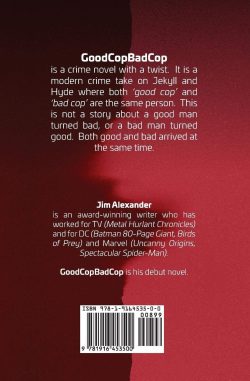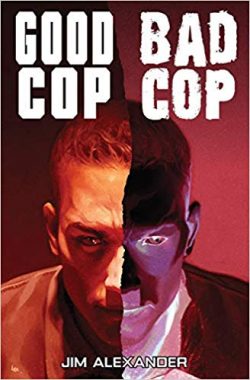
GoodCopBadCop


By Jim Alexander, edited by Elinor Winter (Planet JimBot)
ISBN: 978-1-9164535-0-0                  eISBN: 978-1-9164535-1-7

Win’s Christmas Gift Recommendation: Crime Does Not Pay, but it does make for a cracking good read… 9/10

With criminal intent and malice aforethought, comics veteran Jim Alexander has widened his already prodigious and prolific rap sheet by shifting Modus Operandi and releasing a spookily wry novel (available in paperback and a variety of eBook formats) featuring possibly his best – and award-winning – character.

Alexander’s pictorial back-catalogue includes Star Trek the Manga, Calhab Justice and other strips for 2000AD, licensed properties such as Ben 10 and Generator Rex as well as a broad variety of comics and strips for The Dandy, DC, Marvel, Dark Horse Comics, Metal Hurlant, and loads of other places including his own publishing empire Planet Jimbot.

GoodCopBadCop began life as series of contemporary police dramas set in Glasgow and garnered much praise and many awards. Now the characters have seamlessly segued to the realm of Val McDermid and Ian Rankin and the variously-named Celtic or Tartan noir.

If you look it up, experts describe the sub-genre’s influences as James Hogg and Robert Louis Stevenson, focusing on the duality of the soul and the individual, Good against Evil and redemption and damnation. It’s fascinating stuff: you should all read more books without pictures…

This craftily concocted cops’n’robbers saga blends procedural action with a whiff of supernal terror, utilising a gimmick that is perfect for a genre where conflicted, essentially good guys regularly face human monsters and only ever see ordinary folk at their absolute worst…

City of Glasgow Police Inspector Brian Fisher is a worthy, weary, dedicated public servant with the oddest (generally silent) partner an honest copper could ever imagine. And no, it’s not harassed, hard-pressed Detective Sergeant Julie Spencer, who fruitlessly attempts to get her solitary new boss fraternising with other officers after she’s ordered to be his new tag-along assistant… until she gets a glimpse of what her associate is really like…

Before he was a quietly effective Detective with a phenomenal clear-up rate, Fisher learned his trade in the mounted police division and spent many educational hours doing community policing for the Violence Reduction Unit, visiting schools where kids are more ruthlessly ferocious than any full-grown bad guy.

Now he’s solving a lot of nasty cases like abductions, dismemberments and floating human jigsaws in the Clyde with an uncanny display of instinct and perception. It’s like he has an inside track to the mind of maniacs…

All the usual suspects and signature cases of the genre are in attendance: mostly-harmless burglars like local legend the Partick Cat, supposedly-straight domestic problems like Mrs MacPhellimey, missing persons who aren’t, local mobsters and hard-men and their ganglords all come to Fisher’s attention… and most especially raving psycho-killers.

There’s a lot of them and some days they’re turning up on both sides of the Interview Room table…

Obviously, Fisher has some kind of advantage and, as in the manner of The Strange Case of Dr Jekyll and Mr Hyde, the situation is deteriorating and people are starting to notice…

And that’s where I’m stopping. If you are familiar with the comics iteration, all your favourite moments and characters are here, suitably tweaked for a more internalised, psychologically edged reinterpretation – and a definitive conclusion. If you’re a newcomer, you can revel and reel as a convoluted nested-doll of interlinked mysteries cleverly unwind with startling complexity, loads of twisty-turny surprises and a succession of shocking moments. And that’s all delivered in sparky and bleakly hilarious first-person monologues.

Yeah. Monologues. Plural…

If you don’t read this book, you’ll have to wait for some Wise Soul at BBC Scotland or media clever-clogs chancer to turn this into a movie or late-night Scandi-style drama serial…

Best see it as the creator intended. You’ll thank me for it in the long run…

This deftly underplayed, chillingly believable and outrageously black-humoured yarn is a perfect addition to the annals of Tartan Noir: smart, sarcastic and ferociously engaging. If you like your crime yarns nasty and your heroes deeply flawed, GoodCopBadCop is a book you must not miss.

And when this has sufficiently blown your mind, you really should track down the superb comics by Alexander and his confederates Luke Cooper, Gary McLaughlin, Will Pickering, Aaron Murphy, Chris Twydell & Jim Campbell.

The Jims – Alexander and Campbell – have been providing captivating and enthralling graphic narratives for ages now and you owe it to yourself to catch them too.

Planet Jimbot has a splendid online shop so why not check it out?
© 2018 Jim Alexander.

If you like shopping from the safety of your home, here’s a few useful addresses.
UK
Amazon (print & digital)
Blackwell’s (print)
Kobo (digital)

US
Amazon (print & digital)
Barnes & Noble (print & digital)
Kobo (digital)

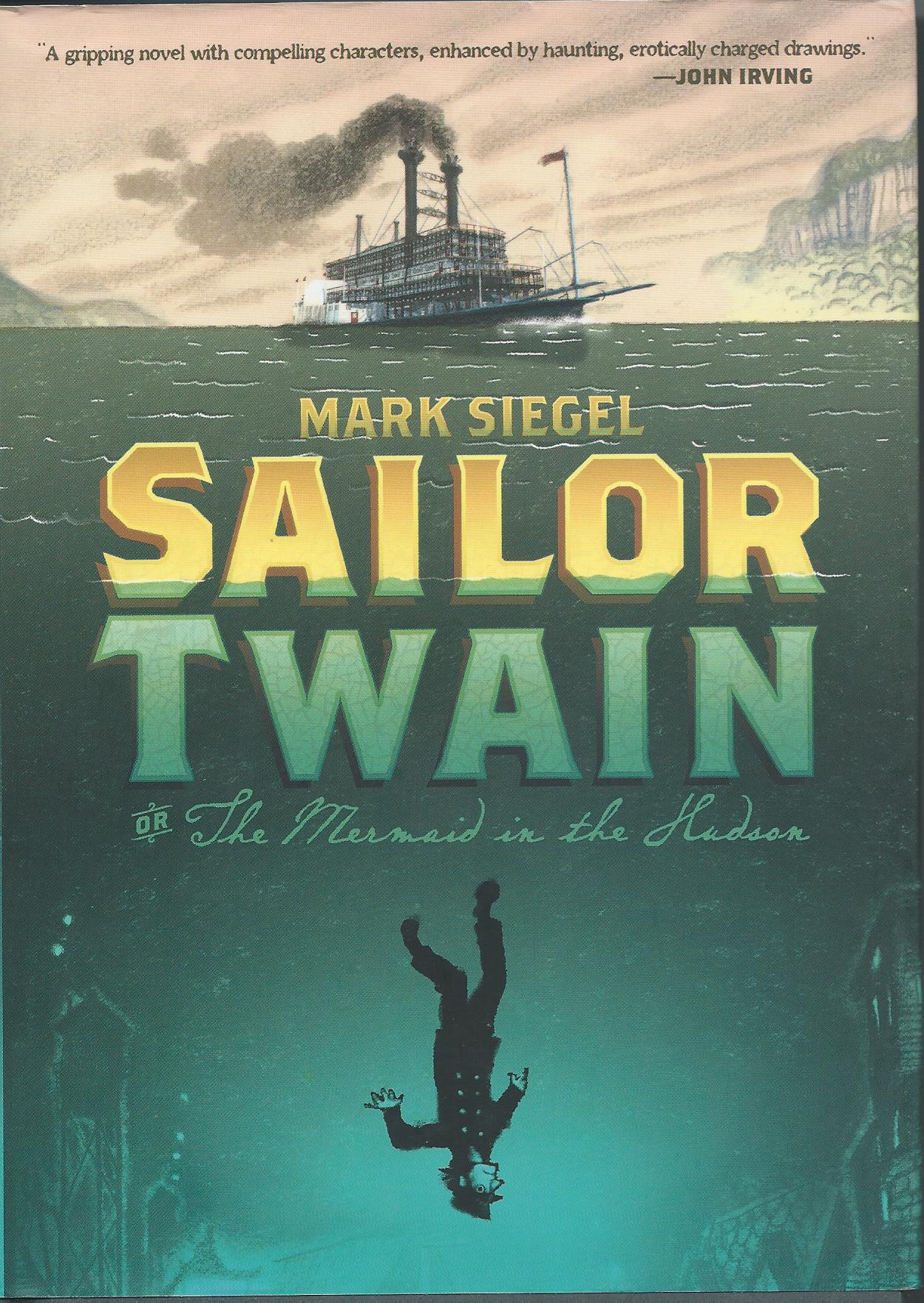
Sailor Twain or, The Mermaid in the Hudson


By Mark Siegel (First Second)
ISBN: 978-1-59643-636-7

Win’s Christmas Gift Recommendation: Sublime and delightful… 10/10

Even after decades in the business every so often something comes along that makes me feel like a drooling delirious fanboy again. It still does.  This superb hardback compilation of a fabulous weird tales webcomic is a certifiable classic that it’s never too late to enjoy.

Mark Siegel was born in Michigan and raised in France; one of those story-obsessed prodigies who began drawing wonders as a kid and never grew out of it… only better at shaping them.

After a childhood concocting yarns, comics, cartoons, posters and animated films he returned to the USA to study Creative writing and Fine Arts at Brown University. Upon graduation he stayed stateside, tentatively beginning life as a jobbing designer/illustrator.

He got his big break with the award-winning strip-book Seadogs, written by Lisa Wheeler. This was followed by Long Night Moon, To Dance, Boogie Knights and more.

Increasingly intrigued and fascinated by the history and geography of the Hudson River Valley where he lives with wife and creative collaborator Sienna Cherson Siegel, the artist began to craft a lyrically beguiling mystery tale from the glittering, sophisticated and callous brutal days of the Riverboats which once plied their glamorous trade along that famed and fabled watercourse. This he published online at sailortwain.com.

Rendered in mercurial melancholic charcoal tones, Sailor Twain tells the tale of a poet who has lost his muse and becomes a riverboat captain to pay for his invalid wife’s medical treatment.

It’s also the tale of French wastrel Dieudonné who inherited his entrepreneurial older brother’s exclusive, high society river boat business when the inspirational Jacques Henri de Lafayette had a breakdown and vanished…

…And finally, it is the sad and sobering tale of a lady who could not accept her place or fate in a savagely proscribed and repressionistic masculine culture…

Set in the transitional era of 1880s New York where and when science and rationality began at last to supersede wonder, mystery and romance, and specifically during the months May to December 1887, the story opens with an enigmatic meeting in ‘Overture’ before ‘Part I: Twain’s Secret’ begins with ‘The Frenchman’s Steamboat’ as the diligent captain of the luxurious Lorelei recalls how the dissolute young European assumed control of a hugely profitable touring business after the elder Lafayette vanished. Also introduced are below-decks crew Horatio and Aloysius, Negro engineers who know more of the route’s peculiar history than they’re willing to share in ‘An Unlikely Survivor’…

The new owner seems a bad sort. In ‘A Prayer Down Below’, he demonstrates an indecent and almost unhealthy interest in bedding women, but after Twain rescues ‘The Mermaid in the Hudson’ and secretes her battered and wounded body in his cabin the trusty salt’s judgemental world is forever changed.

‘Beaverton’s New Book’ introduces another intriguing strand as a publicity-shy yet popular author’s latest sensational publication offers to reveal the “Secrets and Mysteries of the River Hudson” – everything from love-sick ghosts to the cure for a mermaid’s siren song – to both Twain and his increasingly odd employer.

The Captain, obsessed with ministering to the silent, wounded creature hidden in his cabin, is amazed when he is asked to post ‘Lafayette’s Letter’ to the enigmatic author, whilst in ‘South’s Promise’ Lafayette’s debauched dalliances multiply manically as Twain remembers his far-off wife and how her beautiful voice was stilled by disease. Nevertheless ‘Pearl’s Song’ is slowly being forgotten as the seaman becomes increasingly closer to the mythical beauty recovering in his bunk…

The lascivious Frenchman is rapidly losing touch with reality, constantly throwing messages in bottles to the murky roiling river waters as ‘Three Prisoners’ sees the now voluble sea-woman eagerly communicating with Twain just as Lafayette takes him into his confidences over his amorous actions…

Inspired again to write, Twain’s fevered imagination is sent reeling when he realises his employer is seeking ‘The Cure for Mermaids’ and, thanks to the Beaverton book, discovers his uncanny charge’s origins in ‘South of the North River’…

Entranced in a way no other man has been, the worthy Captain is utterly unaware of how the situation is spiralling madly in ‘The Missing Muse’ after which ‘Part II: Camomille’ takes a closer look at the louche Lafayette when ‘The Beaverton Revelation’ exposes the author’s shocking identity and New York Society gathers itself to take its chilly revenge in ‘Ink Stains’…

Lafayette’s carnal campaign hits a strange snag in ‘“The Dame’s Audacious”’, leading to most peculiar dinner conversation in ‘Eclipse’ and the culmination of long-laid plans in ‘Sevening’, all whilst Twain finds to his horror that his submersible companion has vanished in ‘Enticement’.

Before the tragedy moves towards the impossible endgame, she suddenly returns to assuage ‘The Strains of Absence’ prompting fantastic delirium when ‘Twain Dreams’…

‘Part III: World’s End’ moves fully towards otherworldly experiences ‘In the Other Realm’ of ghosts, drowned men and stranger things where the desperately querulous Twain finds ‘The Lost Brother’, learns of ‘A Lady Beguiled’ and discovers the power of ‘The Chained Heart’ as his tumultuous affair ploughs on to an astonishing denouement…

It all comes crashing down in stormy disaster as ‘Part IV: The Twain Shall Meet’ delivers another dreadful blow to the Captain’s divided heart as he and Lafayette mutually incur and endure ‘The Siren’s Wrath’…

…And with the world reshaped and set to (some sort of) rights, an evocative ‘Coda’ lends fruitful finality to the fearsomely fantastic proceedings…

Intoxicatingly complex, expansive and enchanting, seditiously, scarily seductive, the supernatural odyssey of the Lorelei and its doom-gripped crew is a gloriously baroque and simultaneously gothic epic of unnatural desire and supernal suspense that absolutely unwrites the twee, safely sexy modern mythology of marine maidens and restores to them the dolorous drama of sinister, implacable, irresistible sirens.

A perfect fantasy fable for adults, Sailor Twain is a truly graphic novel that every devoted dark dreamer must read.

© 2012 Mark Siegel.  All rights reserved.

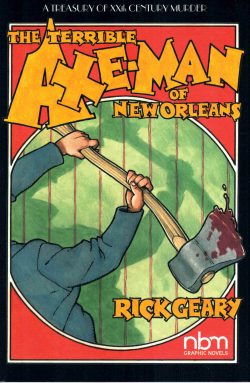
The Terrible Axe-Man of New Orleans


By Rick Geary (NBM)
ISBN: 978-1-56163-179-6

Win’s Christmas Gift Recommendation: Cutting Edge Crime and a Ripping Holiday Read… 8/10

For decades he toiled as an Underground cartoonist and freelance illustrator of strange tales and wry oddments, published in locales as varied as Heavy Metal, Epic Illustrated, Twisted Tales, Bop, National Lampoon, Vanguard, Bizarre Sex, Fear and Laughter, Gates of Eden, RAW and High Times.

For these illustrious venues he honed a unique ability to create sublimely understated stories by stringing together seemingly unconnected streams of narrative to compose tales moving, often melancholy and always beguiling.

Discovering his natural oeuvre with works including biographies of J. Edgar Hoover or Trotsky and his multi-volume Treasury of Victorian Murder series, Geary has grown into a grandmaster and towering presence in both comics and True Crime literature.

His graphic reconstructions of some of the most infamous murders ever committed since policing began combine a superlative talent for laconic prose, incisive observation and meticulously detailed pictorial extrapolation. These are filtered through a fascination with and understanding of the lethal propensities of humanity as his forensic eye scours police blotters, newspaper archives and history books to compile irresistibly enthralling documentaries.

In 2008 he turned to the last century for ongoing series Treasury of XXth Century Murder, focusing on scandals which seared the headlines during the “Gilded Age” of suburban middle class America. He has not, however, forsaken his delight in fiction nor his gift for graphic biography.

Delivered in stark monochrome in either luxurious collectors’ hardback, accessible eBook or engaging paperback editions like this one, his investigations diligently sift fact from mythology to detail the grisliest events in modern history.

Geary’s tales are so compelling because the subject matter methodology resonates through his quirky illustration. Geary always presents facts, theories and even contemporary minutiae with absorbing pictorial precision, captivating clarity and devastating dry wit, re-examining each case with a force and power Oliver Stone would envy.

This particular chiller-thriller comes – after far too long a wait – as a cheap-&-cheerful paperback release of a 2010 offering but it’s still a grand outing for lovers of macabre history…

Geary’s forensic eye scoured the data and scores a palpable if rather unpalatable hit here with a relatively unknown serial killer saga that would make an incredible film – if only the fiend had ever been caught!

In 1918 with the Great War moving into the inevitable End-game the iconic and legend-laden city of New Orleans suffered a chilling campaign of terror that lasted well over a year with far-reaching repercussions felt clear across the United States.

As explained in the captivating capsule history that opens this moreish monochrome and exceedingly noir thriller, New Orleans was founded by the French in 1717, lost to the Spanish in 1763, seized by Napoleon in 1802 and then sold to the Americans a year later. That makes it one of the oldest and certainly most eclectic, eccentric, artistic and elegant cities in the USA.

By 1918 it was a huge, sprawling and vital hub of trade and commerce, peopled by a vast melting pot of immigrant populations. On the night of May 23rd an Italian couple running a grocery store were hacked to death by an intruder who broke into their home and attacked them with their own household axe.

Over the next 18 months a phantom killer would, under the horrifying glare of public scrutiny, kill six people, maim and mutilate another half dozen and hold the entire city a virtual hostage with insane proclamations and demands. He – if it was, indeed, a man – was often seen but never apprehended.

Geary is as meticulous and logical as ever, forensically dissecting the various attacks, examining the similarities and, more importantly, the differences whilst dutifully pursuing the key figures to their unlikely ends.

All the victims were grocers of Italian origin (leading to a supposed Mafia connection) except for the ones who were not, which possibly refuted the theory but equally suggested opportunistic copy-cat killers. A number of personal grievances among the victims led to many false arrests and even convictions, and the killer or killers left many survivors who all agreed on a general description but all subsequently identified different suspects. There’s even a broader than usual hint of supernatural overtones.

Occurring at the very birth of the Jazz Age, this utterly compelling tale is jam-packed with intriguing snatches of historical minutiae, plus beautifully rendered maps and plans which bring the varied locations to moody life: yet another Geary production tailor-made for a Cluedo special edition!

The author presents the facts and theories with chilling graphic precision, captivating clarity and devastating dry wit, and this enigma is every bit as compelling as his other homicidal forays: a perfect example of how graphic narrative can be so much more than simple fantasy entertainment. This merrily morbid series of murder masterpieces should be mandatory reading for all comic fans, mystery addicts and crime collectors.
© 2010 Rick Geary. All Rights Reserved.

The Terrible Axe-Man of New Orleans will be published on December 15th 2018 and is available for pre-order now. For more information and other great reads see http://www.nbmpub.com.

Sandman Mystery Theatre: Book One


By Matt Wagner, Guy Davis, John Watkiss, R.G. Taylor, David Hornung & John Costanza (Vertigo)
ISBN: 978-1-4012-6327-0

Win’s Christmas Gift Recommendation: Eerie Mystery-Mood Masterpiece… 8/10

Created by Gardner Fox and first depicted by Bert Christman, The Sandman premiered in either Adventure Comics #40 July 1939 (two months after Batman debuted in Detective Comics #27) or two weeks earlier in New York World’s Fair Comics 1939, depending on whether some rather spotty distribution records can be believed.

Head and face utterly obscured by a gasmask and slouch hat; caped, business-suited millionaire adventurer Wesley Dodds was cut from the iconic masked mystery-man mould that had made pulp fictioneers The Lone Ranger, Green Hornet, The Shadow, Phantom Detective, Black Bat, The Spider and so many more such household names. Those dark red-handed heroes were also astonishing commercial successes in the early days of mass periodical publication…

Wielding a sleeping-gas gun and haunting the night to battle a string of killers, crooks and spies, he was accompanied in the earliest comicbooks by his plucky paramour Dian Belmont, before gradually losing the readers’ interest and slipping from cover-spot to last feature in Adventure Comics, just as the cloaked pulp-hero avengers he emulated slipped from popularity in favour of more flamboyant fictional fare.

Possessing a certain indefinable style and charm but definitely no especial pizzazz, the feature was on the verge of being dropped when the Sandman abruptly switched to a skin-tight yellow-&-purple costume and gained a boy-sidekick, Sandy the Golden Boy (in Adventure Comics #69, December 1941, courtesy of Mort Weisinger & Paul Norris). All this, presumably to emulate the overwhelmingly successful Batman and Captain America models then reaping such big dividends on the newsstands.

It didn’t help much, but when Joe Simon & Jack Kirby came aboard with #72 that all spectacularly changed. A semi-supernatural element and fascination with the world of dreams (revisited by S&K a decade later in their short-lived experimental suspense series The Strange World of Your Dreams) added a moody conceptual punch to equal the kinetic fury of their art, as Sandman and Sandy became literally the stuff of nightmares to the bizarre bandits and murderous mugs they stalked…

For what happened next you can check out the superb Simon & Kirby Sandman hardback collection…

Time passed and in the late 1980s Neil Gaiman, Sam Keith & Mike Dringenberg took the property in a revolutionary new direction, eventually linking all the previous decades’ elements into an overarching connective continuity under DC’s new “sophisticated suspense” imprint Vertigo.

Within a few years the astounding success of the new Sandman prompted the editorial powers-that-be to revisit the stylishly retro original character and look at him through more mature eyes. Iconoclastic creator Matt Wagner (Mage, Grendel) teamed with artistic adept Guy Davis (Baker Street, B.P.R.D.) and colourist David Hornung to create a grittier, grimier, far more viscerally authentic 1930s, where the haunted mystery man pursued his lonely crusade with chilling verisimilitude.

The tone was darkly modernistic, with the crime-busting playing out in the dissolute dog-days of the Jazz Age and addressed controversial themes such as abuse, sexual depravity, corruption and racism; all confronted against the rising tide of fascism that was sweeping the world then.

This is a warning: Sandman Mystery Theatre is not for kids…

This compendium collections the redefining first three story-arcs from issues #1-12 (April 1993 to March 1994) and commences after an absorbing introduction from veteran journalist, critic and pop culture historian Dave Marsh.

Each chapter preceded by its original evocative faux pulp photo cover created by Gavin Wilson and Hornung, the dark drama opens with The Tarantula, taking us back to New York in 1938 where District Attorney Larry Belmont is having the Devil’s own time keeping his wild-child daughter out of trouble and out of the newspapers.

She’s gallivanting all over town every night with her spoiled rich friends; drinking, partying and associating with all the wrong sorts of people, but the prominent public servant has far larger problems too. One is a mysterious gas-masked figure he finds rifling his safe soon after Dian departs…

The intruder easily overpowers the DA with some kind of sleeping gas – which also makes you want to blurt every inconvenient truth – before disappearing, leaving Belmont to awake with a headache and wondering if it was all a dream…

Dian, after a rowdy night of carousing with scandalous BFF Catherine Van Der Meer and her latest (gangster) lover, awakes with a similar hangover but still agrees to attend one of her father’s dreary public functions that evening. The elder Belmont is particularly keen that she meet a studious young man named Wesley Dodds, recently returned from years in the Orient to take over his deceased dad’s many business interests.

Dodds seems genteel and effete, yet Dian finds there’s something oddly compelling about him. Moreover, he too seems to feel a connection…

The Gala breaks up early when the DA is informed of a sensational crime. Catherine Van Der Meer has been kidnapped by someone identifying himself as The Tarantula…

Across town, mob boss Albert Goldman is meeting with fellow gangsters from the West Coast and, as usual, his useless son Roger and drunken wife Miriam embarrass him. Daughter Celia is the only one he can depend on these days, but even her unwavering devotion seems increasingly divided. After another stormy scene the conference ends early, and the visiting crime-lords are appalled to find their usually diligent bodyguards all soundly asleep in their limousines…

Even with Catherine kidnapped, Dian is determined to go out that night, but when Wesley arrives unexpectedly she changes her mind, much to her father’s relief. That feeling doesn’t last long however, after the police inform him that the Tarantula has taken another woman…

When a hideously mutilated body is found Dian inveigles herself into accompanying dear old Dad to Headquarters but is promptly excluded from the grisly “Man’s Business”. Left on her own, she begins snooping in the offices and encounters a bizarre gas-masked figure poring through files. Before she can react, he dashes past her and escapes, leaving her to explain to the assorted useless lawmen cluttering up the place.

Furious and humiliated, Dian then insists that she officially identifies Catherine and nobody can dissuade her.

Shockingly, the savagely ruined body is not her best friend but yet another victim…

Somewhere dark and hidden, Van Der Meer is being tortured but the perpetrator has far more than macabre gratification in mind…

In the Goldman house Celia is daily extending her control over darling devoted daddy. They still share a very special secret, but these days she’s the one dictating where and when they indulge themselves…

With all the trauma in her life Dian increasingly finds Wesley a comforting rock, but perhaps that view would change if she knew how he spends his nights. Dodds is plagued and tormented by bad dreams. Not his own nightmares, but rather the somnolent screams of nameless victims and their cruel oppressors haunt his troubled sleep. Worst of all these dreams are somehow prophetic and unrelenting. What else could a decent man do then, but act to end such suffering?

In a seedy dive, uncompromising Police Lieutenant Burke comes off worst when he discovers the gas-mask lunatic grilling a suspect in “his” kidnapping case and again later when this “Sandman” is found at a factory where the vehicle used to transport victims is hidden.

Even so, the net is inexorably tightening on both Tarantula and the insane vigilante interfering in the investigation but Burke doesn’t know who he most wants in a nice, dark interrogation room…

As the labyrinthine web of mystery and monstrosity slowly unravels, tension mounts and the death toll climbs, but can The Sandman stop the torrent of depraved terror before the determined Dian finds herself swept up in all the blood and death?

Of course, he does but not without appalling consequences…

Scene and scenario suitably set, John Watkiss steps in to illuminate second saga The Face (issues #5-8). Attention switches to Chinatown in February of 1938, where Dian and her gal-pals scandalously dine and dish dirt until Miss Belmont meets again an old lover.

Jimmy Shan once worked in her father’s office but now serves as lawyer and fixer for his own people amongst the teeming restaurants, gambling dens and bordellos of the oriental district…

Dian would be horrified to see Jimmy – or Zhang Chai Lao as his Tong masters know him – consorting with unsavoury criminals, and would certainly not be considering reviving her scandalous out-of-hours relationship with him. All frivolous thoughts vanish, however, when the diners vacate the restaurant and stumble upon a severed head: a warning that the ruling factions are about to go to war again in Chinatown. As usual, white police are utterly ineffectual against the closed ranks of the enclave…

Later at a swanky charity soiree to raise money for a school, Dian meets Jimmy again and agrees to a later meeting. At the same shindig she later sees Wesley, and in the course of their small talk, Dodds reveals that he recognises Shan from somewhere…

And in Chinatown, another beheading leads to greater tension between the Lee Feng and Hou Yibai Societies. When an enigmatic gas-masked stranger starts asking unavoidable questions, he finds that both Tongs deny all knowledge of the killings…

As the grisly murder-toll mounts, The Sandman’s investigations lead to one inescapable conclusion: a third party is responsible. But who, and why…

Before the drama closes, Dian will learn more hard truths about the world and the money-men who secretly run it…

Issues #9-12 (December 1993-March 1994) are illustrated by R.G. Taylor and plumb the darkest depths of human depravity in the tale of ‘The Brute’.

The friendship of Dian and Wesley slowly deepens and life seems less fraught in the city, but that soon ends as hulking degenerate stalks the back-alleys, killing and brutalising prostitutes and their clients…

Dodds is also on the mind of boxing promoter and businessman Arthur Reisling who’s looking for a fresh financial partner in his global exploitations. The effete-seeming scholar is hard to convince, though, unlike Eddie Ramsey. He’s a poverty-stricken pugilist and single parent desperate to make enough money to pay for his daughter Emily‘s TB medicine. Riesling’s offer to him is just as scurrilous but the broken-down pug doesn’t have the luxury of saying “no”…

Eventually, with Dian in tow, Wesley accepts a party invitation from the speculator and meets his dynasty of worthless, over-privileged children. None of them seem right or well-adjusted…

Later, when Eddie tries to come clean by informing the authorities of Riesling’s illegal fight events, he’s attacked by the promoter’s thugs and saved by the Sandman – at least until the colossal mystery killer attacks them both and they’re forced to flee for their lives…

As Dodds returns home to recuperate, the punishing dreams escalate to mind-rending intensity.

Eddie, meanwhile, is left with no safe option and takes to the streets with Emily. His decision will lead to revolting horror, total tragedy and utter heartbreak…

The Sandman returns to his covert surveillance, silently unearthing the depths of Reisling’s underworld activities and coincidentally exposing a turbulent and dysfunctional atmosphere in the magnate’s home life to match his criminal activities. In this house corruption of every type runs deep and wide, and the masked avenger decides it’s time to bring his findings to Dian’s father. This time, District Attorney Belmont is prepared to listen and to act…

And as the murders mount and Dodds’ dreams escalate in intensity, the strands of a bloody tapestry begin to knot together and the appalling secret of the bestial killer’s connection to Reisling is exposed, only a detonation of expiating violence can restore order…

Stark, compelling and ferociously absorbing, the bleak thrillers depict a cruel but incisive assessment of good and evil no devotee of dark drama should miss, and the period perils come accompanied by a gallery of the series’ original, groundbreaking comicbook photo-covers and posters by Gavin Wilson plus later collection covers and related art from Matt Wagner, Alex Toth and Kent Wilson
© 1993, 1994, 1995, 2016 DC Comics. All Rights Reserved.

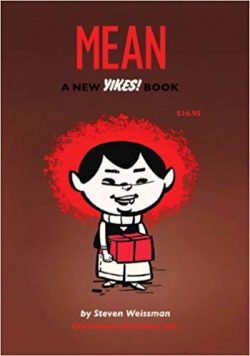
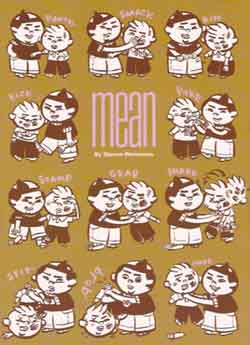
Mean


By Steven Weissman (Fantagraphics Books)
ISBN: 978-1-56097-866-4

Steven Weissman was born in California in 1968 and grew up to be an exceptionally fine and imaginative cartoonist. He’s worked for Alternative Comics, Last Gasp, Dark Horse, Marvel, DC, Vice and Nickelodeon Magazine among others, and his artistic sensibilities have been influenced and shaped by such disparate forces as Super-Deformed manga, “Our Gang” comedies, Abbott and Costello, Dan Clowes, Mike Allred and Peanuts – the strip, not the versatile if sometimes potentially fatal foodstuff.

Much of his groundbreaking, award-winning early work, dating from the mid-1990s, offered a post-modern, skewed and alternative view of friendship, childhood, world weirdness and people’s meanness and can all be enjoyed over and over again in such stunning compilations as Tykes, Lemon Kids, Don’t Call Me Stupid, White Flower Day, Chocolate Cheeks and others. The French and Japanese – who really know quality comics – love him lots and have done so for years.

In 2012 Weissman literally went back to the drawing board, un-and-re-creating himself and his aesthetic methodology for a and unbelievably enchanting hardcover weekly online strip entitled Barack Hussein Obama which has since been collected into a series of stunning cartoon books about the unsuspected nature of modern America. Gosh, I miss those days…

Today though in the spirit of the season we’re revisiting some of his earlier material…

If there is such a thing as ‘Dark and Comforting’ then Weissman’s weird and wicked early cartooning is a perfect example. Following the success of Chewing Gum in Church and Kid Firechief, Fantagraphics promptly compiled earlier works from his self-published Yikes!; amply supplemented with other rare and even unpublished strips to create a lovely insight into the development of a truly unique graphic vision.

These 32 tales, (still available in paperback and digital editions) were all created between 1993 and 2002, and feature his cast of deeply peculiar children in a macabre tribute to Charles Schulz’s signature strip, but they are also literal embodiments of the phrase “little monsters”.

In simple childhood romps such as ‘The See-Thru Boy’, ‘The Loneliest Girl in Town’, ‘Inevitable Time-Travel Story’, ‘No Kiss!’ and many others, the bizarre cast of Li’l Bloody (a child vampire), Kid Medusa, Pullapart Boy and X-Ray Spence live an idyllically suburban 1950’s existence of school, fishing, skateboards, white picket fences, aliens, wheelchair jousting, marbles and weird science.

Weissman’s seductive cast all have huge round heads and ancient bodies like graphic progeria-sufferers, but the drawing is lavish, seductive and utterly convincing.

These are great comics about kids (but perhaps regarded as Best Not For Kids) that are a treat, a revelation and most definitely darkly comforting.
MEAN © 2007 Fantagraphics Books. All content © 2007 Steven Weissman. All Rights Reserved.

Chandler


By Steranko (Byron Preiss Visual Publications Inc/Pyramid Books)
ISBN: 978-0-515-04241-2 (Pyramid Books)

Steranko is an artist with many strings to his bow. Whether as publisher, typographer, graphic designer, artist, storyteller, historian, or musical performer he has always excelled.

As a magician and escapologist he found celebrity, inspiring new friend Jack Kirby to create Super Escape Artist Mister Miracle, but it’s as a comics creator that the man of many talents has most memorably succeeded.

At the peak of Marvel’s first creative flowering he revolutionised the telling of graphic stories with Nick Fury, Agent of S.H.I.E.L.D. His retro-revisionist take on Captain America is reverently remembered – as is his brief meddling with mutant outriders The X-Men.

Decades after his experimental forays in Marvel’s horror and romance titles, the results are remembered – if not actually in print anywhere – as high-points in style and cinematic design.

Steranko left Marvel to pursue his other interests and began publication of pop culture mainstay Mediascene Prevue, only rarely returning to the comic medium. If you’ve never seen his strip work you’ll know him by his film production concept art for blockbusters like Raiders of the Lost Ark and Bram Stoker’s Dracula.

In the mid-1970s he linked up with comics Svengali Byron Preiss to create this fabulous experimental precursor of the graphic novel: a dynamic and vivid tribute to the hard-boiled detective and film noir genres, and something which perhaps not altogether to the tastes of fans at the time is certainly now very much in the bailiwick of contemporary comics consumers.

Alternatively entitled FICTION ILLUSTRATED VOLUME 3 in its pocket digest sized paperback iteration (as well as proper full-sized graphic novel Chandler: Red Tide), it still packs a potent visual and narrative punch.

Chandler is a private eye, in the iconic myth-country of 1940’s New York City. One night a desperate man comes looking for someone to track down his inescapable killer.

Bramson Todd witnessed a mob hit and has somehow been poisoned because of it. With seventy-two hours to live, the walking corpse wants proactive revenge, and as well as a vast amount of money, he offers Chandler the chance to save the other three witnesses from the same fate or worse…

The familiar iconography of the seedy, noble gumshoe is augmented by two-fisted action, flying bullets, sundry thugs and scoundrels, memorable, glamorous women and a ticking clock, all working to make in this loving and effective pastiche a minor masterpiece…

Back then, however, a major stumbling block for many readers was the unconventional format of the book.

Each folio is divided into two columns – in the manner of the classic pulp prose page layouts – with each column comprising an illustration above a block of accompanying text.

Despite Steranko’s superb draughtsmanship and design skill (some spreads form extended visual continuities with four single pictures becoming one large illustration), there is an element of separation between prose and picture that can take a little adapting to. You should try. It’s worth it.

This is still a powerful tale, well told and worth any extra effort necessary to enjoy it. Another contender for immediate reissue, I think…
© 1976 Byron Preiss Visual Publications Inc.
The character Chandler © 1976 James Steranko.

Altered Boys volume 1: The Book of Billy


By Michael J. Uhlman, Brian Wasiak, Jon C. Scheide, Robert Rath & various (Shinebox Press)
ISBN: 25274-0480-3

The eternally meandering demarcation line between justice and vengeance has been a favoured theme of drama since storytelling began and is never going to grow stale or overused.

Such tales are always about addressing fundamental universal wrongs which impact on our core values, but they generally come seasoned by topical outrages, such as this moody and compelling opening act in what reads to me like a movie or TV miniseries in the making.

Altered Boys is the brainchild of Hollywood insiders Michael J. Uhlman, Brian Wasiak & Jon C. Scheide, brought to vivid life by illustrator Robert Rath.

It tackles, with cathartic venom and a hunger for redress, one of society’s most vile and iniquitous scandals: the historical and ongoing betrayal and abuse of the innocent faithful by their spiritual – and moral – leaders.

With the current global backlash against religions that value their own wealth and reputations over the harm (some) priests inflict upon the most vulnerable of their charges, here’s an honest and understandable reaction, couched in the trappings of a cop drama and conspiracy thriller.

Once upon a time in Boston there were four boys. It was 1984 and Michael, Mark, Christian and Billy were just your average best friends with their entire lives ahead of them enjoying nothing but high hopes and bold expectations. They were also altar boys at the local Catholic church where the formidable Father Fitzgerald officiated…

Today, the long-separated pals are attending Billy’s funeral. It’s a fractious ill-tempered reunion and there’s plenty of guilt to go around about what happened to him – and them – back then. Even more over how he ended up…

Michael can’t let it go and, displaying an unnerving set of strategies and skills, tracks down Fitzgerald, easily penetrating many devious layers of obfuscation the Church provided when they quietly relocated the paedophilic monster.

Their reunion and confrontation is short and very final…

In the aftermath, Michael enjoys a quiet reconciliation breakfast with Mark and Christian before leaving town. He then has a slanging match with his own superiors and starts lying to his bosses…

In Washington DC, FBI Director Rivera has a visitor. The Cardinal has received a disturbing file he doesn’t want but needs to share. Catholic priests are dying.

Many are committing what doctrine and faith considers a mortal sin and taking their own lives whilst others are just being shot in their homes.

It might not be clear to the authorities what’s going on, but His Eminence knows what all these priests have in common…

What nobody yet realises is that it’s not just Catholics or even simply Christian clerics at risk. Something very methodical and efficient is excising deviant officiants of every faith: those who betray their flocks and predate on their congregations whilst relying on their superiors’ silence to safeguard them.

Now person or persons unknown are using the Churches’ own abominable cowardice in covering up scandals to mask an unswerving elimination of the unholy…

Moreover, Michael’s enigmatic bosses are slowly realising their top operative is also off the rails and ministering to his own agenda…

To Be Continued…

Sharing an edgy tone with Clint Eastwood’s Mystic River and elements of both Tom McCarthy’s Spotlight and Amy Berg’s Deliver Us from Evil, this potent exploration of monsters and champions seeks to redefine notions of Good and Evil whilst telling a darkly gripping story of timeless appeal. It’s working so far…

On a personal note: Having been raised Catholic myself before rationality overwhelmed me, it’s an issue that has long personally aggrieved me and shamed every good and decent person I know (as it should everybody on Earth). It’s good to see mainstream adventure comics seriously addressing the issues in mature – if necessarily bombastic – manner. The second volume is in production as we speak and hopefully it won’t be long before we can see the investigation proceed in Altered Boys: The Book of Rebecca…
© 2018 Shinebox Press.

Altered Boys: The Book of Billy is available digitally on Comixology and hard copies can be obtained via the website.

Pride of Baghdad


By Brian K Vaughan & Niko Henrichon (Vertigo)
ISBN: 978-1-4012-0314-6 (HB)                    978-1-4012-0315-3 (PB)

It would be far beyond crass to suggest that anything good at all ever came out of the monstrous debacle of the Iraq invasion, but trenchant-critique-masquerading-as-parable Pride of Baghdad at least offers a unique perspective on a small, cruel and utterly avoidable moment of that bloody mistake.

Brian K. Vaughan (Y: The Last Man, Ex Machina, Runaways, Paper Girls) and Niko Henrichon (Barnum!, Fables, Sandman, Spider-Man), combining the narrative tools of Walt Disney and George Orwell, reconstruct an anthropomorphised tale of a family of lions who are unwillingly liberated from the city zoo during the taking of Baghdad, and then left to run loose in the deadly streets until their tragic end. Throughout the entire debacle the beasts are scared, hungry, under attack and convinced that everything will be great now that they are free…

This is not a spoiler. It is a warning. This is a beautiful, uncompromising, powerful, tale with characters who you will swiftly come to love. And they die because of political fecklessness, commercial venality and human frailty. The seductively magical artwork makes the inevitable tragedy a confusing and wondrous experience and Vaughan’s script could make a stone, and perhaps even a Republican, cry.

Derived from a news item which told of the lions roaming the war-torn Baghdad streets, here we are made to see the invasion in terms other than those of commercial news-gatherers and government spin-doctors, and hopefully can use those different opinions to inform our own. This is a lovely, haunting, sad book: a modern masterpiece which shows why words and pictures have such power that they can terrify bigots and tyrants of all types.

Read this book. Maybe not to your kids, or not yet, but read it.
© 2006 Brian K Vaughan & Niko Henrichon. All Rights Reserved.

Silent Invasion volume 1: Red Shadows


By Michael Cherkas & Larry Hancock (NBM)
ISBN: 978-1-68112-174-1

The 1980s were an immensely fertile time for English-language comics-creators. In America a fresh wave of creativity had started with the birth of dedicated comics shops and, as innovation-geared specialist retailers sprung up all over the country, operated by fans for fans, new publishers began to experiment with format and content, whilst eager readers celebrated the happy coincidence that everybody seemed to have a bit of extra cash to play with.

Consequently, those new publishers were soon aggressively competing for the attention and cash of punters who had grown resigned to getting their on-going picture stories from DC, Marvel, Archie and/or Harvey Comics. European and Japanese material began creeping in and by 1983 a host of young companies such as WaRP Graphics, Pacific, Eclipse, Capital, Now, Comico, Dark Horse, First and many others had established themselves and were making impressive inroads.

New talent, established stars and fresh ideas all found a thriving forum to try something a little different both in terms of content and format. Even shoestring companies and foreign outfits had a fair shot at the big time and much great material came – and almost universally, just as quickly went – without getting the attention or success they warranted.

By avoiding the traditional family sales points such as newsstands, more mature material could be produced: not just increasingly violent and with nudity but also far more political and intellectually challenging too.

Moreover, much of the “brain-rotting trash” or “silly kid’s stuff” stigma had finally dissipated and America was catching up to the rest of the world in acknowledging sequential narrative as a for-real, actual Art-Form, so the door was wide open for gosh-darned foreigners to make a few waves too…

One of the most critically acclaimed and just plain enjoyable features came from semi-Canadian outfit Renegade Press. They had spun out by a torturous and litigious process from Dave Sim’s Canadian Aardvark-Vanaheim enterprise, and set up shop in the USA before beginning to publish at the very start of the black and white comics bubble in 1984.

Renegade quickly established a reputation for excellence, picking up amongst others a surprisingly strong line of creator-based properties and some genuinely remarkable and impressive series such as Ms. Tree, Journey: The Adventures of Wolverine MacAlistaire, Normalman, Flaming Carrot, the first iteration of Al Davison’s stunning Spiral Cage autobiography and a compulsive, stylish Cold War, flying-saucer paranoia-driven thriller series entitled The Silent Invasion.

This last was a stunningly stylish retro-Red Scare saga bolting 1950s homeland terrors (invasion by Commies; invasion by aliens; invasion by new ideas…) onto Film Noir chic and employing 20-20 hindsight to produce a truly fresh and enticing concept in the Reagan-era Eighties.

The series was eventually collected as four superbly oversized monochrome tomes (a whopping 298 x 2058 mm), re-presenting the lead story from the first dozen issues of The Silent Invasion wherein co-creators Michael Cherkas & Larry Hancock concocted a delightful confection combining all the coolest genre elements of classic cult sci-fi, horror, spy, conspiracy theory, crime, romance and even comedy yarns…

Now, after far too long a wait – and with America once again enduring internecine struggle amongst the citizenry, corruption, collusion and cover-ups at every level of government and the press under attack from the people and traditions it seeks to inform and safeguard – the first two volumes have been re-released in a more manageable paperback size (or fully adjustable eBook format) with the expressed intention of catching up and finally completing the tensely compelling epic.

The 1950s in American were a hugely iconic and paradoxical time. Incredible scientific and cultural advancements, great wealth and desperate, intoxicating optimism inexplicably arose amidst an atmosphere of immense social, cultural, racial, sexual and political repression with an increasingly paranoid populace seeing conspiracy and subversive attacks in every shadow and corner of the rest of the world.

Such an insular melting pot couldn’t help but be fertile soil for imaginative outsiders to craft truly incisive and evocative tales dripping with convoluted mystery and taut tension, especially when wedded to the nation’s fantastic – and then-ongoing – obsessions with rogue science, flying saucers, gangsterism and espionage…

They were also obsessed with hot babes and bust sizes, but more of that elsewhere…

This first volume gathers prior collections Secret Affairs and Red Shadows and opens with Max Allan Collins’ expansive Introduction ‘Dick Tracy, Tintin and Serious Comics’, this titanic tale kicks off in April 1952 with ‘Chapter One: Atomic Spies’ within a dark desert landscape 22 miles outside Union City, USA.

Private eye Dick Mallet sees a strange light in the skies and in the morning the cops find his crashed car. There’s no sign of the infamous and distinguished Dick…

A month later reporter Matt Sinkage is still unhappy with his piece on “The Truth Behind Flying Saucers” but his mutterings and musings are interrupted by a hot blonde banging on the door of his foreign-sounding neighbour Ivan Kalashnikov.

Arriving at his desk on The Sentinel, Sinkage can’t believe the audacity of the Air Force’s official line about “marsh gas” and starts screaming at his Editor Frank Costello. The irascible bossman just bawls him out – again – and sends him off to cover real news…

Instead Sinkage heads out to the site of the latest sighting and starts interviewing local yokels. That night fiancée Peggy cooks him a meal but his mind is elsewhere, on that night six months back in Albany when he saw a UFO and impetuously chased after it: a night everyone but him remembers…

Later, in a bar, Matt continues badgering Frank until the booze gets to him. Eventually Sinkage slinks back to his apartment. Ivan’s door is open and a quick glance reveals the foreigner and others in front of a huge, weird machine and Matt realises they must be Reds! Atomic spies!

Before the reporter can react, Kalashnikov pulls a really strange gun and shoots. Next morning Sinkage awakes with another sore head and more fuzzy memories…

Days later Matt again collides with Mr K’s pretty friend Gloria Amber, but fails to get another look inside his neighbour’s place. Undeterred, he resorts to asking her out to lunch which somehow provokes the old guy into taking a sudden trip out of town. Things get even stranger when Gloria comes running to him, being chased by what she claims are Red agents…

Spiriting her away and stashing her somewhere safe, Matt doesn’t hear the pursuers accosting his landlord, claiming to be Federal Men…

‘Chapter Two: Secrets and Insidious Machinations’ finds the fugitives deep in the suburbs with Matt’s sedate brother Walter. The weary reporter is still seeing flying saucers and can’t understand why everybody else thinks they’re just jets. Meanwhile back in Union City, Frank is getting a grilling from FBI Agent Housley.

They’re old acquaintances. The G-Man regularly pops by to suppress one news item or another…

This time though the Feds want the vanished Sinkage and are not happy that Costello has no idea of the gadfly’s current location.

Back in suburbia, things are none too comfortable either. Stuck-up sister-in-law Katie is convinced Matt and his new floozy are up to no good and wants them out. At least she doesn’t know the FBI are scouring the city for them. Enigmatic Gloria, however, is more concerned that Sinkage is sleepwalking and having strange nightmares… just like Kalashnikov feared he might…

Matt and Gloria are just heading out in Walter’s borrowed car when Peggy pops by. She can’t understand why her man is with a flashy trollop and pointedly won’t talk to her. Gloria told Matt the real Reds are after Kalashnikov’s memoirs and convinced him to drive her to a quiet town in the desert where a “contact” will protect them both.

Mr K meanwhile has called in his own heavies to chase the couple, unaware that the FBI have visited Walter and Katie. A net is closing around Sinkage and the mystery woman he implicitly trusts… but really shouldn’t.…

The tension mounts in ‘Chapter Three: The Stubbinsville Connection’ as a mysterious Council of shadowy men convenes to discuss the Sinkage problem. As Housley’s report continues, when it becomes clear the reporter was also involved in the Albany event near-panic ensues…

In a cheap motel Matt’s suspicions are back. Gloria vanished from their room for a while during the night and hasn’t mentioned it…

They’re confirmed some time later when she helps Kalashnikov’s hoods Zanini and Koldst abduct her and rough him up. Back at Walter’s house the FBI turn up to interview them about Matt. They claim they’re the only Feds working on the case and no other government officials have been there before them…

Katie has had enough and spills all she knows. The agents instantly go into overdrive and organise all their forces to head for sleepy, remote Stubbinsville. Matt, meanwhile, has recovered and called the only guy he still trusts, his researcher Dan Maloney. That worthy warns him of the confusing profusion of agents all claiming to be working for the government, before sharing the same info with Frank Costello…

As Housley’s team fly in, Matt has decided to go on, hitchhiking to the rendezvous with a quirkily affable farmer who happily joins him in “pranking” the cops who have just arrested Zanini, Koldst and Gloria…

Reunited with his oddly-compliant mystery amour, Matt hurtles on to Stubbinsville in a stolen car, but with less than 100 miles to go Gloria falls ill. She makes him promise to get her there at all costs…

As the assorted pursuers converge, she directs Matt to a lonely wilderness area, but the forces of law and order have spotted them and follow. As the net closes a fantastic and terrifying lightshow ignites the dark skies. By the time Housley reaches the specified target area, all he finds is a comatose Sinkage.

As days pass, Matt finds himself free with all charges dropped, but he’s oddly content. Despite another blatant cover-up and no clue as to who all the various parties hounding him actually were, he knows what he knows and wonders when Gloria will be back…

By the time of ‘Chapter Four: A Pink Slip for a Pinko’ a little time has passed. It’s June 1952 and Matt Sinkage is tormented by nightmares of lights in the sky, Housley hunting him and Gloria beseeching him to join her kind…

His life has gone rapidly downhill. Stories of his being a “Commie” are everywhere, FBI agents shadow his every move and the oppressive tension is becoming overwhelming. When he gets a phone call from long-missing Dick Mallet, Matt arranges to meet the PI, and consequently notices that sister-in-law Katie is always listening recently and has become very chummy with his ominously ever-present G-Man surveillance detail…

First, though, Matt has to get the last of his belongings since the “Red” smear has allowed his landlord to terminate his lease. Aided by faithful fiancée Peggy and ever-friendly custodian Mr. Schneider, Sinkage collects his things and has an uncomfortable meeting with Kalashnikov. Almost in passing, Matt notices that he now has a different team of “Feds” dogging him.

When he finally meets Mallet, the gumshoe shows him an incredible set of photos: interior and exteriors shots of the flying saucers taken by the aliens…

At the Sentinel, Dan Maloney has made progress investigating Kalashnikov and Gloria but wants to finish his research before sharing. Sinkage has bigger problems though. His fellow workers have sent him to Coventry and the paper’s owner wants the “Commie” fired.

Costello is fighting back though. He suspects Housley is behind the disinformation and smear tactics targeting Matt.

Staying with Walter and Katie isn’t helping Matt’s mental state. As visions of the Albany event haunt him, his life takes another plunge when he finds Mallet murdered. Housley is there but frankly admits he knows Sinkage is innocent and (probably) the patsy of a cunningly contrived frame-up.

That doesn’t stop him trying to pump Matt for further information – just as his Council bosses ordered him to…

When Matt is finally fired and Maloney is killed in a freak accident the harried journalist knows is a case of Murder-By-Aliens, Sinkage feels the walls closing in and makes a run for it…

‘Chapter Five: Identity Crisis’ opens one night in July 1952 with Matt holed up in Maloney’s old hunting shack. He’s been utterly alone for weeks but is still seeing flying saucers in the night skies. He’s also reliving past events, helplessly mixing memories of Gloria with other moments. He’s so confused that when Peggy suddenly turns up, he mistakes her for his missing blonde mystery-woman…

Peggy visits him every night, offering food and company. She seems so different; warm and vivacious, but is always gone when he blearily wakes up in the morning.

Back in Union City, Housley and his secretary Meredith Monroe are reviewing the verifiable facts and reach a disturbing conclusion. Somebody on Phil’s team has their own agenda. He fears it’s his own boss – and Council stooge – Buzz Brennan but can’t find reasons to ignore their orders. Both his official employers and the secret ones above them want Sinkage found at all costs…

In the wilderness, Matt is starting to crack. Anonymously buying a gun from a local store he travels back to the city for Dan’s funeral and sees Housley and Brennan clash with Costello. He then sneaks back to his old building and breaks into Kalashnikov’s apartment. Sinkage finds a cache of files and as he reads them experiences a horrifying flashback: he’s strapped into some sort of brainwashing machine in a spaceship…

Matt is roused from the memories by Ivan’s return and bolts, leaving the scattered files behind. He then visits Peggy’s house where her mother’s hostile reception confirms a suspicion that has been growing in his mind…

His intended is waiting in the truck he borrowed, and as they furtively drive out to the country Matt drops his bombshell. He now believes he’s an alien consciousness improperly overlaid on a human mind and he knows Peggy is too: the same mental invader he used to know as Gloria Amber…

‘Chapter Six: What We Really Know about Flying Saucers’ pushes the drama into overdrive as Peggy frantically tries to dissuade Matt. He is adamant and, as Peggy storms off, Matt goes to Costello. They compare notes, unaware that the Council is mobilising all its covert assets in Housley’s FBI team to get Sinkage at all costs…

It might have worked had not Matt surprised everybody by turning himself in to share what he saw in Kalashnikov’s files with Housley and Meredith. Sadly, as he’s being taken to a safe-house Zanini and Koldst kidnap Sinkage and drag him back to Ivan… and Peggy!

By the time Housley realises what’s occurred and rushed to the apartment, it’s too late. The files are gone, but no one can determine whether they were cleared out by the foreigners or simply lost in the fire set by the Council’s inside man…

Matt has a different story. He survived the conflagration by rushing to the roof where he saw a saucer pick up one of his abductors, coldly leaving the rest to perish. It is a story he sticks to, even after he is committed…

To Be Continued…

Potently evocative, impeccably tailored and fabulously cool, The Silent Invasion remains a unique, boldly imagined and cunningly crafted adventure. Rendered in a style then considered revolutionary and even today still spectacularly expressionistic, this is a classic epic long-overdue for a modern revival: an unforgettable gateway to an eerily familiar yet comfortably exotic era of innocent joy and a million “top secrets” which no fan of fantastic thriller fiction should ignore.
© 1986, 1987, 2018 Michael Cherkas & Larry Hancock. Introduction © 1988, 2018 Max Allan Collins. All rights reserved.

Silent Invasion: Red Shadows will be published on September 25th 2018 and is available for pre-order now. For more information and other great reads see http://www.nbmpub.com/

Hearts and Minds – A Vietnam Love Story


By Doug Murray & Russ Heath (Marvel/Epic Comics)
ISBN: 978-0-87135-699-4

I was deeply saddened to hear of the death of Russ Heath last week, so I’m repurposing an old review today to commemorate his astounding career and achievements. It’s an easy thing to do as his work was always amongst the rarefied top rank of illustrators to grace the American comics scene…

Russell Heath Jr. was born in New York City on September 29th 1926 and was raised in New Jersey. Influenced by cowboy artist Will James and others, Heath was self-taught and fiercely diligent, demanding authenticity of himself in all his work. This helped him break into the comicbook industry while still at High School (episodes of naval strip Hammerhead Hawley for Captain Aero Comics beginning with volume 2, #2 in September 1942).

Eager to serve, Heath left Montclair High School early in 1945 for the Air Force. Whilst in the military he contributed cartoons to the Camp newspaper before shipping out.

When peace broke out, he worked briefly as a gofer at an ad agency until in 1947 he landed a regular job with Timely Comics. Now married he soon started working from home, drawing Kid Colt and Two Gun Kid, offerings for the dwindling superhero market and sundry horror stories and covers.

He hit an early peak in the 1950s, with a wealth of western and horror features as well as co-creating Marvel Boy, working on crime and romance tales, Venus and the Human Torch during the abortive attempt to revive superheroes in 1953.

He branched out to other publishers: trying his hand on EC’s Mad and Frontline Combat, 3D comics for St. John’s and earned a reputation for gritty veracity in his war and adventure stories (such as Robin Hood and Golden Gladiator for DC’s The Brave and the Bold).

He began contributing to DC’s new war line in early 1954, with strips appearing in Our Army at War #23 and Star Spangled War Stories #22.

It was good fit and he spent the next decade and a half working with writer/editor Robert Kanigher, with whom he co-created The Haunted Tank, The Losers and Sea Devils. All along he remained a stalwart of anthological short war stories, guested on and eventually took over full time illustrating on the prestigious Sgt. Rock.

Infamously, many of his panels were co-opted by pop artist Roy Lichtenstein as the basis of his paintings (specifically Whaam!, Blam, Okay Hot-Shot, Okay!, and Brattata). Heath’s other contributions to American pop culture include iconic ads for toy soldiers and a stint on Harvey Kurtzman and Will Elder’s ubiquitous Playboy satire strip Little Annie Fanny.

Eventually he moved into animation and out to the west coast, but remained in contact with his comics roots, providing occasional returns on titles such as Planet of the Vampires, Mister Miracle, Ka-Zar, The Punisher, Shadowmasters, G.I. Joe and. the Immortal Iron Fist among others.

Having been awarded almost every award going, Heath was in semi-retirement when he died on the 23rd August 2018.

At the end of the 1980s Marvel began extending the scope of the Original Graphic Novels line and this potent and uncompromising fable was the impressive result.

Hearts and Minds – A Vietnam Love Story tells of a half-caste French/Vietnamese peasant girl, whose husband is killed by proselytizing Viet Cong Guerrillas, but who finds a kind of love with a green American college drop-out trapped in The Draft and sent to kill Commies for Uncle Sam.

Of course, it doesn’t end well…

1965: Despite himself Lieutenant Jim Brett is fitting in. He has an aptitude for the soldier’s life and has found his One True Love in the Officers’ Brothel. The half-white Nhi is overjoyed to have been purchased by the handsome young Lieutenant and looks forward to her new life in America as Mrs. Brett. But when the Viet Cong stage a successful assault on the city of Hue she discovers that her first husband is still alive and now a fanatical Guerrilla leader. And then the frantic Brett bursts into the house…

The examination of the greater conflict through a doomed romance is both subtle and evocative, and the hyper-precise drawing and bright happy colours of the artwork savagely underpin the oppressive brutality and doomed futility of the tale. Hearts and Minds is an anti-war tale with all the punch and poignancy of an artillery round, favouring no side whilst counting the human cost and yet still managing to balance blazing action with passionate intensity.

Concerned parents should note that if this is a novel for adults with graphic nudity and violence.

Russ Heath is a name that should be household, but is sadly someone who will only probably be missed by those of us fortunate and broadminded enough to have roamed beyond the attention-grabbing superhero comics ghetto. He is also an immortal talent whose work will live on as long as we keep seeking hyper-real, ultra-precise, breathtakingly powerful narrative graphics.

Remember the name and look for it when buying your old comics and albums in future.
© 1990 Doug Murray & Russ Heath. All Rights Reserved.