Chance in Hell


By Gilbert Hernandez (Fantagraphics Books)
ISBN: 978-1-56097-833-6

There’s fiction, there’s Meta-fiction and then there is Gilbert Hernandez. In addition to being part of the graphic and literary revolution that was Love and Rockets (where his incredibly insightful tales of Palomar and later stories of those characters collected in Luba gained such critical acclaim) he has produced stand-alone tales such as Sloth, Grip, Birdland and Girl Crazy; all marked by his bold, instinctive, compellingly simplified artwork and a mature, sensitive adoption of the literary techniques of Magical Realism. In comicbook terms he has evolved those techniques and made them his own.

A seemingly tireless experimenter and innovator, in 2006 Beto began to acknowledge some of his cinematic and literary influences such as Roger Corman, John Cassavetes, Elmore Leonard and Jim Thompson: breaking new ground and reprocessing cultural influences that shaped many of us baby-boomers.

In Luba and other tales of Palomar we often glimpsed the troubled life of her half-sister Rosalba “Fritz” Martinez: a brilliant, troubled woman, lisping psychotherapist, sex-worker, belly-dancer and former B-movie starlet of such faux screen gems as Three Mystic Eyes, Blood is the Drug and Love From the Shadows. In her fictive biography Fritzi had begun her film career in a brutal exploitation pic called Chance in Hell…

Hernandez began “adapting” those trashy movies as fully realised graphic novels.

He started with Chance in Hell – although Fritzi only had a bit part in it – and crafted a bleak, violent yet strangely contemplative tale about a girl born into the worst of lives: one which she eventually escaped from if not necessarily grew out of…

Released as a digest-sized monochrome hardback, this sordid saga opens in a place we’ve all seen if not experienced…

Barely a toddler, Empress had already endured the worst the apocalyptic slum could muster: starvation, rape and casual murder as she blithely questioned the other juvenile scavengers in search of “Daddy”…

Even after being “adopted” by one of the boy-gangs her quest continues, punctuated by hunger, violence and the constant attention of well-to-do, predatory men from the city intent on slaking their particular peccadilloes on a child nobody values…

When a misunderstanding results in an ever-escalating slaughter, her protector dies and Empress is spirited away to the city by one of those prowling vultures in suits.

Some years later, exuding the confidence of wealth and experience, Empress is constantly drawn to the Red Light district where the flashy pimps and their human wares ply a never-ending trade. She’s barely a teenager and doesn’t seem to care about the lucky life she leads. The man who ultimately took her from the wastes where the city has always left its unwanted children is decent and honest: a poetry editor. She has never had to feel the terror and pain inflicted on so many others from her station, but still she is restless and increasingly rebellious…

Empress wants to be with the dangerous under-people; the debased and violent survivors. She despises her guardian’s hopes and aspirations that she will one day “rise above”…

Even though her current existence is a comparative paradise, she is drawn to those elements which exemplify her traumatic early years and when she discovers the sordid, sexual secret of her adoptive father something primal resurfaces in her…

Abandoning everything she knows, Empress seeks out a church-run Safe Haven for Girls and grows to womanhood in vague, regimented security. Even after settling down with a good man and becoming a suburban housewife, her disconnection and discontent remain. When a face from her past resurfaces so does her primal conditioning and she seeks out the formative places of her childhood. Tragedy follows tragedy and when the notorious “babykiller” of her youth escapes justice, her mind begins to spiral…

Whatever you’re assuming happens next, you’re almost certainly wrong…

Raw and disturbing yet thoroughly engaging, this tale within a tale eschews all the traditions of dramatic plot for casual causality: stuff happens, we react, more stuff happens, people die, the world goes on…

And yet beneath it all there’s shaded but potent criticism of how we allow our society to treat individuals, and hard questions asked about what we actually mean by the terms “caring” and “humanity”…

For all its experimental veneer and political subtext, Chance in Hell still has all Hernandez’s signature elements: matter-of-fact sexuality, sharp dialogue and sly surrealism to elevate it above the vast body of such fiction. This is a tale no thinking fan of the comics medium should miss…
© 2007 Gilbert Hernandez. All rights reserved.

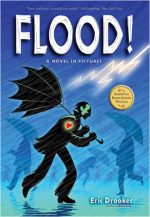
Flood! – A Novel in Pictures


By Eric Drooker (Dark Horse)
ISBN: 978-1-61655-729-4 (HB)                    978-1-59307-676-4(PB)

Win’s Christmas Gift Recommendation: A Book to Truly Immerse Yourself In… 9/10

In the comics biz it’s not too often that something truly different, graphically outstanding and able to subvert or redirect the medium’s established forms comes along. Moreover,

when it does, we usually ignore it whilst whining that there’s nothing fresh or new in view.

Happily that’s not what happened with Eric Drooker’s Flood! – A Novel in Pictures when in was first released in 1992. A New York City native, Drooker is a legendary left-leaning activist, thinker and creator of street art who attended Downtown Community School in the East Village and studied sculpture at Cooper Union before becoming a designer and illustrator.

His covers for The New Yorker are unforgettable, as are his ferociously expressive, eye-catching pieces in The Wall Street Journal, Heavy Metal and World War 3 Illustrated. His drawings and paintings – especially from his graphic novels – have been used in videos for Faith No More and Rage Against the Machine whilst the animated film Howl was the culmination of his extensive collaboration with the poet Allen Ginsberg (Illuminated Poems, Howl: a Graphic Novel).

Drooker’s political stance and creative influences make his pictorial narratives such as Blood Song: a Silent Ballad both contentious and greatly favoured by a readership ranging far beyond the usually cloistered and comfortable confines of the regular comics community.

He has won an American Book Award, Inkpot and Firecracker Award and the artwork for Flood! has been inducted into the Prints & Photographs Division of the Library of Congress.

Drawing on his earliest influences and following the Depression Era-traditions of artists and printmakers such as Frans Masreel, Lynd Ward, Otto Nuckel and Giacomo (please link to White Collar Sep. 28 2016) Patri, Drooker’s first graphic novel is produced in linocuts and spot-colour: consisting of three discrete sections or chapters created between 1986 and 1992.

These symbolic, spine-tingling observations and tumultuous progressions are generally dispensed without words as lone protagonists – or perhaps alienated, excluded victims – struggle to survive and find meaning in a world that just don’t care. The Man in View restlessly moves past centres of employment which shut down when you’re not looking, trudging cold, mean, directionless streets and alleys at the bottom of canyon-like skyscrapers or riding bleak subways while the pitiless skies look down and just keep spitting more and more rain…

Following a damning indictment of the modern world and warning of the social apocalypse to come from Luc Sante in his trenchant Introduction, the journey into oblivion begins with ‘Home’ as a simple worker discovers he’s no longer wanted and slowly makes his way back to the little he still possesses, and sees the city and his life in a new way…

That peregrination takes him below the city in ‘L’: into the tunnels trains share with lost, abandoned and forgotten people reduced to their most primal elements…

‘Flood’ then takes us to a lonely garret where an artist and his cat toil to finish a treasured prospective masterpiece as the waters rise all around them. The deluge is here and everything’s about to change forever…

It’s time for one final excursion out into the drowning city…

This is a parable of immense depth and potency; made all the more effective by Drooker’s intense visualisations. We all know the sheer power of images over words, but they also impart greater liberty as the reader’s mind is free to attribute as much meaning to the narrative as their own experiences will allow. The result is sheer poetry – and possibly prophecy…

Flood! – A Novel in Pictures is into its fourth edition now (five if you count the eBook) and this latest release from Dark Horse is a deluxe (167 x 235 mm) hardback in black-&-blue-&white which also includes a revelatory conversation with the artist first seen in Comics Journal as a much longer ‘Interview with Eric Drooker’.

Conducted by Chris Lanier and supplemented with a superabundant wealth of sketches, full pages, roughs and illustrations it adds great insight to what has gone before and sets us up nicely for Drooker’s even better second work – Blood Song: a Silent Ballad…

Scary, beautiful and irresistibly evocative, this is a dream vision you must see and will always remember.
Text and illustrations of Flood! – A Novel in Pictures © 1992, 2002, 2007, 2015 Eric Drooker. All rights reserved. Introduction © 2001 Luc Sante. Comics Journal interview used with permission.

Through the Habitrails: Life Before and After My Career in the Cubicles


By Jeff Nicholson (Dover Comics & Graphic Novels)
ISBN: 978-0-486-80286-2

Win’s Christmas Gift Recommendation: Epic Self-Exploration and Terrifyingly Revelatory Erudition… 9/10

To cheekily hijack a common aphorism, Comics Will Eat Itself whenever an opportunity occurs. The way creators, readers, devotees and collectors respond to the medium is infinitely fascinating to us and has formed the basis of many stellar strips and novels: not just in the arena of Graphic Autobiography but also in other picture/prose genres…

For a brief while and every so often, Jeff Nicholson was a comicbook creator. His most well known works are probably 1980s self-published satirical parody series Ultra Klutz and the award-winning Colonia. After this last concluded in 2006, Nicholson quit comics.

Somewhere in between those two radically different creations, he produced one of the scariest yet most compelling ruminations on the experiences and compulsions of making picture stories and working as an artist-for-hire ever put to paper.

From 1990 to 1997 Through the Habitrails appeared episodically in Steve Bissette’s groundbreaking horror anthology Taboo and there has never been a better examination of an (extra)ordinary guy being creative on command, turning visual tricks and drafting wonders whilst under corporate pressure and an obsessive personal need to make art…

Moreover, he crafted the experience as a mesmerising blend of autobiography and toxic, paranoid terror-tale; rendered even more isolating and crushing by adopting a fiercely bleak science fictional tone and deeply symbolic method of illustration…

After Matt Fraction qualifies the vicissitudes of the modern work experience in his ‘Foreword’ Bissette’s Introduction offers history, context and untrammelled appreciation in ‘Never on Monday: Through the 21st Century Habitrails’ and ends by explaining how Nicholson was persuaded to return to his sinister seminal work to update – if not placate – his growing legion of (perhaps unwanted) admirers…

Lettered throughout by Chad Woody, the cartoon catharsis begins with ‘Increasing the Gerbils’ as a literally faceless wage slave – drawing to order in a corporate studio which is only a small division of a massive mercantile monolith – describes his increasingly intolerable life. The office is crammed and ponderously industrious and incorporates tubes and tunnels in the walls where creepy rodents run maze-like from room to room: a Byzantine and barely explicable connection with the serried, unknowable Powers That Be…

None too slowly, the line between employee and subject beast of burden begins to blur…

Another unwholesome aspect of the job is how Management wanders the halls, arbitrarily tapping the workers and consuming their vital spirit, as grimly revealed in ‘It’s Not Your Juice’…

The steps taken to remain an individual are touched on in ‘No End’ and pitifully laid out in ‘Jar Head’ as the worker describes the use and variety of intoxicants used by the not-quite-captive Creatives to maintain output before his attention shifts to describing the fate of ‘The Doomed One’: the worker who did not bend to an oppressive, self-selected yoke but instead tried to rebel. Her fate was incomprehensible and appalling but not unexpected…

Such pressure to perform can not be endured forever and our pictorial peon eventually found release in walking and wandering in his downtime. The shocking repercussions of ‘Escape #1: “El Muerte”’ were expansive but still tantalised him with a promise of better… once he returned to work…

Not all needs can be met by the benefits of being a corporate drudge. Nevertheless, it’s the most likely place to meet potential mates. When ‘Futile Love’ happens and goes horribly wrong, naturally it provokes another deviation from protocol and ‘Escape #2: “The Dry Creek Bed”’ quietly carries him far away but ultimately only back to where he started from…

The unshakable drive to resist only brings uncomfortable attention from the managers who simply demand ‘Be Creative’, but after another pointless close call the worker heads home and in a barren wasteland discovers a possible answer to all his problems: a weapon he secretes as a tiny, prospective notion of rebellion he chooses to call ‘Animal Control’…

With a glint of hope and a possible ally in reserve, the thought that one of his fellows might be untrustworthy begins to dominate, but the truth about and fate of ‘The Infiltrator’ leaves nobody wiser or happier…

The hunger for space and wish for clarity push the artist into ever-greater unsanctioned ventures but ‘Escape #3: “Concow”’ again proves that no matter how far you go, what awaits is never going to be a welcome surprise…

A near-escapee who was dragged back into the fold attempts to rationalise his twice-lost liberty with the suffocating security of wage slavery and constant draining by creating an exposé. Sadly his assumptions about the value and efficacy of his ‘Dark Spiral’ can only end one way and the artist must resort to collusion with his dark side as delineated by ever-encroaching sometime ally ‘The Gerbil King’…

With work and notional reality fully at war, a catastrophic climax approaches as ‘Jimmy’ enters his life and changes everything forever…

Was that all a little vague? I certainly hope so because this is something you really need to work your way through on your own. The tone fits though: don’t read this unless and until you’re psyched up and suitably apprehensive…

The material has been collected a number of times since it first appeared but this superb Dover Edition offers what we smart-arse cognoscenti never expected: a continuation of the tale and dialogue with the creator from a place and position far less dark than that animal-infested region of the 1990s.

Preceding an ‘Afterword by Jeff Nicholson’ and the now-mandatory ‘About the Author’ feature, the comics self-diagnosis concludes with ‘Epilogue 1: Beyond the Habitrails’ and ‘Epilogue 2: Ghost Town Studio’: bringing us up to date in an equally abstracted but far more upbeat manner and supposing that at the end of some tunnels – or tubes – there can be light, not darkness…

Barbed with allegory, using metaphor like a scalpel and employing all the darkly surreal glamour and oppressive verve of Terry Gilliam’s Brazil or Spike Jonze’s Being John Malkovich, this potent dose of exploratory surgery for the soul simultaneously dissects why comics are made and why some of us must make them whilst telling one of the scariest tales of modern times.

Although certainly an acquired taste, Through the Habitrails is a must-see, never-forget graphic novel for anybody with a vested of intellectual interest in the Ninth Art.
© 1994, 1996, 2016 by Jeff Nicholson. Foreword © 2016 Matt Fraction. Introduction © 1996 Stephen Russell Bissette. All rights reserved.

The Fifth Beatle: Brian Epstein Story


By Vivek J. Tiwary, Andrew C. Robinson, Kyle Baker & various (M-Press/Dark Horse Books)
ISBN: 978-1-61655-835-2

Win’s Christmas Gift Recommendation: A Picture Story that truly Sings… 10/10

Graphic biographies are all the rage at the moment and this one – multi-award winning and originally released in 2013 – is probably one of the best and the most likely to reach a large mainstream audience. It certainly deserves to…

Written by Broadway Producer and author Vivek J. Tiwary and playfully illustrated by Andrew C. Robinson (Dr Blink: Super Hero Shrink, Dusty Star, JLA) – with additional material by Kyle Baker – it traces the meteoric rise of impresario Brian Epstein, who pretty much invented the role and function of modern management as he steered The Beatles from scruffy oiks playing dingy clubs and caverns to fabulous wealth and global mega-stardom in less than a decade.

The story is a pretty tragic one as Gay, Jewish record shop manager Epstein steered a trailblazing course for his charges at a time when his religion still provoked derision and prejudice and his sex life got him beaten up and threatened with prison.

In a deliciously light, enthusiastically joyous and smoothly welcoming manner this tale follows the Fab Four’s rise, as orchestrated by a man who dressed them and schooled them; sorting out tours and merchandise, toys and cartoon shows at a time when such crucial ephemera had never been seen before. He especially ensured that they got most of the money they earned…

Epstein was no one-trick wonder, but managed other star acts such as Cilla Black, Gerry and the Pacemakers and Billy J. Kramer (who provides loving Introduction ‘When I Got a Call From Brian, That’s When I Grew Wings’) and genuinely cared that his boys were left alone to make the music he loved…

If you know your history you know this tale is a proper injustice-laced tear-jerker without a happy ending, but Tiwary and Robinson – with Kyle Baker lending a superb animation-style meta-reality to the Beatles catastrophic visit to the Philippines – keep the spirits high without losing any of the edge, impact or inherent tragedies and indignities Epstein endured to succeed.

Brian Samuel Epstein first saw the Beatles perform in 1961 and by the time he died in August 1967 – of an overdose of sleeping pills – had seen them conquer the world in terms of sales and change the nature of music with the release of Sgt. Pepper’s Lonely Heart’s Club Band. He was 32.

How the world and the music industry have gradually made amends and returned him to the history he has for so long been excised from is covered in the author’s thought-provoking Afterword ‘This Feeling That Remains…’, and reiterated by pioneering cartoonist Howard Cruse in a feature on LGBTQ advocacy organisation Freedom for All Americans.

Also adding to the massive enjoyment is copious sketch and commentary section ‘With a Little Help from my Sketchbook: a Ticket to Ride to Selected Drawings, Preliminaries, Designs, and More’ by Robinson. offering insights and creative commentary plus more of the same from Kyle Baker in ‘The Places I Remember’.

Wrapping up festivities are a batch of features by Tiwary: ‘The Birth of the Beatles and Impossible Dreams’, ‘The Curtain Rising: Brian Epstein’s Induction into the Rock & Roll Hall of Fame’ and a memorabilia fan’s dream as ‘The Past Was Yours, But the Future’s Mine’ shares ticket stubs, posters, greetings card and other unique snippets of pop history.

This is an astoundingly readable and beautifully rendered treasure for comics and music fans alike: one that will resonate for all the right reasons with anybody who loves to listen and look.
Text and illustrations of The Fifth Beatle: Brian Epstein Story Expanded Edition © 2013, 2016 Tiwary Entertainment Group Ltd. All rights reserved.

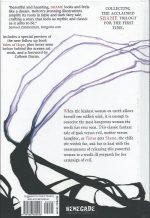
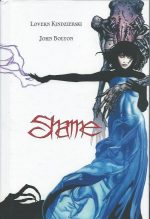
Shame – New, Revised Review


By Lovern Kindzierski, John Bolton & Todd Klein (Renegade Arts Entertainment)
ISBN: 978-1-987825-04-6

Win’s Christmas Gift Recommendation: An adult Fairy Tale for when the kids have all passed out… 10/10

Life is full of folk-loric warnings:

Red Sun at Morning: Sailor take Warning.
Don’t Eat the Yellow Snow.
Appearances can be Deceiving.

A cliché is a truth repeated so often you get bored and stop listening to the message…

Comics are unequivocally a visual medium and that’s never been more ably demonstrated than in this seductively bewitching allegorical fable from writer Lovern Kindzierski, painter John Bolton and letterer Todd Klein.

Originally released as a 3-part miniseries between 2011 and 2013, the entire saga is housed now in its proper setting: a lavish and sublime full-colour hardback tome, liberally garnished with beguiling bonus features.

So if you’re sitting comfortably – with all the doors locked and windows covered – let’s begin…

Once upon a time in ‘Conception’ a benevolent but painfully unprepossessing witch named Mother Virtue spent all her days doing little favours and grand good deeds for the ordinary and unfortunate, and for these kind actions she was beloved by all. Spiritually, she was probably the most perfect woman in the world, but as for her looks…

She lived life well and grew old and content, but one day after decades of joyous philanthropy, a single selfish thought flashes idly through her mind. Momentarily she longs for a daughter and wishes for it to be true: that she might be a mother in fact as well as name…

It is just the opening malign Shadow of Ignorance Slur needs. Employing dark magics, he instantly impregnates the champion of Good with a malign seed of evil and in gloating triumph brags to the wise-woman that her daughter will be a diabolical demon well-deserving of the name Shame…

Deeply repenting that selfish whim and now dreading the horrors yet to come, Mother Virtue methodically transforms her idyllic cottage in the woods into a floral prison dubbed Cradle; reluctantly repurposed to isolate and eventually contain the thing cruelly growing in her belly. The miserable matron-to-be also assembles a contingent of Dryads to care for and guard the baby.

Once Virtue finally births Shame, she quickly abandons the devil’s burden to be reared in the mystic compound, where it grows strong and cruel but so very beautiful…

After much concentrated effort, however, slavish minions of Shame’s sire finally breach Cradle’s green ramparts and begin schooling the child in vile necromancy to ensure her dire, sordid inheritance. Armed with malefic potency, Shame slowly refashions her garden guardians into something more pliable and appropriately monstrous…

As the devil’s daughter physically ripens, Slur himself comes to his evil child and through him Shame learns the terrifying power of sex. With the aid of an infernal incubus which has stolen seed from many men, she quickens a child in her own belly and eventually births a beautiful baby girl.

Into that infant Slur pours Mother Virtue’s soul; gorily ripped from the despondent dotard’s aging carcase at the moment of her granddaughter’s delivery. Even the nunnery Virtue had locked herself within was no proof against the marauding Shadow of Ignorance…

And with her despised mother now her own child, securely bound within the selfsame floral penitentiary, Shame goes out into the world to make her mark…

‘Pursuit’ takes up the story sixteen years later. The Virtue infant has grown strong and lovely, despite every effort of the malformed and mystically mutated Dryads and Shame’s own diabolical sorcery which have toiled mightily but with no effect in a campaign of corruption which made every day of her young life a savage test of survival.

This daily failure makes Shame – now elevated by her own evil efforts to queen of a mortal kingdom – furious beyond belief.

When not burning witches and wise women who might threaten her absolute domination or having her unconquerable armies ravage neighbouring realms, the haughty hell-spawn spies upon her mother/child with infernal devices, but always comes away bitterly disappointed and incensed….

Elsewhere, a knight of great valour lies dying and mournfully bids his afflicted son Merritt farewell. Today we’d say he has Down’s syndrome but in that far ago and long away time the husky lad simply labours under an extra burden in his desire to be a true hero…

Even with his last breaths, the swift-failing father dreads how his foolish, naïve, beloved boy will fare in a world ruled by the Queen who has ended him…

The hopeless dreaming youth is stubborn above all else and, when Merritt discovers the vegetable hell-mound of Cradle, stories his mother told him long ago run again through his head. A strange, inexplicable yearning compels him to overcome the appalling arcane odds to break in and liberate the beautiful prisoner… although she actually does most of the work…

Free of the malefic mound, all Virtue’s mystic might returns and, far away, Shame’s world reels. Mocking Slur cares little for his daughter but much for his plans and thus reveals Merritt is Destiny’s wild card: a Sword of Fate who might well reshape the future of humanity. Of course, that all depends on whose side he joins…

As the young heroes near the capital they are ambushed. After a tremendous mystic clash, Merritt awakens in a palace with a compelling dark-haired angel ministering to his every need and desire. Meanwhile, far below in a rank, eldritch dungeon, Virtue languishes and patiently adjusts her plans…

This eldritch esoterically erotic epic concludes in classic fashion with ‘Redemption’ as Merritt falls deeper under the sultry sway of the dark queen. As he slowly devolves into her submissive tool of human subjugation, in a fetid subterranean stinkhole, Virtue – under the very noses of her tormentors – weaves her intricate magic with the paltry and debased materials at hand…

Even cradled in the Queen’s arms, the warrior Merritt is still a child shaped by his mother’s bedtime stories and when Virtue contacts him he readily sneaks down to her cell, dreams of nobility and valiant deeds filling his slow, addled head…

Now the scene is set for a final fraught confrontation between mother and daughter, but first Virtue sends Merritt straight to Hell on a vital quest to recover the Hope of the World…

The narrative core of all fairytales is unchanging and ever powerful, so tone and treatment make all the difference between tired rehash and something bold, fresh and unforgettable. This tale certainly qualifies…

Moreover, the photo-based hyper-realised expressionism of John Bolton’s lush painting transforms the familiar settings of fantasy standards and set-pieces into something truly bleak and bizarre to match the grim, earthily seedy meta-reality of Kindzierski’s script.

Bracketed with a Foreword by Colleen Doran and Preface from author Kindzierski at the front and creator commentary courtesy of ‘From the Imagination of John Bolton and Lovern Kindzierski’ at the nether end – featuring an in-depth interview adjudicated by publisher Alexander Finbow and supplemented with a stunning treasure trove of pre-production art, designs and sketches – this astoundingly attractive tome also includes a tantalising glimpse of things to come in the shape of an 8-page preview of forthcoming sequel Tales of Hope…

Dark and nasty yet packed with sumptuous seductions of every stripe, the salutary saga of Shame is every adult fantasist’s desire made real and every comic fan’s most fervent anticipation in one irresistible package…
Shame the story, characters, world and designs are © Lovern Kindzierski, John Bolton and Renegade Arts Canmore Ltd.

The Case of Alan Turing


By Eric Liberge & Arnaud Delalande, translated by David Homel (Arsenal Pulp Press)
ISBN: 978-1-55152-650-8

Win’s Christmas Gift Recommendation: A tale of Topical Tragedy… 8/10

After decades of cruel injustice and crushing, sidelining silence, British mathematician Alan Turing – one of the greatest intellects in humanity’s history – has at last become the household name and revered pioneer of science he has always deserved to be.

As well as books and films describing the amazing achievements and appalling way this brilliant, misunderstood man – arguably the creator of the modern world we inhabit – was treated by society, there’s now a second graphic novel (so if you’re interested you should also seek out Jim Ottaviani & Leland Purvis’ The Imitation Game: Alan Turing Decoded) delineating the factual stuff whilst trying to get beneath the skin of a most perplexing and unique individual.

This gloriously oversized (231 x 13 x 287 cm) full-colour hardback biography – also available as an e-book – was first released in Europe as Le Cas Alan Turing in 2015 and employs an emphatic literary approach, more drama than documentary.

The moving script by author Arnaud Delalande (La Piege de Dante) – via award-winning translator David Homel – only touches on Turing’s early, troubled home life and post-war scandals as the genius descended into self-loathing and court-mandated chemical castration to “cure” his “social deviancy”.

Allegations or accusations of homosexuality destroyed many men until officially decriminalised in Britain’s 1967 Sexual Offences Act, and although Turing was posthumously pardoned in 2013 his loss to suicide probably deprived the entire world of a generation of marvels…

The major proportion of this tale concentrates on World War II and Turing’s work as a cryptographer and inventor at British code-breaking centre Bletchley Park, where the insular young man struggled to convince his officious, unimaginative superiors to let him construct a mechanical brain to defeat the Wehrmacht’s presumed-infallible Enigma machines. Turing’s victories cemented his reputation and ensured that the battle against fascism was won…

The key figures are all there: sometime fiancée Joan Clark, Professor Max Newman, and the weak, shady rent-boy who brought about Turing’s eventual downfall and demise, as are less well known figures: the MI5 operative who was his constant shadow before and after the war, boyhood lost love Christopher Morcom and many other unsung heroes of the intelligence war…

Played out against a backdrop of global conflict, Turing’s obsession with Walt Disney’s Snow White and a recurring motif of poisoned apples – the method by which the tormented soul ended his life – figure largely in a tale which reads like a movie in the making. Moreover, this powerful tale of an outsider’s temporary triumphs and lasting impact is beautifully and compellingly rendered by master of historical comics Eric Liberge (Monsieur Mardi-Gras Descendres, Le Dernier Marduk, Tonnerre Rampant, Les Corsaires d’Alcibiade), affording it an aura of unavoidable, impending destiny…

Balancing out the tragedy of chances missed is an informative photo-illustrated essay on ‘The Cryptography War’ by historian, educator and government consultant Bruno Fuligni detailing the development and use of different kinds of cipher and codes, how Enigma changed the rules of the spying game and how Turing changed it all again…

This is an astoundingly effective way to engage with a true story of incredible accomplishment, dedication and terrifying naivety, one that ends with horrific loss to us all and forever-unanswered sentiments of “What If?” and “If Only…”
Text © Éditions des Arènes, Paris 2015. Translation © 2016 by David Homel.

Modesty Blaise: The Murder Frame


By Peter O’Donnell & Enric Badia Romero (Titan Books)
ISBN: 978-1-78329-859-4

Win’s Christmas Gift Recommendation: Blockbuster Derring-do and the Perfect Postprandial Tonic… 9/10

Infallible super-criminals Modesty Blaise and her lethally adept, knife-throwing, compulsively platonic partner Willie Garvin gained fearsome reputations heading underworld gang The Network. They then retired young, rich and healthy.

With honour intact and their hands relatively clean, they cut themselves off completely from careers where they made all the money they would ever need and far too many enemies: a situation exacerbated by their heartfelt conviction that killing was only ever to be used as a last resort.

When devious British Spymaster Sir Gerald Tarrant sought them out, they were slowly dying of boredom in England. The wily old bird offered them a chance to have fun, get back into harness and do a bit of good in the world. They jumped at his offer and have been cleaning up the dregs of society in their own unique manner ever since …

From that tenuous beginning in ‘La Machine’ (see Modesty Blaise: the Gabriel Set-Up) the dynamic duo went on to crush the world’s vilest villains and most macabre monsters in a never-ending succession of tense suspense and inspirational action for more than half a century…

The inseparable associates debuted in The Evening Standard on 13th May 1963 and over the passing decades went on to star in some of the world’s most memorable crime fiction, all in approximately three panels a day.

Creators Peter O’Donnell & Jim Holdaway (who had previously collaborated on Romeo Brown – a lost strip classic equally deserving of its own archive albums) produced a timeless treasure trove of brilliant graphic escapades until the illustrator’s tragic early death in 1970, whereupon Spanish artist Enric Badia Romero (and occasionally John Burns, Neville Colvin and Pat Wright) assumed the art reins, taking the partners-in-peril to even greater heights.

The series has been syndicated world-wide and Modesty has starred in numerous prose novels and short-story collections, several films, a TV pilot, a radio play, an original American graphic novel from DC and nearly one hundred comic strip adventures until the strip’s conclusion in 2001.

The serial exploits are a broad blend of hip adventuring lifestyle and cool capers; combining espionage, crime, intrigue and even – now and again – plausibly intriguing sci fi and supernaturally tinged horror genre fare, with ever-competent Modesty and Willie canny, deadly, yet all-too-fallibly human defenders of the helpless and avengers of the wronged…

Reproduced in stark and stunning monochrome – as is only right and fitting – Titan Books’ superb and scrupulously chronological serial re-presentations of the ultimate cool trouble-shooters resume here, with O’Donnell & Romero offering four more masterpieces of mood, mystery and mayhem only pausing for effusive Introduction ‘Meeting Modesty’: from crime author Rebecca Chance (AKA Lauren Henderson; Bad Brides, Killer Heels, Jane Austin’s Guide to Dating) who compares the prose perils with the aforementioned strip sagas.

With Chance adding a prologue to each of the stunning strips which follow, the pictorial perils premiere with ‘The Murder Frame’ (originally seen in The Evening Standard from January 6th to June 6th 1997), wherein Modesty and Willie are drawn into a Machiavellian war of wits with a psychopathic old adversary who turns Garvin’s very public minor spat with a local property developer into an unassailable case of murder most foul.

Happily, Willie has lots of friends on both sides of the law and the stitch-up unravels after Modesty teams up with police Chief Inspector Brook to see justice done and the real killer caught…

The tone shifts to electrifying espionage and bloody vengeance for ‘Fraser’s Story’ (9th June – November 3rd) as Tarrant’s placidly, unflappable aide goes off the grid in pursuit of a British traitor-turned-Russian Mafia boss hiding out in Panama.

Victor Randle sold out his country and caused the death of 107 British agents – including Fraser’s only love – and is smart enough to know that Fraser is on his trail. In fact he’s counting on it and has creepy brainwashing genius Dr. Yago ready to pick the would-be avenger’s mind dry of every profitable secret it contains – especially as Victor currently possesses the only other thing the British agent still cares about…

He’s also smart enough to have Fraser’s friends Modesty Blaise and Willie Garvin murdered before they can interfere, but tragically not efficient enough to double check that his attempts have actually succeeded…

A startling glimpse into Modesty’s childhood days underpins ‘Tribute of the Pharaohs’ (November 4th 1997 to April 3rd 1998), also revealing Willie’s ultimate nemesis as the strident martinet who ran the orphanage he grew up in. Their reunion on the burning sands of the Bayouda desert near Khartoum also involves brutal bandit lord Mr. J who believes the draconian Miss Prendergast has knowledge of a vast horde of Egyptian gold…

When he kidnaps and tortures the old biddy, Willie and Modesty teach the sadistic thug a lasting lesson before uncovering a treasure and laying a ghost that has haunted Blaise for most of her life…

Wrapping up this trove of titanic tales is a traumatic exploration of the modern slave trade which sees Willie’s teen protégé Sam head out to Thailand as part of a mixed judo team. Sadly her youth, looks and bearing make her the perfect target for human traffickers Rosie Ling and Mr. Nagle-Green who boldly fake her death in broad daylight before stashing her on their ship full of ‘The Special Orders’ (April 6th to September 4th 1998) for rich and ruthless men…

Having been schooled by Garvin and Modesty, Sam is savvy enough to get off a message to the already suspicious (and en route) duo and takes matters into her own hands to rescue the girls. All she has to do is get them all off the ship, hole up in a suitable defensible position and keep safe until the enraged and remorseless cavalry arrives…

These are incomparable capers crafted by brilliant creators at the peak of their powers; revelling in the sheer perfection of an iconic creation. Startling shock and suspense-stuffed escapades packed with sleek sex appeal, dry wit, terrific tension and explosive action, these stories grow more appealing with every rereading and never fail to deliver maximum impact and total enjoyment.
Modesty Blaise © 2016 Associated Newspapers/Solo Syndication.

Black Dog: The Dreams of Paul Nash


By Dave McKean & various (Dark Horse Books)
ISBN: 978-1-50670-108-0

Win’s Christmas Gift Recommendation: Magnificent and thought-provoking… 9/10

After years of being sidelined and despised, sequential narrative has finally been acknowledged as one of humanity’s immortal and intrinsic art forms. That’s never been more apparent than in this astounding biographical examination of celebrated surrealist, landscape painter and war artist Paul Nash, as conceived, designed and created here by modern master of many disciplines Dave McKean.

Black Dog: The Dreams of Paul Nash was commissioned to supplement a major retrospective exhibition of Nash’s work, running at London’s Tate Gallery from October 26th 2016 to March 5th 2017, as part of 14-18 Now; the Arts plank of Britain’s national centenary commemoration of the Great War.

The project was set in motion as a result of the wonderful Lakes International Comic Art Festival (so you should also look them up, send an effusive thank you and book early for next year’s shindig) and also comes in a limited edition run of 400 signed hardbacks…

Rendered as a stunning melange of styles whilst alternatively racing and meandering through Nash’s nightmares and memories – as distilled from his works, correspondence and writings – this huge (280 x 219 mm) comics chronicle examines the artist’s thoughts and reactions in dreamlike snippets as he comes to terms with a troubled family life, the staggering shocks of war and his lifelong striving for a clear artistic vision.

These visions are all filtered through a lens of mud, blood and unremitting horror which didn’t diminish after surviving life in the trenches.

Potent and evocative, this is a compelling visual poem not meant as a primer, biographical introduction or hagiography. It’s a celebration of Nash’s art and ethos, and a reminder of the pointless futility of throwing away people’s lives, delivered in styles and imagery deftly chosen for emotional impact.

As such it might require you to consult a favourite search engine to grasp the subtler nuances.

Trust me, it’s definitely worth the effort.
Black Dog: The Dreams of Paul Nash ™ & © Dave McKean. All rights reserved.

B.P.R.D.: Plague of Frogs volume 3


By Mike Mignola, John Arcudi, Guy Davis, Dave Stewart & Clem Robbins (Dark Horse Books)
ISBN: 978-1-59582-860-6 (HC):       978-1616556228 (PB)

Hellboy is a creature of vast depth and innate mystery; a demonic baby summoned to Earth by Nazi occultists at the end of Word War II but subsequently raised, educated and trained by parapsychologist Professor Trevor “Broom” Bruttenholm to destroy unnatural threats and supernatural monsters as the lead field-agent for the Bureau for Paranormal Research and Defense.

After decades of unfailing, faithful service, in 2001 he became mortally tired and resigned. Itinerantly roaming the world, he still managed to constantly encounter weird happenstances, never escaping trouble or his own sense of duty. He’s only a momentary guest star in this book.

This particular massive tome – available in hardback, paperback and digital formats – in fact stars his trusty comrades: valiant champions of varying shades of human-ness who police those occult occasions which typically fall under the remit of the Enhanced Talents task force of the B.P.R.D.

If you’re having trouble with the concept, think of a government-sanctioned and internationally co-sponsored Ghostbusters dealing with Buffy-style threats to humanity.

The B.P.R.D. rapidly established itself as a viable publishing premise in its own right through a succession of interlinked miniseries; confronting an ancient, arcane amphibian menace to humanity in an immense epic which spanned eight years of comicbook releases.

Previously collected as a series of trade paperbacks during that time, the entire supernatural saga – latterly dubbed Plague of Frogs – was remastered as a quartet of monumental full-colour volumes, of which this is the twisted third.

Gathering material from B.P.R.D. The Universal Machine; Garden of Souls and Killing Ground – volumes 6 through 8 respectively – this macabre masterpiece opens with a handy recap page identifying key personnel of the B.P.R.D.

Then an equally informative Introduction from series editor Scott Allie provides context and background in the organisation’s struggle against the eons-old supernal force mutating humans into terrifying frog-monsters as well as few behind-the-scenes production secrets…

At the end of the previous collection, the team had narrowly avoided the end of the world by finding the Frog citadel and defeating marauding Elder God-made-grisly-flesh Katha-Hem… but at great and tragic cost…

Crafted throughout by writers Mignola and John Arcudi, illustrated by Guy Davis, lettered by Clem Robins and coloured from Dave Stewart, ‘The Universal Machine’ (originally a 5-part miniseries spanning April to August 2006) takes up the story as amphibious Abe Sapien and undead marine Benjamin Daimio oversee the sterilising carpet-bombing of the city the Frog destroyed to summon their archaic eidolon.

Back at their new Colorado base, pyrokinetic Liz Sherman and disembodied psychic Johann Krauss discuss with historian Dr. Kate Corrigan how to resurrect their fallen comrade Roger the Homunculus from the pile of broken rubble he was reduced to…

Despite Roger’s mystical origins that prospect seems unlikely until the B.P.R.D. are offered a copy of legendary alchemical tome “A True Record of the Workings of the Universal Machine” by an enigmatic bookseller in France…

Soon Corrigan and trainee researcher Andrew Devon are in the picturesque village of Ableben, discussing the unnatural events of 1491 which shattered the castle of local lord Marquis Adoet de Fabre and scattered his celebrated collection of monsters, grotesques and magical artefacts…

The bookseller is a weird and difficult cove, clearly more intent on teasing his customers than selling his wares, and when Devon steps outside to report in, Corrigan’s suspicions are proved right.

The vendor is de Fabre himself, laying a trap to abduct her. Whisking Kate back in time, the sinister savant has the book she needs but what he wants in return is a price that cannot be paid…

As Devon quails in the present and in the clutches of a werewolf pack acting as the mage’s 21st century negotiators, back in Colorado the Enhanced Talents squad are sharing coffee and stories. Former Green Beret Daimio at last reveals how he came back from the dead three days after dying in the line of duty…

A covert mission in Central America resulted in the slaughter of him and his team by a jaguar monster. They stayed dead and he didn’t…

Moved by the confession, Johann shares a moment of his former, corporeal, life as a spirit medium: one that only emphasises his own loneliness and moral weakness whilst deeply harming both the living and dead clients he was striving to help…

Liz doesn’t share anything. She’s been acting strange for quite a while now and doesn’t want anyone to know that she’s seeing visions and getting messages from a mystery mage only she can see…

The late night chinwag moves on to pensive Abe, but rather than share his recent life-altering news he prefers to relate the old and sad tale of a family man lost in the Canadian wilderness. By the time he and Hellboy had found Daryl Tynon, the poor slob was well on the way to losing his mind. He had already tasted human flesh and physically transformed into a Wendigo…

Back in the past, the magical collector boasts, brags and bullies. Convinced he has the upper hand, de Fabre shares many of his secrets and displays his greatest prizes, but has grievously underestimated the perspicacity and sheer guts of his merely human hostage…

Victorious but without her prize, Corrigan survives the destruction of de Fabre’s castle and is unceremoniously dumped back in her own time. Although she has failed to find a way to restore Roger, the departed Homunculus has a message for them all, to be delivered by Krauss…

The next volume also started as a 5-issue miniseries. ‘Garden of Souls’ (March to July 2007) concentrates on Abe’s recently uncovered origins and opens in 1859 with psychical researcher Dr. Langdon Everett Caul as part of a group of like-minded men fascinated with arcane secrets. He is present when an Egyptian mummy is unwrapped at a grand soiree. Incredibly, the withered husk was still alive so he and his closest associates in the Oannes Society stole the astonished, outraged ancient Panya, convinced she is the sea goddess Naunet…

More than a century later Abe was found by the B.P.R.D. in a tank; a bizarre fish-human hybrid with no memory of his past. It’s all started coming back to him now, however, especially after being sent Caul’s old cigar case with a map neatly tucked inside…

With Daimio as back-up but still sharing nothing, Abe heads to Balikpapan, Indonesia, unaware that his taciturn companion is concealing a few secrets of his own or that best friend Liz is slowly succumbing to the poisonous whispers of someone no one can see and being driven insane by visions of impending Armageddon…

Despite the passage of time the men of the Oannes Society are still alive. Sustaining themselves through steampunk biomechanics, the sages have been building bio-mechanical monsters whilst growing themselves new superhuman flesh bodies to hold their corrupted minds. They have also been waiting for Caul to return and cannot understand his odd new notions of morality…

They have no idea why he should be so upset at what they did to his original body or their current scheme to catastrophically inundate all of South East Asia and harvest the souls of the millions who will drown.

Happily, Ben is on hand to help defuse the plot, assisted by the astounding psychic powers of the still-captive and extremely resentful living mummy Panya…

This all-action adventure then gives way to suspense and revelation in ‘Killing Ground’ (5 issues once spanning August-December 2007) with change in the air at B.P.R.D.’s Colorado HQ.  Johann has taken possession of the last super-body built by the Oannes Society and is becoming increasingly intoxicated by the fleshly sensations he believed denied him forever.

Daimyo is reeling from public revelations that his grandmother was a WWII war criminal, but has managed to keep secret the wizard he periodically sneaks into the base to deal with horrific body changes he doesn’t want his comrades to know about.

Liz is particularly happy. Without being told, new inductee Panya has confirmed the reality of the stranger haunting the harassed pyrokinetic and even offered some suggestions to counter his constant poisonous whispers.

Abe, now officially in charge of the Enhanced team, is overseeing the transfer of now-completely feral Daryl to a newly fortified cell, but cannot help noticing the affect the savage beast has on Daimio…

Trouble is never far away. Soon the base has been infiltrated by a deadly silent intruder whose actions kick off a cascade of disasters, beginning with the escape of Daryl and evisceration of Daimio’s secret wizard. With the base on lockdown and bodies piling up, it’s a time for all hands on deck, but super-strong Johann has vanished.

And then the blizzard hits…

As chaos mounts, the silent intruder finally provides some answers in the most agonising manner imaginable, two separate carnosaurs rip their way through the embattled soldiers on site, another Enhanced team member perishes, a ghostly hero returns and the truth about Daimyo’s death and resurrection are horrifically revealed, leading to a major changing of the guard…

Moreover, even though the War on Frogs seems to be over, the best and worst is yet to come…

Following an Afterword by Arcudi, a wealth of Bonus Features included here comprise comprehensive Sketchbook sections on The Universal Machine, Garden of Souls and Killing Ground – all dutifully annotated by Davis – offering roughs, designs and preliminary artwork from Davis and Mignola

With spectacular supernatural fantasy now a staple of TV and movie genre, these unlikely heroes must be a top pick for every production company out there. Until then, why not stay ahead of the rush by reading these chillingly compelling yarns?
B.P.R.D. ™: Plague of Frogs volume 3 © 2006, 2007, 2008, 2012, 2015 Mike Mignola. Abe Sapien™, Liz Sherman™, Hellboy™, Johann™, Lobster Johnson™ and all other prominently featured characters ™ Mike Mignola. All rights reserved.

Pigeons from Hell


By Joe R. Lansdale, Nathan Fox & various (Dark Horse Books)
ISBN: 978-1-59582-237-6

Robert Ervin Howard is justly celebrated for his burly, barbarian sword-&-sorcery creations such as Conan, Kull, Bran Mak Morn and others, but he was a successful jobbing writer in the heyday of pulp fiction and also turned his blazing typewriter to most of the other popular genres of the era.

Moreover, as aficionados of his blistering fantasy fiction are well aware, he was a dab hand at inculcating tension, suspense and moody macabre horror.

During the too-brief time of his creative peak he crafted a number of chilling supernatural stories set in the evocative southern milieu known as ArkLaTex – a doom-shrouded, Deep South meeting-point of the darkest corners of Arkansas, Louisiana, Oklahoma and his beloved Texas.

Inspired by old stories heard at his grandmother’s knee, Howard transformed oft-told anecdotes into masterpieces of terror such as ‘The Shadow of the Beast’, ‘Moon of Zambebwie’, ‘Black Hound of Death’, ‘Black Canaan’ and the particular masterpiece under scrutiny here: a creation described by Stephen King as “one of the finest horror stories of our century”…

The tirelessly prolific Howard committed suicide in 1936 and the prose Pigeons from Hell (unsold since its drafting in 1932) was published posthumously in the May 1938 edition of premier pulp Weird Tales.

It has become a classic not just of the genre but also a notional inclusion into the prestigious literary canon of the Southern Gothic movement of writers such as William Faulkner, Erskine Caldwell, Thomas Wolfe, Tennessee Williams and others.

In 1988 the original prose short story was incorporated into a stunning, lavishly painted adaptation by Scott Hampton, released by West Coast maverick publishers Eclipse, which remains one of the best graphic novels ever produced.

You should do your damnedest to track down and heartily absorb both it and the original text versions.

In 2008, Dark Horse – current holders of the license for Howard comic adaptations – approached esteemed author, occasional comics scripter and devout REH fan Joe R. Lansdale to adapt and update the story, crafting a notional sequel: first as a 4-issue miniseries and then as this sterling terror tome which is every bit as potent and gripping as the Eclipse release.

Illustrated by Nathan Fox with colours by Dave Stewart and letters from Richard Starkings & Comicraft, the story is translated to contemporary times but still centres on the desolate, dilapidated, dank and doom-laden Blassenville House and the swamp-encircled former plantation grounds it festers in.

As the sun sets a car with five forthright youngsters pulls up at the ravaged mansion deep in the Acadiana boondocks. Scaring away an army of fluttering pigeons, the deeply disappointed travellers are far from impressed with the inheritance sisters Janet and Claire have come from Texas to view.

Risking their lives on the shaky stairs the curious, disgusted kids reach the attic and find a mountain of dead birds. For all their tough talk and brave fronts the place is getting to them and their bold bravura starts to fade. Going back down, the first casualty occurs and the horrified friends head straight for the car and anywhere but here…

They don’t get far and the survivors are soon forced to return to the house where something vile and uncanny continues to pick them off…

Faced with appalling events and now certain that Grandmas’s crazy old horror stories were not just true but toned down for the kids, the Blassenville girls resolve to save who they can and then get the hell out.

They’re true believers now; having been separated from their friends and barely escaped a bloody shambling horror in the house. A vast sea of anxious spirits congregated in the fields around it also add veracity to everything the old lady once spooked them with. When these amorphous shades chase them into the sceptical arms of a local sheriff the sisters agree to go back inside but it’s not long before the lawman is also fully aware that ghosts are real and extremely dangerous…

Escorting them into the woods he takes the Blassenvilles to a crazy old witchman (he once thought…) who clues them all in on the history of the house before giving them vital clues they need to fight the thing inside and perhaps end the horror at long last…

Blending compulsive suspense with riotous splatter-action and a wry undertone of trenchant sassiness, this ferociously effective homage includes context and commentary in Lansdale’s ‘Notes from the Writer’, critique and historical background from Howard scholar Mark Finn in his ‘Afterword: The Brothers Gothic’ and a full Cover Gallery from the comic books.

Adding to the informational overload is a stunning picture-packed treasure trove as ‘The Sketchbook from Hell, with commentary from artist Nathan Fox’ reveals secrets of the creative process whilst guest artists Tomer Hanuka, Hector Casanova, Greg Ruth, Guy Davis, Paul Maybury, Jim Mahfood, Brandon Graham, David Crosland, Paul Chatem and Nathan Fox offer alternative outlooks in a copious ‘Bonus Pinups’ section.

Not only is the original prose work one of the best pieces of horror fiction ever written, but in this rare instance the follow-up – like the movie Alien and its gung-ho sequel Aliens – slips sneakily from one classic genre to another and makes both the better for it. This is a coming classic of graphic narrative; something every fright fan should see – but only with all the lights on…
Pigeons from Hell © 2008, 2009 Robert E. Howard Properties Inc. (“REHP”). All rights reserved.