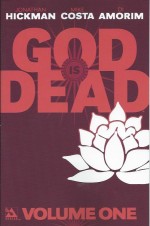
God is Dead Volume 1


By Jonathan Hickman, Mike Costa, Di Amorim & Rafael Ortiz (Avatar Press)
ISBN: 978-1-59291-229-2

Launched in September 2013, Jonathan Hickman and Mike Costa’s God is Dead spectacularly began extrapolating on the age-old question “What if God(s) were real?” in a wry and deliciously dark summer blockbuster style.

Now the first six issues, illustrated by Di Amorim and others, have been collected into a bombastic bludgeoning bible of senses-shattering Apocalyptic apocrypha that begins one day in May 2015 when the pantheons of ancient Egypt, Greece, Viking Scandinavia, the Mayans and Hindu India all explosively return: shattering monuments, landscapes and nations whilst slaughtering millions of mortals, faithful and disbelievers alike…

Within two months the ineffable gods have fully re-established themselves, pushing rational, scientific mankind to the brink of extinction, reclaiming their old places of worship and terrified congregations of adherents.

On the run from the new faithful, Dr. Sebastian Reed is rescued from certain death by the stunning Gaby and joins The Collective, an underground think tank of fugitive scientists, even as the Gods savagely revel in their bloody return to power and glory.

In a secret bunker the suicide of the American President leaves an obsessively aggressive General in charge of the US military. He has no intention of letting any primitive usurper run roughshod over the Greatest Nation on Earth…

As rationalist deep thinkers and innocuous PhDs Thomas Mims, Airic Johnson and Henry Rhodes welcome the fresh recruit, in the heavens Odin convenes a grand congress to settle the final disposition of the mortal world and all its potential worshippers…

The fable resumes as the American Army goes nuclear. However, although the strike vaporises an army of mortal converts, it cannot harm sublime Quetzalcoatl and merely provokes a punishing response from the assembled and arrogant Lords of the Air.

Far beneath the earth the scientists are engaged in heated debate over the nature of their enemies. Eventually they agree that they have insufficient data and resolve to capture one of the returned gods…

In America resistance ends when the common soldiery convert to the Mayan religion and sacrifice their stubborn atheist general, but this only leads to greater strife as the Pantheons, with humanity subdued, now turn on each other. Gods are not creatures willing to share or be long bound by pacts and treaties…

Over the Himalayas Gaby and her security consultant dad Duke are ferrying the test tube jockeys when their irreplaceable jet is downed by a monstrous dragon even as, in newly holy sites around the globe, the war of the gods gorily eliminates one greedy pantheon after another.

It’s a blessed circumstance for the surviving scientists who find an immolated Hindu deity and promptly harvest the carcass for investigation and experimentation.

With mythological monsters increasingly repopulating the world, the gaggle of geniuses rapidly reverse-engineer the godly genetic soup and decide to make their own deities: Gods of Science to take back the world for rational men…

The first attempt is an unmitigated catastrophe, savagely eviscerating one of the boffins before Duke manages to kill it. Terrified but undaunted, Gaby leads the way to the next, inevitable step: human trials using what they have gleaned to transform themselves…

Up above the god-war is almost over and Odin, Thor and Loki turn their vastly depleted forces towards Mount Olympus and a showdown with Zeus who has until now kept out of the devastating internecine conflict.

The sole divine survivor of that staggering clash – now omnipotent on Earth – then discerns the experiment of the mortal inventors and flashes to their secret lab.

He is too late. The end results of the religion of rationality have already travelled to Olympus and when the ancient frustrated arrogant all-father returns, he is confronted by a triumvirate of new gods born of needles and serums, ready to finally decide who will rule the world…

That astoundingly vicious clash is then followed by a portentous Interlude (by Costa & Rafael Ortiz) which follows that oriental dragon into previously unseen China to meet entrepreneurial Sammi whose future seems ‘Gloriously Bright’, after which the newly re-emergent gods of that ‘Middle Kingdom’ have their own crucial confrontation with the golden Wyrm of the Heavens…

With additional art by Jacen Burroughs and Hickman, God is Dead provides a brutally engaging, uncompromising, brilliantly vicarious dark-edged romp to satisfy any action-loving adult’s need for comics carnage and breathtaking big-concept storytelling.
© 2014 Avatar Press Inc. God is Dead and all related properties ™ & © 2014 Jonathan Hickman and Avatar Press Inc.

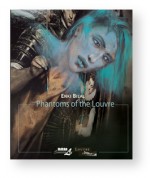
Phantoms of the Louvre


By Enki Bilal translated by Joe Johnson (NBM ComicsLit/Louvre: Musée du Louvre Éditions)
ISBN: 978-1-56163-841-3

A few years ago the legendary Louvre Museum in Paris began an intriguing and extremely rewarding collaboration with the world of comics, and their latest beguiling translated bande dessinée is now available in English courtesy of those fine folks at NBM.

Phantoms of the Louvre is a lush and beautiful, oversized hardback graphic art book which reproduces the stunning results of master storyteller Bilal’s creative response to the collected treasures and even architecture of the prestigious institution.

The origins and details of the project are described in his Preface and the 22 artworks which resulted had their own exhibition in the Louvre in 2013.

The premise is delightfully simple: each item and place in the galleries is blessed or afflicted by a ghost somehow attached to an item which affected their lives or passing, and Bilal incorporates a photo of each artefact with an image of the ghost.

The story of every phantom is then told in poetic prose augmented by photos, sketches and designs of the revenant in question…

Enes Bilalović AKA Enki Bilal was born in Belgrade in 1951, breaking into French comics in 1972 with Le Bal Maudit for Pilote. Throughout the 1970s he grew in skill and fame, and achieved English-language celebrity once his work began appearing in America’s Heavy Metal magazine.

Best known for his self-scripted Nikopol Trilogy (Gods in Chaos, The Woman Trap and Cold Equator) his other bleakly beguiling and ferociously contemplative works include Ship of Stone, The Town That Didn’t Exist, Exterminator 17, Four?, Magma, Julia & Roem and many, many more. In recent years Bilal returned to contemporary political themes with his much-lauded, self-penned Hatzfeld Tetralogy…

As always, the work is produced in close collaboration with the forward-looking authorities of the Musée du Louvre, but this is no gosh-wow, “Night-at-the-Museum”, thinly-concealed catalogue of contents from a stuffy edifice of public culture. Rather, here is a gripping, intense, informative and insightful glimpse into the power of art and history as engines of imagination and personal obsession.

Weaving fact into an imaginary tapestry of fictions detailing the putative lives of those affected by or affecting the creation of the inspirational treasures, the stunning procession of lost souls leads off with ‘Aloyisias Alevratos’ inspired by The Winged Victory of Samothrace, detailing an ancient sculptor’s history whilst ‘Antonio Di Aquila’ recounts the short, tragic life of one of Leonardo da Vinci’s assistants/models during the period when the master painted the Portrait of Lisa Gherardini, wife of Francesco Del Giocondo, called Mona Lisa, La Gioconda or La Joconde…

‘Enheduana Arwi-A’ was a remarkable woman who engraved part of the tablet containing The Code of Hammurabi whilst ‘Arjuna Asegaff’ turned a troubled life around to become a popular model who posed for Baron Pierre-Narcisse Guérin’s The return of Marcus Sextus and ‘Analia Avellaneda’ developed a new pigment which fascinated Doménikos Theotókopoulous, called “El Greco” during the creation of Saint Louis, King of France and a Page, but cost the tragic lady her life…

‘Ahmose Chepseset’ was a crazed vandal in ancient Egypt whose actions despoiled much of the relic dubbed Man’s Head, vengeful half-caste ‘Djeynaba’ was a near-supernatural blight who tainted the Red Rooms and unrepentant Nazi ‘Colonel Markus Dudke’ killed himself in The Grand Gallery…

‘Lantelme Fouache’ was the brutal father whose murder inspired Eugene Delacriox’ The Orphan Girl at the Cemetery whilst fisherman ‘Jacobus Grobbendoeke’ was recovered from the sea and incorporated into The Fish Market (after) Frans Snyders, whilst illicit woman warrior ‘Hecuba’ wore the Corinthian-style helmet as part of her imposture of a male hoplite seven centuries before Christ.

A doomed childhood love touched ‘Melencoloia Hrasny’ and Albrecht Dürer which resulted in a famed Portrait of the Artist whereas ill-fated Janissary ‘Zvonimir Karakasevic’ suffered a slow death which led to his becoming a forgotten component of sculptor Jean-Baptiste Pigalle’s Voltaire Nude. Poor farm boy ‘Lakshek’ had more affinity for the bovines which inspired the Human-headed Winged Bull than the cruel, callous men who carved it…

Roman soldier ‘Longinus’ used his spear to wound the crucified Messiah depicted as Christ Dead, the Amazon ‘Marpada’ adored her equine companions – as exemplified by the marble Horse Head – far more than men and ‘Gaius Livius Maximus’ was a doctor of Rome who ended his own life upon the ancient Bed on display here.

‘Bella De Montefalco’ was the childish accidental instigator of a grotesque crime of passion hinted at in The Shadows of Francesca da Rimini and Paolo Malatesta Appear to Dante and Virgil by Ary Scheffer, but professional duellist ‘Lyubino Nuzri’ was a willing killer who met his fate in the forever after haunted Alcove Room, and the ‘The Regodesebes Twins’ mere tools of destiny whose cruel deaths only tangentially affected The Countess Del Carpio, Marquessa de La Solana as portrayed by Francisco de Goya y Lucietes shortly before her own demise…

A criminal and beast in human form, butcher ‘Willem Tümpeldt’ provided The Slaughtered Ox immortalised by Rembrandt Harmenszoon Van Rijn but Muslim artist ‘Doura Ximenez’ had to dress as a man and remain unknown to craft the anonymous Supposed Portrait of Gabrielle d’Estrées and her sister the Duchess de Villars which concludes this tour of the night galleries…

With detailed floor plan maps showing where the art works, rooms and artefacts referenced are displayed, this is a truly magical collection that no art lover or devotee of the medium can afford to miss…

© 2012 Futuropolis/Musée du Louvre Éditions. © NBM 2014 for the English translation by Joe Johnson. All rights reserved.

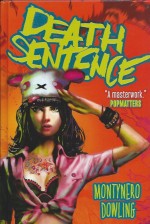
Death Sentence


By Montynero & Mike Dowling (Titan Comics)
ISBN: 978-1-78276-008-5

For most of us Sex Sells.

If that’s not you and you’re easily shocked or offended, stop Right Here, Right Now and come back for a less grown up review tomorrow…

As for the salacious, tawdry, vulgar rest of humanity, however, fornication is a force that cannot be resisted and we’re always gagging for it.

One outrageous potential result of that inescapable biological imperative was recently examined and scathingly lampooned in a dark and decadent fable from scripter, artist and games designer Montynero and sublime illustrator Mike Dowling. Death Sentence – after an initial and truncated appearance in Clint Magazine in 2012 – was retooled and completed in a breakthrough 6-issue miniseries which took the comics world by storm when it was released in October 2013.

Now the entire sordid episode has been compiled – along with a scintillating selection of irresistible extras – in a stout and sturdy hardcover collection that promises to be one of the most talked about books of the year…

The author’s own Introduction kicks everything off (and is complemented by another from Rob Williams) before the seductively apocalyptic tale begins with ‘I Wanna Be Adored’ wherein frustrated artist Verity Fette is getting some very distressing news in a Camden doctor’s surgery.

She’s just been diagnosed with G+: a new, universally fatal sexually transmitted disease that has a rather peculiar side-effect.

Although this STI kills in six months, for the length of that time the victim “suffers” from increased vigour, stamina, sex drive and even develops some form of super power…

Over in Primrose Hill, disgraced, shambolic and rapidly fading rock star Daniel Waissel AKA Weasel awakes from another unspecified period of debauched excess and tries to make sense of what his A&R man Russ is saying.

Apparently having G+ might be the only thing to revive his failing career and, if his power is music-related, perhaps he can still get all six of the albums he’s contracted for finished before he joins all the other dead legends going out in a blaze of lucrative glory…

Whilst Verity is quitting her meaningless job, over the river in a South Bank TV studio comedian, media darling, affirmed libertine and G+ carrier David “Monty” Montgomery is charmingly, charismatically, shockingly titillating the nation again; avowing that his final months on Earth won’t alter his pleasure-seeking behaviour or sensuous attitudes…

Later, Weasel’s powers at last manifest when a couple of irate drug dealers turn up, wanting payment for the prodigious amount of pharmaceuticals the creatively blocked musician has consumed, but neither he nor the other two G+ sufferers are aware that a shady government agency is keeping tabs on them.

Unfortunately, when the spooks decide to “acquire” Verity the result is spectacular and very messy…

Determined to keep the populace in the dark, the Department of National Security goes into utter bastard mode: blaming the gory fiasco on fictitious terrorists whilst covertly hunting the terrified ‘Dissolved Girl’ through the seedy streets of London.

Weasel is – as always – an emotional wreck, avoiding decisions – or making rock & roll – via a constant flurry of sex and drugs. His wake-up call comes when he realises his new normal has ended his latest bedmate in a most unsavoury manner…

Monty, however, is completely in control: aware of what he’s doing and not about to let a few interfering coppers get in his way.

Appalled and guilt-ridden, Verity regains consciousness on a remote Scottish island, where a very nice old lady makes her an intriguing offer before inviting the still-frustrated artist into the huge secret base beneath the heather…

‘Royals‘ finds bored and increasingly irresistibly Monty pondering how to top his already prodigious and unsurpassed career of licentious excess before heading off to Buckingham Palace…

North of the border Verity is beguiled by talk of a cure and agrees to let Dr. Lunn train her in the use of her rapidly-expanding abilities whilst on a quiet London street fugitive Weasel sneaks into the bedroom of his son.

Leaving Mickey with his mother might well be only good thing he’s ever done in his whole wasted life…

This sentimental act is a big blunder though, as a flotilla of copters leads a blistering military ambush which, after a spectacular chase, finally leads to the capture of the musical rebel without a clue…

When he arrives on the island, the nice doctors are keen on helping Weasel learn about himself and sexy fellow inmate Verity. They happily provide space, time, tuition, medical grade drugs…

Down South, Monty, having crowned himself King of Britain, is barely able to contain his self-absorbed glee. ‘In the City’ sees him really stretching himself, and after a psionic flexing of his mental muscle, bloodily destroying a division of the army as well as the ruling elite of Britain, he declares London a city free from all laws.

Influenced as much by a sense of wild liberty as Monty’s surging mental influence, the population descends into gory debauchery, prompting the American President and NATO to take matters into their own hand before the seditious super-maniac works himself up into becoming a global threat…

In Scotland Dr. Lunn is helpless to prevent the DNS frantically turning her research subjects into weapons to use against the rogue G+ victim who has turned London into a sex-fuelled charnel house. Their main concern is to end the affair before the full NATO fleet steaming ominously towards Britain takes the matter into their own terrified, remorseless, thermonuclear hands…

‘This Woman’s Work’ ratchets up the tension as Monty increasingly opts for slaughter over sex whilst Verity and Weasel have no choice but to grudgingly accept that they might be the only way to stop him. The crisis then reaches a catastrophic climax in ‘To the End’…but not in a way you’d suspect or be comfortable with…

Each chapter is bolstered by a series of faux news articles and public service features ranging from ‘Pop goes the Weasel’ to a medical advice website page for potential G+ sufferers, and this lewdly lavish hardback tome also includes a fifteen-strong covers-&-variants gallery, a fulsome, informative and frequently hilarious ‘Death Sentence Commentary’ from Montynero and Mike Dowling, and more.

Bold, slick, immensely engrossing and intoxicatingly enjoyable, Death Sentence is a black, uproarious fairytale for adults that blends superhero tropes with outrageous cheek, deliriously shocking situations and in-your-face irreverence, making it one of the most notable and unmissable comics tales of the last half century…

Buy it, read it and spread it around to everyone…

Death Sentence ™ and © 2014 Montynero, Mike Dowling and Titan Comics. All rights reserved.

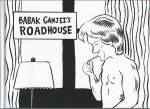
Babak Ganjei’s Road House


By Babak Ganjei (Records Records Records Books)
ISBN: 978-0-9566330-7-1

Comics are a uniquely universal and predominantly graphic engine of narrative which can be as clear, concise and precise as a diagram or as shaded and meaningfully obscurantist as “Beat” poetry or The Clangers.

Moreover, when sequential panels are loaded with layers of pristine clarity which are simultaneously hooded or non-specific imagery, the effects can be spectacularly engaging.

According to author/illustrator Babak Ganjei this particular pictorial feast results from a momentary connection of artistic drudgery to a state of pure channelled creativity.

“I was hung-over; sitting in my studio, everyone else was working around me. I had Road House streaming from Netflix, I started drawing it; more than anything just to look busy. However as I got through the first few scenes I thought how it would be nice to truly immerse myself in a project that would take some time and with that time become it’s own thing”…

The enterprise grew and, despite overrunning the artist’s self-imposed time and space restrictions, gelled into a compulsive exhibition of artistic motor skills and disassociative construction of story elements. The brain wants logic and sees patterns: the hands and eyes just keep moving. Just ask any freelancer who has spent three days awake finishing a rush deadline job…

In case you haven’t caught it, Road House was released in 1989, a low-budget action flick starring Patrick Swayze, Sam Elliott and Ben Gazarra. It was directed by Rowdy Herrington, and John Wilson (founder of the Golden Raspberry Awards) listed it as “one of the 100 Most Enjoyably Bad Movies Ever Made”.

The transformed, reconstituted result is a beguiling 192 page landscape hardback continuity (185 of which are the resultant images) delivered in a stark, enthralling monochrome which offers a truly raw storytelling experience, with one panel per page each captioned with brief, pithy “found” quotes from a wide range of other sources such as Foucoult, Foster Wallace and Baudrillard, Ali to Richard Pryor to Steve Martin…

A moodily effective, oddly gripping little (148 x 210mm) experimental treat, Babak Ganjei’s Road House is practically Dadaist in delivery and ferociously enticing, something no lover of comics or practitioner of the visual arts should miss… and perhaps later attempt for themselves.

Perhaps this is the beginning of a new trend or Olympic sport…

Tantalising thought, no…?

© Records Records Records 2013.

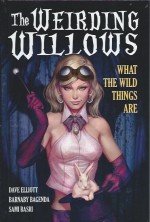
The Weirding Willows volume 1: What the Wild Things Are


By Dave Elliott, Barnaby Bagenda, Sami Basri & various (Atomeka/Titan Comics)
ISBN: 987-1-78276-035-1

Phillip Jose Farmer’s Tarzan Alive (1972) and Doc Savage: His Apocalyptic Life (1973) are probably the earliest modern examples of our current fascination with concatenating assorted literary icons and fictive childhood companions into heroic associations and fantasy brotherhoods, but as fantasy consumers we’ve always wanted our idols to clash or team up.

So many comics from Scarlet in Gaslight (Sherlock Holmes and Dracula) to Planetary (pulp vigilantes and other companies’ superheroes cheekily retooled) to the magnificent League of Extraordinary Gentlemen (everybody you’ve ever heard of and some you haven’t) and an uncountable number of TV shows, books and movies have mined this boundless seam of entertainment gold.

The Weirding Willows by Dave Elliott, Barnaby Bagenda, Sami Basri and an army of colourists continues that topical trend; recombining the innocent headliners of many a beloved British children’s book into a slick, harsh, creepily adult reconfiguration…

One cautionary note: as with every entry into this amalgamating sub-genre, if you are a literary purist you are going to hate this – or indeed any – contemporarily-toned, edgily in-your-face interpretation. Nothing I can say will change your mind, so don’t bother.

There are plenty of other graphic novels and albums around that will better suit your temperament. Please try one of those…

The series launched in the latest iteration of anthology title A1 and this collection of first story-arc What the Wild Things Are also includes a whole new chapter exclusive to this lush and beguiling hardback compilation.

Rural, bucolic Willow Weir is a quintessentially English hamlet with a big secret. The riverside association of houses and farms intersects a number of portals to numerous other Realms and Dimensions, and things strange and uncanny are often seen – if not discussed. The human folk who abide there are not so simple and frequently as odd as the creatures that roam the wild woods and harmless-seeming riverbanks…

Following author Elliott’s Introduction a handy map offers the geographical lowdown on the green and pleasantly deceptive land before the tale unfolds with ‘A Wicked Witch This Way Comes’ wherein we meet worldly wise teen totty Alice Moreau, a girl greatly at odds with her father’s scientific preoccupations.

Dad and daughter reside in the house abandoned by Professor Donald H. Lambert when he rode his time machine into the future, and the abrasive single parent soon filled the vacant dwelling with an assortment of animals for his experiments.

This particular morning he is dickering with Dr. Henry Jekyll who has provided formal introduction for a green-bedecked dowager temptress named Margareete Marche; a traveller from a distant land who wishes to commission the radical surgeon to construct for her an army of winged monkeys…

Insolent Alice isn’t impressed: she’s far more concerned that sheep are going missing from nasty Farmer McGregor‘s spread. Naturally darling Daddy is the prime suspect. There’s no love lost between father and daughter, ever since she followed a rabbit through a portal to Wonderland and told her father all about it. He didn’t believe a word and has mocked her ever since…

The unpleasant confrontation with McGregor is cut short when a trio of talking rabbits summon her away to deal with another crisis. She doesn’t get far, though, as Montgomery Doolittle arrives with a barge full of fresh beasts for the operating table…

The cargo has also drawn a new player to the dell of domesticity. This black-maned wild child is desperate to rescue his beloved companions Baloo and Bagheera from the clutches of the obnoxious white man who can talk to animals…

‘If You Go Down to the Woods Today…’ sees Alice finally follow her bunny buddies as enraged Mowgli tries – and fails – to free his wild brothers: becoming instead more prospective raw material for Doctor Moreau. As Alice slips away no one pays any attention to a bizarrely grinning cat named Cheshire, and her own attentions are soon fully occupied by the rampages of an extremely angry example of the surgical efforts of an earlier modern Prometheus…

‘The Prisoner of Doctor Moreau’ finds Mowgli imprisoned with an exotic young woman named Kamaria, as across the river Alice brokers a peace between the rabbit race and Frankenstein’s Monster. As usual he has been gravely misunderstood: his frantic acts were merely the result of extreme concern for a lost companion.

Rosalind had gone missing and he has tracked her through a portal from Pellucidar – the world at the Earth’s Core – and is quite concerned. So is everybody else when they learn that Rosalind is a dinosaur…

‘What Lies Beneath Badger’s House’ introduces badger Victor Stoker, toad Dudley Cook, mole Morris Moore & ratty Terry James as well as a sinister hidden city deep down under Badger’s house, whilst in Moreau’s cellar laboratory the Cheshire Cat gives Mowgli some dangerous advice.

Meanwhile, the multi-species search party have found Rosalind on McGregor’s Farm, ferociously guarding a clutch of recently laid eggs…

That discovery only leads to tragedy as the obnoxious smallholder shoots Rosalind and claims the eggs for himself in ‘Here There Be Dragons!’ Thankfully Alice quickly deals with the farmer before monstrous Damon can get his second-hand hands on him…

Things take an even stranger turn when Victor, Morris, Dudley and Terry turn up. The Badger seems to know an awful lot about the experiments of the long-dead Dr. Frankenstein…

Night comes on and, in Moreau’s cellar as the full moon shines down on Kamaria, she begins to change and howl…

At a loss, Alice brings the whole menagerie back to her place in ‘What the Wild Things Are!’, much to the angry astonishment of her father, and at least has the satisfaction of proving that her “childish ramblings” were all true, all along…

However, when the rampant Kamaria werewolf tumultuously breaks out, strange alliances are quickly formed before the whole lethally helter-skelter hurly-burly is unconventionally settled in the low-key conclusion ‘Worlds Within Worlds’.

In the aftermath Alice at last finds time to renew an old acquaintanceship with a four-armed green man from another world…

Each chapter is concluded with an excerpt from The Weirding Willows Field Guide, detailing pertinent facts and shameful secrets about Alice, Philippe Moreau, Monty Doolittle, Damon Frankenstein, Victor Stoker, Dudley Cook, Morris Moore & Terry James, Margareete Marche, Dr. Henry Jekyll & Edward Hyde, Mowgli, The Worriers Three (talking rabbits Benjamin Buckle, Peter Pipp & Hoetoe Darwin), Professor Donald H. Lambert and enigmatic, formidable bunny-with-a-secret Norman Pipp, and the tome terminates with the author’s afterword ‘Inspirations’ and some informative creator ‘Biographies’.

Magnificently, mesmerisingly illustrated, this is a visual feast no fan of fantastic fantasy mash-ups will want to miss…

The Weirding Willows © 2014 Dave Elliott. ATOMEKA © 2014 Dave Elliott & Garry Leach. Atomeka Press, all contents copyright their respective creators.

The Extinction Parade


By Max Brooks & Raulo Caceres (Avatar Press/Titan Comics)
ISBN: 987-1-59291-234-6

I’ve never been the keenest consumer of zombie stories but occasionally something really intriguing and different crops up and I’m compelled to re-think my position. Somehow, that usually only occurs when Max Brooks is involved.

Brooks is a successful actor and screenwriter (most notably part of the team scripting Saturday Night Live) and cartoon fans might recognize his name from the voice credits of Buzz Lightyear of Star Command, Batman Beyond and Justice League. You probably laughed at a lot of his dad’s movies: High Anxiety, Young Frankenstein and the first version of the Producers amongst others.

The guy also loves to play around with the conventions of horror. His previous books include The Zombie Survival Guide, World War Z and the graphic novel The Zombie Survival Guide: Recorded Attacks.

Now he’s come up with what seems a brilliant “no-brainer” concept that somebody should have had decades ago (and probably did in some old EC horror or DC story, as some veteran fright fan is sure to comment somewhere)…

In his latest charnel confection – a comicbook series from cutting (bleeding?) edge adult publisher Avatar Press – he’s also finally and thankfully returned vampires to their proper place as cold, relentless, loveless apex predators; discarding dubious modern notions of Nosferatu as chaste touchy-feely dreamboats for adolescents or pulchritudinous, perpetually priapic passion pets for hot and horny humans.

Brook’s vampires just kill and kill and kill – as much for fun as for sustenance…

The initial five issue arc of The Extinction Parade introduces us to two such bloodsuckers: haughty, disdainful, distant and aristocratically discrete female night-hunters who have dined on the best, brightest and most dangerous examples of humanity – “solbreeders” – for untold ages.

As such they have often encountered outbreaks of the slow, shambling, stupidly voracious plague-zombies which have periodically broken out amongst the human populations. They always watched with haughty amusement as the brain-dead “Subdead” mindlessly attacked until they’d exhausted their frightened food supply or some king or band of warriors wiped them out. Then the vampires usually hunted the victorious human heroes, assured at least of some thrilling sport…

The saga is set in the exotic technopolises of modern Malay peninsula where the queens of the damned look on and laugh from on high at human inefficiency as Singapore, Sumatra and Sarawak, Thailand, Cambodia and Burma and all points East are ravaged and reduced by a gory tide of unthinking mobile contagion carriers, killing and consuming everyone in their shuddering path…

Blithe and oblivious, the immortal killers carry on their sybaritic bloodletting, glorying in the carnage and delighted that to the ever-expanding wave of subdead biting beasts they are utterly invisible and undetectable. Even these monsters they can destroy with ease and no hint of fear or retaliation…

As city after city, nation after nation, continent after continent succumbs to the plague, all the vampire girls can think of is the opportunity to abandon caution and restraint, indulging in wanton public slaughter: “nights of glory” spent preying on the rapidly declining humans before the stupid but relentless subdead can…

And then with fire and death everywhere an impossible new notion finally sinks into minds stupefied by blood, euphoria and centuries of untouchable, blasé privilege…

With all parts of Earth accessible as never before, with the subdead multiplying with every bite and no sense of preservation or the future, what will vampires eat when there are no humans left?

To be fair, their daylight caretaker Willem tried to tell them repeatedly that this time something was different, but when have vampires ever listened to servants or humans?  The first inkling the spoiled bloodsuckers have of a real problem is the night their major domo is not there when they awake from their red-spattered repose…

The pitifully few undead elite gather to watch an inexorable tide wipe out what might be the last vestiges of humanity in the city, and rage and frustration and perhaps fear grip the shell-shocked dowagers of doom. Without thinking they explode into action, tearing apart the unthinking oblivious subdead shamblers.

Tirelessly, methodically they dismember and destroy the Zombie pack. It is a turning point in the history of the undead. The vampires will war with the unthinking eaters for the right to consume mortals.

However, the battle has highlighted a disturbing fact: vampires are not completely immune to the taint that drives zombies to mindless endless hunger…

To Be Continued…

Narrated in an effective first person narrative with bleak deadpan delivery, this is also a visceral, visual gorefest from illustrator Raulo Caceres that no lover of shock-horror could resist. This luxurious full colour paperback compilation also includes a seventeen page covers-&-variants gallery plus a scarlet-spattered eleven page preview of forthcoming volume The Extinction Parade: War.

The Extinction Parade ™ & © 2014 Max Brooks.

Snowpiecer: The Escape


By Jacques Lob & Jean-Marc Rochette translated by Virginie Selavy (Titan Comics)
ISBN: 978-1-78276-143-3

All science fiction is social commentary and, no matter when, where or how set, holds up a mirror to the concerns of the time of its creation. Many stories – in whatever medium – can go on to reshape the culture that spawned them.

There’s a reason why the Soviets proscribed many types of popular writing but actively encouraged (certain flavours of) science fiction. 20,000 Leagues Under the Sea, Metropolis, 1984, Solaris, Star Trek, Alien and so many others escaped the ghetto of mere genre to change the cognitive landscape of the world, and hundreds more such groundbreaking and worthy efforts would do the same if we could get enough people to read or see them.

And most importantly, when done well and with honesty, such stories are also incredibly entertaining.

All over the world comics have always looked to the stars and voyaged to the future. Europe especially has long been producing spectacularly gripping and enthralling “Worlds of If…” and Franco-Belgian graphic storytelling in particular abounds with undiscovered treasures.

For every Blake & Mortimer or Barbarella, Valérian & Laureline, Airtight Garage, Chimpanzee Complex or Gods in Chaos there is an impossible hidden wealth of others, all perched tantalisingly out of reach for everybody unable or unwilling to read nothing but English.

To coincide with the release of spectacular summer blockbuster movie Snowpiercer, Titan Comics have released an economical paperback edition of another long-overlooked masterpiece. The book – a stunning example of bleak Cold War paranoid fantasy – is also electronically accessible to iPhone, iPad, Web, Android and Kindle consumers.

The original mesmerising monochrome adventure, written by Jacques Lob (Ténébrax, Submerman, Superdupont) and rendered by painter/illustrator Jean-Marc Rochette (Le Dépoteur de Chrysanthèmes, Les Aventures Psychotiques de Napoléon et Bonaparte), was first serialised in 1982 in À Suivre and collected two years later as Le Transperceneige, and like most landmark yarns has a driving central conceit which is simple, brilliant and awesome.

In the future life is harsh, oppressive and ferociously claustrophobic. When eternal winter descended upon the Earth, fugitive remnants of humanity boarded a vast vacation super-train and began an eternal circumambulation of the iceball planet on railway tracks originally designed to offer the idle rich the ultimate pleasure cruise.

Thanks to lax security, as the locomotive started its unceasing circuit of the globe, gangs of destitutes boarded the vehicle, but were forced by the military contingent into the last of the 1001 cars pulled by the modern miracle of engineering.

Now decades later, the self-contained and self-sustaining Engine hurtles through unending polar gloom in a perpetual loop, carrying within a raw, fragmented and declining microcosm of the society that was lost to the new ice age…

All contact with the Tail-enders of the “Third Class” has been suspended ever since they tried to break through to the better conditions of the middle and front carriages. Their “Wild Rush” was repelled by armed guards and the survivors – who recall the terrifying event as “the Massacre” – were kicked back to their rolling slums and sealed in to die…

The story proper begins as Lieutenant Zayim is called to an incident in a toilet. Somehow an individual has survived the -30 degree chill and monstrous acceleration, climbing along the outside of the train to smash his way into a centre carriage.

Normally the importunate refugee would be killed and ejected but the stunned officer receives instruction from his Colonel that the indigent – named Proloff – is to be interviewed by the leaders up in First Class.

Before that, however, the invader must be quarantined as the carriage doctor has no idea what contagions must proliferate in the squalor of the rear. But whilst Proloff is isolated, idealistic young activist Adeline Belleau forces her way into the carriage.

She is with a humanitarian Aid Group agitating to integrate the abandoned Tail-enders with the rest of the train, but is unceremoniously confined with the intruder and suffers the same appalling indignities as her unfortunate client…

After a “night” in custody Proloff and Adeline are escorted by Sergeant Briscard and his squad through the strange and terrifying semi-autonomous carriages: each a disparate region of the ever-rolling city, contributing something to the survival of all.

Travelling through each car during their slow walk, Proloff observes how humanity has uniquely adapted on the journey to nowhere, but that each tiny kingdom is filled with people scared, damaged and increasingly dangerous.

In one car they are even attacked by bandits…

The invader also begins to glean certain facts: a religion has grown that worships the unlimited life-bestowing power of Saint Loco, rumours that the train is inexorably slowing down, reports that a plague has begun in the carriage he broke into. Even Adeline has picked up a cold from somewhere…

As they slowly approach the front, Proloff and Adeline grow closer, uniting against the antipathy of the incrementally better off passengers who all want the Powers-That-Be to jettison the dragging, superfluous end carriages packed with filthy Tail-enders…

When they at last reach the luxurious “Golden Cars” the outcasts are interviewed by military Top Brass and the President himself.

He confirms that the train is indeed losing speed and that the furthest carriages will be ditched, but asks Proloff to act as an emissary, facilitating the dispersal of the human dregs throughout the rest of the train.

Billeted with Al, the timidly innocuous Train Archivist, Historian and Librarian, Proloff quickly confirms his suspicion that he is being played. Whilst deftly avoiding the grilling regarding conditions at the train’s tail, he swaps some theories about how the ice age really began and just how coincidentally lucky it was that this prototype vacation super-train was set up, ready and waiting to save the rich and powerful… and only accidentally and unwillingly a selection of the rest of humanity…

Stoically taking in the decadent debauchery of the First Class cars, Proloff is ready to die before going back, and when word of plague and revolution provokes an attack by the paranoid autocrats, he and Adeline decide to move even further forward, to see the mighty Engine before they die.

What they find there changes everything for everyone, forever…

This incisive exploration of a delicately balanced ostensibly stable society in crisis is a sparkling allegory and punishing metaphor, playing Hell and poverty at the bottom against wealth in Heaven at the top, all seen through the eyes of a rebel who rejects both options in favour of a personal destiny, and is long overdue for the kind of recognition bestowed on that hallowed list of SF greats cited above.

Dark, brooding, manic and compulsive, Snowpiercer is a must-see masterpiece no fantasy fan can afford to miss.

Transperceneige/Snowpiercer and all contents are ™ and © 2013 Casterman.

Hellboy in Hell: The Descent


By Mike Mignola with Dave Stewart (Dark Horse Books)
ISBN: 978-1-61655-444-6

Hellboy is a creature of vast depth and innate mystery; an apparently demonic baby summoned to Earth by Nazi occultists at the end of Word War II but subsequently reared by parapsychologist Professor Trevor “Broom” Bruttenholm to destroy unnatural threats and supernatural monsters as the lead agent for the Bureau for Paranormal Research and Defense.

After decades of unfailing, faithful service he became mortally tired and resigned. Itinerantly roaming the world, he still managed to encounter weird happenstances but could never escape trouble or his sense of duty.

After discovering he was the last in a line descended from Arthur Pendragon and Morgana le Fay – and therefore the Rightful King of England – he moved to the old country and died fighting a dragon…

After launching in 1993 Hellboy was swiftly attributed the status of ‘legend’ in the comics world, starting as the particular vision of a single creator and, by judicious selection of assistants and deputies, cementing a solid hold on the character in the hearts of the public.

And that’s just how it worked for Superman, Batman and Spider-Man…

Since the initial run of tales many creators have contributed to the arcane canon but at the end of 2012 Mignola assumed complete creative control once more for an ongoing – if irregularly – released series entitled Hellboy in Hell.

This initial compilation of those superb comics yarns gathers the first four-issue story arc and the beguiling notional one-shot The Three Gold Whips, which followed it.

The final fall from grace begins with ‘The Baba Yaga’ as the regal hero plunges into The Pit, willingly followed by an enigmatic robed figure. As the shade tells the ever-watching witch queen Baba Yaga, he believes he still has a chance to rescue and redeem the hell-bound hero…

Falling through a region of unspeakable horror and colossal monsters, Hellboy is saved from imminent consumption by the cloaked shade who reveals that he has stores of great mystic power and an intimate knowledge of the Nether Realms. He is even effective against furious Eligos, an old enemy of the B.R.P.D. agent who has been waiting a long time to take revenge for his earthly defeat at Hellboy’s mismatched hands…

The underworld is filled with appalling perils, dark wonders and unfolding vignettes or playlets where sinners endlessly relive the turning points of their lives, but it also holds the answers to the many mysteries of the dead hero’s life. Here a ghost warns him that he will be “haunted by three spirits”…

The journey continues in ‘Pandemonium’ as Hellboy and the shade explore the now abandoned City of Demons, utterly deserted except for the dolorous figure of Satan – Hellboy’s father. They are joined by a devilish guide who provides many answers to the questions that have plagued the hero all his life… when he was alive…

The tempter – his infernal uncle – also offers Hellboy another chance at grasping ultimate power before showing him the tortures being inflicted upon his human witch mother and revealing his own connection and identity in ‘Family Ties’…

The truth about Hellboy’s birth, the mighty magic stone right hand he wears and the fate that befell Hell after he was born is told and the lost boy meets his older brothers Gamon and Lusk, who act as brothers always do when told they aren’t the favourite one…

The family squabble escalates and is only ended by an even more terrifying horror…

In the aftermath Hellboy converses with a minor imp who tells him Hell is almost empty. All the grand Dukes and Generals and Princes are dead or gone, leaving a mere blue collar kind of devil in situ. It also reveals that someone has murdered Satan in Pandemonium, sparking a wave of unwelcome memories in Hellboy…

The first travail concludes with ‘Death Riding an Elephant’ as, in the cold and silent abyss, the redemptive revenant returns and at last introduces himself as former Victorian ghostbreaker and psychic detective Sir Edward Grey (the star of another series of Mignola macabre adventures), disclosing a few salient, if unpalatable, facts about Satan’s murder and the truth of his own current unholy situation…

Mignola is a sublime and canny raconteur and seamlessly combines tales where his star is the full focus of the action and alternately little more than a guide or witness to unfolding events. The latter is very much the case with ‘The Three Gold Whips’ which sees Hellboy wandering the deserted byways of the underworld and encountering an unquiet spirit who relates his own tale of a deal with a devil.

Once upon a time Captain Dulot and two soldierly comrades deserted Napoleon’s army and made a pact with a fiend: Seven years of living life like kings plus a whip each that, when cracked, would create a never-ending supply of gold coins. He even gave them an “out”: a means by which they could escape their fate once the seven years were up.

However, when a devil is generous, that’s the time to truly beware…

And so now, ever-helpful Hellboy offers to assist the damned fool…

This superbly absorbing, chilling chronicle also comes with a treasure trove of extras beginning with a graphic faux biography of ‘Walter Edmond Heap’ (a significant figure in the origins of Death Riding an Elphant), an extensive – 19 page – Hellboy Sketchbook section with annotations and commentary by Mignola and a glorious covers-&-variants gallery section.

Hellboy is classic of modern comics creation who has never provided anything but first rate entertainment value for fans. If you’re not one of them yet, this book will certainly change your stubborn mind…
™ & © 2012, 2013, 2014 Mike Mignola.

Violent Cases Hardcover


By Neil Gaiman & Dave McKean (Titan Books)
ISBN: 978-1-78329-360-5

Do you remember…?

Since its first release in 1987 Violent Cases has gone back into print many times, but regrettably remains a comics connoisseur’s secret. Now Titan Books have released a big, bold, lush and lavish commemorative oversized full-colour hardback (302 x 235mm), complete with extras culled from previous editions and new art material, in another sincere and sterling effort to give this tale the audience and acclaim it deserves.

There’s actually very little I feel happy saying about this enigmatic and compelling little teaser other than the basic facts. Too much detail or analysis will spoil the magic if you’ve never seen it – and if you have it’s probably not what you recall it being…

Initially published by the sorely missed publisher Escape – in association with Titan Books – in 1987, it marks the first collaboration of two then largely unknown creators who shared a more literary aspiration for comics than traditional newcomers to the craft, married to a novel approach and impassioned – if raw and hungry – storytelling talent.

It’s short, sweet, disturbing, utterly absorbing and probably impossible to translate into any other medium… and that is, of course, a Very Good Thing.

There’s this guy see, and he’s idly reminiscing about his childhood in the 1960s…

Years ago in Portsmouth a little lad hurt his arm rather badly whilst exchanging words about bedtime with his father. To fix the problem daddy took the 4-year old to see an osteopath. The elderly gentleman was an interesting fellow with an odd accent who told great yarns and mentioned that he had once treated somebody famous…

As the narrator tries to sort out the half-forgotten details – fragments of life and films and games congealed now with clearly conflated circumstances – the facts, fictions and shadily obscured and occulted misunderstandings concerning his perhaps difficult childhood, growing maturity and awareness and those hours with Al Capone’s bone-bender begin to emerge and coalesce… or do they?

Flickering back and forth, the narrative proffers a miasma of mixed memories and misapprehensions involving a memorably troubled old man, Mysterious Men in Dark Suits, a party, a scary magician, unexplained appearances and subsequent disappearances, unforgettable physical discomfort as a young arm was coaxed back into correctitude, tales of tailors and gangsters and Tommy Guns… which were always carried in Violent Cases…

Most of all it deals with unresolvable mysteries – because even the things we recall, we don’t always remember…

This entire book is all about stories, memories, perception, mis-perception and self-deception, painted by Dave McKean in a muted but cleverly targeted tonal colour-palette of blues, greys and browns, with splashes of electric vibrancy where appropriate (all reduced to straight monochrome for the very first edition, restored for those subsequent releases, and remastered here)…

This volume also includes Introductions by Paul Gravett, Alan Moore and the story’s author Neil Gaiman (from the 1997, 1987 and 1991 editions) as well as his Afterword from 2003, plus assorted covers and other art works by McKean and an illustrated Biographies section which is a marvel and joy to behold…

Despite being one of the key books in the 1980s’ war to prove that comics were an art form and valid mode of mature creative expression, Violent Cases remains a largely unknown artefact, seldom cropping up in the same discussions as contemporaries like A Contract With God, Maus, Watchmen, Love and Rockets, The Dark Knight Returns and V for Vendetta, let alone later acclaimed breakthroughs such as Ghost World, Black Hole, From Hell, Persepolis or even Sandman.

It is also an unforgettable pictorial memento mori – or is that topica tragoedia? – which beguiles and enchants, tests and subtly distresses in ways no lover of the comics medium could possibly resist.

If you haven’t read it, you must. If you have, read it again – it’s not at all what you remember…

™ & © 1987, 2003, 2013 Neil Gaiman & Dave McKean. All rights reserved. All other material © its respective author or creator.

All Star


By Jesse Lonergan (NBM/ComicsLit)
ISBN: 978-1-56163-835-2

Jesse Lonergan (Flower & Fade, Joe & Azat) is a sublime master of nuanced and mesmerising human dramas wedded to astonishingly hyperkinetic cartooning, and All Star proves he’s getting better all the time.

This latest graphic novel puts a unique spin on that most powerful cocktail of emotions – nostalgia and adolescent cockiness – all embedded in a timeless tale revealing how arrogance and injustice can shape a lifetime…

Previously released as 8 mini-comics and digitally on ComiXology, this fabulous monochrome fable draws more on the author’s High School observations than any personal sporting experiences whilst dissecting and celebrating the pressures and joys of small town life.

It all takes place in the summer of 1998 where school baseball star Carl Carter is poised on the cusp of a glittering career. His near record-breaking performance for the Elizabeth Monarchs has set the sleepy, bucolic Vermont town ablaze as his stellar efforts bring the team to the brink of winning the State Championship.

His senior year successes promise a full scholarship to the University of Maine, and a tantalisingly lucrative pro ball career. It’s everything Carl’s dad “Gordon” has worked so long and hard for…

Douglas Carter tries hard – both at home and on the ball team – but is not like his brother. He’s also less than thrilled at Carl’s smug superiority and aggravating, blasé air of contemptuousinsouciance. The golden boy is the town hero and Doug just doesn’t exist…

Carl is coasting. Even though he only needs academic minimums and he’s already getting preferential treatment from the otherwise bullying Coach, Carter keeps unwise hours and company. His best friend Esden Hubbard is an unacceptable influence: a bad seed from a family of trashy ne’er-do-wells – although Carl is increasingly dawn to Esden’s moody dark-horse sister Chelsea…

As the days progress – a blend of lessons, loafing, practising and unsupervised partying – Carl is beginning to feel unaccountably ill at ease, and his life changes forever in an instant when he and Esden, on a prankish teenage whim, break into the local store.

With seemingly every adult in town disappointed or screaming at him, Carl gets a shocking glimpse of the real nature of the world when Esden is summarily expelled from Elizabeth High but Principal Wick only gives his sporting wonder boy a painless slap on the wrist…

Confronted with a nauseating sense of his true worth, Carl’s naive sense of injustice goes into overdrive and he makes a rash decision that shakes up everything in the sleepy little town…

And there’s one more surprise the fallen idol has up his uniform sleeve…

Lonergan’s sparse and Spartan visual style displays an astounding ability to depict emotional intensity, his lean composition enhances the blazing dynamism of the sporting sequences and his portrayals of an intoxicating range of small town characters and past-it “glory days” survivors provides each human vignette with a beguiling life and tragically undisclosed back-story. This is comics storytelling of incomparable quality and class.

Poignant, bittersweet, with an ending but no conclusion, All Star is another superbly understated dissertation on the responsibilities of friendship, the fools gold of glittering prizes and the toxicity of unattainable dreams rendered in a magically simplified and mesmerising manner: a delight for any fan searching for more than broad jokes and bold action.

This is true Hall of Fame stuff you must not miss…
© 2014 Jesse Lonergan.