City of Crocodiles


By Knut Larsson (Borderline Press)
ISBN: 978-0-99269-725-9

Born in 1972, Swedish cartoonist, artist, filmmaker and teacher – at the prestigious Comics Art School of Malmö – Knut Larsson is blessed with a unique vision and talent to spare (just check out his graphic albums Canimus, Lokmannen (Locomotive Man), Biografmaskinisten (The Projectionist), Kolonialsjukhuset – En kolonialläkares anteckningar (Colonial Hospital – A Colonial Doctor’s Notebook) or Triton.

If you’re a keen devotee of Euro-comics you’ll have seen his stories in C’est Bon Anthology, Electrocomics, Galago, Glömp, Rayon Frais, Strapazin, Stripburger, Turkey Comix and others, and may well have visited his international exhibitions as far afield as Angoulême, Tokyo, Erlangen or St. Petersburg. Typically, he is not a household name in Britain or America.

Yet…

Back in 2008 Larsson crafted Krokodilstaden: an eerie, post-apocalyptic, horror-tinged love story devoid of all dialogue or sound effects: a neosymbolist paean to the end times combining brutish, callous survivalism, ghostly mysticism, unchanging human passions, stubborn self-inflicted loneliness and the tenacious capacity of life to adapt to changing situations. Now Borderline Press have released it in an English Edition as their latest deliciously eerie offering: City of Crocodiles…

Rendered in muted greys and brown monotones, one panel per page, the tale focuses on a drowned Earth where the waters have risen, relegating humanity to the top floors of buildings whilst toothy amphibians have proliferated all around and below them. Adamant Mankind is still hanging on, turning crocodiles into the primary natural resource: food, clothing, tooled utensils and even objects of cultish worship.

The saurians are everywhere and everybody and everything – humans, birds, surviving mammalian pets – are missing limbs or appendages…

In this world one particular croc-hunter ekes out his solitary existence, trading reptiles for booze and gasoline, haunted by his memories until the day he captures a strangely enticing woman in his nets. She is young, beautiful, exotic… and has a vestigial reptilian tail.

Avoiding the spooky, crazy crocodile cultists he takes her back to his place and endeavours to dress her in the garb and form of his dead lover before she seduces him…

Sadly that’s when his dearly departed darling returns, bristling with malice and ready for some spirited revenge…

Wry, moving, nightmarish yet ethereally lovely, City of Crocodiles is a masterpiece of visual storytelling that will astound and delight all lovers of the weird and macabre.
© 2008, 2014 Knut Larsson.

Unlovable volume 3


By Esther Pearl Watson (Fantagraphics Books)
ISBN: 978-1-60699-737-6

I first encountered Unlovable when the second volume turned up unannounced in my “please review” mail-pile. I’d never heard of the strip nor the magazine Bust where it had run for years, but as I’m always in the market for a new graphic experience, I dutifully sat down and lost myself in the world of a Texas Teen from a long, long time ago…

Based on or perhaps rather inspired by an actual schoolgirl diary Ester Pearl Watson found in a gas-station restroom in 1995, the strip – now collected in three diminutive yet huge hardback volumes – as translated and reconfigured by the cartoonist, reveals the innermost thoughts, dreams, experiences and doodles of a dumpy, utterly ordinary American girl of the tastelessly intoxicating Eighties – forensically displayed for our examination in a catchy, breathless, effusive warts ‘n’ all cartoon-grotesque style.

In the course of these garish and oddly compulsive tomes we follow ferociously aspirational Tammy Pierce as she goes through the unrelenting daily rollercoaster ride dictated by hormones, strict, religious mom, social pressure and the twin drives to both stand out and fit in.

From my lofty male vantage point here in the future it is achingly sad and hysterically funny.

Now it’s the Summer of 1989, the party decade is almost over and this third collection covers the heady, aimless days of the vacation as ever-more mature and sophisticated (I’m pretty sure they’re the words I’m looking for) Miss Pierce of Texas increasingly spars with her obnoxious tool of a brother Willis and his annoying best bud Tim Starry… Other world-ending distractions include an overwhelming fascination with boys of the wrong sort, cars, pimples, clothing brands, bands from Pop to Punk, Reggae to Heavy Rock, adolescent poetry, violent movies, mascara, perpetual humiliation from friends and enemies alike, the idiocy of parents and the looming prospect of finally doing “it”…

Amongst the most memorable sequences in store here are the extended mixed signal interactions with psycho best pal Kim‘s loser “not-boyfriend” Erick Burns, her own mother’s constant carping on Tammy getting a part-time job, monumental make-up mistakes, a succession of inane get-rich-quick schemes, learning to breakdance, the ongoing war with mean girl Courtney Brown, petty vandalism, cheerleader tryouts, being condemned to Summer School whilst her friends get to just hang out and why Tammy had to stop practising her wrestling moves with that Tim Starry boy…

These visual epigrams reference universal aspects of puberty and adolescence: parents are unreasonable and embarrassing, siblings are scum and embarrassing and your body is humiliatingly embarrassing; always finding new and horrifying ways to betray you practically every day…

Your friends can’t be trusted, you’re attracted to all the wrong people and you just know that no one will ever want you…

Drawn in a two-colour – black and purple are this year’s tones – faux-grotesque manner (you can call it intentionally primitive and ugly if you want) the page by page snapshots of a social hurricane building to disaster are absolutely captivating.

Although this is a retro-comedy experience, behind her fatuous obsession with fashion, boys, money, fame, music, designer labels, peer acceptance and traitorous bodily functions, Tammy is a lonely bewildered child who it’s impossible not to feel sorry for.

Actually it’s equally hard to like her (hell, its difficult to curb the urge to slap her at times) but that is, after all, the point…

If you live long enough you’ll experience the pop culture keystones of every definitive era of your life at least twice more. Here the base, tasteless and utterly superficial aspects of 1980s America are back to harrow a new generation which is too young to remember them, but you and I can get all nostalgic for the good bits and blithely ignore all the bad stuff.

This big little hardback (416 pages each and 146 x 146mm) affords a delightful and genuinely moving exploration of something eternal, given extra punch with the trappings of that era of tasteless self-absorption, and like those other meta-real diarists and social commentators Nigel Molesworth, Bridget Jones and Adrian Mole, the ruminations and recordings of Miss Tammy Pierce have something ineffable yet concrete to contribute to the Wisdom of the Ages.

Modern and Post-Ironic, Unlovable is unmissable; offering a perfect opportunity to discover the how and why of girls and possibly learn something to change your life.

Now please excuse me, I need to replace the 96 batteries in my boom box…
© 2014 Esther Pearl Watson. All rights reserved.

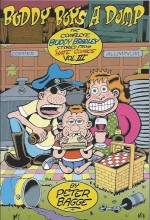
Buddy Buys a Dump: the Complete Buddy Bradley Stories from “Hate” volume III


By Peter Bagge with Joanne Bagge (Fantagraphics Books)
ISBN: 978-1-60699-745-1

Peter Bagge is best regarded these days as a fiery, cauldron-mouthed, superbly acerbic and well-established award-winning cartoonist, animator and musician, responsible for incredibly addictive, sharply satirical strips examining contemporary American life, through a small but memorable cast of sharply defined characters compellingly reflecting his views.

Born in Peekskill, Westchester County, New York in December 1957, he was one of four kids in a ferociously Catholic military family. Like esteemed colleague Robert Crumb a generation earlier, Bagge escaped that emotionally toxic, fight-filled environment as soon as possible, moving to New York City in the mid-1970s to study at the celebrated School of Visual Arts.

He soon dropped out and began working in the vibrant alternative publishing field, producing strips and panels for Punk Magazine, Screw, High Times, East Village Eye, World War Three and others.

Meeting like-minded artists he began self- and co-publishing comics, and when Crumb saw copies of Comical Funnies (produced with new chum John Holstrom in 1981 and the birthplace of the unsavoury star of this collection), Bagge was offered space in and eventually the Editorship of the seminal commix magazine Weirdo in 1983.

He augmented his 3-year tenure there with various paying gigs at Screw, Swank, Video X, Video Games Magazine, The Rocket, Bad News and elsewhere.

In 1984 Bagge relocated to Seattle, Washington State and began his association with alternative/Independent publisher Fantagraphics. The following year his spectacularly idiosyncratic cartoon magazine Neat Stuff launched as a thrice-yearly vehicle of outrageous personal expression and societal observation.

His stark, manic, topically surreal strips, starring old creations like Studs Kirby, Junior, Girly Girl and quintessential ineffectual rebel Buddy Bradley swiftly turned the cartoonist into a darling of the emerging West Coast Grunge scene, and before too long Neat Stuff and its successor Hate made Bagge a household name… at least in more progressive households…

As the 90’s became the next century, Bagge’s quasi-autobiographical Buddy starred in a succession of titles and strips (collected in Buddy Does Seattle and Buddy Does New Jersey); the cartoon character’s excitable existence mirroring typical life in that chaotic lost decade. In 2001 the author began releasing Hate Annuals wherein, amongst other strident graphic treats, middle-aging Buddy was seen having fully transitioned from angry teen slacker to working dad with a family to support…

This deliciously hilarious and painfully uncompromising full-colour collection gathers those traumatic middle years of Harold “Buddy” William Bradley Jr.– originally seen in Hate Annual #1-9, 2001-2011 – and opens with ‘Are You Nuts?’ as the irascible everyman is almost beguiled by crazy friend and occasional co-worker Jay Spano into buying a dilapidated aquabus and going into the guided-tour business in scenic New Jersey.

Naturally, his certifiably crazy wife Lisa has a few opinions on the matter…

A year later ‘A-Rod Goes to the Moon’ featured the catastrophic day when the Bradley women go for a “Ladies weekend” and leave Buddy in charge of not only his own baby boy, but sister Bab’s maladjusted brood. Soon however with half the kids in the neighbourhood tagging along, Buddy realises the depths of his folly and opts for a tried and true solution to his unwanted responsibilities…

‘The Domestication of Lisa Leavenworth-Bradley’ focuses on the little woman’s obsession with homemaking and search for a way to occupy her dull, dire days which translates to Buddy having to look for a better place for them to dwell, whilst in ‘Buddy Bradley gets a “Real” Job’ the old collectibles shop gets so stale that our hero takes gainful employment as a UPS delivery man.

However the shocking scams and appalling attitudes of his fellow honest workers soon drive him back to the relatively honourable profession of trading in junk, nostalgia and dreams…

‘Fuddy Duddy Buddy’ saw a drastic change in the visual aspect of the family man as, after a medical scare, he shaved his head, began sporting an eye-patch and took to wearing a naval captain’s cap. He also made a move to the nastier part of Jersey to fulfil his lifelong dream of running a rubbish dump…

With Lisa and toddler Harold safely if reluctantly ensconced in the big house attached to the tip, ‘Skeletons in the Closet’ then focuses on Buddy and Jay’s shift into the surprisingly lucrative scrap metal business, and the resurfacing of the most unsavoury of Buddy’s siblings and their childhood hoodlum friends. It seems folks are asking unwelcome questions about old Stinky Brown (a pal of Buddy’s who disappeared years ago), prompting gun-nut brother Butch Bradley and his cronies to move the body… but only finding that someone had already taken it…

‘The Future’s in Scrap!’ surprisingly finds Buddy and Jay prosperous if shabby partners in an exponentially expanding business, whilst ‘Lisa Leavenworth-Bradley Discovers her Creative Outlet’ details how the bored mother seeks out a fresh hobby and new friends only to finds herself embarrassingly embroiled in an all-girl band with strip club ambitions…

With things looking pretty sweet and stable in ‘Heaven’, the abrasive, raucous comedy takes a darkly observational turn in ‘Hell’ when Lisa drags the family back to Seattle to meet her ferociously religious mom and obnoxious dad.

It transpires that the parents she despises are both in dire health and legal straits and, after meeting her creepy fundamentalist foster brother and sex offender cousin, Buddy realises why his wife became the neurotic mess she is.

When Buddy and Harold return to the East Coast Lisa isn’t with them…

Everything wraps up without really ending in ‘Fuck it’ as, whilst Lisa struggles to cope with her folks’ decline in Seattle, back in the Garden State the man and his boy make big dramatic and definitely felonious changes to their lives…

Just like the eponymous star character, the hopefully still unfolding story of Buddy Bradley has slowly matured from razor-edged, broadly baroque, comedically clamorous observations and youthful rants into sublimely evocatively enticing treatises on getting by and getting older, although the deliciously fluid drawings and captivating cartoon storytelling remains as fresh and innovative as ever.

Bagge has always been about skewering stupidity, spotlighting pomposity and generally exposing the day-to-day aggravations and institutionalized insanities of modern life, but the strips in Buddy Buys a Dump also offer a beguiling view of passion becoming, if not wisdom, certainly shrewd appreciation of the unchanging verities of life: a treat no cartoon-coveting, laughter-loving rebel should miss…
© 2013 Peter Bagge. This edition © 2013 Fantagraphics Books. All rights reserved.

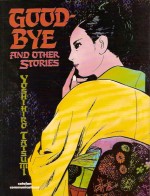
Good-Bye and Other Stories


By Yoshihiro Tatsumi (Catalan Communications)
ISBN: 0-87416-056-1

Don’t believe your loved ones: sometimes size really does make a difference.

Shuffling along my seemingly infinite shelves the other day I spotted a graphic album I haven’t really looked at in years.

It was an album-sized (275x210mm) black-&-white collection of Japanese human-interest dramas translated into English from a Spanish compilation and was, when I bought it, my first introduction to the incredible creative force that is Yoshihiro Tatsumi.

Since then I’ve become familiar with most of his translated works but the other day was the first time that I’ve actually compared the scale of his art in traditional manga formats with the big, bold nigh-abstract expansions of a really expansive page.

The sheer emotional power delivered by going large is just incomprehensible…

Beginning in the 1950s, compulsive storyteller Yoshihiro Tatsumi worked at the edges of the burgeoning Japanese comics industry, toiling for whoever would hire him, whilst producing an absolutely vast canon of deeply personal, agonisingly honest and blisteringly incisive cartoon critiques.

These dissections, queries and homages remorselessly explored the Human Condition as endured by the lowest of the low in a beaten nation and shamed culture which utterly, ferociously and ruthlessly re-invented itself during his lifetime.

Tatsumi was born in 1935 and after surviving war and the reconstruction of Japan he devoted most of his life to mastering – if not inventing – a new form of comics storytelling, now known universally as Gekiga or “Dramatic Pictures”.

This was in contrast to the flashy and fancifully escapist entertainment of Manga – which translates as “Irresponsible” or “Foolish Pictures” – and specifically targeted children in the years immediately following the cessation of hostilities.

If he couldn’t find a sympathetic Editor, Tatsumi self-published his darkly beguiling wares in Dōjinshi or “Vanity projects” where his often open-ended, morally ambiguous, subtly subversive underground comics literature gradually grew to prominence; especially as those bland funnybook-consuming kids grew up in a socially-repressed, culturally-occupied country and began to rebel.

Topmost amongst their key concerns were Cold War politics, the Vietnam War, ubiquitous inequality and iniquitous distribution of wealth and opportunity, so the teen upstarts sought out material that addressed their maturing sensibilities and found it in the works of Tatsumi and a growing band of deadly serious cartoonists with something to say…

Since reading comics beyond childhood was seen as an act of rebellion – like digging Rock ‘n’ Roll a decade earlier in the USA and Britain – these kids became known as the “Manga Generation” and their growing influence allowed comics creators to grow beyond the commercial limits of their industry and tackle adult stories and themes in what rapidly became a bone fide art form.

Even “God of Comics” Osamu Tezuka eventually found his mature author’s voice in Gekiga…

Tatsumi uses art as a symbolic tool, with an instantly recognisable repertory company of characters pressed into service over and again as archetypes and human abstracts of certain unchanging societal aspects and responses. Moreover, he has a mesmerising ability to portray situations with no clean or clear-cut resolution: the tension and sublime efficacy revolves around carrying the reader to the moment of ultimate emotional crisis and leaving you suspended there…

Narrative themes of sexual frustration, falls from grace or security, loss of heritage and pride, human obsolescence, claustrophobia and dislocation, obsession, provincialism, impotence, loneliness, poverty and desperate acts of protest are perpetually explored by a succession of anonymous bar girls, powerless men, grasping spouses, ineffectual loners, wheedling, ungrateful family dependents and ethically intransigent protagonists through recurring motifs such as illness, forced retirement, disabled labourers and sexual inadequacy all lurking in ramshackle dwellings, endless dirty alleyways, tawdry bars and sewers too often obstructed by discarded lives and dead babies…

Following an expansive discourse on ‘Japanese Comics’ by José Mariá Carandell, the well-travelled dramas begin with ‘Just a Man’ as, at the end of his working life, Mr. Manayana is sidelined by all the younger workers: all except kind Ms. Okawa whose kindly solicitousness rekindles crude urgings in the former soldier and elderly executive. With his wife and daughter already planning how to spend his pension, Manayana rebels and blows it all on wine, women and song, but even when he achieves the impossible manly dream with the ineffable Ms. Okawa, he is plagued by impotence and guilt…

‘The Telescope’ then brings a crippled man too close to an aging exhibitionist who needs to be seen conquering young women, leading only to recrimination and self-destruction…

In ‘Life is So Sad!‘ a junior and senior bar girl clean up after the night’s toil, but young Akemi is clumsily preoccupied…

It’s time to visit her husband in prison. He is a changed, fierce and brutalised man and doesn’t believe she has kept herself for him all these years. When he threatens to become her pimp after his release, she is reluctantly forced to take extreme action…

Down in ‘The Sewers’ whilst daily unclogging the city’s mains, a harassed young man finds himself no longer reacting to the horror of what the people above discard: baskets, boxes, babies… even when the deceased detritus is his own…

‘Just Passing Through’ sees Kyoko return to her husband and mother-in-law after an unexplained 2-year absence. Nothing has changed. Her forgiving man froze time on the day she vanished: even the calendar has not moved a single day.

As he patiently rejoices in her return Kyoko realises the horrific passive-aggressive nature of his gesture and heads once more for the door…

‘Progress is Wonderful!’ sees an over-worked sperm donor foolishly allowing his latest “inspiration” to get too close with catastrophic results, after which the semi-autobiographical and eponymous ‘Good-Bye’ describes the declining relationship between prostitute “Maria” – who courts social ignominy by going with the American GI Joes – and her dissolute father; once a proud soldier of Japan’s beaten army, now reduced to cadging cash and favours from her.

Her dreams of escape to America are shattered one day and in her turmoil she pushes her father too far and he commits an act there’s no coming back from…

‘Unwanted’ brings the volume to conclusion by relating the inevitable fate of a placard carrier advertising a seedy massage parlour. Why can he get on with tawdry prostitutes of the street but not his own wife, with her constant carping about her unwanted pregnancy? Why is murder the only rational option?

This epic volume was, it transpires, wholly unauthorised but I was blown away by the seductive and wholly entrancing simplicity of Mr. Tatsumi’s storytelling and bleak, humanist subject matter.

Now that I know just when these stark, wry, bittersweet vignettes, episodes and stories of cultural and social realism were first drawn (between 1969-1977) it seems as if a lone voice in Japanese comics had independently and synchronistically joined the revolution of Cinéma vérité and the Kitchen Sink Dramas of playwrights and directors like John Osborne, Tony Richardson and Lindsay Anderson – not to mention Ken Loach and Joe Orton – which gripped the West in the 1960s and which have shaped the critical and creative faculties of so many artists and creators ever since.

Tatsumi, like Robert Crumb and Harvey Pekar, worked for decades in relative isolation producing compelling, bold, beguiling, sordid, intimate, wryly humorous, heartbreaking and utterly uncompromising strips dealing with uncomfortable realities, social alienation, excoriating self-examination and the nastiest and most honest arenas of human experience. They can in fact be seen as brother auteurs and indeed inventors of the “literary” or alternative field of graphic narrative which, whilst largely sidelined for most of their working lives, has finally emerged as the most important and widely accepted avenue of the comics medium.

These are stories no serious exponent or fan of comics can afford to miss… and they’re even better printed bigger…
© 1987 Yoshihiro Tatsumi. All Rights Reserved.

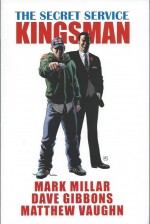
The Secret Service: Kingsman


By Mark Millar, Dave Gibbons and Matthew Vaughn with Andy Lanning & Angus McKie (Titan Comics)
ISBN: 978-1-78116-703-8

We Brits know everything about the spy-game and think we’ve probably seen it all, from Bond to Smiley, Harry Palmer to Johnny Worricker and Spooks to Carry On Spying.

So it’s not often we get a look at a fresh take, but that’s what’s on offer here as comicbook legends Mark Millar & Dave Gibbons team up with film director/producer Matthew Vaughn (X-Men: First Class, Kick-Ass, Stardust, Layer Cake, Lock Stock and Two Smoking Barrels) to update the genre in a wickedly sly, cynically funny and irreverential thriller which nevertheless harks back to the glory-days of the “great game” of gentlemanly cloak-and-dagger as it was called when were still an empire, as well as the swinging superspy sagas of the 1960s and 1970s…

The original 6-issue miniseries The Secret Service was released as part of Millarworld’s unfailing hit-factory deal with Marvel Comics’ Icon sub-imprint, and this slick, sharp and wickedly tongue-in-cheek pastiche mixes all the favourite trappings and spectacle of big budget movie blockbusters with an archly satisfying class-war aesthetic that finds full expression following the traditional all-action opening attention-grabber, which finds actor Mark Hamill (almost) saved from abduction by an armed gang by an unlucky British secret agent…

The scene then switches to the urban wasteland of Peckham where Gary Unwin – known to his no-hoper wannabe-gangsta pals as “Eggsy” – is again at odds with the cheap thug who’s shacked up with his mum.

Dean is a former soldier. He’s also a bully and a brute: a typical South London Chav who thinks he’s hard and takes it out too often on Gary and his little brother Ryan as well as their long-suffering mother Sharon.

No wonder the jobless, shiftless teen spends all his time playing computer games, doing drugs, nicking cars and making mischief with his mates. Tonight is no exception, except for the part where the hapless joyriders crash their purloined ride and end up in police cells…

Meanwhile in the swank part of town, two movers-&-shakers in Intelligence are discussing a wave of mysterious abductions: actors from Star Wars, Doctor Who, Battlestar Galactica and Star Trek have all disappeared, as have scientists, sporting legends and other notables. There is clearly some major scheme afoot…

Jack London (I gather they’ve changed his name in the film version) is a self-made man. He escaped his lowborn origins and remade himself into a suave, sophisticated international man-of-mystery and Great Britain’s top operative: the spy who never fails. Nobody does it better. He’s also Sharon’s brother and is once again forced to apply his influence to save his nephew from the consequences of his actions…

He’s had to step in before but he swears it’s the last time and, after an unpleasant confrontation, determines to get Gary out of the toxic environment he escaped from decades ago…

As a mass wedding in Hawaii is turned into a bloodbath by a mysterious mastermind’s hi-tech secret weapon, in Peckham Uncle Jack is telling Eggsy the unbelievable truth. He gets a chance to prove his outrageous claims when Dean’s loutish cronies pick a fight…

Jack, plagued with guilt for neglecting his shameful family, then offers his nephew a chance to better himself by joining the Secret Service training program that made him one of the deadliest men alive…

The boy jumps at the chance to get away and is soon an outcast amongst the cream of Britain’s posh-boy private school and military college recruits, doggedly learning unarmed combat, ballistics, weapons training, tactics, computer science, seduction techniques, languages, piloting any vehicle and every skill and trick needed to keep the world safe from invasion and subversion…

Despite his background and lack of social skills Gary thrives – and even excels – in many of the less salubrious exercises (such as killing drug-dealers on a live fire exercise) even as Uncle Jack returns to his mystery kidnapping case. He slowly makes progress across the world, tracking a certain mad young billionaire with dreams of saving the planet from the plague of humanity. Doctor James Arnold is also extremely keen on preserving his childhood heroes from the Armageddon he’s about to trigger…

At precisely the wrong moment Gary drags Jack back to London again. When the pauper student overhears his well-meaning but privileged comrades condescending and pitying him, Eggsy steals Jack’s gadget-laden, weaponised sports car and goes for an explosive drunken joyride with his real mates from the estate.

Now the super-agent is forced to take extreme measures to sort him out…

Gary wakes up in Colombia with nothing but his underwear and is told he has 24 hours to return to Britain. The Resource Test is the final stage of an agent’s training and is make or break: neither the agency nor his uncle will have anything to do with him if he fails…

He passes with flying colours, and even destroys a drug cartel in the process, leading Jack to take him on as an apprentice, offering style tips and a chance for a palate-cleansing final confrontation with Dean and his mates in Peckham before setting off together to foil Dr. Arnold’s deadly scheme.

…And that’s when it all goes terribly wrong, leaving Gary to cope with imminent world collapse all on his own…

The film was in production simultaneously with the creation of the original six-issue miniseries with Millar, Vaughn and illustrator Gibbons (aided by inker Andy Lanning and colourist Angus McKie) frequently cross-fertilising and amending the print and movie iterations to produce a stunningly clever, outrageously rip-roaring, high-octane read which will astound all us paper-jockeys and no doubt be satisfactorily mirrored in the upcoming filmic extravaganza.

But why wait? Grab some popcorn, hit your favourite chair and experience all the thrills, spills and chills you can handle right now just by picking up this fabulous action comics classic in the making…
© 2012, 2013, 2014 Millarworld Limited, Marv Films Limited and Dave Gibbons Ltd. All rights reserved.

Vignette


Drawings by Antoine Cossé, stories by Alex Jackson (Records Records Records books)
ISBN: 978-0-9566330-3-3

Here’s a tantalising little digest of comics delights featuring clever collaborations between Parisian expat illustrator Antoine Cossé and Alex Jackson who here pens a beguiling selection of short yarns to charm and chill aficionados of visual storytelling.

The eye-catching entertainments begin with an elysian travelogue as our narrator offers a bulletin of placid news and ethereally calming events straight from an idyllic ‘Paradise’, after which ‘The Architect’ lets his job go to his head in a wryly OTT dissertation on the seductive power and limitations of creativity.

‘Bantam’ powerfully captures the helpless, impassioned loyalty of a lifelong supporter for his local football team, exploring with heartfelt empathy that infernal drive which always tantalises and annually crushes the hopes and dreams of followers of impoverished and perennially second class teams.

‘Dr. Hall’ then endearingly examines English manners and mores in a beguiling record of a GP’s talents and failings, as seen through the doting reminiscences of one of his patients…

Comics and film are similar art forms in that both can deliberately lie whilst revealing truths. By the simple act of juxtaposing visuals and sound/text in opposition (like seeing a baby crying but dubbing in giggling) in a narrative, levels of meaning can be easily manipulated and the consumer made aware of two – or more – stories at once.

It’s an odd psychological quirk in such situations that readers or viewers always treat the pictures as “true” or “real” whilst the words/soundtrack are deemed false, duplicitous or wrong…

Comprising the majority of this evocative and compelling collection, ‘J.1137’ first appeared as a self-contained comicbook from Breakdown Press and is certainly the most engaging and challenging piece in the book.

With words and pictures apparently contradicting or belying each other, a strange, fantastic enigma draped in all the apparent trappings of a movie blockbuster unfolds as an immortal screen star rashly steps outside the bounds and parameters of his lavish but fiercely proscribed existence, seeing too much of the wrong things and inevitably paying a high price…

Constructed of warring layers of reality and illusion, this is a cross-genre saga that will appeal to lovers of the art form who love a mystery and are prepared to work out their own answers.

Beguiling, intriguing, contemplative, astonishingly fresh and appealing, Vignette is a beautiful example of comics’ unique power which deserves to find the widest possible audience. Buy it and show all your friends.
© 2013 Antoine Cossé + Alex Jackson. © & ℗ Records Records Records.

Steak Night volume 3: Jobs


By various, edited by Babak Ganjei (Records Records Records books)
ISBN: 978-0-9566330-5-7

Some old fuddy-duddies like me still read prose as well as comics, and being a veteran consumer I can honestly say that what I miss most is the time when short stories – everything from epigrams to vignettes to novellas – were a thriving, vibrant pillar of storytelling.

Modern book publishing doesn’t like short stories and most magazines (with the possible exception of DC Thomson’s The People’s Friend) no longer regularly carry engaging snippets of fiction or indeed even value the creative discipline necessary to telling a tale succinctly.

The same was true of comics for years but with the recent surge of independent and small press creators that market is changing. There are now a few regular anthology titles, offering a variety of experiences rather than the far more commercially sensible multi-part epics mainstream print-houses always push.

Every book or comic is somebody’s first but how can you possibly build a solid readership with stories that can be twenty or forty or even more parts long? Life’s just too short.

So let’s all shout “well done” for books such as Steak Night which always offers an eclectic mix of strips, gags, art pages and brief prose pieces in an inviting hardback book format, produced with style, honesty, integrity and a broad range of views.

This third volume contains a selection of works dedicated to the theme of Jobs, and after a stirring pep-talk from the editorial team commences with a penetrating dose of reminiscing and self-flagellation in the text tantaliser ‘Keyser Söze’ by Victoria Manifold. Then multi-talented Tom Hall Colonial illustrates Henry Clark’s truly disturbing recollections of his early days as an undertaker and the charming on-the-job training he received at the hands of ‘The Butcher’ …

A strange and stridently silent cartoon ‘Jobs’ short about a career in extreme pest-control (also by Hall?) leads into another painful memory as Babak Ganjei illustrates Tom Oldham’s graphic explanation for why he turned down the chance to be a ‘Bigshot’ in the sex trade, after which ‘A Guide to Achieving Your Career Goals’ by Amelia Phillips definitively describes her self-perceived failure in clawing her way to the middle of the publishing biz before becoming a happily desperate freelancer…

Another ferocious fantasy comics page of sci-fi hi-tech ‘Jobs’ creation segues sweetly into an keenly observed if doggedly obscure ‘Office Romance’ by Florian Lunaire & Eleanor Summers, whilst Julia Scheele delightfully describes the dilemma all women face on ‘Sundays at the Comic Shop’ (actually it’s more a 24/7 thing) before Melissa Trender examines the role of women in a resolutely post-feminist society with the heartfelt and disturbing ‘Daughters’.

The industrious giant-bug bashing ‘Jobs’ interludes then end with mankind notionally still on top, whilst ‘Small Hours Dept’ by Peter Cline lovingly and lyrically examines the whimsical moments that quiet times can offer from an elevated position, after which Wallis Eates’ prose-&-picture fable ‘Where Are you Going?/Ground Please’ appealingly compares childhood memories with the solitary insights of a hospital cleaner, before former Bloc Party drummer Matt Tong winningly describes his succession of dead-end jobs in Bournemouth (trust me: don’t eat the pizza) in a prose paean to the failings of school careers guidance information entitled ‘The Worst Bad Egg’.

The portmanteau of pictorial pleasures concludes with Harriet Gibsone’s hilariously dark and edgy advice on handling the ‘Big Interview’ and a manic glimpse at what it’s all about in ‘Going to Work’ by Grace Wilson…

Complete with a full contact-&-biography Contributors section, this is another superb sampling of contemporary cartoon culture that no lover of the art of storytelling should miss.
And kids remember, it’s a vocation, not a career, yeah?

© Records Records Records 2013.

Hilarious Consequences


By Babak Ganjei (Records Records Records Books)
ISBN: 978-0-9566330-0-2

When I was kid comics weren’t cool and were all a bit the same. You couldn’t find them in most shops and once you got a bit older, you read them from the camouflaging concealment of a large book – or possibly a smutty magazine – so your mates wouldn’t laugh at you.

Now there are strips and graphic novels everywhere, nobody under 90 bats an eye at adults scoping out picture stories and – most importantly – the range, variety and sheer quality of material available today is absolutely staggering.

A wonderful Case In Point is this delightfully enthralling slice of whimsical urban documentary by Babak Ganjei, published by Records Records Records Books.

Hilarious Consequences lovingly details in joyously crushing detail the sad sack saga of an agonisingly self-excoriating, self-effacing, self-proclaimed middle-aging loser who just can’t seem to get his life together…

Babak is a not-at-all successful musician in London. He has a kid, no career, no money and his hair is falling out – which seems to be the most worrisome of his many woes and worries. Still, what can you do, huh?

With nothing better in his future he decides to make a comic strip of his life and that’s also part of the story and another eventual hassle…

We pick up the threads of a fraying life in ‘The Chinese Herbalist’ as the shaggy shambler opts to try alternative medicine to solve his depreciating barnet problem. He feels uncomfortable doing it, unsure it’s working and is unable to pay, but is no match for the pushy purveyors who offer him reasonable-sounding advice and hire purchase terms. He trundles off with assorted unsavoury teas and soups that make his next few days a toxic misery…

His angst levels increase when he reluctantly agrees to go to ‘The Fancy Dress Party’, but just can’t get as invested as his girlfriend Ellie. The booze helps but when he sees a pig-masked person chatting her up, his head – still fiercely shedding follicles – goes to a bad place…

‘Another Morning’ and in the shower there are fresh horrors associated with getting old, exacerbated later when Babak is cajoled into performing at a local acoustic night by Dog, an ambitious kid with a gleaming transcendent mop of healthy hair. There’s no pay but Dog promises really excellent pizza…

Always strapped for cash Babak attends ‘The Interview’ and somehow gets a part-time job at a pub. It’s okay, but the other bar staff think he’s so very old.

He’s thirty…

Shorter moments reveal the more gloomy aspects of ‘The Creative Process’, ‘Drinks’, ‘The Call’ and a ‘Grim Notion’ before Ellie and his son accidentally create ‘Glitter Slugs’ whilst making card presents, leading to a surreal ‘Lynchian Insert’ before a return to the pub proves ‘Tough Work’ can be ameliorated by the right drugs…

After a diversion to ponder ‘Animal Work’, ‘Bad News and Thinkings’ finds our zero compelled to somehow scrape together £300 a week and regretting his childhood educational choices after which a ‘Kaufman-Esque’ confrontation leads to quite understandable ‘Panic’…

Then, after a relatively calming ‘Family Hour’ it’s off to the pub and an epic ‘Work Party’ which reveals the problems ineffectual blokes blessed with bushy beards can encounter when trying to snort lines of coke, before things get strange ‘Conversing’ with a homeless guy. And then the slugs return in ‘New Beginnings’…

A ‘Near Death Experience’ leads to a half-hearted ‘Work Out’ attempt, but jogging and newspaper headlines result in parental ‘Sadness’ and more self-doubt which even a gallery-hopping ‘Art Trip’ can’t fix.

Conceptual walls start to crack as cartooning diarist Babak suffers ‘Writers Block’ which might be why the slugs slurp back in ‘Them Again’ after which Ellie and the boy come home in ‘They’re Back’…

That promised acoustic set is looming in ‘Please’ whilst an unsavoury encounter with the still unpaid Herbalist prompts some uncomfortable ‘Advice’ even as the little lad shows off his ‘Interests’ just before the artist expresses his ‘Issues’ with ‘The Big Show’.

Things go badly for the slugs in ‘Blackout’ but when the pizza arrives at least Babak feels a modicum of satisfaction ‘And Then Happiness’…

There’s a comic aside to wrap thing up with an ‘Epilogue’…

Episodic but utterly appealing, these dire and dolorous everyday antics of a (very) humble contemporary Eeyore offer a gentle, meandering and endearingly self-deprecating ramble through modern life. There’s even a free soundtrack CD that comes with this extremely readable fun feast, featuring: Dignan Porch, Singing Adams, The Bronsteins, Macks Faulkron, Wonderswan, Round Ron Virgin, Dan Michaelson and the Coastguards, Cheatahs, Big Deal, Wet Paint, and Matthew C.H. Tong to sweeten the deal and further facilitate knowing acquiescence…

Hilarious Consequences is the sort of book that becomes a cult hit TV series and certainly doesn’t fail to beguile and bemuse as a cartoon history.

Track it down and feel part of something too big to cope with…
© 2010 Babak Ganjei. © & ℗ Records Records Records Books.

Kiddo


By Antoine Cossé (Records Records Records Books)
ISBN: 978-0-9566330-1-9

Since Britain grew up and joined the rest of the world in accepting comics as a valid and viable art form, the shelves of Albion have been positively groaning with a wealth of superbly fascinating graphic narratives of all types; especially since a number of bold new publishers have either picked up and translated Asian and European material or confidently released new stuff from creators around the world.

Antoine Cossé is a French graphic storyteller living in London. He left Paris to study at Camberwell College of Arts and graduated in 2006 with a degree in illustration. He then began a seemingly non-stop barrage of moody, funny and evocative strips catering to his own need to explore the absurd, the fanciful and the unexpected lurking behind the humdrum passage of everyday lives and kindly invited a growing fan-base to join him in his explorations.

Following a number of short strips, features and collaborations, in 2012 he produced his debut graphic novel – Kiddo – for British outfit Records Records Records Books: an enigmatic, helter-skelter cartoon progression practically devoid of words which combines elements of epic dystopian science fiction with unceasing kinetic forward motion redolent in tone – if not style and content – to the ceaselessly energetic strip works of André Barbe.

Lavishly packaged as a black and white hardback (comfortingly reminiscent of those classily sturdy children’s books of my youth) the stark events unfold as a solitary man plunges through jungles and wastelands, seeking who knows what in a scary big world.

Encountering beasts, a woman, hardship, hunger, booze, a giant monster dog, war, strange phenomena and the encroaching remnants – or perhaps discards – of civilisation, he moves ever onward to a chaotic closing conundrum…

Deeply sly, beguiling reductive and intoxicatingly Primitivist, Kiddo is an irresistible  surge of purely visual drama and a mystery for its own sake which will delight all aficionados of the medium who value comics for their own sake and don’t need answers spoon-fed to them.
© 2012 Antoine Cossé. © & ℗ Records Records Records Books.

Stranger Than Life – Cartoons and Comics 1970 – 2013


By M.K. Brown (Fantagraphics Books)
ISBN: 978-1-60699-708-6

Sometimes there’s no need to babble on for ages. Sometimes a book just sells itself. However I’m far too vain a reviewer to let things lie without interjecting a few facts and opinions. You guess which is which…

Mary K. Brown was usually my favourite cartoonist in National Lampoon where her uniquely personal, bizarrely surreal, evocatively awry cartoon observations and visions graced the wildly eclectic Funny Pages section for decades.

Her other regular gigs included stints in Playboy, Wimmin’s Commix, Mother Jones, Twisted Sisters, Atlantic Monthly, The New Yorker and elsewhere. She was one of a rarefied group of creators tapped by Art Spiegelman for his prestigious The Narrative Corpse project and one of her most intense cartoons was transformed into the other animation segment of the Tracy Ullman Show. (the one you know became The Simpsons).

She keeps her private life to herself but her astounding facility as a painter – particularly watercolours – has won her a second career as a gallery artist.

Now after far too long a time, she’s back as Fantagraphics adds her to its growing list of all-star cartoonist retrospectives; celebrated here with an astonishingly wide-ranging collection and treasury of her gags, drawings and strips.

It’s tempting to say that Brown’s work is no-nonsense, but in fact it’s all Nonsense: of the highest, weirdest, wildest, wackiest and most elevated pedigree. It’s human, humane, off-beat and off-kilter: beautifully designed and rendered – whether in line or colour – and ranges from the most audaciously cringeworthy visual puns (‘Overwrought Iron’) to manically absurdist almost stream-of-consciousness narratives, satirising suburban banality and angst or almost genteelly walloping Post Modern self absorption, consumerism and decadent ennui…

Moreover, this vast and comprehensive compendium (250 pages at 280 x 216mm) understands the value of pictures over words, so Bill Griffith’s Foreword ‘Here’s My Checklist for Everything I want in a Cartoonist’ is brief and punchy as is Brown’s own Introduction, leaving all the more room for her stunning pictorial confections – although she does interject with valuable commentary and background information whenever she feels like it.

And why not? It’s her book…

The works are divided into themed sections beginning with ‘Housepeople’, starring faddy folks from the nouveau riche punk to the domestic goddess in poems, gags and strips like the eponymous ‘Stranger Than Life’, ‘How to Make a Pair of Pants in 20 Minutes’ ‘Snakes in the Bathroom’, ‘Free Glue Sample’, ‘White Girl Dreams’ and much more…

Her astonishing gift for observation was never better seen than in pieces set ‘In the Workplace’: with outré panels augmenting manic features such as ‘Revenge and Forgiveness (A Dental Fantasy)’, ‘Russ de la Rocca – Worm Trainer of the Americas’, ‘Transference’, ‘The Fly Brothers in Hollywood’ or ‘Coping with Chain Saw Massacres’, whilst ‘Science and Technology’ encompasses ‘Fear of the Known’, grasshoppers and their ‘Inroads into Science’ and the ever-thorny conundrum ‘Women: What do They Want?’…

‘A Seedy Part of Town’ concentrates on domestic investigation and features more searching questions from the appallingly plebeian White Girl and ‘Earl D. Porker – Social Worker’ after which ‘Romance and Social Studies’ reveals how ‘Love Makes the World Go ‘Round’, offers a unique ‘Love Story’ and exposes secrets of the ‘Singles Bar’. Also featured is Brown’s faux bodice ripper ‘A Promise to Remember’, and the packed-to-bursting chapter climaxes with ‘Party Time Paper Dolls’ and the many small adventures of ‘Mercury, Messenger of God’.

The wonders of the world are examined in ‘Travel and Nature’ with particular attention paid to ‘Highlights of Guatemala’, ‘Loud Ties in Nature’, ‘Camel Racing in the Desert’, and sundry bestial broadsides. This chapter also reprints ‘Another True-Life Pretty Face in the Field of Medicine’ (which was adapted as the aforementioned animated adventures of Dr. N!Godatu on the Ullman show), as well as the mad Mountie serial ‘Saga of the Frozen North’, and is as ever surrounded by many more panel gags and mini strips.

The cartoon carnival concludes with ‘Way Out West’: a selection of equestrian and cowboy pieces accompanied by the really true secret reason Brown produced so many of the crazy things.

Included are ‘Custer’s Last Night Stand’, ‘Hillbilly Song Jubilee Roundup Time’, a triptych of ‘Beans Morocco’ sagebrush yarns, a series of strangely sensational gun illustrations and all five chapters of that dern peculiar soap opera ‘Western Romance’…

After a steadfastly odd comicstrip ‘Self Portrait’ by the ever-entertaining Brown, cartoonist Roz Chast adds her own observations to an appreciative Afterword to end this beguiling parade of literary legerdemain and graphic incomprehension…

Clever, challenging and utterly addictive humour that is once seen, never forgotten. And that is a fact.

Stranger Than Life: Cartoons and Comics 1970 -2013 © 2014 Fantagraphics Books. All comics and text by M.K. Brown are © 2014 M.K. Brown. All other material © 2014 the respective creators. All rights reserved.