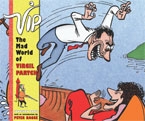
VIP – the Mad World of Virgil Partch


Edited by Jonathan Barli (Fantagraphics Books)
ISBN: 978-1-60699-664-5

Win’s Christmas Gift Recommendation: impossibly inventive – an all-year-round treat… 9/10

Virgil Parch is another of those almost forgotten key men of comedy cartooning: a pervasive creative force working away for years, making people laugh and slowly, steadily changing the very look and nature of the industry.

Although largely unremarked upon and unremembered these days, Virgil Franklin Partch II (1926-2004) is probably one of the most influential – and most successful – American cartoonists in history.

His arch, absurd, rude, sly, subtle, skewed, whacky and astoundingly unique gags, strips, stories and animated shorts were generated with machine gun rapidity from a seemingly inexhaustible well of comedy excess, which could be rendered in a variety of styles which completely revolutionised the American publishing from the moment in 1941 that the artist switched from Walt Disney Studio ideas man to freelance gag-maker.

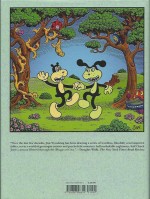
He is most well regarded for his cavalier abandonment of traditional form and anatomy. Partch is the guy who liberated gag-cartooning from the bonds of slavish attention to body detail: replacing broadly human shape and proportion with a wildly free and frenetic corporeal expressionism – perhaps even symbolism – which captivated legions of fellow artists and generations of fun-starved readers. He’s the guy who made 19 fingers on one hand work…

This superbly comprehensive and lavishly huge (260x315mm) landscape hardback art book/biography (in monochrome & full-colour) covers his life and career in scrupulous detail through a wealth of his best cartoons – many shot from original art – and includes oodles of roughs, sketches, layouts and doodles, all accompanying the bright and breezy life-history by James Barli, and all augmented with loads of intimate photos.

The joyous journey begins after a heartfelt Introduction by stylistic and thematic heir Peter Bagge with ‘Partch ad absurdam’: broken down into easily digested chapters beginning with ‘Prologue: Under the Volcano’ which introduces the man’s remarkable forebears whilst ‘The Call of the Wild’ and ‘Of Mice and Men’ details his early life and the eclectic education which led to his joining the fabled Walt Disney Studio in its golden, pre-strike prime.

‘Brave New World’ and ‘The Divine Comedy’ reveal how the assembled animators’ habit of pranking each other with gag cartoons led friend Dick Shaw to dispatch many of Partch’s drawings to magazines such as Collier’s and The New Yorker in 1941, whilst ‘A Farewell to Arms’ covers the new family man’s stint in the Army where his gift was exploited by Forrest J. Ackerman, beginning his own stellar career as editor of Army newspaper Bulletin…

On demobilisation Partch’s path was assured and he became the most prolific gag-seller in America: it was almost impossible to find a magazine or periodical that didn’t carry one of his cartoons, and when Playboy debuted in 1953 there was one of his women sharing cover-space with Marilyn Monroe…

As seen in ‘Point of No Return’ and ‘The Genius’, whilst working as an animator (for Walter Lantz on Woody Woodpecker) and as a cartoonist for leftwing New York newspaper PM, Partch started a constant stream of book collections in the fifties which captured and reflected the risqué, hard-drinking sophistication of the era as well as simultaneous lives as an ad man and writer for other draughtsmen, and worked with futurist economist William J. Baxter on a series of prognosticative books which warned of such nebulous dangers as out-of-control capitalism, the Military-Industrial Complex, “1 Per-Centers” and even Global Warming…

His passion for sports – especially sailing – is covered in ‘Three Men in a Boat’ whilst in

‘As a Man Grows Older’ changing times and the urgings of old pal Hank (Dennis the Menace) Ketchum provoked the restless creator to launch his comicstrip Big George! whilst increasingly becoming a cultural ambassador for his craft and art form. He also upped his range of commercial and design projects and invented the grittier strip The Captain’s Gig.

The rise and rise of Virgil Partch is covered in ‘The Old Man and the Sea’ whilst ‘Epilogue: the Death of Virgil’, like a bad punch line, recounts the truly stupid and meaningless end of a legend when both the artist and his wife perished in a car crash on August 10th 1984…

The Unknown Quantity then focuses on his astounding output through ‘A Partch Picture Gallery’ subdivided into ‘Cartoons from PM, ‘War in Pieces’ (military madness), surreal and absurd ‘Reality Bites’ and the boozy world of ‘Cork High and Bottle Deep’.

His laid back view of sex is recapitulated in ‘The Eternal Chase’ and ‘Battle of the Sexes’ whilst ‘The Sporting Life’ and ‘Partched’ focus on his other overweening interests…

His graphic expertise and design triumphs are celebrated in ‘Covered’ and ‘(m)Ad Man’, his skewed view of the world’s leaders in ‘Political Partch’, after which a selection of his articles and stories kicks off with ‘The Private War of Corporal Partch’, before ‘The Vipper Comes to Town’, ‘Bourbon and Watercolors’, ‘Vacation for Vipper’ and ‘Inland Cruise of the “Lazy B”’ bring this glorious tribute to times past and an incredible artist to a close.

Virgil Partch was blessed with a perpetually percolating imagination and a unique visual point of reference which made him a true catalyst of cartoon change, and Fantagraphics Books have once again struck pure gold by commemorating and celebrating this lost legend of graphic narrative arts.

Most importantly this is an astoundingly funny collection: the vast accumulation of funny drawings and clever stories still as powerfully hilarious as they ever were, and all brilliantly rendered by a master craftsman no connoisseur of comedy can afford to miss.
© 2013 Fantagraphics Books. All text © 2013 Jonathan Barli. All images © their respective copyright holders. Introduction © 2013 Peter Bagge. All rights reserved.

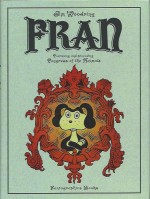
Fran (Continuing and Preceding Congress of the Animals)


By Jim Woodring (Fantagraphics Books)
ISBN: 978-1-60699-661-4

Win’s Christmas Gift Recommendation: A beguiling glimpse on a different kind of party … 9/10

There are a few uniquely gifted and driven comics creators who simply just defy categorisation or even description. There’s a pantheon of artisans: Kirby, Ditko, Hergé, Eisner, Clowes, Meskin, Millioniare and a few others who bring something utterly personal and universal effective to their work just beyond the reviewer’s skills (mine certainly) to elucidate or encapsulate or convey. They are perfect in their own way and so emphatically wonderful that no collection of praise and analysis can do them justice.

You just have to read the stuff yourself.

At the top of that distinguished heap of funnybook glitterati is Jim Woodring: a position he has maintained for years and clearly appears capable of holding for generations to come.

Woodring’s work is challenging, spiritual, grotesque, philosophical, heartbreaking, funny, beautiful and extremely scary. Moreover, even after reading that sentence you will have absolutely no idea of what awaits the first time you read any of his books (or even if you’re a confirmed aficionado) – when opening a new silent peripatetic classic like Fran…

Set in the general vicinity of Woodring’s wildly, warped universe, this is a time and relativity shredding adjunct which can be read before, after or even during his 2011 milestone Congress of the Animals..

Cartoonist, fine artist, toy-maker and artistic Renaissance man, Woodring’s eccentric output has delighted far too small an audience since his first mini-comics forays in 1980. Even though the reader may have avidly adored his groundbreaking Fantagraphics magazine series Jim (1986), its notional spin-off Frank (of which the volume Weathercraft won The Stranger 2010 Genius Award for Literature), maybe Tantalizing Stories, Seeing Things or the more mainstream features such as his Star Wars and Aliens tales for Dark Horse Comics, there is still never anything but surprise waiting when his next story appears…

Woodring grows rather than constructs solidly surreal, abstractly authentic, wildly rational, primal cartoon universes wherein his meticulous clean-lined, sturdily ethereal, mannered blend of woodblock prints, R. Crumb landscapes, expressionist Dreamscapes, religious art and monstrous phantasmagoria all live and play and often eat each other.

His stories follow a logical, progressional narrative – usually a non-stop chase from one insane invention to the next – layered with multiple levels of meaning but totally devoid of speech or words, boldly assuming the intense involvement of the reader will participate and complete the creative circuit.

Fran is another such vertiginous vehicle but adds a cruel patina of lovelorn tragedy and loss to ongoing tribulations of dog-faced Frank and his regular crew of irregular pals and foes in a perilous perambulation of innocence lost, where pride, arrogance, casual self-deceit, smug self-absorption and inflated ego leads to a shattering downfall.

Put bluntly, Fran was his wonderful girlfriend and through mishap, misunderstanding, anger and intolerance he loses her.

…And no matter what he does or wheresoever he wanders with his faithful sidekicks at his side, poor Frank just can’t make things right and perfect and good again…

Through madcap chases, introspective exploration and the inevitable direly dreadful meetings and menacings in innumerable alternate dimensions, True Love takes a kicking – and all without a single word of dialogue or description.

Here, the drawn image is always king, even if the queen has gone forever – or is it just a day?

Many Woodring regulars return, as both eponymous Krazy Kat-like ingénues work things out on the run through a myriad of strange uncanny places and there are absolute mountains of bizarre, devilish household appliances, writhy, clawing things, toothy tentacle things and the unspeakable Thingy-things inhabiting the distressingly logical traumic universe of his author’s fevered sensorium.

Of course Woodring’s work is not to everyone’s taste or sensibilities – otherwise why would you need me to plug his work so earnestly – and as ever, these astounding drawings have the perilous propensity of repeating like cucumber and making one jump long after the book has been put away, but the artist is an undisputed master of graphic narrative and an affirmed innovator always making new art to challenge us and himself. And, of course, he makes us love it and leaves us hungry for more…

All art-forms need such creators and this glorious hardback monochrome chronicle of Forbidding Love could well change your reading habits for life.

Now aren’t you curious to take this trip…?
© 2013 Jim Woodring. This edition © 2013 Fantagraphics Books. All rights reserved.

Spain: Rock, Roll, Rumbles, Rebels & Revolution


By Manuel “Spain” Rodriguez (Burchfield Penney Art Center/Last Gasp)
ISBN: 978-0-86719-782-2

Manuel Rodriguez was one of the pioneering lights of America’s transformative Underground Commix movement: a mainstay of the counterculture which subversively reshaped the nation’s psyche in the 1960s and 1970s. However, although always a left-leaning radical, infamous for his raucously hyper-violent, audaciously sexual urban vigilante Trashman, Spain was also a quietly dedicated craftsman, historian, educationalist and graphic biographer.

Born in Buffalo, New York state in 1940, the Hispanic kid spent a lot of time with notorious biker gang the Road Vultures and these experiences, as much as his political upbringing and formal education at the SilvermineGuildArtSchool in New Canaan, Connecticut (1957-1960), moulded and informed his entire creative career.

In the 1960s he became a regular contributor to landmark alternative magazine the East Village Other, which not only utilised his burgeoning talents as illustrator and designer but also commissioned, in 1968, his groundbreaking tabloid comicbook Zodiac Mindwarp. That insert proved so successful that EVO subsequently sponsored a regular anthology publication. Gothic Blimp Works was a turning point and clarion call in the evolution of underground publishing.

However, the excessive exploits of Trashman – “Agent of the 6th International” – against a repressive dystopian American super-state were only the tip of the creative iceberg. Ardent left-winger Spain founded the trade organisation the United Cartoon Workers of America whilst contributing to many of the independent comics and magazines which exploded out of the burgeoning counterculture movement across the world.

Manuel Rodriguez was also an erudite and questioning writer/artist with a lifelong interest in history – especially political struggle and major battlefield clashes, and much of his other work revealed a stunning ability to bring these subjects to vibrant life.

The breadth, depth and sheer variety of Spain’s work – from gritty urban autobiography (American Splendor, Cruisin’ with the Hound: the Life and Times of Fred Tooté) to psycho-sexual sci fi (Zap Comix, Skull, Mean Bitch Thrills) is a testament to his incredible talent but the restless artist also found time to produce a wealth of other cartooning classics.

Amongst his dauntingly broad canon of comics material are literary adaptations (Edgar Allen Poe, Sherlock Holmes’ Strangest Cases), historical treatises (War: The Human Cost) and biographies (Ché {Guevara}: a Graphic Biography, Devil Dog: the Amazing True Story of the Man who Saved America {Marine Major General Smedley Darlington Butler}) as well as educational and design works such as You Are a Spiritual Being Having a Human Experience and Nothing in This Book Is True, But It’s Exactly How Things Are (both with Bob Frissell).

He also produced the ongoing comics serial The Dark Hotel for American current affairs, politics and media news aggregation website Salon.

In 2012 Spain finally lost a six-year battle against cancer and this superb book – actually the Exhibition catalogue for a career retrospective at the prestigious Burchfield Penney Art Center at Buffalo State College – celebrates his tumultuous life and spectacular contribution to the art form of graphic narrative with a compelling series of essays as well as a superb selection of the great man’s best pieces including some little known lost treasures.

The appreciation begins with ‘Stand Up’ by Anthony Bannon (Executive Director, BPAC), before the biographical ‘Grease, Grit and Graphic Truth’ by Edmund Cardoni (Executive Director, Hallwalls Contemporary Arts Center) explores Spain’s past, whilst

‘Keep the Flames of Buffalo Burning’ by Don Metz examines his lasting effect on comics and society.

However the true value of this chronicle is in the 60+ covers, designs, story-pages, roughs, panel excerpts and strips both vintage and recent, monochrome and full-colour which demonstrate the sheer talent and drive to communicate that fuelled Spain for his entire life.

The Partial Spain Bibliography 1969-2012 and Selected Spain Exhibitions only hint at the incredible depth and lasting legacy of his career and I’m praying that some enlightened publisher like Fantagraphics or Last Gasp is already toiling on a comprehensive series of “Complete Works of…” volumes…

Stark, shocking and always relevant, the communicative power of Spain is something no true lover of comics can afford to miss.
© 2012 Burchfield Penney Art Center. All rights reserved.

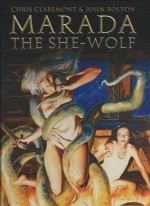
Marada the She-Wolf


By Chris Claremont & John Bolton (Titan Books)
ISBN: 987-0-85768-632-9

Scantily clad hot chicks swinging swords have been a staple of fantasy comics from their very inception, and probably nobody has done it better – certainly visually – than Chris Claremont and John Bolton. So this smartly recycled, supremely satisfying, luxuriously oversized (302 x 226mm) hardback compilation of their collaborative fantasy saga should be a welcome addition to the shelves of all aficionados of wild adventure and stirring sagas – especially in a world where mystical/historical dramas like Game of Thrones, Atlantis and Da Vinci’s Demons are garnering new interest in “Things Old, Things Forgotten”…

As detailed in Jo Duffy’s Introduction and collection Editor Steve Cook’s background essays ‘Birth of a Warrior’, ‘The Art of War’, ‘Epic Tales’ and ‘Legacy’ these stories – set in the cosmopolitan days of Imperial Rome – originally ran in Epic Illustrated (Marvel’s answer to Heavy Metal magazine) beginning with #10, February 1982. Originally the strip appeared in beautiful monochrome wash-and-line, and although I would have preferred them to have been left that way for this collection, Bolton’s sensitive conversion of the art to painted colour is lush, lovely and stunningly effective.

By the way, that possibly waspish crack about recycling doesn’t just refer to the art, superb though it is. The original story started life as a Red Sonja yarn for black and white anthology Bizarre Adventures, before Claremont & Bolton reworked the thing and, by inserting the whole kit and caboodle into the “real” world of the Ancient Roman – albeit embroidered with Celtic myth and legend – added a satisfying layer of dramatic authenticity to the mix which still leaves it head-and-shoulders above all other Sword and Sorcery “Bad Girls” tales, as well as most fantasy fiction…

The literary pre-game warm-up also includes an effusive memo from the author as ‘Claremont on Bolton’ offers more creative insight on why these seldom-seen stories are just so darn good before the wonderment unfolds in the initial tale ‘Marada the She-Wolf: The Shattered Sword’.

The ferociously independent warrior woman is a wandering mercenary whose grandfather was Julius Caesar. When her parents fell into political disfavour she was whisked from the Eternal City to live free and grow wild. Now, years later in the deserts around Damascus she is rescued from slavers by charismatic Warrior-Magician Donal MacLlyanllwyr, but the indomitable Marada he remembers is gone and all he liberates is a broken doll, traumatised by some unspoken horror and utterly devoid of will and spirit.

Mystically transporting her to the arboreal citadel of Ashandriar amidst the misty hills of distant Britain, the baffled soldier seeks the aid of patron sorceress Rhiannon to diagnose, if not cure her malady.

As she gradually recovers the warrior woman forms a bond with Donal’s daughter Arianrhod; a girl of vast, if unschooled, magical power. Before long the ghastly secret of Marada’s malaise is revealed when a demonic creature invades the mystic keep, killing Donal and abducting Arianrhod.

Enraged and desperate Marada is forced to brave Hell itself and slash her way through an army of devils to rescue the child she now considers as much daughter as friend from the wizard and demon conclave who initially broke her as part of a convoluted scheme to reign on Earth…

The re-galvanised She-Wolf is ultimately victorious but the horrific confrontation leaves her and Arianrhod stranded in East Africa. With no other option, the triumphant, exhausted duo begin the long walk home to Albion…

From Epic #12, ‘Royal Hunt’ is a shorter, self-contained tale wherein Marada and Arianrhod, after escaping the Infernal Realm, are taken by Ashake, barbaric Empress of the Amazonian kingdom of Meroë. The Battle Queen offers her captives the dubious distinction of being her quarry in a hunt (a competent if cheekily uninspired variation of Richard Connell’s landmark 1924 short story – and equally influential 1932 movie The Most Dangerous Game).

Sadly both predator and prey are unaware that malign male mercenaries are lurking about, with the worst of all intentions for the unsuspecting women…

Hard fought combat and the sudden intervention of the sneaking male scum makes allies of Ashake and Marada and leads to the voyagers’ final tale, ‘Wizard’s Masque’ (Epic Illustrated #23-24, April & June 1984) which finds the long-lost Europeans aboard the merchant ship Raven, bound for Roman port Massilia. However impetuous Arianrhod gets bored with their slow progress and attempts a transportation spell, opening a portal to nether realms and letting something really ghastly out of hell…

Beating the beast back, Marada falls though the gap in reality to materialise on an Arabic pirate ship currently engaged in a life-and-death clash with soldiers of an Eastern Kaydif. Her sudden presence turns the tide and soon she is partner to flamboyant corsair Taric Redhand, who swears to get her back to her home and lost “daughter”…

Unfortunately Marada has also been noticed by sinisterly seductive sorcerer Jaffar Ibn Haroun Al-Rashid. Although he purports to be a friend – and potential lover – able to reunite her with The Raven, he conceals a connection to the same demonic alliance that originally targeted the She-Wolf in faraway Rome. He is also, in all things, a creature of passion and self-serving convictions, capable of absolutely anything to achieve his own ends…

Ultimately however, the lost warrior woman knows she can only depend upon herself to find her way back to Arianrhod and home…

Moody, passionate and powerfully evocative, this is a classic work of comics fantasy that at last has a home and format worthy of it, and will certainly all delight fans of the genre.
© & ™ 2013 John Bolton and Christ Claremont. All rights reserved.

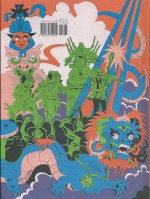
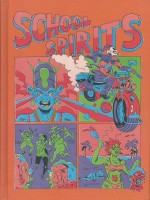
School Spirits


By Anya Davidson (Picturebox)
ISBN: 978-1-939799-02-9

Sometimes art – and especially comics – defy dull ration analysis and, just like the music your parents didn’t like, grabs you way below any conscious level. Such is the case here as prodigious printmaker, mini comics auteur and cult musician Anya Davidson (Barbarian Bitch/Kramer’s Ergot, Child of the Sun, Coughs & Cacaw) who at last breaks into the big leagues with a cool, cruel monochrome hardback which lifts the lid on those terrible teenager people with a wry and macabre quartet of tales defining modern School Spirits.

Through freewheeling progressions, flashbacks, daydreams and conceptual digressions, David carries her girl of the moment Oola and BFF Garf through vicious, monstrous, demonic, occasionally surreal stream-of-consciousness hallucinatory everyday escapades which eerily recapitulate and invoke the best of underground commix and modern independent cartoonists from S. Clay Wilson to Johnny Ryan…

It all begins with a quick pictorial introduction in ‘School Spirits Picturebox Brooklyn’ before ‘Ticket Thicket’ introduce our cast when radio DJ Weird Wally Walczac galvanises a generation by offering a pair of phone prize tickets to the hottest gig in town: Hrothgar‘s Halloween concert…

At ‘Vinyl Command’ we get a quick glimpse at the imagined, nigh-mythological life of the rock god Renaissance Man who wrote Blasphemous Corporeal Stench and Rotting Abortion before Oola wakes up and faints, after which the largely silent ‘Battle for the Atoll’ reveals the powers and mysteries of Primal Woman and leads us to a seat of learning…

‘No Class’ opens with a frantic chase before retreating to school where Oola’s hunger for knowledge and passionate drooling over class stud-muffin Grover is ruined by mouthy dick Jason, who spoils Art and Ceramics only to die hideously in our heroine’s fevered thoughts…

Further bouts of noxious reality – such as the affair between teachers Miss DeLeon and Mister Kirbowski – fall prey to imagination and horny supposition, all similarly despatched and destroyed in dreamscape, until break when the girls can continue planning the big magic spell they’re concocting to really shake up the town…

And thus the time passes progress until the day of the gig when Oola is caught shoplifting and stabs a guard before fleeing into another miasmic multi-reality chase which culminates at the life-changing Hrothgar show ‘In the Great Riff Valley’…

Like some fervent Archie Comics of the Damned, School Spirits readily blends the profane with the arcane, and the regimented tedium of waiting to be in charge of your life with the terrors and anticipation of the moment it all becomes Your Own Fault, in a rollercoaster ride of eclectic images Davidson describes as ‘“Beavis and Butthead” meets James Joyce’s “Ulysses”’. What I know is this: the pace, style and sheer ingenuity of this book is brutally addictive and, despite constantly playing with the vertical and horizontal holds of Reality, never slips up and never loses narrative focus.

Strong, stirring stuff, full of sex and violence, and outrageously amusing all round.
© 2013 Anya Davidson. All rights reserved.

Pompeii


By Frank Santoro (Picturebox)
ISBN: 978-1-939799-10-4

A short while ago I carped on about America not producing many historically flavoured comic strips and, as if by condemnatory return, this lovely cartoon chronicle cropped up in my review pile; not only a captivating yarn of ordinary folk trapped in one of the most tragically infamous events of all time, but also a boldly experimental and mesmerisingly effective exercise in reductionist visual storytelling.

Pittsburgh-based Frank Santoro has been a bit quiet since the release of his magnificent Storeyville (except for Cold Heat, Mome, the Comics Comics blog and about a zillion mini comics and other projects) but with the release of Pompeii proves the wait has been worthwhile.

The story is beguilingly simple: exploring not only the complex web of lies which entangle a philandering artist, his wife, new favourite model and naïve assistant (still in the flush of first love), but also the very nature and layered reality of art itself.

The story opens in the blithely unaware doomed city – a flashy resort for Rome’s high and mighty situated in the scenic Bay of Naples – where keen Marcus acts as general dogsbody to the great Flavius, a painter of great renown and salacious appetites.

The lad’s duties include fetching and carrying, cleaning, grinding minerals to mix into pigments, painting backgrounds, and keeping the maestro’s wife Alba from discovering her husband’s infidelities.

There’s a particularly close call as Flavius and the Princess he’s immortalising are nearly discovered by the knowing suspicious spouse and, once the crisis is averted, the master makes his unwilling pupil a full partner in the deception…

Marcus has talent and dreams of being a great painter, but for the moment he and his beloved Lucia toil in relative poverty with little more than their love to sustain them. The hot-blooded girl has come with him all the way from distant Paestum, but now, just as the relationship deepens, Marcus is neglecting her: spending more and more time with Flavius.

Bored and lonely, she’s alternately talking about having children and returning to her family even though she knows her lover would rather die than go back.

During the next sitting the Princess wants to talk about the small earthquake that occurred that morning but Flavius is oblivious: in full swing he invites Marcus to work on the background whilst he is still finishing the figure.

That minor triumph is spoiled at home when Lucia again starts up about Paestum or inviting her mother to live with them in Pompeii. In a rage Marcus storms off to sleep in Flavius’ studio and accidentally overhears an assignation wherein the Princess begs the maestro to move with her to Rome. The besotted noble is even prepared for her artist to bring the inconvenient wife along too…

Fearing the death of his dream and assured of the end of his relationship, the lad is surprised and gratified when Flavius invites him to accompany him to Rome. Everything suddenly stalls, however, when smouldering, somnolent Mount Vesuvius explosively begins spewing smoke and gas for the first time in living memory…

The fates of the assorted characters is a grim and powerful reminder of the power of love in the face of death, and the rough, raw pencil illustrations and tone washes – all created at publication size rather than being reduced for publication – perfectly recall and invoke the loose, flowing style of fresco and pottery images of the time.

Santoro apparently translated his own experiences as student/assistant to painter Francesco Clemente to get inside the head of young Marcus and the result is a timeless and irresistible exploration of human relationships (master and servant, teacher and pupil, lovers, spouses and infidelities) all viewed through an intimate lens of storytelling in its purest and most intimately immediate form.

A perfect example of the vivacious renaissance of Comics as Art, Pompeii is book no aficionado of the medium should miss.
© 2013 Frank Santoro. All rights reserved.

Treasury of Mini Comics volume 1


By many and various, edited by Michael Dowers (Fantagraphics Books)
ISBN: 978-1-60699-657-7

The act of stringing pictures and/or words together is something almost everybody has done at some stage of their lives. It’s a key step in the cognitive path of children and, for an increasing number of us, that compulsive, absorbing euphoria never goes away. Whilst many millions acquiesce to the crushing weight of a world which stifles the liberation of creation, turning makers into consumers, a privileged, determined few carry on: drawing, exploring, and in some cases, with technology’s help, producing and sharing.

Michael Dowers loves the concept of crafting and disseminating Mini Comics and his last book Newave!- The Underground Mini Comix of the 1980’s described and reproduced hundreds of examples: spotlighting with enticing, encouraging exuberance those driven artisans who came out of the “anything goes” 1960s and 1970s Underground Commix movement still craving a vehicle of personal expression.

These creators aren’t in it for the money and, in the era before computers, they found enough time to write, draw and compile artwork (small press people are notoriously generous, contributing work at the drop of a hat) before laboriously photocopying, cutting, folding, stapling and then distributing the miniscule marvellous results.

Just by way of definition: most mini comics were home-produced pamphlets using borrowed – or when necessary paid for – print processes. The most popular format was an 8½ x 11inch sheet, folded twice, and printed at local copy-shops (or clandestinely churned out on school/work repro systems like early Xerox, Photostat, Mimeo or Spirit Banda machines) on letter – or any other sized – paper.

Because they weren’t big, they were called “mini commix”. Inspired, no?

Now this superb sequel tome – another massive brick of fun (8500 monochrome pages, 178x127mm) – offers another trip through forty years of free-thinking, self-determined free expression and technological developments. Many of the key figures in the creation and steady proliferation of this uniquely eloquent people’s medium are included here, not only through examples of their groundbreaking work, but also through statements, interviews and fond reminiscences.

Nobody who wanted to and had access to any kind of reproductive technology ever resisted making their own comics, and content comes from all over the North American continent, covering everything from superhero spoofs, monster-mashes, autobiography, recreational drug, religious, spiritual and philosophical diatribes and polemics, surreal experimental design and just plain fun stories, chatter and gags: all as sexually explicit, violent, political or personally intimate as their creators wanted them to be…

It all starts with Michael Dowers, himself the force behind not only this compilation but also Brownfieldpress and Starhead Comix, whose Introduction leads into ‘The Story of Quoz in Leonard Rifas’s Own Words’ after which the breakthrough Quoz #1 (1969) is reprinted in its quirky absurdist entirety.

Justin Green lays claim to having created the winning format of mini comics in his reprinted blog ‘Statement…’ before his groundbreaking Spare Comic? and inspirational Underground Cartooning Course (both from 1972) show us all how it should still be done…

Gary Arlington is highlighted firstly through an interview he gave to Comics Journal (#264) reporter Patrick Rosenkranz and his uplifting Awake! mini from 1972, followed by the delightfully morose adventure of Johnny Hangdog in Useless (1980) by Jim Siergey, and Larry Rippee’s comically macabre Skeletoons #18 from 1979.

Dowers’ interview of Richard Krauss (midnightfiction.com) is followed by the latter’s first self-publication Bar Fly Theater from 1979 and Bug Infested Comics: a 2008 collaboration with Bob Vojtko, after which Dickhead #1 by Clark Dissmeyer & Par Holman (1982) elaborates on the tricky life of a blue-collar talking penis…

Tales from the Inside was inmate Macedonio M. Garcia’s description of a convict’s existence, tellingly realised here in issues #1 and 3 from 1981 and 1982 (assisted by a script from inmate Melander), after which minor legend Matt Feazell of Not Available Comics describes his prolific career and re-presents The Amazing Cynicalman and Board of Superheroes #1 (1981 & 1994).

Another major player who crossed over into mainstream funnybooks was Matt Howarth whose beguiling The League of Mikes from 1983 took the lid off the collectors’ mentality and still rings true today, Steven L. Willis’ Brave New Nazis of the Inland Empire (1985) savages fascists with excoriating mirth, whilst Nukemare by Donald Russell Roach (1983) combines Cold War paranoia with glittery science fiction hope.

‘The Story of Outside In’ details an extensive collaborative effort which spanned 1983-2003 as a succession of editors and publishers shepherded an ambitious idea and made a little history.

As described in ‘Outside In Introduction‘ by Rick Bradford, Steve Willis conceived and produced issues #1-14 of a invitational mini which sought to print self-portraits by the movement’s many artisans (further described herein with a canny, funny strip of the book’s early days by Willis) before Dowers, Edd Vick & Hall Hargit and Bruce Chrislip recount their own tenures at the top.

A complete Outside In contributor list covering #1-50 follows, plus Hargitt’s primer Outside In-formation, before Brad W. Johnson’s Wurst Funnies (1986) returns us to strip sampling with a selection of sausage-inspired cartoon capers.

Dowers then interviews Tim Corrigan of C&T Graphics, after which Serious Comics #14 and 15 (1985) highlights the nigh legendary Mightyguy (a long-running minor success of the mid-1980s “Black & White Explosion”) and, from the same year, David Miller’s No More Bottled Milk! explores less commonplace comicbook themes…

Break out mini comics star Colin Upton reveals all to Dowers before his Self-Indulgent Comics #10 and 2008 Diabetes Funnies leads into Acid Man Society (1989) by Robert Pasternak, whilst Glenn & David Lee Ingersoll’s The Davey Thunder Jack Lightning Show: The Ugly Dog of Heaven is followed by Roberta Gregory’s Devolution.

A John Porcellino Interview is augmented by a selection of his short works spanning 1983-1993, comprising ‘I Wrote My Own Pink Slip!!’, ‘Smells Like Teen Bullshit’, ‘In der Nacht die welt dreht sich das Oberste zuunterst’ and ‘Night Time’, after which a heartfelt commemoration of the life, works and contribution of Dylan Williams (1970-2011) is delivered by Tom Spurgeon.

This tribute to mini comics’ “great synthesizer”, a major publishing force and founder of Puppy Toss and Sparkplug Comics, is followed by his own stunning Horse #1 and an assortment of other strips.

Eric Reynolds contributes Broken Picture Tube Theatre  (1994), featuring ‘The Brady Lush’, ‘Barry Williams is Johnny Bravo‘ and other TV-triggered spoofs, whilst the bawdy Zelda Zonk’s Hyper Revue Folies Album (1993) comes courtesy of Quimby World Head Quarters and Molly Kiely, and is followed by the shockingly sordid Asphalt Aneurism #21 by Blair Wilson from 1994.

The mammary madness of Jim Blanchard’s Teat Warp #1 from the same year is counterpoised by 1995’s Moldy Fig (and other Sufi stories) by C. Cilla, whilst Jim Woodring & David Lasky’s sublime Jesus Delivers offers some sage advice to the overly zealous spiritual seekers to end this section.

Dowers’ Marc Bell Interview is followed by the beguiling sci-fi fable ArbeiteesEiner Industrium Dokument den Marc Bell ut Rupert Bottenberg (1996) and the documentary Yeast #6 by Ronald J.M. Regé Jr., before a Leela Corman Interview segues into her mordant 1997 Valentine and Karl Wills’ paean to childhood perversity Jessica of the Schoolyard in “Jessica’s Good Deed”.

Further of the period’s exemplars include Onsmith’s The Rouge Knuckle Gang, Cowboys Getting Racked by Travis Millard, the dark yet anthropomorphically lovely Kids These Days by M. Campos, Nate Beaty’s Mixtape (2006), I’m the Devil by Peter Thompson from 2007 and Fiona Smyth’s The Wilding from 2008…

The Carrie McNinch Interview by Dowers is backed up by her graphic journal You Don’t Get There From Here (#11, spanning December 15th 2008-March 23rd 2009) after which the Funchicken.com duo Mark Todd & Esther Pearl Watson are both interviewed,  prior to his Bad Ass booklet and her Bike Repair Kit which portray the infinite variety of American person-hood. Then after fantastical Rudy, Vasilios Billy Mavreas’s Year in a Cone explores the graphic outer limits of imagination whilst No Exit by Andy Singer offers a humorous glimpse at Yankee obsessions such as sport, pets and the justice system…

#Noah van Scriver’s autobiographical Complaints (2010) descibes his own painfully restricted life and Sadist Science Teacher (Kelly Froh, 2010) continues in a similar journalistic vein, whilst the anonymous members of gimmeshelterpress reveal the build up of Bad Energy (2010), before Max Clotfelter’s Hole Show #1 and Marc Palm’s Hole Show #2 opt for a science fictional setting for their round-robin exercise in graphic collaboration to end the immense collected display of narrative virtuosity.

However this massive monochrome collection still holds a few more delights and, after the list of Artist Website Addresses, a full colour section reprints David Heatley’s Yesterday comic strip diary (from 5/11 to 6/10 2003), Night Terrors by Laura Wady, Fiona Smyth’s The Parkdale Gyre and a selection of equally enhanced full-hued covers by Krauss, Vojtko, Beaty & Rippee for Bug Infested Comics, Mixtape and Skeletoons.

The pioneering craftsmen who simultaneous started a self-printing movement and – now – tradition led inexorably to today’s thriving Alternative/Small Press publishing industry as well as the current internet comics phenomenon, and thus this book has incredible appeal on an historical basis.

However, that’s really not the point: the real draw of this compilation is that creativity is addictive, good work never pales or grows stale and the great stories and art here will make you keen to have a go too.

I’ve done it myself, for fun – even once or twice for actual profit – and it’s an incredible buzz (I should note that I am still married to a wife not only tolerant but far more skilled and speedy in the actual “photocopy, cut, fold, staple” bit of the process and willing, if not keen, to join in just so she might occasionally be with the compulsive dingbat she married…)

The sheer boundless enthusiasm and feelgood reward of making comics celebrated in this astoundingly vast, incredibly heavy and yet still pocket-sized hardback is a pure galvanic joy that will enchant and impel every fan of the art-form: as long as they’re big enough to hold a pencil, old enough to vote, and strong enough to lift this book.
Treasury of Mini Comics volume 1 © 2013 Michael Dowers and Fantagraphics Books. All contents © 2013 their respective creators or authors. All rights reserved.

Sinemania!


By Sophie Cossette with Phil Liberbaum & Ryan Lalande (ECW Press)
ISBN: 978-1-77041-112-8

Win’s Christmas Gift Recommendation: Because you’re you… 8/10

Filmmaking was the pre-eminent art form of the 20th century, capable of marrying the aesthetic strictures of humanity’s unfailing urge to create with the common herd’s insatiable desire to be distracted with stories. Cinema always aspired to educate, elucidate and entertain, but so often merely pandered, titillated and, if moralists and cultural blamestormers are to be believed, corrupted.

It’s apparently still going strong in the post-literate, increasingly online 21st century…

Practically all people everywhere love “The Movies” and controversial Canadian adults-only cartoonist Sophie Cossette (Mendacity, scripted by Tamara Faith Berger), her husband Phil Liberbaum and their close friend Ryan Lalande are amongst the most avid and erudite of aficionados.

Being proper grown-ups, however, they can readily accept that only a certain kind of person could envision, steer, wrangle and accomplish such an immense collaborative concoction and – like most of us – revel in the rewarding, gossipy indulgence that comes from debating, deconstructing, deriding and just plain mocking such auteurs’ inescapable sexual foibles and indisputably embarrassing kinky quirks.

Thus, Sinemania! – a bawdily baroque collection of graphic skits, sketches, articles, reviews, recommendations, games, featurettes and interpretations of behaviours favoured by Tinseltown’s most infamous denizens past and present, delivered in outrageously addictive cartoon narratives very much in the iconoclastic vein of Kenneth Anger’s notorious Hollywood Babylon.

Of course, famously fair and scrupulously polite, the Canuck contingent don’t stint in turning their all-seeing eyes on the worst excesses of British, European and their own Dominion’s savants as well.

Moreover, the project – financially supported by the prestigious Canada Council for the Arts, Ontario Arts Council and the Canada Book Fund – is adamant that “this book is a work of satire. Names, characters, places and incidents either are the product of the author’s imagination or are used fictitiously, and any resemblance to actual persons – living or dead, (celebrity or extra, clothed or naked) – business establishments, events or locales is either satirical or entirely coincidental.”

So there.

Subtitled ‘A satirical exposé of the lives of the most outlandish movie directors! Welles, Hitchcock, Taratino, and more!’ the cartoon calumnies commence, after Opening Shots and Introductory Thoughts from the team, with a 2-part biography of ‘Mondo Tarantino’ before taking a few well-aimed shots at ‘Alfred Hitchcock – The Hitch Who Lusted Too Much’.

A series of comparative reviews separating each entry begins with Fritz Lang’s Scarlet Street (1954) analysed by Lalande and his 1953 Noir epic The Big Heat similarly examined by Liberbaum, after which ‘William Castle – the King of Gimmicks!’ tells of B-Movie excesses in excoriating fashion.

The Fearless Vampire Killers (1967) and Rosemary’s Baby (1968) undergo the Ryan & Phil treatment before Roman Polanski gets a metaphorical thrashing in ‘Polanski! In the Corner! Now!’, and judgement of Tod Browning’s The Unknown (1927, by Ryan) and Freaks (1932, Phil) segues into ‘Diary of a Surrealist Madman’ with the shocking low-down on Luis Buñuel…

R & P assess David Lynch’s Elephant Man (1980) and Blue Velvet (1986) as Sophie plays ‘Tim Burton’s Dice Game’ whilst ‘Orson Welles – It’s All True!’ examines a stellar fall in what could so easily have been his own words.

Elia Kazan’s A Streetcar Named Desire (1951) and Baby Doll (1956) precede the imaginary testimony of ‘Otto Preminger – The Man with the Iron Fist’ after which Stanley Kubrick’s The Killing (1956) and A Clockwork Orange get a solid thumbs up from the panel.

The antics of ‘Ken Russell – The Mad Hatter of British Cinema!’ are followed by Fargo (1996) and The Big Lebowski (1998) courtesy of The Coen Brothers via Phil & Ryan, and then there’s a sense of genuine outrage in Cossette’s dissection of ‘Russ Meyer – and the Immortal Mrs. Tease!’

Brian De Palma is represented by and lauded for Carrie (1976) and Carlito’s Way (1993), after which ‘Love at First Bark’ weighs the relative demerits of two directors dominated by the women in their lives in ‘Joseph von Sternberg vs. Guy Ritchie’ before Paul Thomas Anderson answers to Ryan & Phil for Boogie Nights (1997) and Magnolia (1999)…

‘Sam Peckinpah vs. Rainer Werner Fassbinder – Duel of the Hellraisers!’ is another comparison (sour) taste test, including ‘The Prolific Rainer Werner Fassbinder Kraut Paper Doll’ complete with fetish outfits for you to cut out and enjoy, followed by reviews of Robert Wise’s Born to Kill (1947) and I Want to Live! (1956) and Cossette’s astounding, mindboggling ‘Pier Paolo Pasolini – The Jeremiad of a Modern Martyr’ totally steals the show in a blistering graphic panorama.

Phil & Ryan then dissect Federico Fellini’s The White Sheik (1952) and La Strada (1954) before a glimpse at a scrapbook divulges ‘Fritz Lang: The Secret Behind the Door’ and Joseph H. Lewis’ Gun Crazy (1950) and The Big Combo (1955) lead to stylishly open warfare in ‘Woody Allen and Spike Lee – Woody Spikes Things Up at Cannes!’

The magnificent Billy Wilder fares well under Ryan & Phil’s scrutiny of Sunset Blvd. (1950) and Ace in the Hole (1951) whereas the reputation of Erich von Stroheim takes a bit of a bashing in Sophie’s ‘La Grande Delusion of Count von Stroheim’ and ‘Kenneth Anger’s Snakes and Ladders Game’ reveals even more of Hollywood’s seamier side.

The debased behaviour of Werner Herzog in ‘The Wild, Wild Adventures of a Shoe Eater!’ is balanced by reviews of Paul Verhoeven’s Turkish Delight (1973) and Showgirls (1995) before the industry somewhat eats itself in ‘Timothy Carey – And the Razzie Goes To…’

After Sidney Lumet’s The Pawnbroker (1964) and Dog Day Afternoon (1975), the unflinching artist takes a glimpse closer to home through the works of Bruce McDonald and others in ‘Blame Canada!’

No cinematic catalogue of shame could be complete without ‘Dennis Hopper: A Man Under the Influence’ and his impossible life and dreams wrap up the main feature here after one last Ryan & Phil fest, examining Lindsay Anderson’s unique contributions in This Sporting Life (1963) and If…(1968), but please wait: there’s more…

This grotesquely compelling trawl through tacky times and turgidly lowered tone still holds a few Short Stories to titillate and thrill, beginning with witty eulogies to John Waters and Buster Keaton in ‘Tacky Trashy’ and ‘Shattered Silent Dreams’ before offering up a ‘Requiem for a Real Femme Fatale’ in the form of troubled, doomed-from-the-get-go Barbara Payton.

A trenchant comparison of ‘Slashers vs. Blockbusters’ segues neatly into a nightmare trip with Paul Schrader in ‘Confessions of a Taxi Driver’ and the curtain finally falls with an examination of Donald Cammell’s infamous psycho-sexual “Swinging Sixties” drama in ‘The Performance that Achieved Madness!’

Savage satire, scandalous extrapolation and scurrilous cartoon reportage from people who certainly love their movies – if not the shallow, flawed, nasty and just barmy army of self-appointed geniuses who shot them – make this a book not everyone can enjoy, but for those adults who are sincerely seduced by Silver Screen gems and love their comics, this might well be the most enjoyable book of the year.

© 2013 Sophie Cossette. All rights reserved.
For further movie madness and even more sordid pictorial portraits check out http://sophiecossette.blogspot.ca/

Ray & Joe: the Story of a Man and his Dead Friend and Other Classic Comics


By Charles Rodrigues, Bob Fingerman & Gary Groth (Fantagraphics Books)
ISBN: 978-1-60699-668-3

Win’s Christmas Gift Recommendation: Sick, sick, sick – the perfect antidote to seasonal cheer overload… 9/10

Although largely unremarked and unremembered these days, Charles Rodrigues (1926-2004) is probably one of the most influential – and certainly most darkly hilarious – American cartoonists of the last century.

His surreal, absurd, insane, anarchic, socially disruptive and astoundingly memorable bad-taste gags and strips were delivered with electric vitality and galvanising energetic ferocity in a number of magazines. This was most effective in Playboy, The National Lampoon (from the debut issue) and Stereo Review – and the pinnacle of a career which began after WWII and spanned nearly the entire last half of the 20th century.

After leaving the Navy and relinquishing the idea of writing for a living, Rodrigues used his slice of the G.I. Bill provision to attend New York’s Cartoonists and Illustrator’s School (now the School of Visual Arts) and in 1950 began schlepping gags around the low-rent but healthily ubiquitous “Men’s Magazine” circuit.

He gradually graduated from girly-mags to more salubrious publications and in 1954 began a lengthy association with Hugh Hefner in his revolutionary new venture. He still contributed to what seemed like every publication in the nation using panel gags: from Esquire to TV Guide, Genesis to The Critic.

He even found time to create three strips for the Chicago Tribune-New York News Syndicate – Eggs Benedict, Casey the Cop and Charlie.

Undoubtedly, though, the quiet, genteel devout Catholic’s lasting monument is the wealth of truly appalling sick, subversive, offensive and mordantly, trenchantly wonderful strip-series he crafted for The National Lampoon, whose editor Henry Beard sought him out in the earliest pre-launch days of 1969, and offered Rodrigues carte blanche, complete creative freedom and a regular full-page spot.

He stayed aboard from the 1970 debut until 1993, a mainstay of the legendary comics section…

Bracketed by informative text pieces ‘Introduction: An Appreciation of a Goddamn Great Cartoonist’ and ‘Biography: Charles Rodrigues’ by passionate devotee Bob Fingerman, the parade of diabolical disgust and fetid fun begins with the eponymous ‘Ray and Joe – the Story of a Man and his Dead Friend’ which follows the frankly disturbing buddy-movie path of Joe – whose death doesn’t upset his wife as much as you’d expect.

In fact when the cadaver’s former pal meekly inquires, she’s more than happy to let Ray keep the body. After all, it’s cheaper than a funeral…

There’s no agenda here: Ray just wants to keep his friend around, even going so far as to have him embalmed and put on roller skates. Of course most people simply don’t understand…

Rodrigues broke all the rules in these strips: taste, decency, even the contract between reader and creator. Often he would drop a storyline and return to his notional continuities at a later date. Sometimes he would even stop mid-episode and insert a new strip or gag if it offered bigger chortles or shocks…

Next up is ‘Deirdre Callahan – a biography’, the gut-wrenching travails of a little girl so ugly she could cause people’s eyeballs to explode and make almost everyone she met kill themselves in disgust.

Of course such a pitiful case – the little lass with a face “too hideous for publication” – did elicit the concern of many upstanding citizens: ambitious plastic surgeons, shyster lawyers, radical terrorists, enemy agents, bored, sadistic billionaires in need of a good laugh, the mother who threw her in a garbage can before fully examining the merchandising opportunities…

The artist’s most long-lived and inspired creation was ‘The Aesop Brothers – Siamese Twins’ which ran intermittently from the early 1970s to 1986 in an unceasing parade of grotesque situations where conjoined George and Alex endured the vicissitudes of a life forever together: the perennial problems of bathroom breaks, getting laid, enjoying a little “me time”…

In the course of their cartoon careers the boys ran away to the circus to be with a set of hot conjoined sisters, but that quickly went bits-up, after which the sinister carnival owner Captain Menshevik had them exhibited as a brother/sister act with poor Alex kitted out in drag.

There’s a frantic escapade with a nymphomaniac octogenarian movie goddess, assorted asshole doctors, Howard Hughes’ darkest secret, a publicity-shy rogue cop, marriage (but only for one of them), their appalling early lives uncovered, the allure of communism, multiple choice strips, experimental, existential and faux-foreign episodes, and even their outrageous times as Edwardian consulting detectives.

This is not your regular comedy fare and there’s certainly something here to make you blanch, no matter how jaded, strong-stomached or dissolute you think you are…

As always with Rodrigues, even though the world at large hilariously exploits and punishes his protagonists, it’s not all one-sided. Said stars are usually dim and venal and their own worst enemies too…

Hard on their four heels comes the saga of ‘Sam DeGroot – the Free World’s Only Private Detective in an Iron Lung Machine’ an plucky unfortunate determined to make a contribution, hampered more by society’s prejudices than his own condition and ineptitude.

After brushes with the mob and conniving billionaires’ wives, no wonder he took to demon drink. Happily he was saved by kindly Good Samaritan Everett, but the gentle giant then force fed him custard and other treats because he was a patient urban cannibal. Thankfully that’s when Jesus entered the picture…

During the course of these instalments the strip was frequently usurped by short guerrilla gag feature ‘True Tales of the Urinary Tract’ and only reached its noxious peak after Sam fell into a coma…

The artist was blessed or cursed with a perpetually percolating imagination and also crafted scandalously inaccurate Biographies.

Included here are choice and outrageous insights into ‘Marilyn Monroe’, ‘Abbie Hoffman’, ‘Chester Bouvier’, ‘Eugene O’Neill’ and ‘Jerry Brown’ as well as ‘An American Story – a Saga of Ordinary People Just Like You’, ‘The Man Without a County’ and ‘Joe Marshall Recalls his Past’…

The horrific and hilarious assault on common decency concludes with a selection of shorter series collected as The Son of a Bitch et al, beginning with the exposé of that self-same American institution.

The Son of a Bitch‘ leads into the incontinent lives of those winos outside ’22 Houston Street’, the ongoing calamity of ‘Doctor Colon’s Monster’, the domestic trauma of ‘Mama’s Boy’ and the sad fate of ‘The “Cuckold”’…

‘The Adventures of the United States Weather Bureau starring Walter T. Eccleston’ is superseded by ‘Mafia Tales’ and ‘VD Clinic Vignettes’ after which ‘A Glass of Beer with Stanley Cyganiewicz of Scranton, PA’ goes down smoothly, thanks to the then-contentious Gay question addressed in ‘Lillehammer Follies’, after which everything settles down after the recipe for ‘Everett’s Custard’…

Fantagraphics Books have again struck gold by reviving and celebrating a lost hero of graphic narrative arts in this superb commemoration of a mighty talent. This is an astoundingly funny collection, brilliantly rendered by a master craftsman and one no connoisseur of black comedy can afford to miss.
All strips and comics by Rodrigues © Lorraine Rodrigues. Introduction & Biography © Bob Fingerman. All rights reserved. This edition © 2011 Fantagraphics Books.

A1: The World’s Greatest Comics


By various (Atomeka/Titan Comics)
ISBN: 987-1-78276-016-0

A1 began in 1988 as an anthology showcase for comics creativity, free from the usual strictures of mainstream publishers, consequently attracting many of the world’s top writers and artists to produce work at once personal and experimental, comfortingly familiar and, on occasion, deucedly odd.

Editors Garry Leach and Dave Elliott have periodically returned to their baby and this year the title was resurrected under the aegis of Titan Comics to provide more of the same.

Always as much committed to past excellence as future glories (you should see the two page dedication list here) and following the grandest tradition of British comics, the new title already has a great big hardback annual and it offers the same eclectic mix of material old and new…

After that aforementioned thank you to everyone from Frank Bellamy to Faceache in ‘The Dream Day’s are Back: The One’s Especially For You…’ the cartoon carnival commences with a truly “Golden Oldie” as Joe Simon & Jack Kirby (inked by Al Williamson) provide the science fiction classic ‘Island in the Sky’ – which first surfaced in Harvey Comic’s Race for the Moon #2 September, 1958 – wherein an expired astronaut returns from death thanks to something he picked up on Jupiter…

Each tale here is accompanied by fulsome creator biographies and linked by factual snippets about most artists’ drug of choice.

These photographic examples of coffee barista self-expression (with all ‘Latte Art’ throughout courtesy of Coffee Labs Roasters) are followed by illustrator Alex Sheikman & scripter Norman Felchle’s invitation to the baroque, terpsichorean delights of the ‘Odd Ball’.

The fantastic gothic revisionism resumes after another coffee-break as the sublime Sandy Plunkett details in captivating monochrome the picaresque perils of life in a sprawling urban underworld with his ‘Tales of Old Fennario’

‘Odyssey: A Question of Priorities’ by Elliot, Toby Cypress & Sakti Yuwono is a thoroughly up-to-date interpretation of pastiche patriotic avenger Old Glory, who now prowls modern values-challenged America, regretting the choices he’s made and the timbre of his current superhero comrades…

‘Image Duplicator’ by Rian Hughes & Dave Gibbons is, for me, the most fascinating feature included here, detailing and displaying comics creator’s admirable responses to the appropriation and rapine of comic book images by “Pop” artist Roy Lichtenstein.

In a move to belatedly honour the honest jobbing creators simultaneously ripped off and denigrated by the “recontextualisation” and transformation to High Art, Hughes and Gibbons approached a number of professionals from all sectors of the commercial arts and asked them to re-appropriate Lichtenstein’s efforts.

The results were displayed in the exhibition Image Duplicator and all subsequent proceeds donated to the charity Hero Initiative which benefits comic creators who have fallen on hard times.

In this feature you can see some of the results of the comicbook fightback with contributions from Hughes, Gibbons, FuFu Frauenwahl, Carl Flint, Howard Chaykin, Salgood Sam, Mark Blamire, Steve Cook, Garry Leach, Dean Motter, Jason Atomic, David Leach, Shaky Kane, Mark Stafford, Graeme Ross, Kate Willaert & Mitch O’Connell.

Master of all funnybook trades Bambos Georgiou then offers his 2011 tribute to DC’s splendidly silly Silver Age in the Curt Swan inspired ‘Weird’s Finest – Zuberman & Batguy in One Adventure Together!’ and Dominic Regan crafts a stunning Technicolor tornado of intriguing illumination as Doctor Arachnid has to deal with cyber Psychedelia and a divinely outraged ‘Little Star’…

‘Emily Almost’ by Bill Sienkiewicz first appeared in the original A1 #4, a bleak paean to rejection seen here in muted moody colour, after which Scott Hampton revisits the biblical tale of ‘Daniel’ and Jim Steranko re-presents his groundbreaking, experimental multi-approach silent story ‘Frogs!’ and follows up with ‘Steranko: Frogs!’  – his own treatise on the history and intent behind creating the piece thirty years ago…

‘Boston Metaphysical Society’ is a prose vignette of mystic Steampunk Victoriana written by Madeleine Holly-Rosing from her ongoing webcomic, ably illustrated by Emily Hu, whilst ‘Mr. Monster’ by Alan Moore & Michael T. Gilbert (with inks from Bill Messner-Loebs) is a reprint of ‘The Riddle of the Recalcitrant Refuse!’

First found in #3 (1985) of the horror hunter’s own series, it recounts how a dead bag-lady turns the city upside out when her mania for sorting junk transcends both death and the hero’s best efforts…

‘The Weirding Willows: Origins of Evil’ by Elliot, Barnaby Bagenda & Jessica Kholinne is one of the fantasy features from the new A1 – a dark reinterpretation of beloved childhood characters such as Alice, Ratty, Toad and Mole, which fans of Bill Willingham’s Fables should certainly take notice of…

‘Devil’s Whisper’ by James Robinson & D’Israeli also comes from A1 #4, and features Matt Wagner’s signature creation Grendel – or does it?

Stechgnotic then waxes lyrical about Barista art in ‘The Artful Latte’ after which ‘Melting Pot – In the Beginning’ by Kevin Eastman, Eric Talbot & Simon Bisley ends the affair by revisiting the ghastly hellworld where the gods spawned an ultimate survivor through the judicious and repeated application of outrageous bloody violence.

Of course it’s a trifle arrogant and rather daft to claim any collection as “The World’s Greatest Comics” and – to be honest – these aren’t. There’s no such thing and never can be…

However this absorbing, inspiring oversized collection does contain a lot of extremely good and wonderfully entertaining material by some of the best and most individualistic creators to have graced our art form.

What more can you possibly need?

A1 Annual © 2013 Atomeka Press, all contents copyright their respective creators. ATOMEKA © 2013 Dave Elliott & Garry Leach.

Anyone wishing to learn more or donate to Hero Initiative can find them at www.heroinitiative.org