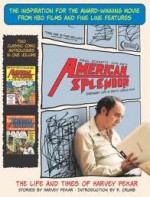
American Splendor: The Life and Times of Harvey Pekar – New Revised Review


By Harvey Pekar, R. Crumb, Gregory Budgett, Gary Dumm, Gerry Shamray,
Kevin Brown, Susan Cavey & Val Mayerik
(Ballantine Books)
ISBN: 978-1-84023-787-0

Before finding relative fame in the 21st century, Harvey Pekar occupied that ghastly niche so good at trapping the truly creative individual: Lots and lots of critical acclaim, and an occasional heart-breakingly close brush with super-stardom, without ever actually getting enough ahead to feel secure or appreciated.

One of those aforementioned brushes came in 1980s with the release of a couple of compilations of selected strips by mainstream publisher Doubleday that even to this day are some of his most powerful, honest and rewarding “literary comics” ever seen. By mercilessly haranguing, begging and even paying (out of his meagre civil service wages and occasional wheeler-deal) any artists who met his exacting intellectual standards, Pekar all but created the comics genre of autobiographical, existentially questing, slice-of-life graphic narratives whilst eking out a mostly lonely, hand-to-mouth existence in Cleveland, Ohio.

How the irascible, opinionated, objectionable, self-educated music-mad working stiff came to use the admittedly (then) impoverished comicbook medium to make a fiercely vital social commentary on American life of the ordinary Joe is a magical journey in the plebeian far better read than read about, but I’m going to have a crack at convincing any holdouts anyway.

Moreover, by the time you’ve seen this I’m already on to my next crusade…

This compendium combines and re-releases those seminal tomes in one big, bold edition and was released to tie-in with the award-winning 2003 indie film biography American Splendor, and opens with the superb contents of the 1985 release American Splendor: the Life and Times of Harvey Pekar, beginning by reproducing the introduction by early collaborator and modern Media Darling Robert Crumb before proceeding with a seductive welter of elegiac, confrontational, compulsive, challenging, painfully frank and distressingly honest observations that collectively changed the way English language comics were perceived, received and even created.

Rendered by Crumb, the excoriating graphic self-analysis begins with ‘The Harvey Pekar Name Story’ as the obsessive yet passive hunt for other people with the same name briefly gripped the self-confessed compulsive personality, whilst ‘The Young Crumb Story’ gave us Pekar’s take on the cartooning career of his collaborator, after which ‘A Fantasy’ again revisited the artist’s relationship with the writer: Pekar uncomfortably bragging over how he had browbeaten and gulled Crumb into drawing his scripts – and still was…

Gary Dumm illustrated the bizarre ‘Ozzie Nelson’s Open Letter to Crumb’ (written in 1972) describing the faded TV celebrity’s snotty pep talk to the cartooning degenerate, after which Crumb returned to deliver self-abusive insight as Pekar revealed ‘How I Quit Collecting Records – and Put Out a Comic Book with the Money I Saved’.

Greg Budgett & Dumm handled many of the most searingly honest introspectives such as ‘The Day Before the Be In’, the equally forthright and painful personal history sequels ‘Awakening to the Terror of the New Day’ and ‘Awakening to the Terror of the Same Old Day’ or the nigh-spiritual rationalisations of ‘Short Weekend – a Short Story About the Cosmic and the Ordinary’…

One of the most impressive facets of Pekar’s tales is the uncompromising depiction of the people he encountered in work or socially (if such a term can apply to such a self-admitted “judgemental jerk”) and the frankly brutal way he attempts to keep narrative polish out of his graphic reportage.

Incidents such as ‘A Compliment’ or ‘Jivin’ With Jack the Bellboy as he Goes About… Hustlin’ Sides’ and ‘Jack the Bellboy and Mr. Boats’ – all illustrated by Crumb – recount episodes with co-workers undistinguished, unremarkable and free of all dramatic embellishment or grace-saving charisma… but they are intoxicatingly real and appealing.

‘Read This’ (Budgett & Dumm) tells how even cynics can be surprised by people, whilst the Crumb-illustrated ‘Standing Behind Old Jewish Ladies in Supermarket Lines’ is as gently hilarious as their ‘Ridin’ the Dog’ vignette of cross-country bus travel is contemplatively reassuring.

Innovative Gerry Shamray tackled the wordy self-examination of life’s pointless frustrations in ‘An Argument at Work’ and the cathartic ‘Working Man’s Nightmare’ with aplomb and smart sensitivity, before Crumb resurfaced to draw an incredible familiar and unwelcome situation as the obnoxious ‘Freddy Visits for the Week End’. Regrettably we all have friends like him…

Pekar’s disastrous history with women was a frequent theme and ‘Ripoff Chick’ (by Budgett & Dumm again) showed why and how. The only difference between the author and most men was that he admitted up front that he wanted sex without complications or commitment…

‘One Good Turn Deserves Another’ (Shamray) invites us to share a typically penny-pinching secret, before Dumm tackled a quirky friendship and the perils of well-intentioned matchmaking in ‘Leonard & Marie’, and ordinary folk got tied up discussing theology and politics in Shamray’s wryly related ‘Noah’s Ark’. The artist then effectively encapsulated ‘Class Antagonism’ before Jewish intellectual Pekar again examined his ethnic and cultural roots by revisiting his relationship with Old World Hebrew ‘Emil’ (Dumm & Budgett) and the danger of first-hand accounts in the Crumb-illustrated ‘The Maggies (Oral History)’ and Shamray’s death-camp memoir ‘Kaparra’…

Crumb then turned in his most claustrophobic and impassioned drawing for the vibrant manifesto ‘American Splendor Assaults the Media’ after which the immensely stylish Kevin Brown limned a tale of frustrated selling out as Harvey attempted to schmooze up-and-coming movie star Wallace Shawn ‘Grubstreet, USA’, after which the first volume ended on a high of sorts with Pekar via Crumb temporarily resolving a ‘Hypothetical Quandary’.

The philosophising, reminiscing, ruminating, observing, eulogizing, questioning and fictively projecting promptly continues in From the Streets of Cleveland Comes… American Splendor: the Life and Times of Harvey Pekar, resuming the painfully honest – and to us here and now perhaps often unsettling and disquieting – accounts of normal lives with the Crumb-crafted classics ‘Pickled Okra (Okry)’, ‘Lunch with Carmella’, ‘Rollins on Time’ and ‘Visualize, Actualize, Realize’ – all containing commonplace friendly interactions with Pekar’s African-American co-workers that would make many genteel folk wince today…

A prospective hot date turned into a gruelling and pointless exercise in furniture moving in the Budgett & Dumm saga ‘Guerrilla Theatre: July ’74 – on the Corner’ with a punch-line not apparent until their ‘On the Corner… a Sequel: June 1976’, after which inker turned illustrator to relate the nostalgic revelations of young lust in the 1950s on the ‘Roller Coaster to Nowhere’, but some measure of cosmic karma was achieved decades later when Pekar finally achieve his  childhood goal of owning ultra-hip and so, so cool ‘Stetson Shoes’…

‘Mrs. Roosevelt and the Young Queen of Greece’ and ‘Busman’s Holiday’ by Dumm & Budgett celebrate the simple joy of guys simply sitting around shooting the breeze, whilst Crumb’s delicious treatment of Pekar’s love for old fashioned Jewish kvetching makes ‘Miracle Rabbis – a Dr. Gesundheit Story’ a minor masterpiece of comics.

‘An Everyday Horror Story’ (Shamray) then recaptures the tension and terror of Pekar’s first brush with serious illness – or so the author thought.

Always a healthy, vigorous but exceptionally excitable shouty man, Pekar got properly sick for the first time in his life and faced the very real prospect of never being able to speak again. This exceedingly gripping account perfectly presents all the fear, frustration, metaphysical pleading and moving emotional and practical support Harvey’s friends and then wife provided – and what happened next…

‘Alice Quinn’ drawn by S. (Susan) Cavey then detailed a portentous meeting with the girl who got away before Shamray’s powerfully captivating ‘I’ll be Forty Three on Friday (How I’m Living Now)’ offers a rare moment of optimistic clarity, and Cavey’s ‘Jury Duty’ shows how even the most earnest hopes and honest ambitions can worry the bejeezus out of “normal” folks…

For most of his life Pekar was that rarest of creatures – an un-typical American who chose not to drive (for good, sound and to my mind admirable reasons). Thus he often spent time cadging lifts and fretting about the etiquette of returning favours to his civilian chauffeurs. In ‘A Ride Home’ (Cavey) the impatience and anxiety grew momentarily too much, whilst in Dumm’s ‘Free Ride’ a long-standing arrangement with a previously admired old Jewish guy escalated into something ferociously passive-aggressive, quite strange and impossibly worrisome…

The same traumas afflicted Pekar when he foolishly bought his ex- wife’s automobile only to find it a cursed Jonah, which plagued him for many snowbound months in ‘Old Cars and Winter’ by Cavey. The superb and vastly underrated Val Mayerik joined the select band of artistic collaborators with the gloriously uplifting ‘A Marriage Album’, depicting life with beloved third wife with Joyce Brabner, and explored Pekar’s wild street-fighting juvenile days and later proclivities in ‘Violence’, whilst ‘History Repeats Itself’ offered a moment of resigned contemplation over teen spirits courtesy of Seán Carroll.

Mayerik contributed a final brace of gently contemplative pieces beginning with ‘A Matter of Life and…’ which saw an older, calmer author recap his life with a little more kindness than ever before, whilst an uneventful bus ride found Pekar gleaning a wealth of down-home ‘Common Sense’ from a voluble instructor driver before this masterful meander through a truly unique mind concludes with Crumb and the perfect solution to life’s ills with ‘Mr. Boats’ Miracle Cure’…

With art by individualistic collaborators who were never content to stay in their Comfort Zones but always endeavoured to make their contributions unique unto the story, and selected from a most adventurous and historically creative decade, these tales of working life, self-esteem, achievement, failure, religion, the media, Nazi atrocity, guilt, acceptable bigotry, proudly defended ignorance, friendship, aloofness and the art of understanding women are timeless slices of life’s dreary brilliance.

As a man who constantly assessed and re-examined his own creative worth and self, Harvey Pekar opened up his life to the world and changed it by being ordinary and average.

…Except he never was, as this superb insight into the mind and heart of a truly original comics creator will attest. This splendid, engrossing book offers readers a chance to see the humour, confusion and frustration of being an American thinker in a world that simply doesn’t value brains and spirit anymore – and I fear that’s going to be one of humanity’s eternal verities…

© 1976-1986, 2004 Harvey Pekar, LLC. All Rights Reserved.
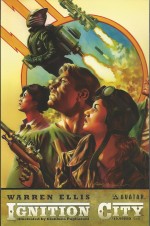
Ignition City


By Warren Ellis, Gianluca Pagliarani & Chris Dreier (Avatar Press)
ISBN: 978-1-59291-087-8

We don’t do clear, wide-eyed optimistic science fiction space opera any more. We’re all much more cynical, defensively sardonic and glumly disappointed: betrayed by the bland Future we inherited rather than the gleaming, enticingly simplistic one we were promised. It’s the 21st century, I still haven’t got my jet-pack and I’m not going to shut up until I get one…

Nevertheless the iconic heroes and villains invented for those now near-extinct Cold-War 20th century tomorrow people still provide the raw material for gripping, evocative post-modern futurist fodder and a few comics creators are truly proficient in blending that cheated Sense of Wonder with modern sensibilities to make whole new science fiction sensations.

One of the better recent modern myth-busting mini masterpieces was a 5-part miniseries from 2010: brainchild of acerbic wunderkind Warren Ellis, whose clear love of all things Wild, Black and Yonder have previously resulted in such superb speculative thrillers as Transmetropolitan, Ministry of Space and Aetheric Mechanics (this last also illustrated by Gianluca Pagliarani, the superbly effective co-creator of the particular space romp under the lens here).

The tale itself is an old and familiar one, but the setting is truly what gives this dark yarn its shockingly addictive appeal. On this Atompunk/Dieselpunk Earth, World War II was cut short when Martians invaded, prompting a couple of explosive decades when square-jawed, burly humans rode rockets to the stars and battled horrendous dictators such as Kharg the Killer, brutal despot of a fantastic alien empire who picked the wrong side when he allied himself with Adolf Hitler…

Now it’s 1956 and the lustre has tarnished for most Terrans regarding space.

With Cold War politics, economic woes and the fear of alien contamination – physical, cultural and social – the planet has turned against space and spacers.

There is only one place on Earth where ships even exist any more – the self-contained enclave island of Ignition City – where all those veteran astronauts grimly await the day when all off-world travel is finally banned.

For young Mary, daughter of interplanetary legend Arthur “Rock” Raven, it’s a cruel fate. Like so many who have been to infinity and beyond, she is addicted to the wonders of the void and the prospect of a life imprisoned on one world is unbearable.

When she gets notification that her dad has died in the interzone settlement ofIgnitionCityshe decides to go there and recover his personal effects – despite strenuous resistance from assorted governments, various Powers-that-be, close friends and her own mother. She has no illusions about her dad or the spacer’s life, but it’s what she wants and she’ll chase any remote chance to hold onto it. Ignoring all that pressure Mary consequently discovers that, as always, nothing is as it seems.

The artificial island is an anarchic hellhole. Draconian military outposts around the coast enclose and isolate a derelict, ramshackle and squalid shanty town of broken beings and beasts from a dozen worlds, eking out an existence amongst the ruins of ships and exotic cosmic technological debris. Everybody seems to be simultaneously waiting for one last chance to get off-world or just die and fade away.

Passing through immigration she first learns how the City is deadly dangerous and that corruption is a way of life as the civil servants confiscate her gun…

In the star-sucking slums, legends of her youth are growing old disgracefully and gradually dying. Saviour of the Universe Lightning Bowman has become the settlement’s chief gunrunner and his once-beloved Gayle Ransom runs a local bar: both eking out a living catering to the daily needs of an army of disillusioned spacers, and aliens trapped by the tide of the times. Their old comrade Doc Vukovic is a crazy hermit now: spending his days prowling the huge junkyards, cobbling together a ship to take him away from the hell of his home world. Violent death is a daily occurrence and only frowned upon because it generates unwelcome paperwork for corrupt Port Authority officials like the jetpack-riding Marshal Pomeroy.

Checking in to the boarding house where her dad died, Mary goes looking for answers and discovers Rock Raven was murdered in his bed. Inspired by discovering the “How”, her efforts to obtain a weapon don’t go as easily, but she’s still determined to stick around and find the “Why” and the “Who”…

Even greedy, paranoid, far-fallen from grace Cosmic Champion Bowman won’t sell her a weapon. He only urges her to get the hell out of the doomed city…

Sticking around and poking her nose in all the wrong places, Mary makes a few unlikely friends but no progress until she reclaims her father’s impervious old briefcase. Deftly manipulating a lock which a lot of people have clearly tried to breach, Mary finds the murdered spacer’s journal – and his fully-charged, highly illegal, honking great, souped-up ray-gun… just the kind of thing specifically prohibited by the authorities.

Now, she thinks, some answers are going to be forthcoming…

Soon, amidst a storm of blood and lethal radiations, she has uncovered why her father died, a sordid government conspiracy involving Humanity’s greatest foe and, with fallen arch-scientist Dragomir Vukovic (builder of the first rocket-ship in history), united the self-loathing, lost and ragged remnants of the Earth’s greatest – and only – star-panning generation to expose the greatest shame of the world which turned its back on the future…

In case you’re dense or just young, this epic space-western classily references, dismantles and reassembles all those glorious heroic archetypes and wonder-men of the pulp science fiction era (complete with cunning conceptual name checks for the iconic characters old farts like me grew up adoring: from the obvious Buck Rogers and Flash Gordon to King of the Rocketmen, the Lensmen, Dan Dare and the rest) in a sharp, bleakly nihilistic tale beautifully rendered and crisply told, that still manages to enflame the frustrated simmering dreams in all of us doddery dreamers cheated out of the stars by shoddy tawdry reality…

Harsh, uncompromising and turbulently trenchant, this overwhelmingly entertaining tome also includes a host of design sheets, covers, variants and pin-up pages in a glorious Gallery section to cap off a powerful paean of praise to forgotten tomorrows which long-time sci-fi fans, comic readers and newcomers alike will adore.
© 2010 Avatar Press, Inc. Ignition City and all properties ™ & © 2010 Warren Ellis.

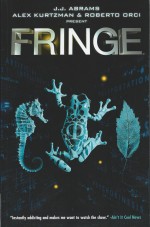
Fringe


By Zack Whedon, Julia Cho, Mike Johnson, Alex Katsnelson, Danielle DiSpaltro, Matthew Pitts, Kim Cavyan, Tom Mandrake, Simon Coleby & Cliff Rathburn (WildStorm)
ISBN: 978-1-4012-2491-2

Comicbooks always enjoyed a long, successful affiliation and almost symbiotic relationship with television, but in these days when even the ubiquitous goggle-box business is paralysed and endangered by on-demand streaming, too many channels and far too much choice, the numbers and types of program that migrate to funnybooks is increasingly limited.

Excluding kids’ animation shows, cult fantasy adventure series now predominate in this dwindling arena and one such that made an impressive – albeit troubled – transition to the printed page featured the enthrallingly bizarre cases of the FBI’s “Fringe Division” – a joint Federal Task Force assembled to tackle all threats to Homeland Security presented by unexplained phenomena.

Over five seasons from 2008, the TV series wove an intricate tapestry of technological terrors into an overarching grand design starring ex-lab rat and current FBI agent Olivia Dunham, institutionalised experimenter Dr. Walter Bishop and the freshly paroled scientist’s estranged son Peter; who were forced together and given a remarkably free hand to deal with a growing epidemic of ghastly – apparently unconnected – events.

Using government resources and the suspiciously convenient aid of scientific and industrial powerhouse Massive Dynamic – a company formed by Bishop Senior’s old lab partner William Bell – the team every week confronted untold horrors ranging from genetic monsters and abominations, technological terrorists, mad scientists, unsanctioned trans-human experimentation, ancient civilisations, hidden cults, purported alien invasions, time travel, parallel universes and even weirder stuff…

That all sounds like a lot to take in before reading a book cold, but even if you are unaware of the parent series this particular collection, re-presenting stories from the first Fringe 6-issue miniseries, ought to be worth a moment of your time; especially since it was designed as a prequel describing the growing relationship and early exploits of college wonder-kids Bell and Bishop in the heady days before William went incomprehensibly corporate and Walter went dangerously mad…

Moreover each chapter on the road to Fringe (this saga ends with Agent Dunham rescuing the brilliant but bewildered Walter Bishop from a decades-long incarceration in draconian mental hospital St Claire’s – as seen in the television pilot) is supplemented with an eerie many-layered, self-contained instalment depicting the kind of case the unit was formed to combat…

Almost entirely illustrated by the moodily magnificent Tom Mandrake, the dates with destiny begin in ‘Bell and Bishop: Like Minds’, scripted by Zack Whedon & Julia Cho, wherein shy, unassuming young graduate student Walter meets his frivolous future lab partner William Bell. It’s 1974 and Harvard has no idea what the at-first acrimonious odd couple are capable of…

When mystery Man-In-Black Richard Bradbury offers them unlimited resources and absolutely no annoying legal or ethical restrictions to assist in their researches in Quantum Entanglement, the Young Turks – after some initial qualms – soon find themselves at a top-secret private facility in Alaska in the Mike Johnson authored ‘Excellent Soap’.

Although the Fresh Start Soap Company is ostensibly a commercial enterprise, the student geniuses are keenly aware that they’re now working for a clandestine government agency in their quest to create a feasible teleportation device, but are pathetically unprepared for the draconian shop of horrors they find themselves in…

Only sexy scientist Dr. Rachel Matheson seems to be on their side as they plan ‘The Escape’ (written by Alex Katsnelson) but since even their very thoughts are open to the sinister supervisors of the facility, nobody can truly be trusted – even after they make their spectacular, physics-bending getaway…

As Mandrake stepped up the artistic angst, Danielle DiSpaltro & Katsnelson took over for ‘Bell and Bishop: Best Laid Plans’ wherein the older, wiser pair found that they literally can’t refuse a “request” from the US Air Force to examine a potentially alien artefact recovered after a raid in Argentina. With no choice and the temptation of something truly unknown to tinker with the students set to, but realise too late that letting Belly’s dog run loose in the lab was a really bad idea…

Catapulted back to Nazi Germany in 1945, William is forced to admit to his dubious ancestry when ‘It Runs in the Family’ (DiSpaltro & Katsnelson) leads them to a top-secret factory where the artefact was built. Moreover it was designed by a young Wehrmacht genius who would one day beBell’s father…

This section then ends with ‘Bell and Bishop: The Visitor’ (DiSpaltro, Justin Doble, Katsnelson & Mandrake) as, in 2008, outrageously over-medicated psychiatric patient Walter Bishop endures another punishing round of electro-convulsive therapy and refuses to deny the memories we’ve shared for the previous five chapters.

However institute director Sumner is unaware that the FBI agent “treating” his brilliant patient is an impostor tasked with extracting Bishop’s technical secrets and hidden discoveries. Even as the genuine Feds move to have Walter released, the still-brilliant savant is executing his own plans to get free and end his daily torments.

Good thing too – since the fraudulent inquisitor has orders to let nobody else have access to his distraught subject’s drug-drowned memories…

As the main story leads into Walter’s introduction to Olivia, this collection seamlessly slips into the aforementioned Strange Cases beginning with ‘The Prisoner’ scripted by Katsnelson & DiSpaltro with art from Simon Coleby & Cliff Rathburn, wherein a happily-married decent citizen suddenly wakes up in the body of a maximum-security convict – and that’s only his first stop, whilst ‘Strangers on a Train’ (Katsnelson, Matthew Pitts & Mandrake) offers a bewildered spy a terrifying, unending Moebius trip when he has to courier a mysterious device to his unreachable final destination…

On the birth of a baby whose very presence killed everything near him, the Government stepped in and raised the boy in utter isolation and in the interests of National Security. ‘Run Away’ by Johnson & Mandrake showed what happened years later after the lad had grown into a rebellious teenager, desperate for human contact and smart enough to escape from the High Security lab he’d always been penned in.

In ‘Space Cowboy’ (Kim Cavyan & Mandrake) a celebrated Astronaut’s unexpected death revealed some unwelcome effects about the “vitamins” his superiors had been making him take, and this chilling thrilling compendium closes with ‘Hard Copy’ by Johnson & Mandrake and the final shocking scoop of TV journalist Michelle Taylor whose sensation-chasing “weird science” reports always led her back to the Global Good Guys corporation Massive Dynamic.

It was such a shame she never paid better attention to the stories she broadcast or remembered that nobody was irreplaceable. Still, no one noticed when she was…

Dark, clever and immensely entertaining in the classic conspiracy theory mould, this book is a smart and very readable fiction-feast even for those with no knowledge of the source material, whilst fans of the show will reap huge extra enjoyment dividends by talking a sneaky peek into this catalogue of the unknown…
© 2010 Warner Bros. Entertainment Inc. All Rights Reserved. Fringe and all characters, distinctive likenesses and related elements are ™ of Warner Bros. Entertainment Inc.

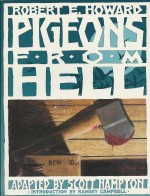
Pigeons from Hell


By Robert E. Howard, adapted by Scott Hampton (Eclipse Books)
ISBN: 0-913035-69-6 (HC), 0-913035-68-9 (PB)

Robert Ervin Howard is justly celebrated for his burly, barbarian sword and sorcery creations such as Conan, Kull, Bran Mak Morn and others but as a successful jobbing writer in the heyday of pulp fiction he also turned his blazing typewriter to most of the other extant genres of the era. Moreover, as aficionados of his blistering fantasy fiction are well aware, he was a dab hand at creating tension, suspense and moody macabre horror.

During the too-brief time of his creative peak he crafted a select pack of chilling spooky supernatural stories set in the evocative southern milieu known as ArkLaTex – a doom-shrouded, Deep South meeting-point of the darkest corners of Arkansas, Louisiana, Oklahoma and his beloved Texas.

Inspired by old stories heard at his grandmother’s knee Howard transformed oft-told anecdotes into masterpieces of terror such as ‘The Shadow of the Beast’, ‘Moon of Zambebwie’, ‘Black Hound of Death’, ‘Black Canaan’ and the yarn under scrutiny here: a creation described by Stephen King as “one of the finest horror stories of our century”…

The tirelessly prolific Howard committed suicide in 1936 and the prose Pigeons from Hell (unsold since its creation in 1932) was published posthumously in the May 1938 edition of premier pulp Weird Tales. It has become a classic not just of the genre but also a notional inclusion of the blackly prestigious Southern Gothic movement of writers such as William Faulkner, Erskine Caldwell, Thomas Wolfe, Tennessee Williams and others.

In 1988 the original text was incorporated into a stunning, lavishly painted adaptation by Scott Hampton released by West Coast maverick publishers Eclipse and, despite a more recent version by Joe R. Lansdale & Nathan Fox in 2008, remains one of the best graphic novels ever produced, in no small part due to its being crafted in magnificently lush, larger-than-life glossy square, white pages produced in the oversized European Album format of 285 x 220mm rather than the standard US proportions of 258 x 168mm.

Following a passionate Introduction from Horrorist Supreme Ramsey Campbell the exercise in the unnatural opens with ‘The Whistler in the Dark’ as two perambulating New Englanders bumming their way across America on a motoring vacation reach the deep dark southlands region of “Piney Woods” and decide to spend the night in a decrepit and abandoned antebellum plantation house.

Crashing out on the musty floor of the main downstairs room they lapse into exhausted sleep but in the middle of night Griswell is awoken by bad dreams. It had begun with a replaying of the pair’s arrival at sunset, their discovery of the old building and the oddly ethereal white birds their presence had disturbed. It had moved on to their quick, cold repast and weary lapse into slumber before shifting into nightmare feelings of disquiet. When he had started awake again, anxious and disturbed, it was with images of ghostly doves, hidden rooms with ancient hanging bodies and a sense that something was hiding just beyond his sight…

Trying to shake himself awake Griswold suddenly heard an eerie whistling and, helpless, watched his companion Branner rise as if sleepwalking to ascend the grand staircase to the upper storey into the all enveloping darkness. Incapable of movement Griswell followed the sounds of his friend’s progress and suddenly, a hideous scream…

Before he could move he heard Branner’s slow return and, when moonlight allowed him a glimpse of his companion, the sight was enough to send Griswold screaming helter-skelter into the night…

Reaching their automobile he found he vehicle infested with snakes, and running on felt some unknown beast at his heels. Careering on, he ran straight into a local lawman who instantly emptied his revolver into the shadow that pursued…

‘Return’ fully introduced the capable Sheriff Buckner, who surprisingly accepted much of Griswell’s incredible tale and provided historical insight into the woeful tale and sinister reputation of the Blassenville Manor as he and the terrified vacationer revisited – in daylight – the scene of dreadful slaughter.

Quickly ruling out the possibility of argument and murder amongst the friends, Buckner began searching the house for the true killer but came up empty. Furthermore, knowing how bad things would look in a rational courtroom, he invited the traumatised Griswell to help him get to the truth – by joining him in spending another night in the house…

‘The Snake’s Brother’ finds them preparing for that horrific prospect by researching the tragic history of the last of the Blassenvilles. In the years following the Civil War three unwed daughters and a cousin, struggling to maintain the old pile, were eventually joined and chaperoned by their cold and brutal Aunt Celia,  who had returned from the West Indies to watch over them.

Celia was a terrifying creature, as harsh with the girls as she was with the remaining plantation staff and her own much-maltreated mulatto maid Joan…

The legend of the girls’ mysterious and sudden disappearance was common knowledge, but for more details Buckner and Griswold questioned an aged Negro who used to work on the plantation. When pressed, the still-mortally terrified dotard Jacob revealed a fantastic tale of brutal oppression, serpent worship, voodoo and ghastly unleashed, brooding vengeance before he was hideously struck down by the power that lurked in mansion…

Appalled, deeply shaken but still determined, Buckner and Griswold head for the Manor, mistakenly believing that they have a handle on what unquiet horror haunts the place and how to handle it in ‘The Call of Zuvembie’. They have jumped to a ghastly, tragic wrong conclusion…

Not only is the original prose work one of the best pieces of horror fiction ever written, but in this rare instance the graphic adaptation – crafted over two long and meticulous years byHampton- more than matches the power and all-encompassing mood of its source material. This is a classic of the graphic narrative medium no fan will want to miss – but only with all the lights on…
© 1932, 1988 the Estate of Robert E, Howard, Glenn Lord Executor. Adaptation and painting © 1988 Scott Hampton. Introduction © 1988 Ramsey Campbell.

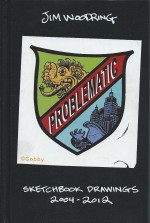
Problematic: Sketchbook Drawings 2004-2012


By Jim Woodring (Fantagraphics Books)
ISBN: 978-1-60699-594-5

Some creators in the world of comics just defy description and their graphic novels and collections are beyond the reviewer’s skills (mine certainly) to elucidate or encapsulate. Some are just so pedestrian or mind-numbingly bad that one simply can’t face writing about them. Others are so emphatically wonderful that no collection of praise and analysis can do them justice.

At the apex of that tricky funnybook pyramid is Jim Woodring: a position he has maintained for years and clearly appears capable of holding for years to come. Woodring’s work is challenging, spiritual, philosophical, funny, beautiful and extremely scary. And, even after reading that sentence, you will have absolutely no idea of what you will be seeing the first time you read any of it.

Moreover, even if you have scrupulously followed cartoonist, animator, Fine Artist, toy-maker and artistic Renaissance Man James William Woodring through an eccentric career spanning his first mini-comics in 1980, the groundbreaking Fantagraphics magazine series such as Jim (1986), the notional spin-off Frank (of which Weathercraft was the latest incredible instalment), Tantalizing Stories, Seeing Things, Congress of the Animals or his more mainstream features such as Star Wars and Aliens tales for Dark Horse, you’ll still have no idea how you will respond to his newest work.

Woodring delivers surreal, abstract, wild, rational, primal cartooning: his clean-mannered art a blend of woodblock prints, Robert Crumb style, wry humour and eerie conviviality, Dreamscape, religious art and monstrous phantasmagoria. His works form a logical, progressional narrative pockmarked with multiple layers of meaning but generally void of speech or words, magnificently dependent on the intense involvement of the reader as a fully active participant.

So you can imagine what his first formative thoughts, passing observations and moments of wild unfettered graphic whimsy must be like…

This stunning little hardback opens the gates of dream just a crack and offers selected graphic snippets from his sketchbooks covering the superbly productive period following the millennium and offering a few choice views of the other graphic avenues he could have travelled if the world of harnessed hallucinations had not such a strong hold…

In his ‘Introduct’ Woodring describes his abandonment of traditional graphic tomes for diminutive “Moleskine” doodle-pads, using the flimsy palm-sized books to capture ideas roughly, quickly and with intense immediacy …and the gimmick clearly works.

The material collected here – mostly enlarged 140% up from the originals – simply buzzes with life and energy.

Many Frank regulars appear, including the eponymous Krazy Kat-like ingénue himself, and there are absolute torrents of bizarre, god-like household appliances, vulture-things, frog-things, rhino-things, plant-things and unspeakable Thing-things, that inhabit the insanely logical traumic universe of his sensoria.

There are snippets of reportage, plenty of designs and even roughs and layouts from finished stories. Woodring also proves himself a pretty sharp pencil when it comes to capturing the weird moment of reality we all experience, a keen caricaturist and a deliciously funny “straight gag-man”, glamour artist and capturer of friends in idle moments – just like all of us sad art-school escapees who break into a cold sweat whenever we realise we’ve left the sketchbook at home and there’s only beer-mats and napkins to draw on….

Woodring is not to everyone’s taste or sensibilities – for starters, his drawings have a distressing habit of creeping back long after you’ve put the book down and scaring the bejeezus out of you – but he is an undisputed master of the form and an innovator always warping the creative envelope.

As such this welcome peek into his creative process and conceptual/visual syllabary offers encouragement and delight to artists and storytellers of every stripe, as well as being just plain wonderful to see.

All art-forms need such creators and this glorious hardback monochrome tome could well change your working and reading habits for life.

Go on, aren’t you tempted, tantalized or terrified yet? What about curious, then…?
© 2012 Jim Woodring. This edition © 2012 Fantagraphics Books. All rights reserved.

Barack Hussein Obama


By Steven Weissman (Fantagraphics Books International)
ISBN: 978-1-60699-623-2

Steven Weissman was born in California in 1968 and grew up to be an exceptionally fine and imaginative cartoonist. He has worked for Alternative Comics, Last Gasp, Dark Horse, Marvel, DC, Vice and Nickelodeon Magazine among others, and his artistic sensibilities have been influenced and shaped by such disparate forces as Super-Deformed manga, “Our Gang” comedies, Abbott and Costello, Dan Clowes, Mike Allred and Peanuts – the strip, not the foodstuff.

Much of his groundbreaking, award-winning early work, dating from the mid-1990s, offered a post-modern, skewed and alternative view of friendship, childhood, world weirdness and people’s meanness and can all be enjoyed over and over again in such stunning compilations as Tykes, Yikes!, Lemon Kids, Don’t Call Me Stupid, Mean, Chewing Gum in Church, White Flower Day, Chocolate Cheeks and others. The French and Japanese – who really know quality comics – love him lots.

In 2012 Weissman literally went back to the drawing board, un-and-recreating himself and his aesthetic methodology for a weekly online strip entitled Barack Hussein Obama which has since been collected into a stunning and unbelievably enchanting hardcover cartoon book about the unsuspected nature of modern America.

Spiky, acerbic, tellingly mundane and captivatingly absurdist, it follows the day to day tribulations of this ordinary shmoe who just happens to be the President of the USA as he distractedly fails to deal with that persistently annoying old Joe Biden guy, the pushy, overly excitable Rodham Clinton dame and that obnoxious oaf Newt all whilst trying to placate his testily disappointed wife and their terminally trendy kids Malia and Sasha.

It’s a full, if confusing life, always filled with minor crises. When he’s not being accidentally racist at Press Conferences or making jokes journalists don’t get, Barack is happily sharing old family recipes or chatting with foreign dignitaries he can’t understand, even if Joe is always butting in, telling him off and acting hurt whilst the Secret Service guy is constantly hanging around looking mean…

…And then there’s that bad-tempered Clinton lady sneaking off to get cosy with sex-bomb Muammar el-Qaddafi, the recurring stiff-necked, stuck-up ghost of long-dead President James Garfield peddling advice, the ongoing hunt for Osama Bin Laden and the old lady who managed to steal Barack’s identity and bought all that pet food and piano lessons…

No wonder the President needs to occasionally slip away now and then to get totally baked…

All in all though Barack thought it was going pretty well until the bird started talking to him. It wasn’t long before Mr. President transformed into a gigantic parakeet on Air-force One and headed for the peacefully deep blue skies…

With guest appearances – sort of – by Truman Capote, Nicholas Sarközy, Alfred E. Neuman, The Punisher’s War Journal and more, this is a look inside the Oval Office like none you’ve ever seen, but no matter how much Tea Party Republicans would like it to be, it certainly isn’t another searing expose of dubious shenanigans from the pretender to a stolen throne.

It is, though, a generous, gentle and spectacularly surreal trip into the head of a very special and oddly observant US citizen who has creatively concocted a world that all rulers and/or prospective despots should visit at least once.

This isn’t the real Obama, but it might well be the one the average American deserves…

A lot of very smart people are saying a lot of very deep, very clever and appreciative things about this deliciously winning book, so I won’t waste my time competing with them. I will however tell you that Barack Hussein Obama is one of the most enticing, intriguing and sheerly delightful reads of the last year and anybody with half a brain – or even more: more is always better – would be crazy not to pick up a copy.

© 2012 Steven Weissman. All rights reserved.

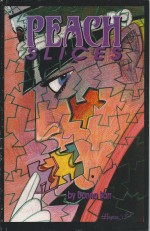
Peach Slices


By Donna Barr (Aeon/Mu)
No ISBN:                    2006 edition: 978-1-89225-325-5

The Desert Peach is the supremely self-assured and eminently efficient gay brother of Erwin Rommel, the legendary German soldier universally hailed as “the Desert Fox”. Set – usually – in Africa during World War II, this priceless gem of a series effortlessly combines hilarity, absurdity, profound sensitivity and glittering spontaneity, with stories describing the dalliances and daily tribulations of Oberst Manfred Pfirsich Marie Rommel; dutiful albeit unwilling cog in the iniquitous German War Machine, yet one determined to remain a civilised gentleman under the most adverse and unkind conditions.

However, although in his own ways as formidable as his beloved elder sibling, the caring, gracious and genteel Peach is a man who loathes causing harm or giving offence. Thus he spends his service commanding the dregs of the military in the ghastly misshapes of the 469th Halftrack, Gravedigging & Support Unit of the Afrika Korps, daily endeavouring to remain stylish, elegant, civil and ever so patient with and to the assorted waifs, wastrels and warriors on both sides of the unfortunate global conflict.

It’s a thankless, endless task: the 469th houses the worst the Wehrmacht has ever conscripted, from malingerers and malcontents to useless wounded, shiftless conmen, screw-ups and outright maniacs.

Pfirsich unilaterally applies the same decorous courtesies to the sundry natives inhabiting the area and the rather tiresome British and Anzac forces – not all of whom are party to a clandestine non-aggression pact Pfirsich has agreed with his opposite numbers in the amassed Allied Forces. In fact the only people to truly annoy the peace-loving Peach are boors, bigots, bullies and card-carrying Blackshirts…

The romantic fool is also passionately in love with and engaged to Rosen Kavalier: handsome Aryan warrior and wildly manly Luftwaffe Ace, but arguably the real star of these fabulous frothy epics is the Peach’s long-suffering, unkempt, crafty, ill-mannered, bilious and lazily scrofulous orderly Udo Schmidt, a man of many secrets whose one redeeming virtue is his uncompromising loyalty and devotion to the only decent man and tolerable officer in the entire German army.

This eccentric aggregation of extras, excerpts and exotica was first released in 1993, gathering extraneous material from a variety of sources and covering the period 1987-1993: as much an affectionate art-book as delicious dose of non-or mis-canonical hi-jinx. The entire package was subsequently re-released in 2006 in a Directors Cut edition which added issue #25’s WWI Transylvanian Hammer-Horror pastiche ‘Beautiful’ to the mix and included reminiscences, background commentary and creator kibitzing regarding all the esoteric tales and titbits.

The gloriously visual treat begins with an Unused Pin Design and a splendid Badge Design from the San Diego Comic-Con 1989 after which a quartet of stunning and bizarre Beer Labels (for ales created by micro brewer Wendell Joost in 1988) precedes ‘Peach on Earth’ from A Very Mu Christmas 1992 – one of the very best Christmas stories ever produced in the notoriously twee and sentimental comics field.

Set in the harsh December of 1945, it follows the demobbed and repatriated Pfirsich as he wanders through his broken and occupied homeland, avoiding trouble and American troops but not the gnawing starvation and freezing snows which would kill so many returning, defeated German soldiers. On the verge of despair and death the Peach is brusquely adopted by a strange, brittle and utterly fearless little boy who has only known the Fatherland in the throes of decline, but still looks eagerly to a brighter tomorrow…

This is followed by a rather risqué Rosen Kavalier pinup from Paper Phantasies (1991) and an unused strip originally commissioned by Rip Off Press whilst ‘Whipping Boy’ is a full-on adult escapade of the unconventional lovers as is ‘I Am What I Am… (I Think)’ a “Desert Peach Pitt Stop” that also languished unpublished until this collection preserved it.

Bits ‘n’ Pieces was a short-lived self-published magazine the indefatigable author used to disseminate assorted works which never made it into the regular, normal-length Desert Peach title. ‘The Veteran’ comes from the first issue in 1991 and returned focus to the motley cast of the hapless 469th for adeliciously philosophical foray that starred a most peculiar and innocent warrior named Thommi, whilst, after a frolicsome Desert Peach pinup from the 1989 Amazing Heroes Swimsuit Special, ‘Hindsight’ (Bits ‘n’ Pieces #1 1991) dabbles into personal politics before ‘Reflections’ from #3 offered a few New Year’s observations on the cast and stars from Barr herself.

The 1991 San Diego Comic-Con booklet provided another beguiling pinup before ‘Udo and the Phoenix’ (from Xenophon #1, 1992) related another tale of the spirited Arab horse accidentally owned by Udo and cared for by the equally magnificent Pfirsich, whilst ‘Reluctant Affections’ (from Bits ‘n’ Pieces #1 1991, before being redrawn as ‘Pigeonholed’ for Gay Comics #16) explored a tender, fragile moment and adorable chink in the macho armour of uber-Mensch Rosen…

‘The More Things Change’ from benefit book Choices in 1992 debates the abortion issue with characteristic abrasive aplomb after which ‘Sweet Delusions’ (Wimmin’s Comix #16 1991) gets down to the eye-watering nitty-gritty of Rosen & Pfirsich’s love life and ‘Wet Dream’ (Bits ‘n’ Pieces #3 1991) follows up with more of the same in a hilariously wry maritime moment.

Barr’s creations are never far from always internally consistent flights of extreme fantasy as seen in glorious diversion ‘The Oasis’ (Centaurs Gatherum 1990) with Pfirsich and brother Erwin finding a militarily priceless waterhole with a fantastic secret and forced to spend a truly outrageous time trapped as hybrid half horses…

This captivating chronicle concludes with a selection of ‘Peach Pits’ miscellanea: illustrations, roughs and small press items culled from the Desert Peach Musical books, t-shirts and posters. There’s some fascinating rough layouts from the aforementioned ‘Peach on Earth’, an unused page from DP #17 (the superb ‘Culture Shock’ as seen in The Desert Peach: Marriage & Mayhem) and assorted stuff from Zine Zone #13, 1992, covers from Germanophilic Amateur Press Association magazine ‘Krauts’ and shirt designs before the whole outrageous affair ends well with an implausibly “true tail” starring half-horse Stinz Löwhard, Pfirsich and Erwin in a ‘Character Revolt’ from 1987’s Fan’toons 19.

Desert Peach adventures are always bawdy, raucous, satirical, authentically madcap and immensely engaging; bizarre (anti) war stories which rank amongst the very best comics of the 1990s. Even now they still pack a shattering comedic kick and – if you’re not quite ready – poignantly emotional charge.

The Desert Peach ran for 32 intermittent issues via a number of publishers and was subsequently collected as eight graphic novel collections (1988-2005). A prose novel, Bread and Swans, a musical, and an invitational collection by other artists entitled Ersatz Peach were also created during the strip’s heyday. A larger compendium, Seven Peaches, collected issues #1-7 and Pfirsich’s further exploits continue as part of the Modern Tales webcomics collective…

Illustrated in Barr’s fluidly seductive wood-cut and loose-line style, this book is another must-have item for lovers of wit, slapstick, high drama and belly-laughs and grown-up comics in general. All the collections are pretty hard to find these days but if you have a Kindle, Robot Comics released individual comicbook issues, and for anybody with internet access and refined tastes there’s always the webcomic to fall back on…

© 1987-1993 Donna Barr. All rights reserved. The Desert Peach is ™ Donna Barr.


Christmas miracle moment: Just as we were preparing to post this, the multi-talented Mirth-Meister herself dropped us an update on availability and I’m not mean enough to keep the contents to myself in this season of sharing.

So to see Peach magic for yourself check out websites http://www.donnabarr.com or http://thedesertpeach.com and if you just have to own your own Peach product http://www.lulu.com/desertpeach, offers a huge double collection that also comes as economical loadable files and The Desert Peach (plus Stinz and Bosom Enemies) are all re-printed with colour extras at http://www.Indyplanet.com at marvellously economical rates.

Enjoy!

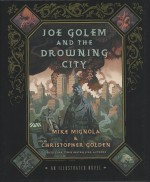
Joe Golem and the Drowning City – an Illustrated Novel


By Mike Mignola & Christopher Golden (St. Martin’s Press)
ISBN: 978-0-312-64473-4

Win’s Christmas Gift Recommendation: merry hell and utterly engrossing… 8/10

As well as being involved with some of the very best superhero yarns of the late 20th century, Legendary fantasist and comics-creator Mike Mignola has carved himself a splendid and memorable niche in the industry’s history by revitalising the sub-genre of horror-heroes via his superb Hellboy, B.P.R.D. and Lobster Johnson tales, creating his own very special dark place where thrill-starved fans can wallow in all things dire and dreadful…

Clearly he has far more ideas than he can successfully manage in one lifetime as well as a deep and abiding love for the classical supernatural thriller medium, as evidenced by this superb pastiche of the writings of horror pioneers H.P. Lovecraft and August Derleth tinctured with lashings of pulp adventure flavourings in the manner of Clark Ashton Smith, Walter B. Gibson and Robert E. Howard…

You won’t remember it, but in 1925 a horrific earthquake shifted the bedrock of Manhattan and half of New York City sank 30-odd feet beneath the greasy, salty waves. The rich glitterati relocated to shiny Uptown towers with the most incredible seafront vistas whilst the less fortunate had to adapt to a life of crushing, inundating poverty and ramshackle survival, scavenging in the appalling, un-policed canals and underwater alleys of the sordidVenice that was “Downtown”.

The decades passed in this tidal backwater and the lowly ones who had no place else to go adapted, as always, to radical changes. One such was Felix Orlov, a stage conjuror who discovered over the years that he had a rare and genuine talent as a medium. Felix could speak to and for the dead but, now in his twilight years, could never leave the drowned theatre he loved. Thus he eked out a tenuous existence among the bereaved and bereft with only 14 year old Molly McHugh as his housekeeper and companion.

Years ago Orlov had saved her from the ubiquitous degenerate prowling scum dubbed Water Rats, and as his faculties diminished she had come to think of him as her father. She was certainly most useful whenever clients came seeking his unique services…

Increasingly over the last fifty years Felix had been plagued by impossible dreams of uncanny rites, shapeless monstrosities and a ghastly sacrifice, but this morning was the worst ever. All the same the old trouper brushed aside Molly’s concerns and carried on with the morning’s scheduled séance. It was the last he would ever conduct…

During contact with the Other Side something appalling and unknown gripped him, just as in the material world impossibly sturdy and terrifyingly vigorous gas-masked thugs burst into his home and kidnapped the possessed Orlov’s withered corporeal frame.

They wanted Molly too but her survival-honed instincts enabled her to escape and lead them a deadly dance through the submerged underworld of Downtown.

She had no plan except escape and was down to her last erg of energy when the mysterious hulking brute named Joe intervened, battling the pursuers and discovering that the hunters were anything but human…

Joe’s rescue of Molly was no accident: he had been dispatched by his boss to save both magician and assistant but had arrived too late. With only half his mission accomplished, the bluff, friendly giant was in no mood to deal with Molly’s very sensible suspicions. When she tried to bolt again, Joe chloroformed her…

The frantic girl awoke within a fantastic sanctum and was introduced to the world’s most famous consulting detective, a ghost-haunted genius who had worked with Scotland Yard since Victoria’s time, now keeping his feeble frame alive long after his human meat had failed by installing self-built organs powered by steam and run by clockwork.

…And magic; bleak, black magic…

The man named Simon Church had an incredible tale to tell: of a prolonged duel with a mad thaumaturgical scientist named Doctor Cocteau, an astounding threat from the outer depths of human imagination, elder gods and the harsh unpalatable truth about Molly’s missing employer and father figure…

What he didn’t tell her was the even more incredible truth about Joe, even as he sent them both off to recover the fabled mystic artefact Lector’s Pentajulum and quite possibly save all of humanity from a madman’s lethal hubris.

However Cocteau wasn’t the only driven savant with an audacious hunger for forbidden knowledge which might result in a malign, supernal invasion from things utterly beyond mortal comprehension…

Fast-paced, moody and completely captivating, this rollercoaster of tension and thrills by Mignola and long-term co-writer Christopher Golden blends the ghastly brooding chills of Cthulu with the derring-do of Indiana Jones in a boldly alternate time and place to maximum effect.

This excellent late night love-affair with a grotesque golden age rattles and roars along buoyed up with ebullient, heroic-culture distillations both refreshingly familiar yet engagingly novel, with ghosts and monsters rubbing misshaped shoulders in sunken lairs and seedy dives (sorry, couldn’t resist) as a tough-as-nails big softie and a hard-bitten slip of a girl unite to save a world not quite our own…

Described as a steam-punk adventure, the scintillating saga contained within this reassuringly square-cut, hardbound and satisfyingly rustic tome is adorned with 69 grittily monochrome full, half, third and quarter-page illustrations by the artist to comprise a joyous homage to the necromantic good old days.

Miss it at your peril, fright fans…
© 2012 Mike Mignola and Christopher Golden. All rights reserved.

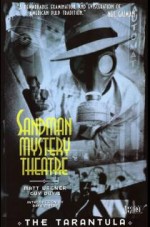
Sandman Mystery Theatre: The Tarantula


By Matt Wagner & Guy Davis (Vertigo)
ISBN: 978-1-56389-195-6

Created by Gardner Fox and first illustrated by Bert Christman, the Sandman premiered in either Adventure Comics #40 July 1939 (two months after Batman debuted in Detective Comics #27) or two weeks earlier in New York World’s Fair Comics 1939, depending on whether some rather spotty distribution records can be believed.

Face and head utterly obscured by a gasmask and slouch hat; caped, business-suited millionaire adventurer Wesley Dodds was cut from the pulp masked mystery-man mould that had made The Lone Ranger, Green Hornet, The Shadow, Phantom Detective, Black Bat, The Spider and so many more such household names and astonishing commercial successes in the early days of mass periodical publication.

Wielding a sleeping-gas gun and haunting the night to battle a string of killers, crooks and spies, he was accompanied in the earliest comicbooks by his plucky paramour Dian Belmont, before gradually losing the readers’ interest and slipping from cover-spot to last feature in Adventure Comics, just as the cloaked pulp-hero avengers he emulated slipped from popularity in favour of more flamboyant fictional fare.

Possessing a certain indefinable style and charm but definitely no more pizzazz, the feature was on the verge of being dropped when the Sandman abruptly switched to a skin-tight yellow-and-purple costume – complete with billowing cape – and gained a boy-sidekick, Sandy the Golden Boy (in Adventure Comics #69, December 1941, courtesy of Mort Weisinger & Paul Norris), presumably to emulate the overwhelmingly successful Batman and Captain America models currently reaping such big dividends.

It didn’t help much but when Joe Simon & Jack Kirby came aboard with #72 that all spectacularly changed. A semi-supernatural element and fascination with the world of dreams (revisited by S&K a decade later in their short-lived experimental suspense series The Strange World of Your Dreams) added a moody conceptual punch to equal the kinetic fury of their art, as Sandman and Sandy became literally the stuff of nightmares to the bizarre bandits and murderous mugs they stalked…

For what happened next you can check out the superb Sandman hardback collection…

Time passed and in the late 1980s Neil Gaiman, Sam Keith & Mike Dringenberg took the property in a revolutionary new direction, eventually linking all the previous decades’ elements into an overarching connective continuity under DC’s new sophisticated suspense imprint Vertigo.

Within a few years the astounding success of the new Sandman prompted the editorial powers-that-be to revisit the stylishly retro original character and look at him through more mature eyes. Iconoclastic creator Matt Wagner (Mage, Grendel, Batman) teamed with artistic maverick Guy Davis (Baker Street, B.P.R.D.) and colourist David Hornung to create a grittier, grimier, far more viscerally authentic 1930s where the mystery man pursued his lonely crusade with chilling verisimilitude.

The tone was darkly modernistic, with the crime-busting playing out in the dissolute dog-days of the Jazz Age and controversial themes such as abuse, sexual depravity, corruption and racism were confronted as well as the rising tide of fascism that swept the world then. This is a warning: Sandman Mystery Theatre is not a kid’s comic…

This first collection reprints the redefining first story-arc from issues #1-4 (April-July 1993) and commences after an absorbing introduction from veteran journalist and music critic Dave Marsh, accompanied by a gallery of the series’ original, groundbreaking photo-covers.

The Tarantula takes us to New York in 1938 where District Attorney Larry Belmont is having the Devil’s own time keeping his wild-child daughter out of trouble and out of the newspapers. She’s out all night, every night with her spoiled friends; drinking, partying and associating with all the wrong sorts of people, but the prominent public official has far bigger problems too. One is the mysterious gas-masked figure he finds rifling his safe soon after Dian departs…

The intruder easily overpowers the DA with some kind of sleeping gas – that also makes you want to blurt out the truth – and disappears, leavingBelmontto awake with a headache and wonder if it was all a dream…

Dian, after her rowdy night of carousing with scandalous BFF Catherine Van Der Meer and her gangster lover, awakes with a similar hangover but still agrees to attend one of her father’s dreary public functions that evening. He is particularly keen that she meet a studious young man named Wesley Dodds, recently returned from years in the Orient to take over his deceased dad’s many business interests.

Dodds is genteel and effete but Dian finds that there’s something oddly compelling about him. Moreover he too seems to feel a connection…

The Gala breaks up early when the DA is informed of a sensational crime. Catherine Van Der Meer has been kidnapped by someone identifying himself as The Tarantula…

Across town, mob boss Albert Goldman is having a meeting with fellow gangsters from the West Coast and as usual his useless son Roger and drunken wife Miriam embarrass him. Daughter Celia is the only one he can depend on these days but even her unwavering devotion seems increasingly divided. After another stormy scene the conference ends early, and the visiting crime-lords are appalled to find all their usually diligent bodyguards asleep in their limousines…

Even with Catherine kidnapped Dian is determined to go out that night, but when Wesley arrives unexpectedly she changes her mind, much to her father’s relief. That feeling doesn’t last long however after the police inform him that the Tarantula has taken another woman…

When a woman’s hideously mutilated body is found Dian inveigles herself into accompanying her father to Headquarters but is soon excluded from the grisly “Man’s Business”. Left on her own she begins snooping in the offices and encounters a bizarre gas-masked figure poring through files. Before she can react he dashes past her and escapes, leaving her to explain to the assorted useless lawmen cluttering up the place.

Furious and humiliated, Dian then insists that she officially identifies Catherine and nobody can dissuade her.

Shockingly the savagely ruined body is not her best friend but yet another victim…

Somewhere dark and hidden Van Der Meer is being tortured but the perpetrator has far more than macabre gratification in mind…

In the Goldman house Celia is daily extending her control over dear old daddy. They still share a very special secret, but these days she’s the one dictating where and when they indulge themselves…

With all the trauma in her life Dian increasingly finds Wesley a comforting rock, but perhaps that view would change if she knew how he spends his nights. Dodds is plagued by bad dreams. Not his own nightmares, but rather the somnolent screams of victims and their cruel oppressors haunt his troubled sleep. What else could a decent man do then, but act to end such suffering?

In a seedy dive, uncompromising Police Lieutenant Burke comes off worst when he discovers the gas-masked lunatic grilling a suspect in “his” kidnapping case and again when this “Sandman” is found at a factory where the vehicle used to transport victims is hidden. Even so, the net is inexorably tightening on both Tarantula and the insane vigilante interfering in the investigation and Burke doesn’t know who he most wants in a nice, dark interrogation room…

As the labyrinthine web of mystery and monstrosity slowly unravels, tension mounts and the death toll climbs but can The Sandman stop the torrent of terror before the determined Dian finds herself swept up in all the blood and death?

Moody, dark and superbly engrossing, these revisionist “anti-superhero” tales offer an impressively human and realistic spin on the genre; one that should delight all those grown-ups who think masks and tights are silly.
© 1993, 1995, 2004 DC Comics. All Rights Reserved.

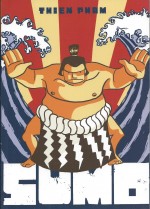
Sumo


By Thien Pham (First Second)
ISBN: 978-1-59643-581-0

Win’s Christmas Gift Recommendation: just because it’s great… 10/10

This book is about looking.

The magically multi-cultural nature of pictures mixed with words continually generates a wealth of absolutely fantastic and improbable gems for readers with eyes and minds wide open. This deliciously absorbing visual poem only arrived in the review books delivery a few days ago and it’s honestly become one of this year’s favourites – one of the most elegiac and gently enthralling visual experiences I’ve encountered in many a year…

It’s all about pasts and futures…

The tale begins in a Japanese Dojo as another rikishi in training greets the dawn. He does his assigned chores and works out with the other jonokuchi in the heya training stable. Despite his superior strength, size and speed, he is again knocked out. The supervising oyakata is in despair and doubts the spirit and determination of his latest find…

Scott thought he was a big man in every sense of the term, but High School Football glory days never turned into the glittering, lucrative Pro career he dreamed of. So he somehow ended up in his small town ofCampbell with his best buddies, drinking beer and wasting his days.

Then when his adored girlfriend Gwen dumped him, even that shallow, pointless life needed to end. They had been together since grade school…

However, years ago a visiting Japanese Sumo trainer had seen the boy play and never forgotten the warrior spirit he saw displayed in that sports arena. When the venerable gentleman offered a chance for fame and glory, Scott thought long and hard…

With nothing to lose, Scott accepts a bizarre offer: move to Japan and try out as a junior wrestler in the decidedly un-All American enterprise known as Sumo…

This is a hard look at expectations and second chances…

The transition hasn’t been what he expected or hoped for. They dyed his hair and changed his name since all Sumo have professional shikona stage-names and looks. Only now “Hakugei” is failing again and if it wasn’t for the trainer’s daughter Asami and the idyllic occasional break spent fishing, his new life would be as intolerable as his old one…

This story is about striving…

With time fast running out, Hakugei has to decide what he really wants and he has to do it before the last match of the mae-zumo tournament. He has to win at least one bout or be sent home in disgrace …and he’s just lost the fourth one in a row…

It’s all about the buildup towards tension’s inevitable release…

This surprisingly contemplative and lyrical exploration of love, hope, honour and gigantic nearly-naked men bitch-slapping each other in truly explosive manner effortlessly blends and intercuts flashbacks and real time to craft a sublimely skilful and colourfully emotive experience. Cartoonist and teacher Thien Pham (Level Up) hypnotically and enthrallingly marries two wildly disparate worlds to produce an enchanting and thoughtful story that will delight and astound. This is a graphic novel you must read over and over again.
© 2012 Thien Pham. All rights reserved.