Alien Worlds


By Bruce Jones, William F. Nolan, Al Williamson, John Bolton, Adolpho Buylla, Tim Conrad & various (Blackthorne)
ISBN: 0-932629-53-9

The 1980s were a hugely fertile time for American comics-creators. An entire new industry had been started with the birth of the Direct Sales market and, as dedicated specialist retail outlets sprung up all over the country operated by fans for fans, new companies began to experiment with format and content, whilst eager readers celebrated the happy coincidence that everybody seemed to have a bit of extra cash to play with.

Most importantly, much of the “kid’s stuff” stigma had finally dissipated and America was catching up to the rest of the world in acknowledging that sequential narrative might just be a for-real actual art-form…

Consequently many new publishers were soon competing for the attention and cash of punters who had grown resigned to getting their on-going picture stories from DC, Marvel, Archie and/or Harvey Comics. European and Japanese material had been creeping in and by 1983 a host of young companies such as WaRP Graphics, Pacific, Eclipse, Capital, Now, Comico, Dark Horse, First and many others had established themselves and were making impressive inroads.

New talent, established stars and fresh ideas all found a thriving forum to try something a little different both in terms of content and format. Even smaller companies had a fair shot at the big time and a lot of great material came – and too often, as quickly went – without getting the attention or success it warranted.

A perfect example was distributor/retailer-turned-publisher Pacific Comics who entered the arena at the start in 1981 with a terrific line of genre titles by the industry’s top talents, from accomplished titans like Jack Kirby to new headliners like Mike Grell and unknowns such as Dave Stevens.

The fledglings over-extended themselves and were gone by 1984 with less than thirty titles published but their superb product, creator-favourable commercial ethic and key properties were rapidly snapped up by other independents such as Eclipse, Topps, Sirius First, Blackthorne and others.

Probably their best two titles were a brace of EC inspired anthologies entitled Twisted Tales and Alien Worlds, both edited by Bruce Jones and April Campbell, which presented short stories in the cynically scary, blackly funny manner perfected by Bill Gaines and Al Feldstein in the gory glory days before the Comics Code Authority aborted the birth of American adult comics in 1954.

Alien Worlds ran for nine stunning full-colour issues – one of then a 3-D special – from Pacific (and latterly Eclipse) before dying, and in 1986 Jones and Blackthorne gathered 10 of the very best into a black and white trade-paperback collection that went practically unnoticed in the tide of innovative books that year, but which is still one of the high points of American graphic science fiction.

With almost all the stories written by Jones in full-on Ray Bradbury mode, this intriguing compendium opens with ‘Deep Secrets’ from issue #4 (September 1983, illustrated by Jeff Jones), a chilling murder plot sparked by a broken heart and twisted love after which John Bolton drew ‘Lip Service’ (#5, December 1983) wherein a Earth civil servant discovers a nasty bedroom secret about the natives on Cylis 4, whilst Brent Andersen’s ‘Small Change’ from April 1984’s seventh issue puckishly depicts a tale of clandestine interstellar cooperation in a kid’s Frisbee duel…

Also from #4 ‘Girl of my Schemes’ illustrated by Bo Hampton deliciously takes computer-dating and adventure holidays to the ultimate extreme whilst ‘Wasteland’ (#5, with art by Tom Yeates) finds a hospital shut-in helplessly watching his friend accidentally unravel history on a malfunctioning TV set and ‘Talk to Tedi’ (#1, December 1982, by Tim Conrad) will break your heart as it delineates the story of marooned spacer John Hagarty as he survives on a hostile world with only his son’s robotic cuddly toy for company…

Also from that premiere issue, ‘The Few and the Far’ is another magnificent visual tour de force for EC veteran Al Williamson which shows the hidden costs of inter-species warfare when two embattled survivors cannot see eye to eye, after which Williamson adapts SF author William F. Nolan’s ‘…And Miles to go Before I Sleep’ (#8, November 1984) wherein a dying spaceman goes to extraordinary lengths to see his parents one final time…

Adolpho Buylla illustrated the future-shocker ‘Plastic’ (#5 again) with the inevitable result of permanent warfare surprising no-one, not even the dying, and this collection ends with an engaging yet poignant, post-apocalyptic tale of a robot-boy and his monkey set ‘One Day in Ohio’ by Ken Steacy from Alien Worlds #4.

Stunning suspense sagas, swingeing satirical swipes and the very best art ever seen in pulp science fiction set these creepy, clever, sexy thrillers at the forefront of that decade’s comics classics and still deliver an overwhelmingly impressive rollercoaster of shocks, twists and heartbreaks today.

If you’re in the mood for some grand old-fashioned space-opera, magnificently illustrated and exciting as all get-out, then you can’t go far wrong with this lost gem, although, once again these and the tales not retold here are long overdue for a 21st century revisitation…
© 1986 Bruce Jones, William F. Nolan and the respective illustrators.

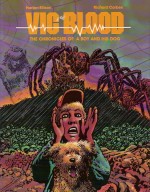
Vic and Blood – the Chronicles of a Boy and his Dog


By Harlan Ellison & Richard Corben (St. Martin’s Press/NBM/IBooks)
ISBNs: NBM edition 978-0-31203-471-9   IBooks edition: 978-0-74345-903-7

Richard Corben is one of America’s greatest proponents of graphic narrative: a legendary animator, illustrator, publisher and cartoonist surfing the tumultuous wave of independent counterculture commix of the 1960s and 1970s to become a major force in pictorial storytelling with his own unmistakable style and vision. He is renowned for his mastery of airbrush and captivatingly excessive anatomical stylisation and infamous for delightfully wicked, darkly comedic horror and beguiling eroticism in his fantasy and science fiction tales. He is also an acclaimed and dedicated fan of the classics of gothic horror literature…

Always garnering huge support and acclaim in Europe, he was regularly collected in luxurious albums even as he fell out of favour – and print – in his own country.

This album adapts a short story by science fiction iconoclast Harlan Ellison which turned the medium on its head when first published in 1969, spawning an award-winning cult-film and perpetually dangling the promise of a full and expansive prose novel before the eager fans. Much of that intention is discussed in Ellison’s After Vic & Blood: Some Afterthoughts as Afterword which ends the 1989 edition…

I suspect I’ll be long dead by the time the nigh-legendary Blood’s a Rover novel is finally released but at least this stunning graphic novel gilds the apocalyptic lily by also adapting the author’s prequel and sequel novelettes to produce a tale with a beginning, a middle and an ending of sorts…

The post-apocalyptic milieu was one Corben would return to over and over again but it never looked better (if that’s not a grim contradiction in terms) than in the triptych of survivalist terror that begins here with ‘Eggsucker’ as genetically-engineered telepathic war-mutt Blood relates how he and his 14 year old human partner Vic (don’t call him “Albert”) survive on a daily basis amidst the shattered ruins of America after the final war.

Vic is a “solo”, unaffiliated to any of the assorted gangs that have banded together in the radioactive aftermath, scavenging and trading and never staying in one place too long. Blood has looked after him for years: faithful, valiant and protective. The dog has taught the lad everything, even how to speak properly…

After a booze-for-bullets swap goes hideously wrong the partners have a falling-out, but that only lasts until Vic stumbles into trouble again and Blood dashes to his rescue…

Next up is the pivotal tale ‘A Boy and his Dog’ wherein Vic and his canine mentor find a healthy and nubile girl from the sunken puritanical subterranean enclaves known as “Downunders” slumming amongst the ruins of civilisation.

Hungry for something other than rancid rations, Vic follows her and is forced to kill a number of other lustful hunters to possess the tantalising Quilla June Holmes, who bamboozles the horny lad with all her talk of love…

However, it’s all part of an elaborate trap and before long the born survivor is trapped by his own teenaged hormones in the parochial, backward-looking New Topeka underground refuge, destined to be the stud to sire a new generation of humanity for the aging and increasingly sterile Downunder men…

Of course nobody thought to ask the putative mares what they thought of the plan and Quilla June quickly rebels, helping Vic to kill her father and escape back to the dangerous freedom of the surface.

Up above faithful Blood has not fared well: slowly starving whilst waiting for Vic to sow his wild oats and return. He is near death when the fugitives reappear and only an act of true love can save him…

The saga-so-far concludes with a shocking surprise in ‘Run, Spot, Run’ as the increasingly acrimonious Vic and Blood squabble and fall out, whilst starvation, toxic food and savage ghosts torment them both, resulting in a momentary lapse of concentration which leads the pair into ghastly peril…

Fair Warning: many readers will probably feel short-changed by the cliff-hanging ending but there is a conclusion of sorts and the astounding power of the artwork should offset any potential feeling of unfulfilled drama.

This superb collection was re-released in 2003 by IBooks in a celebratory edition which also contained the original short-stories in prose form as well as added extras such commentaries and The Wit and Wisdom of Blood.

Corben’s unique vision captures the weary, doom-laden atmosphere, charged hunger and despondent denouement of the original with devastating effect and this seminal, seductive work is undoubtedly a true classic of the Day-After-Doomsday genre. The artist’s sublime acumen in depicting humanity’s primal drives and the grim gallows humour of the situation has never been bettered than with these immortal stories. This is a book no comics or horror fan should be without.
Artwork © 1987 Richard Corben. “Eggsucker” © 1977 Harlan Ellison. “A Boy and his Dog” © 1969 The Kilimanjaro Corp. “Run, Spot, Run” © 1980 The Kilimanjaro Corp. Adapted versions © 1987 The Kilimanjaro Corp. Colour & cover © 1989 NBM.

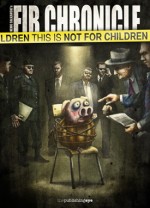
NeMo Balkanski’s FIB Chronicles


By Nemanja Moravic Balkanski & various (the Publishing Eye)
ISBN: 978-0-9868440-0-3

Some creators seduce and beguile but others choose to inform and affect with confrontational shock tactics…

The most wonderful thing about the comics medium is the limitless ways stories and art can be combined to educate, elucidate and entertain. For every Hergé there’s a Harvey Pekar, for every Alfred Bestall a Johnny Ryan (and John Ryan too) and so on, and there are comic strips to suit literally every age and temperament.

Some of the most evocative and addictively uncompromising efforts that I’ve seen in quite a while appear in this collection from Belgrade émigré Nemanja Moravic Balkanski, whose stunningly disturbing spoofs and edgy cultural pastiches have been gathered into a magnificent oversized full-colour hardback FIB Chronicles.

Balkanski was born in Belgrade in 1975 and, after mastering a multitude of artistic disciplines from comics to graphic design, theatre arts to film-making, and poetry to performance, emigrated to Vancouver 2007. Much of this vintage material contained here (also available as an app) come from his Balkan days, represented in this disquietingly substantial and blackly comic tome under the guiding conceit that the individual escapades of a nightmarish cast of distressing ne’er-do-wells and uncanny outcasts have been gathered into a damning dossier thanks to the scurrilous non-efforts of the far-from-intrepid clandestine agents of the Fabulous Investigation Bureau.

The result is a selection of their most atypical observations – presumably leaked here as a wake-up call to unwitting and complacent humanity…

The iconoclastic strips gathered here date from 1998-2005 and, supplemented by new bridging material in a staggering variety of artistic styles, describe a dark and disturbing underworld of barely perceived and unwisely ignored peril and surreal threat wrapped up in careful pastiche and savage parody…

US cop dramas come under the cosh when corruptly hip detective Cash Money experiences ‘Hair Fear’ and tackles feminist terror in ‘W.T.N. Griffit’ whilst tragic, plucky waif Boy Lyndo gets his shot at a happy ever after in ‘The Final Episode’ and the bizarre habits of a cult of Mel Gibson impersonators is exposed in ‘Gipsons vs Graduates’ after which gay lovers walk hand-in-hand down the wrong street in the weird war story ‘Jelly & Butter’ – a yarn conceived by Balkanski’s long-time collaborator Vladimir Protic.

A theatrical slasher-killer appears in ‘Space (the Final Frontier)’ and scatological stoner anthropomorph ‘Bud Bunny’ plays not-so-nice games with the other animals before fashion-plate Eau de Cologne falls foul of the harpy-ish harridans known as the BigDos in ‘Trigger’ and we are exposed to ‘Johnny McWire Getting the Beating of his Life’ and ‘Mr. Friday Night’ goes home alone yet again…

Booze and Balkan warriors come under the microscope one more in ‘Galactica, the Space Bottlesip’ (based on Branimir “JohnnyÅ tulićs poem “Sons of Bitches”) after which the file devotes a lot of crazed and crucial pages to cybernetic dreamer Digital Standstill‘s climactic confrontation with ‘BigDo’s’ before we observe a salutary encounter with the ‘Psycho from 134th Street’ (scripted by Protic).

The battle against creeping communism is examined in the uplifting tale of ‘Little Mexico: El Dentista’, the nature of modern relationships in ‘It is My Friend’ and the value of introspection in ‘Sam Lr. Stag: His Life was a Drag’ before the life of a fascist monster is dissected in ‘Shalken Rösse’ and we are treated, in conclusion, to the meteoric rise and political acumen of the transcendent of ‘Melon Pig’, courtesy of Protic and Balkanski…

With additional articles, ‘Declassification Files’, a glossary of new words and expressions and even a few game-pages for the strong-stomached, this tainted love-affair with life’s moist and fetid underbelly is a dank graphic delight that not even every mature and cosmopolitan reader will enjoy: but for those with just the right blend of world-weary insouciance and malignant, undemanding innocence the words and pictures married together here will strike an unforgettable chord.

Strident, cruel, sardonically whimsical, overwhelmingly clever and bleakly hilarious in a Kafka meets Steven Wright channelling Bill Hicks kind of way, this absurdist, hauntingly affecting and astonishingly illustrated book is a uniquely entertaining read the brave and bold and reasonably old won’t dare to miss…
All comics © 2011 Nemanja Moravic Balkanski. Everything else All comics © 2011 Nemanja Moravic Balkanski and The Publishing Eye. All rights reserved.

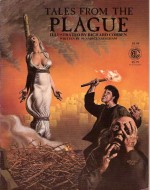
Tales From the Plague


By Dennis Cunningham & Richard Corben (Bill Leach Collectibles/Eclipse Comics)

No ISBN/ ASIN: B000GXQ8HA

Richard Corben flowered in the independent counterculture commix of the 1960s and 1970s to become a globally revered, multi-award winning creator. He is most renowned for his mastery of the airbrush and his delight in sardonic, darkly comedic horror, fantasy and science fiction tales.

Although never a regular contributor to the comicbook mainstream, the animator, illustrator, publisher and cartoonist is one of America’s greatest proponents of sequential narrative: an astoundingly accomplished artist with an unmistakable style and vision.

Violent, cathartically graphic and often blackly hilarious, his infamous signature-stylisation always includes oodles of nudity, ultra-extreme explicit violence and impossibly proportioned male and female physiques – but there’s almost none of the latter on show in this intriguing re-issue of his very first comics work: a celebratory new edition sporting a stunning wraparound card cover that was released in 1986.

Born in Anderson, Missouri in 1940, Corben graduated with a Fine Arts degree in 1965 from the Kansas City Art Institute and began working as an animator. At that time, the Underground movement was just stating to revolutionise, reinvigorate and liberate the medium of comics as a motley crew of independent-minded creators across the continent began making and publishing stories that appealed to their rebellious, pharmacologically-enhanced sensibilities and unconventional lifestyles.

Most of them had been reared on and hugely influenced by 1950s EC Comics or Carl Barks’ Duck tales – and usually both.

As can be seen in this intriguiging little tale, which first appeared in Weirdom Illustrated #13 (the “Special Plague issue”) in 1969, Corben started the same way, producing the kind of stories that he would like to read, for a variety of small-press publications including Grim Wit, Slow Death, Skull, Fever Dreams and his own Fantagor, often signed with his affectionate pseudonym “Gore”, and usually introduced by an EC style horror-host or hostess.

As Corben’s style matured and his skills developed, his work began to appear in more professionally produced venues. He began working for Warren Publishing in 1970 with tales in Eerie, Creepy, Vampirella, Comix International and latterly, the aggressively audacious adult science fiction anthology 1984. He also famously re-coloured a number of reprinted Spirit strips for the revival of Will Eisner’s the Spirit magazine.

In 1975 Corben submitted work to the French fantasy phenomenon Métal Hurlant and subsequently became a fixture in the magazine’s American iteration Heavy Metal after which his career really took off. Soon he was producing stunning graphic escapades for a number of companies, making animated movies, painting film posters and producing record covers such as the multi-million-selling Meatloaf album Bat Out of Hell. He never stopped making comics but preferred his own independent projects with collaborators such as Harlan Ellison, Bruce Jones and Jan Strnad.

This oft-reprinted but now regrettably out-of-print collection perfectly shows the artist’s developing style in an acerbic and customarily wry horror yarn set in the English hamlet of “Chelmesford” during the Year of Our Lord 1664, beginning with the last testament of dying Witch Hunter James Hopkins.

His last legal commission had been the arrest and despatch of widow Ann Ashby, a strange and ugly crone dwelling alone on the edge of town. Following the accusation of a neighbour Hopkins investigates and finds her house filled with strange instruments and small animals…

On arrest she is put to The Test (that’s religious speak for tortured) and an eager and happy procession of townsfolk reveal her suspicious acts and the odd things that occur near her: boys have accidents or fall ill, animals become sick and she talks to chickens…

Once her unholy and depraved acts with animals and blood are disclosed it’s but a short hop to the stake, but even after they have watched her death agonies the still-unsated mob are hungry for more and tear her old shack down.

Soon after, many of the fine citizens of Chelmesford begin to sicken, and the remainder of Hopkins’ account details the grisly and ghastly effects of the plague as it devastates the town…

The concluding chapter is taken from scraps of parchment found hidden in Ann Ashby’s cell and reveal a shocking and ironic twist for modern historians. The supposed witch was in fact a far worse monster than Elizabethan society believed…

The well-travelled foreigner was secretly a brilliant thinker who had formulated theories of biology and natural science centuries ahead of her time. With her home-made ocular devices Ashby was on the trail of a cure for the dreadful pestilence – which she had seen ravage Europe and the East – at least until Hopkins and his self-righteous rabble of superstitious fools and jealous liars seized her…

Remarkably engrossing if a touch wordy, this compelling yarn reveals the core of solid draughtsmanship and pen-and-ink technique which underscores all Corben’s work, in a gritty chiller Hammer Films would be proud of.

Hard to find, but a great read and well worth the effort for all fans of illustrated horror yarns.
© 1986 Dennis Cunningham.

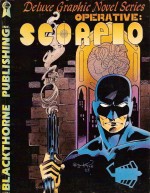
Operative: Scorpio


By Jack Herman, Dan Tolentino & Danny Taver (Blackthorne Publishing)
ISBN: 0-932629-15-6

Sometimes I just get a devil in me…

Although I review a broad spectrum of illustrated narratives and comics related books, I generally stick to the rule of thumb that the selection has to have some intrinsic quality or merit. Occasionally however there comes an item that I just can’t rationally recommend but still just… sends me…

As the first contraction of the 1980s independent comics boom began to cut down the plethora of small publishers, Blackthorne moved from canny licensed properties such as California Raisins and Rocky and Bullwinkle, 3-D titles and classic reprints like Tarzan, Dick Tracy and Betty Boop into a line of all-new characters, which might well have hastened their demise.

They also brought out many early graphic novels and Operative: Scorpio might well rank amongst their oddest.

In blocky black and white the confused but compellingly enthusiastic caper details the story of ambitious young thug Carl Manara who takes sole proprietorship of PMD, a new super-addictive drug hitting the streets of a peculiarly Latino Los Angeles, consequently falling foul of the criminal overlord Monticello, whose cabal Blackleague runs the entire country’s illegal enterprises.

Monticello has other problems; specifically a crazy masked martial artist roaming the streets and hitting all his organisations rackets. Scorpio’s campaign is costing him money and the cops – bought or honest – can’t catch the mysterious vigilante…

‘Breaking and Entering’ introduces Police Detective Morgan Pierce, tasked with stopping Manara’s super-drug from causing a bloody turf war. He has no interest in catching Scorpio: in fact he thinks the guy’s a hoax or urban legend…

Pierce has some odd friends he seems embarrassed by: fly-by-night playboy nightclub owner Aristotle, whose clientele ranges from the social elite to the dregs of the city, and disgraced competition martial artist Jay-Daniel Cobra, who only seem to meet with him at the oddest times – whenever no body’s watching…

After some beat cops are killed and civilians come under fire Scorpio gets involved, but Manara has a secret weapon. The designer of the new drug is a highly respected college professor and the only one who knows the formula, protected by a lethal hand-to-hand fighter. When the masked man raids the chemist’s fortress home Scorpio barely survives the encounter.

With war brewing between Manara and Monticello, the upstart’s gang begins selling the new dope out of their car and soon civilians are caught in gang crossfires. The cops won’t touch the dealers – after all they are Homicide Detectives too…

And that’s when the enigmatic Scorpio decides on drastic action: all three of him…

Muddled, manic and utterly mad, this yarn is full of brutal, pell-mell action and short on characterisation but that really doesn’t matter as the drama barrels along, reaching a climax but no real conclusion.

Clearly the opening shot in a longer epic, this dark yarn, with echoes of 1970’s exploitation cinema and Grindhouse movies, was written by Jack Herman, with art by the clearly Latin American or Filipino team of Dan Tolentino & Danny Taver – possibly pseudonyms for three or four different artists in a shared studio.

Even in 1989 the book looked and felt a decade older and I have a sneaking suspicion that it might even be a Mexican digest-comics story surreptitiously picked up and translated: no proof to support the idea but it just has that unshakeable feel to it…

Inexplicably compelling and splendidly fun, this is another guilty pleasure retro-read, best absorbed whilst listening to “Sabotage” by the Beastie Boys… but only at maximum volume.
© 1988 Blackthorne Publishing, Inc. All rights reserved.

The Drowned Girl


By Jon Hammer (Piranha Press/DC)
No ISBN:

During the anything goes 1980s the field of comics publishing expanded exponentially with new companies offering a vast range of fresh titles and ideas. To combat this upstart expansion, Marvel and DC also instigated and created innovative material for those freshly growing markets with the latter cartoon colossus especially targeting readers for whom old-fashioned comicbooks were anathema …or at least a long-abandoned dalliance.

DC created a number of new, more mature-oriented imprints such as Vertigo and Helix, but some of the most intriguing projects came out of their Piranha Press sub-division, formed in 1989 and re-designated Paradox Press in 1993.

When DC founded this adult special projects imprint, the resulting publications and reader’s reaction to them were mixed. It had long been a Holy Grail of the business to produce comics for people who don’t read comics and, despite the inherent logical flaw, that’s a pretty sound and sensible plan.

However, the delivery of such is always problematic. Is the problem resistance to the medium?

Then try radical art and narrative styles, unusual typography and talent from outside the medium to tell your stories: you get some intriguing results but risk still not reaching a new audience whilst alienating the readers already on board…

This eclectic and overwhelmingly effective tome was one of the best and simultaneously one of the least appreciated…

Dick Shamus lives in New York City. Not necessarily the one you know but one equally composed of snippets of books, flickers of films and TV titbits all filtered through the fried brains of an incorrigible addict who’s been off his prescription Lithium for far too long now…

Dick Shamus is a Private Eye. If he says so then it’s got to be true, right?

On one night so much like every other, Dick, bombed out of his gourd on his tipple of choice – embalmers’ formaldehyde with a chocolate drink chaser – picks up a useful tip about a Nazi weight-lifting club from one of his usual sources: few of them credible and none of them real…

The drink might be the secret CIA vaccine to prevent AIDS but it sure plays hob with the deductive faculties…

The side of the city only he can see tells the weary, ravaged gumshoe that there’s a connection between the Fascist health fanatics, India and the Drowned Girl – whoever she is – and as his personal reality intercepts and continually collides with the equally outrageous consensus reality the rest of us are stuck with, Dick is carried by events to a tragic and disturbing rendezvous.

If only he could recall who the client was…

Raw and savagely beguiling, the one night’s odyssey of the perceptually challenged Shamus as he weaves between rich bastards, gutter-scum, gullible art-trendoids, yuppie-gentrifiers and armchair anarchists, affable protester-bashing cops and a hundred other “normal” folks in search of his dimly perceived targets…

This disturbing, hard-luck pilgrim’s progress is as truly thought-provoking, hard-bitten, revelatory and socially castigating as the works of Dashiell Hammett, William Burroughs, Hunter S. Thompson, Raymond Chandler or Gabriel García Márquez, whilst the brutally unrefined and intoxicatingly vibrant painting of author Jon Hammer makes this perhaps the very best psycho-detective graphic novel you’ve never read.

But all that could change if and when you too track down The Drowned Girl…
© 1990 Jon Hammer. All rights reserved.

The Desert Peach book 3: Foreign Relations


By Donna Barr (Aeon)
ISBN: 1-883847-04-4

The Desert Peach is the supremely self-assured and eminently accomplished gay brother of the legendary “Desert Fox” and one of the most perfectly realised characters in comics.

Set in World War II Africa and effortlessly combining hilarity, absurdity, profound sensitivity and glittering spontaneity, the stories describe the daily grind of Oberst Manfred Pfirsich Marie Rommel; a dutiful if unwilling cog in the German War Machine and his efforts to remain a perfect gentleman under the most adverse and unkind conditions.

As formidable as his beloved elder sibling Field Marshal Erwin Rommel, the gracious and genteel Peach is a man of breeding who loathes causing harm or giving offence and thus spends his dry and dusty days commanding the ever-so-motley crew of the 469th Halftrack, Gravedigging & Support Unit of the Afrika Korps, trying to remain stylish, elegant, civil and gracious to the men under his command, the enemy forces opposite him and all the unfortunate natives whose countries both Allied and Axis powers are currently running riot within.

It’s a lot of work: the 469th houses the worst dregs of the Wehrmacht, from malingerers and malcontents to useless wounded, sharpers, screw-ups and outright maniacs.

Pfirsich applies the same genteel courtesies and rule of well-manicured thumb to the sundry indigenes populating the area surrounding the camp and the rather tiresome British – not all of whom are party to a clandestine non-aggression pact Pfirsich has agreed with his opposite number in the opposing British Forces.

The romantic fool is passionately in love with and engaged to Rosen Kavalier: handsome Aryan warrior and outrageously manly Luftwaffe Ace: in fact the only people the Peach really has no time for are boors, bigots and card-carrying Blackshirts…

Arguably the real star of these fabulous frothy epics is the Peach’s long-suffering, unkempt, crafty, ill-mannered, bilious and lazily scrofulous orderly Udo Schmidt, a man of many secrets and non-existent morals whose one redeeming virtue is his uncompromising loyalty and devotion to the only decent man and tolerable officer in the entire German army.

This hard to find but supremely superb third monochrome compendium reprints issues #7-9 and includes an all-new tale too.

Battle commences with ‘The Spoiled Fruit’ as the mild mannered and utterly urbane Peach is accidentally dosed with shell-shocked veteran Corporal Doberman‘s anti-psychotic medication. The ghastly experimental brew acts like Angel Dust on the sweet lad and turns Pfirsich into a raging warmongering lunatic, who goes on a three day battle-jag, dragging the 469th with by sheer rampaging willpower and almost winning the desert war single-handed… until the drugs stop working.

Even more embarrassing than the death and bloodshed he caused and certainly more painful than the bullet wound in his posterior is brother Erwin awarding him a medal…

This is followed by international adventure and intrigue in ‘Dressing Down’ as an old-fashioned army concert-party leads to one of the most ludicrous espionage missions of the war.

In an attempt to raise morale Udo organises a show where he and a few other ranks dress up in drag. Although a little unhappy at the sordid and distasteful turn of events, Pfirsich lets it go but is horrified when an intelligence officer from his brother’s staff claims that Udo-as-a girl looks just like Hannah Mardi, a German agent currently missing in England.

She and her sister were the only hope of recovering the stolen plans for Rommel’s latest tank but for such a mission to succeed Hannah should be accompanied by her usual partner. What a happy coincidence that Pfirsich looks so much like the equally absent “Portia Sophi”: the Peach could pass for her with almost no make-up at all…

Arriving at the last known address of the missing spies in London, the terrified and mutinously reluctant Pfirsich and Udo are horrified to discover something very peculiar is going on in the agents’ old lodgings and things become surreal, hilarious and quite, quite tricky when the Peach realises that the landlady’s son Willie is the same delightful boy who befriended him in those carefree days before the war..

The reprints end with ‘Scourge of Love’ as the ever-horny Udo unwittingly turns a bargaining session for fresh rations with Tuareg traders into an accidentally proposal to the Chieftain’s beautiful daughter Falila.

He thought he was getting a “quickie” from a easy trollop but too soon Udo realises he was not only betrothed to the proud princess of a people who have turned avenging insults into an art-form and spectator blood-sport, but that to prove himself worthy he would have to steal a herd of camels from the Arabs’ greatest and most ancient enemies.

With a tribal revolt threatening to interfere with the smooth course of the war, Udo’s tenderest and most cherished organs at risk and, most importantly, the honour and happiness of a lady at stake, the Desert Peach has no choice but to step in and settle matters in his own uniquely sensitive and refined manner…

The new epilogue ‘Home is Where…’ is set in the Peach’s declining years, wherein Pfirsich and his adult son Mani play host to a reunion of the 469th few survivors: a bittersweet vignette which delights and fearfully foreshadows tragedies yet to come. This moving vignette also appears in Book 4 Baby Games.

Referencing the same vast story potential as Sgt. Bilko, Hogan’s Heroes, Oh, What a Lovely War! and Catch 22, as well as such tangential films as Priscilla, Queen of the Desert and The Birdcage, the Desert Peach is bawdy, raucous, clever, authentically madcap and immensely engaging.

These fabulously weird war stories were some of the very best comics of the 1990s and still pack the comedic kick of a floral-scented howitzer, liberally leavened with situational jocularity, accent humour and lots of footnoted Deutsche cuss-words for the kids to learn.

Pfirsich’s further exploits continue as part of the Modern Tales webcomics collective…

Illustrated in Barr’s fluidly seductive wood-cut and loose-line style, this book is a must-have for any history-loving, war-hating lover of wit, slapstick, romance and belly-laughs. All the Desert Peach books are pretty hard to find these days but if you have a Kindle, Robot Comics have just begun to release individual comicbook issues for anybody who can make their way around Das Ferslugginer Internetten …
© 1990-1994 Donna Barr. All rights reserved. The Desert Peach is ™ Donna Barr.

Zora and the Hibernauts


By Fernando Fernández (Catalan Communications)
ISBN: 978-0-87416-001-7

Multi-disciplinary Spanish artist Fernando Fernández began working to help support his family at age 13 whilst still at High School. He left in 1956 and immediately began working for British and French comics publishers. In 1958 his family relocated to Argentina and whilst there he added jobs for El Gorrión, Tótem and Puño Fuerte to his ongoing European and British assignments for Valentina, Roxy and Marilyn.

In 1959 he returned to Spain and began a long association with Fleetway Publications in London, producing mostly war and girls’ romance stories.

During the mid-1960’s he began to experiment with painting and began selling book covers and illustrations to a number of clients, before again taking up comics work in 1970, creating a variety of strips (many of which found their way into US horror magazine Vampirella), the successful comedy feature ‘Mosca’ for Diario de Barcelona and educational strips for the pubshing house Afha.

Becoming increasingly experimental as the decade passed, Fernández produced ‘Cuba, 1898’ and ‘Círculos’ before in 1980 beginning his science fiction spectacular ‘Zora y los Hibernautas’ for the Spanish iteration of fantasy magazine 1984 which was eventually seen in English in Heavy Metal magazine. His later graphic spectacles include ‘Dracula’ for the Spanish iteration of Creepy, mediaeval fantasy thriller ‘La Leyenda de las Cuatro Sombras’ (working with Carlos Trillo), ‘Argón, el Salvaje’ and a number of adaptations of Isaac Asimov tales in ‘Firmado por: Isaac Asimov’ and ‘Lucky Starr – Los Océanos de Venus’.

His last comics work was ‘Zodíaco’ begun in 1989, but his increasing heart problems soon curtailed the series and he returned to painting and illustration. He passed away in August 2010, aged 70.

The stunning adult epic Zora and the Hibernauts exploits classic science fiction themes of sexual politics to explore the perceived role and character of men and women and opens, after a truly breathtaking biography and gallery section, with the first staggeringly lush chapter as, far into the future, warrior-women from the artificial moon Honeycomb (home to the censorious, draconian colony of the Sisterhood) land on the deadly and biologically inimical planet Earth searching for lost technology and other objects of interest or value.

The crew is led by the competent Zora, a space veteran who has won the love and devotion of her crew through years of sterling service. The ancient birthplace of humanity has long been quarantined: a pestilential hell-hole where radiation and disease have created unspeakable horrors, but the explorers have no idea what shocks await their first forays into the unknown landscape they call Terra-Lune…

The search goes badly and crew-women are lost to plants, beasts and things which qualify as both and neither, but Zora is intent on finding some specific unknown treasure. Meanwhile, back on Honeycomb, scientist Nylea breaks the Queen’s taboo and searches the ancient archives for proscribed information on the extinct creature once called “man”…

On Terra-Lune the invaders have broached a long-hidden chamber and found six hibernation pods from before the Earth died…

They contain frozen men and Zora, defying orders and centuries of custom, decants and revives the perfectly preserved creatures rather than destroy them, setting herself on a path that will lead to civil war and the restoration of the natural order…

She is strangely drawn to one of the men: Astronaut Commander Amon, who holds crucial knowledge of the fall of humanity and whose presence stirs the quizzical Zora in ways she doesn’t understand…

Taking her prizes back to Honeycomb where they are interviewed by Supreme Sister Rasam, Zora is ordered to keep the hibernauts in personal custody, but isn’t surprised when Nylea informs her that the queen is planning to destroy her and the men who threaten the hegemony and beliefs of the all-female, in vitro parthenogenetic culture.

Following a brutal battle, Zora, Nylea and the males take refuge on toxic Terra-Lune where they encounter another man: an incredible immortal named Rob who has survived on the poisoned planet for uncounted ages and aids the fugitives when the Sisterhood ships come hunting them…

Escaping the stalkers, the refugee band hides deep within the horror-world and inevitably Zora and Amon perpetrate an act of love not seen on Earth for millennia, after which Rob reveals the location of a fully-functioning ancient starship and offers them a means of fighting back against the tyranny of Rasam.

But whilst Rob relates the secret of his incredible longevity, on Honeycomb long-suppressed antagonisms begin to re-emerge.

Terra-Lune still holds many threats and horrors however, and whilst the outcasts battle for survival against beasts and monstrous sub-men on the debased planet, a deadly civil war erupts on the artificial satellite led by ambitious hardliner and second-in-command Sharta. By the time Zora and her followers are ready to attack Rasam, Honeycomb is in the midst of civil war…

Just when events are their most fraught, the universal implications of the struggle are revealed when a god-like timeless entity appears, disclosing Zora’s cosmic importance and that her womb now carries the first naturally conceived and developing human baby in thousand of years. Zora has been chosen by the higher powers of the universe to restore and perpetuate the human species…

The grand concepts come thick and fast in Zora and the Hibernauts and although the narrative is a little muddled in consequence, this breathtaking yarn delivers fast paced, action-packed, staggeringly beautiful and astoundingly exciting adult science fiction thrills in the tradition pulp manner. Being Spanish, however there’s a slight tinge of macho, if not subverted sexism, on display and of course, there is extensive female nudity throughout – so much so that by half-way through you won’t even notice…

If naked bald women are liable to offend you, give this as miss, but for all the normal red- blooded fans out there this is a superb tale by a master craftsman you’ll certainly want to track down and savour.

© 1981 Fernando Fernández. English edition © 1984 Catalan Communications. All rights reserved.

The Fabulous Furry Freak Brothers in The Idiots Abroad


By Gilbert Shelton & Paul Mavrides, colour by Guy Colwell (Knockabout)
ISBN: 0-86166-053-6

The Fabulous Furry Freak Brothers shambled out of the Underground Commix counter-culture wave in 1968; initially appearing in Berkeley Print Mint’s Feds ‘n’ Heads, and in Underground newspapers before creator Gilbert Shelton and a few friends founded their own San Francisco based Rip Off Press in 1969.

That effective collective continued to maximise the reefer madness and the hilarious antics of the “Freaks” (contemporary term for lazy, dirty, drug-taking hippy folk) quickly captured the imaginations of the more open-minded portions of America and the world (not to mention their kids)…

In 1971 they published the first compilation: The Collected Adventures of the Fabulous Furry Freak Brothers – which has been in print all around the planet ever since – and soon assorted underground magazines and college papers were joined by the heady likes of Rip Off Comix, High Times and Playboy (and numerous foreign periodicals) in featuring the addictive adventures of Freewheelin’ Franklin, Phineas T. Freakears and Fat Freddy Freekowtski (and his cat): siblings in sybaritic self-indulgence.

Always written by Shelton and, from 1974 illustrated by Dave Sheridan (until his death in 1982) and Paul Mavrides, the disjointed strips (sorry; bad puns are my opiate of choice) combined canny satire, worldly cynicism, surreal situations, drug-based scatological sauciness and an astounding grasp of human nature in brilliantly comedic episodes that cannot fail to amuse anyone with a mature sense of humour.

All the strips have been collected in various formats (in Britain by the fabulous folks of Knockabout Comics) and have been happily absorbed by vast generations of fans – most of whom wouldn’t read any other comic.

Despite the hippy-dippy antecedents and stoner presentiments, Shelton is irrefutably a consummate professional. His ideas are always enchantingly fresh, the dialogue is permanently spot-on and his pacing perfect. The stories, whether half-page fillers, short vignettes or full blown sagas, start strong and relentlessly build to spectacular – and often wildly outrageous, hallucinogenic yet narrative-appropriate – climaxes.

Franklin is the tough, street-savvy one who can pull the chicks best, Phineas is a wildly romantic, educated and dangerous (to himself) intellectual whilst Fat Freddy is us; weak-willed, greedy, not so smart, vastly put upon by an uncaring universe but oddly charming (you wish…)

One last point: despite the vast panoply of drugs ingested, imbibed and otherwise absorbed, both real and invented, the Freaks don’t ever do heroin – which should tell you something…

‘The Idiots Abroad’ was first published in issues #8-10 of The Fabulous Furry Freak Brothers comicbook, beginning in 1982, by Shelton & Paul Mavrides with colour separations by fellow controversial Underground cartoonist Guy Colwell (see Doll). This compilation first appeared in 1988.

The alternative anarchy and high-strung hilarity opens with a cunning monochrome introduction set in the high-tech Bastion of Commerce which is the Rip Off Press High-rise after which the scene switches Oz-like to full-colour as the beardy boys, just chilling in their latest crash-pad, realise that they’re paying too much for their drugs. If they just holidayed in Colombia they could buy the stuff at source and make a killing…

Keen and eager the trio set off for the airport, expecting an easy flight to their Promised Land. Fat Freddy falls in with a drunken bunch of Scottish football fans, Phineas accidentally boards a jet for the Middle East and only Franklin actually gets on a plane for South America: of course it is a package tour of survivalists…

Ever vigilant, the US government quickly dispatches dedicated super-cop Norbert the Nark to follow the Brothers…

As Franklin finds himself in bed with freedom-fighting, drug-dealing Indio eco-warriors and quite sensibly runs for his life, in Scotland Fat Freddy has been mistaken for nuclear terrorist Andre the Hyena and similarly bolts.

Making his way across Europe the corpulent clown unwittingly takes with him a soccer-ball shaped thermonuclear device and stumbles into a global military conspiracy conceived by the Colonels of every nation to seize control of human civilisation…

Phineas meanwhile has landed in Mecca and through his usual incredible good fortune has become a valued member of the government and a major player in OPEC.

Whilst Franklin joins a cruise ship full of millionaires and ends up sold into slavery when the vessel is attacked by pirates, Fat Freddy rampages across Spain and meets the utterly “out there” Anarchist genius Pablos Pegaso before invading the Warsaw Pact countries at the artist’s suggestion, ending up in Moscow at just the wrong moment…

The stupendous saga of outrageous Unrealpolitik ramps up even more when the assembled Colonels take over the world and in a Saudi dungeon Franklin and the now thin Freddy are sold at auction to all-powerful Father Phineas, the Honest Hierophant who has converted his immense wealth into real money by inventing “Fundaligionism” which is now the hottest Faith around and has made him the richest person on the planet…

And that’s when the cartoon craziness really starts to motor…

And they’re so very, very funny.

Without Shelton and the Freaks the whole sub-genre of slacker/stoner movies, from Cheech and Chong‘s assorted escapades to Dude, Where’s My Car? and all the rest – good, bad or indifferent – wouldn’t exist. Whether or not that’s a good thing is up to you.

Chaotically satirical, poisonously cynical and addictively ludicrous, the madcap slapstick of the Freak Brothers is always an unbelievably potent tonic for the blues and this epic escapade of inspired insanity is among their very best exploits. However, if you’re still worried about the content, which is definitely habit-forming, simply read but don’t inhale…
© 1987 Rip Off Press, Inc., and Gilbert Shelton. All rights reserved.

Daredevil in Love and War – a Marvel Graphic Novel


By Frank Miller & Bill Sienkiewicz (Marvel)
ISBN: 978-0-87135-172-2

It’s been a while since Marvel published an all-original graphic novel as opposed to a collection, but not too long ago they were the market leader in the field with an entire range of “big stories” told on larger than normal pages (277x208mm rather than the now customary 258 x 168mm) featuring not only proprietary characters but also licensed assets like Conan, media adaptations like Willow and even original creator-owned properties such as Alien Legion.

This spectacular and controversial tale of triumph and tragedy from 1986 is a defining moment in the ongoing battle between the driven Man Without Fear and his ultimate antithesis Wilson Fisk – the sinister and grotesque master manipulator dubbed the Kingpin – wherein scripter Frank Miller and illustrator Bill Sienkiewicz (and subtly effective letterer Jim Novak) took a long, hard look at the costs of the struggle in a stark examination of obsession…

The Kingpin is the criminal overlord with New York City in his pocket, wielding the power of life and death over all its denizens. For such a man helplessness is a toxic emotion but all his power and influence cannot cure his beloved wife Vanessa, left broken and catatonic after one of Fisk’s regular confrontation’s with the city’s superheroic guardians…

Dr. Paul Mondat is the world’s greatest expert on such conditions so Fisk orders psychopathic killer Victor to abduct the French physician’s blind wife Cheryl, thus compelling the doctor to cure Vanessa or else. To ensure his total compliance and utmost passionate dedication Fisk leaves Cheryl in the deranged kidnapper’s tender care…

Spending all his time babysitting the unsullied and angelically helpless waif, Victor begins to fixate on his captive…

Daredevil, meanwhile, is punching all the usual suspects in his attempts to get to the Kingpin and save Cheryl, but Victor is far, far off the grid as well as his meds…

Coercing low-level thug Turk into being his snitch and pawn the Sightless Swashbuckler at last rescues Cheryl and then determines to use her as another game piece in his campaign but soon he too is falling under the spell of the impossibly beguiling young woman…

Victor, deprived of his angel of light, goes completely off the rails just as a new factor skews the picture when Mondat succeeds in bringing Vanessa out of her trance…

As the doctor grows ever closer to the recovering Vanessa, ruthless mob overlord Fisk is increasingly distracted and beginning to succumb to jealousy. Events rise to a fearsome crescendo when Daredevil finally tears himself away from Cheryl to invade the Kingpin’s skyscraper citadel. The hero is completely unaware that the utterly unhinged Victor has tracked him down and is only waiting for the masked man to leave so that he can be alone again with his divine Cheryl…

Meanwhile the Kingpin has realised his own great mistake: Mondat has bound Vanessa to him and disappeared, taking with him the only thing Wilson… an eye for an eye, a wife for a wife…

Brutal, scary and enticingly different, this is a truly breathtaking psychological drama beautifully draped in Sienkiewicz’s evocative expressionist painting style: a uniquely effective piece of comics storytelling which is a magnificent, challenging and deeply satisfying.

Although best read in the original oversized Marvel Graphic Novel edition keen and thrifty fans can also see the tale included in the 2003 standard-proportioned compendium Daredevil/Elektra: Love and War.

And they really should…
© 1986 Marvel Comics Group. All rights reserved.