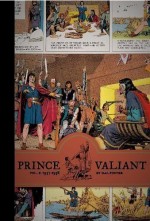
Hal Foster’s Prince Valiant volume 1: 1937-1938


By Hal Foster (Fantagraphics Books)
ISBN: 978-1-60699-141-1

Win’s Christmas Gift Recommendation: Ideal for anybody who ever dreamed or wondered… 10/10

Rightly reckoned one of the greatest comic strips of all time, the nigh-mythical saga of a king-in-exile who became one of the greatest warriors in an age of unparalleled heroes is at once fantastically realistic and beautifully, perfectly abstracted – an indisputable paradigm of adventure fiction where anything is possible and justice will always prevail. It is the epic we all want to live in…

On one thing let us be perfectly clear: Hal Foster’s Prince Valiant is not historical. It is far better and more real than that.

Possibly the most successful and evergreen fantasy creation ever conceived, Prince Valiant in the Days of King Arthur launched on Sunday 13th February 1937, a glorious weekly, full-colour window not onto the past but rather onto a world that should have been. It followed the tempestuous life of a refugee boy driven by invaders from his ancestral homeland of faraway Thule who persevered and, through tenacity, imagination and sheer grit, rose to become one of the mightiest heroes of the age of Camelot.

As depicted by the incredibly gifted Foster, this noble scion would, over the years, grow to mighty manhood amidst a heady sea of wonderment; roaming the globe and siring a dynasty of equally puissant heroes whilst captivating and influencing generations of readers and thousands of creative types in all the arts.

There have been films, cartoon series and all manner of toys, games and collections based on the feature – one of the few newspaper strips to have lasted from the thunderous 1930s to the present day (over 4000 episodes and counting) and even in these declining days of newspaper cartooning it still claims over 300 American papers as its home.

Foster produced the strip, one spectacular page a week until 1971, when, after auditioning such notables as Wally Wood and Gray Morrow, Big Ben Bolt artist John Cullen Murphy was selected to draw the feature. Foster carried on as writer and designer until 1980, after which he fully retired and Murphy’s son took over scripting duties.

In 2004 Cullen Murphy also retired (he died a month later on July 2nd) and the strip soldiered on under the extremely talented auspices of artist Gary Gianni and writer Mark Schultz and latterly Thomas Yeates, conquering one more exotic land by making it onto various web locations.

This exquisite oversized hardback volume (362 x 268mm), reprints in glorious colour – spectacularly restored from Foster’s original Printer’s Proofs – the princely pristine Sunday pages from February 1937 to December 25th 1938: those formative forays of an already impressive tale which promised much and delivered far more than anybody might have suspected during those dim and distant days…

Before the drama begins, however, Brian M. Kane offers an informative picture and photo-packed potted history of ‘Harold Rudolf Foster: 1892-1982’ after which Fred Schreiber conducts ‘An Interview with Hal Foster’ – first seen in Nemo: The Classic Comics Magazine in 1984.

Moreover, after the superb Arthurian epic exploits of the quintessential swashbuckling hero which follows, this initial collection is rounded off by Kim Thompson’s discourse on the many iterations of reprints over the years and around the world in ‘A History of Valiants’…

The actual action-packed drama commences in distant Scandinavia as the King of Thule, his family and a few faithful retainers dash for a fishing boat, intent only on escaping the murderous intentions of a usurper’s army.

Their voyage carries them to the barbarous coast of Britain where they battle bands of wild men before securing a safe retreat in the gloomy fens of East Anglia. After many hard battles they reach an uneasy détente with the locals and settle into a harsh life as regal exiles…

The young Prince Valiant was but five years old when they arrived and his growing years in a hostile environment toughen the boy, sharpen his wits and give him an insatiable taste for mischief and adventure.

He befriends a local shepherd boy and together their escapades include challenging the marauding ancient dinosaurs which infest the swamp, battling a hulking man-brute and bedevilling a local witch. In retaliation the hag Horrit predicts that Val’s life would be long and packed with incredible feats but always tainted by great sorrow.

All that, plus the constant regimen of knightly training and scholarly tuition befitting an exile learning how to reclaim his stolen kingdom, make the lad a veritable hellion, but everything changes when his mother passes away. After a further year of intense schooling in the arts of battle, Valiant decides to leave the Fens and make his way in the dangerous lands beyond…

Whilst sparring with his boyhood companion, Val unsuspectingly insults Sir Launcelot who is fortuitously passing by. Although the hero is sanguine about the cheeky lad’s big mouth, his affronted squire attempts to administer a stern punishment but is rewarded with a thorough drubbing. Indeed, Launcelot has to stop the Scion of Thule from slitting the battered and defeated man’s throat.

Although he has no arms, armour, steed or money, Valiant swears that he will become a Knight…

Luck is with the Pauper Prince. After spectacularly catching and taming a wild stallion his journey is interrupted by the gregarious paladin Sir Gawain, who shares a meal and regales the boy with tales of chivalry and heroism. When their alfresco repast is spoiled by robber knight Sir Negarth who unfairly strikes the champion of Camelot, Val charges in and Gawain regains consciousness to find the threat ended, Negarth hogtied and his accomplice skewered…

Taking Val under his wing, wounded Gawain escorts the boy and his prisoner to Camelot but their journey is delayed by a gigantic dragon. Val kills it too – with the assistance of Negarth – and spends the rest of the trip arguing that the rogue should be freed for his gallantry…

He is still stoutly defending the scoundrel at his trial before King Arthur, and is rewarded by being appointed Gawain’s squire. Unfortunately Val responds badly to being teased by the other knights-in-training and finds himself locked in a dungeon whilst his tormentors heal and the Knights of the Round Table ride out to deal with an invasion of Northmen…

Whilst the flowers of chivalry are away, a plot is hatched by scheming Sir Osmond and Baron Baldon. To recoup gambling debts they intend to capture and ransom Gawain, but have not reckoned on the dauntless devotion and ruthless ingenuity of his semi-feral squire.

Easily infiltrating the bleak fortress imprisoning the hero, Val liberates his mentor through astounding feats of daring and brings the grievously wounded knight to Winchester Heath and Arthur…

As Gawain recuperates, he is approached by a young maiden. Ilene is in need of a champion and, over his squire’s protests, the still gravely unfit knight dutifully complies. Val’s protests might have been better expressed had he not been so tongue-tied by the most beautiful girl he has ever seen…

The quest to rescue Ilene’s parents is delayed when an unscrupulous warrior in scarlet challenges them, intent on possessing the lovely maiden. Correctly assessing Gawain to be no threat, the Red Knight did not live long enough to revise his opinion of the wild-eyed boy who then attacked him…

Leaving Ilene and the re-injured Gawain with a hermit, Valiant continues on alone to Branwyn Castle, recently captured by an “Ogre” who is terrorising the countryside. Through guile, force of arms and devilish tactics he then ends the threat forever.

This is an astonishing tour de force of graphic bravura that no fan could ever forget. Aspiring cartoonist Jack Kirby certainly didn’t: he recycled Val’s outlandish outfit used to terrorise the Ogre’s soldiers as the visual basis for his 1970s horror-hero Etrigan the Demon…

Having successfully routed the invaders and freed Ilene’s family, Val began earnestly courting the grateful girl. His prophecy of lifelong misery seemed assured however, when her father had to regretfully inform him that she was promised to Arn, son and heir of the King of Ord…

Even before that shock could sink in, Valiant was called away again. Ailing Gawain had been abducted by the sorceress Morgan le Fey, who was enamoured of the knight’s manly charms…

When Val confronts her she drugs him with a potion and he endures uncounted ages in her dungeon before affecting his escape. Weak and desperate, the lad makes his way to Camelot and enlists Merlin in a last-ditch ploy to defeat the witch and save his adored mentor…

In the meantime events have progressed and Val’s bold plans to win Ilene are upset when invitations to her wedding arrive at Camelot. Initially crushed, the resilient youth determines to travel to Ord and challenge Prince Arn for her hand.

Their meeting is nothing like Val imagined but, after much annoying interference, he and the rather admirable Arn finally begin their oft-delayed death-duel only to be again distracted when news comes that Ilene has been taken by Viking raiders…

What follows is another unparalleled moment of comics magnificence as Valiant sacrifices everything for honour, gloriously falls to superior forces, wins possession of Flamberge (the legendary Singing Sword which is brother to Excalibur) and is captured and reunited with Ilene… only to lose her again to the cruellest of fates…

After escaping from the Vikings and covering himself with glory at the Lists in Camelot – although he doesn’t realise it – the heartsick, weary Prince returns to his father in the melancholy Anglian fens, again encountering ghastly Horrit and nearly succumbing to fever.

When he recovers months later he has a new purpose: he and his faithful countrymen will travel to Thule and rescue the nation from the cruel grip of the usurper Sligon.  Unfortunately during the preparations Valiant discovers the countryside has been invaded by Saxons and is compelled by his honour to race to Camelot and warn Arthur…

To Be Continued…

Prince Valiant is a hurtling juggernaut of action and romance, blending hyper-realistic fantasy with sardonic wit, and broad humour with unbelievably stirring violence, all rendered in an incomprehensibly lovely panorama of glowing art.

Beautiful, captivating and utterly awe-inspiring, Foster’s magnum opus is a World Classic of storytelling, and this magnificent deluxe edition is something no fan can afford to be without.

If you have never experienced the majesty and grandeur of the strip, this breathtaking premium collection is the best possible way to start and will be your gateway to a staggering world of wonder and imagination…

All comics material © 2009 King Features Syndicate except Tarzan page, © 2009 ERB Inc. All other content and properties © 2009 their respective creators or holders. All rights reserved.
Hal Foster’s Prince Valiant volume 7: 1949-1950


By Hal Foster (Fantagraphics Books)
ISBN: 978-1-60699-645-4

Arguably the most successful comic strip fantasy ever conceived, Prince Valiant in the Days of King Arthur launched as a Sunday page feature on February 13th 1937, a luscious full-colour weekly window onto a perfect realm of perfect adventure and romance.

The strip followed the life and exploits of a refugee boy driven by invaders from his ancestral homeland in Scandinavian Thule who grew up to roam the world and rose to a paramount position amongst the mightiest heroes of fabled Camelot.

Written and drawn by sublime master draftsman and storyteller Harold “Hal” Foster, the epic followed the little princeling through decades of thrilling exploits as he matured into a clean-limbed warrior and eventually family patriarch through a heady sea of wonderment, visiting far-flung lands and siring a dynasty of equally puissant heroes whilst captivating and influencing generations of readers and thousands of creative types in all the arts.

There have been films, animated series and all manner of toys, games and collections based on the strip – one of the few to have lasted from the thunderous 1930s to the present day (over 3900 episodes and counting) – and even in these declining days of the newspaper narrative strip as a viable medium, it still claims over 300 American papers as its home. It has even made it into the very ether with an online edition.

Foster ceaselessly produced the strip, one enchanting page per week until 1971 when, after auditioning such notables as Wally Wood and Gray Morrow, Big Ben Bolt illustrator John Cullen Murphy was chosen to succeed him as illustrator. Foster continued as writer and designer until 1980, after which he retired and Cullen Murphy’s daughter Mairead took over colouring and lettering whilst her brother John assumed the writer’s role.

In 2004 the senior Cullen Murphy also retired (he died a month later on July 2nd) and the strip has since soldiered on under the extremely talented auspices of artists Gary Gianni and latterly Thomas Yeates, with Mark Schultz scripting.

Restored from Foster’s original Printer’s Proofs, this seventh spectacularly luxurious oversized (362 x 264mm) full-colour hardback volume reprints the pages from January 2nd 1949 to 31st December 1950 (#621 to 725 if you’re counting).

What has Gone Before: after an extended sojourn in an incredible New World, Valiant and Aleta have brought their newborn son back to Britain and sought out the warrior’s old comrade Prince Arn to be the child’s Godfather. Val is astounded that the bluff solitary hero is also a husband and currently searching for Godparents for his own newborn son and heir…

Before the Dark Ages delights resume, latest illuminator Thomas Yeates delivers a remarkable introductory essay discussing ‘The Long Shadow of Hal Foster’ and the innumerable artists who owe him a creative debt, after which the never-ending saga picks up with the Princes and their families travelling back to fabled Camelot for a double Christening, presided over by King Arthur himself…

Soon however duty calls again and Valiant, Sir Gawain and hapless, bumbling hedge-wizard Oom Fooyat are dispatched to the wilds of Wales to investigate a nest of vile black magic. Seamlessly blending thrills and grandeur with broad comedy, Foster delivers an enchanting light-hearted romantic romp wherein level-headed Val exposes the macabre happenings at Illwynde Castle and plays matchmaker to more than one of his faithful retinue…

Job done and the fief secure, Gawain and the Prince of Thule return to Camelot, picking up en route a boy with chivalric intentions and the determined courage of a lion. The enigmatic Geoffrey is desperate to win his spurs, but when Valiant introduces the lad to Aleta, the prospective page boy is gripped by a ferocious, life-changing, all consuming crush…

Whilst the well-meaning kid perpetually embarrasses himself in his drive to impress his master’s wife, Arthur despatches Valiant and a small band of knights to Scotland to inspect the wall which keeps the northern savages at bay. Aleta then attempts to keep Geoffrey out of trouble by ordering the puppy to follow and keep her husband safe…

It’s an unlucky decision: as Valiant and his inspection force discover when they see that Hadrian’s Wall has been breached and hundreds of Picts are ravening southward…

Confronted with an impossible situation the Prince again resorts to unconventional tactics and traps the huge barbarian army on the English side whilst sending Geoffrey back to Camelot with a message for Arthur… and to save the hero-struck boy from dying in the unwinnable battle to come…

Breaking all the rules of knighthood for the noblest of reasons, Geoffrey speedily delivers his message and is astounded when Aleta rushes off to join Valiant in Scotland. Again disregarding consequences and probably relinquishing forever his dream of knighthood, the boy follows her northwards…

Their arrival precipitates an unexpected and nigh-miraculous end to the war, but Valiant is close to death. After tending his hurts Aleta decides that she will take her husband back to his Scandinavian homeland, and dispatches the now-exhausted Geoffrey back to Camelot to inform her handmaiden Katwin and nurse Tillicum to obtain a ship and meet her with baby Arn at the village of Newcastle…

Despite dreading the judgement awaiting him at Court, the boy thunders back and, after arranging for his wounded master’s (wonderful wife’s) wishes to be carried out, surrenders himself to his fate…

Of course the King is no fool and a great respecter of honour and courage. He summarily condemns the boy to banishment: for a year and a day Geoffrey must not set foot on English soil…

Mind in a whirl the redoubtable boy is taken to a barge secured by Katwin and sails to Caledonia with the family party to a reunion with Valiant and Aleta…

Soon the group are headed to Thule, bolstered by the bombastic reappearance to boisterous far-larger-than-life Viking Boltar: a Falstaff-like rogue and “honest pirate” not seen since volume 3…

The excitable old rogue ferries the extended family to Val’s cold homeland – with a few unplanned, profitable but dangerous stops along the way – but soon finds himself smitten by the love bug too…

One mystery has been solved, however, as a chance meeting with an old cleric discloses the faithful squire to be actually called Arf, forced from his home when his father Sir Hugo Geoffrey took a new young bride who didn’t want an annoying stepson underfoot. Now she is gone and the boy can return home if he wishes…

Eventually the expanded party reaches the chilly castle of King Aguar and settles in to a long period of snowbound rest and recuperation – until boisterous Jarl Egil makes an inappropriate advance on Aleta and hotheaded Arf dashes to her defence…

Soon the encounter has escalated and Valiant is forced into an utterly unnecessary duel of honour which can only end in pointless tragedy…

Happily the repentant Arf finds a way to satisfy honour all around but the King is plagued by a knotty problem wit cannot solve. Aguar has been seriously considering converting his Norse realm to Christianity, but the many devout missionaries roaming the land are cantankerous idiots all preaching their own particular brand of faith – when not actively fighting each other.

Thus in Spring, he tasks the fully fit Valiant with an embassage to Rome to ask the Pope to send priests and teachers who actually carry the true and official Word of God. Restless and eager Val promptly sets out, accompanied by Arf, the doughty Rufus Regan and new comrade Egil. Their mission coincides with the planting season when Aguar’s men return to their homes to sow the crops for the coming year…

No sooner have they departed however than vassal king Hap-Atla, seething from an old slight delivered to his deceased sire, rebels and besieges Arguar’s castle. With manpower dangerously depleted the situation looks grim until wily Aleta takes control of the situation and scores a devastating victory that contravenes all the rules of manly warfare.

Unseen for three months, Valiant and his companions at last reappear as they land in Rouen to begin the arduous overland trek to the HolyCity. The journey is full of short bursts of violence and outrageous incidents as, since Rome fell to the Vandals, Europe has become a seething mass of lawless principalities.

Most of these improvised kingdoms are run by brigands or worse, all seeking to fill their coffers at any unwary traveller’s expense…

In one unhappy demesne the quartet dethrone a robber baron and nearly end up married to his daughters (young Arf particularly caught the imagination of the decidedly dangerous and ambitious teenager Ollie), whilst in another Val gets hold of an alchemist ruler’s horrific black powder and is almost blown to smithereens.

Eventually however they arrive at the castle of welcoming noble Ruy Foulke and enjoy a pleasant night’s rest – only to awaken and find the place under attack by heinous villain Black Robert and his savagely competent forces…

To Be Continued…

Also included in this striking compendium is an intoxicating glimpse at the author’s virtuosity in ‘“See America First”: Hal Foster’s Union Pacific Paintings’, a series of painted advertising landscapes compiled and discussed by Brian M. Kane.

Rendered in a simply stunning panorama of glowing visual passion and precision, Prince Valiant is a non-stop rollercoaster of boisterous action, exotic adventure and grand romance; blending human-scaled fantasy with dry wit and broad humour, soap opera melodrama with shatteringly dark violence.

Beautiful, captivating and utterly awe-inspiring, the strip is a World Classic of fiction and something no fan can afford to miss. If you have never experienced the intoxicating grandeur of Foster’s magnum opus these magnificent, lavishly substantial deluxe editions are the best way possible to do so and will be your gateway to an eye-opening world of wonder and imagination…

Prince Valiant © 2013 King Features Syndicate. All other content and properties © 2013 their respective creators or holders. All rights reserved.
Win’s Christmas Gift Recommendation: Ideal for anybody who ever strived or dreamed or wished… 10/10 

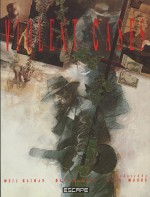
Violent Cases


By Neil Gaiman & Dave McKean (Escape Books)
ISBN: 978-0-9509568-6-2

As this entire book is all about stories, memories, perception and self-deception, I’m concentrating on the original Escape Books release, although the tale has been re-issued a number of times. Moreover, difficult sod that I am, even though the artwork was created in a muted tonal colour-palette of blues, greys and browns, which were restored for those subsequent releases, I actually prefer the black and white version I first saw, so I’m going with that one rather than later, corrected as-the-artist-intended versions…

There’s actually very little to say about this enigmatic and compelling little teaser other than the basic facts.

Initially published by the aforementioned and sorely missed Escape outfit in 1987, it marks the first collaboration of two relatively unknown creators who shared a more literary aspiration for comics than traditional newcomers to the craft, married to a novel approach and genuine, raw, hungry storytelling talent.

It’s short, sweet, disturbing, utterly absorbing and probably impossible to translate into any other medium… and that is, of course, a Very Good Thing.

There’s this guy see, and he’s reminiscing about his childhood in the 1960s…

Years ago in Portsmouth a little lad hurt his arm rather badly whilst exchanging words about bedtime with his father. To fix the problem daddy took the 4-year old to see an osteopath. The elderly gentleman was an interesting fellow with an accent who told great yarns and mentioned that he had once treated somebody famous…

As the narrator tries to sort out the half-forgotten details – fragments of life and films and games congealed now with clearly conflated circumstances – the facts, fictions and shadily obscured misunderstandings concerning his difficult childhood, growing maturity and awareness and those hours with Al Capone’s bone-bender begin to emerge and coalesce… or do they?

Flickering back and forth, the narrative proffers a miasma of mixed memories and misapprehensions involving a memorably troubled old man, Men in Dark Suits, a party, a magician, unexplained appearances and subsequent disappearances, unforgettable physical discomfort as a young arm was coaxed back into correctitude, tales of tailors and gangsters and Tommy Guns… which were always carried in Violent Cases…

Most of all it deals with unsolvable mysteries – because even the things we recall, we don’t always remember…

Complete with an Alan Moore Introduction, this slight but unforgettable pictorial memento mori – or is that topica tragoedia? – beguiles and enchants and subtly distresses in ways no lover of the comics medium could possibly resist.

If you haven’t read it, you must. If you have, read it again – it’s not at all what you remember…
© 1987 Neil Gaiman & Dave McKean.

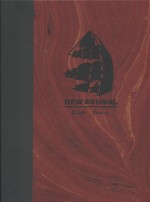
New School


By Dash Shaw (Fantagraphics Books)
ISBN: 978-1-60699-644-7

Dash Shaw is an extremely talented creator with a singular authorial voice and a huge repertoire of styles to call upon. Born in 1983, he is a leading light of a “new wave” (please note no capital letters there) of multi-tasking cartoonists, animators and web-content originators whose interests and sensibilities have heralded a renaissance in graphic narrative.

Like so many fresh and cocky creators, he began young with independently published comics before graduating to paid work, and his previous successes include Love Eats Brains, GoddessHead, Garden Head, Mother’s Mouth and the superb and haunting Bottomless Belly Button and Bellyworld.

In 2009 the Independent Film Channel commissioned him to convert his short series The Unclothed Man In the 35th Century A.D. (from comic arts quarterly Mome) into an imaginative and compelling animated series which then translated into an incredibly impressive graphic novel/art book comprising not only the evocative, nightmarish and tenderly bizarre tales but also the storyboards, designs and scripts Shaw constructed to facilitate the transition from paper to screen.

And now with New School Shaw’s bold, broad experimentalism finds a forward-looking yet chaotically nostalgia-generating fresh mode of communication for the oldest of information-storing, emotion-generating devices…

Here is another unique and achingly visual exploration of family, relationships and even the art of telling stories, at once dauntingly challenging, emotively ambivalent and metaphorically obfuscatory even as Shaw impossibly pulls an authorial sleight of hand trick which renders this colossal chronicle surprisingly accessible.

Danny is a smart, content, obedient boy who worships his older brother Luke and he is telling us about his life. As our narrator he only speaks in declarative and pompously declamatory, almost mock-heroic idiom, although his emotional underpinning is oddly off-kilter, like a high-functioning autistic.

He speaks solely in the present tense even though his story begins with memories of 1990. Moreover Danny believes he has prophetic dreams such as that one day there will be a movie called Jurassic Park or that the TV actor who plays Captain Picard will one day be the leader of the X-Men in a film…

Their highly-strung father publishes Parkworld – The Quarterly Journal of Amusement Park Industry News and Analysis and is justifiably proud of his sons’ artistic gifts and family fealty, but their solid lives begin to change in 1994 when Danny takes the credit for a dinosaur drawing Luke created and the devoted boys have a tremendous fight. As a result of the tussle Danny is temporarily rendered deaf…

Even though his hearing returns, things have changed between the boys, and soon the rebellious Luke is despatched by Dad to the nation of X where an amusement park genius is setting up an incredible new entertainment experience called “Clockworld”.

Ashar Min AKA “Otis Sharpe” is the greatest designer of rides on Earth and with the backing of X’s government is turning the entire Asian island-state into a theme park tourist trap. To that end Sharpe is hiring Americans to teach the X-ians to speak English and learn Western ways – and Dad wants 17-year old Luke to go there…

Three years younger, dutiful obedient Danny feels betrayed and abandoned, even as he guiltily noses around in his brother’s now empty room. Two years pass and Luke has not communicated with the family since his departure.

Danny’s future-dreams are troubled and he is apprehensive when Mother and Father inform him he is to visit his brother on X, with the intention of bring their silent first-born home…

However when he arrives on the bustling strange shore Danny is shocked by how much Luke has changed. Even his speech and dress are lax, debased and commonplace and the once-shining example of probity drinks, swears and fornicates…

Shock follows shock however as the newcomer is shown the burgeoning economy and infrastructure growing in the wake of Clockworld’s imminent completion. Moreover after visiting the NewSchool where Luke teaches, Danny’s joy in reuniting with his beloved brother is further shaken, when he realises how much he has changed and has no intention of returning to America.

Worse yet, the influence of X and its people also begins to increasingly infect the appalled boy, forcing him to perpetually disgrace himself as his dreams torment him with incredible, impossible visions.

At least he thinks it’s the island making him mean and spiteful or shamefully stare at the unconsciously libertine, scandalously disporting women…

This book is drenched in the turbulent, reactive, confusing and conflicted feelings of childhood and physically evokes that sense. At 340 pages, all delineated in thick black marker-like lines with hulking faux mis-registered plates of flat colour seemingly whacked willy-nilly on the 279 x216mm pages, this feels like a mega-version of one of those cheap colouring books bought for kids on a seaside holiday in the 1960s.

In fact the sheer size of the tome hammers that point home, no matter how grown up your hands now are.

Strident but subtle, simplistic yet psychologically intellectual and viscerally, compellingly bombastically beautiful in a raw, rough unhewn manner, this a graphic tale that every dedicated fan of the medium simply must see, and every reader of challenging fiction must read.

It’s big! It’s pretty! It’s different! Buy it!
© 2013 Dash Shaw. This edition © 2013 Fantagraphics Books. All Rights Reserved.

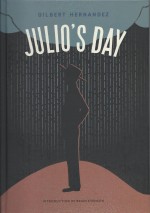
Julio’s Day


By Gilbert Hernandez (Fantagraphics Books)
ISBN: 978-1-60699-606-5

In the 1980s a qualitative revolution forever destroyed the clichéd, stereotypical ways different genres of comic strips were produced and marketed. Most prominent in destroying the comfy pigeonholes we’d built for ourselves were three guys from Oxnard, California; Jaime, Mario (occasionally) and Gilberto Hernandez.

Love and Rockets was an anthology magazine featuring slick, intriguing, sci-fi tinted hi-jinx of punky young things Maggie & Hopey – the outrageously beguiling las Locas – as well as heart-warming, terrifying, gut-wrenching soap-opera fantasies from the rural Central American paradise of Palomar.

Supreme synthesists, Los Bros Hernandez Boys enthralled and enchanted with incredible stories that sampled a thousand influences, conceptual and actual; everything from Comics, TV cartoons, masked wrestlers and the emergent exotica of American Hispanic pop culture to iconic German Expressionism. There was also a perpetual backdrop displaying the holy trinity of the young: Sex and Drugs and Rock and Roll – for which please hear alternative music and punk rock.

The result was dynamite. Mario only officially contributed on rare occasions, but Jaime’s slick, enticing visual feasts explored friendship and modern love whilst destroying stereotypes of feminine attraction through his fetching coterie of Gals Gone Wild, whilst “Beto” exhaustively crafted a hyper-authentic rural landscape and playground of wit and passion created for his extended generational saga Heartbreak Soup: a quicksilver chimera of breadline Latin-American village life with a vibrant, funny and fantastically quotidian cast.

Everything from life, death, adultery, magic, serial killing and especially gossip could happen in Palomar’s meta-fictional environs, as the artist mined his own post-punk influences through a powerfully effective primitivist style which blended the stylised mythologies and iconographies of comics, music, recreational drugs, gangs, sex, forceful, capable, dominating women and the inescapable bonds of family using a narrative format which is at the graphic vanguard of Magical Realism.

There’s fiction, there’s Meta-fiction and then there’s Gilbert Hernandez. In addition to his astonishingly captivating Palomar tales he has authored stand-alone books such as Sloth, Grip, Birdland and Girl Crazy, all marked by his boldly compelling, disingenuous artwork and a mature, sensitive adoption of literary techniques by writers like Carlos Fuentes and Gabriel García Márquez: techniques which he has amplified and, visually at least, made his own.

He then went on to examine filmic and literary influences such as Roger Corman, John Cassavetes, Elmore Leonard and Jim Thompson as he broke new ground and reprocessed the cultural influences that shaped all us baby-boomers, with “adaptations” of the trashy B-Movies which featured as perennial plot “maguffins” in his stories and affected his cast of characters. Those became a little more actual in his “adaptations” of thrillers like Chance in Hell, The Troublemakers and Love from the Shadows…

Always winning critical acclaim but seldom financial reward, the brothers eventually went their own ways, but a few years ago creatively reunited to produce annual collections of new material in their particularly peculiar shared or, rather, adjacent pen-and-ink universes and this rapturously beguiling pictorial elegy began in Love and Rockets volume II, #1 but remained unfinished until completed in this stark evocative monochrome hardback.

Here Gilbert foregoes many of the signature elements he invented and the chaotically frenetic youth-fuelled backdrop he’s famous for to patiently detail the moving life-story of an ordinary man… and, of course, once you start looking you realise there’s really no such thing as ordinary…

It’s about families and friends, the secrets we must keep and how, even though the World changes, sometimes we just can’t…

I’d be doing you and the author a huge disservice by going into too much detail, but suffice to say that somewhere in Southern California a baby is born in 1900. From the start Julio is nourished and cherished by a loving family – all except his uncle Juan, whom only the infant’s older sister Sofia realised should be kept well away from all children at all costs…

Over 100 pages, until his passing in 2000, Julio grows up with friends Tommy and Araceli, dimly aware of yet barely affected by humanity’s great crises, although the fierce uncompromising nature of the times and the elements and environment shape the people of the village just as powerfully as any global war or Stock Market crash.

One tragic slip in a mere mudslide would come to affect the family for three tragic generations…

Moreover even in such placid outreaches, bullying, cruelty, bigotry and intolerance exist in abundance to mould young hearts and minds…

As he grows to maturity, Julio loses family, makes new friends and comes to realises he has a secret he cannot share with anyone: one that, despite the way the times change society before his eyes, he just cannot admit…

Dedicated to the proposition that big history happens somewhere else but its effects touch us all, this warm-hearted, deceptively heart-wrenching, challenging, and incontrovertibly groundbreaking epic is a grown-up comics fan’s dream come true and proves how far the medium has progressed.

From traditional world saving, anodyne fist-fights, fanciful fantasies and children’s escapism to the likes of Maus, One Bad Rat, Palestine, Persepolis, Pride of Baghdad Sailor Twain and so many more, comics have been continually evolving until they not only produce material equal to other art forms, but with Julio’s Day – the diamond point of the cutting edge of graphic narrative – at last arrive at masterpieces which can only be truly told as graphic narratives

…As you will surely see…

© 2013 Gilbert Hernandez. This edition © 2013 Fantagraphics Books, Inc. All Rights Reserved.

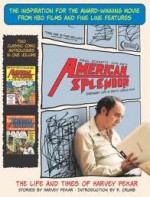
American Splendor: The Life and Times of Harvey Pekar – New Revised Review


By Harvey Pekar, R. Crumb, Gregory Budgett, Gary Dumm, Gerry Shamray,
Kevin Brown, Susan Cavey & Val Mayerik
(Ballantine Books)
ISBN: 978-1-84023-787-0

Before finding relative fame in the 21st century, Harvey Pekar occupied that ghastly niche so good at trapping the truly creative individual: Lots and lots of critical acclaim, and an occasional heart-breakingly close brush with super-stardom, without ever actually getting enough ahead to feel secure or appreciated.

One of those aforementioned brushes came in 1980s with the release of a couple of compilations of selected strips by mainstream publisher Doubleday that even to this day are some of his most powerful, honest and rewarding “literary comics” ever seen. By mercilessly haranguing, begging and even paying (out of his meagre civil service wages and occasional wheeler-deal) any artists who met his exacting intellectual standards, Pekar all but created the comics genre of autobiographical, existentially questing, slice-of-life graphic narratives whilst eking out a mostly lonely, hand-to-mouth existence in Cleveland, Ohio.

How the irascible, opinionated, objectionable, self-educated music-mad working stiff came to use the admittedly (then) impoverished comicbook medium to make a fiercely vital social commentary on American life of the ordinary Joe is a magical journey in the plebeian far better read than read about, but I’m going to have a crack at convincing any holdouts anyway.

Moreover, by the time you’ve seen this I’m already on to my next crusade…

This compendium combines and re-releases those seminal tomes in one big, bold edition and was released to tie-in with the award-winning 2003 indie film biography American Splendor, and opens with the superb contents of the 1985 release American Splendor: the Life and Times of Harvey Pekar, beginning by reproducing the introduction by early collaborator and modern Media Darling Robert Crumb before proceeding with a seductive welter of elegiac, confrontational, compulsive, challenging, painfully frank and distressingly honest observations that collectively changed the way English language comics were perceived, received and even created.

Rendered by Crumb, the excoriating graphic self-analysis begins with ‘The Harvey Pekar Name Story’ as the obsessive yet passive hunt for other people with the same name briefly gripped the self-confessed compulsive personality, whilst ‘The Young Crumb Story’ gave us Pekar’s take on the cartooning career of his collaborator, after which ‘A Fantasy’ again revisited the artist’s relationship with the writer: Pekar uncomfortably bragging over how he had browbeaten and gulled Crumb into drawing his scripts – and still was…

Gary Dumm illustrated the bizarre ‘Ozzie Nelson’s Open Letter to Crumb’ (written in 1972) describing the faded TV celebrity’s snotty pep talk to the cartooning degenerate, after which Crumb returned to deliver self-abusive insight as Pekar revealed ‘How I Quit Collecting Records – and Put Out a Comic Book with the Money I Saved’.

Greg Budgett & Dumm handled many of the most searingly honest introspectives such as ‘The Day Before the Be In’, the equally forthright and painful personal history sequels ‘Awakening to the Terror of the New Day’ and ‘Awakening to the Terror of the Same Old Day’ or the nigh-spiritual rationalisations of ‘Short Weekend – a Short Story About the Cosmic and the Ordinary’…

One of the most impressive facets of Pekar’s tales is the uncompromising depiction of the people he encountered in work or socially (if such a term can apply to such a self-admitted “judgemental jerk”) and the frankly brutal way he attempts to keep narrative polish out of his graphic reportage.

Incidents such as ‘A Compliment’ or ‘Jivin’ With Jack the Bellboy as he Goes About… Hustlin’ Sides’ and ‘Jack the Bellboy and Mr. Boats’ – all illustrated by Crumb – recount episodes with co-workers undistinguished, unremarkable and free of all dramatic embellishment or grace-saving charisma… but they are intoxicatingly real and appealing.

‘Read This’ (Budgett & Dumm) tells how even cynics can be surprised by people, whilst the Crumb-illustrated ‘Standing Behind Old Jewish Ladies in Supermarket Lines’ is as gently hilarious as their ‘Ridin’ the Dog’ vignette of cross-country bus travel is contemplatively reassuring.

Innovative Gerry Shamray tackled the wordy self-examination of life’s pointless frustrations in ‘An Argument at Work’ and the cathartic ‘Working Man’s Nightmare’ with aplomb and smart sensitivity, before Crumb resurfaced to draw an incredible familiar and unwelcome situation as the obnoxious ‘Freddy Visits for the Week End’. Regrettably we all have friends like him…

Pekar’s disastrous history with women was a frequent theme and ‘Ripoff Chick’ (by Budgett & Dumm again) showed why and how. The only difference between the author and most men was that he admitted up front that he wanted sex without complications or commitment…

‘One Good Turn Deserves Another’ (Shamray) invites us to share a typically penny-pinching secret, before Dumm tackled a quirky friendship and the perils of well-intentioned matchmaking in ‘Leonard & Marie’, and ordinary folk got tied up discussing theology and politics in Shamray’s wryly related ‘Noah’s Ark’. The artist then effectively encapsulated ‘Class Antagonism’ before Jewish intellectual Pekar again examined his ethnic and cultural roots by revisiting his relationship with Old World Hebrew ‘Emil’ (Dumm & Budgett) and the danger of first-hand accounts in the Crumb-illustrated ‘The Maggies (Oral History)’ and Shamray’s death-camp memoir ‘Kaparra’…

Crumb then turned in his most claustrophobic and impassioned drawing for the vibrant manifesto ‘American Splendor Assaults the Media’ after which the immensely stylish Kevin Brown limned a tale of frustrated selling out as Harvey attempted to schmooze up-and-coming movie star Wallace Shawn ‘Grubstreet, USA’, after which the first volume ended on a high of sorts with Pekar via Crumb temporarily resolving a ‘Hypothetical Quandary’.

The philosophising, reminiscing, ruminating, observing, eulogizing, questioning and fictively projecting promptly continues in From the Streets of Cleveland Comes… American Splendor: the Life and Times of Harvey Pekar, resuming the painfully honest – and to us here and now perhaps often unsettling and disquieting – accounts of normal lives with the Crumb-crafted classics ‘Pickled Okra (Okry)’, ‘Lunch with Carmella’, ‘Rollins on Time’ and ‘Visualize, Actualize, Realize’ – all containing commonplace friendly interactions with Pekar’s African-American co-workers that would make many genteel folk wince today…

A prospective hot date turned into a gruelling and pointless exercise in furniture moving in the Budgett & Dumm saga ‘Guerrilla Theatre: July ’74 – on the Corner’ with a punch-line not apparent until their ‘On the Corner… a Sequel: June 1976’, after which inker turned illustrator to relate the nostalgic revelations of young lust in the 1950s on the ‘Roller Coaster to Nowhere’, but some measure of cosmic karma was achieved decades later when Pekar finally achieve his  childhood goal of owning ultra-hip and so, so cool ‘Stetson Shoes’…

‘Mrs. Roosevelt and the Young Queen of Greece’ and ‘Busman’s Holiday’ by Dumm & Budgett celebrate the simple joy of guys simply sitting around shooting the breeze, whilst Crumb’s delicious treatment of Pekar’s love for old fashioned Jewish kvetching makes ‘Miracle Rabbis – a Dr. Gesundheit Story’ a minor masterpiece of comics.

‘An Everyday Horror Story’ (Shamray) then recaptures the tension and terror of Pekar’s first brush with serious illness – or so the author thought.

Always a healthy, vigorous but exceptionally excitable shouty man, Pekar got properly sick for the first time in his life and faced the very real prospect of never being able to speak again. This exceedingly gripping account perfectly presents all the fear, frustration, metaphysical pleading and moving emotional and practical support Harvey’s friends and then wife provided – and what happened next…

‘Alice Quinn’ drawn by S. (Susan) Cavey then detailed a portentous meeting with the girl who got away before Shamray’s powerfully captivating ‘I’ll be Forty Three on Friday (How I’m Living Now)’ offers a rare moment of optimistic clarity, and Cavey’s ‘Jury Duty’ shows how even the most earnest hopes and honest ambitions can worry the bejeezus out of “normal” folks…

For most of his life Pekar was that rarest of creatures – an un-typical American who chose not to drive (for good, sound and to my mind admirable reasons). Thus he often spent time cadging lifts and fretting about the etiquette of returning favours to his civilian chauffeurs. In ‘A Ride Home’ (Cavey) the impatience and anxiety grew momentarily too much, whilst in Dumm’s ‘Free Ride’ a long-standing arrangement with a previously admired old Jewish guy escalated into something ferociously passive-aggressive, quite strange and impossibly worrisome…

The same traumas afflicted Pekar when he foolishly bought his ex- wife’s automobile only to find it a cursed Jonah, which plagued him for many snowbound months in ‘Old Cars and Winter’ by Cavey. The superb and vastly underrated Val Mayerik joined the select band of artistic collaborators with the gloriously uplifting ‘A Marriage Album’, depicting life with beloved third wife with Joyce Brabner, and explored Pekar’s wild street-fighting juvenile days and later proclivities in ‘Violence’, whilst ‘History Repeats Itself’ offered a moment of resigned contemplation over teen spirits courtesy of Seán Carroll.

Mayerik contributed a final brace of gently contemplative pieces beginning with ‘A Matter of Life and…’ which saw an older, calmer author recap his life with a little more kindness than ever before, whilst an uneventful bus ride found Pekar gleaning a wealth of down-home ‘Common Sense’ from a voluble instructor driver before this masterful meander through a truly unique mind concludes with Crumb and the perfect solution to life’s ills with ‘Mr. Boats’ Miracle Cure’…

With art by individualistic collaborators who were never content to stay in their Comfort Zones but always endeavoured to make their contributions unique unto the story, and selected from a most adventurous and historically creative decade, these tales of working life, self-esteem, achievement, failure, religion, the media, Nazi atrocity, guilt, acceptable bigotry, proudly defended ignorance, friendship, aloofness and the art of understanding women are timeless slices of life’s dreary brilliance.

As a man who constantly assessed and re-examined his own creative worth and self, Harvey Pekar opened up his life to the world and changed it by being ordinary and average.

…Except he never was, as this superb insight into the mind and heart of a truly original comics creator will attest. This splendid, engrossing book offers readers a chance to see the humour, confusion and frustration of being an American thinker in a world that simply doesn’t value brains and spirit anymore – and I fear that’s going to be one of humanity’s eternal verities…

© 1976-1986, 2004 Harvey Pekar, LLC. All Rights Reserved.

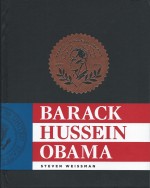
Barack Hussein Obama


By Steven Weissman (Fantagraphics Books International)
ISBN: 978-1-60699-623-2

Steven Weissman was born in California in 1968 and grew up to be an exceptionally fine and imaginative cartoonist. He has worked for Alternative Comics, Last Gasp, Dark Horse, Marvel, DC, Vice and Nickelodeon Magazine among others, and his artistic sensibilities have been influenced and shaped by such disparate forces as Super-Deformed manga, “Our Gang” comedies, Abbott and Costello, Dan Clowes, Mike Allred and Peanuts – the strip, not the foodstuff.

Much of his groundbreaking, award-winning early work, dating from the mid-1990s, offered a post-modern, skewed and alternative view of friendship, childhood, world weirdness and people’s meanness and can all be enjoyed over and over again in such stunning compilations as Tykes, Yikes!, Lemon Kids, Don’t Call Me Stupid, Mean, Chewing Gum in Church, White Flower Day, Chocolate Cheeks and others. The French and Japanese – who really know quality comics – love him lots.

In 2012 Weissman literally went back to the drawing board, un-and-recreating himself and his aesthetic methodology for a weekly online strip entitled Barack Hussein Obama which has since been collected into a stunning and unbelievably enchanting hardcover cartoon book about the unsuspected nature of modern America.

Spiky, acerbic, tellingly mundane and captivatingly absurdist, it follows the day to day tribulations of this ordinary shmoe who just happens to be the President of the USA as he distractedly fails to deal with that persistently annoying old Joe Biden guy, the pushy, overly excitable Rodham Clinton dame and that obnoxious oaf Newt all whilst trying to placate his testily disappointed wife and their terminally trendy kids Malia and Sasha.

It’s a full, if confusing life, always filled with minor crises. When he’s not being accidentally racist at Press Conferences or making jokes journalists don’t get, Barack is happily sharing old family recipes or chatting with foreign dignitaries he can’t understand, even if Joe is always butting in, telling him off and acting hurt whilst the Secret Service guy is constantly hanging around looking mean…

…And then there’s that bad-tempered Clinton lady sneaking off to get cosy with sex-bomb Muammar el-Qaddafi, the recurring stiff-necked, stuck-up ghost of long-dead President James Garfield peddling advice, the ongoing hunt for Osama Bin Laden and the old lady who managed to steal Barack’s identity and bought all that pet food and piano lessons…

No wonder the President needs to occasionally slip away now and then to get totally baked…

All in all though Barack thought it was going pretty well until the bird started talking to him. It wasn’t long before Mr. President transformed into a gigantic parakeet on Air-force One and headed for the peacefully deep blue skies…

With guest appearances – sort of – by Truman Capote, Nicholas Sarközy, Alfred E. Neuman, The Punisher’s War Journal and more, this is a look inside the Oval Office like none you’ve ever seen, but no matter how much Tea Party Republicans would like it to be, it certainly isn’t another searing expose of dubious shenanigans from the pretender to a stolen throne.

It is, though, a generous, gentle and spectacularly surreal trip into the head of a very special and oddly observant US citizen who has creatively concocted a world that all rulers and/or prospective despots should visit at least once.

This isn’t the real Obama, but it might well be the one the average American deserves…

A lot of very smart people are saying a lot of very deep, very clever and appreciative things about this deliciously winning book, so I won’t waste my time competing with them. I will however tell you that Barack Hussein Obama is one of the most enticing, intriguing and sheerly delightful reads of the last year and anybody with half a brain – or even more: more is always better – would be crazy not to pick up a copy.

© 2012 Steven Weissman. All rights reserved.

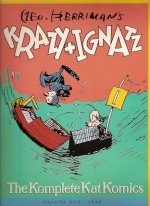
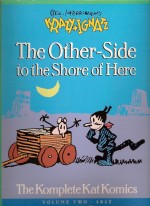
Krazy + Ignatz: The Komplete Kat Komics volume 1, 1916 and volume 2: 1917 The Other-Side to the Shore of Here


By George Herriman (Eclipse Books/Turtle island)
ISBNs: 0-913035-48-3 and 0-913035-75-0

I must admit to feeling like a fool and a fraud reviewing George Herriman’s winningly surreal masterpiece of eternal unrequited love. Although Krazy Kat is unquestionably a pinnacle of graphic innovation, a hugely influential body of work which shaped the early days of the comics industry and an undisputed treasure of world literature, some readers – from the strip’s earliest antecedents in 1913 right up to five minutes ago – just cannot “get it”.

All those with the right sequence of genes (K, T, Z and A, I suspect) are instantly fans within seconds of exposure whilst those sorry few who are oblivious to the strip’s inimitable charms are beyond anybody’s meagre capacity to help.

Still, since everyday there’s newcomers to the wonderful world of comics I’ll assume my inelegant missionary position once more and hope to catch and convert some fresh soul – or, as I like to think of it, save some more “lil Ainjils”…

The Krazy & Ignatz softcover series of collected Sunday pages was contrived by Eclipse Comics and the Turtle Island Foundation and taken over by Fantagraphics when the publisher succumbed to the predatory market conditions of the 1990s. It is not and never has been a strip for dull, slow or unimaginative people who simply won’t or can’t appreciate the complex multilayered verbal and pictorial whimsy, absurdist philosophy or seamless blending of sardonic slapstick with arcane joshing. It is the closest thing to pure poesy that narrative art has ever produced.

Think of it as Dylan Thomas and Edward Lear playing “I Spy” with James Joyce amongst beautifully harsh and barren cactus fields whilst Gabriel García Márquez types up the shorthand notes and keeps score…

Herriman was already a successful cartoonist and journalist in 1913 when a cat and mouse who had been cropping up in the corners and backgrounds of his outrageous domestic comedy strip The Dingbat Family/The Family Upstairs finally graduated to their own feature. “Krazy Kat” debuted in William Randolph Hearst’s New York Evening Journal on October 28, 1913 and, mainly by dint of the publishing magnate’s overpowering direct influence, spread throughout his vast stable of papers.

Although Hearst and a host of the period’s artistic and literary intelligentsia (which included e.e. Cummings, Frank Capra, John Alden Carpenter, Gilbert Seldes, Willem de Kooning, H.L. Mencken and Jack Kerouac) utterly adored the strip, many local editors -ever cautious of the opinions of the hoi-polloi who actually bought the papers – did not and took every career-risking opportunity to drop it from the comics section.

Eventually the feature found a home in the Arts and Drama section of Hearst’s vast empire of papers. Protected by the publisher’s patronage the strip flourished unharmed by editorial interference and fashion and ran until Herriman’s death in April 1944.

The basic premise is simple: Krazy is an effeminate, dreamy, sensitive and romantic feline of indeterminate gender in love with Ignatz Mouse: rude crude, brutal, mendacious and thoroughly scurrilous.

Ignatz is a real Man’s Muridae; drinking, stealing, cheating, carousing, neglectful of his spouse and children. He revels in spurning Krazy’s genteel advances by regularly and repeatedly belting the cat with a well-aimed and mightily thrown brick (obtained singly or in bulk and generally legitimately from noted local brickmaker Kolin Kelly).

The third member of the classic eternal triangle is lawman Offissa Bull Pupp, hopelessly in love with Krazy, well aware of the Mouse’s true nature, but bound by his own timidity and sense of honour from removing his rival for the cat’s affections. Krazy is, of course, blithely oblivious of Pupp’s true feelings and dilemma…

Also populated with a stunning supporting cast of inspired anthropomorphic bit players such as Joe Stork, (deliverer of babies), the hobo Bum Bill Bee, Don Kiyoti, busybody Pauline Parrot, Walter Cephus Austridge, the Chinese mallard Mock Duck, Joe Turtil and a host of other audacious characters – all capable of stealing the limelight and even supporting their own features – the episodes occur in and around the Painted Desert environs of Coconino (based of the artist’s vacation retreat Coconino County, Arizona) and the surreal playfulness and fluid ambiguity of the flora and landscape are perhaps the most important member of the cast.

The strips are a masterful mélange of wickedly barbed contemporary social satire, folksy yarn-telling, unique experimental art, strongly referencing Navajo art forms and sheer unbridled imagination and delightfully expressive language: alliterative, phonetically and even onomatopoeically joyous and compellingly musical (“He’s simpfilly wondafil”, “A fowl konspirissy – is it pussible?” or “I nevva seen such a great power to kookoo”), yet for all that the adventures are timely, timeless, bittersweet, self-referential, fourth-wall bending, eerie, idiosyncratic and utterly hilarious escapades encompassing every aspect of humour from painfully punning shaggy dog stories to riotous slapstick.

The eponymous first monochrome volume opens with ‘The Kat’s Kreation’ by Bill Blackbeard; a fulsome, fascinating and heavily illustrated history of the development of the frankly freakish feline as briefly outlined above, after which this slim, tall tome shuffles into the first cautious but full-bodied escapades from 1916 delivered every seven days from April 23rd to December 31st.

Within that first year, as war raged in Europe and with America edging inexorably closer to the Global Armageddon, the residents of Coconino sported and wiled away their days in careless abandon but totally embroiled within their own – and their neighbours’ – personal dramas.

Big hearted Krazy adopts orphan kitties, accidentally goes boating and ballooning, saves baby birds from predatory mice and rats, survives pirate attacks, constantly endures assault and affectionate attempted murder and does lots of nothing in an utterly addictive, idyllic and eccentric way…

The volume ends with ‘The Kat Maker’ a copiously illustrated biography of Herriman.


Volume 2: 1917 The Other-Side to the Shore of Here begins with ‘Kat in Nine Bags – a Twenty Year Quest for a Phantom’ a trenchant introductory article by Bill Blackbeard which describes Publisher Hearst’s unceasing battle with his own editors to keep the strip in print and on the Comics pages – everything short of kidnap and assassination apparently – before the artistic tour de force (covering January 7th to 30th December) commences in perfect harmony with its eclectic and embattled environment.

Within this second magical atlas of another land and time the formative tone and textures of the eternal game play out as usual, but with some intriguing diversions such as recurring explorations of terrifying trees, grim ghosts and obnoxious Ouija Boards, tributes to Kipling as we discover why the snake rattles, meet Ignatz’s aquatic cousin, observe the invasion of Mexican Jumping Beans and a plague of measles, discover the maritime value of “glowerms”, discover who was behind a brilliant brick-stealing campaign of crime and at last see Krazy become the Bricker and not Brickee…

To complete the illustrious experience and explore the ever-shifting sense of reality amidst the constant display of visual virtuosity and verbal verve this big, big book (305x230mm) ends with ‘The Ignatz Mouse Debaffler Pages’ providing pertinent facts, snippets of contextual history and necessary notes for the young and potentially perplexed…

There has been a wealth of Krazy Kat collections since the late 1970s when the strip was generally rediscovered by a far more accepting audience and these particular compendiums were picked up by Fantagraphics when Eclipse ceased trading in 1992. The current publisher’s avowed intent is to complete the collection and then keep the works in print and more power to them for that.

Herriman’s epochal classic is a genuine Treasure of World Art and Literature and these comic strips shaped our industry, galvanised comics creators, inspired auteurs in fields as disparate as prose fiction, film, sculpture, dance, animation and jazz music whilst always delivering delight and delectation to generations of devoted wonder-starved fans.

If however, you are one of Them and not Us, or if you actually haven’t experienced the gleeful graphic assault on the sensorium, mental equilibrium and emotional lexicon carefully thrown together by George Herriman from the dawn of the 20th century until the dog days of World War II, this glorious brace of cartoon masterpieces are among the most accessible…

Just remember: not everybody gets it and some of them aren’t even stupid or soulless – they’re just unfortunate… “There Is A Heppy Lend Furfur A-Waay”…
© 1989/1990 Eclipse Books/Turtle Island Foundation. All rights reserved.

Love and Rockets: New Stories volume 4


By The Hernandez Brothers (Fantagraphics Books)
ISBN: 978-1-60699-490-0

A year goes by like twelve long months when you’re waiting for a really special treat, but if that deferred object of desire is the next annual instalment of Love and Rockets: New Stories then the wait is always worth it.

One of the transcendent, formative forces of the 1980s comics revolution, Love and Rockets was an anthology magazine featuring the slick, intriguing, sci-fi tinged hi-jinx of punky young things Maggie and Hopey – las Locas – and heart-warming, gut-wrenching soap-opera epics set in a rural Central American paradise called Palomar.

The Hernandez Boys (three guys from Oxnard, California: Jaime, Gilberto and Mario), gifted synthesists all, enthralled and enchanted with incredible stories sampling and referencing a thousand influences – everything from Comics, TV cartoons, masked wrestlers and the exotica of American Hispanic pop culture to German Expressionism.

There was also a perpetual backdrop displaying the holy trinity of youth: Sex and Drugs and Rock and Roll – for which last please also include alternative music, hip hop and punk.

The result was dynamite. Mario only officially contributed on rare occasions, but Jaime’s slick, enticing visual forays explored friendship and modern love by destroying stereotypes of feminine attraction through his fetching coterie of Gals Gone Wild, whilst Gilberto created a hyper-real landscape and playground of wit and passion created for his extended generational saga Heartbreak Soup: a quicksilver chimera of breadline Latin-American village life with a vibrant, funny and fantastically quotidian cast.

The denizens of Palomar still inform and shape his latest tales both directly and as imaginative spurs for ostensibly unaffiliated stories.

Everything from life, death, adultery, magic, serial killing and especially gossip could happen in Palomar’s meta-fictional environs, as the artist mined his own post-punk influences via a devastatingly effective primitivist style which blended the highly personal mythologies of comics, music, drugs, powerful women, gangs, sex and family using a narrative format which is the graphic equivalent of Magical Realism.

Winning critical acclaim but scant financial reward the brothers eventually went their own ways but a few years ago creatively reunited to produce these annual collections of new material in their particularly peculiar shared or, rather, intermittently adjacent pen-and-ink universes.

This fourth volume commences with the third chapter of Jaime’s compelling “those were the days” graphic revival of las Locas, aptly designated ‘The Love Bunglers’; further following the tribulations of middle-aged Maggie Chascarrillo, still looking for her life’s path and true love; still an uncomprehending, unsuspecting object of desire to the men – and some of the women – who flock around her.

Here the repercussions of the shocking return of her disturbed and long missing brother has shaken her world and looks likely to escalate into inescapable tragedy…

Gilbert again plunders the movie career of captivating, complex aging B-movie queen Fritz (See High Soft Lisp, The Troublemakers and Love from the Shadows) and her teen-tyro niece Dora “Killer” Rivera – granddaughter of Palomar’s formidable Matriarch Luba and another pneumatic, no-nonsense, take-charge character determined to do everything her way and own all her own mistakes – for the trendy, torrid and trashy ‘King Vampire’: a beguiling contemporary fang-banger romance wherein a troubled teen and her geeky boy-pal are spurned by the local Goth gang but not the two true bloodsuckers who have just flapped into town…

‘The Love Bunglers part 4’ cleanses the pictorial palate nicely as Maggie continues to stumble from misapprehension to miscue, after which Jaime offers another glimpse into her formative years with ‘Return To Me’, a stunning prequel to the previous volume’s astonishing, revelatory ‘Browntown’…

Gilbert then steps away from filmic conceit to examine the actress Fritz in the seductively mesmeric and innocuously shocking ‘And Then Reality Kicks In’ as the dowager starlet frankly discusses her drinking problem and stalled career with a friend before Jaime memorably closes out this year’s model with the poignant, trenchant and amazingly upbeat conclusion to ‘The Love Bunglers’

Warm-hearted, deceptively heart-wrenching, challenging, charming and irresistibly addictive, Love and Rockets: New Stories is a grown up comics fan’s dream come true and remains as valid and groundbreaking as its earlier incarnations – the diamond point of the cutting edge of American graphic narrative.

© 2011 Gilbert and Jaime Hernandez. This edition © 2011 Fantagraphics Books. All Rights Reserved.

Hal Foster’s Prince Valiant volume 4: 1943-1944


By Hal Foster (Fantagraphics Books)
ISBN: 978-1-60699-455-9

Win’s Christmas Gift Recommendation: Ideal for anybody who ever strived or dreamed or wished… 9/10

Almost certainly the most successful comic strip fantasy ever conceived, the Sunday page Prince Valiant in the Days of King Arthur launched on February 13th 1937, a luscious full-colour weekly window onto a perfect realm of perfect adventure and romance. The strip followed the life and exploits of a refugee boy driven by invaders from his ancestral homeland in Scandinavian Thule who grew up to roam the world and rose to a paramount position amongst the mightiest heroes of fabled Camelot.

Written and drawn by sublime master draftsman Harold “Hal” Foster, the little princeling matured to clean-limbed manhood in a heady sea of wonderment, visiting far-flung lands and siring a dynasty of equally puissant heroes whilst captivating and influencing generations of readers and thousands of creative types in all the arts.

There have been films, animated series and all manner of toys, games and collections based on the strip – one of the few to have lasted from the thunderous 1930s to the present day (over 3800 episodes and counting) – and even in these declining days of the newspaper narrative strip as a viable medium it still claims over 300 American papers as its home. It has even made it into the very ether with an online edition.

Foster produced the strip, one spectacular page a week until 1971, when, after auditioning such notables as Wally Wood and Gray Morrow, Big Ben Bolt artist John Cullen Murphy was selected to draw the feature. Foster carried on as writer and designer until 1980, after which he fully retired and Murphy’s son assumed the writer’s role.

In 2004 the senior Cullen Murphy also retired (he died a month later on July 2nd) and the strip has soldiered on under the extremely talented auspices of artist Gary Gianni and writer Mark Schultz.

This fourth luxurious oversized full-colour hardback volume reprints – spectacularly restored from Foster’s original Printer’s Proofs – the strips from January 3rd 1943 to 31st December 1944 and sees the beginning of his celebrated but rarely seen “Footer strip” The Mediaeval Castle.

As comprehensively explained in Brian M. Kaine’s introductory essay ‘Hal Foster’s The Mediaeval Castle in the Days of President Roosevelt’ wartime paper rationing forced newspapers to dictate format-changes to their syndicated strip purchases and properties like Prince Valiant began to appear with an unrelated (and therefore optional) second feature, which individual client papers could choose to omit according to their local space considerations.

Apparently the three-panel-per week saga starring the 11th century family of Lord and Lady Harwood, their young sons Arn and Guy and teenaged daughter Alice – a feudal pot-boiler so popular that it spawned a couple of book collections – wasn’t dropped by a single paper throughout its 18-month run from April 23, 1944 to the dog-days of 1945, but Foster was happy to return to one epic per full page once the newsprint restrictions were lifted. This volume also includes a candid glimpse of a painting by the artist lost since his death and only recently discovered at auction.

This comic chronicle opens with Valiant leading King Arthur’s forces in a cunning war of attrition against united Scottish Picts and invading Vikings – but only until the wily young paladin starts sowing deadly discord amongst their assembled ranks, breaking the invasion force by turning it upon itself.

After the clash of arms subsides, restless Val is haunted by visions of Queen Aleta of The Misty Isles, whom he believes has bewitched him, utterly unaware that she saved his life not once but twice.

Determined to lose his dolorous mood, he revisits the fenland swamps of his youth and spends a tempestuous time with the wizard Merlin, before moving on to Camelot and a joyous reunion with his dashing and outrageous comrade Gawain. Even in such company Val’s mood is poor and he determines to visit his father King Aguar in distant Thule, stopping only to eradicate two bands of bandits and cut-purses lurking in the great forest, ably assisted by his devoted squire Beric.

Taking passage to Scandia, the heroes stumble into a turbulent shipboard romance and extended drama which ends tragically as the great vessel Poseidon, carrying them all to Uppsala, founders in a mighty storm.

Enemies become comrades and even friends as they all struggle for survival, with Val, Beric and a few others, including Jewish merchant Ahab and a rowdy Saxon yclept Eric, finally continuing their voyage in small skiff, encountering Viking raiders and deep sea monsters before safely beaching in Trondheim.

Eric joins Val and Beric for the final leg of the journey to Thule, but as they near King Aguar’s palace they become fortuitously embroiled in a plot to oust the aged monarch, leading to insidious intrigue and a spectacular confrontation. As the heroes of the day bask in deserved glory, the boastful and flirtatious Eric is easily and permanently tamed by the delightfully capable maid Ingrid, but the idyllic days don’t last long as the other elements of the proposed coup become known.

For a change, Val uses diplomacy to end the crisis but danger still cloaks him like a shroud. When a hunting accident almost kills him, he accidentally plays Cupid for a crippled artist and a Viking’s daughter and, barely recovered, repulses an invasion by barbarian Finns.

After a collapsing glacier nearly ends his life he is captured by rebellious nobles determined to be rid of his sire. Tortured and used as bait, Valiant escapes, turns the tables on his captors and presides over a grim and merciless siege which sees them all destroyed like vermin.

Midway through that action The Mediaeval Castle debuted, beginning with details of daily life for the noble Harwoods before launching into an epic feud between rival lords that lasted until the end of this collection whilst depriving the lead feature of fully a third of its usual story-space each Sunday.

Undeterred Foster then launched his longest yarn to date: a twenty-month extravaganza which saw Prince Valiant set out for the Misty Isles to free himself of the “spell” of grey-eyed siren Aleta. Returning to Camelot the tormented Prince enlists the aid of Gawain and they promptly set off across the kingdoms of Europe. In Germany they are attacked by barbaric Goths, before taking ship in Rome and being shipwrecked. Beric and the now amnesiac Val are marooned whilst Gawain, who is held hostage by an ambitious Sicilian noble, takes the spotlight for a few weeks.

The sheer bravura of Foster’s storytelling ability comes to the fore now: in modern times an author of a periodical tale would blanch at the spending of a great and well-established character, but as Valiant finally recovers and lands on the extremely hostile Misty Isles one of the most loved players dies nobly to save the Prince’s life…

Aleta, the spellbinder of Val’s nightmares, has been ill-used by fate and is not the monster the bold voyager believes. She is however, in dire straits with a flock of suitors and her own courtiers pressing her to marry immediately and produce an heir. So it’s with mixed emotions that she sees the boy she once rescued burst in, snatch her up and flee the Isles with her as his uncomplaining prisoner.

As for the exhausted but exultant Val, he now has the cause of all his woes chained and at his mercy…

To Be Continued…

Rendered in a simply stunning panorama of glowing visual passion and precision, Prince Valiant is a non-stop rollercoaster of stirring action, exotic adventure and grand romance; blending human-scaled fantasy with dry wit and broad humour with shatteringly dark violence. Beautiful, captivating and utterly awe-inspiring the strip is a World Classic of fiction and something no fan can afford to miss. If you have never experienced the intoxicating grandeur of Foster’s magnum opus these magnificent, lavishly substantial deluxe editions are the best way possible to do so and will be your gateway to an eye-opening world of wonder and imagination…

Prince Valiant © 2011 King Features Syndicate. All other content and properties © 2011 their respective creators or holders. All rights reserved.