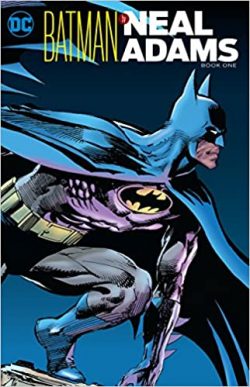
By Frank Robbins, Dennis O’Neil, Mike Friedrich, Irv Novick, Bob Brown, Neal Adams, Carmine Infantino, Joe Giella, Dick Giordano, Frank Giacoia & various (DC Comics)
ISBN: 978-1-4012-3236-8 (TPB)
This book includes some Discriminatory Content produced during less enlightened times.
After three seasons (perhaps two and a half would be closer) the overwhelmingly successful Batman TV show ended in March, 1968. It had clocked up 120 episodes and a movie since the US premiere on January 12, 1966 and triggered a global furore of “Batmania” – and indeed hysteria for all things zany and mystery-mannish. As the series foundered and crashed the global fascination with “camp” superheroes (and yes, the term had everything to do with lifestyle choices but absolutely nothing to do with sexual orientation, no matter what you and Mel Brooks might think about Men in Tights) burst as quickly as it had boomed, and the Caped Crusader was left with a hard core of dedicated fans and followers who now wanted their hero back.
For DC editor Julius Schwartz – who had tried to keep the most ludicrous excesses of the show out whilst still cashing in on his global popularity – the reasoning seemed simple: strip out the tired gimmicks and gaudy paraphernalia and get him back to solving mysteries and facing genuine perils as soon and as thrillingly as possible.
This also meant slowly phasing out the boy sidekick…
Many readers were now acknowledged as discerning, independent teens and the kid was no longer relevant to them or the changing times. Although the soon-to-be college-bound freshman Teen Wonder would still pop back for the occasional guest-shot yarn, this fifth astoundingly economical monochrome monument to comics ingenuity and narrative brilliance would see him finally spread his wings and fly the nest for an alternating back-up slot in Detective, shared with relative newcomer Batgirl in stirring hip and mod solo sallies.
Collecting the newly independent Batman’s cases from September 1969 to February 1971 (#216-228 of his own title as well as the front halves of Detective Comics #391-407), the 30 stories gathered here – some of the Batman issues were giant reprint editions so only the covers are reproduced on these pages – were written and illustrated by an evolving team of fresh-thinking creators as editor Schwartz lost many of his elite stable to age, attrition and corporate pressure.
However, the “new blood” was fresh only to the Gotham Guardian, not the industry, and their sterling efforts swiftly moulded the character into a hero capable of actually working within the new “big things” in comics: suspense, horror and the supernatural…
During this pivotal period the long slow road to today’s scarily crazed Dark Knight gradually revealed a harder-edged, grimly serious caped crusader, even whilst carefully expanding the milieu and scope of Batman’s universe… especially his fearsome foes, who slowly ceased to be harmless buffoons and inexorably metamorphosed into the macabre Grand Guignol murder fiends of the early 1940s.
The transformational process continues here with Frank Robbins-scripted Detective #391 as ‘The Gal Most Likely to Be – Batman’s Widow!’ (illustrated by Bob Brown & Joe Giella) sees the fleeting return of abortive modern love interest Ginny Jenkins who had inadvertently become the passing fancy of mobbed-up publisher and extortionist Arnie Arnold. By crushing the crooked editor’s scam to fleece Gotham’s society eateries, Batman paved the way for Ginny to settle down with the true man of her dreams…
Robbins (creator of newspaper strip Johnny Hazard) always had a deft grip on both light adventure and darker crime capers as seen in issue #392’s ‘I Died… A Thousand Deaths!’ as the Gotham Gangbuster’s plan to take down mobster Scap Scarpel goes dangerously awry after trusting a less than honest “confidential informant” whilst in Batman #216 (November), Robbins gifted faithful butler Alfred a surname (after 30 years of anonymous service) by introducing the retainer’s niece Daphne Pennyworth in ‘Angel – or Devil?’ (limned by Irv Novick & Dick Giordano).
The aspiring actress had become ensnared in the coils of a band of very crooked travelling players and was very nearly their patsy for murder…
In an era where teen angst and the counterculture played an increasingly strident part in the public consciousness, Robin’s role as spokesperson for a generation became increasingly important, with disputes and splits from his senior partner constantly recurring. A long overdue separation came in Detective #393’s ‘The Combo Caper!’ (Robbins, Brown & Giella) wherein Bruce Wayne and Dick Grayson take a young delinquent with them on their last vacation together, embroiling Batman & Robin in a sinister string of high-end gem heists.
The partnership formally sundered in Batman #217’s ‘One Bullet Too Many!’ (Robbins, Novick & Giordano) as Dick ships out for Hudson University and Batman begins a radical rethink of his mission and goals.
Dapper Gentleman’s Gentleman Alfred became a far more hands-on emotionally involved part of the mythos – like Margery Allingham’s Magersfontein Lugg in her Albert Campion mysteries or ex-Sergeant/valet Mervyn Bunter in Dorothy L. Sayer’s Lord Peter Wimsey tales – from this point on: shutting up the stately Manor and moving the Batcave into the basement of the Wayne Foundation building in the heart of the city where most of the crime and injustice actually happened…
The first case – a superbly crafted classic whodunit of the streamlined setup – involved the unsolved murder of a paediatrician, but the real innovation was the creation of a new Wayne Foundation outreach project: the Victims Incorporated Program which saw philanthropy and superheroics combine to provide justice for those who couldn’t afford to buy it. The worthy scheme immediately hit a deadly snag in Detective #394’s ‘A Victim’s Victim!’ (Robbins, Brown & Giella) when a crippled racing car driver came seeking vengeance, claiming Wayne had personally sabotaged his career. It took all of the Dark Detective’s skills to uncover the deadly truth…
Batman #218 was an all-reprint Giant Annual represented here only by its glorious Murphy Anderson cover, whereas the next tale marked a landmark step forward in the history of the Caped Crusader.
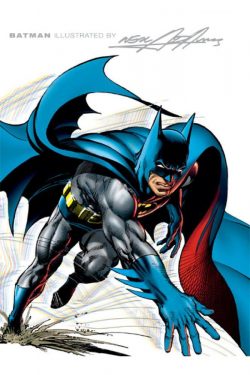
Neal Adams had been producing a stunning succession of mesmerising covers on both Batman and Detective Comics, as well as illustrating a phenomenal run of team-up tales in World’s Finest Comics and The Brave and the Bold, so his inevitable bump up to the premier league was hotly anticipated. However Dennis O’Neil’s script for Detective Comics #395’s ‘The Secret of the Waiting Graves’ (January 1970, inked by Giordano) also instituted a far more mature and sinister – almost gothic – take on the hero as he confronted psychotic nigh-immortal lovers named Muerto whose passion for each other was fuelled by deadly drugs and sustained by a century of murder…
Adams’ captivating dynamic hyperrealism was just the final cog in the reconstruction of the epic Batman edifice, but it was also an irresistibly attractive one, especially as the growing public taste for supernatural stories overtook costumed crimebusting….
Nevertheless, Batman #219 led with a cracking political thriller in Robbins, Novick & Giordano’s ‘Death Casts the Deciding Vote’, wherein Bruce brings his V.I.P. scheme to Washington DC and stumbles into a plot to assassinate an anti-crime Senator, before astounding Christmas vignette ‘The Silent Night of the Batman’ (Mike Friedrich, Adams & Giordano) completely steals the show – and became a revered classic – with its eerily gentle, moving modern take on the Season of Miracles…
Adams couldn’t do it all and he didn’t have to. Detective #396 saw artists Brown & Giella up their game in Robbins’ clever contemporary yarn ‘The Brain-Pickers!’ as teen finance wizard Rory Bell corners the stock market from the back of his freewheeling motorbike, only to be kidnapped by a gang with an eye to a big killing – corporate and otherwise – until the Caped Crimebuster gets on their trail. Novick & Giordano similarly adapted their styles for Batman #220 with ‘This Murder has been… Pre-Recorded!’ (scripted by Robbins) finding Bruce finally meeting journalist Marla Manning (whose writing inspired the V.I.P. initiative) when an exposé of corrupt practises makes her the target of a murder-for-hire veteran.
O’Neil, Adams & Giordano reunited in Detective #397 for another otherworldly mystery when obsessive millionaire art collector Orson Payne resorts to theft and worse in his quest for an unobtainable love in ‘Paint a Picture of Peril!’, whilst #398 sees Robbins, Brown & Giella pose ‘The Poison Pen Puzzle!’ after muckraking gossip columnist Maxine Melanie’s latest book inspires her murder with an overabundance of perpetrators queuing up to take the credit…
Robbins, Novick & Giordano’s ‘A Bat-Death for Batman!’ leads in #221 as the Dark Knight heads for Germany in search of Nazi war criminals and their bio-agent which turns domestic animals and livestock into rabid killers, whilst the Friedrich-scripted ‘A Hot Time in Gotham Town Tonight!’ sees the Masked Manhunter eradicate the threat of a mystic idol capable of turning the city into smouldering ashes. Then Detective #399 (O’Neil, Brown & Giella) debuts anti-Batman campaigner/political opportunist Arthur Reeves and reveals how ‘Death Comes to a Small, Locked Room!’: a clever mystery centred on the apparent assassination of a martial arts teacher, after which Batman #222 offers two tales illustrated by Novick & Giordano.
Robbins’ ‘Dead… Till Proven Alive!’ features a guest shot from Robin as British band The Oliver Twists hit Gotham, reviving speculation that one of that Fabulous Foursome had been killed and secretly replaced (a contemporary conspiracy theory had it that Beatle Paul McCartney had been similarly dealt with), after which Friedrich contributed another superb human interest yarn as an exhausted hero pushes himself beyond his limits to help a deaf mugging victim in ‘The Case of No Consequence!’ Then anniversary Detective Comics #400 introduces a dark counterpoint to the Gotham Gangbuster as driven scientist Kirk Langstrom pays a heavy price for devising a serum making him superior to Batman in ‘Challenge of the Man-Bat!’ (Robbins, Adams & Giordano).
Batman #223 was another Annual, this time sporting a captivating Curt Swan/Murphy Anderson cover, before Detective #401 spotlights Robbins, Brown & Giella’s ‘Target for Tonight!’ as insane playboy hunter Carleton Yager stalks Gotham’s most dangerous game, armed only with his wits, weapons and knowledge of the Dark Knight’s true identity…
Batman #224 opens an era of eerie psychodramas and manic murder as our hero travels to New Orleans to solve the mysterious demise of a Jazz legend and battles monstrous Moloch in ‘Carnival of the Cursed’ (O’Neil, Novick & Giordano), after which Detective #402 sees the Dark Knight capture the out-of-control thing that was Kirk Langstrom and ponder if he had the right to kill or cure the beast in Robbins, Adams & Giordano’s ‘Man or Bat?’.
Batman #225 (O’Neil, Novick & Giordano) details the murder of divisive talk show host Jonah Jory with witnesses swearing the city’s great hero is the killer in ‘Wanted for Murder-One, the Batman’ and Detective #403 delivers gothic thriller ‘You Die by Mourning!’ (Robbins, Brown & Frank Giacoia, with a splash page by Carmine Infantino), in which the V.I.P. project turns up grieving widow Angie Randall who needs justice for her murdered husband. This cunning conundrum revolves around the fact that dear dead Laird wasn’t dead yet – but will be tomorrow; and is followed by Detective Comics #404’s offering by O’Neil, Adams & Giordano’s utterly exceptional and magnificent ‘Ghost of the Killer Skies!’ As the Masked Manhunter seek to solve a series of impossible murders on the set of a film about German WWI fighter ace Hans von Hammer, all evidence seeming to prove the slayer can only be a vengeful phantom…
Batman #226 skews science to introduce a new mad menace in ‘The Man with Ten Eyes!’ by Robbins, Novick & Giordano. A cruel misunderstanding during a robbery pits security guard Reardon against Batman just as the real thieves detonate a huge explosion. Traumatised, shell-shocked and blinded, Reardon is subjected to an experimental procedure which allows him to see through his fingertips but the Vietnam vet blames the Caped Crimebuster for his freakish fate and resolves to extract his vengeance in kind…
Detective #405 was an inauspicious start to a fresh world of intrigue and adventure as ‘The First of the Assassins!’ (O’Neil, Brown & Frank Giacoia) finds the Gotham Guardian seconded to Interpol to solve the killing of 15 shipping magnates. Whilst struggling to keep the 16th healthy against a fusillade of esoteric threats from oriental fiend Tejja, the hero first learns of a vast global League of killers…
Another groundbreaking narrative strand debuted in Batman #227 in O’Neil, Novick & Giordano’s ‘The Demon of Gothos Mansion’ as Daphne Pennyworth encores, begging help to escape her latest employment as a governess. Batman investigates the remote household and uncovers a cult of madmen, demonic possession and what less-rational men might consider a captive ghost…
The epic, slow-boiling battle against the League of Assassins expands in Detective Comics #406 as Your Servant of Death – Dr. Darrk!’ (by O’Neil, Brown & Giacoia) another tycoon almost dies and Batman at last clashes with the deadly mastermind behind a global campaign of terror. Or does he?
This staggering compendium of wonderment concludes with Detective #407: final chapter in a triptych introducing tragic Kirk Langstrom. In ‘Marriage: Impossible!’ (Robbins, Adams & Giordano), the ambitious scientist’s fall from grace is completed when he infects his fiancée Francine Lee with his mutational curse and forces the Dark Knight into an horrific decision.
One last treat here is the cover to Giant Batman #228: another spectacular visual feast from Swan & Anderson closing this marvellous meander down memory lane in classic style. With the game-changing gems in this volume, Batman finally shed his alien-bashing Boy Scout silliness and was restored to his original defining concept as a grim relentless avenger of injustice. The next few years would see the hero rise to unparalleled heights of quality so stay tuned: the very best is just around the corner… that dark, dark corner…
© 1969, 1970, 1971, 2011 DC Comics. All rights reserved.