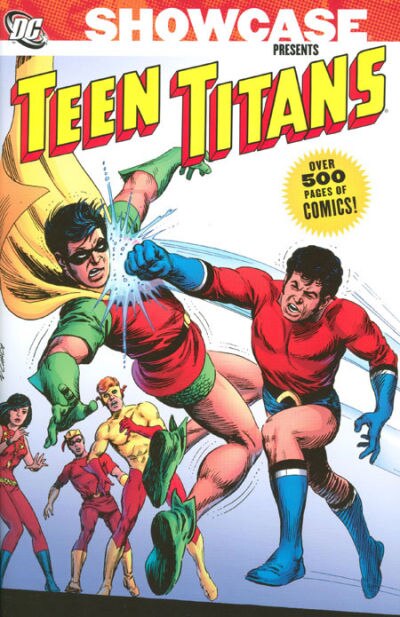
Showcase Presents Teen Titans volume 2


By Mike Friedrich, Bob Haney, Neal Adams, Marv Wolfman, Robert Kanigher, Steve Skeates, Gil Kane, Wally Wood, Nick Cardy, Sal Amendola, George Tuska, Carmine Infantino, Dick Dillin, Joe Giella, Jim Aparo & various (DC Comics)
ISBN: 978-1-84576-677-1 (TPB)

Hey, Super Kids! Happy 60th Anniversary!

It’s perhaps hard to grasp these days that once kid heroes were a rarity and at the beginning of the Silver Age, often considered a liability. Now the massive Teen Titans brand – with numerous comic book iterations, assorted TV shows, movies and even an award-winning early reading version (Aw, Yeaah! Tiny Titans!) their continuance as assured as anything in our biz. Nevertheless, during the tumultuous 1960s the series – never a top seller – courted controversy and actual teenage readers by confronting controversial issues head on.

I must have been just lucky, because these stories of lost youth searching for great truths and meaning were released just as I turned Teen. They resonated especially because they were talking directly to me. It didn’t hurt that they were brilliantly written, fantastically illustrated and staggeringly fresh and contemporary. I’m delighted to declare that age hasn’t diminished their quality or impact either, merely cemented their worth and importance.

The concept of underage hero-teams was not a new one when the Batman TV show fuelled DC’s move to entrust big heroes’ assorted sidekicks with their own regular comic as a hip and groovy ensemble as dedicated to helping kids as they were to stamping out insidious evil.

The biggest difference between wartime groups like The Young Allies, Boy Commandos or Newsboy Legion and such 1950s holdovers as The Little Wise Guys or Boys Ranch and the DC’s new team was quite simply the burgeoning phenomena of “The Teenager” as a discrete social and commercial power bloc. These were kids who could be allowed to do things themselves (within reason) without constant adult aid or supervision. As early as spring 1964, Brave and the Bold #54 had tested the waters in a gripping tale by Bob Haney & Bruno Premiani in which Kid Flash, Aqualad and Robin foiled a modern-day Pied Piper.

What had been a straight team-up was formalised a year later when the heroes reunited and included Wonder Girl in a proper super-group with a team-name: Teen Titans. With the stories in this second merely monochrome print-only relic of a collected volume of those early exploits the series had hit a creative peak, with spectacular, groundbreaking artwork and fresh, different stories that increasingly showed youngsters had opinions and attitudes of their own – and often that they could be at odds with those of their mystery-men mentors…

Spanning cover-dated January 1969 to December 1971 and collecting Teen Titans #19-36, and team-up appearances from Brave and the Bold #83 & 94 and World’s Finest Comics #205, these tales cover the most significant period of social and political unrest in American history and do it from the perspective of the underdogs, the seekers, the rebels…

The wonderment begins with a beautifully realised comedy-thriller as boy bowman Speedy enlists. ‘Teen Titans: Stepping Stones for a Giant Killer!’ (#19, January/February 1969), by Mike Friedrich, Gil Kane & Wally Wood, pitted the team against youthful evil mastermind Punch who planned to kill the Justice League of America and thought a trial run against the junior division a smart idea…

Brave and the Bold # 83 (April/May 1969) took a radical turn as the Titans (sans Aqualad, who was dropped from the squad to appear in Aquaman and because there just ain’t that much sub-sea skulduggery) tried to save Bruce Wayne’s latest foster-son from his own inner demons in a tense thriller about trust and betrayal in the Haney & Neal Adams epic ‘Punish Not my Evil Son!’. TT #20 took a long running plot-thread about extra-dimensional invaders and gave it a counterculture twist in ‘Titans Fit the Battle of Jericho’, a rollicking romp written by Neal Adams, pencilled by him & Sal Amendola and inked by brush-maestro Nick Cardy – one of the all-out prettiest illustration jobs of that decade.

Exemplars of the era/symbolic super-teens Hawk and Dove join proceedings for #21’s ‘Citadel of Fear’ (Adams & Cardy): chasing smugglers, finding aliens and ramping up the surly teen rebellion quotient whilst moving the invaders story-arc towards its stunning conclusion. ‘Halfway to Holocaust’ is only half of #22, the abduction of Kid Flash & Robin leading to a cross-planar climax as Wonder Girl, Speedy and a radical new ally quash the invasion threat forever, but still leaving enough room for a long overdue makeover in ‘The Origin of Wonder Girl’ by Marv Wolfman, Kane & Cardy. For years the series – and DC editors in general – had fudged the fact the younger Amazon Princess was not actually human, a sidekick, or even a person, but rather an incarnation of Wonder Woman as a child. As continuity backwriting strengthened its stranglehold on the industry, it was finally felt that the team’s distaff member needed a fuller background of her own.

This moving tale revealed she was in fact a human foundling rescued by Princess Diana and raised on Paradise Island where super-science gave her all the powers of a true Amazon. They even found her a name – Donna Troy – and an apartment, complete with hot roommate. All Donna had to do was sew herself a glitzy new figure-hugging costume…

Now thoroughly grounded, the team jetted south in #23’s fast-paced yarn ‘The Rock ‘n’ Roll Rogue’ (by Haney, Kane & Cardy), trying to rescue musical rebel Sammy Soul from his grasping family and – by extension – his lost dad from Amazonian headhunters. ‘Skis of Death!’ (#24, November/December) by the same creative crew has the quartet holidaying in the mountains and uncovering a scam to defraud Native Americans of their lands. It was a terrific old-style tale, but with the next issue the most radical change in DC’s cautious publishing history made Teen Titans a comic which had thrown out the rulebook…

For a series which spoke so directly to young people, it’s remarkable to think that ‘The Titans Kill a Saint?’ and its radical departure from traditional superhero stories was crafted by Bob Kanigher & Nick Cardy – two of the most senior creators in the business. The emotion-charged thriller set the scene for a different type of human-scaled adventures that were truly gripping and bravely innovative. For the relatively short time the experiment continued, readers had no idea what might happen next…

While on a night out in their civilian identities, Robin, Kid Flash, Speedy, Wonder Girl, Hawk and Dove meet telepathic go-go dancer Lilith who warns them of impending trouble. Cassandra-like, they ignore her warnings and a direct result a globally revered Nobel Laureate is gunned down. Coming so soon after the deaths of John F. and Robert Kennedy, Dr. Martin Luther King Jr. and Malcolm X, this was stunning stuff and in traumatised response all but Robin abandon their costumed personas and – with the help of mysterious millionaire philanthropist and mentor Mr. Jupiter – dedicate their unique abilities to exploring humanity’s flaws and graces: seeking fundamentally human ways to atone and make a difference in the world…

With Lilith beside them, they undertake different sorts of missions, beginning with ‘A Penny For a Black Star’ in which they attempt to live in a poverty-wracked inner city ghetto, where they find Mal Duncan, a street kid who becomes the first African-American in space…although it’s a one-way trip.

TT #27 reintroduced eerie elements of fantasy as ‘Nightmare in Space’ (Kanigher, George Tuska, Carmine Infantino & Cardy) sees the Titans en route to the Moon to rescue Mal, before encountering something far beyond the ken of mortal imagining. Meanwhile on Earth, Donna’s roommate Sharon stumbles upon an alien incursion. ‘Blindspot’ by Steve Skeates & Cardy was tangentially linked to another innovative saga then playing out in Aquaman’s comic book. You’ll need to see Aquaman: The Search For Mera and Aquaman: Deadly Waters for that extended delight. Both were edited by fresh-faced Dick Giordano, who was at this time responsible for the majority of innovative new material coming out of DC, even whilst proving himself one of the best inkers in the field.

Suffice to say that the Sea King’s foe Ocean Master had allied himself with aliens and Sharon became involved just as Aqualad returned looking for help. Unable to understand the Titan’s reluctance to get involved, Garth tries to go it alone but hits a snag only the original team can fix, which they do in Skeates & Cardy’s concluding chapter ‘Captives!’ However, once the alien threat is thwarted our heroes once more lay down their powers and costumes, but they have much to ponder after seeing what benefits their unique gifts can bring…

Teen Titans #30 featured three short tales, written by Skeates. Illustrated by Cardy, ‘Greed… Kills!’ is a cunning mystery exploring street and white-collar crime, whereas ‘Whirlwind’ is a Kid Flash prose novelette with art by Amendola before ‘Some Call it Noise’ (Infantino & Cardy) delivers an Aqualad solo tale in which his girlfriend Tula – AKA Aquagirl – takes a near-fatal wrong turn at a surface world rock concert.

Student politics took centre-stage in #31’s lead feature ‘To Order is to Destroy’ (Skeates, Tuska & Cardy) as the young heroes investigate a totally trouble-free campus where unhappy or difficult scholars are given a small brain operation to help them “concentrate”, whilst Hawk & Dove solo strip ‘From One to Twenty’ pits quarrelsome Don and Hank Hall against a band of murderous counterfeiters in a deft crime-caper from Skeates, Tuska & Cardy.

The creators then open up the fantasy element again with a time-travelling, parallel universe epic beginning in #32 with ‘A Mystical Realm, A World Gone Mad’ as Mal and Kid Flash accidentally change the past, turning Earth into a magical mad-scape. However, undoing their error results in a Neanderthal teenager being trapped in our time, presenting the group with their greatest challenge: educating a savage primitive and making him into a civilised modern man. Illustrated by Tuska & Cardy, ‘Less Than Human’ signalled the return of Bob Haney as main writer and triggered a gradual return of powers and costumes as the author picked up the pace of Jupiter’s grand experiment, restating it in terms that looked less harshly on comics’ bread & butter fights ‘n’ tights scenarios.

Brave and the Bold #94 (February-March 1971, by Haney & Cardy) offered potent counter-culture thrills as the team infiltrate an inner city commune to negate a nuclear bomb-plot in ‘Rebels in the Streets’, before the exigencies of publishing moved the series into the world of the supernatural as costumed heroes temporarily faded away in favour of tales of mystery and imagination. Haney, Tuska & Cardy’s ‘The Demon of Dog Island’ sees the team – including Robin who had quietly rejoined during the civilisation of cave-boy Gnarrk – desperately battling to prevent Wonder Girl’s possession by a gypsy ghost.

Skeates, Dick Dillin & Joe Giella crated ‘The Computer That Captured a Town’ in World’s Finest Comics #205 (September 1971), slyly examining racism and sexism as Superman finds the Titans trapped in a small town that had mysteriously re-adopted the values of the 1890s – a lot like middle America today but with culprits a lot easier to punch in the face…

Teen Titans #35 reiterated supernatural themes as the team travels to Verona in ‘Intruders of the Forbidden Crypt’ (Haney, Tuska & Cardy) wherein Lilith and the son of Mr. Jupiter’s business rival are drawn into a mesmerising web of tragedy: compelled to relive the doomed love of Romeo and Juliet despite all the rationalisations of modern science and the best efforts of the young heroes…

By the same creators, ‘A Titan is Born’ is a rite of passage for Mal as the everyman “token black guy” faces and defeats the murderous Gargoyle alone and unaided, before the reincarnation tragedy concludes with fate foiled in ‘The Tomb Be their Destiny’: the cover feature of #36. Filling out that issue and this book are two brief vignettes: Aqualad 3-page teaser ‘The Girl of the Shadows’ by Skeates & Jim Aparo and Haney & Cardy’s beguiling opening episode in the origin of Lilith ‘The Teen-Ager From Nowhere’. This showed a 10-year-old orphan’s first prescient exploit and the distrust it engendered, promising much more to come: a perfect place to end this second monochrome masterpiece of graphic literature.

Although perhaps dated in delivery now, these tales were a liberating experience for kids when first released. They truly betokened new empathy with independent youth and tried to address problems that were more relevant to and generated by that specific audience. That they are so captivating in execution is a wonderful bonus. This is absolute escapism and absolutely delightful and demand a fresh edition as soon as possible.
© 1969, 1970, 1971, 1972, 2007 DC Comics. All Rights Reserved.

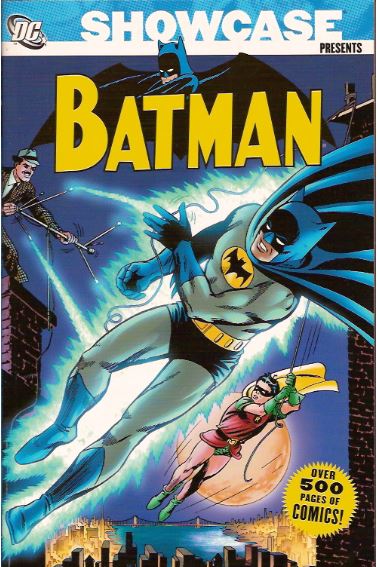
Showcase Presents Batman volume 1


By John Broome, Gardner Fox, Ed Herron, Bill Finger, Carmine Infantino, Bob Kane, Sheldon Moldoff, Joe Giella, Sid Greene & various (DC Comics)
ISBN: 978-1-4012-1086-1 (TPB)

Although cover-dated May 1939, Detective Comics #27 was on sale from March 30th. Happy Anniversary, Dark Knight! Because we like being us, let’s look at a perennial comics incarnation too long overdue for re-evaluation and re-inclusion in the greater Batty-verse…

I’m assuming everybody here loves comics and that we’ve all had the same trying experience of attempting to justify that passion to somebody not genned up or tuned in. Excluding your partner (who is actually right – the living room floor is not the place to leave your D*&$£! funnybooks), many people STILL have an entrenched and erroneous view of narrative strip art, resulting in a frustrating and futile time as you seek to dissuade them from that opinion.

If so, this collection might be the book you want next time that confrontation occurs. Collected here in stark and stunning monochrome are tales which reshaped the Dynamic Duo and set them up for global Stardom – and subsequent fearful castigation from fans – as the template for the Batman TV show of the 1960s. It must be noted, however, that the canny producers and researchers of that landmark derived their creative impetus from stories and especially movie serials of the era preceding the “New Look Batman”, as well as the prevailing tone of those socially changeable times…

So what’s going on here?

By the end of 1963, editor Julius Schwartz had revived much of DC’s science fiction and fantasy line – and the entire industry – with his deft reinterpretation and modernization of the Superhero. He was then asked to work his magic with the creatively stalled, nigh-moribund Caped Crusader franchise of titles. Bringing his usual team of top-notch creators with him, Schwartz stripped down the core-concept, downplaying aliens, outlandish villains and daft transformation tales, to bring a cool modern take to the pursuit and capture of criminals, and even overseeing a streamlining rationalisation of the art style itself.

The most apparent change readers was a yellow circle around the Bat-symbol on his chest, but far more importantly, the stories also changed. A subtle aura of genuine menace re-entered the comfortable, absurdly abstract world of Gotham City….

This initial Showcase Presents Batman compendium collects all the Bat-Sagas (STILL the only place to find them reprinted in full and in chronological order) as seen in Detective Comics #327-342 and Batman #164-174: 38 stunning stories that reshaped a legend and spanning cover-dates May 1964 to September 1965. The revolution began with the lead yarn in Detective #327, written by John Broome and illustrated by Carmine Infantino & Joe Giella at the very peak of their creative powers and collaborative partnership, before the Big Change was fully formalised with two tales from Batman #164.

‘The Mystery of the Menacing Mask! was a cunning “Howdunnit?” long on action and peril, as hints of a criminal “underground railroad” led the Dynamic Duo to a common thug seemingly able to control the heroes with his thoughts. The venerable title was clearly refocusing on its descriptive, evocative title for the foreseeable future, and to ram the point home, a new back-up feature was introduced – “Stretchable Sleuth” The Elongated Man. This comic book was to be a suspenseful brain-teaser from now on…

In the eponymous Batman title, action and adventure became paramount. Two-Way Gem Caper!’ pitted Batman & Robin against slick criminal Dabblo, but the thief wasn’t the true star of this tale. Almost as an aside, a new Batcave and refashioned Wayne Manor were introduced, plus a sleek, compact new Batmobile – more sports-car than super-tank. This story was written by Ed “France” Herron and drawn by “Bob Kane”. Veteran inker Giella was tasked with finishing the contents of both Bat-books in a bid to generate uniformity in all stories. The inker would ultimately perform the same role when the Batman syndicated newspaper strip was revived, beginning on May 29th 1966…

A new semi-regular feature debuted in that issue. “The Mystery Analysts of Gotham City” was a private club of detectives, criminologists and crime-writers who met to discuss their cases. Somehow the meetings always resulted in an adventure such as ‘Batman’s Great Face-Saving Feat!’ (Herron & Kane), wherein eager applicant Hugh Rankin applied his Private Eye talents to discovering the Gotham Gangbuster’s true identity in an effort to win a seat at the sleuths’ table. Suffice it to say, he had to reapply…

‘Gotham Gang Line-Up!’ completed the transformation of Batman. Written by original co-creator Bill Finger and pencilled by Kane, this rather mediocre crime-caper from Detective #328 is most remarkable for the plot-twist wherein long-serving butler Alfred sacrificed his life to save the heroes, prompting Dick Grayson’s Aunt Harriet to move into Wayne Manor.

From this point, the process fell into a pattern of top-of-the-line tales punctuated by utterly exceptional occasional epics of drama, mystery and action. These would continue until the infamous TV show’s success became so great it actually began to inform – or taint – the style of story in the comics. And while I’m into editorial asides: whenever the credits read “Bob Kane” the artist usually doing the drawing was unsung hero Sheldon Moldoff.

Written by Broome and pencilled by Infantino, Detective #329’s ‘Castle with Wall-To-Wall Danger!’ was a captivating international thriller seeing the heroes braving deadly death-traps in Swinging England whilst pursuing a dastardly thief, before eerie science fiction saga ‘Man Who Quit the Human Race!’ (Gardner Fox, Kane & Giella) led in Batman #165 finding fantastic fantasy still had a place in the Gotham Guardian’s new world. A potential new love-interest debuted in back-up tale ‘The Dilemma of the Detective’s Daughter!’, courtesy of Herron & Kane, as student policewoman Patricia Powell left cop-college for the mean streets of the city.

Over in Detective #330, Broome & Kane detailed a new kind of crime in ‘The Fallen Idol of Gotham City!’, wherein a mysterious phenomenon turned ordinary citizens into blood-hungry mobs on command. In Batman #166, ‘Two-Way Deathtrap!’ sees a pair of petty thugs set up the perfect ambush after finding a pipeline into the Batcave whilst, ‘A Rendezvous with Robbery!’ pictured a return engagement for Pat Powell during a frantic crime caper with both tales by Herron & Kane. A rare full-length story in Detective #331 guest-starred Elongated Man as the ‘Museum of Mixed-Up Men’ (Broome & Infantino) united costumed sleuths against a super-scientific felon, after which a Rogues Gallery super-villain finally appeared in #332’s ‘The Joker’s Last Laugh’ (Broome & Kane), set on switching places with the Caped Crimebusters in his own manic manner…

In Batman #167 Finger & Kane declared ‘Zero Hour for Earth!’ as international espionage pulled the Titanic Team from Gotham into a global manhunt for secret society Hydra prior to Detective #333 pitting the heroes against a faux goddess and real telepaths in the ‘Hunters of the Elephants’ Graveyard!’, courtesy of Fox & Infantino. Then ‘The Fight That Jolted Gotham City!’ opened Batman #168 with a blockbusting battle between the Masked Manhunter and temporarily deranged circus strongman Mr. Muscles after which the Mystery Analysts resurfaced to close the book, explaining ‘How to Solve the Perfect Crime… in Reverse!’ (both tales by Herron & Moldoff).

The opening shot in an extended war against an incredible new foe dubbed The Outsider came with Detective #334 and the introduction of Grasshopper‘The Man Who Stole from Batman!’ (Fox & Moldoff), whilst Fox & Infantino’s ‘Trail of the Talking Mask!’ in #335 gave the Caped Crimebusters opportunity to reinforce their sci-fi credentials in a classy high-tech thriller guest starring PI Hugh Rankin.

Wily, bird-themed badman The Penguin popped up in Batman#169 (Herron & Moldoff), making the heroes his unwilling ‘Partners in Plunder!’, after which inker Sid Greene made his debut delineating ‘A Bad Day for Batman!’, wherein he overcomes many vicissitudes of cruel coincidence to nab a determined thief. Detective #336 (Fox, Moldoff & Giella) featured ‘Batman’s Bewitched Nightmare’ as a broom-riding crone attacks the Dynamic Duo at the Outsider’s behest. In later months the witch was revealed to be sultry sorceress Zatanna, but most comics cognoscenti agree this was not the original plan, but rather cannily back-written during the frantic months of “Batmania” that followed the debut of the TV show (for a fuller explanation see JLA: Zatanna’s Search).

An intriguing new foe made his modest mark in Batman #170 with highly professional thief Roy Reynolds running rings around the Gotham Gangbusters – at least initially – as the ‘Genius of the Getaway Gimmicks!’ (Fox & Moldoff) with Finger providing a captivating, human-scaled drama in ‘The Puzzle of the Perilous Prizes!’ enabling Giella to show off his pencilling as well as inking skills. ‘The Deep-Freeze Menace!’ (Detective #337, Fox & Infantino) focuses on captivating fantasy, pitting Batman against a super-powered caveman encased in ice for 50,000 years, before the caped crimebuster gains his own uncanny advantage in #338 as a chemical accident renders ‘Batman’s Power-Packed Punch!’ too dangerous to be near…

After an absence of decades, ‘Remarkable Ruse of The Riddler!’ reintroduced the Prince of Puzzlers in Batman # 171: a clever book-length mystery from Fox & Moldoff which did much to catapult the previously forgotten villain to the first rank of Bat-Baddies, after which DC’s inexplicable (but deeply cool) long-running love-affair with gorillas resulted in a cracking doom-fable as ‘Batman Battles the Living Beast-Bomb!’ (Fox & Infantino in Detective #339) highlighting the hero’s physical prowess in a duel of wits and muscles against a sinister super-intelligent simian. Broome came back to script the eerie conundrum drawn by Moldoff which opened Batman #172. ‘Attack of the Invisible Knights!’ proved to be wicked science not ancient magic, whilst Batman’s own technological advances played a major role part in backup ‘Robin’s Unassisted Triple Play!’ (Fox, Moldoff & Greene), giving the Boy Wonder plenty of scope to show his own skills against a gang of murderous bandits.

Detective #340 saw the war against Batman escalate when ‘The Outsider Strikes Again!’ (Fox & Moldoff), offering further clues to the hidden foe’s incredible abilities by animating everyday objects – and the Batmobile – to attack the Caped Champions, before Broome & Infantino detailed a cinema-inspired catastrophic campaign in #341’s ‘The Joker’s Comedy Capers!’ Criminal mastermind/blackmailer Mr. Incognito then offered ‘Secret Identities For Sale’ in Batman #173’s lead tale and Broome, Moldoff and inker Sid Greene depicted ‘Walk Batman – To Your Doom!’: a sinister psychological murder-plot years ahead of its time.

Broome & Moldoff’s ‘The Midnight Raid of the Robin Gang!’ (Detective #342) hinted at the burgeoning generational unrest of the 1960s as the faithful Boy Wonder seemingly sabotaged his mentor before signing up with costumed juvenile delinquents, before this collection of Caped Crusader Chronicles concludes with Fox & Moldoff’s Batman #174: a brace of blockbusters comprising a brutal story of street-fighting as the Gotham Guardian is ambushed and becomes The Human Punching Bag!’ before the Mystery Analysts find themselves the intended victims of a “Ten Little Indians” murder-scheme in ‘The Off-Again, On-Again Lightbulbs!’ (inked by Greene).

No matter how much we might squeal and foam about it, to a large portion of the world Batman will always be the “Zap! Biff! Pow!”, affably lovable, caped buffoon of that 1960s television show. It really was that popular. Whether you tend towards the anodyne light-heartedness of then, commercially acceptable psychopathy of the current day or actually just like the comic book character in all eras, if you sit down, shut up and actually read these wonderful adventures for all (reasonable) ages, you will find the old adage “Quality will out” still holds true. And if you’re actually a fan who hasn’t read this classic stuff, you have an absolute treat in store…
© 1964, 1965, 2006 DC Comics. All Rights Reserved.

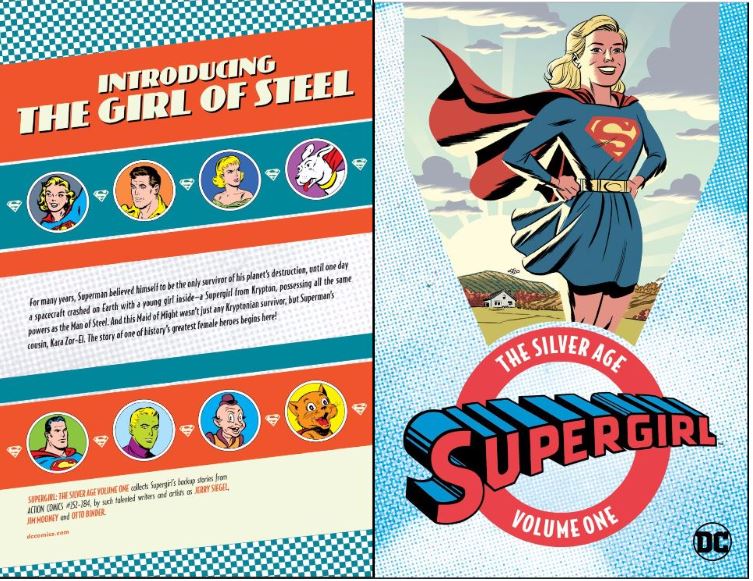
Supergirl: The Silver Age volume 1


By Otto Binder, Al Plastino, Jerry Seigel, Jim Mooney & various (DC Comics)
ISBN: 978-1-4012-7292-0 (TPB/Digital edition)

Superhero comics seldom do sweet or charming anymore. Narrative focus nowadays concentrates on turmoil, angst and spectacle and – although there’s nothing intrinsically wrong with that – sometimes the palate just craves a different flavour.

Such was not always the case as this superb compendium of the early career of Superman’s cousin Kara Zor-El of Argo City – gathering material from Action Comics #252-284 and spanning May 1959-January 1962 – joyously proves. Also included to kick off proceedings is the delightful DC House Ad advertising the imminent arrival of a new “Girl of Steel”. Sadly missing, however, is the try-out story ‘The Three Magic Wishes’ – written by Otto Binder and illustrated by Dick Sprang & Stan Kaye from Superman #123, August 1958 – which told how a mystic totem briefly conjured up a young girl with super powers as one of three wishes made by Jimmy Olsen. Such was the reaction to the plucky distaff hero that within a year a new version was introduced to the Superman Family…

Here, then, the drama commences with ‘The Supergirl from Krypton!’, the third story from Action Comics #252 introducing Superman’s cousin Kara, who had been born on a city-sized fragment of Krypton, which was somehow hurled intact into space when the planet exploded. Eventually Argo City turned to Kryptonite like the rest of the giant world’s debris, and Kara’s dying parents, having observed Earth through their scanners and scopes, sent their daughter to safety as they perished.

Crashing on Earth, she is met by Superman who creates the cover-identity of Linda Lee whilst hiding her in an orphanage in small town Midvale allowing her to learn about her new world and powers in secrecy and safety. This groundbreaking tale was also written by Binder and drawn by the hugely talented Al Plastino.

Once the formula was established Supergirl became a regular feature in Action Comics (starting with #253), a residency that lasted until 1969 when she graduated to the lead spot in Adventure Comics. In ‘The Secret of the Super-Orphan!’, at her new orphanage home she makes the acquaintance of fellow orphan Dick Wilson (eventually Malverne) who would become her personal gadfly (much as the early Lois Lane was to Superman), a recurring romantic entanglement who suspects she has a secret. As a young girl in far less egalitarian times, romance featured heavily in our neophyte star’s thoughts and she frequently met other potential boyfriends: including alien heroes and even a Merboy from Atlantis.

Many early tales involved keeping her presence concealed, even whilst performing super-feats. Jim Mooney became regular artist as Binder remained chief scripter for the early run. In Action #254’s ‘Supergirl’s Foster-Parents!’ sees an unscrupulous couple of con-artists easily foiled, after which Linda meets a mystery DC hero when ‘Supergirl Visits the 21st Century!’ in #255. Her secret is nearly exposed in ‘The Great Supergirl Mirage!’ before she grants ‘The Three Magic Wishes!’ to despondent youngsters and teaches a mean bully a much-needed lesson.

The Man of Steel often came off rather poorly when dealing with women in those far less enlightened days, always under the guise of “teaching a much-needed lesson” or “testing” someone. When she ignores his secrecy decree by playing with super dog Krypto, cousin Kal-El banishes the lonely young heroine to an asteroid in ‘Supergirl’s Farewell to Earth!’ but of course there’s paternalistic method in the madness…

‘The Cave-Girl of Steel!’ sees her voyage to Earth’s ancient past and become a legend of the Stone Age before AC #260 finds her transformed by the mystical Fountain of Youth into ‘The Girl Superbaby!’ The next tale introduced feline fan-favourite Streaky the Super-Cat in ‘Supergirl’s Super Pet!’ after which ‘Supergirl’s Greatest Victory!’ supplies a salutary lesson in humility to the Girl of Steel. Binder moved on after scripting ‘Supergirl’s Darkest Day!’ in which the Maid of Might rescues an alien prince before incoming Jerry Siegel began his own tenure by scripting ‘Supergirl Gets Adopted!’: a traumatic yet sentimental tale which ends with the lonely lass back at Midvale orphanage.

I’ve restrained myself so please do likewise when I say the next adventure isn’t what you think. ‘When Supergirl Revealed Herself!’ (Siegel & Mooney, Action #265) is another story about nearly finding a family, after which Streaky returns in ‘The World’s Mightiest Cat!’ as prelude to Supergirl finding fantastic fellow super-kids in Action #267’s ‘The Three Super-Heroes!’ She narrowly fails to qualify for the Legion of Super Heroes through the cruellest quirk of fortune, but – after picking herself up – exposes ‘The Mystery Supergirl!’ prior to Siegel & Mooney introducing fish-tailed Mer-boy Jerro as ‘Supergirl’s First Romance!’

Packed with cameos like Batman & Robin, Krypto and Atlantean Lori Lemaris, ‘Supergirl’s Busiest Day!’ sees her celebrating a very special occasion, after which Streaky enjoys another bombastic appearance as the wonder child builds ‘Supergirl’s Fortress of Solitude!’ before Binder wrote ‘The Second Supergirl!’ – an alternate world tale too big for one issue. Sequel ‘The Supergirl of Two Worlds!’ appeared in Action #273 – as did a novel piece of market research. ‘Pick a New Hairstyle for Linda (Supergirl) Lee!’ involved eager readers in the actual physical appearance of their heroine and provided editors valuable input into who was actually reading the series…

Siegel & Mooney soundly demonstrated DC dictum that “history cannot be changed” in ‘Supergirl’s Three Time Trips!’ before ‘Ma and Pa Kent Adopt Supergirl!’ offered a truly nightmarish scenario: rapidly followed by a return visit to the Legion of Super Heroes in ‘Supergirl’s Three Super Girl-Friends!’, whilst Action #277 featured an amazing animal epic in ‘The Battle of the Super-Pets!’

The next five tales form an extended saga, taking the Girl of Steel in totally new directions. On the eve of Superman announcing her existence to the world, Supergirl loses her powers and – resigned to a normal life – is adopted by the childless Fred and Edna Danvers. Sadly, it’s all a cruel and deadly plot by wicked Lesla-Lar, Kara’s identical double from the Bottle City of Kandor. This evil genius wants to replace Supergirl and conquer Earth…

This mini-epic – ‘The Unknown Supergirl!’, ‘Supergirl’s Secret Enemy!’, ‘Trapped in Kandor!’, ‘The Secret of the Time-Barrier!’ and (following the results of the Hair Style competition) ‘The Supergirl of Tomorrow!’ ran in Action #278-282: solidly repositioning the character for a more positive, effective and fully public role in the DC universe. The saga also hinted of a more dramatic, less paternalistic, parochial and even reduced-sexist future for the most powerful girl in the world, over the months to come; although the young hero is still very much a student-in-training, her existence still kept from the general public as she lives with adoptive parents who are completely unaware the orphan they have adopted is a Kryptonian super-being.

The accent on these stories generally revolves around problem-solving, identity-saving and loneliness, with both good taste and the Comics Code ensuring readers weren’t traumatised by unsavoury or excessively violent tales. Plots akin to situation comedies often pertained, as in ‘The Six Red “K” Perils of Supergirl!’ Peculiar transformations were a mainstay of Silver Age comics, and although a post-modern interpretation might discern some metaphor for puberty or girls “becoming” women, I rather suspect the true answer can be found in author Seigel’s love of comedy and an editorial belief that fighting was simply unladylike…

Red Kryptonite, a cosmically-altered isotope of the radioactive element left when Krypton exploded, caused temporary physical and sometimes mental mutations in the survivors of that doomed world. It was a godsend to writers in need of a challenging visual element when writing characters with the power to drop-kick planets. Here the wonder-stuff generates a circus of horrors, transforming Supergirl into a werewolf, shrinking her to microscopic size and making her fat. I’m not going to say a single bloody word…

The drama continues and concludes – like this initial Silver Age compilation – with ‘The Strange Bodies of Supergirl!’ wherein Linda Lee Danvers’ travails escalate after she grows a second head, gains death-ray vision (ostensibly!) and morphs into a mermaid. This daffy holdover to simpler times presaged a major change in the Girl of Steel’s status… but that’s a volume for another day.

Throughout her formative years Kara of Krypton underwent more changes than most of her confreres did in 20 years, as editors struggled to find a niche the buying public would appreciate, but for all that, these yarns remain exciting, ingenious and utterly bemusing.

Possibly the very last time a female super-character’s sexual allure wasn’t equated to sales potential and freely and gratuitously exploited, these tales are a link and window to a far less crass time, displaying one of the few truly strong and resilient female characters parents can still happily share with even their youngest children.
© 1959, 1960, 1961, 1962, 2017 DC Comics. All Rights Reserved.

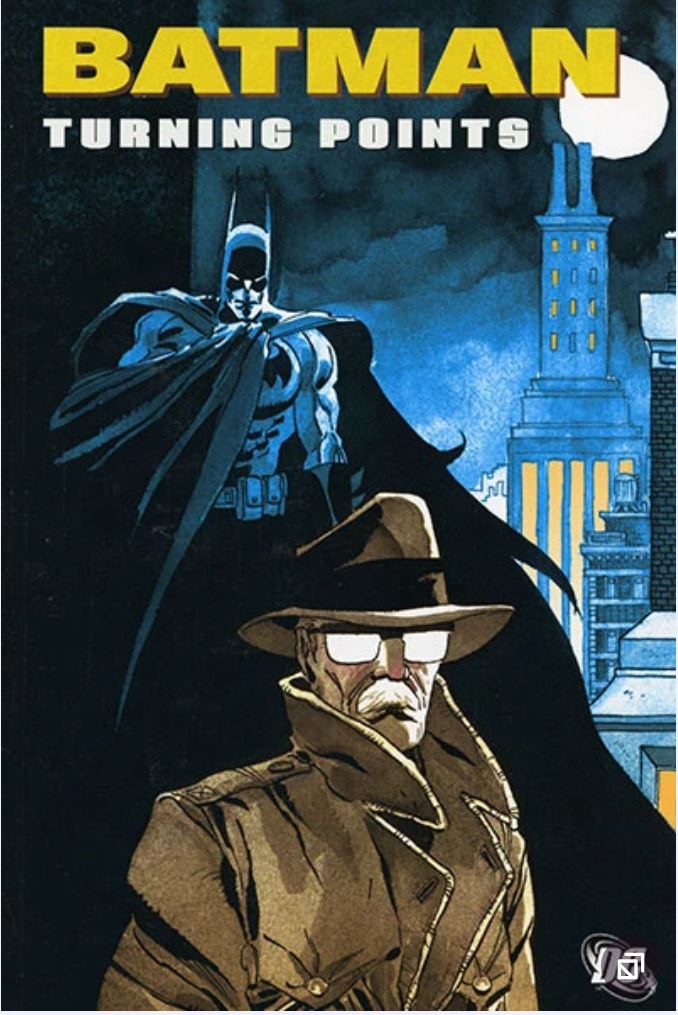
Batman: Turning Points


By Greg Rucka, Ed Brubaker, Chuck Dixon, Steve Lieber, Joe Giella, Dick Giordano, Bob Smith, Brent Anderson, Paul Pope, Claude St. Aubin & various (DC Comics)
ISBN: 978-1-4012-1360-2 (TPB)

When Superman debuted in Action Comics #1, the only still-the-same-today supporting character was Lois Lane. When “The Bat-Man” premiered a year later in Detective Comics #27 (cover-date May 1939 but on sale from March 30th), the only other person you might recognise was Police Commissioner Gordon. Make of this what you will…

Over the 85 years of Batman’s existence, almost as important as the partnership between the Dark Knight and assorted Boy Wonders has been a bizarrely offbeat symbiotic relationship between those costumed vigilantes and Gotham City’s top cop James Gordon.

This collection – inexplicably one of very few Batman books unavailable in digital formats – compiles five individual pastiches released as 2001 miniseries Turning Points. Here, readers see significant moments in the development of that shadowy alliance produced primarily for long-term aficionados in tribute to key eras in Batman’s career by veteran artists and (then) new wave creators.

It all begins with Greg Rucka & Steve Lieber’s ‘Uneasy Allies’, set in the days – and visual style – of the mysterious vigilante’s stormy debut in Frank Miller & Dave Mazzuchelli’s exemplary Batman: Year One. Police Captain Gordon is still the only honest cop on a corrupt and brutally gung-ho force, reeling from the shock of his wife divorcing him. When bereaved, heartsick and crazed college professor Hale Corbett takes an entire wedding hostage, Gotham’s SWAT team commander is champing at the bit to storm in and rack up the body-count, whereas wanted felon The Batman offers Gordon a slim hope of ending the siege without loss of life.

All the masked nut-case wants in return is a sympathetic ear at the GCPD…

A clandestine working relationship established, …And Then There Were… Three?’ (by Ed Brubaker & Joe Giella – who drew many of 1960s stories and Batman’s newspaper strip) celebrate the era of TV’s “Batmania”. About a year after their first meeting, reports of a garishly garbed boy assistant to Batman begin filtering in. As deadly psychopath Mr. Freeze rampages through the city, Gordon demands to why the now-tolerated Caped Crusader is recklessly endangering a child.

In a rowdy romp packed with past icons like giant props and gaudy villains, a decidedly deadly outcome forces the cop to see and realise the true nature of Batman and Robin’s relationship…

Brubaker, Dick Giordano & Bob Smith set ‘Casualties of War’ in the bleak aftermath following the death of second Robin Jason Todd, the crippling of Barbara (Batgirl) Gordon and the torture of her father, at the bone-white hands of The Joker. A solitary, driven Dark Knight haunts streets and allies, ceaselessly crushing criminals with brutal callousness, whilst sinister serial killer The Garbage Man prowls unchallenged…

When wheelchair-bound Barbara fails in her attempted intervention to calm a Batman pushing himself to breaking-point, it takes a rooftop heart-to-heart with recently promoted Commissioner Gordon to finally crack the manhunter’s shell and begin the healing process…

Chuck Dixon & Brent Anderson step in years later when, as a result of a strategically systematic attack by would-be crime-lord Bane, an exhausted and broken Batman is replaced by another, darker champion. Set during the Knightfall publishing event, ‘The Ultimate Betrayal’ describes the moment Gordon realises his enigmatic ally has become a remorseless machine/exterminating angel hunting criminals with no regard to life anymore. If only third Robin Tim Drake could have told him that the man behind the cowl – and claws and razor-armour – is actually Azrael: hereditary and murderously programmed living weapon of an ancient Christian warrior-cult…

Rucka, Paul Pope & Claude St. Aubin bring the journey full circle in ‘Comrades in Arms’ wherein a mysterious stranger and his family hit Gotham on a mission to find Gordon and Batman, just as the Commissioner introduces his destined successor Michael Akins to the Major Crimes Unit. Word on the street is the Russian mob are planning a huge retaliatory strike and every cop is waiting for the hammer to fall when Hale Corbett walks back into GCPD HQ, demanding to see Gordon and the masked manhunter who changed his life many years ago…

Filtered through gritty modern sensibilities but still able to revere past glories and Batman’s softer sides, this thoroughly readable collection includes a cover gallery by artistic all-stars Javier Pulido, Ty Templeton, Joe Kubert, Howard Chaykin, Pope & Tim Sale, and offers a gripping thrill ride for newcomers and veterans alike.
© 2001, 2007 DC Comics. All Rights Reserved.

The Batman Adventures volume 1


By Kelly Puckett, Marty Pasko, Ty Templeton, Rick Burchett, Brad Rader, Mike Parobeck, Rick Taylor, Tim Harkins & various (DC Comics)
ISBN: 978-1-4012-5229-8 (TPB/Digital)

Batman: The Animated Series aired in America from September 5th1992 until September 15th 1995. Ostensibly for kids, the TV cartoon show was devised and designed by Paul Dini, Bruce Timm and Eric Radomski (with writer Paul Dini). Its success utterly revolutionised the image of the Dark Knight, resulting in some of the absolute best comic book tales in his decades-long publishing history as the series spawned a print spinoff and eventually a niche genre.

Employing a timelessly elemental and primal visual tone (dubbed “Dark Deco”) TV episodes mixed iconic elements from all comic iterations of the character and, without diluting the power and mood of the premise, perfectly honed the grim avenger and his team into a wholly accessible, thematically memorable form even the youngest of readers could enjoy, whilst adding shades of exuberance and noir style that only most devoutly obsessive Batmaniac could possibly find fault with.

The comics version became a cast-iron certainty for collection in the newly-emergent trade paperback market which stormed into and out of shops in the mid-1990s. Here the first ten titanic all-ages exploits (October 1992 to July 1993) from The Batman Adventures comic book are rediscovered and gathered with tales in a smashing, straightforward sampler of Fights ‘n’ Tights fantasy.

With colourist Rick Taylor, and letterer Tim Harkins on duty throughout, the moodily magnificent action opens with ‘Penguin’s Big Score’ by writer Kelly Puckett, and artists Ty Templeton & Rick Burchett. Each story was divided into three chapters and ‘Charm School Dropout!’ sees the Bird of Ill Omen taking tips on how to rehabilitate his nefarious reputation from The Joker, whilst in ‘Top of the World, Ma!’ the Foul Fowl’s new standing as a philanthropist has all Gotham agog. The sinister scheme is finally exposed by Batman in climactic third act ‘Power of the Press’, but the hero has no idea the real winner is the Clown Prince of Crime…

For #2, Puckett, Templeton & Burchett deliver ‘Catwoman’s Killer Caper’, kicking off with a gem heist before – at Joker’s insistent urging – sultry Selina Kyle visits England’s Tower of London to swipe ‘The Family Jewels!’ In hot pursuit, the Gotham Gangbuster pops across The Pond to quell ‘Panic over Londontown’ and solve an apparently impossible theft in ‘Midnight Madness’ …but not before the Harlequin of Hate snatches the real prize…

The crafty conniving culminates in ‘Joker’s Late-Night Lunacy!’ (#3 by Puckett, Templeton & Burchett), with Gotham’s airwaves hijacked and Commissioner Gordon kidnapped by the larcenous loon and made himself literally unmissable viewing in ‘A Star is Born!’

‘I Want My JTV!’ depicts District Attorney Harvey Dent make it onto the Joker’s inhospitable guest list, but Batman is still one step ahead of the game and lowers the boom in explosive finale ‘Flash in the Pan!’

Writer Marty Pasko and penciller Brad Rader joined inker Burchett for a gripping 2-issue terror tale guest starring Robin as ‘Riot Act’ describes ‘Panic in the Streets’ after a strange plague caused citizens to lose the ability to read. Even with complete chaos gripping Gotham the Teen Wonder’s ‘Help on the Wing’ results in a huge step forward but when ‘Robin Takes a Fall’, the hidden culprit reveals himself before the drama intensifies in #4 with ‘Riot Act: Johnny Can’t Read!’ as The Scarecrow steps up his campaign to teach slackers of the modern world a harsh lesson. In fact, the Dynamic Duo are well aware of the ‘Hi-Fi Hijinx’ at the root of the problem and, with the help of a repentant henchman, crush the crisis in ‘Those Who Can’t Do!’

A crafty change of pace finds Bruce Wayne is arrested for murder in ‘The Third Door!’ as crafted by Puckett, Rader & Burchett. The cunning locked-room mystery opens with ‘The Party’s Over’ as the prime suspect details the facts of the case to young Dick Grayson, before being locked up with a mob of dangerous thugs in ‘Crime and Punishment’, leaving the wonder kid to ferret out the real killer in tense conclusion ‘War and Peace’

After a mere half-dozen superb stories the comic book adventures took a step towards total perfection when then-rising star Mike Parobeck assumed the pencilling duties. Although his professional comics career was tragically short (1989 to 1996, when he died, aged 31, of complications from Type 1 Diabetes) his gracefully fluid, exuberant, kinetically fun-fuelled animation-inspired style was a revelation. Parobeck revolutionised superhero action drawing and sparked a resurgence of kid-friendly comics and merchandise at DC and everywhere else in the comics publishing business.

Here his tenure began with ‘Raging Lizard!’, which sees shady pro wrestler Killer Croc confront a long dark night of the soul. In ‘Requiem for a Mutant!’ Croc’s scheduled to fight Masked Marauder – a grappler who humiliated and broke him in their last bout. Batman meanwhile is searching for Mandrake: a Chicago mobster planning on taking over Gotham City by ousting reigning crime czar Rupert Thorne in ‘Eye of the Reptile!’

Naturally all those trajectories converge in the third act for a major throw-down ‘Under the Waterfront!’

TBA #8’s ‘Larceny, My Sweet’ begins with the hunt for an unstoppable thief who can ‘Break the Bank!’ with his bare hands, whilst TV reporter Summer Gleeson divides her time between chasing scoops and being romanced by a dashing stranger in ‘Love’s Lost Labours’. Sadly, when the Gotham Gangbuster crushes the crime-wave he also exposes monstrous old muck menace Clayface and accidentally ends the affair of ‘Beauty and the Beast!’

Next issue ‘The Little Red Book’ everyone’s chasing holds all Thorne’s dirty secrets and Commissioner Gordon is presiding over a ‘Gangster Boogie!’ With the cops and entire underworld looking to win out over ‘The Big Boss’, it takes all Batman’s energy and wits to bring the diary to DA Dent for the beginning of ‘Rupert’s Reckoning!’

Ending the all-ages action is ‘The Last R?ddler Story’ which details ‘Nygma’s Nadir!’ as the perpetually frustrated Prince of Puzzlers considers retirement. Dispirited and despondent because the Caped Crusader always solves his felonious games, the villain grudgingly accedes to a faithful hench-person’s pleas to give it one more try in ‘Days of Wine and Riddles!’

How upset would Eddie Nygma be if he knew Batman isn’t even aware of him, absorbed as he is in apprehending infamous trio Mastermind, Mr. Nice and The Perfesser in ‘Triumph or Tragedy…?’

Breathtakingly written and iconically illustrated, these stripped-down rollercoaster-romps are quintessential Bat-magic: treasures every fan of any age and vintage will adore.

Pure, unadulterated delight!
© 1992, 1993, 2014 DC Comics. All Rights Reserved.

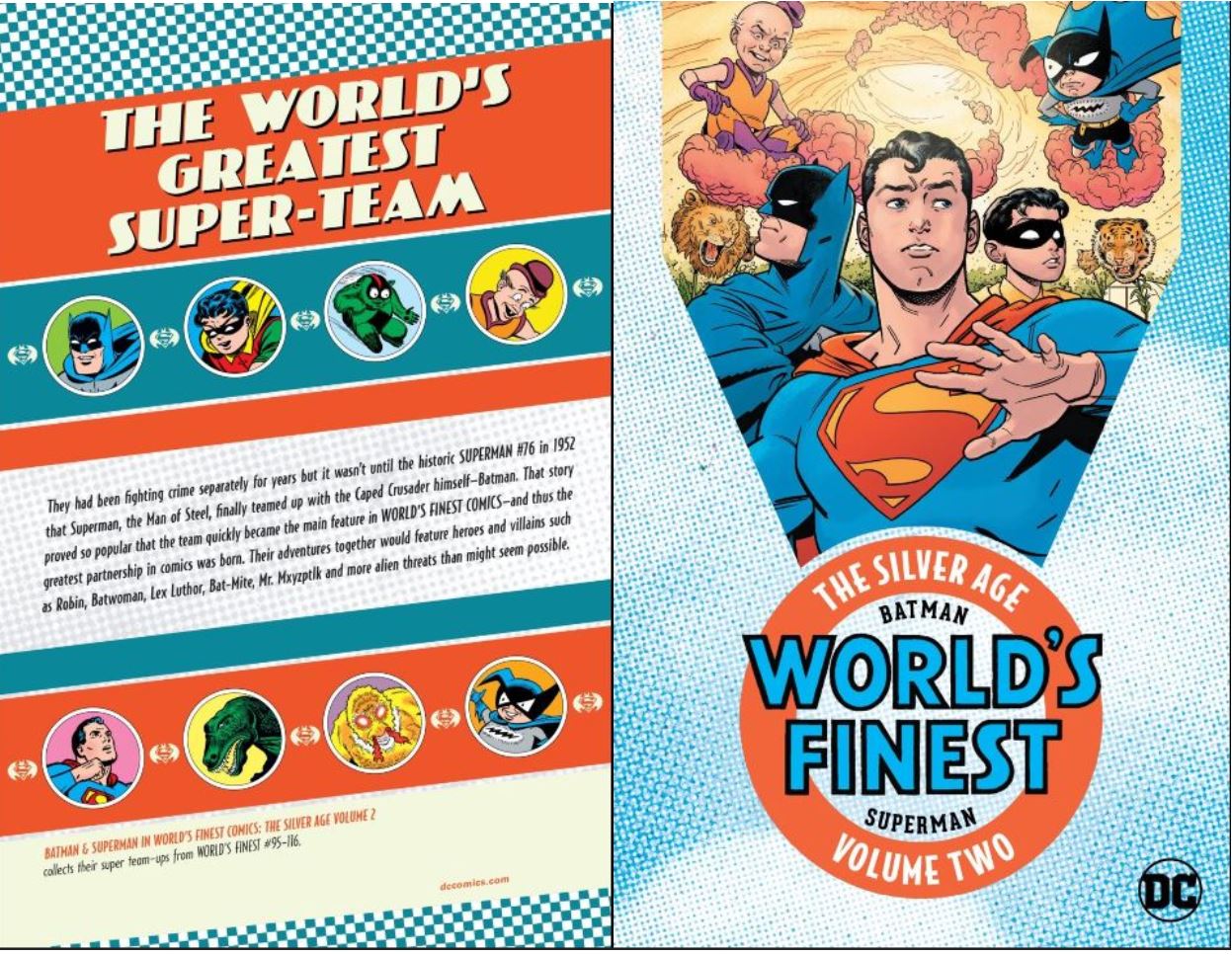
Batman and Superman in World’s Finest Comics: The Silver Age volume 1


By Edmond Hamilton, Bill Finger, Jerry Coleman, Curt Swan, Dick Sprang, Stan Kaye, Sheldon Moldoff, Charles Paris, Ray Burnley & various (DC Comics)
ISBN: 978-1-4012-7780-2 (TPB/Digital edition)

This year marks Batman’s 85th Anniversary and we’ll be covering many old and new books about the Dark Knight over the year. However, the Gotham Guardian’s impact has been far ranging and sustained, so let’s also take a look at his part in reshaping Superman and other heroes too…

Some things were just meant to be: bacon & eggs, rhubarb & custard, chalk & cheese…

Both initially debuting as driven loners, after settling into their respective pioneering superhero niches, Superman and Batman ultimately worked together as the “World’s Finest” team for decades. They were friends as well as colleagues and their pairing made sound financial sense since DC’s top heroes (in effect, the company’s only costumed stars) could cross-pollinate and, more importantly, cross-sell their combined readerships.

This most inevitable of Paladin Pairings first occurred on the Superman radio show in 1945, and in comics the pair only briefly met whilst on a Justice Society of America adventure in All-Star Comics #36 (August/September 1947) – and even there they missed each other in the general gaudy hubbub…

Of course, they had shared the covers of World’s Finest Comics from the outset, but never crossed paths inside; sticking firmly to their specified solo adventures. For us pictorial continuity buffs, the climactic real first time was in the pages of Superman’s own bi-monthly comic (issue #76, May/June 1952), but the real birth of their partnership came in World’s Finest Comics #71 cover-dated July/August 1954 and making 2024 their official 70th Anniversary. (Yay, Teams!)

In 1952, pulp science fiction author Edmond Hamilton had been tasked with revealing how Man of Steel and Caped Crusader first met and accidentally uncovered each other’s costumed identities – whilst sharing a cabin on an overbooked cruise liner. Although an average crime-stopper yarn, it was the start of a phenomenon. Of course you’ll need to revisit the previous volume for that and other early team up tales…

With dwindling page counts, rising costs but a proven readership and after years of co-starring but never mingling, World’s Finest Comics #71 had presented Superman and Batman in the first of their official shared cases. A huge hit, the innovative partnership was one of the few superhero success stories of the 1950s and this second stunning compendium of Silver Age solid gold spans July/August 1958 to March 1961: re-presenting the lead stories from World’s Finest Comics #95-116. The astounding archive of adventure opens with a Hamilton, Dick Sprang & Ray Burnley yarn pitting the temporarily equally multi-powered and alien-entranced champions against each other in ‘The Battle of the Super-Heroes’.

A magical succession of magnificent and light-heartedly whacky classics began in WFC #96 with Hamilton’s ‘The Super-Foes from Planet X’, wherein indolent and effete aliens dispatch fantastic monsters to battle the titanic trio for the best possible reasons…

Bill Finger took over scripting with #97, incomprehensibly turning the Man of Steel on his greatest friends in ‘The Day Superman Betrayed Batman’, after which ‘The Menace of the Moonman!’ pits the heroes against a deranged hyper-powered astronaut. Then, ‘Batman’s Super-Spending Spree!’ baffles his close friends before Lex Luthor devilishly traps Superman in the newly-recovered “Bottle City of Kandor” to become ‘The Dictator of Krypton City’ – all breathtaking epics beautifully limned by Sprang & Kaye.

Sprang inked himself in rocket-paced super-crime thriller ‘The Menace of the Atom-Master’ whereas it took Curt Swan, Burnley, Sprang & Sheldon Moldoff to properly unveil the titanic tragedy of ‘The Caveman from Krypton’ in #102. Sprang & Moldoff then unveiled ‘The Secret of the Sorcerer’s Treasure’, depicting a couple of treasure hunters driven mad by the tempting power of freshly unearthed magical artefacts, after which Luthor came to regret using a hostage Batwoman to facilitate ‘The Plot to Destroy Superman!’

After a metamorphosis which turned Clark Kent into ‘The Alien Superman’ proved not at all what it seemed to be, ‘The Duplicate Man’ in WF #106 sees the ultimate downfall of a villain who develops an almost unbeatable crime tool. He’s followed by ‘The Secret of the Time-Creature’ who encompassed centuries and resulted in one of Finger’s very best detective thrillers to baffle but never stump the Cape & Cowl Crusaders…

Jerry Coleman assumed the writer’s role with ‘The Star Creatures’ (art by Sprang & Stan Kaye); the tale of an extraterrestrial moviemaker whose deadly props were stolen by Earth crooks. Stellar cover artist Curt Swan (with Stan Kaye inking) finally made the move to interior illustrator for ‘The Bewitched Batman’, detailing a tense race against time to save the Gotham Guardian from an ancient curse, before ‘The Alien who Doomed Robin’ (Sprang & Moldoff) sees a symbiotic link between monster marauder and Boy Wonder leave the senior heroes apparently helpless – at least for a little while…

Finger, Sprang & Moldoff toured ‘Superman’s Secret Kingdom’ (#111, August 1960) in a compelling lost world yarn wherein a cataclysmic holocaust deprives the Man of Steel of his memory, necessitating Batman and Robin seeking to cure him at all costs…

The next issue – by Coleman, Sprang & Moldoff – delivered a unique and tragic warning in ‘The Menace of Superman’s Pet’ as a phenomenally cute teddy bear from space proves to be an unbelievably dangerous menace and unforgettable true friend. Bring tissues, you big babies…

In an era when disturbing or terrifying menaces were frowned upon, many tales featured intellectual dilemmas and unavoidably irritating pests to torment our heroes. Both Gotham Guardian and Man of Steel had their own magical 5th dimensional gadflies and it was therefore only a matter of time until ‘Bat-Mite Meets Mr. Mxyzptlk’: a madcap duel to determine whose hero was best with America caught in the metamorphic middle.

WF #114 saw Superman, Batman & Robin shanghaied to distant world Zoron with their abilities are reversed as ‘Captives of the Space Globes’. Nevertheless, justice is still served in the end, after which ‘The Curse that Doomed Superman’ sees the Action Ace consistently outfoxed by a scurrilous Swami with the Darknight Detective helpless to assist him…

Swan & Kaye return for #116’s thrilling monster mash ‘The Creature from Beyond’ to wrap up this volume with a criminal alien out-powering Superman whilst concealing an incredible secret…

Here are gloriously clever yet uncomplicated tales whose dazzling style still inform if not dictate the manner of DC’s modern TV animations – like the fabulous Batman: The Brave and the Bold – and the contents of this titanic tome are a veritable feast of witty, charming thrillers packing as much punch and wonder now as they always have.
© 1958, 1959, 1960, 1961 2018 DC Comics. All Rights Reserved.

Batman: Cover to Cover


By Neal Adams, Chip Kidd, Rian Hughes and more, with art by Bob Kane, Sheldon Moldoff, Jerry Robinson, George Roussos, Charles Paris, Stan Kaye, Fred Ray, Jack Burnley, Dick Sprang, Lew Sayre Schwartz, Win Mortimer, Jim Mooney, Curt Swan, Carmine Infantino, Joe Giella, Murphy Anderson, Nick Cardy, Joe Kubert, Gil Kane, Ross Andru, Mike Esposito, Irv Novick, Jack Abel, Bernie Wrightson, Alex Toth, Ernie Chan, Dick Giordano, Marshall Rogers, Terry Austin, Walter Simonson, Michael Golden, José Luis García-López, Frank Miller, David Mazzucchelli, Brian Bolland, Alan Davis, Paul Neary, Eduardo Barreto, George Pérez, Bill Sienkiewicz, Edward Hannigan, Paul Gulacy, Gene Colan, Graham Nolan, Brian Stelfreeze, Kelley Jones, Dexter Vines, Drew Geraci, Bruce Timm, Bret Blevins, Kevin Nowlan, Lee Weeks, Adam Hughes, Jon Bogdanove, Denis Janke, John Beatty, Michael T. Gilbert, Mike Mignola, P. Craig Russell, Mike Zeck, Norm Breyfogle, James Hodgkins, Matt Wagner, Jim Lee, Scott Williams, Tony Salmons, Damion Scott, Tom Palmer, Ty Templeton, Terry Beatty, Carl Critchlow, Jason Pearson, Daniel Brereton, John Van Fleet, John Wells, Karl Story, Hugh Fleming, Kelsey Shannon, Paul Pope, Jae Lee, Cully Hamner, John McCrea, Robert Smith, Scott McDaniel, Howard Porter, Joe Quesada, Jimmy Palmiotti, Alex Maleev, Sean Phillips, Doug Mahnke, Phil Winslade, Quique Alcatena, Tom Nguyen, Scott Hampton, Ed McGuiness, Michael Lark, Paul Johnson, Tim Sale, Darwyn Cooke, Lee Bermejo, Dave Johnson, J. G. Jones, Robert John Cassaday, Campanella, The Iguana & various (DC Comics)
ISBN: 978-1-4012-0659-8 (HB)

This year marks Batman’s 85th Anniversary and we’ll be covering many old and new books about the Dark Knight over the year. Let’s start gently with a pictorial treat long overdue for revision and rerelease but also one readily available through the usual digital vendors…

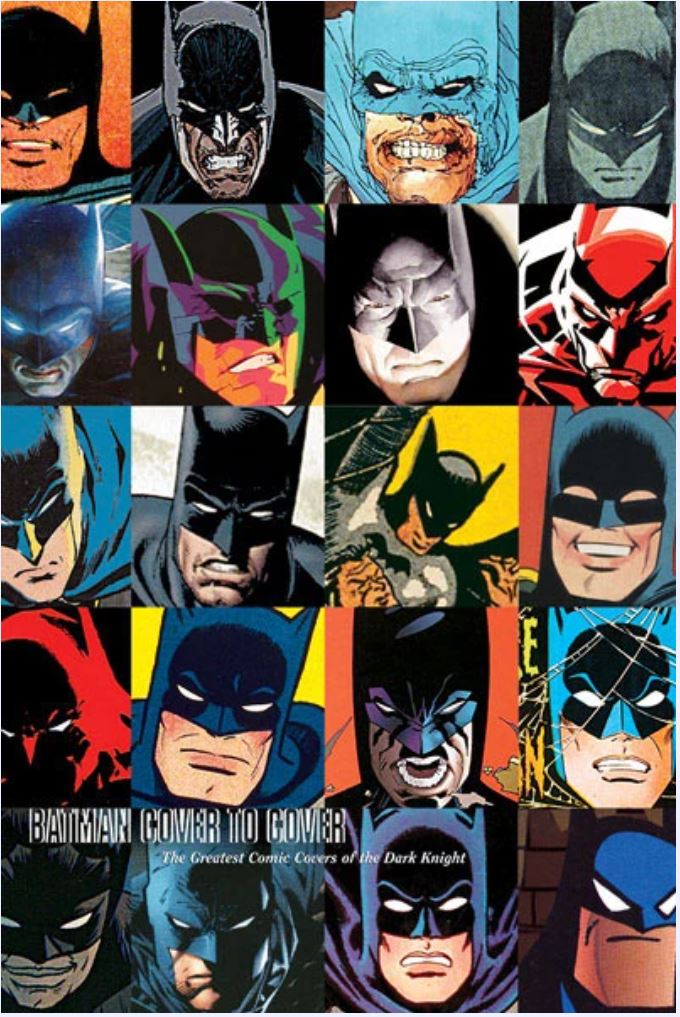
Although not strictly a graphic novel, Batman: Cover to Cover is a giant collection of the best comic covers featuring the Caped Crusader since his first appearance in Detective Comics #27 (May 1939). This is a nostalgic delight for old timers, newcomers and casually passersby alike, concocted and compiled by many of the countless people who worked on Batman over the past decades.

Each was were polled on their own favourite cover and what seems like an impossible task at first glance was smartly subdivided into easy to digest, themed subject-headings including Fearsome Foes, Welcome to Fun City, The Dynamic Duo, Batman by Design, Death Traps, Guilty!, The Batman Family, Bizarre Batman, Secrets of the Batcave, Covers from Around the World, A Death in the Family, Milestones and World’s Finest (pairing the Gotham Guardian with other heroes from the DCU).

Additional features include a thorough examination and critique of the globally recognised logo by designer extraordinaire Rian Hughes; discussions on cover construction by Jerry Robinson, Neal Adams and Bob Schreck and a poll on the greatest cover ever with contributions from the likes of Alex Ross, Chip Kidd, Neil Gaiman, Brad Meltzer, Mark Waid, Jeph Loeb, Brian Bolland, Paul Levitz and movie mavens like Christopher Nolan and Mark Hamill.

This coffee table book is exciting, emphatically lovely to look at and will provide hours of debate as we all dip in, reminisce and ultimately disagree on what should and shouldn’t be included. Enjoy, Art-lovers and Bat-Fans!
© 2005 DC Comics. All Rights Reserved.
Batman: The Golden Age volume 1


By Bob Kane, Bill Finger, Gardner Fox, Whitney Ellsworth, Sheldon Moldoff, Jerry Robinson, George Roussos & various (DC Comics)
ISBN: 978-1-4012-6333-1 (TPB/Digital edition)
Win’s Christmas Gift Recommendation: Vintage Comic book Perfection… 10/10

Next year marks Batman’s 85th Anniversary and we’ll be covering many old and new books about the Dark Knight over the year. However, why not pre-load the noir wonderment with this perfect compilation of how it all began. It’s not too big – like an Omnibus edition – or too small – like a measly pamphlet comic book – and would therefore make an ideal gift for the fan in your life (and we all know I mean you, right…)?

Batman: The Golden Age re-presents the Gotham Guardian’s earliest exploits in original chronological order, forgoing glossy, high-definition paper and reproduction techniques in favour of a newsprint-adjacent feel and the same flat, bright-yet-muted colour palette which graced the originals. There’s no fuss, fiddle or Foreword, and the book steams straight into the meat of the matter with the accumulated first year and a half of material featuring the masked mystery-man, plus all those stunning covers spanning Detective Comics #27-45, Batman #1-3 and the Dynamic Duo’s story from New York World’s Fair Comics 1940. That cumulatively covers every groundbreaking escapade from May 1939 to November 1940.

As Eny Fule Kno, Detective #27 featured the Darknight Detective’s debut in the ‘Case of the Chemical Syndicate!’ by Bob Kane and as yet still anonymous close collaborator/co-originator Bill Finger.

A spartan, understated yarn introduced dilettante playboy criminologist Bruce Wayne, drawn into a straightforward crime-caper as a cabal of industrialists are successively murdered. The killings stop when an eerie figure dubbed “The Bat-Man” intrudes on Police Commissioner Gordon’s stalled investigation to ruthlessly expose and deal with the hidden killer.

The following issue saw the fugitive vigilante return to crush ‘Frenchy Blake’s Jewel Gang’ before encountering his very first psychopathic killer and returning villain in Detective Comics #29. Gardner Fox scripted these next few adventures beginning with ‘The Batman Meets Doctor Death’, in a deadly duel of wits with deranged, greedy general practitioner Karl Hellfern and his assorted instruments of murder: the most destructive and diabolical of which was sinister Asiatic manservant Jabah…

This is my cue to remind all interested parties that these stories were created in far less tolerant times with numerous narrative shortcuts and institutionalised social certainties expressed in all media that most today will find offensive. If that’s a deal-breaker, please pass on this book… and most literature, pop songs and films created before the 1960s…

Confident of their new villain’s potential, Kane, Fox and inker Sheldon Mayer encored the mad medic for the next instalment and ‘The Return of Doctor Death’, before Fox & Finger co-scripted a 2-part shocker debuting the first bat-plane, Bruce’s girlfriend Julie Madison and undead horror The Monk in an expansive, globe-girdling spooky saga. ‘Batman Versus the Vampire’ concluded the tale with an epic chase across Eastern Europe and a spectacular climax in a monster-filled castle in issue #32.

Detective #33 featured Fox & Kane’s ‘The Batman Wars Against the Dirigible of Doom’: a blockbusting disaster thriller which just casually slips in the secret origin of the grim avenger, as mere prelude to intoxicating air-pirate action, before Euro-trash dastard Duc D’Orterre finds his uncanny science and unsavoury appetites no match for the mighty Batman in ‘Peril in Paris’.

Bill Finger returned as lead scripter in issue #35, pitting the Cowled Crusader against crazed cultists murdering everyone who had seen their sacred jewel in ‘The Case of the Ruby Idol’ – although the many deaths are actually caused by a far more prosaic villain. Inked by new kid Jerry Robinson, grotesque criminal genius ‘Professor Hugo Strange’ debuted with his murderous man-made fog and lightning machine in #36, after which all-pervasive enemy agents ‘The Spies’ prove no match for the vengeful Masked Manhunter in DC #37.

Detective Comics #38 (April 1940) changed the landscape of comic books forever with the introduction of ‘Robin, The Boy Wonder’: child trapeze artist Dick Grayson – whose parents are murdered before his eyes – thereafter joins Batman in a lifelong quest by bringing to justice mobster mad dog Boss Zucco

After the Flying Grayson’s killers were captured, Batman #1 (Spring 1940) opened proceedings with a recycled origin culled from portions of Detective Comics #33 and 34. ‘The Legend of the Batman – Who He Is and How He Came to Be!’ by Fox, Kane & Moldoff delivers in two perfect pages what is still the best ever origin of the character, after which ‘The Joker’ (Finger, Kane & Robinson – who also produced all the remaining tales in this astonishing premiere issue) launches the greatest villain in DC’s pantheon via a stunning tale of extortion and wilful wanton murder.

‘Professor Hugo Strange and the Monsters’ follows as an old adversary returns, unleashing laboratory-grown hyperthyroid horrors to rampage through the terrified city whilst ‘The Cat’ – who later added the suffix ‘Woman’ to her name to avoid any possible doubt or confusion – plies her felonious trade of jewel thief aboard the wrong cruise-liner and falls foul for the first time of the dashing Dynamic Duo.

The initial issue ends with the ‘The Joker Returns’ as the sinister clown breaks jail to resume his terrifying campaign of murder for fun and profit before “dying” in mortal combat with the Gotham Guardians.

Following a superb pin-up (originally the back cover of that premier issue) of the Dynamic Duo by Kane, tense suspense and all-out action continues in Detective #39 and Finger, Kane & Robinson’s ‘The Horde of the Green Dragon’ – “oriental” Tong killers in Chinatown – after which ‘Beware of Clayface!’ sees the Dynamic Duo solving a string of murders on a film set which almost sees Julie Madison the latest victim of a monstrous movie maniac…

Batman and Robin solved the baffling mystery of a kidnapped boy in Detective #41’s ‘A Master Murderer’ before enjoying their second solo outing in a quartet of comics classics from Batman #2 (Summer 1940). It begins with ‘Joker Meets Cat-Woman’ (Finger, Kane, Robinson & new find George Roussos) wherein svelte thief, homicidal jester and a crime syndicate all tussle for the same treasure. with our Caped Crusaders caught in the middle.

‘Wolf, the Crime Master’ then offers a fascinating take on the classic Jekyll & Hyde tragedy after which an insidious and ingenious mystery ensues in ‘The Case of the Clubfoot Murderers’, before Batman and Robin confront uncanny savages and ruthless showbiz promoters in poignant monster story ‘The Case of the Missing Link’.

‘Batman and Robin Visit the New York World’s Fair’ comes from the second New York World’s Fair Comics. Finger, Kane & Roussos followed the vacationing Dynamic Duo as they track down a maniac mastermind with a metal-dissolving ray, after which Detective Comics #42 again finds our heroes ending another murderous maniac’s rampage in ‘The Case of the Prophetic Pictures!’ before clashing with a corrupt mayor in #43’s ‘The Case of the City of Terror!’

An unparalleled hit, Batman stories never rested on their laurels. The creators always sought to expand their parameters, as with Detective #44’s nightmarish fantasy of giants and goblins in ‘The Land Behind the Light!’. Then, Batman #3 (Fall 1940) has Finger, Kane, Robinson & Roussos rise to even greater heights, beginning with ‘The Strange Case of the Diabolical Puppet Master’: an eerie episode of uncanny mesmerism and infamous espionage…

A grisly scheme unfolds next as innocent citizens are mysteriously transformed into specimens of horror, and artworks destroyed by the spiteful commands of ‘The Ugliest Man in the World’ before ‘The Crime School for Boys!!’ registers Robin infiltrating a gang who have a cruel and cunning recruitment plan for dead-end kids…

‘The Batman vs. the Cat-Woman’ lastly reveals the larcenous lady in well over her head when she steals for – and from – the wrong people…

The issue also offered a worthy Special Feature as ‘The Batman Says’ presents an illustrated prose Law & Order pep-talk crafted by Whitney Ellsworth and illustrated by Robinson.

The all-out action concludes here with a magnificent and horrific Joker jape from Detective Comics #45 as ‘The Case of the Laughing Death’ displays the Harlequin of Hate undertaking a campaign of macabre murder against everyone who has ever defied or offended him…

With full Creator Biographies and comic covers by Kane, Robinson & Roussos plus all the other general action ones by Fred Guardineer & Creig Flessel (crafted before the superheroes took over the front page forever), this is a stunning monument to exuberance and raw talent. Kane, Robinson and their compatriots created an iconography which carried the Batman feature well beyond its allotted life-span until later creators could re-invigorate it. They added a new dimension to children’s reading – and their work remains captivatingly accessible.

These primal stories set the standard for comic superheroes. Whatever you like now, you owe it to these stories. Superman gave us the idea, but writers like Finger and Fox refined and defined the meta-structure of the costumed crime-fighter. Where the Man of Steel was as much Social Force and wish fulfilment hero, Batman and Robin did what we ordinary mortals wanted to do. They taught bad people the lessons they deserved…

These are tales of elemental power and joyful exuberance, brimming with deep mood and addictive action. Comicbook heroics simply don’t come any better. More than anything else, this book serves to perfectly recapture the mood and impact of a revolutionary masked avenger and, of course, delights my heavily concealed inner child no end.
© 1939, 1940, 2016 DC Comics. All Rights Reserved.
Tiny Titans volume 1: Welcome to the Clubhouse


By Art Baltazar & Franco (DC Comics)
ISBN: 978-1-4012-2207-5 (TPB/Digital edition)

The links between animated features and comic books are long established and, for young consumers, indistinguishable. After all, it’s just entertainment in the end…

For quite some time at the beginning of this century, DC’s Cartoon Network imprint was arguably the last bastion of children’s comics in America and worked to consolidate that link between TV and 2D fun and thrills with stunning interpretations of such television landmarks as Ben 10, Scooby Doo, Powerpuff Girls, Dexter’s Laboratory and so many other screen gems.

The kids’ comics line also produced some truly exceptional material based on TV iterations of the publisher’s proprietary characters such as Legion of Super Heroes, Batman: Brave and the Bold and Krypto the Super Dog as well as material like Billy Batson and the Magic of Shazam! which was merely similar in tone and content. Perhaps the line’s finest release was a series ostensibly aimed at early-readers but which quickly became a firm favourite of older fans and a multi-award winner too.

Superbly mirroring the magical wonderland inside a child’s head where everything is happily all smooshed up together, Tiny Titans became a sublime antidote to continuity cops and slavish fan-boy quibbling (all together now: “… erm, uh… I think you’ll find that in…”) by reducing the vast cast of the Teen Titans Go! animated series, the far greater boutique of the mainstream comics – and eventually the entire DC Universe continuity – to little kids and their parents/guardians in a wholesome kindergarten environment.

It’s a scenario spring-loaded with multi-layered in-jokes, sight-gags and the beloved yet gently mocked trappings and paraphernalia generations of strip readers and screen-watchers can never forget…

Collecting issues #1-6 (cover-dated April to September 2008) of a magically madcap, infinitely addictive all-ages mini-masterpiece, this debut volume begins after an as-standard identifying roll-call page at ‘Sidekick City Elementary’ where new Principal Mr. Slade is revealed to be not only Deathstroke the Terminator but also poor little Rose’s dad! How embarrassing…

Art Baltazar and co-creator Franco (Aureliani) pioneered and mastered a witty, bemusingly gentle manner of storytelling that just happily rolls along, with the assorted characters getting by, trying to make sense of the great big world while having “Adventures in Awesomeness”. A primal example is Beast Boy getting a new pet and becoming Man’s Dog’s Best Friend’

The method generally involves stringing together smaller incidents and moments into an overarching themed portmanteau tale… and it works astoundingly well.

Back in class Robin and Kid Flash tease a fellow student in ‘Speedy Quiz’ whilst ‘Meanwhile in Titans Tower’ (the treehouse of the title) finds Wonder Girl, Bumblebee, Raven and Starfire discussing whether to let Batgirl Barbara Gordon join their circle…

Later everyone meets up and helps scary blob Plasmus cope with an ice cream crisis but shocks still abound at school. Raven’s dad is an antlered crimson devil from another universe, but his most upsetting aspect is as the new substitute teacher!

Happily, however, at the treehouse the kids can forget their worries, as Wonder Girl Cassie’s new casual look – after initial resistance – wins many admirers among the boys…

The original comics were filled with activity pages, puzzles and pin-ups, so ‘Help Best Boy Find his Puppy Friend!’ and awesome group-shot ‘Awwwww Yeah Titans!!!’ offers an arty interlude before shenanigans resume with ‘Ow’ as new girl Terra persists in throwing rocks at the boys yet knows just how to make friends with the girls…

Not so much for the little lads though: they’ve got into another confrontation with mean kids Fearsome Five. Apparently the only way to determine who wins is to keep ‘Just a-Swingin’ – and ignore those bullies…

After teeny-weeny Little Teen Titan Kid Devil finds a delicious new way to use his heat power, Beast Boy becomes besotted by Terra in ‘Shadows of Love’, even though his obvious affection makes him act like an animal. While ‘Easy Bake Cyborg’ saves the day at snack time, the lovesick green kid follows some foolish advice and transforms into a ‘Beast Boy of Steel’…

At least Kid Devil is making friends, providing ‘Charbroiled Goodness’ for a local food vendor, just as the Fearsome Five show up again…

Following a pin-up of the bad kids and a brainteaser to ‘Match the Tiny Titans to their Action Accessories!’, a new school day finds science teacher Doctor Light losing control in ‘Zoology 101’ thanks to Beast Boy’s quick changes, after which ‘Sidekick’s Superheroes’ debate status and origins whilst Rose’s ‘Li’l Bro Jericho’ causes chaos and closes the school for the day.

When Robin brings some pals home, Alfred the Butler is reluctant to let them check out the ‘Batcave Action Playset’. He should have listened to his misgivings: that way there wouldn’t be so much mess or so many penguins…

After Aqualad’s suggestion ‘Let’s Play: Find Fluffy!’ the Boy Wonder has the strangest day, starting with ‘Robin and the Robins’ and culminating in a new costume. Before that though, you can see ‘Beast Boy at the Dentist’, Wonder Girl enduring a ‘Babysittin’ Baby Makeover’, meet ‘Beast Boy’s Prize’ and experience hair gone wild in ‘Do the “Do”’. Eventually, however, ‘It’s a Nightwing Thing’: revisiting the exotic yesteryears of disco mania as new outfits debut to mixed reviews and reactions…

Once done testing your skill with the ‘Tiny Titans Match Game!’ and admiring a ‘Little Tiny Titans Bonus Pin-up’ there are big thrills in store when ‘Playground Invaders’ introduces annoying Titans from the East side of the communal games…

Sadly, Fearsome Five are still around to tease the former Robin in ‘Nightwing on Rye’ even whilst ongoing epic ‘Enigma and Speedy’ sees the Boy Bowman trapped in a very one-sided battle of wits with the Riddler’s daughter…

Robin’s costume crises continue to confuse in ‘May We Take a Bat-Message?’, resulting in a kid capitulation and ‘Back to Basics’ approach to the old look, after which ‘Tiny Titans Joke Time!’ and a ‘Tiny Titans East Bonus Pin-up’ segues neatly into ‘Meet Ya, Greet Ya’ with newcomers Supergirl and Blue Beetle turning up just ahead of a host of wannabee Titans (Power Boy, Zatara, Vulcan Jr., Hawk & Dove, Li’l Barda and Lagoon Boy)…

With the riotous regulars away camping, Raven opens her eyes to a potential daybreak disaster as ‘Home with the Trigons’ finds her dressed by her dad for a change. Meanwhile, ‘Let’s Do Lunch’ finds Blue Beetle losing a very public argument with his backpack, and after the kids bring their super-animal pals in, everything goes horribly wrong. At least they decide that the “First Rule of Pet Club is: We Don’t Talk About Pet Club”…

This insanely addictive initial collection wraps up with visual and word puzzles ‘How Many Beast Boy Alpacas Can You Count?’ and ‘Blue Beetle Backpack Language Translation!’, a huge and inclusive Pin-up of ‘The Tiny Titans of Sidekick City Elementary’ and a hilarious ‘Tiny Titans “Growth Chart”

Despite ostensibly being aimed at super-juniors and TV kids, these wonderful, wacky yarns – which marvellously marry the heart and spirit of such classic strips as The Perishers or Peanuts with something uniquely mired and marinated in pure American comic-bookery – are outrageously unforgettable yarns and gags no self-respecting fun-fan should miss: accessible, entertaining, and wickedly intoxicating.
© 2008, 2009 DC Comics. All Rights Reserved.
Blue Beetle: Jaime Reyes Book Two


By John Rogers, J. Torres, Keith Giffen, Justin Peniston, Rafael Albuquerque, Freddie E. Williams II, Andy Kuhn, David Baldeón, Dan Davis, Steve Bird & various (DC Comics)
ISBN: 978-1-7795-2027-2 (TPB/Digital edition)

As the most recent incarnation of the venerable Blue Beetle brand makes the jump from comic book limbo and kids’ animation reruns into live action movie madness, here’s a recent collection from the superb 36-issue run that began in 2006: one of the most delightfully light-hearted and compelling iterations of the Golden Age stalwart and still pure joy to behold…

The Blue Beetle first appeared in Mystery Men Comics #1, published by Fox Comics and cover-dated August 1939. The eponymous lead character was created by Charles Nicholas (AKA Charles Wojtkowski): a pulp-styled mystery man who was a born nomad. Over the years and crafted by a Who’s Who of extremely talented creators, he was also inexplicably popular and hard to kill: surviving the failure of numerous publishers before ending up as a Charlton Comics property in the mid-1950s.

After releasing a few issues sporadically, the company eventually shelved him until the superhero revival of the early 1960s when Joe Gill, Roy Thomas, Bill Fraccio & Tony Tallarico revised and revived the character in a 10-issue run (June 1964, February 1966). Cop-turned-adventurer Dan Garrett was reinvented an archaeologist, educator and scientist who gained super-powers whenever he activated a magic scarab with the trigger phrase “Khaji Da!”

Later that year, Steve Ditko (with scripter Gary Friedrich) utterly reimagined the Blue Beetle. Ted Kord was an earnest and brilliant young researcher who had been a student and friend of Professor Garrett. When his mentor seemingly died in action, Kord trained himself to replace him: a purely human inventor/combat acrobat, bolstered by ingenious technology. This latter version joined DC’s pantheon during Crisis on Infinite Earths, earning a solo series and quirky immortality partnered with Booster Gold in Justice League International and beyond…

Collecting Blue Beetle (volume 7) #13-25 and spanning June 2007 to May 2008 – the saga follows the hallowed formula of a teenager suddenly gifted with great powers, and reveals how some heroes are remade, not born – especially when a sentient scarab jewel affixes itself to your spine and transforms you into an armoured bio-weapon.

At the height of the Infinite Crisis, El Paso high-schooler Jaime Reyes found a weird blue jewel shaped like a bug. That night, as he slept, it invaded him and turned him into a bizarre insectoid warrior.

Almost instantly, he was swept up in the chaos, joining Batman and other heroes in a climactic space battle. Inexplicably returned home, Jaime revealed his secret to his family and tried to do some good in his hometown of El Paso but had to rapidly adjust to huge changes. Best bud Paco had joined a gang of super-powered freaks, he learned that the local crime mastermind was his other best bud Brenda’s foster-mom, and a really scary military dude named Christopher Smith AKA Peacemaker started hanging around. He claimed the thing in Jaime’s back was malfunctioning alien tech, not life-affirming Egyptian magic and that he also had an unwelcome and involuntary connection to it…

We resume this cinematically-inspired return engagement with John Rogers, Rafael Albuquerque, David Baldeón & colourist Dan Davis’ ‘Defective’. Here a benevolent (seeming) alien from an interstellar collective named The Reach introduces himself and reveals that the scarab is an invitation used to prepare endangered worlds like Earth for trade and commerce as part of a greater pan-galactic civilisation. Unfortunately the one attached to Jaime has been damaged over the centuries it was here and isn’t working properly.

The Reach envoy is a big fat liar…

The Scarab should have paved the way for a full invasion and once they discover this, Jaime and Peacemaker grasp that The Reach are the worst kind of alien invaders; patient, subtle, deceptive and stocked with plenty of space-tech to sell to Earth’s greedy governments. The only hope of defeating the marauders is to expose their real scheme to the public – which is currently too dazzled by the intergalactic newcomers’ media blitz to listen…

‘Mister Nice Guy’ (Rogers & Albuquerque) finds the Beetle teamed again with erratic Guy Gardner: a Green Lantern who knows all about The Reach and their Trojan Agenda. Here the unhappy allies must defeat the macabre Ultra-Humanite who has sold his telepathic services to the prospective new overlords.

Seeking allies and solutions, Jaime meets Superman in guest creators J. Torres & Freddie Williams Jr.’s ‘Someone to Watch Over Me’: battling electrical anti-villain Livewire before one of the DCU’s gravest menaces manifests in Rogers & Albuquerque’s startlingly powerful change of pace tale ‘Total Eclipso: the Heart’.

‘Something in the Water’ sees elemental menace Typhoon employed by The Reach to endanger a coastal city – and Bruce Wayne’s off-shore oil wells – in a clever, insightful tale packing plenty of punch, before ‘Away Game’ – with contributions from Baldeón & Davis – finds the Beetle and Teen Titans in pitched and pithy battle against the unbeatable alien biker-punk Lobo.

Weirdly whimsical Keith Giffen joins Rogers & Albuquerque next, focusing on Brenda, who has blithely lived her entire life unaware that her surrogate parental unit is El Paso’s crime boss supreme. La Dama is also a hoarder and supplier of alien, futuristic and magical weaponry. The distraught lass learns ‘Hard Truths’ when rival mob Intergang declare war: sending 50-foot woman Giganta to smash La Dama’s family to gooey pulp… until the Beetle buzzes in…

The previous tales were first collected in 2008 as Blue Beetle: Reach for the Stars and are accompanied here by most of sequel volume End Game, which finds the blue boy fighting a very secret war against the seemingly saintly visitors from the stars.

What the Green Lantern Corps already know is that The Reach are rapacious conquerors who follow near-sacrosanct ancient “strategies” to increase their empire. First a scarab converts an indigenous inhabitant into a pathfinder – a devastating marauding bug warrior – before the undetectably orbiting Reach “arrive”, offering weapons and planet-changing technologies to any who want them. And in the interim, the benefactors build world-ripper engines to eventually tear planet and remaining resources into manageable, marketable portions…

Rogers & Albuquerque set up the climactic counterstrike to Armageddon in ‘Fear to Live’, as Peacemaker is selected by a Sinestro Corps power ring due to his ability to “instil great fear”, just as Reach’s Chief Negotiator seeks to take him out. The silent invaders are terrified: desperate to learn why after countless millennia a scarab has rebelled against their infallible programming and created a disobedient, destructive maverick in Reyes.

Having finally deduced the part Peacemaker plays in the rebellion of his strategic weapon, the Negotiator infects Smith with a fully-obedient scarab and transforms him into a monstrous killer-drone. However, the terrifying “Infiltrator” is still no match for Jaime and his now sentient and liberated inner bug, especially after the yellow ring and alien Green Lantern Brik join the struggle…

Before Jaime’s meticulously constructed masterplan to save Earth gets underway, Justin Penniston & Andy Kuhn step in with a powerful tale of mistakes and consequences in #21’s ‘Ghost of a Chance’. Stepping in to quell a riot at a Federal Correctional facility, The Beetle finds the latest incarnation of The Spectre impatiently executing murderers the authorities haven’t got around to yet. Severely outmatched and deeply emotionally conflicted, Jaime needs the sage advice of his father and sorceress girlfriend Traci 13 to a get a handle on the Why as much as the How and Who of this crisis…

After almost a year of preparation, the fate of Earth is resolved in End Game parts one to four, by Rogers, Albuquerque & Majors, starting out ‘Under Pressure’ as Earth’s leaders get deeper in debt to the so-amenable Reach, whilst the Beetle and his allies – his parents, Peacemaker, Paco, Brenda and Danni Garrett (granddaughter of the first Blue Beetle) – try to expose the hidden world-ripper stations and uncover a hidden race who are far from what they seem…

The unravelling eternal strategies have sown discord amongst the Reach with Chief Negotiator’s subordinate openly displaying defiance and advocating abandoning the texts and a century of invisible sedition for total savage warfare right now. Pushed into rash action, the big boss targets the Reyes family, but too late…

‘World Tour’ reveals how Blue Beetle has already invaded their orbiting cloaked base, using a tactic and weapon the scarabs have never before used…

All too soon the boy is defeated, captured, tortured and deprived of the malfunctioning scarab designated Khaji Da. As the Negotiator sadistically gloats, he’s unaware that this was the plan: to strike from ‘Outside-In’

With Traci 13 shielding the Reyes from retaliation, Jaime and his now-sentient symbiotic scarab are methodically taking the Reach apart, provoking a rash public attack on El Paso, the abrupt exposure of the formerly-shielded Reach legions and bases and a gathering of heroes. Can it be merely coincidence that the first responders in concluding clash ‘A Little Help From…’ are Ted Kord’s closest friends and allies, Fire, Ice, Guy Gardner and Booster Gold, or that Jaime has outwitted the perfidious purveyors of illicit high technology with the most primitive methods ever devised by humanity?

… And as Jaime and Khaji Da are plucked from certain death, the rebels leave behind something that will have devastating repercussions for The Reach…

To Be Continued

With covers by Cully Hamner, and Albuquerque this is a smart, fast and joyous thrill ride to delight fans of comics and other, lesser, media forms. There are so few series combining action and adventure with all-out fun and genuine wit, or which can evoke shattering tragedy and poignant loss on command. John Rogers and his stand-ins excel in this innovative and impossibly readable saga and the art is always top notch. With the climactic final battle against the Reach only setting the scene for more and better to come, this is a second chance you probably don’t deserve but should reach out and grab onto with all you’ve got.
© 2007, 2008, 2023 DC Comics. All Rights Reserved.