Liebestrasse


By Greg Lockard, Tim Fish, Héctor Barros, Lucas Gattoni & various (Dark Horse/Greg Lockard-ComiXology Originals)
ISBN: 9781506724553 (TPB/Digital edition)

As we’re all mindful of D-Day, WWII and how the world changed after that, here’s a poignant fable set in those distant days about one of the things they were all fighting for – the right to love and be loved by whoever you choose…

The story opens covertly in the Land of the Free. It’s 1952 and an aging, wealthy man seeks solace and the company of “his own kind” in a very special bar…

The next day, Sam Wells visits a modern art exhibition where a brief encounter with a young man of similar tastes and disposition triggers memories and a potent flashback to an old friend. Soon after, Wells is flying to Berlin to establish new business contacts and, hopefully, relive some of the better moments of his past.

As he moves around the divided city, Wells’ mind flits back to 1932 when, as a young Mover & Shaker, he was posted to Germany to set up an overseas office for his company. For a young man of wealth and his particular proclivities, the Weimar Republic offered many opportunities and temptations. Crucially, it also allowed freedom from dangerous oversight. Nevertheless, there was also an inescapable sense of oppressive menace, especially after meeting audacious, outspoken Philip Adler and falling madly, passionately, head over heels in love.

Philip’s sister Hilde was already in the sights of the rising National Socialists for creating un-Aryan art, but his constant challenging of the party in words, and especially with his “degenerate” lifestyle, soon painted a target on all their backs, as well as on the numerous doomed-and-dancing-on-the-volcano’s-edge liberals Sam met at endless parties and in the music clubs…

As months passed, the affair intensified – as did the danger – and inevitably, the hammer fell. For Sam that meant a beating and deportation, but for Philip there was no such callous leniency. Now decades later, Wells is back and has to face Hilde again…

Set firmly in the footsteps of the Berlin Stories by Christopher Isherwood, Liebestrasse is a tale of regret, thwarted love and “might-have-beens ” from writer Greg Lockard and artist Tim Fish, aided and abetted by Héctor Barros on colours with Lucas Gattoni providing letters and calligraphy. Forceful, frantic, passionate and deeply moving, it is a powerful testament to the abiding power and wonder of passion but also a sobering reminder of how far we’ve come: an irrefutable argument for live and let love…
LIEBESTRASSE © 2019 Greg Expectations, LLC & Timothy Poisson. All rights reserved.

George Sand: True Genius, True Woman


By Séverine Vidal & Kim Consigny, translated by Edward Gauvin (SelfMadeHero)
ISBN: 978-1-914224-20-1 (TPB/Digital edition)

It’s a sad but inescapable fact that throughout history men have constantly belittled, gaslit, constrained, oppressed, repressed and sabotaged women, presumably in some misguided, malign and apparently pointlessly dick-fuelled campaign to keep them in their place and at our beck and call. It’s also a wonderful truism that over and again, despite personal danger and inevitable pain of consequences endured, many remarkable women have found ways to escape the trap.

Quite a few have done it by guile: simply pretending to one of the guys…

One such was Amantine Lucile Aurore Dupin de Francueil (1st July 1804 – 8th June 1876) who defied, dodged and practically avoided almost all the arbitrary constraints of being a rich, propertied heiress in a strictly codified society where women (just like minors, criminals and imbeciles) had no rights.

Employing her brains, innate diplomatic acumen and passion for storytelling, Aurore made her own way all her life: writing books, plays, articles, literary criticism, and memoires whilst employing her growing influence and ever-expanding net of contacts to fight for social equality – and generally scandalise Europe – as “George Sand”.

She was also bold a pioneer in Gender Expression, defiantly smoking in public and drinking, dressing and acting as a man – an actual legal offense from 1800 onwards, albeit one typically ignored by the Parisian intelligentsia. This wilful civil disobedience won Sand access to many venues expressly barring women, as she also flouted the nation’s ethical foundations with “libertine” behaviour: exploring true sexual liberation and parity through a reputed “host” of male and female partners…

Daughter of a flighty Bohemian, raised by her autocratic paternal grandmother and married off to an appallingly typical rich husband (Baron Casimir Dudevant), Aurore rebelled and lived her own way. She became a staunch proponent of radical ideas, especially women’s rights to full equality under law, and freedom to love as they chose. She even claimed everyone had a right to self-declare a preferred gender and railed against Church-sanctioned strictures of marriage and over tumultuous decades, publicly risked everything to champion social freedoms. She battled bourgeois reactionary governments and sought to elevate the lower classes during the most politically volatile time in France’s history.

Internationally revered and reviled, but – partially – insulated by wealth and position, Sand only wanted to tell stories and live free, but – because that right was universal – became a powerful social commentator, agitator, noteworthy journalistic gadfly. An effective player of power politics at a time when women were relegated to a decorative but always submissive role (generally a means of transferring property and wealth from one man to another) Sand was a tireless reformer who at heart just wanted to live an unshackled life.

Aurore ceaselessly challenged the system: using as example the way she lived; employing rabble-rousing tactics and direct action; instigating subtle intrigue and debate amongst her intellectual peers, and in any other way that came to her – all whilst living a s guilt-free, hedonistic existence. Meanwhile, a steady stream of groundbreaking books and plays confronted these issues and made converts one reader at a time…

First released in Europe as George Sand, fille du siècle in 2019 and as closely detailed and diligently depicted by author Séverine Vidal (A Tale Off the Top of My Head, Le Manteau, J’ai une maison) and illustrated by frequent collaborator Kim Consigny (Forte, À l’orée du monde, L’été de mes 17 ans), this compelling and charming monochrome biography reads far more like a sprawling generational dramatic saga in the manner of Wuthering Heights, Vanity Fair or Le Colonel Chabert rather than a dusty historical tract. Interleaved with excerpts from her own “tell-all” book Story of My Life: The Autobiography of George Sand, her books and other scholarly sources such as The George Sand-Gustave Flaubert Letters, the epic chronologically traces her torrid life, agonising mistakes, family struggles, literary and political successes: a riches to rags to riches story arc peppered with a tantalising smattering of enemies made at a time when France struggled against cultural annihilation and civil chaos.

Along the way George Sand wrote 70 novels, 13 plays, and 50 volumes worth of collected writings and speeches that are more relevant today than ever…

What’s most significant here is just how contemporaneous and readable modern audiences will find this true story. The subject and narrative are a treat for fans of racy modern bodice ripper dramas like Bridgerton or Succession – with a healthy helping of Les Misérables seasoning the mix. Incidentally, Victor Hugo numbered amongst her many intellectual – if not amatory – conquests. Other “close friends” and/or foes guest starring in these pages include Chopin, Liszt, Delacroix, Balzac, Baudelaire, the Emperor Louis Napoleon, Jules Sandeau, Prosper Mérimée, Marie Dorval, Flaubert and more. However, amidst trauma and tragedy are many moments of lasting true love and rewarding contentment – such as George’s idyllic 15-year relationship with adored partner “Mancel” – which counter any notion of this being a moralistic warning tale.

Although Sand’s astounding life was filled with enough drama, setbacks, family feuding, skulduggery, glamour, global travel and sheer celebrity cachet to make her a proper modern icon, with the added allure of being absolutely true and shaped by iniquity, inequality, triumph and heartbreak, this is ultimately the history of a winner beating the system and whose uncompromising life was lived triumphantly on her own terms: confirming that life doesn’t have to be endured on any terms but your own…
© Editions Delcourt 2019. All rights reserved.

Showcase Presents the Trial of The Flash


By Cary Bates, Joey Cavalieri, Carmine Infantino, Frank McLaughlin, Dennis Jensen, Rodin Rodriguez, Gary Martin, with John Broome & Joe Giella & various (DC Comics)
ISBN: 978-1-4012-3182-8 (TPB)

Barry Allen was the second costumed champion called The Flash, and his debut was the Big Bang which (finally) triggered the return of superheroes in the Silver Age of American comic books. He followed a series of abortive remnant revivals (Stuntman in 1954 and Marvel’s “Big Three”, Human Torch, Sub-Mariner and Captain America from 1953 to 1955) and a few all-original attempts such as Captain Flash, The Avenger and Strongman during 1954-1955. Although none of those – or other less high-profile efforts – had restored or renewed the popularity of masked mystery-men, they presumably piqued some readers’ consciousness, even at conservative National/DC. The revived human rocket wasn’t quite the innovation he seemed: after all, alien crimebuster Martian Manhunter had already cracked open company floodgates with a low-key launch in Detective Comics #225, November 1955.

In terms of creative quality, originality and sheer style however, The Flash was an irresistible spark. After his landmark debut in Showcase #4 (cover-dated October 1956) the series – eventually – became a benchmark by which every successive launch or reboot across the industry was measured. Police Scientist – we’d call him a CSI today – Allen was transformed by a simultaneous lightning strike and chemical bath into a human comet of unparalleled velocity and ingenuity. Yet with characteristic indolence the new “Fastest Man Alive” took three further try-out issues and almost as many years to secure his own title. When he finally stood on his own wing-tipped feet in The Flash #105 (February-March 1959) though, he never looked back.

Comics back then were a faddy and slavishly trend-dominated business, and following a manic boom for superhero tales prompted by the Batman TV show, fickle global consciousness fixated on supernatural themes and merely mortal tales, triggering a huge revival of spooky films, shows, books and periodicals. With horror ascendent again, many superhero titles faced cancellation and even the most revered and popular were threatened. It was time to adapt or die: a process repeated every few years until the mid-1980s when DC’s powers-that-be decided to rationalise and downsize the sprawling multi-dimensional multiverse the Flash had innocently sparked into existence decades previously.

Barry had been through the wringer before: in 1979’s Flash #275 his beloved wife Iris was brutally murdered and thereafter the Scarlet Speedster became a darker, grittier, truly careworn hero. Slowly over four years the lonely bachelor recovered and even found love again but a harshly evolving comics industry, changing fashions and jaded fan tastes were about to end his long run at the top. The Vizier of Velocity was still a favoured, undisputed icon of the apparently unstoppable Superhero meme and a mighty pillar of the costumed establishment, but in times of precarious sales and with very little in the way of presence in other media like films, TV or merchandise, that just made him a bright red target for a company desperate to attract attention a larger readership.

It soon became an open secret that he was to be one of the major casualties of the reality-rending Crisis on Infinite Earths. The epic maxi-series was conceived as an attention-grabbing spectacle on every level and to truly succeed it needed a few sacrifices which would make the public really sit up and take notice. With such knowledge commonplace, long-time scripter Cary Bates went to extraordinary lengths to ensure the Crimson Comet and the comic title which inspired a super-heroic revolution went out in a totally absorbing blaze of glory. This momentously massive stand-alone monochrome collection gathers all pertinent chapters of an astonishingly extended, supremely gripping serial which charted the triumphs and tragedies of the Monarch of Motion’s last months (and I think they really meant it at the time) and savoured the final moments of the paramount hero and symbol of the Silver Age.

Contained herein and spanning July 1983 to October 1985 are Flash #323-327, 329-336 and 340-350, written by Bates and pencilled by originating artist Carmine Infantino. It opens sans preamble on the day Barry is supposed to marry his new sweetheart Fiona Webb. As the nervous groom dresses for the ceremony, however, an Oan Guardian of the Universe appears with appalling news. Professor Zoom, the Reverse-Flash has escaped from the timeless hell the vengeful Vizier of Velocity banished him to for murdering Iris…

Inked by Rodin Rodriguez, ‘Run Flash – Run for your Wife!’ sees a distraught hero pursuing and battling his ultimate enemy all over the world as the clock ticks down, culminating in #324’s ‘The Slayer and the Slain’ (Dennis Jensen inks) with the police issuing a missing persons alert for Barry Allen. Crushed and seemingly jilted, Fiona finally gives up on her man and is leaving the church just as Zoom dashes in with Flash hard on his winged heels. The maniac boasted he would repeat himself by slaughtering his archenemy’s second love, but with femto-seconds to spare Barry goes into overdrive and grabs his foe. When the dust settles the wedding guests see Flash trying to comfort the bride-to-be, but Police Captain Darryl Frye and Detective Frank Curtis are distracted by something the speedster has not noticed: Zoom’s lifeless corpse…

The media circus begins in #325 as ‘Dead Reckoning’ sees the guilt-racked speedster go into heroic overdrive all around the world, yet somehow never quite outrunning the Press or his own remorse. As friends and allies wonder where they stand, The Flash Rogues’ Gallery come together to steal Zoom’s cadaver. Captains Cold and Boomerang, Pied Piper, Weather Wizard and Trickster actually despised the Reverse-Flash and need to desecrate his corpse for the utter embarrassment he has brought upon their association: letting himself get killed by the scarlet Boy Scout. Their heartbroken foe meanwhile has stopped running, as Barry visits Fiona in hospital. The shock of Barry’s abandonment has traumatised and perhaps even deranged her, but worse is in store. After leaving her room in his Flash persona, the hero is reluctantly arrested by Captain Frye on a charge of manslaughter…

Inked by Gary Martin, ‘Shame in Scarlet’ opens on the arrest and arraignment. The madhouse of raving pressmen and downhearted cops is just what the recently captured Weather Wizard needs to mask a bold getaway scheme and – ever dutiful – Flash eludes custody long enough to stop the rogue before surrendering himself again. Meanwhile, Fiona’s doctors refuse to believe the still-missing Barry Allen came to see her and diagnose a delusional breakdown, whilst out on the streets Frank Curtis is further distracted by teenaged Angelo Torres; a kid barely surviving in a tough gang-controlled area of Central City.

Released on his own recognizance, Flash sneaks into his own apartment where realisation of his destroyed life finally sinks in. Losing control, he trashes the place in an explosive outburst but by the time his terrified neighbours break in he has gone and the suspicion that someone has targeted the missing Police Scientist seems confirmed. Roaming the streets, the fallen hero reacts typically to Angelo fleeing from a mugging, but is soon appalled to realise he has tackled the wrong guy. Torres was chasing the real thief…

Still reeling at how far he has fallen (racial profiling!), the shellshocked speedster is barely aware he is bleeding badly (from self-inflicted wounds incurred when destroying his home), and allows a cop to take him to hospital. The good deed does not go unpunished. When he arrives, Fiona is there and suddenly flares into a state of total hysteria…

Horror piles on in ‘Burnout’ (#327, inked by Jensen) as Flash reconciles with Angelo, unaware the kid has been targeted by the malign super-gorilla Grodd as part of a convoluted vengeance scheme. Flash is also too preoccupied by his next personal crisis as the Justice League of America holds a special session to judge his actions and conduct. A nail-bitingly close vote by his crestfallen best friends will determine whether or not he can remain a member of the august group…

Flash #328 was a partial reprint exploring the Flash/Professor Zoom vendetta and is not included here, so the saga resumes with ‘What is the Sinister Secret of Simian and Son?’ (#329, with new regular inker Frank McLaughlin climbing aboard). As Grodd uses Angelo and other kids to perpetrate bold raids, in front of the maddened media’s cameras unscrupulous, publicity-hungry celebrity criminal defense attorney Nicholas D. Redik attempts to insert himself into the “Case of the Century”, claiming to be Flash’s lawyer and only chance of acquittal…

The oblivious, deeply troubled human thunderbolt has other ideas. He has already contacted “Barry’s” old friend Peter Farley to act on his behalf, blithely unaware that back home Grodd has taken over Angelo, and Fiona has succumbed to total mental breakdown…

The final confrontation with the ultra-ape begins in ‘Beware the Land of Grodd!’ (scripted by Joey Cavalieri over Bates’ plot) as Redik manipulates the media to force Flash to switch lawyers whilst Captain Frye pushes the ongoing search for still “missing” Barry to even greater heights. With all these distractions the Vizier of Velocity is easily ambushed by Grodd before Angelo, at the moment of truth in #331’s ‘Dead Heat!’, has a change of heart and mind. By a supreme effort of will the remorseful lad breaks the super-ape’s conditioning, allowing the speedster to triumph.

Returning the renegade to futuristic Gorilla City, Flash leaves the mental monster in the custody of his old comrade Solovar, returning to America just in time to hear Farley being murdered during a phone conference. Bates rejoins Infantino & McLaughlin as ‘Defend the Flash… and Die?‘ sees the Scarlet Speedster hurtle across the country to save his lawyer from a colossal explosion, although even he is not fast enough to prevent the victim incurring massive injuries. As speculation runs riot in the media that someone is targeting Flash’s defenders, old enemy Rainbow Raider takes advantage of the chaos to instigate a string of robberies, but even at his lowest ebb our hero is too much for the multicoloured malefactor…

Redik is now publicly offering to take the case for free, but Farley’s absentee business partner has already taken up her ailing associate’s celebrity caseload…

In #333, as inexplicably hostile attorney Cecile Horton confers with her inherited client, ‘Down with the Flash!’ reveals how sections of Central City have seemingly turned on their formerly adored champion. Fiona too is still drawing trouble, as a petty thug and his crazy brother break into the asylum treating her, looking for a little one-stop emergency therapy. Sadly for them, the Monarch of Motion is still keeping an eye on his tragic fiancée…

Redik then attempts to bribe and/or bully Horton off the case, but despite clearly despising her crimson client, Cecile is determined to honour Peter’s wishes and save the speedster, even as the mastermind stirring up anti-Flash sentiment is revealed in ‘Flash-Freak-Out!’ Just as the pre-trial manoeuvrings begin, the formerly supportive Mayor suddenly becomes the disgraced hero’s biggest detractor and Pied Piper’s mind-altering influence makes the hero apparently go berserk on live TV in ‘How to Trash a Flash!’, leaving even his most devoted fans wondering if their beloved champion has in fact gone crazy…

…And whilst Flash is saving the Mayor, at her secluded retreat Horton is caught in an explosive blast like the one that took out her partner…

‘Murder on the Rocks’ (#336) finds Flash arriving too late for once, but the ecstatic speedster is astounded to discover his lawyer has saved herself through quick thinking – although another woman has been killed. A tabloid reporter had been bugging the supposed “safe house” and inadvertently fallen foul of killers-for-hire. The trail of death leads forensically-trained Flash inexorably to a man whose arrogant determination to be a star in the tragedy costs him everything…

Annoyingly, the next three chapters are absent here. They would have shown how Flash finished the Piper and incurred the wrath of the Rogues who subsequently turned a hulking simpleton into programmed super killer Big Sir and unleashing him on the Scarlet Speedster. We rejoin the saga with Flash #340 as ‘Reach Out and Waste Someone!’ has the hurtling hero turn the tables on Cold, Boomerang, Weather Wizard, Trickster and Mirror Master by befriending Big Sir. Imminent danger averted, Flash surrenders himself to the courts…

After months, #341 sees proceedings finally open in ‘Trial and Tribulation!’, only for the weary defendant to discover that go-getting District Attorney Anton Slater has dropped the charges. The wily attention-seeker has abandoned his manslaughter case in favour of a charge of Second Degree Murder. With the still at-large Rogues rampaging through Central City, the opening arguments quickly and convincingly paint the stunned Flash as a cunning killer. Whilst he reels in open court, Captain Cold and Co again take control of now-docile Big Sir. When the shattered speedster leaves after his first bruising day, the Brobdingnagian brute ambushes him, wrecking his face with a massive mace…

Dazed, reeling and severely maimed, Flash flees in pure panic, leaving Sir to assault the gathered media in ‘Smash-Up!’ Barely thinking, the wounded warrior heads for Gorilla City where the super simians’ miraculous medical technology saves his life. Recovered and ready to return, Flash is certain he has made the right decision by asking Solovar to use that science to enact a certain alteration for him. On his return the Vizier of Velocity again deprograms Big Sir and the odd couple make sure the Rogues can’t hurt anyone else…

Flash #343 kicks the drama into even higher gear in ‘Revenge and Revelations!’ as the secret of why Cecile hates her crimson-clad client is exposed whilst merciless mobster monster Goldface attacks, even as – in the far future – another Flash foe escapes an unbeatable prison and heads for our present, intent on adding to the doomed hero’s historic woes. ‘Betrayal!’ in #344 was a partial reprint (Bates & John Broome, Infantino, McLaughlin & Joe Giella) which combines the first appearance and an early exploit of Kid Flash with that devoted protégé’s reluctant but devastating expert testimony under oath on the witness stand. The heartbroken lad’s damaging evidence is then compounded when Cecile makes an explosive mistake which exposes ‘The Secret Face of the Flash!’ to the courtroom and the world…

Confusion reigns in #346 as the shocking revelations are upstaged in ‘Dead Man’s Bluff!’ by reports the “victim” might not be dead. A merciless yellow-&-red blur has been seen all over Central City, attacking civilians and destroying police records. Reverse-Flash has escaped certain death many times before but as he mercilessly attacks the other Rogues – with even the Jurors narrowly escaping certain doom – it is clear that something is not right.

The trial concludes in #347’s ‘Back from the Dead!’ but even with the thoroughly thrashed Rogues and Police Captain Fry attesting the victim is still alive, more than one malign presence in the courtroom is affecting the jurors’ minds and ‘The Final Verdict!’ comes back “guilty”. However the story is not over and #349 unleashes a cascade of staggering revelations revealing clandestine agents acting both for and against the harried Human Hurricane in ‘…And the Truth Shall Set him Free!’ before the extended extravaganza of #350 declares ‘Flash Flees’ and thereafter shows the Scarlet Speedster defeating his ultimate nemesis, clearing his name and even living happily ever after… until that predestined final moment in Crisis on Infinite Earths.

Staggering in scope, gripping in execution and astoundingly suspenseful, these last days of a legend make for stunning reading: a perfect example of the kind of plot-driven Fights ‘n’ Tights fiction we just don’t see enough of these days. If you feel a need for a traditionally thrilling kind of speed reading, this is a chronicle you must not miss and one DC should release in full colour and digital editions ASAP.
© 1983, 1984, 1985, 2011 DC Comics. All Rights Reserved.

Flash Gordon on the Planet Mongo volume 1: Sundays 1934-1937 (The Complete Flash Gordon Library


By Alex Raymond & Don Moore, with restorations by Peter Maresca (Titan Books)
ISBN: 978-0-85768-154-6 (HB)

By any metric, Flash Gordon is the most influential comic strip in the world. When the hero debuted on Sunday January 7th 1934 (with the superb but cruelly dated Jungle Jim running as its supplementary “topper” strip) as response to revolutionary, inspirational, but clunky Buck Rogers (by Philip Nolan & Dick Calkins and which had also began on January 7th but in 1929), a new element was added to the realm of fantasy wonderment: Classical Lyricism.

Where Rogers offered traditional adventures laced with blue sky science concepts, its new competitor reinterpreted Fairy Tales, Heroic Epics and Mythology. It did so by spectacularly draping them in trappings of a contemporary future, varying ‘Rays’, ‘Engines’ and ‘Motors’ substituting for trusty swords and lances (although there were also plenty of those) and exotic flying craft and contraptions standing in for Galleons, Chariots and Magic Carpets.

Most important of all, the sheer artistic talent of Raymond, his compositional skills, fine line-work, eye for concise, elegant detail and just plain genius for drawing beautiful people and things, swiftly made this the strip all young artists swiped from. When all-original comic books began some few years later, literally dozens of talented kids used the clean lined Romanticism of Gordon as their model and ticket to future success in the field of adventure strips. Most of the others went with Milton Caniff’s expressionistic masterpiece Terry and the Pirates (which also began in 1934 – and who will get his go another day).

Thankfully in this 90th anniversary year there are still many collections knocking about, and I’m plumping here for 2012’s hardcover archive from British publisher and keeper of traditions Titan Books, who boldly began a Complete Library of the stellar crusader’s exploits that year. We’re still waiting for its conclusion…

Augmenting the epic entertainment is a brace of photo and illustration-packed introductory essays, beginning with uber-artist/fan Alex Ross’ exploration of ‘The Flash Gordon Legacy’ and continuing with ‘Birth of a Legend’ by comics writer and historical publisher Doug Murray, detailing the fantasy milieu into which the dauntless hero was born…

The immortal saga begins with a rogue planet about to smash into Earth. As panic grips the planet, polo player Flash and fellow airline passenger Dale Arden narrowly escape disaster when a meteor fragment downs the plane they’re traveling on. Parachuting out, they land on the estate of tormented genius Dr. Hans Zarkov – who imprisons them on a rocket-ship he has built. His plan? To fly directly at the astral invader and deflect it from Earth by crashing into it!

…And that’s just the first 13-panel episode. ‘On the Planet Mongo’ ran every Sunday until April 15th 1934 when, according to this wonderful full-colour book, second adventure ‘Monsters of Mongo’ (22nd April – 18th November 1934) began, promptly followed by ‘Tournaments of Mongo’ (25th November 1934 to 24th February 1935).

To readers back then, of course, there were no such artificial divisions. There was just one continuous, unmissable Sunday appointment with utter wonderment. The machinations of the impossibly evil but magnetic Ming, emperor of the fantastic wandering planet, Flash’s battles and alliances with myriad exotic races subject to the Emperor’s will and the Earthman’s gradual victory over oppression captivated America and the World in tales that seemed a direct and welcome contrast to an increasingly darker reality in the days before World War II.

In short order the Earthlings become firm friends – and in the case of Flash & Dale, much more – as they encounter, battle and frequently ally with beautiful, cruel Princess Aura, the Red Monkey Men, Lion Men, Shark Men, Dwarf Men, and crucially King Vultan and the winged Hawkmen. The epic rebellion against seemingly unbeatable Ming really started with the awesome ‘Tournaments…’ sequence wherein Raymond seemed to simply explode with confidence. It was here that true magic blossomed, with every episode more spectacular than the last. Without breaking step, Raymond moved on to his next mini-epic, as our hero entered ‘The Caverns of Mongo’ on March 3rd until 14th April 1935.

Veteran editor Don Moore was only 30 when he was convinced to “assist” Raymond with the writing, starting soon after the strip first gained momentum and popularity. Moore remained until 1953, long after Raymond had gone. The artist had joined the Marines in February 1944, with the last page he worked on published on April 30th of that year. On demobilisation, Raymond moved to fresh strip fields with detective strip Rip Kirby. Mercifully, that still leaves a decade’s worth of spectacular, majestic adventure for us to enjoy…

Without pausing for breath, the collaborators introduced a host of new races and places for their perfect hero to win over in the war against Ming’s timeless evil. On increasingly epic Sunday comics pages, Flash and his entourage confronted the ‘Witch Queen of Mongo’ (April 21st – 13th October 1935), found themselves ‘At War with Ming’ (20th October 1935 – April 5th 1936) and discovered ‘The Undersea Kingdom of Mongo’ (12th April – 11th October 1936). The sheer glorious beauty and drama of the globally-syndicated serial captivated readers all over the world, resulting in not only some of the medium’s most glorious comic art, but also novels, 3 movie serials, radio and TV shows, a monochrome daily strip (by Raymond’s former assistant Austin Briggs), comic books, merchandise and so much more.

The Ruritanian flavour of the series was enhanced continuously, as Raymond’s slick, sleek futurism endlessly accessed and refined a picture-perfect Romanticism of idyllic Kingdoms, populated by idealised heroes, stylised villains and women of staggering beauty. In these episodes Azura, Witch Queen of Mongo wages brutal, bloody war against Flash and his friends for control of the underworld, eventually leading to all-out conflict with Ming the Merciless – a sequence of such memorable power that artists and movie-men would be swiping from it for decades to come.

When the war ends our heroes are forced to flee, only to become refugees and captives of the seductive Queen Undina in her undersea Coral City. The never-ending parade of hairsbreadth escapes, fights and/or chases continues as Flash, Dale & Zarkov crash into the huge jungle of Mongo. As this initial tome ends the refugees enter ‘The Forest Kingdom of Mongo’ (October 18th 1936 to January 31st 1937): barely surviving its wild creatures before weathering horrific tunnels of ‘The Tusk-Men of Mongo’ (February 7th to June 5th 1938). Here, struggling through desperate hardship and overcoming both monsters and the esoteric semi-humans they finally reach Arboria, the Tree kingdom of Prince Barin, Ming’s son-in-law. He is not what he seems…

And so the book ends, but not the adventure. Even stripped down to bare plot-facts, the drama is captivating. Once you factor in the by-play, jealousies and intrigues – all rendered with spectacular and lush visualisation by the master of classical realism – you can begin to grasp why this strip captured the world’s imagination and holds it still. To garnish all this enchantment, there’s even ‘The Alex Raymond Flash Gordon Checklist’ and biographies of both creators and this astounding tome’s key contributors

Along with Hal Foster (Prince Valiant) and Milton Caniff (Terry and the Pirates and Steve Canyon), Raymond’s work on Flash Gordon is considered pivotal to the development of American – if not world – comic art. These works overwhelmingly influenced everyone who followed until the emergence of manga and the advancement of computer technology. If you’ve only heard how good this strip is, you owe it to yourself to experience the magic up close and personal.

I never fail to be impressed by the quality of Alex Raymond’s Flash Gordon. Yes, plots are formulaic and some gender and social attitudes need to be embraced on their own historical terms but what commercial narrative medium of any vintage is free of that? What is never dull or repetitive is the sheer artistry and bravura staging of the tales. Every episode is the most beautiful thing you’ve ever seen, but the next episode still tops it. You are a fool to yourself if you don’t try this wonderful strip out.

Flash Gordon © 2012 King Features Syndicate Inc., ™ & © Hearst Holdings, Inc. All rights reserved.

Tarzan and the Lost Tribes (Complete Burne Hogarth Comic Strip Library volume 4)


By Burne Hogarth & Rob Thompson (Titan Books)
ISBN: 978-1-78116-320-7 (Album HB)

The 1930 and 1940s was an era of astounding pictorial periodical adventure. In the years before television, newspaper strips (and later comicbooks) were the only visually-based home entertainment for millions of citizens young and old and consequently shaped the culture of many nations. Relatively few strips attained near-universal approval and acclaim. Flash Gordon, Terry and the Pirates and Prince Valiant were in that rarefied pantheon but arguably the most famous was Tarzan.

The full-blown dramatic adventure serial started on January 7th 1929 with Buck Rogers and Tarzan debuting that day. Both were adaptations of pre-existing prose properties and their influence changed the shape of the medium forever. The 1930s saw an explosion of similar fare, launched with astounding rapidity and success. Not just strips but actual genres were created in that decade, still impacting on today’s comic-books and, in truth, all our popular fiction forms.

In terms of art quality, the adaptations of Edgar Rice Burroughs’ immensely successful novels starring jungle-bred John Clayton, Lord Greystoke by Canadian commercial artist Harold “Hal” Foster were unsurpassed. These strips soon became a firm favourite of the masses, supplementing movies, books, a radio show and ubiquitous advertising appearances.

As detailed in previous volumes of this sublime oversized (330 x 254 mm), full-colour hardback series, Foster initially quit the strip at the end of a 10-week adaptation of first novel Tarzan of the Apes and was replaced by Rex Maxon. At the insistent urging of author ER Burroughs, Foster returned when the black-&-white daily expanded to include a lush, full colour Sunday page featuring original adventures.

Maxon was left to capably handle the weekday book adaptations, and Foster crafted the epic and lavish Sunday page until 1936 (233 consecutive weeks). He then left again, for good: moving to King Features Syndicate and his own landmark weekend masterpiece Prince Valiant in the Days of King Arthur – debuting in February 1937. Once the 4-month backlog of material he built up was gone, Foster was succeeded by precociously brilliant 25-year old Burne Hogarth: a graphic visionary whose superb anatomical skill, cinematic design flair and compelling page composition revolutionised the entire field of action/adventure narrative illustration. The galvanic modern dynamism of the idealised human figure in today’s comicbooks can be directly attributed to Hogarth’s pioneering drawing and, in later years, educational efforts. Burroughs cannily used the increasingly popular comic strip to cross-market his own prose efforts with great effect.

This fantastic fourth tome begins with the spectacularly illustrated ‘Jusko on Hogarth: An Education in Form and Movement’ with the fantasy painter harking back to his childhood comics experiences and influences after which the astounding action/adventure epic recommences. At this time, Hogarth was sharing the scripting chores veteran collaborator Rob Thompson, having only recently returned to the feature after a dispute with the owners. He had moved to the Robert Hall Syndicate for whom he produced seminal adventure classic Drago, and then United Features to create comedy strip Miracle Jones. During the time away from Tarzan, Hogarth – with Silas Rhodes – opened the Cartoonists and Illustrators School, which later evolved into the School of Visual Arts.

‘Tarzan and N’Ani’ (episodes #875-896, 14th December to 1948 – 9th May 1948) offers more raw drama as Tarzan visits old friend Pangola only to find the chief dead and his Wakamba warriors under the thumb of apparent spirit soldiers and their White Queen. A little spirited resistance and dedicated investigation by the Ape-Man soon reveals crooked circus performers exploiting and enslaving the natives, but before he can confront the villains they take his wife Jane hostage. N’Ani’s big mistake is thinking her captive is a weak and feeble civilised woman…

When the bad guys and their trained big cats are dealt with, the excitement briefly subsides, but all too soon the Jungle Lord is duped into boarding a scientist’s reconditioned atomic submarine and whisked away against his will to uncanny uncharted regions in year-long saga ‘Tarzan on the Island of Mua-Ao’ (pages #897-947 and running from 16th May 1948 to 1st May 1949). After some Nemo-like subsea escapades (the mad scientist not the cartoon fish) Tarzan and his unwelcome companions fetch up on a Polynesian (minor) lost continent only to be captured by the scientifically advanced but morally barbarous Lahtian people. This slave-owning totalitarian kingdom is ripe for revolution and after our hero – with worthy warriors Soros and Timaru – escapes a gladiatorial arena they go about arranging one. Of course, that necessitates traversing the savage jungle hinterlands, surviving its ubiquitous feline predators and making peace with the dominant Ornag-Rimba and Thalian tribes…

A little complication crops up when local witchdoctor Totama feels threatened and repeatedly seeks to assassinate Tarzan, but the Ape-Man counters every plot and foray in his own unstintingly decisive manner…

Eventually, Tarzan has his coalition in place and leads an unstoppable assault against the Lahtians which inevitably leads to regime-change and his return to Africa…

The titanic tome concludes in a macabre yarn and a radical overhaul of the strip. During ‘Tarzan and the Ononoes’ (#948-972) which ran from May 8th to 23rd October 1949, the venerated traditional full-page vertical format was controversially downgraded to episodes printed in landscape format, allowing a certain liberalisation of layouts but making pages seem cramped and claustrophobic…

Narratively, the tone is full-on fantasy as Tarzan swears to expiring explorer Philip Ransome that he will rescue his lost daughter from mysterious creatures holding her beyond the impassable Ashangola Mountains.

That mission brings him into conflict with Waloks – intelligent missing-link anthropoids – and their bitter enemies, a race of depraved monsters called Ononoes. These carnivorous horrors are giant heads with arms but no legs or torsos with a penchant for human sacrifice. Their next victim is to be an outworlder girl named Barbara Ransome

Grim, grotesque and genuinely scary, Tarzan’s struggle against the rotund terrors is a high point of the strip and anticipates even greater thrills in the forthcoming final collection.

To Be Concluded…

Tarzan is a fictive creation who has attained an immortal reality in a number of different creative arenas, but none offer the breathtaking visceral immediacy of Burne Hogarth’s comic strips.

These vivid visual masterworks are all coiled-spring tension or vital, violent explosive motion, stretching, running, fighting: a surging rush of power and glory. It’s a dream come true that these majestic exploits are back in print for ours and future generations of dedicated fantasists to enjoy.
Trademarks Tarzan® and Edgar Rice Burroughs® owned by Edgar Rice Burroughs, Inc. and Used by Permission. Copyright © 2017 Edgar Rice Burroughs, Inc. All Rights Reserved.

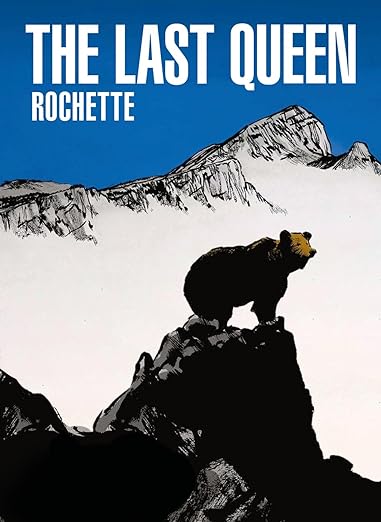
The Last Queen


By Jean-Marc Rochette, translated by Edward Gauvin (SelfMadeHero)
ISBN: 978-1-914224-19-5 (HB)

In conjunction with scripters such as Jacques Lob, Matz, Oliver Bocquet, Bejamin Legrand and others, painter/illustrator Jean-Marc Rochette (Altitude, Bestiaire des alpes, Les loup, Les Aventures Psychotiques de Napoléon et Bonaparte, Le Transperceneige/Snowpiercer sequence) rapidly became one of the key bande dessinée artists to watch.

In 2022 he confirmed that status and surmounted it with the release of La Dernière Reine: a self-contained naturalist epic which quickly garnered many major awards. It was named “Book of the Year” by Lire Magazine Littéraire and Elle Magazine, was radio station RTL’s Grand Prix for Comics winner and was an Official Selection of the lauded Angoulême Festival 2023.

As can be seen in this new translation from SelfMadeHero, even in English, it’s a bloody good read.

Rendered in moody colour washes and stark line, The Last Queen took Rochette three years to complete and explores all the passions of its creator: love of wilderness, scaling mountains, contemplative solitude and the balance between humanity and nature.

Those fascinations are expressed here in the millennial history and last gasp of a clan of red-headed outsiders living on the Vercors Massif of the French Prealps since neolithic times. Often regarded as witches, the ancestors of doomed outcast Édouard Roux have lived with and in the wilds throughout history. His kind enjoyed a particular affinity for the great bears that were indisputable masters of the range for all of time, until as a child he witnesses the end of the last mighty monarch of the peaks.

As the 19th century closed, a she-bear dubbed “the Last Queen” is killed by a shepherd and her carcass gloatingly desecrated by villagers. The other kids cruelly call little Édouard “son of the bear” and say vile things about his mother, but he’s used to it.

When war comes in 1914, Roux marches off and is a hero of the Somme trenches. All it costs is the lower part of his face…

In 1920, the despondent pensioned-off warrior is on his uppers: a despised, pitiable gueule cassée – “broken face” – shrouding his disfigurement and shame beneath a sack-like hood. He is but one of thousands…

When Roux hears of a woman artist who helps injured soldiers, he travels to Paris and meets Jeanne Sauvage who builds a new lower face for Roux based on the visage of a Greek god. Based on actual sculptor and proto-feminist Marie Marcelle Jane Poupelet, Sauvage has been making supple, lifelike masks for France’s defaced heroes and – refusing payment he cannot afford – does the same for Édouard.

Soon they are lovers and she introduces him to her circle of artist friends in Montmartre …more dangerously disruptive outsiders in a world increasingly governed by inconspicuous wealth, covert prestige and urbane uniformity: one that simultaneously tolerates, despises and exploits them all.

When the city life grinds them down and spits them out, Roux takes Jeanne to the mountains and shows her the secrets of the massif and a long-held family secret: stone age cave paintings and a neolithic carved bear lost from human knowledge for hundreds of years. The bounty of wonders inspire her great artistic breakthrough but Jeanne’s creative triumph is swindled from her by the elegant, cultured elite of modern civilisation. She and Édouard retreat from the emerging world for a timeless natural idyll that is paradise on Earth, but their days of true happiness are already numbered…

Uncompromising, deeply poignant and painfully sad, this is a saga of love and extinction: a testament to the passing of the past, with raw nobility lost to greed, crushing conformity and rise of mass mediocrity. It’s a struggle with no room for mercy or grace allowed for the unconventional or out-of-step. A paean to the fading call of the wild, uncomfortable or troublesome heritage, these lovers’ loss encapsulates and symbolises so many small wonders destroyed by progress, with revenants and outsiders pushed beyond even the few oases of fringe and margins not taken from them yet…

In a world that has no place for so much any longer, The Last Queen is a powerful call to cherish and preserve what can so easily die and never be regained…
La Dernière reine © Casterman, 2022. All rights reserved.

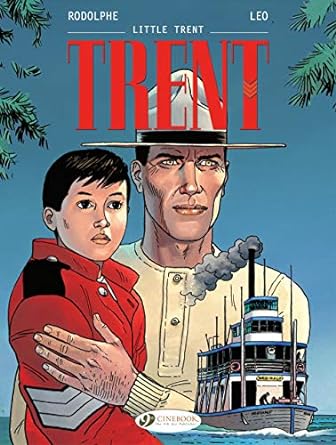
Trent volume 8: Little Trent


By Rodolphe & Léo, coloured by Marie-Paule Alluard, translated by Jerome Saincantin (Cinebook)
ISBN: 978-1-84918-398-7 (Album PB/Digital edition)

Continental audiences adore the mythologised American experience, both in Big Sky Wild Westerns and crime dramas of later eras. They enjoy a profound historical connection to the northernmost parts of the New World, generating many great graphic extravaganzas…

Born in Rio de Janeiro on December 13th 1944, “Léo” is artist/storyteller Luiz Eduardo de Oliveira Filho. Upon attaining a degree in mechanical engineering from Puerto Alegre, in 1968 he became a government employee for three years until forced to flee Brazil because of his political views. Whilst military dictators ran the homeland he lived in Chile and Argentina before illegally returning in 1974. He worked as a designer and graphic artist in Sao Paulo whilst creating his first comics art for O Bicho magazine, and in 1981 migrated to Paris to pursue a career in Bande Dessinée. He worked on Pilote and L’Echo des Savanes as well as handling advertising and graphic design jobs, until the big break when Jean-Claude Forest (Bébé Cyanure, Charlot, Barbarella) invited him to draw stories for Okapi.

This brought regular illustration work for Bayard Presse and, in 1988, Léo began his association with scripter/scenarist Rodolphe D. Jacquette – AKA Rodolphe. Prolific and celebrated, Léo’s writing partner had been a giant of comics since the 1970s: a Literature graduate who left teaching and running libraries to create poetry, criticism, novels, biographies, children’s stories and music journalism.

On meeting Jacques Lob in 1975, Jacquette expanded his portfolio: writing for many artists in magazines ranging from Pilote and Circus to à Suivre and Métal Hurlant. Amongst his most successful endeavours are Raffini (with Ferrandez) and L’Autre Monde (with Florence Magnin), but his triumphs in all genres and age ranges are far too numerous to list here.

In 1991 “Rodolph” began working with Léo on a period adventure of the “far north” starring a duty-driven loner. Taciturn, introspective, bleakly philosophical and relentlessly driven, Royal Canadian Mounted Police sergeant Philip Trent premiered in L’Homme Mort, forging a lonely path through the 19th century Dominion. He starred in eight moving, hard-bitten, love-benighted, beautifully realised albums until 2000, with the creative collaboration sparking later fantasy classics Kenya, Centaurus and Porte de Brazenac

Cast very much in the pattern perfected by Jack London and John Buchan, Trent is a man of few words, deep thoughts and unyielding principles who gets the job done whilst stifling the emotional turmoil boiling within him: the very embodiment of “still waters running deep”.

As Petite Trent in 2000, Little Trent was the 8th and final saga to date, offering a marked change in fortune. After years of second-guessing, procrastination and prevarication, he had finally won and wed the love of his life and now basked in connubial bliss – until the opening of this tale.

Years previously, the lovelorn peacekeeper had saved Agnes St. Yves (but not her beloved brother) and was given a clear invitation from her, albeit one he never acted upon. In the interim, Agnes met and married someone else. As before, Trent was unable to save the man in her life when banditry and destruction manifested during an horrific murder spree. The ball was again in Philip’s court and once more he fumbled it through timidity, indecision and inaction. He retreated into duty, using work to evade commitment and the risk of rejection…

Now even though he has fulfilled his dream and won the woman he loves, she is still missing.

It’s not a problem he can fix. Agnes has been called away with her mother to minister to a dying relative in Europe. She might be gone as much as eight months and Trent cannot shake the conviction that it will be much longer…

Nevertheless, duty always calls and the Mountie resolutely buries himself in his next case: protection duty for a mother and child he must escort to the Pacific coast – despite every effort of the estranged husband to stop them.

Poet Rodney Taylor is the alcoholic wastrel who abused his family and utterly refuses to accept the divorce he drove his wife to seek. Due to his repeated threats the authorities have agreed to safeguard the fugitives over the wishes of the extremely violent but exceeding charming drunk. The fleeing mother and child are daughter and grandson to retired Senator Charles Priestly and if Trent can deliver them to distant Whitehorse, the bigwig’s estate household can properly protect them thereafter. The slow tedious passage by rail to Prince Rupert Sound is punctuated by constant excited questions from boisterous, hero-struck and deeply impressionable Jeremy and Trent is further distracted by a letter from Agnes which has overtaken him and waits at the Post Office in Prince Rupert, from where they will travel up river on paddle steamer Reginald

Before Trent can read the missive from Agnes, Jeremy falls into the harbour and her precious words are soaked and ruined after the sergeant fishes him out. All Trent can make of the pulp is scraps and the phrases “wonderful news” and perhaps “expecting a happy event…”

Immediately his attitude to the pesky lad softens. Although dour and dutiful in public, Trent’s dreams are troubled, as the boy’s tireless exuberance combines with the new husband’s longing for his bride, sparking distracting notions of an heir of his own…

The journey takes a dire turn when Rodney Taylor also embarks on the Reginald playing the aggrieved husband and subtly threatening his former family. Seeking to avoid conflict, the Mountie soft peddles his responses and is caught off guard when Rodney’s initial warning and punishment provoke even greater acts of bullying and terror. When the stalker hires a band of thugs events quickly escalate and the entire ship is lost.

Still refusing to see sense or back off Rodney follows them to the very gates of the Priestly estate and Trent is forced to an action that crushes Jeremy’s hero-worshipping attitude forever.

Technically successful but feeling as if he failed, Trent makes his way home to find Agnes waiting. It has been nearly a year since they were together and her news is nothing like what her husband has imagined…

Another beguilingly introspective voyage of internal discovery, where human nature is a hostile environment, Little Trent delivers suspense, sentiment, riveting action and crushing poignancy in a compelling epic to delight all fans of widescreen cinematic entertainment. This is a sensitive contemplative graphic narrative series no fan of mature drama can afford to ignore.
Original edition © Dargaud Editeur Paris 2000 by Rodolphe & Leo. All rights reserved. English translation © 2017 Cinebook Ltd.

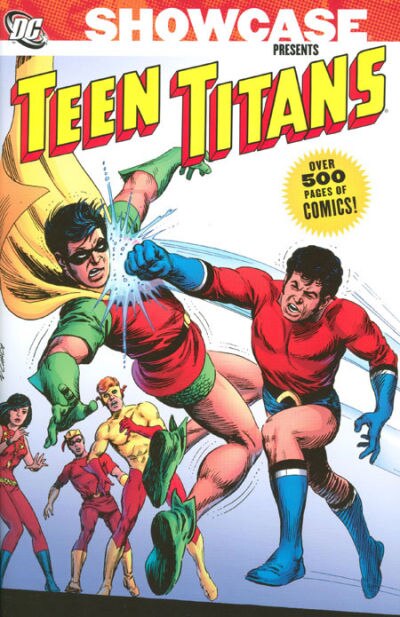
Showcase Presents Teen Titans volume 2


By Mike Friedrich, Bob Haney, Neal Adams, Marv Wolfman, Robert Kanigher, Steve Skeates, Gil Kane, Wally Wood, Nick Cardy, Sal Amendola, George Tuska, Carmine Infantino, Dick Dillin, Joe Giella, Jim Aparo & various (DC Comics)
ISBN: 978-1-84576-677-1 (TPB)

Hey, Super Kids! Happy 60th Anniversary!

It’s perhaps hard to grasp these days that once kid heroes were a rarity and at the beginning of the Silver Age, often considered a liability. Now the massive Teen Titans brand – with numerous comic book iterations, assorted TV shows, movies and even an award-winning early reading version (Aw, Yeaah! Tiny Titans!) their continuance as assured as anything in our biz. Nevertheless, during the tumultuous 1960s the series – never a top seller – courted controversy and actual teenage readers by confronting controversial issues head on.

I must have been just lucky, because these stories of lost youth searching for great truths and meaning were released just as I turned Teen. They resonated especially because they were talking directly to me. It didn’t hurt that they were brilliantly written, fantastically illustrated and staggeringly fresh and contemporary. I’m delighted to declare that age hasn’t diminished their quality or impact either, merely cemented their worth and importance.

The concept of underage hero-teams was not a new one when the Batman TV show fuelled DC’s move to entrust big heroes’ assorted sidekicks with their own regular comic as a hip and groovy ensemble as dedicated to helping kids as they were to stamping out insidious evil.

The biggest difference between wartime groups like The Young Allies, Boy Commandos or Newsboy Legion and such 1950s holdovers as The Little Wise Guys or Boys Ranch and the DC’s new team was quite simply the burgeoning phenomena of “The Teenager” as a discrete social and commercial power bloc. These were kids who could be allowed to do things themselves (within reason) without constant adult aid or supervision. As early as spring 1964, Brave and the Bold #54 had tested the waters in a gripping tale by Bob Haney & Bruno Premiani in which Kid Flash, Aqualad and Robin foiled a modern-day Pied Piper.

What had been a straight team-up was formalised a year later when the heroes reunited and included Wonder Girl in a proper super-group with a team-name: Teen Titans. With the stories in this second merely monochrome print-only relic of a collected volume of those early exploits the series had hit a creative peak, with spectacular, groundbreaking artwork and fresh, different stories that increasingly showed youngsters had opinions and attitudes of their own – and often that they could be at odds with those of their mystery-men mentors…

Spanning cover-dated January 1969 to December 1971 and collecting Teen Titans #19-36, and team-up appearances from Brave and the Bold #83 & 94 and World’s Finest Comics #205, these tales cover the most significant period of social and political unrest in American history and do it from the perspective of the underdogs, the seekers, the rebels…

The wonderment begins with a beautifully realised comedy-thriller as boy bowman Speedy enlists. ‘Teen Titans: Stepping Stones for a Giant Killer!’ (#19, January/February 1969), by Mike Friedrich, Gil Kane & Wally Wood, pitted the team against youthful evil mastermind Punch who planned to kill the Justice League of America and thought a trial run against the junior division a smart idea…

Brave and the Bold # 83 (April/May 1969) took a radical turn as the Titans (sans Aqualad, who was dropped from the squad to appear in Aquaman and because there just ain’t that much sub-sea skulduggery) tried to save Bruce Wayne’s latest foster-son from his own inner demons in a tense thriller about trust and betrayal in the Haney & Neal Adams epic ‘Punish Not my Evil Son!’. TT #20 took a long running plot-thread about extra-dimensional invaders and gave it a counterculture twist in ‘Titans Fit the Battle of Jericho’, a rollicking romp written by Neal Adams, pencilled by him & Sal Amendola and inked by brush-maestro Nick Cardy – one of the all-out prettiest illustration jobs of that decade.

Exemplars of the era/symbolic super-teens Hawk and Dove join proceedings for #21’s ‘Citadel of Fear’ (Adams & Cardy): chasing smugglers, finding aliens and ramping up the surly teen rebellion quotient whilst moving the invaders story-arc towards its stunning conclusion. ‘Halfway to Holocaust’ is only half of #22, the abduction of Kid Flash & Robin leading to a cross-planar climax as Wonder Girl, Speedy and a radical new ally quash the invasion threat forever, but still leaving enough room for a long overdue makeover in ‘The Origin of Wonder Girl’ by Marv Wolfman, Kane & Cardy. For years the series – and DC editors in general – had fudged the fact the younger Amazon Princess was not actually human, a sidekick, or even a person, but rather an incarnation of Wonder Woman as a child. As continuity backwriting strengthened its stranglehold on the industry, it was finally felt that the team’s distaff member needed a fuller background of her own.

This moving tale revealed she was in fact a human foundling rescued by Princess Diana and raised on Paradise Island where super-science gave her all the powers of a true Amazon. They even found her a name – Donna Troy – and an apartment, complete with hot roommate. All Donna had to do was sew herself a glitzy new figure-hugging costume…

Now thoroughly grounded, the team jetted south in #23’s fast-paced yarn ‘The Rock ‘n’ Roll Rogue’ (by Haney, Kane & Cardy), trying to rescue musical rebel Sammy Soul from his grasping family and – by extension – his lost dad from Amazonian headhunters. ‘Skis of Death!’ (#24, November/December) by the same creative crew has the quartet holidaying in the mountains and uncovering a scam to defraud Native Americans of their lands. It was a terrific old-style tale, but with the next issue the most radical change in DC’s cautious publishing history made Teen Titans a comic which had thrown out the rulebook…

For a series which spoke so directly to young people, it’s remarkable to think that ‘The Titans Kill a Saint?’ and its radical departure from traditional superhero stories was crafted by Bob Kanigher & Nick Cardy – two of the most senior creators in the business. The emotion-charged thriller set the scene for a different type of human-scaled adventures that were truly gripping and bravely innovative. For the relatively short time the experiment continued, readers had no idea what might happen next…

While on a night out in their civilian identities, Robin, Kid Flash, Speedy, Wonder Girl, Hawk and Dove meet telepathic go-go dancer Lilith who warns them of impending trouble. Cassandra-like, they ignore her warnings and a direct result a globally revered Nobel Laureate is gunned down. Coming so soon after the deaths of John F. and Robert Kennedy, Dr. Martin Luther King Jr. and Malcolm X, this was stunning stuff and in traumatised response all but Robin abandon their costumed personas and – with the help of mysterious millionaire philanthropist and mentor Mr. Jupiter – dedicate their unique abilities to exploring humanity’s flaws and graces: seeking fundamentally human ways to atone and make a difference in the world…

With Lilith beside them, they undertake different sorts of missions, beginning with ‘A Penny For a Black Star’ in which they attempt to live in a poverty-wracked inner city ghetto, where they find Mal Duncan, a street kid who becomes the first African-American in space…although it’s a one-way trip.

TT #27 reintroduced eerie elements of fantasy as ‘Nightmare in Space’ (Kanigher, George Tuska, Carmine Infantino & Cardy) sees the Titans en route to the Moon to rescue Mal, before encountering something far beyond the ken of mortal imagining. Meanwhile on Earth, Donna’s roommate Sharon stumbles upon an alien incursion. ‘Blindspot’ by Steve Skeates & Cardy was tangentially linked to another innovative saga then playing out in Aquaman’s comic book. You’ll need to see Aquaman: The Search For Mera and Aquaman: Deadly Waters for that extended delight. Both were edited by fresh-faced Dick Giordano, who was at this time responsible for the majority of innovative new material coming out of DC, even whilst proving himself one of the best inkers in the field.

Suffice to say that the Sea King’s foe Ocean Master had allied himself with aliens and Sharon became involved just as Aqualad returned looking for help. Unable to understand the Titan’s reluctance to get involved, Garth tries to go it alone but hits a snag only the original team can fix, which they do in Skeates & Cardy’s concluding chapter ‘Captives!’ However, once the alien threat is thwarted our heroes once more lay down their powers and costumes, but they have much to ponder after seeing what benefits their unique gifts can bring…

Teen Titans #30 featured three short tales, written by Skeates. Illustrated by Cardy, ‘Greed… Kills!’ is a cunning mystery exploring street and white-collar crime, whereas ‘Whirlwind’ is a Kid Flash prose novelette with art by Amendola before ‘Some Call it Noise’ (Infantino & Cardy) delivers an Aqualad solo tale in which his girlfriend Tula – AKA Aquagirl – takes a near-fatal wrong turn at a surface world rock concert.

Student politics took centre-stage in #31’s lead feature ‘To Order is to Destroy’ (Skeates, Tuska & Cardy) as the young heroes investigate a totally trouble-free campus where unhappy or difficult scholars are given a small brain operation to help them “concentrate”, whilst Hawk & Dove solo strip ‘From One to Twenty’ pits quarrelsome Don and Hank Hall against a band of murderous counterfeiters in a deft crime-caper from Skeates, Tuska & Cardy.

The creators then open up the fantasy element again with a time-travelling, parallel universe epic beginning in #32 with ‘A Mystical Realm, A World Gone Mad’ as Mal and Kid Flash accidentally change the past, turning Earth into a magical mad-scape. However, undoing their error results in a Neanderthal teenager being trapped in our time, presenting the group with their greatest challenge: educating a savage primitive and making him into a civilised modern man. Illustrated by Tuska & Cardy, ‘Less Than Human’ signalled the return of Bob Haney as main writer and triggered a gradual return of powers and costumes as the author picked up the pace of Jupiter’s grand experiment, restating it in terms that looked less harshly on comics’ bread & butter fights ‘n’ tights scenarios.

Brave and the Bold #94 (February-March 1971, by Haney & Cardy) offered potent counter-culture thrills as the team infiltrate an inner city commune to negate a nuclear bomb-plot in ‘Rebels in the Streets’, before the exigencies of publishing moved the series into the world of the supernatural as costumed heroes temporarily faded away in favour of tales of mystery and imagination. Haney, Tuska & Cardy’s ‘The Demon of Dog Island’ sees the team – including Robin who had quietly rejoined during the civilisation of cave-boy Gnarrk – desperately battling to prevent Wonder Girl’s possession by a gypsy ghost.

Skeates, Dick Dillin & Joe Giella crated ‘The Computer That Captured a Town’ in World’s Finest Comics #205 (September 1971), slyly examining racism and sexism as Superman finds the Titans trapped in a small town that had mysteriously re-adopted the values of the 1890s – a lot like middle America today but with culprits a lot easier to punch in the face…

Teen Titans #35 reiterated supernatural themes as the team travels to Verona in ‘Intruders of the Forbidden Crypt’ (Haney, Tuska & Cardy) wherein Lilith and the son of Mr. Jupiter’s business rival are drawn into a mesmerising web of tragedy: compelled to relive the doomed love of Romeo and Juliet despite all the rationalisations of modern science and the best efforts of the young heroes…

By the same creators, ‘A Titan is Born’ is a rite of passage for Mal as the everyman “token black guy” faces and defeats the murderous Gargoyle alone and unaided, before the reincarnation tragedy concludes with fate foiled in ‘The Tomb Be their Destiny’: the cover feature of #36. Filling out that issue and this book are two brief vignettes: Aqualad 3-page teaser ‘The Girl of the Shadows’ by Skeates & Jim Aparo and Haney & Cardy’s beguiling opening episode in the origin of Lilith ‘The Teen-Ager From Nowhere’. This showed a 10-year-old orphan’s first prescient exploit and the distrust it engendered, promising much more to come: a perfect place to end this second monochrome masterpiece of graphic literature.

Although perhaps dated in delivery now, these tales were a liberating experience for kids when first released. They truly betokened new empathy with independent youth and tried to address problems that were more relevant to and generated by that specific audience. That they are so captivating in execution is a wonderful bonus. This is absolute escapism and absolutely delightful and demand a fresh edition as soon as possible.
© 1969, 1970, 1971, 1972, 2007 DC Comics. All Rights Reserved.
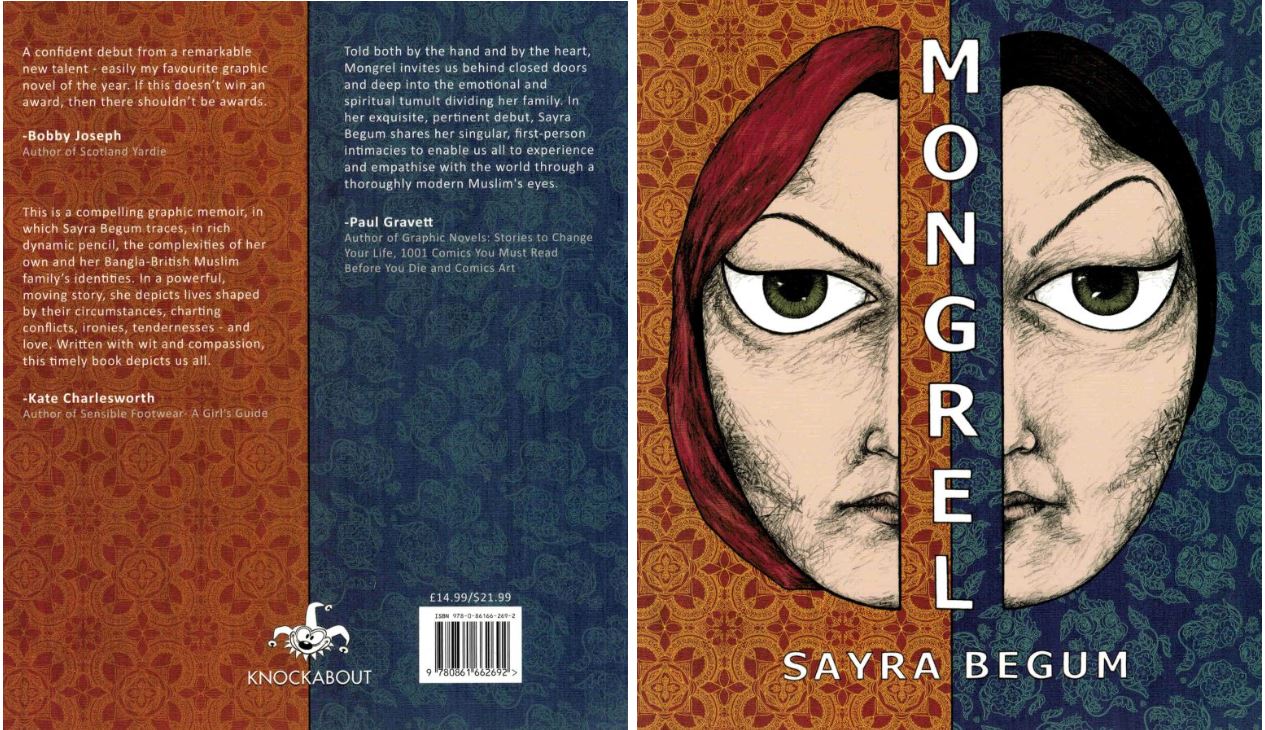
Mongrel


By Sayra Begum (Knockabout)
ISBN: 978-0-86166-269-2 (TPB)

Comics offer an immediate and potent method of communication that is both universally accessible and subtly intimate. You want countless characters and exotic locales? Just draw them. Need to navigate the most torturous tracks of the psyche and expose the most taciturn soul? Just fill captions and balloons with the words and tone that cut to the heart of the matter…

Somebody who got that from get-go was Sayra Begum, who first presented her life story in pictorial form in 2017. Happily, she shared it with the perceptive folks at Knockabout Comics who recognised a great work when they saw it. In her own incisive words and deft pencil work, Begum – identifying here as “Shuna” – shares what growing up meant for the child of a strict, devout and loving Bangladeshi Muslim mum only living in England until the family has enough money to retire to a mansion in her beloved homeland. It’s not an easy existence since her dad is a white man (a convert to Islam) who still remembers the freedoms of his old life. Moreover, the community treats them with polite disregard…

As seen in ‘Meet the Mongrel’, ‘Memories of Waterland’, and ‘The Forgotten Self’, Shuna and her siblings are pulled in so many directions growing up. She wants to be an artist, but her Amma is more concerned that she be ‘A Good Muslim’, believing ‘Life is a Test’ and her old ways such as ‘An Arranged Marriage’ are the only proper life to live…

For her parents, England ends at the front door and the household is pure Bangla within the walls. The lure of the outer world has already proved too much for one brother as seen in ‘My Poor Family’, ‘Suffocated’ and ‘The Disownment’ and soon Shuna too is living a secret life with an English lover mother could never approve of…

Continual contrasts with her perfect cousin in Bangladesh constantly wrack her conscience but Shuna has long capitulated to the wiles of Shaitan in her head. Life has a habit of upsetting all plans and exposing secrets and ‘Our Parallel Family’, ‘The Meeting’, ‘Judgement Day’ and ‘The Mongrel Children’ all reveal how even the harshest opinions may shift, leading to a truly romantic happy ending in ‘Goodbye Anger’ prior to a ruminatory ‘Epilogue’

Begum weds brisk, informative line drawing with the dazzling traditional patterns of Islamic art and excesses of surrealism to weave a compelling and visually enticing tale of real people coping with ancient intolerances and the rapidly evolving family stresses of a fluid and fluctuating multicultural society. It’s all the more affecting to realise she’s bravely sharing the minutiae and intimacies of her own life to highlight a situation as old as humanity itself.

A magical story and a stunning debut, Mongrel is book you must read and one that has never been more timely or pertinent.
Mongrel © by 2020 Sayra Begum All rights reserved.

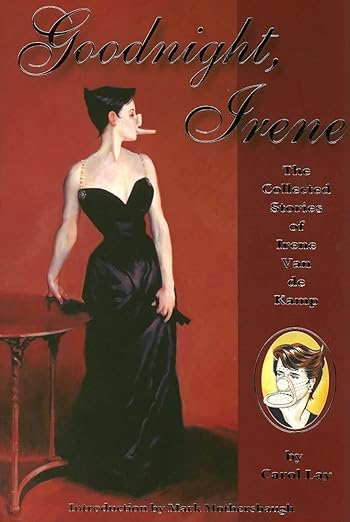
Goodnight, Irene – The Collected Stories of Irene Van de Kamp


By Carol Lay (Last Gasp)
ISBN: 978-0-86719-659-7 (TPB)

During the creative boom of comics in the 1980s, a vast outpouring of material found its way onto the shelves, dealing with a variety of topics and genres in a number of styles. Much of it was excellent but when the boom became a bust lots of great strips died along with the trash – of which there was an incredible and some would say disproportionate amount. Also a casualty was the spirit of innovation and expectation…

Originally published by Fantagraphics (and later Rip-Off Press) Good Girls featured two series by professional and underground cartoonist Carol Lay. Along with the tribulations of Miss Lonely Hearts – an agony aunt of sorts – was the ongoing ever more complex unfolding saga of a lost baby heiress (“Richest Woman in the World”) raised by “African Tribesmen” who practised female ritual disfigurement. Eventually the adult Irene Van de Kamp was returned to modern western society, where even her billions could not buy her acceptance and peace of mind.

Born 1952 in Whittier, Carol Lay grew up a California girl and from 1970 studied at UCLA, where amongst many revelations including “sex, drugs and Frank Zappa” she had her first encounter with graphic narrative in the form of Zap Comix. Graduating with a Fine Arts degree, she began making her own “underground commix”, which appeared in Last Gasp and Rip Off Press titles and later through Kitchen Sink Press and Fantagraphics.

That never made her rich but at least loads of advertising and commercial art jobs kept wolves from the door – as she secured a growing succession of commissions in the straight strip world for companies like Warren, Western Publishing, Eclipse, Marvel and DC Comics where she co-wrote and drew The Oz-Wonderland War. Lay graduated to newspaper strips and in 1992 created Story Minute (latterly Way Lay) for LA Weekly, progressive web site Salon.com and for international syndication. She has since written Wonder Woman novels, created storyboards and designs for film and the music industry and worked for The Village Voice, Entertainment Weekly, The New York Times, The New Yorker, Mad Magazine and more. In 2010 she began a semi-regular gig drawing The Simpsons for Bongo Comics.

Back to Irene and this cruelly out-of-print treasure. To Western eyes the rescued heiress is truly hideous. It is to the credit of the character that she endures cheerfully, eschewing any kind of corrective surgery or procedures. By her own deeply held aesthetic lights, she is beautiful and wants to remain that way.

Using the art tropes and narrative style of traditional romance comics as a vehicle, Lay examined social mores and aesthetic taboos, and especially the power of conformity to affect the most primal of emotions – Love and Desire …with a huge side order of Greed. Don’t let my pomposity fool you, though. This is a romance, and a daring, funny charming one at that.

Her skill as artist and storyteller in relating the picaresque tribulations are subtly subversive, and you will soon lose any reservations you might initially have been inflicted with. This is a landmark experiment and a wonderful example of grow-up comic literature. The initial series never reached a conclusion, and this volume also contains all-new episodes that concluded the saga of the beautiful, irrepressible and indomitable Irene after adverse publishing conditions killed Good Girls before its time.
© 2007 Carol Lay. All Rights Reserved.