Showcase Presents Robin The Boy Wonder


By E. Nelson Bridwell, Ed Hamilton, John Broome, Leo Dorfman, Gardner F. Fox, Cary Bates, Mike Friedrich, Frank Robbins, Denny O’Neil, Bob Haney, Elliot Maggin, Bob Rozakis, Ross Andru, Curt Swan, Sheldon Moldoff, Pete Costanza, Chic Stone, Gil Kane, Irv Novick, Murphy Anderson, Dick Dillin, Rich Buckler, Bob Brown, Mike Grell, A. Martinez Al Milgrom & various (DC Comics)
ISBN: 978-1-4012-1676-4 (TPB)

This book includes Discriminatory Content produced in less enlightened times.

As previously mentioned, there are a lot of comics anniversaries occurring in this otherwise dreadful year. The ultimate and original sidekick is probably the most significant of DC’s representatives, and indeed there have been a few intriguing collections released to celebrate the occasion. This one, however, is probably the best but remains criminally out of print, if not utterly unavailable…

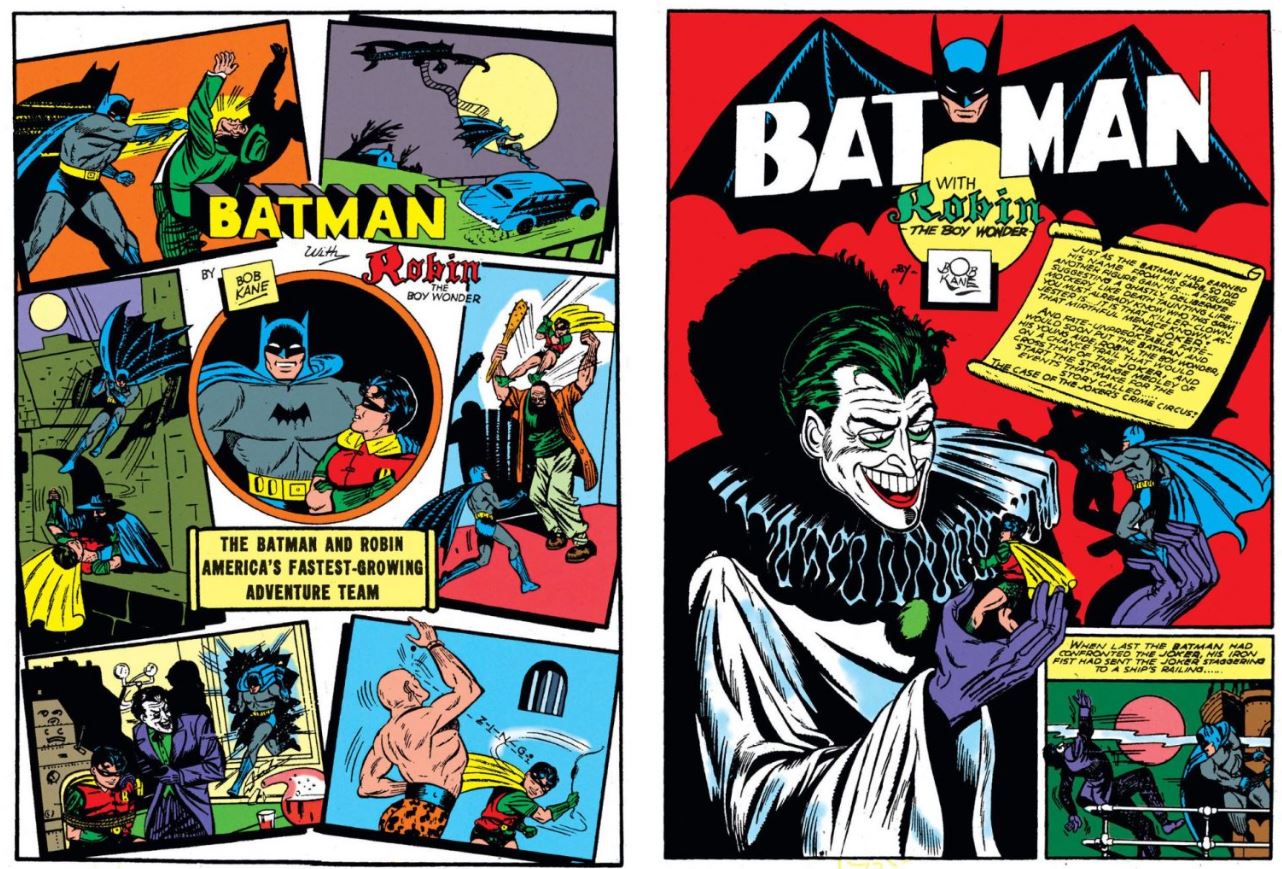
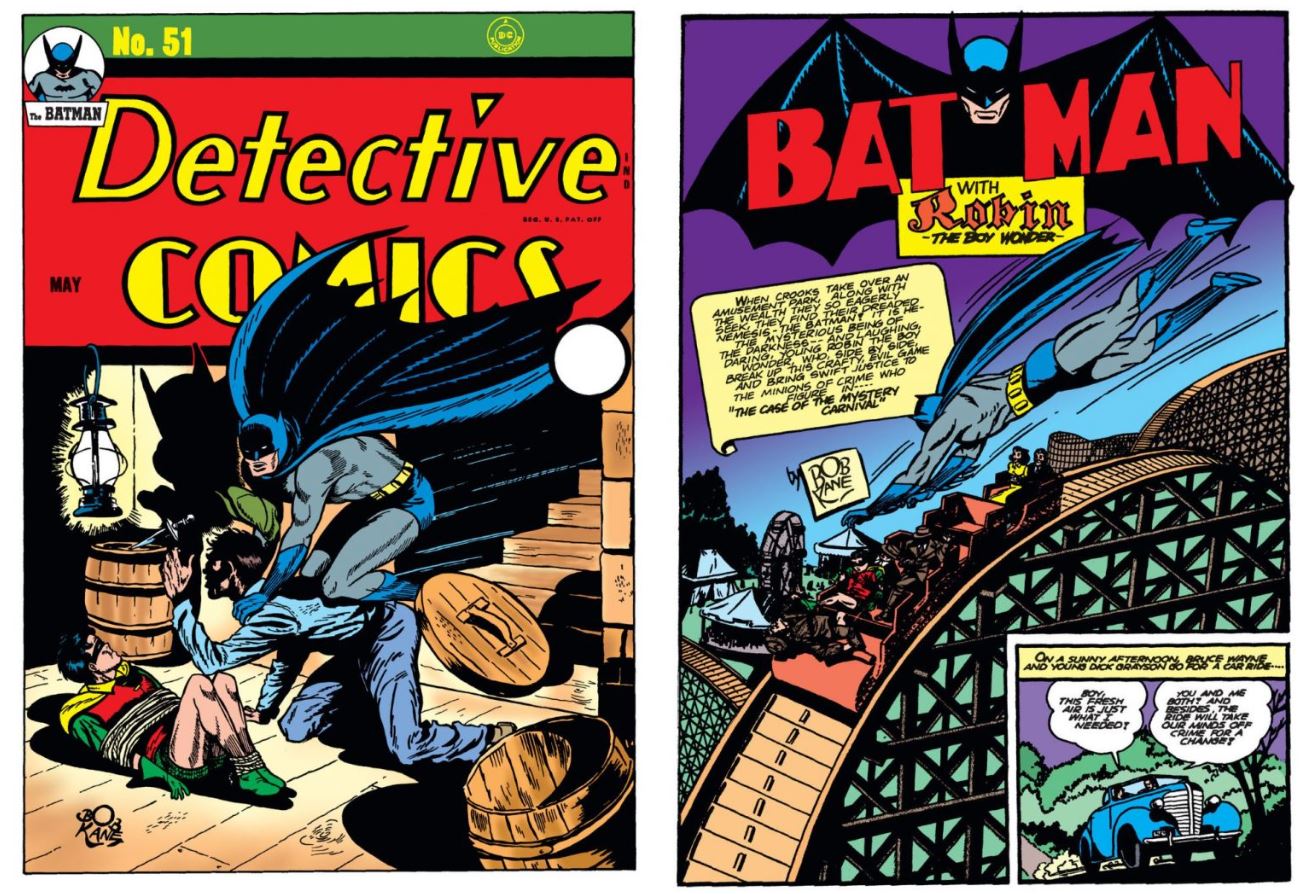
Robin the Boy Wonder debuted in Detective Comics #38 (cover dated April 1940 and on sale from March 6th). Co-created by Bob Kane, Bill Finger & Jerry Robinson, he was a juvenile circus acrobat whose parents were murdered by a mob boss. The story of how Batman took the orphaned Dick Grayson under his scalloped wing and trained him to fight crime has been told, retold and revised many times over the decades and still regularly undergoes tweaking to this day.

Grayson fought beside Batman until 1970 when, as an indicator of those turbulent times, he flew the nest, becoming a Teen Wonder college student. His creation as a junior hero for younger readers to identify with has inspired an incomprehensible number of costumed sidekicks and kid crusaders, and Grayson continued in similar innovative vein for the older, more worldly-wise readership of America’s increasingly rebellious youth culture.

The first Robin even had his own solo series in Star Spangled Comics from 1947 to 1952, a solo spot in the back of Detective Comics from the end of the 1960s – a position he alternated and shared with Batgirl – and a starring feature in anthology comic Batman Family. During the 1980s he led the New Teen Titans, initially in his original costumed identity but eventually in the reinvented guise of Nightwing, all while re-establishing a (somewhat turbulent) working relationship with his masked mentor.

This broad ranging easy on the eye monochrome compilation covers the period from Julie Schwartz’s captivating reinvigoration of the Dynamic Duo in 1964 until 1975 with Robin-related stories and material from Batman #184, 192, 202, 213, 227, 229-231, 234-236, 239-242, 244-246, 248-250, 252, 254 and portions of 217; Detective Comics #342, 386, 390-391, 394-395, 398-403, 445, 447, 450-251; World’s Finest Comics #141, 147, 195, 200; Superman’s Pal Jimmy Olsen #91, 111, 130 and Justice League of America #91-92.

The wonderment begins with the lead story from Batman #213 (July-August 1969) – a 30th Anniversary reprint Giant – which featured an all-new retelling of ‘The Origin of Robin’ courtesy of E. Nelson Bridwell, Ross Andru & Mike Esposito, perfectly reinterpreting that epochal event for the Vietnam generation. After that, the tales proceed in (more or less) chronological order, covering episodes where Robin took centre-stage.

First up is ‘The Olsen-Robin Team versus… the Superman-Batman Team!’ (from World’s Finest #141, May 1964, by Edmond Hamilton, Curt Swan & George Klein). In a stirring blend of science fiction thriller and crime caper, the underappreciated sidekicks fake their own deaths to undertake a secret mission even their adult partners must remain unaware of – for the very best of reasons of course. A sequel from WF #147 (February 1965) delivers an engaging drama of youth-in-revolt as ‘The New Terrific Team!’ quit their assistant roles to strike out on their disgruntled own. Naturally there’s a perfectly reasonable – if incredible – reason here, too…

Detective Comics #342 (August 1965) featured ‘The Midnight Raid of the Robin Gang!’ by John Broome, Sheldon Moldoff & Joe Giella, wherein the Boy Wonder joins a youthful gang of costumed criminals, after which Superman’s Pal Jimmy Olsen #91 (March 1966) delivers ‘The Dragon Delinquent!’ (Leo Dorfman & Pete Costanza) as Robin and the cub reporter, unknown to each other, both infiltrate the same biker gang with potentially fatal consequences.

‘The Boy Wonder’s Boo-Boo Patrol!’ – originally a back-up in Batman #184 (September 1966, Gardner Fox, Chic Stone & Sid Greene), shows the daring lad’s star-potential in a clever tale of thespian skulduggery and classic conundrum solving, before ‘Dick Grayson’s Secret Guardian!’ (Batman #192, June 1967, Fox, Moldoff & Giella) depicts his physical prowess in one of comic books’ first instances of the exo-skeletal augmentation gimmick.

‘Jimmy Olsen, Boy Wonder!’ (SPJO #111, June 1968, by Cary Bates & Costanza) finds the reporter trying to prove his covert skills by convincing the Gotham Guardian that he was actually Robin, whilst that same month in Batman #203 the genuine article tackles the ‘Menace of the Motorcycle Marauders!’ (Mike Friedrich, Stone & Giella) consequently learning a salutary lesson in the price of responsibility…

Cover-dated April 1969, Detective Comics #386 featured the Boy Wonder’s first solo back-up in what was to become his semi-regular spot for years. ‘The Teen-Age Gap!’ (as described by Friedrich, Andru & Esposito) depicts a High School Barn Dance which only narrowly escapes becoming a riot thanks to his diligent intervention, after which Gil Kane & Murphy Anderson assume the art-chores with #390’s ‘Countdown to Chaos!’ (August 1969), bringing the series stunningly alive. Friedrich concocted a canny tale of corruption and kidnapping leading to a paralysing city ‘Strike!’ for the Caped kid to spectacularly expose and foil in the following issue.

Batman #217 (December 1969) was a landmark in the character’s long history as Dick leaves home to attend Hudson University. Only the pertinent portion from ‘One Bullet Too Many!’ by Frank Robbins, Irv Novick & Dick Giordano is included here, closely followed by ‘Strike… Whilst the Campus is Hot’ (Detective #394 from the same month, by Robbins, Kane & Anderson) as the callow freshman stumbles into a campus riot organised by criminals and radical activists, forcing the now Teen Wonder to ‘Drop Out… or Drop Dead!‘ to stop the seditious scheme…

Detective #398-399 (April & May 1970) ran a 2-part spy-thriller with Vince Colletta replacing Anderson as inker. ‘Moon-Struck’ has lunar rock samples borrowed from NASA apparently causing a plague among Hudson’s students until Robin exposes a Soviet scheme to sabotage the Space Program in ‘Panic by Moonglow’. The 400th anniversary issue (June 1970) finally teamed the Teen Wonder with his alternating back-up star in ‘A Burial For Batgirl!’ (Denny O’Neil, Kane & Colletta): a college-based murder mystery which again heavily references the political and social unrest then plaguing US campuses, but which still finds space to be smart and action-packed as well as topical, before chilling conclusion ‘Midnight is the Dying Hour!’ wraps up the saga.

Never afraid to repeat a good idea, Superman’s Pal Jimmy Olsen #130 (July 1970) sees Bob Haney & Murphy Anderson detail the exploits of ‘Olsen the Teen Wonder!’ as the boy reporter again apes Batman’s buddy – this time to infiltrate an underworld newspaper – whilst World’s Finest #195 (August 1970) finds Jimmy & Robin targeted for murder by the Mafia in ‘Dig Now, Die Later!’ by Haney, Andru & Esposito. Simultaneously in DC #402 ‘My Place in the Sun’ (Friedrich, Kane & Colletta), embroils Grayson and fellow Teen Titan Roy Speedy Harper in a crisis of social conscience, before our scarce-bearded hero wraps up his Detective run with corking crime-busting caper ‘Break-Out’ in the September issue.

Robin’s romps transferred to the back of Batman, beginning with #227 (December 1970) and ‘Help Me – I Think I’m Dead!’ (Friedrich, Novick & Esposito) as ecological awareness and penny-pinching Big Business catastrophically collide on the campus, beginning an extended epic seeing the Teen Thunderbolt explore communes, alternative cultures and the burgeoning spiritual New Age fads of the day. Inked by Frank Giacoia ‘Temperature Boiling… and Rising!’ (#229, February 1971) continues the politically-charged drama, albeit uncomfortably interrupted by a trenchant fantasy team-up with Superman sparked when the Man of Steel attempts to halt a violent campus clash between students and National Guard.

Crafted by Friedrich, Dick Dillin & Giella, ‘Prisoners of the Immortal World!’ (WFC #200, February 1971), has brothers on opposite sides of the teen scene abducted with Robin & Superman to a distant planet where undying vampiric aliens wage eternal war on each other. A return to more pedestrian perils in Batman #230 (March 1971) sees ‘Danger Comes A-Looking!’ for our young hero in the form of a gang of right-wing, anti-protester jocks and a deluded friend who prefers bombs to brotherhood, courtesy of Friedrich, Novick & Dick Giordano. ‘Wiped Out!’ (#231, May 1971) then offers an eye-popping end to the jock gang whilst #234 sees a clever road-trip tale in ‘Vengeance for a Cop!’, when a campus guard is gunned down forcing Robin to track the only suspect to a commune. ‘The Outcast Society’ has its own unique system of justice, but eventually the shooter is apprehended in the cataclysmic ‘Rain Fire!’ (#235 & 236 respectively).

The Collective experience blooms into psychedelic and psionic strangeness in #239 as ‘Soul-Pit’ (illustrated by new penciller Rich Buckler) finds Grayson’s would-be girlfriend, “Jesus-freaks” and runaway kids all sucked into a telepathic duel between a father and son, played out in the ‘Theatre of the Mind!’ before exposing the ‘Secret of the Psychic Siren!’ and culminating in a lethal clash with a clandestine cult in ‘Death-Point!’ (Batman#242, June 1972). After that eerie epic we slip back a year to peruse the Teen Wonder’s participation in one of the hallowed JLA/JSA summer team-ups, beginning in Justice League of America #91 (August 1971) and ‘Earth… the Monster-Maker!’, as Supermen, Flashes, Green Lanterns, Atoms and a brace of Hawkmen from two separate Realities simultaneously and ineffectually battle an alien boy and his symbiotically-linked dog (sort of) on almost identical planets a universe apart. There’s still time to painfully patronise the Robins of both until ‘Solomon Grundy… the One and Only!’ gives everyone a brutal but ultimately life-saving lesson on acceptance, togetherness, youthful optimism and lateral thinking…

Elliot Maggin, Novick & Giordano then set ‘The Teen-Age Trap!’ (Batman#244, September 1972), with Grayson mentoring troubled kids – and finding plenty of troublemakers his own age – whilst ‘Who Stole the Gift from Nowhere!’ is a delightful old-fashioned change-of-pace mystery yarn. However, ‘How Many Ways Can a Robin Die?’ by Robbins, Novick, Dillin & Giordano (Batman #246, December 1972) is actually a Dark Knight story with Teen Wonder helpless hostage throughout, whereas #248 opens another run of solo stories with ‘The Immortals of Usen Castle’ (Maggin, Novick & Frank McLaughlin) wherein another deprived-kids day trip turns into an episode of Scooby-Doo, Where are You? The ‘Case of the Kidnapped Crusader!’ (pencilled by Bob Brown) then puts the Student Centurion on the trail of an abducted consumer advocate and ‘Return of the Flying Grayson!’ (Maggin, Novick & McLaughlin from #250) painfully reminds the hero of his Circus past after tracking down pop-art thieves.

Batman #252 (October 1973) sees Maggin, Dillin & Giordano’s light-hearted pairing of Robin with a Danny Kaye pastiche for charming romp ‘The King from Canarsie!’, before ‘The Phenomenal Memory of Luke Graham!’ (#254 January/February 1974 and inked by Anderson) causes nothing but trouble for the hero, his college professors and a gang of robbers…

It was a year before the Teen Wonder’s solo sallies resumed with ‘The Touchdown Trap’ in Detective Comics #445 as new scripter Bob Rozakis and artist Mike Grell catapulted our hero into a 50-year-old college football feud that refused to die, whilst ‘The Puzzle of the Pyramids’ (#447 and illustrated by A. Martinez & Mazzaroli) offers another clever crime conundrum. This eccentrically eclectic monochrome compendium concludes with an action-packed, chase-heavy human drama by Al Milgrom & Terry Austin as ‘The Parking Lot Bandit!’ & ‘The Parking Lot Bandit Strikes Again!’ (DC #450-451, August & September 1975), giving the titanic teen one last chance to strike a bit of terror into the hearts of evil-doers…

These stories span a turbulent and chaotic period for comic books: perfectly encapsulating and describing the vicissitudes of the superhero genre’s premier juvenile lead: complex yet uncomplicated adventures drenched in charm and wit, moody tales of rebellion and self-discovery, and rollercoaster, all-fun romps. Action is always paramount, and angst-free satisfaction is pretty much guaranteed. These cracking yarns are something no fan of old-fashioned Fights ‘n’ Tights fiction should miss.
© 1964-1975, 2008 DC Comics. All Rights Reserved.

Today in 1922, Belgian auteur Marc Sleen was born. We still haven’t seen English versions of his Nero yet, but have slavishly and repeatedly begged you all to tune in to the oeuvre of Ronald Searle, who left us all far less today in 2011.

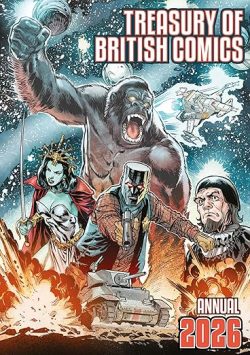
The Treasury of British Comics Annual 2026


By Stephen Brotherstone, Dave Lawrence, Scott Goodall, David Roach, Chris Lowder, Keith Richardson, Suyi Davies Okungbowa, James Tomlinson, Ned Hartley, Peter Milligan, Willie Paterson, Martin Baxendale, Edison Neo, Ken Reid, Horatio Altuna, Steve White, Jesús Redondo, Henrik Salhström, Solano Lopez, Eric Bradbury, Carlos Cruz, Francisco Fuentes Man, Juan Arancio, Mervyn Johnston, Frank Langford, Ian Kennedy, Vanyo, Bret Parson, Josep Gual, Staz Johnson, James Harren & various (Rebellion Studios)
Digital only eISBN: 978-1-83786-721-9; 978-1-83786-727-1 (Webshop Exclusive)

This book includes Discriminatory Content produced in less enlightened times.

Win’s Christmas Gift Recommendation: True Brit Comics Class… 9/10

Ooh, look! One more!

Just like the bumper seasonal hardbacks they celebrate, Treasury of British Comics Annuals blend old classics with all-new material, and although this year’s selection probably won’t last you all through 2026, it is packed with wonderful yarns that you will certainly read over and again. Combining original modern material with strips from Jag Annual 1971; Smash! November 16th 1968; Monster Fun July 5th 1975; Boy’s World February 19th – October 3rd 1964; The Birthday Book For Boys 1972; Misty February 24th 1979; Whizzer & Chips December 20th 1980; Action May 1st 1976; Wildcat Holiday Special 1989; Battle Action Force November 1st 1986; Valiant Annual 1969; Action Annual 1977; Buster December 28th 1991; Wham! Annual 1972 and Monster Fun October 2024, and kicks off with a strange team up tale fresh off the drawing/key boards of Stephen Brotherstone, Dave Lawrence & Henrik Salhström. It was lettered – like all the new material here – by Jonathan Stevenson.

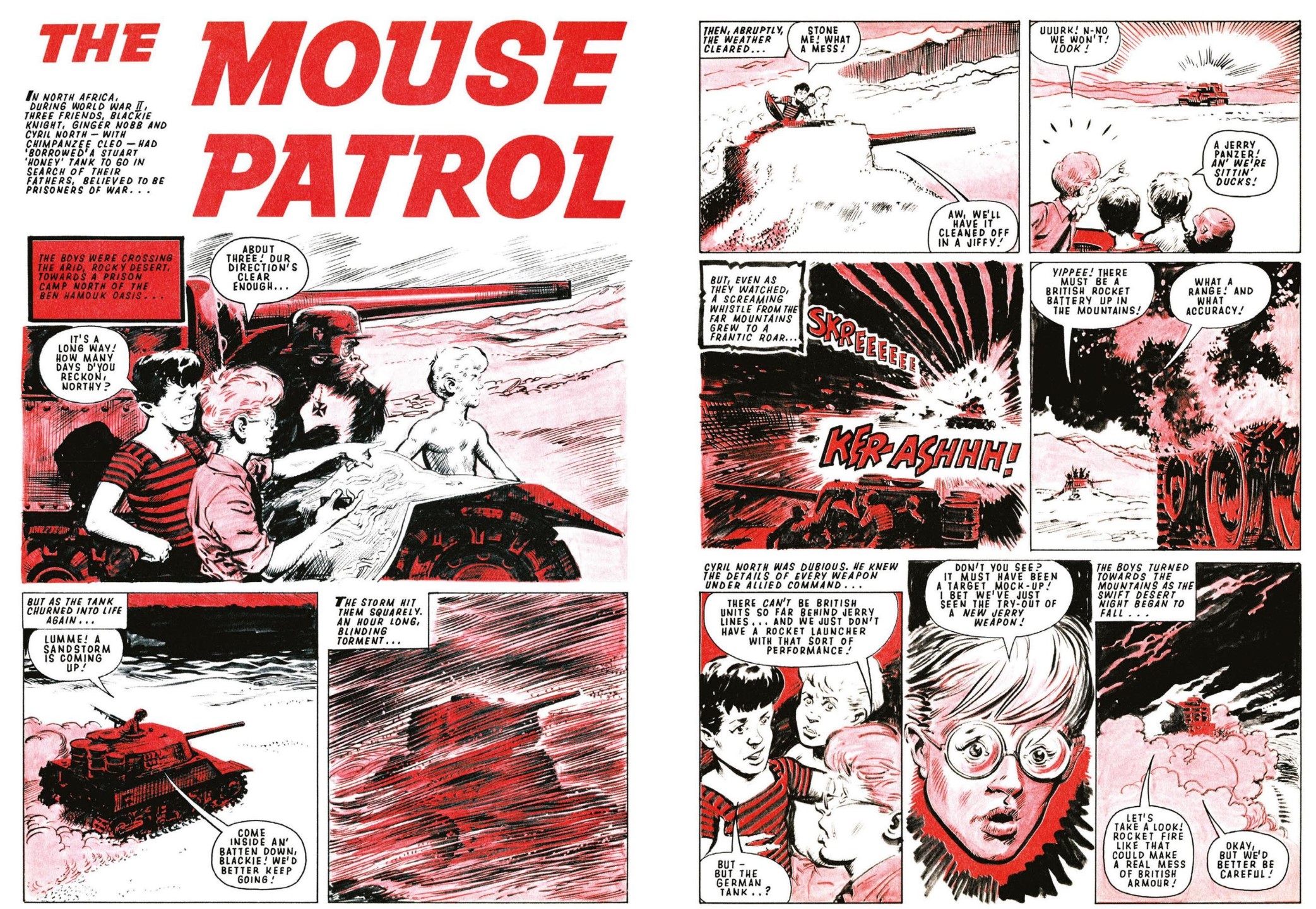
‘Helmet Head & El Mestizo: “On the First day of Christmas…” ’ pairs the aging mercenary with the robot sheriff to save a frontier town – and that aforementioned ROBOT SHERIFF! – from ruthless scavengers, after which a classic tale of murderous child soldiers sees the ‘Mouse Patrol’ (by an unidentified writer and the incredible Eric Bradbury from Jag Annual 1971) still looking for their POW dads on the battlefields of North Africa in 1942. This time the three lads (Blackie Knight, Ginger Nobb & Cyril North) and their chimp chum Cleo ride their stolen tank into a Nazi super weapon test and gleefully turn it on the astounded Afrika Corps!

Presented as Original Art Archive Scans published in Smash! November 16th 1968, ‘A Short Cut Home!’ is limned by Francisco Fuentes Man and details how a nasty Earthman outsmarts himself after blackmailing gentle – but clever – aliens, after which Monster Fun July 5th 1975 supplies a Ken Reid comedy classic scripted by a mystery gagster. ‘Martha’s Monster Make-Up’ allows her to mould faces like putty and, here, get rid of a really obnoxious family guest…

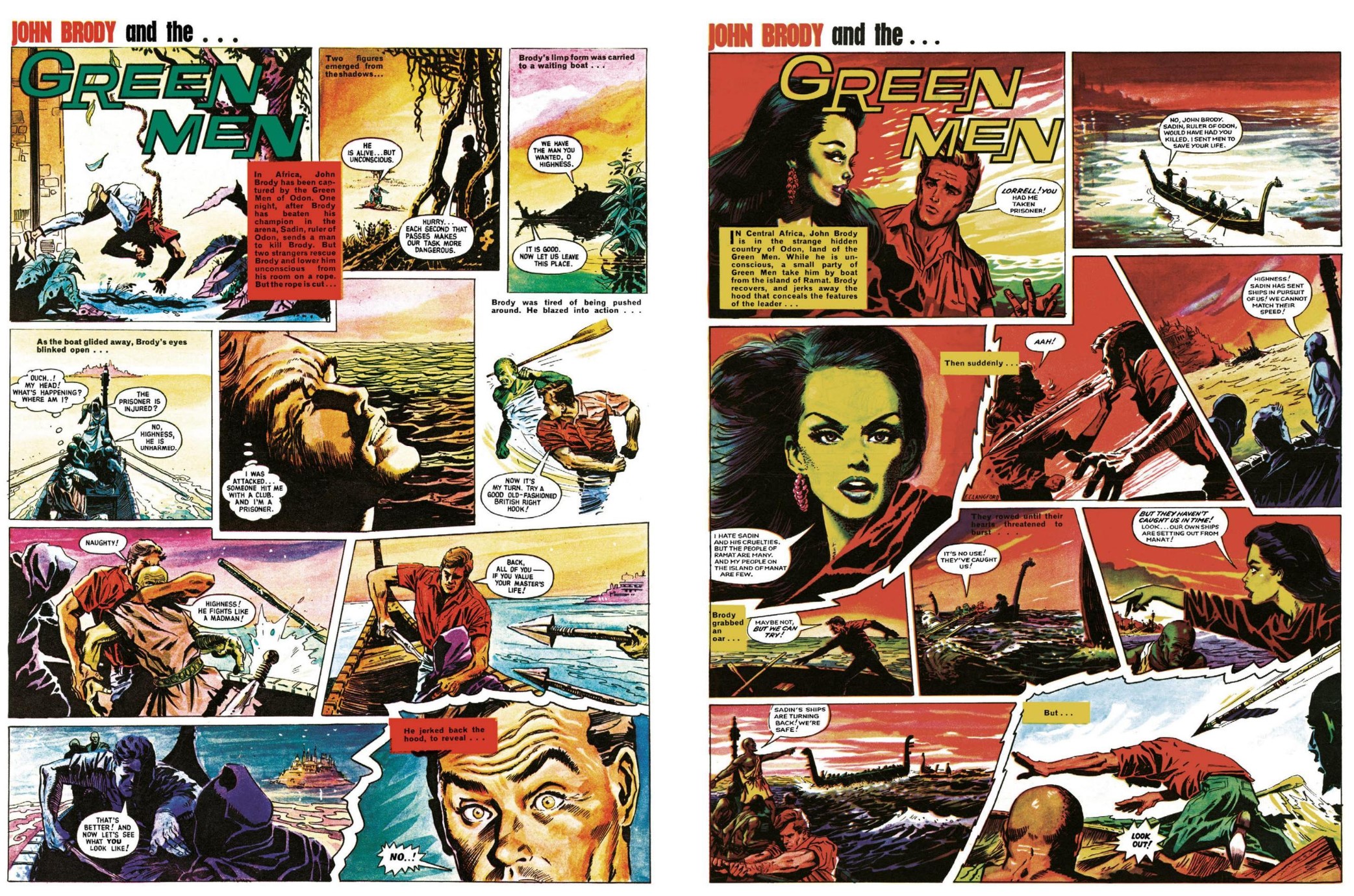
Very much a main attraction, full-colour painted serial ‘John Brody and the Green Men’ ran in Boy’s World from February 19th to October 3rd 1964. Crafted by Willie Paterson & Frank Langford this is an epic African adventure in the manner of She and other fantasy movies, following the eponymous troubleshooter into a fantastic submerged kingdom and civil war against devilish priests, bloodyhanded tyrants a and a lot of undersea beasties…

It’s followed by Ned Hartley, Steve White & Stevenson’s new parody yarn ‘Imagine if Gums Was Published in Action…’ which speaks for itself – albeit rather messily – prior to Tom Tully & Ian Kennedy revealing how colour-changing ‘Kid Chameleon’ (The Birthday Book For Boys 1972) continues searching for his parents’ assassin. If not for those reptiles who had raised him in the Kalahari desert, he would have no chance…

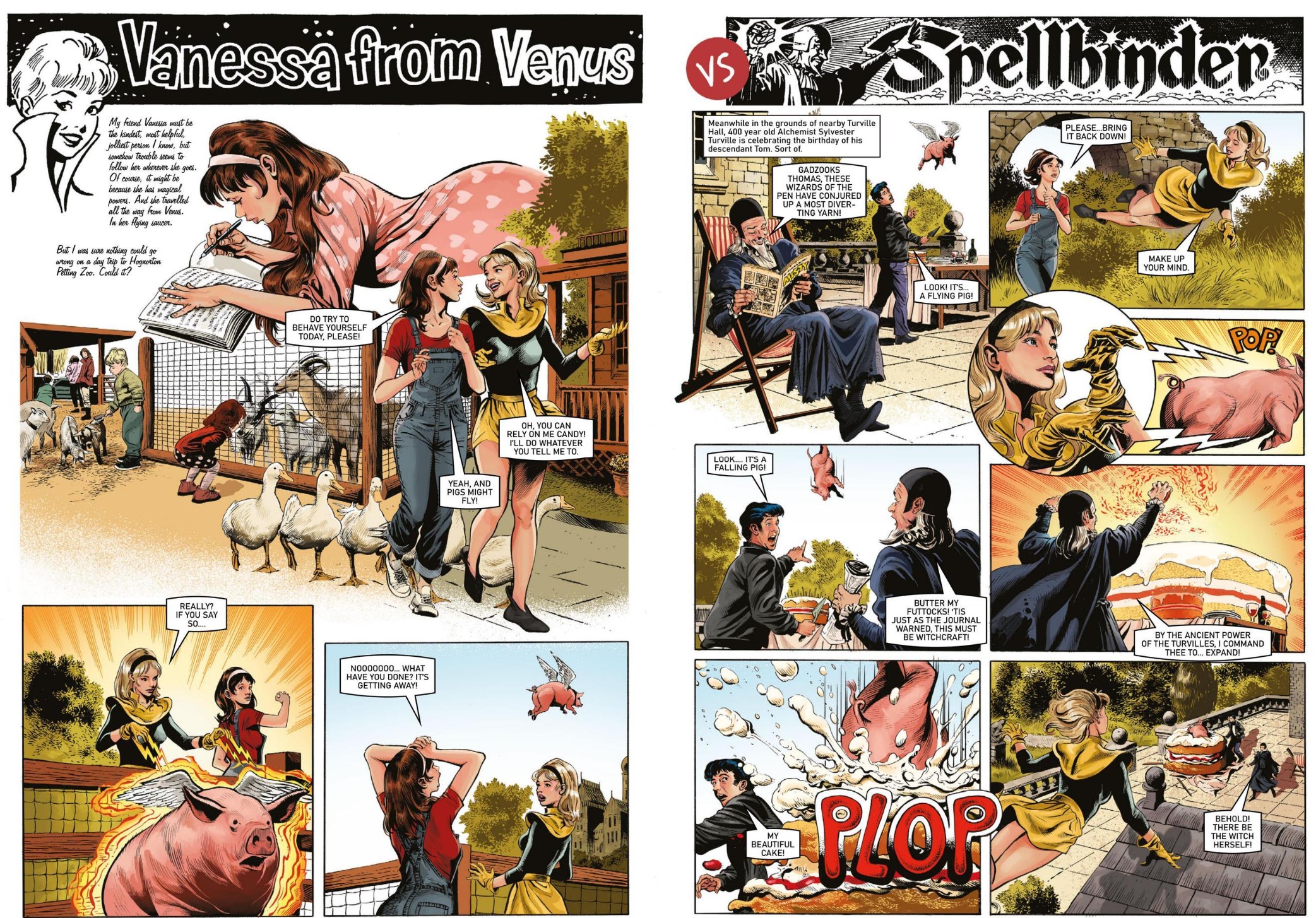
Author unknown & Josep Gual reveal the monster-hunting surprise two girls unleash on ‘The Island’ (from Misty February 24th 1979) after which school spoof ‘Strange Hill’ (by another unknown & Martin Baxendale from Whizzer & Chips December 20th 1980) neatly shuffles us into an all-new yarn from David & Emily Roach pitting stellar sorcery savants in ‘Vanessa From Venus vs. Spellbinder’.

Thanks to another Original Art Archive Scan we get to see superspy ‘Dredger’ (by Chris Lowder & Horatio Altuna from Action May 1st 1976) settle with a KGB hit squad in all his mean, messy glory prior to James Tomlinson & Jesús Redondo Román detail why the undead don’t like space travel. ‘The Wildcat Complete: Vampire!’ was originally seen in Wildcat Holiday Special 1989, and our seasonal session adopts a rather bleak note for ‘The Fighting MaGees’ (Peter Milligan & Solano Lopez from Battle Action Force November 1st 1986) as brothers Jack and Micky endure the hell of the Gallipoli landings and are forever changed…

From Valiant Annual 1969 Carlos Cruz González and that unknown writer provide a vivid adventure for a certain inventor and his robot assistants as ‘The House of Dolmann’ face plundering pop sensations The Spectrums whilst Juan Arancio’s Original Art Archive Scans for Action Annual 1977 pit white explorers against a jungle packed with ‘The Wild Ones’

Mervyn Johnston’s ‘Captain Crucial’ clashes with a very busy Kris Kringle courtesy of Buster December 28th 1991, whilst anonymous & Vanyo detail how ordinary folk finished off ‘The Loch Tregar Terror’ (Wham! Annual 1972). One last new yarn by Suyi Davies Okungbowa, Edison Neo & Barbara Nosenzo reintroduces hairy giant robot ‘Mytek the Mighty’ in a show of brute strength and authorial foreboding before we close the fun & games with a vegan bloodbath triggered by Keith Richardson & Brett Parson’s ‘Count Carrot’ – as previously predigested in Monster Fun October 2024…

That’s all you get here, but remember this is a book you still can buy and receive instantly. The internet probably has others. You should check that out in a bit…
© 1964, 1967, 1968, 1970, 1971, 1975, 1976, 1979, 1980, 1986, 1989, 1991, 2024, 2025 Rebellion Publishing IP Ltd. All Rights Reserved.

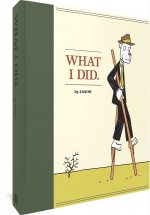
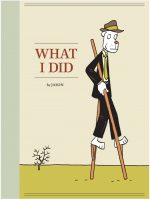
What I Did


By Jason, translated by Kim Thompson (Fantagraphics Books)
ISBN: 978-1-60699-414-6 (HB/Digital edition)

Win’s Christmas Gift Recommendation: Absurdly Enchanting Comics Capers… 9/10

This book includes Discriminatory Content included for dramatic, comedic and ironic effect.

Born in 1965 in Molde, Norway, John Arne Sæterøy is known by enigmatic, utilitarian nom de plume Jason. The shy & retiring auteur first took the path to cartoon superstardom in 1995, once debut graphic novel Lomma full ay regn (Pocket Full of Rain) won Norway’s biggest comics prize: the Sproing Award. From 1987 he had contributed to alternate/indie magazine KonK while studying graphic design and illustration at Oslo’s Art Academy.

From there he took on Norway’s National School of Arts and, on graduating in 1994, founded his own comic – Mjau Mjau. Constantly refining his style into a potent form of meaning-mined anthropomorphic minimalism, Jason cited Lewis Trondheim, Jim Woodring & Tex Avery as primary influences. He moved to Copenhagen, working at Studio Gimle alongside Ole Comoll Christensen (Excreta, Mar Mysteriet Surn/Mayday Mysteries, Den Anden Praesident, Det Tredje Ojet) & Peter Snejbjerg (Den skjulte protocol/The Hidden Protocol, World War X, Tarzan, Books of Magic, Batman: Detective 27). Jason’s efforts were internationally recognised, making waves in France, The Netherlands, Slovenia, Spain, Germany and other Scandinavian countries as well as the Americas. He won another Sproing in 2001 – for self-published series Mjau Mjau – and in 2002 turned nigh-exclusively to producing graphic novels. He won even more major awards.

His breadth of interest is wide & deep: comics, movies, animated cartoons, music, literature art history and pulp fiction all feature equally with no sense of rank or hierarchy. Jason’s puckish, egalitarian mixing & matching of inspirational sources always and inevitably produces picture-treatises well worth a reader’s time. Over a succession of tales he has built and re-employed a repertory company of stock characters to explore deceptively simplistic milieux based on classic archetypes distilled from movies, childhood yarns, historical and literary favourites. These all role-play in deliciously absurd and surreal sagas centred on his preferred themes of relationships and loneliness. Latterly, Jason returned to such “found” players as he built his own highly esoteric universe, and even has a whole bizarre bunch of them “team-up” or clash…

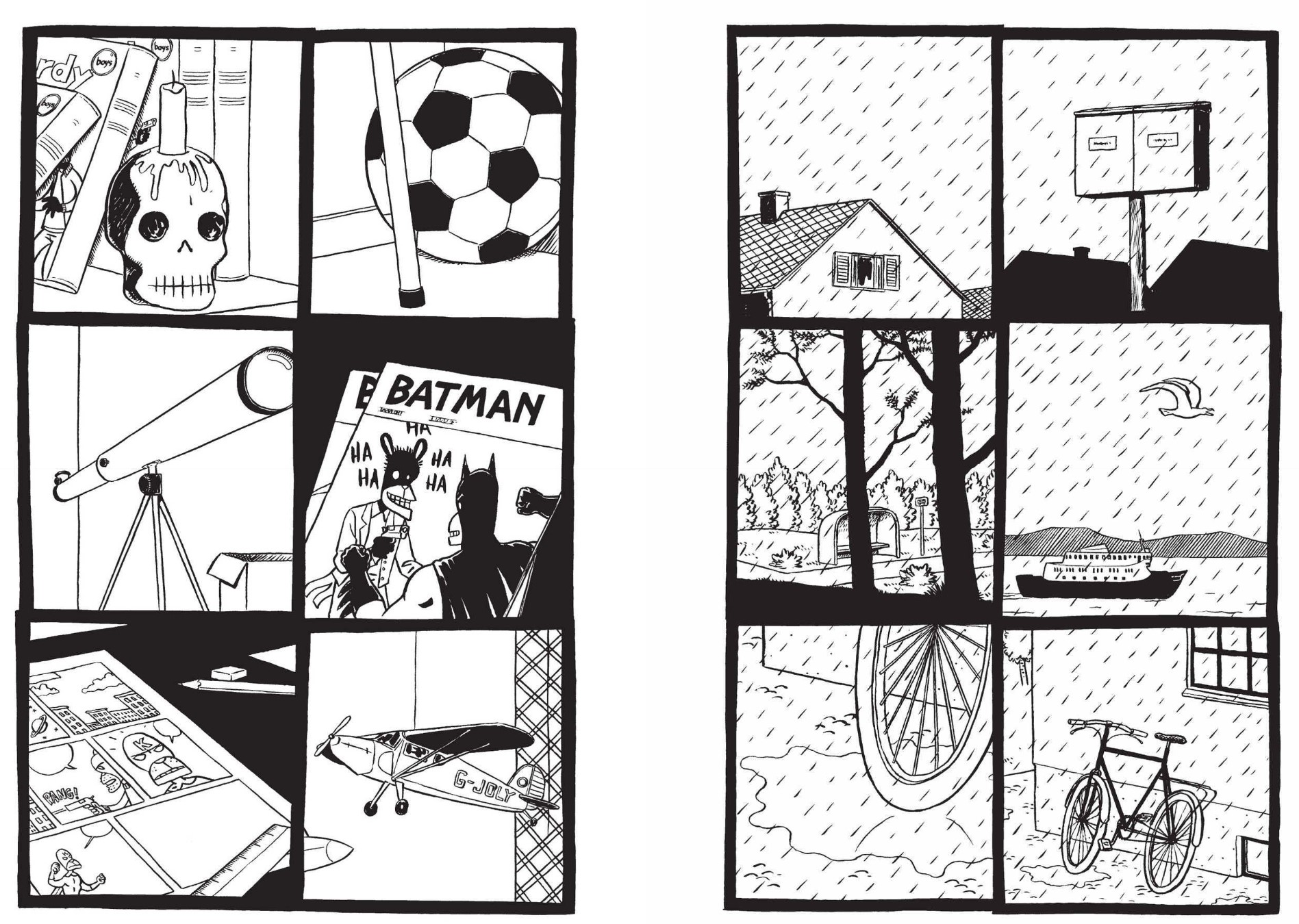
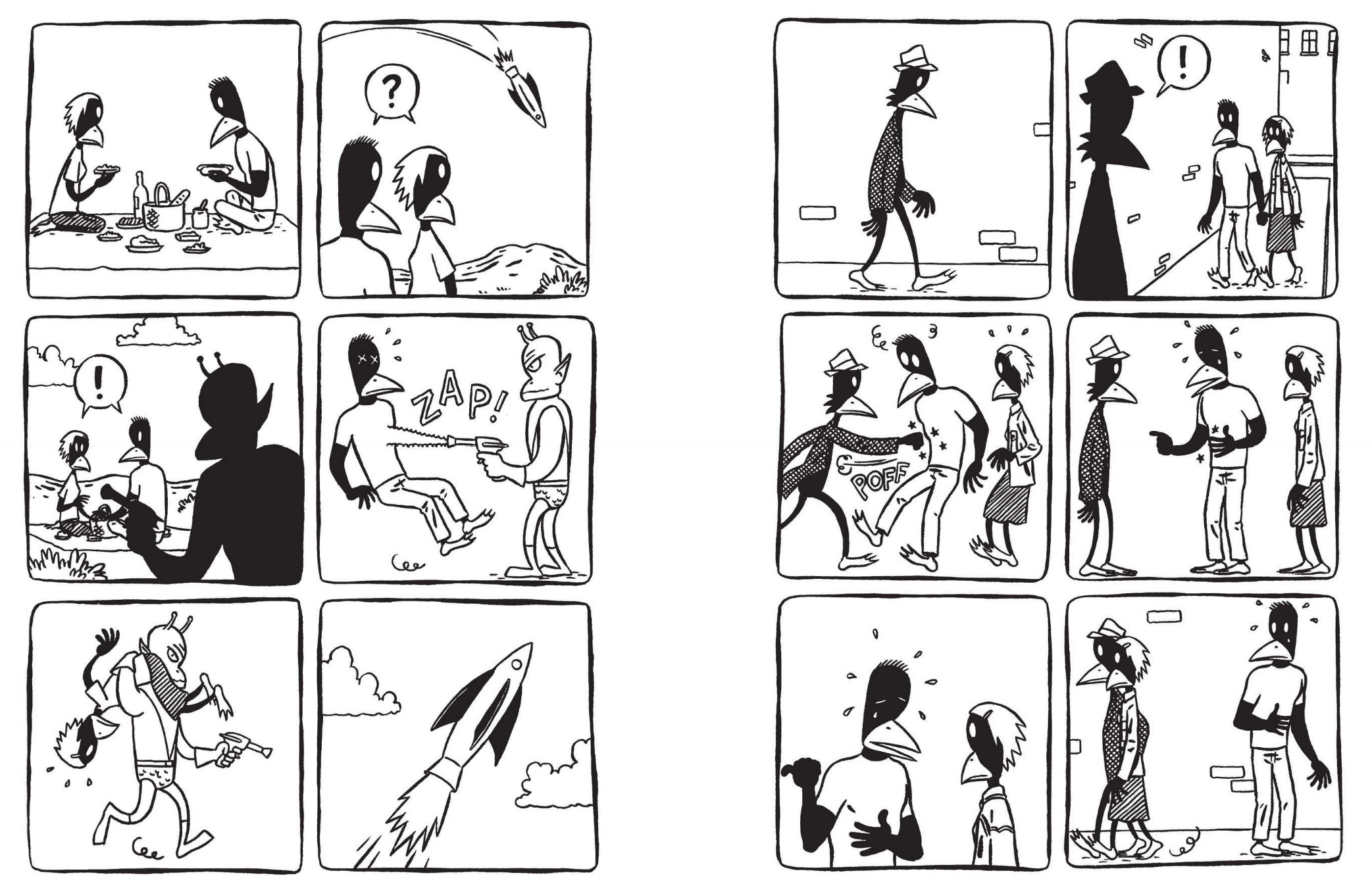
As always, visual/verbal bon mots unfold in beguiling, sparse-dialogued (or even, as here, silently pantomimic) progressions, with compellingly formal page layouts rendered in a pared back stripped-down interpretation of Hergé’s Claire Ligne style: solid blacks, thick outlines dominating settings of seductive monochrome simplicity augmented by a beguiling palette of stark pastels and muted primary colours.

A master of short-form illustrated tales, many Jason yarns have been released as snappy little albums perfect for later inclusion in longer anthology collections like this one which gathers a triptych of his very best. The majority of tales brim with bleak isolation, swamped by a signature surreality. They are, as warned, largely populated with cinematically-inspired, darkly comedic, charmingly macabre animal people ruminating on inescapable concerns whilst re-enacting bizarrely cast, bestial movie tributes

This sterling hard cover compilation gathers ‘Hey, Wait…’, ‘Sshhhh!’ and ‘The Iron Wagon’ which first appeared in Mjau Mjau between 1997 & 2001, and if you’re keeping score, the reviews and illustrations are taken from the 2018 second edition…

The volume opens with an eerie and glorious and wildly funny paean to boyhood friendships – in the manner of the movie Stand By Me – as young Bjorn and Jon enjoy a life of perfect childhood until a tragic accident ends the idyll and reshapes them forever. Life, however, goes on, but for one of the lads it’s an existence populated forever onwards with ghosts and visions…

Jason’s work always jumps directly into the reader’s brain and heart, using the beastly and unnatural to gently pose eternal questions about basic human needs in a soft but relentless quest for answers. That you don’t ever notice the deep stuff because of the clever gags and safe, familiar funny-animal characters should indicate just how good a cartoonist he is…

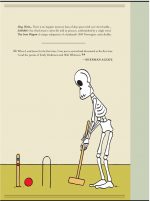
‘Sshhhh!’ is a delightfully evocative romantic melodrama created without words: a bittersweet extended tale of boy-bird meeting girl-bird in a world overly populated with spooks and ghouls and skeletons but afflicted far more harshly by missed chances, loneliness and regret.

These comic tales are strictly for adults but allow us all to look at the world through wide-open young eyes. This is especially true of the final tale in this collection – a slyly beguiling adaptation of a classic detective story from 1909, but enhanced to a macabre degree by the easy cartooning, skilled use of silence and moment and a two-tone colour palette.

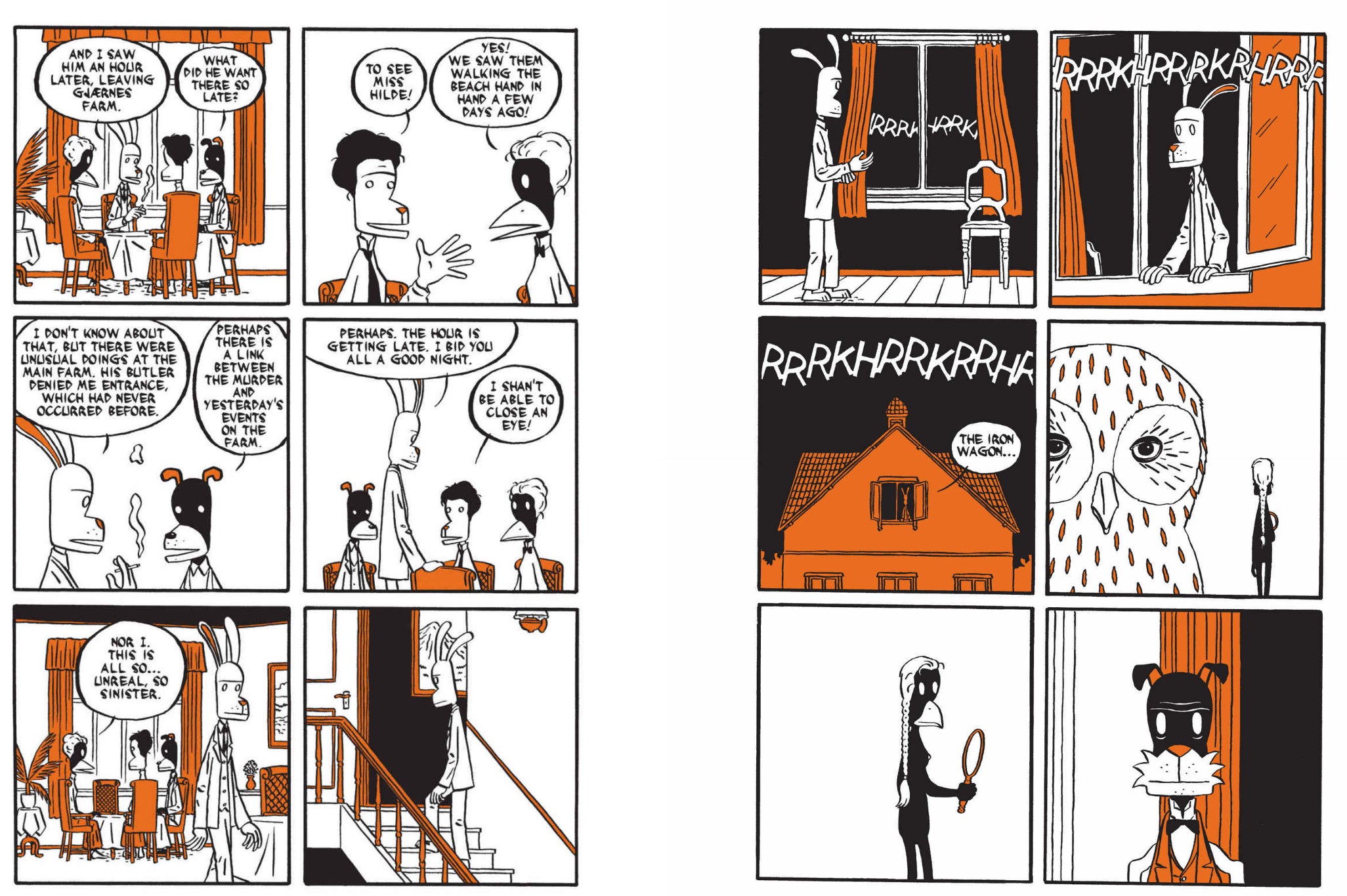
As you’d expect of a classic “Scandi-crime drama” ‘The Iron Wagon’ is a clever, enthralling and deeply dark mystery yarn originally written by Stein Riverton, and has the same quality of cold yet harnessed stillness which makes the Swedish television adaptations of Henning Mankell’s Wallander so superior to those English-language interpretations. Here, the stylised artwork is delivered in formalised page layouts; solid blacks, thick lines and settings of seductive simplicity are augmented here by stunning Deep Red overlays to enhance the Hard Black and Genteel White he usually prefers.

In the coastal retreat of Hvalen a desperate author is haunted by ghosts and nightmares. However, the townsfolk are all too engrossed with the death of the game warden on the Gjaernes Estate to notice or care. The family seems cursed with constant troubles. First the old man was lost at sea, now the murder of Warden Blinde just as he was betrothed to Hilde Gjaernes blights the farm. People are talking, saying it’s all the fault of the long dead grandfather who lost his fortune and life dabbling with weird inventions…

Even now, sensitive souls still hear his accursed Iron Wagon roaring through the night, presaging another death in the village…

Luckily there are more sensible folk abroad to summon a detective from Kristiania (Oslo), but Asbjørn Krag is not the kind of policeman anybody was anticipating and as the young writer becomes enmired in the horrific unfolding events, he realises that not only over-imaginative fools hear things.

In the depths of the night’s stillness he too shudders at the roaring din of the Iron Wagon…

Moody, suspenseful and utterly engrossing, this would be a terrific yarn even without Jason’s superbly understated art, but in combination the result is pure dynamite.

This collection – despite being “merely” early works – resonates with the artist’s signature themes and shines with his visual dexterity. It’s one of Jason’s very best and will warm the cockles of any fan’s heart.
All characters, stories, and artwork © 2010 Jason. All rights reserved.

Today in 1900 cartoonist Otto Soglow was born; he’s most revered for The Little King strip. Someone else utterly neglected by modern comics publishers is wartime patriot and Anglo-Canadian creator Jon Stables AKA Jon St. Ables (get it?) who carried most of the creative workload at Maple Leaf Comics until it closed down in 1946. As he was born in 1912, he had to find other artistic outlets until his death in 1999. And he did.

A year earlier (in 1998, okay?) we lost the astounding Joe Orlando. The editor who saved DC in the late 1960s through his horror comics revival was also a superb illustrator, gag-guy and story-man, as you could see in Judgment Day and Other Stories or any of the superb DC horror comics editions we’ve covered over the decades.

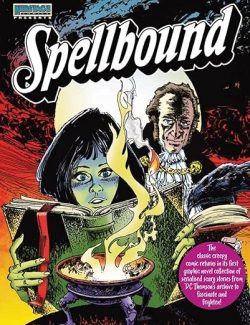
Heritage Comics Presents Spellbound: Damian Darke & I Don’t Want To Be a Witch!


By Daniel McGachey & Lauren Knight, Georgia Standen Battle, Brian Lewis,
Du Feu & Francisco Cueto, Alan Hebden & Patrick Wright, Kek W. & Jaume Forns, &Vicente Alcazar, & various (Heritage Comics/DC Thomson & Co.)

ISBN: 978-1-91743641-0 (TPB/Digital edition)

This book includes Discriminatory Content produced in less enlightened times.

DC Thomson is probably the most influential comics publisher in British history. In the 1930s The Dandy and The Beano revolutionised children’s comedy comics, whilst newspaper strips Oor Wullie and The Broons (both created by writer/Editor R. D. Low and Dudley D. Watkins) have become a genetic marker for Scottishness. The company uniquely portrayed the occasional toff, decent British blokes and working-class heroes who grew from the prose-packed pages of Adventure, Rover, Wizard, Skipper, Hotspur and latterly “strip picture papers” like Victor and Warlord. They also cannily followed wider-world trends and capitalised – as much as any tasteful, all-ages publishing house could – on global interests that filtered down to juvenile consumers.

Their Girls Papers line especially shaped successive generations and, whenever cited, examples still evoke passionate memories. Don’t take my word for it either; just ask your mum or grandmother about Judy, Bunty, Diana, Mandy and the rest…

And that goes double for the spooky sagas in Spellbound

Kids have always delighted in scary stories but the 1970s horror bubble presented lots of problems for comics publishers. With parents and watch groups always readily on hand to complain or kick up a fuss, how to cater to a genuine demand without incurring another 1950s style comics panic was uppermost in every comic editor’s mind. The answer, obviously is with style, imagination and caution…

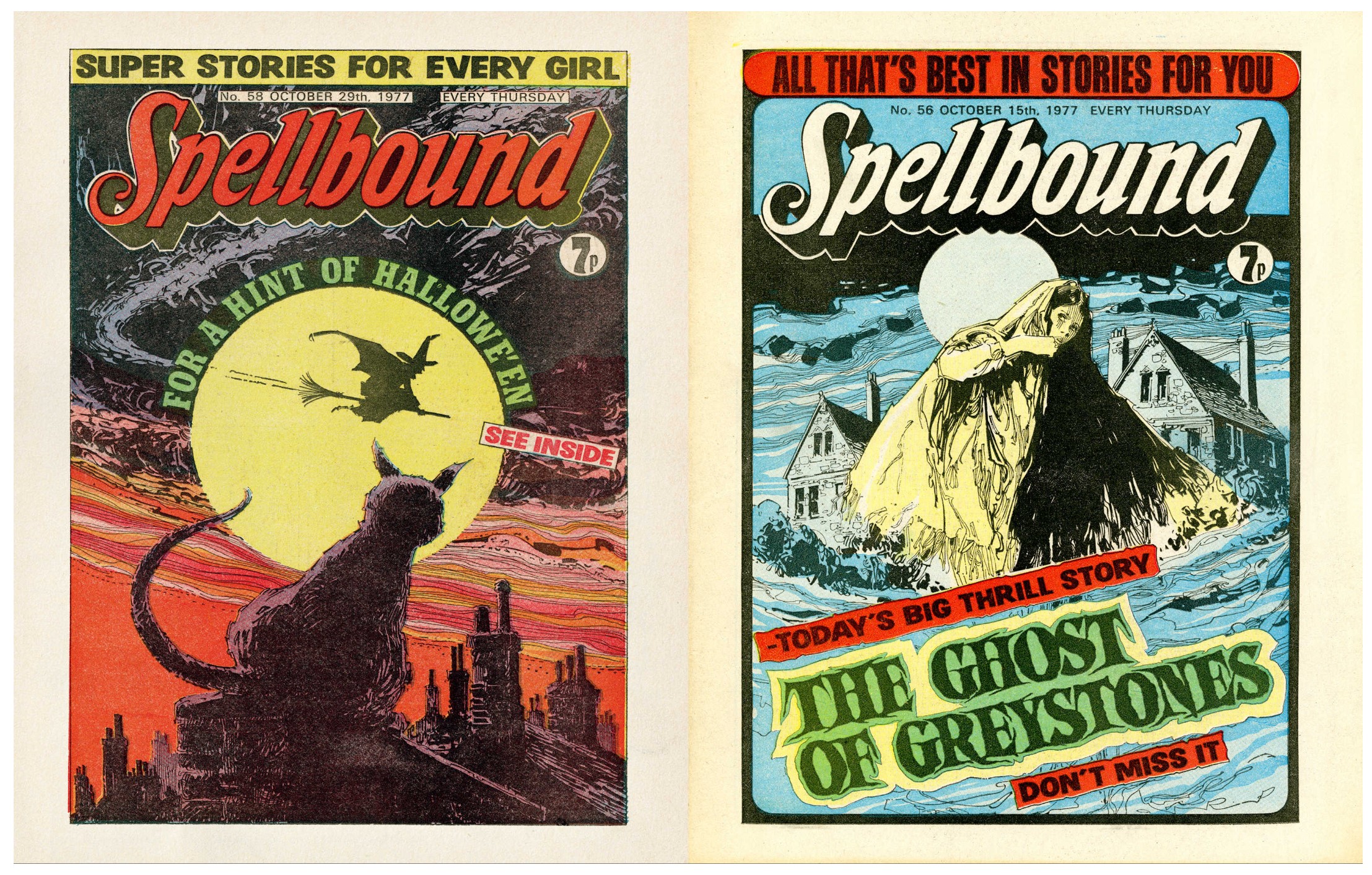
Predating Fleetway’s fantasy icon Misty by a couple of years, Spellbound – “the all-new mystery story paper for girls”- launched from DC Thompson’s haunted mansion on September 25th 1976.

Opening in plenty of time for Halloween, it ran for 69 issues before merging in January 1978 with generally-school-&-fashion-themed title Debbie. In its time Spellbound recounted horror-tinged fantasy tales along traditional lines, mixed with school scenarios and, as always, supplemented by text features, activities, and general interest snippets. Its true rewards and achievements rested in the roster of stellar creators associated with its solo strips and serials: artisans including Brian Lewis, Estaban Maroto, Edmond Ripoll, Enrique Badía Romero, Jésus Redondo, Adolfo Usero, Jordi Franch, Norman Lee and others for material including ‘When the Mummy Walks’, ‘The Secret of Silver Star’, ‘Supercats’, ‘The Haunting of Laura Lee’, ‘Peril on Paradise Island’ and more.

DCT is constantly looking for better ways to reach fresh audiences and recently moved into digital publishing of vintage and original new stories in a big way. Backing up their Commando war stories and Starblazer science fiction reprint projects comes this initially digital-only treat: a timely compilation of supernatural sagas is an ideal way to expand their Heritage Comics imprint (expect more reviews in coming months).

This blockbuster tome collects many magnificently understated macabre moments from the periodical, focussing at first on short stories narrated by Master of Mystery Damian Darke before closing with a complete serial from Spellbound #1-15. Throughout, the monochrome lore is littered with those aforementioned prose featurettes and the occasional full colour cover reproduction, and the entire fear fest is festooned with new stuff such as informative

opening letter to the readers ‘Spellbinding Tales…’

Then comes a new introductory spooky strip by Daniel McGachey & Lauren Knight, as wayward teens Gwen & MacKenzie – who really should know better – break into an old abandoned house and discover the world is not what they thought it was…

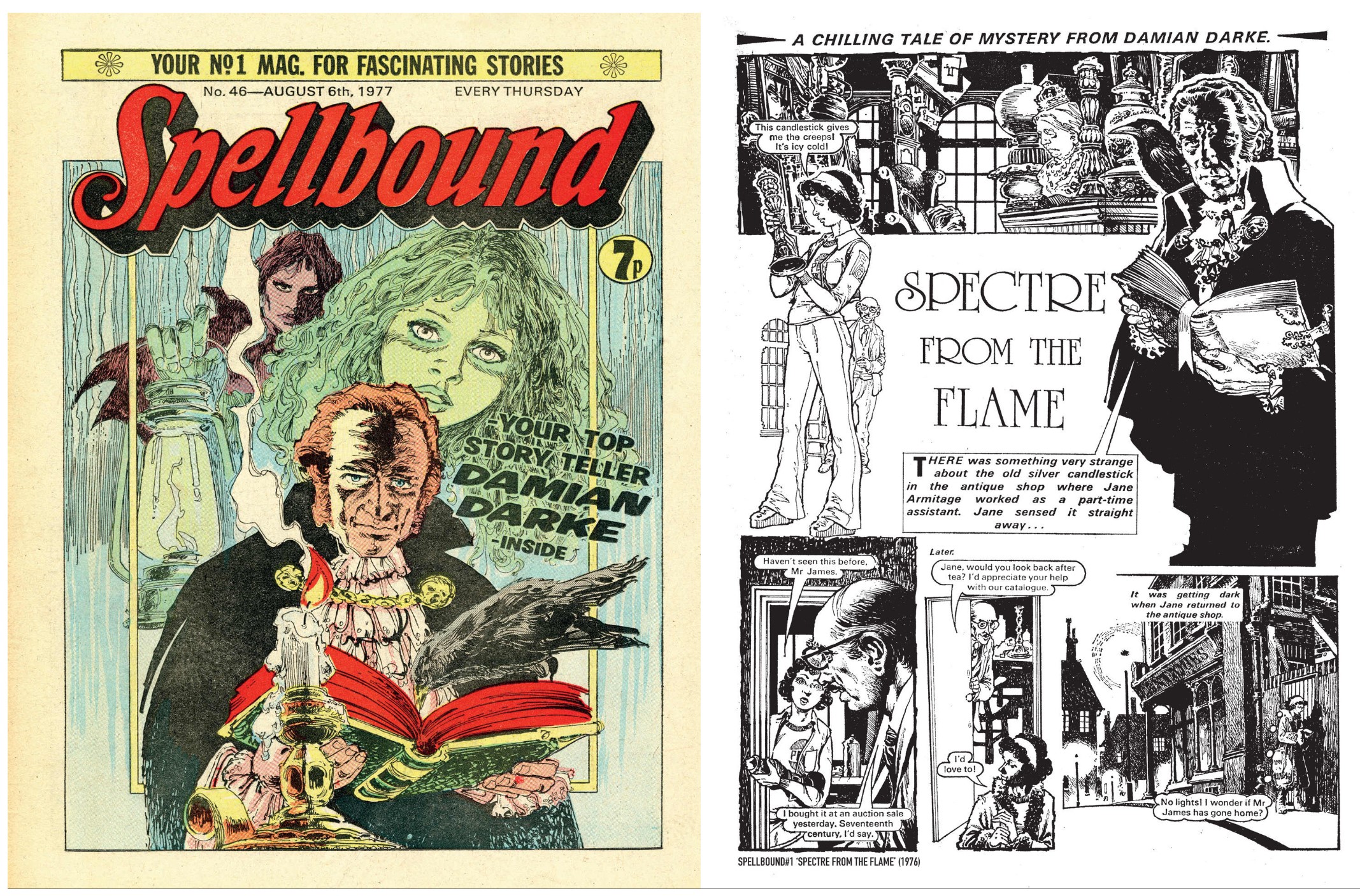
The cover of #46 (August 6th 1977) leads to our introduction to the Man of Mystery from Spellbound #1, as Damian Darke describes the events of a judicial ‘Spectre from the Flame’ returning to punish evildoers from beyond the grave in a superb chiller limned by Brian Lewis. Next, Jenny & Denise experience a ‘Journey into Fear’ (#19) when they are lost in a storm on the Yorkshire Dales and fetch up at an old edifice that is absolutely not the youth hostel they’re looking for…

That’s augmented with prose potted ghost story ‘Spellbound Special Feature: Poor Little Rich Boy’ from #4, before Lewis strikes again with ‘The Warning’ (#46) wherein hikers Joan & Babs meet a little girl who literally isn’t there (anymore…) whilst from Spellbound #2, “biker chick” Lindsay Gordon inadvertently survives a very close encounter with Cumbrian legend the ‘Ghost Rider’ before ‘Spellbound Special Feature: Get Friendly with Your Phantom’ (#12) textually tells of how to act if one gets too close to the dead-&-not-gone…

Haunted objects ‘The Preston Figurines’ (#36) move heaven and earth to be reunited when sold separately at an antique shop, after which – from #7 – Darke details how a mean miserly usurer gets his just deserts in the ‘Swamp of Evil’: a period piece neatly bookended by text tract ‘Spinning Spectres’ from #13.

Spectral salvation and revelatory redemption come when lost voyager Judy Rose survives a snowstorm thanks to ‘The Cavalier’s Cloak’ (#37) even as in #35 horse lover Kathy King is saved from certain swampy death by ‘The Ghost of Whitefire’ – a modern myth bolstered by prose historical pointers in #17’s ‘Spellbound Special Feature: Milady Greensleeves’

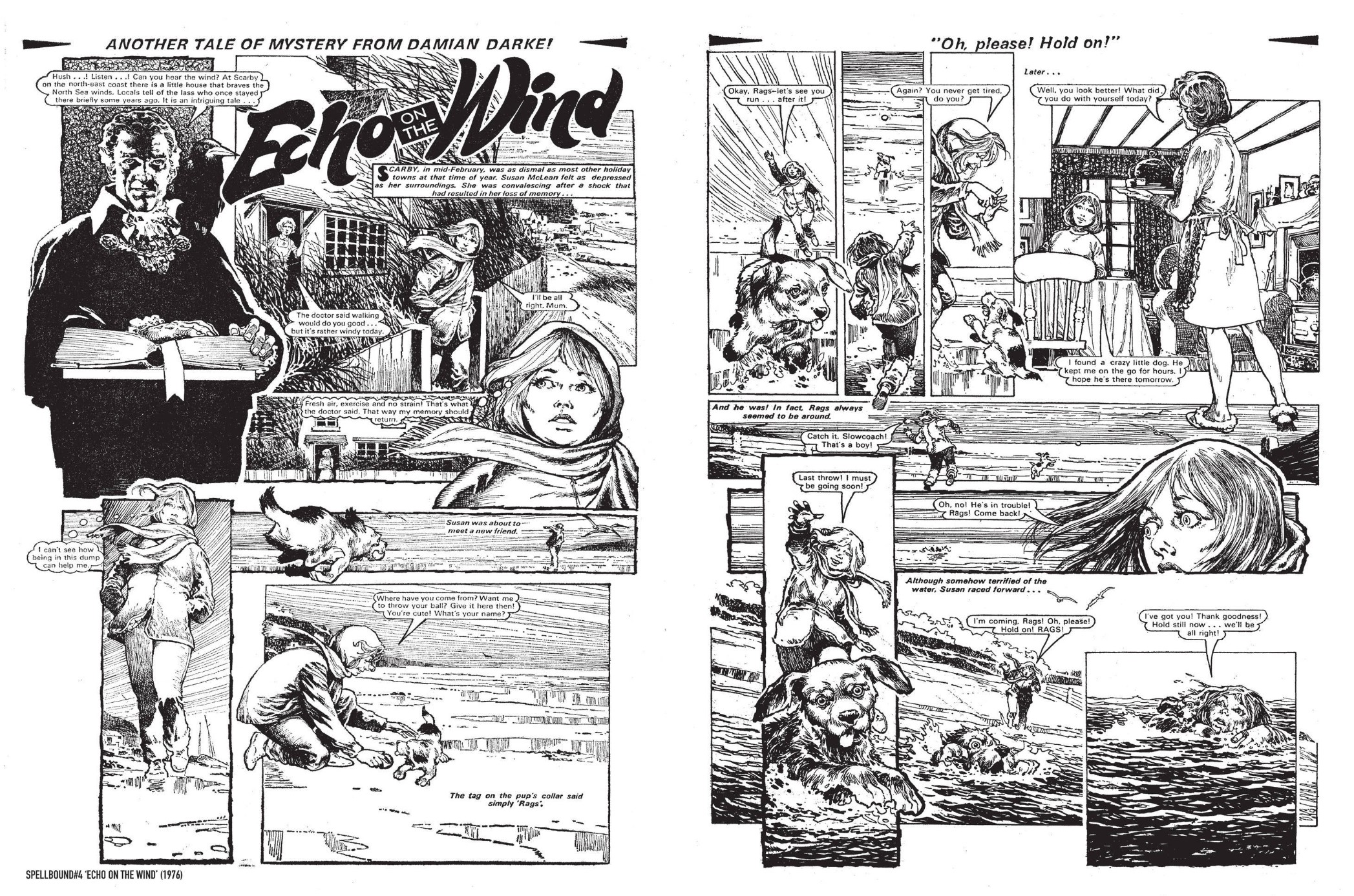
From Spellbound #21, ‘Mystery at Howlen Hall’ revisits classic gothic literature as a sister searches for a lost sibling at a creaky old manse and only finds madness and worse, whilst Lewis shines in a sentimental scare-fest involving a valiant dead puppy and an ‘Echo on the Wind’ (#4) prior to prose ‘Special Feature: Mr Nobody’ taking a peep at people who aren’t there…

Murder from beyond and a most unquiet landlady garnish a florid tale of perilous ‘Poison Ivy’ (#48), whilst Victorian vignette ‘The House of Palgrave’ (#3 by Lewis) explores a Cornish dwelling that is in no way welcoming to its owner’s new bride, all before auction-going flatmates Sue & Carol get more than they bargained for after buying ‘A Spoonful of Evil…’ (#43). This brings Darke’s delightful diatribes to a halt for the present, allowing a ‘Spellbound Special Feature: The Housemaid’s Revenge’ (#28) and the cover to #8 (November 13th 1976) to usher in a classic serial…

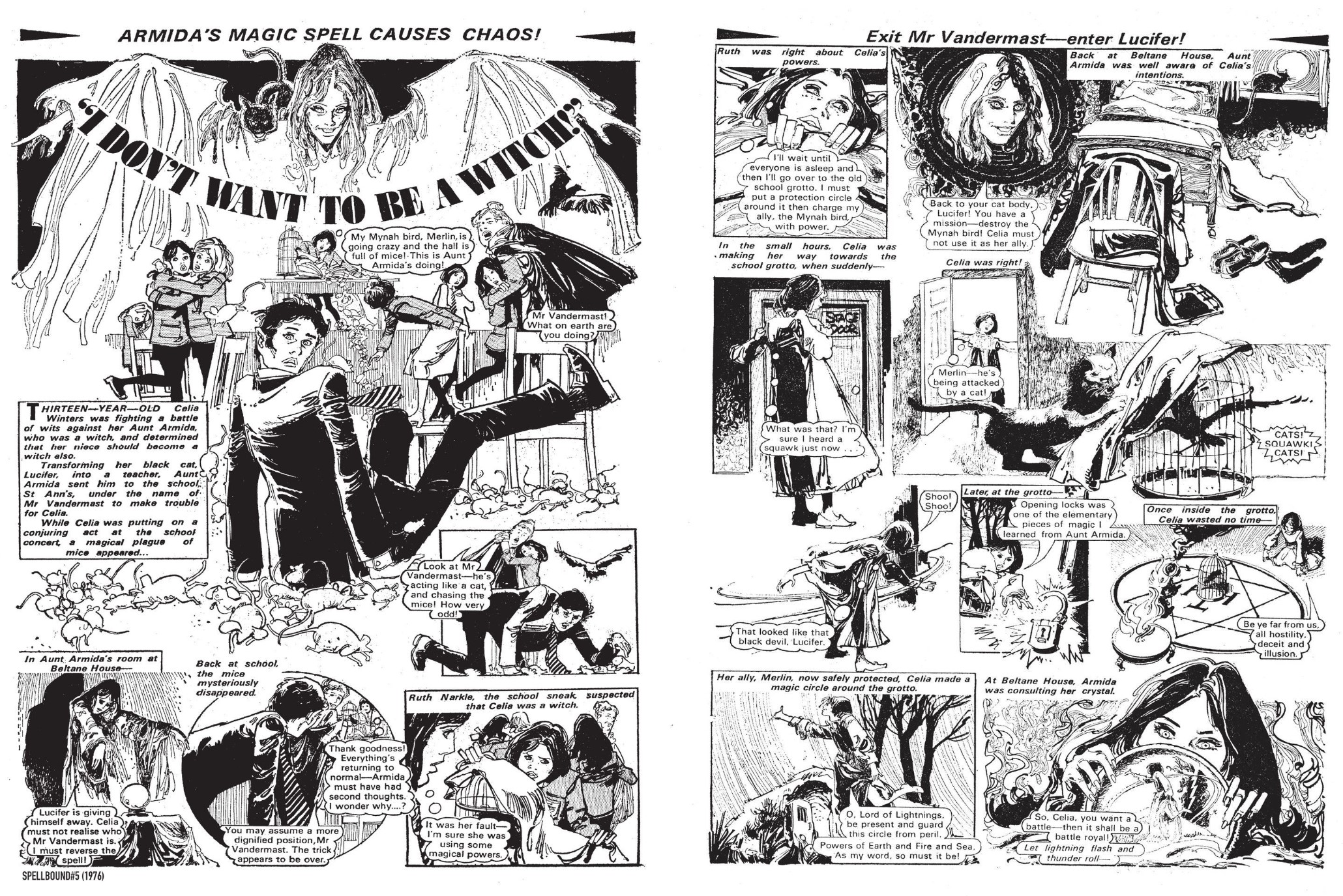
Illustrated by Norman Lee (When the Mummy Walks, The Shop at Shudder Corner, most Spellbound covers) ‘I Don’t Want to Be a Witch!’ is reprinted from Spellbound #1-15, and blends traditional outsider-at-boarding-school comedy drama with a hefty dose of wyrd warfare. However, here, 13-year-old Celia Winters perpetually foils the many schemes of her high witch aunt Armida who strives to make the teenager her vassal and mystic acolyte, but first must get her out of the infernal normal school she loves and away from all her friends at St. Ann’s…

For three action- and imagination-packed months, Celia, best pal Anne and pet Myna bird Merlin duck & dodge & dive, craftily utilising the hidden magic grotto on school grounds (“normal life” huh?) to foil Auntie’s every incredible ploy. Constant chaos and bewildered teachers cannot quell the madness, nor will her feline familiar Lucifer and spiteful tattle-tale mean girl Ruth Narkle hold back as they seek to squash Celia’s every effort to stay nice and normal. Eventually the escalating arcane pot boiler inevitably bubbles over…

‘I Don’t Want to Be a Witch!’ may have ended but is here revived in a creepy continuance by Georgia Standen Battle & Anna Morozova who introduce a fresh new generation to close this tome…

Rounding out the nostalgia chills is a final cover gallery – seven more scary front pages – accompanied by one last yarn: another illustrated prose poser from the first issue suitably entitled ‘Nightmare’

Short sharp stories of solidly spooky standing superbly rendered make this a horror fan’s delight and a welcome doorway into more inviting times. Why not climb aboard this coachload of chillers and see what used to make our spines shudder and shake?
© DC Thomson & Co., Ltd. 2019.

Today in 1922 Maurice Dodd was born. We love him for one of the world’s greatest comedy strips. So will you if you scope out The Perishers Spectacolour.

Leo Baxendale’s Sweeny Toddler


By Leo Baxendale & others (Rebellion Studios)
ISBN: 978-1-78108-726-8 (HB/Digital edition)

This book includes Discriminatory Content produced in less enlightened times.

Win’s Christmas Gift Recommendation: Utterly Bonkers, Inspired Lunacy… 10/10

If you know British Comics, you know Leo Baxendale.

Long ago and still right now, Baxendale (27th October 1930 – 23rd April 2017) was the epitome of rebellious, youth-oriented artistic prodigies who, largely unsung but definitely much noticed, went about seditiously transforming British Comics: entertaining millions and inspiring uncounted numbers of those readers to become cartoonists too.

Joseph Leo Baxendale was educated at Preston Catholic College, served in the RAF and was born on 27th, October 1930, in Whittle-le-Woods, Lancashire – but not necessarily in that order. Like Spike Milligan and so many brilliant others, his response to privation, injustice, war and the post war era was being funny in an absurd way. If you’re quick, you can track down some of his stuff – of which far too little has been archivally published – and celebrate his 95th anniversary in an appropriate manner.

Baxendale’s first paid artistic efforts were drawing ads and cartoons for The Lancashire Evening Post but his life – and the entire British comics scene – changed in 1952 when he began freelancing for DC Thomson’s top weekly The Beano. He assumed creative control of moribund Lord Snooty and his Pals and originated anarchically surreal strips Little Plum, Minnie the Minx, The Three Bears and When the Bell Rings. That last strip then rapidly metamorphosed into legendary, lurgy-packed anarchic icon The Bash Street Kids, thereby altering the daily realities and lifetime sensibilities of millions of readers and generations of kids.

Baxendale also contributed heavily to the creation of comics tabloid The Beezer in 1956 but, following editorial and financial disputes with his editors, migrated in 1962 to London-based, Harmsworth-owned conglomerate Odhams/Fleetway/IPC. South of the border, his initial humorous creations included Grimly Feendish, General Nitt and his Barmy Army, Bad Penny and a horrid horde of similarly revoltingly, uncannily engaging oiks, yobs and weirdoes who cumulatively made the company’s “Power Comics” experiment such a joy to behold.

During the 1970s he devised more remarkable cartoon star turns which, whilst not perhaps as seditiously groundbreaking as Plum, Minnie, or The Bash Street Kids, nor as subversively enticing as Wham, Smash and Pow creations such as Eagle Eye, Junior Spy, The Swots and the Blots and The Tiddlers (or indeed, as garishly outlandish as George’s Germs or Sam’s Spook), remained part of the nation’s junior landscape for decades after.

The main body of his later creations appeared in mighty anthology Buster: features such as The Cave Kids, Big Chief Pow Wow, Clever Dick and Snooper. Baxendale latterly foisted Willy the Kid upon the world before creating his own publishing imprint Reaper Books.

He also sued DCT for rights to his innovative inky inventions: a 7-year struggle that was eventually settled out of court. Other notable graphic landmarks include pantomimic vision THRRP!, his biography A Very Funny Business: 40 Years of Comics and the strip I Love You, Baby Basil which ran in The Guardian during the early 1990s.

Signature stinker Sweeny Toddler debuted in Shiver and Shake in 1973, unsurprisingly surviving repeated mergers – with Whoopee! and Whizzer and Chips – before settling in at the seemingly unsinkable Buster.

This stunning hardback (and eBook) celebration – hopefully the first of many gathering the entire run and Baxendale’s IPC/Fleetway oeuvre – is another crucial addition to Rebellion’s ever-expanding Treasury of British Comics. It gathers the episodes from Shiver and Shake spanning March 10th 1973 to 5th October 1974, plus the first nappy-load from Whoopee!, from 23rd November 1974 until 7th June 1975.

The potent package is suitably accompanied by an appreciative, informative and responsible Introduction by his son Martin (who drew the Bad Boy’s adventures after Baxendale senior moved into publishing) and offers a magnificent exercise in manic misrule starring the absolute worst baby in the world… outside of a democratically elected government.

In a simple terrace house with the legend “Tremble wiv fear, Sweeny livs here” scrawled all over it, lives a spotty (occasionally be-stubbled) mono-fanged tyke who is disturbingly fast and strong with a physiognomy that can sour milk. He is precociously able to read – after a fashion – and that, coupled with a lethally low tolerance for boredom and obedience, means the nasty nipper always finds new and distressing ways to amuse himself at someone else’s expense…

With or without faithful dog and eager abettor Hairy Henry, Sweeny turns every pram ride into a pulse-pounding rollercoaster adventure for his poor benighted mum and grandad; every visit to park, shop or museum into a heart-stopping chase and every cuddlesome interlude with ill-advised adults into an exhausting episode in psychological and physical torture.

At least six strips re-presented here are not by Baxendale, but record-keeping is sadly incomplete. Chances are they’re drawn by Tom Paterson, who eventually took over the feature (or possibly Roy Nixon?) but they are all deliciously weird and wonderful: a blend of unbeatable whacky wordplay, explosive slapstick and bizarre situations, garnished by Baxendale’s unique and evocative sound effects: once read, never forgotten…

Briefly retitled Help! It’s Sweeny Toddler in experimental pages that feature second stories starring monstrous beasts living in the borders and margins of the panel dividers, later episodes never lost the eccentric impetus of the first, with the baby from hell, as ever, mugging old ladies, postmen, schoolboys and other unwary visitors; creating his own zoo, attempting to sneak into X films (maybe get granddad to explain those?) and totally tormenting anyone who treats him like a child…

As well as straight strips, this collection also offers ‘Sweeny Toddler’s Beat the Bully Guide’ and graphic game ‘Sweeny Toddler’s Fifty Frightful Faces!’, proving the vile versatility of the manky mite.

Leo Baxendale was one-of-a-kind: a hugely influential, much-imitated master of pictorial comedy and noxious gross-out escapades whose work deeply affected (some would say warped) generations of British and Commonwealth kids. We’ll not see his like again, but these astoundingly engrossing comedy classics are a perfect example of his resolutely British humorous sensibilities – absurdly anarchic, explosively whimsical, outrageously aggressive, crazily confrontational and gleefully grotesque – starring an unremittingly rebellious force of nature with no impulse control.

Sweeny Toddler says and does whatever he wants as soon as he thinks of it, albeit usually to his own detriment and great regret: a rare gift, usually only employed by madmen and foreign Presidents.

These cartoon capers are amongst the most memorable and re-readable exploits in all UK comics history: smart, eternal, existentially funny and immaculately rendered. This a treasure-trove of laughs that spans generations and must be in every family bookcase.
© 1973, 1974, 1975 & 2019 Rebellion Publishing Ltd. Sweeny Toddler is ™ & © Rebellion Publishing Ltd. All Rights Reserved.

Today in 1920 artistic icon Nicholas Vicardi AKA Nick Cardy was born. We last admired his mastery in DC Finest: Aquaman – The King of Atlantis.

In 1935 today, cartoon pioneer Sidney Smith died way too soon. You would already know that if you’d listened and looked up Sidney Smith’s The Gumps like we told you to last week.

In 1993 unsung legend Gaylord Dubois died. He wrote and edited dozens of key features, supplying thousands of stories to comics legends. We are particularly partial to Edgar Rice Burroughs’ Tarzan: The Jesse Marsh Years Omnibus volume two.

Misty featuring Moonchild & The Four Faces of Eve (volume 1)


By Pat Mills, Malcolm Shaw, John Armstrong, Brian Delaney, Shirley Bellwood & various (Rebellion)
ISBN: 978-1-78108-452-6 (album TPB/Digital edition)

Win’s Christmas Gift Recommendation: Spooky Treats for Every Stocking… 9/10

This book includes Discriminatory Content produced in less enlightened times.

Like most of my comics contemporaries I harbour a secret shame. Growing up, I was well aware of the weeklies produced for girls but would never admit to reading them.

My loss: I now know that they were packed with some great strips by astounding artists and writers, many of them personal favourites when they were drawing stalwart soldiers, evil aliens, marauding monsters or strange superheroes (all British superheroes were weird and off-kilter…).

I believe – in terms of quality and respect for the readership’s intelligence, experience and development – “girls’ periodicals” were far more in tune with the sensibilities of the target audience. I absolutely wish I’d paid more attention to Misty back then…

Thus, I’m overjoyed to re-recommend this superb first collection from what originating editor Pat Mills reveals in his Foreword was intended to be as iconoclastic and groundbreaking a publication as his previous creation.

You know the one: 2000 AD

Despite never living up to his expectations – for all the traditional self-sabotaging editorial reasons that have scuppered bold visions since the days of Caxton – Misty was nothing like any other comic in the British marketplace: a Girls’ Juvenile periodical addressing modern issues through a lens of urban horror, science fictional and historical mysteries couched in terms of tense suspenseful dramas. It was also one of the best drawn comics ever seen and featured stunningly beguiling covers by unsung legend Shirley Bellwood: a veteran illustrator who ought to be a household name because we’ve all admired her work in comics and books since the 1950s even if we’ve never been privileged to see her by-line…

Unlike most weeklies, Misty was created with specific themes in mind – fantasy, horror and mystery – and over its too-short existence introduced numerous self-contained features serialised like today’s graphic novels, rather than continuing adventures of star characters.

Although adulterated from Mill’s original design, the comic launched on February 4th 1978 and ran until January 1980 whereupon it merged with the division’s lead title Tammy, thus extending its lifeline until 1984. As was often the case, the brand also continued through Annuals and Specials, running from 1979 until 1986.

The first of a series working under the umbrella of The Treasury of British Comics, this compact monochrome softcover compilation offers two complete part-work novellas from the comic’s canon of nearly 70 strip sagas, starting with the gripping history of the Moonchild.

Written by Mills and illustrated by John Armstrong (Bella in Tammy; The Secret Gymnast in Bunty; Grange Hill), the eerie adventure was based on Stephen King’s Carrie, and ran as lead feature in issues #1-13. It traced the turbulent coming-of-age of abused and confused schoolgirl Rosemary Black: born into a family afflicted with an apparent curse. All women who bore a hereditary crescent birthmark on their foreheads were eventually consumed by psychokinetic powers…

Rosemary’s mother brutally and zealously tries to suppress her daughter’s burgeoning abilities but with sociopathic mean girls Norma, Dawn & Freda making her their constant target for bullying and humiliation, the force inside Rosemary keeps expressing itself in ever more violent manner. Moreover, when school physician Doctor Armstrong realises the truth about the girl so often sent to see him, he sees nothing but an opportunity to be exploited…

When Norma’s bullies embark on their most ambitious scheme to torture Rosemary, sheer disaster is barely averted after the Moonchild’s long missing grandmother suddenly appears with a shocking secret to share…

Following a handy hints feature – how to make a Witch’s Hat – The Four Faces of Eve carries on the chilling bewilderment.

Created by Malcolm Shaw (Misty’s editor and writer of dozens of strips in Britain and Europe) & Brian Delaney (Hart to Hart; Grange Hill; The Professionals) this marvel of malign medical malpractice ran in #20-31, tracing the seemingly paranoid path of Eve Marshall, recently discharged from hospital but still suffering partial amnesia. Despite returning to her home and high-powered scientist parents, Eve remains troubled, especially by horrifically vivid dreams of other girls who died painful, violent deaths…

Inconsolable and increasingly suspicious, Eve snoops around a house she doesn’t remember and discovers mounting evidence that the Marshalls are not her real parents. When the house is later burgled, the police forensics team uncover another impossible anomaly: Eve’s fingerprints match a thief who died months ago…

Scared and haunted by traumatic dreams, Eve runs away and hides in a circus, only to be tracked down and dragged back home by her faux parents. However, pieces are inexorably falling into place and she soon must face the appalling truth she has deduced about herself and the monsters she lives with…

Also including a fulsome tribute to ‘Shirley Bellwood – An Unsung Heroine of British Comics’, creator biographies and one final activity page (‘Misty Says… Be a Devil – and Here’s How’) this supremely engaging tome is a glorious celebration of a uniquely compelling phenomenon of British comics and one that has stood the test of time. Don’t miss this second chance to get in on something truly special and splendidly entertaining
Misty © Egmont UK Limited 1978. All rights reserved.

Today in 1955 René Goscinny & André Franquin debuted humour strip Modeste et Pompom in Le Journal de Tintin – a fact and feature that has still singularly not impressed any English-language comics publishers.

Eagle Classics: The Adventures of P.C. 49


By Alan Stranks & John Worsley (Hawk Books -1990)
ISBN: 978-0-948248-17-7 (album TPB)

This book includes Discriminatory Content produced in less enlightened times.

Eagle is 75 years old this year and the reason we old farts remember it so fondly are many and various. Here’s just one of them.

On 14th April 1950 Britain’s grey, postwar gloom was partially lifted with the first issue of a glossy new comic that seemingly gleamed with light and colour. Eagle was the most influential comic of the era, running until 26th April 1969, and its legions of mesmerised readers were understandably enraptured with the gloss and dazzle of Dan Dare, Pilot of the Future: a charismatic star-turn venerated to this day. However it also carried a plethora of traditional genre strips, fact and prose regulars. These included both original features and further exploits of some of their favourite radio shows and cinema heroes – and even best beloved gustatory treats!

It was the brainchild of a Southport vicar, the Reverend Marcus Morris, who was worried about the detrimental effects of US comic books on British children. He advocated a good, solid, Christian antidote. Seeking out like-minded creators he jobbed around a dummy to British publishers for over a year – with little success – until he found an unlikely home at Hulton Press, a company producing general interest magazines such as Lilliput and Picture Post. The result was a huge hit that spawned in-house clones Swift, Robin and Girl – targeting other sectors of the children’s market – whilst generating crucial radio series, books, toys and other sorts of merchandising. The Eagle phenomenon reshaped the industry, compelling UK comics colossus Alfred Harmsworth to release cheaper imitations through his Amalgamated Press/Odhams/Fleetway/ IPC group such as the far longer-lived Lion (23rd February 1952 – 18th May 1974) and many companion titles like Tiger and Valiant.

A huge number of soon-to-be prominent creative figures worked on Eagle, and although Dan Dare is deservedly revered as its star, many other strips were as popular at the time, some rivalling the lead in quality and entertainment value. At its peak the periodical sold close to a million copies a week, before changing tastes and a game of “musical owners” killed Eagle. In 1960 Hulton sold out to Odhams, who became Longacre Press. A year later they were bought by The Daily Mirror Group who evolved into IPC. Due to multiple episodes of cost-cutting, many later issues carried Marvel Comics reprints rather than home-originated material. It took time, but the Yankee cultural Invaders won out in the end. In 1969, with the April 26th issue, Eagle merged into Lion, before eventually disappearing altogether. Successive generations revived the title, but never the initial blockbuster success.

In its youth, heydays and prime, Eagle was tabloid sized with photogravure colour inserts, alternating with monochrome pages of text and comic features. Tabloid is a big page, and you can get a lot of material onto each one, so – at the start – something of equal merit deserved almost as much space. One of the biggest draws to Eagle’s mighty pantheon was family radio/film attraction P.C. 49. Although latterly eclipsed by BBC radio colleagues Jeff Arnold/Riders of the Range (whose comic exploits were handled by Charles Chilton & Frank Humphris), and John Ryan’s TV sensation-in-waiting Captain Pugwash and the inimitable Harris Tweed, the unflagging beat copper pre-dated the comic, bringing an established (and frequently older) audience with him. All of them became darlings of other media too via promotional tie-ins such as books, puzzles, toys, games, apparel and comestibles as well as and all other sorts of ancillary merchandising – although the PC had his share of that boodle too…

Dare of course soon overtook them all, especially after acquiring his own weekly radio serial on Radio Luxembourg. The Adventures of Dan Dare played out five nights a week from July 1951 to May 1956…

Preceded by fantastically informative pictorial essay ‘The Many Adventures of P.C.49 – An introduction by Norman Wright’, this epic oversized (330 x 238mm) tribute edition provides background on the radio episodes, both films and all iterations of the comic and prose publishing incarnations of Archibald Berkeley-Willoughby AKA “Fortynine”. That specifically includes how the radio hero progressed from ambitious affable “plod” to proud father and family man after marrying his sassy, smarter, fiancée/crimebusting rival/competitor Joan Carr in the broadcast world, as well as how all that was shunted aside and ignored in comics. Instead from August 1951 Joan vanished and was replaced by an international kid’s gang of juvenile sidekicks – the Boys Club – who would help Fortynine solve crimes if not actually get his longed-for promotion to plainclothes detective…

Initially illustrated by illustrator/gallery artist Charles Sidebotham “Strom” Gould (Storm Nelson) – who limned the first four cases – The Adventures of P.C.49 – from the famous radio series by Alan Stranks began on page 3 of Eagle #1, and ran until March 1957, long after the radio show finished. It featured the daily travails of genial posh berk turned keen as mustard Police Constable Archibald Berkeley-Willoughby as he sought to make progress from beat copper into the serried ranks of plainclothes detectives. This all occurred in Q Division, the sleeziest parts of a major modern metropolis where, despite many weekly triumphs and his immediate uniformed superiors being utterly convinced that “Fortynine” did not have “what it takes”, he proved he did…

Collected here are three yarns by originator Stranks and the strip’s most beloved co-creator. In 1903, Australian Alan Stranks (Dick Barton, Special Agent, Dan Dare- Prisoners of Space) was born in Brunswick, Victoria. Beginning his career in the 1920s as a lyricist – he penned Britain’s very first Eurovision entry “All” – Stranks became a crime reporter before moving to England. He continued in the field but added feature writing and gradually moved sideways into drama; writing novels, radio plays and serials, as well as movies and comics. He died suddenly and without warning from a cerebral haemorrhage in 1959.

The radio Adventures of PC 49 ran (intermittently thanks to Stranks’ increasingly busy schedule) on the BBC Home Service from October 27th 1947 to Summer 1953, just as the astounding John Worsley was making the comic strip one of the most entertaining and enthralling pages in the periodical with his charmingly informative and sublimely expressionistic cartooning style.

Illustrator/Naval war artist, police sketch artist, commercial designer, president of the Royal Society of Marine Artists and certified war hero John Godfrey Bernard Worsley was born on 16th February 1919 in Liverpool and raised in Kenya. After studying at Goldsmiths College of Art he became a travelling artist and portraitist before joining the Royal Navy in WWII. For a fuller assessment of this incredible man go to John Worsley (artist) – Wikipedia or track down John Worsley’s War… or watch the film Albert RN

For all his other artistic endeavours Worsley is rightly renowned, but we’re here for the comics. His cartooning career began with Tommy Walls in Eagle. An advertising campaign for the ice cream company masquerading as an adventure strip serial, it led to him taking over P.C. 49 from Strom Gould and handling ancillary strips and illustrations for Annuals and Archie’s own line of books. This led to more strips: Daughter of the Nile and Belle Of The Ballet in Girl – reprinted as Lindy of Latmyer Grange in Princess Tina – and the delightful Wee Willie Winkie for Treasure as well as ads, military recruitment materials, books such as The Little Grey Men and The Wind in the Willows, and – his personal favourite – a lavish cartoon interpretation of A Christmas Carol created to support a major television special in 1970. Aged 81, Worsley died on October 3rd 2000.

In lieu of a full P.C. 49 collection or other curated compilations, his gifts live on here as first seen here in seventh serial saga ‘The Case of the Spotted Toad’. This began in the Christmas 1952 issue of Eagle and carried on into May 1953 as the cheery copper is hospitalised by ruthless gangsters Knocker Dawson and Slim Jiggs after saving homeless boy Dickie Duffle and his dog Rip. His eager young pals and Boy’s Club protégées Toby, Mongatiki, Snorky, Gigs & Bunny plus “Terrible Twins” Pat & Mick Mulligan join forces to finish the job of capturing the murderous fur thieves and finding the well-hidden loot, with Archie back on his feet just in time to face the explosive final showdown…

Nervous tyke Bunny and his pocket pet Victor take centre stage in follow up ‘The Case of the Magnificent Mouse’ wherein the nosy nipper sees local tramp Tatty Bogle kidnapped and a perfect duplicate beggar appear. Of course no one believes him but before too long it all unfolds as a major counterfeiting caper run by Lew Lupus and Nix Nobbler. When they snatch Bunny, the police are stumped until the Boys Club lead P.C. 49 to the impenetrable lair of the villains, but in the ends it’s up to Victor to magnificently save the day…

Concluding the casebook, ‘The Case of the Old Crock’ finds the Boys Club preparing for their annual hike/unsupervised holiday at the seaside (because all us Boomer kids were utterly feral and fearless!). Seeing how worn out Archie is thanks to loads of compulsory overtime, the lads use club funds to buy the weary, footsore adult a “car”. Sadly, their choice is not only an appalling fixer-upper, it’s secretly the safe used by master thief Tiger Maggs to stash a map to where he’s buried his carefully hoarded loot. Guess which seaside beach it’s stashed under?

Of course Maggs’ henchmen Junky and Dandy have no idea of the clunker’s real value when they dupe the boys into buying it, but with Scots Boys Club recruit Tam Piper unleashed on it, the junker soon seems roadworthy and eye-catching. Best of all, Bunny has found a map, but he can’t convince anyone that it could lead to pirate treasure…

When Maggs gets out of prison and goes to pick up his car, all hell breaks loose, leading to escalating excitement, another shockingly white-knuckle concatenation of circumstances and a brutally gripping denouement…

Blending genuine tension with schoolboy thrills and genteel police procedurals, The Adventures of P.C. 49 is a true lost gem of British comics, funny, warm, scary, inclusive (as any strip of that period can be), rollercoaster-paced and truly beautiful to see. I can’t see how it will ever be reproduced in full, but I so very much wish it would be. Yet another one to add to “The Why Is This Not In Print?” drawer…
P.C. 49 strip © 1990 Fleetway Publications. This arrangement and Compilation © 1990 Hawk Books.

Jinx volume 1


By J. Torres, Rick Burchett & Terry Austin (Archie Comics)
ISBN: 978-1-93697-500-6 (HC/Digital edition) 978-1-87979-491-7 (PB)

This book includes Discriminatory Content produced during less enlightened times.

Despite tremendous advances in the last couple of decades, for most people, when we say comic books, thoughts STILL either turn to outrageously buff men and women in garish tights or leather hitting each other and lobbing cars about, or stark, nihilistic crime, horror or science fiction sagas aimed at an extremely mature and sophisticated readership of already-confirmed fans. For mainstream American comics that remains the norm. Over the years though (and throughout the rest of the world long ago), other forms and genres continue to wax and wane.

One US company steadfastly that held its ground against the tide for decades – supported by a thriving spin-off TV and movie franchise – was a teen-comedy powerhouse which created a genre through the exploits of carrot-topped Archie Andrews and the two girls he could never choose between – Betty Cooper and Veronica Lodge. For so many years, other companies largely ignored the fact that girls read comics too and, in their slavish pursuit of the spandex dollar, lost half their potential audience. Girls simply found other ways to amuse themselves until, in the 1990s, the rise of manga painfully proved to comics publishers what Archie Comics had always known.

Ever since that pivotal moment Editors have attempted to recapture that vast missing market: creating many worthy titles and even entire imprints dedicated to material for teen/young adult audiences (since not all boys thrive on a steady diet of cosmic punch-ups and vengeful vigilantes) which had embraced European classics like Tintin and Asterix, manga material, momentous comics epics like Maus and Persepolis or abundant and prolific prose serials which produced a never-ending wave of passionate fans for everything from The Absolutely True Diary of a Part-Time Indian to Twilight to The Hunger Games.

Archie thrived by never abandoning its female readership and by constant reinvention of its core characters, seamlessly adapting to the changing world outside its bright, flimsy (or digitally unbreakable) pages: shamelessly co-opting pop music, youth culture and fashion trends into its infallible mix of slapstick and romance. Each and every social revolution has been painlessly assimilated into the mix (the company has managed to confront a number of major issues affecting the young in a manner both even-handed and tasteful over the years), and the constant addition of timely characters such as African-American Chuck and his girlfriend Nancy, fashion-diva Ginger, Hispanic couple Frankie & Maria and a host of others – like over-privileged home-wrecker-in-waiting Cheryl Blossom – all contributed to a broad and refreshingly broad-minded scenario. They also lead in non-sensationalised interracial romances, and in 2010 Archie jumped the final hurdle for a family-entertainment medium with the rapturously well-received introduction of Kevin Keller; an openly gay and proud young man who was a clear-headed advocate capably tackling and dismantling the last major taboo in mainstream kids’ comics.

Where once cheap, prolific and ubiquitous, comics magazines in the 21st century are extremely cost-intensive and manufactured for a highly specific – but dwindling – niche market. Moreover the improbably beguiling and bombastic genres that originally fed and nurtured comic books were increasingly being supplanted by TV, movies and assorted interactive games media.

Happily, old-school prose publishers and the graphic novel industry have different business models and more sustainable long-term goals, so the magazine makers’ surrender has been turned into a burgeoning victory, as solid and reassuringly sturdy Comics-as-Books still buck the slowly perishing pamphlet/papers trend. Publishers like Archie…

Back then Jinx was another barely-noticed landmark which saw one of the company’s venerable and long-lived child-stars given a stunning makeover and refit courtesy of a multi award-winning creative team. Writer J. Torres (Teen Titans Go!, Alison Dare, Degrassi: the Next Generation, Days Like This, Lola – a Ghost Story and others) in conjunction with celebrated artists Rick Burchett (Batman Adventures, American Flagg!, Blackhawk, Black Hood) & Terry Austin (X-Men, Superman, Batman, Cloak and Dagger) are responsible for turning adorable but venerable 1950’s 6-year old tomboy Li’l Jinx into a genuine icon of, if not role-model for, modern teenaged girls in a style and manner at once astonishingly accessible and classically captivating.

If you qualify as an Ancient One like me, you might be familiar with precocious, feisty Li’l Jinx who debuted in Pep Comics #62 (cover-dated July 1947). Created by Joe Edwards, she debuted as the publisher began dropping superheroes such as The Shield and Black Hood to specialise in kid-friendly humour features. Over the coming decades she appeared in her own title, as well as Li’l Jinx Giant Laugh-Out and assorted anthologies including Pep and Archie Giant Series Magazine. Like auteur Edwards’ own son, her birthday was on Halloween and the writer/artist put much of himself into the strip. A boisterous, basically decent, sports-loving, mischievous tyke (in the manner of our Minnie the Minx), when not romping, cavorting and tussling with other kid pals Gigi, Greg, Charley Hawse, Russ, Roz and Mort the Worry Wart, Jinx almost exclusively interacted with her long-suffering dad Hap Holliday.

Mother was seldom seen. The kid’s Christian name is lost to history: apparently so screamingly embarrassing in-world that to utter it was to invite battered ear drums and mangled limbs…

Li’l Jinx faded away gradually during the 1980s as fashionista-teenagers and Mutant Turtles supplanted pesky kid characters in Archie’s increasingly “young adult” oriented stable. However, Jinx Holliday was revived and given a thorough 21st century upgrade for a new serial in Life With Archie (#7-11, March-June 2011): a growing girl just starting big school. The former tomboy hadn’t lost all her rough edges though…

This initial volume collects the serialised story of her beginning the inescapable if deplorable process of becoming responsible – with all the scary changes that entails. After a handy ‘Cast of Jinx’ page, the dramatic comedy opens with 4-part tale ‘Little Jinx Grows up’ – as serialised in anthology title Life With Archie, with the nervous 14-year old Californian kid starting over at Rose Valley High School where she immediately falls foul of draconian martinet Principal Mr. Vernon. At least many of her oldest friends are starting too, but they all seem so changed and grown up since summer vacation…

As all attendees settle in, Jinx is oblivious to the fact that more than one of the boys she used to wrestle and play football with now considers – and treats – her very differently. She’s just starting to hate the place and its stupid rules when Greg points out the final straw: Freshman Baseball – in fact all her favourite sports – are for boys only. Former child model Gigi is typically smug about it, hinting again that it’s time Jinx began acting like a girl, but that only provokes the incensed and outraged tomboy to break another rule…

Everybody is talking about Jinx after she most publicly signs up for Football Tryouts, and neither a barracking from Mr. Vernon or some heavy-handed bullying of Greg by the senior Football squad can change her mind.

The Principal thinks he has the final word after making Jinx take a permission slip home to her dad, but after Hap Holliday absolutely refuses to let his little girl get crippled by teenaged Neanderthals, Jinx simple forges his signature…

Tryouts are a disaster, but at least Greg is honestly trying to help her. Surly Charley, however, delivers a tackle that results in her being stretchered off, and when dad is called to school all hell breaks loose. While she’s grounded and recovering, BFF Roz starts dropping hints about Greg and romance, promptly going into snoopy overdrive when a mystery caller leaves a large bouquet of flowers…

For the first time Jinx realises High School is just one big stew of frustrated hormones which only add to her worries. So preoccupied is she that, when Greg timidly asks her to a dance, she doesn’t realise what he’s saying and shoots him down without even noticing. The mystery flower-sender – covertly watching – does, however, and seethes…

Flustered, confused and determined to end the turmoil in her head, Jinx ambushes and pre-emptively kisses Greg, but the result is something neither of them nor their secret stalker expected…

The grand gesture completely destabilises Jinx who goes into a spiral of angry depression and tetchy acting-up. Baffled Hap is hopeless to cope, and – with Halloween approaching – throws himself into organising her birthday costume party: a tradition they’ve enjoyed since she was a toddler. He has no idea how much his little girl has changed and that the prospect of a party sounds like torture to her. And thus the scene is set for a showdown nobody will ever forget…

All dramatic foreboding aside, this clever, warm tale ends well and promises much more for the future. Smart, witty and intoxicatingly engaging, Jinx is a superb example of what can be accomplished in comics if you’re prepared to portray modern kids on their terms and address their issues and concerns.

Without ever resorting to overblown soap melodrama or angst-ridden teen clichés, Torres delivers a believable cast of young friends who aren’t stupid or selfish, but simply seeking to find their own tentative ways to maturity. The art by Burchett & Austin is semi-realistic and astoundingly effective.

This terrific turbulent tome includes bonus features such as a ‘Football Pinup’, J. Torres’ thoughts and commentary on the story as described in ‘The Voice of Jinx’ plus a fascinating, picture-packed peek behind the scenes in ‘The Concept Art of Jinx’. More production secrets are revealed by Editor Suzannah Rowntree, describing the project’s conception and creation in ‘The Story of Teen Jinx’, and there’s even a smart selection of one-page Short Comics treats to wrap up the fun.

‘Fitting In’, ‘It’s Complicated’, ‘Frenemy of the State’, ‘The Dating Game’ and ‘Chat Fight’ combine to prove that although they might be growing up, the cast are still kids at heart…

Compellingly funny, gently heart-warming and totally absorbingly, this book will resonate with kids and parents, offering genuine human interactions rather than repetitively manufactured atom-powered fistfights to hold your attention. It especially gives women a solid reason to give comics another try.

Sheer exuberant fun; perfectly crafted and still utterly irresistible nearly a generation later…
© 2012 Archie Comics Publications, Inc. All rights reserved.

Henry Speaks for Himself


By John J. Liney, edited by David Tosh (Fantagraphics Books)
ISBN: 978-1-60699-733-8 (TPB/Digital edition)

This book includes Discriminatory Content produced in less enlightened times.

Created by veteran cartoonist Carl Anderson as a silent, pantomimic gag-panel first seen on March 19th 1932, Henry was one of the most venerated and long-lived of US newspaper comics strips. The feature was developed for The Saturday Evening Post before being picked up by legendary strip advocate and proponent William Randolph Hearst. He brought it and the then-69-year-old Anderson to his King Features Syndicate in 1934 after which the first comic strip appeared on December 17th, with a full colour Sunday half-page following on March 10th 1935. The Saturday Evening Post had to content and console itself with a new feature entitled Little Lulu by Marjorie Henderson Buell. I wonder how that worked out?

Being a man of advanced years, Anderson employed Don Trachte to assist with the Sundays whilst John J. Liney performed the same role for the Monday to Saturday black and white iteration. This continued until 1942 when arthritis forced Anderson to retire. Trachte and Liney became de facto creators of the feature – although the originator’s name remained on the masthead for the next twenty years.

Liney (1912-1982) had started as a staff cartoonist on the Philadelphia Evening Ledger and began selling gag ideas to Anderson in 1936 before landing the full-time assistant’s job. After assuming the illustrator’s role in 1942, Liney took over sole writing responsibilities for the daily in 1945, continuing Henry until 1979 when he finally retired. His own name had been adorning the strip since 1970. He was also a passionate teacher and educator on comics and cartooning, with a position at Temple University. Nevertheless, he still found time to write and draw a comic book iteration of the mute and merry masterpiece from 1946 to 1961.
Major licensing monolith Western Publishing/Dell Comics had been successfully producing comic books starring animation characters, film icons and strip heroes since the mid-1930s, and when they launched their Henry – first in Four Color Comics #122 and #155 (October 1946 and July 1947) prior to his own 65 issue title from January 1948 – they successfully argued for a radical change in the boy’s make-up.
The newspaper strip had always been a timeless, nostalgia-fuelled, happily humour-heavy panoply of gags and slapstick situations, wherein the quite frankly weird-looking little bald kid romped and pranked in complete silence, with superb cartooning delivering all the communication nuance its vast international audience needed.

Now though, with children seen as sole consumers, the powers-that-be felt that little lad should be able to speak and make himself understood. Liney easily rose to the challenge and produced a sublime run of jolly, wild, weird if not often utterly surreal, endlessly inventive adventures – many of which approached stream-of-consciousness progressions that perfectly captured the ephemeral nature of kids’ concentration. He also introduced a captivating supporting cast to augment the boy, and his appealingly unattractive, forthright and two-fisted inamorata Henrietta.

This splendid collection gathers some of the very best longer tales from the comic book run in the resplendent flat primary colours that are so evocative of simpler days, beginning after a heartfelt reminiscence in the Foreword by Kim Deitch. Another pause before the comics commence comes from Editor, compiler and devotee David Tosh who outlines the history of the character and his creators in ‘Henry – the Funniest Living American’. He then goes on to explain ‘The Dell Years’ before offering some informative ‘Notes on the Stories’.

The vivid viewing portion of this collection is liberally augmented with stunning cover reproductions; all impressively embracing to the quiet lad’s silent comedy roots, a brace of which precede a beautiful double-page spread detailing the vast and varied cast Liney added to the mix. Then, from #7 (June, 1949), we discover ‘Henry is Thinking Out Loud!’ as the kid keeps his non-existent mouth shut and explores the medium of first person narrative, inner monologues and thought-balloons, all whilst getting into mischief seeking odd jobs to do…

October’s edition, Henry #9, introduced good-natured, cool but increasingly put-upon Officer Yako in ‘You Can’t Beat the Man on the Beat!’ via an escalating succession of brushes with the law, bullies, prospective clients… and darling Henrietta.

That bald boy still hadn’t actually uttered a sound, but by #14 (August 1950) had found his voice, much to the amusement of his layabout Uncle (rather suspiciously, he never had a name) who eavesdropped on the assorted kids comparing their ‘Funny Dreams’. After a quartet of covers, Henry #16 (December 1950) finds Liney playing with words as ‘Rhyme Without Reason’ reveals the entire cast afflicted with doggerel, meter, couplets and all forms poetic, with Liney even drawing himself into the madcap procession of japes and jests, whilst ‘A Slice of Ham’  #22, December 1951) cleverly riffs on Henry’s ambitions to impress Henrietta by becoming an actor. This yarn offers a wealth of Liney caricatures featuring screen immortals such as Chaplin, Gable, Sinatra and more, whilst introducing a potential rival contender for Henry’s affections in cousin Gilda

In #24 (April 1952) Henry ‘Peeks into the Future’ by outrageously pondering on his possible careers as an adult, before plunging into Flintstone or Alley Oop territory – complete with cave city and dinosaurs – as a result of studying too hard for a history test in ‘The Stone Age Story’ from #29, February 1953.

After four more clever funny covers, growing up again features heavily with ‘Choosing Your Career’ (#45, March 1956) as the little fool road-tests a job as a home-made cab driver and accidentally slips into law enforcement by capturing a bandit. Henry #48 (December 1956) sees him attend a fancy dress party and become ‘The Boy in the Iron Mask’, before this completely charming compilation closes by reprising that sojourn in the Stone Age ‘Rock and Roll’ (#49 March 1957). Concluding the comedy capers is fond personal reminiscence ‘Henry and Me’ by David Tosh; a man justifiably delighted to be able to share his passion with us and hopefully proud that this book gloriously recaptures some of the simple straightforward sheer joy that could be found in comicbooks of yore.

Henry Speaks for Himself is fun, frolicsome and fabulously captivating all-ages cartooning that will enthral anyone with kids or who has the soul of one.
Henry Speaks for Himself © 2014 Fantagraphics Books Inc. All comics and drawings © 2014 King Features, Inc. All other material © its respective creators. This book was produced in cooperation with Heritage Auctions.

The Terror of St Trinian’s and Other Drawings


By Ronald Searle with Geoffrey Willans, Timothy Shy & others (Penguin Modern Classics)
ISBN: 978-0-141-91285-1 (PB/Digital edition)

This book includes Discriminatory Content produced in less enlightened times.

Time for another Birthday Briefing as we exploit our month mostly mandated to mulling over women in and of comics – by celebrating the achievements of another old white guy. However this is truly one of the good ones and absolutely a true pioneer in male/female power relationships…

Britain has a fantastic and enviable history and tradition of excellence in the arts of graphic narrative and cartooning. Whether telling a complete story or simply making a point, much of the modern world’s most innovative, inspirational and trenchantly acerbic drawing has come from British pens powered by British hearts and minds.

If you’re quietly humming Rule Britannia or Jerusalem right now, or heavy breathing and fingering a flag, pack it in. This is not the tone we want. I’m just stating a few facts.

Ronald William Fordham Searle was one of a very gifted few (in modern times I’d number Ken Reid, Leo Baxendale, Murray Ball and Hunt Emerson among them) who can actually draw funny lines. No matter how little or how much they need to say, they can imbue the merest blot or scratch of ink with character, intent and wicked, wicked will.

Born in Cambridge on March 3rd 1920, Searle studied at Cambridge School of Art before enlisting in the Royal Engineers when WWII broke out. When he was captured by the Japanese in 1942 he ended up in the infamous Changi Prison. The second St Trinian’s cartoon was drawn in that hell-hole in 1944 and it survived – along with his incredible war sketches – to see print once peace broke out. Searle was a slave-worker on the Siam-Burma Railroad (a story for another time and place) and risked his life daily both by making pictures and by keeping them.

He became a jobbing freelance cartoonist when he got home, acerbically detailing British life. Perhaps that why he moved to France in 1961 and became a globe-girdling citizen of the wider world. By the 1980s he was established – everywhere but here – as not only a cartoonist and satirist but as a film-maker, sculptor, designer, travel-writer and crafter of fascinating reportage. This man was a capital “A” artist in the manner of Picasso or Hockney and,  Scarfe and Steadman notwithstanding, he was the last great British commentator to use cartooning and caricature as weapons of social change in the caustic manner of his heroes Hogarth, Gillray, Rowlandson, Cruikshank and the rest.

This magnificent volume includes selections from assorted previous collections and includes political illustration, social commentary, arcanely mordant whimsy and some of the most surreal, sardonic and grotesque funny pictures of the 20th century. I won’t spend too much time on his other achievements as his work should be seen and his thoughts and opinions should be understood in his chosen language: Art. At least, he still has enough fans to fill the internet with all the information you could need, so go search-engining after you read this if you wish. You’ll probably be offered a digital copy of this archive there. Do yourself a big favour and buy it…

Why his creations are so under-appreciated I do not know. Why this book is physically out of print: ditto. That he will remain a relative unknown despite the clutch of movies about his St Trinian’s girls… Not if I can help it…

Anyone who considers themselves a devotee of the arts of graphic narrative should know of Searle’s work, even if not necessarily love – although how could you not? Just be aware of the tremendous debt we all owe to his vision, dedication and gifts.

This compilation traces the rise of his star following his POW years. Post-war, his mordantly funny cartoons appeared in venues such as Punch, Lilliput and The Sunday Express, and in hugely successful collections like Hurrah for St. Trinian’s!, The Female Approach, Back to the Slaughterhouse, The St. Trinian’s Story, Which Way Did He Go?,Pardong m’sieur, In Perspective and The Non Sexist Dictionary.

Searle’s work has influenced an uncountable number of other cartoonists too. His unique visualisation and darkly comic satirical cynicism in the St. Trinian’s drawings as well as his utterly captivating vision of boarding school life as embodied in the classically grotesque Nigel Molesworth quartet: influencing generations of children and adults, and even playing its part in shaping our modern national character and language.

And have I mentioned yet that his drawings are really, really funny?

This superb collection of monochrome cartoons samples choice cuts from a number of his book collections, all delivered with stunning absurdist candour and the peculiarly tragic passive panic and understated warmth that only Searle could instil with his seemingly wild yet clearly-considered linework.

Fronted by an impassioned Introduction from fan and proper grown up journalist/columnist Nicholas Lezard, this paperback and digital collection offers a sweet taste of dark design in haunting and hilarious images culled from a number of sources, opening (un)naturally with macabre treats from St Trinian’s: blending the comforting traditional bonhomie of a girl’s boarding school with the accoutrements of a sex dungeon, the atavists of a charnel house and the fragrant atmosphere of The Somme two days after all the shooting stopped.

Having proved that for some crime Does pay, focus shifts to Merry England, etc., where class, toil, occupations, hobbies, and the ardours of life are ferociously scrutinised before diverting into mirthful metaphysics with a damning disembodied judge dubbed The Hand of Authority

More satirical body-blows from Souls in Torment lead delightfully to a montage of misspelled madcap moments of terror-tinged nostalgia as Molesworth extracts snippets of sheer genius from the books he co-created with Geoffrey Willans for Punch and which were subsequently released to enormous success as Down With Skool!, How to be Topp!, Whizz For Atomms! and Back in the Jug Agane.

Having fully gripped our last dose of ghastly goblin-esque girl power and brutal boy-moulding, our review of a master of graphic assassination moves on the far less solid ground of politics and satire. As I said previously, Searle was a devotee of satirist William Hogarth and in 1956 adapted the old master’s series of condemnatory cartoons (painted in 1732-34 and released as staggeringly popular engraved prints in 1735) to modern usage and characterisation. Included here in its entirety to conclude our fun, The Rake’s Progress follows the rise and fall of a number of contemporary figures – The Athlete, The Girlfriend, The Soldier, The Poet, The Trade Union Leader, The Actor, The Painter (he based this one on himself), The Don (English academic, not an American gangster but such confusion is easy to understand), The Dramatic Critic, The Doctor, The MP, The Clergyman, The Novelist, The Humourist, The Master of Foxhounds and The Great Lover – with all the excoriating venom and wit you’d expect from a master of people-watching…

Brilliant, Brilliant, Brilliant stuff! See for yourself, whatever side of the battle lines you cower behind.
© 1948, 1951, 1952, 1953, 1954, 1955, 1956, 1959 by Ronald Searle.
This selection © Ronald Searle 2000, 2006. Introduction © Nicholas Lezard, 2000. All rights reserved.