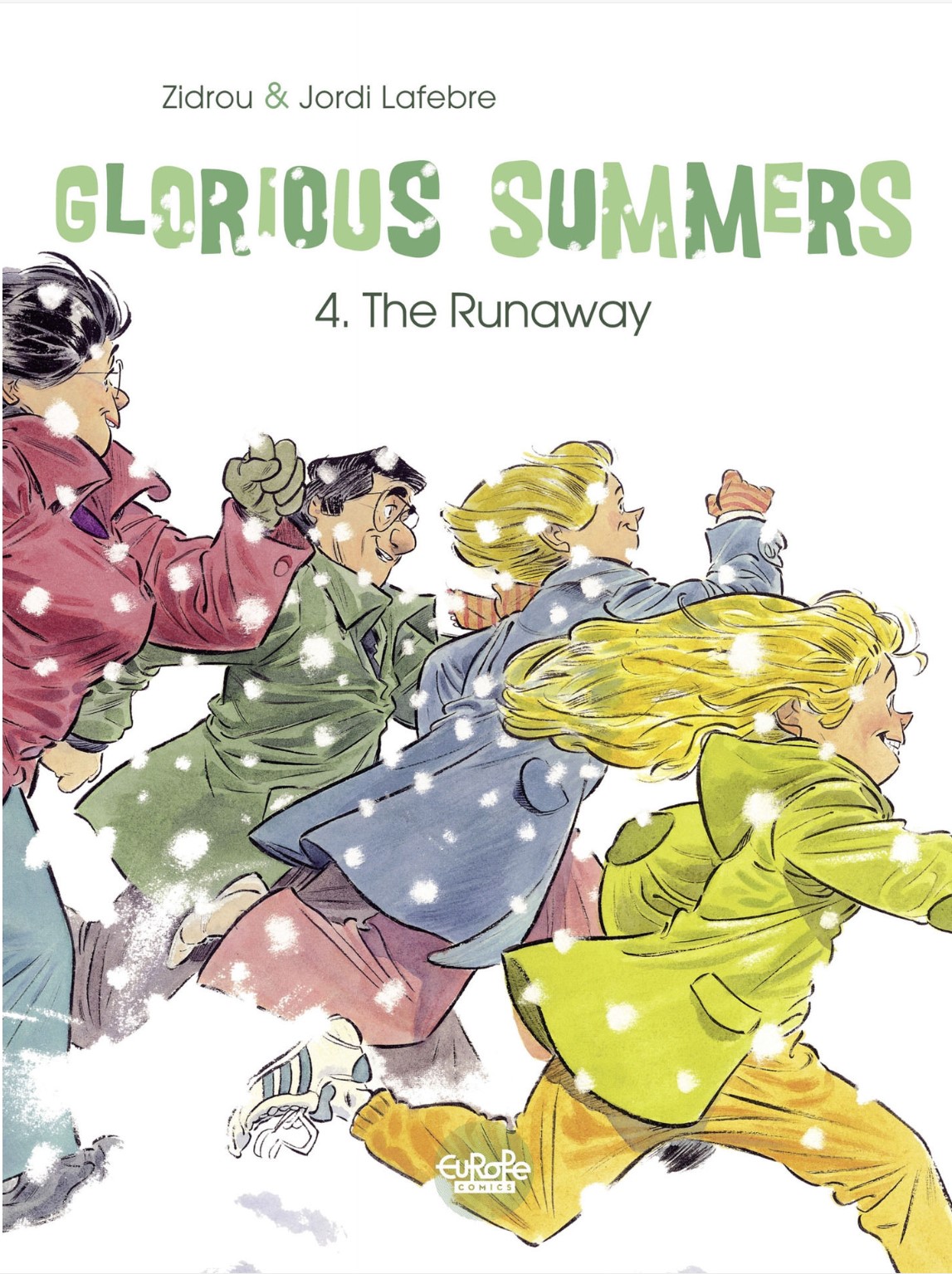
Glorious Summers volume 4: The Runaway 1979


By Zidrou & Jordi Lafebre, with additional colour by Mado Peña, translated by Lara Vergnaud (Europe Comics)
No ISBN: Digital edition only

Win’s Christmas Gift Recommendation: Holiday Joy and Heartbreak in the Balance… 9/10

Until comparatively recently, comics in the English-speaking world mostly countenanced comedic or numerous adventure sub-genres (crime, superhero, horror, sci fi), with only a small but vital niche of “mundane world” ventures, usually depicted via graphic biographies and autobiographies like They Called Us Enemy, Breakwater, Love on the Isle of Dogs, Wage Slaves or Sour Pickles offering a different feel and flavour. Even historical sagas were treated as extraordinary moments with larger-than-life characters whenever possible.

What we have never had – and still largely don’t – is a comics equivalent to general fiction, and drama. That’s not so in Japan, South Korea or Europe, where a literal “anything goes” attitude has always accommodated and nurtured human-scaled, slice-of-life tales depicting ordinary people in as many quiet as extraordinary moments. Surely it can’t be that hard to tell engaging stories in pedestrian, recognisably ordinary settings? Medical traumas, love stories, school tales and family tragedies about common folk seem to play well on various-sized screens around the world, so why not in English language comics? The closest we seem to get are comedies like John Allison’s superb Giant Days

People being people is more than enough for Europeans. Apparently, there’s an insatiable appetite for everyday events aimed at properly “mature readers”, joyfully sans vampires, aliens or men in tights. These even have sub-genres of their own. For example, there’s a wealth of superb material just about going on holiday: the highly ritualised une petite vacances. Let’s stare & glare covetously at them having a good time, because over there holidays are an inalienable right, and thus they have some simply fabulous tales about a simple break. If you can remember the 1970s, this one is probably the best you’ll ever see…

An absolute exemplar of fantasy vacations made real, Glorious Summers: Southbound! (1973) was a nostalgia-drenched confection by Zidrou and regular collaborator Jordi Lafebre: a sublime example of idyllic group memory made into graphic sorcery in an everyday account utterly unafraid to temper humorous sweetness and light with real-world tragedy and suspense.

Peut-être a little context is in order. Summer holidays – “Midi” – are a big deal in France and Belgium. The French divide into two tribes over the annual rest period, which generally lasts an entire month. Juilletistes vacation in July, wielding dogmatic facts like rapiers to prove why it’s the only way to take a break. They are eternally opposed, heart, soul and suntan lotion, by majority faction the Aoûtiens, who recharge their batteries in August whilst fully reciprocating the suspicion, disdain and baffled scorn of the early-leavers. Many European sociologists claim the greatest social division today is not race, religion, gender, political affiliation or whether to open boiled eggs from the top or the bottom, but when summer holidays begin and end…

In 2015, courtesy of scripter Benoît “Zidrou” Drousie and Spanish illustrator Jordi Lafebre, Les Beaux Étés 1: Cap au Sud! began a string of family visits that beguile and charm every time we reread them. Zidrou is Belgian, Brussels-born in 1962 and was a school teacher prior to quitting marking books in 1990 to begin making them. His main successes include school dunce series L’Elève Ducobu, Petit Dagobert, Scott Zombi, La Ribambelle, Le Montreur d’histoires, the revival of Ric Hochet, African Trilogy, Léonardo, Shi and many more. His most celebrated and beloved stories are this memorable sequence and 2010’s Lydie, both illustrated by Lafebre.

That gifted, empathically sensitive illustrator and art teacher was born in Barcelona in 1979 and has created comics professionally since 2001, first for magazines like Mister K, where he limned Toni Font’s El Mundo de Judy. He found regular work at Le Journal de Spirou, creating the romance Always Never and collaborated with Zidrou on La vieille dame qui n’avait jamais joué au tennis et autres nouvelles qui font du bien, Lydie, and La Mondaine.

A combination of feel-good fable and powerful comedy drama, Glorious Summers depicts memories of an aging couple recalling their grandest family moments, beginning with a momentous vacation in 1973 where their four kids nearly lost their parents….

However, fourth reverie The Runaway is slightly askew of the regular time frame and schedule, focusing on 1979 after a constantly deferred getaway due to dad’s deadline woes and relentless bad fortune leads to animosity and upset…
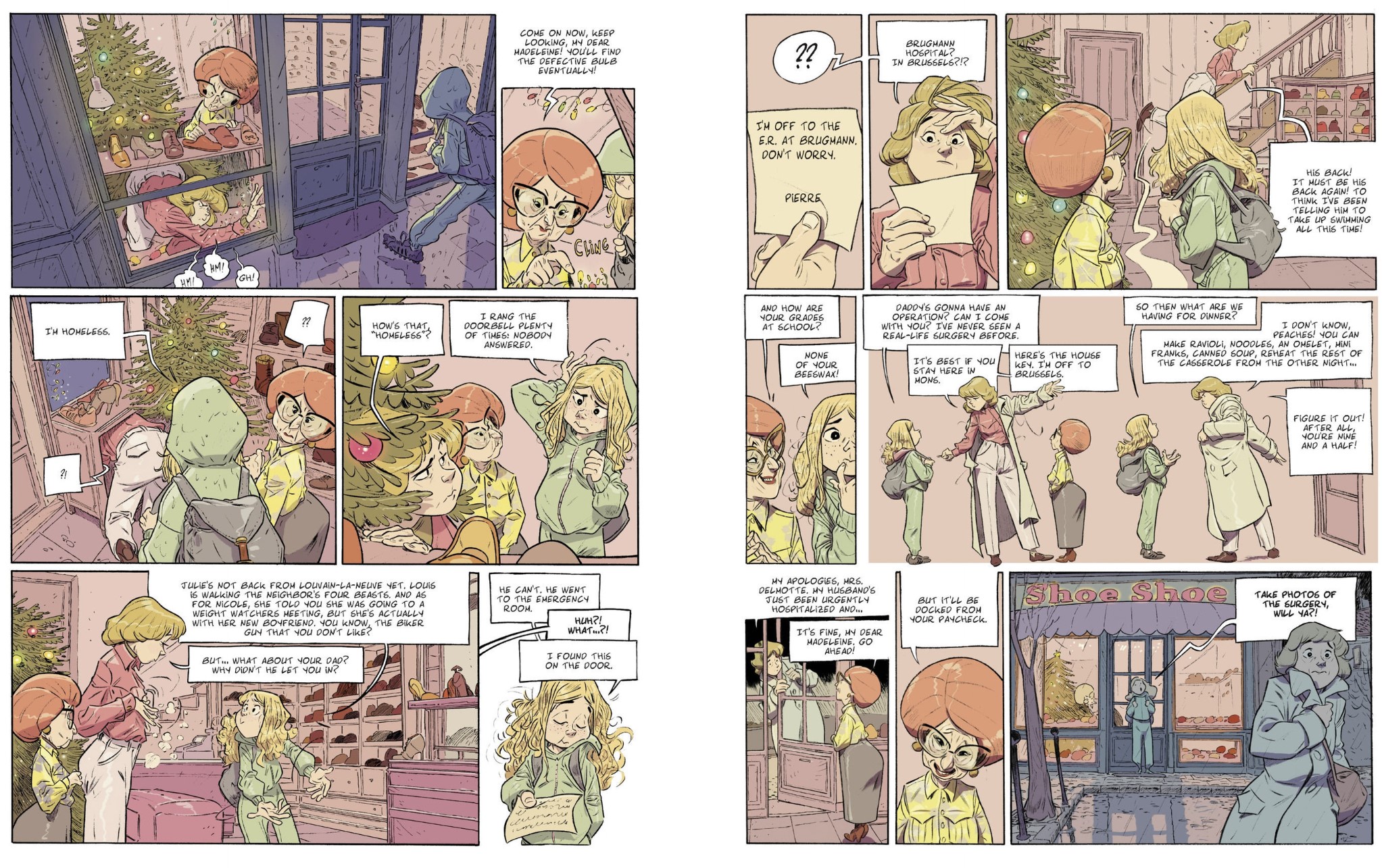
Weary frazzled 41-year-old Maddie Faldérault is on a slow burn. Her life is a constant drain. The job at the shoe shop is a demeaning nightmare, but money is scarce. Old Fat Pop Pop is really sick and so is her beloved car Little Miss Esterel. Moreover her adorable, wonderful kids are growing up too fast and becoming more and more trying. And Christmas is days away and Maddie could really use a break…

When a call comes of a medical emergency she dashes over expecting to see hubby Pierre finally crippled by his literally back-breaking toil over a drawing board. After years of whining about being an anonymous assistant, he had at last made the jump to create his own feature, and everyone was a delighted when his Zoombies were picked up by an animation studio. Now many months later, and tied to a vile contract, he’s drawing more and more and hasn’t yet seen a penny for all his trouble…

Thankfully, he’s not the problem. His old boss Garin has had a career-ending stroke and the publisher want Pierre to come back and take over the soul-destroying mega-strip he used to ghost. It means financial security (maybe even a by-line), but only at the cost of his dreams…

Maddie’s immediate relief extinguishes all thoughts of her own miseries but as the parents reach home and comfort their panicking brood – effusive 9-year-old precociously hyperactive Paulette (AKA Peaches), moody, music mad 14 year old Louis, weight obsessed Nicole and college crushed Jolly-Julie (whose homework over the holidays includes 10 kilos of law books!) – the thought of a family Christmas is quashed as her son reveals his plans to travel unsupervised to England to see some band called Pink Floyd…

Acrimony and argument end the day badly for all, but the real trigger comes later when Pierre accidentally reminds her that his job and a total lack of rejuvenating sun and sand utterly ruined her precious August getaway…

After she explodes, it takes a very long time for the spouses to be friends again…

The next day the shoe shop is a living hell but when she gets home it’s to a family packed and ready for a holiday in the sun – even if he has to drive Little Miss Esterel all the way to the Côte d’Azur or even Africa to find it…
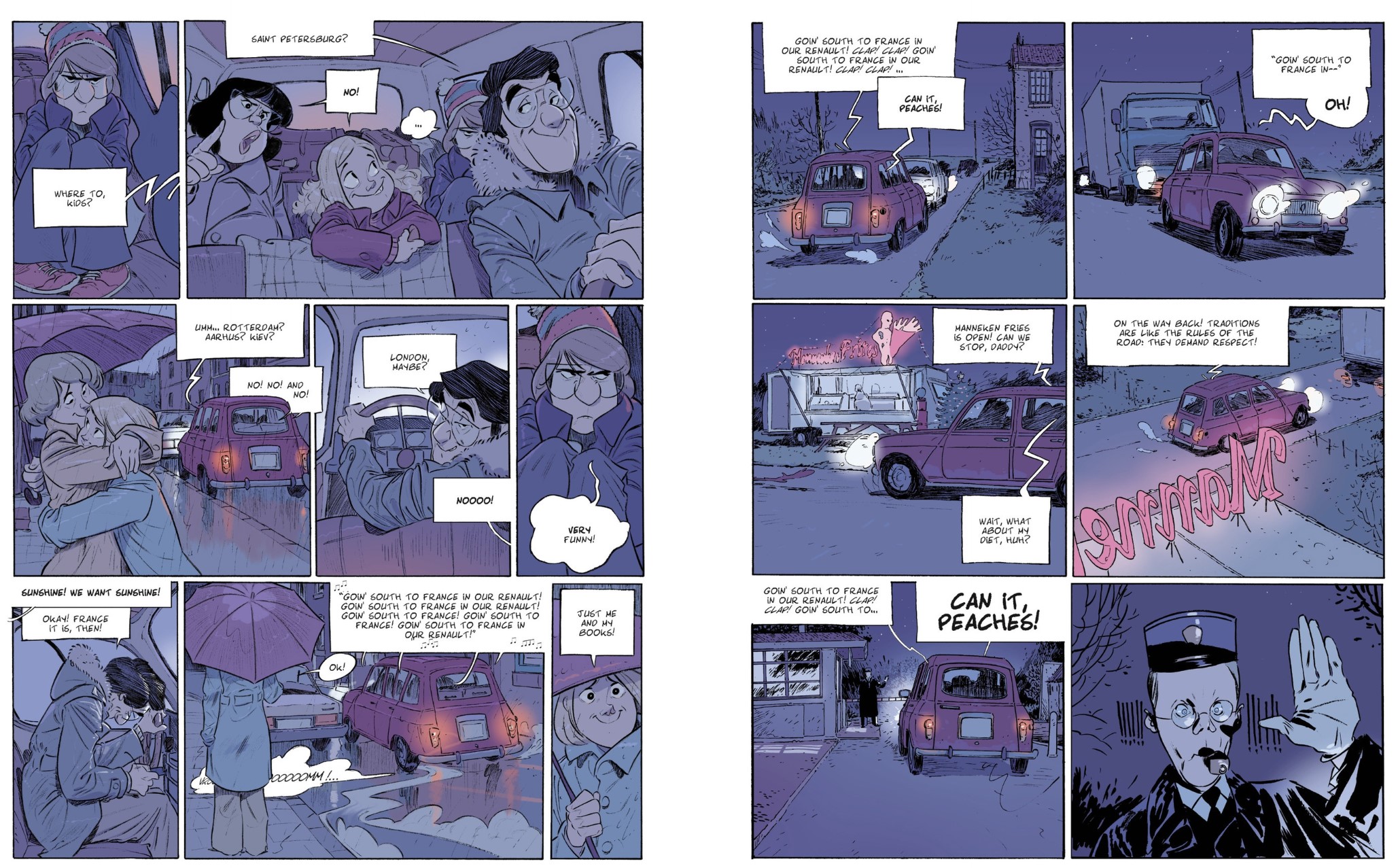
Pierre has cajoled the entire pack – all but revision wracked Jolly-Julie – to rerun the annual Faldérault escape from gloomy Brussels just for her, but not without some effort… and unrealised deception. Louis is in prime teen rebel mode now and once they’re out of Belgium and have played their usual games with the French border guards, he absconds determined to get to London by Christmas at all costs. After all its not just the music. There’s someone waiting for him there…

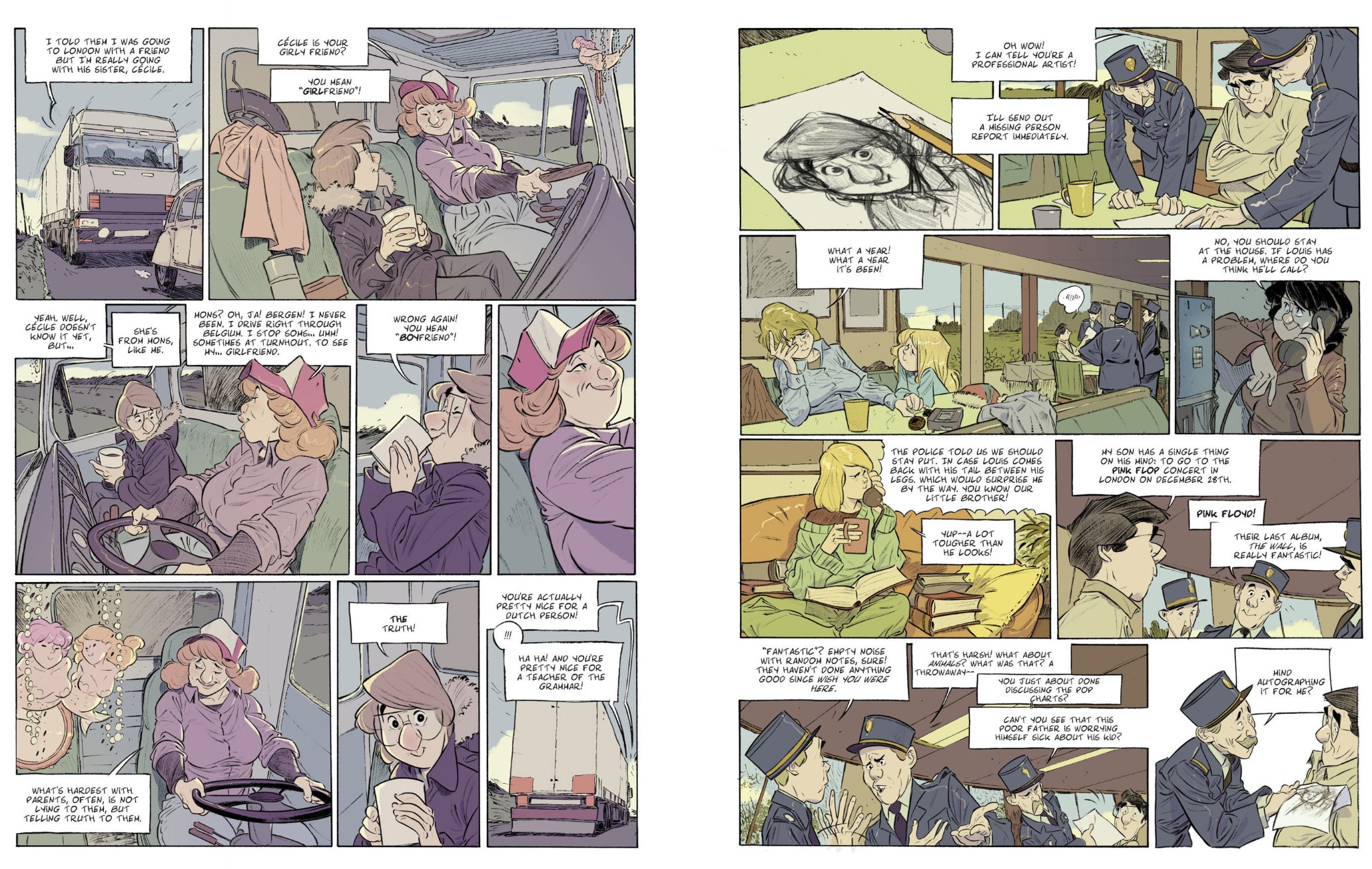
Of course, once he vanishes, the family goes into overdrive to find The Runaway, and as ever, the company of strangers is a powerful reminder of just how kind people can be – even the cops! – and the surprise holiday recharge becomes a most special Christmas: one that significantly changes life for all of them…
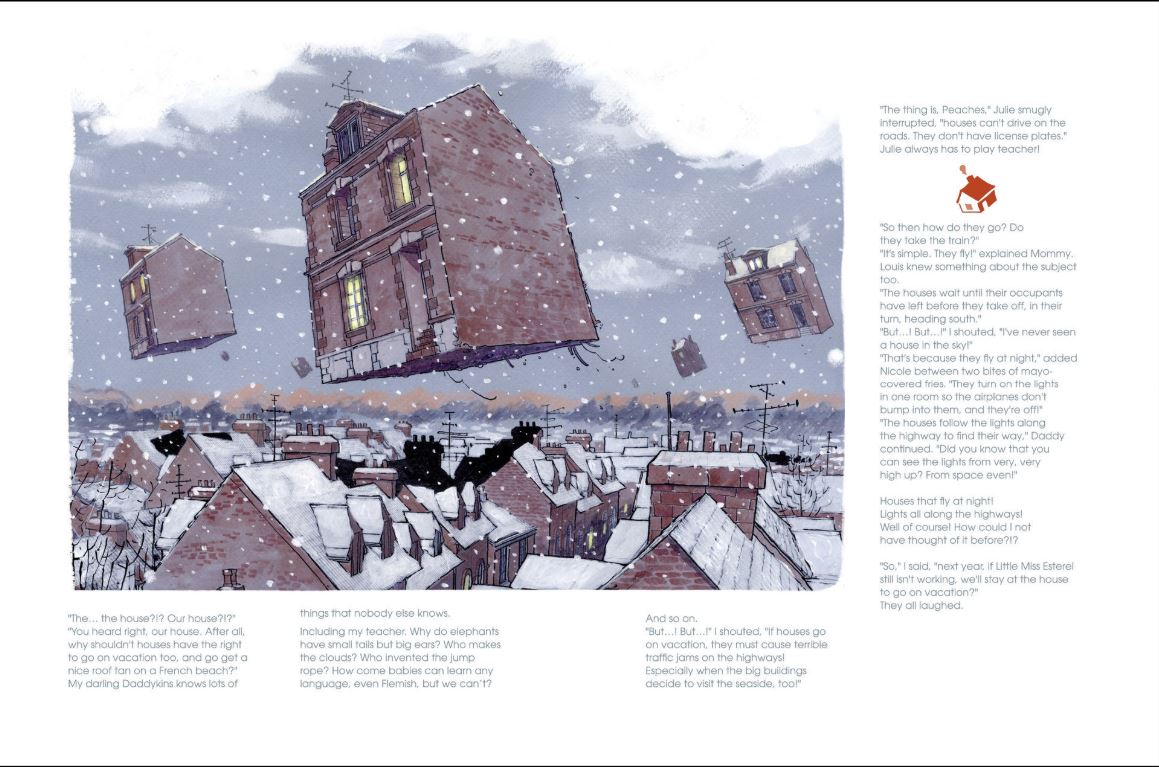
This sublimely understated seasonal treat is a sentimentally witty gem polished to perfection by the addition of an ‘epilog’ and pictorial codicil in the form of a charming fantasy postscript from Peaches. Her illustrated prose letter ‘The House that Dreamed of Going on Vacation – by Paulette Foldérault’ neatly adds all the warmth lost in unused summer sunshine and ends the saga on a cosy note of promise…
This tale is another beautifully recalled, rendered and realised basket of memories stitched seamlessly together. It’s funny, sweet and charming whilst delivering sharp swipes you never see coming. There aren’t any spectacular events and shocking crises (well, just the one here) and that’s the whole point…

If you’re British – and old enough – this series (six translated albums thus far, plus a French omnibus edition) will echo revered family sitcoms like Bless This House or Butterflies and generational ads starring the “Oxo Family”. (If that description doesn’t fit you, I pity your browsing history if you look up any of that…). The rest of you in need of an opening (but unfair) comparator could break out the Calvin and Hobbes collections and re-examine the bits with his embattled parents when the kid’s out of the picture…

Lyrical, laconic, engagingly demure, and debilitatingly nostalgic, this holiday romance is sheer visual perfection wrapped in sharp dialogue and a superbly anarchic sense of mischief. Vacations and occasions are built of moments and might-have-beens, packaged here in a compelling melange making the mundane marvellous.
© 2018 -DARGAUD BENELUX (Dargaud-Lombard s.a.) – ZIDROU & LEFEBRE, LLC. All rights reserved.

Today in 1924 superstar Sam Glanzman was born. You should read everything he ever did but perhaps start with A Sailor’s Story?

Britain’s WWII secret weapon Jane by Norman Pett opened in The Daily Mirror dated December 4th 1932. We’ve shamefully peeped at her a few times, most recently in The Misadventures of Jane. She has the same birthdays as V.T. Hamlin’s magnificent Alley Oop feature, for which Alley Oop by V.T. Hamlin must be your first port of call…
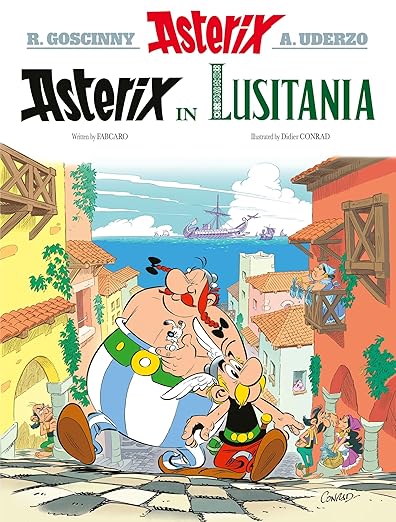
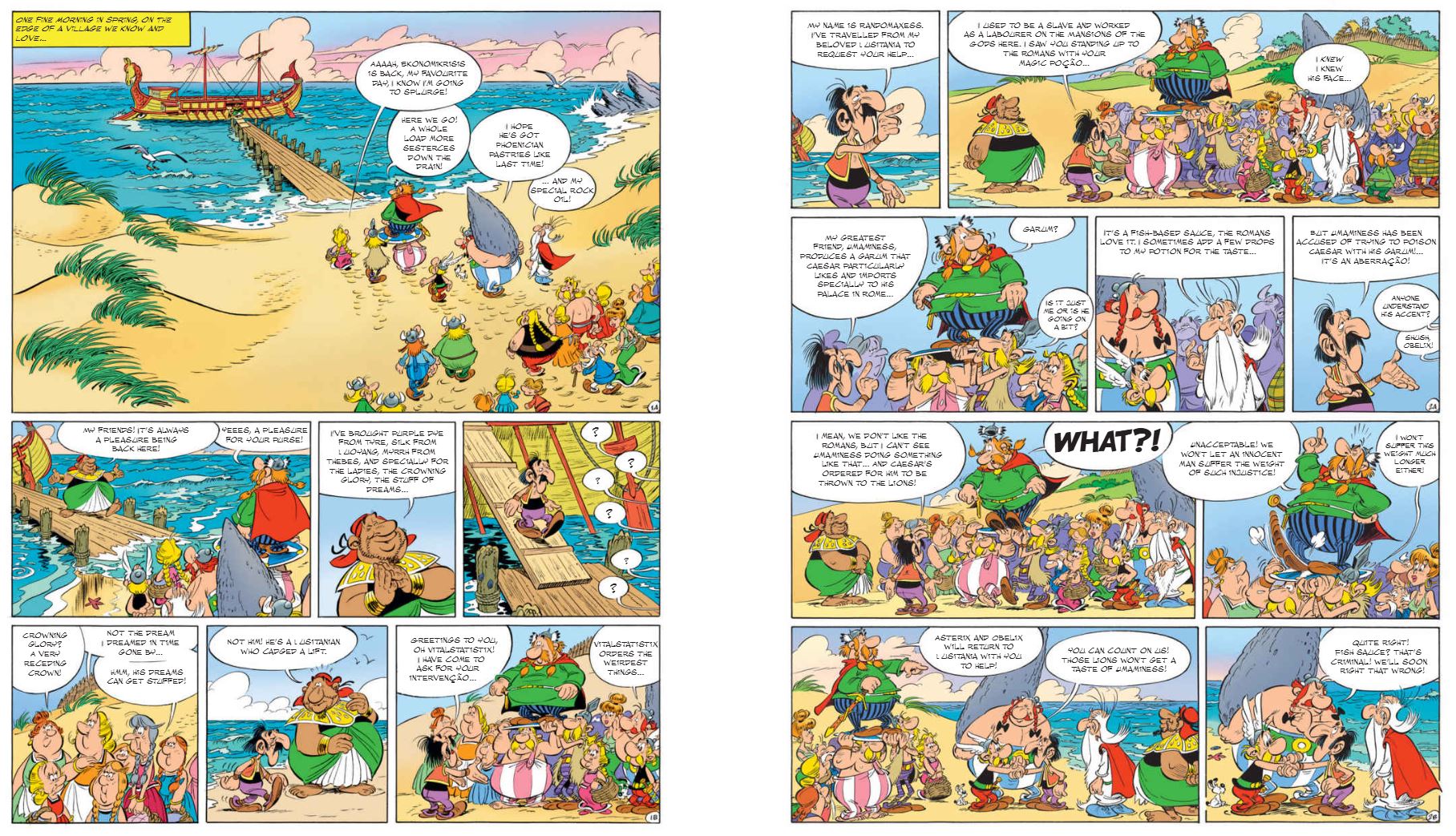
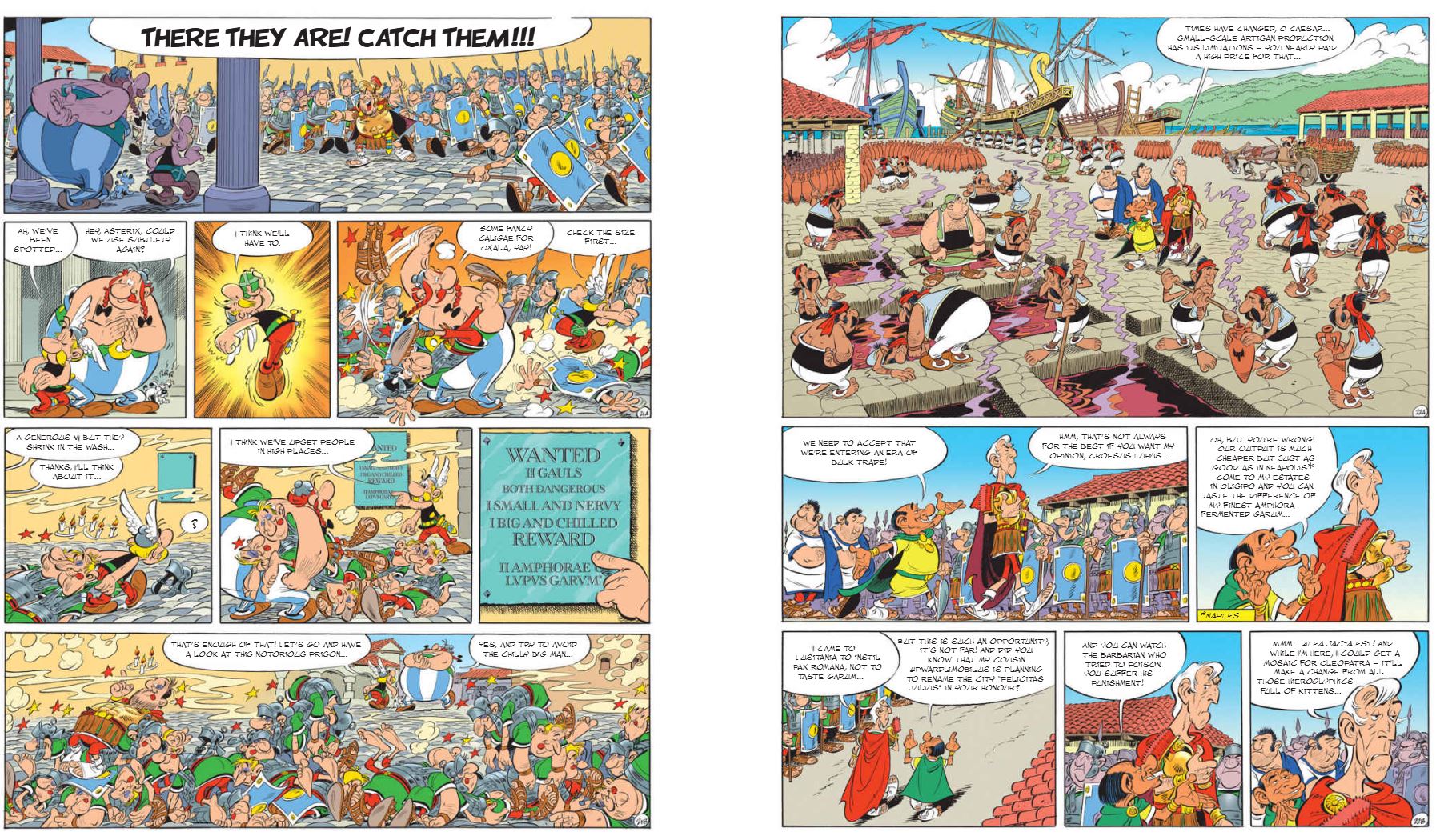
Asterix in Lusitania (Asterix volume 41)


By Fabcaro & Didier Conrad, coloured by Thierry Mébarki, translated by Adriana Hunter (Sphere)
ISBN: 978-1-4087-2499-6 (Album HB) 978-1-4087-2502-3 (Album TPB)  eISBN: 978-1-4087-2501-6

Win’s Christmas Gift Recommendation: Celebrate a Simmering Saturnalia in Classical Style… 9/10

Astérix le Gaulois debuted in 1959 and has since become part of the fabric of French life. His exploits have touched billions of people around the world ever since, and for almost all of that time his astounding adventures were the sole preserve of originators René Goscinny & Albert Uderzo.

After nearly 15 years dissemination as weekly serials (subsequently collected into book-length compilations), in 1974 21st saga Asterix and Caesar’s Gift was the first to be released as a complete, original album prior to serialisation. Thereafter each new tome was an eagerly anticipated, impatiently awaited treat for legions of devotees. The eager anxiety hasn’t diminished even now as Astérix en Lusitanie sees physicist/novelist/musician Fabrice Caro – AKA comics writer “Fabcaro” (Like a Steak Machine, Les Marseillais, Mars) rejoin in situ illustrator Didier Conrad (Les Innomables, Tatum), for a spot of traditional European travel fun in the grand manner.

Although divided by its Roman conquerors into provinces Celtica, Aquitania and Armorica, the very tip of the last-named land stubbornly refuses to be properly pacified. The otherwise supreme overlords, utterly unable to overrun this last little bastion of Gallic insouciance, are reduced to a pointless policy of absolute containment – even though the irksome Gauls come and go as they please. Thus, a tiny seaside hamlet is permanently hemmed in by heavily fortified garrisons Totorum, Aquarium, Laudanum and Compendium: packed with seasoned and terrified soldiers who would rather be anywhere else on earth than there…

Those supposedly contained couldn’t care less: daily defying and frustrating the world’s greatest military machine by going about their everyday affairs, bolstered by magic potion brewed by resident druid Getafix and the shrewd wits and strategic aplomb of diminutive dynamo Asterix and the stopping power of his simplistic, supercharged best pal Obelix

As always, action, suspense and comedy are very much in evidence. There’s much satirical lampooning of generation gaps, fads and trends as well as traditional regional/national leitmotifs. Whether as a comedic romp with sneaky, bullying baddies getting their just deserts or as a sly and wicked satire for older-if-no-wiser heads, these new yarns are just as engrossing as the established canon.

As you already know, half of the intoxicating epics take place in various exotic locales throughout the Ancient World, whilst the alternatives are set in and around Uderzo’s adored Brittany of long, long ago. This one’s another voyage away as we find it’s spring in 50 BC. It is always 50 BC…

When Phoenician trader Ekonomikrisis arrives with his fabulous sea-borne wares, he also brings an old friend not seen since the affair of The Mansion of the Gods please link to Omnibus 6: Asterix in Switzerland, The Mansions of the Gods, Asterix & the Laurel Wreath April 25th 2019. However, weary Lusitanian Randomaxess is not here for a chinwag about old times. Rather, he’s on a mission of mercy due to his keen understanding of Gaulish adventure-seeking and taste for justice. His tale of skulduggery in the billion-sesterce fish sauce market is just what bored heroes want to hear…

The entire Roman empire runs on savoury additive Garum, and the big suppliers are playing dirty now that Caesar has expressed his personal love of a small, artisanal brand made with love in very small quantities by Randomacess’ dear pal Umaminess. Now, that humble sauce-meister is condemned to be main course for the lions after being accused of poisoning the emperor with his favourite condiment…

As with so many of these yarns, the real proof of the pudding is the villains. In in this case that’s nasty 1-per-center Croesus Lupus – who wants a total monopoly for his cheap ‘n’ nasty mass-produced, Lupus Garum® and his cousin the Lusitanian Governor. Upwardlimobilus wants to be Caesar…

They cunningly employed professional traitor Fethermyness to arrange the culinary stitch-up and are already parcelling up the empire between their fellow disastrous capitalists, but never reckoned on the flavour-wizard having such dedicated friends. After all, there’s no profit in loyalty or friendship…

Mere days later, Asterix, Obelix & canny canine Dogmatix are wide-eyed, irretrievably provincial tourists again, having gone through all the rituals: pirates, food Obelix doesn’t like, shared folk-tales of old heroes and more. The big man never stops griping about the local food (nothing but cod!), but the wines are great and so are the towns and villas. Any lingering semblance of reluctance fades once he meets captive Umaminess’ delightful daughter Oxala...

With heaping helpings of sharp gags about the imaginatively dour, passionately fatalistic Lusitanians (aka Portuguese) and their poetic tongue winningly interspersed with a boatload of fresh Latin jests and grammatical tomfoolery, this is very much an old fashioned funny travelogue. As our heroes track down the taste-maker, they meet many odd folk and befriend a garrulous population always happy to take a pop at the uninvited Roman guests. Particularly useful is prison cook Bouillabess, who is delighted to spite his Roman employers…

Along the way the Gauls consider revolutions and organised labour, take a hard look at marketing and explore focus groups, but never miss an opportunity to sample the mettle of the local soldiery…

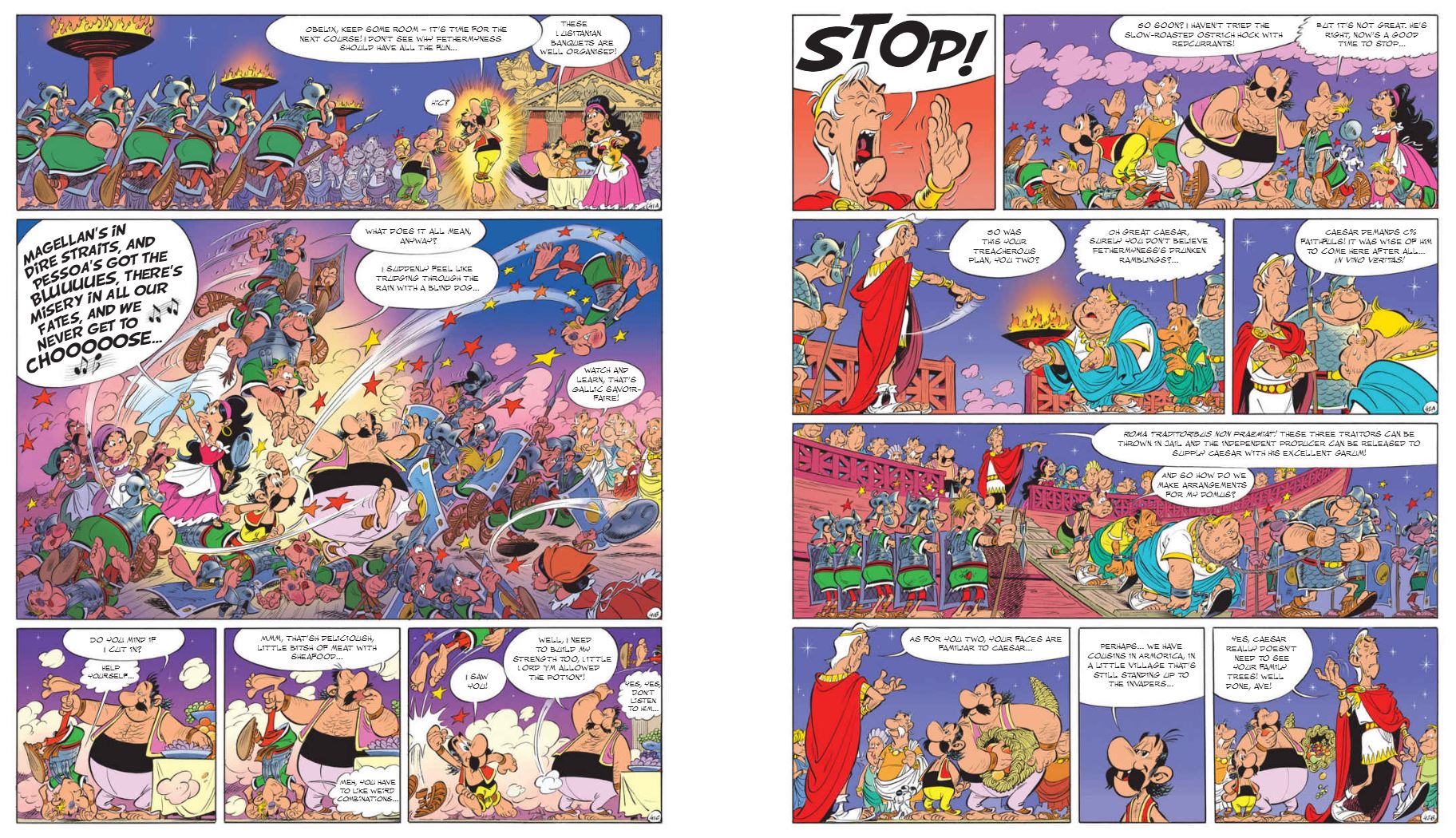
Impressionable Obelix may be distracted by trying to impress delicious Oxala, but does not falter or stir, even after having to embracing the dark side of the mission by going undercover and in disguise to expose the Governor’s plot. The job was always going to be tough, but everything goes well south when man-of-action Julius Caesar opts to personally investigate his attempted murder, culminating in a spectacular revelatory conclusion as Caesar’s state power smashes face-first into unchecked adventure capitalism during a do-or-die (possibly both) ceremonial banquet…

Thankfully, old adage in vino veritas** proves as potent as Getafix’s magic potion and all secrets are inescapably revealed, leading to a great deal of feasting, both at home and away with tasty happy endings all around…

With scathing pops at billionaire malfeasance, overstepping, rules for ruling, what you CAN’T buy, literary lunacy and ongoing challenges to AI, computer and culinary culture, Asterix in Lusitania is a fabulous look back and step forward dedicated devotees and fresh fans can share together, and another triumphant addition to the mythic canon for laugh-seekers of every age in every age.
© 2025 HACHETTE LIVRE/GOSCINNY-UDERZO. English translation: © 2025 HACHETTE LIVRE/GOSCINNY-UDERZO

** In wine there is truth. You should absolutely read more old books after you get this through this new one, OK?

Today’s a grand day for cats in comics. In 1913 George Herriman’s Krazy Kat first appeared as an independent strip. We think you might enjoy purr-rusing Krazy & Ignatz 1916-1918: The George Herriman Library volume 1, whilst in 1983 Felix the Cat cartoonist Otto Mesmer died. Oddly, other than Nine Lives to Live – A Classic Felix Celebration there’s remarkably little available on what was once a true global phenomenon…

Ginseng Roots


By Craig Thompson (Faber)
ISBN: 978-0-571-38661-1 (HB)

This is one of those reviews where I try quite hard not to say too much about the content, because it’s a sin and a form of theft to deprive readers of the joy of it unfolding just for them. You could and should just go buy this now and save time, but if I can’t convince you of that here, please read on and think again…

In no way a sequel to his landmark masterpiece Blankets but every inch and ounce as compelling, engaging and important, Ginseng Roots sees auteur Craig Thompson return to what you or I would deem an incredibly harsh – nigh-dystopian – childhood to craft another incredibly engaging paean of love and fond wonder to his home, his family and his extraordinary life.

In a book encompassing biographical revelation, philosophical rumination and religious re-exploration we see the auteur share incredibly candid events from his profession and career. Wrapped up in a most engaging, amusing and occasionally distressing tutorial on the history and global cultural significance of Ginseng, we see Thompson return to Wisconsin. The Thompson kids were raised in a fundamentalist Christian household, with the Rapture anticipated any day now, but it wasn’t all bad. They were loved, if ruled hard, and here we see how that panned out, as well as the transformative power of comics via a broad, deep and astonishingly informative yarn viewed through the ruminative lens of the Thompson family’s recollections of being child labourers for local farmers growing American Ginseng in the 1980s.

The way it all worked is unpicked with remarkable even-handedness, as the man who became a major force in his field of graphic narrative expression revisits those formative days before embarking on a quest to learn all he can of the How and Why of it all. This involves returning home before ultimately crisscrossing the world with little brother Phil to research a new graphic novel undertaken in the light of potentially losing all he could be to an inexorable physical decline: one destined to take away his self-defining ability to draw…

When first released in July 2003, Blankets started slowly before achieving monumental international fame and near-unanimous critical approval from comics’ Great & Good & Fabled. If you have a favourite author or artist they probably loved the book – and rightly so.

Taking 3½ years to create, Blankets won 3 Harvey Awards, 2 Eisners, 2 Ignatz Awards and a France’s Prix de la Critique. Translated into French, Italian, Spanish, Catalan, Portuguese, Greek, German, Norwegian, Danish, Dutch, Czech, Polish, Korean, Hungarian, Slovenian, Estonian, Serbian and Greek, it was latterly published in 17 foreign editions (so far) and kept on winning glittering prizes and acclaim. It’s also won a YALSA Popular Paperback for Young Adults prize: listed as one of Entertainment Weekly’s Top Ten Graphic Novels of All Time. You can expect Ginseng Roots to do as well or better, even if young love and tragic foredoomed passions have been downplayed in favour of the inexorable march of time, unsatisfied injustices, midlife crises and failing faculties.

Reading this, you will learn all about a wonder herb, global trade, Chinese medicine, Big Agriculture & pesticides, many flavours of immigrant workers, exploitation and corporate ruthlessness, the economic history of many nations, the narcotic tendencies of comic books of grade school kids, and so much about human nature, that you’ll probably laugh, cry and get angry quite a lot…

Originally released in serialised instalments by Uncivilized Book (between 2019 -2023, as Covid ravaged the US and the world) just as Craig Thompson was confronting presumed career burnout, impostor syndrome and the loss of his ability to draw, the fascinating pictorial discourse is divided into 12 chapters beginning with ‘Real Ginseng Runs’, as Craig, Phil and their sister Sarah reunite at the parental homestead and trade tales of the old days. The reminiscences blend with flashback and flashforwards in ‘Sister Species’ as the story of Ginseng from America expands, with ‘Broad Stripes’ covering the history of Wisconsin – especially the region around Marathon – and growth of Ginseng trading: its use by First Nations before colonisation, white/French and Christian exploitation after that, and eventually an unshakeable connection to Asian nations that bought it from Wisconsin’s farmers and entrenched rivalry with its clearly inferior Canadian competition…

Interviews with old friends and former employers begins in ‘Rock(s) & Roll(ie)’, augmented by modern convolutions in ‘MAGGA’ (Make American Ginseng Great Again!) and ‘Good Seed Sinks’, before Craig’s declining health is more extensively explored in ‘No More Cartoons’. This leads to a vast expansion of purpose that culminates in fact finding missions all over “the orient” and the undertaking of a major literary project as expanded upon in ‘Father Abraham’, ‘Dark Night of the Soil’ and ‘Insam Respects’, before all that global and historical interconnection is pulled together as one big ‘Red Thread’, and laid to bed in grand ‘Agricultural Appreciation’

So much better read than read about, this marvellously moving memoir and ruminatory treatise is backed up with full contextual ‘Notes’, genuinely evocative ‘Acknowledgments’ and bonus art from the little brother/willing accomplice and henchman on a ‘Phil(er) Page’ and closes with an extended cartoon ad for Craig’s other books – debut tome Good-bye Chunky Rice, Blankets, Carnet de voyage, Habibi and Space Dumplins. You should sample them too and Faber has them all in print for just that purpose.

Loving, informatively wistful and never angry or condemnatory, for such a weighty tome, Ginseng Roots is a remarkably quick and easy read, with Thompson’s imaginative and ingenious marriage of text and images carrying one along in the way only comics can. Expect his cartoon avatar of the root to be pinched and copied by ad men for some time to come…

Charming, engrossing and irresistible, this may well be Thompson’s best and most enduring book, but if fate and Ginseng will it, not his last as it is another perfect story in pictures.
This edition © 2025 by Craig Thompson. All rights reserved. Originally serialised by Uncivilized Books © 2019, 2021, 2021, 2022, 2023 by Craig Thompson.

750cc Down Lincoln Highway


By Bernard Chambaz & Barroux, translated by Joe Johnson (NBM)
ISBN: 978-1-68112-245-8 (album TPB/Digital edition)

For such a relatively young country, there’s an astounding amount of vibrant – and largely self-perpetuating – mythology underpinning America. Cowboys, Indians, colonialism, Manifest Destiny, gangsterism, Hollywood, food, Rock ‘n’ Roll and even names and places have permeated the imagination of the world. This last even created its own sub-genre: tales of travel and introspection ranging from Kerouac’s On the Road to Thelma and Louise via the vast majority of “Buddy movies” ever made.

Somehow, such stories seem to particularly resonate with non-Americans. Scots, French and Italian consumers are especially partial to westerns, and Belgians adore period gangster tales set in the golden age of Los Angeles. I must admit that during my own times stateside there was always a little corner of my head that ticked off places I’d seen or heard of from films, TV or comics: Mann’s/Grauman’s Chinese Theatre, Central Park, Daly Plaza, Empire State Building as well as uniquely American moments and activities – pretzel cart, bag of potato chips bigger than my head, bar fight, someone saying “yoo Brits…” – as I experienced them myself. That’s the true magic of modern legends.

It’s also the theme driving this beautiful travelogue depicting life imitating art…

Available in oversized (288 x 214 mm) paperback and digital formats, 750cc Down Lincoln Highway reveals how a French competitor in the New York Marathon takes a cathartic life detour after getting a “Dear John” text from his apparently no-longer Significant Other one hour before the start.

Understandably deflated, he hits a bar, discovers bourbon and strikes up a conversation with one of life’s great survivors…

Ed’s barfly philosophy hits home – as does his description and potted history of the Lincoln Highway – and before long our remarkably reliable narrator has hired a motorbike and opted to cross the USA along the historic route from East Coast to West…

Rendered in a dreamy, contemplative wash of greytones, his ride becomes a shopping list of transitory experiences confirming – and occasionally debunking – the fictive America inside his head and his preconceptions of the people who live there.

Putting concrete sounds, tastes, sights and smells to such exotic ports of call as Weehawken, Princeton, Trenton, Philadelphia, Gettysburg, Pittsburgh, Zulu, Fort Wayne, Chicago, Dekalb, Mississippi, Central City, Cheyenne, Salt Lake City, Eureka, Reno, Lake Tahoe, Berkeley and so many other places before reaching the highway’s end at Poteau Terminus, the once-broken rider regains his life’s equilibrium and gets on with the rest of his life, happy that the trip and anonymous people he met have rewarded him with fresh perspective and rekindled hope…

Written by award-winning novelist, poet and historian Bernard Chambaz (L’Arbre de vies, Kinopanorama) and backed up by an extensive map of the trip, garnished with suitable quotes from Abraham Lincoln, this is quite literally all about the journey, not the destination…

This beguiling excursion is realised by multimedia artist and illustrator Barroux (Where’s the Elephant?, In the Mouth of the Wolf), serving as a potent reminder of the power names and supposition can exert on our collective unconsciousness.

It’s also a superbly engaging, warmly inviting graphic meander to a mutual destination no armchair traveller should miss.
© 2018 URBAN COMICS, by Chambaz, Barroux. ©2020 NBM for the English translation Hearst Holdings Inc. All rights reserved.

The Incredible Story of Cooking – From Prehistory to Today: 500,000 Years of Adventure


By Stéphane Douay & Benoist Simmat, with Christian Lerolle, Robin Millet & Joran Tréguier, translated by Montana Kane (NBM)
ISBN: 978-1-68112-340-0 (HB) eISBN: 978-1-68112-341-7

Usually this bit is about sex or swearing, but here I’m issuing another culinary advisory. If you are vegan, squeamish or can be upset by fish, cetaceans and other really cool animals comedically killed, butchered and consumed, do not buy this book. It’s really not for you.

The purview of graphic novels and illustrated narrative has expanded to mirror every aspect of prose print and even TV broadcasting these days. One of the most engaging for me and many others is historical investigations, breezy documentaries and fact-based investigations and speculations… and even well-researched cookbooks. Here, direct from the continent via those fine folks at NBM, is a graphic treat that combines all of that…

The history and development of cuisine has fascinated most people and this bold venture agues wittily and quite convincingly that this is the most likely way it all unfolded…

Author, economics journalist and comic book writer Benoist Simmat is mostly known to us for Wine, A Graphic History which sold over 100,000 copies in France and has been translated into many languages, but if you drink poshly you might also have seen his satirical bande dessinée collaboration with Philippe Bercovici – Robert Parker: Les Sept Pêchés capiteux. The ambitious tome under review here is likely to be just as popular, especially as it is expansively limned by comics veteran Stéphane Douay.

Born in Le Havre, the picture maker tried assorted jobs – like radio operator and actor/juggler – before settling into drawing for money. He has illustrated strips for over two decades with Matiè re fantô me, Commandant Achab, Les Anné es rouge & noir, Ririri, Don Quichotte dans la Manche, and strips in several collective albums to his great credit. In 2006, he began the Matière Fantôme series. I don’t know if he or Simmat ever worked as cooks or sous chefs…

The cookery class – extravagantly footnoted throughout – commences with their ‘Foreword The Oldest Story in the World’ before carrying us back to Africa and a quick menu of the species that preceded us in Chapter 1 ‘The Slow Emergence Of Prehistoric Cuisine’. Beginning by examining the capture of fire by Homo erectus, the ice ages of 700,000-500,000 years ago and the first recorded/found recipes found in sites across Asia, the gastro-journey explores with wit, charm and a soupcon of silliness how chucking the latest killed catch onto flames, hot stones and embers not only introduced a whole new range of flavours but also kickstarted the discipline of bacterial control and food hygiene…

With the addition of plants as comestibles and/or flavour enhancers and preservatives, and scavenging increasingly supplanted by farming, the science of food had begun, and as neanderthals and homo sapiens spread across the globe, experts and specialists began carving out their own niches in tribes all advancing as cooking and eating together bound families and individuals into nascent societies…

The second chapter highlights ‘Dinner Tables Of The First Great Civilizations’, sampling moments and menus of Sumer and the origin of beer and trade; Mesopotamia, breadmaking and the invention of status-enhancing banquets; Assyria, the start of gender-specific cooking roles and Egypt’s embracing of salad as well as food for haves and have nots…

Also visited is proto-imperial China as its founders confirmed the link between food and health and formalised the cuisine that has conquered the modern world: a proud claim also true of its contemporary realms in the Indus valley who propounded a connection between certain edibles and a healthy soul, before the chapter closes with a round-up of the state of play in early African and Mesolithic American nations…

The combination of anecdotal snippets, hard archaeological fact and speculation all backed up with unearthed recipes continues in the same breezy manner, encompassing ‘Culinary Passions Of The Ancient Greeks And Romans’, ‘The Trade Routes of the Far East’, ‘Castle Life’ and ‘The New Worlds’ before offering deeper insights into modern eating habits and its politically-charged, commercially ruthless dominance as philosophically demarcated and defined in ‘Bourgeois Revolutions 1: Gastronomy’ and ‘Bourgeois Revolutions 2: Capitalist Cuisine’

From there it’s a short hop into today’s fashionably foody forum in ‘The Era Of Light Eating’ briefing on “taste activism”, macrobiotics and other fad foodisms, fair trade, fast food vs junk food, biodiversity, compassion in farming, food miles, technological advances (like microwave cookers and air fryers), the power of “Big Food”, foods that harm us, the diet industry and so much more that makes eating a political choice and how staying alive is now a balancing act between health, production, pleasure and authenticity…

Following a summation asking where it will all end and how will we get there, this fabulous buffet of fact and fun wraps up with ‘Recipes’: detailing 22 significant dishes the reader can make, culled from the historical archive and the entirety of human experience across the planet.

Graded Easy, Elaborate or Difficult and spanning recent to ancient the list opens with ‘Anti-waste Velouté – Italy’ and includes ‘Vegan Hamburger – England’; ‘Chicago Hot Dog – USA’; ‘Chow Mein Noodles – China’; ‘Cincinnati Chili – USA’; ‘Fish Ceviche – Peru’; ‘Homemade Ketchup Sauce – USA’; ‘Herring and Potatoes in Oil (Hareng Pommes À L’Huile) – France’; ‘Authentic Paella Valenciana “Mixta” – Spain’; ‘Fish & Chips – England’; ‘Woodcock Hash in Beauvilliers-style Croustade – France’; ‘The Aztec Taco – Mexico’; ‘Chicken Marengo – France’; ‘Cassava-Plantain Fufu with Mafé Sauce – Ivory Coast’; ‘Pork Vindaloo – India’; ‘Oyakodon Donburi – Japan’; ‘Maestro Martino’s Macaronis – Italy’; ‘Lamprey Pâté – France’; ‘Beef Plov – Uzbekistan’; ‘Maza Bread – Greece’; ‘Roman Garum – Italy’ before ending at the beginning with ‘Prehistoric Confit – France’

The art of food and pleasures of eating have never been better appreciated or shared than in books like these, blending fun and exoticism with the tantalising yet satisfying anticipation of gustatory consumption. Academically robust and steadfast, the book’s ‘Bibliography’ and ‘Acknowledgements’ sections are huge but fascinating, making this a simply delightful dish: an inviting comics divertissement that absolutely whets the appetite for more… and maybe a snack to accompany the ingestion…

The Incredible Story of Cooking – From Prehistory to Today © Les Arènes, Paris, 2021. © 2024 NBM for the English translation.

The Incredible Story of Cooking – From Prehistory to Today: 500,000 Years of Adventure will be published on 10th September. 2024 and is available for pre-order now. NBM books are also available in digital formats.
For more information and other great reads see NBM Graphic Novels.

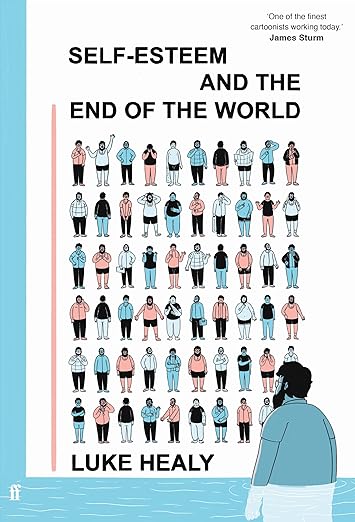
Self-Esteem and The End of the World


By Luke Healy (Faber)
ISBN: 978-0-571-37560-8 (HB)

Ireland’s multi-award-winning low-key iconoclast Luke Healy studied journalism at Dublin University and earned an MFA in Cartooning from the Center for Cartoon Studies (Vermont, USA). An occasional stand-up comedian, his previous cartoon works – such as Americana, Permanent Press and How to Survive in the North – have won prizes and acclaim, and he’s also done gallery shows in places like Manhattan’s Museum of Comics & Cartoon Art.

His aforementioned comics for VICE, The Nib, A24, Medium, Nobrow and Avery Hill are exceptionally good and, as I hinted, he apparently likes exposing himself to ridicule on stage. But not so much, these days.

By combining all that trauma, weltschmerz and experience into tales exploring basic big stuff like life, friends, and how to keep your head above emotional water, he has kept many of us wonderfully entertained and himself alive for a decade. Here and now, that self-excoriating journey manifests as bursts of small-scale prediction and prognostication. By looking inwards and backwards, Healy has unlocked a doorway to our probable mutual future…

As seen in prior books (like The Con Artists) our absolutely Unreliable Narrator is London-based, Irish, gay, formerly Catholic, clinically anxious and helplessly honest. He’s still undergoing treatment for his head problems and other self-diagnosed personal issues whilst perennially building pre-emptive stress for the next Big Bad Thing. Incisive, sentimental absurdist, pedestrian and casually surreal, the collective appointments with destiny are delivered in three acts each entitled Luke Healy is…’ with the first preceded by tone-setting prelude ‘fig (i) Self (ish)’.

Here the aging worry-wort consults his treatment advisor and grudgingly accepts a new tactic to process feelings and responses. The first prophetic episode then sees him making Plans’ as a moment of elation at a family gathering plunges him back down and confirms his gloomy assessment of everything after he attends twin brother Teddy’s engagement party and endures a major disappointment. Retreating if not exactly retrenching, Luke immerses himself in a tidal wave of self-help books and runs away to a hotel where he indulges in some unwise acts. And then Teddy tracks him down…

The narrative digresses for ‘Interlude (i) Luke brings a date back to his flat’ after which hilarious encounter we jump ahead five years to reveal ‘Luke Healy is…’ a paid writer scripting a work-training play for a major company. Sadly, devising ‘L’hotel du Murder’ as a whodunnit was a doomed proposition from the start.

The country is on viral lockdown again, Wye Valley’s Regional Hereford Gotel experiences an actual real murder the night before the premiere and with his Mam in the invited audience, Luke has to stage-manage rubbish players, his own stress, a deadly flood and the revelation that he’s subconsciously made the entire story all about him and his bosses and now faces inevitable exposure and humiliation. It never rains but it pours…

Another strange break comes with ‘Interlude (ii) Luke has a video conference with his former agents’ and he learns his books have been re-optioned. The pittance paid means the studio still aren’t making the film they’ve already “bagsied” – and so no one else can – but his reps are keen to sell something else. Surely he must have some old comics or small press stories they can push?

Another five years go by and ‘Luke Healy is…’ in Lefkada. The Greek island – like much of the planet – is mostly submerged now. Although officially working as a telemarketer at and from home, Luke has come to the expanded Aegean on a deeply personal mission. Soon he’s adopted by fellow traveller Beth: there to explore the unearthed archaeological detritus of the past.

Framed from the start in deceit, the jaunt ends painfully for all concerned and – after returning to England – ‘Interlude (iii) Luke receives a phone call’ which promises to change his life forever. Following another ‘fig (ii) Self (ish)’ moment, ‘Luke Healy is… OTMPOW’ finds the bewildered failed author and his Mam five years further on: whisked to Palm Springs (the new Hollywood ever since Los Angeles slipped beneath the seas) where a sleazy producer is turning Healy’s old comic about whale-watching into a mega blockbuster. It’s such a shame the cetaceans aren’t real and the filmmaker is hiding his secret agenda…

An ‘Epilogue’ details the sorry aftermath of all that and is accompanied by ‘appendix (ii) Of the Monstrous Pictures of Whales’ which “reprints” the college mini comic notionally adapted into that ludicrous and conniving movie, with young teens in Reykjavik hanging out, having sex and making mistakes on an Icelandic whale-spotting boat: a terse and grittily witty romance I’d certainly watch…

It seems fittingly ironic that this wry and introspective examination of the fustercluck that has become the totality of All Human Endeavour is released on the day much of Britain goes to the polls to choose the minor nabobs who will mis-guide and mis-lead us until our next general election, but that’s really just a peculiar and coincidental facet of publishing schedules. There’s certainly nothing conspicuously covert or conspiratorial. Nope. Nu-uh. No sirree-bob. Read nothing into it, but please do read this book…
© Luke Healy, 2024. All rights reserved.

Self-Esteem and The End of the World is published today.

Ruins (Paperback Edition)


By Peter Kuper (SelfMadeHero)
ISBN: 978-1-914224-18-8 (TPB/Digital edition)

Multi award-winning artist, storyteller, illustrator, educator and activist Peter Kuper was born in Summit, New Jersey in 1958, before the family moved to Cleveland, Ohio when he was six. Growing up there he (briefly) met iconic Underground Commix pioneer R. Crumb and at school befriended fellow comics fan Seth Tobocman (Disaster and Resistance: Comics and Landscapes for the 21st Century, War in the Neighborhood, You Don’t Have to Fuck People Over to Survive).

As they progressed through the school system together, Kuper & Tobocman caught the bug for self-publishing. They then attended Kent State University together. Upon graduation in 1979, both moved to New York and whilst studying at Brooklyn’s Pratt Institute and The Art Students League created – with painter Christof Kohlhofer – landmark political art/comics magazine World War 3 Illustrated. Separately and in conjunction, in comics, illustration and via art events, Kuper & Tobocman continued championing social causes, highlighting judicial and cultural inequities and spearheading the use of narrative art as a tool of activism.

Although a noted and true son of the Big Apple now and despite brushing with the comics mainstream as Howard Chaykin’s assistant at Upstart Associates, most of Kuper’s singularly impressive works are considered “Alternative” in nature, deriving from his regular far-flung travels and political leanings. Moreover, although being about how people are, much of his oeuvre employs cityscapes and the natural environment as bit players or star attractions.

When not binding his own “Life Lived in Interesting Times” into experimental narratives – such as with 2007’s fictively-cloaked Stop Forgetting To Remember: The Autobiography of Walter Kurtz – or bold yarns like Sticks and Stones (2005), Kuper created The New York Times’ first continuing strip (1993’s Eye of the Beholder) and regularly adapts to strip form literary classics like Upton Sinclair’s The Jungle (1991), Conrad’s Heart of Darkness (2019), Kafka’s short stories  Give It Up! (1995) and Kafkaesque (2018) as well as longer works like The Metamorphosis (2003), all while creating his own unique canon of intriguing graphic novels and visual memoirs.

Amongst the so many strings to his bow – and certainly the most high-profile – was a brilliant stewardship of Mad Magazine’s beloved Spy Vs. Spy strip, which he inherited from creator Antonio Prohias in 1997, and he also chases whimsy in children’s books like 2006’s Theo and the Blue Note or experimental exercise The Last Cat Book (1984: illustrating an essay by Robert E Howard). Whenever he travelled – which was often – he made visual books such as 1992’s Peter Kuper’s Comics Trips – A Journal of Travels through Africa and Southeast Asia. Three years later he undertook a bold creative challenge for DC’s Vertigo Verité imprint: crafting mute, fantastically expressive thriller/swingeing social commentary The System.

Kuper’s later comics – all equally ambitious and groundbreaking – had to make room for his other interests as he became a successful commercial illustrator (Newsweek, Time, The Nation, Businessweek, The Progressive, Rolling Stone, The New Yorker, Entertainment Weekly and more), lecturer in Graphic Novels at Harvard, a teacher at Parsons School of Design and The School of Visual Arts and – since 1988 – co-Art Director of political action group INX International Ink Company. Translated into many languages, he has built a thriving occupation as a gallery artist exhibiting globally and scored a whole bunch of prestigious Fellowships and Educational residencies as a result.

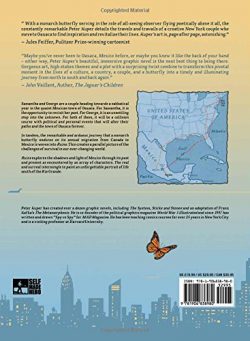
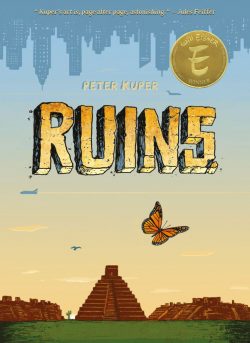
He still finds time to pursue his key interests – such as contributing to benefit anthology Comics for Ukraine: Sunflower Seeds and cultivates a lifelong passion for entomology. This hobby infused 2015’s fictionalized autobiographical episode Ruins: an Eisner Award winning tome now available again in an enthralling trade paperback edition.

A passionate multilayered tale of crisis, confrontation and renewal infused by his ecological concerns, political leanings, rage against authoritarianism and love of Mexico, it draws from the same deep well as 2009’s Diario De Oaxaca: A Sketchbook Journal of Two Years in Mexico. Between 2006 and 2008, Kuper, his wife and young daughter lived in Oaxaca, absorbing astounding historical and cultural riches, beguiling natural wonders, hearty warmth and nonjudgemental friendliness. They also witnessed how a teacher’s strike was brutally and bloodily suppressed by local governor/dictator Ulises Ruiz Ortiz – AKA “URO” – in a series of events with a still heavily disputed death toll scarring the region and citizens to this day.

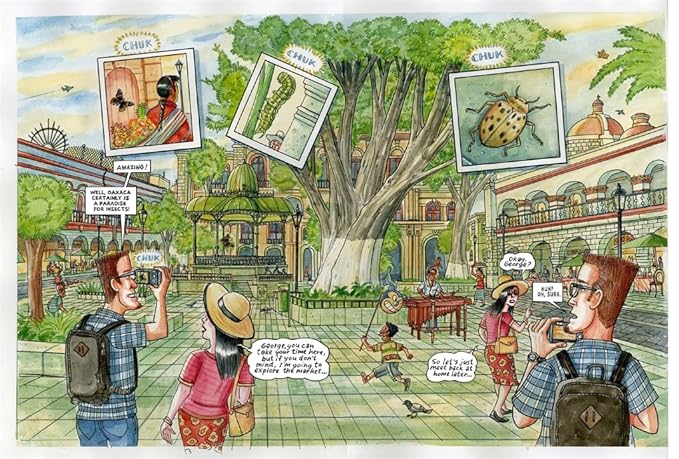
Part travelogue, part natural history call to arms and paean to the culture of Oaxaca, Kuper’s tale details a marriage in crisis played out against a disintegrating crisis of governance. Recently unemployed, socially withdrawn and emotionally stunted museum illustrator/bug lover George finally capitulates and voyages to the Mexican dreamland his wife Samantha has been pining for since before they met. Under the aegis of a sabbatical year taken to write a book on pre-conquest Mexico, she has dragged him out of ennui and churlish career doldrums to a place where he can indulge his abiding love of insects, if not her…

For Samantha, it’s a return to a paradisical place and magical time, albeit one where she loved and lost her first husband. That’s not the sole cause of growing friction between the increasingly at odds couple. The lengthy trip’s overt intention of reuniting them falters as she is drawn deeply into stories of how the Conquistadors destroyed Mesoamerican cultures they found and highlights parallels to her own plight. There are other earthier distractions she just can’t shake off too…

Slowly, George’s intransigence melts as he meets people willing to tolerate his ways, see beyond his shell, and share the history, geology, geography and serenely easy-going culture that eventually penetrates his crusty exterior. All manner of distracting temptations – like the infinite variety of cool bugs! – are endless and constant as he makes friends and finds healthier ways to express himself. He even tries to renew his constrained relationship with Samantha, but there will always be one impossible, impassable barrier to their future happiness…

… And then they’re caught up in the Teachers’ strike and extra-judicial methods Governor URO employs to end it even as George achieves the milestone life goal he never thought possible and visits the Michoacan forest where Monarchs come to breed and die.

… And finds it expiring from human intrusion…

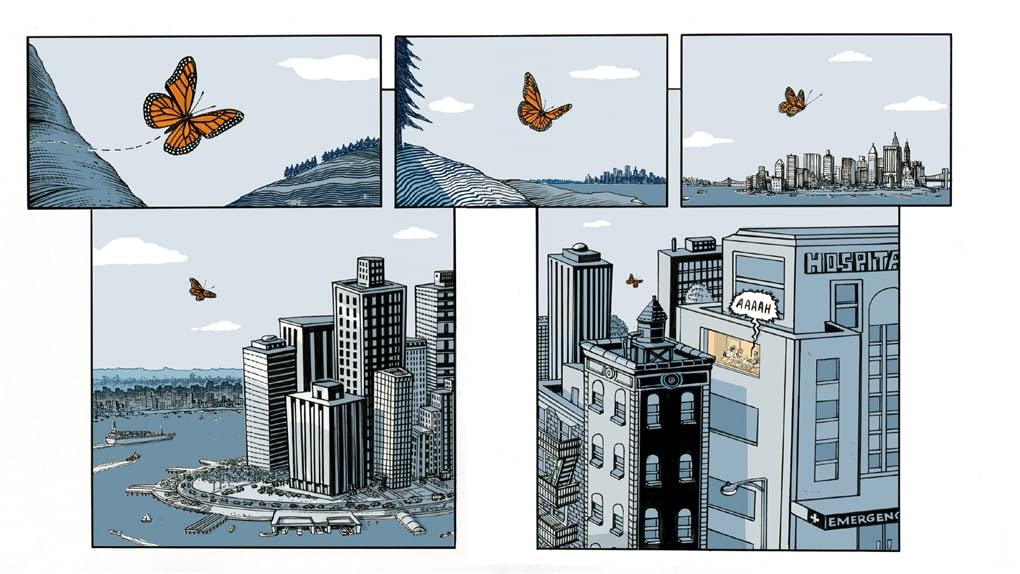
Acting as thematic spine and tonal indicator for the unfolding story, each chapter follows – with snapshot scenes of changing, degrading landscapes – the epic flight of a lone Monarch butterfly, from its start in Canada, across America to the forest’s lepidopteran devotee George ostensibly left his comfort zone home to see.

With overtones of Peter Weir’s film The Year of Living Dangerously (and Christopher Koch’s novel too), Ruins layers metaphor upon allegory, distilling political, ecological and personal confrontation into a powerfully evocative account of people at a crossroads. Inspirationally visualised in a wealth of styles by a true master of pictorial narrative and classic drama, this new paperback edition also includes an ‘Afterwords’ where the author adds context to the still ongoing saga of the civil war crime underpinning his story.

Clever, charming, chilling and compulsively engrossing, this delicious exercise in interconnectivity is a brilliant example of how smart and powerful comics can and should be.
© Peter Kuper 2015. All rights reserved.

Follow Me In


By Katriona Chapman (Avery Hill Publishing)
ISBN: 978-1-910395-38-7 (HB/Digital edition)

Katriona Chapman is a story-maker who has been crafting superb tales in Small Press titles like Tiny Pencil (which she-cofounded), Comic Book Slumber Party, Ink & Paper, Save Our Souls, Deep Space Canine and her own award-winning Katzine. She draws beautifully and knows how to quietly sneak up, grab your undivided attention and never let go – and she hasn’t spent all her life sat at a desk either.

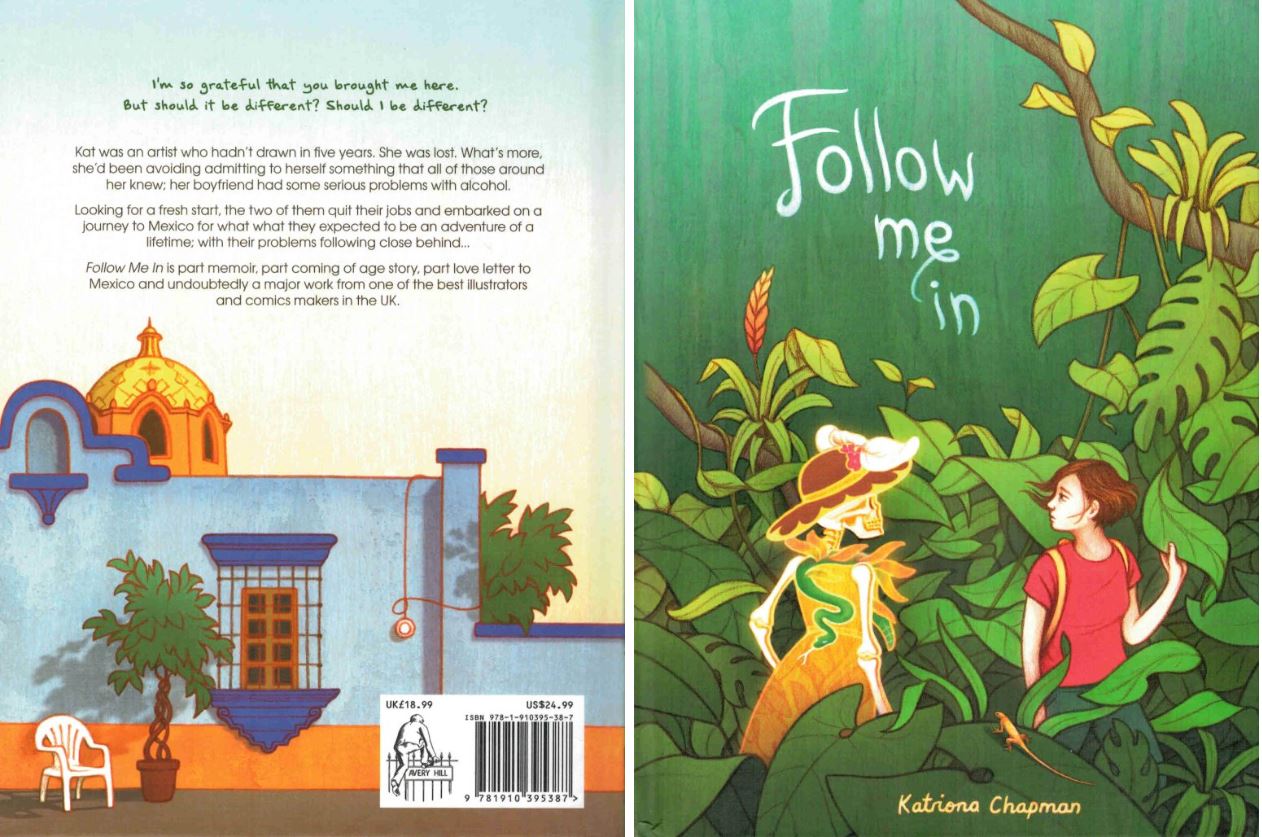
Follow Me In was her first novel-length tale (go look up Breakwater when you’re done here), combining recollections of a particularly troubling time in her life with clearly the most life-affirming and inspirational events one could hope to experience.

At the railway station, a young woman meets up with an old boyfriend. He’s a writer and she draws. It’s been years and they’re still awkward and uncomfortable in each other’s presence. They talk about the time in 2003 when they decided to trek the entire country of Mexico, north to south-east to west. Back then they were looking for themselves. As her mind goes back, she realizes she’s a lot closer to answers than he is…

This hefty yet pocket-sized (165 x 216 mm) hardcover traces that voyage with exquisite detail, relating history, culture, the sights, and most especially the actual, non-screaming headlines and bad-movie images of a young nation with thousands of years of history, architecture and archaeology: a nation that proudly boasts dozens of indigenous cultures living in relative harmony, speaking at least 68 legally recognised languages and constantly being reshaped by political turmoil. Moreover, no traveller should miss this tome – if only for the advice on bugs, minibeasts and illnesses…

Follow Me In is deftly lyrical and enchantingly enticing; a moving and intoxicating graphic assessment of a crucial time in the illustrator’s life, filled with facts, warmth and conflict, offering fascinating data on such varied topic as ‘A Selection of Mexican Foods’, ‘Learning Spanish’, ‘Travel Sketching’, ‘What’s in our Bags?’ and ‘The Conquests’, all equally compelling and useful to know. And through it all, you’ll want to know what happened to our travellers as they transition from kids to grown-ups as much as what they’ll see next in this magnetic story within a story.

Refreshing, redemptive and rewarding, this is a read to chase away all winter blues and existential glums and an experience you must not deprive yourself of.
© Katriona Chapman 2018. All rights reserved.

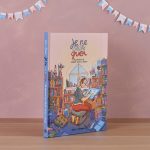
Je Ne Sais Quoi


By Lucie Arnoux (Jonathan Cape)
ISBN: 978-1-78733-359 8 (HB/Digital edition)

Win’s Christmas Gift Recommendation: Sweet, Smart Reminder of What We Are and Where We’re Going … 9/10

The French have a word for it…

We Brits have an hard-won and insanely-cherished Awkward Relationship with the French. On “our” side, the unending, frequently re-declared war of cultures and attitudes stems from our envy of their scenery, beautiful holiday locations, wonderful food, all those different words (like chic and elan) for style, mature and easy attitudes to sex and even the cheap booze & smokes. It’s all bundled up in a shared history of squabbling with a neighbour.

For us, it’s their arrogant smugness, never knowing when they’re wrong and/or beaten, inconceivable ability to say no to their leaders and rulers, never knowing their place and just plain not being British. Worst of all is they do it all whilst making us look stupid: “indulging” and “tolerating” our antics.

Oh, and sport too. They won’t accept our clear superiority there, either. They don’t even play cricket and have their own name for bowls…

I won’t detail their side, even though it’s probably as justified and well-reasoned. Until this book, there was never any evidence that a Gallic heart could fathom the workings of the English mind…

At least the rivalry is generally good natured these day, but can still somehow be exploited to rile up an unwholesome and frankly embarrassing audience whenever dog-whistle politics are unleashed or if newspapers need a quick boost to prop up our equally despised governments. Of course, theirs are despised at home too, but at least seem to know what they’re doing…

At heart, the entente cordiale is an ambiance we’ve carefully cultivated for more than a millennium, nurturing it like a Home Counties lawn or boutique-brewed artisanal gin, which is why it’s such a splendid moment when national disgraces like me can say “Oi! Look at this”…

The one place where the French constantly and conclusively kick our derrieres is comics. Acknowledged as an art form (officially The Ninth Art, in fact) the medium and industry is supported, understood and appreciated by all: calling forth talented individuals like the ungrateful émigré revealed in this tome: someone who inexplicably loves us here as we are and has made her home among us oiks and heathens for more than a decade now…

Lucie Arnoux is a story-maker based in London, from where she’s been embracing our peculiar uniqueness for over a decade. When not travelling the world, she gratefully returns to her English home, celebrating so many conflicting aspects of us, channelling her mania for drawing and music and art in all forms into comics, teaching, illustrating, book writing, set design, sculpture, knitting and so many more forms of sharable self-expression…

I’ve never met her, but she’s clearly as engaging and personable as she is gifted, and – in this big colourful hardback collection of strips – shares her history, thoughts, dreams and adventures with astounding frankness.

A self-confessed misfit looking to find her place, Arnoux draws beautifully in a clear, expressively welcoming – almost chatty – manner and knows how to quietly sneak up, grab your undivided attention and never let go. In a succession of seditiously disciplined 9-panel grids which act as counterpoint to the free flowing pictorial excursions, the auteur deftly steers us through her self-determined chaotic life.

It’s like a comics take on those wonderful 1990s Alan Bennett character studies Talking Heads, revealing greater truth through apparent conversation, intimate fact and candid self-assessment, except here you can actual see what does and doesn’t happen …and how…

Across these page you’ll learn how the drawing-addicted prodigy grew up in Marseilles in an unconventional family amidst unfriendly school inmates and unsettled environs. How she was a remarkable comics prodigy who began working professionally at the age 14, the same year she first visited Britain and inexplicably fell in love with the place…

Formally learning her craft under a strong editor at Studio Gottferdom, she produced a weekly autobiographical strip for legendary fantasy publication Lanfeust Magazine, studied unhappily in Paris, and eventually migrated to her happy place and spiritual home… London.

You’ll pry no more secrets from me: this is a hugely enjoyable treat that you deserve to experience with no preconceptions or spoilers. So go do that, then buy copies for all your friends…

Je Ne Sais Quoi is a fabulously absorbing jolly with a delightfully forthright companion. Arnoux unstintingly shares her thoughts, feeling and experiences in a manner guaranteed to win over the most jaded companion – especially as she garnishes her slivers of fresh experience with laconic but unguarded observations, glimpsed through the welcoming lens of regional foods, booze, hunts for companionship, festivals attended, artworks made, consumed and enjoyed.

Sharp, funny, disarmingly incisive, heart-warming, uncompromising and utterly beguiling, this moving memoir is a comics experience you’ll want to relive over and again.
© Lucie Arnoux 2022.

Je Ne Sais Quoi will be published on 27th October 2022 and is available for pre-order now.

If, like Lucie, you’re London-based, love to travel and party, there’s a Launch Event scheduled for that day at the wondrous and fascinating Gosh! Comics. For details see Gosh! Comics (goshlondon.com)

There could be wine, there may be cheese, there WILL be Lucie Arnoux, convivial conversation and Signed Copies.

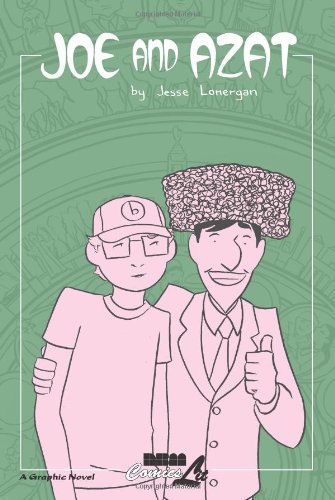
Joe and Azat


By Jesse Lonergan (NBM/ComicsLit)
ISBN: 978-1-56163-570-2 (TPB)

I’m writing this well in advance of publication, with the British media resolutely awash with the worst of all possible candidates for a new Prime Minister. That is of course excluding the one we still have – and cannot seem to pry loose from office. It’s actually comforting to remember that it could always be worse. Here’s a delicious example of a true tale with a hidden message…

Global traveller and cartoonist Jesse Lonergan (Flowers and Fade; Hedra) was born in Sacramento, California, raised in Saudi Arabi and Vermont and then spent two years as an American Peace Corps volunteer, before settling down as an artist and storyteller.

That stint was in the nation of Turkmenistan in the days when the Soviet Union’s collapse released many countries from seven decades of iron repression…

Granted autonomy and self-rule virtually overnight, a lot of Warsaw Pact countries didn’t fare well with instant democracy or Free Market Capitalism. In Turkmenistan, their new leader was also their old one.

Saparmurat Atayevich Niyazov became First Secretary of the Turkmen Communist Party in 1985, and was leader of the country until the 1991 coup and revolt that established an independent Turkmenistan. Then – as “Turkmenbashy” – he ruled as president until his sudden and suspicious death in 2006.

The election was on 21st June 1992 and he was the only candidate running, and in 1994 extended his term of office until 2002 through a plebiscite whose official result gave him 99.9% of the vote (because “everybody likes him”). In December 1999, Parliament  – all of whom he hand-picked – spontaneously appointed him President for Life…

As you’d expect, he was a real pip, renaming the days of the week after himself, adding portions of his autobiography to the official driving test requirements and using the nation’s entire budget to send a book of his poetry into space. In a pitifully arid country, he built a river through his capital city – because all great cities have rivers running through them. Images of the ruthless potentate were everywhere: it’s a shame nobody ever found oil in the country… oh wait. They did…?

Seriously though, if you admire the precept that “truth is stranger than fiction”, you will have as much fun reading his Wikipedia page as this superb, charmingly subtle tale of culture shock pretensions and national misapprehensions that begins as young Joe grapples with the outrageous differences between his (mostly) liberal and wealthy homeland and the rules, laws and ingrained prejudices of a newly liberated society still reeling from the scary potentials of liberty and personal autonomy.

Nervous and alone, the Yankee lad slowly finds a friend in the astonishingly upbeat and forward looking Azat: an ambitious Turkmen convert and eager zealot for “The American Way”. Subsequently, most of Joe’s time is spent futilely apologising and explaining what that term actually means, since current reality is as far removed from the US Movies Azat is addicted to as the decades of Russian propaganda he grew up with.

Becoming almost part of the family – as complex and dysfunctional as any western one – Joe is caught in the tidal wave of Azat’s enthusiastic aspirations and daily frustrations, but never seems able – or willing – to staunch or crush them, even though he knows how hopeless they ultimately are…

Poignant, bittersweet, with an end but no conclusion, this is a superbly understated graphic dissertation on the responsibilities and power of friendship, the toxicity of unattainable dreams and the unthinking cruelty of cultural imperialism and unchallenged tyranny. Illustrated in a magically simplistic and irresistibly beguiling manner, Joe and Azat is a delight for any reader searching for more than simple jokes and action. Reading this would actually be time very well spent and could easily change your outlook…
© 2009 Jesse Lonergan. All rights reserved.