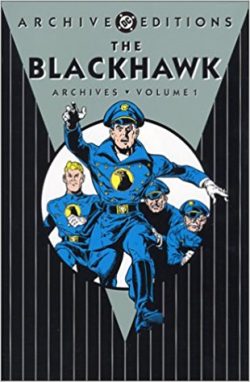
Blackhawk Archives Volume 1


By Will Eisner, Dick French, William Woolfolk, Bob Powell, Chuck Cuidera, Reed Crandall & various (DC Comics)
ISBN: 978-1-56389-700-9

The early days of the American comicbook industry were awash with both opportunity and talent, and these factors beneficially coincided with a vast population hungry for cheap entertainment.

Comics had practically no fans or collectors; only a large marketplace open to all varied aspects of yarn-spinning and tale-telling. Thus, even though America loudly proclaimed its isolationism and remained more than six months away from active inclusion in World War II, creators like Will Eisner and publishers like Everett M. (known to all as “Busy”) Arnold felt that Americans were ready for a themed anthology title such as Military Comics.

Nobody was ready for Blackhawk.

Military Comics #1 launched on May 30th 1941 (with an August off-sale or cover-date) and included in its gritty, two-fisted line-up Death Patrol by Jack Cole, Miss America, Fred Guardineer’s Blue Tracer, X of the Underground, The Yankee Eagle, Q-Boat, Shot and Shell, Archie Atkins and Loops and Banks by “Bud Ernest” (in actuality, aviation-nut and unsung comics genius Bob Powell), but none of the strips, not even Cole’s surreal and suicidal team of hell-bent fliers, had the instant cachet and sheer appeal of Eisner & Powell’s “Foreign Legion of the Air” led by a charismatic Dark Knight known only as Blackhawk.

Chuck Cuidera – already famed for creating The Blue Beetle for Fox Publications – drew ‘The Origin of Blackhawk’ for the premiere issue, wherein a lone, magnificently skilled pilot fighting the Nazi invasion of Poland in 1939 is finally shot down by Nazi Ace Von Tepp.

The sadistic killer then goes on to bomb a farmhouse sheltering the defeated pilot’s family. Rising from his plane’s wreckage, the distraught pilot vows vengeance…

Two years later, with the Nazis in control of most of Europe, Von Tepp’s unassailable position is threatened by a mysterious paramilitary squadron of unbeatable fliers, dedicated to crushing injustice and smashing the Axis war-machine…

Eisner wrote the first four Blackhawk episodes and Cuidera stayed aboard until issue #11 – although the artist would return in later years. Many of the stories were originally untitled but have been conveniently characterized with such stirring designations as issue #2’s ‘The Coward Dies Twice’ wherein the team – “the last free men of the conquered countries” – offer a deserter from a Spitfire Squadron a chance to redeem himself…

The easy mix of patriotism, adventure and slapstick was magnified by the inclusion of Chop-Chop in ‘The Doomed Squadron’: a comedy Chinaman painful to see through modern eyes, but a stock type considered almost as mandatory as a heroic leading man in those dark days, and not just in comics.

At least this Asian man is a brave and formidable fighter both on the ground and in a plane…

‘Desert Death’ takes the team to Suez – for the first of many memorable Arabian adventures – as Nazi agitators attempt to foment revolution among the tribesmen in hopes that they will rise up and destroy the British. This tale is also notable for the introduction of a species of sexy siren beloved of Eisner and Quality Comics. Her or similar seductresses of her ilk would populate the strip until DC bought the property in 1957. Also included here is also a secret map of Blackhawk Island, mysterious base of the ebon-clad freedom fighters.

With issue #5 Dick French assumed the writing role and ‘Scavengers of Doom’ tells a biting tale of battlefield looters allied to a Nazi mastermind, united to set an inescapable trap for the heroic fliers. More importantly, French began providing distinct and discrete characters for the previously anonymous minor players.

In MC #6 the rapidly gelling team joins the frantic hunt for a germ weapon the Gestapo are desperate to possess, resulting in spectacular alpine adventure ‘The Vial of Death’, after which #7 (the first issue released after America entered World War II although the stories had not yet caught up to reality) finds the lads prowling the Mongolian Steppe on horseback to thwart ‘The Return of Genghis Khan’.

‘The Sunken Island of Death’ from #8 is a striking maritime romp wherein the warring powers battle to occupy and possess an island freshly risen from the Atlantic depths. The new-born landmass is strategically equidistant between the USA, Britain and Festung Europa (that’s what the Nazis called the enslaved stronghold they had made of mainland Europe).

Although complete in itself, the yarn is also the first of an experimental, thematic 3-part saga that stretched the way comics stories were told.

There were many marvellously melodramatic touches to make the Blackhawks so memorable in the eyes of a wide-eyed populace of thrill-hungry kids. There was the cool, black leather uniforms and peaked caps. The unique – yet real – Grumman F5F-1 Skyrocket planes they flew from their secret island base and their eerie battle-cry “Hawkaaaaa!” But perhaps the oddest idiosyncrasy to modern readers was that they had their own song which André, Stanislaus, Olaf, Chuck, Hendrickson and Chop-Chop would sing as they plunged into battle. And just to be informative and inclusive, the sheet-music and lyrics were published in this issue and are re-presented here – just remember this is written for seven really tough guys to sing while dodging bullets and weaving between bursts of flak…

Military #9 led with ‘The Man in the Iron Mask’ as the unflappable team discover that a fallen comrade did not actually die in combat, but was hideously disfigured saving them, whilst the next issue’s tale – ‘Trapped in the Devil’s Oven’ – is another desert adventure focusing on the still primitive science of plastic surgery to restore said hero to full fighting trim.

Issue #11 – Cuidera’s last – saw the squadron turn their attention to Japan, as reality at last caught up with publishing schedules. Intriguingly, ‘Fury in the Philippines’ starts quietly with the entire team calmly discussing carrying on against the Nazis or switching their attentions to the Pacific Theatre of Operations, until comedy relief Chop-Chop sways the debaters with an impassioned stand.

Though inarguably an offensive stereotype visually, the Chinese warrior was often given the best lines and most memorable actions. A sneakily subversive attempt on the part of the creators (frequently from immigrant backgrounds and ethnic origins) to shake up those hide-bound societal prejudices, perhaps?

Notwithstanding, the resultant mission against the Japanese fleet is a cataclysmic Battle Royale, full of the kind of vicarious pay-back that demoralized Americans needed to see following Pearl Harbor…

‘The Curse of Xanukhara’ added fantasy elements to the gritty mix of blood and iron as the team’s hunt for a stolen codebook leads them to occupied Borneo and eventually the heart of Tokyo; a classy espionage thriller marking the start of a superlative run of thrillers illustrated by the incredible Reed Crandall.

The artist’s realistic line and the graceful poise of his work – especially on exotic femmes fatale and trustworthy girls-next-door – made his strips an absolute joy to behold.

‘Blackhawk vs. The Butcher’ (Military #13, November 1942) was written by new regular scripter Bill Woolfolk and returned the team to Nazi territory as a fleeing Countess turned the team’s attention to the most sadistic Gauleiter (Nazi regional leader in charge of a conquered territory) in the German Army.

What follows is a spectacular saga of justice and righteous vengeance, whilst ‘Tondeleyo’ reveals a different kind of thriller as an exotic siren uses her almost unholy allure to turn the entire team against each other.

Such quasi-supernatural overtones held firm in the stirring ‘Men Who Never Came Back’ – when the team travel to India to foil a Japanese plot – in a portmanteau tale narrated by the three witches Trouble, Terror and Mystery; eerily presaging the EC horror classics that would cement Crandall’s artistic reputation more than a decade later.

‘Blackhawk vs. the Fox’ pits the flight of heroes against a Nazi strategic wizard (a clear reference to the epic victories of Erwin Rommel) in the burning sands of Libya and remains one of the most authentic battle tales in the canon, before this sublime hardback volume concludes with a racy tale of vengeance and tragedy wherein Japanese traitor Yoshi uses her wiles to punish the military government of Nippon, with Blackhawk as her unwitting tool in ‘The Golden Bell of Soong-Toy!’

These stories were produced at a pivotal moment in both comics and world history, a blend of weary sophistication and glorious, juvenile bravado. Like the best movies of the time – Casablanca, Foreign Correspondent, Freedom Radio, Captain of the Clouds, The Day Will Dawn, The First of the Few, In Which We Serve and all the rest – with their understated, overblown way of accepting duty and loss, these rousing tales of the miracles that good men can do are some of the Golden Age’s finest moments.

In fact, these are some of the best comics stories of their time and I sincerely wish DC had proceeded with further collections.

So will you…
© 1941-1942, 2001 DC Comics. All Rights Reserved.
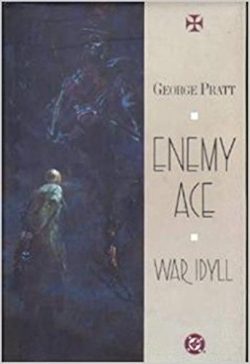
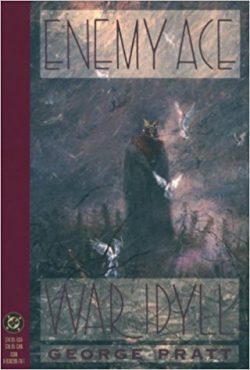
Enemy Ace: War Idyll


By George Pratt (DC Comics)
ISBN: 0-930289-78-1 (HB)                978-0930289782 (TPB)

During the 1960s Marvel gave industry leader National (now DC) Comics an artistic and sales drubbing, overhauling their 20-year position as industry leader – but only in the resurgent genre of super-heroes. In such areas as young kids’ comics, teen-comedies and romance, the House of Ideas still lagged behind, and in the venerable and gritty war-comics market they rated lower even than Charlton.

Admittedly they weren’t really trying, with only the highly inconsistent Sgt. Fury and his Howling Commandos and latterly Captain Savage and his Leatherneck Raiders as publications of any longevity, but that didn’t stop National’s editors and creators from forging ahead: creating a phenomenal number of memorable series and characters to thrill and inform a generation very much concerned with all aspects of military life.

Enemy Ace first appeared as a back-up in issue #151 of flagship war comic Our Army at War (cover-dated February 1965): home of the already legendary Sergeant Rock.

Crafted by the dream-team of Robert Kanigher & Joe Kubert the series told bitter tales of valour and honour from the point of view of German WWI fighter pilot Hans Von Hammer: a pure and noble warrior fighting for his country in a conflict that was swiftly excising all trace of such outmoded concepts from the business of mass-killing.

The tales – loosely based on “Red Baron” Manfred von Richthofen – were a magnificent tribute to the discipline of soldiering whilst wholeheartedly condemning the utter madness of war, produced during the turbulent days of the Vietnam War. They are still moving and powerful beyond belief.

As is this seminal sequel, Enemy Ace: War Idyll. Delineated in moody, misty, strikingly sombre images by painter George Pratt, the story follows the quest of troubled veteran Edward Mannock, a recently returned Vietnam grunt turned photo-journalist. He is a man desperately seeking answers to imponderable questions and great truths to cure the damage his own combat experiences have caused.

1969, and Mannock’s search takes a pivotal turn when, on a routine assignment, he discovers elderly, infirm Von Hammer. The mythic “Hammer of Hell” is dying in a German nursing home but instantly sees that he and the distraught young man share a deep and common bond…

Inexplicably allowed to drop out of print in both hardback and softcover editions and still unavailable in digital formats, this is an astounding, deeply incisive exploration of war, its repercussions, both good and bad, and the effects that combat has on singular men. War Idyll is visceral, poetic, emotive, evocative and terrifyingly instructive: with as much impact as All Quiet on the Western Front or Charley’s War. Every child who wants to be a soldier should be made to read this book.

You don’t want me to talk about it, but you do need to experience it, and once you have you’ll want to share that experience with others…
© 1990, 1998 DC Comics. All Rights Reserved.
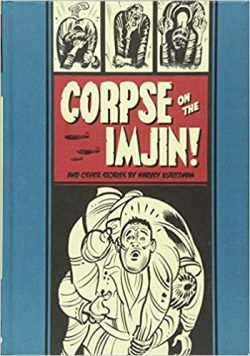
Corpse on the Imjin! and Other Stories by Harvey Kurtzman


By Harvey Kurtzman with Alex Toth, John Severin, Joe Kubert, Russ Heath, Dave Berg, Ric Estrada, Gene Colan, Johnny Craig others (Fantagraphics Books)
ISBN: 978-1-60699-545-7

The legendary EC Comics began in 1944 when comicbook pioneer Max Gaines sold the superhero properties of his All-American Comics company to half-sister National/DC, retaining only Pictures Stories from the Bible.

His plan was to produce a line of Educational Comics with schools and church groups as the major target market and he augmented his core title with Picture Stories from American History, Picture Stories from Science and Picture Stories from World History. Sadly, the worthy project was already struggling badly when he died in a boating accident in 1947.

As detailed in the final comprehensive essay in this superb graphic collection – available as a sturdily spiffy hardcover or in various eBook formats – his son William was dragged into the family business and, with much support and encouragement from unsung hero Sol Cohen (who held the company together until the initially unwilling Bill Gaines abandoned his dreams of a career in chemistry) transformed the ailing enterprise into Entertaining Comics…

After a few tentative false starts and abortive experiments, Gaines and his multi-talented associate Al Feldstein settled into a bold and impressive publishing strategy, utilising the most gifted illustrators in the field to tell a “New Trend” of stories aimed at an older and more discerning readership.

From 1950-1954 EC was the most innovative and influential publisher in America, dominating the genres of crime, horror, war and science fiction and, under the auspices of writer, artist and editor Harvey Kurtzman, the inventor of an entirely new beast: the satirical comicbook…

Kurtzman was hired to supplement the workforce on the horror titles but wasn’t keen on the genre and instead suggested a new action-adventure title. The result was Two-Fisted Tales which began with issue #18 at the end of 1959 as an anthology of rip-snorting, he-man suspense dramas. However, with America embroiled in a military “police action” in Korea, the title soon became primarily a war comic and was rapidly augmented by another.

Frontline Combat was also written and edited by Kurtzman, who assiduously laid-out and meticulously designed every story. It made for great entertainment and a unifying authorial voice but was frequently a cause of friction with many artists…

In keeping with the New Trend spirit, these war stories were not bombastic, jingoistic fantasies for glory-hungry little boys, but rather subtly subversive examinations of the cost of conflict which highlighted the madness, futility and senseless, pointless waste of it all…

Kurtzman was a cartoon genius and probably the most important cartoonist of the last half of the 20th century. His early triumphs in the fledgling field of comicbooks (especially the groundbreaking Mad magazine) would be enough for most creators to lean back on but Kurtzman was a force in newspaper strips (See Flash Gordon Complete Daily Strips 1951-1953) and restless innovator. As a commentator and social explorer, he just kept on looking at folk and their doings: a man with exacting standards who just couldn’t stop creating.

Kurtzman invented a whole new format and gave America Popular Satire by converting his highly successful full-colour baby Mad into a monochrome magazine, safely distancing the outrageously brilliant comedic publication from the fall-out caused by the 1950s socio-political witch-hunt which eventually killed all EC’s other titles.

He pursued his unique brand of thoughtfully outré comedy and social satire further with the magazines Trump, Humbug and Help!, all the while still conceiving challenging and powerfully effective funny strips such as Little Annie Fannie (for Playboy), The Jungle Book, Nutz, Goodman Beaver, Betsy and her Buddies and many more. He died far too young in 1993.

This first volume of the Fantagraphics EC Library gathers a stunning selection of Kurtzman stories in a lavish monochrome hardcover edition, packed with supplementary interviews, features and dissertations, and opens with ‘The Truth’ by cartoonist and historian R.C. Harvey, describing in stark detail the history of Kurtzman’s EC days.

Then follows a raft of stirring sagas solely from the master’s hand, beginning with ‘Conquest’ from Two-Fisted Tales #18, which with acerbic aplomb relates the rise and fall of Spanish conquistador Juan Alvorado whose rapacious hunger for Aztec gold led inexorably to the downfall and doom of his entire expedition.

‘Jivaro Death’ (#19) deals with modern-day greed as two duplicitous Yankees search for diamonds in the heart of the Amazon jungle whilst T-FT #20 detailed the fate of an amnesiac buccaneer who returned from certain death to obsessively reclaim his ‘Pirate Gold’ from the men who betrayed him…

From issue #21 comes ‘Search!’ which ironically combines an Italian-American’s search for family with the devastating US assault on Anzio in 1943, after which the first selection from Frontline Combat provides an uncharacteristically patriotic clash with the North Korean aggressors in ‘Contact!’ (#2, September 1951).

‘Kill’ from T-FT #23 also takes place in Korea, relating a squalid encounter between a blood-thirsty knife-wielding G.I. psycho and his soulless Commie antithesis, whilst ‘Prisoner of War!’ (FC #3) highlights the numbing, inhuman brutality of combat when American POWs attempt an escape…

‘Rubble!’ (T-FT #24) boldly steps into “enemy” shoes by highlighting the war’s casual cost to simple Korean civilians whilst ‘Air Burst!’ in FC #4 goes even further by voicing the Communist soldiers’ side of the conflict.

The eponymous ‘Corpse on the Imjin!’ (T-FT #25) is one of the most memorable, moving and respected tales of the genre: a genuine anti-war story which elegiacally traces a floating body’s motion down the river to expose the ruminations of the doomed observers who see it.

The sentiment is further explored in ‘Big ‘If’!’ (FC #5) as G.I. Paul Maynard sits in a shell hole and ponders what might have been…

Kurtzman’s unique display of cartooning and craftsmanship is followed by the essay ‘Combat Duty’ wherein Jared Gardner discusses the background and usage of the other artists who worked on the author’s Two-Fisted Tales and Frontline Combat scripts, before ‘Marines Retreat!’ – drawn by John Severin and inked by Kurtzman from FC #1 (July/August 1951) – describes in microcosm the shocking American forced withdrawal from the Changjin Reservoir in December 1950. The event stunned and terrified the folks at home and shook forever the cherished belief in the US Marines’ invincibility, and this is all told through the eyes of a soldier who understands too late the values he was supposed to be fighting for…

Kurtzman’s relationship with his artists could be fraught. Alex Toth, a tempestuous individualist who only drew three tales from his editor’s incredibly detailed lay-outs, famously produced some of his very best work at EC under such creative duress. The first and least was ‘Dying City!’ (T-FT #22) which found an aged Korean grandfather berating his dying descendent for the death and destruction he had brought upon his family and nation,

‘O.P.!’ was drawn by hyper-realist Russ Heath (FC #1) and once more ladled on the bleak, black irony during an annihilating trench encounter during WWI, after which Toth’s astounding aerial imagination produced in ‘Thunderjet!’ (FC #8) one of the most thrilling and evocative dogfight dramas in comics history.

This tale alone is worth the price of admission and was an alarm-call to complacent America as a US pilot is forced to concede that his winged weapon is technologically inferior to the ever-present Communist MIGs…

‘Fire Mission!’ (T-FT #29) was drawn by Dave Berg – an artist far better regarded for his comedy work – who lent his facility with expressions to a rather standard tale of courage discovered under fire in Korea, after which Gene Colan delineated the rift between military and civilians in the hours before the attack on Pearl Harbor in ‘Wake!’ from T-FT #30.

From the same issue ‘Bunker!’ was the first strip illustrated by Ric Estrada, describing rivalry and tension between American units during a Korean offensive. Oddly enough for the times, the fact that one faction was comprised of Negro soldiers was not mentioned at all…

The Cuban artist then drew a chillingly macabre tale of Teddy Roosevelt and the Spanish American war of 1898 in ‘Rough Riders!’ (FC #11) before master of comics noir Johnny Craig detailed the fate of a ‘Lost Battalion!’ in WWI (T-FT #32, March/April 1953).

From the same issue, ‘Tide!’ was an EC debut tale for the already-legendary Joe Kubert depicting a D-Day debacle and its insignificance in the grand scheme of things, whilst Toth’s magnificent Kurtzman-scripted swansong ‘F-86 Sabre Jet!’ (FC #12) revisited and even surpassed his Thunderjet job with a potent and beguiling reductionist minimalism that perfectly captured the disorienting hell of war in the air.

Due to illness and the increasing workload caused by Mad, Kurtzman’s involvement with war titles gradually dwindled. Frontline Combat #14, (October 1953) provided his last collaboration with Kubert in ‘Bonhomme Richard!’: a shocking, personalised account of American nautical legend John Paul Jones’ devastating duel with the British warship Serapis – as told by one of the hundreds of ordinary sailors who didn’t survive…

This masterclass in sequential excellence concludes with a salutary tale from the Civil War Special, Two-Fisted Tales #35 (October 1953). Illustrated by Reed Crandall, ‘Memphis!’ blends the destructive horror of the Union’s River Fleet of Ironclads as they inexorably take control of the Mississippi with the irrepressible excitement of Southern kids who simply could not understand what was happening to their parents and families…

Even with the comics extravaganza ended, there’s still more to enjoy as underground cartooning legend Frank Stack discusses the techniques and impact of Kurtzman’s astonishing covers for Two-Fisted Tales and Frontline Combat in ‘Respect for Simplicity – the War Covers of Harvey Kurtzman’; superbly supplemented by a full-colour section representing all of them, even the seldom-seen Two-Fisted Annual 1952.

Also adding to the value is ‘A Conversation with Harvey Kurtzman’ by John Benson, E.B. Boatner & Jay Kinney, which transcribes two interviews from 1979 and 1982, as well as a full appreciation of the great man’s career in ‘Harvey Kurtzman’ by S.C. Ringgenberg.

Rounding everything off is ‘Behind the Panels: Creator Biographies’ a comprehensive run-down of all involved by Bill Mason and others, plus a general heads-up on the entire EC phenomenon in ‘The Ups and Downs of EC Comics: A Short History’ by author, editor, critic and comics fan Ted White.

The short, sweet but severely limited output of EC has been reprinted ad infinitum in the decades since the company died. These astounding stories and art have changed not just comics but also infected the larger world through film and television and via the millions of dedicated devotees still addicted to New Trend tales.

However, as far as I can recall nobody has produced collections faithfully focussing on the contributions of individual creators, and even though fuddy-duddies like me know these timeless classics intimately, this simple innovation has somehow added a new dimension to the readers’ enjoyment.

I strongly suggest that whether you are an aged EC Fan-Addict or nervous newbie, this is a book no comics aficionado can afford to miss…
This edition © 2012 Fantagraphics Books, Inc. All comics stories © 2012 William M. Gaines Agent, Inc., reprinted with permission. All other material © 2012 the respective creators and owners.

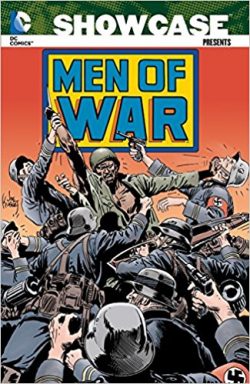
Showcase Presents Men of War


By David Michelinie, Robert Kanigher, Roger McKenzie, Jack C. Harris, Cary Burkett, Paul Kupperberg, Ed Davis, Dick Ayers, Jerry Grandenetti, Howard Chaykin, Arvell Jones, Larry Hama, & various (DC Comics)
ISBN: 978-1-4012-4388-3

In America after the demise of EC Comics in the mid-1950’s and prior to the game-changing Blazing Combat, the only certain place to find controversial, challenging and entertaining American war comics was DC.

In fact, even whilst Archie Goodwin’s stunning but tragically mis-marketed quartet of classics were waking up a generation, the home of Superman, Batman and Wonder Woman was a veritable cornucopia of gritty, intriguing and beautifully illustrated battle tales presenting combat on a variety of fronts and from many differing points of view.

Whilst the Vietnam War escalated, 1960s America increasingly endured a Home Front death-struggle pitting deeply-ingrained Establishment social attitudes against a youth-oriented generation with a radical new sensibility. In response DC’s (or rather National Periodical Publishing, as it then was) military-themed comicbooks became even more bold and innovative…

That stellar and challenging creative period came to an end as all strip trends do, but a few of the more impressive and popular features (Sgt. Rock, Haunted Tank, The Losers) survived well into the second superhero revival. One of the most engaging wartime wonders was a notional espionage thriller starring a faceless, nameless hero perpetually in the right place at the right time, ready, willing and so very able to turn the tide one battle at a time…

Currently English-reading fans of war stories are grievously underserved in both print and digital formats, but this magnificent monochrome reprint compendium is still readily available online. It collects the entire contents of Men of War: an all-new new anthology comicbook which debuted in August 1977 and ran 26 issues until March 1980.

Although offering the usual a variety of alternating back-up strips, Men of War controversially starred and cover-featured Gravedigger, a black American GI in WWII fighting prejudice, segregationist policies and blinkered authority as much as Fascist aggression.

The series was originated by scripter David Michelinie with art on the first episode by Ed Davis & Romeo Tanghal as MoW #1 introduced ‘Codename: Gravedigger’: grumbling US soldier Sergeant Ulysses Hazard in France and under fire in the Summer of 1942.

Of course, he had a lot to complain about. Being a negro, Hazard was not permitted to fight beside white enlisted men and could only be assigned to catering services or the Graves Registration team, marking and recovering the fallen.

A hard pill to swallow for a tough-minded ghetto kid who overcame polio, privation, bigots and bullies, and – through sheer determination – turned his body into a physically perfect human weapon.

When he single-handedly saves a French family from a gang of brutal Germans, white soldiers led by Lieutenant Gage claim the credit. The next day Hazard again displays his military superiority by saving the entire unit from a strafing attack, only to be told once more black men can’t fight.

When Ulysses realises he was saving racists whilst his best pal Andy died in the raid, Hazard fixes upon a desperate plan…

Arvell Jones & Tanghal illustrate the next chapter in #2 as Hazard goes AWOL: sneaking back into America to fight ‘The Five-Walled War!’. Breaking into the newly-constructed Pentagon, the outraged warrior battles his way past an army of troops to confront the astounded Undersecretary of War.

A shrewd and ruthless opportunist, the politico sees a chance to create a different kind of soldier and maybe even buy black votes in the next election cycle. Decreeing Hazard a top secret, one-man strike-force and personal suicide squad, with typical unforced irony the demagogue designates his new, extremely expendable toy ‘Codename: Gravedigger’…

Issue #3 finds newly-promoted Captain Hazard back in France within days; rescuing Gage and the soldiers who took credit for his actions. Even after they try to arrest him for desertion, Hazard pushes on with his first mission: ‘The Suicide Stratagem’ demanding he invade a mountain-top fortress to clear out a nest of Nazis holding up the entire war effort. No sooner has he done so than Gage and crew burst in to wipe out the survivors… especially any black soldiers who might get in the way…

Evergreen WWI anti-war feature Enemy Ace copped the first tranche of back-up slots for issues #1-3. Executed by Robert Kanigher, Ed Davis & Juan Ortiz, opening chapter ‘Death is a Wild Beast!’ has conflicted, honourable fighter pilot Hans Von Hammer downing a devil-themed British pilot who accomplishes a miraculous ‘Return from Hell!’ in the second instalment before experiencing ‘The Three Faces of Death’ in the final instalment.

As ever, the real meat of the macabre missions is the toll on the minds and bodies of the merely mortal fliers who die while Von Hammer lives on in guilty anguish…

The next triptych of back-ups (in #4-6) introduced New York Courier reporter Wayne Clifford, arriving in London in June 1940 to cover the “European War” for the still-neutral folks back home.

Crafted by Cary Burkett & Jerry Grandenetti ‘Dateline: Frontline’ focuses on the stories behind the war as neophyte Clifford is taken under the wing of veteran wordsmith Ed Barnes and learns some hard truths about propaganda, integrity and necessity after he tries to send back his account of a friendly-fire incident…

More gritty revelations add to the innocent’s education during an air raid spent with hard-pressed Londoners in a tube station in ‘Dateline: Frontline: Human Interest Story’ whilst #7 found the plucky news-hawk at ground zero on top of an unexploded bomb in ‘Dateline: Frontline Countdown!’

In Men of War #4 Dick Ayers took over as penciler as Gravedigger’s ‘Trial by Fire’ explosively ends with the pariah destroying the mountaintop Nazi base and saving Gage’s unit, only to be reviled and attacked by the man he humiliatingly saved, after which #5 welcomed Roger McKenzie as new writer.

Here Gravedigger enters the ‘Valley of the Shadow’ in an Alpine village turned impregnable German stronghold. His mission is to start an avalanche and eradicate the Nazi artillery nest but no one warned him of the captive populace held in the church…

MoW #6 then offers ‘A Choice of Deaths’ (McKenzie, Ayers & Tanghal) as the loner’s daring raid on a prison to free hostages is almost thwarted by the internees’ reluctance to leave behind certain works of art…

Men of War #7 featured Gravedigger’s first full-length exploit. ‘Milkrun’ sees the one-man army ordered to England for further intensive training at the hands of British expert Major Birch, but the journey back with mild-mannered clerk-turned-jeep driver Boston proves to be one of the most eventful rides Hazard has ever taken…

‘Death-Stroke’ leads in #8, as the American’s intensive training includes a potent degree of brainwashing. Unknow to anybody, Birch has been replaced by a Nazi agent who primes Ulysses to murder Winston Churchill…

Another Enemy Ace triptych began in the back of #8 and ‘Silent Sky… Screaming Death!!’ (illustrated by Larry Hama & Bob Smith) details a trenchant tale of a family at war. Howard Chaykin took over the illustration as a regulation clash in the sky resulted in attack by vengeful siblings and the return of Von Hammer’s father in ‘Brother Killers!’ (#9), revealing aspects of the German Ace’s own childhood and culminating in a fateful and final ‘Duel at Dawn!’ in #10.

MoW #9’s ‘Gravedigger – R.I.P.’ exposed layer upon layer of deceit and deception. Thanks to a tip-off by investigative reporter Wayne Clifford, Hazard’s assassination attempt is foiled by the Allies’ own master-of-disguise super-agent (no prizes for guessing who) and the brainwashed killer is captured and de-programmed. His death then faked, Hazard clandestinely heads to Berlin to rescue the real Birch…

This issue included extra feature ‘Dateline: Frontline: Bathtub Blues’ by Burkett & Grandenetti. Now stationed in North Africa, Clifford is attached to the British Army and sees for himself the nauseating difference between a braggart and a hero…

Men of War #10 opened with a ‘Crossroads’ reached by Codename: Gravedigger when he is shot down miles short of his Berlin destination and meets a fugitive Jewish family torn apart less by the war than the hatred and horrors that sparked it…

Supplementing the Enemy Ace back-up cited above is another stark and moving Wayne Clifford yarn by Burkett & Grandenetti. ‘Dateline: Frontline: Glory Soldier’ sees the writer caught in the bloody orbit of a gung-ho suicidal British corporal…

In #11 Hazard and his new Jewish comrades invade top secret death camp ‘Berkstaten’ and discovering to his shock and relief that not all Germans are monsters, whilst ‘Dateline: Frontline: Funeral Pyre’ sees Wayne lose his journalistic distance and impartiality after rescuing a baby and being captured by Arab raiders who consider both Germans and British as ruthless invaders…

Jack C. Harris took over writing the lead feature in MoW #12 as ‘Where is Gravedigger?’ sees the black soldier and his youthful Jewish allies finally enter Germany’s capital, even with the entire German army hunting for them. Unfortunately for the hunters, the one place they neglect to check is the torture chamber holding Major Birch…

Kanigher & Chaykin began another doleful, doom-laden Enemy Ace drama in the same issue. ‘Banner of Blood!’ sees the troubled Rittmeister striving to retrieve the Von Hammer family standard from a cunning French air ace who is the latest scion of an ancestral foe.

The tale continued in #13 as Von Hammer’s face-to-face confrontation with ‘The Last Baron!‘ leads to the final clash in a centuries-long vendetta with the Comtes de Burgundy ending forever in one last honourable ‘Duel!’…

‘Project Gravedigger…Plus One’ was the blockbusting main attraction in #13 as Hazard and Birch blaze and blast their way out of Berlin and back to Britain, where a confrontation with original sponsor the US Undersecretary of War leads to the black warrior taking on a new and freer role in his own affairs.

In Germany, however, outraged bigot and madman Joseph Goebbels takes personal charge of punishing the “subhuman inferior” who has shamed the entire Reich…

Despatched to Egypt in #14, Hazard faces ‘The Swirling Sounds of Death’ when the interception of a crucial Nazi courier is briefly derailed after Gravedigger is captured by Arab bandits. By the time he resumes stalking his target, Ulysses rules the Tuaregs but leads them into disastrously battle with British tanks before being himself taken by his elusive enemy Eric Von King‘The Man with the Opened Eye’…

Rounding out the issue are a brace of short combat yarns: underwater demolitions thriller ‘Wolf Pack’ by Bill Kelley, Hama & Jack Abel and American Civil War vignette ‘The Sentry’ by artist Bill Payne and an unknown writer.

A minor visual overhaul for Gravedigger comes with #16’s book-length thriller ‘Hide and Seek the Spy’ as Von King uses Hazard as a human shield during a Panzer assault on the British lines. Although the lone wolf escapes, he will forever bear the scars of his close shave. Worst of all, the slippery courier again eludes him with the critical plans known as Defense Packet 6…

Never quitting, Hazard and an elite commando team continue their pursuit in MoW #17 reaching the Nile where a German mini U-boat turns the majestic waterway into ‘The River of Death’. Meanwhile in Germany, Goebbels’ top scientists edge closer to completing the perfect antidote to the Gravedigger’s perpetual interference…

In the back of the issue Paul Kupperberg & Grandenetti introduced a new historical star as ‘Rosa: The Castle Rhinehart Affair Part One’ depicts a 19th century secret agent and international man of mystery tasked in 1870 with ending the Franco-Prussian War by assassinating Bismarck’s top advisor…

The fraught and frantic mission in a strategically vital Schloss concludes in ‘Rosa: The Castle Rhinehart Affair Part Two’ with the master-spy completing his task and consequently uncovering top-level double-dealing amongst his own superiors. A creature of implacable moral fortitude, Rosa has his own cure for treachery…

Gravedigger’s apparent failure is rewarded with another suicidal solo mission in MoW #18 as ‘The Amiens Assault’ covertly returns him to France to extract atomic scientist Monsieur Noir; another doomed mission that gets a miraculous helping hand from French Resistance fighters and ‘An Angel Named Marie’ in #19.

Issues #19-20 (August and September 1979) also featured another Kanigher/Chaykin Enemy Ace back-up tale of nobly idiotic honour and wasted young lives as Von Hammer makes ‘A Promise to the Dying’ and seeks to restore a contentious souvenir to its rightful owner in ‘Death Must Wait!’

For Ulysses Hazard #20 meant a short trip to Sicily to find and destroy a munitions dump reinforcing German forces battling General Patton’s advance in ‘Cry: Jericho’…

Men of War #21 provided a novel change of pace and locale as ‘Home – Is Where the Hell Is’ takes Hazard back to America after his mother is taken ill. Even a one-man army despised and reviled by his superiors is eligible for compassionate leave, but nobody realises the entire scheme has been concocted by Goebbels using surgically created doppelgangers to eliminate the black super soldier…

Taking up the rear, the most harrowing phase of Wayne Clifford’s career begins when Burkett & Grandenetti point his nose for news towards the Eastern Front in ‘Dateline: Frontline: Mother Russia’.

Barely surviving passage on a convoy ship and limping into a battered port, the journalist realises the true import of his next story only after meeting starving Russian children…

Ambushed in Atlantic City, New Jersey, Gravedigger opens issue #22 by killing his assailants, sinking a Nazi U-boat and causing a ‘Blackout on the Boardwalk’, after which ‘Dateline: Frontline: Scorched Earth, Crimson Snow’ further explores the Eastern hell as Clifford experiences first hand and up close the siege of Moscow…

Gravedigger’s ‘Mission: Six Feet Under!’ sees him plying his old trade with the Graves Registration unit during a highly suspicious trade of bodies with the Germans. It doesn’t take him long to determine that the American cadavers he’s retrieving have been gimmicked with the vilest form of biological weapon and respond accordingly…

Burkett & Grandenetti then record that ‘Dateline: Frontline: A Quiet Day in Leningrad’ is anything but…

MoW #24 starts a 2-part tale of ‘The Presidential Peril’ as Hazard is detailed to safeguard Franklin Delano Roosevelt on a trip to England that has all manner of Nazi spy and maniac crawling out of the woodwork…

‘Rosa: The Ambassador’s Son Affair Part One’ (Kupperberg & Grandenetti and concluding in the next issue) finds the master of intrigue sharing his (possible) origins with an imperilled junior dignitary in Mexico circa 1867 before #25 sees Gravedigger ‘Save the President’ through a phenomenal display of ingenuity and martial prowess only to be rewarded with an even more impossible mission…

Men of War was cancelled with #26 but went out in a blaze of glory as ‘Night on Nickname Hill’ (Harris, Ayers & Tanghal) sees Hazard despatched to Tunis in March 1943 to link up with Sgt Rock and lead Easy Company against a fortified artillery position: a critical battle that would determine the outcome of the Allies’ campaign in Africa…

With stunning covers by Joe Kubert, Ed Davis and George Evans, this mighty black-&-white treasure trove of combat classics is a type and style of storytelling we’re all the poorer without. Hopefully publishers will wise up soon and begin restoring their like to the wide variety of genre sagas currently available in graphic collections.
© 1977, 1978, 1979, 1980, 2014 DC Comics. All Rights Reserved.
Sgt. Rock Archive Edition Volume 1


By Robert Kanigher, Joe Kubert, Bob Haney, Ross Andru, Irv Novick, Jerry Grandenetti & various (DC Comics)
ISBN: 978-1-56389-841-9

Sgt Rock and his “combat-happy Joes” of Easy Company are one of the great and most enduring creations of the American comicbook industry. The gritty meta-realism of Robert Kanigher’s ordinary guys in life-or-death situations captured the imaginations of generations of readers, young and old.

So pervasive is this icon of comicbook combat, that it’s hard to grasp that Rock is not an immortal industry prototype like Superman, Batman and Wonder Woman – with us since the earliest moments of the industry – but is in fact a late addition to and child of the Silver Age of Comics.

This gloriously gritty, full-colour hardcover collection musters all pertinent material in the evolution of the immortal “topkick” from the early salvo of battle blockbusters from Our Army at War #83-96 (including the tentative first steps in the character’s evolution from G.I. Combat #68 and Our Army at War #81-82): a period spanning the dog-days of 1958 to the summer of 1960, wherein the entire field of American comics was just beginning a staggering revolution in style, theme and quality.

Following a fascinating reminiscence from co-creator and comics legend Joe Kubert (and this inaugural battle-book also includes detailed creator profiles), the pictorial action commences with a stunning Jerry Grandenetti cover – the first of many in this impressive tome – from G.I. Combat #68 (cover-dated January 1959), and the simple, unassuming filler story by Robert Kanigher & Joe Kubert, of an anonymous boxer who wasn’t particularly skilled but simply, stubbornly refused to be lie down and be beaten…

When ‘The Rock!’ enlisted in the US Army, however, that same Horatian quality attained mythic proportions as he held back an overwhelming Nazi attack by sheer grit and determination, remaining bloody but unbowed on a field littered with dead and broken men…

Although no more than another straight “ordinary guy finds his heroic niche” yarn for the anthology mill that proliferated in war comics of the era, something in this tale – other than the superbly taut script and stunning illustration – caught the attention of both the public and the editors…

Christened “Rocky”, the character returned as a sergeant in the Our Army at War (#81, April 1959), again facing overwhelmingly superior German forces as ‘The Rock of Easy Co.!’ in a brief but telling vignette by Bob Haney, Ross Andru & Mike Esposito before finally evolving an actual persona as Sgt. Rock in the next issue, with the Mort Drucker illustrated ‘Hold Up Easy!’: another harsh and declarative pocket-epic from Kanigher which saw everyman hard-luck heroes Easy Company delayed and then saved by callow replacements who eventually came good in the life-changing crucible of combat…

Our Army at War #83 (June 1959) then housed the true launch of the ordinary hero in ‘The Rock and the Wall!’ (by Kanigher & Kubert): wherein a tough-love, battlefield tutor shepherded his callow men to competence and survival amidst the constant perils of war. Here he met a rival for his men’s admiration in the equally impressive warrior Joe Wall…

Irv Novick illustrated ‘Laughter on Snakehead Hill!’ as the embattled dog-faces of Easy fought to take a heavily fortified citadel whilst OAAW#85 introduced the first continuing and marginally less-disposable cast member in the Kubert-limned ‘Ice Cream Soldier!’, wherein Rock assuaged a fearful replacement’s jangled nerves with tales of another hopeless “green apple” who grew into his job.

This ploy of incorporating brief past-action episodes into a baptism-of-fire scenario would play over and over again and never get old…

Following a magnificent cover by master of realism Russ Heath, Haney returned in #86 to script ‘Tank 711’ for Kubert as the terse top-kick educated another newbie in combat etiquette. Kanigher returned to describe the taking of “No-Return-Hill” and the initiation of four more raw recruits in ‘Calling Easy Co.!’ after which Grandenetti illustrated a brace of tales in #88 and 89: ‘The Hard Way’ in which Rock suffered a shocking crisis of confidence and ‘No Shot from Easy!’ wherein the indomitable sergeant was forced to give his toughest ever order…

Issue #90 is classic Kubert from start to finish as ‘Three Stripes Hill!’ revealed the story of how Rock won his stripes, after which the traditionally anthological Our Army at War instead offered three complete Sgt. Rock stories in #91. These began with ‘No Answer From Sarge!’ as the NCO risked everything to drag a recruit out of a crippling funk, continued in ‘Old Soldiers Never Run!’ where he had to weigh an old man’s pride against Easy’s continued existence, and concluded with Haney’s tragic fable of a sole-surviving Scottish soldier in ‘The Silent Piper!’

Issue #92 saw Kanigher & Kubert tackle battlefield superstitions in ‘Luck of Easy!’, after which ‘Deliver One Air Field!’ introduced Zack Nolan, a son of privilege who had to learn teamwork the hard way whilst #94’s ‘Target… Easy Company’ pitted the battle-weary Company against a German General determined to eradicate the high-profile heroes at all costs…

OAAW #95 debuted the charismatic and ambitious Bulldozer Nichols in ‘Battle of the Stripes!’: the hulking giant wanted Rock’s rank and position but grew to become the second most-recognisable character of the entire series, and this premier deluxe edition closes its preliminary campaign with ‘Last Stand for Easy!’ which saw the still in-charge non-com compelled to relinquish his lead-from-the-front position after a by-the-book officer deems him too valuable to waste on a battlefield…

Robert Kanigher at his worst was a declarative, heavy-handed and formulaic writer, but when writing his best stuff – as he does here – was an imaginative, evocative, iconoclastic and heart-rending observer of the warrior’s way and the unchanging condition of the dedicated and so very human ordinary foot-slogging G.I. He is a writer no comics fan should ignore or dismiss.

With superb combat covers from Grandenetti, Kubert or Heath fronting each episode, this titanic tome is a visually intoxicating compendium and brilliant tonic for any jaded fan looking for something more substantial than simple flash and dazzle. It’s also long overdue for revival and translation to digital formats.

A perfect example of true Shock and Awe; these are stories every fan should know.
© 1959, 1960, 2002 DC Comics. All Rights Reserved.
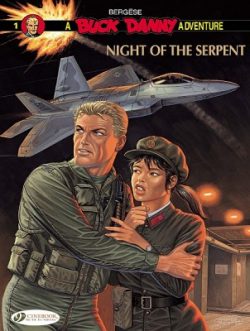
Buck Danny volume 1: Night of the Serpent


By Francis Bergése, colours by Frédéric Bergése; translated by Jerome Saincantin (Cinebook)
ISBN: 987-1-905460-85-4

Buck Danny premiered in Le Journal de Spirou in January 1947 and continues soaring across the Wild Blue Yonder to this day. The strip describes the improbably long yet historically significant career of the eponymous Navy pilot and his wing-men Sonny Tuckson and Jerry Tumbler. It is one of the world’s last aviation strips and a series which has always closely wedded itself to current affairs, from the Korean War to Afghanistan, the Balkans to Iran. With the current bellicose undercurrent informing or perhaps tainting America’s influence around the world, it’s interesting to imagine what tales might be told during the current administration…

The dauntless US Naval Aviator was created by Georges Troisfontaines whilst he was director of Belgian publisher World Press Agency and depicted by Victor Hubinon before being handed to the multi-talented scripter Jean-Michel Charlier, who was then working as a junior artist.

Charlier’s fascination with human-scale drama and rugged realism had been first seen in such “true-war” strips as L’Agonie du Bismark (The Agony of the Bismarck – published in Spirou in 1946).

With fellow master-storytellers Albert Uderzo & René Goscinny, Charlier formed Édifrance Agency, which promoted and specialised in communication arts and comics strips. Charlier and Goscinny were editors of the magazine Pistolin (1955 to 1958) and went on to create Pilote in 1959 but Charlier (whose greatest narrative triumph is iconic Western Blueberry, created in 1963 with Jean Giraud/Moebius) continued to script Buck Danny and did so until his death.

On his passing artistic collaborator Francis Bergése (who first replaced Hubinon in 1978) took complete charge of the adventures of the All-American Air Ace, on occasion working with other creators such as Jacques de Douhet.

Like so many artists involved in aviation storytelling, Bergése (born in 1941) started young with both drawing and flying. He qualified as a pilot whilst still a teenager, enlisted in the French Army and was a reconnaissance flyer by his twenties.

At age 23 he began selling strips to L’Étoile and JT Jeunes (1963-1966), after which he produced his first aviation strip Jacques Renne for Zorro. This was followed by Amigo, Ajax, Cap 7, Les 3 Cascadeurs, Les 3 A, Michel dans la Course and many more.

Bergése worked as a jobbing artist on comedies, pastiches and WWII strips until 1983 when he won the coveted job of illustrating globally syndicated Buck Danny with 41st yarn Apocalypse Mission’.

He even found time in the 1990s to produce a few episodes of the European interpretation of British icon Biggles before finally retiring in 2008, passing on the reins to illustrators Fabrice Lamy & Francis Winis and scripter Frédéric Zumbiehl.

Thus far – with Zumbiehl & Gil Formosa now at the helm – the franchise has notched up 55 albums…

Like all the Danny tales this premier edition is astonishingly authentic and still worrisomely topical: a breezily compelling action thriller originally published in 2000 as Buck Danny #49: La nuit du serpent – with colouring by Frédéric Bergése (I’m assuming that’s his son, but I’m not certain) blending mind-boggling detail and technical veracity with good old-fashioned blockbuster adventure.

At Kunsan Airbase, South Korea, a veteran American pilot goes on dawn border patrol only to be hit by an uncanny light which blinds him and seems to negate all his F-16’s guidance systems. Despite his best efforts, the jet crashes in the De-Militarized Zone and the North Koreans claim a flagrant breaking of the truce and a huge publicity coup.

Strangely though, the downed Colonel Maxwell is still missing. The Communists don’t have him and the pilot’s tracking devices indicate he’s still out there somewhere: lost in the No Man’s Land between North and South.

The mighty US military swings into action, determined to rescue their pilot, clean up the mess and deny the Reds either a tangible or political victory. Buck, Tumbler and Tuckson are at a Paris air show when they get the call and are soon en route to Korea for a last-ditch, face-saving mission.

However, as the trio prepare to join the covert rescue mission, evidence emerges which casts doubt on the authenticity of the alleged super-weapon. Meanwhile Maxwell has stumbled into a fantastic secret beneath the DMZ…

Fast-paced, brimming with tension and spectacular action, this is a classically designed thriller which effortlessly plunges the reader into a delightfully dizzying riot of intrigue, mystery and suspense before its captivating conclusion.

Suitable for older kids and the adventurous of all ages, the Adventures of Buck Danny comprise one endlessly enthralling tour of duty no comics fan or armchair adrenaline-junkie can afford to miss.

Bon chance, mes braves…
© Dupuis, 2000 by Bergése. English translation © 2009 Cinebook Ltd. All Rights Reserved.

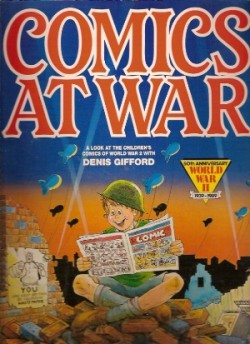
Comics at War


By Denis Gifford (Hawk Books)
ISBN: 978-0-96824-885-6

Very often the books we write about our comics are better than the stories and pictures themselves: memorable, intensely evocative and infused with the debilitating nostalgic joy that only passing years and selective memory bestows.

That’s not meant in any way to denigrate or decry the superb works of the countless -generally unrecognised and generally unlauded – creators who brightened the days of generations of children with fantastic adventures and side-splitting gags in those so flimsy, so easily lost and damaged cheap pamphlets, but rather because of an added factor inherent in these commemorative tomes: by their very existence they add the inestimable value and mystery of Lost, Forgotten or Buried Treasures into the mix.

A perfect example is this copious chronicle released as an anniversary item in 1988 to celebrate the wartime delights rationed out to beleaguered British lads and lasses, compiled by possibly the nation’s greatest devotee and celebrant of childish pastimes and halcyon days.

Denis Gifford was a cartoonist, writer, TV show deviser and historian who loved comics. As both collector and creator he gave his life to strips and movies, acquiring items and memorabilia voraciously, consequently channelling his fascinations into more than fifty books on Film, Television, Radio and Comics; imparting his overwhelming devotion to a veritable legion of fans.

If his works were occasionally short on depth or perhaps guilty of getting the odd fact wrong, he was nevertheless the consummate master of enthusiastic remembrance. He deeply loved the medium in concept and in all its execution, from slipshod and rushed to pure masterpieces with the same degree of passion and was capable of sharing – infecting almost – a casual reader with some of that fierce wistful fire.

With hundreds of illustrative examples culled from his own collection, this volume was released to commemorate the outbreak of World War II and revels in the magnificent contributions to morale generated by a battalion of artists and (usually anonymous) writers, covering the output – in breadth if not depth – of an industry that endured and persevered under appalling restrictions (paper was a vital war resource and stringently rationed), inciting patriotic fervour and providing crucial relief from the stresses and privation of the times.

Abandoning academic rigour in favour of inculcating a taste of the times, this book reprints complete sample strips of the period beginning with the affable tramps and Jester cover stars Basil and Bert (by George Parlett), covering the start of the war in four strips from January to November 1939, before dividing the collection into themed sections such as Be Prepared: with examples of Norman Ward’s Home Guard heroes Sandy and Muddy from Knock-Out and John Jukes’ Marmaduke, the Merry Militiaman from Radio Fun.

At War With the Army displays the ordinary Englishman’s perennial problem with Authority – with episodes of Koko the Pup and Desperate Dan (respectively by Bob MacGillivray and Dudley Watkins from D.C. Thomsons’ Magic and The Dandy); Weary Willie and Tired Tim (from Chips and superbly rendered by Percy Cocking), as well as stunning two-tone and full colour examples from Tip-Top, The Wonder and others.

Tanks a Million! offers selections from the height of the fighting, and brings us head-on into the controversial arena of ethnic stereotyping. All I can say is what I always do: the times were different. Mercifully we’ve moved beyond the obvious institutionalised iniquities of casual racism and sexism (maybe not so much on that last one though?) and are much more tolerant today (unless you’re obese, gay, a smoker, or childless and happy about it), but if antiquated attitudes and caricaturing might offend you, don’t read old comics, or watch vintage films or cartoons – it’s your choice and your loss.

The strip that sparked this tirade is an example of Stymie and his Magic Wishbone from Radio Fun (a long-running strip with a black boy-tramp in the tradition of minstrel shows) from a chapter highlighting the comic strip love-affair with armoured vehicles and including many less controversial examples from Tiger Tim’s Weekly, Knock-Out, Chips and The Dandy, featuring stars such as Our Ernie, Our Gang, Stonehenge, Kit the Ancient Brit and Deed-A-Day Danny.

…And if you think we were hard on innocent and usually allied non-white people just wait till you see the treatment dealt to Germans, Italians and Japanese by our patriotic cartoonists…

At Sea with the Navy! highlights nautical manoeuvres from Casey Court (Chips, and by Albert Pease); Rip Van Wink (Beano, James Crichton); Lt. Daring and Jolly Roger (from Golden by Roy Wilson; Billy Bunter (Knock-Out by Frank Minnitt); Hairy Dan (Beano, Basil Blackaller) and Pitch and Toss (Funny Wonder, Roy Wilson again) whilst Sinking the Subs takes us below the surface with Our Ernie, Desperate Dan, Koko, Pansy Potter, Alfie the Air Tramp and Billy Bunter.

Britain’s fledgling flying squad takes centre-stage with In the Air with the R.A.F. featuring Freddie Crompton’s Tiny Tots, Korky the Cat from Dandy, The Gremlins (Knock-Out, by Fred Robinson) and yet more Koko the Pup.

Awful Adolf and his Nasty Nazis! demonstrates and deftly depicts just what we all thought about the Axis nations and even indulges in some highly personal attacks against prominent personages on the other side, beginning with Sam Fair’s riotously ridiculing Addie and Hermy, (Beano‘s utterly unauthorised adventures of misters Hitler and Goering), whilst Our Ernie, Lord Snooty, Pitch and Toss, Big Eggo (Beano, by Reg Carter), Plum and Duff (Comic Cuts, Albert Pease) and the staggeringly offensive Musso the WopHe’s a Big-a-Da-Flop (Beano, Artie Jackson and others) all cheered up the home-front with macerating mockery.

Doing Their Bit then gathers wartime exploits of the nation’s stars and celebrities (turning Britain’s long love affair with entertainment industry figures into another True Brit bullet at the Boche. Strips featuring Tommy Handley, Arthur Askey, Charlie Chaplin, Jack Warner, Flanagan and Allen, Haver and Lee, The Western Brothers, Sandy Powell, Old Mother Riley (featuring Lucan & McShane), Claude Hulbert, Duggie Wakefield, Joe E. Brown, Harold Lloyd, Lupino Lane and Laurel and Hardy included here were collectively illustrated by Reg and George Parlett, Tom Radford, John Jukes, Bertie Brown, Alex Akerbladh, George Heath, Norman Ward and Billy Wakefield.

The kids themselves are the stars of Evacuation Saves the Nation! as our collective banishment of city-bred children produced a wealth of intriguing possibilities for comics creators.

Vicky the Vacky (Magic, George Drysdale), Our Happy Vaccies (Knock-Out, by Hugh McNeill) and Annie Vakkie (Knock-Out, by Frank Lazenby) showed readers the best way to keep their displaced chins up before Blackout Blues! finds the famous and commonplace alike suffering from night terrors…

Examples here include Grandma Jolly and her Brolly, Will Hay, the Master of Mirth, Ben and Bert, Barney Boko, Crusoe Kids, Grandfather Clock, Constable Cuddlecock and Big Ben and Little Len after which Gas Mask Drill finds the funny side of potential asphyxiation with choice strips such as Stan Deezy, Hungry Horace, Deed-A-Day Danny, Big Eggo, Good King Coke and Cinderella all encountering difficulties with Britain’s most essential useless fashion accessory…

Barrage Balloons! lampoons the giant sky sausages that made life tricky for the Luftwaffe with examples from Luke and Len the Odd-Job Men (Larks and by Wally Robertson), It’s the Gremlins, Alfie the Air Tramp, and In Town this Week from Radio Fun whilst Tuning Up the A.R.P.! deals out the same treatment to the valiant volunteers who patrolled our bombed-out streets after dark. Those Air Raid Precautions patrols get a right (albeit roundly good natured) sending up in strips starring Deed-A-Day Danny, Big Eggo, P.C. Penny, Ben and Bert, Marmy and His Ma, Lord Snooty and his Pals, The Tickler Twins in Wonderland, Our Ernie, Tootsy McTurk, Boy Biffo the Brave and Pa Perkins and his Son Percy.

The girls finally get a go in the vanguard with Wow! Women of War! starring Dandy‘s Keyhole Kate and Meddlesome Matty (by Allan Morley and Sam Fair respectively); Dolly Dimple (Magic, Morley again), Tell Tale Tilly, Peggy the Pride of the Force, Pansy Potter the Strongman’s Daughter, Big Hearted Martha Our A.R.P. Nut and Kitty Clare’s Schooldays whilst the Home Guard stumble to the fore once more in a section entitled Doing Their Best with examples from Tootsy McTurk (Magic, John Mason), Casey Court, Lord Snooty, Deed-A-Day Danny and Big Eggo.

The peril of imminent invasion was always in the air and the embattled cartoonists sensibly responded with measured insolence. Hop It, Hitler! displays our pen-pushers’ fighting spirit with examples such as Bamboo Town (Dandy, Chick Gordon), Sandy and Muddy, Pansy Potter, the astonishingly un-PC Sooty Snowball, Hair-Oil Hal Your Barber Pal and Stonehenge Kit, before espionage antics are exposed in I Spy Mit Mein Little Eye! in Laurie and Trailer the Secret Service Men plus even more Sandy and Muddy, Herr Paul Pry, Big Eggo and Lord Snooty.

Wireless War! celebrates both radio stars and enemy broadcasts with a selection from Tommy Handley, Troddles and his Pet Tortoise Tonky-Tonk, Happy Harry and Sister Sue, Crackers the Perky Pup, Our Gang and a couple of examples of John Jukes’ sublimely wicked Radio Fun strip Lord Haw-Haw – The Broadcasting Humbug from Hamburg.

To Blazes With the Firemen! is a rather affectionate and jolly examination of one of the toughest of home front duties with a selection of strips including Podge (whose dad was a fire-fighter, drawn by Eric Roberts for Dandy), Casey Court, Pansy Potter and In Town This Week.

Rationing was never far from people’s minds and an art-form where the ultimate reward was usually “a slap-up feed” perfectly lambasted the necessary measures in many strips. Examples here include The Bruin Boy from Tiny Tim’s Weekly; Freddy the Fearless Fly (Dandy, Allan Morley), Cyril Price’s vast ensemble cast from Casey Court (courtesy of Chips), Our Ernie and Dudley Watkins’ Peter Piper from Magic, all in need of Luvly Grub!

Under the miscellaneous sub-headings of Salvage!, Comical Camouflage!, Workers Playtime! and Allies, strips featuring Ronnie Roy the India-rubber Boy, Ding Dong Dally, Desperate Dan, Tin-Can Tommy the Clockwork Boy, Big Hearted Arthur and Dicky Murdoch and other stalwarts all gather hopeful momentum as the Big Push looms and this gloriously inventive and immensely satisfying compilation heads triumphantly towards its conclusion.

V for Victory! sees a telling gallery of strips celebrating the war’s end and better tomorrows; featuring final sallies from Casey Court, Weary Willie and Tired Tim, a stunning Mickey Mouse Weekly cover by Victor Ibbotson, It’s That Man Again – Tommy Handley, Laurel and Hardy and – from Jingles – Albert Pease has the last word with ‘Charlie Chucklechops Speaking… About New Uses for Old War materials’…

Some modern fans find a steady diet of these veteran classics a little samey and formulaic – indeed even I too have trouble with some of the scripts – but the astonishing talents of the assembled artists here just cannot be understated. These are great works by brilliant comic stylists which truly stand the test of time. Moreover, in these carefully selected, measured doses these tales salvaged from a desperate but somehow more pleasant and even enviable time are utterly enchanting. This book is long overdue for a new edition and luckily for you is still available through many internet retailers.
Text and compilation © 1988 Denis Gifford. © 1988 Hawk Books. All rights reserved.

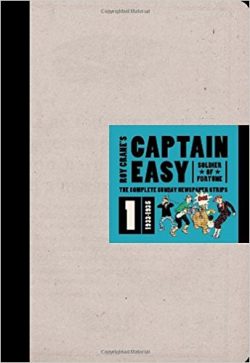
Roy Crane’s Captain Easy, Soldier of Fortune: The Complete Sunday Newspaper Strips volume 1


By Roy Crane (Fantagraphics Books)
ISBN: 978-1-60699-161-9

Amongst the many cartoon and comics anniversaries this year there are household names still with us (albeit in exceedingly altered forms) and tragically masterpieces of the form that have faded from popular memory, even though their influence remains in every panel we might peruse…

Modern comics evolved from newspaper gag and comic strips. These pictorial features were, until relatively recently, utterly ubiquitous and hugely popular with the public and highly prized by publishers who used them as an irresistible sales weapon to guarantee and increase circulation and profits.

It’s virtually impossible for us to today to understand the overwhelming power of the comic strip in America (and the wider world) from the Great Depression to the end of World War II. With no television, broadcast radio far from universal, and movie shows at best a weekly treat for most folk, household entertainment was mostly derived from the strip sections of daily and especially Sunday Newspapers. “The Funnies” were the most common recreation for millions who were well served by a fantastic variety and incredible quality of adventures and exploits.

From the very start humour was paramount; hence the terms “Funnies” and “Comics”, and from these gag and stunt beginnings – a blend of silent movie slapstick, outrageous fantasy and the vaudeville shows – evolved a thoroughly entertaining mutant hybrid: Roy Crane’s Wash Tubbs.

Debuting on April 21st 1924, Washington Tubbs II was a comedic gag-a-day vehicle not much different from family favourite Harold Teen (by Crane’s friend and contemporary Carl Ed).

When it premiered in 1924, Tubbs was a diminutive and ambitious young shop-clerk, but gradually the strip moved into mock-heroics, then through cosy, non-confrontational action, only to become a full-blown, light-hearted, rip-roaring adventure series with the introduction of ancestral he-man and prototype moody swashbuckler Captain Easy in the landmark episode for 6th May, 1929.

As the tales became evermore exotic and thrill-packed, the globe-trotting little dynamo clearly needed a sidekick who could believably handle the strenuous combat side of things, and thus – in the middle of a European-set war yarn – Wash liberated a mysterious fellow American from a jail cell and history was made.

Before long the mismatched pair were travelling companions, hunting treasure, fighting thugs and rescuing a bevy of startlingly comely maidens in distress…

The bluff, two-fisted, surly, comprehensively capable, utterly dependable, down-on-his-luck “Southern Gen’leman” was something not seen before in comics: a raw, square-jawed hunk played completely straight rather than as the buffoon or music hall foil of such classic serials as Hairsbreadth Harry or Desperate Desmond.

Moreover, Crane’s seductively simple blend of cartoon exuberance and design was a far more accessible and powerful medium for action story-telling than the somewhat static illustrative style favoured by artists like Hal Foster: just beginning to make waves on the groundbreaking new Tarzan Sunday page.

Tubbs and Easy were as exotic and thrilling as the Ape-Man, but rattled along like the surreal and tempestuous Popeye, full of vim, vigour and vinegar, as attested to by a close look at the early work of the would-be cartoonists who followed the strip with avid intensity: Floyd Gottfredson, Milton Caniff, Jack Kirby, Will Eisner and especially young Joe Shuster…

After a couple of abortive attempts starring his little hero, Crane bowed to the inevitable and created instead a full-colour Sunday page dedicated to his increasingly popular hero-for-hire.

Captain Easy debuted on 30th July 1933 (happy 85th Cap!), in wild and woolly escapades set before his first fateful rendezvous with Tubbs.

This first sublime archival volume begins with the soldier of fortune undertaking a mercenary mission for the Chinese government to spy on the city of ‘Gungshi.’ In the heyday of popular exploration and aviator exploits, the bold solo flight over the Himalayas to Chinese Turkestan was stirring enough but when Easy then infiltrates a hidden citadel it heralded the beginning of a rollercoaster romp with sword-wielding Mongols, sultry houris, helpless dancing girls, fabulous beasts and wicked bandits. The heady, intoxicating dramatic brew captivated entire families across the planet, week after addictive week…

With an entire page and vibrant colours to play with, Crane’s imagination ran wild and his fabulous visual concoctions achieved a timeless immediacy that made each page a unified piece of sequential art.

The effect and influence of Crane’s pages can be seen in so many strips since; especially the works of near-contemporaries such as Hergé and giants-in-waiting like Charles Schulz.

These pages were a clearly as much of joy to create as to read. In fact, the cited reason for Crane surrendering the Sunday strip to his assistant Les Turner in 1937 was the controlling NEA Syndicate abruptly demanding that all its strips be henceforward produced in a rigid panel-structure to facilitate them being cut up and re-pasted as local editors dictated.

Crane just walked away, concentrating on the daily feature. In 1943 he left the Syndicate to create the aviation adventure strip Buz Sawyer.

At the end of the initial blockbuster epic Easy is a hero to the people of Gungshi, if not the aristocracy, who plot to oust him via the subtlest of means. The second adventure ‘The Slave Girl’ opened on 21st January 1934, depicting the occidental hero bankrupted in saving the beautiful Rose Petal from the auction block: a chivalrous gesture leading to war with the rival city of Kashno, and a brutally hilarious encounter with South Sea pirates…

In an era where ethnic stereotyping and casual racism were commonplace and acceptable – if not actually mandatory – the introduction of a vile and unscrupulous Yank as the exploitative villain was and remains a surprising delight.

Rambling Jack is every inch the greedy “ugly American” of later, more informed decades, and by contrasting Easy’s wholesome quest to make his fortune with the venal explorer’s rapacious ruthlessness, Crane makes a telling point for the folks back home. It also makes for great reading as Chinese bandits also enter the fray, determined to plunder both cities and everybody in their path…

With the help of a lost British aviator Easy is finally victorious, but on returning to his Chinese employers he spots something whilst flying over the Himalayas that radically alters his plans…

‘The Sunken City’ is an early masterpiece of comics fiction, with Easy recruiting comedy stooge ‘Arry Pippy, a demobbed cockney British Army cook, to help him explore a drowned city lost for centuries in a hidden inland sea, and one he had he had spotted from the air only through sheer chance.

However, simply to get there the pair must trek through wild jungles, survive blowpipe-wielding cannibals and the greatest threat our valiant rogue has ever faced…

If I’ve given the impression that this has all been grim-‘n’-gritty turmoil and tension thus far, please forgive me: Roy Crane was an utterly irrepressible gag-man and his enchanting chapter-play serial abounds with breezy light-hearted banter, hilarious situations and outright farce – a sure-fire formula modern cinema directors plunder to this day.

Easy is the Indiana Jones, Flynn (the Librarian) Carsen and Jack (Romancing the Stone) Cotton of his day and inarguably blazed the trail for all of them.

Using a deep-sea diver’s suit, Easy and ‘Arry explore the piscine wonders and submerged grandeur of the lost city, encountering some of the most magical and fanciful sea beasts ever recorded in comics before literally striking gold. Typically, when the cannibals attack those dredged up treasures are lost and Easy finds himself captive and betrothed to the most hideous witch-hag imaginable…

Risking everything the desperate treasure-seekers make a break for it only to re-encounter ‘The Pirates’ (April 14th – July 7th 1935), but before they get too far the husband-hungry sorceress and her faithful cannibals come after him, leading to a brutal, murderous conclusion…

After years in the Orient Easy and Pippy then succumb to a hankering for less dangerous company and make their way to Constantinople and Europe, but trouble is never far from the mercenary and in ‘The Princess’ (14th July – December 1st 1935), the Captain’s gentlemanly instincts compel him to rescue a beautiful woman from the unwelcome attentions of munitions magnate Count Heyloff, a gesture that embroils our hero in a manufactured war between two minor nations.

This tale addressed the contemporary American sentiment that another world conflict was brewing and it’s obvious that Crane’s opinion was the deeply held common conviction that the whole international unrest was the result of rich men’s greedy manipulations…

Dark, bittersweet and painfully foreboding, this yarn sees Easy become the focus of Heyloff’s vengeance, and the sum total air force for the tiny underdog nation of Nikkateena in their bitter struggle for survival against the equally-duped country of Woopsydasia.

Crane kept the combat chronicle light but on occasion his true feelings showed through in some of the most trenchant anti-war art ever seen.

This superb hardback and colossal initial collection is the perfect means of discovering or rediscovering Crane’s rip-snorting, pulse-pounding, exotically racy adventure trailblazer. The huge pages in this volume (almost 14½ by 10½ inches, or 210 x 140 mm for the younger, metric crowd) also contain a fascinating and informative introductory biography of Crane by historian Jeet Heer; a glowing testimonial from Charles “Peanuts” Schulz; contemporary promotional material, extra drawings and sketches plus a fascinating feature explaining how pages were coloured in those long-ago days before computers…

This is primal comics storytelling of the very highest quality: unforgettable, spectacular and utterly irresistible. These tales rank alongside the best of Hergé, Tezuka and Kirby, and led inexorably to the greatest creations of all of them. Now that you have the chance to experience the strips that inspired the giants of our art form, how can you possibly resist?
Captain Easy Strips © 2010 United Features Syndicate, Inc. This edition © 2010 Fantagraphics Books, all other material © the respective copyright holders. All rights reserved.

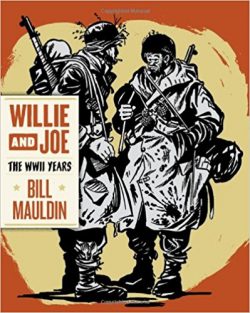
Willie and Joe: the WWII Years


By Bill Mauldin, edited by Todd DePastino (Fantagraphics Books)
ISBN: 978-1-56097-838-1 (HB)                                978-1-60699-439-9 (PB)

During World War II a talented, ambitious young man named William Henry “Bill” Mauldin (29/10/1921 – 22/01/2003) fought “Over There” with the 45th Division of the United States Infantry as well as many other fine units of the army. He learned to hate war and love his brother soldiers – and the American fighting man loved him back.

During his time in the service he produced civilian cartoons for the Oklahoma City Times and The Oklahoman, and intimately effective and authentic material for his Company periodical, 45th Division News, as well as Yank and Stars and Stripes: the US Armed Forces newspapers. Soon after, his cartoons were being reproduced in newspapers across Europe and America.

They mostly featured two slovenly “dogfaces” (a term he popularised) giving their trenchant and laconic view of the war from the muddied tip of the pointiest of Sharp Ends. Willie and Joe, much to the dismay of the brassbound, spit-and-polish military martinets and diplomatic doctrinaires, became the unshakable, everlasting image of the American soldier: continually revealed in all ways and manners the upper echelons of the army would prefer remained top secret.

Willie and Joe even became the subject of two films (Up Front – 1951 and Back at the Front – 1952) whilst Willie made the cover of Time Magazine in 1945, when 23-year old Mauldin won his first Pulitzer Prize.

In 1945 a collection of his drawings, accompanied by a powerfully understated and heartfelt documentary essay, was published by Henry Holt and Co. Up Front was a sensation, telling the American public about the experiences of their sons, brothers, fathers and husbands in a way no historian would or did. A biography, Back Home, followed in 1947.

Mauldin’s anti-war, anti-Idiots-in-Charge-of-War views became increasingly unpopular during the Cold War and despite being a War Hero his increasingly political cartoon work fell out of favour and those efforts are the subject of companion volume Willie & Joe: Back Home. Mauldin left the business to become a journalist and illustrator.

He was a film actor for a while (appearing in Red Badge of Courage with Audie Murphy, among other movies); a war correspondent during the Korean War and – after an unsuccessful campaign for Congress in 1956 – finally returned to newspaper cartooning in 1958.

He retired in 1991 after a long, glittering and award-studded career. Mauldin only drew Willie and Joe four times in that entire period (for an article on the “New Army” in Life magazine; for the funerals of “Soldier’s Generals” Omar Bradley and George C. Marshall; and to eulogize Milton Caniff). His fondest wish had been to kill the iconic dogfaces off on the final day of World War II, but Stars and Stripes vetoed it.

The Willie and Joe cartoons and characters are some of the most enduring and honest symbols of all military history. Every Veterans Day in Peanuts, from1969 to 1999, fellow veteran Charles Schulz had Snoopy turn up at Mauldin’s house to drink Root Beers and tell war stories with an old pal.

When you read Sgt. Rock you’re looking at Mauldin’s legacy, and Archie Goodwin even drafted the shabby professionals for a couple of classy guest-shots in Star-Spangled War Stories (see Showcase Presents the Unknown Soldier).

This immense mostly monochrome compendium (with some very rare colour and sepia items) comes in hardback, softcover and even as an eBook: collecting all Mauldin’s known wartime cartoons and featuring not only the iconic dog-face duo, but also the drawings, illustrations, sketches and gags that led, over 8 years of army life, to their creation.

Mauldin produced most of his work for Regimental and Company newspapers whilst under fire: perfectly capturing the life and context of fellow soldiers – also under battlefield conditions – and gave a glimpse of that unique and bizarre existence to their families and civilians at large, despite constant military censorship and even face-to-face confrontations with Generals such as George Patton, who was perennially incensed at the image the cartoonist presented to the world.

Fortunately, Supreme Commander Eisenhower, if not an actual fan, at least recognised the strategic and morale value of Mauldin’s Star Spangled Banter and Up Front features with indomitable everymen Willie and Joe…

This far removed in time, many of the pieces here might need historical context for modern readers and such is comprehensively provided by the notes section to the rear of the volume. Also included are unpublished pieces and pages, early cartoon works, and rare notes, drafts and sketches.

Most strips, composites and full-page gags, however, are sublimely transparent in their message and meaning: lampooning entrenched stupidity and cupidity, administrative inefficiency and sheer military bloody-mindedness whilst highlighting the miraculous perseverance and unquenchable determination of the ordinary guys to get the job done while defending their only inalienable right – to gripe and goof off whenever the brass weren’t around…

Moreover, Mauldin never patronises the civilians or demonises the enemy: the German and Italians are usually in the same dismal boat as “Our Boys” and only the war and its brass-bound conductors are worthy of his inky ire…

Let’s just hope that in these tense, “ten-seconds-to-doomsday” times the latest batch of brass-hats and political ass-hats keep that in mind and remember what’s always at stake here…

Alternating trenchant cynicism, moral outrage, gallows humour, absurdist observation, shared miseries, staggering sentimentality and the total shock and awe of still being alive every morning, this cartoon catalogue of the Last Just War is a truly breathtaking collection no fan, art-lover, historian or humanitarian can afford to miss.

…And it will make you cry and laugh out loud too.

With a fascinating biography of Mauldin that is as compelling as his art, the mordant wit and desperate camaraderie of his work is more important than ever in an age where increasingly cold and distanced leaders send ever-more innocent lambs to further foreign fields for slaughter. With this volume (and the aforementioned Willie & Joe: Back Home) we should finally be able to restore Mauldin and his works to the forefront of graphic consciousness, because tragically, his message is never going to be out of date…
© 2011 the Estate of William Mauldin. All right reserved.

Battle Picture Weekly Annual (1976)


By various (Fleetway)
ISBN: 85037-266-6

For most of the medium’s history British comics have been renowned for the ability to tell a big story in satisfying little instalments which nevertheless left the reader hungry for more. This, coupled with superior creators and the anthological nature of our publications, has ensured hundreds of memorable characters and series have seared themselves into that dim corner inside most British adult males that houses the all-important Little Boys’ Psyche.

One of the last great weekly anthology comics was actually dedicated to a single theme: the all-combat Battle, which launched as Battle Picture Weekly on 8th March 1975, and through the traditional forge of absorption, merger and re-branding (becoming Battle Picture Weekly & Valiant, Battle Action, Battle, Battle Action Force and Battle Storm Force) carved itself a place in British comics history.

It was itself combined with Eagle on January 23rd 1988, after 673 blood-soaked, testosterone-drenched issues, having carved its way into the savage hearts of a generation, consequently producing some of the best and most influential war stories ever.

Annuals began immediately and this forward-dated first volume was released in the autumn of 1975: an action-packed compendium featuring opening salvos of some of the very best creators in Fleetway’s international stable and offering a bonanza of war-tinged fact and fiction features: (presumably) a winning blend of such writers as Pat Mills, John Wagner, Gerry Finley-Day, Tom Tully, Eric and Alan Hebden and artists such as Colin Page, Pat Wright, Giralt, Carlos Ezquerra, Geoff Campion and others I’m not savvy enough to recognise…

The literary and graphic conflict diamonds open with a full-colour text-&-picture spread explaining ‘Crete – The Airborne Invasion’ after which vivid strip vignette ‘Two Pints for the Panzers’ (perhaps painted by Carlos Pino?) details a brief Dunkirk skirmish between a deadly Nazi battlewagon and a few infernally devious Tommies…

A brace of prose recollections entitled ‘This Amazing War – Sailing Home!’ and ‘The Invisible Eye… is Shut!’ neatly proceed into monochrome adventure ‘Petty Officer Perkins’ with a bureaucratic quartermaster accidentally saving a British patrol from Japanese ambush through his small-minded penny-pinching whilst ‘The Escapers: Jail Break’ recounts an amazing true tale of a Mosquito raid to liberate Gestapo prisoners…

Legendary, Dirty Dozen-inspired misfit antiheroes Rat Pack (by Finley-Day and perhaps Fred T. Holmes?) muster next, sinking a docked Italian battleship with their usual gritty overkill, after which ‘Boys At War: A Medal for Badgie – Trumpeter Stanley Waldron, DCM, RFA’ honours in prose the achievements of a remarkable young warrior whilst ‘The Experts: The Sniper’ recounts a forgotten tale of the Anzacs in WWI…

Switching to red and black duo-hues, ‘Brothers in Arms’ reveals how two eternally squabbling heirs to an English Baronial Seat bury their animosity in the forge of combat before ‘This Amazing War – Underwater Strike’ regales the avid readership with an exploit of submarine combat.

Looking like early Eric Bradbury ‘Battle Honour: Sixty Minutes of Glory’ was probably culled from Fleetway’s long-running War Picture Library and detailed the valiant holding action of doomed Merchant cruiser Jervis Bay and is followed by text feature ‘The Escapers: Only One Got Away’ which details the astounding true story of German POW Franz von Werra whom no British, Canadian or American prison could hold…

‘Private War’ then details a clash of wills between supposed allies as a commando and British naval officer put personal animosities ahead of the life and mission of a Coast-Watcher stuck behind Japanese lines before ‘Boys At War: The Youngest Rifleman – Rifleman Ronald Bassett, KRRC’ details the accomplishments of a wilful 15-year-old youngster who enlisted three years too early to fight in WWII…

‘Fun Parade’ offers a wealth of cartoon military mirth whilst ‘Lofty’s One-Man Luftwaffe’ (by Kev O’Neill?) finds the undercover cockney still sabotaging the German Fighter Group he’s flying with as Nazi Air Ace Major Ranke after which ‘The First Great War’ is reviewed in an informative text-&-painted illustration feature.

‘Rogues Gallery’ offers visual insight into enemy aircraft ‘Mitsubishi A6M Type 0 Zero’, ‘Junkers 87 Stuka’, ‘Junkers 88’ and ‘Bachem 349 Viper’ and precedes a fictionalised account of the North African campaign via ‘The Experts: The Long Range Desert Group’ whilst ‘The Seventh Earl’ reveals how members of a group of the Canadian Parachute Battalion on a mission in occupied Holland become entangled in a transatlantic succession battle in England…

Geoff Campion’s classic ‘Private Bolt – a Bad Soldier’ details the grim life, controversial service career and glorious end of a true fighting man and leads off a section of short combat strips, followed in close order by ‘Dutchy’s Battlewagon’ which sees a driver in the Western Sahara teach the Afrika Korps a few lessons about desert warfare and how a D-Day soldier offsets one sensible anxiety against a silly but crippling phobia in ‘One Man’s Fear’…

Text feature ‘The Escapers: The Trojan Horse’ re-examines the mythic tale of POW ingenuity before ‘Tiger Cubb’ (Mike Western) pits Tibetan-trained British boy martial artist Johnny Cubb against sadistic Japanese invaders in China and ‘The Red Knight: Baron Manfred von Richthofen’ blends fact and legend in a biographical strip before the military annals conclude in spectacular fashion with ‘A Game of Bluff’ as British agent and French Resistance fighters unite to uncover a traitor and expedite the D-Day landings…

This bombastic blend of action, tension and drama hasn’t paled in the intervening years and these gripping gems are as powerful and engrossing now as they’ve ever been…
© IPC Magazines Ltd. 1975.