Asterix and the Great Divide, Asterix and the Black Gold, Asterix and Son


By Uderzo, translated by Anthea Bell & Derek Hockridge (Orion Books and others)
ISBNs: 978-0-75284-773-3, 978-0-75284-774-0 and 978-0-75284-775-7

Alberto Aleandro Uderzo was born on April 25th 1927, in Fismes, on the Marne, son of Italian immigrants. As a child reading Mickey Mouse in Le Pétit Parisien he dreamed of becoming an aircraft mechanic and showed artistic flair from an early age. Albert became a French citizen when he was seven and found employment at 13, apprenticed to the Paris Publishing Society, where he learned design, typography, calligraphy and photo retouching.

When WWII broke out he spent time with farming relatives in Brittany and joined his father’s furniture-making business. Brittany beguiled and fascinated Uderzo: when a location for Asterix’s idyllic village was being mooted the region was the only choice.

In the post-war rebuilding of France Uderzo returned to Paris and became a successful artist in the country’s burgeoning comics industry. His first published work, a pastiche of Aesop’s Fables, appeared in Junior, and in 1945 he was introduced to industry giant Edmond-François Calvo (whose own masterpiece The Beast is Dead is long overdue for a new edition…).

The tireless Uderzo’s subsequent creations included the indomitable eccentric Clopinard, Belloy, l’Invulnérable, Prince Rollin and Arys Buck. He illustrated Em-Ré-Vil’s novel Flamberge, worked in animation, as a journalist and illustrator for France Dimanche, and created the vertical comicstrip ‘Le Crime ne Paie pas’ for France-Soir. In 1950 he illustrated a few episodes of the franchised European version of Fawcett’s Captain Marvel Jr. for Bravo!

An inveterate traveller, the prodigy met Rene Goscinny in 1951. Soon fast friends, they decided to work together at the new Paris office of Belgian Publishing giant World Press. Their first collaboration was in November of that year; a feature piece on savoir vivre (how to live right or gracious living) for women’s weekly Bonnes Soirée, after which an avalanche of splendid strips and serials poured forth.

Jehan Pistolet and Luc Junior were created for La Libre Junior and they produced a western starring a Red Indian who eventually evolved into the delightfully infamous Oumpah-Pah. In 1955 with the formation of Édifrance/Édipresse, Uderzo drew Bill Blanchart for La Libre Junior, replaced Christian Godard on Benjamin et Benjamine and in 1957 added Charlier’s Clairette to his portfolio.

The following year later, he made his debut in Tintin, as Oumpah-Pah finally found a home and a rapturous audience. Uderzo also drew Poussin et Poussif, La Famille Moutonet and La Famille Cokalane.

When Pilote launched in 1959 Uderzo was a major creative force for the new magazine collaborating with Charlier on Tanguy et Laverdure and launching with Goscinny a little something called Asterix…

Although Asterix was a massive hit from the start, Uderzo continued working on Les Aventures de Tanguy et Laverdure, but soon after the first adventure was collected as Astérix le gaulois in 1961 it became clear that the series would demand most of his time – especially as the incredible Goscinny never seemed to require rest or run out of ideas.

By 1967 the strip occupied all Uderzo’s time and attention, so in 1974 the partners formed Idéfix Studios to fully exploit their inimitable creation. When Goscinny passed away three years later, Uderzo had to be convinced to continue the adventures as writer and artist, producing a further ten volumes until 2010 when he retired.

After nearly 15 years as a weekly comic strip subsequently collected into compilations, in 1974 the 21st tale (Asterix and Caesar’s Gift) was the first to be published as a complete original album before being serialised. Thereafter each new release was a long anticipated, eagerly awaited treat for the strip’s millions of fans…

According to UNESCO’s Index Translationum, Uderzo is the tenth most-often translated French-language author in the world and the third most-translated French language comics author – right after his old mate René Goscinny and the grand master Hergé.

More than 325 million copies of 34 Asterix books have sold worldwide, making his joint creators France’s best-selling international authors. There is even the tantalising yet frightening promise of a new volume sometime this October by replacement creative team Jean-Yves Ferri and Didier Conrad…

One of the most popular comics features on Earth, the collected chronicles of Asterix the Gaul have been translated into more than 100 languages since his debut, with twelve animated and live-action movies, TV series, assorted games, toys, merchandise and even a theme park outside Paris (Parc Astérix, naturellement)…

So what’s it all about?

Like all the best stories the premise works on more than one level: read it as an action-packed comedic romp of sneaky and bullying baddies coming a cropper if you want or as a punfully sly and witty satire for older, wiser heads. We Brits are further blessed by the brilliantly light touch of master translators Anthea Bell & Derek Hockridge who played no small part in making the indomitable little Gaul so very palatable to English tongues.

More than half of the canon occurs on Uderzo’s beloved Brittany coast, where, circa 50 B.C., a small village of cantankerous, proudly defiant warriors and their families resisted every effort of the mighty Roman Empire to complete the conquest of Gaul. The land had been divided by the conquerors into the provinces of Celtica, Aquitania and Amorica, but the very tip of the latter just refused to be pacified…

The remaining epics occur in various locales throughout the Ancient World, where the Garrulous Gallic Gentlemen visited every fantastic land and corner of the civilisations that proliferated in that fabled era…

When the heroes were playing at home, the Romans, unable to defeat the last bastion of Gallic insouciance, futilely resorted to a policy of absolute containment. Thus the little seaside hamlet was permanently hemmed in by the heavily fortified garrisons of Totorum, Aquarium, Laudanum and Compendium.

The Gauls couldn’t care less: daily defying the world’s greatest military machine simply by going about their everyday affairs, protected by the magic potion of resident druid Getafix and the shrewd wits of the diminutive dynamo and his simplistic, supercharged best friend Obelix…

Firmly established as a global brand and premium French export by the mid-1960s, Asterix the Gaul continued to grow in quality as Goscinny & Uderzo toiled ever onward, crafting further fabulous sagas; building a stunning legacy of graphic excellence and storytelling gold. Moreover, following the civil unrest and nigh-revolution in French society following the Paris riots of 1968, the tales took on an increasingly acerbic tang of trenchant satire and pithy socio-political commentary…

By the time this edition was released Goscinny had been gone for three years and Uderzo soldiered on alone…

Asterix and the Great Divide was the 25th volume, released in 1980 as Le Grand Fossé, which was in many ways something of departure and a stylistic compromise.

In another Gaulish village internecine strife is brewing. Political rivals Cleverdix and Majestix have split the sleepy hamlet down the middle with an election for chief which ended in a dead tie. They then made the figurative literal by having a huge trench dug through the centre of town, cutting the place in two, with the population resolved into uncompromising Leftists and stubborn Rightists…

It’s a tragedy in many ways, with friends and families split into feuding camps, but the most heartrending separation concerns dashing Histrionix, son of Leftist Cleverdix and his one true love Melodrama, daughter of Majestix. Their warring sires refuse to concede or compromise and that simmering Cold War has frustrated their children’s happiness forever…

The lover’s pleas cannot move either deadlocked party leader and the intolerable situation is further exacerbated by the insidious, coldly calculating advisor to Majestix who secretly eggs on the old warrior for his own purposes.

Wily toady Codfix‘s latest idea is to get their Roman overlords to intervene, installing Majestix as sole ruler by force. In return Codfix would be given Melodrama in marriage. Of course that would make him next in line for the ruler’s position. Codfix is both patient and ambitiously far-sighted…

When Melodrama learns of the plan she immediately informs Histrionix and the prince tells Cleverdix – who knows full well he cannot resist the overwhelming might of the Romans. The former soldier then remembers an old war-buddy who still successfully resists the conquerors. His name is Vitalstatistix…

As Histrionix heroically dashes to the village of Indomitable Gauls – he does everything heroically – Codfix has gone to the local garrison with his request. Centurion Umbrageous Cumulonimbus however, has his own problems: discipline is lax and the soldiers are grumbling because of the menial chores they are forced to perform. Codfix has the perfect solution. If the Romans put Rightist Majestix in charge they could take the pacified Leftists as slaves…

In the meantime Histronix has returned with Vitalstatistix’ best men. Asterix, Obelix and Getafix the Druid are discussing the matter with Cleverdix when Roman soldiers arrive. Codfix however has overstepped himself and underestimated the nobility of Majestix…

The doughty Rightist refuses to let any Gaul be enslaved – even political opponents – so the uncaring Romans grab him and his followers instead. Impressed with his rival’s integrity, Cleverdix accepts Asterix’ offer of assistance and our heroes infiltrate the garrison as volunteer slaves using an elixir that revitalises the body but causes a touch of amnesia…

Having fun by exploiting these new Romans’ ignorance of their true identities, the heroes feed the imprisoned Gauls soup fortified with the Druid’s strength potion before Asterix and Obelix lead a mass breakout which soon finds the prisoners back in their divided hamlet but no closer to an amicable resolution.

And both sides know that the Romans will soon come, eager for revenge…

Codfix has wisely stayed with the garrison and found the last of Getafix’ elixir, left behind during the liberation. When he sneaks back into the village he also discovers a fresh batch of power-potion whipped up in advance of the impending attack and steals it.

The next day the Gauls wake to find the invaders marching upon them, fortified by the elixir which has erased the punishing memory of their recent defeat, and super-charged by the power potion.

Left with nothing but Obelix and Gaulish courage, the villagers unite to fight and fall with honour but are astonished when a bizarre series of transformations wrack the potion-powered Romans. It takes a long time to become a Druid and apparently the first thing you learn is to never mix potions…

Codfix has used the distraction to kidnap Melodrama. Demanding ransom and safe passage he has not reckoned on Histrionix’ determination, Asterix’ ingenuity or Obelix’ strength and – after a climactic confrontation involving our luckless Pirates – gets what’s coming to him…

With the Romans routed and Codfix suitably punished, Cleverdix and Majestix settle their differences with a traditional Gaulish duel after which someone else becomes chief of the reunified village. The former divide is transformed into an appropriate symbol of their unity and life goes on happily…

Asterix and the Great Divide was devised by Uderzo as a critique on current affairs and metaphorical attack on the Berlin Wall which had, since 1961, split the city physically, Europe symbolically and the world ideologically. His earnest tale was more dramatic and action-oriented than previous Asterix fare, with the regulars frequently reduced to subordinate roles, but for all that there are still cunning laughs and wry buffoonery in welcome amounts.


Asterix and the Black Gold (L’Odyssée d’Astérix) debuted in 1981 and again saw Asterix and Obelix undertake a long voyage into the unknown, rife with bold adventure and underpinned by topical lampooning and timeless swingeing satire.

The 26th saga begins with a brace of wild boar demonstrating that they were canny opponents for the voracious Obelix. Whenever the gigantic Gaul spotted these particular pigs in his daily hunts they would evade him by leading him to the nearest Roman patrol. The only thing Obelix loved more than eating pork was bashing Romans…

Back in RomeJulius Caesar is livid. He’s just received news that the insufferable, indomitable Gauls have been training wild boars to lead Roman patrols into Gaulish ambushes…

The raging ruler’s continued attempts to end the aggravating resistance always fail and in a fit of fury he charges his chief of the Roman Secret Service M.I.VI (geddit?) with ending his galling Gallic grief – or else…

M. Devius Surreptitius has just the man for the job. Dubbelosix is of Gaulish-Roman extraction and has, by persistence and deviousness, qualified as a Druid. He is charming, wily, debonair and comes with a host of cunning hidden gadgets – and he’s also the spitting image of Sean Connery…

Dispatched on a mission to stop the French resisting, Dubbelosix is secretly working with his boss M to supplant Caesar, but also harbours ambitions to rule Rome alone …but first he has to destroy the infernal Gauls. His chance comes almost as soon as he arrives in that little village…

Getafix is in a near-panic. The Druid has been eagerly awaiting the arrival of Phoenician merchant Ekonomikrisis who is bringing a vital ingredient for the magic potion which keeps the Romans at bay. When the ship at last arrives and the peddler apologises for forgetting the fabled rock oil, the highly strung Getafix has a fit and passes out.

Luckily a young Druid dubbed Dubbelosix is passing and, after a minor skirmish with a Roman patrol, accompanies Asterix and Obelix back to their comatose friend…

The spy might be a double agent but he knows his stuff and soon cures the ailing Getafix, who explains that the generally useless black ooze from the Middle East is vital to the potion: without a fresh supply they are all doomed.

When Asterix and Obelix – and faithful hound Dogmatix, of course – volunteer to obtain some of the crucial rock oil, Dubbelosix insists on going with them. But as they commandeer the Phoenician’s ship for the emergency mission, Getafix clandestinely warns Asterix to watch the too-good-to-be-true young Druid…

Expediting matters by selling off Ekonomikrisis’ wares at prices nobody – even Pirates – dares refuse, our heroes make their way to Mesopotamia, unaware that Dubbelosix, using his unique messaging service, has briefed Caesar and M to stop the ship at all costs.

After a succession of military vessels are sent to the bottom of the Mediterranean by the joyfully belligerent Gauls, the Ruler of the World is forced to change tactics and blockade all ports to prevent Asterix and Obelix from disembarking.

With time running out, Ekonomikrisis eventually sneaks the Gauls and Dubbelosix ashore in distant Judea and the trio travel overland to Jerusalem where they are befriended by the locals who have no love for the Romans. The oppressors are always just one step behind the voyagers, though. It is as if someone is telling them every time they alter their plans…

After a memorable night in a village called Bethlehem, the Hebrews’ attempt to smuggle the Gauls into Jerusalem is sabotaged by Dubbelosix. However the Middle Eastern garrisons have never seen fighters like Asterix and Obelix and the doughty heroes escape, leaving the scurrilous double agent behind.

With time running out at home and no word of the fate of their friends the Gauls are hidden by friendly merchants, and learn that the Romans have seized and burned all the rock oil in the city – and probably the entire region. Their only chance to secure some of the previously worthless black goo is to get it from the source – in Babylon, where it just seeps out of the ground…

Assisted by brave, helpful guide Saul ben Ephishul (a loving visual tribute to Uderzo’s deeply-missed partner René Goscinny, who was Jewish) Asterix and Obelix undertake another perilous journey into the deep desert, frolicking in the Dead Sea and encountering a procession on fanatical tribes all warring on each other for long-forgotten reasons in a savage lampoon of modern Middle East strife…

Eventually though, the Gauls are completely lost; waterless and without hope under the scorching sun. However when little Dogmatix starts digging in the sand, the resultant oil gusher provides more than enough to buoy up their hopes and they battle on to rendezvous with Ekonomikrisis for a frantic return to Gaul.

Unfortunately, Dubbelosix has tracked them down again and has one last trick to play…

This return to the style and format of classic collaborations features hilarious comedy set-pieces, thrilling drama and a bitingly gentle assault on the madness of keeping ancient feuds alive, the intransigence of religious tensions and the madness of recurring oil crises; lampooning ideologies and dogmas whilst showing how great it is when people can just get along.

Fast, furious and funny-with-a-moral, this is one of the artist/author’s very best efforts and even manages a double-shock ending…


Asterix and Son was released in 1983, the 27th saga and another unconventional step off the well-worn path as it touched on a rather touchy subject…

One particularly fine morning in the Village of Indomitable Gauls Asterix and Obelix awake to discover someone has left a baby in a basket on their doorstep. Nonplussed and bewildered they try to care for the infant – much to the horror of the local cows who would be delighted to provide sustenance if milked in a normal manner – but human tongues in the village are beginning to wag…

Things only get worse after the feisty tyke develops a taste for magic potion and somehow keeps finding new supplies of it…

Determined to clear his name and find the boy’s real parents, Asterix begins his investigations at the four Roman Garrisons, even as Crismus Cactus, Prefect of Gaul begins a suspiciously sudden emergency census of the local villages…

Hyper-charged on potion, the baby keeps getting out and following Asterix and Obelix, who discover that the Romans seem to be looking for one child in particular…

After a painful encounter with our heroes, Crismus Cactus retires to his villa where a VIP from Rome is waiting. Marcus Junius Brutus is Caesar’s adopted son and is most insistent that the mystery baby is found and turned over to him – even if he has to raze all Gaul to achieve his aim…

The infant in question is still causing trouble for the villagers and Brutus marshals an army near the isolated hamlet, successfully confirming the child’s location with a rather inept spy. The kid’s treatment of the intruder prompts Asterix to seek out a nanny, but as the village women are still suspicious and condemnatory, he hires a rather unsavoury stranger named Aspidistra for the task…

This causes even more vicious tongue-wagging amongst the Gaulish women, who assume the worst of both her and Asterix. Inexplicably nobody notices the ferocious childminder’s astonishing resemblance to the Prefect of Gaul…

Unfortunately once Crismus has successfully infiltrated the village he can’t get out again, and spends a punishing time amusing the infant horror until his nerve breaks. Out of patience, Brutus then attacks with the full might of Rome, torching the village and bombarding it with catapults.

As the men tank up on potion and counterattack, the village women head for the beach, but Brutus, willing to sacrifice his entire army, is waiting and grabs the baby…

As soon as the Roman Legions are crushed Asterix and Obelix return and discover what has occurred. Filled with rage they set off in deadly pursuit and save the child just in time for his real mother and father to arrive. Two of the most powerful people in the world, they are extremely angry with somebody…

Laced with a dark and savage core, this rollicking rollercoaster ride combines tragedy with outrageous slapstick, transforming historical facts into a compelling comedy-drama that is both delightful and genuinely scary in places…

Stuffed with sly pokes and good-natured joshing, featuring famous caricatures to tease older readers whilst the raucous, bombastic, bellicose hi-jinks and fast-paced action astounds and bemuses the younger set, these tales all celebrate the spectacular illustrative ability of Uderzo and prove that the potion-powered paragon of Gallic Pride was in safe and steady hands.

If you still haven’t experienced this sublime slice of French polish and graphic élan there’s no better time than now…
© 1980-1983 Goscinny/Uderzo. Revised English translation © 2002 Hachette. All rights reserved.

Barnaby volume 1: 1942-1943


By Crockett Johnson (Fantagraphics Books)
ISBN: 978-1-60699-522-8

This is one of those books that’s worthy of two reviews, so if you’re in a hurry…

Buy Barnaby now – it’s one of the most wonderful strips of all time and this superb hardcover compilation has lots of fascinating extras. If you harbour any yearnings for the lost joys of childish glee you would be crazy to miss this book…

However, if you’re still here and need a little more time to decide…

As long ago as August 2007 I whined that one of the greatest comic strips of all time was criminally out of print and in desperate need of a major deluxe re-issue. So, as if by the magic of a fine Panatella… Cushlamocree! Here it is…

Today’s newspapers have precious few continuity drama or adventure strips. Indeed, if a paper has any strips – as opposed to single panel editorial cartoons – at all, chances are they will be of the episodic variety typified by Jim Davis’ Garfield or Scott Adams’ Dilbert.

You might describe these as single-idea pieces with a set-up, delivery and punch-line, all rendered in a sparse, pared-down-to-basics drawing style. In that they’re nothing new.

Narrative impetus comes from the unchanging characters themselves, and a building of gag-upon-gag in extended themes. The advantage to the newspaper is obvious. If you like a strip it encourages you to buy the paper. If you miss a day or two, you can return fresh at any time having, in real terms, missed nothing.

Such was not always the case, especially in America. Once upon a time the Daily “funny” – comedic or otherwise – was a crucial circulation builder and preserver, with lush, lavish and magnificently rendered fantasies or romances rubbing shoulders with thrilling, moody masterpieces of crime, war, sci-fi and everyday melodrama. Even the legion of humour strips actively strived to maintain an avid, devoted following.

And eventually there was Barnaby which in so many ways bridged the gap between then and now.

On April 20th 1942, with America at war for the second in 25 years, the liberal New York tabloid PM began running a new, sweet little kid’s strip which was also the most whimsically addicting, socially seditious and ferociously smart satire since the creation of Al Capp’s Li’l Abner – another complete innocent left to the mercy of scurrilous worldly influences…

The outlandish 4-panel Daily, by Crockett Johnson, was the product of a man who didn’t particularly care for comics, but who – according to celebrated strip historian Ron Goulart – just wanted steady employment…

David Johnson Leisk (October 20th 1906-July 11th 1975) was an ardent socialist, passionate anti-fascist, gifted artisan and brilliant designer who had spent much of his working life as a commercial artist, Editor and Art Director.

Born in New York City and raised in the outer borough of Queens when it was still semi-rural – very near the slag heaps which would eventually house two New York World’s Fairs in Flushing Meadows – Leisk studied art at Cooper Union (for the Advancement of Science and Art) and New York University before leaving early to support his widowed mother. This entailed embarking upon a hand-to-mouth career drawing and constructing department-store advertising.

He supplemented his income with occasional cartoons to magazines such as Collier’s before becoming an Art Editor at magazine publisher McGraw-Hill. He also began producing a moderately successful, “silent” strip called The Little Man with the Eyes.

Johnson had divorced his first wife in 1939 and moved out of the city to Connecticut, sharing an ocean-side home with student (and eventual bride) Ruth Krauss, always looking to create that steady something when, almost by accident, he devised a masterpiece of comics narrative…

However, if his friend Charles Martin hadn’t seen a prototype Barnaby half-page lying around the house, the series might never have existed. Happily Martin hijacked the sample and parlayed it into a regular feature in prestigious highbrow leftist tabloid PM simply by showing the scrap to the paper’s Comics Editor Hannah Baker.

Among her other finds was a strip by a cartoonist dubbed Dr. Seuss which would run contiguously in the same publication. Despite Johnson’s initial reticence, within a year Barnaby had become the new darling of the intelligentsia…

Soon there were hard-back book collections, talk of a Radio show (in 1946 it was adapted as a stage play), rave reviews in Time, Newsweek and Life. The small but rabid fan-base ranged from politicians and the smart set such as President and First Lady Roosevelt, Vice-President Henry Wallace, Rockwell Kent, William Rose Benet and Lois Untermeyer to cool celebrities such as Duke Ellington, Dorothy Parker, W. C. Fields and even legendary New York Mayor Fiorello La Guardia.

Of course the last two might only have checking the paper because the undisputed, unsavoury star of the show was a scurrilous if fanciful amalgam of them…

Not since George Herriman’s Krazy Kat had a piece of popular culture so infiltrated the halls of the mighty, whilst largely passing way over the heads of the masses and without troubling the Funnies sections of big circulation papers.

Over its 10-year run from April 1942 to February 1952, Barnaby was only syndicated to 64 papers nationally, with a combined circulation of just over five and a half million, but it kept Crockett (a childhood nickname) and Ruth in relative comfort whilst America’s Great and Good constantly agitated on the kid’s behalf.

This splendid collection opens with a hearty appreciation from Chris Ware in the Foreword before cartoonist and historian Jeet Heer provides a critical appraisal in ‘Barnaby and American Clear Line Cartooning’ after which the captivating yarn-spinning takes us from April 20th 1942 to December 31st 1943.

There’s even more elucidatory content after that, though, as education scholar and Professor of English Philip Nel provides a fact-filled, picture-packed ‘Afterword: Crockett Johnson and the Invention of Barnaby’, Dorothy Parker’s original ‘Mash Note to Crockett Johnson’ is reprinted in full, and Nel also supplies strip-by-strip commentary and background in ‘The Elves, Leprechauns, Gnomes, and Little Men’s Chowder & Marching Society: a Handy Pocket Guide’…

The real meat begins with ‘Mr. O’Malley Arrives’ which ran from 20th-29th April 1942, setting the ball rolling as a little boy wished one night for a Fairy Godmother and something strange and disreputable fell in through his window…

Barnaby Baxter is a smart, ingenuous and scrupulously honest pre-schooler (four years old to you) and his ardent wish was to be an Air Raid Warden like his dad. Instead he was “adopted” by a short, portly, pompous, mildly unsavoury and wholly discreditable windbag with pink wings.

Jackeen J. O’Malley, card carrying-member of the Elves, Gnomes, Leprechauns and Little Men’s Chowder and Marching Society – although he hadn’t paid his dues in years – installed himself as the lad’s Fairy Godfather. A lazier, more self-aggrandizing, mooching old glutton and probable soak (he certainly frequented taverns but only ever raided the Baxter’s icebox, pantry and humidor, never their drinks cabinet…) could not be found anywhere.

Due more to intransigence than evidence – there’s always plenty of physical proof whenever O’Malley has been around – Barnaby’s father and mother adamantly refused to believe in the ungainly, insalubrious sprite, whose continued presence hopelessly complicated the sweet boy’s life.

The poor parents’ greatest abiding fear was that Barnaby was cursed with Too Much Imagination…

In fact this entire glorious confection is about our relationship to imagination. This is not a strip about childhood fantasy. The theme here, beloved by both parents and children alike, is that grown-ups don’t listen to kids enough, and that they certainly don’t know everything.

Despite looking like a fraud – he never uses his magic and always has one of Dad’s stolen cigars as a substitute wand – O’Malley is the real deal: he’s just incredibly lazy, greedy, arrogant and inept. He does sort of grant Barnaby’s wish though, as his midnight travels in the sky trigger a full air raid alert in ‘Mr. O’Malley Takes Flight’ (30th April-14th May)…

‘Mr. O’Malley’s Mishaps’ (15th-28th May) offer further insights into the obese elf’s character – or lack of same – as Barnaby continually failed to convince his folks of his newfound companion’s existence, and the bestiary expanded into a topical full-length adventure when the little guys stumbled onto a genuine Nazi plot with supernatural overtones in the hilariously outrageous ‘O’Malley vs. Ogre’ which ran from 29th May to 31st August.

‘Mr. O’Malley’s Malady’, 1st-11th September, dealt with the airborne oaf’s brief bout of amnesia, but as Mum and Dad thought their boy was acting up they took him to a child psychologist. However ‘The Doctor’s Analysis’ (12th-24th September) didn’t help…

The war’s effect on the Home Front was an integral part of the strip and ‘Pop vs. Mr. O’Malley’ (25th September-6th October) and ‘The Test Blackout’ (7th-16th October) saw Mr. Baxter become chief Civil Defense Coordinator despite – not because – of the winged interloper, and suffer the usual personal humiliation.

There was plenty to go around and, when ‘The Invisible McSnoyd’ (17th-31st October) turned up, O’Malley got it all.

The Brooklyn Leprechaun, although unseen, was O’Malley’s personal gadfly, always offering harsh, ribald counterpoints and home truths to the Godfather’s self-laudatory pronouncements, and ‘The Pot of Gold’ (2nd-20th November) with which he perpetually taunted and tempted JJ provided a wealth of laughs…

When Barnaby won a scrap metal finding competition and was feted on radio, O’Malley co-opted ‘The Big Broadcast’ (21st-28th November) and brought chaos to the airwaves, but once again Mr. Baxter wouldn’t believe his senses. Dad’s situation only worsened after ‘The New Neighbors’ (30th November-16th December) moved in and little Jane Shultz also started candidly reporting Mr. O’Malley’s deeds and misadventures…

Barnaby’s faith was only near-shaken when the Fairy Fool’s constant prevarications and procrastination meant Dad Baxter’s Christmas present arrived late. The Godfather did accidentally destroy an animal shelter though, so ‘Pop is Given a Dog’ (17th-30th December) concluded with a happy resolution of sorts…

A perfect indication of the wry humour that peppered the feature can be seen in ‘The Dog Can Talk’ which ran from 31st December 1942 to 17th January 1943. New pooch Gorgon could indeed converse – but never when the parents where around, and only then with such overwhelming dullness that everybody listening wished him as mute as all other mutts…

Playing in an old abandoned house (don’t you miss those days when kids could wander off for hours unsupervised by eagle-eyed, anxious parents – or even able to walk further than the length of a garden?) served to introduce Barnaby and Jane to ‘Gus, the Ghost’ (18th January-4th February) which in turn involved the entire ensemble with ration-busting thieves when they uncovered ‘The Hot Coffee Ring’ (5th-27th February). Barnaby was again hailed a public hero and credit to his neighbourhood, even as poor Dad stood back and stared, nonplussed and incredulous.

As Johnson continually expanded his gently bizarre cast of Gremlins, Ogres, Ghosts, Policemen, Spies, Black Marketeers, Talking Dogs and even Little Girls, all of whom could see O’Malley, the unyieldingly faithful little lad’s parents were always too busy and too certain that the Fairy Godfather and all his ilk were unhealthy, unwanted, juvenile fabrications.

With such a simple yet flexible formula Johnson made pure cartoon magic.

‘The Ghostwriter Moves In’ (1st-11th March) found Gus reluctantly relocate to the Baxter dwelling, where he was even less happy to be cajoled into typing out O’Malley’s odious memoirs and organising ‘The Testimonial Dinner’ (12th March-2nd April) for the swell-headed sprite at the Elves, Leprechauns, Gnomes, and Little Men’s Chowder & Marching Society clubhouse and pool hall…

With the nation urged to plant food crops, ‘Barnaby’s Garden’ (3rd-16th April) debuted as a another fine example of the things O’Malley was (not) expert in, whilst ‘O’Malley and the Lion’ (17th April-17th May) found the kid offering sanctuary to a hirsute circus star even as the conniving cheroot-chewing cherub contemplated his “return” to showbiz, after which ‘Atlas, the Giant’ (18th May-3rd June) wandered into the serial. At only 2 feet tall the pint sized colossus was not that impressive… until he got out his slide-rule and demonstrated that he was, in essence, a mental giant…

‘Gorgon’s Father’ (4th June-10th July) turned up to cause contretemps and consternation before disappearing again, after which Barnaby and Jane were packed off to ‘Mrs. Krump’s Kiddie Kamp’ (12th July-13th September) for vacation rest and the company of normal children.

Sadly, although the wise matron and her assistant never glimpsed O’Malley and Gus, all the other tykes and inmates were more than happy to see them…

Once the kids arrived back in Queens – Johnson had set the series in the streets where he’d grown up – the Fairy Fool was showing off his “mechanical aptitude” on a parked car with its engine wastefully running and broke the idling getaway car just in time to foil a robbery.

Implausibly overnight, he became an unseen and reclusive ‘Man of the Hour’ (14th-18th September) and preposterously translated that into a political career by accidentally becoming a patsy for a corrupt political machine in ‘O’Malley for Congress!’ (20th September-8th October).

This strand gave staunchly socialist cynic Johnson ample opportunity to ferociously lampoon the electoral system, the pundits and even the public. Without spending money, campaigning – or even being seen – the pompous pixie won ‘The Election’ (9th October-12th November) and actually became ‘Congressman O’Malley’ (13th-23rd November) with Barnaby’s parents perpetually assuring their boy that this guy was not “his” Fairy Godfather’…

The outrageous satire only intensified once ‘The O’Malley Committee’ (24th November-27th December 1943) began its work, by investigating Santa Claus, despite the newest, shortest Congressman in the House never actually turning up to do a day’s work…

Raucous, riotous sublimely surreal and adorably absurd, the untrammelled, razor-sharp whimsy of the strip is always instantly captivating, and the laconic charm of the writing is well-nigh irresistible, but the lasting legacy of this ground-breaking strip is the clean sparse line-work that reduces images to almost technical drawings, unwavering line-weights and solid swathes of black that define space and depth by practically eliminating it, without ever obscuring the fluid warmth and humanity of the characters.

Almost every modern strip cartoon follows the principles laid down here by a man who purportedly disliked the medium…

The major difference between then and now should also be noted, however.

Johnson despised doing shoddy work, or short-changing his audience. On average each of his daily encounters, always self-contained, built on the previous episode without needing to re-reference it, and contained three to four times as much text as its contemporaries. It’s a sign of the author’s ability that the extra wordage was never unnecessary, and often uniquely readable, blending storybook clarity, the snappy pace of “Screwball” comedy films and the contemporary rhythms and idiom of authors such as Damon Runyan.

He managed this miracle by type-setting the dialogue and pasting up the strips himself – primarily in Futura Medium Italic but with effective forays into other fonts for dramatic and comedic effect.

No sticky-beaked educational vigilante could claim Barnaby harmed children’s reading abilities by confusing the tykes with non-standard letter-forms (a charge levelled at comics as late as the turn of this century), and the device also allowed him to maintain an easy, elegant, effective balance of black and white which makes the deliciously diagrammatic art light, airy and implausibly fresh and accessible.

During 1946-1947, Johnson surrendered the strip to friends as he pursued a career illustrating children’s book such as Constance J. Foster’s This Rich World: The Story of Money, but eventually he returned, crafting more magic until he retired Barnaby in 1952 to concentrate on books.

When Ruth graduated she became a successful children’s writer and they collaborated on four tomes, The Carrot Seed (1945), How to Make an Earthquake, Is This You? and The Happy Egg, but these days Crockett Johnson is best known for his seven “Harold” books which began in 1955 with the captivating Harold and the Purple Crayon.

During a global war with heroes and villains aplenty, where no comic page could top the daily headlines for thrills, drama and heartbreak, Barnaby was an absolute panacea to the horrors without ever ignoring or escaping them.

For far too long Barnaby was a lost masterpiece. It is influential, ground-breaking and a shining classic of the form. You are all poorer for not knowing it, and should move mountains to change that situation. I’m not kidding.

Liberally illustrated throughout with sketches, roughs, photos and advertising materials as well as Credits, Thank You and a brief biography of Johnson, this big book of joy is a long-overdue and very welcome addition to 21st century bookshelves – especially yours…

Barnaby and all its images © 2013 the Estate of Ruth Kraus. Supplemental material © 2013 its respective creators and owners.

Superman Chronicles volumes 1 and 2

New revised reviews

By Jerry Siegel & Joe Shuster (DC Comics)
ISBN: 978-1-4012-0764-9 & 978-1-4012-1215-5

It’s incontrovertible: the American comicbook industry – if it existed at all – would have been an utterly unrecognisable thing without Superman. His unprecedented invention and adoption by a desperate and joy-starved generation gave birth to an entire genre if not an actual art form.

Superman spawned an inconceivable army of imitators and variations, and within three years of his 1938 debut, the intoxicating blend of eye-popping action and social wish-fulfilment which hallmarked the early Man of Steel had grown to encompass cops-and-robbers crime-busting, socially reforming dramas, science fiction, fantasy, whimsical comedy and, once the war in Europe and the East finally involved America, patriotic relevance for a host of gods, heroes and monsters, all dedicated to profit through exuberant, eye-popping excess and vigorous dashing derring-do.

Now with moviegoers again anticipating a new cinematic interpretation of the ultimate immigrant tale here’s my chance to once more highlight perhaps the most authentic of the many delightful versions of his oft-reprinted early tales.

Re-presenting the epochal run of raw, unpolished but viscerally vibrant stories by Jerry Siegel & Joe Shuster which set the funnybook world on fire, here – in as near-as-dammit the texture, smell and colour of the original newsprint – are the crude, rough, uncontrollable wish-fulfilling, cathartically exuberant exploits of a righteous and superior man dealing out summary justice equally to social malcontents, exploitative capitalists, thugs and ne’er-do-wells that initially captured the imagination of a generation.

The first of these oft-covered recollections of the primal Man of Steel – printed in chronological order – features the groundbreaking yarns from Action Comics #1 through #13 (June 1938 – June 1939) and his pivotal appearance from New York’s World Fair No. 1 (also June 1939) before comicbook history is made with the landmark first issue of his own solo title.

Most of the early tales were untitled, but for everyone’s convenience have been given descriptive appellations by the editors. Thus after describing the foundling’s escape from exploding Planet Krypton and explaining his astonishing powers in nine panels, with absolutely no preamble the wonderment begins with ‘Superman: Champion of the Oppressed!’ as the costumed crusader -masquerading by day as reporter Clark Kent – began averting numerous tragedies.

As well as saving an innocent woman from the Electric Chair and roughing up a wife beater, the tireless crusader worked over racketeer Butch Matson – consequently saving feisty colleague Lois Lane from abduction and worse – and outed a lobbyist for the armaments industry who was bribing Senators on behalf of greedy munitions interests fomenting war in Europe…

The next breathtaking instalment in Action #2 (July 1938) saw the mercurial mystery-man travelling to the war-zone to spectacularly dampen down the hostilities already in progress in ‘Revolution in San Monte Pt 2’ before ‘The Blakely Mine Disaster’ found the Man of Steel responding to a coal-mine cave-in to expose corrupt corporate practises before cleaning up gamblers who ruthless fixed games and players in #4’s ‘Superman Plays Football’.

The Action Ace’s untapped physical potential was highlighted in the next issue as ‘Superman and the Dam’ pitted the human dynamo against the power of a devastating natural disaster, after which in #6 canny chiseller Nick Williams attempted to monetise the hero – without asking first. ‘Superman’s Phony Manager’ even attempted to replace the real thing with a cheap knock-off but quickly learned a very painful lesson in ethics…

Although Superman featured on the first cover the staid and cautious editors were initially dubious about the alien strongman’s popular appeal and preferred more traditional genre scenes for the following issues (all by Leo E. O’Mealia and all included here).

Superman’s (and Joe Shuster’s) second cover appeared on Action Comics #7 (December 1938) and prompted a big jump in sales as a riotous romp inside revealed why ‘Superman Joins the Circus’ as the caped crusader crushed racketeers taking over the Big Top. Fred Guardineer then produced general genre covers for #8 and 9 whilst the interiors saw ‘Superman in the Slums’ working to save young delinquents from a future life of crime and depravity and latterly featured the city cops’ disastrous decision to stop the costumed vigilante’s unsanctioned interference in ‘Wanted: Superman’.

That manhunt ended in an uncomfortable stalemate…

Action #7 had been one of the highest-selling issues ever, so #10 again sported a stunning Shuster shot whilst Siegel’s smart story of ‘Superman Goes to Prison’ struck another telling blow against institutionalised injustice with the Man of Tomorrow infiltrating and exposing the brutal horrors of the State Chain Gangs.

Action Comics #11 featured a maritime cover by Guardineer as inside heartless conmen were driving investors to penury and suicide before the caped crimebuster interceded in ‘Superman and the “Black Gold” Swindle’.

Guardineer’s cover of magician hero Zatara on Action #12 incorporated another landmark as the Man of Steel was given a cameo badge declaring he was inside each and every issue, even as inside ‘Superman Declares War on Reckless Drivers’ provided a hard-hitting tale of casual joy-riders, cost-cutting automobile manufacturers, corrupt lawmakers and dodgy car salesmen who all felt the wrath of the hero after a friend of Clark Kent was killed in a hit-&-run incident.

By now the editors had realised that the debut of Superman had propelled National Comics to the forefront of the fledgling industry, and in 1939 the company was licensed to produce a commemorative comicbook celebrating the opening of the New York World’s Fair, with the Man of Tomorrow topping the bill on the appropriately titled New York World’s Fair Comics among such early DC four-colour stars as Zatara, Butch the Pup, Gingersnap and The Sandman.

Following an inspirational cover by Sheldon Mayer, ‘Superman at the World’s Fair’, by Siegel & Shuster, described how Clark and Lois were dispatched to cover the gala event giving the mystery man an opportunity to contribute his own exhibit and bag a bunch of brutal bandits to boot…

Back in Action Comics #13 (June 1939 and another Shuster cover) the road-rage theme of the previous issue continued as ‘Superman vs. the Cab Protective League’ pitted the tireless foe of felons against a murderous gang trying to take over the city’s taxi companies. The tale also introduced – in almost invisibly low key – The Man of Steel’s first great nemesis – The Ultra-Humanite…

This initial compilation concludes with a truncated version of Superman #1. This was because the first solo-starring comicbook in history actually reprinted the earliest tales from Action, supplemented with new and recovered material – and that alone is featured here.

Behind the iconic Shuster cover the first episode was at last printed in full, describing the alien foundling’s escape from exploding Planet Krypton, his childhood with unnamed Earthling foster parents and journey to the big city. Also included in those six pages (cut from Action Comics #1 and restored for Superman #1) was the Man of Steel’s routing of a lynch mob and capture of the real killer which preceded his spectacular saving of the accused murderess that started the legend…

Rounding off the unseen treasures is the solo page ‘Scientific Explanation of Superman’s Amazing Strength!’, a 2-page prose adventure of the Caped Crime-crusher, a biographical feature on Siegel & Shuster and a glorious Shuster pin-up from Superman #1’s back cover.


Superman Chronicles volume Two resumes the power-packed procession featuring the high- (leaping-but-not-yet) flying hero in tales from Action Comics #14-20 (July 1939-January 1940) and issues #2-3 of his 64 page solo spectaculars; cover-dated Fall and Winter 1939 respectively.

Sporting a Guardineer Zatara cover, Action #14 saw the return of the premier money-mad scientist in ‘Superman Meets the Ultra-Humanite’ wherein the mercenary malcontent switch from incessant graft, corruption and murder to an obsessive campaign to destroy the Man of Tomorrow.

Whilst Shuster concentrated on the interior epic ‘Superman on the High Seas’ – wherein the heroic hurricane tackled sub-sea pirates and dry land gangsters – Guardineer illustrated an aquatic Superman cover for #15, as well as the Foreign Legion cover on Action #16 wherein ‘Superman and the Numbers Racket’ saw the hero save an embezzler from suicide and disrupt another wicked gambling cabal.

By #16 sales figures confirmed that whenever the big guy appeared up-front issues sold out and, inevitably, Superman assumed that pole position for decades to come from #19 onwards.

Superman’s rise was meteoric and inexorable. He was the indisputable star of Action, plus his own dedicated title; a daily newspaper strip had begun on 16th January 1939, with a separate Sunday strip following from November 5th of that year, which was garnering millions of new fans. A thrice-weekly radio serial was in the offing and would launch on February 12th 1940. With games, toys, a newspaper strip and a growing international media presence, Superman was swiftly becoming everybody’s hero…

The second issue of the Man of Tomorrow’s own title opened with ‘The Comeback of Larry Trent’ – a stirring human drama wherein the Action Ace cleared the name of the broken heavyweight boxer, coincidentally cleaning the scum out of the fight game, and followed by ‘Superman Champions Universal Peace!’ wherein the hero crushed a gang who had stolen the world’s deadliest poison gas weapon, once more going up against unscrupulous munitions manufacturers.

‘Superman and the Skyscrapers’ found Kent investigating suspicious deaths in the construction industry, leading his alter ego into confrontation with mindless thugs and their fat-cat corporate boss, after which a Superman text tale ended the issue.

Action Comics #17 featured ‘The Return of the Ultra-Humanite’ in a viciously homicidal caper involving extortion and the wanton sinking of US ships and featured a classic Shuster Super-cover as the Man of Steel was awarded all the odd-numbered issues for his attention-grabbing playground.

That didn’t last long: after Guardineer’s last adventure cover – an aerial dog fight – on #18 and which masked into ‘Superman’s Super-Campaign’ as both Kent and Superman determined to crush a merciless blackmailer, Superman just appeared on the front every month from #19, which found the city temporarily in the grip of a deadly epidemic created by the Ultra-Humanite in ‘Superman and the Purple Plague’.

Only the first and last strips from Superman #3 are in this volume, as the other two were reprints of Action #5 and 6.

‘Superman and the Runaway’ however offered a gripping, shockingly uncompromising expose of corrupt orphanages, after which Lois went out on a date with hapless Clark simply because she needed to get closer to a gang of murderous smugglers. Happily his hidden alter ego was on hand to rescue her in the bombastic gang-busting ‘Superman and the Jewel Smugglers’…

This incredible panorama of torrid tales ends with ‘Superman and the Screen Siren’ from Action #20 (January 1940) as beautiful actress Delores Winters was revealed not as another sinister super-scientific megalomaniac but the latest tragic victim and organic hideaway of the Ultra-Humanite who had perfected his greatest horror… brain transplant surgery!

Although the gaudy burlesque of monsters and super-villains still lay years ahead of our hero, these primitive captivating tales of corruption, disaster and social injustice are just as engrossing and speak powerfully of the tenor of the times. The perilous parade of rip-roaring action, hoods, masterminds, plagues, disasters, lost kids and distressed damsels are all dealt with in a direct and captivating manner by our relentlessly entertaining champion in summarily swift and decisive fashion.

No continued stories here!

As fresh and thrilling now as they ever were, these endlessly re-readable epics are perfectly housed in these glorious paperback collections where the savage intensity and sly wit still shine through in Siegel’s stories – which literally defined what being a Super Hero means – whilst Shuster created the basic iconography for all others to follow.

Such Golden Age tales are priceless enjoyment at an absurdly affordable price and in a durable, comfortingly approachable format. What dedicated comics fan could possibly resist them?

As well as cheap price and no-nonsense design and presentation, and notwithstanding the historical significance of the material presented within, the most important bonus for any one who hasn’t read some or all of these tales before is that they are all astonishingly well-told and engrossing mini-epics that cannot fail to grip the reader.

In a world where Angels With Dirty Faces, Bringing Up Baby and The Front Page are as familiar to our shared cultural consciousness as the latest episode of Dr Who or Downton Abbey, the dress, manner and idiom in these near-seventy-five-year-old stories can’t jar or confuse. They are simply timeless, enthralling, and great.

Once read you’ll understand why today’s creators keep returning to this material every time they need to revamp the big guy. They are simply timeless, enthralling, and great.

© 1938, 1939, 1940, 2006, 2007 DC Comics. All Rights Reserved.

Wonder Woman Archives volume 5

WW arc 5 bk
By Charles Moulton (William Moulton Marston & Harry G. Peter) with Joye Murchison (DC Comics)
ISBN: 978-1-4012-1270-4

The Princess of Paradise Island debuted as a special feature in All Star Comics #8 (December 1941), conceived by polygraph pioneer William Moulton Marston and illustrated by Harry G. Peter, in a calculated attempt to offer girls a positive and forceful role model and, on Editor M.C. Gaines’ part, sell funnybooks.

She then catapulted into her own series, and held the cover-spot of new anthology title Sensation Comics a month later. An instant hit, the Amazing Amazon won her own eponymous supplemental title a few months later, cover-dated Summer 1942.

Once upon a time on a hidden island of immortal super-women, American aviator Steve Trevor of US Army Intelligence crashed to Earth. Near death, he was nursed back to health by young, impressionable Princess Diana.

Fearful of her besotted child’s growing obsession with the creature from a long-forgotten and madly violent world, Diana’s mother Queen Hippolyte revealed the hidden history of the Amazons: how they were seduced and betrayed by men but rescued by the goddess Aphrodite on condition that they forever isolated themselves from the mortal world and devoted their eternal lives to becoming ideal, perfect creatures.

However with the planet in crisis, goddesses Athena and Aphrodite now instructed Hippolyte to send an Amazon back with the American to fight for global freedom and liberty, and Diana clandestinely overcame all other candidates to become their emissary Wonder Woman.

On arriving in America she bought the identity and credentials of lovelorn Army nurse Diana Prince, elegantly allowing the Amazon to be close to Steve whilst enabling the heartsick medic to join her own fiancé in South America. Diana gained a position with Army Intelligence as secretary to General Darnell, ensuring she would always be able to watch over her beloved. She little suspected that, although the painfully shallow Steve only had eyes for the dazzling Amazon superwoman, the General had fallen for the mousy but supremely competent Lieutenant Prince…

Using the nom de plume Charles Moulton, Marston (with some help in later years from assistant Joye Murchison) scripted the Amazing Amazon’s fabulous adventures until his death in 1947, whereupon Robert Kanigher took over the writer’s role. Venerable veteran illustrator and co-creator H.G. Peter performed the same feat, limning practically every titanic tale until his own death in 1958.

This fifth lavishly deluxe full-colour hardback edition collects the increasingly fanciful and intoxicating adventures from Wonder Woman #10-12 and Sensation Comics #33-40, spanning cover-dates September 1944-April 1945 and following the unique champion of freedom from her primarily war-footing to the scary days of a world notionally at peace…

After an appreciative Foreword from industry insider, historian and comics all-star Jim Amash detailing the cultural contribution of the creators and their billion-dollar baby, the action opens with ‘The Disappearance of Tama’ from Sensation Comics #33, wherein the Amazon’s college friend Etta Candy overhears a plot to kidnap and murder a movie starlet and embroils herself and Diana in a delightfully bewildering farrago of deadly doubles and impish impostors, after which Wonder Woman #10 (Fall 1944) offered a novel-length epic of alien invasion.

In ‘Spies From Saturn’, a rare vacation with Etta and her sorority sister Holliday Girls leads to trouble with outrageous neighbour Mephisto Saturno who turns out to be the leader of a spy ring from the Ringed Planet. However even after imprisoning his extraterrestrial espionage squad the danger is not ended, as the aliens insidious “lassitude gas” turns America into a helpless sleeping nation and forces the Amazon to take ‘The Sky Road’ to the invaders’ home world to find a cure and rescue her beloved Steve…

The cataclysmic clash concludes in ‘Wonder Woman’s Boots’ as the victorious Earthlings return home, unaware that Mephisto is still free and has a plan to avenge his defeat…

Social injustice informed ‘Edgar’s New World’ in Sensation Comics #34, when the Amazing Amazon tackled the case of a “problem child” near-blind and living in squalor whilst his mother languished in jail. Soon however the big-hearted heroine uncovered political chicanery and grotesque graft behind the murder charge sending innocent Esta Poore to the death chamber…

In Sensation #35 ‘Girls Under the Sea’ found Wonder Woman again battling to save lost Atlantis from tyranny and misrule after beneficent ruler Octavia was ousted by a committee of seditious anarchists, whilst #36 pitted the Power Princess against deranged actor Bedwin Footh, a jealous loon who envied the Amazon’s headline grabbing, and organised her old foes Blakfu the Mole Man, Duke of Deception, Queen Clea, Dr. Psycho, The Cheetah and Giganta into an army against her. However all was not as it seemed in the ‘Battle Against Revenge’…

Wonder Woman #11 (Winter 1944) offered big thrills and rare (for the times) plot continuity as ‘The Slaves of the Evil Eye’ saw Steve and Diana battling an uncanny mesmerist intent on stealing America’s defence plans against Saturn.

The spy trail led to bizarre performer Hypnota the Great and his decidedly off-kilter assistant Serva, but there were layers of deceit behind ‘The Unseen Menace’, and a hidden mastermind intent on re-igniting the recently-ended war with Saturn in the climactic final chapter ‘The Slave Smugglers’.

This spectacular psycho-drama of multiple personalities and gender disassociation was another masterpiece directly informed by Marston’s psychiatric background and provided another weirdly eccentric tale unique to the genre…

With the war in Europe all but over, comicbook content was changing and constantly experimenting. Sensation Comics #37 (January 1945) depicted ‘The Invasion of Paradise Island’ wherein troubled orphans Kitty and Terry stow away aboard Wonder Woman’s invisible plane even as Diana and Steve were busting the orphanage’s crooked, grafting owner. When the kids were discovered back on Paradise Island they found themselves at the tender mercies of a horde of rambunctious Amazon toddlers (don’t ask – it’s comics, ok?) just as a U-Boat of escaping Nazis arrived looking for a safe harbour and refuge to conquer…

For years Wonder Woman had been celebrating Christmas with exceptional Seasonal offerings and #38 was no exception. ‘Racketeers Kidnap Miss Santa Claus’ revealed how young sceptic Pete Allen sought the Amazon’s help to save his mother from an abusive relationship and learned the true spirit of giving after the Amazon stopped a brutal bullion grab…

Etta and the Holliday Girls then resurfaced in #39 as an expedition to find a lost Roman colony left them ‘In the Clutches of Nero’ and urgently requiring the assistance of their Amazon associate to quash the ambitions of the latest madman to bear the name, whilst Sensation Comics #40 introduced urbane, untrustworthy freelance spy Countess Draska Nishki, eager to earn cold hard cash spying for General Darnell. Sadly her loyalties couldn’t stay bought and Steve and Diana had good reason to call her ‘Draska the Deadly’…

This glorious tome of treasures concludes with Wonder Woman #12 and another epic fantasy.

When alien Queen Desira declared WWII over, she also brought warning that warmongers were already preparing for the next conflict. In ‘The Winged Maidens of Venus’ this news inadvertently led to Diana Prince’s capture by spy Nerva and her bosses – a cabal of Capitalists who always profited from destruction – until Steve and Etta came to her rescue…

When the profiteers were transported to Venus for reconditioning, they escaped and fomented chaos and rebellion in ‘The Ordeal of Fire’ almost resulting in ‘The Conquest of Venus’ and carnage on Earth until Wonder Woman and Steve stepped in to save the day…

This last tale is credited to Marston’s assistant Joye Murchison who shared the author’s workload as first polio and then lung cancer increasingly hampered him until his death in 1947.

Seen through modern eyes, there’s a lot that might be disturbing in these old comics classics, such as plentiful examples of apparent bondage, or racial stereotypes from bull-headed Germans to caricatured African-Americans, but there’s also a vast amount of truly groundbreaking comics innovation too. The skilfully concocted dramas and incredibly imaginative story-elements are drawn from hugely disparate and often wondrously sophisticated sources, but the creators never forgot that they were in the business of entertaining as well as edifying the young.

Always stuffed with huge amounts of action, suspense, contemporary reflection and loads of laughs, as well as the scandalous message that girls are as good as boys and can even be better if they want, Wonder Woman influenced the entire nascent superhero genre as much as Superman or Batman and we’re all the richer for it.

This exemplary book of delights is a triumph of exotic, baroque, beguiling and uniquely exciting adventure: Golden Age exploits of the World’s Most Marvellous Warrior Maiden which are timeless, pivotal classics in the development of our medium and still offer astounding amounts of fun and thrills for anyone interested in a grand old time.
© 1944, 1945, 2007 DC Comics, Inc. All Rights Reserved.

Asterix and the Great Crossing, Obelix and Co., Asterix in Belgium


By Goscinny & Uderzo, translated by Anthea Bell & Derek Hockridge (Orion Books and others)
ISBNs: 978-0-75286-648-2, 978-0-75286-652-9-and 978-0-75286-650-5-

One of the most popular comics features on Earth, the collected chronicles of Asterix the Gaul have been translated into more than 100 languages since his debut in 1959, with twelve animated and live-action movies, TV series, assorted games, toys, merchandise and even a theme park outside Paris (Parc Astérix, unsurprisingly…); all stemming from his glorious exploits.

More than 325 million copies of 34 Asterix books have sold worldwide, making his joint creators France’s best-selling international authors. There is even the tantalising yet frightening promise of a new volume sometime this year by a substitute creative team: Jean-Yves Ferri and Didier Conrad…

The diminutive, doughty, potion-powered paragon of Gallic Pride was created by two of the industry’s greatest masters, René Goscinny & Albert Uderzo, as a weekly strip in Pilote, swiftly becoming a national success and symbol. Although their inspirational collaborations ended in 1977 with the death of the prolific scripter, the creative wonderment continued until 2010 from Uderzo and assistants – albeit at a slightly reduced rate.

After nearly 15 years as a comic strip subsequently collected into compilations, in 1974 the 21st tale (Asterix and Caesar’s Gift) was the first to be published as a complete original album before being serialised. Thereafter each new release was a long anticipated, eagerly awaited treat for the strip’s millions of fans…

The comics magic operates on multiple levels: ostensibly, younger readers revel in the action-packed, lavishly illustrated comedic romps where sneaky, bullying baddies get their just deserts, whilst we more worldly readers enthuse over the dry, pun-filled, sly satire, especially as enhanced for English speakers by the brilliantly light touch of translators Anthea Bell & Derek Hockridge, who played no small part in making the indomitable Gaul and his gallant companions so palatable to the Anglo-Saxon world. (Pour Moi, though, a perfectly produced physically poetic “Paf!” to the phizzog is as welcome and wondrous as any painfully potent procession of puns or sardonic satirical sideswipes…)

More than half of the canon occurs on Uderzo’s beloved Brittany coast, where, circa 50 B.C., a small village of cantankerous, proudly defiant warriors and their families resisted every effort of the Roman Empire to complete the conquest of Gaul. The land had been divided by the conquerors into the provinces of Celtica, Aquitania and Amorica, but the very tip of the latter just refused to be pacified…

The remaining epics occur in various locales throughout the Ancient World, as the Garrulous Gallic Gentlemen visited all the fantastic lands and corners of civilisations of the era…

When the heroes were playing at home, the Romans, unable to defeat the last bastion of Gallic insouciance, futilely resorted to a policy of absolute containment. Thus the little seaside hamlet was permanently hemmed in by the heavily fortified garrisons of Totorum, Aquarium, Laudanum and Compendium.

The Gauls don’t care: daily defying the world’s greatest military machine simply by going about their everyday affairs, protected by the magic potion of resident druid Getafix and the shrewd wits of the diminutive dynamo and his simplistic, supercharged best friend…

Firmly established as a global brand and premium French export by the mid-1960s, Asterix the Gaul continued to grow in quality as Goscinny & Uderzo toiled ever onward, crafting further fabulous sagas; building a stunning legacy of graphic excellence and storytelling gold. Moreover, following the civil unrest and nigh-revolution in French society following the Paris riots of 1968, the tales took on an increasingly acerbic tang of trenchant satire and pithy socio-political commentary…

Asterix and the Great Crossing was the 22nd saga and second original book release in France, premiering in 1975, with a British hardcover edition the following year.

It begins with the usual village kerfuffle as to the true and relative vintage of Unhygienix the fishmonger’s wares and descends into the standard brawl. However, the situation is rather more serious this time as Druid Getafix needs really fresh fish for the magic potion that keeps them all free of Rome…

A merchant but not a fisherman, Unhygienix refuses to catch his own stock and Asterix and Obelix volunteer take to sea in old Geriatrix’ dilapidated skiff to replenish the wizard’s stores even tough a big storm is brewing. Sadly they aren’t fishermen either, and after losing the nets are blown far from home…

Lost at sea and starving they encounter their old pals the Pirates, but Obelix eats all their provisions in one go and soon the mismatched mariners – and faithful mutt Dogmatix – are in even direr straits as another storm blows them ever further westward.

Just as death seems inevitable, the Gauls wash up on an island of the Empire they have never seen before. In this strange outpost the Romans have red skins, paint their faces and wear feathers in their hair. Terrifyingly, there are no wild boar to eat, only big ugly birds that go “gobble, gobble”…

After the usual two-fisted diplomacy with the “Iberians, or perhaps Thracians”, Asterix and Obelix settle down comfortably enough, but things change when the chief decides the big pale face is going to marry his daughter. Desperately the Gauls steal a canoe one night and strike out across the Big Water towards home but only get as far as a little islet where they’re picked up by Viking explorers Herendethelessen, Steptøånssen, NøgøødreÃ¥ssen, HÃ¥rÃ¥ldwilssen and their Great Dane HuntingseÃ¥ssen, who are looking for unmapped continents…

Convinced their odd discoveries are natives of this strange New World, the Danes try to entice the oddly eager indigenes to come home with them as proof of Herendethelessen’s incredible discovery. Braving icy Atlantic seas the dragon ship is soon back in cold, mist-enshrouded Scandinavia where gruff, dismissive Chief Ødiuscomparissen is amazed…

However when Gaulish slave Catastrofix reveals they are from his European homeland, tempers get heated and another big fight breaks out.

Taking advantage of the commotion, Asterix, Obelix and Catastrofix – a fisherman by trade – steal a boat and head at last for home, picking up some piscine presents for Getafix en route…

This is a delightfully arch but wittily straightforward yarn, big on action and thrills, packed with knowing in-jokes and sly references to other French Western strips such as Lucky Luke and Ompa-pa (Oumpah-pah in French) as well as Shakespeare’s Hamlet, and formed the basis of the animated feature film Asterix Conquers America.


Strong, stinging satire was the foundation of the next saga. Obelix and Co. debuted in 1976 with the English-language hardcover launching in 1978 and again saw the frustration-wracked Julius Caesar attempting to end the aggravating resistance of the indomitable Gauls.

To that effect the most powerful man in the world dispatches a bold, brash go-getter from the Latin School of Economics to destroy their unity forever. Financial whiz-kid Preposterus has a plan that simply can’t fail and will pay huge dividends to the Empire.

Meanwhile, the replacing of the Totorum Garrison with fresh troops has allowed the Gauls to give Obelix a truly inspired birthday gift. After beating up the entire contingent on his own and without having to share the soldiers, the delighted big man goes back to carving and delivering Menhirs and meets a strange young Roman.

Preposterus (a cruelly effective caricature of France’s then Prime Minister Jacques Chirac) intends to destroy the villagers by making them as greedy, lazy and corrupt as any Roman Patrician through the introduction of Capitalism and Market Forces.

To that end he pretends to be a Menhir buyer, willing to pay any amount for the giant stone obelisks (which have no appreciable use or worth and were usually swapped for small treats or favours) telling the big gullible oaf that money makes men important and powerful.

Without really understanding, gullible Obelix begins accepting ever-larger sums for each stone, forcing himself to work harder and never stop. He doesn’t know what to do with the money but is caught up in an ever-hastening spiral of production.

Too busy to have fun hunting wild boars or play with Dogmatix, he begins hiring his equally gullible friends and neighbours: first to hunt for him and later to help sculpt Menhirs. All does is work and spend his growing mountain of cash on increasingly daft fancy clothes as he drives himself to miserable exhaustion.

Soon most of the village is caught in the spiral, except wily Asterix, who attempts to bring his old pal to his senses by suggesting to his friends that they set up as rival Menhir manufacturers. He’s inadvertently helped in this by the status-obsessed village wives who push their men to become as “successful and influential” as the fat oaf…

In Totorum, the megaliths are beginning to pile up as Preposterus proceeds to exhaust all Rome’s funds purchasing Menhirs. Centurion Ignoramus is happy the plan to destroy the Gauls through cutthroat competition is working, but wants the mountain of shaped stones out of his camp, so Preposterous has them shipped back to Rome and starts selling them to rich trendies as indispensable fashion accessories.

The whiz-kid had nearly emptied Caesar’s coffers but his swish and intensive advertising campaign looks sets to recoup the losses with a folk art sales boom… until Italian entrepreneur Meretricius starts selling cut-rate Rome produced Menhirs and the Boom leads to a ruthless price war and inevitable Bust which almost topples the Empire…

Success has not made Obelix happy and he’s thinking of quitting, just as the desperate Preposterous returns and inconsiderately, immediately stops buying Menhirs. Of course being simple peasants the Gauls don’t understand supply and demand or the finer principles of a free market: they’re just really annoyed and frustrated. Luckily there’s lots of Romans around to help deal with their pent-up tensions…

Soon the air is cleared and the villagers have returned to their old-fashioned ways and Asterix and Getafix can laugh at news of the financial crisis wracking Rome…

This hilarious anti-Capitalist tract and telling parody shows Goscinny & Uderzo at their absolute, satirical best, riffing on modern ideologies and dogmas whilst spoofing and lampooning the habits and tactics of greedy bosses and intransigent workers alike. Many politicians and economists have cited this tale which is again stuffed with cameos and in-joke guest shots. I’m told that the beautiful page 36, which featured Preposterus explaining his ad campaign, was also the 1000th page of Asterix since his debut in 1959.


Asterix travel epics are always packed with captivating historical titbits, soupcons of healthy cynicism, singularly surreal situations and amazingly addictive but generally consequence-free action, always illustrated in a magically enticing manner. Such was certainly the case with Asterix in Belgium, the 24th adventure and Goscinny’s last. The indefatigable writer passed away in 1977 just as the book was nearing completion.

The story is a grand old romp of friendly rivalries and begins when a relief troop takes over the garrison of Laudanum. These soldiers are delighted to be in Amorica, because it means they are no longer fighting the Belgians. Those barbarians are even worse than the indomitable villagers in Amorica and Caesar himself has called them “the bravest of all the Gaulish Peoples”…

Perplexed by the laid-back attitude of the new occupiers, who consider their new posting a “rest cure”, Asterix and Obelix question one of the new Romans. They report his unbelievable news to Chief Vitalstatistix, who is beside himself with indignation. Most of the others don’t really care, but when the furious Chief storms off for the border to see for himself, the old pals follow to keep him out of trouble…

Soon they have crossed the border and encounter the fabled warriors, led by their chiefs Beefix and Brawnix. They are indeed mighty fighters but arrogant too, and soon Vitalstatistix has become so incensed with their boasting that he proposes a competition to see who can bash the most Romans and prove just who are the Bravest Gauls.

Obelix doesn’t mind: the Belgians are just like him. The only thing they like more than hitting Romans is eating and they seem to do the latter all day long…

Before long however there are no more Roman forts in the vicinity and the matter of honour is still unsettled. What they need is an unbiased umpire to judge who is the greatest and luckily Julius Caesar, moved to action by the terrible news from Belgium and rumours that the Amoricans (three of them at least) are also rising in revolt, has rushed to the frontier with the massed armies of the Empire…

Against such a force the squabbling cousins can only unite to force Caesar to admit who’s best…

Stuffed with sly pokes and good-natured joshing over perceived national characteristics and celebrating the spectacular illustrative ability of Uderzo, this raucous, bombastic, bellicose delight delivers splendid hi-jinks and fast-paced action, and is perhaps the most jolly and accessible of these magical all-ages entertainments.
© 1975-1979 Goscinny/Uderzo. Revised English translation © 2005 Hachette. All rights reserved.

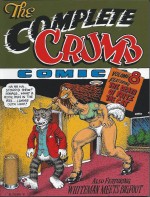
Complete Crumb Comics volume 2: Some More Early Years of Bitter Struggle – New Edition


By Robert Crumb & Charles Crumb, edited by Gary Groth with Robert Fiore (Fantagraphics Books)
ISBN: 978-0-93019-362-1

This book contains controversially clever ideas, outrageously rude drawings, intemperate language, positive drug references and allusions, godless questioning of authority and brilliantly witty, culture-reshaping, personal accounts and opinions.

If you – or those legally responsible for you – might have problems with any of that, please skip this review and don’t buy the book. I’m sure we’ll all know better next time…

Robert Crumb is a unique creative force in the world of cartooning with as many detractors as devotees. His uncompromising, excoriating, neurotically obsessive introspections, pictorial rants and invectives unceasingly picked away at society’s scabs and forever peeked behind forbidden curtains – and all apparently for his own benefit – but he has always happily invited us to share his unwholesome discoveries with anybody with the time and temperament to look…

Way back in 1987 Fantagraphics Books began the nigh-impossible task of collating, collecting and publishing the chronological totality of the tireless artist’s vast output and now, after far too long out-of-print, those engrossing cartoon compendia are being reissued. The earliest volumes have been constantly described as the least commercial but now, with Crumb at last an acknowledged global art-treasure, those volumes are back for your perusal…

The son of a career soldier, Robert Dennis Crumb was born in Philadelphia in 1943 into a functionally broken family. He was one of five kids who all found different ways to escape their parents’ shattering problems, and comics were always paramount amongst them.

As had his older brother Charles, Robert immersed himself in the strips and cartoons of the day; not simply reading but also feverishly, compulsively creating his own. Harvey Kurtzman, Carl Barks and John Stanley were particularly influential, as were newspaper artists like E.C. Segar, Gene Ahern, Rube Goldberg, Bud Fisher, Billy De Beck, George (Sad Sack) Baker and Sidney Smith as well as “straight” illustrators like C.E. Brock and the wildly imaginative, frantically surreal 1930’s Looney Tunes and Merrie Melodies animated shorts.

Defensive and introspective, the young Robert pursued art and torturous self-control through religion with equal desperation. His early spiritual repression and flagrant, hubristic celibacy constantly warred with his body’s urgently growing base needs and desires…

Escaping his stormy family, Crumb married young and began working in-house at the American Greeting Cards Company. He also found like minds in the growing hippie and counterculture movements where he discovered LSD. In 1967 he upped sticks to California to become an early star of the burgeoning Underground Commix scene. As such he found plenty of willing “hippie-chicks” eager to assuage his fevered mind and hormonal body whilst he gradually reinvented the very nature of cartooning with such creations as Mr. Natural, Fritz the Cat, Devil Girl and a host of others.

The rest is history – or perhaps, sociology…

The tortured formative years provided meat for the first collection (The Early Years of Bitter Struggle) and those revelations resume right here, right now as the second volume continues the odyssey to acceptance after ‘The Best Location in the Nation…’; a comprehensive reminiscence and introduction from lifelong confidante Marty Pahls who describes the swiftly maturing and deeply unsatisfied Crumb’s jump from unhappy home to the depressing, dispiriting world of work.

‘Little Billy Bean’ (April 1962) reprises the hapless, loveless nebbish of yore whilst ‘Fun with Jim and Mabel’ revisits Crumb’s first bulky, morally-challenged domestic amazon, after which the focus shifts to her diminutive and feeble companion ‘Jim’. Next, an almost fully-realised ‘Fritz the Cat’ finally gets it on in a triptych of saucy soft-core escapades from R. Crumb’s self-generated Arcade mini-comic project.

From this point onwards, the varied and exponentially impressive breadth of Crumb’s output becomes increasingly riddled with his often hard-to-embrace themes and declamatory, potentially offensive visual vocabulary as his strips grope towards the creator’s long-sought personal artistic apotheosis.

His most intimate and disturbing idiosyncrasies regarding sex, women, ethnicity, personal worth and self-expression all start to surface here…

Working in the production department of a vast greetings card company gave the insular Crumb access to new toys and new inspiration as seen in the collection of ‘Roberta Smith, Office Girl’ gag strips from American Greetings Corporation Late News Bulletins (November 1963-April 1964), followed here by another Fritz exploit enigmatically entitled ‘R. Crumb Comics and Stories’ which includes just a soupçon of raunchy cartoon incest, so keep the smelling salts handy…

A beautiful 10-page selection of sketchbook pages comes next and then a burst of black-&-white and full-colour covers: the satirical 1960 election duel of Kennedy and Nixon, an Arcade gag, 13 letters to Pahls and Mike Britt disguised as ‘Farb’ and ‘Note’ front images as well as a brace of Arcade covers and the portentously evocative front for R. Crumb’s Comics and Stories #1 from April 1964.

The rest of this pivotal collection is given over to 31 more superb pages culled from Crumb’s sketchbooks; a vast and varied compilation that ably displays the artist’s incredible virtuosity and proves that – if he had been able to suppress his creative questing – he could easily have settled for a lucrative career in any one of a number of graphic disciplines from illustrator to animator to jobbing comic book hack.

Crumb’s subtle mastery of his art-form and overwhelming drive to expose and reveal his most hidden depths and every perceived defect – in himself and the world around him – has always been an unquenchable fire of challenging comedy and riotous rumination, and this evocative tome is crucial to understand the creative causes, if not the artistic affectations, of this unique craftsman and auteur.

This superb series, charting the perplexing pen-and-ink pilgrim’s progress, is the perfect vehicle to introduce any (over 18) newcomers to the world of grown up comics, and if you need a way in yourself, seek out this and all the other books in this incomparable sequence as soon as conceivably possible…

Art and stories © 1969, 1974, 1988, 1996, 2013 Robert Crumb. All rights reserved. Introduction © 1988 Marty Pahls.

Wonder Woman Archives volume 4

WW arc 4 front
By Charles Moulton (William Moulton Marston & Harry G. Peter) (DC Comics)
ISBN: 1-4012-0145-8

Wonder Woman was conceived by polygraph pioneer William Moulton Marston and illustrated by Harry G. Peter in a calculated attempt to offer girls a positive and forceful role model and, on Editor M.C. Gaines’ part, sell funnybooks.

The Princess of Paradise debuted as a special feature in All Star Comics #8 (December 1941), before springing into her own series and the cover-spot of new anthology title Sensation Comics a month later. An astonishing instant hit, the Amazing Amazon quickly won her own eponymous supplemental title in late Spring of that year (cover-dated Summer 1942).

Once upon a time on a hidden island of immortal super-women, American aviator Steve Trevor of US Army Intelligence crashed to Earth. Near death, he was nursed back to health by young and impressionable Princess Diana.

Fearing her growing obsession with the creature from a long-forgotten and madly violent world, her mother Queen Hippolyte revealed the hidden history of the Amazons: how they were seduced and betrayed by men but rescued by the goddess Aphrodite on condition that they isolated themselves from the rest of the world and devoted their eternal lives to becoming ideal, perfect creatures.

However when goddesses Athena and Aphrodite subsequently instructed Hippolyte to send an Amazon back with the American to fight for global freedom and liberty, Diana overcame all other candidates and became their emissary – Wonder Woman.

On arriving in America she bought the identity and credentials of lovelorn Army nurse Diana Prince, elegantly allowing the Amazon to be close to Steve whilst enabling the heartsick medic to join her own fiancé in South America. Soon Diana also gained a position with Army Intelligence as secretary to General Darnell, ensuring she would always be able to watch over her beloved. She little suspected that, although the painfully shallow Steve only had eyes for the dazzling Amazon superwoman, the General had fallen for the mousy but superbly competent Lieutenant Prince…

Using the nom de plume Charles Moulton, Marston (with some help in later years from assistant Joye Murchison) scripted almost all of the Amazing Amazon’s many and fabulous adventures until his death in 1947, whereupon Robert Kanigher took over the writer’s role. Venerable veteran illustrator and co-creator H.G. Peter performed the same feat, limning practically every titanic tale until his own death in 1958.

This fourth lavishly deluxe full-colour hardback edition collects the increasingly fanciful and intoxicating adventures from Wonder Woman #8-9 and Sensation Comics #25-32 spanning cover-dates January to August 1944. After an appreciative Foreword from comics journalist and historian Maggie Thompson who outlines the landmarks and catalogues the achievements of the Amazing Amazon, the war-woven epics and imaginatively inspirational dramas begin with Sensation #25 and the ‘Adventure of the Kidnapers of Astral Spirits’ as Diana Prince witnesses a murder. However the killer was asleep at home in bed at the time and soon more impossible killings occur, drawing Wonder Woman into an incredible adventure beyond the Walls of Sleep into uncanny realms where even her gifts are useless and only determination and rational deduction can save the day…

Far less outré but no less deadly was the menace of ‘The Masquerader’ who replaced the Amazing Amazon in #26, following an unshakeable prophecy which saw the champion of Love and Freedom murdered by merciless racketeer Duke Dalgan. It took the covert intervention of Aphrodite and a Girl’s Best Friend to thwart that dire fate, but Diana never knew just who took her place…

When the Amazon, Etta Candy, her sorority Holliday Girls and former convict Gay Frollik resolved to raise a billion dollars for ‘The Fun Foundation’, they never expected their most trusted advisor to turn against them, but his greed led to his downfall and the clearing of a framed woman’s name in Sensation #27, after which Wonder Woman #8 offered another novel-length triumph of groundbreaking adventure.

The drama opened with ‘Queen Clea’s Tournament of Death’ as Steve, on an undercover mission, was snatched by a giant barbarian woman. Hot on his trail, Diana discovered her beau a captive of undersea Amazons from lost Atlantis, living in colossal caverns below the oceans.

Diana soon found herself embroiled in a brutal civil war battling the forces of usurping conqueror Clea of belligerent state Venturia and trying to restore the rightful ruler Eeras to peaceful, beleaguered Aurania. Should she fail, Clea intended to invade the upper world, looking for husky men like Steve to replace the depleted, worn-out puny males of her own realm…

After restoring order in Atlantis, the Amazon returned to her military job and civilian identity until a little girl begged for aid in finding her missing father. Closer investigation revealed that Clea’s forces had been capturing sailors and airmen but with the rebel queen imprisoned as ‘The Girl with the Iron Mask’, who could the leader of the raids possibly be?

After another fearsome subterranean clash the status quo was re-established, but when Diana later met a huge a powerful student at Holliday College she realised that the adventure was still not over as ‘The Captive Queen’ infiltrates Paradise Island and captures both Wonder Woman and Eeras’ wayward daughter Octavia.

Even after defeating her ponderous perpetual foe the action doesn’t end for the Princess of Power as her return to the land beneath the sea is interrupted by another revolution.

This time the ineffectual Atlantean men had used the constant distractions and American modern weapons to enslave the women, making the sub-sea empire a brutal, domineering patriarchy…

But not for long, as Diana and Steve led a brilliant counter-offensive…

In Sensation Comics #28 ‘The Malice of the Green Imps’ offered a welcome dose of metaphysical suspense as jealous thought and impulses were made manifest and drove gangsters and even good folks to attack the recently opened Fun Foundation Clinics sponsored by Diana and Gay Frollik, after which #29 saw another Amazon in Man’s World in the ‘Adventure of the Escaped Prisoner’. After imprisoning gambling racketeer and blackmailer Mimi on the Amazon’s prison island, Wonder Woman was unaware that the harridan’s subsequent escape also brought confused and naively curious fellow warrior Mala to New York where she quickly fell in with the wrong crowd…

Marston’s psychiatric background provided yet another weirdly eccentric psychic scenario in #30’s ‘The Blue Spirit Mystery’ as Steve, Etta Candy and Diana investigated Anton Unreal, a mystic and mentalist who offered to send his client to the heavenly Fourth Dimension – for a large fee, of course…

Unfortunately – although a crook – Unreal was no charlatan and the “ascended ones” certainly found themselves in a realm utterly unearthly, but definitely no paradise until Steve and Diana followed and took matters into their own immaterial hands…

Wonder Woman #9 saw the origins of one of the Amazon’s most radical foes and bizarre adventures. ‘Evolution Goes Haywire’ began with zoo gorilla Giganta stealing Steve’s little niece before the Amazon effected a rescue, after which crazy scientist Professor Zool used his experimental Hyper-Atomic Evolutionizer to transform the hirsute simian into an gorgeous 8-foot tall Junoesque human beauty. Sadly the artificial Amazon retained her bestial instincts and, battling Wonder Woman, managed to damage Zool’s machine, resulting in the entire region being devolved back to the days of cavemen and dinosaurs…

With even Diana converted to barbarism it was an uphill struggle to rerun the rise to culture and civilisation sufficiently to achieve a primitive Golden Age in ‘The Freed Captive’, but eventually the twisted time-travel tale took them back to where they had started, even if only after ‘Wonder Woman vs. Achilles’ – a deranged diversion to save her own mother and people from male oppression by the legendary warrior king…

Sensation Comics #31, by contrast, offered delicious whimsy and biting social commentary when the Princess of Power visited ‘Grown-Down Land’. When a wealthy socialite mother neglected her children the tykes ran away and almost died. Rescued by Wonder Woman, they told her of a dream world far better and happier than reality and next morning, when the kids can’t be awoken from a deep sleep, Diana realises they have chosen to stay in their topsy-turvy imaginary country. However when she enters their dream she finds genuine peril of a most unexpected kind…

This glorious tome of treasures then concludes with #32’s ‘The Crime Combine’ as Wonder Woman finds herself at the top of the American underworld’s hit-list. To scotch the scheme Diana asks fully reformed ex-Nazi and trainee Amazon Baroness Paula von Gunther to leave ParadiseIsland and infiltrate the hierarchy of hate, but it quickly seems that the temptations of Man’s World and allure of evil have seduced the villainess back to her wicked ways…

Seen through modern eyes there’s a lot that might be disturbing in theses old comics classics, such as the plentiful examples of apparent bondage, or racial stereotypes from bull-headed Germans to caricatured African Americans, but there’s also a vast amount of truly groundbreaking comics innovation.

The skilfully concocted dramas and incredibly imaginative story-elements are drawn from hugely disparate and often gratifyingly sophisticated sources, but the creators never forget they’re in the business of entertaining as well as edifying the young. There’s huge amounts of action, suspense, contemporary reflection and loads of laughs to be found here, and always the message is: girls are as good as boys and can even be better if they want to…

Wonder Woman influenced the entire nascent superhero genre as much as Superman or Batman and we’re all the richer for it. Even better, this exemplary book of past delights is a triumph of exotic, baroque, beguiling and uniquely exciting adventure, and these Golden Age exploits of the World’s Most Marvellous Warrior Maiden are timeless, pivotal classics in the development of the medium and still offer astounding amounts of fun and thrills for anyone interested in a grand nostalgic read.
© 1944, 2003 DC Comics, Inc. All Rights Reserved.

Plastic Man Archives volume 3


By Jack Cole (DC Comics)
ISBN: 1-56389-847-0

As recounted by Playboy‘s Cartoon Editor Michelle Urry in her Foreword to this third beguiling Deluxe Archive collection, Jack Cole was one of the most uniquely gifted talents of America’s Golden Age of Comics.

Before moving into the magazine and gag markets he originated landmark tales in horror, true crime, war, adventure and especially superhero comicbooks, and his incredible humour-hero Plastic Man remains an unsurpassed benchmark of screwball costumed hi-jinks: frequently copied but never equalled.

In 1954 Cole quit comics for mature cartooning, becoming a household name when his brilliant watercolour gags and stunningly saucy pictures began running in Playboy from the fifth edition. Cole eventually moved into the lofty realms of newspaper strips and, in May 1958, achieved his life-long ambition by launching a syndicated newspaper strip, the domestic comedy Betsy and Me.

On August 13th 1958, at the moment of his greatest success he took his own life. The reasons remain unknown.

Without doubt – and despite other triumphal comicbook innovations such as Silver Streak, Daredevil, The Claw, Death Patrol, Midnight, Quicksilver, The Barker, The Comet and a uniquely twisted take on the crime and horror genres – Cole’s greatest creation and contribution was the zany Malleable Marvel who quickly grew from a minor back-up character into one of the most memorable and popular heroes of the era. “Plas” was the wondrously perfect fantastic embodiment of the sheer energy, verve and creativity of an era when anything went and comics-makers were prepared to try out every outlandish idea…

Eel O’Brian was a brilliant career criminal wounded during a factory robbery, soaked by a vat of spilled acid and callously abandoned by his thieving buddies. Left for dead, he was saved by a monk who nursed him back to health and proved to the hardened thug that the world was not just filled with brutes and vicious chisellers after a fast buck.

His entire outlook altered and now blessed with incredible malleability, Eel resolved to put his new powers to use: cleaning up the scum he used to run with.

Creating a costumed alter ego he began a stormy association with the New York City cops before being recruited as a most special agent of the FBI…

He soon picked up the most unforgettable comedy sidekick in comics history. Woozy Winks was a dopey indolent slob and utterly amoral pickpocket who accidentally saved a wizard’s life and was gifted in return with a gift of invulnerability: all the forces of nature would henceforth protect him from injury or death – if said forces felt like it.

After failing to halt the unlikely superman’s impossible crime spree, Plas appealed to his sentimentality and better nature and, once Woozy tearfully repented, was compelled to keep him around in case he strayed again. The oaf was slavishly loyal but perpetually sliding back into his old habits…

Equal parts Artful Dodger and Mr. Micawber, with the verbal skills and intellect of Lou Costello’s screen persona or the over-filled potato sack he resembled, Winks was the perfect foil for Plastic Man: a lazy, greedy, ethically challenged reprobate with perennially sticky fingers who got all the best lines, possessed an inexplicable charm and had a habit of finding trouble. It was the ideal marriage of inconvenience…

This lavish, full-colour hardback barely contains the exuberant exploits of the premier polymorph from Police Comics #31-39 and Plastic Man #2 stretching from June 1944 to February 1945, and opens with an outrageous examination of current affairs as the chameleonic cop investigated ‘The Mangler’s Slaughter Clinic’ wherein fit and healthy draft-dodgers could go to get brutalised, broken and guaranteed unfit for active duty. The biggest mistake these canny crooks made was kidnapping Woozy and trying their limb-busting procedures on a man(ish) protected by the forces of nature …

Police Comics #32 then detailed ‘The La Cucaracha Caper’ wherein ultra-efficient Plas was forcibly sent on vacation to give the cops and FBI a break and some time to process all the crooks the Ductile Detective had corralled. What no-one expected was that the last gangsters left un-nabbed would also head south of the border to escape their nemesis and Plas and Woozy found far more than Sun, Senoritas and Bullfights in the sleepy Mexican resort…

In #33’s ‘Deathtrap for Plastic Man’ a crazed saboteur stretched our hero’s resources and reason in his mad mission destroy a vital prototype plane for the most implausible of reasons before Plastic Man #2 (August 1944) offered a quartet of brilliant yarns, beginning with ‘The Gay Nineties Nightmare’, wherein Plas and Woozy trailed the worst rats in the underworld to a hidden corner of America where they couldn’t be touched.

No Place, USA, due to clerical errors, had been left off all official maps and withdrawn from the Union in a huff in the 1890s. The FBI couldn’t enforce justice there but maybe two good men – or one and Woozy – could…

Satire was replaced by outrageous slapstick as mild-mannered Elmer Body became ‘The Man Who Could Switch Bodies’, using his newfound gift to experience all the joys and thrills his dull life had denied him. When Plas realised he couldn’t catch or hold the identity thief, all he could do was offer better candidates for possession…

In hot pursuit of Fargo Freddie the stretchable sleuth accidentally chased the killer into a Mexican volcano. Thinking the case closed the hero headed home but was unaware that a miraculous circumstance had transformed his target into The Lava Man’, whose resultant revenge rampage set the nation ablaze until Plas resorted to brains and not bouncy brawn. The issue closed with tale of urban horror as Plas and Woozy were dispatched to a quiet little town where everybody had been driven crazy – even the medics and FBI agents sent in to investigate ‘Coroner’s Corners’…

Police Comics #34 introduce a well-meaning if screwball campaigner determined to end Plas’ maltreatment of malefactors by organising ‘Serena Sloop’s Society for the Prevention of Cruelty to Criminals’, although the old biddy’s philanthropy took a big hit after she actually met some of the crooks she championed, whilst ‘The Confession of Froggy Fink’ in #35 threatened to tear the entire underworld apart, if Plas got hold of it before the many concerned members of the mastermind’s gang did. Cue frantic chases, and lots of double-dealing back-stabbing violence…

In #36 a gang of brutal thieves hid out in the isolated, idyllic paradise of ‘Dr. Brann’s Health Clinic’ turning the unprofitable resort into a citadel of crime until Plas and Woozy decided to take a rest cure themselves, after which ‘Love Comes to Woozy’ offered the unlikely sight of a sultry seductive siren falling for the wildly unappealing Mr. Winks just as the corpulent crime-crusher and his boss were closing in on a gang stealing widows’ and veterans’ welfare cheques…

The big bosses of criminality had finally had enough by #38, offering ‘One Million Dollars for Plastic Man’s Death’. They also included top criminologist Professor Zwerling on their shopping list but even he was too much for the horde of would-be assassins and even diminutive murder mastermind Rocky Goober soon found his reach far exceeded his grasp…

This classic collection then concludes with a riotous rollercoaster romp as ‘His Lordship Woozy Winks’ is improbably tapped as the lost heir to a fancy British estate. Of course Bladau Castle boasts a murderous ghost and rather more prosaic elements determined to ensure the owlish oaf doesn’t inherit…

Always exciting, breathtakingly original, thrilling, funny, scary and still visually intoxicating over seventy years later, Jack Cole’s Plastic Man is a truly unique creation that has only grown in stature and appeal. This is a magical comics experience fans would be crazy to deny themselves.
© 1944, 1945, 2001 DC Comics. All Rights Reserved.

American Splendor: The Life and Times of Harvey Pekar – New Revised Review


By Harvey Pekar, R. Crumb, Gregory Budgett, Gary Dumm, Gerry Shamray,
Kevin Brown, Susan Cavey & Val Mayerik
(Ballantine Books)
ISBN: 978-1-84023-787-0

Before finding relative fame in the 21st century, Harvey Pekar occupied that ghastly niche so good at trapping the truly creative individual: Lots and lots of critical acclaim, and an occasional heart-breakingly close brush with super-stardom, without ever actually getting enough ahead to feel secure or appreciated.

One of those aforementioned brushes came in 1980s with the release of a couple of compilations of selected strips by mainstream publisher Doubleday that even to this day are some of his most powerful, honest and rewarding “literary comics” ever seen. By mercilessly haranguing, begging and even paying (out of his meagre civil service wages and occasional wheeler-deal) any artists who met his exacting intellectual standards, Pekar all but created the comics genre of autobiographical, existentially questing, slice-of-life graphic narratives whilst eking out a mostly lonely, hand-to-mouth existence in Cleveland, Ohio.

How the irascible, opinionated, objectionable, self-educated music-mad working stiff came to use the admittedly (then) impoverished comicbook medium to make a fiercely vital social commentary on American life of the ordinary Joe is a magical journey in the plebeian far better read than read about, but I’m going to have a crack at convincing any holdouts anyway.

Moreover, by the time you’ve seen this I’m already on to my next crusade…

This compendium combines and re-releases those seminal tomes in one big, bold edition and was released to tie-in with the award-winning 2003 indie film biography American Splendor, and opens with the superb contents of the 1985 release American Splendor: the Life and Times of Harvey Pekar, beginning by reproducing the introduction by early collaborator and modern Media Darling Robert Crumb before proceeding with a seductive welter of elegiac, confrontational, compulsive, challenging, painfully frank and distressingly honest observations that collectively changed the way English language comics were perceived, received and even created.

Rendered by Crumb, the excoriating graphic self-analysis begins with ‘The Harvey Pekar Name Story’ as the obsessive yet passive hunt for other people with the same name briefly gripped the self-confessed compulsive personality, whilst ‘The Young Crumb Story’ gave us Pekar’s take on the cartooning career of his collaborator, after which ‘A Fantasy’ again revisited the artist’s relationship with the writer: Pekar uncomfortably bragging over how he had browbeaten and gulled Crumb into drawing his scripts – and still was…

Gary Dumm illustrated the bizarre ‘Ozzie Nelson’s Open Letter to Crumb’ (written in 1972) describing the faded TV celebrity’s snotty pep talk to the cartooning degenerate, after which Crumb returned to deliver self-abusive insight as Pekar revealed ‘How I Quit Collecting Records – and Put Out a Comic Book with the Money I Saved’.

Greg Budgett & Dumm handled many of the most searingly honest introspectives such as ‘The Day Before the Be In’, the equally forthright and painful personal history sequels ‘Awakening to the Terror of the New Day’ and ‘Awakening to the Terror of the Same Old Day’ or the nigh-spiritual rationalisations of ‘Short Weekend – a Short Story About the Cosmic and the Ordinary’…

One of the most impressive facets of Pekar’s tales is the uncompromising depiction of the people he encountered in work or socially (if such a term can apply to such a self-admitted “judgemental jerk”) and the frankly brutal way he attempts to keep narrative polish out of his graphic reportage.

Incidents such as ‘A Compliment’ or ‘Jivin’ With Jack the Bellboy as he Goes About… Hustlin’ Sides’ and ‘Jack the Bellboy and Mr. Boats’ – all illustrated by Crumb – recount episodes with co-workers undistinguished, unremarkable and free of all dramatic embellishment or grace-saving charisma… but they are intoxicatingly real and appealing.

‘Read This’ (Budgett & Dumm) tells how even cynics can be surprised by people, whilst the Crumb-illustrated ‘Standing Behind Old Jewish Ladies in Supermarket Lines’ is as gently hilarious as their ‘Ridin’ the Dog’ vignette of cross-country bus travel is contemplatively reassuring.

Innovative Gerry Shamray tackled the wordy self-examination of life’s pointless frustrations in ‘An Argument at Work’ and the cathartic ‘Working Man’s Nightmare’ with aplomb and smart sensitivity, before Crumb resurfaced to draw an incredible familiar and unwelcome situation as the obnoxious ‘Freddy Visits for the Week End’. Regrettably we all have friends like him…

Pekar’s disastrous history with women was a frequent theme and ‘Ripoff Chick’ (by Budgett & Dumm again) showed why and how. The only difference between the author and most men was that he admitted up front that he wanted sex without complications or commitment…

‘One Good Turn Deserves Another’ (Shamray) invites us to share a typically penny-pinching secret, before Dumm tackled a quirky friendship and the perils of well-intentioned matchmaking in ‘Leonard & Marie’, and ordinary folk got tied up discussing theology and politics in Shamray’s wryly related ‘Noah’s Ark’. The artist then effectively encapsulated ‘Class Antagonism’ before Jewish intellectual Pekar again examined his ethnic and cultural roots by revisiting his relationship with Old World Hebrew ‘Emil’ (Dumm & Budgett) and the danger of first-hand accounts in the Crumb-illustrated ‘The Maggies (Oral History)’ and Shamray’s death-camp memoir ‘Kaparra’…

Crumb then turned in his most claustrophobic and impassioned drawing for the vibrant manifesto ‘American Splendor Assaults the Media’ after which the immensely stylish Kevin Brown limned a tale of frustrated selling out as Harvey attempted to schmooze up-and-coming movie star Wallace Shawn ‘Grubstreet, USA’, after which the first volume ended on a high of sorts with Pekar via Crumb temporarily resolving a ‘Hypothetical Quandary’.

The philosophising, reminiscing, ruminating, observing, eulogizing, questioning and fictively projecting promptly continues in From the Streets of Cleveland Comes… American Splendor: the Life and Times of Harvey Pekar, resuming the painfully honest – and to us here and now perhaps often unsettling and disquieting – accounts of normal lives with the Crumb-crafted classics ‘Pickled Okra (Okry)’, ‘Lunch with Carmella’, ‘Rollins on Time’ and ‘Visualize, Actualize, Realize’ – all containing commonplace friendly interactions with Pekar’s African-American co-workers that would make many genteel folk wince today…

A prospective hot date turned into a gruelling and pointless exercise in furniture moving in the Budgett & Dumm saga ‘Guerrilla Theatre: July ’74 – on the Corner’ with a punch-line not apparent until their ‘On the Corner… a Sequel: June 1976’, after which inker turned illustrator to relate the nostalgic revelations of young lust in the 1950s on the ‘Roller Coaster to Nowhere’, but some measure of cosmic karma was achieved decades later when Pekar finally achieve his  childhood goal of owning ultra-hip and so, so cool ‘Stetson Shoes’…

‘Mrs. Roosevelt and the Young Queen of Greece’ and ‘Busman’s Holiday’ by Dumm & Budgett celebrate the simple joy of guys simply sitting around shooting the breeze, whilst Crumb’s delicious treatment of Pekar’s love for old fashioned Jewish kvetching makes ‘Miracle Rabbis – a Dr. Gesundheit Story’ a minor masterpiece of comics.

‘An Everyday Horror Story’ (Shamray) then recaptures the tension and terror of Pekar’s first brush with serious illness – or so the author thought.

Always a healthy, vigorous but exceptionally excitable shouty man, Pekar got properly sick for the first time in his life and faced the very real prospect of never being able to speak again. This exceedingly gripping account perfectly presents all the fear, frustration, metaphysical pleading and moving emotional and practical support Harvey’s friends and then wife provided – and what happened next…

‘Alice Quinn’ drawn by S. (Susan) Cavey then detailed a portentous meeting with the girl who got away before Shamray’s powerfully captivating ‘I’ll be Forty Three on Friday (How I’m Living Now)’ offers a rare moment of optimistic clarity, and Cavey’s ‘Jury Duty’ shows how even the most earnest hopes and honest ambitions can worry the bejeezus out of “normal” folks…

For most of his life Pekar was that rarest of creatures – an un-typical American who chose not to drive (for good, sound and to my mind admirable reasons). Thus he often spent time cadging lifts and fretting about the etiquette of returning favours to his civilian chauffeurs. In ‘A Ride Home’ (Cavey) the impatience and anxiety grew momentarily too much, whilst in Dumm’s ‘Free Ride’ a long-standing arrangement with a previously admired old Jewish guy escalated into something ferociously passive-aggressive, quite strange and impossibly worrisome…

The same traumas afflicted Pekar when he foolishly bought his ex- wife’s automobile only to find it a cursed Jonah, which plagued him for many snowbound months in ‘Old Cars and Winter’ by Cavey. The superb and vastly underrated Val Mayerik joined the select band of artistic collaborators with the gloriously uplifting ‘A Marriage Album’, depicting life with beloved third wife with Joyce Brabner, and explored Pekar’s wild street-fighting juvenile days and later proclivities in ‘Violence’, whilst ‘History Repeats Itself’ offered a moment of resigned contemplation over teen spirits courtesy of Seán Carroll.

Mayerik contributed a final brace of gently contemplative pieces beginning with ‘A Matter of Life and…’ which saw an older, calmer author recap his life with a little more kindness than ever before, whilst an uneventful bus ride found Pekar gleaning a wealth of down-home ‘Common Sense’ from a voluble instructor driver before this masterful meander through a truly unique mind concludes with Crumb and the perfect solution to life’s ills with ‘Mr. Boats’ Miracle Cure’…

With art by individualistic collaborators who were never content to stay in their Comfort Zones but always endeavoured to make their contributions unique unto the story, and selected from a most adventurous and historically creative decade, these tales of working life, self-esteem, achievement, failure, religion, the media, Nazi atrocity, guilt, acceptable bigotry, proudly defended ignorance, friendship, aloofness and the art of understanding women are timeless slices of life’s dreary brilliance.

As a man who constantly assessed and re-examined his own creative worth and self, Harvey Pekar opened up his life to the world and changed it by being ordinary and average.

…Except he never was, as this superb insight into the mind and heart of a truly original comics creator will attest. This splendid, engrossing book offers readers a chance to see the humour, confusion and frustration of being an American thinker in a world that simply doesn’t value brains and spirit anymore – and I fear that’s going to be one of humanity’s eternal verities…

© 1976-1986, 2004 Harvey Pekar, LLC. All Rights Reserved.

Plastic Man Archives volume 2


By Jack Cole (DC Comics)
ISBN: 1-56389-621-4

Jack Cole was one of the most uniquely gifted talents of American Comics’ Golden Age, crafting landmark tales in horror, true crime, war, adventure and especially superhero genres. His incredible humour-hero Plastic Man remains an unsurpassed benchmark of screwball costumed hi-jinks: frequently copied but never equalled. In 1954 Cole quit comics for gag and glamour cartooning, becoming a household name when his brilliant watercolour gags and stunningly saucy pictures began running in Playboy with the fifth issue. Cole eventually moved into the lofty realms of newspaper strips and, in May 1958, achieved his life-long ambition by launching a syndicated newspaper strip, the domestic comedy Betsy and Me.

OnAugust 13th 1958, at the moment of his greatest success he took his own life. The reasons remain unknown.

Without doubt – and despite his other comicbook innovations and triumphs such as Silver Streak, Daredevil, The Claw, Death Patrol, Midnight, Quicksilver, The Barker and The Comet as well as through a uniquely twisted take on the crime and horror genres – Cole’s greatest creation was the zany, malleable Plastic Man who quickly grew from a minor back-up character into one of the most memorable and popular heroes of the Golden Age. “Plas” was the wondrously perfect fantastic embodiment of the sheer energy, verve and creativity of an era when anything went and comics-makers were prepared to try out every outlandish idea…

This second superbly lavish full-colour deluxe hardback reprints Plastic Man #1 and the cover-featured lead tales from Police Comics #21-30, covering August 1943 to May 1944 and sees, after a convivial commentary in the Foreword by author, strip writer and historian Ron Goulart, the Stretchable Sleuth’s meteoric rise, fully converting from hilariously edgy benevolent rogue to malleable super straight man as his comedy relief sidekick increasingly stole the show in a series of explosive exploits which shaped the early industry every inch as much as Superman, Batman, Wonder Woman or the “Shazam” shouting Captain Marvel…

Eel O’Brian was a career criminal wounded during a factory robbery, soaked by a vat of spilled acid and callously abandoned by his thieving buddies. Crawling away to die, O’Brian was found by a monk who nursed him back to health and proved to the hardened thug that the world was not just filled with brutes and vicious chisellers after a fast buck.

His entire outlook altered and, gifted with incredible malleability (he surmises it was the chemical bath mingling with his bullet wounds), Eel resolved to put his new powers to use in cleaning up the scum he used to run with.

Creating a costumed alter ego he began a stormy association with theNew York Citycops before being recruited as a most special agent of the FBI…

Shortages and government rationing were gripping the country at this time. For publishers it was lack of paper that particularly plagued and Plastic Man #1 was released (a Summer 1943 cover-date) through a subsidiary company Vital Books, rather than as a straight addition to Quality Comics’ prestigious line of stars.

Irrespective of the name on the masthead, the mammoth 64 page tome offered a quartet of stunning tales of humour, heroic hi-jinks and horror, beginning with cover-featured ‘The Game of Death’ in which Plas and his inimitable, often unwanted assistant set upon the trail of an engrossing mystery and incredible threat posed by a rich man’s gambling club which concealed a sadistic death cult using games of chance to recruit victims …and new disciples…

Said assistant Woozy Winks was an indolent slob, paltry pickpocket, utterly venal yet slavishly loyal oaf who accidentally saved a wizard’s life and was gifted in return with a gift of invulnerability: all the forces of nature would henceforth protect him from injury or death – if said forces felt like it.

After failing to halt the thief’s impossible crime spree, Plas appealed to his sentimentality and better nature and, once Woozy tearfully repented, was compelled to keep him around in case he strayed again…

Winks – equal parts Artful Dodger and Mr. Micawber, with the verbal skills and intellect of Lou Costello’s screen persona or the over-filled potato sack he resembled – was the perfect foil for Plastic Man: a lazy, greedy, ethically challenged reprobate with perennially sticky fingers who got all the best lines, possessed an inexplicable charm and had a habit of finding trouble. It was the perfect marriage of inconvenience…

In ‘Now You See it, Now You Don’t’ the rotund rogue got involved with a goofy Professor and became the greedy owner of an invisibility spray. He wanted to sell it to the Army but Japanese spies captured both the formula and Plastic Man, and dispatched them toTokyo for disposal.

Of course this simply allowed the Man of a Thousand Shapes to deliver such a sound and vicariously joyful thrashing to the Dishonourable Sons of Nippon that it must have had every American kid who saw it jumping for joy.

Cole then touched the heartstrings with the tragic tale of ‘Willie McGoon, Dope’ as a hulking yet gentle simpleton disfigured by neighbourhood kids became the embittered pawn of a career criminal. The duo’s terrifying crime-wave paralysed the city until Plas and Woozy stepped in.

The stunning solo package closed with ‘Go West Young Plastic Man, Go West’ after Woozy bought a gold mine from a guy in a bar and greedily galloped to Tecos Gulch to make his fortune. By the time Plas arrived to save him from his folly the corpulent clown had been framed for rustling and murder…

Police Comics #21 featured conspiracy by a financial cabal attempting to corner the travel and shipping routes of the nation. Only one man could counter the impending monopoly but he was missing, seduced by the prognostications of a circus fortune teller. If Plas couldn’t rescue Sylvester Smirk from ‘The Menace of Serpina’ the entire country would grind to a standstill…

In #22, ‘The Eyes Have It!’ pitted Plas and Woozy against a child-trafficking human horror dubbed The Sphinx who was exercising all his resources to regain possession of a little mute boy who had seen too much, whilst #23’s purportedly supernatural thriller saw the Stretchable Sleuth prove ‘The Ghost Train’ to be no such thing, but only a scam by a shareholder trying to buy up a rail line the Government needed to acquire for vital war work.

A rash of tire thefts (also severely rationed during war time) in Police #24 had a sinister purpose as gangsters and a mad scientist joined forces to synthesise evil knock-offs of their greatest enemy in ‘The Hundred Plastic Men’ after which Woozy again stole the show – and sundry other items – when his addiction to mystery stories led him and Plastic Man on a deadly chase to discover the culprit and cause of ‘The Rare Edition Murders’ in #25.

Over and above his artistic virtuosity, Jack Cole was an astonishing adept writer. His regular 15-page adventures were always packed with clever, innovative notions, sophisticated character shtick and far more complex plots than any of his competitors. In #26’s ‘Body, Mind and Soul’ he starts with Plas’ FBI boss discovering his shady past, and builds on it as the exposed O’Brian agrees to a take on three impossible cases to prove he really has reformed. From there it’s all rollercoaster action as the Pliable Paladin rounds up brutish Slugger Crott, ferrets out the true identity of the city’s smartest mob boss and ends the depredations of a tragically cursed werewolf…

The rotund rascal again took centre stage – and even the cover – in #27 as ‘Woozy Winks, Juror’ hilariously endangered the very nature and sacred process of jurisprudence after being excluded from jury duty. After all, he only had a small criminal record and the impish imbecile was determined to serve so when a sharp operator gave him a few tips Woozy was so grateful that he…

The star-struck schmuck dominated again in #28 as Hollywoodcalled and the Flexible Fed agreed to star in a film. However with Mr. Winks as his manager it was inevitable that ‘Plastic Man – the Movie’ would start with intrigue, sex and murder but as usual end as a furious fun-filled fiasco.

The trail of America’s biggest tax-evader drew Plastic Man to ‘Death in Derlin’s Castle’ as the FBI’s Odd Couple followed the absence of money to an historic pile and a nefarious scheme with moody movie echoes of Citizen Kane and The Cat and the Canary, before this sublime Archive selection ceases with the outrageously odd and supremely surreal ‘Blinky Winks and Gooie Louie’ from Police Comics #30.

Plas and Woozy are drawn into incredible peril when ruthless butter-leggers begin supplying illicit spreads to the city’s dairy-deprived (rationing again) denizens. Even dedicated crime-busters like Woozy found it hard to resist the lure of the lard and when the creamy trail unfortunately led to Woozy’s uncle Blinky justice had to be done. Of course there was always lots of hard-to-find food to be found on a farm but that was just a happy coincidence…

Always exciting, breathtakingly original, thrilling, funny, scary and still visually intoxicating seventy years later, Jack Cole’s Plastic Man is a truly unique creation that has only grown in stature and appeal. This is a magical, unique comics experience fans would be crazy to deny themselves.
© 1943, 1944, 2000 DC Comics. All Rights Reserved.