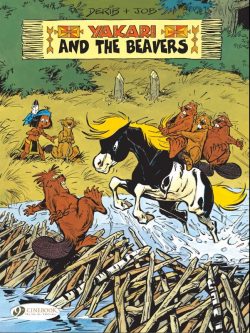
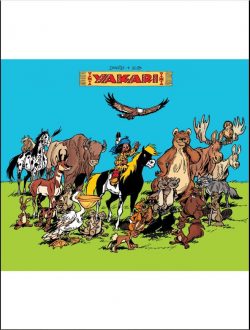
Yakari and the Beavers


By Derib & Job, translated by Erica Jeffrey (Cinebook)
ISBN: 978-1-905460-09-0 (Album PB)

Children’s magazine Le Crapaud à lunettes was founded in 1964 by Swiss journalist André Jobin who then wrote for it under the pseudonym Job. Three years later he hired fellow French-Swiss artist Claude de Ribaupierre AKA “Derib”. The illustrator had launched his own career as an assistant at Studio Peyo (home of Les Schtroumpfs/The Smurfs), working on strips for venerable weekly Le Journal de Spirou.

Together at Le Crapaud à lunettes, Derib & Job created the splendid Adventures of the Owl Pythagore before striking pure comics gold a few years later with their follow-up collaboration.

Derib – equally au fait with enticing, comically dynamic “Marcinelle” cartoon style yarns and devastatingly compelling meta-realistic action illustrated action epics – went on to become one of the Continent’s most prolific and revered creators. It’s a crime that groundbreaking strips such as Celui-qui-est-né-deux-fois; Jo (the first comic ever published dealing with AIDS); Pour toi, Sandra and La Grande Saga Indienne) haven’t been translated into English yet, but we still patiently wait in hope and anticipation…

Many of Derib’s stunning works over the decades feature his cherished Western themes; magnificent geographical backdrops and epic landscapes. Yakari is considered by fans and critics to be the strip which first led him to deserved mega-stardom.

Debuting in 1969, Yakari follows the life of a young Oglala Lakota boy on the Great Plains; set sometime after the introduction of horses by the Conquistadores but before the coming of modern Europeans.

The series – which has generated two separate TV cartoon series and a movie release – has achieved 40 albums: a testament to the strip’s evergreen vitality and brilliance of its creators, even though originator Job has moved on and Frenchman Joris Chamblain assumed the writer’s role in 2016.

Overflowing with gentle whimsy and heady compassion, young Yakari enjoys a largely bucolic existence: at one with nature and generally free from privation or strife. For the sake of our delectation, however, the ever-changing seasons are punctuated with the odd crisis, generally resolved without fuss, fame or fanfare by a little lad who is smart, brave… and can – thanks to the boon of his totem guide the Great Eagle – converse with all animals…

Published in 1977, Yakari chez les castors became the third European album, released as the strip grew in prominence and popularity. A year after, the feature began running in Le Journal de Tintin, subsequently spawning two animated TV series (1983 and 2005), all the usual merchandising spin-offs and achieving monumental global sales in 17 languages to date.

Yakari and the Beavers opens in summer as the nomadic Sioux make camp at a confluence of rivers. The children are playing, testing their strength, speed and archery skills, but with burly Buffalo Seed winning most of the honours – and the fascinated attention of pretty Rainbow – physically less-developed Yakari soon slopes off to cavort with his faithful and forthright pony Little Thunder.

As they romp and swim in the river, they encounter a strange wooden construction ranging from bank to bank and unexpectedly arouse the ire of an excitable beaver named Thousand Mouths. He is the impatient and irascible foreman of a band of buck-toothed brethren, determined to finish the family home in record time, but his fellows are far less enthusiastic…

When one – Linden Tree – spots the palomino, it starts a stampede of rodents who would all rather ride horses than chew timber and move mud. Soon, while they’re all goofing around, their boss is going ballistic and a wise old beaver is teaching a rapt Yakari everything he needs to know about dam-building…

After more idle days in camp, Yakari’s thoughts return to the beavers. Before long he and Little Thunder are heading back to the dam, but are distracted by an astonishing noise. Tracing it, they discover extremely ambitious beaver Double-Toothfar from the river, attempting to chew down a colossal tree all alone…

This eager beaver confides his dreams of being a sculptor, but their conversation is curtailed when a bad-tempered grizzly bear wanders up, menacing little straggler Wild Rose. With the ursine interloper clearly not amenable to reason, Yakari drives the surly brute off with a rough-hewn jousting lance rapidly gnawed into shape by Double-Tooth’s flashing gnashers…

On escorting the kits back to the river, Yakari is astounded to see the progress made in the wood-and-mud abode and delighted to be asked to help. In actual fact most of the assistance comes from hard-pressed Little Thunder who reluctantly becomes the engine transporting trees and saplings from the woods to the river…

Returning late to camp, Yakari is observed by Rainbow who wants to know what her friend is up to. Next morning, she invites herself along as they return to the Beaver Lodge and cannot understand why, in the midst of listening to the hairy toilers chattering, Yakari spurs his pony away and races away.

Mounted behind him she listens incredulously as the boy explains that little Linden Tree is missing and then makes him backtrack to the really important bit. Yakari understands and can talk to all birds and beasts…

Racing downriver the children are soon joined by Yakari’s totem animal, sagacious Great Eagle, who provides a telling clue to the lost beaver’s whereabouts. However, after daring subterranean depths, the little brave eventually finds his lost friend but is himself trapped. Happily, the artistic skills of late-arriving Double-Tooth prove invaluable in devising a climbing device and soon everybody – even utterly bemused Rainbow – are all celebrating back at the Lodge.

With things back to normal the irrepressible, frustrated artist corners Yakari for one last secret project. Some days later, the busy beavers are stunned to see Double-Tooth’s river-borne aesthetic magnum opus poled into the lee of the dam by the proud Yakari…

The exploits of the valiant little brave who can speak with animals and enjoys a unique place in an exotic world is a decades-long celebration of joyously gentle, moving and inexpressibly entertaining adventures honouring and eulogising an iconic culture with grace, wit, wonder and especially humour.

These gentle sagas are lost treasures of kids’ comics literature and Yakari is a series no fan of graphic entertainment should be without.
Original edition © 1977 Le Lombard/Dargaud by Derib + Job. English translation 2005 © Cinebook Ltd.

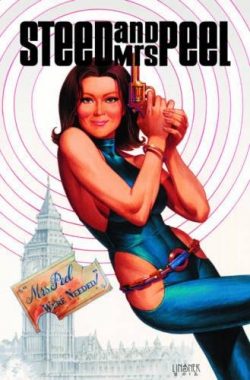
Steed and Mrs Peel volume 2: The Secret History of Space


By Caleb Monroe, Yasmin Liang, Ron Riley & various (Boom! Studios)
ISBN: 978-1-60886-340-2 (TPB)

The (other) Avengers was an incredibly stylish, globally popular British TV show which blended espionage with arch glamor, seductively knowing comedy and deadly danger with elements of technological fantasy. It ran from the 1960s through to the beginning of the 1980s. A phenomenal cult hit, the show (and sequel The New Avengers) is best remembered for Cool Britannia outreach, stylish action-adventure, kinky quirkiness, mad gadgetry, dashing heroics, uniquely English festishistic trappings, surreal suspense and the wholly appropriate descriptive phrase “Spy Fi”.

Enormously popular all over the globe, the show evolved from 1961’s gritty crime thriller Police Surgeon into a paragon of witty, thrilling and sophisticated drama/lampoonery with suave, urbane British Agent John Steed and dazzlingly talented amateur sleuth Mrs. Emma Peel battling spies, robots, criminals, secret societies, monsters and even “aliens” with tongues very much in cheeks and always under the strictest determination to remain calm, dashingly composed and exceedingly eccentric…

The format was a winner. Peel, as played by Dame Diana Rigg, had replaced landmark character Cathy Gale – the first hands-on fighting female on British TV history – and took the show to even greater heights of success. Emma Peel’s connection with viewers cemented into the nation’s psyche the archetype of a powerful, clever, competent woman: largely banishing the screaming, eye-candy girly-victim to the dustbin of popular fiction.

Rigg left in 1967, herself replaced by another feisty female: Tara King (Linda Thorson) who carried the series to its demise in 1969. Continued popularity in more than 90 countries led to a revival in the late 1970s. The New Avengers saw glamorous Purdey (Joanna Lumley) and manly Gambit (Gareth Hunt) as partners and foils to agelessly debonair but deadly Steed…

The show remains an enduring cult icon, with all the spin-off that entails. During its run and beyond, The Avengers spawned toys, games and collector models; a pop single, stage show and radio series, plus audio adventures, posters, books and all the myriad merchandising strands that inevitably accompany a media sensation. The one we care most about is comics and naturally, the popular British Television program was no stranger there either.

Following an introductory strip starring Steed & Gale in listings magazines Look Westward and The Viewer – plus the Manchester Evening News – (September 1963 to the end of 1964), legendary children’s staple TV Comic launched its own Avengers strip in #720 (October 2nd 1965) with Emma Peel firmly ensconced.

This ran until #771 (September 24th 1966), and the dashing duo also starred in TV Comic Holiday Special, whilst a series of young Emma Peel adventures featured in June & Schoolfriend, before transferring to DC Thomson’s Diana until 1968 whereupon it returned to TV Comic with #877, depicting Steed and Tara King until #1077 in 1972.

In 1966, Mick Anglo Studios unleashed a one-off, large-sized UK comicbook, and two years later in America, Gold Key’s Four-Color series published a try-out book using recycled UK material as John Steed/Emma Peel – since Marvel had since secured an American trademark for comics with the name “Avengers”. Although a constantly evolving premise, fans mostly fixate on the classic pairing of Steed and Peel – which is handy as the Avengers title is embargoed up the wazoo now.

There were wonderful, sturdily steadfast hardback annuals for the British Festive Seasonal trade, beginning with 1962’s TV Crimebusters Annual and thereafter pertinent TV Comic Annuals before a run of solo editions graced Christmas stockings from 1967-1969: supplemented by a brace of New Avengers volumes for 1977 and 1978.

Most importantly, Eclipse/ACME Press produced a trans-Atlantic prestige miniseries between 1990 and 1992. Steed & Mrs. Peel was crafted by Grant Morrison & Ian Gibson with supplementary scripting from Anne Caulfield. That tale was reprinted in 2012 by media-savvy publishers Boom! Studios: a notional pilot for the later iteration under review here.

The Adventures of Steed and Mrs. Peel began with issue #0-3 (August 2012), reintroducing the faithful and newcomers to a uniquely British phenomenon and saw the grand dames of Spy Fi tackle old (TV) enemies The Hellfire Club at the height of the 1960s.

After quelling last volume’s A Very Civil Armageddon, the intrigue resumes here and now with Steed and Peel clearing up loose ends by attending a highly suspect gala soiree in ‘Ballroom Dance Fu’ (by Caleb Monroe, Yasmin Liang & colourist Ron Riley). The scoundrel du jour under investigation is wealthy rogue Lloyd Cushing, but the true target is scurrilous brainwasher Mr. Blackwell – the sinister mindbender who facilitated the Hellfire Club’s schemes and previously warped Mrs Peel into their Queen of Sin.

Sadly, despite a minimum of murders and the defeat of their foe, our heroes are left little wiser, and blithely unaware that the schemes of a hidden mastermind are still proceeding apace…

Main event ‘The Secret History of Space’ then kicks off with the abduction of British Air Chief Marshal Trevor Seabrook‘s wife in opening gambit ‘Steed Drifts Off into Space’. The hidden villain’s ultimate aim is achieved when the distraught airman – head of the UK’s Space Program – hands over an item long stored and forgotten in a research facility. Investigating the extortion, Steed and Peel are baffled to learn that the top-secret booty is a decades-old empty glass jar…

Diligent investigation leads the Derring Duo to a warehouse where old enemy Dr. Peter Glass (another TV series recruit) has been continuing his deadly experiments into optical lasers. It’s quite the conundrum since Steed clearly remembers killing him…

The answer is forthcoming as ‘Time Flies’ reveals a bit of chronal meddling from the bonkers boffin’s future assistant Jamie upsetting the timeline and risking things from beyond our comprehension getting dangerously close to humanity. Thankfully, even a gang of time-duplicated henchpersons are no match for Mrs Peel in full assault mode…

With normality restored, our heroes then voyage to small Welsh mining town Abergylid, where an unlikely cluster of suicides (24 in one month) has the Ministry deeply concerned. After both almost simultaneously succumb to manic death-urges, simple deduction leads to an outside influencer callously operating with malign intent and methods in ‘Tawdry Little Endings’.

Wry, sharp and wickedly satisfying, these classy cloak-&-dagger dramas are sheer delight for staunch fans and curious newcomers alike and this volume also includes a wealth of covers and variants gallery by Joe Corroney & Brian Miller; Drew Johnson, Mike Perkins, Barry Kitson and Davis (all coloured by Vladimir Popov), Lorena Carvalho and Chan Hyuk Lee.
© 2012, 2013 Studio Canal S.A. All rights reserved.

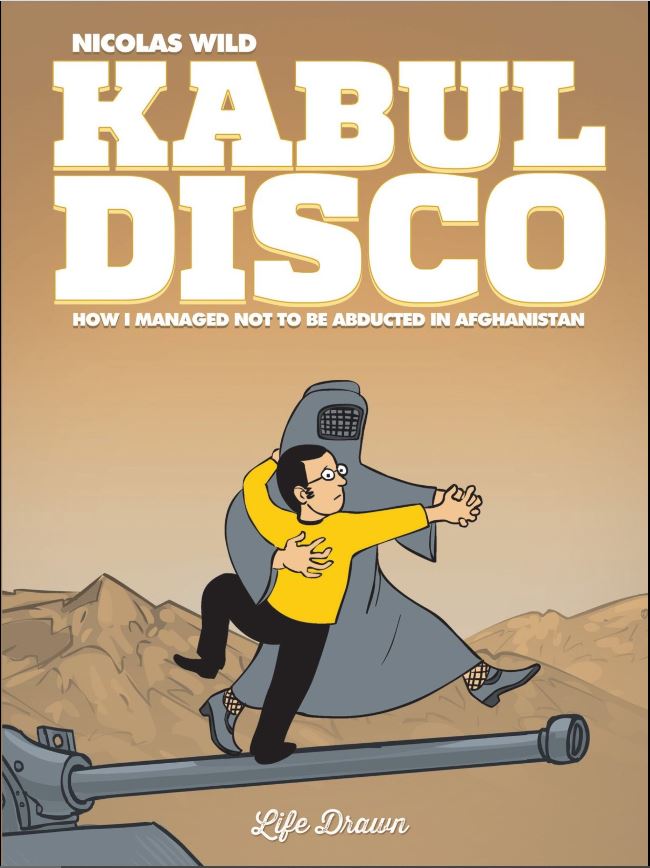
Kabul Disco volume 1: How I Managed Not to be Abducted in Afghanistan


By Nicolas Wild, translated by Mark Bence & Fabrice Sapolsky (Life Drawn/Humanoids Inc.)
ISBN: 978-1-59465-868-6 (TPB)

Fiction and reality frequently blur, but stories – True, mostly True, totally True or Officially Confirmed by a Government Official and therefore Utterly Fallacious – told in comics form somehow always acquire an instant edge of veracity and patina of authenticity that is hard to dispute or refute.

Kabul Disco is a superb case-in-point: an example of sophisticated yet simple Euro-cartooning designed to inform, charm and challenge in equal amounts. I’m re-recommending this remarkable testament today because once again the people who govern us – apparently anywhere on Earth that people are governed – have a complete inability to read a room, movement, public opinion or security briefing and have once more abandoned guts, principles and common sense in the name of saving money and not making a fuss.

Assorted countries over centuries have made Afghanistan their football, only to get bored and leave it to even worse thugs. Lacking any power at all to make the callous bastards in charge everywhere pay or even feel discomfort, I’m opting to try and remind anyone who will listen that always, ALWAYS, us unimportant people suffer in the end. It’s just not right…

This seductive monochrome travel memoir was the debut episode in a sequence by French writer/artist Nicholas Wild, detailing his globe-trotting quest for employment: a worthy endeavour which took the wide-eyed political innocent to Afghanistan in 2005.

There’s always a war going on somewhere. That’s just the way it is. The enemy are always monsters and Our Side – there’s no option to refuse to take sides anymore – are always justified in what they do. Heaven forfend you slip up and start thinking of rivals or adversaries or opponents or even those who disagree with you as no more than people – with or without grievances or differing opinions…

In January 2005, Wild was in Paris; gripped by ennui and lack of inspiration and only mildly galvanised by lack of money and imminent homelessness. Responding to an online ad, he applied to a Communications Agency looking for a comics artist and was astounded to find himself accepted for a short commission. The job was overseas…

‘Part One: A Winter in Kabul’ follows the culture-shocked scribbler as he arduously transitions to a country in the throes of enforced reconstruction and modernisation, joining the somewhat sketchy and rather dubious NGO Zendagui Media as they work to bring the war-torn region into the arena of modern nations. Wild’s proposed task is to help define the fancy notion of democracy for the still-largely illiterate populace through comicbook versions of Afghanistan’s new Constitution…

The artist’s early difficulties in adjusting to the primitive conditions and superb gift for wry commentary afford the reader a brilliant example of the complex made simple as Wild succinctly unpicks Afghanistan’s convoluted history through the 20th century via a cartoon political primer that brilliantly defines how the place got to be such a corrupt mess. I certainly wish I’d had more comics like this when I studied modern history…

Days pass, and Nicholas settles in, toiling against impossible deadlines, conversely feeling locked in or anxiously exposed whenever he goes exploring; always aware that in this place foreigners go missing every day…

Although the security situation remains tense, trouble seems to only strike elsewhere and eventually Nick assimilates: befriending ordinary Afghanis, shopping, visiting Shiite mosques, eating in restaurants and even sightseeing in the stunning Bamiyan Valley…

All too soon the job is done and Wild is afraid he’s going to be let go…

‘Part Two: No Spring in Kabul’ finds him on April 1st 2005, happy to be retained, albeit on a 3-month contract as a graphic designer for Zendagui’s new project. The brief is to supply materials for a US military-sponsored push to recruit native Afghanis for the new National Army. The thought of crafting military propaganda is not a comforting or comfortable one…

Spiced with further insights about his improbable and unpredictable bosses and new eating experiences, the real kicker is meeting new recruit Laurie White: a political communications expert who worked with the 2000 Bush Election Campaign…

Trips to the University of Herat and enjoyable days amidst the villagers soon cement the visitor’s sense of belonging but that all takes a hard knock as the political situation intensifies and overconfidence leads to Wild getting lost in old Kabul…

When a fresh kidnapping results in a full lockdown for Zendagui staff, Laurie teasingly reveals the true story of Bush’s “victory” in Florida, but once the panic subsides it’s back to work. Even though Al Qaeda and the Taliban are ramping up their activities, Nick is sent to the far end of the Jalalabad Road to observe the filming of a recruitment ad just as Laurie is despatched to consult on the new voting form for a nation of more than two dozen different tribes and sects who don’t speak the same language and can’t read…

And so it goes, with fond reveries and razor-sharp observations peppering Wild’s irresistible account of an ordinary job in extraordinary times and a magical place: with idiocy and contradiction relentlessly piling up but also with progress somehow being made… until it’s time to go home again…

But is it for good?

Primarily rendered in beguiling monochrome, Kabul Disco also offers a stunning, full colour ‘Bonus Section’ comprising candid personal photographs of Wild’s stay, plus extensive examples of Yassin & Kaka Raouf: the 10-volume educational comic book he illustrated to explain the new Constitution for the newly democratised country.

Captivating, warm, funny, scarily informative and unobtrusively polemical, Kabul Disco is a wittily readable, non-discriminating reverie that informs and charms with surprising effect: the perfect response to the idiocy of war and dangers of corporate imperialism as well as a sublime tribute to the potent indomitability of human nature. I can’t comprehend how a celebration of such miraculous change and progress can be lost in the space of 16 years…
© 2018, Humanoids Inc., Los Angeles (USA). All rights reserved. First published in France as Kabul Disco Tome 1: Comment je ne me suis pas fait kidnapper en Afghanistan, © 2007 La Boîte à Bulles & Nicholas Wild. All rights reserved.

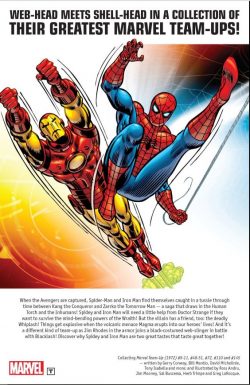
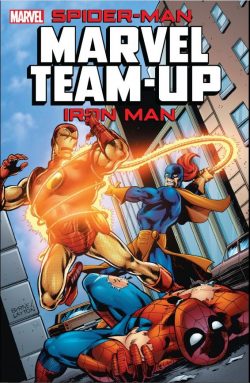
Spider-Man/Iron Man: Marvel Team-Up


By Gerry Conway, Bill Mantlo, Tony Isabella, Len Wein, Herb Trimpe, David Michelinie, Ross Andru, Jim Mooney, Sal Buscema, Greg LaRocque & various (DC Comics)
ISBN: 978-1-3029-1368-7 (TPB)

The concept of team-ups – an established star pairing or battling (usually both) with new or less well-selling company characters – has been with us since the earliest days of comics, but making the temporary alliance a key selling point really took hold with DC’s The Brave and the Bold before being taken up by their biggest competitor.

Marvel Team-Up was the second regular Spider-Man title, launching at the end of 1971. It went from strength to strength, proving the time had finally come for expansion and offering regular venue for uncomplicated action romps in addition to the House of Ideas’ complex sub-plot fare. However, even in the infinite Marvel Multiverse, certain stars shine more brightly than others and some characters turn up in team-ups more often than others…

In recent years, carefully curated themed collections from the back-catalogue have served to initiate new readers intrigued by Marvel’s Movie and TV endeavours, and this engaging trade paperback/eBook compilation gathers a selection of pairings co-starring Golden Avenger Iron Man and the wondrous wallcrawler, taken from Marvel Team-Up #9-11; 48-51; 72, 100 and 145: collectively covering May 1973 – September 1984.

It begins with a time-twisting three-part saga that exposes ‘The Tomorrow War!’ (by Gerry Conway, Ross Andru & Frank Bolle) as Iron Man and Spidey are abducted by Zarkko the Tomorrow Man to battle rival chronal creep Kang the Conqueror. The Human Torch got involved to help deal with the intermediate threat of a literal ‘Time Bomb!’ in #10 (with art by Jim Mooney & Frank Giacoia), before the entire Inhuman race led by king Black Bolt pile in to help the webslinger stop history unravelling in culminatory clash ‘The Doomsday Gambit!’ – this last chapter scripted by Len Wein over Conway’s plot for Mooney & Mike Esposito to illustrate.

The steel shod centurion next appeared in MTU #29 beside the Torch, but his next Spider-Man collaboration didn’t happen until #48 and the beginning of a suspenseful extended saga. ‘Enter: The Wraith!’ (Bill Mantlo, Sal Buscema & Esposito) introduces feisty, stylish and fiercely independent Police Captain Jean DeWolff as Spidey and Iron Man struggle to stop a mad bomber using model planes to destroy city landmarks and Stark International properties. As the heroes fruitlessly pursue leads, the enigmatic Wraith turns his attention upon them, proving to be not only connected to Jean but also some kind of psionic metahuman…

With Iron Man again the headline guest-star, issue #49 reveals that ‘Madness is All in the Mind!’ The masked maniac intensifies his irresistible psychic assaults: explosively attacking Manhattan even as the tragic story of Jean’s Police Commissioner dad and murdered cop brother comes out…

However, the connection between them and the unstoppable villain is only exposed after the webslinger and Golden Avenger recruit Master of Mystic Arts Doctor Strange who applies his unique gifts to the problem in #50’s ‘The Mystery of the Wraith!’

The saga concludes with Marvel Team-Up #51 and ‘The Trial of the Wraith!’: a legal drama and character confrontation steered by a most unusual panel of judges whose hidden abilities are not enough to prevent one last assault by the unrepentant renegade…

DeWolff features heavily in the Wraith’s demented revenge plot ‘Crack of the Whip!’ (#72; August 1978 by Mantlo & Mooney) which sees the superheroes battling Maggia stooges and assassin Whiplash whilst MTU #110 (October 1981) pitted Stark-tech and web-shooters against tectonic terror deep under the earth. Herb Trimpe plotted and pencilled breakdowns, with David Micheline scripting and Esposito inking the blistering ‘Magma Force’…

Closing the team tussles, MTU #145 (September 1984, by Tony Isabella, Greg LaRocque & Esposito) delivers ‘Hometown Boy’: coming from the period when Tony Stark first succumbed to alcoholism. He lost everything, and his friend and bodyguard Jim Rhodes took over the role and duties of Golden Avenger. As Stark tried to make good with a new start-up company, this engaging yarn sees the substitute hero still finding his ferrous feet whilst battling oft-failed assassin Blacklash (formerly Whiplash) and at a trade fair in Cleveland, as much hindered as helped by visiting hero Spider-Man who was currently wearing the black symbiote costume that would become the terrifying antihero Venom…

The book’s bonus section begins with original art from Andru, Mooney, Sal Buscema and inkers Bolle, Giacoia & Esposito plus cover-art from earlier collections courtesy of John Romita Sr., John Byrne, Bob Layton, Jeff Aclin & Al Milgrom.

These stories are admittedly of variable quality, but all stem from an honest drive to entertain and most fans will find little to complain about. Although primarily a tome for casual or new readers – who will have a blast – there’s also a ton of nostalgic delights and patented Marvel mayhem to be had by veteran viewers, and surely that’s reason enough to add this titanic tome to your library…
© 2018 Marvel Characters, Inc. All rights reserved.

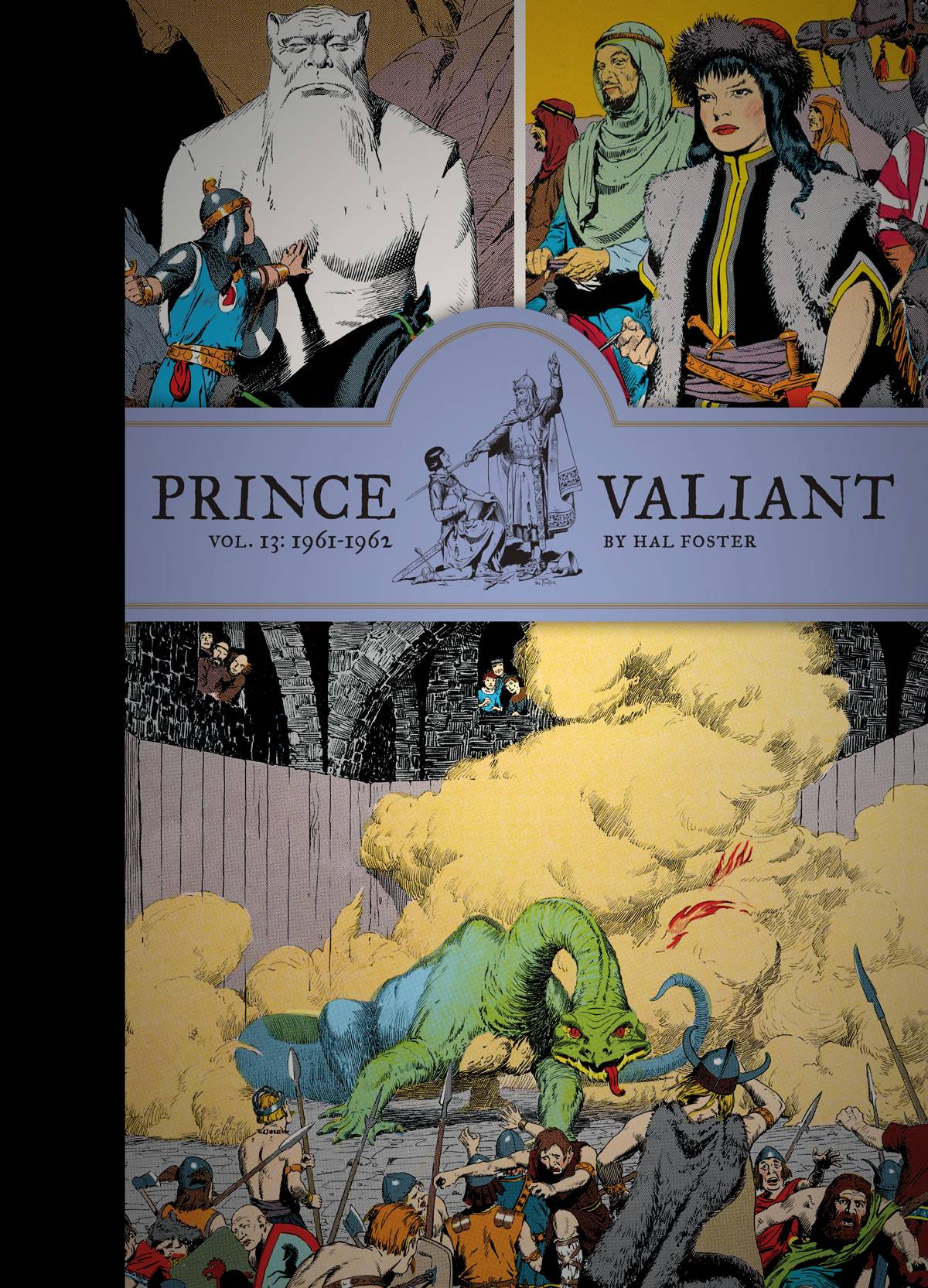
Hal Foster’s Prince Valiant volume 13: 1961-1962


By Hal Foster (Fantagraphics Books)
ISBN: 978-1-60699-925-7 (HB)

Prince Valiant in the Days of King Arthur premiered on Sunday February 13th 1937: a fabulous rainbow-colour weekly peek into a world where history met myth to produce something greater than both. Pioneering comics creator Hal Foster developed the feature after a groundbreaking and astoundingly popular run on the Tarzan of the Apes strip.

Prince Valiant offered action, adventure, exoticism, romance and a surprisingly high quota of laughs in its engrossing depiction of noble knights and wicked barbarians played out against a glamorised, dramatized Dark Ages backdrop. The never-ending story follows a refugee lad of royal blood, driven from ancestral Scandinavian homeland Thule who grows up to roam the world, attaining a paramount position amongst the fabled heroes of Camelot.

Foster wove his complex epic romance over decades, tracing the progress of a feral wild boy who became a paragon of chivalric virtue: knight, warrior, saviour, avenger and ultimately family patriarch through a constant storm of wild, robust and joyously witty wonderment. The restless champion visited many far-flung lands, siring a dynasty of equally puissant heroes, enchanting generations of readers and thousands of creative types in all the arts.

The glorious epic spawned films, an animated series and all manner of toys, games, books and collections. Prince Valiant was – and remains – one of the few adventure strips to have run continuously from the thunderous 1930s to the present day (more than 4000 episodes and still going strong) – and, even here at the end-times of newspaper strips as an art form, it continues in more than 300 American papers and via the internet.

Foster soloed on the feature until 1971 when John Cullen Murphy (Big Ben Bolt) succeeded him as illustrator whilst the originator remained as writer and designer. That ended in 1980, when he finally retired and Cullen Murphy’s daughter Mairead took over colouring and lettering whilst her brother John assumed the writer’s role.

In 2004 the senior Cullen Murphy also retired, since when the strip has soldiered on under the auspices of other extremely talented artists such as Gary Gianni, Scott Roberts and latterly Thomas Yeates & Mark Schultz.

This luxuriously oversized (362 x 264 mm) full-colour hardback (tragically, the series is still unavailable digitally) re-presents pages spanning January 1st 1961 to 30th December 1962 (individual pages #1247-1351) and comes with all the regular bonus trimmings. This time, renowned illustrator and storymaker Charles Vess (The Book of Ballads and Sagas; The Sandman; Spider-Man: Spirits of the Earth; Stardust; The Books of Earthsea: The Complete Illustrated Edition) discusses and critically appraises his creative roots and the influential role of the strip – including his own contributions – in the Foreword ‘We Are All the Sum of the Stories We Have Been Told’, after which the illuminated wonders resume.

At the other end of this titanic tome Brian M. Kane continues plumbing the master draughtsman’s commercial endeavours with a lavish exhibition of stunning colour and monochrome illustrations highlighting the acme of domestic luxury available to well-heeled customers in ‘Hal Foster’s Advertising Art: Home and Hearth’. Captivating as they are though, the real wonderment is, as ever, the unfolding epic that precedes them…

What Has Gone Before: After a ceaseless session of troubleshooting for King Arthur, and with his long-suffering wife Aleta increasingly aggrieved at Valiant’s wanderlust and neglect, tensions boil over in the apartments of the Prince of Thule, Valiant again leads a Royal Quest: perhaps the most crucial in Camelot’s troubled history…

The Knights of the Round Table have become obsessed with the search for the Holy Grail. Arthur, agonised as his best and bravest are lost or maimed in search of it, charges Val with proving once and for all whether the story of the sacred cup is fact or myth…

The search takes Val the length and breadth of the nation, eventually brings him to the Mendip hills in search of the isle of Avalon. At the Great Tor and Glastonbury, he finds a Papal mission from Rome building a cathedral, and meets again an old acquaintance from Ireland. St. Patrick happy shares all he knows about the Holy Grail and the questor at last realises what he must tell Arthur…

Returning to Camelot, he embraces every opportunity to fight and delay attempts to reconcile with Aleta. A brief and brutal war almost costs the prince his life, but finally bring him and Aleta together again, and the family decide to return to Thule for his recuperation. With son Arn in tow, the entire clan head for Aleta’s ancestral kingdom in the Misty Isles, escorted by Viking reiver Boltar to shield them from Mediterranean pirates and brigands…

At their destination, rival ruler Thrasos has resolved to add Aleta’s islands to his growing empire, but has never encountered as savvy a strategist as Aleta or canny tacticians like Valiant and Boltar. His dreams of a Mediterranean empire explosively founder against the devious ploys and armed might of the northern warriors, and he perishes in a cataclysmic last battle…

Now, having barely survived the elemental duel, the exhausted prince learns that Aleta too has barely escaped death, and that he is now the father of four! As the parents recover slowly together, focus shifts to Arn and his commoner pals Paul and Diane, whose idyllic beach frolics are shattered when prisoners of war from Thrasos’ crushed army escape abduct them. Fleeing out to sea, the rogues plan on ransoming the royal heir, and selling the other children…

Quickly discovering the crime, Valiant pursues in the speedy vessel of viking Gundar Harl, but is almost too late as his capable son has already escaped and plots to save his comrades from a slavers’ auction block. When a greedy local governor seeks to exploit the little princeling, he falters as soon as the elder Valiant arrives with blood in his eye and the Singing Sword in his mailed fist…

With peace and quiet abundant, the Misty Isles welcome many ambassadors and prepare to ceremonially christen the new addition, granting Val time to spend with Arn, but that ends when a shipwreck washes up pilgrims heading for the Holy Land. Duty-bound to offer aid, and eager to promote the produce and wares of his island home, Valiant ships out beside them, taking his firstborn too. Arn’s days of childhood indolence are over and the time has come time to learn his place in the world…

Arriving in Jaffa, father and son proceed to the Dead Sea, acquiring a manservant/body-slave named Ohmed, and extending their commercial embassage and religious tour into Damascus where they hire wily, canny – and ultimately, dishonest – Greek Nicilos to manage the trade side of their mission. Their odd caravan is finally bolstered in Baghdad by the addition of a Mongol outcast: a warrior woman skilled in handling horses. Despite the constant strife and many close calls that has marked all the players in their recent journeys alone and together, Taloon will inadvertently spark envy, chaos and the bloody end of the alliance…

Eventually, the pilgrimage ends in Aleppo where Boltar waits to ferry father and son back to a recovered and much wealthier Aleta. A brief period of glorious relaxation ends when a knight near death arrives, carrying a desperate plea from King Arthur. Gaul is besieged by Goth hordes, and safe passage across Europe has ended. England’s ruler needs his greatest hero to be his representative to the Pope and end the crisis…

Aleta heads for Albion to secure a sea route, while Valiant and Arn perilously trek overland from Ostia to Rome, finding the city and province a corrupt and degraded viper’s nest of self-serving officials keeping him from the Pontiff. Eventually, Val accepts his mission cannot succeed, but at least young Arn adds fleeting escape and joy to the life of a dying blind girl…

Undaunted, Valiant turns his energies and ingenuity to creating an alternative trade route between the Holy Father and still-imperilled Christian Britain: visiting the future Spain and France and encountering a lost land where monks seem to be guarded by monsters.

The bedevilled region is a hidden bulwark against the superstitious Goths, and introduces the English warriors to a doughty but distressed noble from neighbouring Aqueloen, where Stephan has been disinherited by sadistic usurper Duke Sadonick. The greedy villain’s machinations and bloody intentions for the princely travellers quickly falls foul of Val battle-savvy and political acumen and soon the province welcomes back Stephan as its rightful ruler…

Meanwhile, Aleta’s ships are anchored in the Bay of Biscay. While awaiting her men’s arrival the Queen strikes up a friendship with an otter, accidentally donating a crown jewel to the beast’s campaign to secure his own mate, but at last Valiant and Arn ride up, and a grand trade armada forms a convoy to embattled Britain…

With material needs assuaged, a fresh crisis mounts after a stopover at a monastery unleashes a charismatic iconoclast whose revolutionary spin on Christian doctrine furiously foments civic unrest, starvation and potential regime-change. When Arthur despatches newly-debarked Valiant to investigate, the troubleshooter must first decide if Wojan “the Voice” is a true instrument of God, a well-meaning anarchist or a simple dupe of his scurrilous scholar attendants/business managers Sleath and Dustad…

As the near-insurrection ends, bored Aleta decides to join her husband and takes Arn with her. They reunite at the site of a new church under construction, not far from the fens where the boy Valiant grew up. The lure of his sire’s old adventures beguiles Arn, who takes off to explore the boggy waterways and is soon hopelessly lost. In the week that follows, he experiences many of the same privations and perils his father had, before Valiant finds him.

However, as they all thankfully take ship to comfortably return to Camelot, the Royal Family are unaware that greedy, ambitious eyes are watching…

To Be Continued…

A mind-blowing panorama of visual passion and precision, Prince Valiant is a tremendous procession of boisterous action, exotic adventure and grand romance; blending epic fantasy with dry wit and broad humour, soap opera melodrama with shatteringly dark violence.

Lush, lavish and captivating lovely, it is an indisputable landmark of comics fiction and something no fan should miss.
© 2016 King Features Syndicate. All other content and properties © 2016 their respective creators or holders. This edition © 2016 Fantagraphics Books. All rights reserved.

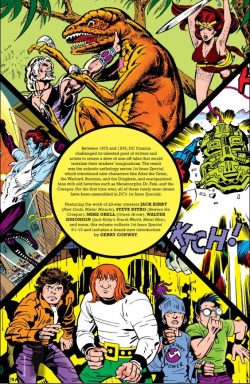
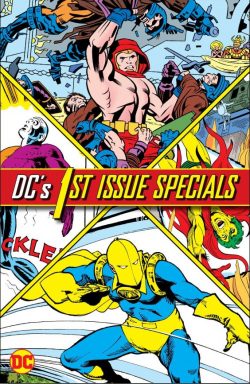
DC’s First Issue Specials


By Jack Kirby, Joe Simon & Jerry Grandenetti, Bob Haney & Ramona Fradon, Robert Kanigher & John Rosenberger, Michael Fleischer & Steve Ditko, Mike Grell, Martin Pasko & Walter Simonson, Gerry Conway & Frank Redondo, Mike Vosburg, Denny O’Neil & various (DC Comics)
ISBN: 978-1779501776 (HB)

Nobody knows where ideas come from, but at least in comics it’s easy to see how they turn out. Mainstream companies have always favoured try-out vehicles – like Gold Key’s Four Color; Magazine Enterprises’ A-1; DC’s Showcase and The Brave and the Bold; Charlton Bullseye; Marvel Premiere and Marvel Spotlight – and the principle was a sound one, graphically depicted in every first issue. In the late 1950s, editors at National/DC were apparently bombarded with readers’ suggestions for new titles and concepts and the only possible way to feasibly prove which would be popular was to offer test runs and assess the fans reactions. The results kickstarted the Silver Age and introduced dozens of immortal, profitable characters and concepts…

When the comic book revolution seemed to be fading out in the mid-1970s it was revived in part by innovative scheduling and a new awareness of the need to experiment, leading to this sturdy hardback/digital compilation of some genuine hits and near-misses…

Originally printed as 1st Issue Special #1-13, spanning April 1975 to April 1976, it’s supplemented by then-Editor Gerry Conway’s revelatory Introduction ‘If at First You Don’t Succeed’.

Famed for his larger-than-life characters and gigantic, cosmic imaginings, Jack Kirby was an astute, imaginative, spiritual man who had lived through poverty and gangsterism, the Depression, Post-War optimism, Cold War paranoia, political cynicism and the birth and death of peace-seeking counter-cultures. He was open-minded and utterly wedded to the making of comics stories on every imaginable subject. He always believed sequential narrative was worthy of being published as real books beside mankind’s other literary art forms. It’s a genuine shame he didn’t live long enough to see today’s vibrant and vastly varied graphic novel industry.

On ending his third sojourn at the company – just prior to returning to Marvel for 2001: A Space Odyssey/Machine Man, Captain America, Black Panther and more – Kirby unleashed a bunch of new options for DC to expand and capitalise on over the coming decades. Other than Kobra – which was hastily reworked by other hands and given its own series – they all appeared in the new Comics Showcase.

Debuting in the debut 1st Issue Special #1 and inked by D. Bruce Berry, ‘Atlas the Great!’ harks back to the dawn of human civilisation and the blockbusting travails of mankind’s first super-powered champion in a bombastic and tantalizing Sword & Sorcery yarn.

Kirby’s collaborations with fellow industry pioneer Joe Simon always produced dynamite concepts, unforgettable characters, astounding stories and huge sales, no matter what genre avenues they pursued. They blazed trails for so many others to follow; reshaping the nature of American comics with their innovations and sheer quality. Simon & Kirby offered stories shaped by their own sensibilities: always testing fresh ideas and avenues. They chased ideas for comics nobody else ever had before, identifying gaps and probing potential.

Although junior plutocrat Richie Rich had been coining it for Harvey Comics for decades, Simon and old collaborator Jerry Grandenetti looked for drama as well as laughs in the set-up and came up with ‘The Green Team: Boy Millionaires’ for the second 1st Issue.

Here magnate minors The Commodore (shipping), JP Houston (oil) and Cecil Sunbeam (moviemaker) are joined by black shoeshine boy Abdul Smith after a banking error turns the industrious lad into an instant parvenu. Dedicated to adventure and social advancement, the kids then unwisely back ‘The Great American Pleasure Machine’…

The first of a string of potential revivals follows as Metamorpho the Element Man returns courtesy of fabled originators Bob Haney & Ramona Fradon. ‘The Freak and the Billion-Dollar Phantom’ sees Rex Mason seeking to thwart the vengeful schemes of a ghost betrayed by America’s Founding Fathers and resolved to destroy Washington DC.

For #4, Robert Kanigher, John Rosenberger & Vince Colletta introduce a truly novel but now unfortunately dated concept in ‘Lady Cop’.

Earnest, well-meaning and immaculately rendered by the criminally-underappreciated Rosenberger, the tale of college student Liza Warner – who survives a serial killer and takes control of her life by becoming a police officer – is rather heavy-handed, but addresses in ‘Poisoned Love’ issues of controlling boyfriends, parental abuse, underage sex and venereal disease with a degree of mature understanding we’d be hard-pressed to see these days. I think she was one of the few characters still dormant since her debut…

Kirby – with Berry – returned in #5 (August 1975) to revise his own Golden Age stalwart safari guide Paul Kirk replaced by a frustrated lawyer. This passing of a torch sees a devout evil-crusher working for an ancient justice-cult retire: beguiling his nephew – Public Defender Mark Shaw – to become the latest super-powered ‘Manhunter’ battling ancient wickedness with alien super-tech…

A rare but welcome digression into comedy manifested as ‘The Dingbats of Danger Street’ disgraced 1st Issue Special #6, with Mike Royer inking a bizarre and hilarious revival of Kirby’s Kid Gang genre starring four multi-racial street urchins united for survival and annoying the heck out of cheesy thugs and surreal super threats like Jumping Jack and The Gasser…

Steve Ditko’s startling psychedelic avenger The Creeper debuted in early 1968, parlaying his premier in Showcase #73 into a superb but brief run in Beware the Creeper before being cancelled with the sixth issue (March/April 1969) – by which time Ditko had all but abandoned his creation. It was fun and thrilling and – unlike many series which folded at that troubled time – even provided an actual conclusion, but somehow wasn’t satisfactory or what the public wanted.

This was a time when superheroes went into steep decline, with supernatural and genre material regaining prominence throughout the industry. With Fights ‘n’ Tights comics folding all over, Ditko concentrated again on Charlton’s mystery line, the occasional horror piece for Warren and his own projects…

In the years his own comic was dormant, the Creeper enjoyed numerous guest shots in other comics, which established that the city he prowled was in fact Gotham. When Ditko returned to DC in the mid-1970s, 1st Issue Special snapped him up.

Issue #7 (October 1975) gave the quirky crusader another shot at stardom in ‘Menace of the Human Firefly’ written by Michael Fleisher and inked by Mike Royer. It saw reinstated TV journalist Jack Ryder inspecting the fantastic felons in Gotham Penitentiary just as manic lifer Garfield Lynns breaks jail to resume his interrupted costumed career as the master of lighting effects.

By the time the rogue’s brief but brilliant rampage is over, the Creeper has discovered something extremely disturbing about his own ever-evolving abilities…

The story wasn’t enough to immediately restart the rollercoaster, but a few years later DC instituted a policy of giant-sized anthologies and the extra page counts allowed a number of lesser lights to secure back-up slots and shine again. Written and drawn by Ditko, The Creeper became a regular in World’s Finest Comics…

During the troubled 1970s the American comics industry suffered one of the worst of its periodic downturns and publishers desperately cast about for anything to bolster the flagging sales of superhero comics.

By revising their self-imposed industry code of practice (administered by the Comics Code Authority) to allow supernatural and horror comics, publishers tapped into the global revival of interest in spiritualism and the supernatural, and as a by-product opened their doors to Sword-and-Sorcery as a viable genre with Roy Thomas & Barry Windsor-Smith’s take on R. E. Howard’s Conan the Barbarian an early exemplar.

DC launched a host of titles into that budding market but although individually interesting nothing stuck until First Issue Special #8.

With The Warlord, popular Legion of Super-Heroes artist Mike Grell launched his pastiche, homage and tribute to Edgar Rice Burroughs’s works (particularly Pellucidar – At the Earth’s Core) which, after a rather shaky start (just like Conan, the series was cancelled early in the run but rapidly reinstated) went on to become for a time DC’s most popular title.

Blending swords, sorcery and super-science with spectacular, visceral derring-do, the lost land of Skartaris is a venue expertly designed for adventure: stuffed with cavemen, warriors, mythical creatures, dinosaurs and scantily-clad hotties. How could it possibly fail?

The magic commences with ‘Land of Fear!’ as in 1969, U2 spy-pilot Colonel Travis Morgan is shot down whilst filming a secret Soviet base. The embattled aviator manages to fly his plane over the North Pole before ditching, expecting to land on frozen Tundra or pack-ice on the right side of the Iron Curtain.

Instead, he finds himself inside the Earth, marooned in a vast, tropical jungle where the sun never sets. The incredible land is populated by creatures from every era of history and many that never made it into the science books. Plunging head-on into the madness, the baffled airman saves an embattled princess from a hungry saurian before both are captured by soldiers. Taken to the city of Thera, Morgan is taught the language by fellow captive Tara and makes an implacable enemy of the court wizard Deimos. After surviving an assassination attempt the pair escape into the eternal noon of the land beneath the Earth.

Within months Morgan had his own-bimonthly title written, pencilled and inked by Grell.

Another delayed reaction revival in #9 saw Golden Age mage ‘dr. fate’ reintroduced and revamped thanks to arch stylists Martin Pasko & Walter Simonson.

A brilliant imagination and, by his own admission, more designer than artist, Simonson broke through in the standard manner in the early 1970s by illustrating short stories for DC’s anthology comics – a valuable and much-missed proving ground for budding talent. Whilst working on Fritz Leiber’s licensed property Fafhrd and the Gray Mouser for the seminal Sword of Sorcery comic-book, he was commissioned by Archie Goodwin to illustrate groundbreaking, award-winning Manhunter feature for Detective Comics and instantly catapulted to the forefront of comics creators.

Here he and Pasko reintegrate the best elements of the Golden Age run as the master of magic battles accursed and murderous Egyptian mummy Khalis, who seeks to turn back time and unmake the world. The tale allowed the artist to stretch himself and explore his increasing fascination with patterns, symbols and especially typography. It’s a cracking good read too, which redefined and repositioned Fate for decades to come.

Simon & Grandenetti, with Creig Flessel, used #10 to unleash ‘The Outsiders’, a band of truly creepy freaks united by Doctor Goodie/Doc Scary to save the ugly, unwanted and persecuted from bigotry and intolerance after which ‘Code Name: Assassin’ sees Conway expand his concept of Good Bad Men (which created The Punisher) as augmented telekinetic Jonathan Drew declares war on crime and death to evil in a tantalising yarn-of-its-time illustrated by Frank Redondo & Al Milgrom. Assassin would eventually resurface as a Superman villain.

Starman is a character and property DC regularly revises, and First Issue Special #12 (March 1976) saw one of the most radical reinterpretations as Conway, Mike Vosburg & Royer introduce Mikaal Tomas: point-man for an imminent alien invasion of Earth. What could possibly make him betray his people, his duty and his true love to abruptly switch sides and fight for humanity?

The last try-out in this run was without doubt the most significant. Not only did the tale lead to an new series, but it also cemented New Genesis, Apokolips and especially ultimate villain Darkseid as pivotal to the further unfolding of the DCU. The characters have never been long absent from the continuity.

When Kirby moved back to DC in 1970, he created one of the most powerful concepts in comics history. His Fourth World inserted a whole new mythology into the existing DC universe and blew the minds of a generation of readers. Starting with Superman’s Pal Jimmy Olsen, he revived the 1940s kid-team The Newsboy Legion; introduced large-scale cloning in the form of The Project, and hinted the city’s gangsters had otherworldly backers. He then moved on to the Forever People, New Gods and Mister Miracle: an interlinked triptych of projected miniseries forming an epic mosaic.

These titles introduced rival races of gods – dark and light – risen from the ashes of a previous Armageddon to battle forever. And then their conflict spread to Earth…

Kirby’s concepts, as always, fired and inspired his contemporaries and successors. The gods of Apokolips and New Genesis have become a crucial foundation of the DC universe, surviving numerous revisions and retcons periodically bedevilling continuity-hounds.

Many major talents have dabbled with the concept over the years and many titles have come and gone starring Kirby’s creations. It all began with the final 1st Issue Special #13 and ‘Return of the New Gods’.

Almost before the dust had settled from Jack’s departure back to Marvel, his greatest creation was revived. With Conway plotting, Denny O’Neil scripting & Vosburg rendering a resurrection of the uncompleted saga, ‘Lest Night Fall Forever!’sees modern war god Orion battling Apokolyptian enemies on Earth as his wicked sire seeks again the anti-Life Equation. It’s time to assemble a new team and rush to humanity’s aid…

With covers by Kirby, Grandenetti, Fradon, Rosenberger & Dick Giordano, Ditko, Grell, Joe Kubert and Ernie Chan, plus apposite text features from original issues accompanying each tale telling ‘The Story Behind the Story’, this is a true gem for fans that will also impress newbies looking for the odd timeless thrill….
© 1975, 1976, 2020 DC Comics. All Rights Reserved.

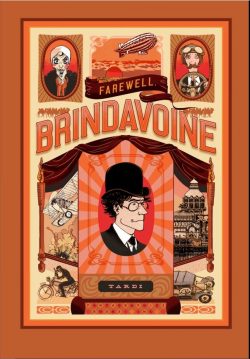
Farewell, Brindavoine


By Tardi, translated by Jenna Allen (Fantagraphics)
ISBN: 978-1-68396-433-9 (Album HB)

Credited with creating a new style of expressionistic illustration dubbed “the New Realism”, Jacques Tardi is one of the greatest comics creators in the world, blessed with a singular vision and adamantine ideals. A strident anti-war activist, he apparently refused France’s greatest honour because he wanted to be completely free to say and create what he wants.

Tardi was born in the Commune of Valence, Drôme in August 1946 studying at École Nationale des Beaux-Arts de Lyon and subsequently the prestigious Parisian École Nationale Supérieure des arts Décoratifs. He launched his comics career in 1969 at the home of modern French comics Pilote, with the series we’re looking at today first seen in 1972-1973.

From illustrating stories by Jean Giraud, Serge de Beketch and Pierre Christian, he moved on to westerns, crime tales and satirical works in magazines such as Record, Libération, Charlie Mensuel and L’Écho des Savanes all whilst graduating into adapting prose novels by Louis-Ferdinand Céline and Léo Malet.

The latter’s detective Nestor Burma was the subject of all-new albums written and drawn by Tardi once the established literary canon was exhausted, leading to the creation of Polonius in Métal Hurlant (1976) and the now-legendary Les Aventures Extraordinaires d’Adèle Blanc-Sec – an epic period fantasy adventure which ran in the daily Sud-Ouest. The series numbers ten volumes thus far and inhabits the same pocket reality as the star of this tome.

The passionate creator has crafted many crushingly powerful anti-war books and stories (C’était la guerre des tranchées, Le trou d’obus, Moi René Tardi, prisonnier de guerre au Stalag IIB and other) dealing with the common soldier’s plight; written novels, created radio series, worked in movies, and co-created – with writer Jean Vautrin – Le Cri du Peuple: a quartet of albums about the Parisienne revolt of the Communards.

Far too few of this French master’s creations are available in English (barely a dozen out of more than fifty) but, thanks to NBM, iBooks and Fantagraphics, we’re catching up.

This lavish full-colour hardback (also available digitally) began life as Adieu Brindavoine, with its obscure yet complex Victoriana, shady political intrigues, dastardly plutocratic plotters and cast-iron-&-clockwork chic, leading to Tardi being proclaimed in later years the Godfather of Steampunk. His surreally-structured absurdist episodes and incidents – strung together in an almost stream-of-consciousness mode – work best on the visual perceptions with dialogue used only to ensure clarity or bemuse perception…

Following a context-supplying appreciation in Benoít Mouchart’s Preface, we begin in Neuilly-Sur-Seine in May 1914, as an aged messenger braves the cluttered and controversial home of gentleman photographer Lucien Brindavoine. Surly Basil Zarkhov has a startling – and potentially life-changing – proposition, but is gunned down by a skylight-shattering intruder before he can share it. However, thanks to his deathbed exposition, Lucien is soon heading by steamship for Istanbul, and another risky meeting…

Constantly encountering strikingly odd individuals, he is soon unwillingly partnered with effetely obnoxious intoxicated Englishman Mr. Oswald Carpleasure and hurtling across the desert towards Afghanistan in a battered motor vehicle. In their immediate future is a fantastic lost city, but the sinister gunman is in hot pursuit and wicked Olga Vogelgesang is determined to destroy them with her deadly state-of-the-military-art biplane…

After much privation and bewilderment, Lucien finally reaches the lost Iron City and is greeted by the orchestrators of many of his woes. Learning of an incredible plutocratic plot affords him little comfort, but before long the baroque devils in nominal charge fall upon each other like deranged wolves, enabling, if not compelling Brindavoine to flee in the most advanced passenger craft in the world…

Thanks to a breaking world war, he doesn’t get far…

Following the tale’s conclusion, a compelling comic epilogue from a previously unseen narrator (think Rocky Horror Show) deviously adds to the confusion by “explaining” what’s happened and Lucien’s ultimate fate before introducing a thematic follow-up.

‘Lambs to the Slaughter’ is set in November 1914 with deserters from all the armies involved holing up in a shattered church. Plagued by visions of perfect pasts and potential tomorrows, they are completely unprepared for when the mad military of today finds them…

Bizarre, visually resplendent, darkly funny, evocative and deliciously challenging, Farewell, Brindavoine is a comic tour de force on every level and a sublime example of how fashion, fantasy and futurism can work miracles when woven together by a master craftsman.
This edition of Farewell, Brindavoine © 2021 Fantagraphics Books, Inc. Adieu Brindavoine © 2011 Casterman. Translation © 2021 Jenna Allen. Preface © 2021 Benoít Mouchart. All rights reserved.

Farewell, Brindavoine is physically released on August 26th 2021 and available for pre-order. Digital editions can be purchased now.

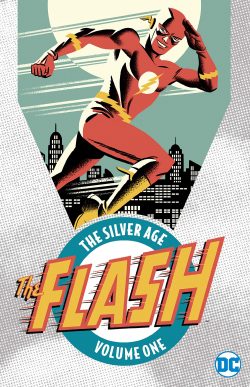
The Flash: The Silver Age Volume One


By John Broome, Robert Kanigher, Carmine Infantino & various (DC Comics)
ISBN: 978-1-4012-6110-8 (TPB)

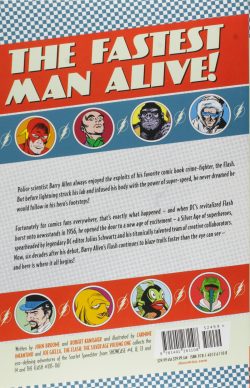
The actual Silver Age of US comics is formally and forever tied to Showcase #4 and the rebirth of the Flash. The epochal issue was released in the late summer of 1956 and from it stems all today’s print, animation, games, collector cards, cos-play, TV and movie wonderment. Let’s all shout a hearty Happy 65th Anniversary to the entire modern comics phenomenon…

No matter which way you look at it, the Silver Age of American comic books began with The Flash, but it’s an unjust yet true fact that being first is not enough: it also helps to be best and people have to notice. MLJ’s The Shield beat Captain America to the news-stands by over a year yet the former is all but forgotten today.

America’s comic book industry had never really stopped trying to revive the superhero genre when Showcase #4 was released in 1956. Readers had already been blessed – but were left generally unruffled by – such tentative precursors as The Avenger (February-September 1955); Captain Flash (November 1954-July 1955) and a full revival of Marvel’s 1940s “Big Three” – the Human Torch, Sub-Mariner and aforementioned Captain America from December 1953 to October 1955. Both DC’s own Captain Comet (December 1953-October 1955) and Manhunter from Mars (November 1955 until the end of the 1960’s and almost the end of superheroes again!) had come and been barely noticed. What made the new Fastest Man Alive stand out and stick was … well, everything!

Once DC’s powers-that-be decided to seriously try superheroes once more, they moved pretty fast themselves. Editor Julie Schwartz asked office partner, fellow editor and Golden-Age Flash scripter Robert Kanigher to recreate a speedster for the Space Age: aided and abetted by Carmine Infantino & Joe Kubert, who had also worked on the previous incarnation.

The new Flash was Barry Allen, a forensic scientist simultaneously struck by lightning and bathed in exploding chemicals from his lab. Supercharged by the accident, Barry took his superhero identity from a comic book featuring his notional predecessor (a scientist named Jay Garrick who was exposed to the mutagenic fumes of “Hard Water”).

Designing a sleek, streamlined bodysuit (courtesy of Infantino – a major talent rapidly approaching his artistic and creative peak), Barry Allen became point man for the spectacular revival of a genre and an entire industry.

This splendid trade paperback and digital compilation superbly compliments Infantino’s talents and the tone of the period. These stories have been gathered many times but still offers punch, clarity and the ineffably comforting yet thrilling tone of those now-distant times. Conversely, you might be as old as me and it was only the day before yesterday…

This is what a big book of comics ought to feel like in your eager, sweaty hands.

Collecting all four try-out issues (Showcase #4, 8, 13 and 14) – and the first dozen issues of his own title (The Flash volume 1 #105-116, spanning October 1956 to November 1960) the high-speed thrills begin with Showcase #4’s ‘Mystery of the Human Thunderbolt!’

Scripted by Kanigher, it sees Barry endure his electrical metamorphosis and promptly go on to subdue bizarre criminal mastermind and “Slowest Man Alive” Turtle Man, after which ‘The Man Who Broke the Time Barrier!’ – scripted by the brilliant John Broome – finds the newly-minted Scarlet Speedster batting a criminal from the future before returning penal exile Mazdan to his own century, proving the new Flash was a protagonist of keen insight and sharp wits as well as overwhelming power.

These are all slickly polished, coolly sophisticated short stories introducing the comfortingly ordinary, suburbanite superhero and firmly establishing the broad parameters of his universe. Showcase #8 (June 1957) opens with another Kanigher tale. ‘The Secret of the Empty Box’ is a perplexing if pedestrian mystery, with veteran Frank Giacoia returning as inker, but the real landmark is Broome’s thriller ‘The Coldest Man on Earth’.

With this yarn the author confirmed and consolidated the new costumed character reality by introducing the first of a Rogues Gallery of outlandish super-villains. Unlike the Golden Age, modern superheroes would face predominantly costumed foes rather than thugs and spies. Bad guys would henceforth be as memorable as the champions of justice.

Captain Cold would return time and again and Broome would go on to create every single member of Flash’s pantheon of classic super-foes.

Joe Giella inked both adventures in Showcase #13 (April 1958). Kanigher’s ‘Around the World in 80 Minutes’ displayed Flash’s versatility as he tackles atomic terrorists, battles Arabian bandits, counters an avalanche on Mount Everest and scuttles submarine pirates in the specified time slot. Broome’s ‘Master of the Elements’ then premiers outlandish Mr. Element, who utilises the periodic table as his formidable, innovative arsenal…

Showcase #14 (June 1958) opens with Kanigher’s eerie ‘Giants of the Time-World!’: a masterful fantasy thriller and a worthy effort to bow out on as Flash and girlfriend Iris West encounter extra-dimensional invaders with the strangest life-cycle imaginable.

The issue closed with a return engagement for Mr. Element, sporting a new M.O. and identity: Doctor Alchemy. ‘The Man Who Changed the Earth!’ is a classic crime-caper with serious psychological underpinnings as Flash struggles to overcome the villain’s latest weapon: mystic transmutational talisman the Philosopher’s Stone…

When the Scarlet Speedster graduated to his own title, Broome became lead writer, supplemented by Gardner Fox. Kanigher would return briefly in the mid-1960s and later write a number of tales during DC’s ‘Relevancy’ period. Taking its own sweet time, The Flash #105 launched with a February-March 1959 cover-date (so it was out for Christmas 1958) and opened with Broome, Infantino & Giella’s sci-fi chiller ‘Conqueror From 8 Million B.C.!’ before introducing yet another money-mad super-villain in ‘The Master of Mirrors!’

Issue #106 premiered one of the most charismatic and memorable baddies in comics history. Gorilla Grodd and his hidden race of telepathic super-simians instantly captured fan attention in ‘Menace of the Super-Gorilla!’ and even after Flash soundly thrashed the hairy hooligan, Grodd promptly returned in the next two issues.

Presumably this early confidence was fuelled by DC’s inexplicable but commercially sound pro-Gorilla editorial stance (in those far-ago days for some reason any comic with a substantial simian in it spectacularly outsold those that didn’t) but these tales are also packed with tension, action and challenging fantasy concepts. By way of encore here is ‘The Pied Piper of Peril!’: a mesmerising musical criminal mastermind, stealing for fun and attention rather than profit…

Issue #107 led with the ‘Return of the Super-Gorilla!’ by regular team Broome, Infantino & Giella: a multi-layered fantasy taking our hero from the African (invisible) city of the Super-Gorillas to the subterranean citadel of antediluvian Ornitho-Men, before closing with ‘The Amazing Race Against Time’, featuring an amnesiac who could outrun the Fastest Man Alive in a desperate collaborative dash to save all of creation from obliteration. With every issue the stakes got higher whilst the dramatic quality and narrative ingenuity got better!

Frank Giacoia inked #108’s high-tech death-trap thriller ‘The Speed of Doom!’ with trans-dimensional raiders stealing fulgurites (look it up, if you want) but Giella was back for ‘The Super-Gorilla’s Secret Identity!’ wherein Grodd devises a scheme to outwit evolution itself by turning himself into a human…

The next issue saw ‘The Return of the Mirror-Master’ with the first in a series of bizarre physical transformations that would increasingly become a signature device for Flash stories, whilst the contemporary Space Race provided an evocative maguffin for a fantastic undersea adventure in the ‘Secret of the Sunken Satellite’. Here Flash encountered an unsuspected sub-sea race on the edge of extinction whilst enquiring after the impossible survival of an astronaut trapped at the bottom of the sea.

The Flash #110 was a major landmark, not so much for the debut of another worthy addition to the burgeoning Rogues Gallery in ‘The Challenge of the Weather Wizard’ (inked by Schwartz’s incredibly versatile artistic top-gun Murphy Anderson) but rather for the introduction of Wally West, who in a bizarre and suspicious replay of the lightning strike that created the Vizier of Velocity became a junior version of the Fastest Man Alive.

Inked by Giella, ‘Meet Kid Flash!’ introduced the first teenaged sidekick of the Silver Age (cover dated December 1959-January 1960 and just pipping Aqualad who premiered in Adventure Comics #269 with a February off-sale date).

Not only would Kid Flash begin his own series of back-up tales from the very next issue (a sure sign of the confidence the creators had in the character) but he would eventually inherit the mantle of the Flash himself – one of the few occasions in comics where such torch-passing actually stuck.

Anderson inked #111’s ‘The Invasion of the Cloud Creatures’ which successfully overcomes its frankly daft premise to deliver a taut, tense sci-fi thriller nicely counterpointing the first solo outing for Kid Flash in ‘The Challenge of the Crimson Crows!’

This folksy parable has small-town kid Wally use his new powers to rescue a gang of kids on the slippery slope to juvenile delinquency. Perhaps a tad paternalistic and heavy-handed by today’s standards, in the opening months of 1960 this was a strip about a boy heroically dealing with a kid’s real dilemmas. This occasional series would concentrate on such human-scaled problems, leaving super-menaces and world-saving for team-ups with his mentor.

Flash #112 – ‘The Mystery of the Elongated Man’ – introduced an intriguing super-stretchable newcomer to the DC universe, who might have been hero or villain in a beguiling tantaliser, after which Wally tackled juvenile Go-Karters and corrupt school contractors in the surprisingly gripping ‘Danger on Wheels!’

Mercurial maniac The Trickster launched his crime career in #113’s lead tale ‘Danger in the Air!’ and the second-generation speedster took a break so that his senior partner could defeat ‘The Man Who Claimed the Earth!’: a full-on cosmic epic wherein ancient alien Po-Siden attempts to bring the lost colony of Earth back into the galaxy-spanning Empire of Zus.

Captain Cold and Murphy Anderson returned for ‘The Big Freeze’, where the smitten villain turns Central City into a glacier just to impress Barry’s girlfriend Iris. Meanwhile, her nephew Wally saves a boy unjustly accused of cheating from a life of crime when the despondent student falls under the influence of the ‘King of the Beatniks!’

Flash #115 offered another bizarre transformation, courtesy of Gorilla Grodd in ‘The Day Flash Weighed 1000 Pounds!’, and when aliens attempt to conquer Earth, the slimmed-down champion needs ‘The Elongated Man’s Secret Weapon’ as well as the guest-star himself to save the day. Once again Anderson’s inking gave over-taxed Joe Giella a breather whilst taking art-lovers’ breath away in this beautiful, fast-paced thriller.

This gloriously satisfying volume concludes with Flash #116 as ‘The Man Who Stole Central City’ sees a seemingly fool-proof way to kill the valiant hero, which takes both time-tinkering and serious outwitting to avoid, whilst Kid Flash returns in ‘The Race to Thunder Hill’: a father-son tale of rally driving, but with car-stealing bandits and a young love interest for Wally to complicate the proceedings.

These earliest tales were historically vital to the development of our industry but, quite frankly, so what? The first exploits of The Flash should be judged solely on merit, and on those terms they are punchy, awe-inspiring, beautifully illustrated and captivating thrillers that amuse, amaze and enthral both new readers and old devotees. This lovely collection is a must-read item for anybody in love with our art-form and especially for anyone just now encountering the hero for the first time through his TV incarnation.
© 1956, 1957, 1958, 1959, 1960, 2016 DC Comics. All Rights Reserved.
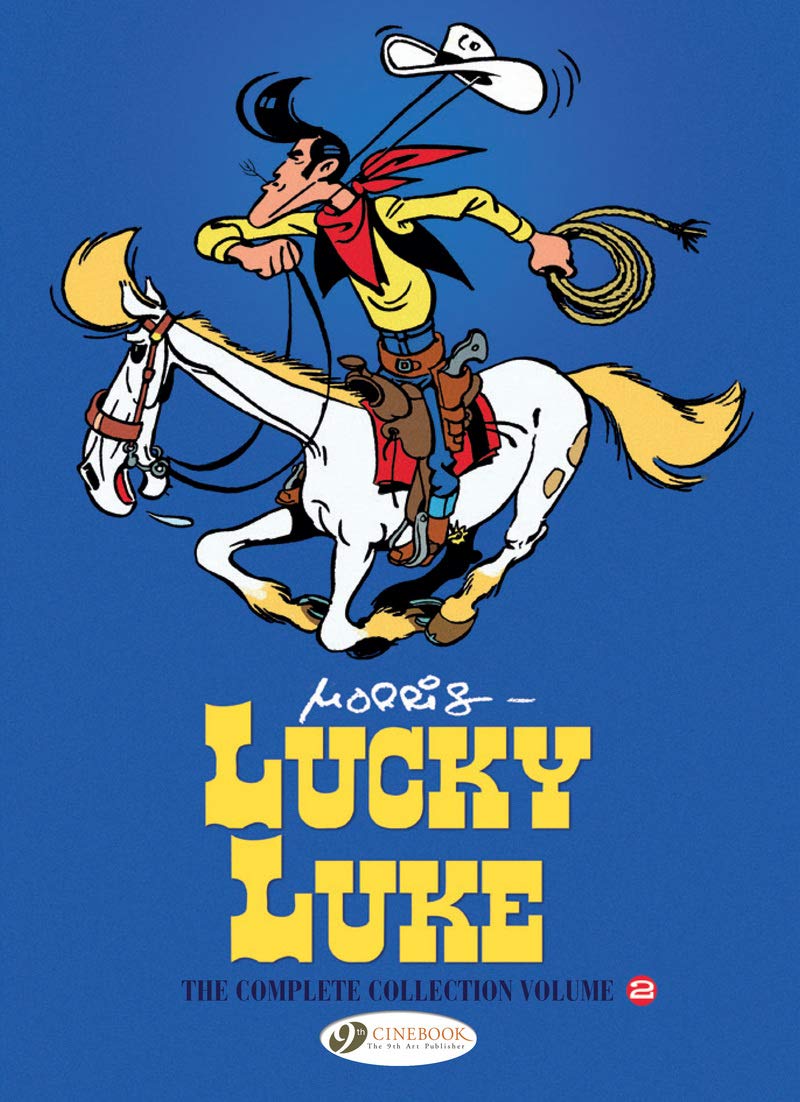
Lucky Luke: The Complete Collection volume 2


By Morris, translated by Jerome Saincantin (Cinebook)
ISBN: 978-1-84918-455-7 (Album HB)

On the Continent, the populace has a mature relationship with comics: according them academic and scholarly standing as well as meritorious nostalgic value and the validation of acceptance as an art form. This hardback/digital compilation celebrates the formulative early triumphs of a fictional hero who is certainly a national treasure for both Belgium and France, whilst tracing the lost origins of a global phenomenon. It’s also timely in that the worldwide western wonder celebrates his 75th Anniversary this year…

As we know him now, Lucky Luke is a rangy, good-natured, lightning-fast cowboy roaming the fabulously mythic Old West, having light-hearted adventures with his horse Jolly Jumper whilst interacting with a host of historical and legendary figures and icons.

His ongoing exploits have made him one of the best-selling comic characters in Europe (81 collected books and more than 300 million albums in at least 33 languages thus far), with all the usual spin-off toys, computer games, puzzles, animated cartoons, TV shows and live-action movies.

This wild and woolly delight – originally released in 2017 as L’Intégrale 2 – features a far more boisterous and raw hero in transition, who hits his stride and struts his stuff after a preliminary text feature fills us in on the tone of the times, Morris’ filmic and comics influences and an eventful US sojourn…

Lucky Luke was created in 1946 by Belgian animator, illustrator and cartoonist Maurice de Bévère (“Morris”). For years we believed it was for Le Journal de Spirou Christmas Annual (L’Almanach Spirou 1947), before being launched into his first weekly adventure ‘Arizona 1880′ on December 7th 1946. However, the previous volume in this superb archival series (in hardback album and digital editions) revealed the strip actually debuted in the multinational weekly comic, but without a title banner and only in the edition released in France…

This second outing re-presents – in strict chronological order – strips created between October 1949 and December 1952 before being collected in albums Under a Western Sky (1952), Lucky Luke versus Poker Pat (1953) and Outlaws (1954). Here all the art and pages have been restored, rejiggled and remastered to achieve maximum contemporary authenticity with the original weekly serialisation.

The previous collection covered how the neophyte auteur became a dependable staple of the Euro-comics scene whilst toiling as a caricaturist for magazine Le Moustique and working at the CBA (Compagnie Belge d’Actualitiés) cartoon studio, where he met future comics superstars Franquin and Peyo. Morris was one of “la Bande des quatre” – The Gang of Four – comprising Jijé, Will and old comrade Franquin: leading proponents of a new, loosely free-wheeling artistic style known as the “Marcinelle School” which dominated Le Journal de Spirou in aesthetic contention with the “Ligne Claire” style used by Hergé, EP Jacobs and other artists in Le Journal de Tintin.

In 1948 said Gang (excluding Will) visited America, meeting US creators and sightseeing. Morris stayed for six years, meeting fellow traveller René Goscinny, scoring work at newly-formed EC sensation Mad and always making copious notes and sketches of the swiftly vanishing Old West. Morris stayed for six years, an “American Period” seeing him chase an outsider’s American Dream while winning fame and acclaim in his own country. That glittering sojourn is carefully unpicked and shared by expert researchers Christelle & Bertrand Pissavy-Yvernault.

Their heavily-illustrated essay covers his East-to-West trek, family life and quest to experience the wonderland of his fantasies. The in-depth treatise is packed with intimate photos and his published illustrations of the period, culled from Le Moustique, plus comics pages, film memorabilia (from the movies that so influenced his stories at that time) and also includes both art work from European and US publications by fellow expat and eventual collaborator Rene Goscinny. There’s even an in-depth analysis of how what Morris Saw became what Lucky Did closely referencing the comics stories that follow…

Working solo (with early script assistance from his brother Louis De Bevere) until 1955, Morris produced nine albums of affectionate sagebrush parody and action before formally uniting with Goscinny, who became the regular wordsmith as Luke attained the dizzying heights of superstardom, commencing with ‘Des rails sur la Prairie’ (Rails on the Prairie), which began in Le Journal de Spirou on August 25th 1955.

Before we get there though, there’s plenty of solo action to enjoy beginning with ‘The Return of Trigger Joe’ from LJdS #602-618 (October 27th 1949-February 16th 1950) and collected in 1952’s Sous le Ciel de l’ouest/Under a Western Sky) album. Here the lonesome wanderer meets another prairie nomad who’s his match in all cowboy disciplines, who becomes a rather ruthless competitor when they sign up for the Nugget Gulch horse race. Of course, “John Smith” believes he’s a shoo-in since he’s riding the stolen Jolly Jumper, but hasn’t counted on Luke’s close relationship with the wonder horse. Once that scheme fails – but not before extended slapstick shenanigans in the race scenes – Smith falls back on his old ways as bank robber Trigger Joe, but his pilfering the prize money only leads to disaster when Lucky trails him deep into the searing desert…

Next up chronologically and also from Under a Western Sky, ‘Round Up Days’ (LJdS #619-629; February 23rd – May 4th 1950) sees Lucky actually working as a cowboy, hiring on for a cattle round-up (lots of rodeo style comedy here!) before encountering rustlers and cleaning up cow town Bottleneck City…

Closing the first album, ‘The Big Fight’ (LJdS #630-646; May 11th – August 31st 1950) sees Luke briefly adopt a two-fisted simpleton with the strength of Hercules and school him in the arts of pugilism for a prize-fight against infamous Killer Kelly. Things are going well until bookmaker Slats “Slippery” Nelson tries to fix the outcome. Thankfully, Lucky is his match in cunning and a faster gun than the gambler’s hirelings…

The next album release was December 1953’s Contre Pat Poker/ Lucky Luke versus Pat Poker, but its contents – ‘Clean-up in Red City’ and ‘Rough and Tumble in Tumbleweed’ were reprinted out of chronological order so here the former (from LJdS #685-697; May 31st – August 23rd 1951) and detailing how Lucky becomes a sheriff after being embarrassingly robbed, and kicks out all the gamblers, shysters and crooked saloon owners led by sinister charlatan Pat Poker – is followed by the eponymous lead adventure from 1954 album Hors-la-loi/Outlaws: a highly significant action romp signalling the debut of Lucky’s greatest foes.

The strip ‘Outlaws’ originally ran in LJdS #701-731 from September 20th 1951 to April 17th 1952 with our hero hired by the railroad companies to end the depredations of Emmett Bill, Grat and Bob Dalton – real life badmen who plagued the region during the 1890s, imported into the strip and given a comedic, but still vicious spin. The cat & mouse chase across the west sees Luke constantly frustrated by close calls and narrow escapes in superbly gripping movie set-pieces until, inevitably, justice claims the killers.

Morris ended the gang forever, but they were insanely popular with fans and the ideal foils for Lucky, so eventually they returned in the form of their own cousins, but we’ll tell that tale another time and place…

Here it’s back to ‘Rough and Tumble in Tumbleweed’ (LJdS #735-754; May 15th – September 25th 1952) as sheep farmers are harassed and imperilled by cattlemen. Luke’s attempts to broker peace are swiftly derailed after escaped convict Pat Poker slips into town and uses his gift for cheating to take over the local saloon and hire shepherd-hating gunslinger Angelface to remove their mutual enemy. Sadly for them, even this alliance of evil is insufficient to tame the wily western wonder…

By now a certified Christmas must-have item, December 1954’s Lucky Luke album Outlaws also carried the ‘Return of the Dalton Brothers’ as first seen in LJdS #755-764 (October 2nd – December 4th 1952). Here, a fraud named Bill Bonney campaigns to become sheriff of a prosperous frontier town by claiming to be the killer of the infamous owlhoots, and seems unstoppable until Lucky orchestrates a brief and equally fraudulent resurrection of the bandit brothers…

Morris died in 2001 having drawn fully 70 adventures, plus spin-off yarns of Rantanplan (“dumbest dog in the West” and a charming spoof of cinema canine Rin-Tin-Tin), with Achdé, Laurent Gerra, Benacquista & Pennac taking over the franchise, producing more tales of the immortal cowboy.

A treasure trove of vintage cartoon material, designs and sketches, contemporaneous extras, commentary, original art, creator biographies and more, this is a delight for older kids who have a gained a bit of perspective and historical understanding, although the action and slapstick situations are no more contentious than most Laurel and Hardy films (perfectly understandable as Morris was a devout fan of the bumbling duo).

These youthful forays of an indomitable hero offer grand joys in the tradition of Destry Rides Again and Support Your Local Sheriff, superbly executed by a master storyteller: a wonderful introduction to a unique genre for modern kids who might well have missed the romantic allure of the Wild West that never was…

Bon anniversaire, Lucky!
© Morris/Dupuis, 1949 to 1954 for the first publications in Le Journal de Spirou.
© Morris/Dupuis 2017 for this volume of the collection. All other material © 2017 its respective creators/owners.

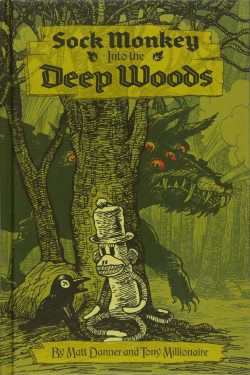
Sock Monkey: Into the Deep Woods


By Tony Millionaire & Matt Danner (Fantagraphics Books)
ISBN: 978-1-60699-746-8 (HB)

Tony Millionaire’s Sock Monkey first appeared as a Dark Horse comic book in 1998. The extraordinary cast of characters have since achieved bizarre notoriety as adored favourites of gentle lovers of whimsy and the degenerate darlings of clued-in, cynical post-moderns.

The original tales featured a lovable handmade simian puppet, a toy crow with button eyes and a much-repaired doll experiencing multiple-award-winning all-ages adventures published as occasional miniseries between 1998 and 2007. Between 2002 and 2004, they starred in a couple of hardcover storybooks and were later recycled and repurposed for an adult-oriented (by which I mean surreal and clever, not tawdry and titillating) newspaper strip…

Tony Millionaire comes from a dynasty of exemplary artists, loves to draw and does it very, very well: referencing classical art, the acme of children’s book illustration and an eclectic mix of pioneering comic strip draughtsmen like George McManus, Rudolph Dirks, Cliff Sterrett, Frank Willard, Harold Gray, Elzie Segar and George Herriman.

His own creative endeavours – words and pictures – seamlessly blend their styles and sensibilities with European engravings masters from the “legitimate” side of the pictorial storytelling racket.

Born Scott Richardson, Mr Millionaire especially cites Johnny (Raggedy Ann and Andy) Gruelle and English illustrator Ernest H. Shepard (The Wind in the Willows; Winnie the Pooh) as definitive formative influences. That’s particularly obvious from the range of stunning pictures in this rousing yarn starring his plushy paragons in a memorable collaboration with animator, screen writer and director Matt Danner (Ren & Stimpy, Loony Toons, Monster High and The Drinky Crow Show).

With a variety of graphical strings to his bow such as various animation shows, his own clutch of books for children – particularly the superbly stirring Billy Hazelnuts series – and the brilliant if disturbing weekly strip Maakies (detailing riotously vulgar, absurdly surreal adventures of a nautically-inclined Irish monkey called Uncle Gabby and fellow über-alcoholic Drinky Crow: grown-up world iterations and mirror universe equivalents of the sweet and simple stars herein), every Millionaire project seems to be a guarantee of endless excitement and quality.

This one pushes the featured creatures into the rarefied atmosphere inhabited by such esteemed and established children’s favourites as the Moomins, Wonderland, The Velveteen Rabbit and the assorted chronicles of Oz…

A prose tale scripted primarily by Danner with ideas, contributions and 46 stunning monochrome illustrations (in a variety of media from soft pencil tones to crisp stark pen & ink) from Millionaire: the sublime saga details how, one day in a Victorian House by the sea, an old Sock Monkey named Gabby and his constant companions Crow and dilapidated, much-repaired doll Inches discover their beloved guardian Ann-Louise is missing – presumed taken by the recently discovered monstrous beast dubbed the Amarok…

Determined to save her, the ill-prepared trio plunge into the terrifying Deep Woods, armed only with maps and a compass from the library of Ann-Louise’s grandfather Professor Rimperton. Braving all manner of terrors – and with the occasional assistance of strange creatures such as wood-elf Trumbernick, a partly digested sea captain and an undersized bear carpenter – the toybox heroes defeat, or more usually narrowly escape, such threats as Venomous, Triple-Spiked, Hog-Faced Caterpillars, stormy seas, a Sea Serpent, horrid Harpies and the unpleasantly ursine Eastern Mountain Guards of Bear Town, until they find her.

However even after the dauntless searchers have finished dodging pursuers, roaming the wilds and soaring the skies to be reunited with Ann-Louise, there is one final trial after the remorseless Amarok tracks them to the beloved little girl they would lay down their lives for…

Like the very best children’s classics, this is a book (available in proudly traditional hardback and ultra-modern digital formats) that isn’t afraid to confront dark matters and actively embraces fear and sadness amidst the wonders in an effort to craft a better story.

Compelling, beguiling and visually intoxicating, this Sock Monkey yarn judiciously leavens discovery with anxiety, heartbreak with gleeful imaginative innocence and terror with bold triumph.

Millionaire describes his works as intended for “adults who love children’s stories” but this collaboration may just have turned that around by concocting a tall tale of adult intent which is one of the greatest kids’ books of modern times.
Sock Monkey: Into the Deep Woods © 2014 Tony Millionaire & Matt Danner. This edition © 2014 Fantagraphics Books.