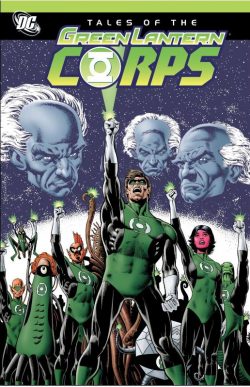
Tales of the Green Lantern Corps volume 1


By Len Wein, Mike W. Barr, Paul Kupperberg, Robyn Snyder, Todd Klein, Joe Staton, Don Newton, Carmine Infantino, Paris Cullins, Dave Gibbons & various (DC Comics)
ISBN: 978-1-4012-2155-3 (TPB)

When mortally wounded alien cop Abin Sur crashed on Earth he commanded his power ring – a device which could materialise thoughts – to seek out a replacement officer, honest and without fear.

Scanning the planet, it selected brash young test pilot Hal Jordan in nearby Coast City, California and brought him to the crash site. The dying alien bequeathed his ring, the lantern-shaped Battery of Power and his professional vocation to the astonished Earthman.

Over many traumatic years, Jordan grew into one of the greatest members of a serried band of law-enforcers. For billions of years, the Green Lantern Corps protected the cosmos from evil and disaster, policing countless numbers of sentient beings under the severe but benevolent auspices of immortal super-beings who deemed themselves Guardians of the Universe.

These undying patrons of Order were one of the first races to evolve and dwelt in sublime, emotionless security and tranquillity at the very centre of creation on the small world of Oa.

Green Lanterns are chosen for their capacity to overcome fear and are equipped with a ring that creates solid constructs out of emerald light. The miracle weapon is fuelled by the strength of the user’s willpower, making it one of the mightiest tools imaginable.

For eons, a single individual from each of the 3600 sectors of known space was selected to patrol his, her, their or its own beat. Being cautious and meticulous masters, the Guardians laid contingency plans and frequently appointed designated reserve officers and set up contingency plans for inheriting the office of their peacekeeping representatives.

Jordan’s substitute was a nice quiet (white) PE teacher named Guy Gardner, but when he was critically injured the Oans’ fallback option was a little worrying to staid, by-the-book Hal.

In Green Lantern/Green Arrow #87 (December 1971/January 1972) ‘Beware My Power!’ introduced a bold new character to the DCU. John Stewart was an unemployed architect and full-time radical activist: an angry black man always spoiling for a fight and prepared to take guff from no-one.

Jordan was convinced the Guardians had grievously erred when selecting rash, impetuous Stewart as Sector 2814’s official Green Lantern stand-in, but after seeing how his proposed pinch-hitter handled a white supremacist US presidential candidate trying to foment a race war, the Emerald Gladiator was delighted to change his tune…

As time progressed Jordan – and his occasional successors John Stewart and Guy Gardner – found reason to question the Guardians’ motives and ineffability: increasingly aware of issues that called into question the role of their masters. The same doubts also infected many of their once-devoted fellow operatives and peacekeepers. All too frequently, the grunts began seeing the formerly infallible little blue gods exposed as venal, ruthless, doctrinaire and even capricious…

However, before those issues boiled over during and after the Crisis on Infinite Earths, a superb series of back-up yarns graced the pages of Green Lantern, dedicated to broadening the horizons of the readership with tales of the vast and varied membership of the Emerald Army…

This first Fight’s ‘n’ Tights trade paperback compilation – also available in eBook editions – gathers miniseries Tales of the Green Lantern Corps plus a string of back-up tales from Green Lantern #148, 152-154, 161, 162, and 164-167 (covering May 1981 through July 1983): a period of radical change and increasing cosmic calamity foreshadowing that aforementioned, reality-altering calamity that would irrevocably reshape the DCU…

The drama begins in a triptych miniseries conceived and detailed by Mike Barr & Len Wein, with art by Joe Staton & Frank McLaughlin that despatched the Emerald Gladiators against the ultimate threat…

The onslaught begins in ‘Challenge!’ after Jordan meets anxious new recruit Arisia of Graxos IV. The nervous neophyte has barely introduced herself to the star-spanning veteran when all 3600 officers are summoned to Oa, where the Guardians inform them of a universal existential threat.

Rogue Guardian Kronos has returned from the dead and again threatens to destroy the universe by uncovering its forbidden origins. His fresh attempts to roll back time are bolstered by an invader from beyond reality that has allied with the obsessed madman for its own reasons…

The first strike comes as amassed Green Warriors communally charge their power rings: an act which causes the Great Battery to explode in a horrific detonation that slaughters thousands of officers. Not only does this act deplete their ranks, but the destruction means the Corps has only 24 hours to solve the crisis before the green energy fades away forever…

By bringing Arisia up to speed on friends and foes alike throughout the chapters, Jordan provides a potted history for the readership as the legion of surviving heroes rally, but another blow comes as the Guardians themselves fall prey to the mysterious invader from beyond: a being who controls the dead and plans on destroying all life…

Things go from bad to worse in ‘Defeat!’ as the ranks of the fallen swell with valued former comrades and even immortal Oans. One glimmer of hope comes as one slave of death-lord Nekron switches sides, inspired by the valiant resistance of the green warriors…

With the stakes at their highest, the last remaining Lanterns go on the attack, invading the death dimension and ready to employ the most desperate tactic ever devised. The gambit of course succeeds and results in ‘Triumph!’…

The era of science fiction TV fed an appetite for alien characters, and with a ready-made legion of such ready and waiting further adventures of the Green Lantern Corps soon followed: both as back-ups in the regular GL magazine and in regular Annuals. The wonderment began with an untitled exploit by Paul Kupperberg, Don Newton & Dan Adkins from Green Lantern #148 wherein cute squirrel Ch’p proved looks were deceptive and feelings irrelevant when he was ordered to save the marauding inhabitants of Berrith.

It didn’t matter that the feral hunters had predated and consumed Ch’p’s people for centuries…

Carmine Infantino rendered the saga of Quarzz Teranh who proves his ‘E’Sprit de Corps’ after being ordered to destroy a black hole at the cost of his own life, and later returned to render a tale of ‘Paradise World!’ where confirmed pacifist Jeryll is faced with a moral dilemma after employing the violence her entire species has foresworn..

The answer came in the next issue as the troubled GL made ‘The Choice’ (Infantino inked by Frank Chiaramonte)…

Kupperberg’s final contribution was illustrated by Paris Cullins & Rodin Rodriguez as sentient vegetable GL Medphyl follows murderous raiders onto an inhospitable world to be challenged by ‘A Matter of Snow’ and the depths of sadistic villainy…

Issue #161 (February 1983) featured a tale from Robin Snyder and vanguard of the “British Invasion” Dave Gibbons. ‘Storm Brother’ saw retired Lantern Harvid hunted down by his greatest enemy, testing the bonds of family to the limits.

Todd Klein scripted the next few Gibbons vignettes, beginning with ‘Apprentice’ which finds a youthful protégé overstepping his bounds and playing with forbidden green fire, after which ‘Hero’ sees “the green man” fall foul of unflinching cultural rules when he tries to save a roving colony of space vagabonds. Some people just can’t be trusted…

‘Green Magic’ is 2-part tale from Klein & Gibbons fable that opens with a ‘Test of Will’ after reluctant Green Lantern Hollika Rahn suffers for her misguided interference in a global war between scientists and sorcerers. Thankfully, she has friends she doesn’t know working for her to ensure her eventual victory, before this initial compilation concludes with a battle among herd sentients to inherit the Green Power. Of course, the true ‘Successor’ is one nobody in the bellicose family ever expected…

Light, straightforward, done-in-one action-adventures that offer a brief moment of entertainment are in pretty short supply these days, but if that’s appealing to you, this is a book and series you should indulge yourself in at your earliest convenience.
© 1981-1983, 2009, 2018 DC Comics. All Rights Reserved.
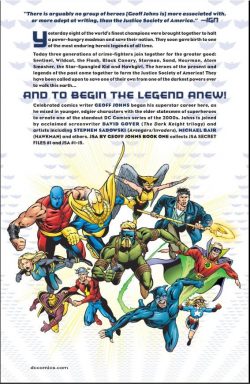
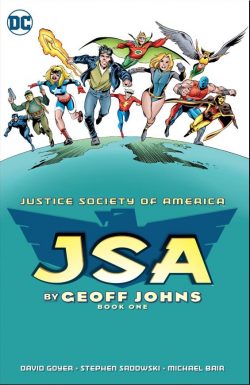
JSA by Geoff Johns Book One


By Geoff Johns, James Robinson, David S. Goyer, Scott Benefiel, Stephen Sadowski, Derec Aucoin, Marcos Martin, Michael Bair, Buzz & various (DC Comics)
ISBN: 978-1-4012-7490-0 (TPB)

After the actual invention of the comicbook superhero – for which read the launch of Superman in 1938 – the most significant event in the genre, and indeed industry’s progress was the combination of individual sales-points into a group. Thus, what seems blindingly obvious to us with the benefit of four-colour hindsight was proven – a number of popular characters could multiply readership by combining forces and readerships. Plus of course, a whole bunch of superheroes is a lot cooler than just one – or even one and a sidekick.

The Justice Society of America was created in the third issue of All-Star Comics (Winter 1940/1941), an anthology title featuring established characters from various All-American Comics publications, by the simple expedient of having the heroes gather around a table and tell each other their latest adventure. From this low-key collaboration, it wasn’t long before the guys – and they were all guys (except Red Tornado who only pretended to be one) until Wonder Woman premiered in the eighth issue – regularly joined forces to defeat the greatest villains and social ills of their generation.

Within months the concept had spread far and wide…

And so, the Justice Society of America is rightly revered as a true landmark in the development of comic books, and, when Julius Schwartz revived the superhero genre in the late 1950s, a key moment would come with the inevitable teaming of the reconfigured mystery men into a Justice League of America.

From there it wasn’t long until the original and genuine returned. Since then there were many attempts to formally revive the team’s fortunes but it wasn’t until 1999, on the back of both the highly successful revamping of the JLA by Grant Morrison and Howard Porter and the seminal but critically favoured new Starman by Golden Age devotee James Robinson, that the multi-generational team found a concept and fan-base big enough to support them.

It didn’t hurt that the writers – all with strong Hollywood connections – were both beloved of the original concept, but also knew what mass-market action audiences liked…

Officially concentrating on the efforts of current fan-fave Geoff Johns, this initial volume (available in trade paperback and digital formats) re-presents JSA #1-5, from August 1999 to October 2000, and also includes the conceptual works of his collaborators David S. Goyer & James Robinson which all germinated in a prequel tale from JSA: Secret Files #1.

The majestic drama opens sans fanfare with Robinson & Goyer’s ‘Gathering Storms’ – illustrated by Scott Benefiel & Mark Propst – from JSA: Secret Files: detailing with great style and remarkable facility (considering the incredibly convoluted continuity of the feature) how the last active survivors of the original team reconvened after losing most of their membership to old age, infirmity or enemy action. Veteran champions Wildcat, Flash and Green Lantern/Sentinel unite with youthful inheritors of the old team’s legacy to continue the tradition, train the next generation of heroes and battle one of the oldest evils in the universe…

It all begins with the death of the Sandman, octogenarian Wesley Dodds, who beats the odds one last time to thwart an unstoppable ancient foe and warn with his dying breath those surviving comrades of the immense peril to come…

The story resumes in the premiere JSA issue with ‘Justice Be Done’ by Robinson, Goyer, Stephen Sadowski & Michael Bair. At Dodds’ funeral, a horde of death-demons attack the mourners after the hero known as Fate is murdered, and the assembled mourners – legacy heroes Sand, Stargirl, Hourman, Atom Smasher, Starman and Obsidian, plus Black Canary, Wonder Woman (in actuality, her mother Hippolyta who was an active Nazi crusher during WWII) and the aforementioned trio are sent on a tripartite mission to rescue three babies; one of which is the new incarnation of the magical hero Doctor Fate.

Meanwhile, unbeknownst to all, a wild card has been introduced with the unexpected return of another departed comrade in the guise of a new and deeply troubled Hawkgirl…

Although deeply fixed in the vast backstory of the DC universe, the story is quite accessible for newcomers and continues in ‘The Wheel of Life’, as mystery hero Scarab offers his assistance as arcane forces hunt the imperilled newborns.

The heroes are all at odds with each other as the mystery villain behind everything comes out of the shadows, precipitating a chase across myriad times and dimensions and an offer of assistance from two long dead heroic ‘Old Souls’…

The resultant chaotic ultimate showdown in ‘Ouroboros’ then re-forges the multi-generational team into a force ready and willing to tackle anything. This is a fabulously engaging superhero-rebirth saga: wonderfully compelling with a frenetic pace that keeps the reader barrelling along. The struggle against the sinister big bad villain is pitched perfectly, with plenty of clues for old-timers and enough character illustration to educate and satisfy those who have never heard of “the Dark Lord…”

With the revival and reintroduction of new iterations of Hawkgirl and Doctor Fate achieved, the saga looks inward with ‘Grounded’ (illustrated by Derec Aucoin & Bair) focusing on the history and new powers of the latest Sandman whilst introducing a new Mister Terrific to the team, and casting plenty of foreshadowing of horrors yet to come…

Geoff Johns’ tenure begins as co-writer with Goyer and the official public relaunch of the JSA in ‘Justice. Like Lightning…’ (illustrated by Marcos Martin & Keith Champagne). As old guard Flash, Sentinel and Wildcat assume the role of mentors for both current and future champions, the ceremony is disrupted when they are attacked by a demented super-human named Black Adam (a magically empowered superman, usually harassing the agents of do-gooding wizard Shazam!).

The bombastic battle serves to introduce more very far-reaching plot threads as the new incarnations of Doctor Fate, Hourman and Hawkgirl thereafter journey to ancient Egypt to solve the mystery of the Black Marvel’s madness, before the second major story-arc of the series begins.

In ‘Darkness Falls’ (Sadowski & Bair), Sentinel’s troubled son Obsidian – haunted by his own powers – seemingly goes mad and attempts to drag the world into a supernatural realm of dark despondence. Naturally, there’s more to the mess that might first appear, and when a new Doctor Mid-Nite appears, it’s not long before the ebon tide begins to turn in a war for ‘Shadowland’…

The epic concludes in a savage battle for the ‘Black Planet’ after which Wildcat takes centre-stage for a magnificent solo duel against the entire Injustice Society in ‘Wild Hunt’ – the best Die Hard tribute ever seen in comics…

Beginning with ‘Split’ (illustrated by Bair & Buzz), the next extended saga pits the team simultaneously against serpentine super-terrorist Kobra and time-bending villain Extant (who killed many of the original JSA team in crossover crisis event Zero Hour). forcing the still largely untested new squad to divide its forces between a world in peril and a continuum in meltdown.

‘The Blood-Dimmed Tide’ (Goyer, Johns & Buzz) concentrates on the anti-Kobra contingent but their swift victory is spoiled when the sole survivor of the other team appears, repeatedly bringing them into battle against Extant in ‘Time’s Assassin’ and ‘Chaos Theory’ before a spectacular conclusion is won in ‘Crime and Punishment’, wherein reality is stretched beyond its limits, the gates of the afterlife are propped open and more than a few dead heroes return…

Complex and enthralling, these super shenanigans are the very best of their type: filled with wicked villains and shining, triumphant heroes, cosmic disaster and human tragedies, and always leavened by optimism and humour.

As such they’re simply not for every graphic novel reader, but if you can put yourself into the head and heart of a thrill-starved 10-year old and handle the burden of seven decades of history, these tales will supercharge your imagination and restore your faith in justice…
© 1999, 2000, 2017 DC Comics. All Rights Reserved.

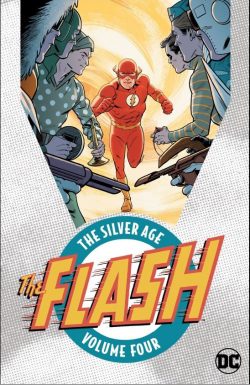
The Flash: The Silver Age volume 4


By John Broome, Gardner Fox, Robert Kanigher, Carmine Infantino & various (DC Comics)
ISBN: 978-1-4012-8823-5 (TPB)

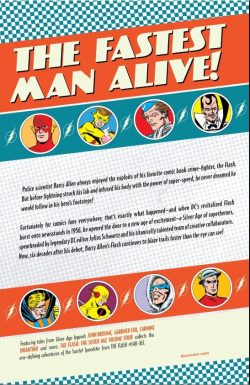
The second iteration of the Flash triggered the Silver Age of American comicbooks and – for the first ten years or so – in terms of creative quality and sheer originality, was always the book and hero to watch.

Following his meteoric launch in Showcase #4 (October 1956), police scientist Barry Allen – transformed by a lightning strike and accidental chemical bath into a human thunderbolt of unparalleled velocity and ingenuity – was uncharacteristically slow in winning his own title, but finally (after three more cautiously released trial issues) finally stood on his own wing-tipped feet in The Flash #105 (February-March 1959).

He never looked back, and by the time of this second commemorative compilation was very much the innovation mainstay of DC/National Comics’ burgeoning superhero universe. This fourth trade paperback (and digital) collection re-presents Flash #148-163 – spanning November 1964 through August 1966 – robustly confirming the Vizier of Velocity as the pivotal figure in the all-consuming renaissance of comicbook super-heroics.

Shepherding the Scarlet Speedster’s meteoric rise to prominence, the majority of stories are written by the brilliant John Broome and Gardner Fox with pencils from the infinitely impressive and constantly innovating Carmine Infantino. Their slickly polished, coolly sophisticated rapid-fire short stories set in a welcomingly suburbanite milieu – constantly threatened by super-thieves, sinister spies and marauding aliens – displayed our affable hero always triumphant whilst expanding and establishing the broad parameters of an increasingly cohesive narrative universe. The comicbook had gelled into a comfortable pattern of two short tales per issue leavened with semi-regular book-length thrillers, although in this period that format would slowly switch to longer complete tales.

By this time, it was clear that the biggest draw to the Flash was his mind-boggling array of costumed foes, but there was still time and space for straight adventure, complex quandaries and old-fashioned experimentation, as evidenced by the odd yarn that follows Broome’s Captain Boomerang tale in Flash #248.

‘The Day Flash Went into Orbit!’ (illustrated by Infantino & Murphy Anderson) sees the Monarch of Motion caught in the crossfire after the Ozzie felon becomes a helpless patsy for a nefarious hypnotist…

With the back-up tale in this issue Broome proved creative heart and soul still counted for much. Inked by Joe Giella, ‘The Doorway to the Unknown!’ is the moving story of an embezzler who returns from the grave to prevent his brother paying for his crimes: a ghost story penned at a time when such tales were all but banned and a pithy human drama of redemption and hope that deservedly won the Academy of Comic Book Arts Alley Award for Best Short Story of the year. It still brings a worthy tear to my eyes…

Broome also scripted #149’s ‘The Flash’s Sensational Risk!’: an alien invasion yarn co-starring the Vizier of Velocity’s speedy sidekick Kid Flash, whilst Fox penned the Anderson inked ‘Robberies by Magic!’ featuring another return engagement for future-born stage conjuror Abra Kadabra, before going on to produce #150’s lead tale of a bizarre robbery-spree ‘Captain Cold’s Polar Perils!’ Giella returned for Fox’s second yarn, another science mystery as ‘The Touch-and-Steal Bandits!’ somehow transform from simple thugs to telekinetic terrors…

Flash #151 was another sterling team-up epic co-starring the original Scarlet Speedster. Fox once more teamed his 1940’s (or retroactively, Earth-2) creation Jay Garrick with his contemporary counterpart, this time in a spectacular full-length battle against the black-hearted Shade in ‘Invader From the Dark Dimension’, whilst #152’s Infantino & Anderson double-header consisted of our hero stopping ‘The Trickster’s Toy Thefts’ after which Broome’s light-hearted thriller ‘The Case of the Explosive Vegetables!’ offered another engaging comedy of errors starring Barry Allen’s father-in-law to be: absent-minded Professor Ira West.

Giella settled in for a marathon inker stint as Flash #153 has Broome reprise the much-lauded ‘Our Enemy, the Flash!’ in new yarn ‘The Mightiest Punch of All Time!’

Here villainous Professor Zoom, the Reverse Flash again attempts to corrupt reformed and cured Al Desmond – a multiple personality sufferer who was also Flash-Foes Mr. Element and Doctor Alchemy. The next issue then saw Fox’s medical mystery ‘The Day Flash Ran Away with Himself!’ and Broome’s old-fashioned crime caper ‘Gangster Masquerade!’ which brought back thespian Dexter Myles and made him custodian of an increasingly important Central City landmark: the Flash Museum.

It had to happen – and it finally did – in Flash #155: Broome teamed six of the Rogue’s Gallery into ‘The Gauntlet of Super-Villains!’, a bombastic Fights ‘n’ Tights extravaganza, but one with a hidden twist and a mystery foe concealed in the wings, whilst the following issue revealed Broome’s ‘The Super-Hero Who Betrayed the World!’: an engrossing and exciting invasion saga with the Flash a hunted man accused of treason against humanity…

Fox provided both stories in #157: ‘Who Stole the Flash’s Super-Speed?’ – a return visit for Doralla, the Girl from the Super-Fast Dimension – plus another titanic tussle with the nefarious Top in ‘The Day Flash Aged 100 Years!’ The scripter repeated the feat in #158, beginning with a rather ridiculous and somewhat gross alien encounter in ‘Battle Against the Breakaway Bandit!’ and far more appetising thriller ‘The One-Man Justice League!’, wherein Flash defeats the power-purloining plans of JLA nemesis Professor Ivo without even noticing…

The cover of Flash #159 features his empty uniform and a note saying the hero is quitting, in a tale entitled ‘The Flash’s Final Fling!’ It was written by Fox, and guest-starred Kid Flash and Earth-2 hero Dr. Mid-Nite in a time-busting battle against criminals from the future…

At that time, editors and creative staff usually designed covers that would grab potential readers’ attention and then produced stories to fit. For this issue Julie Schwartz tried something truly novel and commissioned Robert Kanigher (first scripter of the new Scarlet Speedster in Showcase #4) to write a different tale to fit the same eye-catching visual…

Scripted by Broome, ‘Big Blast in Rocket City!’ filled out #159 with another humorous Professor West espionage escapade after which Flash #160 is represented by its cover – highlighting an 80-Page Giant reprint edition.

The first story in issue #161 is where that novel experiment culminated with Kanigher’s gritty, terse and uniquely emotional interpretation in ‘The Case of the Curious Costume’ before the high-octane costumed madness continues with Fox, Infantino & Giella’s portentous Mirror Master mystery ‘The Mirror with 20-20 Vision!’

The tone of the times was gradually changing and scarier tales were sneaking into the bright and shiny Sci Fi world of super-heroics. Flash #162 featured a Fox-penned moody drama entitled ‘Who Haunts the Corridor of Chills?’ in which an apparently haunted fairground attraction opens the doors into an invasion-mystery millions of years old. The resultant clash stretches the Scarlet Speedster’s powers and imagination to the limit…

The next issue – the final entry of this collection – carries two tales by globe-trotting author Broome, beginning with ‘The Flash Stakes his Life – On – You!’ which takes a hallowed philosophical concept to its illogical but highly entertaining extreme after criminal scientist Ben Haddon makes the residents of Central City forget their champion ever existed. That has the incredible effect of making the Flash fade away… if not for the utter devotion of one hero-worshipping little girl who still believes…

By contrast ‘The Day Magic Exposed Flash’s Secret Identity!’ is a sharp non-nonsense duel with a dastardly villain after approbation-addicted illusionist Abra Kadabra again escapes prison and trades bodies with the 64th century cop sent to bring back to face future justice, leaving the Speedster with an impossible choice to make…

These tales were crucial to the development of modern comics and, more importantly, remain brilliant, awe-inspiring, beautifully realised thrillers to amuse, amaze and enthral both new readers and old lags. As always, the emphasis is on brains and learning, not gimmicks or abilities, which is why the stories still work more than half-a-century later.

This is a captivating snap-shot of when science was our friend and the universe(s) a place of infinite possibility. This wonderful compilation is another must-read item for anybody in love with the world of words-in-pictures.
© 1964, 1965, 1966, 2019 DC Comics. All Rights Reserved.

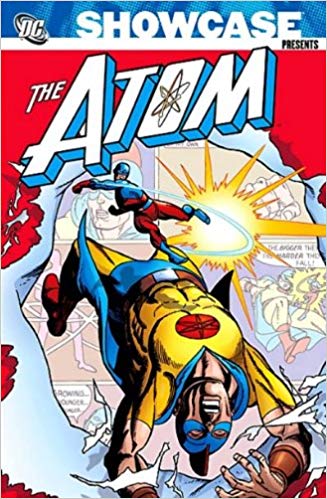
Showcase Presents The Atom volume 2


By Gardner Fox, Frank Robbins, Gil Kane, Mike Sekowsky & various (DC Comics)
ISBN: 978-1-4012-1848-5 (TPB)

There’s a glorious wealth of classic comics superhero material available for fans these days, but whether in archival volumes or digital editions, an inexplicable amount of classy material still languishes all unappreciated in limbo. One of the most cutting of omissions is the subject of today’s re-review: a veteran champion with an immaculate pedigree, a TV presence and sublime creative teams, who won’t win any new fans unless and until he gets his own revived archival editions. Until then, however…

Super-Editor Julius Schwartz famously ushered in the Silver Age of American Comics with his Showcase successes Flash, Adam Strange and Green Lantern, directly leading to the Justice League of America which in turn inspired Fantastic Four and the whole Marvel Empire and…

However, his fourth attempt to revitalize a “Golden Age Great” stalled when Hawkman (debuting in Brave and the Bold #34, February-March 1961) failed to find an immediate audience. Undeterred, Schwartz back-pedalled and resolutely persevered with the Winged Wonder, whilst moving forward with his next revival. Showcase #34 (September-October 1961) offered a space age reimagining of the pint-sized strongman of the 1940’s Justice Society of America: transformed into a fascinating super-science champion and seemingly eternal underdog by design.

Ray Palmer was a young physicist working on the compression of matter: a teaching Professor at Ivy Town University. He was wooing career girl Jean Loring, who wanted to make her name as a trial lawyer before settling down as Mrs. Palmer (yep, that’s what the 1960s were like for the fillies; years of striving and achievement followed by glorious, fulfilling days cooking meatloaf, changing nappies and gracefully dodging the more hands-on and persistent male neighbours…)

One evening Ray discovered an ultra-dense fragment of White Dwarf Star Matter, leading his research into a new direction. By converting some of that degenerate matter into a lens he could shrink objects, but frustratingly they always exploded when he attempted to restore them to their original state.

As fiercely competitive as his intended bride, Ray kept his progress secret until he could perfect the process. In the meantime, the couple took a group of youngsters on a science hike to Giant Caverns, where a cave-in trapped the entire party.

As they all lay entombed and dying, Ray secretly activated his reducing lens to shrink himself, using the diamond engagement ring he was carrying to carve a tiny fissure in the rock wall into an escape hole. Fully expecting to fatally detonate any second, he was astounded to discover that some peculiar combination of circumstances allowed to him to return to his normal six foot height with no ill effects. With his charges safe he returned to his lab to find that the process only worked on his own body; every other subject still catastrophically detonated.

Somewhat disheartened he pondered his situation – and his new-found abilities. Naturally, he became a superhero, fighting crime, injustice and monsters, but Ray also selfishly determined to clandestinely help Jean become successful as quickly as possible. To those ends he created a bodysuit from the White Dwarf material which could alter not only his height but also his weight and mass…

This second massive monochrome volume collects The Atom #18-38 (April/May 1965 to August/September 1968), the remainder of Palmer’s solo stories. Issue #39 saw the title merged with another struggling Schwartz title to become The Atom and Hawkman – an early casualty of declining interest in superhero comics at the end of the 1960s).

The Tiny Titan explodes into all-out action with the first of two short tales scripted as always by Gardner Fox, pencilled by Gil Kane and inked by Sid Greene in Atom #18. ‘The Hole-in-the-Wall Lawman!’ finds the hero tracking a safe-cracker who has inadvertently stolen a miniaturised thermonuclear bomb, after which ‘The Atomic Flea!’ sees him lose his memory while fighting thugs, wrongly deducing that he must be part of the flea circus where he regains consciousness…

Clever whimsy, scientific wonders, eye-popping action, perspective tricks and simply stunning long-shots, mid-shots and close-ups with glorious, balletic, full-body action poses are hallmarks of this dynamic series, but #19 brought a whole new edge and dynamic to the Atom when he becomes the second part of a bold experiment in continuity.

‘World of the Magic Atom!’ is a full-length epic featuring a fantasy adventure battling beside a sexy sorceress in a world where science held no sway. Her name is Zatanna…

The top-hatted, fish-netted, comely young conjuror appeared in a number of Schwartz-edited titles, hunting her long-missing father Zatarra: a magician-hero in the Mandrake mould who had fought evil in the pages of Action Comics for over a decade beginning with the very first issue.

In true Silver Age “refit” style, Fox conjured up an equally gifted daughter and popularised her by guest-teaming the neophyte with a selection of superheroes he was currently scripting. (If you’re counting, her quest began in Hawkman #4 and after this chapter moved on to Green Lantern #42; the Elongated Man back-up strip in Detective Comics #355 before concluding after the GL segment in Justice League of America #51. Through a very slick piece of back-writing, he even included a connection to the high-profile Caped Crusader via Detective #336 and ‘Batman’s Bewitched Nightmare’.)

Atom #20’s ‘Challenge of the Computer Crooks!’ finds the Mighty Mite again battling ingenious robbers attempting to use one of those new-fangled electronic brains to improve their heists, before impersonating a leprechaun to sway a reluctant witness to testify in court in ‘Night of the Little People!’.

A recurrent theme in the Tiny Titan’s career was Cold War Espionage. The American/Soviet arms-and-ideas race figured heavily in the life of physicist Palmer and in the collegiate circle of Ivy Town where even Jean’s father was a scientist carefully watched by both CIA and KGB.

Issue #21’s ‘Combat Under Glass!’ pits the Man of Many Sizes against commie spies and an enraged housecat, whilst ‘The Adventure of the Canceled Birthday’ offers another enchanting “Time-Pool” tale wherein the Atom travels to England in 1752. Here he meets Henry Fielding, helps to establish the Bow Street Runners, and solves the mystery of 11 days that dropped off the British calendar (for the answer to this mysterious true event look up the Julian Calendar on line – although buying this book would be far more entertaining and just as rewarding…)

Ray Palmer’s mentor and colleague Professor Alpheus Hyatt created a six-inch wide energy field that opened portals to other eras. Hyatt thought it an intriguing but useless scientific oddity, occasionally extracting perplexing items from it by blindly dropping a fishing line through. Little did he know his erstwhile student was secretly using it to experience rousing adventures in other times and locations. This charming, thrilling and unbelievably educational maguffin generated many of the Atom’s best and most well-loved exploits…

‘Bat Knights of Darkness!’ introduces the Elvarans, a subterranean race of 6-inch tall feudal warriors who had inhabited Giant Caverns since prehistoric times. When these savage, bat-riding berserkers fall under the mental sway of cheap thug Eddie Gordon, all of Ivy Town is endangered. This visual tour de force is a captivating early example of Gil Kane’s later swashbuckling fantasy epics and a real treat for anybody who loved Blackmark, Star Hawks or even the 1983 classic Sword of the Atom.

Issue #23 opens with a smart science-fiction teaser as the Mighty Mite plays a peculiar joke on the police in ‘The Riddle of the Far-Out Robbery!’ but it’s back to blockbusting basics when he stops the ‘Thief with the Tricky Toy!’ and even more so in #24 when he saves the entire planet from plant Master Jason Woodrue in feature-length thriller ‘The Atom-Destruction of Earth!’

The Camp/Superhero craze triggered by the Batman TV show infected many comicbooks at this time, and a lighter, punnier tone was creeping into a lot of otherwise sound series. ‘The Man in the Ion Mask!’ is far more entertaining than the woeful title might suggest: a solid heist-caper featuring another crook with a fancy gadget, and even espionage caper ‘The Spy Who Went Out for the Gold!’ is a smart, pacy rollercoaster ride of thrills and spills, but there’s really not much I can say to defend the ludicrous yarn introducing costumed nut the Bug-Eyed Bandit.

Feeble felon Bertram Larvan builds a robotic mini-beast to rob for him and despite some wonderful artwork from Kane and Greene ‘The Eye-Popping Perils of the Insect Bandit!’ in #26 remains an uncharacteristic blot on Gardner Fox’s generally pristine copy-book.

The art quality grew in leaps and bounds during this period, as seen in romantic tryst-come-slugfest ‘Beauty and the Beast-Gang!’, accompanied at the back by spectacular historical high-jinks as Atom uses the Time Pool to visit the Montgolfier Brothers in 1783 Paris, saving Benjamin Franklin’s life and becoming a ‘Stowaway on a Hot-Air Balloon!’

It’s non-stop costumed criminal action when super-thief Chronos returns in #28’s ‘Time-Standstill Thefts!’, with a side-order of scientific mystery as ordinary citizens began to change size in ‘The 100,000 “Atoms” of Ivy Town!’, before the sheer drama intensifies as the Mighty Mite teams up with the Earth-2 Atom for a cataclysmic clash against one of the worst villains of DC’s Golden Age in ‘The Thinker’s Earth-Shaking Robberies!’

Nasty thug Eddie Gordon returned in #30, which wouldn’t really have been a problem except he once more gains control of the diminutive flying berserkers in ‘Daze of the Bat-Knights!’ whilst old comrade Hawkman guest-stars #31’s ‘Good Man, Bad Man, Turnabout Thief!’

Here the heroes battle a phantom menace hidden within the brain of an innocent man, whilst issue #32 sees a most astounding episode in the Tiny Titan’s career as he becomes a giant invader of a sub-molecular universe in enthralling fantasy thriller ‘The Up and Down Dooms of the Atom!’

Bert Larvan inexplicably won a second appearance in ‘Amazing Arsenal of the Atom-Assassin!’ and it must be said, comes off as a far worthier opponent the second time around, whilst outlandish comedy-thriller ‘Little Man… You’ve Had a Big-Gang Day!’ produces the daftest assemblage of themed villains in DC history – each has a gimmick based on the word “big”. Led by Big Head, Big Bertha is strong, Big Wig uses weaponized toupees – and wait till you see what Big Cheese can do…

Despite all that, this lunacy is actually hugely enjoyable Big Fun!

Issue #35 leads with sterling crime-caper ‘Plight of the Pin-Up Atom’ and closes with the gripping ‘Col. Blood Steals the Crown Jewels!’, following the Mighty Mite into another Time Pool adventure in 1671 London.

Earth-2’s Atom returns for one of the very best team-up tales of the Silver Age in ‘Duel Between the Dual Atoms’ after a stellar radiation menace plays hob with victim’s ages on both worlds simultaneously, before the creative team signs off in mind-blowing style in #37, by adding a new ally to the Atom’s crime-fighting arsenal in ‘Meet Major Mynah!’

A trip to war-torn Cambodia results in the diminutive hero adopting a wounded Mynah bird who – with a few repairs and scientific upgrades from Hawkman – transforms the faithful talking bird into both alternative transport and strafing back-up for the Man of Many Sizes.

This volume concludes with a classy and extremely scary transitional tale from writer Frank Robbins and artists Mike Sekowsky & George Roussos. ‘Sinister Stopover… Earth!’ is an eerie alien invasion mystery perfectly in keeping with the grimmer sensibility gradually taking over the bright shiny world of comics at the time and still one of the spookiest tales of the Atom’s captivating run.

With the next issue, changing tastes and times forced The Atom and Hawkman titles to merge (for those tales you should see Showcase Presents: Hawkman volume 2), but even then the move only bought an extra year or so.

Superheroes were once more in decline and different genres were on the rise. The Atom was never a major name or colossal success, but a reading these witty, compelling tales by Fox, where Kane first mastered the fluid human dynamism that made him a legend, you’d be hard-pressed to understand why. This is sheer superhero perfection. Why not try a little Atomic Action… just a tiny bit?
© 1965, 1966, 1967, 1968, 2008 DC Comics. All Rights Reserved.
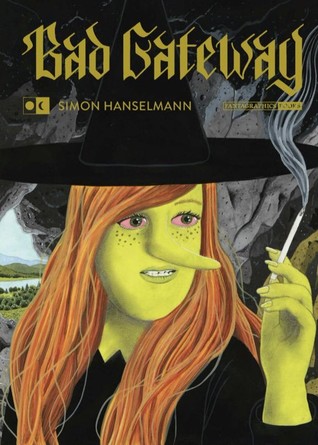
Bad Gateway


By Simon Hanselmann (Fantagraphics Books)
ISBN: 978-1-68396-207-6 (HB)

Simon Hanselmann is a well-travelled cartoonist of Tasmanian origin who has, since 2009, been producing one of the best cartoon strips of all time.

Originally located on his girlmountain.tumblr site, later episodes of this engagingly deceptive, inappropriately pigeon-holed “stoner comedy” Megg & Mogg have popped up in places as varied as Kus, Smoke Signal, Gangbang Bong and assorted minicomics, but can now all be found in a sturdy, full colour archival compilations such as this latest titanic (313 x 212mm) which carries our scurrilous cast to a final crisis point…

Hanselmann’s signature characters were loosely based on childhood memories of British children’s books Meg & Mog (created by Helen Nicoll & Jan Pienkowski and begun in 1972), but warped and filtered through a druggy haze and damaged childhoods. Depression-afflicted teen druggie witch Megg lives with her mean-spirited feline familiar Mogg, but their existence also impacts on sensitive, insecure, affection-starved Owl and violently self-destructive Werewolf Jones…

When not confronting or testing each other or hanging with the wrong crowd, they spent most of their time in a haze of self-inflicted ennui or on dope-fuelled junk-food binges in the apartment or in front of the TV. They probably don’t like each or themselves much but dwell in a fug of dangerous co-dependency. Their strange yet oddly compulsive adventures have enthralled a generation of readers: a most improper tribute to a life lived more wryly through chemistry and sarcasm. After a stellar decade of awards and critical acclaim, the ongoing internationally successful series stumbles to a critical point and psychological crux in this latest luxury hardback (and digital) release…

And just in case you were wondering…

This book is packed with drug references, violent sexual imagery and outrageous situations intended to make adults laugh and think.

If the copy above hasn’t clued you in, please be warned that this book uses potentially disturbing images of abuse, sexual intimacy, excess and language commonly used in the privacy of the bedroom, drunken street brawls – and all school playgrounds whenever supervising adults aren’t present – to make its artistic and narrative points.

If the mere thought of all that appals and offends you, read no further and don’t buy it. The rest of us will just have to enjoy some truly astounding cartoon experiences without you.

Lethargically anarchic and cruelly hilarious, the escapades reopen after ‘Previously in Megg, Mogg & Owl’ with 28 Days Later’ as the pharmacologically paralysed and insecure Megg reluctantly abandons malicious, experience-craving Mogg to debase herself even further. It’s time for her Welfare Benefits review and under the new administration she’s going to have to excel if she wants to keep getting money to maintain her current lifestyle.

Hyper-anxious, she also delivers an ultimatum: come what may, Mogg is going to have to get a job…

In the meantime, part-time dealer and full-time patsy Werewolf meets up with a couple of regulars and gets well and truly shafted… again…

With the latest crisis averted for now and all wounds healing, the junkies start looking for stuff to sell but when Megg tries to pawn her ‘Rollerblades’ the unwelcome memories take her down roads she’d rather not acknowledge let alone recognise…

‘Banned’ follows Megg into therapy, but as her extended circle of acquaintances share their own troubles, Mogg finds new ways to amuse himself…

‘The Birdcage’ then finds the friends staging a bizarre intervention for Werewolf, after which Megg makes a major decision in ‘Vibrate’ when her mother sends a message begging for help, precipitating a cross-country jaunt, a re-visitation of past events and a confrontation that is the emotional equivalent of ‘Throwing Rocks at Power-lines’, before some kind of stability is restored through a time-dishonoured ‘Ritual’…

Despite surface similarity to some no-harm, no-foul adult situation comedies – and believe me there are outrageous laughs by the bucketful – what predominates here is a strong, frequently overwhelming narrative progression of painful yet beguiling stories which navigate with easy confidence the tightrope between sordid and surreal, hilarity and horror, survival and sinking away.

Dark, affecting and unforgettable, this is a book no lover of truly mature fiction should ignore.
Bad Gateway © 2019 Simon Hanselmann. This edition © 2019 Fantagraphics Books, Inc. All rights reserved.

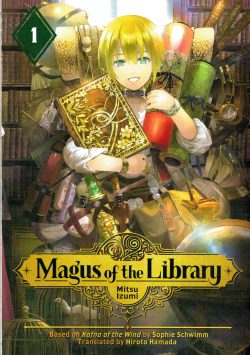
Magus of the Library volume 1


By Mitsu Izumi, translated by Stephen Kohler (Kodansha Comics)
ISBN: 978-1-63236-823-2 (TPB)

Everyone knows reading is a magical experience and many fanciful tales have delightfully taken that premise at its most literal. This particular offering comes from modern manga maestro Izumi Mitsu who’s a bit of a mystery herself: preferring to let a canon of short stories and such serialised gems as 7th Garden and Ano Hi Mita Hana no Namae o Boku-tachi wa Mada Shiranai act as her credentials.

Magus of the Library was first seen in good! Afternoon as Toshokan no Daimajutsushi and has thus far filled two volumes. It’s also made the translation jump and is waiting on English-language shelves for your rapt consideration…

In a wondrous Eastern kingdom, literature is worshipped and books are venerated. Reading them is a social privilege shared with all and fostered through a string of public libraries. Sadly, the tomes themselves have become objects of great value. That means some people keep private collections and others think they have the right to dictate who reads what…

In the rural village of Amun, a strange half-breed boy named Theo Fumis is utterly addicted to reading – especially pirate adventures. A poor slum-kid disgraced by blonde hair and pointed ears, he is the subject of much abuse, particularly from merchant-turned-librarian Ossei Menes who claims the urchin is unworthy to even touch books, let alone borrow them…

Luckily, he has a few friends, a devoted – albeit broken – family, a rich imagination and unflagging optimism to reinforce his hunger to read and learn. Moreover, one day he will definitely make the pilgrimage to the incredible, fabled Aftzaak: City of Books, where prejudice and injustice don’t exist. He just knows he will…

That dream comes one step closer when a quartet of riders enter Amun. They are Kafna: legendary warrior-librarians dedicated to preserving books and the status quo allowing all to partake of knowledge. After their leader Sedona befriends little Theo, he begins to get an inkling of their true power and purpose. The enigmatic riders are in search of a wild grimoire, teeming with magic it can no longer safely contain, but soon suspect they have stumbled onto a long-prophesied chosen one who will reshape and reconnect the world…

They better hope so, for as well as rampant escaped magic dark and ingrained bigotry, peril comes constantly courtesy of dangerous forces from beyond slowly gathering and focussing their attention on the land of literature…

Packed with wide-eyed wonder and traditional adventure set pieces, Magus of the Library traces the first steps on Theo’s path of destiny with winning exuberance and plenty of action: a delightful trip every kid and all their imaginative elders will be happy to share.
© 2018 Mitsu Izumi. English translation © 2019 Mitsu Izumi. All rights reserved.

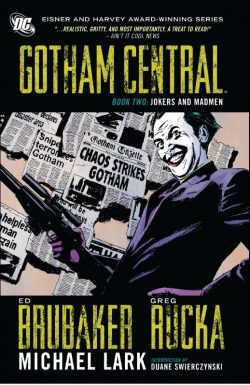
Gotham Central book 2: Jokers and Madmen


By Ed Brubaker, Greg Rucka, Michael Lark, Greg Scott, Brian Hurtt, Stephen Gaudiano & various (DC Comics)
ISBN: 978-1-4012-2543-8 (TPB)

There are two names horrifically synonymous with Gotham City, USA.

If you’re a cop, you keep your own opinions about the Batman, and it’s pretty much unanimous that the Joker is not someone you ever want to deal with. A madman with a homicidal flair for the theatrical, the clown loves a special occasion. It’s Christmas and it’s started to snow…

One of the greatest rewards of long-lasting, legendary comicbook characters is their infinite potential for innovation and reinterpretation. There always seems to be another facet or aspect to develop. Such is the case in regard to the much-missed spinoff series Gotham Central, wherein cop show sensibilities cannily combined with the deadly drudgery of the long-suffering boys in blue patrolling the world’s most famous four-colour city.

Owing as much to shows like The Rookie, Law & Order, The Shield or Blue Bloods as it did to the baroque continuity of the Dark Knight, the mesmerising tales of the bleakly understated series combined gritty, authentic police action with furtive, soft-underbelly glimpses at what merely mortal peacekeepers have to put up with in a world of psychotic vaudevillians, flying aliens and scumbag hairballs who just won’t stay dead.

This second huge paperback volume (also available in digital formats), collects more urban-level exploits of the hard-pressed peacekeepers of the most dangerous city in America – as first seen in Gotham Central #11-22 and spanning November 2003 to October 2004.

The patrol begins with moodily effulgent introduction ‘Noir Town’ courtesy of crime author Duane Swiercznski and a handy double-page feature re-introducing the hardworking stiffs of First Shift, Second Shift and the Police Support team comprising the ‘Gotham City Police Department, Major Crimes Unit’ before the dark dramas resume…

First up is uncharacteristic tearjerker ‘Daydreams and Believers’ by Ed Brubaker, Brian Hurtt and colourist Lee Loughridge which explores the GCPD’s strange relationship with the masked manhunter who unwelcomely assists their efforts.

They all know he’s out there, but the official line is that he’s an urban myth and the Administration refuses to acknowledge his existence. Thus, civilian receptionist Stacy is the only person allowed to operate the rooftop bat-signal whenever crises occur, whilst the public are informed that the eerie light is simply used to keep the cowardly, stupid, superstitious underworld cowed…

Here, however, we get a glimpse into the shy lamplighter’s inner thoughts as she observes the fractious byplay of the MCU regulars: all getting by thinking they’re fooling everyone else with their jealous bitching, petty sniping and tawdry clandestine affairs.

It’s all okay, though. Stacy has her own world to retreat into: one where the mighty Batman is her enigmatic but passionate lover…

The main event opens with a Yuletide shopping panic that looks to be the most memorable ever. Crafted by Brubaker, Greg Rucka, Michael Lark & Stephen Gaudiano, ‘Soft Targets’ finds the entire Major Crimes Unit frantically hunting a sniper randomly shooting citizens. Things get even nastier and more fraught after Mayor Dickerson is killed as he consults with new Police Commissioner Michael Akins.

The ruthless shooter guns down a school teacher and the medical examiner collecting her body and soon the pre-Christmas streets are deserted. The assassin then identifies himself by launching a website promoting “Batman for Mayor” and the appalled police realise just who they’re dealing with…

As Stacy turns on the roof signal her greatest wish comes true at last as the Gotham Guardian sweeps her off her feet… microseconds before a fusillade of shots nearly makes her the latest statistic…

As the Dark Knight vanishes into the snowy darkness after the maniac, Gotham’s Finest get back to their meticulous police work, tracking ballistics and hunting for the website’s point of origin. Mounting media frenzy and their own frustration lead to crippling tension and soon they’re all at each other’s throats, before a potentially nasty situation is immediately curtailed by a new posting…

A live web-cam feed starts, counting down to a fresh victim somewhere in the huge terrified powder-keg conurbation…

As the cops pull out all the stops to identify the building on-screen and resort to old dependables, such as violently rousting the Harlequin of Hate’s (surviving) former flunkies, the scene suddenly changes. Now it shows prime media pain-in-the-neck Angie Molina as a captive of the killer clown: stashed somewhere anonymous and slowly ticking down to a bloody and show-stopping demise…

And just when things can’t get any crazier, The Joker turns himself in…

Even the insufferably cocky kook’s capture doesn’t halt the slaughter, since the proudly Machiavellian perpetrator can carry on killing by pre-programmed remote control even as he languishes in a cell…

When Lt. Ron Probson elects to go all “old school” in his interview with the loon, it only results in his own death and the clown’s escape. Stacy barely avoids death a second time because Captain Maggie Sawyer saves her questions for later and shoots first – and often…

Working a lead, Detectives Nate Patton and Romy Chandler have meanwhile found the captive reporter and realised the Joker’s convoluted, mass-murderous endgame, but even with Batman on scene they don’t all make it out…

‘Life is Full of Disappointments’ (Brubaker and Rucka with art from Greg Scott) then focuses on disgruntled Second Shift veteran Jackson “Sarge” Davies who is still chafing at once again being passed over for promotion – especially as prissy new Day Shift commander David Cornwell has been parachuted in from outside the unit to run things…

As the squad come back from burying their dead, Sarge and partner Nelson Crowe catch a nasty case: a dead girl in a dumpster. However, Stephanie Becker was no lost indigent or fun-loving party girl killed for the contents of her purse. She worked in accounting at prestigious Washburn Pharmaceuticals and was killed with an exotic toxin…

As the grizzled old-timers methodically work the facts, they connect a succession of odd occurrences which lead them to First Shift colleagues Tommy Burke and Dagmar Procjnow, currently investigating the suspicious death of middle aged widow Maryellen Connolly. She is a still-warm stiff previously employed in the same office and slain the same way…

All the evidence seems to point to an unsanctioned million-dollar deficit and deep Mafia involvement at the Pharma factory, but the diligent detectives keep pushing and discover a far older possible motive for the murders…

This gritty grimoire of Gotham atrocity ends with the bleakly chilling ‘Unresolved’ (Brubaker, Lark & Gaudiano from issues #19-22) which features the reappearance of conflicted fan-favourite and all-around slob Harvey Bullock after the GCPD reopen a landmark cold case.

Marcus Driver and new partner Josie Mac are called to a hostage situation where a deranged perp continually screams about voices in his head before eating his own shotgun…

The troubled stiff was Kenny Booker – sole survivor of an infamous High School bombing which shocked the city eight years previously – and the fresh tragedy compels Driver to take another look at the still-unsolved mystery…

The “Gotham Hawks” were a championship school baseball team eradicated in a locker room explosion, but every effort of Bullock and his squad could never pin down a single solid lead. However, when Marcus and Josie re-examine the accumulated evidence, they find a potential link to one of Batman’s weirdest and creepiest foes.

It’s not enough and they are forced to call in the disgraced ex-cop for a consult. The move is a huge mistake as they are utterly unprepared for the fallout when Bullock talks to them.

Apparently, the legendary maverick was fired after arranging the death of a killer the law couldn’t touch, and he took to drowning his days in booze. However, this case has haunted Harvey for years and now that he sees a possible solution, he goes completely off the rails in his hunger to finish things.

The trouble is that even now the facts tumbling in are increasingly pointing to a completely different culprit from the one Bullock always suspected, but the fixated former lawman just won’t listen…

Going on a rampage, he courts death by brutalising malevolent mobster The Penguin whilst miles away another suspect, galvanised after years of apparent anonymity, breaks out of Arkham Asylum and goes hunting…

Even after all this, the true story is far more twisted than the bewildered detectives could have possibly imagined and the eventual conclusion destroys further lives, sanity and honour before the dust at last settles…

From an era when comicbook noir was enjoying a superb renaissance, these classic thrillers are masterpieces of edgy, fast-paced tension packed with layers of human drama, tension, stress and suspense.

Solid gritty police drama seamlessly blended with the grisly fantasy of the modern superhero seems like a strange brew, but it delivers knockout punches time after time in this captivating series which was the notional inspiration for Gotham TV series outlining just how Batman’s city got that way…
© 2003, 2004, 2009, 2014 DC Comics. All Rights Reserved.
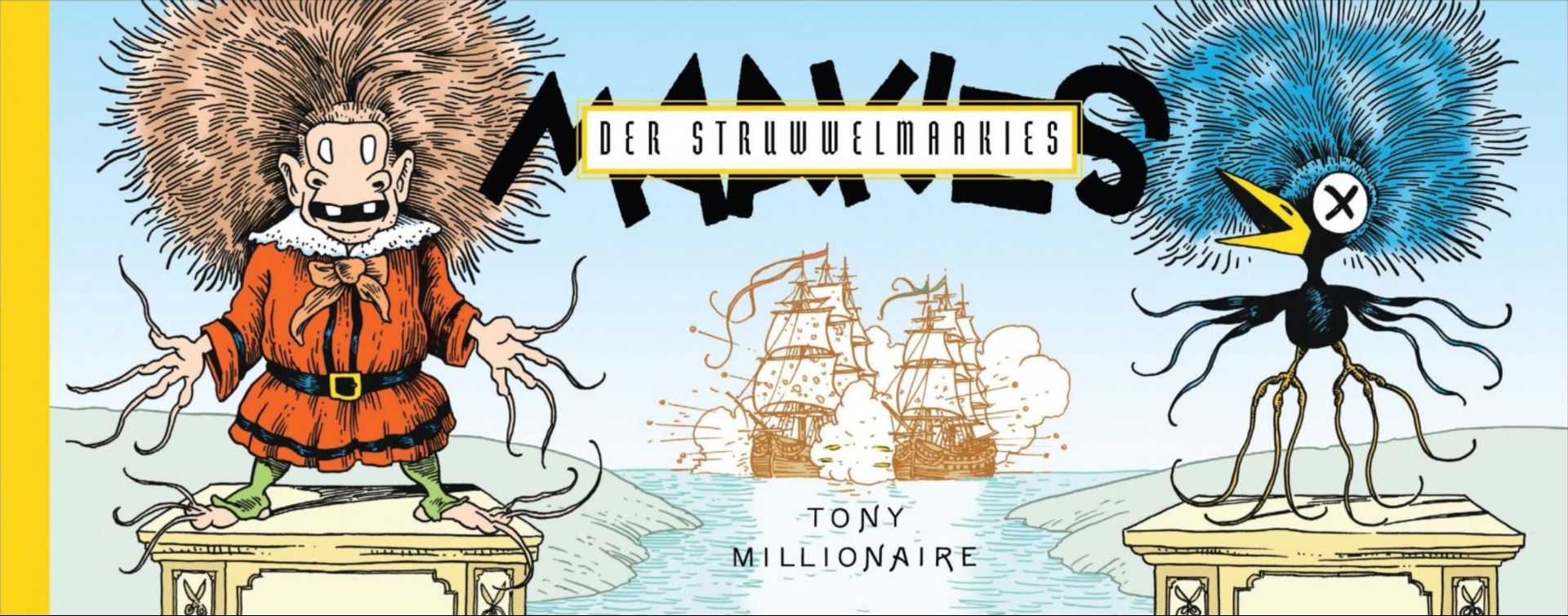
Der Struwwelmaakies


By Tony Millionaire and guests (Fantagraphics Books)
ISBN: 978-1560976547 (HB)

As a career and lifestyle, cartooning has far more than its share of individuals with a unique view of and response to the world. Ronald Searle, Charles Addams, George Herriman, Gerald Scarfe, Rick Geary, Berke Breathed, Ralph Steadman, Bill Watterson, Matt Groening, Gary Larson, Steve Bell, Richard Thompson – the list is potentially endless. Perhaps it’s the power to create entire sculptured worlds, coupled with the constant catharsis of vented spleen that so colours their work – whether they paint or draw – or maybe it’s simply the crucible of constant deadlines that makes their efforts so addictive and effective.

Der Struwwelmaakies is the fourth collection (featuring material from 2003-2004 and available in both landscape hardback and digital formats) of the magnificent Tony Millionaire’s impossibly addictive and distressingly wonderful weekly newspaper strip which ran in America and selected international venues from February 1994 to December 2016. Client papers included The New York Press, and the feature was widely syndicated in US alternative newspapers such as LA Weekly and The Stranger, and comics magazines such as Linus and Rocky. There was even an animated series on Time-Warner’s Adult Swim strand.

It’s clear that Time never withered his infinitely grotesque variety and perspectives one little bit. It seems he was always Like That…

The man loves to draw and does it very, very well; referencing classical art, timeless children’s book illustration, Moby Dick and nautical adventure novels as well as an eclectic mix of pioneering comics draughtsmen like George McManus, Rudolph Dirks, Cliff Sterrett, Frank Willard, Harold Gray, Elzie Segar and George Herriman. The result of seamlessly blending their styles and sensibilities with European engravings masters from the “legitimate” side of the storytelling picture racket is a uniquely bracing cartoon experience…

Born Scott Richardson, he especially cites Johnny (Raggedy Ann and Andy) Gruelle and English illustrator Ernest H. Shepard (The Wind in the Willows, Winnie the Pooh) as definitive formative influences.

With a variety of graphical strings to his bow – such as his own coterie of books for children (including the superbly stirring Billy Hazelnuts series) – animations and his legendary Sock Monkey stories – Mr. Millionaire folded his strip when he felt that there were no longer enough newspaper and magazines to support it, but in its heyday Maakies was a deliciously deeply disturbing weekly treat detailing the riotously vulgar, violent, scatalogical and absurdly surreal adventures of an Irish monkey called Uncle Gabby and his fellow macro-alcoholic and nautical mis-adventurer Drinky Crow.

They are abetted but never aided by a peculiarly twisted, off-kilter cast of reprobates, antagonists and confrontational well-wishers, such as Drunken Cop, old Wachtel, The Captain’s Daughter and avian Aunt Phoebe whilst constantly opposed by a nefarious French crocodile dubbed The Frenchman. Or not. It depends…

Also on hand and all at sea are a legion of monsters, devils and horrible hangers-on…

In the grand tradition of the earliest US newspaper cartoon features, each episode comes with a linked mini-feature running across the foot of the strip – although often that link is quite hard to ascertain.

Notionally based in a nautical setting of rip-roaring 19th century sea-faring situations, replete with maritime perils and stunning vistas, the dark-and-bitter comical instalments vary from staggeringly rude and crude through absolutely hysterical to conceptually impenetrable, with content and gags utterly unfettered by the bounds of taste or any acquiescence to wholesome fun-squelching decency.

Millionaire cheekily promoted his other creative endeavours in his Maakies pages, digressed into autobiography and personal rants, brought in selected guest creators to mess with his toys and invited the readership to contribute ideas, pictures and objects of communal interest to the mix – especially any tattoos his dedicated readership could be bothered to despatch…

This penetratingly incisive, witty and often poignant cartoon arena was his personal playground and if you didn’t like it, you should leave… but quietly please, ’cause there’s a hangover going on here most days…

Continuity plays second fiddle to an avalanche of inventive ideas and outré action, so the strips can be read in almost any order, and the debauched drunkenness, manic ultra-violence (in the manner of the best Tom & Jerry or Itchy & Scratchy cartoons), acerbic view of sexuality and deep core of existentialist angst still finds a welcome with Slackers, Laggards, the un-Christian and all those scurrilous, lost Generations after X, as well as everyone addicted to bad taste tomfoolery.

This sizzling sampler provides – in indisputable monochrome – still more of the wonderful same with such spit-take, eye-watering, drink-coming-out-of-your-nose moments as how to sabotage and scupper circumcisions with Faux-Skinâ„¢, Zen Master’s Secret to Life, the danger of widdling in rivers during thunderstorms, Maakies Foto Funnies, The Amazing Spider-Fly, Albert Einstone, the Neanderthal Genius and numerous other reasons to welcome the inescapable alcoholocaust to come…

Guest artists this time around include Rick Detorie, Phoebe, Jim Campbell and Kaz and all the timeless themes Millionaire specialises in are on show: mandatory variations of sordid sexual encounters, ghastly interspecies progeny, assorted single entendres, bodily function lectures and misfires and gory death-scenes share space with some of literature’s greatest poets and sots – who never knew what hit them. There’s even room for a wealth of anti-war commentary from the early days of America’s 21st century Middle East misadventures…

If you’re not easily upset this is a spectacularly funny and rewarding strip, one of the most consistently creative and entertaining in existence, so if you can thrive on gorge-rousing gags and mind-bending rumination this is an experience you simply cannot deny yourself.
© Tony Millionaire. All rights reserved. This edition © 2005 Fantagraphics Books.

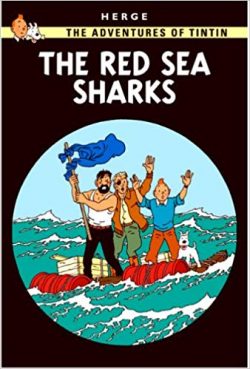
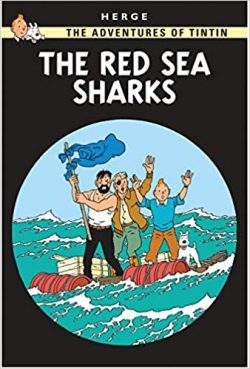
Adventures of Tintin: The Red Sea Sharks


By Hergé, Bob De Moor, Roger Leloup and others, translated by Leslie Lonsdale-Cooper & Michael Turner (Egmont UK)
ISBN: 978-1-40520-818-5 (HB) 978-140520-630-3 (TPB)

Georges Prosper Remi, known all over the world as Hergé, created a timeless masterpiece of graphic literature with his tales of a plucky boy reporter and entourage of iconic associates.

Singly, and later with assistants including Edgar P. Jacobs, Bob de Moor and other supreme stylists of the Hergé Studio, he created 23 splendid volumes (originally serialised in instalments for a variety of newspaper periodicals) which have grown beyond their pop culture roots to attain the status of High Art.

On leaving school in 1925, Remi worked for the conservative Catholic newspaper Le Vingtiéme Siécle where he fell under the influence of its Svengali-esque editor Abbot Norbert Wallez. A devoted boy scout, a year later the artist produced his first strip series The Adventures of Totor for monthly Boy Scouts of Belgium magazine. By 1928 he was in charge of producing the contents of the newspaper’s weekly children’s supplement Le Petit Vingtiéme.

While illustrating The Adventures of Flup, Nénesse, Poussette and Cochonette – written by the staff sports reporter – Wallez asked Remi to create a new adventure series. Perhaps a young reporter who roamed the world, doing good whilst displaying solid Catholic values and virtues?

The rest is history…

Some of that history is quite dark: During the Nazi Occupation of Belgium, Le Vingtiéme Siécle was closed down and Hergé was compelled to move his supremely popular strip to daily newspaper Le Soir (Brussels’ most prominent French-language periodical, and thus appropriated and controlled by the Nazis).

He diligently toiled on for the duration, but following Belgium’s liberation was accused of collaboration and even being a Nazi sympathiser. It took the intervention of Belgian Resistance war-hero Raymond Leblanc to dispel the cloud over Hergé, which he did by simply vouching for the cartoonist. Leblanc also provided cash to create a new magazine – Le Journal de Tintin – which he published and managed. The anthology comic swiftly achieved a weekly circulation in the hundreds of thousands, which allowed the artist and his team to remaster past tales: excising material dictated by the occupiers and unwillingly added to ideologically shade the war time adventures. The modernising exercise generally improved and updated the great tales, just in time for Tintin to become a global phenomenon.

With World War II over and his reputation restored, Hergé entered the most successful period of his artistic career. He had mastered his storytelling craft, possessed a dedicated audience eager for his every effort and was finally able to say exactly what he wanted in his work, free from fear or censure. Although Hergé’s later life was plagued by personal and health problems, this only seemed to enhance his storytelling abilities.

Coke en stock began initial serialisation in Le Journal de Tintin from 31st October 1956 and on completion (1st January 1958) issue was collected into album form. In 1960 it voyaged across the channel to become The Adventures of Tintin: The Red Sea Sharks: a slick, perfectly polished comedy thriller, rife with intrigue and camaraderie. Even after decades it reads as a fresh and challenging romp ideal for young and old alike.

The Red Sea Sharks has lost none of its original contemporary urgency. Produced during the turbulent times that led to the Middle Eastern Suez Crisis, it remains worryingly relevant with nations and mad millionaires carrying out proxy wars amidst the sand dunes and shipping lanes…

The yarn reintroduces Emir Ben Kalish Ezab (from Land of Black Gold) whose oil-rich country is in the throes of a civil war manufactured by the moneyed powers of the West. Fearful of the consequences, the hard-pressed potentate sends his son Abdullah to stay with Captain Haddock at rural Marlinspike Hall, unaware that the old dipsomaniac and Tintin are currently embroiled in a minor mystery involving former south American dictator General Alcazar (The Broken Ear), cheap war surplus aircraft and a hidden criminal mastermind…

As eager to escape the infernal practical jokes of the incorrigible Prince Abdullah as to solve the case, the heroic pair trace the trail of the sinister arms dealers and soon find themselves back in the Desert Kingdom of Khemed.

The Europeans are closely monitored and arrive as unwelcome intruders after the rebels defeat the Emir and drive him into hiding, thanks to their illicitly gained fighter planes. When a hidden bomb leaves Tintin’s plane wrecked in the wastelands, the indomitable pair trek overland into enemy territory before finally finding the Emir-in-hiding.

Here they learn the coup has been instigated by the Marquis di Gorgonzola, an enigmatic self-made millionaire whose vast commercial interests are supplemented by selling into slavery pilgrims undertaking the Hajj to Mecca!

Hot on the trail, the pair take ship for that holy city but are strafed by warplanes. Shooting one down they rescue the pilot, but when they and their new-found ally are rescued by Gorgonzola’s yacht, Tintin discovers that one of his oldest foes is behind it all…

This spectacular high-adventure, despite its political and moral underpinnings, is primarily an action yarn with plenty of twists and turns and a terrific feel-good climax.
The Red Sea Sharks: artwork © 1958, 1986 Editions Casterman, Paris & Tournai. Text © 1960 Egmont UK Limited. All Rights Reserved.

Why Art? (Fourth Edition)


By Eleanor Davis (Fantagraphics Books)
ISBN: 978-1-68396-082-9 (PB)

Probably everybody here will agree that comics is art sequentially wedded to pictures. However, when asked to define what constitutes “Art”, the answers become a little more nuanced and open to debate. What’s needed is someone sharp, talented and well-travelled – preferably a practitioner – who can give us all a full and final assessment…

Eleanor Davis is one of those rare sparks that just can’t help making great comics. Born in 1983 and growing up in Tucson, Arizona, she was blessed with parents who immersed their child in classic strip literature such as Little Nemo, Little Lulu and Krazy Kat.

Following unconventional schooling and teen years spent making minicomics, Davis studied at Georgia’s prestigious Savannah College of Art and Design, where she now teaches. Her own innovative works have appeared in diverse places such as Mome, Nobrow and Lucky Peach.

A life of glittering prizes began after her award-winning easy reader book Stinky was released in 2008. Davis subsequently followed up with gems such as The Secret Science Alliance and the Copycat Crook (with her husband Drew Weing), You & a Bike & a Road and How to be Happy. Who better, then, to lay to rest possibly the most infuriating conundrum of the modern age?

In 2018, Fantagraphics released Why Art?, based on elements of her presentation for ICON: The Illustration Conference 9. The result is a whimsical exploration of what the term means – albeit seen through the lens of one of the slyest, driest and most cultured senses of humour in the business…

If you can keep your own wits about you, in this deliriously addictive paperback/eBook you will glean potential solutions to perennial mysteries all de- and re-mystified in chapters on ‘Color’ as interpreted through scale; ‘What is our audience searching for’ via an examination of Masks; how to use physical and metaphorical ‘Mirrors’ and how some art is ‘Edible’…

Narrative fully enters the frame in a section on ‘Concealment artworks’ and the liberational force of ‘Shadowbox’ creations. which serves to introduce a repertory cast of creatives who work in different media and then take us on their shared journey of catastrophic revelation…

Wry and surreal, strong>Why Art? is a delicious tease and poker of hornets’ nests that slickly tackles loads of old, overused questions while offering a few new queries you never thought of…

It’s also beautifully drawn and rendered: A brilliant diversion combining wit and wisdom in a manner every self-accused intellectual and unrepentant picture lover can revel in.
© Eleanor Davis 2018. This edition © 2018 Fantagraphics Books, Inc. All rights reserved.