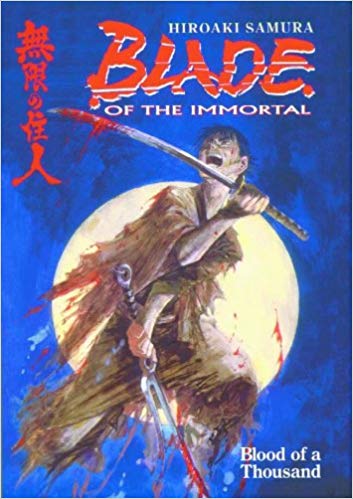
Blade of the Immortal volume 1: Blood of a Thousand


By Hiroaki Samura translated by Dana Lewis & Toren Smith (Dark Horse)
ISBN: 978-1-56971-239-9

Born in Chiba Prefecture in 1970, manga master Hiroaki Samura differs from many of his contemporary colleagues in that he actually pursued classical art training before abandoning oil paints and easels for the monochrome freedom and easy license of the “whimsical drawings” industry.

He was, however, plucked from college in the early 1990s before finishing his degree, to find huge success creating the astonishing fantasy saga Mugen no Jūnin (The Inhabitant of Infinity) for Seinen magazine Afternoon.

The series ran from June 25th 1993 to December 25th 2012, a total of 30 volumes which spectacularly blended ubiquitous Samurai comics themes and scenarios with vengeful supernatural plots, political intrigues, existential philosophy and punk-era nihilism. Its driven, murderously efficient antihero constantly deployed his outrageously eccentric arsenal of fanciful edged weapons, whilst pondering the merits of salvation and the meaning and point of living too long…

The series was picked by Dark Horse in 1996 and released as Blade of the Immortal, first as a monthly comicbook series (the first six issues of which comprise this monochrome masterpiece) and, from 2007 onwards, exclusively in collected graphic novel editions. These days you can take the creative anachronism one step beyond and enjoy the high-energy antics in digital fashion…

One note of caution for purists: the series’ dialogue is written in an updated, quirkily moderne literary style which strives for emotional veracity rather than (faux) period authenticity, so it might all be a little disconcerting at first…

Set in middle of the Tokugawa Shogunate (between 1600 and 1868 CE), this first sublimely engaging volume opens with ‘About the Translation’ – a prose section explaining the translation process and the symbology of the piece – before the graphic miracles begin with ‘Prologue: Criminal’; introducing debased and unsavoury ronin Manji: one-eyed outlaw and weary killer looking for peace and redemption in all the wrong places…

The “Slayer of 100 Good Men” – including his own peacekeeper brother-in-law – Manji is currently stalking Gyobutsu “Johnny”: a mass-murderer who kills his victims whilst disguised as a priest.

When a cunning trap goes wrong, the debased ronin manfully ignores a pistol shot through his brain to finish his sacrilegious quarry.

This ronin is no longer as other men. There are worms in his head, and as they knit his inexplicably non-fatal wound back together, Manji broods.

In his despicable past he was a cheap sell-sword who killed as he pleased. When his misdeeds brought him into conflict with his “cop” brother-in-law he simply butchered him. The shock drove his sister Machi mad.

She was the only thing Manji ever cared about…

Yaobikuni has no problem with living forever – she won’t die until she’s saved every soul in Japan – and when the unkillable reprobate again meets the 800-year old nun who inflicted on him the sacred Kessen-chu bloodworms which can heal any hurt, she draws him into the old pointless discussion about salvation.

Yaobikuni urges him to give up the sword, but all he wants to do is die….

Even if he could, it’s no longer an option now that he has to care for his grievously damaged sister Machi…

The problem is savagely solved when the vengeful brother and 20-strong gang of “Johnny” abduct her, determined to make her murderous brother pay emotionally and physically for the death of their leader.

Manji’s botched rescue attempt leaves him triumphant above a sea of corpses and utterly alone in the world…

Pushed too far, he finds Yaobikuni and offers her a deal: if he kills one thousand truly evil men, she must remove the Kessen-chu and let Manji rest at last.

Despite misgivings that he’s just found another way to keep on killing, the nun agrees…

‘Conquest’ debuts young Rin, whose father Asano was targeted for slaughter by a merciless gang of anarchist thugs calling themselves the Ittō-ryÅ«.

Long ago, the grandfather of their leader Anotsu Kagehisa had been shamefully and unjustly expelled from Asano’s Mutenichi-ryÅ« fencing dojo, and the grandson resolved to destroy all such schools and the socially stratified, arrogantly smug advocates of privilege who populate them.

Gathering an army of similarly aggrieved, like-minded rebels and outcasts, Anotsu murdered many Swords-masters: destroying their legacies and accumulating a powerful army before seeking his ultimate triumph over a despised ancestral enemy…

After ending Rin’s father, Anotsu gave her mother O-Toki to his men, but told them to leave the little girl alone.

Rin never saw her mother again and now, aged sixteen, the last sword of the Mutenichi- ryū School is in the metropolis of Edo looking for payback. What she finds is a jolly little nun who suggests she seek out a maimed-and-mangy, mean-looking ronin to act as her bodyguard…

They don’t hit it off. Manji is condescending and patronising and wants her to prove her contention that members of Ittō-ryÅ« are genuinely evil before he subtracts them from his target tally of 1000 human monsters…

Reaching an agreement of sorts, the pair join forces, unaware that Rin has been followed by Anotsu’s macabre lieutenant Kuroi Sabato. The deranged psycho-poet has been sending taunting verses to the girl ever since that fateful night, whilst secretly treasuring his macabre keepsake of her mother O-Toki all these lonely years…

Now he’s ready for Rin to complete a ghastly set of horrific personalised trophies, but the satanic stalker has never met – or killed – anyone like Manji before…

The eerie epic closes here with ‘Genius’ wherein the decidedly odd couple seek aid and assistance from an old friend of Rin’s father. Retired samurai Sōri has dedicated his remaining years to becoming an artist, but still struggles to master the tricky discipline of “sword-painting”.

The uncouth Manji can barely contain his scornful taunts, especially as the artist seems unwilling to assist a lady in distress, apparently far more concerned with the trivial problem that he can never get the reds right in his compositions…

Of course, the revenant ronin has no idea that once Sōri was the Shogun’s Ninja …

More of Anotsu’s psycho-killer goons have followed Rin and Manji to the painter’s lodgings however, looking for the blade-wielding girl genius who killed the lethally adept Kuroi. When they attack the sleeping Rin, they soon discover to their everlasting regret the mettle of her new allies…

In the stillness after the slaughter, Rin and Manji move on to continue their vendetta against the Ittō-ryū, but Sōri regretfully remains behind to pursue his art. At least now he knows what pigments suit him best…

‘An Interview with Hiroaki Samura’ and a selection of cover illustrations from the comicbook iteration complete this viscerally brutal, staggeringly beguiling first volume of mythic martial mastery…

Although crafting other works such as the western Emerald, romantic comedies, erotic works and horror stories such as Night of the Succubus and Bradherley’s Coach, Blade of the Immortal is unquestionably Mr. Samura’s signature creation and a truly unparalleled delight for fans of not just manga but for all lovers of dark fantasy.
© 1996, 1997 Hiroaki Samura. All rights reserved. English translation rights arranged through Kodansha Ltd. New and adapted artwork & text © 1996, 1997 Studio Proteus and Dark Horse Comics Inc. All other material © 2000 Dark Horse Comics Inc. All rights reserved.
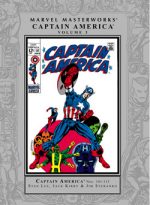
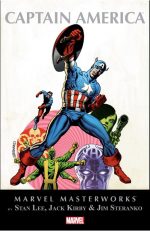
Captain America Marvel Masterworks volume 3

By Stan Lee, Jack Kirby, Jim Steranko & various (Marvel)
ISBN: 978-0-7851-2063-6 (HB)                    978-0-7851-8803-2 (TPB)

During the Marvel Renaissance of the early 1960’s Stan Lee & Jack Kirby tried the same tactic that had worked so tellingly for DC Comics, but with mixed results. Julie Schwartz had scored an incredible success with his revised versions of the company’s Golden Age greats, so it seemed natural to try and revive the characters that had dominated Timely/Atlas in those halcyon days.

A new Human Torch had premiered as part of the revolutionary Fantastic Four, and in the fourth issue of that title the Sub-Mariner resurfaced after a 20-year amnesiac hiatus (everyone concerned had apparently forgotten the first abortive attempt to revive an “Atlas” superhero line in the mid-1950s).

The Torch was promptly given his own solo feature in Strange Tales from issue #101 on, and in #114 the flaming teen fought an acrobat pretending to be Captain America. With reader reaction strong, the real thing promptly resurfaced in Avengers #4 and, after a captivating and centre-stage hogging run in that title, was granted his own series as half of the “split-book” Tales of Suspense (from #59, cover-dated November 1964).

Marvel’s inexorable rise to dominance in the American comicbook industry really took hold in 1968 when a number of their characters finally got their own titles. Prior to that and due to a highly restrictive distribution deal, the company was tied to a limit of 16 publications per month. To circumvent this, Marvel developed titles with two series per publication, such as Tales of Suspense where original star Iron Man shared honours with Cap. When the division came, Shellhead started afresh with a First Issue, and Cap retained the numbering of the original title; thereby premiering with #100.

This resoundingly resolute full-colour collection – available in hardcover, trade paperback and digital editions – gathers Captain America #101-#113, spanning May 1968 to May 1969, and also includes a fervent Introductory reminiscence from John Morrow plus a fascinating Afterword by Steranko wherein he meticulously deconstructs the landmark epic that fills the end of this titanic tome…

Crafted by Stan Lee, Jack Kirby & 1940s Cap illustrator Syd Shores, Captain America #101-102 sees the return of fascist revenant the Red Skull and another appalling Nazi revenge-weapon in ‘When Wakes the Sleeper!’ and furious finale ‘The Sleeper Strikes!’ as our hero and his support crew Agent 13 and Nick Fury hunt a murderous mechanoid capable of ghosting through solid Earth and blowing up the planet…

Although the immediate threat is quashed, the instigator is still at large and #103 reveals ‘The Weakest Link!’ as a budding romance with S.H.I.E.L.D. Agent 13 (finally revealed after two years as Sharon Carter) is interrupted by the nefarious Nazi.

The über-fascist’s new scheme of nuclear blackmail extends to a second issue, wherein his band of war-criminal assassins, The Exiles, test Cap nigh to destruction on the hidden isle where he becomes the ‘Slave of the Skull!’

That issue and following super-villain team-up – wherein Living Laser and the Swordsman ally with another old Cap foe to attack ‘In the Name of Batroc!’ – feature the loose, flowing inking of Dan Adkins, whilst Frank Giacoia embellished the all-action, spies-&-evil-doppelgangers romp ‘Cap goes Wild!’ in issue #106, before Shores returned in #107.

Sinister mystery ‘If the Past Be Not Dead…’ is an action-packed psycho-thriller introducing malevolent, mind-bending psychiatrist Doctor Faustus…

The Star-Spangled Avenger is rescuing Agent 13 again – at least he thinks he is – in breakneck thriller ‘The Snares of the Trapster!’ before Captain America #109 redefined his origin with ‘The Hero That Was!’: a spectacular wrap-up to Kirby’s run on the Sentinel of Liberty – at least for the moment…

Comics phenomenon and one-man sensation Jim Steranko then took over the art direction with #110 for a too-brief stint that became everybody’s favourite Cap epic for decades to come.

After a swift and brutal skirmish with the Incredible Hulk, teen appendage Rick Jones becomes the patriotic paladin’s new sidekick in ‘No Longer Alone!’, just in time for the pair to tackle the memorably lascivious Madame Hydra and her obedient hordes in #111’s ‘Tomorrow You Live, Tonight I Die!’ – both inked by Joe Sinnott in a landmark saga that inspired and galvanised a generation of would-be comics artists.

With the Avenger seemingly killed at the issue’s close, the next month saw a bombastic account of Captain America’s career by fill-in superstars Kirby & George Tuska, before Lee, Steranko & Tom Palmer concluded the Hydra epic with ‘The Strange Death of Captain America’ in #113. This yarn reset the hero’s character for years to come…

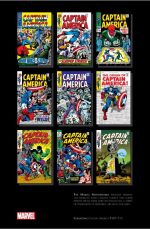
Also on offer are a selection of Kirby’s original art pages and covers, including rejected and unseen pencil versions prior to editing and the draconian interference of the Comics Code Authority…

These are tales of dauntless courage and unmatchable adventure, fast-paced and superbly illustrated, which rightly returned Captain America to the heights that his Golden Age compatriots Human Torch and Sub-Mariner never regained. They are pure escapist magic: glorious treats for the eternally young at heart, and episodes of sheer visual dynamite that cannot be slighted and should not be missed.

© 1968, 1969, 2016 Marvel Characters, Inc. All rights reserved.
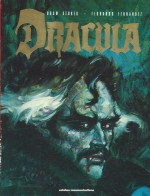
Bram Stoker’s Dracula


By Bram Stoker & Fernando Fernández (Catalan Communications/Del Rey Books)
DLB: 18118-1984 (Catalan) ISBN: 978-0-34548-312-6 (Del Rey)

Here a gloriously OTT example of Anglo-European collaboration long overdue for reconsideration and another go-round. I don’t mean anything by it; I’m just saying…

Multi-disciplinary Spanish artist Fernando Fernández began working to help support his family at age 13 whilst still at High School. He graduated in 1956 and immediately began working for British and French comics publishers.

In 1958 his family relocated to Argentina and whilst there he added strips for El Gorrión, Tótem and Puño Fuerte to his ongoing European and British assignments for Valentina, Roxy and Marilyn.

In 1959 he returned to Spain to begin a long association with Fleetway Publications in London, producing mostly war and girls’ romance stories.

During the mid-1960’s he began to experiment with painting: selling book covers and illustrations to a number of clients, before again taking up comics work in 1970, creating a variety of strips (many of which found their way into US horror magazine Vampirella), the successful comedy feature ‘Mosca’ for Diario de Barcelona and educational strips for the publishing house Afha.

Increasingly expressive and experimental as the decade passed, Fernández produced ‘Cuba, 1898’ and ‘Círculos’ before, in 1980 beginning his science fiction spectacular Zora y los Hibernautas for the Spanish iteration of fantasy magazine 1984. It eventually made it into English in Heavy Metal magazine as Zora and the Hibernauts.

He then adapted this moody, Hammer Films-influenced version of Bram Stoker’s Dracula for the Spanish iteration of Creepy, before (working with Carlos Trillo) moving on to mediaeval fantasy thriller La Leyenda de las Cuatro Sombras , after which he created Argón, el Salvaje and a number of adaptations of Isaac Asimov tales in Firmado por: Isaac Asimov and Lucky Starr – Los Océanos de Venus.

His last comics work was Zodíaco begun in 1989, but mounting heart problems soon curtailed the series and he returned to painting and illustration. He passed away in August 2010, aged 70.

For his interpretation of the gothic masterpiece under review here, Fernández sidelined the expansive, experimental layouts and lavish page design that worked so effectively in Zora and the Hibernauts for a moodily classical and oppressively claustrophobic, traditional page construction, trusting to his staggering mastery of colour and form to carry his luxuriously mesmeric message of mystery, seduction and terror.

The story is undoubtedly a familiar one and the set pieces are all executed with astounding skill and confident aplomb as, in May 1897, English lawyer Jonathan Harker is lured to the wilds of Transylvania and horror beyond imagining wherein an ancient bloodsucking horror prepares to move to the pulsing heart of the modern world.

Leaving Harker to the tender mercies of his vampiric harem, Dracula travels by schooner to England, slaughtering every seaman aboard the S.S. Demeter and unleashing a reign of terror on the sedate and complacent British countryside…

Meanwhile, in the seat of Empire, Harker’s fiancée Mina Murray finds her flighty friend Lucy Westenra fading from troublesome dreams and an uncanny lethargy which none of her determined suitors, Dr. Jack Seward, Texan Quincy P. Morris and Arthur Holmwood – the future Lord Godalming – seem capable of dispelling…

As Harker struggles to survive in the Carpathians, in Britain, Seward’s deranged but impotent patient Renfield claims horrifying visions and becomes greatly agitated…

Dracula, although only freshly arrived in England, is already causing chaos and disaster, as well as constantly returning to the rapidly declining Lucy. His bestial bloodletting prompts her three beaux to summon famed Dutch physician Abraham Van Helsing to save her life and cure her increasing mania.

Harker survived his Transylvanian ordeal, and when nuns summoned Mina she rushed to Romania where she married him in a hasty ceremony to save his health and wits….

In London, Dracula renews his assaults and Lucy dies, only to be reborn as a predatory child-killing monster. After dispatching her to eternal rest, Van Helsing, Holmwood, Seward and Morris – joined by recently returned and much-altered Harker and his new bride – resolve to hunt down and destroy the ancient evil in their midst, following a chance encounter in a London street between the newlyweds and the astoundingly rejuvenated Count…

Dracula, however, has incredible forces and centuries of experience on his side and having tainted Mina with his blood-drinking curse flees back to his ancestral lands. Frantically, the mortal champions give chase, battling the elements, Dracula’s enslaved gypsy army and the monster’s horrific eldritch power in a race against time lest Mina finally succumb forever to his unholy influence…

Although the translation to English in the Catalan version is a little slapdash in places – a fact happily addressed in the 2005 re-release from Del Rey – the original does have the subtly enhanced benefit of richer colours, sturdier paper stock and a slightly larger page size (285 x 219mm as opposed to 274 x 211mm) which somehow makes the 1984 edition feel more substantial. This would all be irrelevant if a digital edition were available…

This breathtaking oft-retold yarn delivers fast paced, action-packed, staggeringly beautiful and astoundingly exciting thrills and chills in a most beguiling manner. Being Spanish, however, there’s perhaps the slightest hint of brooding machismo, if not subverted sexism, on display and – of course – plenty of heaving, gauze-filtered female nudity which might challenge modern sensibilities.

Nevertheless, what predominates in this Dracula is an overwhelming impression of unstoppable evil and impending doom.

There’s no sympathy for the devil here – this is a monster from Hell that all good men must oppose to their last breath and final drop of blood and sweat…

With an emphatic introduction (‘Dracula Lives!’) from noted comics historian Maurice Horn, this is a sublime treatment by a master craftsman that all dark-fearing, red- blooded fans will want to track down and savour.
© 1984, 2005 Fernando Fernández. All rights reserved.

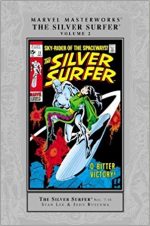
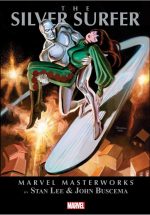
Silver Surfer Marvel Masterworks volume 2


By Stan Lee, John Buscema, Jack Kirby & various (Marvel)
ISBN: 978-0-7851-1177-1(HB)                     978-0-7851-4596-1(TPB)

Although pretty much a last-minute addition to Fantastic Four #48-50’s ‘Galactus Trilogy’, Jack Kirby’s scintillating creation the Silver Surfer quickly became a watchword for depth and subtext in the Marvel Universe and one Stan Lee kept as his own personal toy for many years.

Tasked with finding planets for space god Galactus to consume and, despite the best efforts of intergalactic voyeur Uatu the Watcher, one day the Surfer discovers Earth, where the latent nobility of humanity reawakens his own suppressed morality; causing the shining scout to rebel against his master and help the FF save the world.

In retaliation, Galactus imprisons his one-time herald on Earth behind an energy-barrier, making him the ultimate outsider on a planet remarkably ungrateful for his sacrifice.

The Galactus Saga was a creative highlight from a period where the Lee/Kirby partnership was utterly on fire. The tale has all the power and grandeur of a true epic and has never been surpassed for drama, thrills and sheer entertainment. It’s not included here…

In 1968, after increasingly frequent guest-shots and a solo adventure in the back of Fantastic Four Annual #5, the Surfer finally got his own (initially double-length) title at long last.

The stories in this series were highly acclaimed – if not really commercially successful – both for John Buscema’s agonised, emphatic and truly beautiful artwork, as well as Lee’s deeply spiritual and philosophical scripts.

The tone was accusatory; with the isolated alien’s travails and social observations creating a metaphoric status akin to a Christ-figure for an audience that was maturing and rebelling against America’s creaking and unsavoury status quo.

This stellar collection – available in deluxe hardback, sturdy trade paperback and assorted eBook formats – gathers Silver Surfer #7-18, spanning August 1969 to September 1970 when the classy experiment ended on a never to be properly resolved cliffhanger.

Consider yourself warned…

Just in case you need reminding: Norrin Radd, discontented soul from an alien paradise named Zenn-La, voluntarily became the gleaming herald of a planetary scourge to save his homeworld. Radd had constantly chafed against a civilisation in comfortable, sybaritic stagnation, but when Galactus shattered their million years of progress in a fleeting moment, the dissident without hesitation offered himself as a sacrifice to save his people from the Devourer’s hunger.

Converted into an indestructible, gleaming human meteor, Radd agreed to scour the galaxies seeking uninhabited worlds rich in the energies Galactus needs to survive, thus saving planets with life on them from destruction. He didn’t always find them in time…

Following a customarily florid Introductory reminiscence from author Stan Lee, the cosmic Passion Play resumes, illustrated by John Buscema & his brother Sal.

Times and tastes were changing and by the August 1969 cover-dated Silver Surfer #7 many of the Comics Code injunctions against horror stories were being eroded away. Thus ‘The Heir of Frankenstein!’ and his misshapen but noble assistant Borgo debuted to terrorise their small Balkan community and tap into the growing monster movie zeitgeist of the era.

The last maniac of a sullied line of scientists wants to outdo his infamous ancestor and achieves his aim by his tricking the Skyrider into becoming the victim of a deadly duplication experiment.

As a result, the Surfer has to battle a cosmic-fuelled facsimile with all his power but none of his noble ideals or merciful intentions…

Despite some truly groundbreaking comics creativity, the title remained a disappointing seller and, with #8 (September 1969) the title was reduced to a standard 20-page story format and boosted to monthly frequency in an attempt to bolster and build a regular readership.

With Dan Adkins lavishly inking John Buscema, Lee’s stories also became more action-adventure and less contemporary parable, with ‘Now Strikes the Ghost’ bringing back Satan-analogue Mephisto to further plague and imperil the shining sentinel. This he does by resurrecting and augmenting the tortured spectre of cruel and callous mariner Captain Joost Van Straaten, promising that phantom eternal peace in return for crushing Norrin Radd.

The Lord of Lies’ sinister scheme ‘…To Steal the Surfer’s Soul!’ concluded in #9 when the hero’s compassion trumps the tormented Flying Dutchman’s greed and Mephisto’s demonic lust for victory, after which events take another convoluted turn for the solitary starman…

In ‘A World He Never Made!’ long-lost true love Shalla Bal hitches a ride with ambitious and lustful Zenn-Lavian Yarro Gort, who had built a starship to ferry her to Earth and prove he is a far worthier paramour than her former beau.

Her silver-metal lover, meanwhile, has again attempted to integrate with humanity, becoming embroiled in a South American war and saving dedicated rebel Donna Maria Perez from the marauding soldiers of sadistic dictator El Capitan. When the freedom fighter thanks him with a kiss, Gort ensures his ship’s scanners pick up the gesture for Shalla’s benefit…

Issue #11 then sees the sleek star-craft shot down by El Capitan’s forces and Gort join the dictator to build world-conquering weaponry. The combined villains are still no match for the Surfer’s fury, but Radd’s joy in reunion with his true love is quickly crushed when Shalla is gravely injured and he must despatch her back beyond Galactus’ barrier to be healed in ‘O, Bitter Victory!’

In Silver Surfer #12, Lee, Buscema & Adkins mix a few genres as ‘Gather Ye Witches!’ exposes a British coven accidentally summoning gamma-ray mutation the Abomination from exile on a far planet (rather than the intended supernatural slave from Hell), leaving the Skyrider no choice but to battle the brute through the ruins of London, after which ‘The Dawn of the Doomsday Man!’ in the following issues sees seemingly repentant scientist Dr. Kronton implore the Surfer to destroy an apparently unstoppable killer robot stored in a US military bunker.

The sinister savant only wants the trusting alien to afford him access to a prototype Cobalt bomb, but their unwise invasion triggers the assassin automaton’s awakening anyway…

With sales still dropping, #14 saw the adoption of team-up tactics goose interest. ‘The Surfer and the Spider!’ details how a typical Marvel misunderstanding provokes a fighting mad and deeply humiliated Spider-Man into repeatedly attacking the gleaming extraterrestrial, accidentally endangering a young boy in the process…

A similar snafu in ‘The Flame and the Fury!’ pits an angry and distrustful Surfer against former ally Johnny Storm – AKA the Human Torch – when Norrin misconstrues a military request for aid as a betrayal.

The shock and shame leave the humbled exile easy prey when a wicked devil hungry for the Surfer’s soul resurfaces in #16’s ‘In the Hands… of Mephisto!’

Inked by Chic Stone, the tale reveals how the tempter abducts the now-healed Shalla Bal from Zenn-La and forces his anguished pious prey to betray his principles and ensure her safety. The saga concludes in ‘The Surfer Must Kill!’ when the vile seducer orders his victim to destroy peacekeeping espionage force S.H.I.E.L.D., while clandestinely hiding the Surfer’s beloved amidst the agents, intending that she die by her oblivious lover’s cosmic-powered hand…

Happily, the scheme is foiled, though more by luck than intent, and the poor lass is (apparently) returned home. The Surfer’s fate is not so fortunate…

With nothing else working to boost sales, Marvel’s miracle worker returned to his creation but it was too late. Silver Surfer #18 (September 1970) features ‘To Smash the Inhumans!’ by Lee, Jack Kirby & Herb Trimpe and depicts the puzzled, embattled alien philosopher overtaken by rage against all humanity after surviving a misguided attack by Black Bolt and the warriors of hidden city Attilan.

The “Savagely Sensational New Silver Surfer” promised at the end of that unfinished tale was never seen. Kirby was on his way to DC to create his magnificent Fourth World Trilogy and the bean-counters at the House of Ideas had already decreed the Skyrider’s publishing demise.

He vanished into the Limbo of fond memory and occasional guest-shots which afflicted so many costumed characters at the beginning of the 1970s, making way for a wave of supernatural heroes and horrors that capitalised on the periodic revival of interest in magic and mystery fare.

It would 1981 before Norrin Radd would helm his own title again…

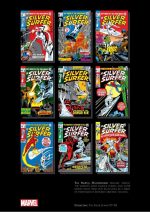
That’s not quite the end of this spectacular tome, however. Included for your delectation are a host of original art pages and covers, a reprint cover gallery from Fantasy Masterpieces, and a brace of Buscema covers from the 2001 Marvel Essential collection.

The Silver Surfer was always a pristine and iconic character when handled well – and sparingly – and these early forays into a more mature range of adventures, although perhaps a touch heavy-handed, proved that comicbooks could be so much more than cops and robbers or monsters and misfits.

That exploratory experience and the mystique of hero as Christ allegory made the series a critically beloved but commercially disastrous cause célèbre until eventually financial failure killed the experiment.

After the Lee/Kirby/Ditko sparks had initially fired up the imaginations of readers in the early days, the deeper, subtler overtones and undercurrents offered by stories like these kept a maturing readership enthralled, loyal and abidingly curious as to what else comics could achieve if given half a chance, and this fabulously lavish tome offers the perfect way to discover or recapture the thrill and wonder of those startlingly different days and times.
© 1969, 1970, 2018 Marvel Characters, Inc. All rights reserved.

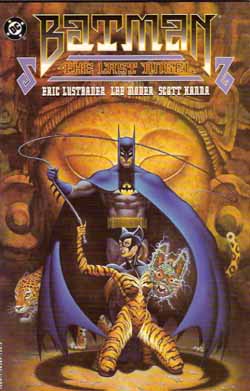
Batman: The Last Angel


By Eric Lustbader, Lee Moder, Scott Hanna & various (DC Comics)
ISBN: 978-1-56389-156-4

I generally plug things I like, or think have some genuine and measurable element of (graphic narrative) quality to them. Sometimes I’m unsure of the result but the tale is notable enough to deserve a mention. Occasionally I just think people might be interested in seeing something a wee bit different…

In this Batman anniversary year, this intriguing experiment certainly ticks those boxes.

Happy hunting, Batfans…

Great looking art from Lee Moder, but a rather disappointing tale from the acclaimed novelist. A Batman who’s much more welcome to the Gotham authorities hunts a killer, while crash victim Selina Kyle has bloody nightmares about being hunted by a jaguar…

As Catwoman she is obsessed and bored in equal measure, but with Gotham’s gangs seemingly at each other’s throats, a Mayan exhibition of the Bat God Balam is focusing everyone’s attention from where it needs to be.

…And her planned heist is just a catalyst for a repeat of the events that destroyed the Mayan Empire!

When the star attraction votive mask possesses Batman himself, Selina is forced into the uncharacteristic role of saviour…

With everybody playing a double game and such villains as Rupert Thorne and the Joker further muddying the waters – plus a frankly lame subplot about Selina’s lost father – this overly-convoluted tale tries just a little too hard to be all things to all people, but it does have great pace and, as I’ve already said, a superlative art job from the under-appreciated Lee Moder.

Silly, but fans will find a lot to enjoy here.
© 1994 DC Comics. All Rights Reserved.

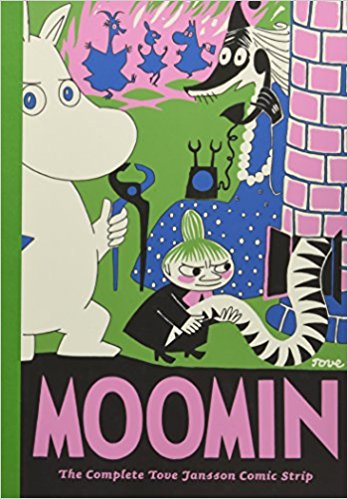
Moomin: The Complete Tove Jansson Comic Strip volume 2


By Tove Jansson (Drawn & Quarterly)
ISBN: 978-1-897299-19-7

Tove Jansson was one of the greatest literary innovators and narrative pioneers of the 20th century: equally adept at shaping words and images to create worlds of wonder. She was especially expressive in pen and ink, manipulating slim economical lines and patterns to realise sublime realms of fascination, whilst her dexterity made simple forms into incredibly expressive and potent symbols.

Tove Marika Jansson was born into an artistic, intellectual and practically bohemian Swedish family in Helsinki, Finland on August 9th1914. Her father Viktor was a sculptor, her mother Signe Hammarsten-Jansson: a successful illustrator, graphic designer and commercial artist. Tove’s brothers Lars and Per Olov became a cartoonist/writer and photographer respectively. The family and its close intellectual, eccentric circle of friends seems to have been cast rather than born, with a witty play or challenging sitcom as the piece they were all destined to act in.

After intensive study from 1930-1938 (University College of Arts, Crafts and Design, Stockholm, the Graphic School of the Finnish Academy of Fine Arts and L’Ecole d’Adrien Holy and L’Ecole des Beaux-Arts, Paris) Tove became a successful exhibiting artist through the troubled period of the Second World War.

Intensely creative in many fields, Jansson published the first fantastic Moomins adventure in 1945: Småtrollen och den stora översvämningen (The Little Trolls and the Great Flood or latterly and more euphoniously The Moomins and the Great Flood): a whimsical epic of gentle, inclusive, accepting, understanding, bohemian, misfit trolls and their strange friends…

A prodigy and constant over-achiever, from 1930-1953 Tove worked as an illustrator and cartoonist for the Swedish satirical magazine Garm, achieving some measure of notoriety with an infamous political sketch of Hitler in nappies that lampooned the Appeasement policies of Chamberlain and other European leaders in the build-up to World War II.

She was also an in-demand illustrator for many magazines and children’s books and had started selling comic strips as early as 1929.

Moomintroll was her signature character. Literally.

The lumpy, gently adventurous big-eyed romantic goof began life as a spindly sigil next to her name in her political works. She called him “Snork” and claimed she had designed him in a fit of pique as a child – the ugliest thing a precocious little girl could imagine – as a response to losing an argument about Immanuel Kant with her brother.

The term “Moomin” came from her maternal uncle Einar Hammarsten who attempted to stop her pilfering food when she visited by warning her that a Moomintroll guarded the kitchen, creeping up on trespassers and breathing cold air down their necks. Snork/Moomin filled out, became timidly nicer – if a little clingy and insecure – acting as a placid therapy-tool to counteract the grimness of the post-war world.

The Moomins and the Great Flood was relatively unsuccessful but Jansson persisted, probably as much for her own edification as any other reason, and in 1946 second book Kometjakten (Comet in Moominland) was published. Many commentators have reckoned the terrifying tale a skilfully compelling allegory of Nuclear destruction. Just about time to read that again, I fear…

When it and her third illustrated novel Trollkarlens hatt (1948, Finn Family Moomintroll or occasionally The Happy Moomins) were translated into English in 1952 to great acclaim, it prompted British publishing giant Associated Press to commission a newspaper strip about her seductively sweet and sensibly surreal creations.

Jansson had no misgivings or prejudices about strip cartoons and had already adapted Comet in Moominland for Swedish/Finnish paper Ny Tid.

Mumintrollet och jordens undergäng Moomintrolls and the End of the World was a popular feature so Jansson readily accepted the chance to extend her eclectic family across the world.

In 1953 The London Evening News began the first of 21 Moomin strip sagas which promptly captivated readers of all ages. Tove’s involvement in the cartoon feature ended in 1959, a casualty of its own success and a punishing publication schedule. So great was the strain that towards the end she had recruited her brother Lars to help. He took over, continuing the feature until its end in 1975.

Free of the strip, Tove returned to painting, writing and her other creative pursuits, generating plays, murals, public art, stage designs, costumes for dramas and ballets, a Moomin opera and another 9 Moomin-related picture-books and novels, as well as 13 books and short-story collections strictly for grown-ups.

Her awards are too numerous to mention but consider this: how many modern artists – let alone comics creators – get their faces on the national currency? She died on June 27th 2001.

Her Moomin comic strip has been collected in 7 Scandinavian volumes and the discerning folk at Drawn & Quarterly translated them into English for your – and especially my – sheer delight and delectation.

This second oversized (312 x 222mm) monochrome hardback compilation commences with ‘Moomin’s Winter Follies’ wherein the rotund, gracious and deeply considerate young troll has an accident on ice which prompts the family to begin their preparations for the winter’s hibernation.

However, after these efforts lead to nothing but petty disaster, boldly unconventional Moomin Pappa decides that tradition isn’t everything and decrees that they shall all stay awake for the icy months ahead…

The family and their many friends are soon bedevilled by the obnoxiously enthusiastic Mr. Brisk who cajoles the easy-going Moomins to indulge in his abiding passion for winter sports. The results are painful and far from impressive, but the ruggedly athletic Brisk does turn the head of the overly romantic and lonely Mymble…

As usual, the object of her affections is blithely oblivious, caring only for the upcoming Winter Games, but when beauteous Snorkmaiden also begins to succumb to Brisk’s physical charms, Moomin is compelled to take up ski-jumping to win back her attention.

When that goes poorly, he is tempted into contemplating murder until cooler heads, his own gentle nature and the onset of spring produces a milder and more suitable solution…

Moomins are placid free spirits, bohemians untroubled by hidebound domestic mores and societal pressures. Mamma is warm and capable but overly concerned with propriety and appearances, whilst Pappa spends most of his time trying to rekindle his adventurous youth or dreaming of fantastic journeys.

However, when prideful snobbish Mrs. Fillyjonk moves in next door, her snooty attitudes unfavourably affect the entire family, resulting in the hiring of ‘Moomin Mamma’s Maid’.

The search for a suitable servant results in disruption and discontent before the dour, distressed and doom-obsessed Misabel – along with her direly depressed dog Pimple – begin to further blight the formerly happy household.

Misabel suffers from secrets and a persecution complex, and when Fillyjonk goes missing a detective starts hanging around, adding to the general aura of anxiety until Moomin Mamma shakes herself out of her status-induced funk and starts a campaign to cheer up and change the latest additions to her wildly imaginative, but oddly welcoming, home…

‘Moomin Builds a House’ sees Mymble’s eccentrically forgetful but fruitful mother come to visit, inflicting her latest batch of wild and wilful youngsters – 17, or thereabouts – on the normally compassionate and understanding trolls.

The children are, to put it mildly, little monsters: destructive, practical joking arsonistic hellions who would put the Belles of St. Trinian’s to shame and to rout…

Soon, impressionable Moomin is driven out of his home and – egged on by the worst of the brood Little My – attempts to build his own house in the woods.

Possessing none of Moomin Pappa’s artisan or craft skills, the lad’s efforts are far from satisfactory but nonetheless his flighty paramour Snorkmaiden soon joins him, intent on making the shaky edifice their romantic hideaway. Sadly, with Little My still around, their best laid plans quickly come unstuck…

This utterly incomparable and heartwarming box of graphic delights concludes with a brilliantly satirical salutary romp as ‘Moomin Begins a New Life’, wherein an itinerant thinker enters the valley, sharing his secret recipe for “How to be Happy”.

The Prophet is remarkably convincing and, seeing how his pronouncements and suggestions have changed the lives of all their friends and neighbours, the graciously impressionable Moomins try to adjust their behaviour to maximise their joy, unaware that they are already as happy and content as anyone can be…

With the entire locality blissed out, the well-intentioned Prophet then convinces the constable to release all the folk in jail, allowing mischievous trickster and scofflaw Stinky to resume his prankish shenanigans…

After convincing Moomin Pappa to set up an illicit still producing hard liquor – which incites Snorkmaiden to run off with another young man – Stinky then convinces desolate, deserted Moomin to turn to the dark side by becoming a glamorous highwayman and jewel thief to win her back.

Having spread malice and disorder, Stinky’s next stunt is badly misjudged as he invites a puritan, fire-and-brimstone rival philosopher dubbed the Black Prophet to come and save all the sinners…

Thankfully, as the rival Prophets’ war of words escalates, Moomin Mamma at last reaches the end of her patience and intervenes…

Wrapping up the Wild Things wonderment is short essay ‘Tove Jansson: To Live in Peace, Plant Potatoes, and Dream’: a comprehensive biography and commentary by Alisia Grace Chase PhD celebrating the astound achievements of this genteel giant of literature.

These are truly magical tales for the young laced with the devastating observation and razor-sharp mature wit which enhances and elevates only the greatest kid’s stories into classics of literature. These volumes are an international treasure and no fan of the medium – or biped with even a hint of heart and soul – can afford to be without them.
© 2007 Solo/Bulls. All other material © its creators. All rights reserved.

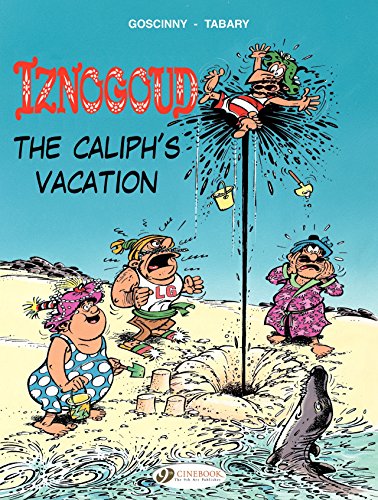
Iznogoud volume 2: The Caliph’s Vacation


By Goscinny & Tabary, translated by Anthea Bell & Derek Hockridge (Cinebook)
ISBN: 978-905460-61-8

During his lifetime (1926-1977) René Goscinny was one of the most prolific, and is still one of the most read, writers of comic strips the world has ever seen. Among his most popular series are Lucky Luke, Le Petit Nicolas and, of course Asterix the Gaul.

In 1962, scant years after the Suez crisis, the French returned to the deserts when Goscinny teamed with Jean Tabary to produce imbecilic Arabian potentate Haroun el-Poussah but it was the villainous foil, power-hungry vizier Iznogoud, that stole the show – possibly the conniving little devil’s only successful scheme.

Les Aventures du Calife Haroun el Poussah was created for Record with the first instalment appearing in the January 15th issue. A modest success, it was transferred to Pilote: a magazine created and edited by Goscinny where it was remodelled to give more emphasis to the scurrilous little weasel who had increasingly stolen the show.

With the emphasis shifted to the shifty shrimp, the revamped series – retitled Iznogoud – commenced in Pilote in 1968, becoming a huge favourite, with 29 albums to date, a long-running TV cartoon show and even a live action movie in 2005.

When Goscinny died in 1977, Tabary took over writing the strip, moving to book-length complete tales, rather than compilations of short punchy stories that typified their collaborations.

Like all the best storytelling, Iznogoud works on two levels: as a comedic romp of sneaky baddies coming a cropper for younger readers, and as a pun-filled, witty satire for older, wiser heads, much like its more famous cousin Asterix – and also translated here by the master translators Anthea Bell & Derek Hockridge who made the indomitable little Gaul so very palatable to the English tongue. Here their famed skills conjure up the best, wackiest – and least salacious – bits of the legendary Carry On films…

Iznogoud is Grand Vizier to Haroun Al Plassid, Caliph of Ancient Baghdad, but the sneaky little toad has loftier ambitions, or as he is always shouting “I want to be Caliph instead of the Caliph!”

The vile vizier is “aided” – that’s sarcasm, that is – in his schemes by bumbling and extremely reluctant assistant Wa’at Alahf… Available in printed and eBook editions, this second delightful translation from Cinebook (which was originally third Dargaud album Les vacances du calife from 1968), opens the daft duo’s latest campaign of insurrections with ‘Summer Vacation or Never Say Die.’ As the holidays come ’round again, the vizier persuades the Caliph to forego his usual Summer Palace in favour of a quiet bed-sit by the seaside, where an unwary ruler could easily drown or be buried in the sand or lost at sea or be eaten by sharks or…

As expected, plans go painfully awry and it’s back to Baghdad for ‘Good Sports in the Caliphate’ as a hapless magician/weatherman accidentally creates enough snow in the desert to open a ski resort. It doesn’t take much – it never does – to convince Haroun to sample the chilly thrills of skiing, snowboarding, crevasses and avalanches, but as usual it’s not the Big Chief who sustains any crippling injuries.

The vacation theme continues with ‘The Caliph’s Cruise’ but, after booking passage for Haroun with the unluckiest sea captain alive, the vile vizier doesn’t get off the ship quickly enough and the selection of cannibals, monsters, savages and sea creatures the voyagers encounter find him a far more suitable subject for their unique attentions…

The vengeful comeuppances conclude in ‘Lihkwid’s Bottle or the Bottle of Lihkwid’ as a travelling merchant provides an infallible elixir that will transform the affable potentate into a louse – but only if Iznogoud can trick him into drinking all three gallons of the foul-tasting stuff…

Snappy, fast-paced slapstick and painfully punny word-play abound in these mirthfully infectious tales, and this series is a household name in France; where the title has even entered common usage as a term for a certain type of politician: over-ambitious, unscrupulous – and often of diminutive stature.

When first released here in the 1970s, Iznogoud made little impression but hopefully this snazzy new incarnation of gloriously readable and wonderfully affordable comedy vignettes can finally find an audience among today’s more internationally aware comics-and-cartoon savvy British Kids of All Ages.

I’m already one of them: How about you…?
© 1968 Dargaud Editeur Paris by Goscinny & Tabary. All Rights Reserved.

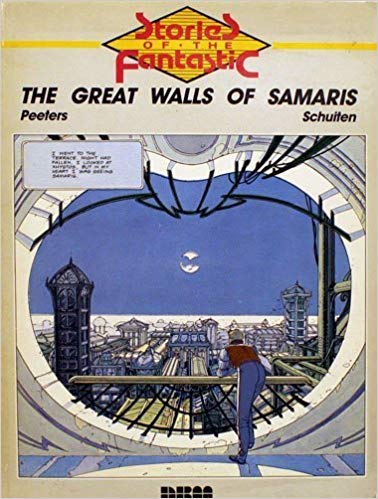
The Great Walls of Samaris


By Benoit Peeters &Francois Schuiten (NBM)
ISBN:978-0-918348-36-4

The European manner of graphic storytelling places great emphasis on mood and style, with a much larger range of interests and themes than the English language mainstream. It is also, perforce, staggeringly accomplished in its artistic visions.

This brief (48 page) album, the first in an occasional series entitled Cities of the Fantastic, tells the bleak, fantastic tale of Franz, a young civic official of the city state Xhystos, who accepts a diplomatic mission to assess the condition of sister city Samaris.

Located far, far away, there has been no communication with the walled metropolis for a decade and all agents dispatched there have vanished with trace. The grim, arduous journey, however, is as nothing compared to the beguiling mystery Franz uncovers when he finally reaches the incredible and seductive city…

Eerie and paranoid, with architecture and design the most important characters in the tale, The Great Walls of Samaris presents a wholly believable world of familiarity and alienation, underscored with an almost Kafkaesque perversity. The aura of menace is palpable, but with only the merest hint of danger. Minds and souls are at risk here, not mere flesh and blood.

The astonishing artwork of Schuiten is entrancing, perfectly capturing – if not actually inventing – the creative anachronism of Steampunk, but with the glistening veneer of fin de siècle pomp and the foredoomed glitter of the Belle Époque concealing the bitter content with a sheen of fragile beauty.

This is an incredibly stylish, unforgettable visual experience and a damned fine classical horror story, too. Long overdue for revival and the proper respect it deserves, this is a book you’ll love if comics mean anything at all to you.
© 1984 Casterman, Paris-Tournai. All Rights Reserved. English translation ©1987 NBM.

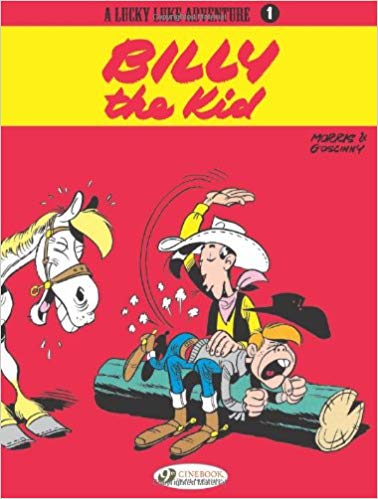
Lucky Luke volume 1: Billy the Kid


By Morris & Goscinny, translated by Luke Spear (CineBook)
ISBN: 978-1-905460-11-3

It’s hard to think of one of Europe’s most beloved and long-running comics characters being in any way controversial, but when the changing times caught up with the fastest gun in the West (“so fast he can outdraw his own shadow”) and the hero moved with them, it made the news headlines all over the world.

Lucky Luke is a rangy, laconic, good, natured cowboy endlessly roaming the fabulously mythic Old West, having light-hearted adventures with his whip-smart horse Jolly Jumper and Rantanplan (the “dumbest dog in the West” and a charming spoof of cinema canine Rin-Tin-Tin), interacting with a host of historical and legendary figures of the genre.

His continued exploits over more than 70 years have filled 95 albums to date and made him the best-selling comic character in Europe (countless millions of albums in more than 30 languages thus far), with spin-off games, computer games, animated cartoons and even live-action movies.

He was created by Belgian animator, illustrator and cartoonist Maurice de Bévère – who signed himself Morris – for the 1947 Annual (L’Almanach Spirou 1947) of Le Journal de Spirou, subsequently launching into his first adventure ‘Arizona 1880’ on December 7th 1946.

Before then, while working at the CBA (Compagnie Belge d’Actualitiés) cartoon studio, Morris met future comics super-stars Franquin and Peyo, and worked for weekly magazine Le Moustique as a caricaturist (to my eyes, Lucky looks uncannily like the young Robert Mitchum who graced so many mid-1940s B-movie Westerns).

Morris was one of “la Bande des quatre” or Gang of Four, which comprised creators Jijé, Will and old comrade Franquin: leading proponents of the loose and free-wheeling artistic style known as the “Marcinelle School” which dominated Spirou in aesthetic contention with the “Ligne Claire” style used by Hergé, E P. Jacobs and other artists in Le Journal de Tintin.

In 1948 the Gang (all but Will) visited America, meeting US creators and sightseeing. Morris stayed for six years, meeting René Goscinny, scoring some work from the newly-formed EC sensation, Mad, and making copious notes and sketches of the swiftly disappearing Old West. His research henceforward resonated on every page of his life’s work…

Morris was a one-man band producing nine albums worth of affectionate sagebrush parody until 1955 when he reunited with Goscinny who took over the scripts. Working in perfect unison, they steered Luke to dizzying heights of superstardom, commencing with Des rails sur la Prairie (Rails on the Prairie), which began in Spirou on August 25th 1955.

In 1967 the straight-shooter switched teams, leaving Spirou for Goscinny’s magazine Pilote with La Diligence (the Stagecoach).

Goscinny produced 45 albums with Morris before his death, from when Morris continued both alone and with other collaborators. Morris died in 2001 having drawn fully 70 yarns, plus spin-off adventures of Rantanplan, with the team of Achdé & Laurent Gerra taking over. In a most peculiar aside I feel I must mention that Morris was apparently voted the “79th Greatest Belgian” in the 2005 Walloon election of De Grootste Belg. If so, I demand a recount…

Lucky Luke first appeared in Britain in the early 1960s, syndicated in weekly comic Film Fun and again in 1967 in Giggle where he was renamed Buck Bingo. In all these venues as well as the numerous attempts to follow the English-language successes of Tintin and Asterix albums from Brockhampton and Knight Books, Luke had a trademark cigarette hanging insouciantly from his lip, but in 1983 Morris – no doubt amidst both pained howls and muted mutterings of “political correctness gone mad” – substituted a piece of straw for the much-traveled dog-end, which garnered him an official tip of the hat from the World Health Organization.

The most successful attempt to bring Lucky Luke to our shores and shelves comes from Cinebook: the first album (available in paperback and eBook formats) is Billy the Kid, Morris and Goscinny’s eleventh collaboration.

As Luke rides into the troubled town of Fort Weakling, he finds the populace cowed and broken by the vile depredations of the infamous William Bonney. The desperado robs the bank every couple of days, and the stagecoach every time it leaves town, helps himself to caramels without paying, and won’t let the saloon serve anything but drinking chocolate.

His deadly aptitude with a six-gun means that no one will swear out a complaint, let alone testify against the vicious little bully…

When Luke accepts the job of sheriff, it takes brains and cunning rather than his legendary skill with a shooting iron to free the town from the tiny grip of the world’s meanest 12-year old…

Although the dialogue is a trifle stiff in places, this is a grand old hoot in the tradition of Destry Rides again and Support Your Local Sheriff, superbly executed by master storytellers, and a wonderful introduction to a unique genre for kids of all ages.

And in case you’re worried, even though the interior art still has our hero chawin’ on that ol’ nicotine stick, trust me, there’s very little chance of anyone craving a quick snout, but quite a high probability that they’ll want more Lucky Luke Albums…
© Dargaud Editeur Paris 1971 by Goscinny & Morris. © Lucky Comics. English translation © Cinebook Ltd.

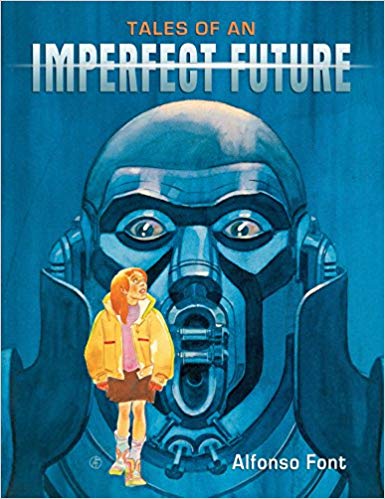
Tales of an Imperfect Future


By Alfonso Font (Dark Horse Books)
ISBN: 978-1-61655-494-1

As the end of March turgidly approaches and I confront the prospect of having my European citizenship stripped from me I’m feeling a mite confused, upset and just a bit passive aggressive (surprisingly that’s a term the Germans don’t have a word for…). Thus, I’m reliving a few of the best comics our Continental comrades have crafted and shared with the ungrateful Anglo-Saxon world…

Barcelona-born creator Alfonso Font Carrera was born on August 28th 1946. He studied Fine Arts and worked as an illustrator before slipping into comics in the 1960s with western tales in Hazañas del Oeste and Sioux for Ediciones Toray.

He quickly graduated to horror stories and historical crime dramas about infamous criminals for the Selecciones Illustradas Agency and, in 1970, began contributing material to British publisher Fleetway on strips such as Black Max in Thunder and Lion. Soon he gravitated to America with work for mature magazine publishers Warren and Skywald.

With writer Carlos Echevarría, he created ‘Géminis’ (AKA Phil Jackson) before moving to Paris in 1975 to work for major comics magazine Pif Gadget, devising ‘Sandberg, Père et Fils’ with Patrick Cothias and ‘Les Dossiers Mystère’ (written by Solet, and sharing art chores with Carlos Giménez and Adolfo Usero) as well as the Roger Lécureux-scripted ‘Les Robinsons de la Terre’.

From 1976-1982 he also freelanced for Scoop, Tousse Bourin and Super-As. Incensed by publishers reprinting his work without permission or payment, he became active in Creators Rights issues and worked with Giménez, Victor Mora and Usero as the “Workshop Premia” seeking to create a union for comics professionals.

In the mid-1980s, Font returned to Spain, contributing to new, home-grown publications like Cimoc, À Tope, and Circus whilst creating (with Mora) ‘Sylvestre’ and ‘Tequila Bang’.

For the Spanish iteration of 1984 he created signature sci fi gadabouts Clarke & Kubrick – who subsequently appeared in Cimoc and Rambla – and began a series of self-scripted, mordantly cynical, sardonic science fiction tales under the umbrella title ‘Cuentos de un futuro imperfecto’ which we see here as Tales of an Imperfect Future…

Seemingly never sleeping, Font went on to create parody-laced aviation hero ‘Frederico Mendelssohn Bartholdy’, ‘El Prisionero de las Estrellas’, and classical adventure serial ‘Jann Polynésia’ – which evolved into the iconic ‘John Rohner’ for Cimoc and ‘Carmen Bond’ for À Tope.

In 1987 he started a fruitful association with French publications Pilote and Charlie Mensuel with his series ‘Taxi’ and, after a brace of independent albums for Planeta publishers, revived John Rohner at Norma publishers.

Always occupied, he went on to create ‘Privado’ and medieval warrior ‘Bri D’Alban’ for Cimoc, whilst collaborating on cop series ‘Negras tormentas’ (‘Black Storms’) with writer Juan Antonio De Blas. Font even began occasionally illustrating Italy’s venerable western superstar Tex for Bonelli. In 1996, he returned to American pages with his erotic series ‘Dra, Dare’ for Penthouse Comix.

A major force in European graphic storytelling, Font has won numerous awards including The Grand Prize at Comic Barcelona and a Haxtur prize.

His artwork is loose, fluid, intricate and utterly electrifying: and Dark Horse’s translation of original European collection of Tales of an Imperfect Future into this stunning oversized (287x224mm) monochrome hardback edition is a sheer delight for fans of grittily fantastic fiction.

Any Brit who grew up reading the short complete sagas exemplified and perfected in 2000AD‘s Tharg’s Future Shocks, Pulp Sci-Fi or Tales from Beyond Science will be right at home – unless casual (human and robot) nudity is a problem…

Written and illustrated by Font throughout, the anthological nature of the tales is linked by the simple bridging device of a grotesque alien directly telling us that humanity is simultaneously a threat and embarrassment to the universe. No argument here, mate…

However, rather than go to the time and expense of eliminating us, the Great Powers are offering us one last chance to change our ways and, by way of inducement, have provided some stories taken from our most probable futures to illustrate just why we’re so much of a problem…

The hard science hagiography commences with ‘Tanatos-1 Comes Home’ as the smug hierarchal rulers of Earth gloat over the news that the AI super-weapon they created to destroy the alien fleets of Kloron has spectacularly succeeded.

As boffin Commander Grenh describes to the xenophobic top Bankers, Clerics and Military leaders how his programming compels the indestructible Tanatos-1 to unceasingly and implacably seek out all life in the universe and eradicate it, veteran General Alto Kervis asks himself why it has turned around and now nears Earth…

‘Rain’ introduces hard-working, long suffering blue-collar spacers Stanley Kubrick and Arthur C. Clarke, stuck on a sodden world, going slowly mad…

When the incessant deluge apparently causes a malfunction, hated computer Hal 2001 insists they go outside to fix the problem, but Stanley is convinced the useless metal martinet is trying to kill its human masters…

Barbed satirical humour gives way to barbarian fantasy in ‘Day of Glory’ as valiant John Smith battles devils and monsters to save his princess and his people. Tragically, the wonder warrior is in for disappointment and shock once he impossibly defeats the sinister Overlord of Klaarn…

Cracks appear in the foundations of the Military-Industrial complex when a vile capitalist proves to the government why the war they’re fighting must never end in ‘Stocks’, whilst

‘The Hunt’ prophetically takes the Hunger Games trope and ongoing war between “One-Percenters” and the rest of us to its logical conclusion…

Originally crafted in the mid-1980s, it follows two super-rich brats who stalk each other with lethal weapons through the dystopian wastelands inhabited by the poor. Of course, even when they’re killing each other for sport on a reality show, the oligarchs still find a way to bloodily exploit the despised discarded millions…

‘“Like a Plague”’ then offers an excoriating morality tale about our suicidal ecological irresponsibility before Stanley and Arthur return in ‘Cyberratic’.

Having finally escaped the rain-drenched hellhole and creepily disturbing electronic taskmaster, our unlikely heroes hit the Welcome Satellite for some R&R but stumble into a major mechanical malfunction on the totally-automated resort.

Luckily a small droid keeps pulling their fat out of the robotic fire, but you’d think such passionate machine-haters would stop for a moment to ask why and how their little saviour escaped the malfunction plague…

‘The Final Enemy’ affords a bleak glimpse at the thinking behind the soldiers who will fight in the final atomic Armageddon, whilst black humour informs a tale of Earth explorers who land on paradise and destroy it forever with ‘The Kiss’…

Similar silliness informs the trash-inundated post-apocalyptic world of ‘The Cleaner’ when humanity’s last survivors activate a miraculous device to get rid of the cause and effects of the pollution which destroyed the world…

Although meant as a comedic interlude, the next vignette sadly comes across as dated and just a touch homophobic by today’s elevated standards, detailing the shock and peril a solitary explorer endures when he discovers his government-mandated and supplied robotic sexual companion is not a “Betty” but an over-zealous ‘Valentino’…

Far more safe and salutary territory finds ‘Earth Control at Your Service, Sir’ addressing a version of the The Cold Equations quandary as two astronauts bringing an end to global famine realise that they won’t reach Earth if both men keep breathing the rapidly diminishing oxygen supply.

As they struggle to make an impossible decision, they have no inkling that the authorities on a starving world have their own ideas…

‘The Siege’ bloodily traces the rampage of a merciless murderous maniac as a fractured city endures police martial law and the ceaseless hunt for society’s greatest menace before the tormented tomorrows tumble to a close with a bleak sad tale of a doomed and dying spacer’s escape into fantasy and one last passionate rendezvous with beloved ‘Green Eyes’…

Scary, topically pointed, suspenseful and superbly intoxicating, Tales of an Imperfect Future offers a potent panoply of graphic pleasures for every lover of comics adventure and science fiction wonders from a master of art long overdue for fame in the English-speaking world.
Tales of an Imperfect Future © 2014 SAF Comics, www.safcomics.com. All rights reserved.