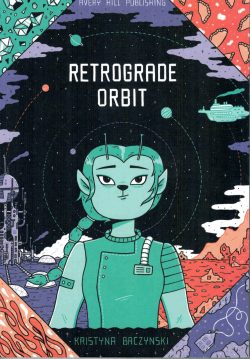
Retrograde Orbit


By Kristyna Baczynski (Avery Hill Publishing)
ISBN: 978-1-910395-42-4

Win’s Christmas Gift Recommendation: Sublime Speculative Social Fiction… 9/10

Great storytelling never goes out of style and the basis of all drama is examination of the human condition (albeit sometimes in extraordinary circumstances). Somehow that’s even more true when your characters aren’t human at all.

Author and illustrator Kristyna Baczynski hails from the Pennines of Yorkshire, by way of the Carpathians of the Ukraine. That’s not at all germane here but it does sound incredibly romantic; conjuring up all manner of deep-seated preconceptions about windy moors and bleak moody peaks. Preconceptions, aspirations, dreams and that old devil hope are what this book is about…

In a faraway star system, a little girl grows up as a refugee and immigrant. Flint finds it hard to adapt to life on mining colony world Tisa and, even though she has no real memories of the place, she feels the call of her homeworld Doma – long-abandoned due to a geological – or maybe industrial – toxic detonation. No one at school cares or understands and her mother and grandmother never want to talk about it…

Years pass but those feelings of something missing don’t. Days pass, Flint acts out like any teen and then inevitably graduates into a mining job, but the something-missing still plagues her. She collects memoirs and mementoes of her lost world and grows increasingly colder and duller. And then a message is received from the supposedly dead, barren planet…

Flint now has a purpose and a goal, and nothing will stand in her way…

This lyrical and uplifting colour paperback offers a beautifully understated and moving glimpse at the power of place in our lives, using science fiction themes and trappings to pick apart the most primitive and fundamental longings to which humans are subject. It also reminds us that there’s always hope…

Sadly, this glorious celebration is not available digitally yet, but that just means you can give physical copies to all your friends, suitably gift-wrapped, ready to be properly appreciated by all the tactile senses and certain to be a physical touchstone for every lovers of great stories.
© Kristyna Baczynski 2018. All rights reserved.

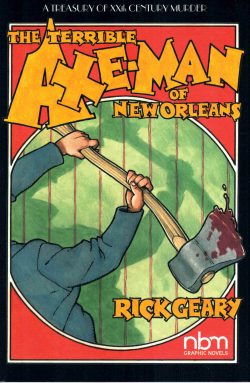
The Terrible Axe-Man of New Orleans


By Rick Geary (NBM)
ISBN: 978-1-56163-179-6

Win’s Christmas Gift Recommendation: Cutting Edge Crime and a Ripping Holiday Read… 8/10

For decades he toiled as an Underground cartoonist and freelance illustrator of strange tales and wry oddments, published in locales as varied as Heavy Metal, Epic Illustrated, Twisted Tales, Bop, National Lampoon, Vanguard, Bizarre Sex, Fear and Laughter, Gates of Eden, RAW and High Times.

For these illustrious venues he honed a unique ability to create sublimely understated stories by stringing together seemingly unconnected streams of narrative to compose tales moving, often melancholy and always beguiling.

Discovering his natural oeuvre with works including biographies of J. Edgar Hoover or Trotsky and his multi-volume Treasury of Victorian Murder series, Geary has grown into a grandmaster and towering presence in both comics and True Crime literature.

His graphic reconstructions of some of the most infamous murders ever committed since policing began combine a superlative talent for laconic prose, incisive observation and meticulously detailed pictorial extrapolation. These are filtered through a fascination with and understanding of the lethal propensities of humanity as his forensic eye scours police blotters, newspaper archives and history books to compile irresistibly enthralling documentaries.

In 2008 he turned to the last century for ongoing series Treasury of XXth Century Murder, focusing on scandals which seared the headlines during the “Gilded Age” of suburban middle class America. He has not, however, forsaken his delight in fiction nor his gift for graphic biography.

Delivered in stark monochrome in either luxurious collectors’ hardback, accessible eBook or engaging paperback editions like this one, his investigations diligently sift fact from mythology to detail the grisliest events in modern history.

Geary’s tales are so compelling because the subject matter methodology resonates through his quirky illustration. Geary always presents facts, theories and even contemporary minutiae with absorbing pictorial precision, captivating clarity and devastating dry wit, re-examining each case with a force and power Oliver Stone would envy.

This particular chiller-thriller comes – after far too long a wait – as a cheap-&-cheerful paperback release of a 2010 offering but it’s still a grand outing for lovers of macabre history…

Geary’s forensic eye scoured the data and scores a palpable if rather unpalatable hit here with a relatively unknown serial killer saga that would make an incredible film – if only the fiend had ever been caught!

In 1918 with the Great War moving into the inevitable End-game the iconic and legend-laden city of New Orleans suffered a chilling campaign of terror that lasted well over a year with far-reaching repercussions felt clear across the United States.

As explained in the captivating capsule history that opens this moreish monochrome and exceedingly noir thriller, New Orleans was founded by the French in 1717, lost to the Spanish in 1763, seized by Napoleon in 1802 and then sold to the Americans a year later. That makes it one of the oldest and certainly most eclectic, eccentric, artistic and elegant cities in the USA.

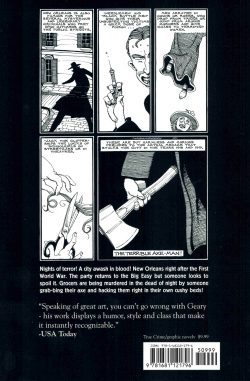
By 1918 it was a huge, sprawling and vital hub of trade and commerce, peopled by a vast melting pot of immigrant populations. On the night of May 23rd an Italian couple running a grocery store were hacked to death by an intruder who broke into their home and attacked them with their own household axe.

Over the next 18 months a phantom killer would, under the horrifying glare of public scrutiny, kill six people, maim and mutilate another half dozen and hold the entire city a virtual hostage with insane proclamations and demands. He – if it was, indeed, a man – was often seen but never apprehended.

Geary is as meticulous and logical as ever, forensically dissecting the various attacks, examining the similarities and, more importantly, the differences whilst dutifully pursuing the key figures to their unlikely ends.

All the victims were grocers of Italian origin (leading to a supposed Mafia connection) except for the ones who were not, which possibly refuted the theory but equally suggested opportunistic copy-cat killers. A number of personal grievances among the victims led to many false arrests and even convictions, and the killer or killers left many survivors who all agreed on a general description but all subsequently identified different suspects. There’s even a broader than usual hint of supernatural overtones.

Occurring at the very birth of the Jazz Age, this utterly compelling tale is jam-packed with intriguing snatches of historical minutiae, plus beautifully rendered maps and plans which bring the varied locations to moody life: yet another Geary production tailor-made for a Cluedo special edition!

The author presents the facts and theories with chilling graphic precision, captivating clarity and devastating dry wit, and this enigma is every bit as compelling as his other homicidal forays: a perfect example of how graphic narrative can be so much more than simple fantasy entertainment. This merrily morbid series of murder masterpieces should be mandatory reading for all comic fans, mystery addicts and crime collectors.
© 2010 Rick Geary. All Rights Reserved.

The Terrible Axe-Man of New Orleans will be published on December 15th 2018 and is available for pre-order now. For more information and other great reads see http://www.nbmpub.com.

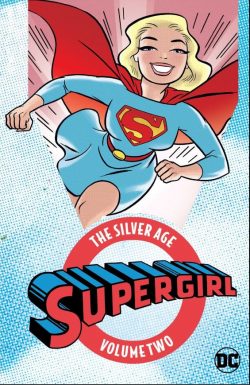
Supergirl: The Silver Age volume 2


By Leo Dorfman, Jerry Seigel, Jim Mooney & various (DC Comics)
ISBN: 978-1-4012-8131-1

Win’s Christmas Gift Recommendation: Because Girls Are Super Heroes Too… 8/10

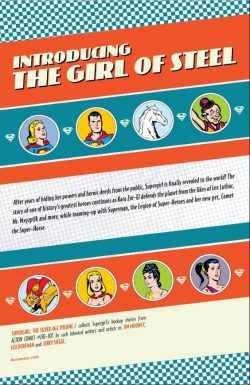
After decades as the distaff cousin of a Truly Big Gun, Supergirl is now a certified multimedia solo star of screen and page.

Such was not always the case, as this engaging trade paperback compendium (also available ins eBook formats) joyously attests. The gathered back-up tales from Action Comics #285-307 – and spanning February 1962 to December 1963 – trace the early career of Superman’s cousin Kara Zor-El of Argo City as she moves from hidden secret to star turn and minor player to public celebrity. From the back of the book to the front of the house is always a reason to celebrate, right?

Her story began as August 1958 try-out story ‘The Three Magic Wishes’ by Otto Binder, Dick Sprang & Stan Kaye in Superman #123 which told how a mystic totem briefly conjured up a young girl with super-powers as one of three wishes made by Jimmy Olsen. Such was the reaction to the plucky heroine that within a year a new version was introduced to the Superman Family…

After a few intriguing test-runs Supergirl began as a future star of the expanding Superman pocket universe in Action Comics #252 (May 1959). Superman’s cousin Kara had been born on a city-sized fragment of Krypton, which was hurled intact into space when the planet exploded. Eventually Argo City turned to Kryptonite like the rest of the detonated world’s debris, and her dying parents, observing Earth through their scopes, sent their daughter to safety as they perished. Landing on Earth, she met Superman. He created the identity of Linda Lee and hid her in an orphanage in small town Midvale whilst she mastered her new powers in secrecy and safety.

This second collection sees her very existence kept secret from the general public whilst she lives with adoptive parents Fred and Edna Danvers. They are completely unaware that the orphan they have recently adopted is a Kryptonian super-being. That is all about to change as the Maid of Might finally graduates from superhero training…

The accent on these stories generally revolves around problem-solving, identity-preserving and loneliness, with both good taste and the Comics Code ensuring that readers weren’t traumatised by unsavoury or excessively violent tales. Such plots were akin to situation comedies, and might occasion a shudder now and then from modern readers, but believe me compared to the times they were and remain light years ahead of the curve…

Peculiar transformations were a mainstay of 1960s comics, and although a post-modern interpretation might discern some metaphor for puberty or girls “becoming” women, I rather suspect the true answer can be found in the authors’ love of comedy and an editorial belief that fighting was unladylike.

Red Kryptonite – a cosmically-altered isotope of the radioactive element left when Krypton exploded – regularly caused temporary physical and sometimes mental mutations in the survivors of that doomed world: a godsend to writers in need of a challenging visual element when writing characters with the power to shrug off nukes and drop-kick planets…

You have been warned…

Hogging the cover (by Super-stalwarts Curt Swan & George Klein) the simpler times ended as a big change in the Maid of Might’s status occurred. When her parents learn of their new daughter’s true origins, Superman allows his cousin to announce her existence to the world in 2-part saga ‘The World’s Greatest Heroine!’ (#285) and ‘The Infinite Monster!’ (#286). Here Jerry Siegel & regular artist Jim Mooney detail how Supergirl becomes the darling of the universe: openly saving planet Earth and finally getting all the credit for it.

Action Comics #286 pits her against her cousin’s greatest foe in ‘The Death of Luthor!’, whilst ‘Supergirl’s Greatest Challenge!’ sees her visiting the Legion of Super-Heroes (quibblers be warned: initially their far-future era was the 21st century. It was quietly retrofitted to a thousand years from “now” after the tales in this volume) to save the Earth from invasion.

She also meets the telepathic descendent of her cat Streaky. His name was Whizzy (I could have left that out but chose not to – once more for smug, comedic effect…).

‘The Man who Made Supergirl Cry!’ signalled the beginning of Leo Dorfman’s contributions as scripter. Little is known about this prolific writer, other than he also worked under the name Geoff Brown and David George, producing quality material continuously from the Golden Age until his death in 1974, mostly for DC and Gold Key Comics.

In this tight little thriller Phantom Zone villains take control of Supergirl’s new dad in a plot to escape their ethereal dungeon dimension…

Siegel returned for Action #289’s ‘Superman’s Super-Courtship!’: something of a classic, as the Girl of Steel scours the universe for an ideal mate for her cousin. Charming at the time, modern sensibilities might quail at the conclusion that his perfect mate was just like Supergirl herself, but older…

‘Supergirl’s Super Boy-Friends!’ finds both human Dick Malverne and Atlantean mer-boy Jerro catch super-powers after kissing her (I’m again saying nothing here except Red K!) whilst she doesn’t actually become ‘The Bride of Mr. Mxyzptlk!’ when the fifth-dimensional prankster transfers his unwanted attentions to her in Action #291.

An extended storyline by Dorfman began in the next issue when the typical (albeit invulnerable) teen got a new “pet”. ‘The Super-Steed of Steel!’ is a beautiful white horse who helps her stave off an alien invasion, but the creature has a bizarre and mysterious past, revealed in ‘The Secret Origin of Supergirl’s Super-Horse!’, before a resolution of sorts is reached in ‘The Mutiny of Super-Horse’.

A new cast member joined the series in ‘The Girl with the X-Ray Mind!’: a psychic with a shocking connection to the Superman Family, and her secrets were further revealed in ‘The Girl who was Supergirl’s Double!’

It was the beginning of an extraordinarily tense and epic continued storyline featuring Phantom Zone villains, Luthor, Supergirl’s arch enemy Lesla Lar, the destruction of Atlantis and genuine thrills and excitement. Earth was threatened by ‘The Forbidden Weapons of Krypton!’ and it took ‘The Super-Powers of Lex Luthor!’ to finally save the day.

Action #299 returned to whimsical normality with ‘The Fantastic Secret of Superbaby II!’, and the anniversary 300th issue featured ‘The Return of Super-Horse!’: another multi-part tale that revealed ‘The Secret Identity of Super-Horse!’ in #301, only to suffer ‘The Day Super-Horse went Wild!’ in the next episode.

By this time Supergirl featured on alternate Action Comics covers, and was regularly breaking into the lead Superman story. Sadly, those covers, by art dream-team Swan & Klein are not included nor is their Dorfman-scripted Man of Steel tale ‘The Monster from Krypton!’ from #303, with Supergirl having to battle her Red K transformed cousin. We can enjoy the back-up though: the moving tragedy of ‘Supergirl’s Big Brother!’ whose misspent life is not totally wasted in the end…

Supergirl got a new arch-enemy in ‘The Maid of Menace!’ but Black Flame is not as problematic as ‘The Girl Who Hated Supergirl!’ (with art solely credited to Mooney. but I’m pretty sure it’s at least part-inked by John Forte).

Action #306 was a pure mystery thriller as Girl of Steel became ‘The Maid of Doom!‘ after which the dramas pause after ‘Supergirl’s Wedding Day!’ which almost proves that no girl can resist a manly man… but only almost!

Throughout this period Kara of Krypton underwent more changes than most of her confreres had in twenty years, as the editors sought to find a niche the buying public could resonate with, but for all that these stories remain exciting, ingenious and utterly bemusing.

Possibly the last time a female super-character’s sexual allure and sales potential wasn’t freely and gratuitously exploited, these tales are a link and window to a far less crass time and display one of the few strong female characters that parents can still happily share with their youngest girl children. I’m certainly not embarrassed to let any women see this volume, unlike any “Bad-Girl” book – or male public figure – you could possibly name.
© 1962, 1963, 2018 DC Comics. All Rights Reserved.

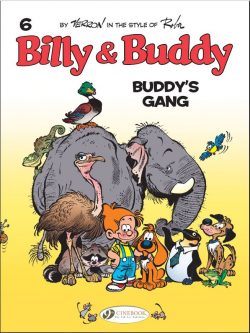
Billy and Buddy volume 6: Buddy’s Gang


By Verron, Veys, Corbeyran, Chric & Ferri; coloured by Anne-Marie Ducasse and translated by Jerome Saincantin (Cinebook)
ISBN: 978-1-84918-314-7

Win’s Christmas Gift Recommendation: Captivating Childhood Capers for Young and Old Alike… 8/10

Known as Boule et Bill in Europe (at least in the French speaking bits, that is; the Dutch and Flemish call them Bollie en Billie or perhaps Bas et Boef if readers first glimpsed them in legendary weekly Sjors), this evergreen, immensely popular cartoon saga of a dog and his boy debuted in the Christmas 1959 edition of Journal de Spirou.

The perennial fan-favourite resulted from Belgian writer-artist Jean Roba (Spirou et Fantasio, La Ribambelle) putting his head together with Maurice Rosy: the magazine’s Artistic Director and Ideas Man who had also ghosted art and/or scripts on Jerry Spring, Tif et Tondu, Bobo and Attila during a decades-long, astoundingly productive career at the legendary periodical.

Intended as a European answer to Charles Schulz’s Peanuts, Boule et Bill quickly went its own way, developing a unique style and personality and becoming Rosa’s main occupation for the next 45 years.

Roba launched Boule et Bill as a mini-récit (a 32-page, half-sized freebie insert) in the December 24th 1959 Spirou.

Like Dennis the Menace in The Beano, the strip was a huge hit from the start and for 25 years held the coveted and prestigious back-cover spot. Older British fans might also recognise the art as some early episodes – (coincidentally) retitled It’s a Dog’s Life – ran in Fleetway’s legendary anthology weekly Valiant from 1961 to 1965…

A cornerstone of European life, the strip generated a live-action movie, animated TV series, computer games, permanent art exhibitions, sculptures and even postage stamps. Like some select immortal Belgian comics stars, Bollie en Billie have been awarded a commemorative plaque and have a street named after them in Brussels….

Large format album editions began immediately, totalling 21 volumes throughout the 1960s and 1970s. These were completely redesigned and re-released in the 1980s, supplemented by a range of early-reader books for toddlers. Collections are available in 14 languages, selling in excess of 25 million copies of the 37 albums to date.

Roba crafted more than a thousand pages of gag-strips in a beguiling, idealised domestic comedy setting, all about a little lad and his exceedingly smart Cocker Spaniel, before eventually surrendering the art chores to his long-term assistant Laurent Verron in 2003.

The successor subsequently took over the scripting too, upon Roba’s death in 2006.

As Billy and Buddy, the strip had returned to British eyes in enticing Cinebook compilations from 2009 onwards: introducing to 21st century readers an endearingly bucolic late 20th century, sitcom-styled nuclear family set-up consisting of one bemused, long-suffering and short-tempered dad, a warmly compassionate but painfully flighty mum, a smart, mischievous son and a genius dog who has a penchant for finding bones, puddles and trouble.

This edition is the second translation to feature “Veron” and his team of gag-writers Veys, Corbeyran, Chric & Cucuel. The kit and paraphernalia might be marginally updated, but the warmth and humour remain timelessly faithful. Just like a pet, in fact…

Originally released in 2005, La bande à Bill was the 30th European collection, completed by Verron and his team, and even adding a soupcon of continuity (via a few returning circus cronies as seen in the previous volume): admirably resuming in the approved manner and further exploring the evergreen relationship of a dog and his boy (and tortoise) for our delight and delectation. There are a more mod-cons and a bigger role for girls such as skipping sharpie Juliet but, in essence, nothing has changed…

Delivered as a series of stand-alone rapid-fire, single-page gags with titles like ‘Of Mice and Shame’, ‘Tailspin’ and ‘Peek-a-Bone’, visual puns, quips and jests abound: confirming that the socialisation and behaviour of little Billy is measured by carefree romps with four-footed friend Buddy.

Buddy is the perfect pet for an imaginative and playful boy, although the manipulative mutt is overly fond of purloined food and ferociously protective of boy and bones and his ball.

The pesky pooch also cannot understand why everyone wants to constantly plunge him into foul-tasting soapy water, but it’s just a sacrifice he’s prepared to make to be with Billy…

Buddy also has a fondly platonic relationship with tortoise Caroline (although this autumnal and winter-themed compilation finds her again largely absent through hibernation pressures) and a suspicious knack for clearing off whenever Dad has one of his explosive emotional meltdowns over the cost of canine treats, repair bills or the Boss’ latest impositions.

The inseparable duo indulge in spats with pals, play pranks, encounter other unique pets, dodge baths, hunt and hoard bones, rummage in bins, misunderstand adults, cause accidents and cost money; with both kid and mutt equally adept at all of the above. This time, however, the capacity for chaos is radically increased as an entire menagerie of circus beasts pop up whenever it’s most comedically expedient and young Billy is becoming awkwardly, painfully aware of girls. One girl in particular, actually…

Despite the master’s passing his legacy is in safe hands. The strips remain genially paced and filled with wry wit and potent sentiment: enchantingly funny episodes which run the gamut from heart-warming to hilarious, silly to surreal and thrilling to just plain daft: a charming tribute to and lasting argument for a child for every pet and vice versa.

This is another supremely engaging family-oriented compendium of cool and clever comics no one keen on introducing youngsters to the medium should be without.
Original edition © Dargaud Benelux (Dargaud-Lombard s.a.) 2005 by Verron in the style of Roba. English translation © 2016 Cinebook Ltd.

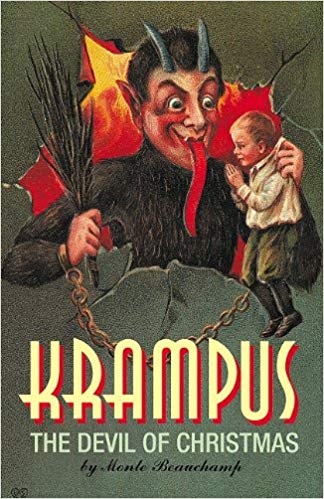
Krampus: The Devil of Christmas


By various, edited by Monte Beauchamp (Last Gasp)
ISBN: 978-0-86719-747-1

Win’s Christmas Gift Recommendation: Horrid Holiday Cheers… 8/10

When I lived in New York, the morning after Thanksgiving was when retailers committed Christmas. Staggering out into chilly morning air (I wonder if they still have that?) after a surfeit of everything, one’s eyes would boggle at a profusion of tinsel, glitter and lights with entire buildings done up like stockings or giant parcels.

These utterly mindboggling tributes to understatement would make any stolid Englander quail with disquiet and I still get tremors occasionally around postmen bearing packages… Another way to bring on Christmas chills is with a good book, and this delightfully engrossing hardback celebration from artist, historian and designer Monte Beauchamp (a welcome expansion on his 2004 book The Devil in Design) focuses on a long-lost aspect of the Season of Good Will that’s found renewed interest in recent times thanks to a film franchise and the general malaise affecting glum modern humans…

For decades Monte Beauchamp’s iconic, innovative narrative and graphic arts magazine Blab! highlighted the best and most groundbreaking trends and trendsetters in cartooning and other popular creative fields.

Initially published through the auspices of the much-missed Kitchen Sink Press it moved first to Fantagraphics and carried on as the snazzy hardback annual Blabworld from Last Gasp. Here however Beauchamp looks back not forward to revel in the lost exuberance and dark creativity of a host of anonymous artists whose seasonal imaginings spiced up the Winter Solstice for generations of guilty-until-proven-innocent nippers…

In Western Europe – especially the German-speaking countries but also as far afield as Northern Italy and the Balkans – St Nicholas used to travel out with gifts for good children, accompanied by a goat-headed, satanic servant. Fur-covered, furtive, chain-bedecked, sinister and all-knowing, the beast-man with a foot-long tongue and one cloven hoof wielded a birch switch to thrash the unruly and a copious sack to carry off disobedient kinder.

The Krampus was a fixture of winter life in Austria, Switzerland and the German Principalities, with his own special feast-day (December 5th – just before St. Nikolaus’ Day), parades, festivals and highly enjoyable (for parents, at least) ceremonial child-scaring events. Back then we really knew how to reward the naughty and the nice…

This compelling and enchanting hardback tome – still readily available but not yet as a digital delivery – celebrates the thrilling dark edge of the Christmas experience as depicted through the medium of the full-colour postcards that were a crucial facet of life in Europe from 1869 to the outbreak of World War I.

However, even with fascinating histories of the character and the art-form related in ‘Greetings From Krampus’, ‘Festival of the Krampus’ and ‘Postal Beginnings’, the true wide-eyed wonder and untrammelled joy of this compendium is the glorious cacophony of paintings, prints, drawings collages – and even a few primitive and experimental photographic forays – depicting the delicious dread scariness of the legendary deterrent as he (it?) terrifies boys and girls, explores the new-fangled temptations of airplanes and automobiles and regularly monitors the more mature wicked transgressions of courting couples…

A feast of imagination and tradition ranging from the wry, sardonic and archly-knowing to the outright disturbing and genuinely scary, this magical artbook is a treasure not just for Christmas but for life…

And it’s not nearly as environmentally harmful as coal…
© 2010 Monte Beauchamp. All rights reserved.

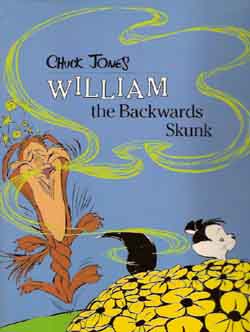
William the Backwards Skunk


By Chuck Jones (Crown Publishers Inc.)
ISBN: 978-0517560631

Win’s Christmas Gift Recommendation: A Classic Yarn Reeking of Sheer Quality… 10/10

There have been a few modern geniuses who wield a pencil and paintbrush. We tend not to notice them in the world of comics, which I suppose would explain why so many of our contemporary artists work in animation these days. I don’t know if Charles Martin Jones ever worked in comics – or even if he ever wanted to – but as ‘Chuck’ he produced some of the greatest and funniest animated cartoons the world has ever seen.

Chuck (September 21st 1912-February 22nd 2002) was filmmaker, screenwriter, animator, cartoonist, author and artist who worked for Warner Bros., MGM and others, ran his own studio – Chuck Jones Enterprises – and made billions of people laugh. His Looney Toons, Merrie Melodies and Tom and Jerry short films are unmistakeable and he probably wrote, produced and directed your favourite Bugs Bunny, Daffy Duck, Porky Pig, Road Runner and Wile E. Coyote cartoons and hundreds of others besides.

He was nominated for 8 Oscars and won three, and received an Honorary Academy Award in 1996 for his lifetime contributions.

During World War II he worked with Theodore Geisel – who abandoned cartooning and animation for a career in kid’s books as the legendary Dr. Seuss – on a series of educational cartoon features for the US Army featuring Private Snafu. That relationship would eventually and circuitously lead to the animated TV classic How the Grinch Stole Christmas (accept no live-action or computer-animated substitutes!).

Way back in 1986 Chuck Jones topped a career of astounding creativity and uproarious humour with this picture-book for the very young. William is a skunk with a little problem. The Usual Skunk not only has that potent chemical weapon we all know and dread, but they also have a beautiful bold stripe on their backs so as to give any big animal sneaking up on them a fair chance to change their minds. Sadly, William’s stripe is on his front, which causes problems for every animal in the forest.

This charming little fable about cooperation is a sweet delight and the art is utterly joyous. This is a man who knew “Cute” and how to milk it, and more importantly, when to lampoon it.

His critters positively drip with Attitude, and any child’s delight could only be marred if the adult reading this aloud is unable to stifle their own knowing chortles.

Jones’ work informed generations of kids and creators in comics as well as cartoons. His legacy can be found in titles as varied as Dell’s Looney Tunes and Merrie Melodies comics, or the timeless Bugs & Daffy iterations still wowing contemporary kids in DC’s WB comicbooks.

Track down this fabulous hardback and you could be carrying on that tradition to the next generation…
© 1986 Chuck Jones Enterprises. All rights reserved.

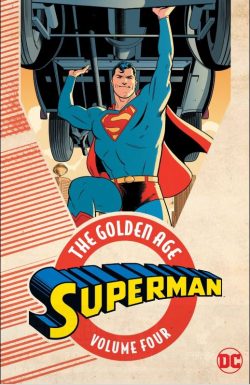
Superman: The Golden Age volume 4


By Jerry Siegel & Joe Shuster, Paul Cassidy, Ed Dobrotka, Leo Nowak, John Sikela, Fred Ray & various (DC Comics)
ISBN: 978-1-4012-7867-0

Win’s Christmas Gift Recommendation: Vital Vintage Superhero Fun and Fantasy… 9/10

As his latest record-breaking anniversary year rapidly approaches its end, the popularity of Superman is on the climb again. The American comicbook industry – if it existed at all by now – would have been an utterly unrecognisable thing without The Man of Tomorrow. His unprecedented invention and adoption by a desperate and joy-starved generation gave birth to an entire genre if not an actual art form.

Imitation is the most honest compliment and can be profitable too. Superman triggered an inconceivable army of imitators and variations and, within three years of his Summer 1938 debut, the intoxicating blend of action and social wish-fulfilment which hallmarked the early Action Ace had grown to encompass cops-and-robbers crime-busting, socially reforming dramas, science fiction, fantasy, whimsical comedy.

Once the war in Europe and the East finally involved America, to that list was added patriotic relevance for a host of gods, heroes and monsters – all dedicated to profit through exuberant, eye-popping excess and vigorous dashing derring-do.

In comicbook terms at least, Superman was master of the world. He had already utterly changed the shape of the fledgling industry by the time of these tales. There was a successful newspaper strip, foreign and overseas syndication and the Fleischer studio was producing some of the most expensive – and best – animated cartoons ever conceived.

Thankfully the quality of the source material was increasing with every four-colour release, and the energy and enthusiasm of Jerry Siegel & Joe Shuster had infected the burgeoning studio that grew around them to cope with the relentless demand.

This latest addition to the splendid Golden Age/Silver Age strand of DC reprint compendia presents more of an epochal run of raw, unpolished but viscerally vibrant stories by Siegel, Shuster and the sterling crew of their ever-expanding “Superman Studio” who were setting the funnybook world on fire: crude, rough, uncontrollable wish-fulfilling, cathartically exuberant exploits of a righteous and superior man dealing out summary justice equally to social malcontents, exploitative capitalists, thugs and ne’er-do-wells that initially captured the imagination of a generation.

This fourth remastered paperback collection (also available digitally) of the Action Ace’s early exploits – reprinted in the order they first appeared – covers the turbulent, times spanning September 1941 to April 1942: encompassing escapades from Action Comics #41-47, Superman #12-15 and solo-adventures from World’s Finest Comics #3-5 (an oversized anthology title where he shared whimsical cover-stardom with Batman and Robin).

As always, every comic appearance is preceded by the original cover illustration, all captivating graphic masterpieces from Fred Ray whilst each tale is credited to co-originator Siegel.

Although he & Shuster had very much settled into the character by now, the latter was increasingly involved with the Superman newspaper strip. Even so, the buzz of success still fired them both and innovation still sparkles amidst the exuberance.

Written entirely by Seigel this incredible panorama of torrid tales opens with ‘The Case of the Death Express’: a tense thriller about train-wreckers illustrated by Nowak from the Fall issue of World’s Finest (#3).

Due to the exigencies of periodical publishing, although the terrific tales collected in this compendium take the Man of Steel to December 1941 and beyond, they were all prepared well in advance of Japan’s sneak attack on Pearl Harbor.

Even though spies and sabotage plots were already a solid standby of the narrative currency of the times and many in America felt war was inevitable (patriotic covers were beginning to appear on many comic books), the war was still a distant and exotic affair, impersonal and at one remove from daily life as experienced by the kids who were as the perceived audience for these four-colour fantasies.

That would change radically in the months and issues to come…

Most stories of the time were untitled; these have been named post-hoc simply to provide differentiation and make my task simpler …

Leo Nowak was drawing most of the comic output at this time and is responsible for the lion’s share of these adventures, beginning with the first three from Superman #12 (September/October 1941). ‘Peril on Pogo Island’ sees Lois Lane and Clark Kent at the mercy of rampaging tribesmen, although spies from a certain foreign power are at the back of it all, whilst ‘The Suicide Murders’ finds them facing a particularly grisly band of gangsters. John Sikela inked Nowak on ‘The Grotak Bund’ wherein seditionists attempt to destroy vital US industries, and fully illustrated the final tale as an old foe rears his shiny head once more in ‘The Beasts of Luthor’, accompanied by a spectacular array of giant monsters…

Action Comics #41 (October 1941) exposes ‘The Saboteur’ in a terse tale of a traitor motivated by greed rather than ideology illustrated by Paul Cassidy, whilst Nowak’s ‘City in the Stratosphere’ (Action #42) reveals that a trouble-free paradise floating above Metropolis has been subverted by an old enemy. He also handled most of Superman #13 (November/December 1941).

This issue led with a Cassidy pin-up after which ‘The Light’ debuts an old foe in a new super-scientific guise after which ‘The Archer’ pits the Man of Steel against his first costumed villain. ‘Baby on the Doorstep’ took an opportunity for fun and the feel-good factor as Clark becomes a temporary parent in a tale of stolen battle plans before ‘The City Beneath the Earth’ (illustrated by Sikela) returns to the serious business of action and spectacle as our hero discovers a subterranean kingdom lost since the Ice Age.

World’s Finest Comics #4 (Winter 1941) offers ‘The Case of the Crime Crusade’: another Nowak-rendered socially relevant racketeering yarn before ‘The Crashing Planes’ – from Action #43 and with Superman attacking Nazi paratroopers on the cover – sees the Man of Tomorrow smashing a plot to destroy a commercial airline.

Even though war was undeclared DC and many other publishers had struck their colours well before December 7th. When the Japanese attack filtered through to the gaudy pages the patriotic indignation and desire for retribution would generate some of the very best art and stories the budding art-form would ever see.

Superman’s rise had been meteoric and inexorable and seemed to never stall. He was the indisputable star of Action, World’s Finest Comics and his own dedicated title. A daily newspaper strip had begun on 16th January 1939, with a separate Sunday strip following from November 5th that year, garnered millions of new fans and a thrice-weekly radio serial launched on February 12th 1940. With a movie cartoon series, games, toys, apparel and a growing international media presence, Superman was swiftly becoming everybody’s hero…

Although the gaudy burlesque of monsters and super-villains still lay years ahead of our hero, these captivating tales of villainy, criminality, corruption and disaster are just as engrossing and speak powerfully of the tenor of the times. A perilous parade of rip-roaring action, seedy hoods, vile masterminds, plagues, disasters, lost kids and distressed damsels are all dealt with in a direct and captivating manner by our relentlessly entertaining exemplar in summarily swift and decisive fashion.

No “to be continueds” here!

The sheer escapism continues with ‘The Caveman Criminal’ (Action #44, illustrated by Nowak & Ed Dobrotka), wherein crooks capitalise on a frozen “Dawn Man” who thaws out and goes wild in crime-ridden Metropolis, after which Superman #14 (January/February 1942 begins.

Again primarily a Nowak art affair – following a fabulous page of ‘Superman’s Tips for Super-Health’ by Shuster & Cassidy – the drama commences with ‘Concerts of Doom!’. Here a master pianist learns just how mesmerising his recitals are and joins forces with unpatriotic thieves and dastardly saboteurs, after which the tireless Man of Tomorrow is hard-pressed to cope with the diabolical destruction caused by ‘The Invention Thief’.

Sikela inks Nowak’s pencils in a frantic high fantasy romp resulting from the Man of Steel’s discovery of a friendly mermaid and malevolent fishmen living in ‘The Undersea City’ before Nowak solos again for more high-tension catastrophic graphic destruction signalling Superman’s epic clash with sinister electrical savant ‘The Lightning Master’.

Action #45 (Nowak & Dobrotka) sees ‘Superman’s Ark’ girdle the globe to repopulate a decrepit and nigh-derelict city zoo, whilst issue #46 features ‘The Devil’s Playground’ (Cassidy) wherein masked murderer The Domino stalks an amusement park wreaking havoc and instilling terror.

Spring 1942’s Finest Comics #6 explores the mystery of a flying castle as Superman breaches ‘The Tower of Terror’ to confront an Indian curse and an unscrupulous businessman, whereas in the bimonthly Superman #15 a dandy exercise regimen from Shuster (‘Attaining Super-Health: A few Hints from Superman!’) leads to Nowak’s ‘The Cop Who was Ruined’ wherein the Metropolis Marvel clears framed detective Bob Branigan – a man who even believes himself guilty – before scurvy Orientals menace the nation’s Pacific fleet in ‘Saboteurs from Napkan’ with Sikela again lending his pens and brushes to Nowak’s pencil art.

Thinly-veiled fascist oppression and expansion is spectacularly nipped in the bud with ‘Superman in Oxnalia’– an all-Sikela art job, before Nowak returns to pencils concluding science fiction thriller ‘The Evolution King’. Here, a malignant mastermind artificially ages his wealthy, prominent victims until the invulnerable Man of Steel storms in…

This splendid compilation concludes with a blockbusting, no-holds-barred battle which was only the opening skirmish in a bigger campaign. Action #47 (by Sikela) reveals how Lex Luthor gains incredible abilities after acquiring the incredible ‘Powerstone’, making the mad scientist temporarily Superman’s physical equal – if not mental – match…

As fresh and thrilling now as they ever were, the endlessly re-readable epics are perfectly housed in these glorious paperback collections where the savage intensity and sly wit still shine through in Siegel’s stories – which literally defined what being a Super Hero means – whilst Shuster’s shadows continued to create the basic iconography of superhero comics for all others to follow.

Such Golden Age tales are priceless enjoyment at an absurdly affordable price and in a durable, comfortingly approachable format. What dedicated comics fan could possibly resist them?
© 1941, 1942, 2018 DC Comics. All Rights Reserved.


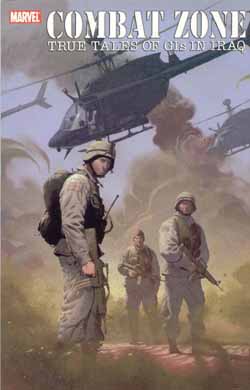
Combat Zone: True Tales of GIs in Iraq


By Karl Zinsmeister, Dan Jurgens & Sandu Florea (Marvel Comics)
ISBN: 978-0-7851-1516-8

It’s always good to see a publisher venture outside its self-constructed ghetto of Proprietary Characters, rather than endlessly re-hash the names it’s already trademarked, and doubly so when it is to venture into genres that it has previously abandoned.

Sadly, in some cases the question then becomes one of seeking new markets as opposed to simply looking for fresh dramatic resources to exploit. Comics have a long and chequered history when it comes to militarism, ideological witch-hunting and band-wagon hopping. Despite that being said, there aren’t enough carefully-considered war comics around these days and this 2005 offering was then and remains now one of the few the genre had to offer.

Combat Zone features “real-life accounts” of US combatants in the 2003-2004 Iraq War, although “some incidents have been combined to make for a more condensed read”, and of course names have been changed to protect, etc. etc. …

Writer Zinsmeister was an embedded reporter during the conflict so I’m sure the events are as true as he saw them, but the overall feeling after first reading the book is one of curious detachment.

Maybe the modern military life does consist of immense boredom, talking to buddies and telling everyone how cool your ordnance is, interlaced with the occasional skirmish, but if such is the case it shouldn’t be in a drama-oriented comic-book.

It’s hard not to compare this series with the excellent Real War Stories produced in the late 1980s by Eclipse or even such personal visions as Sam Glanzman’s A Sailor’s Story and Don Lomax’s gruelling, compelling and, informative Viet Nam Journal, perhaps because all of those take the part, and the authorial voice, of the ordinary man not the war’s sponsors. Moreover, there was an implicit understanding that, though necessary, the job at hand was neither easy nor fun.

Even Robert Kanigher’s declamatory Sgt. Rock tales boast metafictional verisimilitude but that’s not what’s on offer here.

In Combat Zone when a character dies, the response is so anodyne that we know nobody really cares. There is more than the hint of the Press Release about it. Often it feels like the entire comic has passed through the same Pentagon ‘fact-checker’ that news reports do. A far cry, then, from Real War Stories #1, which the US government attempted to suppress. Alternatively, maybe that’s the way Uncle Sam manages conflicts these days…

On a narrative level, the problem here is one of heroic stature. When two desperate guys with nothing more than an old pick-up truck and a machine gun, give their lives in a dramatic, doomed attempt to stop an onslaught of high-tech juggernauts from crushing their homeland, those ought to be the heroes, not the “bad guys”!

There’s also a bit too much platitudinous speechifying in character’s mouths: presumably here to show the reader how justified the war might be, and no mention of the disastrous early days of allied blunders or numerous friendly fire incidents.

“Those didn’t happen where I might see them” is not an excuse in a documentary which has been subjectively edited “to make for a more condensed read”. You don’t get to pick and choose between Dramatic Authenticity and Journalistic Veracity at will, and not expect a few hits for it.

Illustrated by comic super-star Dan Jurgens – downplaying his usual bombastic Fights ‘n’ Tights styling – this collection didn’t sit well with me at first. My initial response was disappointment, but a careful rereading and 13 years of further constantly evolving conflict made me rethink. Maybe this really was telling it like it is. Maybe war has moved beyond comics fare and this is what feels like to serve today?

I can’t decide. What about you?
© 2005 Marvel Characters Inc. All rights reserved.

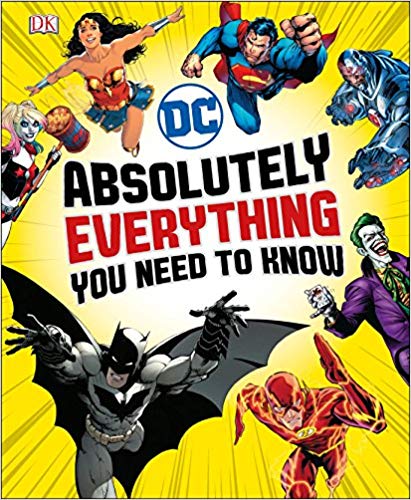
DC Comics: Absolutely Everything You Need to Know


By Liz Marsham, Melanie Scott, Landry Q. Walker, Stephen Wiacek & many and various (Dorling Kindersley)
ISBN: 978-0-24131-424-1

Win’s Christmas Gift Recommendation: Fact-packed, Superhero Fun and Fantasy… 9/10

Some reviews are way harder to write than others and occasionally not for the reasons you’d expect. My other job is being a writer for money and, despite having typed whole bunches of stuff pertaining to comics, I’ve never before had the slightest inclination to review anything with my name on it. It’s unnecessary, arrogant and just not done…

Nevertheless, I’m publicly humiliating myself by baldly stating that this book is one of the best and most engaging comics primers for kids on the market, especially if you have nippers you want to introduce into comics.

A bright, bold, reassuringly oversized (235 x283 mm) hardback perfectly conceived for gift-wrapping, DC:AEYNK (as we called it while hammering away at a tight deadline) culls and distils the coolest, daftest, most thrilling and funniest factoids from more than 80 years of comics published by the makers of Superman, Batman, Wonder Woman, Kamandi, Captain Carrot, Zatanna and countless others.

As logged and related by Liz Marsham, Melanie Scott, Landry Q. Walker, me and especially our long-suffering editor and design team, this fabulous full-colour tome divides up into accessible categories such as Characters: Super Heroes and Super-villains; Teams (goodies & baddies) and Science and Magic whilst latterly offering snippets of forbidden knowledge regarding DC geography in From Here to Eternity and taking you on a quick tour of The Multiverse…

Augmented by the best clipped art money can license, this bumper compendium appeals equally to neophyte youngsters and the most nit-picky of aging fanboys by providing a fast and furious flow of smart examples and exemplars even whilst answering such pertinent questions as “where can you go if Heaven and Hell exclude you?”, “what’s the hardest job in Central City?” or “what is the most powerful weapon in existence?”

Jam-packed with art by generations of DC contributors, the infographic-inundated double-page features provide a nostalgia-tinged fresh look at the DC Comics Universe, its astounding diverse characters, fantastic weapons, uncanny technology, strange planets, exotic places and parallel worlds through breezy, accessible text, teeming with key data, fun facts, lists, quotes and stats.

An ideal gift, DC Comics: Absolutely Everything You Need to Know is wholehearted and wholesome funnybook joy and, as there’s also a Marvel edition, you ought to get that one too.
© 2018 DC Comics. All related characters and element are © and ™ DC Comics.

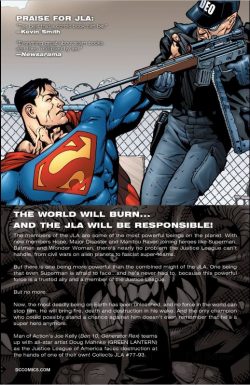
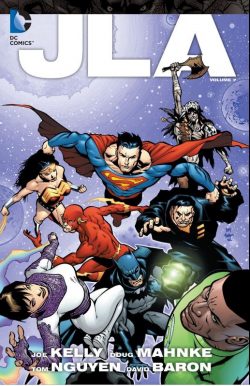
JLA Deluxe volume 7


By Joe Kelly, Rick Veitch, Dennis O’Neill, Doug Mankhe, Duncan Rouleau, Tang Eng Huat, ChrissCross, Darryl Banks & various (DC Comics)
ISBN: 978-1 4012 5528 2 (TPB)

Win’s Christmas Gift Recommendation: Festive Fights ‘n’ Tights Fun… 8/10

When the Justice League of America – driving force and cornerstone of the Silver Age of Comics – were relaunched in 1997 the sheer bravura quality of the stories propelled the series back to the forefront of industry attention, making as many new fans as it recaptured old ones; but the intoxicating sheen of “fresh and new” never lasts and by the time of these tales there had been numerous changes of creative personnel – usually a bad omen…

However, Joe Kelly’s tenure proved to be a marvellous blend of steadying hand and iconoclastic antics through which the JLA happily maintained their tricky task of keeping excitement levels stoked for a fan-base cursed with a criminally short attention span.

Kelly’s run on the series has some notable highs (and lows) and this portmanteau collection (gathering issues #77-93 of the monthly comicbook, spanning March 2003 – April 2004) happily falls into the former category as the team readjust to modern life after their time-lost traumas experienced in the Obsidian Age (see the previous volume of this enthralling deluxe series).

However, the adventure actually kicks off with an impressive, clever and fast-paced fill-in tale from Rick Veitch, Darryl Banks & Wayne Faucher wherein the team – Superman, Batman, Atom, Wonder Woman, Flash, Green Lantern John Stewart and Firestorm – are attacked by a civilisation-crushing cosmic wanderer which achieves its goals by invading brains and stealing knowledge in ‘Stardust Memories’…

That threat successfully circumvented, the World’s Greatest Superheroes learn of an interplanetary conflict that looks likely to divide the team forever in the eponymous two-parter ‘Rules of Engagement’ by Kelly, Doug Mankhe & Tom Nguyen.

With half the team travelling, uninvited, many light-years to stop a war, the remainder of the JLA stay back to police Earth, giving the opportunity to add some long-missed sub-plots to the usually straightforward storytelling; specifically, some unpleasant hints into new member Faith‘s clouded past, a long-deferred romantic dinner for Bruce Wayne and Amazonian Princess Diana and the beginnings of a very hot time for the Martian Manhunter with fiery potential paramour Scorch…

On the distant world of Kylaq, Leaguers Superman, Wonder Woman, Manitou Raven, Major Disaster, GL Stewart and mystery girl Faith act unilaterally to prevent the invasion of the Peacemaker Collective. The champions are keenly aware that once they succeed, they must leave the rescued world to the mercies of its own highly suspect government… especially Defense Minister Kanjar Ro, intergalactic slave-trader and one of their oldest, most despotic foes…

We then get some hints into Faith’s shady background as the reunited team are called to an Oregon cult compound where a new Messiah has created Safe Haven: a separatist enclave for metahuman children in the first chapter of socially-controversial thriller ‘The White Rage’.

Unfortunately, the Federal Authorities are not prepared to leave them alone and the resultant clash of ideologies leaves a thousand dead children on the crippled consciences of the devastated superheroes…

Yet something isn’t right: why does each JLA-er believe that they alone are responsible for the massacre? Moreover, what is the actual goal of master manipulator Manson and how does neo-Nazi taskforce Axis America fit into the scheme?

The action-packed mystery saga comes courtesy of Kelly, Duncan Rouleau & Aaron Sowd and is followed by a chilling change of pace in ‘American Nightmare’ by Joe Kelly, Chris Cross & Tom Nguyen.

Clean, clear-cut, high-concept tales here give way to more involved, even convoluted storyline and an increasing dependence on other series’ and characters’ continuity. After an alien telepathic presence puts American President Lex Luthor into a brain-dead coma before assaulting the entire League, investigations lead to an alien incursion more than twenty thousand years ago the in epic 6-part ‘Trial by Fire’ with Doug Mahnke pencilling the chilling proceedings.

During the ice age a monstrous presence was defeated at huge cost by a band of cavemen led by the League’s oldest foe, but it appears that the diabolical beast known as The Burning might not have died forever…

Ranging back even further in DC history it appears that the Guardians of the Universe, immortal taskmasters of the Green Lantern Corps, were involved in the creation of The Burning, and their dispassionate, implacable genetic meddling may have been instrumental in the origins, rise and potential fall of one of Earth’s greatest heroes…

Plagued by cruelly debilitating visions and psychic assaults, as are a sizable portion of humanity, the heroes are desperately struggling as one of their own is possessed by the malevolent entity Fernus who is only seconds away from turning the entire world into a radioactive cinder.

Can the JLA get their act together in time to prevent Armageddon? Of course they can, but not without paying a brutal, tragic price…

A palate-cleansing change of pace follows as ‘Perchance’ (Kelly, ChrissCross & Nguyen) resolves the Batman/Wonder Woman romantic entanglement in a most imaginative manner…

Wrapping up the team-tribulations is a return for veteran scribe Dennis O’Neill who reveals how a phenomenally powerful and benevolent alien returns to Earth after eons away.

Illustrated by Tang Eng Huat, ‘Extinction Part 1: The Coming’ relates how the voyager is checking in on the species he felt was destined to evolve into the planet’s dominant species. The JLA are quite perplexed and very nervous about how to tactfully explain that mankind have almost hunted the silver masked monkey into oblivion…

Things get even more tense in ‘Extinction Part 2: The Lesson’ as the unwilling ambassadors try to convince the troubled tourist of the better qualities on Earth’s actual masters before events come to a cataclysmic head in ‘Soul Survivor’ …

The JLA has – in all its incarnations – a long history of starting strong but losing focus, and particularly of coasting by on past glories for extended periods. Luckily the New/Old Dog still had a few more tricks and a little life in it before the inevitable demise and reboot for the next generation after Final Crisis.
© 2003, 2004, 2015 DC Comics. All Rights Reserved.