Doom Patrol: The Silver Age volume 1


By Arnold Drake, Bob Haney, Bruno Premiani, Bob Brown & various (DC Comics)
ISBN: 978-1-4012-8111-3

Win’s Christmas Gift Recommendation: Blockbuster Weird Science Fun… 8/10

1963 was the year when cautious comicbook publishers finally realised that superheroes were back in a big way and began reviving or creating a host of costumed characters to battle outrageous menaces and dastardly villains.

Thus it was that the powers-that-be at National Comics decided that venerable anthology-mystery title My Greatest Adventure would dip its toe in the waters with a radical take on the fad. Still, famed for cautious publishing, they introduced a startling squad of champions with their thematic roots still firmly planted in the B-movie monster films of the era that subtly informed the parent comic.

No traditional team of masked adventurers, this cast comprised a robot, a mummy and an occasional 50-foot woman, who joined forces with and were guided by a vivid, brusque, domineering, crippled mad scientist to fight injustice in a whole new way…

Covering June 1963 to May 1965, this stunning trade paperback – and eBook – compilation collects the Fabulous Freaks’ earliest exploits from My Greatest Adventure #80-85 and thereafter, issues #86-95 of the renamed title once overwhelming reader response compelled editor Murray Boltinoff to change it to the Doom Patrol.

The dramas were especially enhanced by the drawing skills of Italian cartoonist and classicist artist Giordano Bruno Premiani, whose highly detailed, subtly humanistic illustration made even the strangest situation dauntingly authentic and grittily believable. The premier tale ‘The Doom Patrol’ was co-scripted by Arnold Drake and Bob Haney, and saw a mysterious wheelchair-bound scientist summon three outcasts to his home through the promise of changing their miserable lives forever…

Competitive car racer Cliff Steele had died in a horrific pile up, but his undamaged brain had been transplanted into a fantastic mechanical body. Test pilot Larry Trainor had been trapped in an experimental stratospheric plane and become permanently radioactive, with the dubious benefit of gaining a semi-sentient energy avatar which could escape his body to perform incredible stunts for up to a minute at a time.

To pass safely amongst men Trainor had to constantly wrap himself in special radiation-proof bandages.

Ex-movie star Rita Farr had been exposed to mysterious gases which gave her the terrifying, unpredictable and, at first, uncontrolled ability to shrink or grow to incredible sizes.

The outcasts were brought together by brilliant but enigmatic Renaissance Man The Chief, who sought to mould the solitary misfits into a force for good. He quickly proved his point when a mad bomber attempted to blow up the city docks. The surly savant directed the trio of strangers in defusing it and no sooner had the misfits realised their true worth than they were on their first mission…

In second chapter ‘The Challenge of the Timeless Commander’, an incredibly ancient despot tried to seize a fallen alien ship, intent on turning its extraterrestrial secrets into weapons of world conquest, culminating in ‘The Deadly Duel with General Immortus’ which saw the Doom Patrol dedicate their lives to saving humanity from all threats.

My Greatest Adventure #81 featured ‘The Nightmare Maker’, combining everyday disaster response – saving a damaged submarine – with a nationwide plague of monsters. Stuck at base, The Chief monitors missions by means of a TV camera attached to Robotman‘s chest, and quickly deduces the uncanny secret of the beasts and their war criminal creator Josef Kreutz…

Solely scripted by Drake, a devious espionage ploy outed the Chief – or at least his image, if not name – in #82’s ‘Three Against the Earth!’, leading the team to believe Rita a traitor. When the cabal of millionaires actually behind the scheme are exposed as an alien advance guard who assumed the wheelchair-bound leader to be a rival invader, the inevitable showdown nearly costs Cliff what remains of his life…

In #83, ‘The Night Negative Man Went Berserk!’ spotlights the living mummy as a radio astronomy experiment interrupts the Negative Man’s return to Larry Trainor’s body, pitching the pilot into a coma and sending the ebony energy creature on a global spree of destruction. Calamity piles upon calamity when crooks steal the military equipment constructed to destroy the radio-energy creature and only desperate improvisation by Cliff and Rita allows avatar and host to reunite…

Issue #84 saw ‘The Return of General Immortus’ as ancient Babylonian artefacts lead the squad to the eternal malefactor, only to have the wily warrior turn the tables and take control of Robotman. Even though his comrades soon save him, Immortus escapes with the greatest treasures of all time…

My Greatest Adventure #85 was the last issue and featured ‘The Furies from 4,000 Miles Below’: monstrous subterranean horrors fuelled by nuclear forces. Despite having tricked Elasti-Girl into resuming her Hollywood career, the paternalistic heroes are pretty grateful when she turns up to save them all from radioactive incineration…

An unqualified success, the comicbook transformed seamlessly into The Doom Patrol with #86 and celebrated by introducing ‘The Brotherhood of Evil’: an assemblage of international super-criminals and terrorists led by French genius-in-a-jar The Brain. He was backed up by his greatest creation, a super-intelligent talking gorilla dubbed Monsieur Mallah.

The diametrically opposed teams first cross swords after brotherhood applicant Mr. Morden steals Rog, a giant robot the Chief intended for the US military…

DP #87 revealed ‘The Terrible Secret of Negative Man’ after Brotherhood femme fatale Madame Rouge attempts to seduce Larry. When the Brain’s unstoppable mechanical army invades the city, Trainor is forced to remove his bandages and allow his lethal radiations to disrupt their transmissions…

An occasional series of short solo adventures kicked off in this issue with ‘Robotman Fights Alone’. Here Cliff is dispatched to a Pacific island in search of an escaped killer, only to walk into a devastating series of WWII Japanese booby-traps…

All the mysteries surrounding the team’s leader are finally revealed in issue #88 with ‘The Incredible Origin of the Chief’: a blistering drama telling how brilliant but impoverished student Niles Caulder suddenly received unlimited funding from an anonymous patron interested in his researches on extending life.

Curiosity drove Caulder to track down his benefactor and he was horrified to discover the money came from the head of a criminal syndicate who claimed to be eons old…

Immortus had long ago consumed a potion which extended his life and wanted the student to recreate it since the years were finally catching up. To insure Caulder’s full cooperation, the General had a bomb inserted in the researcher’s chest and powered by his heartbeat …

After building a robot surgeon, Caulder tricked Immortus into shooting him, determined to thwart the monster at all costs. Once clinically dead, his Ra-2 doctor-bot removed the now-inert explosive and revived the bold scientist, but tragically the trusty mechanoid had been too slow and Caulder lost the use of his legs forever…

Undaunted, ‘The Man Who Lived Twice’ then destroyed all his research and went into hiding for years, with Immortus utterly unaware that Caulder had actually succeeded in the task which had stymied history’s greatest doctors and biologists…

Now, under the alias of super-thief The Baron, Immortus captures the Doom Patrol and demands a final confrontation with the Chief. Luckily the wheelchair-locked inventor is not only a biologist and robotics genius but also rather adept at constructing concealed weapons…

In #89 the team tackle a duplicitous scientist who devises a means to transform himself into ‘The Animal-Vegetable-Mineral Menace’ before ‘The Private War of Elasti-Girl’ finds the Maid of Many Sizes using unsuspected detective skills to track down a missing soldier and reunite him with his adopted son.

‘The Enemy within the Doom Patrol’ sees shape-shifting Madame Rouge infiltrate the team and almost turn them against each other whilst issue #91 introduces multi-millionaire Steve Dayton.

Used to getting whatever he wants, he creates a superhero persona solely to woo and wed Rita Farr. With such ambiguous motivations ‘Mento – the Man who Split the Doom Patrol’ was a radical character for the times, but at least his psycho-kinetic helmet proved a big help in defeating the plastic robots of grotesque alien invader Garguax…

DP #92 tasks the team with a temporal terrorist in ‘The Sinister Secret of Dr. Tyme’ and features the abrasive Mento again saving the day, after which ‘Showdown on Nightmare Road’ in #93 features The Brain’s latest monstrous scheme. This results in the evil genius being transplanted inside Robotman’s skull whilst poor Cliff is dumped into a horrific beast, until the Chief out-plays the French Fiend at his own game…

Creature-feature veteran Bob Brown stepped in to illustrate #94’s lead tale ‘The Nightmare Fighters’ as an eastern mystic’s uncanny abilities are swiftly debunked by solid American science. Premiani returned to render back-up solo-feature ‘The Chief “Stands” Alone’ wherein Caulder eschews his deputies’ aid to bring down bird-themed villain The Claw with a mixture of wit, nerve and weaponised wheelchair.

This initial outing concludes with The Chief’s disastrous effort to cure Rita and Larry (DP #95); resulting in switched powers and the ‘Menace of the Turnabout Heroes’, so naturally that would be the very moment the Animal-Vegetable-Mineral Man would pick for a return bout…

Although as kids we all happily suspended disbelief and bought into the fanciful antics of the myriad masked heroes available, somehow the exploits of the Doom Patrol – and their surprisingly synchronistic Marvel counterparts The X-Men (freaks and outcasts, wheelchair geniuses, both debuting in the summer of 1963) – always seemed just a bit more “real” than the usual caped and costumed crowd.

With the edge of time and experience on my side it’s obvious just how incredibly mature and hardcore Drake, Haney & Premiani’s take on superheroes actually was. These superbly engaging, frantically fun and breathtakingly beautiful tales should rightfully rank amongst the finest Fights ‘n’ Tights tales ever told. Moreover, you should definitely own them, and now you can…
© 1963, 1964, 1965, 2018 DC Comics, Inc. All Rights Reserved.

Lola – a Ghost Story


By J. Torres & Elbert Or (Oni Press)
ISBN: 978-1-934964-33-0 (HB)                    978-1-93266-424-9 (PB)

These days young kids are far more likely to find their formative strip narrative experiences online or between the card-covers of specially tailored graphic novels rather than the comics and periodicals of my long-dead youth.

In times past the commercial comics industry thrived by producing copious amounts of gaudy, flimsy pamphlets subdivided into a range of successfully, self-propagating, seamlessly self-perpetuating age-specific publications.

Such eye-catching items generated innumerable tales and delights intended to entertain, inform and educate such well-defined target demographics as Toddler/Kindergarten, Younger and Older Juvenile, General, Girls, Boys and even Young Teens, but today the English-speaking world can only afford to maintain a few paltry out-industry, licensed tie-ins and spin-offs for a dwindling younger readership.

Where once cheap and prolific, strip magazines in the 21st century are extremely cost-intensive and manufactured for a highly specific – and dwindling – niche market, whilst the beguiling and bombastic genres that originally fed and nurtured comics are more immediately disseminated via TV, movies and assorted interactive games media.

Happily, old-school prose publishers and the burgeoning graphic novel industry have a different business model and far more sustainable long-term goals, so magazine makers’ surrender has become their window, as solid and reassuringly sturdy Comic Books increasingly buck the pamphlet/papers trend.

Some of the old-fashioned publishers even evolved to join the revolution…

Independent comics mainstay Oni deftly made the switch to sturdy stand-alone one-offs at the end of the last century, publishing a succession of superb illustrated tales splendidly pushing the creative envelope whilst providing memorable yarns that irresistibly lure young potential fans of the form into our world…

That looks quite creepy in type-form but that’s okay – this is a beguilingly spooky story and you should be on your guard…

Aimed at readers of seven and above, Lola – a Ghost Story follows young Canadian Jesse as he returns to the rural Philippines farm where his parents grew up. It’s not his first visit, but it is the saddest. They’re going back for the funeral of his grandmother…

In the native Tagalog language Lola means “grandmother” and Jesse’s was pretty scary. She was old and ugly, had a hump on her back and – he thinks – she tried to drown him when he was a baby…

Grandma Lola also saw dead things and monsters and the future… just like Jesse does.

Despite all this he loved her very much and really doesn’t want to accept that she’s gone forever.

After hours of exhausting travel into the forbidding wild region Jesse and his folks at last arrive at the old farmhouse which has seen so much tragedy. The little visitor fulsomely greets his uncle and cousin Maritess, but won’t acknowledge her brother JonJon. That kid’s acting like a jerk as usual, and besides he’s been dead for over a year and no-one else can see him…

Soon the family are gathered together: eating, memorialising the departed and telling stories of Lola – like the time she saw the giant devil-pig and saved the entire family from financial ruin. Despite the convivial atmosphere, Jesse is still ill at ease. Even though everyone here believes his grandmother had second sight and blessed gifts, the sensibly modern boy can’t bring himself to believe the things he sees are real…

Maritess believes though, and she suspects what Jesse won’t admit even to himself…

After JonJon teases him some more and taunts him with the giant bestial, cigar-smoking Kapre lurking at the window, Jesse finally drops into an exhausted, nervous slumber.

The funeral next day is horrible. Everybody is sad, the church is filled with so many shockingly damaged spirits and Jesse is afflicted with a vision of being trapped and burning which makes him run screaming from the ceremony.

Still traumatised that evening, he finds JonJon’s old toybox on his bed and Maritess guesses what has happened.

She tells her cousin the story of the bloodsucking Manananggal which attacked Lola’s mother, causing her unborn daughter’s hump-back and magical sight. Such gifts and curses usually skip a generation and Maritess always assumed she’d be the one to get the sight, but now that it’s clear Jesse is the one to inherit the power, she’s determined to give him all the help he needs.

The box is full of JonJon’s toy cars, and after playing with them Jesse and the dead boy romp over by the farm wall – the one where nobody is allowed to go anymore…

Jesse’s uncle isn’t doing very well: all the tragedies have made him very sad and he’s drinking an awful lot.

There are other problems bothering Jesse. The entire family have stories about his grandmother and it’s clear that she was brave and determined and fought monsters all her life: is that, then, why she tried to drown him when he was a baby?

Maritess tells her Canadian cousin about the time little Lola saved her school friends from a predatory Tiyanak – a baby-shaped carnivorous monster – and he readies himself to ask her if she thinks he might be evil. Just then her father comes in very drunk and shouts at him for leaving JonJon’s cars in the garden.

They are all he has left to remember his son and the boy’s favourite one is already missing. Jesse knows which one it is… the striped one JonJon calls “Zebra” which he wouldn’t share with him last night by the wall…

Uncle Tim hates the wall. It had something to do with his son’s death and Jesse knows he’ll get into trouble if he goes over it. But Uncle is so sad. He misses his boy and really wanted to bury Zebra with JonJon, but it’s gone and the man is so drunk and angry all the time now…

Jesse’s fear that Lola saw something evil in him is assuaged by Maritess who thinks he should use his gift to help people – just like just their grandmother used to – so when JonJon appears again, Jesse climbs the hated wall and vanishes into the wild unknown beyond…

With Jesse’s first good deed successfully accomplished, JonJon can rest and Uncle Tim is at peace. The troubled psychic is even a little less disturbed by his power and his apparent destiny, but that all changes on the trip back to the airport when Jesse sees something utterly horrifying…

Evocative, compelling, gently enthralling and with a genuinely scary shock ending, this superb kid’s chiller is filled with a fascinating new bestiary of monsters and bogey-men to bedazzle Western eyes and imaginations, but mostly relies on captivating art and top-notch storytelling to draw readers in.

I loved it and so will you…
Lola is ™ & © 2009 J. Torres. All other material © 2009 Oni Press, Inc. All Rights Reserved.

The Phantom – The Complete Series: The King Years


By Bill Harris, Dick Wood & Bill Lignante, Giovanni Fiorentini & Senio Pratesi & various (Hermes Press)
ISBN: 978-1-61345-009-3

In the 17th century a British sailor survived an attack by pirates, and, washing ashore in Africa, swore on the skull of his murdered father to dedicate his life and that of all his descendants to destroying all pirates and criminals. The Phantom fights crime and injustice from a base deep in the jungles of Bengali, and throughout Africa is known as the “Ghost Who Walks”.

His unchanging appearance and unswerving quest for justice have led to him being considered an immortal avenger by the credulous and the wicked. Down the decades one hero after another has fought and died in an unbroken family line, and the latest wearer of the mask, indistinguishable from the first, continues the never-ending battle…

Lee Falk created the Jungle Avenger at the request of his syndicate employers who were already making history, public headway and loads of money with his first strip sensation Mandrake the Magician…

Although technically not the first ever costumed hero in comics, The Phantom was the prototype paladin to wear a skin-tight body-stocking and the first to have a mask with opaque eye-slits.

He debuted on February 17th 1936 in an extended sequence that pitted him against a global confederation of pirates called the Singh Brotherhood. Falk wrote and drew the daily strip for the first two weeks before handing over the illustration side to artist Ray Moore. The Sunday feature began in May 1939.

For such a successful, long-lived and influential series, in terms of compendia or graphic novel collections, The Phantom has been very poorly served by the English language market.

Various small companies have tried to collect the strips – one of the longest continually running adventure serials in publishing history – but in no systematic or chronological order and never with any sustained success.

But, even if it were only of historical value (or just printed for Australians, who have long been manic devotees of the implacable champion) surely “Kit Walker” is worthy of a definitive chronological compendium series?

Happily, his comic book adventures have fared slightly better – at least in recent times…

Between 1966 and 1967 King Features Syndicate dabbled with a comicbook line of their biggest stars – Flash Gordon, Mandrake and The Phantom – developed after the Ghost Who Walks had enjoyed a solo-starring vehicle under the broad and effective aegis of veteran licensed properties publisher Gold Key Comics.

The Phantom was no stranger to funnybooks, having been featured since the Golden Age in titles such as Feature Book and Harvey Hits, but only as straight reformatted strip reprints. The Gold Key exploits were tailored to a big page and a young readership, a model King maintained for their own run.

This splendid full-cover hardcover – or eBook for the modern minded – gathers the contents of The Phantom #19-28 (originally released between November 1966 and December 1967) as well as four back-up vignettes from Mandrake #1-4, spanning September 1966 to January 1967.

Following fascinating Introduction ‘The Phantom, the King Years’ from fans and scholars Pete Klaus and Howard S. Gesbeck (which includes some splendid unseen art and candid photos) the procession of classic wonders resumes.

As with the Gold Key issues, the majority of the stories are scripted by Bill Harris or Dick Wood and drawn in comicbook format by Bill Lignante, with cover by or based on images from the daily strip as limned by Sy Barry.

Opening the King archive is a fabulously wry romp as a coterie of crooks inveigles their way into the Phantom’s jungle home, intent on stealing ‘The Treasure of the Skull Cave’. Over the centuries the Ghost Who Walks has amassed the most fantastic hoard of legendary loot and astounding artefacts, but the trio of crooks can’t agree on what is or isn’t valuable and soon pay the price for their folly and genocidal intent…

Issue #19 tapped into the global excitement as America neared its first manned moonshots with ‘The Astronaut and the Pirates’ finding the Phantom hunting the seagoing brigands who abduct and ransom an American spaceman after his off-course splashdown lands him in very hot water…

The second tale in the issue relies on more traditional themes as ‘The Masked Emissary’ intervenes in a civil war; protecting an ousted democratic leader from a tyrannical despot, until liberty can be restored to the people.

The Phantom #20 – cover dated January 1967 – led with a bold departure from tradition. Scripted by Pat Fortunato ‘The Adventures of the Girl Phantom’ delved into the meticulous family chronicles to reveal how, a few generations previously, the feisty twin sister of a former Ghost Who Walked took her brother’s place to police the jungles of Bengali after he was laid low.

Counterpointing that radical drama is a moody mad science thriller as the current masked marvel battles old enemy Dr. Krazz and aliens from the Earth’s interior in ‘The Invisible Demon’…

In #21 ‘The Treasure of Bengali Bay’ finds the Phantom battling bandits using their own fake ghost to secure sunken loot after grudge-bearing Indian Prince Taran lures our hero to the sub-continent as fodder for specially trained animal assassin ‘The Terror Tiger’.

Full-length drama ‘The Secret of Magic Mountain’ pits The Immortal Avenger against sly witch doctor Tuluck who mixes misconceived ancient history and a freshly-active volcano to turn the local tribes against The Phantom, whilst in #23 merciless pirate ‘Delilah’ takes the place of a Peace Corps worker to get lethally close to the guardian of the jungle.

However, her devious wiles, brainwashing techniques and super-submarine prove of little use against the dauntless and implacable Ghost Who Walks…

Girl Phantom Julie steals the show again in #24 as she and faithful friend Maru challenge the forces of darkness to defeat a vicious manipulator in ‘The Riddle of the Witch’…

Writer Giovanni Fiorentini and illustrator Senio Pratesi tackle #25 as the modern hero and famous athlete and sportswoman (and prospective wife) Diana Palmer frustrate slave-taking diamond smugglers intent on subjugating ‘The Cold Fire Worshippers’ before issue #26 marks a return to double story instalments.

Lignante’s ‘The Lost City of Yiango’ sees the Phantom compelled to solve a 50-year old mystery and prevent a resurgence of tribal warfare, after which he answers a desperate plea to safeguard an irreplaceable treasure and goes undercover to thwart ‘The Pearl Raiders’…

The Phantom #27 reveals the origins of the African Avenger’s wonder-horse as ‘The Story of Hero’ discloses how he once rescued kidnapped Princess Melonie of Kabora and how – following ‘The Long Trip Home’ – he was thanked with a most marvellous equine gift…

The Phantom’s King chronicles concluded in #28 ‘Diana’s Deadly Tour’ as the celebrity embarks on a global exhibition jaunt and is targeted by ruthless spies. Not only must her enigmatic paramour keep her safe but also solve the bewildering mystery of why they keep trying to kill her…

Wrapping up the issue is an ultra-short yarn as a frustrated world champion boxer hunts the Ghost Who Walks determined to prove who’s the toughest guy in ‘The Big Fight’…

As mentioned above the Phantom guested in vignettes in Mandrake #1-4. Those ‘Back-Up Stories’ round out the comics cavalcade here beginning with ‘SOS Phantom’ as the Guardian Ghost responds to secret drum signals to quell an outbreak of fever, whilst ‘SOS Phantom: The Pirate Raiders’ finds him answering similar “threat tomtoms” to tackle and terrify superstitious coastal raiders…

Those self-same drums are crucial in thwarting a murderous criminal mastermind intent on penning the Phantom in ‘The Magic Ivory Cage’ and the flurry of little epics ends with another outing for ‘The Girl Phantom’ who here outwits a brutal strongman whose brawn and belligerence are no match for cool head…

Sprinkled liberally with original art, unused cover designs for the never-printed issues #29 and 30, examples from foreign editions and a wealth of original art pages by Jim Aparo (from forthcoming volume The Phantom: The Complete Series: The Charlton Years: volume 1) this another nostalgia drenched triumph: straightforward, captivating rollicking action-adventure that has always been the staple of comics fiction.

If that sounds like a good time to you, this is a traditional action-fest you can’t afford to miss…
The Phantom® © 1966-1967 and 2012 King Features Syndicate, Inc. ® Hearst Holdings, Inc. Reprinted with permission. All rights reserved.

Werewolf by Night – the Complete Collection volume 2


By Gerry Conway, Mike Friedrich, Tony Isabella, Doug Moench, Mike Ploog, Don Perlin, Pat Broderick, Vigilio Redondo, Yong Montaño & various (Marvel)
ISBN: 978-1-30290-

As Marvel slowly grew to a position of market dominance in 1970, in the wake of losing their two most innovative and inspirational creators – Steve Ditko and Jack Kirby – they did so less by experimentation and more by expanding proven concepts and properties.

The only real exception to this was a mass release of horror titles rapidly devised in response to an industry-wide down-turn in superhero sales. The move was handily expedited by a rapid revision in the wordings of the increasingly ineffectual Comics Code Authority rules.

Almost overnight nasty monsters (plus narcotics and bent coppers – but that’s another story) became acceptable fare within four-colour pages and whilst a parade of 1950s pre-code reprints made sound business sense (so they repackaged a bunch of those too) the creative aspect of the contemporary fascination in supernatural themes was catered to by adapting popular cultural icons before risking whole new concepts on an untested public.

As always, the watch-word was fashion: what was hitting big outside comics was to be incorporated into the mix as soon as possible.

When proto-monster Morbius, the Living Vampire debuted in Amazing Spider-Man #101 (October 1971) and the sky failed to fall in, Marvel moved ahead with a line of scary superstars – beginning with a werewolf and traditional vampire – before chancing something new via a haunted biker who could tap into both Easy Rider’s freewheeling motorcycling chic and the supernatural zeitgeist.

With its title cribbed from a classic short thriller from pre-Code horror anthology Marvel Tales #116 (July 1953), Werewolf By Night debuted in Marvel Spotlight #2. It had been preceded by masked western hero Red Wolf in #1 and followed by the afore-hinted Ghost Rider, but this hairy hero was destined to stick around for a while.

Marvel had a long-time tradition of using old (and presumably already copyrighted) names and titles when creating new series and characters. Hulk, Thor, Magneto, Doctor Strange and many others all got notional starts as throwaways before being re-imagined as major characters…

This copious trade paperback and eBook compendium compiles more moody misadventures of a good-hearted young West Coast lycanthrope who briefly shone as an unlikely star for the entire length of a trading trend, Werewolf By Night volume 1 #16-30, Giant-Size Creatures #1, Giant-Size Werewolf By Night #2-4, and a melange of monochrome material from Monsters Unleashed #6-7: all collectively spanning April 1974 to June 1975.

Jack Russell is a teenager with a thankfully rare but very disturbing condition. On her deathbed, his mother revealed unsuspected Transylvanian origins to her beloved boy: relating a family curse which would turn him into a raging beast on every night with a full moon… as soon as he reached his 18th birthday.

And so it began…

After many months of misunderstanding as Jack tried to cope alone with his periodic wild side, Jack’s stepfather Philip Russell expanded the story, revealing how the Russoff line was cursed by the taint of Lycanthropy: every child doomed to become a wolf-thing under the full-moon from the moment they reached eighteen.

Moreover, the feral blight would do the same to his little sister Lissa when she reached her own majority…

As Jack tried and repeatedly failed to balance a normal life with his monthly cycle of uncontrollable ferocity, he met his eventual mentor and confidante Buck Cowan, an aging writer who became Jack’s best friend after the pair began to jointly investigate the wolf-boy’s history. Their incessant search for a cure was made more urgent by little Lissa’s ever-encroaching birthday.

In the course of their researches they crossed swords with many monsters – human and otherwise – including off-the-rails cop Lou Hackett, who had been going increasingly crazy in his hunt for a werewolf nobody believed in, and fellow lycanthrope Raymond Coker who had found a shocking remedy to their condition…

For one werewolf to lift his curse he/she had to kill another one…

Following an Introduction from former Marvel editor Ralph Macchio, the suspense resumes with Jack in Paris. Seeking a cure in his Balkan homeland, but instead clashing with vampire lord Dracula, Jack and his new girlfriend Topaz (a powerful, mystically-attuned psychic and psionic) were enduring a tiresome – and crucially untimely – forced stopover in the City of Lights…

This leads to an impromptu clash with a modern-day incarnation of the Hunchback of Notre Dame (he doesn’t sing and he’s not very gentle here) and ‘Death in the Cathedral!’. Scripted by Mike Friedrich and inked by Frank Chiaramonte, this bombastic battle was co-originator Mike Ploog’s farewell performance as artist in residence.

WBN #17 was by Friedrich & Don Perlin, with Jack and Topaz escaping Paris only to fall into the Committee’s latest scheme as the blustering Baron Thunder and his favourite monster ‘The Behemoth!’ tried to make the werewolf their plaything again.

The Committee were a long-term adversary: a cabal of crazy capitalists who wanted to own the werewolf because he could scare the public, allowing them to create a panic-crazed sales boom…

The tale concluded in ‘Murder by Moonlight!’ as the secret of Jack’s mystery neighbour is exposed when Thunder attacks again, aided by witch-queen Ma Mayhem. However, it was all a feint for the Committee to kidnap Lissa who would, one day soon, become a werewolf too…

Whilst searching for her, Jack then falls foul of two undead film-stars haunting the Hollywood backlots in #19’s ‘Vampires on the Moon’ after which Giant-Size Creatures #1 moodily re-imagines a failed costumed crusader to introduce a new creepy champion in ‘Tigra the Were-Woman!’ (by Tony Isabella, Perlin & Vince Colletta).

Here Greer Nelson, one-time feminist avenger The Cat, is “assassinated” by Hydra agents, revived by ancient hidden race the Cat-People and becomes an unwilling object of temporary affection to the feral and frisky moonwalker Jack Russell…

Following ‘Waiter, there’s a Werewolf in my Soup!’ a text piece also from Giant-Size Creatures that explains the genesis of Marvel’s horror line, WBN #20 debuts writer Doug Moench to wrap up all the disparate plot threads in ‘Eye of the Wolf!’: a rushed but satisfactory conclusion featuring a whole pack of werewolves, Thunder, Ma Mayhem and lots and lots of action.

With the decks cleared, Moench began to make the series uniquely his own, beginning with #21’s ‘One Wolf’s Cure… Another’s Poison!’ wherein he starts playing up the ever-encroaching 18th birthday of little Lissa before deftly engineering the final reckoning with off-the-rails cop Lou Hackett, who had been going increasingly crazy in his obsessive hunt for the werewolf…

With the stage set for some truly outrageous yarn-spinning we abruptly divert to a brace of sidebar shorts taken from Monsters Unleashed #6 and 7.

Here Gerry Conway wrote prose yarn ‘Panic by Moonlight’ and concluding instalment ‘Madness Under a Mid-Summer Moon’ (with spot illustrations by Ploog and Pat Broderick & Klaus Janson) detailing how a gang of bikers picked the wrong night to home-invade the flashy singles complex Jack Russell lived in…

The tantalising diversion is bracketed by the painted covers of the monochrome magazines and Gil Kane’s cover for earlier collection Essential Werewolf By Night volume 2.

With Moench at the helm and almost exclusively pencilled for rest of the run by the criminally underrated Don Perlin, the midnight comics mysteries resume the Vince Colletta inked Giant-Size Werewolf By Night #2 as ‘The Frankenstein Monster Meets Werewolf By Night’.

Roaming the streets of New York in ‘Prisoners of Flesh!’, the recently resurrected massive mute monster hops a freight train west after overhearing of a mystic named Danton Valya who can transplant souls into new bodies…

He arrives in Los Angeles just as Jack Russell discovers Lissa has been abducted by Valya’s Satanist cult ‘To Host the Beast’ before cataclysmically clashing with the monster who has only to let the diabolists sacrifice the werewolf and Lissa to gain his heart’s desire…

Tragically the noble artificial man has more compassion than the cultists and prefers his own sorry existence to benefiting from ‘The Flesh of Satan’s Hate!’…

Werewolf By Night #22 (Moench, Perlin & Colletta) then introduces crazed murder-maniac Atlas, who stalks and slays many of Buck’s movie friends. Moreover, when Russell’s hairy Other encounters the ‘Face of the Fiend!’, Atlas beats the beast unconscious and in the morning light bleary Jack is subsequently arrested for the latest murder…

Lieutenant Vic Northrup was a good friend of deceased former Hackett and knows Russell is hiding something, but eventually has to release him for lack of evidence. Picking Jack up from the station, Buck reveals he has gleaned the inside story of Atlas and his own historical involvement in the story, just in time to become the next target…

Fortuitously, the werewolf is on hand when Atlas attacks and the battle explodes into LA’s streets where disbelieving cops have to admit that ‘The Murderer is a Maniac!’

In #24 Buck introduces Jack to fringe scientist Winston Redditch who claims to have chemically isolated the constituents of the human psyche and thus might be able to suppress Jack’s periodic bestial outbursts. Sadly, the boffin accidentally ingests the serum himself and unleashes ‘The Dark Side of Evil!’

The remorseless sadistic thug he becomes calls himself DePrayve and fights the werewolf to a standstill, giving Northrup an opportunity to capture the hirsute “urban legend” which has stalked the city and drove Hackett crazy…

From WBN #25 the art took a quantum leap in quality as Perlin – already co-plotting the stories – began inking his own pencils. When the beast busts out of custody ‘An Eclipse of Evil’ sees Redditch turning his warped attention to the lycanthrope as a potential guinea pig for further experimentation, only for both the feral fury and dastardly DePrayve to be targeted by a deranged vigilante and “protector of purity” calling himself The Hangman…

The horrific three-way clash results in ‘A Crusade of Murder’, with Redditch hospitalised, the vicious vigilante in custody and battered, bloody-yet-unbowed Jack still free and still cursed…

Eschewing chronological order for the sake of unbroken continuity-clarity, January’s Giant-Size Werewolf By Night #3 pops up here and reveals a ‘Castle Curse!’ (inked by Sal Trapani) in which Jack returns to Transylvania after receiving a monster-infested vision of former love interest – and psionic powerhouse – Topaz in ‘Spawned in Dream… Slain in Nightmare!’

Jack drags Buck and Lissa ‘Home to Slay!’ in the Balkans, finding the old family home under siege by pitchfork-wielding villagers who have all their worst fears confirmed when he goes hairy and gets hungry, before finally tracking down Topaz in the care – and custody – of a gypsy matriarch with an arcane agenda of her own.

The blood-crazed old witch has a tragic connection to the Russoff line and is exploiting Topaz’s restored powers to enact a grisly ‘Vengeance in Death!’ upon the villagers by raising an army of zombies.

The chain of events she set in motion can only end in slaughter…

Werewolf By Night #27 (March 1975) began a chilling and fantastic extended eldritch epic with the introduction of ‘The Amazing Doctor Glitternight’. Back in the USA, Jack’s feral alter ego runs loose on the isolated Californian coast and is drawn to a cave where a bizarre wizard makes monsters from what appears to be fragments of Topaz’s soul…

The eerie mage is actually hunting for Topaz’s dead stepfather Taboo and will not be gainsaid, even after Jack’s uncontrollable were-beast slaughters his monstrous masterpiece…

The wizard intensifies his campaign in ‘The Darkness from Glitternight’, heaping horrors upon Jack and friends before capturing Lissa on her birthday and using dark magic to turn her from simple werewolf into ‘A Sister of Hell’…

The spectral re-emergence of Taboo proves a turning point as wolf battles hellbeast and everybody clashes with Glitternight before a ‘Red Slash Across Midnight’ seemingly results in a cure for one of the tortured Russell clan…

April’s Giant-Size Werewolf By Night #4 offers a long-delayed and anticipated clash with living vampire Morbius: beginning with ‘A Meeting of Blood’ (Moench & Virgil Redondo) with the former biologist tracking his old girlfriend Martine and discovering a possible cure for his own exsanguinary condition.

Unfortunately, the chase brings him into savage and inconclusive combat with a certain hairy hellion and the solution is forever lost…

Also included in that double-sized issue is Moench & Yong Montaño’s ‘When the Moon Dripped Blood!’, wherein Jack and Buck stumble across a group of rustic loons all-too-successfully summoning a ghastly elder god. Although great at consuming and converting human offerings and acolytes, the appalling atrocity is seemingly no match for a ravening ball of furious fangs and claws…

This second sinister compendium concludes with a bonanza of bonus features: Arthur Adams & Jason Keith’s Werewolf By Night Omnibus cover, original art pages by Ploog & Chiaramonte, Perlin & Colletta and all-Perlin, plus werewolf art by Perlin & Joe Rubinstein and Paul Ryan & Rubinstein taken from various iterations of the Official Handbook of the Marvel Universe.

This moody masterpiece of macabre menace and all-out animal action covers some of the most under-appreciated magic moments in Marvel history; tense, suspenseful and solidly compelling. If you feel the urge to indulge in a mixed bag of lycanthropes, bloodsuckers and moody young misses – this is a far more entertaining mix than many modern movies, books or miscellaneous matter…
© 1972, 1974, 1975, 2017 Marvel Characters, Inc. All rights reserved.

House


By Josh Simmons (Fantagraphics Books)
ISBN: 978-1-56097-855-8

A young man walks through the woods, until he sees a ramshackle old house. Outside the derelict property he meets two young women and they strike up a conversation. Filled with high spirits, they decide to explore the dilapidated old mansion.

The place is a wreck. As they cautiously move deeper into the vast manse, the boy and the blonde girl begin to feel a mutual attraction…

When they discover that the back of the house has collapsed and is under water, forming an inviting pool, all three explorers all dive in and play in the rippling pool.

In a submerged room boy and blonde share a kiss. The dark girl knows something has happened, that all the relationships have shifted. With a new tension gripping them, they continue to explore, but nothing feels innocent now. And then the staircase collapses…

Josh Simmons set himself a daunting task with his early foray into the weirdscape of modern American Gothic. This entire tale is told without words. Settings, scenario and character are established and the narrative undertaken purely by making pictures and by manipulating light and dark, panel and space.

The manner in which an idyll becomes a terrifying, crushing, tragic nightmare is powerful, seductive and truly overwhelming in its delivery. Simmons – who went on to beguile and enthral in later works such Jessica Farm, The Furry Trap and Black River – succeeds here in crafting a true graphic narrative, a thrilling story in a manner and with a force that no other medium could.

Silent, compelling, wonderful: This is a book – available in hardback and in digital editions – no serious reader should ignore and no budding creator should miss.
© 2007 Josh Simmons. All Rights Reserved.

Bunny vs Monkey Book 5: Destructo and Other Ridiculous Stories


By Jaime Smart (David Fickling Books)
ISBN: 978-1-78845-055-3

Win’s Christmas Gift Recommendation: Never-Ending Mirthful Madness… 9/10

Since its premiere in 2012, The Phoenix has offered humour, adventure, quizzes, puzzles and educational material in a traditional-seeming weekly comics anthology for girls and boys. The vibrant parade of cartoon fun and fantasy has won praise from the Great and the Good, child literacy experts and the only people who really count – a dedicated and growing legion of totally engaged kids and parents who read it avidly…

The publishers would be crazy not to gather their greatest serial hits into a line of fabulously engaging album compilations, but they’re not, so they do. The latest of these is a fifth fractiously frenetic paperback bout of ongoing conflict troubling a once-chummy woodland waif and interloping, grandeur-hungry, hairy-brained simian…

Concocted with feverishly gleeful inspiration by Jamie Smart, Bunny vs. Monkey has been a Phoenix fixture from the very first issue: recounting a madcap vendetta between animal arch-enemies set amidst an idyllic arcadia which masquerades as a more-or-less mundane English Wood.

Destructo and Other Ridiculous Stories sees the war of nerves and mega-weapons intensify as the unruly assortment of odd critters littering and loitering around the bucolic paradise shift and twist into ever-more unstable factionalism. They all seem to have forgotten that the rapidly encroaching Hyoomanz are now well underway in building something called a motorway right through the sylvan glades and apparently unprotected parks…

All that tail-biting tension began when an obnoxious monkey gatecrasher popped up after a disastrous space shot went awry.

Having crash-landed in Crinkle Woods – a scant few miles from his blast-off site – lab animal Monkey believes himself the rightful owner of a strange new world, despite the continual efforts of reasonable, sensible, genteel, contemplative Bunny to dissuade him. For all his patience, propriety and good breeding, the laid-back lepine just cannot contain the incorrigible idiot ape, who is a rude, noise-loving, chaos-creating troublemaker…

All these collected volumes dispense disaster-drenched doses of daftness in six-month courses of ill-treatment and this book describes Year Three: January to June as transcribed on another vivid Contents page and commencing after a glorious poster-style spread of our bestial Dramatis Personae page…

This tranche of turbulent two-page episodes begins with tiny terror Monkey manifesting more mayhem and almost turning his own stomach inside out whilst attempting to weaponize some very nasty stuff he finds under his feet in ‘Gross!’

With snow on the ground Monkey then finds a way to spoil the Great Sled-Off in ‘Tobog-Gone!’ and latterly set back mammal-robot relations by picking on newcomer ‘Metal Steve 2!’, before a seemingly new menace manifests to worry the woodland folk in the dark guise of evil arch-villain ‘Destructo!’

When the weather clears up, Monkey’s Double-Barrelled Supercharged Snow-Cannon-Tank is suddenly deprived of ammo until the devilish pest repurposes his toy to fire chutney. Sadly, even this resultant chaos is insufficient to his comprehending ‘The Message!’…

A brief and sudden return of ‘Skunky!’ only leads to disappointment, but his crazed influence remains to monsterize the ‘Pretty Flowers!’ whilst the debut of cyborg bounty hunter ‘Alan!’ (Armoured Locating Armadillo Network) threatens to destabilise the ongoing conflict until the big bully gets on the wrong side of gentle, peace-loving Pig‘s ice cream…

Too much of the good life eventually slows down our friends so they convince Le Fox to help them ‘Get Fit!’ just in time for the awful ape to celebrate (or desecrate) Easter by eating all ‘The Wrong Eggs!’

The wee woodlanders then face Skunky’s robotic Vulturaptors in ‘Terror from the Skies’, but when night falls huge ‘Bobbles!’ from the sky spark fears of alien invasion…

The good guys then try to infiltrate Skunky’s new high-tech HQ ‘The Temple!’, just in time for ‘The Audition!’ to join the musky mastermind’s new gang the League of Doom.

Sadly, the only one to make the grade is meek misfit Pig in his new gruesome guise of ‘Pigulus!’…

History horrifically repeats itself when another crashed space capsule ejects an even more destructive newcomer in ‘The Evil Monkey!’ Sadly, that only incites the previous incumbent to up his aggravating game…

When the genteel inhabitants of the wood start enjoying ‘Picnics!’ they have no conception that the day will end in chaos after Skunky’s escaped Grasshopalong induces the science maverick to attempt recapture with a giant Tarsier…

Sometime ally Le Fox cultivates an air of mystery, but when the League of Doom unleash a deadly custard assault his annoying old ‘Uncle Fox!’ quickly proves to be the real superspy deal after which Monkey’s latest property deal lands bunny with an obnoxious ‘Bad Neighbour!’ in the form of musician Bert Warthog. But not for long…

When Skunky unleashes his devastating, colossal De-Forester 9000, the unthinkable occurs as Bunny and Monkey declare ‘The Truce!’ that leads to the mega-machine’s demise but by the time Action Beaver becomes ‘The Messenger!’ for the skunk’s poison letters, all bets are off again and it’s every critter for himself…

More mad science sees the launch of a weather station and an unseasonal snow barrage, but Skunky’s malignant fun is ruined after Weenie Squirrel demonstrates astounding piste pizazz in ‘Ski-Daddle!’, before a lost little skunk destabilises the wicked stinker.

Thomas is unmoved by monster robots like the rampaging Octobosh and truly gets to the emotional soft side of his newfound ‘Uncle Skunky!’…

Perhaps that episode is what prompts his invention of ‘The Truthometer!’, but when Skunky hears what the woodlanders actually think about him, he soon regrets ever thinking of it…

The Quantum Bibble Fobbulator also goes wrong, tearing ‘Wormholes!’ in the forest fabric, but somehow the woodland residents still make the best of the situation, whilst the skunk’s size-changing ray only makes his victims too tall to tackle in ‘The Embiggening!’

The rural riot concludes with a frankly disturbing insight into our simian star’s softer side as he administers first aid to an ailing Bunny and subsequently descends into megalomania as the truly terrifying ‘Nurse Monkey!’…

To Be Continued…

The absolute acme of absurdist adventure, Bunny Vs Monkey is sheers bonkers brilliance and well past definitely on the way to becoming a British Institution of weird wit, insane invention and captivating cartooning. This is another utterly irresistible package of total delight for grown-ups of every vintage, even those who claim they only get it for their kids…
Text and illustrations © Jamie Smart 2018. All rights reserved.

Showcase Presents The War that Time Forgot


By Robert Kanigher, Ross Andru & Mike Esposito, Russ Heath, Gene Colan, Joe Kubert & various (DC Comics)
ISBN: 978-1-4012-1253-7

The War That Time Forgot debuted in Star Spangled War Stories #90 and ran until #137 (May 1968) skipping only three issues: #91, 93 and #126 (the last of which starred the United States Marine Corps simian Sergeant Gorilla – look it up: I’m neither kidding nor being metaphorical…).

At present this stunningly bizarre black-&-white compendium is the only comprehensive collection: gathering together all the monstrously madcap material from SSWS #90, 92, 94-125 and 127-128 spanning April-May 1960 to August 1966.

Simply too good a concept to leave alone, this seamless, shameless blend of Sir Arthur Conan Doyle’s Lost World and Edgar Rice Burroughs’ Caprona stories (known alternatively as the Caspak Trilogy or “The Land That Time Forgot”) provided everything baby-boomer boys – and probably girls too, if truth be told – could dream of: giant lizards, humongous insects, fantastic adventures and two-fisted heroes with lots of guns…

Robert Kanigher (1915-2002) was one of the most distinctive authorial voices in American comics, blending rugged realism with fantastic fantasy in his signature War comics, Horror stories, Romance, superhero titles such as Wonder Woman, Lois Lane, Teen Titans, Hawkman, Metal Men, Batman and other genres too numerous to cover here.

He scripted ‘Mystery of the Human Thunderbolt’ – the first story of the Silver Age which introduced Barry Allen AKA the Flash to the hero-hungry kids of the World in 1956.

Kanigher sold his first stories and poetry in 1932, wrote for the theatre, film and radio, and joined the Fox Features shop where he created The Bouncer, Steel Sterling and The Web, whilst providing scripts for Blue Beetle and the original Captain Marvel.

In 1945 he settled at All-American Comics as both writer and editor, staying on when the company amalgamated with National Comics to become the forerunner of today’s DC. He scripted the Golden Age iterations of Flash and Hawkman, created Black Canary, Dr. Pat and Lady Cop, plus memorable villainesses Harlequin and Rose and Thorn. This last he reconstructed, during the relevancy era of the early 1970s, into a schizophrenic crime-busting super-heroine.

When mystery-men faded out at the end of the 1940s, Kanigher moved into westerns and war stories, becoming in 1952 writer/editor of the company’s combat titles: All-American War Stories, Star Spangled War Stories and Our Amy at War.

He launched Our Fighting Forces in 1954 and added G.I. Combat to his burgeoning portfolio when Quality Comics sold their line of titles to DC in 1956, all the while working on Wonder Woman, Johnny Thunder, Rex the Wonder Dog, Silent Knight, Sea Devils, Viking Prince and a host of others.

Among his many epochal war series were Sgt. Rock, Enemy Ace, the Haunted Tank and The Losers as well as the visually addictive, irresistibly astonishing “Dogfaces and Dinosaurs” dramas depicted here.

Kanigher was a restlessly creative writer and I suspect that he used this uncanny but formulaic adventure arena as a personal try-out venue for his many series concepts. The Flying Boots, G.I. Robot, Suicide Squad and many other teams and characters first appeared in this lush Pacific hellhole with wall-to-wall danger. Indisputably the big beasts were the stars, but occasionally ordinary G.I. Joes made enough of an impression to secure return engagements, too…

The wonderment commenced in Star Spangled War Stories #90 as paratroopers and tanks of “Question Mark Patrol” are dropped on Mystery Island from whence no American soldiers have ever returned. The crack warriors discover why when the operation is plagued by Pterosaurs, Tyrannosaurs and worse on the ‘Island of Armoured Giants!’, all superbly rendered by veteran art team Ross Andru & Mike Esposito.

Larry and Charlie, the sole survivors of that first foray, returned to the lost world in #92’s ‘Last Battle of the Dinosaur Age!’ when aquatic beasts attacked their rescue submarine forcing them back to the lethal landmass…

‘The Frogman and the Dinosaur!’ take up most of SSWS #94 as a squad of second-rate Underwater Demolitions Team divers are trapped on the island, encountering the usual bevy of blockbuster brutes and a colossal crab as well.

What starts out as Paratroopers versus Pterodactyls in #95 turns into a deadly turf-war in ‘Guinea Pig Patrol!’ whilst ‘Mission X!’ introduces the Task Force X/Suicide Squad in a terse infiltration story with the increasing eager US military striving to set up a base on the strategically crucial monster island.

The Navy took the lead in #97’s ‘The Sub-Crusher!’ with equally dire results as a giant gorilla joins the regular roster of horrors, after which a frustrated palaeontologist is blown off course and into his wildest nightmare in ‘The Island of Thunder’. The rest of his airborne platoon aren’t nearly as excited at the discovery…

The Flying Franks were a trapeze family before the war, but as “The Flying Boots” Henny, Tommy and Steve won fame as paratroopers. In #99’s ‘The Circus of Monsters!’ they face the greatest challenge of their lives after washing up on Mystery Island and narrowly escape death by dinosaur. They aren’t too happy on being sent back next issue to track down a Japanese secret weapon in ‘The Volcano of Monsters!’

‘The Robot and the Dinosaur!’ in #101 ramped up the fantasy quotient as reluctant Ranger Mac is dispatched to the monstrous preserve to field-test the Army’s latest weapon: a fully automatic, artificial G.I. Joe, who promptly saves the day and returned to fight a ‘Punchboard War!’ in the next issue; tackling immense killer fish, assorted saurians and a giant Japanese war-robot that even dwarfs the dinosaurs.

The mecha-epic carried over and concluded in #103’s ‘Doom at Dinosaur Island!’, after which the Flying Boots returned in Star Spangled #104’s ‘The Tree of Terror!’ when a far-ranging pterodactyl drags the brothers back to the isle of no return for another explosive engagement.

‘The War on Dinosaur Island!’ sees the circus boys leading a small-scale invasion, but even tanks and the latest ordnance prove little use against the pernicious and eternally hungry reptiles, after which ‘The Nightmare War!’ reveals a dino-phobic museum janitor trapped in his worst nightmare. At least he has his best buddies and a goodly supply of bullets and bombs with him…

The action shifts to the oceans surrounding the island for sub-sea shocker ‘Battle of the Dinosaur Aquarium!’ with plesiosaurs, titanic turtles, colossal crabs and crocodilians on the menu, before hitting the beaches in #108 for ‘Dinosaur D-Day!’ as the monsters take up residence in the Navy’s landing craft.

‘The Last Soldiers’ pits determined tank-men against a string of scaly perils on land, sea and air, after which a new Suicide Squad debut in #110 to investigate a ‘Tunnel of Terror’ into the lost land of giant monsters: this time though, the giant gorilla is on their side…

That huge hairy beast is the star of ‘Return of the Dinosaur Killer!’ as the harried Squad leader and a wily boffin (visually based on Kanigher’s office associate Julie Schwartz) struggle to survive on the tropically reptilian atoll, whilst ‘Dinosaur Sub-Catcher!’ shifts the locale to freezing ice floes as a pack of lost sea dinosaurs attack a polar submarine and US weather station.

Star Spangled War Stories #113 returned to the blue Pacific for ‘Dinosaur Bait!’ and a pilot tasked with hunting down the cause for so many lost subs after which ‘Doom Came at Noon!’ once more returns to snowy climes as dinosaurs inexplicably rampage through alpine territory, making temporary allies out of old enemies dispatched to destroy hidden Nazi submarine pens.

Issue #115’s ‘Battle Dinner for Dinosaurs!’ has a helicopter pilot marooned on Mystery Island and drawn into a spectacular aerial dogfight, after which a duo of dedicated soldiers faced ice-bound beasts in ‘The Suicide Squad!’

The big difference being that here Morgan and Mace are more determined to kill each other than accomplish their mission…

‘Medal for a Dinosaur!’ bowed to the inevitable and introduced a (relatively) friendly baby pterodactyl to balance out Mace and Morgan’s scarcely-suppressed animosity, whilst ‘The Plane-Eater!’ finds the army odd couple adrift in the Pacific and in deep danger until the leather-winged little guy turns up once more…

The Suicide Squad were getting equal billing by the time of #119’s ‘Gun Duel on Dinosaur Hill!’, as yet another group of men-without-hope battle saurian horrors and each other to the death, after which the apparently un-killable Morgan and Mace return with Dino, the flying baby dinosaur.

They make a new ally and companion in handy hominid Caveboy before the whole unlikely ensemble struggle to survive against increasingly outlandish creatures in ‘The Tank Eater!’

Issue #121 presented another diving drama as a UDT frogman gains his Suicide Squad berth and proves to be a formidable fighter and ultimately, ‘The Killer of Dinosaur Alley!’

Increasingly now, G.I. hardware and ordnance began to gain the upper hand over bulk, fang and claw…

Much-missed representational maestro Russ Heath added an edge of hyper-realism to ‘The Divers of Death’ in Star Spangled War Stories #122 wherein two Frogman brothers battle incredible underwater insect monsters but are still unable to gain the respect of their land-lubber older siblings, whilst Gene Colan illustrated the aquatic adventure of ‘The Dinosaur who Ate Torpedoes!’ before Andru & Esposito returned to depict ‘Terror in a Bottle!’. This was the second short saurian saga to grace issue #123 and another outing for that giant ape who loved to pummel pterosaurs and larrup lizards.

Undisputed master of gritty fantasy art Joe Kubert added his pencil-and-brush magic to a tense and manic thriller ‘My Buddy the Dinosaur!’ in #124 and stuck around to illumine the return of the G.I. Robot in the stunning battle bonanza ‘Titbit For a Tyrannosaurus!’ in #125, after which Andru & Esposito covered another Suicide Squad sea saga ‘The Monster Who Sank a Navy!’ in #127.

The last tale in this volume (#128) then sees Colan resurface to illuminate a masterfully moving human drama which is actually improved by the inclusion of ravening reptiles in ‘The Million Dollar Medal!’.

Throughout this eclectic collection of dark dilemmas, light-hearted romps and spectacular battle blockbusters the emphasis is always on human fallibility; with soldiers unable to put aside long-held grudges, swallow pride or forgive trespasses even amidst the strangest and most terrifying moments of their lives, and this edgy humanity informs and elevates even the daftest of these wonderfully imaginative adventure yarns.

Classy, intense, insanely addictive and Just Plain Fun, The War that Time Forgot is a deliciously guilty pleasure and I for one hope the remaining stories from Star Spangled War Stories, Weird War Tales, G. I. Combat and especially the magnificent Tim Truman Guns of the Dragon miniseries all end up in sequel compilations before too much more time has passed.

Now Read This book and you will too…
© 1960-1966, 2007 DC Comics. All Rights Reserved.
The Goon volume 1: Nothin’ But Misery


By Eric Powell (Dark Horse Books)
ISBN: 978-1-59582-624-4

Before Dark Horse picked up The Goon, Eric Powell self-published a number of issues of this splendidly eccentric, side-splitting retro-feature, and these are presented here (mostly) in colour for the first time.

Lord knows how long he’d been working on the thing prior to publication because this is one of those rare Athenaic occasions when the creation springs forth fully formed without the usual noodging and twiddling that customarily occurs as a strip progresses until it settles into a stride.

This initial collection – available in paperback and digital formats – gathers and resurrects The Goon #1-4 and the Goon Color Special, (originally published by Albatross Exploding Funny Books in 2002) plus a short story from the last issue of anthology title Dark Horse Presents.

It opens with engaging Introduction ‘Down at the End of Lonely Street’ courtesy of comix and illustration legend William Stout, citing the series’ apparent antecedents and themes before the full colour, thirties-style pulp fun begins with that Dark Horse Presents outing…

Just in case you were wondering: Operating in the milieu of bootlegging American gangsterism and oozing Weird Tales style ambience, The Goon is a hulking, two-fisted brawler just getting along as best he can in the seamy underbelly of the city.

He and his pal Franky do jobs for reclusive gang-boss Labrazio, work their own scams when they can and look after their friends. They also hate zombies and know the true secret of the never-seen crime overlord…

This makes for a pretty eventful life since Labrazio’s biggest rival is The Nameless Man, an immortal witch-priest whose army of the undead keeps trying to escape from their rightful ghetto bastion on Lonely Street to take over the whole city or at least its rackets….

‘Die, Fish, Die!’ recapitulates all that in a darkly hilarious clash between The Goon and Franky on one side and a monstrous piscine leg-breaker and his scaly minions on the other…

The saga properly begins with the pals hunting a big score of legendary size and infamy.

The astounding Matheson Collection is the unholy grail of lost loot and our un-Made Men want it, but they never reckoned on the hellish house and the coterie of traumatised child phantoms that haunt it…

The second issue pitted the feisty felons against The Nameless Man’s demonic sponsor Evets and a reanimated marsh monster before Goon and Franky find a new and gruesome ally in their war against zombie mobsters. ‘Buzzard! The Creature that Feeds on the Flesh of the Dead!’ is a walking tragedy with an even bigger grudge against the necromancer of Lonely Street…

Add travesty to mawkish sentiment and the result is ‘The Goon: A Christmas Story’ as our guys and helpful werewolf Merle go hunting for abducted kids. When they find the nippers have been consumed by Santa’s carnivorous helpers, the boys need the help of an extra-special ally…

Then, when ever-ambitious Franky is targeted by deviant magician The Moonlight Firefly, the crusty sidekick is subjected to the lewd attentions of relentless, shameless tormenting harpies until his big buddy steps up and steps in, after which the narrative tomfoolery concludes with violent vignette ‘The Goon in… Attack of the One-Eyed Scumbag from Outer Space’.

When you’re as big and mean and handy with your fists as out leading man, the action is over before you know it…

Adding to the surreal cavalcade is a sprinkling of outrageous faux adds for such must-have items as the Billy Lobotomy Kit, Mega Body Pill, Psychic Seal Hotline and much more whilst wrapping up the macabre mirth is a Gallery of The Goon: a flurry of fan art by like-minded pros Michael Avon Oeming, Guy Davis, Mike Hawthorne, Kyle Hotz and Christophe Quet…

This spectacular pop-culture spoof and anthemic tribute to the gory glory days of EC comics offers thrill-a-minute craziness as these not-so-Wise (but extremely tough) Guys tackle flesh-eaters, Cthuluistic hell-shamblers, twisted ghosts, space horrors and every type of thug and monster, armed with nothing more than fists, gats, dirty vests and attitude, all in the name of an easy life.

Powell is a sharp, economical writer with a great ear for period dialogue and a truly surreal sense of humour. This is supplemented by the ability to draw like a cross between Jack Kirby and Wally Wood. Wonderful, wonderful stuff. How have you missed this?
™ & © 2011 Eric Powell. All Rights Reserved.

JLA: Zatanna’s Search


By Gardner Fox & various (DC Comics/Titan Books)
ISBN: 978-1-4012-0188-3

Win’s Christmas Gift Recommendation: Timeless and Magical… 8/10

With Julius Schwartz and John Broome, writer extraordinaire Gardner Fox built the Silver Age of comics and laid the foundations of the modern DC universe. He was also a canny innovator and one of the earliest proponents of extended storylines which have since become so familiar to us as “braided crossovers.”

A qualified lawyer, Fox began his comics career in the Golden Age on major and minor features, working in every genre and for most companies. One of the B-list strips he scripted was Zatara; a magician-hero in the Mandrake mould who had fought evil and astounded audiences in the pages of Action and World’s Finest Comics for over a decade, beginning with the very first issues (to be completely accurate the latter’s premiere performance was entitled World’s Best Comics #1, but whatever the book’s name, the top-hatted and suavely tailed and tailored trickster was there…)

Zatara fell from favour at the end of the 1940s, fading from memory like so many other outlandish crime-crushers. In 1956 Editor Schwartz reinvented the superhero genre and reintroduced costumed characters based on the company’s past pantheon. Flash, Green Lantern, Hawkman and The Atom were refitted for the sleek, scientific atomic age, and later their legendary predecessors were reincarnated and returned as denizens of an alternate Earth.

As the experiment became a trend and then inexorable policy, surviving heroes such as Superman, Batman, Green Arrow, Aquaman and Wonder Woman were retrofitted to match the new world order. The Superhero was back and the public appetite seemed inexhaustible.

For their next trick Fox & Schwartz turned to the magician and presumably found him wanting. Rather than condemn him to Earth-2 they created the first “legacy hero” by having Zatara vanish from sight and introduced his daughter, set on a far-reaching quest to find him. Zatanna debuted in Hawkman #4 (October-November 1964) illustrated by the great Murphy Anderson in a tale entitled ‘The Girl who Split in Two’.

Following a mystical trail and wearing a variation of Zatara’s garb the plucky but impatient lass had divided her body and travelled simultaneously to Ireland and China, but lapsed into paralysis until Hawkman and Hawkgirl answered her distress call.

Although nobody knew it at the time she appeared next as a villain in Detective Comics #336 (February 1965). ‘Batman’s Bewitched Nightmare’ found a broom-riding old crone attacking the Dynamic Duo at the command of mutant super-threat The Outsider in a stirring yarn drawn by Bob Kane and Joe Giella.

Current opinion is that this wasn’t originally intended as part of the epic, but when the quest was resolved in Justice League of America #51 at the height of TV inspired “Batmania”, a very slick piece of back-writing was necessary to bring the high-profile Caped Crusader into the storyline.

Gil Kane & Sid Greene illustrated the next two chapters in the saga; firstly in ‘World of the Magic Atom’ (Atom #19, June-July 1965), wherein Mystic Maid and Tiny Titan battle Zatara’s old nemesis the Druid in the microcosmic world of Catamoore, and then later with the Emerald Gladiator in an extra-dimensional realm on ‘The Other Side of the World!’ (Green Lantern #42, January 1966).

Here the malevolently marauding, potentially Earth-dominating Warlock of Ys is eventually overcome after a mighty struggle and compelled to reveal further clues in the trail.

The Elongated Man starred in a long-running back-up feature in Detective Comics, and from #355 (September 1966, pencilled and inked by Carmine Infantino) ‘The Tantalizing Trouble of the Tripod Thieves!’ revealed how the search for a stolen eldritch artefact brought the young sorceress closer to her goal, and the search concluded in spectacular and fabulously satisfying fashion with the aforementioned JLA tale ‘Z – As in Zatanna – and Zero Hour!’ (#51, February 1967).

With art from the incomparable team of Mike Sekowsky & Sid Greene, all the heroes who aided her are transported to another mystical plane to fight in a classic battle of good versus evil, with plenty of cunning surprises for all and a happy ending at the end.

Collected here is a triumphant early and long-running experiment in continuity that remains one of the very best adventures of the Silver Age, featuring some of the period’s greatest creators at the peak of their powers.

This slim volume also has an enticing encore in store: following the mandatory cover gallery is a never before reprinted 10-page tale. ‘The Secret Spell!’ – by Gerry Conway, Romeo Tanghal & Vince Colletta – was originally seen in DC Blue Ribbon Digest #5 (November-December 1980) which revealed ‘Secret Origins of Super-Heroes’ and explores the hidden history of both father and daughter in a snappy, informative and inclusive manner.

Although a little hard to find now – and a top candidate to be arcanely transmogrified into an eBook – this is a superlative volume for fans of costumed heroes and would also make a wonderful tome to introduce newcomers to the genre.

© 1964, 1965, 1966, 1967, 1980, 2004 DC Comics. All Rights Reserved.
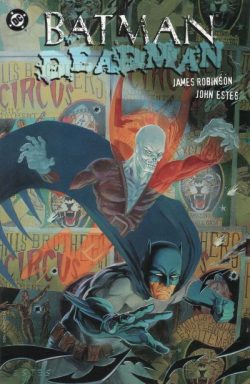
Batman: The Sunday Classics 1943-1946


By Don Cameron, Bill Finger, Joe Samachson, Alvin Schwartz, Bob Kane, Jack Burnley, Fred Ray & various (Sterling)
ISBN: 978-1-1402-4718-2

For most of the 20th century the newspaper comic strip was the Holy Grail that cartoonists and graphic narrative storytellers hungered for. Syndicated across the country and the planet, with millions of readers and accepted (in most places) as a more mature and sophisticated form of literature than comic-books, it also paid better. The Holiest of Holies was a full-colour Sunday page.

However, it was always something of a poisoned chalice when a comicbook property became so popular that it swam against the tide (after all weren’t the funny-books invented just to reprint the strips in cheap accessible form?) to become a syndicated serial strip.

Superman, Wonder Woman, Archie Andrews and a few others made the jump in the 1940s and many features have done so since. One of the most highly regarded came late to the party even though it was probably the highest quality offering, both in its daily and Sunday format. It was called Batman and Robin.

Although a highpoint in strip cartooning, both simultaneous Batman features were cursed by ill-timing. The feature finally debuted during a period in newspaper publishing that was afflicted by rationing, shortages and a changing marketplace.

These strips never achieved the circulation they deserved, but at least the Sundays were given a new lease of life after DC began reprinting vintage stories in the 1960s in their 80-Page Giants and Annuals.

The superior quality adventures were ideal action-mystery short stories, adding an extra cachet of exoticism for young readers already captivated by enjoying tales of their heroes that were positively ancient and redolent of History with a capital “H”.

The stories themselves are broken down into complete single page instalments building into short tales averaging between four to six pages per adventure. The mandatory esoteric foes include such regulars as the Penguin (twice), Joker, Catwoman and Two-Face and all-original themed villains such as The Gopher, The Sparrow and Falstaff, but the bulk of the yarns offer more prosaic criminals, if indeed there is any antagonist at all…

A huge benefit of work produced for an audience deemed “more mature” is the freedom to explore human interest stories such as exonerating wrongly convicted men, fighting forest fires or discovering the identity of an amnesia victim. There is even a jolly seasonal yarn that bracketed Christmas week, 1945.

The writers of the strip included Don Cameron, Bill Finger, Joe Samachson, Alvin Schwartz with art by Bob Kane, Jack Burnley and Fred Ray and inking by Win Mortimer and Charles Paris. The letterer was tireless, invisible calligraphic master Ira Schnapp and the strips were all coloured by Raymond Perry.

This lovely oversized (241 x 318 mm) full colour hardback was originally published in conjunction by DC Comics & Kitchen Sink Press in 1991, and also contains a wealth of extra features such as biographical notes, a history of the strip, promotional artefacts, behind-the-scenes artwork and sketches, promotional features and much more. It’s long past time it was back in print – and eBooked too – as it’s a must for both Bat-fans and lovers of the artform and a certain anniversary is fast approaching…
© 1991, 2007 DC Comics. All Rights Reserved.