The Black Panther Epic Collection volume 1 1966-1976: Panther’s Rage


By Stan Lee & Jack Kirby, Don McGregor, Rich Buckler, Gil Kane, Billy Graham, Keith Pollard, Klaus Janson & various (Marvel)
ISBN: 978-1-3029-0190-5 (TPB)

Acclaimed as the first black superhero in American comics and one of the first to carry his own series, the Black Panther‘s popularity and fortunes have waxed and waned since he first appeared in Fantastic Four.

In fact, the cat king actually attacked Marvel’s First Family as part of an extended plan to gain vengeance on the murderer of his father. He was also the first black superhero in American comics, debuting in summer 1966.

As created by Jack Kirby & Stan Lee, T’Challa, son of T’Chaka, is an African monarch whose secretive kingdom is the only source of vibration-absorbing wonder mineral Vibranium. The miraculous alien metal – supposedly derived from a fallen meteor which struck the continent in lost antiquity – is the basis of the country’s immense wealth, enabling Wakanda to become one of the wealthiest and most secretive nations on Earth. These riches also allowed the young king to radically remake his country, creating a technological wonderland even after he left Africa to fight as one of America’s mighty Avengers.

For much of its history Wakanda has been an isolated, utopian technological wonderland with the tribal resources and people safeguarded and led since time immemorial by a human warrior-king deriving cat-like physical advantages from secret ceremonies and a mysterious heart-shaped herb. This has ensured the generational dominance of the nation’s Panther Cult and Royal Family…

The top-secret “Vibranium mound” had guaranteed the country’s status as a clandestine superpower for centuries but in modern times has increasingly made Wakanda a target for subversion, incursion and even invasion as the world grew ever smaller.

This trusty trade paperback (and eBook) gathers the dynamic debut from Fantastic Four #52-53 (cover-dated July and August 1966) and the groundbreaking solo stories from Jungle Action volume 2 #6-24, spanning September 1973-November 1976.

Before that though, the innovative and unforgettable character debuted in ‘The Black Panther!’: an enigmatic African monarch whose secretive kingdom was the only source of a vibration-absorbing alien metal. These mineral riches had enabled him to turn his country into a technological wonderland before he lured the FF into his savage super-scientific kingdom as part of an extended plan to gain vengeance on the murderer of his father.

After battling the team to a standstill, King T’Challa revealed his tragic origin in ‘The Way it Began..!’, detailing how his father was murdered by marauding sonic science researcher Ulysses Klaw. As the monarch details how he took vengeance and liberated his people, word comes of incredible solidified-sound monsters attacking the region. Klaw has returned at last…

The cataclysmic clash that follows set the scene for the African Warrior-Chieftain to guest star with a number of Marvel superstars before breaking out into the wider world, but it would years before he finally won his own solo series…

After wandering around the Marvel Universe, enjoying team-ups and saving the world on a semi-regular basis as one the “Earth’s Mightiest Superheroes”, the summer of 1973 saw the Black Panther finally become a solo star in his own series.

Scripter Don McGregor opted to return the King to his people for an ambitious epic of love, death, vengeance and civil war: inventing from whole cloth and Kirby’s throwaway notion of a futuristic jungle the most unique African nation ever seen…

Jungle Action launched with an October 1972 cover-date, a cheap reprint vehicle for old Atlas-era Tarzan and Sheena knock-offs like Tharn, Jann and Lorna (…of the Jungle). The fifth issue (not included here) abruptly changed tack, reprinting the Black Panther-starring saga from Avengers #62 as prelude to the start of T’Challa’s own all new adventures, which open here with # 6 and the eponymous ‘Panther’s Rage’ illustrated by Rich Buckler & Klaus Janson.

The story opens with the Panther back in his contradictory African homeland, stumbling upon the torture of an elderly farmer. Despite T’Challa’s best efforts the victim dies in his arms, swearing he never lost faith in king or country…

Learning the attack is the work of brutal rebel leader Erik Killmonger, T’Challa sets all the resources of his inner court circle to finding the monster. With reports of further atrocities mounting, he leaves his American lover Monica Lynne to hunt the perpetrators and soon confronts his potential usurper at the potently symbolic Warrior Falls roaring above the life-sustaining River of Grace and Wisdom.

The barbarous-seeming giant is not cowed by the Panther’s power or prowess and easily wins the no-holds barred battle that follows…

The initial episode is supplemented by detailed maps of Wakanda (the first fans had ever seen) before JA #7 mobilises ‘Death Regiments Beneath Wakanda’. Barely surviving his fight with Killmonger, T’Challa is nursed back to health by Monica at the Palace even as hideously disfigured American Horatio displays his skill with snakes and poisons to his friend N’Jadaka.

Known to their recruits as Venomm and Erik Killmonger, these rebel leaders plot their next attack which results in the reptilian insurgent ambushing T’Challa when the king investigates an illegal mine. This shocking atrocity is being used to siphon off raw Vibranium to pay for Killmonger’s increasingly violent and widespread attacks on the outlying population centres…

Although triumphant this time, T’Challa realises this is a many-layered war: one he might not win…

Whilst the Black Panther renews his powers through ancient ritual, Jungle Action #8 introduces another super-powered rebel with ‘Malice by Crimson Moonlight’ revealing a spear-wielding wonder woman invading the Royal Palace.

Advisor Taku is interrogating Venomm – and gradually making inroads into turning the bitter outcast – when Malice attacks. Only the power of the Panther saves the servitor and prevents the brutal jailbreak from succeeding…

After more maps of the hidden country and detailed plans of ‘Central Wakanda’s Palace Royale’ the saga resumes in #9 with ‘But Now the Spears Are Broken’ (illustrated by Gil Kane & Janson) as T’Challa goes in-country to learn the effects of the power struggle on ordinary Wakandans.

After saving little boy Kantu from a rhino, the king is made painfully aware that the common people view his foreign woman Monica with as much suspicion as the constantly-raiding insurgents. That feeling even penetrates to the heart of the palace. When advisor Zatama is murdered, Monica is arrested for the crime…

T’Challa is not there to protest or defend her; he has returned to Kantu’s village to investigate strange disappearances, discovering a seeming mass-rising of zombies led by a skeletal maniac called Baron Macabre. Once more the Great Cat is forced to ignominiously retreat…

Supreme stylist Billy Graham takes over the pencilling with #10 as the Black Panther returns to the zombie nest, exposing a cunning charade beneath the deserted village as well as a super-scientific base run by a malignant, mind-warping mutant in ‘King Cadaver is Dead and Living in Wakanda!’

Accompanying the dark drama here are examples of ‘Black Panther Artistry’ – specifically, Kirby’s first designs for the hero back when he was going by the provisional title of ‘The Coal Tiger’ and Buckler and Janson’s first depiction of ‘Erik Killmonger’…

Due to an extremely unfavourable publishing schedule, Panther’s Rage unfolded with agonising slowness, but the lengthy wait between episodes allowed McGregor the latitude to pick and choose key events, with readers accepting that some stuff was actually occurring between issues.

In #11 (September 1974), the civil war had proceeded unchecked and ‘Once You Slay the Dragon!’ sees the Panther and his forces launching a long-awaited counterattack on Killmonger’s base in N’Jadaka Village. The battle is vicious and brief, introducing yet another powered lieutenant in the shape of pitiless high-tech armourer Lord Karnaj…

And on the home front, T’Challa finally clears Monica and captures Zatama’s killer…

With Killmonger temporarily pushed back, the Panther goes on the offensive, using the rebel’s most inconsequential converts – Tayete and Kazibe – as guides to follow his ultimate enemy to his most secret strongholds. Heading into the mountains and the fabled Land of Chilling Mists, the Panther discovers mutagenic temple the Resurrection Altar.

Used by Killmonger to create his grotesque super-warriors, it is presided over by scientifically-spawned vampire Sombre. When T’Challa confronts them, he is again overpowered by Erik and left for the wolves to devour in ‘Blood Stains on Virgin Snow!’

Craig Russell inked the next chapter as, enduring incomprehensible hardships in sub-arctic conditions, T’Challa perseveres to follow Killmonger into the temperate swamps of Serpent Valley in #13.

However, this is only after facing a pack of Wakanda’s white apes. To survive, the Panther must blasphemously ignore the sacred (to many of his subjects) religious aspect of the mighty carnivores and become ‘The God Killer’…

Following a Venomm pin-up, JA #14 then reveals that ‘There Are Serpents Lurking in Paradise’ (inked by Pablo Marcos) as T’Challa clashes once more with Sombre before encountering an affable forest sprite guarding Serpent Valley.

Pixie-like Mokadi asks difficult moral questions as T’Challa rushes towards his next battle with Killmonger, making him too late to stop the rebel capturing a legion of the valley’s awesome dinosaurs. The usurper even has time to leave one behind as a lethal parting gift for the embattled and exhausted Wakandan chieftain…

The endgame rapidly approaches in #15 as ‘Thorns in the Flesh, Thorns in the Mind’ (inked by Dan Green) finds T’Challa still tracking his nemesis only to be overcome by Killmonger’s archer assassin Salamander K’Ruel. Beaten and left to be dismembered by a ravenous Pterosaur, T’Challa incredibly overcomes every challenge before – against all odds – staggering back to Monica for another bout of recuperation…

Graham inked his own pencils for the beginning of the end in #16 as T’Challa and Monica’s time of idyllic passion culminates in catastrophe when ‘And All Our Past Decades Have Seen Revolutions!’ reveals the origins of Killmonger and sees the vast cast all converge for one final battle…

That comes in #17 as an army of war-trained dinosaurs invades Central Wakanda only to be finally crushed by the Panther’s forces and superior technology. The affair concludes as it began at Warrior Falls, but ‘Of Shadows and Rages’ also holds a shocking twist as the great game of kings is ultimately decided by a player no one considered of any relevance…

With its nuanced emotional interplay, extended scope and fiercely independent supporting cast, Panther’s Rage was a milestone in dramatic comics storytelling but it harboured one last punch in a gripping 18 ‘Epilogue!’ (Jungle Action #18, November 1975).

Bob McLeod inked McGregor & Graham’s forceful look at the repercussions of conflict as T’Challa and maimed security chief Wakabi are targeted by feral woman Madame Slay: Killmonger’s ardent and unsuspected lover who believes her loss can only be assuaged by having her pack of loyal leopards eviscerate the victorious Wakandans…

Cover-dated January 1976, Jungle Action #19 premiered McGregor’s most audacious and ultimately frustrating project, with T’Challa accompanying Monica back to America. The Panther versus the Klan shifted focus from war stories to crime fiction, replacing fabulously exotic Africa for America’s poverty-wracked, troubled, still segregated-in-all-but-name Deep South for a head-on collision with centuries of entrenched and endemic racism.

Illustrated by Graham & McLeod, ‘Blood and Sacrifices!’ sees Monica back with her family after her sister is murdered. All too soon T’Challa is ferociously battling a gang of purple-hooded killers who appear to have set up in opposition to the ancient white-hooded Ku Klux Klan.

Moreover, both sects seem determined to conceal the truth of Angela Lynne‘s death…

A break comes when bumbling, well-meaning reporter Kevin Trublood stumbles into an attack on the newcomers by the strangely multi-racial Klan sect calling itself the Dragon Circle…

With neither townsfolk nor lawmen offering any welcome, T’Challa faces unbridled hostility and suspicion at every turn. He is even attacked by cops and a mob of citizens when he thwarts a knife attack on Monica. Although Sheriff Roderick Tate makes all the right noises and seems helpful, in ‘They Told Me a Myth I Wanted to Believe’, the Panther opts to pursue his own investigation before being overwhelmed by an army of white-robed Klansmen who tie him to a burning cross and leave him to die…

As Monica and Kevin puzzle out the convoluted web of mysteries, the Panther exerts all his uncanny talents to escape becoming ‘A Cross Burning Darkly Blackening the Night!’ Later, as he slowly recovers in hospital, Monica’s family, Kevin and Tate review the few verifiable facts of Angela’s demise before patriarch Lloyd Lynne urges T’Challa to stop looking. He only has one daughter left after all…

Nevertheless, when the Panther and Trublood invade and disrupt a Klan rally, Lloyd is right there with them…

With Rick Buckler joining Graham on pencils and Jim Mooney alternating with McCleod on inks, Jungle Action #22 takes a bizarre turn as ‘Death Riders on the Horizon’ explores a Lynne family legend dating back to the formative days of the Klan in 1867 when old Caleb was targeted by the vile southern knights and their seemingly supernatural sponsor the Soul Strangler. As Monica listens to the ghastly, appallingly unjust tale, her mind fills in how T’Challa would have acted in such a hopeless situation…

Issue #23 (September 1976) was a deadline missed and a rapidly-sourced reprint from Daredevil #69 – represented here only by the pertinent cover and a Buckler pin-up – before this tantalising tale is unhappily cut short in final published instalment ‘Wind Eagle in Flight’ (by McGregor, Buckler & Keith Pollard).

The multi-layered, many-stranded plot suddenly expands as the Black Panther is almost killed by a mysterious new player who flies into the ever more bewildering clash between cops, Klan, Dragon Circle and Lynne family but, before the mystery could move any further, Jungle Action was cancelled…

A wholly different kind of Black Panther and utterly unrelated adventures would reappear two months later, under the auspices of returning creative colossus Jack Kirby. It would be years before the enigma of Angela’s death and the hero’s war against the Klan would be resolved…

So that’s what to look forward to in the next volume…

Here, however, bonus extras include Kirby & Sinnott’s unused original art cover for FF#52, John Romita’s cover for Jungle Action #5; McGregor’s correspondence with then-fan Ralph Macchio and the author’s original working notes, plot synopses and candid contemporary photos of the close-knit creative team.

Also on show: original cover art, pages and sketches by Buckler & Janson and Kane; pencils and layouts by Graham & Buckler plus a Steve Gerber ‘Jungle Re-Actions’ text feature from Jungle Action #7. Capping off the freebie joys are the un-inked Buckler story pages that would have been #25.

A truly groundbreaking classic of comics narrative, Don McGregor’s Black Panther is stark, vibrant proof that the superhero genre works best when ambitious and passionate creators are given their head and let loose to get on with it. Now, supported by a major movie, perhaps readers will finally see how the Fights ‘n’ Tights game should be played…

© 1973, 1974, 1975, 1976, 2016 Marvel Characters Inc. All rights reserved.

Sky Masters of the Space Force: The Complete Dailies


By Jack Kirby, Dick & Dave Wood, Wally Wood & Dick Ayers (Hermes Press)
ISBN: 978-1-61345-129-8

Sky Masters of the Space Force was – and remains – a beautiful and eminently readable newspaper strip but one with a chequered and troubled back-story. How much so you can discover for yourself when you buy the book.

Even ever-upbeat and inspirational comics mega-creator Jack Kirby spent decades trying to forget the grief caused by his foray into the newspaper strip market during the height of the Space Race before finally relenting in his twilight years and giving his blessing to collections and reprints such as this one from Hermes Press.

I’m glad that he did because the collected work is one of his greatest achievements, even with the incredible format restraints of one tier of tiny panels per day, and a solitary page every Sunday. More than 50 years later this hard-science space adventure is still the business!

And that’s despite the acrimonious legal manoeuvrings that poisoned the process of creating the strip from start to finish. That can of worms you can you can read for yourself in Daniel Herman’s forthright ‘Introduction: Jack Kirby, Wally Wood, and Sky Masters’ which precedes the astronautical adventures contained herein…

Just for context though: against a backdrop of international and ideological rivalry turned white-hot when the Soviets successfully launched Sputnik in 1957, the staid George Matthew Adams newspaper syndicate decided to finally enter the 20th century with a newspaper feature about space.

After approaching a reluctant DC Comics (then known as National Periodicals Publications) a deal was brokered. The project was steered by editor Jack Schiff and he convinced Jack Kirby, inker Wally Wood (later to be replaced by Dick Ayers) and scripters/brothers Dick and Dave Wood (no relation to Wally), to begin bringing the conquest of the cosmos into our lives via an all-American astronaut, his trusty team of stalwart comrades and the philanthropic largesse of the newly-minted US Space Force…

The daily strip launched on September 8th 1958 and ran until February 25th 1961; a scant few months before Alan Shepherd became in reality the first American in Space on May 5th.

The Sunday colour page told its five extended tales (The Atom Horse, Project Darkside, Mister Lunivac, Jumbo Jones and The Yogi Spaceman) in a separate continuity running from February 8th 1959 until 14th February 1960. They are sadly not included in this superb monochrome hardback archival collection, but at least that gives us fans something to look forward to…

This tense, terse and startlingly suspenseful foray into a historical future begins with ‘The First Man in Space’ (September 8th – November 21st 1958) as Major Schuyler “Sky” Masters becomes the second man in space. Romantically involved with Holly Martin, he is hurled into orbit to rescue her astronaut father after the bold pioneer encounters something too horrible to contemplate in the pitiless reaches above Earth…

The human tragedy and ever-impinging fear of the unknown of that moody tale informs all the following stories and as Holly Martin’s feisty brother Danny and burly Sgt. Riot join the cast (who do they remind me of?) for ‘Sabotage’ (22nd November – 7th March 1959), the quintessential components of all great comics teams are in place.

In this second encounter the stage expands enormously and a member of the vast Space Force contingent sinks into derangement: convinced that the colonization of the void and abandonment of Mother Earth is an unholy abomination.

That’s bad enough, but after he is despatched as one of the six pathfinders constructing America’s first permanent orbiting space station, disaster is assured unless Sky can expose him and stop his deadly machinations…

Even as grim yet heady realism slowly grew into exuberant action and fantastic spectacle the strip moves into high dramatic gear as woman pilot (or “aviatrix”) ‘Mayday Shannon’ (9th March – 9th May) joins the squad. The Brass have high hopes that she will prove females can thrive in space too but didn’t reckon on her publicity-hungry greed and selfishness.

Luckily, the magnetic allure of the stars overcomes her bad side and Sky is on hand to deal with her ruthlessly unscrupulous manager…

A medical emergency tests the ingenuity of the dedicated spacers when project instigator and patriarch Doctor Royer is taken ill and Sky must ferry a surgeon to him in ‘To Save a Life’ (11th May – 10th June) after which the tireless Major and an unsuspected rival for Holly’s affections are stranded together on a New Guinea island of cannibals after losing control of ‘The Lost Capsule’, (11th June – 23rd September)…

During that heady meeting of ancient and modern cultures, inker and finisher Wally Wood was replaced by Dick Ayers (although the signatures remained “Kirby & Wood” for years more. Maybe the credit was for the writers?).

The incalculable terrors of space manifested with the next saga as ‘Alfie’ (24th September 1959 – 13th January 1960) carried the heroes of the New Frontier into the next decade. When young astronaut crewman Marek joins the orbiting space wheel he is soon periodically experiencing bizarre fits. Every four hours, for seven and a half minutes the young American seems to channel the personality of an aging East End cockney thief called Alfie Higgins. With the fear that it might be some kind of infectious space madness, Sky and Riot head for London to link up with Scotland Yard in a gripping mystery drama blending jewel robbery and murder with the eerie overtones of Dumas’ Corsican Cousins…

The ever-present tensions of the Cold War and Space Race come to the fore in ‘Refugee’ (14th January – 19th February) as Sky and the US Space Force aid the most unlikely and improbable Soviet defector escape to the West…

Now a fully-trusted and dedicated member of the squad, Mayday Shannon returns to solve an astronaut’s romantic dilemma by arranging a ‘Wedding in Space’, (20th February – 20th April) before the true threat of the outer depths is tackled as Sky meets astronautical guru and maverick Martin Strickland. A tempestuous but invaluable asset of the Space program, the intellectual renegade has proof of alien life but won’t share the ‘Message from Space’ (21st April – 22nd June) unless the military and civil authorities give him carte blanche to act on humanity’s behalf…

Counterbalancing such speculative sci fi aspects, the penultimate adventure is very much Earthbound and grounded in contemporary science and economics. In ‘Weather Watchers’ (23rd June – 27th December) greedy capitalist entrepreneur Octavius Alexia realises he can make huge profits by scamming insurers if he has access to the advance weather predictions afforded by the growing web of satellites orbiting the world.

To secure that valuable information he targets Mayday with the latest in espionage technologies and a male honey trap named J. Mansfield Sparks III. It might have all gone his way too if the woman hadn’t been so smart and his hired gigolo had remained unencumbered by conscience…

The strip ended in a rather rushed and rapid manner with ‘The Young Astronaut’ (28th December 1960 – 25th February 1961) wherein a new recruit proved to be too good to be true. Excelling at every aspect of the harsh training, Frederick T. “Fission” Tate had ulterior motives for getting into space. Luckily, suspicious Major Masters was right beside him on that first flight into the Wide Black Yonder…

As well as these stellar tales of stellar wonder, this volume also contains an abundance of visual extras such as a numerous covers and samples of Kirby’s contemporary comicbook work and original art panels in a ‘Focus’ section, which almost compensates for the absence of the Sunday colour pages. Almost…

This compilation comprises a meteoric canon of wonderment that no red-blooded armchair adventurer could possibly resist, but quite honestly, I simply cannot be completely objective about Sky Masters.

I grew up during this time period and the “Conquest of Space” is as much a part of my sturdy yet creaky old bones as the lead in the paint, pipes and exhaust fumes my generation absorbed. That it is also thrilling, challenging and spectacularly drawn is almost irrelevant to me, but if any inducement is needed for you to seek this work out let it be that this is indisputably one of Kirby’s greatest accomplishments: engaging, challenging and truly lovely to look upon.

Now go enjoy it…
© 2017 Herman and Geer Communications, Inc. d/b/a Hermes Press. Introduction and Focus © 2017 Daniel Herman.

Daredevil Marvel Masterworks volume 7


By Roy Thomas, Gerry Conway, Gary Friedrich, Allyn Brodsky, Gene Colan, Don Heck & various (Marvel)
ISBN: 978-0-7851-6644-3 (HB)

Matt Murdock is a blind lawyer whose remaining senses hyper-compensate, making him capable of astonishing acrobatic feats, a formidable fighter and a living lie-detector.

Very much a second-string hero for most of his early years, Daredevil was nonetheless a striking and popular one, due in large part to the roster of brilliant artists who had illustrated the strip. He only really came into his own, however, after artist Gene Colan signed up for the long haul…

The natal DD battled thugs, gangsters, mad scientists and a plethora of super-villains (and – as seen in this collection – even the occasional alien incursion), quipping and wise-cracking his way through life and life-threatening combat, utterly unlike the grim, moody quasi-religious metaphor he’s been seen as in latter years.

Covering May 1970 to March 1971 and re-presenting Daredevil #64-74 plus and crossover material from Iron Man #35 and 36, this seventh swashbuckling compilation (available in both hardback and eBook formats) sees the once staid and so-very Establishment Murdock move with the shifting cultural mores as scripter Roy Thomas hands over the reins to newcomer Gerry Conway in an increasingly determined move to make the Man Without Fear cutting edge and relevant… …

Following Thomas’ revelatory and reminiscing Introduction the action opens here with Horn-Head prowling the rooftops of Los Angeles. He’s there to his find love-of-his-life, who quit New York after the pressure of sharing DD’s secrets proved too much…

After trailing the star-struck Karen Page to Hollywood he gets to take out his bad mood on a handy hood in ‘Suddenly… The Stunt-Master!’ (Thomas, Colan & Syd Shores) but eventually helps his old enemy in getting a TV show of his own…

Murdock remained in LA to oversee Karen’s first acting gig – a pastiche of then-hot spooky Television phenomenon Dark Shadows – and prevented her becoming part of a murder spree in ‘The Killing of Brother Brimstone’, a classy whodunit which cataclysmically climaxed one month later in ‘…And One Cried Murder!’

Still stuck on the West Coast, DD tackles another grudge-bearing villain as ‘Stilt-Man Stalks the Soundstage’ (Gary Friedrich, Thomas, Colan & Shores) with the now-reformed and respectable Stunt-Master ably assisting our hero. Matt finally leaves Karen to the vicissitudes of Tinseltown, landing back in the Big Apple just in time to become embroiled in a plot blending radical politics and the shady world of Boxing – ‘The Phoenix and the Fighter!’

The Black Panther returns seeking a favour in ‘A Life on the Line’ as kid gangs and the birth of the “Black Power” movement leapt from news headlines to comicbook pages. The same consideration of youth in protest also inspired the seditious menace of ‘The Tribune’ (written by Friedrich) as youthful ideologues, cynical demagogues and political bombers tear a terrified and outraged city apart.

The unrest peaked in Daredevil #71 as Roy Thomas contributed his swansong script by concluding the right-wing manufactured anarchy in ‘If an Eye Offend Thee…!’

New find Gerry Conway took over the scripting with the next issue, easing himself in with an interdimensional fantasy frolic wherein the Scarlet Swashbuckler encounters a strange rash of crimes and a mirror-dwelling mystery man named Tagak in ‘Lo! The Lord of the Leopards!’ before plunging readers into an ambitious cosmic crossover yarn which started in Iron Man #35.

Here the Armoured Avenger, seductive morally ambivalent free agent Madame Masque and S.H.I.E.L.D. supremo Nick Fury all sought ‘Revenge!’ (illustrated by Don Heck & Mike Esposito) for various vile acts and specifically the near-fatal wounding of valiant young American agent Jasper Sitwell at the hand of the mercenary Spymaster.

Their efforts – and those of their assembled enemies – were somehow fuelling an alien artefact called the Zodiac Key and, when its creators sucked Daredevil into the mix to battle Spymaster and a bunch of super-villains affiliated to the cosmic device, everybody is ultimately shanghaied to another universe for more pointless fighting in ‘Behold… the Brotherhood!’ (Daredevil #73, illustrated by Colan & Shores with plot input from Allyn Brodsky) before the epic concludes with extreme briskness in Iron Man #36.

So brisk, in fact, that only the first 8 pages of ‘Among Us Stalks the Ramrod!’ (Conway, Heck & Esposito) are reprinted here, leaving this potent brew of action and suspense to wrap up with Daredevil #74: an impressive and mercifully complete conundrum with DD trapped ‘In the Country of the Blind!’ (Colan & Shores) and calling on a group of sight-impaired volunteers to help him thwart a criminal plot to cripple New York…

The social upheaval of the period produced a lot of impressively earnest material that only hinted at the true potential of Daredevil. These beautifully illustrated yarns may occasionally jar with their heartfelt stridency but the honesty and desire to be a part of a solution rather than blithely carry on as if nothing was happening affords them a potency that no historian, let alone comics fan, can dare to ignore.

And the next volume heads even further into uncharted territory…

Rounding out the comics experience are bonus pages including the cover to all-reprint Daredevil Annual #2, and a selection of house ads.

Despite a few bumpy spots, during this period Daredevil blossomed into a truly magnificent example of Marvel’s compelling formula for success: smart, contemporarily astute stories, truly human and fallible characters and always magnificent illustration. These bombastic tales are pure Fights ‘n’ Tights magic no fan of stunning super-heroics can afford to ignore.
© 1970, 1971, 2016 Marvel Characters, Inc. All rights reserved.

Batman & Superman in World’s Finest Comics: The Silver Age volume 2


By Edmond Hamilton, Bill Finger, Jerry Coleman, Curt Swan, Dick Sprang, Stan Kaye, Sheldon Moldoff, Charles Paris, Ray Burnley & various (DC Comics)
ISBN: 978-1-4012-7780-2

For decades Superman and Batman worked together as the “World’s Finest” team. They were friends as well as colleagues and the pairing made sound financial sense since DC’s top heroes could cross-pollinate and, more importantly, cross-sell their combined readerships.

This most inevitable of Paladin Pairings first occurred on the Superman radio show in the early 1940s, whereas in comics the pair had only briefly met whilst on a Justice Society of America adventure in All-Star Comics #36 (August-September 1947) – and perhaps even there they missed each other in the brightly-hued hubbub…

Of course, they had shared the covers of World’s Finest Comics from the outset, although never crossing paths inside; sticking firmly to their specified solo adventures within. For us pictorial continuity buffs, the climactic real first time was in the pages of Superman’s own bi-monthly comic (issue #76, May/June 1952, as seen in the previous volume of this splendid compilation series). However once that Rubicon was crossed, thanks to spiralling costs and dwindling page-counts the industry never looked back…

This second stunning trade paperback (and eBook) compendium of Silver Age solid gold re-presents the lead stories from World’s Finest Comics #95-116, spanning July/August 1958 to March 1961: another astounding archive of adventure that opens with an Edmond Hamilton, Dick Sprang & Ray Burnley yarn pitting the temporarily equally multi-powered and alien-entranced champions against each other in ‘The Battle of the Super-Heroes’.

A magical succession of magnificent and light-heartedly whacky classics began in #96 with Hamilton’s ‘The Super-Foes from Planet X’ wherein indolent and effete aliens dispatch fantastic monsters to battle the titanic trio for the best possible reasons…

Bill Finger took over scripting with #97, incomprehensibly turning the Man of Steel on his greatest friends in ‘The Day Superman Betrayed Batman’, after which ‘The Menace of the Moonman!’ pits the heroes against a deranged hyper-powered astronaut, ‘Batman’s Super-Spending Spree!’ baffles all his close friends and Lex Luthor devilishly traps Superman in the newly-recovered Bottle City of Kandor to become ‘The Dictator of Krypton City’ – all breathtaking epics beautifully limned by Sprang & Kaye.

Sprang inked himself in the rocket-paced super-crime thriller ‘The Menace of the Atom-Master’ whereas it took Curt Swan, Burnley, Sprang & Sheldon Moldoff to properly unveil the titanic tragedy of ‘The Caveman from Krypton’ in #102.

‘The Secret of the Sorcerer’s Treasure’ (Sprang & Moldoff) then reveals a couple of treasure hunters driven mad by the tempting power of freshly unearthed magical artefacts whilst Luthor quickly regrets using a hostage Batwoman to facilitate ‘The Plot to Destroy Superman’.

After the metamorphosis which turned Clark Kent into ‘The Alien Superman’ proves not at all what it seems to be, ‘The Duplicate Man’ in WF #106 sees the ultimate downfall of a villain who develops an almost unbeatable crime tool.

Next up ‘The Secret of the Time-Creature’ encompassed centuries and resulted in one of Finger’s very best detective thrillers to baffle but never stump the Cape & Cowl Crusaders, after which Jerry Coleman assumes the writer’s role with ‘The Star Creatures’ (art by Sprang & Stan Kaye), the tale of an extraterrestrial moviemaker whose deadly props were stolen by Earth crooks.

Stellar cover artist Curt Swan (with Stan Kaye inking) finally makes the move to interior illustrator for ‘The Bewitched Batman’, detailing a tense race against time to save the Gotham Guardian from an ancient curse, before ‘The Alien who Doomed Robin’ (Sprang & Moldoff) sees a symbiotic link between monster marauder and Boy Wonder leave the senior heroes apparently helpless… at least for a little while…

‘Superman’s Secret Kingdom’ (Finger, Sprang & Moldoff from #111, August 1960) is a compelling lost world yarn wherein a cataclysmic holocaust deprives the Man of Steel of his memory and Batman and Robin must find and cure him at all costs…

The next issue – by Coleman, Sprang & Moldoff – delivered a unique and tragic warning in ‘The Menace of Superman’s Pet’ as a phenomenally cute teddy bear from space proves to be an unbelievably dangerous menace and unforgettable true friend. Bring tissues, you big baby…

In an era when disturbing or terrifying menaces were frowned upon, many tales featured intellectual dilemmas and unavoidably irritating pests to torment our heroes. Both Gotham Guardian and Man of Steel had their own magical 5th dimensional gadflies and it was therefore only a matter of time until ‘Bat-Mite Meets Mr. Mxyzptlk’: a madcap duel to determine whose hero was best… with America caught in the metamorphic middle.

WF #114 reveals Superman, Batman and Robin shanghaied to the distant world of Zoron as ‘Captives of the Space Globes’ where their abilities are reversed. Nevertheless, justice is still served in the end, after which ‘The Curse that Doomed Superman’ sees the Metropolis Marvel consistently outfoxed by a scurrilous Swami with the Darknight Detective helpless to assist him…

Swan & Kaye at last return for #116’s thrilling monster mash ‘The Creature from Beyond’ to wrap up this volume with a criminal alien out-powering Superman whilst concealing an incredible secret…

These are gloriously clever yet uncomplicated tales whose dazzling style has returned to inform if not dictate the form for much of DC’s modern television animation – especially the fabulous Batman: The Brave and the Bold series – and the contents of this titanic tome offer a veritable feast of witty, charming thrillers packing as much punch and wonder now as they always have.
© 1958, 1959, 1960, 1961 2018 DC Comics. All Rights Reserved.

Niki de Saint Phalle: The Garden of Secrets


By Dominique Osuch & Sandrine Martin, translated by Joe Johnson (NBM)
ISBN: 978-1-68112-158-1

NBM’s magnificent line of European-created modern biographies always offers a treasure-trove of potent wonderment and this latest luxury hardcover release (also available in all eBook formats) is arguably one of the most beguiling graphic releases of the year.

Catherine-Marie-Agnès Fal de Saint Phalle was born on October 29th 1930 and for most of the 20th century towered over the fickle world of Avant Garde art as Niki de Saint Phalle.

She was a model, actress, writer, filmmaker, painter and sculptor, but made her greatest visual impact as a creator of gigantic assemblages and themed gardens. She was also a passionate and strident activist and advocate of cultural, political and women’s issues. She died on May 21st 2002.

That species of dry facts and lists of her creations and accomplishments you can find all over the internet – or even in books if you’re that way inclined – but in Niki de Saint Phalle: The Garden of Secrets graphic collaborators Dominique Osuch & Sandrine Martin unpick their subject’s torrid and too-often turbulent life through a procession of dreamy childlike chapter-plays and vignettes divided into the major arcana of the Tarot that so fascinated Niki.

French writer, artist and graphic novelist Dominique Osuch (Amours fragiles, Les Cinq de Cambridge, Tomoë) was born in 1962. She and took a literary degree in 1980 and an Illustration qualification from l’École Supérieure des Arts Décoratifs de Strasbourg four years later.

The script she provides for this mesmerising biographical account captures the raw relentless wonderment of a woman who always viewed the world with open-minded eyes but still sought to make it a better place…

Sandrine Martin also illustrates children’s books. She graduated from l’Ecole Nationale Supérieure des Arts Decoratifs, Paris in 2004 and began selling illustrations to Le Monde, Libération, Psychologies Magazine, Bayard and Gallimard as well as creating short stories for comics magazine Lapin.

In 2012 she released a collection of her artwork entitled La Montagne de sucre and after completing the biography I’m plugging here released a book of illustrated short stories entitled Petites Niaiseuses.

A child conflicted and shaped by abuse, neglect and a strict Catholic upbringing, Niki de Saint Phalle grew up in America and France during the Great Depression, married young and unwisely and, through broad and deep friendships and recurring life-threating physical maladies and mental illness, discovered her true calling was exploring existence through the making of art.

She created towering monumental monoliths, whimsical parks, deviously themed art gardens and iconic soft and hard statuary venerating and exposing female form and functions. The tireless virtuoso and inveterate world traveller also collaborated with many of modern art’s greatest visionaries, wrote plays and made films to address and ameliorate her own childhood traumas. Whilst always championing and raising funds for the creation of galleries and exhibitions to bolster public health and wellbeing, Niki became one of the earliest advocates of AIDS Awareness, creating a book intellectually targeted at her young son which forthrightly explained the situation. It was released to great acclaim and success worldwide.

In the same vein, she also designed colourful artistic condoms that people would be eager to wear…

This book – which also offers additional material such as a succinct yet detailed Chronology, Suggested Further Reading and Creator Biographies – is a loving and extremely enticing celebration of one of the most important female artists of all time: a champion of innovation, modern technology, timeless sensuality and unbridled honest emotion. How can you not enjoy this superb introduction to a truly unique example of humanity at its most fundamentally alive?

Trust me, you can’t.
© 2014 Casterman. © 2018 NBM for the English translation.

Walt Disney’s Uncle Scrooge: Back to the Klondike – Gladstone Comic Album #4


By Carl Barks (Gladstone)
ISBN: 978-0-94459-902-0

From the late 1940’s until the mid-1960s Carl Barks worked in productive seclusion writing and drawing a vast array of comedic adventure yarns for kids, creating a Duck Universe of memorable – and highly bankable – characters like Gladstone Gander (1948), The Beagle Boys (1951), Gyro Gearloose (1952) and Magica De Spell (1961) to augment the stable of cartoon actors from the Disney Studio.

His greatest creation was undoubtedly the crusty, energetic, paternalistic, money-mad gazillionaire Scrooge McDuck: the star of this show.

So potent were his creations that they fed back into Disney’s animation output itself, even though his brilliant comic work was done for licensing publisher Dell/Gold Key, and not directly for the studio.

Throughout this period, Barks was blissfully unaware that his work (uncredited by official policy, as was all Disney’s cartoon and comicbook output), had been singled out by a rabid and discerning public as being by “the Good Duck Artist.” When some of his most dedicated fans finally tracked him down, his belated celebrity began.

Gladstone Publishing began re-packaging Barks material – and a selection of other Disney comics strips – in the 1980s and kept on going until 2008. Since then cultural saviours Fantagraphics have begun reprinting all the Barks material in a series of snazzy hardcover compilations. Once they’ve done that I’ll start reviewing those but until then this still readily available paperback album is one of the very best you can still find…

Whilst producing all that landmark innovative material Barks was just a working guy, generating covers, illustrating other people’s scripts when necessary and contributing story and/or art to the burgeoning canon of Duck Lore.

This album is printed in the large European oversized format (278mm x 223mm) and features one of the best tales Barks ever told.

It’s taken from Four Color Comics #456 (September 1952 and technically the second full story to star the multimillionaire mallard). To further confuse matters, the Byzantine numbering system used by Dell also lists this issue as Uncle Scrooge #2.

‘Back to the Klondike’ is a rip-roaring yet deeply moving yarn, a brilliant comedy and even a bittersweet romance, which added huge depth to the character of the World’s Richest Duck, even whilst reiterating the superficial peccadilloes that make him such a memorable and engaging star.

Scrooge McDuck is old and getting forgetful: he can’t recall how much money he has seconds after he’s finished counting it, nor even where his traps to locate it are hidden. After one too many close shaves he finally shells out for a doctor who diagnoses “Blinkus of the Thinkus” and prescribes some pills to restore his scrupulous memory.

They work! Recalling a gold-strike he made 50 years previously, the old miser drags Donald Duck and his nephews to the Far North to recover the precious hoard cached and forgotten five decades ago, but as the journey progresses he also recalls the rough, tough life of a prospector and the saloon-girl who tried to cheat him of his find: Glittering Goldie O’Gilt…

This superb yarn tells you everything you could ever need about the irascible oligarch. It’s the perfect character tale and rattles along like an express train, sad, happy, thrilling and funny by turns, and it’s supplemented in this book with a classic Gyro Gearloose tale from 1960.

‘Cave of the Winds’ is taken from Four Color Comics #1095, and finds Scrooge consulting the fabulously off-kilter feathered inventor on a perfect hiding place for the ever-increasing McDuck cash cache. The answer, sadly, is far from satisfactory…

The cartoon convolutions conclude with a short and punchy untitled tale from Uncle Scrooge #8 (1954) which has Scrooge run for City Treasurer – but without spending any money on expenses (or anything else)…

No matter what your age or temperament, if you’ve never experienced the captivating Carl Barks magic, you can discover “the Hans Christian Andersen of Comics” simply by applying yourself and your own purchasing power to any search engine. The rewards are there for the finding and far more valuable than mere money…
© 1987, 1960, 1954, 1953 The Walt Disney Company. All Rights Reserved.

How Comics Work


By Dave Gibbons & Tim Pilcher (Rotovision/Quarto)
ISBN: 978-2-88893-341-0

We haven’t covered a “How To” book for ages and this recent release is one of the most comprehensive and rewarding I’ve seen in many a year.

Thus, Yet Again, in the interests of complete transparency: I must admit to having known Mr. Gibbons (Britain’s first Comics Laureate) since the days of Warrior Magazine in the early 1980s, and Tim for an equally lengthy time. The British Comics Scene is a small but affable one and it’s not like we get together once a month to drink beer, gossip or braid each other’s rapidly vanishing hair…

Since beginning his stellar professional career in the 1970s (as a letterer) Dave Gibbons has triumphed in every arena of comics production and all those hard-earned technical secrets and insights, as well as his incomparable philosophy of working has been distilled by him and his collaborator – author, editor and comics historian – Tim Pilcher into a handy, comprehensive and supremely accessible guide to every aspect of the visual storytelling business.

Never ones to hang about or dither, and following the delightful ‘Introduction: The Dave Gibbons Way’, the methodically efficient master class begins with Scriptwriting. This and every other category-chapter opens with a discussion and celebration of the ‘Early Influences’ on the creator and his process, swiftly followed by a guided discussion of ‘Ideas’; ‘Plotting and World Building’; ‘Pacing and Movement’; ‘Writing for Yourself’ and ‘Writing for Other Artists’ before concluding with ‘Writing Influences’ and a dissection of the work of Frank Miller.

Each individual section is heavily illustrated with sketches, visual examples and finished artwork from numerous projects such as Watchmen, Give Me Liberty, Star Wars, Doctor Who, Rogue Trooper, Dan Dare, Green Lantern, Superman, Batman vs. Predator, The Originals, Treatment, Aliens: Salvation, Kamandi, Batman: Year One and more.

Next up is the immensely fun subject and occupation of Visual Groundwork; divided – after another ‘Early Influences’ tribute – into ‘Character and Costume Design’; ‘Designing Superheroes’; ‘Character Style Guides’; ‘Redesigning Existing Characters’; ‘Landscapes, Sets and Locations’; ‘Vehicle Design’ and ‘Props’ after which ‘Creator Star: Frank Hampson’ is lovingly scrutinised.

The nuts and bolts of Sequential Storytelling comes next, subdivided into ‘Interpreting Scripts’; ‘Thumbnails and Visual Pacing’; ‘Page Layouts’; ‘Grid Structures’; ‘Page Designs’; ‘Panel Designs’; ‘Pencils’; ‘Inks’; ‘Digital Inking’, and ‘Outputting Digital Artwork’ precedes an appreciation of ‘Artistic Hero: Wally Wood’.

The “invisible” but crucial art of Lettering is tackled next, divided into the ever-popular ‘Early Influences’; and the technical but rewarding disciplines of ‘Page Mark-Up and Dead Space’; ‘Balloon Positioning and Flow’; ‘Balloon Variations’; ‘Kerning and Leading’; ‘Hand Lettering’; ‘Digital Lettering’ and ‘Sound Effects (SFX)’. This is bolstered by an appreciation of ‘Lettering King: Sam Rosen’.

Colouring is the next topic tackled with ‘Drawing for Colour’ backed up by hot tips on crafting ‘Colour Roughs’; ‘Fully Painted Artwork’; ‘Digital Colour’; ‘Digital Colour: Flats’; ‘Digital Colour: Rendering’ and ‘Digital Effects’ with an appropriate pictorial tribute in ‘Painter Focus: Frank Bellamy’.

The mysteries of Design comprise the last lesson-set and, after one last sharing of ‘Early Influences’, confronts the challenges of ‘Cover and Logo Design’; ‘Front Cover Design’; ‘Back Cover Design’; ‘Other Cover Considerations’; ‘Wrap-Arounds and Spine Designs’; ‘Interlinking Cover Design’; ‘Interior Book Design’; ‘Character and Title Logos’ and ‘Icons’ before highlighting ‘Design Star: Chip Kidd’.

Of course, just reading a book like this is worthwhile but not nearly enough, so the final chapter is all about getting involved with a selection of carefully concocted Exercises for fired-up neophytes and rusty old lags to hone their skills on…

There are a host of books both academic and/or instructional designed to inculcate a love of comics whilst offering tips, secrets and an education in how to make your own sequential narratives. There are others intended to foster and further the apparently innate and universal desire to simply make art and make it proficiently and well.

There are, however, precious few that do either with as much style, enthusiasm or perspicacity as this captivating, picture-packed tome. From 1984 to the late 1990s I taught comics scripting, design, production and other useful foundation skills at the London College of Printing, London Cartoon Centre and other forward-thinking centres of Further Education. If these guys had released this book back then I would have just stayed home and read comics instead…
© 2017 Quarto Publishing, plc. All rights reserved.

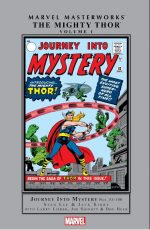
Thor Marvel Masterworks volume 10


By Stan Lee, Gerry Conway, John Buscema & various (Marvel)
ISBN: 978-0-7851-5046-6 (HB)

With the constantly expanding Marvel Universe growing ever more interconnected as it matured, characters literally tripped over each other in New York City and its environs, but such was not the case with Thor.

The Asgardian milieu and the soaring imagination of Jack Kirby had long drawn the Thunder God away from mortal realms into stunning new landscapes. When the unthinkable happened and the increasingly discontented King of Comics jumped ship from the House of (His) Ideas for arch-rival DC in 1970 an era ended.

Left to soldier on, Stan Lee called in artist John Buscema to carry a seemingly unbearable burden…

In case you came in late: disabled doctor Donald Blake took a vacation in Norway only to stumble into an alien invasion. Trapped in a cave, he found an ancient walking stick which, when struck against the ground, turned him into the Norse God of Thunder! Within moments he was defending the weak and smiting the wicked.

Months swiftly passed with the Lord of Storms tackling rapacious extraterrestrials, Commie dictators, costumed crazies and cheap thugs, but these soon gave way to a vast kaleidoscope of fantastic worlds and incredible, mythic menaces.

This bombastic transitional compendium (available in hardcover and digital formats) reprints Mighty Thor #184-194, spanning January – December 1971 with the puissant Thunder God going both forward and back between mortal and godly realms.

The new era had actually begun with John Buscema delineating a rash clash between the Thunder God and Dr. Doom, but the real start came as this volume begins following the inevitable Introduction from Lee.

Here, then, Lee, Buscema and inker Joe Sinnott crafted their own ambitious cosmic saga, opening with #184 and exploring ‘The World Beyond!‘ wherein a sinister and implacable force is discovered devouring the outer galaxies, with the subsequent psychic reverberations impacting and unravelling life on Earth and in Asgard.

With all creation imperilled, Odin departs to combat the enigmatic threat alone…

Sam Grainger inked ‘In the Grip of Infinity!’ as universal calamity intensifies and the All-Father falls to the enigmatic, seemingly all-consuming invader before ‘Worlds at War!’ exposes a hidden architect behind the ultimate Armageddon.

That revelation leads to a desperate last-ditch ploy uniting the forces of Good and Evil together in ‘The World is Lost!’ before one final clash – inked by Jim Mooney – answers all the questions and culminates in ‘The End of Infinity!’

Although vast in scope and drenched in powerful moments highlighting the human side of the gods in extremis, this tale suffers from an excess of repetitive padding and a rather erratic pace.

Without pause, though, we plunge on as Thor #189 sees sepulchral goddess Hela come calling, demanding Thor feel ‘The Icy Touch of Death!’ to pay for all the souls she didn’t get in the recent sidereal showdown…

After a big chase around planet Earth she is finally dissuaded in ‘…And So, To Die!’, but the distraction has meanwhile allowed Thor’s wicked brother Loki to seize the Throne of Asgard and unleash ‘A Time of Evil!’

This typically tyrannical behaviour results in the deranged despot using Odin’s stolen power to manifest an unstoppable artificial hunter/killer dubbed Durok the Demolisher.

Unleashing his merciless engine of destruction on Earth, Loki gloats at the ‘Conflagration!’ (inked by Grainger) he has instigated…

Completing the retiring of the Old Guard, Gerry Conway came aboard as writer for double-length tale ‘What Power Unleashed?’ (#193, with Sal Buscema augmenting and inking brother John) to conclude the epic tale.

Prevented by vows from taking up arms against Loki’s puppet, Balder the Brave and Thor’s True Beloved Sif cunningly enlist the Silver Surfer to aid the embattled Thunderer as Asgard totters on the brink of total destruction. Free to act against the real enemy, Thor then retaliates with staggering power and ‘This Fatal Fury!’: stealing the usurper’s attention until wily All-Father Odin finally resumes his rightful place.

To be continued…

The Kirby Thor will always be a high-point in graphic fantasy, all the more impressive for the sheer imagination and timeless readability of the tales. With his departure the series foundered for the longest time before finding a new identity, yet even so the stories in this volume are still packed with intrigue and action and magnificently rendered by an illustrator who, whilst not possessing Kirby’s vaulting visionary passion, was every inch his equal in craft and dedication. This book (which also includes the covers to Thor Annuals #3 and 4, pertinent house ads and a brace of Buscema original art pages) is an absolute must for all fans of the medium.
© 1971, 2017 Marvel Characters, Inc. All rights reserved.

The Essential Calvin and Hobbes


By Bill Watterson (Time Warner/Sphere/Andrew McMeel)
ISBN: 978-0-75151-274-8 (PB)                     : 978-0-8362-1809-4 (HB)

Almost any event big or small is best experienced through the eyes of a child – and better yet if he’s a fictional child controlled by the whimsical sensibilities of a comic strip genius like Bill Watterson.

Calvin is the child in us all; Hobbes is the Tiger of our Aspirations; no, wait… Calvin is this little boy, an only child with a big imagination and a stuffed Tiger that is his common sense and moral sounding board…

No; Calvin is just a little Boy and Hobbes talks only to him. That’s all you need or want.

A best-selling strip and critical hit for ten years (running from November 18, 1985 to December 31, 1995), Calvin and Hobbes came and went like a comet and we’re all the poorer for its passing. It redefined depictions of the “Eyes of Wonder” which children all possess, and made us adults laugh, and so often cry too.

We all wanted a childhood like that kid’s, bullies, weird teachers, obnoxious little girls and all. At least we could visit…

The strip appeared in more than 2,400 newspapers all over the planet and from 2010 reruns have featured in over 50 countries. There have been 18 unmissable collections including a fabulous complete boxed set edition in both soft and hard cover formats. I gloat over my hardback set almost every day.

Reprints of the strip are also available online through the Andrews McMeel Uclick platform.


Unlike most of his fellows, Watterson shunned the spotlight and the merchandising Babylon that follows a comic strip mega-hit and dedicated all his spirit and energies into producing one of the greatest treatments on childhood and the twin and inevitably converging worlds of fantasy and reality anywhere in fiction.

Calvin is a hyper-active little boy growing up in suburban middle-American Everytown. There’s a city nearby, with Museums and such, and a little bit of wooded wilderness at the bottom of the garden. The kid’s smart, academically uninspired and happy in his own world. He’s you and me. His best friend and companion is a stuffed tiger named Hobbes, who – as I might have already mentioned – may or may not be alive. He’s certainly far smarter and more ethically evolved than his owner…

And that’s all the help you’re getting. If you know the strip you already love it, and if you don’t you won’t appreciate my destroying the joys of discovery for you. This is beautiful, charming, clever, intoxicating and addictive tale-telling, blending wonder and laughter, socially responsible and wildly funny.

After a miraculous decade, at the top of his game Watterson retired the strip and himself, and though I bitterly resent it, and miss it still, I suppose it’s best to go out on a peak rather than fade away by degrees. I certainly respect and admire his dedication and principles.

This sumptuous volume is a compendium of the first two collections, Calvin and Hobbes and Something Under the Bed Is Drooling, displaying the beguiling magic of the strip in tales that will make you laugh and isn’t afraid to make you cry. Truly this is a masterpiece and landmark of American cartooning.
© 1988 Universal Press Syndicate. All Rights Reserved.

Showcase Presents DC Comics Presents Superman Team-Ups volume 1


By Martin Pasko, Dave Michelinie, Len Wein, Paul Levitz, Cary Bates, Steve Englehart, Denny O’Neil, Gerry Conway, Mike W. Barr, Jim Starlin, Marv Wolfman, José Luis García-López, Murphy Anderson, Curt Swan, Dick Dillin, Joe Staton, Rich Buckler & various (DC Comics)
ISBN: 978-1-4012-2535-3

As I’ve been inundating you with Superman stuff in this Anniversary year and celebrating the graphic literary device of team-ups this week, how could I let this superb collection go unremarked, especially as so much of the material remans inaccessible in more modern, full-colour compilations? Comics fans are all completists at heart, and until new editions or digital equivalents are released this is as good at it gets…

From the moment a kid first sees his second superhero the only thing he/she wants is to see how the new gaudy gladiator stacks up against the first. From the earliest days of the comics industry (and according to DC Comics Presents editor Julie Schwartz it was the same with the pulps and dime novels that preceded it) we’ve wanted our idols to meet, associate, battle together – and if you follow the Timely/Marvel model, that means against each other – far more than we want to see them trounce their archenemies in a united front…

The concept of team-up books – an established star pairing or battling (usually both) with less well-selling company characters – was far from new when DC awarded their then-biggest gun (it was the publicity-drenched weeks before the release of Superman: The Movie and Tim Burton’s Batman was over a decade away) a regular arena to have adventures with other stars of their firmament, just as Batman had been doing since the middle of the 1960s in The Brave and the Bold.

In truth, the Action Ace had already enjoyed the serial sharing experience once before, when World’s Finest Comics briefly ejected the Caped Crusader and Superman battled beside a coterie of heroes including Flash, Robin, Teen Titans, Vigilante, Dr. Fate and others (issues #198-214; November 1970 to October/November 1972) before the proper status quo was re-established.

This superbly economical monochrome collection re-presents the first 26 issues of the star-studded monthly and opens the show with a two-part thriller featuring Barry Allen, the Silver Age Flash who had also been Superman’s first co-star in that aforementioned World’s Finest Comics run.

‘Chase to the End of Time!’ and ‘Race to the End of Time!’ featured in DC Comics Presents #1 and 2 (July-August and September-October 1978), as scripter Marty Pasko and the utterly astounding José Luis García-López (inked by Dan Adkins) rather reprised that WF tale. Here warring alien races trick both heroes into speeding relentlessly through the time-stream to prevent Earth’s history from being corrupted and destroyed.

As if that wasn’t dangerous enough, nobody could predict the deadly intervention of the Scarlet Speedster’s most dangerous foe, Professor Zoom, the Reverse-Flash…

David Michelinie wrote a tantalising pastiche of classic Adam Strange Mystery in Space thrillers for García-López to draw and ink in ‘The Riddle of Little Earth Lost’ wherein the Man of Two Worlds and Man of Tomorrow foil the diabolical cosmic catastrophe scheme of a deranged genius to transpose, subjugate and/or destroy Earth and light-years distant planet Rann.

Len Wein came aboard to script the superb ‘Sun-Stroke!’ wherein the Man of Steel and the madly-malleable Metal Men join forces to thwart solar-fuelled genius I.Q. and toxic elemental menace Chemo after an ill-considered plan to enhance Earth’s solar radiation exposure provokes a cataclysmic solar-flare.

Sea King Aquaman is embroiled in ‘The War of the Undersea Cities’ (by Wein, Paul Levitz & Murphy Anderson) when his subjects re-open ancient hostilities with the mer-folk of undersea neighbour Tritonis, home of Superman’s old college girlfriend Lori Lemaris. Fortunately, cooler heads prevail when the deadly Ocean Master is revealed to be meddling in their sub-sea politics, after which ‘The Fantastic Fall of Green Lantern’ (Levitz, Curt Swan & Francisco Chiaramonte) sees the Man of Steel inherit the awesome power ring after Hal Jordan falls in battle against Star Sapphire.

Although triumphant against his female foe, Superman is subsequently ambushed by anti-matter warriors from Qward leading to ‘The Paralyzed Planet Peril!’ (#7, Levitz, Dick Dillin & Chiaramonte) wherein those aliens try to colonise Earth until the robotic Red Tornado swirls in to the rescue.

‘The Sixty Deaths of Solomon Grundy’ by Steve Englehart & Murphy Anderson co-stars Swamp Thing (at a time when the bog-beast still believed he was a transformed human and not an enhanced plant) searching the sewers of Metropolis for a cure to his condition, only to stumble onto a battle between the Man of Steel and the mystic zombie who was “born on a Monday”…

Marty Pasko returns to script the Joe Staton & Jack Abel illustrated ‘Invasion of the Ice People!’ wherein Wonder Woman assists in repelling an attack by malign disembodied intellects before another 2-part tale commences with ‘The Miracle Man of Easy Company’ (Cary Bates, Staton & Abel)…

Here a super-bomb blasts Superman back to World War II and a momentous meeting with indomitable everyman soldier Sgt. Rock, before the Caped Kryptonian returns home to battle a brainwashed and power-amplified Hawkman in ‘Murder by Starlight!’ (Bates, Staton & Chiaramonte).

DCCP #12 offered a duel between the Action Ace and New God Mister Miracle in ‘Winner Take Metropolis’ by Englehart, Richard Buckler & Dick Giordano before Levitz scripts an ambitious continued epic that begins with ‘To Live in Peace… Nevermore!’ (art from Dillin & Giordano), wherein the Legion of Super-Heroes prevent Superman saving a little boy from alien abduction to preserve the integrity of the time-line. It didn’t help that the lad was Jon Ross, son of Clark Kent’s oldest friend and most trusted confidante…

Driven mad by loss, Pete Ross risks the destruction of reality itself by enlisting the aid of Superboy to battle his older self in ‘Judge, Jury… and No Justice!’ (Levitz, Dillin & Giordano), after which the Man of Steel helps scientist-hero Ray Palmer regain his size-changing powers in ‘The Plight of the Giant Atom!’ (Bates, Staton & Chiaramonte).

Issue #16 finds Superman and Black Lightning battling a heartsick alien trapped on Earth foe millennia in ‘The De-volver!’ (Denny O’Neil, Staton & Chiaramonte) after which Gerry Conway, García-López & Steve Mitchell herald the return of Firestorm in ‘The Ice Slaves of Killer Frost!’: a bombastic, saves-the-day epic which brought the Nuclear Man back into the active DC pantheon after a long hiatus.

Zatanna co-stars in the Conway, Dillin & Chiaramonte rollercoaster ride ‘The Night it Rained Magic!’; Batgirl helps solve the eerie mystery ‘Who Haunts This House?’ (O’Neil, Staton & Chiaramonte) and Green Arrow steals the show as always in the gripping, big-business-busting eco-thriller ‘Inferno from the Sky!’ by O’Neil, García-López & Joe Giella.

DCCP #21 depicts the eclectic and eccentric detective Elongated Man as patient zero in ‘The Alien Epidemic’: a tense medical mystery by Conway, Staton & Chiaramonte, after which Mike W. Barr provides an effective science fiction doom-tale co-starring Captain Comet as the future-man endures ‘The Plight of the Human Comet!’ (art by Dillin & Frank McLaughlin).

‘The Curse Out of Time!’ (#23, O’Neil, Staton & Vince Colletta) affects two separate Earths, compelling Superman and Doctor Fate to defeat imps and ghosts before normality can be restored and the supernatural theme continues in a magnificent team-up with Deadman in #24 wherein Wein & García-López revealed the tragic and chilling story of ‘The Man Who Was the World!’

The long unresolved fate of Jon Ross is happily concluded in the cunning and redemptive ‘Judgement Night’ with the enigmatic Phantom Stranger finagling and overcoming an insoluble, intolerable situation with Superman, courtesy of Levitz, Dillin & McLaughlin.

This stellar collection concludes with a spectacular return engagement for Green Lantern as Emerald Crusader and Man of Tomorrow battle each other and a trans-dimensional shape-shifter in ‘Between Friend and Foe!’; plotted and pencilled by Jim Starlin, scripted by Marv Wolfman and inked by Steve Mitchell.

These short, pithy adventures act as a perfect shop window for DC’s fascinating catalogue of characters and creators; delivering a breadth and variety of self-contained, exciting and satisfying entertainments ranging from the merely excellent all the way to utterly unmissable. This book is the perfect introduction to the DC Universe for every kid of any age and a delightful slice of the ideal Costumed Dramas of a simpler, more inviting time…
© 1978, 1979, 1980, 2009 DC Comics. All Rights Reserved.