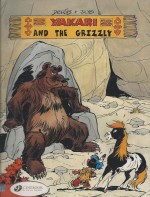
Yakari and the Grizzly


By Derib & Job, translated by Erica Jeffrey (Cinebook)
ISBN: 978-1-905460-16-8

In 1964, journalist André Jobin founded children’s magazine Le Crapaud à lunettes and began writing stories for it under the pseudonym Job. Three years later he hired fellow French-Swiss artist Claude de Ribaupierre, who had begun his career as an assistant at Studio Peyo (home of Les Schtroumpfs), working on Smurfs strips for venerable weekly Spirou.

Together they created the well-received Adventures of the Owl Pythagore and two years later struck pure gold with their next collaboration.

Launching in 1969, Yakari detailed the life of a young Sioux boy on the Great Plains; sometime after the introduction of horses by the Conquistadores and before the coming of the modern WhiteMan.

Filled with gentle whimsy, the strip celebrates a generally bucolic existence in tune with nature and free of strife, punctuated with the odd crisis generally resolved without fame or fanfare by a little lad who is smart, compassionate, brave… and can converse with all animals…

As “Derib”, de Ribaupierre – equally fluent and brilliant in both the enticing, comically dynamic “Marcinelle” cartoon style and a devastatingly compelling meta-realistic action illustration form – went on to become one of the Continent’s most prolific, celebrated and beloved creators through such groundbreaking strips as Celui-qui-est-né-deux-fois, Jo (the first comic on AIDS ever published), Pour toi, Sandra and La Grande Saga Indienne).

A large and significant proportion of his stunning works over the decades reverberate with his beloved Western themes, magnificent geographical backdrops and epic landscapes, and Yakari is considered by many to be the feature which catapulted him to mega-stardom.

First published in 1979 as the strip cemented its prominence and popularity, Yakari et le grizzly was the fifth collected European album. The previous year the feature had begun running in Tintin, and would go on to spawn two animated TV series (1983 and 2005), a wide range of merchandising and spin-offs and achieve monumental global sales of the 38 albums (in 17 languages) to date.

Released in English translation in 2006, Yakari and the Grizzly opens one late autumn night as aged beaver Wooden Dam and young raccoon Black Mask sneak into the Sioux encampment in search of Yakari. The worried pair have an odd story to tell: healthy adult animal are disappearing and the younglings need the wonderful human problem-solver to find them…

Riding out on faithful pony and confidante Little Thunder, the brave boy encounters a nervous vixen and her cubs and a female otter whose mate has also vanished. The day passes in fruitless searching and that night, after hearing a terrifyingly loud roar, a kind old owl offers some friendly advice to the searchers: stay out of the hills, something strange is happening there…

Next morning, grateful, worried but determined, Yakari and Little Thunder nevertheless turn towards the gentle rise and soon find missing pal Thousand-Mouths frantically gathering berries. The beaver is desperately scared and warns the pair to flee before it’s too late…

Resolved to help whatever the risk, our heroes press onwards and upwards and discover many missing animals – even bears – all working as petrified slaves for a huge and bellicose grizzly. Afraid of nothing Yakari scolds the greedy beast and almost dies as the big bully swipes at him with huge claws…

Barely escaping the gloating monster, Yakari and his pony are again warned off by Thousand-Mouths who reveals that no one will resist or run away because the big bear has threatened their families. Temporarily stumped, the little brave is relieved when his wise totem animal Great Eagle arrives and councils that a little patience will provide an answer to their problem…

Seeing the startling truth of the statement, Yakari advises his furry chums on a long term plan which consists of actually working even harder, providing the unreasonable brute with all the food he can eat. All too soon the snows start and the fattened grizzly feels the call of his den and long months of welcome hibernation. Now the second part of Yakari’s plan can begin…

The visually spectacular, seductively smart and splendidly subtle solution to the bully bear’s disgraceful behaviour is a masterpiece of diplomacy and highlights the charming, compassionate and redemptive nature of this superb all-ages series…

The exploits of the valiant little voyager who speaks to animals and enjoys a unique place in an exotic world is a decades-long celebration of joyously gentle, marvellously moving and enticingly entertaining adventure, honouring and eulogising an iconic culture with grace, wit, wonder and especially humour.

These gentle sagas are true landmarks of comics literature and Yakari is a strip no fan of graphic entertainment should ignore.
Original edition © 1978 Le Lombard/Dargaud by Derib & Job. English translation 2006 © Cinebook Ltd.

Mercy: Shake the World


By J.M. DeMatteis & Paul Johnson (Dover Comics & Graphic Novels)
ISBN: 978-0-486-79905-6

Dover’s superb line of lost and rescued comics classics continues with a still-fresh and immensely innovative spiritual odyssey first seen in 1993, now resurrected in a softcover collection packed with fascinating extras and bonus material.

Originally conceived as one of a tranche of titles developed by Editor Art Young for the Disney Company’s ambitious but ultimately stillborn Touchmark adult comics imprint (the others being Sebastian O, Enigma and Shadows Fall) in the early 1990s, Mercy was first released as a 64-page one-shot comicbook in the initial wave of DC’s Vertigo line in 1993.

Thematically at odds with the dark, uncompromising and nihilistic fare of titles such as Swamp Thing, Hellblazer, Doom Patrol and even the groundbreaking, bleakly lyrical Sandman, the astounding near-life experiences of Joshua Rose came and went relatively unremarked then, but at last gets a fair chance to shine here.

Preceded by an absorbing reunion between creators as transcribed in ‘About Mercy: Shake the World – a Conversation Between Writer J.M. DeMatteis and Artist Paul Johnson’, the phantasmagorical journey of revelation unfolds through a cascade of stunning painted visuals that begin in a coldly antiseptic hospital room…

Middle-aged and long-bled of all inner joy, Joshua Rose was almost glad when the stroke put him into a coma.

Jaded, world-weary, bitterly disappointed to his core, he has no illusions about life’s wonders or humanity’s merits. He lies inert in his exorbitantly expensive private clinical cell, impaled on and afflicted with dozens of tubes and needles and machines.

Seemingly dead to the world, he is in fact acutely aware of not just his own physical surroundings but also every inconceivable nook and cranny of universal time and space.

Spurning his wife and his world, Rose’s morose and twisted psyche roams infinity despising everything he sees in it, especially the miraculous mute woman glowing blue, constantly flashing across his consciousness and dragging him to uncountable encounters with people in all their pathetic, pitiful privation, sordid weakness, tawdry injustice and innate inescapable misery.

He derisively calls her “Mercy” but as she silently lures him ever onwards to scenes of family discord in London, an agonising personal trial in a primeval South American rainforest and a death-haunted, woe-infested apartment in Brooklyn, Joshua observes her tireless confrontations with monsters and worse and, somewhere deep inside, begins at last to change…

Crafted in true collaborative fashion by DeMatteis and Johnson, the deeply evocative and astonishingly expressionistic voyage of discovery is deconstructed in a number of extra features beginning with intriguing ‘Excerpts from the Outline’ exploring the writer’s initial plot concepts before being expanded with forensic intensity through illustrator Johnson’s beguiling monochrome ‘Page Layouts’.

Then, augmented by page after page of lavish and lovely full colour ‘Production Art’, character sketches and design roughs; accompanied by the artist’s thoughts on his process in ‘About the Art’, the entire delicious and eccentric delight is finally summed up in original editor Art Young’s laudatory ‘Afterword’, putting to bed one of the most intoxicating and passionate paeans to humble humanity ever crafted in comics form.

Mercy was different then and it’s still different now: an ideal confection for comics connoisseurs who remain forever bright at heart…

© 2015 Dover Publications, Inc. Introduction © 2015 J.M. DeMatteis and Paul Johnson. Art & text © 2015 J.M. DeMatteis and Paul Johnson. Afterword © 2015 Art Young. All rights reserved.

Mercy: Shake the World will be in stores from June 17th 2015 and is available for pre-order now. Check out www.doverpublications.com, your internet retailer or comic shop of choice.

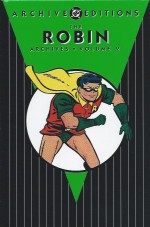
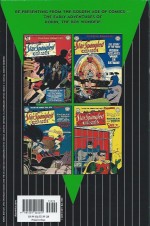
Robin Archives volume 2


By Bob Kane, Bill Finger, Win Mortimer, Jim Mooney & various (DC Comics)
ISBN: 978-1-4012-2625-1

Created by Bob Kane, Bill Finger & Jerry Robinson, Robin the Boy Wonder debuted in Detective Comics #38 (April 1940), which introduced a juvenile circus acrobat whose parents were murdered by a mob boss.

The story of how Batman took the orphaned Dick Grayson under his scalloped wing and trained him to fight crime has been told, retold and revised many times over the decades and still regularly undergoes tweaking to this day.

In the original comics continuity Grayson fought beside his mentor until 1970 when, as an indicator of those turbulent times, he flew the nest, becoming a Teen Wonder, college student and eventually leader of a team of fellow sidekicks and young justice seekers – the Teen Titans.

He graduated to his own solo spot in the back of Detective Comics from the end of the 1960s, alternating with Batgirl, and held a similar spot throughout the 1970s in Batman. The college-based wonder won a starring feature in the anthology comic Batman Family and a run of Giant Detective Comics Dollar Comics before becoming a star all over again in the 1980s as leader of the New Teen Titans, first in his original costumed identity and eventually in the reinvented guise of Nightwing. He even re-established a turbulent working relationship with his dark, driven and dangerous former senior partner.

Robin’s creation as a junior hero for younger readers to identify with inspired an incomprehensible number of costumed kid crusaders and Grayson continues in similar innovative vein for the older, more worldly-wise readership of America’s increasingly rebellious contemporary youth culture… but his star potential was first realised much earlier in his eternally young career…

From 1947 to 1952, (issues #65-130) Robin, the Boy Wonder had a solo series – and cover spot – in Star Spangled Comics at a time when the Golden Age superhero boom was fading, its gaudy bravos gradually being replaced by more traditional heroes in genres such as crime, westerns and boys’ adventure stories.

The exploits herein contained blended in-continuity action capers with more youth-oriented fare, frequently reducing adults Batman, Alfred and Commissioner Gordon to minor roles or rendering them entirely absent, allowing the kid crusader to display not just his physical accomplishments but also his brains, ingenuity and guts.

This second sturdy deluxe hardback Archive Edition re-presents more tales from Star Spangled #86-105 (covering November 1948 to June 1950) recapturing the dash, verve and universal appeal of one of fantasy literature’s greatest youth icons – albeit with a greater role for Batman – and opens with a fascinating Foreword by Bill Schelly who adds a layer of historical perspective and canny insight to the capers to come.

Every beautiful cover is included – although most of the later ones feature colonial-era frontier sensation Tomahawk – and are lovingly rendered by Jim Mooney, Win Mortimer, Charles Paris, Bob Kane and Fred Ray.

Although unverified, writers Bill Finger, Don Cameron, David Vern Reed and Jack Schiff are considered by most comics historians to be the authors of the stories in this volume and I’m going to happily concur here with that assessment until informed otherwise. Easier to ascertain is Mooney as penciller of almost all and inker of the majority, with other pencil and penmen credited as relevant…

The action-packed relatively carefree high jinks commence with Star Spangled Comics #86 and ‘The Barton Brothers!’ (inked by Win Mortimer, who remained until #90) as the Boy Wonder took up the lone vengeance trail to hunt down a trio of killers whose crime spree culminated in gunning down the mighty Batman, after which racketeer Benny Broot discovered he was related to the aristocracy and patterned all his subsequent vicious predations on medieval themes as ‘The Sinister Baron!’…

Robin went AWOL in defiance of his mentor to clear the father of a schoolmate in ‘The Man Batman Refused to Help!’ but his good intentions in clearing the obviously framed felon almost upset a cunning plan to catch the real culprit, after which SSC #89 saw ingenious hoods get hold of ‘The Batman’s Utility Belt!’ and start selling customised knock-offs until the Dynamic Duo crushed the racket.

The murder of a geologist sent the partners in peril out west in #90 to solve ‘The Mystery of Rancho Fear!’, going undercover as itinerant cowboys to deal with a gang of extremely contemporary claim-jumpers whilst, with Mooney now handling all the art-chores, issue #91 found the Boy Wonder instigating a perplexing puzzle to stump his senior partner in ‘A Birthday for Batman!’

It would have all been the perfect gift if not for the genuine gangsters who stumbled upon the anniversary antics…

The crimebusting kid played only a minor role in #92’s ‘Movie Hero No. 1’ wherein Batman surreptitiously replaced and eventually redeemed an action film actor who was a secret coward, but resumed star status in ‘The Riddle of the Sphinx!’ when a mute, masked mastermind seemingly murdered the Dark Knight and supplanted Gotham’s criminal top dog Red Mask.

Entertainment motifs abounded in those days and Star Spangled Comics #94 heralded ‘The End of Batman’ when the Dynamic Duo stumbled on a film company crating movie masterpieces tailored to the unique tastes and needs of America’s underworld after which greed and terror gripped the streets when a crook employed an ancient artefact to apparently transform objects – and even the Boy Wonder – to coldly glittering gold in #95’s ‘The Man with the Midas Touch!’

An indication of changing times and tastes came with the September 1949 Star Spangled as Fred Ray’s Tomahawk took over the cover-spot from #96 onwards whilst inside, Robin’s solo tale ‘The Boy Who Could Invent Miracles!’ was pencilled by Sheldon Moldoff with Mooney inking.

The story saw the kid crusader working alone whilst Batman recovered from gunshot wounds, encountering a well-meaning bright spark whose brilliantly conceived conceptions revolutionised the world – but almost exposed the masked avenger’s secret identity…

First seen in Star Spangled Comics #70, The Clock was an anonymous criminal time-and-motion expert who became the closest thing to an Archenemy Robin had. ‘The Man Who Stole Time!’ returned yet again in #97 (with Mooney back on full art), determined to publicly humiliate and crush his juvenile nemesis through a series of suitably-themed crimes… but with the same degree of success as always…

In #98 a classmate of Dick Grayson’s briefly became ‘Robin’s Rival!’ after devising a method of travelling on phone lines as Wireboy. Sadly his ingenuity was far in excess of his fighting ability or common sense and he was wisely convinced to retire, after which gambling gangster Sam Ferris broke jail and turned his obsession with turning circles into a campaign of ‘Crime on Wheels!’ until Robin set him straight again…

SSC #100 offered a powerfully moving tale as the Boy Wonder gave shelter to ‘The Killer-Dog of Gotham City!’ and proved that valiant Duke could shake off his criminal master’s training to become a boon to society.

In #101 High School elections were being elaborately suborned by ‘The Campaign Crooks!’ with a bizarre scheme to make an illicit buck from students, whilst in #102 ‘The Boy with Criminal Ears!’ developed super-hearing: making his life hell and ultimately bringing him to the attention of sadistic thugs with an eye to the main chance…

Star Spangled Comics #103 saw the introduction of ‘Roberta the Girl Wonder!’ as class polymath Mary Wills decided to follow her heart and try to catch the ideal boyfriend by becoming his crime-fighting rival, whilst #104’s ‘Born to Skate’ revealed how classmate Tommy Wells‘ freewheeling passion led Robin to a gang using a roller-skate factory to mask crimes as varied as smuggling, kidnapping and murder…

The wholesome all-ages action ends with a rewarding tale blending model-making and malfeasance as a guilt-wracked Robin comes to the aid of a police pilot who had been crippled – and worse – whilst assisting on a case.

As part of his rehabilitation the Junior Manhunter devises high-tech models for Bill Cooper‘s aviation club but when ‘The Disappearing Batplanes!’ are purloined by cunning air pirates the scene is set for a terrifying aerial showdown…

Beautifully illustrated, wittily scripted and captivatingly addictive, these rousingly traditional superhero escapades are a perfect antidote to teen-angst and the strident, overblown, self-absorbed whining of contemporary comicbook kids.

Fast-paced, infinitely inventive and ferociously fun, here are superb yarns no young-at-heart Fights ‘n’ Tights fan will want to miss…
© 1948, 1949, 1950, 2010 DC Comics. All Rights Reserved.

Asterix and the Class Act


By R. Goscinny & A. Uderzo, translated by Anthea Bell & Derek Hockridge (Orion)
ISBN: 978-0-7528-6640-6

One of the most-read comics strips in the world, Asterix the Gaul has been translated into over 100 languages. More than 325 million copies of the 35 canonical Asterix books have sold worldwide, making Goscinny & Uderzo France’s bestselling international authors.

The strip has spawned numerous animated and live-action movies, TV series, assorted toys, games, apparel and even been enshrined in its own tourist hotspot – Parc Astérix, near Paris.

The diminutive, doughty hero was created in 1959 by two of the Ninth Art’s greatest proponents, René Goscinny & Albert Uderzo: masters of cartoon narrative then at the peak of their creative powers.

Firmly established as a global brand and premium French export by the mid-1960s, Asterix continued to grow in quality as Goscinny & Uderzo toiled ever onward, crafting further fabulous sagas; building a stunning legacy of graphic excellence and storytelling gold. As such prominent and ever-rising stars their presence was often requested in other places, as varied as fashion magazine Elle, global icon National Geographic and even a part of Paris’ 1992 Olympic Bid…

Although the ancient Gaul was a massive hit from the start, Uderzo continued working on other strips, but as soon as the initial epic was collected as Astérix le gaulois in 1961 it became clear that the series would demand most of his time – especially as the astounding Goscinny never seemed to require rest or run out of ideas.

By 1967 Asterix occupied all Uderzo’s attention, and in 1974 the partners formed Idéfix Studios to fully exploit their creation. At the same time, after nearly 15 years as a weekly comic strip subsequently collected into compilations, the 21st tale (Asterix and Caesar’s Gift) was the first published as a complete original album before being serialised. Thereafter each new release was a long anticipated, eagerly awaited treat for the strip’s millions of fans…

With the sudden death of impossibly prolific scripter Goscinny in 1977, the creative wonderment continued with Uderzo – rather reluctantly – writing and drawing fresh adventures until his retirement in 2010.

In 2013 new yarn Asterix and the Picts opened a fresh chapter in the annals as Jean-Yves Ferri & Didier Conrad began a much-anticipated continuation of the franchise.

Before that, however, Uderzo was convinced to gather and – in many instances – artistically re-master some of the historical oddments and pictorial asides which had incrementally accrued over the glory-filled decades; features by the perfect partners which just didn’t fit into major album arcs, tales done for Specials, guest publications and commercial projects starring the indomitable Gaul. To cap off the new-old package Albert crafted an all-original vignette from that halcyon world of immortal heroes…

This intriguing compilation first appeared in France as Astérix et la rentrée gauloise in 1993 – and a decade later in English – gathering those long-forgotten side-pieces and spin-off material starring the Gallant Gauls and frequently their minor-celebrity creators too.

Following an expansive and explanatory ‘French Publisher’s Note’ – and the traditional background maps and cast list – a press conference from Chief Vitalstatistix leads directly into the eponymous ‘Asterix and the Class Act’ (from Pilote #363 October 6th 1966) wherein the first day of school finds the little legend and his big buddy sadly miscast as truant inspectors and kid catchers for head teacher Getafix…

Each little gem is preceded by an introductory piece, and following the hard facts comes ‘The Birth of Asterix’. First seen in October 1994’s Le Journal exceptionnel d’Astérix, the tale is set ‘In the Year 35 BC (Before Caesar)’ and finds a certain village in high dudgeon as two young women go into labour. Their distracted husbands soon find a way to distract themselves – and everybody else – with a mass punch-up that quickly becomes the hamlet’s preferred means of airing issues and passing the time…

‘In 50 BC’ comes from May 1977 and re-presents newspaper-style strips produced at the request of an American publisher hoping to break the European sensation in the USA. The endeavour inevitably stalled but the panels – introducing and reprising the unique world of the Gallic goliaths – wound up being published in National Geographic.

Apparently Uderzo loves chickens and, especially for the original August 2003 release, he concocted the tale of ‘Chanticleerix the Gaulish Cockerel’ detailing the struggle between the village’s chief clucker and a marauding Roman Eagle. It sounds pretty one-sided but faithful mutt Dogmatix knows where the magic portion is kept…

Pilote #424 (7th December 1967) was full of Seasonal festive fun so ‘For Gaul Lang Syne’ saw Obelix attempt to use druidic mistletoe to snaffle a kiss from beautiful Panacea. He soon came to regret the notion…

‘Mini, Midi, Maxi’ was produced for fashion magazine Elle (#1337 2nd August 1971) but the discussion of ancient Gaulish couture soon devolved into the kind of scraps you’d expect, after which ‘Asterix As You Have Never Seen Him Before…’ (Pilote #527, 11th December 1969) displays Uderzo’s practised visual versatility as our heroes are realised in various popular art styles from gritty superhero to Flash Gordon, a Charles Schulz pastiche and even as an underground psychedelic trip…

Approached to contribute a strip to Paris’ bid, the partners produced ‘The Lutetia Olympics’ which was later published in Jours de France #1660 (25th October 1986) and depicted how Caesar’s attempts to scotch a similar attempt to hold the great games in Gaul failed because of a certain doughty duo, whilst ‘Springtime in Gaul’ (from Pilote #334, 17th March 1966) was an early all-Albert affair wherein our heroes help the mystic herald of changing seasons give pernicious winter the boot…

‘The Mascot’ originated in the first digest-sized Super Pocket Pilote (#1, 13th June 1968) and revealed how the constantly thrashed Romans decided to get a lucky animal totem, but chose the wrong-est dog in the world to confiscate, after which ‘Latinomania’ (originally crafted in March 1973 and re-mastered for the first Astérix et la rentrée gauloise in 1993) took a sly poke at the fragile mutability of language.

‘The Authors Take the Stage’ describes how usually-invisible creators became characters in their own work and ‘The Obelix Family Tree’ collects a continuing panel strip which began in Pilote #172 (7th February 1963) and ran until #186 wherein Mssrs. Goscinny and Uderzo encounter a modern day Gaulish giant and track his ancestors back through history.

An at last everything ends with ‘How Do They Think It All Up?’ (Pilote #157, 25th October 1962) as two cartoonists in a café experience ‘The Birth of an Idea’…

Adding extra lustre to an already stellar canon, these quirky sidebars and secret views thankfully collect just a few more precious gags and wry capers to augment if not complete the long and glorious career of two of France’s greatest heroes – both the real ones and their fictive masterpieces. Not to be missed…
© 2003 Les Éditions Albert René/Goscinny-Uderzo. English translation: © 2003 Les Éditions Albert René/Goscinny-Uderzo. All rights reserved.

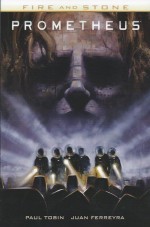
Prometheus: Fire & Stone


By Paul Tobin, Juan Ferreyra & various (Dark Horse)
ISBN: 978-1-61655-650-1

Spinning out of the movie Prometheus and its comicbook iteration, Fire and Stone was a bold and ambitious publishing event begun in 2014 designed to link four separate franchises into a coherent – if rather time-distanced – universe.

A quartet of 4-part miniseries featuring core concepts from Prometheus, Alien, Predator and AVP: Aliens Vs Predator was conceived by scripters Paul Tobin and Kelly Sue DeConnick, with the calamitous clash of cultures and creatures culminating in one-shot Fire and Stone: Omega.

The first of those pocket series is now available as a sleek paperback collection scripted by Tobin and moodily designed and illustrated by Juan Ferreyra, opening the time and space shredding saga in 2219 AD above the third moon of the Calpamos planetoid in the Zeta 2 Reticuli system.

Four Earth craft have rendezvoused there, seeking answers to the question of what happened to a long-lost research ship.

Historian and filmmaker Clara Atkinson aboard command ship Helios ponders the ongoing mission as the crews of engine core vehicle Geryon, military patrol ship Perses and salvage vessel Kadmos slowly shake off the effects of deep space hibernation and get reacquainted.

Captain Angela Foster is cranky but seems exhilarated at the prospect of hugely valuable salvage and effusive medical officer James Weddel is his usual grabby self, but apparently affable astrobiologist Francis Lane is hiding something. He’s coincidentally in charge of maintaining and servicing the service humanoids such as meek-seeming synthetic assistant Elden – the only being aware of the secretive boffin’s failing health…

What nobody except Foster knows is the true purpose of the mission. She is hunting legendary exploratory ship Prometheus and chimeric, inspirational leader Sir Peter Weyland. Moreover, when Weyland was lost on LV-223 in 2090 he was seeking to prove a crazy theory that a race of giants he called “The Engineers” had seeded the universe with life. He wanted to find the creators of humanity, and now so does she…

Leaving Geryon in orbit, the smaller ships confidently head for solid ground. Foster takes the Helios down and soon discovers that the supposedly barren moon is rich with weird, superabundant, aggressive and extremely ugly lifeforms. Strangely, most of it seems to be concentrated in a single implausible and very forbidding micro-rainforest…

Discoveries come thick, fast and increasingly disquieting. A strange, viscous black goo which seems to be the very essence of raw life. Bizarre corpses and skeletons crushed, torn apart or burned by acid. An ecosystem of fauna filling every biological niche and all looking as if they were patterned on the same creature…

Lane is particularly taken with the omnipresent black ooze and he and Elden are missing when the main party discover a lost human-colony ship somehow shifted to the wrong planet and submerged by a wall of overgrown undergrowth.

They are utterly unprepared for the marauding xenomorphs hungrily waiting inside for fresh prey…

It all goes pretty much as you’d expect (and, I suspect, hope) after that, but whilst the Aliens begin their hideous and inexorable dance of death, other things that will impact the succeeding story-arcs come into play too.

Whilst Foster’s party is searching, a wave of the big-headed bugs swarm the Helios, leaving it locked down and besieged…

Lane begins experimenting with the black goo in a cave, seeking a cure for his cancer. When he injects poor, passive Elden with a sample, the astrobiologist is appalled to see rapid and terrifying forced evolution in action, transforming a harmless and completely docile programmed servant into a monster with a ruthless will and deadly agenda of its own…

Others explorers find a crashed craft of incontrovertibly alien origin and dependable, staunch and fun-loving ebullient military man Galgo grabs up extraterrestrial weaponry. Later, seeing the way the winds are blowing, he promptly abandons the science teams and the Helios to fate…

None of the wide-ranging humans are prepared for the consequences when a long-dormant Engineer begins checking his planetoid-sized laboratory again and, seeing assorted specimens and unidentified creatures running riot, starts dispassionately clearing up the mess and shutting down the chaos…

Soon only three humans are left cowering in the dark but refusing to give in…

To Be Continued…

Fast-paced, intensely gripping and closely following the tried-and-tested formula of the film franchises, this is a superb horror/sci fi romp to delight fans of the cinematic classics and breathtaking thrill rides in general, which also offers a cover gallery and chapter-break art by David Palumbo plus a potent and beguiling selection of designs and notes from illustrator’s Juan Ferreyra’s ‘Sketchbook’.

™ & © 2014, 2015 20th Century Fox Film Corporation. All rights reserved.

Usagi Yojimbo: Senso


By Stan Sakai (Dark Horse)
ISBN: 978-1-61655-709-6

One of the very best and most adaptable survivors of the 1980s black-&-white comicbook explosion/implosion is a truly bizarre and wonderful synthesis of historical Japanese samurai fiction and anthropomorphic animal adventure, as well as a perfect example of the versatility and strengths of a creator-owned character.

Usagi Yojimbo (which translates as “rabbit bodyguard”) first appeared as a background character in multi-talented creator Stan Sakai’s peripatetic comedy feature The Adventures of Nilson Groundthumper and Hermy, which debuted in furry ‘n’ fuzzy folk anthology Albedo Anthropomorphics #1 (1984) subsequently appearing there on his own terms as well as in Critters, Amazing Heroes, Furrlough and the Munden’s Bar back-up in Grimjack.

Sakai was born in 1953 in Kyoto, Japan before the family emigrated to Hawaii in 1955. He attended University of Hawaii, graduating with a BA in Fine Arts, and pursued further studies at Pasadena’s Art Center College of Design after moving to California.

His first comics work was as a letterer, most famously for the incredible Groo the Wanderer, before his nimble pens and brushes found a way to express a love of Japanese history and legend. Also shaped by his hearty interest in the filmic works of Akira Kurosawa and his peers, Sakai turned a proposed story about a human hero into one of the most enticing and impressive – and astoundingly authentic – sagas of all time.

The deliciously rambling and expansive period fantasy series is set in a world of sentient animals whilst specifically referencing the Edo Period of Feudal Japan (how did we cloth-eared Westerners ever get “Japan” from “Nihon” anyway?) and is drenched in classic cultural icons as varied as Lone Wolf and Cub, Zatoichi and even Godzilla to enrich the ongoing exploits of Miyamoto Usagi, a Ronin (masterless, wandering Samurai) whose fate is to be drawn constantly into a plethora of incredible situations.

And yes, he’s a rabbit – a brave, sentimental, gentle, honourable, conscientious and heroic bunny who cannot turn down any request for help…

The long-eared nomad has changed publishers a few times but has been in continuous publication since 1987 – with nearly 40 graphic novel collections and compilations to date – with guest-shots in sundry other series such as Teenage Mutant Ninja Turtles and its TV incarnation – he even almost made it into his own small-screen show but there’s still time yet and fashions can revive as quickly as they die out …

Sakai and his creation have won numerous awards both within the comics community and amongst the greater reading public and his bombastic bunny has branched out into high-end collectibles, art prints, computer games and RPGs, a spin-off sci fi comics serial and lots of toys. In November 2014 the Rabbit Ronin premiered in a stage show here in London…

Celebrating his 30th anniversary our hero recently appeared in a staggering out-of-continuity cosmic clash first seen in the 6-issue miniseries Usagi Yojimbo: Senso (August 2014-January 2015) now gathered into a sturdy monochrome hardback edition.

Senso means War! – it says so on the back of the book – and this epic Armageddon tale opens fifteen years from the rabbit’s current timeframe with all the regular characters in play for the final battle between usurping over-villain Lord Hikiji and the forces of the Shogun led by Lord Noriyuki of the Geishu Clan.

Preceded by comedic cartoon Introduction ‘Usagi and Stan’ and a selection of cover sketches for the compilation volume, the action opens as the Shogun’s forces, led by recently aligned and fully restored Samurai Usagi, clash with the Dark Lord’s armies.

Also drawn into the cataclysmic battle and employed in key positions are valiant bodyguard Lady Tomoe, former bounty hunter General Gennosuke and even the rabbit’s (unsuspected and unacknowledged) son Jotaro.

Even though the battle seems to be going against them the noble young lord is appalled when chief scientist Takenoko-Sensei offers his new prototype weapon – an armoured, steam-powered, self-propelled moving fortress called Kameyama (“Turtle Mountain”).

Preferring defeat to the shame of utilising an atrocity weapon, the indomitable legion of heroes fight on with renewed desperation, but everything changes in an instant when the sky is suddenly rent by a fiery scream and a colossal metal shell crashes onto the field.

In the silent aftermath the shocked remnants of two shattered armies drag themselves from the blood and dust to discover a third force has entered the fray: ghastly beings like giant octopi, killing with heat and light and riding immense three-legged walking machines…

It takes ninja leader Chizu to discover that the rubbery horrors can be killed and their diabolical machines destroyed, but her consequent and so-noble death will not be the last…

Tense, oppressively ominous and downright scary in places, this fabulous reworking of HG Wells’ War of the Worlds is an astounding and compelling variation on the hallowed theme which offers one tantalising “maybe” after another as three decades of beloved characters assemble to face the end of a world and triumph in a most incredible manner, and at the most horrific of prices…

Amongst the bonus features in this titanic tome are all six wraparound covers from the miniseries and a Process section offering comparisons, deleted and reworked pages and scenes plus fascinating developmental notes and sketches from the story.

The multi-faceted legendary Lepus’ nigh-universal irresistible appeal encompasses every aspect and genre of adventure comics and this moving “End of Days” epic will delight devotees and certainly make converts of the most hardened hater of “funny animal” stories.

Text and illustrations © 2015 Stan Sakai. All rights reserved.

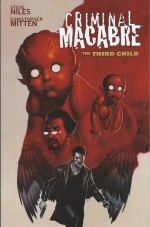
Criminal Macabre: The Third Child


By Steve Niles, Christopher Mitten & various (Dark Horse)
ISBN: 978-1-61655-631-0

As illustrated by Jim Whiting, Steve Niles’ Cal McDonald first appeared in 1990 as part of the line-up in controversial comics anthology Fly in My Eye: Daughters of Fly in My Eye.

The hardboiled detective/horror-hunter then enjoyed his own serial in Dark Horse Presents #102-105 (1996), starred in two prose novels (Savage Membrane and Guns, Drugs and Monsters) before returning to comics with Niles’ 30 Days of Night collaborator Ben Templesmith limning the eponymous Criminal Macabre miniseries.

That was followed by loads more comics by many other artists and even another novel…

What I’m saying is that this guy’s been around, but you can pick up any book and get on with the business of being spooked whilst vicariously crushing evil with no appreciable head-strain. Then, when you realise you like what you see, you can track down the graphic novels, the Casebooks and the Omnibus Editions to prolong and expand the eerily electric experience…

In this latest compilation – collecting 2014’s 4-issue miniseries Criminal Macabre: The Third Child – the world’s most uncompromising monster-killer is coming to terms with the most unpleasant of occurrences and not coping well.

Despite years fighting against and alongside all aspects of the uncanny and supernatural, Cal has been in a bit of a dark place ever since he lost a battle and returned as a full-blown example of the undead. Now, as he haunts the darkest corners of Los Angeles, more bad news comes his way…

Whilst McDonald’s mind goes back to 1975 and his first fateful encounter with a destroyer of innocence, elsewhere it begins, as it always does, with people dying…

When two grotesque and infernal infants hit the mean streets they casually sow blood and death in their wake, inspiring everyone they meet – even unrepentant and merciless members of the city’s vast supernatural fraternity – to go on uncontrolled killing sprees. The wee kiddies are searching for the last of their kind. When they locate “The Third Child” they will all unite to end the world in a storm of rabid, infectious, hate-filled aggression…

When McDonald’s associates – Mo’lock the ghoul, Brobdingnagian Adam and a cop named Wheatley – finally locate the self-pitying avenger they quickly realise that he’s succumbing to the darkest urges of his new condition, but have important news.

The devil-babies have stirred things up so much the entire community has united. Even the vampires and werewolves are honouring a truce until the Earth is rid of the infant invaders… but they need a leader…

Meanwhile the terror-toddlers’ search for the missing waif has uncovered a potential candidate. Cal’s greatest enemy Jason Hemlock has clawed his way out of Hell and proclaims himself the third part of the Armageddon triumvirate.

He’s lying, but as the bodies mount up anyway and LA burns, the increasingly out-of-control Cal is running out of options to stave off the end of everything. And then, just as the assembled legion of monsters decide it’s every freak for itself, a reunion with his long dead dad affords McDonald the clue he’s been desperately searching for.

Armed with the knowledge of who and what the missing third is, Cal is ready to save the world again but is quite unprepared for the incredible consequences and his next uncanny evolution at war’s end…

Lightning-paced, dryly funny and spectacularly violent, Niles’ sparse and Spartan tale races along, beautifully and forcefully realised by illustrator Christopher Mitten, who also supplies an extensive and enthralling Sketchbook section.

No-nonsense monster-mashing mayhem at its best.

Text and illustrations ™ and © 2014 Steve Niles. All rights reserved.

Modesty Blaise: The Killing Distance


By Peter O’Donnell & Enric Badia Romero (Titan Books)
ISBN: 978-1-78116-712-0

Modesty Blaise and her lethally adept, compulsively platonic partner Willie Garvin gained fearsome reputations as top-flight super-criminals before retiring young, rich and healthy. With their honour intact and their hands relatively clean, they cut themselves off completely from a career where they made all the money they would ever need and far too many enemies – a situation exacerbated by their heartfelt conviction that killing was only ever to be used as a last resort.

When devious British Spymaster Sir Gerald Tarrant sought them out they were slowly dying of boredom in England. The wily old bird offered them a chance to have fun, get back into harness and do a bit of good in the world. They jumped at his offer and have been cleaning up the world in their own unique way ever since …

From that tenuous beginning in ‘La Machine’ (see Modesty Blaise: the Gabriel Set-Up) the dynamic duo went on to crush the world’s vilest villains and most macabre monsters in a perpetual storm of tense suspense and inspirational action for nearly forty years…

The inseparable associates first appeared in The Evening Standard on May 13th 1963 and over the decades went on to star in some of the world’s most memorable crime fiction, all in three panels a day.

Creators Peter O’Donnell & Jim Holdaway (who had previously collaborated on Romeo Brown) produced a timeless treasure trove of brilliant graphic escapades until the illustrator’s tragic early death in 1970, whereupon Spanish artist Enric Badia Romero (and occasionally John Burns, Neville Colvin and Pat Wright) assumed the art reins, taking the partners-in-peril to even greater heights.

The series has been syndicated world-wide and Modesty has also starred in 13 prose novels and short-story collections, several films, a TV pilot, a radio play, an American graphic novel and nearly one hundred comic strip adventures until the strip’s conclusion in 2001.

The tales are a broad blend of hip adventuring lifestyle and cool capers combining espionage, crime, intrigue and even – now and again – plausibly intriguing sci fi and supernaturally tinged horror genre fare, with ever-competent Modesty and Willie canny, deadly, yet all-too-fallibly human defenders of the helpless and avengers of the wronged…

Reproduced in stark and stunning black & white – and quite right too – Titan Books’ superb and scrupulous serial re-presentations of the ultimate strip trouble-shooters resume here with O’Donnell & Romero offering another chilling trio of tales spanning November 1992 to February 1994, each prefaced with informative prose introductions from devotee, publisher, strip historian and Mathematics Professor Rick Norwood.

The rollicking romps begin with non-stop thrill-ride ‘Guido the Jinx’ (originally seen in The Evening Standard from February 10th to July 5th 1994) as Blaise and Garvin take a well-deserved vacation tracing the route of the historical Silk Road, only to have their peace and contemplation disrupted by pompous yet lovable old self-promoter Guido Biganzoli.

The legend in his own mind is now working as promoter for a movie being shot in the lonely wastes but the production has hit a snag: the male and female stuntmen are unable to work on the big-money shot…

Against their better judgement Modesty and Willie tackle the terrible “waterfall drop” but naturally it goes terribly wrong and they are carried away and deposited under a mountain…

Trouble always finds the dynamic duo and whilst extricating themselves from their watery tomb they discover Soviet operative and former associate Colonel Greb gravely wounded and holed up in a cave.

As they minister to him a horrific story unfolds: the old soldier was guarding a secret installation warehousing uranium when a gang of mercenaries swooped in and wiped out the garrison. Ruthless bandit Kung-Li plans to fly out the priceless contraband and sell it to who knows how many terrorist groups, or even make himself a nuclear power…

Resolved to stop the merciless gang with nothing more than hand-made stone-age weapons, Modesty and Willie’s arsenal of destruction gets an unexpected and unlikely boost when bad penny Guido suddenly turns up once again…

After that phenomenal and bloody exploit the canny couple are called upon to save the life of Sir Gerald Tarrant from one of the world’s richest and most reclusive men in ‘The Killing Distance’ (July 6th – November 30th 1994) which begins as Charles B. Delaney starts issuing orders from his impregnable fortress in the Atlas Mountains. Once upon a time he was KGB chief Ivan Brodsky but due to Tarrant’s undercover endeavours at the height of the Cold War lost everything and turned CIA informant.

Sadly the “Red Admiral” used Uncle Sam’s bottomless pockets to kickstart a huge private fortune and is now ready to use it all to kill the man who beat him in the “Great Game”…

When the first assassination attempt fails, Willie and Modesty rush to Tarrant’s hospital bedside and fill in the gaps of Tarrant’s tale with details from their own dealings with Delaney during the period when they seamlessly ran their crime-combine The Network.

Confronted with the grim facts, the old warhorse all but gives up the ghost, forbidding his friends to further endanger themselves, but as usual he has underestimated the depth of feeling and sense of gratitude they feel for him.

Immediately Modesty begins taking apart Delaney’s organisation and imperiously foiling his follow-up attempts on Sir Gerald and herself. Before long the frustrated egomaniac is pushed into making a colossal mistake, issuing a direct challenge to the formidable female.

He will end his attempts on the British agent’s life if she can – within thirty days – break into his unassailable citadel and get within arm’s length of him…

What happens when Willie and Modesty cunningly circumvent all his guards, resources and traps and she gets within the disputed “killing distance” is something the outraged oligarch could never have imagined…

The catalogue of compelling capers concludes with ‘The Aristo’ (December 1st 1994 to May 3rd 1995) wherein the peril-pursuing partners visit old friends in Hong Kong and barely survive an assassination attempt by old enemy Wu Smith…

Adrift in a raft on the South China Sea they are picked up by freighter captain Miguel Camacho, currently transporting a cargo of electronics and his beloved, heavily pregnant wife Joaquina to Singapore.

Welcomed and cosseted, Modesty and Willie can’t help but worry when they hear of a modern-day pirate – a supposed British lord in his heavily armed vessel The Etonian – currently terrorising shipping in the area. After all, trouble has a tendency to find them wherever they end up…

Especially appalling are the stories of what The Aristo does with any women he takes from his nautical conquests, so when the brigand inevitably surfaces Willie and Modesty enact the most desperate gamble of their long and vivid careers with Jo and her imminent unborn the invaluable bait.

Moreover the subsequent punishments the crusading couple inflict on the vile sea-reavers are brutal and most assuredly final…

These are incomparable capers crafted by brilliant creators at the peak of their powers; revelling in the sheer perfection of an iconic creation. Unforgettable excitement-packed escapades packed with sleek sex appeal, dry wit, terrific tension and explosive action, the stories grow more appealing with every rereading and never fail to deliver maximum impact and total enjoyment.

Modesty Blaise © 2014 Associated Newspapers/Solo Syndication.

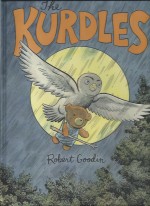
The Kurdles


By Robert Goodin (Fantagraphics Books)
ISBN: 978-1-60699-832-8

The power of strip and picture books is that they can jump right through your eyes, bombarding but bypassing your brain and lodging straight into your heart. If you don’t believe me just read Sock Monkey: Into the Deep Woods, A Wish For Wings That Work, Usagi Yojimbo, The Moomins and the Great Flood, Bone, Copper, The Squickerwonkers, Pogo or The Velveteen Rabbit.

In fact, read them anyway.

Now you can add to that list this splendidly eerie, all-ages cartoon tale from illustrator and animator Rob Goodin (Duckman, The Wild Thornberries, American Dad!) which combines – in the best tradition of the genre – crippling loneliness, astounding wonder and the finding of a new family, all delivered in a gloriously illustrated, magnificently oversized (305 x 222 mm) full-colour hardback tome that will take your breath away.

When little Ellie starts acting up again, poor Sally Bear gets flung out the car window on a cold, rainy night and left in the wilds to rot.

The trenchant little toy is made of far sterner stuff, however, and picking herself up, gamely wanders the terrifying great outdoors, narrowly avoiding doom and destruction from assorted beasts and natural hazards.

Battered and bedraggled, Sally eventually finds her way deep into a swamp where a bizarre conurbation exists. More accurately, one of the denizens of Kurdleton finds her, dragging the bear back to a band of little weirdoes who extend jolly hands of friendship the damaged bear is too proud and standoffish to accept with any grace at all…

Claiming all she needs are directions back to the road, Sally is nevertheless soon embroiled in the jovial strangers’ ongoing crisis: their magnificent dwelling has contracted a strange malady and is growing hair and eyes…

Soon a case of Casa Pilosa – an infamous “Disease of the American Home” – is diagnosed. The house is coming alive…

That’s all the plot you get, and you’ll thank me for that when you read for yourselves this fabulously moving, suspensefully thrilling and wryly funny fractured fable of outcasts banding together into a potently different modern family.

Bold, beguiling and beautiful, The Kurdles is the kind of book you will remember forever.
The Kurdles © 2015 Robert Goodin. This edition © 2015 Fantagraphics Books, Inc.

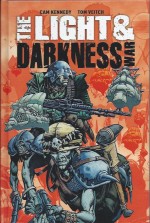
The Light and Darkness War


By Tom Veitch & Cam Kennedy (Titan Comics)
ISBN: 978-1-78276-180-8

During the 1980s the American comics scene enjoyed an astounding proliferation of new titles and companies in the wake of the creation of the Direct Sales Market. With publishers able to firm-sale straight to retail outlets rather than overprint and accept returned copies from non-specialised vendors, the industry was able to support less generic titles and creators could experiment without losing their shirts.

In response Marvel Comics developed a line of creator-owned properties at the height of the subsequent publishing explosion, launching a number of idiosyncratic, impressive series in a variety of formats under the watchful, canny eye of Editor Archie Goodwin. The delightfully disparate line was dubbed Epic Comics and the results reshaped the industry.

One of the most evocative releases was a darkly compelling war/fantasy/science fiction serial with a beautifully simple core concept: Valhalla is real and forever…

Conceived and created by author, poet and comics scribe Tom Veitch (Legion of Charlies, Antlers in the Treetops, Animal Man, Star Wars: Dark Empire) and Cam Kennedy (Fighting Mann, Judge Dredd, Batman, Star Wars: Dark Empire) The Light and Darkness War originally ran from October 1988 to September 1989, just as that period of exuberant creative freedom was giving way to a marketplace dominated by reductive exploitation led by speculators.

Because of that downturn, this fantastic saga of martial pride and redemption through valiant service in the Great Beyond never really got the popular acclaim it deserved, hopefully something this glorious hardback retrospective compilation from Titan Comics will belatedly address…

Following heartfelt reminiscences and an appreciation in the ‘Foreword by Commander Mike Beidler, USN, Retired’ the astounding fable introduces paraplegic Vietnam war veteran Lazarus Jones, a broken, troubled warrior for whom the fighting never ended.

Home when he should have died with his inseparable friends, plagued with red-hot memories of beloved comrades lost when their Huey went down, by 1978 the wheelchair-bound wreck of a man is in a most parlous state.

Shattered by what will one day be designated Post Traumatic Stress Disorder, Laz cannot help making life hell for his devoted wife Chris. His miserable existence takes an even darker turn when Jones begins seeing visions of long-gone Huff, Slaw and Engle all calling him to join them.

A little later when Chris’ car crashes, Laz is severely hurt and left in a coma he might never awake from…

Elsewhere on the other side of Eternity, a shadowy shape speaks to Lazarus offering a choice: he can go back or he can join his long-departed brothers …

And thus begins a fantastic adventure as the half-man is restored to perfect health and reunited with those who know him best. The catch is that this afterlife is like nothing any holy book ever promised. It’s a vast cosmos of painful, unrelenting physicality where strange alien species commingle and Earth’s dead continue much as they had before.

Pilots steer gunships – albeit flying ones made of stone and levitated by little blue aliens called “menteps” – Leonardo da Vinci carries on inventing weapons for powerful lords and soldiers from every era have one more chance to serve and die…

Miraculously and joyously restored, Laz eagerly rejoins Engle, Slaw and Huff in the only thing he was ever good at. Manning a flying boat armed with light-powered weapons he becomes part of a vast force perpetually defying an unimaginable wave of invading evil from the Outer Darkness.

It’s a war with no overall plan or envisaged endgame, just eternal conflict, but recently a dark lord named Na has risen to the foremost rank of the “Deadsiders” and the legions of night seem to be gaining an advantage in the never-ending conflict fought on a million planets and a billion fronts…

For five hundred years however the genius da Vinci has created weapons that have checked the rapid advance and held the invaders to a tenuous stalemate, but Deadsiders are tirelessly patient and resort to inexorably taking worlds one at a time.

But now a novel event has taken place. Although Lazarus has happily enlisted in the army of Light comprised of those who died in battle on Earth, on the other side of the sky his body is still alive…

Stationed on besieged world Black Gate, Laz and the “Light Gang” are unable to prevent libidinous Lord Na from infiltrating and overcoming the planetary defences, but at least they save Governor Nethon‘s daughter Lasha from becoming the conqueror’s latest power-supplying plaything.

Although gradually winning the war for the dark, Na is impatient for a faster outcome. To achieve that end he had his necromancers rediscover an ancient, long-forgotten way to contact the Earth realm and dupes millionaire arms-dealer and devout Satanist Niles Odom into creating a device to physically bridge the dimensions.

Na’s wishes are simple; he wants earthly particle weapons, rail guns, atom bombs…

The unwitting dupe building Odom’s bridge is Nicky Tesla, a brilliant physicist whose intellect rivals that of his dead uncle Nikola, the wizard of electricity who once astounded the world.

With his clairvoyant girlfriend Delpha little Nicky has used his uncle’s old researches to complete an inter-realm gate for crazy-rich Odom, but when an army of zombies come through it and abduct him and Delpha nobody is prepared for what follows.

As the scientists are dragged across into an impossible world where Uncle Nikola is alive again, Laz and the Light Gang – following in Na’s wake – explosively head the other way…

They soon find themselves trapped on their birth-world, just as whole and hale as the day they died… and where Jones still languishes somewhere in a hospital bed.

With all the Afterworlds at stake they have no choice but to fight their way back to the War again…

Also included in this gloriously fulsome chronicle is a sketch-&-developmental art ‘Background Briefing’ by Veitch & Kennedy, discussing the Underground Comic origins and antecedents of the story as well as the history, physics and metaphysics of the Light and Darkness War and a potent overview and personal recollection from Stephen R. Bissette, ‘Endless War: The Life, Loss and Afterlife of Lazarus Jones’.

Fast paced, suspenseful, astonishingly imaginative and utterly beautiful to behold, the complex tale of Laz’s team and their struggle, how two generations of Tesla reshape a war that has been waged forever, and how in the end only love and devotion can battle overwhelming evil is a masterpiece of graphic endeavour and one no lover of fantasy fiction should miss.
The Light and Darkness War is ™ and © 2015 Tom Veitch & Cam Kennedy. All rights reserved.