The Art of Archie: the Covers


By various, edited by Victor Gorelick & Craig Yoe (Archie Books)
ISBN: 978-1-936975-79-2

Win’s Christmas Gift Recommendation: A perfect celebration of the magic of comicbooks… 10/10

For most of us, comics mean buff men and women in capes and tights hitting each other, lobbing trees about, or stark, nihilistic genre thrillers aimed at an extremely mature and sophisticated readership of confirmed fans – and indeed that has been the prolific norm for nearly twenty years.

However, over the decades since comicbooks were invented in 1933, other forms of sequential illustrated fiction genres have held their own. One that has maintained a unique position over the years – although almost now completely transferred to television – is the teen-comedy genre begun by and synonymous with a carrot topped, homely (at first just plain ugly) kid named Archie Andrews.

MLJ were a small outfit which jumped wholeheartedly onto the superhero bandwagon following the debut of Superman. In November 1939 they launched Blue Ribbon Comics, promptly following with Top-Notch and Pep Comics. The content was the accepted blend of costumed heroes, two-fisted adventure strips and one-off gags. Pep made history with its lead feature The Shield – the industry’s first superhero clad in the American flag – but generally MLJ were followers not innovators.

That all changed at the end of 1941. Even while profiting from the Fights ‘N’ Tights phalanx, Maurice Coyne, Louis Silberkleit and John Goldwater (hence MLJ) spotted a gap in their blossoming market and in December the action strips were joined by a wholesome, ordinary hero; an “average teen” who had invitingly human-scaled adventures that might happen to the readers, but with the laughs, good times, romance and slapstick heavily emphasised.

Pep Comics #22 introduced a gap-toothed, freckle-faced, red-headed goof showing off to the pretty blonde next door. Taking his lead from the popular Andy Hardy movies starring Mickey Rooney, Goldwater developed the concept of a youthful everyman, tasking writer Vic Bloom & artist Bob Montana with the job of making it work.

So effective and all-pervasive was the impact and comforting message the new kid offered to the boys “over there” and those left behind on the Home Front that Archie Andrews and the wholesome image of familiar, beloved, secure Americana he and the Riverdale gang represented, one could consider them the greatest and most effective Patriotic/Propaganda weapon in comics history…

It all started with an innocuous 6-page tale entitled ‘Archie’ which introduced the future star and pretty girl-next-door Betty Cooper. Archie’s unconventional best friend and confidante Forsythe P. “Jughead” Jones also debuted in that first story as did the small-town utopia they lived in.

The premise was an instant hit and in 1942 the feature graduated to its own title. Archie Comics #1 was the company’s first non-anthology magazine and began an inexorable transformation of the entire company. With the introduction of rich, raven-haired Veronica Lodge, all the pieces were in play for the industry’s second Phenomenon (Superman being the first).

By May 1946 the kids had taken over and, retiring its heroic characters years before the end of the Golden Age, MLJ renamed itself Archie Comics, becoming to all intents and purposes a publisher of family comedies. This overwhelming success, like the Man of Tomorrow’s, forced a change in the content of every other publisher’s titles and led to a multi-media industry including a newspaper strip, TV, movies, pop-songs and even a chain of restaurants.

Intermittently the costumed cut-ups have returned on occasion but Archie Comics now seems content to specialise in what they do uniquely best.

The eponymous high-schooler is a good-hearted lad lacking common sense and Betty – pretty, sensible, devoted girl next door, with all that entails – loves the ridiculous redhead. Ronnie is spoiled, exotic and glamorous and only settles for our boy if there’s nobody better around. She might actually love him too, though. Archie, of course, can’t decide who or what he wants…

This never-tawdry eternal triangle has been the basis of seventy years of charmingly raucous, gently preposterous, frenetic, chiding and even heart-rending comedy encompassing everything from surreal wit to frantic slapstick, as the kids and an increasing cast of friends grew into an American institution.

Adapting seamlessly to every trend and fad, perfectly in tone with and mirroring the growth of teen culture, the host of writers and artists who’ve crafted the stories over the decades have made the archetypal characters of Riverdale a benchmark for youth and a visual barometer of growing up American.

Archie’s unconventional best friend Jughead is Mercutio to Archie’s Romeo, providing rationality and a reader’s voice, as well as being a powerful catalyst of events in his own right. There’s even a likeably reprehensible Tybalt figure in the crafty form of Reggie Mantle – who first popped up to cause mischief in Jackpot Comics #5 (Spring 1942).

This beguiling triangle (plus annexe and outhouse) has been the rock-solid foundation for decades of comics magic. …And the concept is eternally self-renewing…

Archie has thrived by constantly reinventing its core characters, seamlessly adapting to the changing world outside the bright, flimsy pages, shamelessly co-opting youth, pop culture and fashion trends into its infallible mix of slapstick and young romance.

Each and every social revolution has been painlessly assimilated into the mix with the editors tastefully confronting a number of social issues affecting the young in a manner both even-handed and tasteful over the years.

The cast is always growing and the constant addition of new characters such as African-American Chuck – an aspiring cartoonist – his girlfriend Nancy, fashion-diva Ginger, Hispanic couple Frankie & Maria and a host of others like spoiled home-wrecker-in-waiting Cheryl Blossom all contribute to a wide and refreshingly broad-minded scenario. In 2010 Archie even jumped the final social repressive hurdle when Kevin Keller, an openly gay young man and clear-headed advocate, joined the cast, capably tackling and dismantling the last major taboo in mainstream comics.

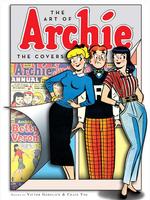
A major component of the company’s success has been the superbly enticing artwork and especially the unmistakable impact afforded via the assorted titles’ captivating covers. This spectacular compilation (a companion to 2010s Betty & Veronica collection) traces the history and evolution of the wholesome phenomenon through many incredible examples from every decade. Augmented by scads of original art, fine art and commercial recreations, printer’s proofs and a host of other rare examples and graphic surprises no fan of the medium could possibly resist, this huge hardback (312 x 235mm) re-presents hundreds of funny, charming, gloriously intriguing and occasionally controversial images plus background and biographies on the many talented artists responsible for creating them.

Moreover, also included are many original artworks – gleaned from the private collections of fans – scripts, sketches, gag-roughs, production ephemera from the art-to-finished-cover process, plus an extensive, educational introductory commentary section stuffed with fascinating reminiscences and behind-the-scenes anecdotes.

The picture parade begins with some thoughts from the brains behind the fun as ‘It’s a Gift’ by current Publisher/Co-CEO Jon Goldwater, ‘You Can Judge a Book by its Cover!’ – Editor-in-Chief/Co-President Victor Gorelick – and ‘On the Covers’ from cartoonist and Comics Historian Craig Yoe take us to the 1940s where ‘In the Beginning…’ details the story of Archie with relevant covers and the first of a recurring feature highlighting how later generations of artists have recycled and reinterpreted classic designs.

‘A Matchless Cover’ leads into the first Artist Profile – ‘Bob Montana’ – and a wealth of cracking Golden Age images in ‘Who’s on First!’ before chapters on specific themes and motifs commence with a celebration of beach scenes with ‘In the Swim’ after which artist ‘Bill Vigoda’ steps out from behind his easel and into the spotlight.

‘Déjà Vu All Over Again’ further explores the recapitulation of certain cover ideas before ‘Rock ‘n’ Roll!’ examines decades of pop music and “guest” stars such as the Beatles, whilst ‘Archie’s Mechanically Inclined’ examines a short-lived dalliance with an early form of home DIY magazines. The life of veteran illustrator ‘Al Fagaly’ leads into a selection of ‘Fan Faves’ ancient and modern and the biography of ‘Harry Sahle’ then segues neatly into a selection of cheerleading covers in ‘Let’s Hear It for The Boy!’

It wasn’t long after the birth of modern pop music that the Riverdale gang formed their own band and ‘Ladies and Gentlemen, The Archies!’ focuses on those ever-evolving musical prodigies with scenes from the Swinging Sixties to the turbulent Rap-ridden 21st century after which the history of artist ‘Joe Edwards’ leads into a barrage of smoochy snogging scenes in ‘XOXOXO!’

Always a keen follower of fads and fashions the Archie crowd embraced many popular trends and ‘Monster Bash!’ concentrates on kids’ love of horror and recurring periods of supernatural thrills after which a bio of ‘Dan Parent’ leads unerringly to more ‘Celebrity Spotting!’ with covers featuring the likes of George (Sulu) Takei, Michael Jackson, Simon Cowell, J-Lo, Kiss, the casts of Glee and Twilight, and even President Barack Obama all eagerly appearing amongst so very many others.

‘Art for Archie’s Sake’ dwells on the myriad expressions of junior painting and sculpture and, after the life story of the sublimely gifted ‘Harry Lucey’, ‘The Time Archie was Pinked Out!’ details the thinking behind the signature logo colour schemes used during the company’s pre-computer days.

‘Life with Archie’s a Beach!’ takes another look at the rise of teenage sand and surf culture through the medium of beautifully rendered, scantily clad girls, whilst after the lowdown on writer/artist ‘Fernando Ruiz’, ‘Dance! Dance! Dance!’ follows those crazy kids from Jitterbug to Frug, Twisting through Disco and ever onwards…

‘The Happiest of Holidays’ highlights the horde of magical Christmas covers Archie, Betty and Ronnie have starred on whilst ‘Rhyme Time’ reveals the odd tradition of poetry spouting sessions that have been used to get fans interested and keep them amused.

A history of the inimitable ‘Samm Schwartz’ precedes a look at classroom moments in ‘Readin’ Writin’ an’ Archie’ – with a separate section on organised games entitled ‘Good Sports!’ – after which the life of legendary artist ‘Dan DeCarlo’ neatly leads to another selection of fad-based fun as ‘That’s Just Super!’ recalls the Sixties costumed hero craze as well as a few other forays into Fights ‘n’ Tights fantasy…

‘Let’s Get this Party Started’ features covers with strips rather than single images and is followed by a biography of ‘Bob Bolling’ before ‘A Little Goes a Long Way!’ concentrates on the assorted iterations of pre-teen Little Archie comics. This is then capped by the eye-popping enigma of teen taste as visualised in the many outfits du jour revealing ‘A Passion for Fashion’…

‘Come as You Aren’t!’ is devoted to the theme of fancy dress parties after which the modern appetite for variant covers is celebrated in ‘Alternate Realities’ (with stunning examples from Fiona Staples, Tim Seeley and Walter Simonson amongst others) all wrapped up by the gen on artistic mainstay ‘Bob White’.

The entire kit and caboodle then happily concludes with an assortment of surreal, mindblowing covers that defy categorisation or explanation in ‘And Now, For Something Completely Different’, proving that comics are still the only true home of untrammelled imagination: featuring scenes that literally have to be seen to be believed…

Mesmerising, breathtaking graphic wonderment, fun-fuelled family entertainment and enticing pop art masterpieces; these unforgettable cartoon confections truly express the joyous spirit of intoxicating youthful vitality which changed the comic industry forever and comprise an essential example of artistic excellence no lover of narrative art should miss.

Spanning the entire history of American comicbooks and featuring vintage images, landmark material and up-to-the-minute modern masterpieces, this is a terrific tome for anybody interested in the history of comics, eternally evergreen light laughs and the acceptable happy face of the American Dream.
™ & © 2013 Archie Comics Publications, Inc. All rights reserved.

The Complete Crumb Comics volume 8: The Death of Fritz the Cat – New Edition


By R. Crumb & guests (Fantagraphics Books)
ISBN: 978-0-56097-076-7

This book contains really clever and outrageously dirty pictures, rude words, non-condemnatory drug references and allusions, apparent racism, definite sexism, godless questioning of authority and brilliantly illustrated, highly moving personal accounts and opinions. It also painfully displays a genius grappling with his inner demons in a most excruciatingly honest and uncomfortable manner.

If you – or those legally responsible for you – have a problem with that, please skip this review and don’t buy the book.

Really.

I mean it…

Robert Crumb is a truly unique creative force in comics and cartooning, with as many detractors as devotees. From the first moments of the rise of America’s counterculture, his uncompromising, forensically neurotic introspections, pictorial rants and invectives unceasingly picked away at societal scabs, measuring his own feelings and motives whilst ferociously ripping way civilisation’s concealing curtains for his own benefit. However, he always happily shared his unwholesome discoveries with anybody who would take the time to look…

In 1987 Fantagraphics Books began the Herculean task of collating, collecting and publishing the chronological totality of the artist’s vast output, and those critically important volumes are being currently reissued for another, more liberated generation.

The son of a career soldier, Robert Dennis Crumb was born in Philadelphia in 1943 into a dysfunctional, broken family. He was one of five kids who all found different ways to escape their parents’ highly volatile problems, and comic strips were paramount among them.

Like his older brother Charles, Robert immersed himself in the comics and cartoons of the day; not just reading but creating his own. Harvey Kurtzman, Carl Barks and John Stanley were particularly influential, but also comic strip legends such as E.C. Segar, Gene Ahern, Rube Goldberg, Bud (Mutt and Jeff) Fisher, Billy (Barney Google) De Beck, George (Sad Sack) Baker and Sidney (The Gumps) Smith, as well as classical illustrators like C.E. Brock and the wildly imaginative and surreal 1930’s Looney Tunes and Merrie Melodies animated shorts.

Defensive, introspective, frustrated, increasingly horny and always compulsively driven, young Robert pursued art and self-control through religion with equal desperation. His early spiritual repression and flagrant, hubristic celibacy warred with his body’s growing needs. …

To escape his stormy early life, he married young and began working in-house at the American Greeting Cards Company. He discovered like minds in the growing counterculture movement and discovered LSD. By 1967 Crumb had moved to California and became an early star of Underground Commix. As such he found plenty of willing hippie chicks to assuage his fevered mind and hormonal body whilst reinventing the very nature of cartooning with such creations as Mr. Natural, Fritz the Cat, Devil Girl and a host of others. He worked on in what was essentially a creative utopia throughout the early 1970’s but the alternative lifestyle of the Underground was already dying. Soon it would disappear: dissipated, disillusioned, dropped back “in” or demised.

A few dedicated publishers and artists stayed the course, evolving on a far more businesslike footing as Crumb carried on creating, splitting his time between personal material and commercial art projects whilst incessantly probing deeper into his turbulent inner world.

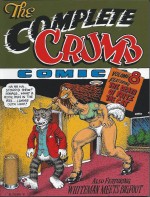
This eighth volume mostly covers – in chronological order – material created and published in 1971 (with the merest tantalising smidgen of stuff from 1972), when the perpetually self-tormented artist first began to experience creative dissatisfaction with his newfound status as alternative cultural icon: a period when the no-longer insular or isolated artist was at his most flamboyantly creative, generating a constant stream of new characters, gags, commercial art jobs, short strips and with longer material popping up seemingly everywhere.

It was also the moment when he began to realise the parasitic, exploitative nature of many of the hangers-on exploiting his work for profits which he never saw himself – particularly filmmaker Ralph Bakshi, whose phenomenally successful movie of Fritz the Cat prompted Crumb to kill the cunning kitty character off…

That and more are all faithfully reproduced in this compilation – which makes for another rather dry listing here, I’m afraid – but (as always) the pictorial material itself is both engrossing and astoundingly rewarding. But please don’t take my word for it: buy the book and see for yourselves…

After a passionate if meandering photo-packed Introduction from wife and collaborator Aline Kominsky-Crumb – whom he first met in 1971 – the stream of cartoon consciousness and literary freewheeling begins with the salutary tale of ‘Stinko the Clown in Stinko’s New Car’ from Hytone, rapidly followed by the strange romance of ‘Maryjane’ originally seen in Home Grown Funnies, which also provided the (now) racially controversial and unpalatable ‘Angelfood McDevilsfood in Backwater Blues’ – with that horrific homunculus The Snoid – and twisted “love” story of ‘Whiteman Meets Big Foot’…

The underground Commix scene was awash with artistic collaborations and a selection of jam sessions kicks off here with ‘Let’s Be Realistic’ from Hungry Chuck Biscuits wherein Crumb, Jay Lynch, Jay Kinney & Bruce Walthers surreally free-associated, whilst in Mom’s Homemade Comics Denis Kitchen, Don Glassford, Dale Kuipers, Jim Mitchell, Pete Poplaski, Wendel Pugh, Jay Lynch, Dave Dozier, Bruce Walthers & Dennis Brul joined forces with the bespectacled outsider to make some ‘Kumquat Jam’…

From ProJunior, ‘Perdido Part One’ and ‘ProJunior in Perdido Part Two’ saw the Dagwood-esque everyman experience the growth in social violence courtesy of Crumb and fellow legend S. Clay Wilson.

All on his own again Crumb captured the appalling nature of ‘Jumpin’ Jack Flash!’ (from Thrilling Murder) and crafted a lovely ‘Nostalgic Books catalog cover’ for their Summer/Fall 1971 issue, after which a tranche of material from Big Ass #2 (August 1971) starts with a paranoiac perusal of ‘The Truth!’, before another obnoxious jerk resurfaces to dominate sexy bird creatures in ‘Eggs Ackley in Eggs Escapes’ even as the intimately contemplative domestic explorations of  ‘A Gurl’ dissolve into the raucous, earthy humour of ‘Anal Antics’ to end the first black and white section of this challenging chronicle.

A vividly vivacious Color Section celebrates a wealth of covers, opening with ‘The Last Supplement to the Whole Earth Catalog’(March 1971), followed by ‘Home Grown Funnies’ and its angsty back cover strip ‘The Desperate Character Writhes Again!’. Moving on, ‘Big Ass #2’, ‘Mr. Natural #2’ – front and back covers – leads to ‘Bijou Funnies #6′ and the rainbows end on the sublimely subversive front for ‘The People’s Comics’.

A return to monochrome provides two more strips from Big Ass #2 beginning with the savagely ironic ‘A Word to you Feminist Women’ and the cruelly hilarious ‘Sally Blubberbutt’ after which the contents of Mr. Natural #2 (October 1971) unfold with ‘Mr. Natural “Does the Dishes”’, before ruminating and sharing more timeless wisdom with resident curious “Straight” Flakey Foont in ‘A Gurl in Hotpants’.

This leads to ‘Sittin’ Around the Kitchen Table’ and meeting ‘The Girlfriend’, after which two untitled Mr. Natural graphic perambulations result in a cult war with the adherents of the aforementioned Snoid and everything ends with the sage and his buddy The Big Baby being released from jail to go ‘On the Bum Again’…

From Bijou Funnies #6 comes another taste of ‘ProJunior’ as the poor shmuck seeks employment to keep his girlfriend quiet, whilst the jam feature ‘Hef’s Pad’ (by Crumb, Lynch & Skip Williamson) exposes the darker side of selling out for cash and fame…

A strip from Surfer Magazine vol. 12, #6 trenchantly heralds the advent of work from 1972 when ‘Salty Dog Sam “Goes Surfin’!”’, whilst the cover of Zap 7 (Spring issue) and the Nostalgia Press Book Service Catalog cover neatly segues into three superb landmark strips from The People’s Comics beginning with a deeply disturbing glimpse inside the befuddled head of the “Great Man” in ‘The Confessions of R. Crumb’.

That poignantly outrageous graphic outburst leads to a cruelly sardonic polemic in ‘The R. Crumb $uck$e$$ Story’ which merely serves as a sound narrative investment for the shockingly self-satisfied, liberating cartoon catharsis achieved by killing off his now-unwelcome signature character in ‘Fritz the Cat “Superstar”’…

If Crumb had been able to suppress his creative questing, he could easily have settled for a lucrative career in any one of a number of graphic disciplines from illustrator to animator to jobbing comic book hack, but as this pivotal collection readily proves, the artist was haunted by the dream of something else – he just didn’t yet know what that was…

Crumb’s subtle mastery of his art-form and obsessive need to reveal his every hidden depth and perceived defect – in himself and the world around him – has always resulted in an unquenchable fire of challenging comedy and untamed self-analysis, and this terrific tome shows him at last mastering – or at least usefully channelling – that creative energy for the benefit of us all.

This superb series charting the perplexing pen-and-ink pilgrim’s progress is the perfect vehicle to introduce any (over 18) newcomers to the world of grown up comics. And if you need a way in yourself, seek out this book and the other sixteen as soon as conceivably possible…

Let’s Be Realistic © 1971, 1992, 1997, 2013 Crumb, Jay Lynch, Jay Kinney, Bruce Walthers & R. Crumb. Kumquat Jam © 1971, 1992, 1997, 2013 Denis Kitchen, Don Glassford, Dale Kuipers, Jim Mitchell, Pete Poplaski, Wendel Pugh, Jay Lynch, Dave Dozier, Bruce Walthers, Dennis Brul & R. Crumb. All other material © 1971, 1972, 1992, 1997, 2013 Robert Crumb. All contributory art material and content © the respective creators/copyright holders. All rights reserved.

And… we’re back

As I’m now fully back in the saddle – and wearing a brand new Office Chair Seat Beltâ„¢ – I’d like to take this opportunity to thank the paramedics, ambulance pilots, A&E personnel and especially the astoundingly hardworking nurses, doctors, physiotherapists and support staff of Wards 2 and 12 at Queen Elizabeth II Hospital, Woolwich for looking after me so diligently and enabling me to get back to business so quickly.

Even though they’re all normal people with real jobs and will probably never read any of this, you at least should know just who’s responsible (or to blame, I suppose) for my speedy recovery.

RATIONALISE POLITICS, NOT HOSPITALS.

The James Bond Omnibus volume 005


By Jim Lawrence & Yaroslav Horak (Titan Books)
ISBN: 987-0-85768-590-2

Win’s Christmas Gift Recommendation: A Traditional Licence To Thrill… 8/10

There are sadly very few British newspaper strips to challenge the influence and impact of classic daily and Sunday “funnies” from America, especially in the field of adventure fiction. The 1930’s and 1940’s were particularly rich in popular, not to say iconic, creations. You would be hard-pressed to come up with home-grown household names to rival Popeye, Dick Tracy, Buck Rogers, The Phantom, Mandrake the Magician, Flash Gordon or Steve Canyon, let alone Terry and the Pirates or the likes of Little Lulu, Blondie, Li’l Abner, Little Orphan Annie or Popeye and yes, I know I said him twice, but Elzie Segars’s Thimble Theatre was funny as well as thrilling, constantly innovative, and really, really good.

What can you recall for simple popularity let alone longevity or quality in Britain? Rupert Bear? Absolutely. Giles? Technically, yes. Nipper? Jane? The Perishers? Garth?

I hope so, but I doubt it.

The Empire didn’t quite get it until it wasn’t an empire any more. There were certainly very many wonderful strips being produced: well-written and beautifully drawn, but that stubborn British reserve just didn’t seem to be in the business of creating household names… until the 1950’s.

Something happened in ‘fifties Britain – but I’m not going to waste any space here discussing it. It just did.

In a new spirit that seemed to crave excitement and accept the previously disregarded, comics (as well as all entertainment media from radio to novels) got carried along on the wave. Eagle, the regenerated Dandy and Beano, girls’ comics in general: all shifted into creative high gear, and so did newspapers. And that means that I can go on about a graphic collection with proven crossover appeal for a change.

The first 007 novel Casino Royale was published in 1953 and subsequently serialised in the Daily Express from 1958, beginning a run of paperback book adaptations scripted by Anthony Hern, Henry Gammidge, Peter O’Donnell and Kingsley Amis before Jim Lawrence, a jobbing writer for American features (who had previously scripted the aforementioned Buck Rogers) came aboard with The Man With The Golden Gun to complete the transfer of the Fleming canon to strip format, thereafter being invited to create new adventures, which he did until the strip’s ultimate demise in 1983.

The art on the feature was always of the highest standard. Initially John McLusky provided the illustration until 1966’s conclusion of You Only Live Twice and, although perhaps lacking in verve, the workmanlike clarity of his drawing easily coped with the astonishing variety of locales, technical set-ups and sheer immensity of cast members, whilst accomplishing the then-novel conceit of advancing a plot and ending each episode on a cliff-hanging “hook” every day.

He was succeeded by Yaroslav Horak, who also debuted on Golden Gun with a looser, edgier style, at once more cinematic and with a closer attention to camera angle and frenzied action that seemed to typify the high-octane 1960’s.

Titan books have re-assembled the heady brew of adventure, sex, intrigue and death into a series of addictively accessible monochrome Omnibus editions and this fifth compilation finds the creators on top form as they reveal how the world’s greatest agent never rests in his mission to keep us all free, safe and highly entertained…

The frantic derring-do and dark, deadly diplomacy commences with ‘Till Death Do Us Part’ which first ran in the Daily Express from July 7th to October 14th 1975. Solidly traditional 007 fodder, it found Bond assigned to kidnap/rescue Arda Petrich, the comely daughter of a foreign asset, and keep vital intelligence out of the hands of the KGB.

This pacy thriller is most notable more for the inevitable introduction of the eccentric gadgets which had become an increasingly crucial component of the filmic iteration than for the actual adventure, but there are still thrills and flesh aplenty on view.

Hard on the heels of that yarn is brief but enthralling encounter ‘The Torch-Time Affair’ (October 15th 1975 – January 15th 1976), wherein the hunt for a record of all Soviet subversion in Latin America leads to bodies on the beach, a mountain of lies and deceit, breathtaking chases on roads and through jungles, and an astonishingly intriguing detective mystery as Bond and female “Double-O” operative Susie Kew must save the girl, get the goods and end the villain.

But which one…?

‘Hot-Shot’ (January 16th – June 1st) finds the unflappable agent assisting Palestinian freedom fighter Fatima Khalid as she tries to clear the name of her people of airline atrocities committed by enigmatic Eblis terrorists. Their cooperative efforts uncover a sinister Indian billionaire behind the attacks before Bond recognises an old enemy at the heart of it all… Dr. No!

In ‘Nightbird’ (2nd June – 4th November) sporadic attacks by what appear to be alien invaders draw 007 into a diabolical scheme by a cinematic genius and criminal master of disguise apparently in search of military and political secrets and weapons of mass destruction. However a far more venal motive is the root cause of the sinister schemes and reign of terror…

Despite surreal trappings, ‘Ape of Diamonds’ (November 5th 1976 – January 22nd 1977) is another lethally cunning spy exploit as a deadly maniac uses a colossal and murderous gorilla to terrorise London and kidnap an Arab banker, leading Bond to a financial wild man determined to simultaneously destroy Britain’s economic prosperity and steal the Crown Jewels. Happily for the kingdom, Machiavellian Rameses had completely underestimated the ruthless determination of James Bond…

‘When the Wizard Awakes’ finds bad guys employing supernatural chicanery, when the body of a Hungarian spy – dead for two decades – walks out of his tomb to instigate a reign of terror that eventually involves S.P.E.C.T.R.E., the Mafia and the KGB until the British Agent unravels the underlying plot…

In 1977 the Daily Express ceased publication of the Bond feature and the tale was published only in the Sunday Express (from January 30th -May 22nd 1977). Later adventures had no UK distribution at all, only appearing in overseas editions. This state of affairs continued until 1981 when another British newspaper – the Daily Star – revived his career. Presumably, we’ll deal with those cases in another volume.

The first of those “lost” stories are included here, however, beginning with ‘Sea Dragon’, produced for European syndication: a maritime adventure with geo-political overtones wherein crazed billionairess and scurrilous proponent of “women’s liberation” Big Mama Magda Mather tried to corner the World Oil market using sex, murder and a deadly artificial sea serpent.

In ‘Death Wing’ Bond is needed to solve the mystery of a new and deadly super-weapon employed by the Mafia for both smuggling contraband and assassination. Despite a somewhat laborious story set-up, once the tale hits its stride, the explosive end sequence is superb as the undercover agent finds himself used as a flying human bomb aimed at the heart of New York City. His escape and subsequent retaliation against eccentric hit-man Mr. Wing is an indisputable series highpoint.

This astounding dossier of espionage exploits ends in ‘The Xanadu Connection’ (1978) as the daring high-tech rescue of undercover agent Heidi Franz from East Germany inexorably leads the super spy down a perilous path of danger and double-cross.

When Bond is tasked with safeguarding the wife of a British asset leading resistance forces in Russian Turkestan, the mission inevitably leads 007 to the Sino-Soviet hotspot where he is embroiled in a three-sided war between KGB occupation forces, indigenous Tartar rebels and their ancestral enemies of the Mongol militias led by insidious, ambitious spymaster Kubla Khan.

Deep in enemy territory with adversaries all around him, Bond is hardly surprised to discover that the real threat might be from his friends and not his foes…

Fast, furious action, masses of moody menace, sharply clever dialogue and a wealth of exotic locales and ladies make this an unmissable adjunct to the Bond mythos and a collection no fan can do without. After all, nobody does it better…
© 1975, 1977, 1977, 1978, 2013 Ian Fleming Publications Ltd/ Express Newspapers Ltd. All rights reserved.

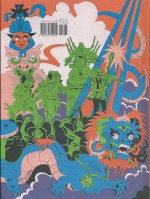
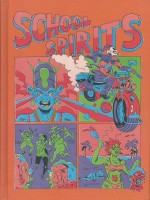
School Spirits


By Anya Davidson (Picturebox)
ISBN: 978-1-939799-02-9

Sometimes art – and especially comics – defy dull ration analysis and, just like the music your parents didn’t like, grabs you way below any conscious level. Such is the case here as prodigious printmaker, mini comics auteur and cult musician Anya Davidson (Barbarian Bitch/Kramer’s Ergot, Child of the Sun, Coughs & Cacaw) who at last breaks into the big leagues with a cool, cruel monochrome hardback which lifts the lid on those terrible teenager people with a wry and macabre quartet of tales defining modern School Spirits.

Through freewheeling progressions, flashbacks, daydreams and conceptual digressions, David carries her girl of the moment Oola and BFF Garf through vicious, monstrous, demonic, occasionally surreal stream-of-consciousness hallucinatory everyday escapades which eerily recapitulate and invoke the best of underground commix and modern independent cartoonists from S. Clay Wilson to Johnny Ryan…

It all begins with a quick pictorial introduction in ‘School Spirits Picturebox Brooklyn’ before ‘Ticket Thicket’ introduce our cast when radio DJ Weird Wally Walczac galvanises a generation by offering a pair of phone prize tickets to the hottest gig in town: Hrothgar‘s Halloween concert…

At ‘Vinyl Command’ we get a quick glimpse at the imagined, nigh-mythological life of the rock god Renaissance Man who wrote Blasphemous Corporeal Stench and Rotting Abortion before Oola wakes up and faints, after which the largely silent ‘Battle for the Atoll’ reveals the powers and mysteries of Primal Woman and leads us to a seat of learning…

‘No Class’ opens with a frantic chase before retreating to school where Oola’s hunger for knowledge and passionate drooling over class stud-muffin Grover is ruined by mouthy dick Jason, who spoils Art and Ceramics only to die hideously in our heroine’s fevered thoughts…

Further bouts of noxious reality – such as the affair between teachers Miss DeLeon and Mister Kirbowski – fall prey to imagination and horny supposition, all similarly despatched and destroyed in dreamscape, until break when the girls can continue planning the big magic spell they’re concocting to really shake up the town…

And thus the time passes progress until the day of the gig when Oola is caught shoplifting and stabs a guard before fleeing into another miasmic multi-reality chase which culminates at the life-changing Hrothgar show ‘In the Great Riff Valley’…

Like some fervent Archie Comics of the Damned, School Spirits readily blends the profane with the arcane, and the regimented tedium of waiting to be in charge of your life with the terrors and anticipation of the moment it all becomes Your Own Fault, in a rollercoaster ride of eclectic images Davidson describes as ‘“Beavis and Butthead” meets James Joyce’s “Ulysses”’. What I know is this: the pace, style and sheer ingenuity of this book is brutally addictive and, despite constantly playing with the vertical and horizontal holds of Reality, never slips up and never loses narrative focus.

Strong, stirring stuff, full of sex and violence, and outrageously amusing all round.
© 2013 Anya Davidson. All rights reserved.

Pompeii


By Frank Santoro (Picturebox)
ISBN: 978-1-939799-10-4

A short while ago I carped on about America not producing many historically flavoured comic strips and, as if by condemnatory return, this lovely cartoon chronicle cropped up in my review pile; not only a captivating yarn of ordinary folk trapped in one of the most tragically infamous events of all time, but also a boldly experimental and mesmerisingly effective exercise in reductionist visual storytelling.

Pittsburgh-based Frank Santoro has been a bit quiet since the release of his magnificent Storeyville (except for Cold Heat, Mome, the Comics Comics blog and about a zillion mini comics and other projects) but with the release of Pompeii proves the wait has been worthwhile.

The story is beguilingly simple: exploring not only the complex web of lies which entangle a philandering artist, his wife, new favourite model and naïve assistant (still in the flush of first love), but also the very nature and layered reality of art itself.

The story opens in the blithely unaware doomed city – a flashy resort for Rome’s high and mighty situated in the scenic Bay of Naples – where keen Marcus acts as general dogsbody to the great Flavius, a painter of great renown and salacious appetites.

The lad’s duties include fetching and carrying, cleaning, grinding minerals to mix into pigments, painting backgrounds, and keeping the maestro’s wife Alba from discovering her husband’s infidelities.

There’s a particularly close call as Flavius and the Princess he’s immortalising are nearly discovered by the knowing suspicious spouse and, once the crisis is averted, the master makes his unwilling pupil a full partner in the deception…

Marcus has talent and dreams of being a great painter, but for the moment he and his beloved Lucia toil in relative poverty with little more than their love to sustain them. The hot-blooded girl has come with him all the way from distant Paestum, but now, just as the relationship deepens, Marcus is neglecting her: spending more and more time with Flavius.

Bored and lonely, she’s alternately talking about having children and returning to her family even though she knows her lover would rather die than go back.

During the next sitting the Princess wants to talk about the small earthquake that occurred that morning but Flavius is oblivious: in full swing he invites Marcus to work on the background whilst he is still finishing the figure.

That minor triumph is spoiled at home when Lucia again starts up about Paestum or inviting her mother to live with them in Pompeii. In a rage Marcus storms off to sleep in Flavius’ studio and accidentally overhears an assignation wherein the Princess begs the maestro to move with her to Rome. The besotted noble is even prepared for her artist to bring the inconvenient wife along too…

Fearing the death of his dream and assured of the end of his relationship, the lad is surprised and gratified when Flavius invites him to accompany him to Rome. Everything suddenly stalls, however, when smouldering, somnolent Mount Vesuvius explosively begins spewing smoke and gas for the first time in living memory…

The fates of the assorted characters is a grim and powerful reminder of the power of love in the face of death, and the rough, raw pencil illustrations and tone washes – all created at publication size rather than being reduced for publication – perfectly recall and invoke the loose, flowing style of fresco and pottery images of the time.

Santoro apparently translated his own experiences as student/assistant to painter Francesco Clemente to get inside the head of young Marcus and the result is a timeless and irresistible exploration of human relationships (master and servant, teacher and pupil, lovers, spouses and infidelities) all viewed through an intimate lens of storytelling in its purest and most intimately immediate form.

A perfect example of the vivacious renaissance of Comics as Art, Pompeii is book no aficionado of the medium should miss.
© 2013 Frank Santoro. All rights reserved.

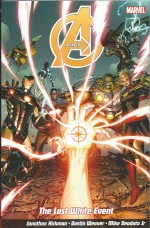
Avengers: the Last White Event


By Jonathan Hickman, Dustin Weaver, Mike Deodato Jr. & various (Marvel/Panini UK)
ISBN: 978-1-84653-569-7

In the aftermath of the blockbuster Avengers versus X-Men publishing event, the company-wide reboot MarvelNOW! reset the entire overarching continuity: a drastic reshuffle and rethink of characters, concepts and brands with an eye to winning new readers and feeding the company’s burgeoning movie blockbuster machine…

Collecting Avengers volume 5 #7-11 (cover-dated May to July 2013), this ongoing big picture series is again written by the scarily impressive Jonathan Hickman; someone with a distinct gift for mixing “mind-boggling” with “thrilling” and making it all seem easy.

This corner of the grand superhero sub-set (with others including Uncanny Avengers, Avengers Arena, New Avengers, Secret Avengers, Young Avengers, Avengers Assemble and Avengers Underwear Secrets – sorry, that last one’s still imaginary) could be seen as the spine which conceptually links the many series and stars together.

In the previous volume an incredibly ancient trio of “Gardeners” – robotic Aleph, seductive Abyss and passionate Ex Nihilo – landed on Mars to begin work on their latest project: remaking Earth into something special.

To attain their ends they bombarded the third rock from the sun with bio-mutational “Origin bombs”, seeding locations with new, exotic and deadly life-forms. When the Avengers went after the perpetrators, the infinitely old invaders claimed to have been tasked by the first species in creation and The Mother (of the entire universe) to test and, whenever necessary, eradicate, recreate and replace life on other worlds.

For Earth their major exhibit was a new form of man: a prototype Adam to supersede humanity…

Captain America responded by gathering an expanded contingent of Avengers: the old trusted team and a new expansion squad of champions gathered from across the globe. This auxiliaries comprised Wolverine, Spider-Man, Falcon, Spider-Woman, master of Kung Fu Shang-Chi, Captain Marvel, former X-mutants Cannonball and Sunspot, teleporter and reality shaper Eden Fesi (now calling himself Manifold), pan-dimensional superman Hyperion, cosmic crusader Captain Universe and alien mystery-woman Smasher to augment the old regulars Iron Man, Thor, Hulk, Hawkeye and Black Widow.

Although the Gardeners were thwarted, Ex Nihilo remained on Mars after the Avengers took custody of his handmade modern Prometheus. The menace bided his time, waiting whilst Tony Stark sought to decode and understand the Adam left in the Avengers’ care. When at last Earth’s greatest inventor cracked the mystery, the strange creature – now calling himself a Nightmask – promptly predicted an imminent end to everything and the advent of another extinction-level threat…

Elsewhere as the ancient aliens’ six bio-attacks radically transformed and evolved flora, fauna and geography at the strike-sites – which needed constant attention from the heroes and S.H.I.E.L.D. – arcane elements of the Infinite were aligning and both Nightmask and Captain Universe became instantly aware of a shattering “White Event”…

Reality is composed of discrete universes held apart by an infinite crimson underspace dubbed the Superflow. Now with that immemorial barrier somehow fragmenting, the timeless engineers who maintain it can only stoically observe as ‘The Last White Event’ (illustrated by Dustin Weaver, with hues from Justin Ponsor) brings destruction and a global doom device to the Avengers’ world.

As Nightmask explains – in the most obscure terminology – a White Event heralds the ascension of a universe. Usually the cosmos provides a Nightmask as herald, and creates a Justice, a Cipher, occasionally a Spitfire and – inevitably – a being of infinite power: a Starbrand. This has just happened again, but this particular universe – and the entire machinery of the multiverse – is broken…

After the artificial man pinpoints the ground-zero location of the trigger event, Iron Man leads the team to a smoking, five-mile wide crater which was once a small suburban college town. The edgy heroes discover a traumatised young man at the centre of devastation…

‘Starbranded’ (Adam Kubert & Ponsor) describes how the celestial source-code which ensures the right person receives ultimate power had failed and, rather than being suitable or even capable, bullied, needy kid Kevin Connor was the very last person who should become a living planetary defence system…

As the confrontation devolves into catastrophic combat, with Connor easily thrashing the likes of Thor and the Hulk, cosmically aware Captain Universe realises that even for such a rare occurrence as a White Event, something is fundamentally wrong with the Big Picture.

Adam/Nightmask then abruptly intervenes, arbitrarily transporting Connor to Mars where Abyss and Ex Nihilo are waiting…

‘Star Bound’ (Weaver, Mike Deodato Jr. & Ponsor) picks up the tale as, after another impatient fight, Starbrand learns how, after millennia of home world “improvements”, bored Ex Nihilo tweaked his eternal brief and did something a little different with the Origin Bombs he dropped on Earth…

The alien had no idea what results his meddling might achieve, but at least after billions of years it would be different…

Teleporting back to Earth with only the best of intentions, Connor and Adam land in Croatia in time to encounter the fruit of Ex Nihilo’s meddling but their good intentions produce only disaster and when the Avengers arrive the situation only escalates…

After a handy cryptography-key page for the alien ‘Builder Machine Code’ used throughout the stories, a clever change of pace sees a group of Avengers sent to Saskatchewan at the request of the Canadian government. The province was also the site of an Origin Bomb strike and the appalling changes to the area were at first investigated by the team of Canadian heroes from Omega Flight. They didn’t come back.

Now in ‘Validator’ (drawn by Deodato Jr. and colour-rendered by Frank Martin), with all contact lost Wolverine leads a team into the dark heart of the mutated environment to discover a terrifying secret …

When the mutagenic hard rain first fell nobody realised that there were in fact seven bio-bombs. In desolate Norway, the ruthless techno-terrorists of Advanced Idea Mechanics were unhampered as they harvested the horrific result of that particular Origin-strike.

Thus this second globe-girdling collection closes with ‘Wake the Dragon’ (Deodato Jr. & Martin) as a team of espionage-adept Avengers – Black Widow, Captain Marvel, Spider-Woman, Sunspot, Cannonball and Shang-Chi – travel to Hong Kong to gather intel and stop the sale of whatever doomsday bioweapons AIM has crafted from their researches…

As seduction, cajolery, bribery and inevitably outrageous violence all prove insufficient to the task, only the Master of Kung Fu’s “old ways” and spiritual purity are able to divine the incredible, deadly truth behind all the layers of secrets and lies…

To Be Continued…

Utter Fights ‘n’ Tights magic that will delight fans of doom-drenched Costumed Dramas, this tome also offers a stunning covers-and-variants gallery by Dustin Weaver, Justin Ponsor, Joe Quinones & Daniel Acuña and the now mandatory extra content – trailers, character bios, creator video commentaries, behind the scenes features and more – for tech-savvy consumers courtesy of AR icon sections  all accessible through a free digital code and the Marvel Comics app for iPhone®, iPad®, iPad Touch® & Android devices at Marvel’s Digital Comics Shop.
™ and © 2013 Marvel & Subs. Licensed by Marvel Characters B.V. through Panini S.p.A. All rights reserved. A British Edition published by Panini Publishing, a division of Panini UK, Ltd.

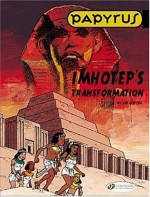
Papyrus volume 2: Imhotep’s Transformation


By Lucien De Geiter, coloured by Colette De Geiter & translated by Luke Spear (Cinebooks)
ISBN: 978-1- 905460-50-2

Once you get a certain taste in your mind you just can’t stop – well I can’t – so here’s another all-ages sword & sandals saga just not available through American funnybooks these days.

British and European comics have always been happier with historical strips than our cousins across the pond (a pugnacious part of me wants to say that’s because we have so much more past to play with – and yes, I know they’re responsible for Prince Valiant, but it’s an exception, not a rule) and our Franco-Belgian brethren in particular have made an astonishing art form out of days gone by.

The happy combination of past lives and world-changing events blended with drama, action and especially broad humour has resulted in a genre uniquely suited to beguiling readers of all ages and tastes. Don’t take my word for it – just check out Asterix, Adèle Blanc-Sec, The Towers of Bois-Maury, Iznogoud or Thorgal to a name few which have made it into English, or even our own much missed classics such as Olac the Gladiator, Dick Turpin, Heros the Spartan or Wrath of the Gods …all long overdue for collection in album form.

Papyrus is the spectacular magnum opus of Belgian cartoonist Lucien de Gieter. It began in 1974 in the legendary weekly Spirou, running to more than 30 albums, plus a wealth of merchandise, a television cartoon show and a video game.

The plucky “fellah” (look it up) was blessed by the gods and gifted with a magic sword courtesy of the daughter of crocodile-headed Sobek. His original brief was to free supreme Horus from imprisonment in the Black Pyramid of Ombos and thereby restore peace to the Two Kingdoms. More immediately however the lad was also charged with protecting of Pharaoh’s wilful and high-handed daughter Theti-Cheri – a princess with a unmatchable talent for finding trouble…

De Gieter was born in 1932 and, studied at Saint-Luc Art Institute in Brussels, before going into industrial design and interior decorating. He made the logical jump into sequential narrative in 1961, first through ‘mini-récits’ inserts (fold-in, half-sized-booklets) for Spirou, of his jovial little cowboy ‘Pony’, and later by writing for established regulars as Kiko, Jem, Eddy Ryssack and Francis.

He then joined Peyo’s studio as inker on ‘Les Schtroumpfs’ – AKA The Smurfs – and took over the long-running newspaper strip ‘Poussy’.

In the mid 1960s he created South Seas mermaid fantasy ‘Tôôôt et Puit’ even as Pony was promoted to the full-sized pages of Spirou, so De Gieter deep-sixed his Smurfs gig to expand his horizons producing work for Tintin and Le Journal de Mickey.

From 1972-1974 he assisted cartooning legend Berck on ‘Mischa’ for Germany’s Primo, whilst putting the finishing touches to his new project. This creation would occupy his full attention – and delight millions of fervent fans – for the next forty years.

The annals of Papyrus encompass a huge range of themes and milieus, blending boys-own adventure with historical fiction and interventionist mythology, gradually evolving from traditionally appealing “Bigfoot” cartoon content towards a more realistic, dramatic and authentic iteration, through light fantasy romps starring a fearlessly forthright boy fisherman favoured by the gods as a hero of Egypt and friend to Pharaohs.

Imhotep’s Transformation is the second Cinebook translation (and 8th yarn, originally released in 1985 as La Métamorphose d’Imhotep) opening with Papyrus and his one-legged friend Imhotep (no relation) paddling a canoe through the marshes of the Nile.

The peaceful idyll is wrecked when Theti-Cheri and her handmaidens hurtle by in their flashy boat, but the boys don’t mind as they have a message for the princess.

The new holy statue of her father has arrived from the Priests of Memphis and the daughter of Heaven is required at the ceremony to install it at the pyramid of Saqqara before the annual “Heb Sed” King’s Jubilee.

As the girls and boys race back an old peasant is attacked by a crocodile. Diving after him Papyrus wrestles the reptile away and is about to kill it when Sobek appears, beseeching him to spare it.

On the surface Theti-Cheri and her attendants are ministering to the aged victim and the princess can’t help noticing how he bears an uncanny resemblance to her dad…

By the time they all reach the pyramid the monumental task of hauling the statue into place is well under way, but suddenly blood begins pouring out of the monolith’s eyes.

The terrified workers panic and the colossal effigy slips, crashing to destruction. The populace are aghast and murmurs of curses and ill omens abound.

Rather than running away Imhotep heads for the rubble and discovers the statue’s head is hollow. Moreover, inside there is a dead dwarf and a smashed flask which had held blood…

Papyrus is in the royal compound where the recent events have blighted the anticipation of the court. During Heb Sed the Pharaoh has to run around the sacred pyramid three times and fire his bow at the four corners of the kingdoms to prove his fitness to rule, but now it appears the gods have turned against their chosen emissary on Earth…

Papyrus is not so sure and when he tries to speak to a royal server the man bolts. Giving chase the lad is in time to prevent the attendant’s murder, but not his escape.

And then a cry goes up: Pharaoh has been poisoned…

Knowing there is no love lost between the MemphisPriests of Ptah and the loyal Theban clerics doctoring the fallen king, Papyrus warns of a possible plot, but has no proof. What is worse, Chepseska, leader of the Memphis faction, is of royal blood too and would inherit if Pharaoh was unable to complete the Heb Sed ritual…

As loyal physicians and priests struggle to save their overlord’s life, Theti-Cheri remembers the old man in the swamp. If only the crocodile bite has not left him too weak to run…

The doughty dotard is willing to try and also knows of a wise woman whose knowledge of herbs can cure Pharaoh, but ruthless Chepseska is on to the kids’ ploy and dispatches a band of killers to stop Papyrus and Imhotep.

However, the gods are behind the brave lads and the after the assassins fall to the ghastly judgement of Sobek, the boys rush an antidote back to Saqqara, only to fall into the lost tomb of Great Imhotep, first Pharaoh, builder-god and divine lord of the Ibis.

With time running out for his distant descendent, the resurrected ruler rouses himself to administer justice for Egypt and inflict the punishment of the gods upon the usurpers…

This is another epic and amazing exploit which will thrill and astound fans of fantastic fantasy and bombastic adventure. Papyrus is one more brilliant addition to the family-friendly pantheon of continental champions who marry heroism and humour with wit and charm, and anybody who has worn out those Tintin or Asterix volumes would be wise beyond their years in acquiring these classic chronicles tales.

© Dupis, 1985 by De Gieter. All rights reserved. English translation © 2008 Cinebook Ltd.

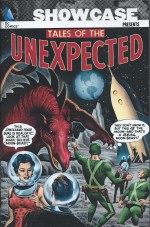
Showcase Presents Tales of The Unexpected volume 1


By Jack Miller, Bernard Baily, Bill Ely, Jack Kirby, Mort Meskin, Sheldon Moldoff, Ruben Moriera, George Papp, John Prentice, Leonard Starr & various (DC Comics)
ISBN: 978-1-4012-3520-8

American comicbooks started rather slowly until the invention of superheroes unleashed a torrent of creative imitation and established a new entertainment genre. Implacably vested in World War Two, the Overman swept all before him (occasional her or it) until the troops came home and the more traditional themes and heroes resurfaced and eventually supplanted the Fights ‘n’ Tights crowd.

Whilst a new generation of kids began buying and collecting, many of the first fans also retained their four-colour habit but increasingly sought older themes in the reading matter. The war years had irrevocably altered the psychological landscape of the readership, and as a more world-weary, cynical young public came to see that all the fighting and dying hadn’t really changed anything, their chosen forms of entertainment (film and prose as well as comics) increasingly reflected this.

As well as Western, War and Crime comics, celebrity tie-ins, madcap escapist comedy and anthropomorphic funny animal features were immediately resurgent, but gradually another of those cyclical revivals of spiritualism and a public fascination with the arcane led to a wave of impressive, evocative and shockingly addictive horror comics.

There had been grisly, gory and supernatural stars before, including a pantheon of ghosts, monsters and wizards draped in mystery-man garb and trappings (the Spectre, Mr. Justice, Sgt. Spook, Frankenstein, The Heap, Sargon the Sorcerer, Zatara, Zambini the Miracle Man, Kardak the Mystic, Dr. Fate and dozens of others), but these had been victims of circumstance: the Unknown as a power source for super-heroics. Now the focus shifted to ordinary mortals thrown into a world beyond their ken with the intention of unsettling, not vicariously empowering the reader.

Almost every publisher jumped on the increasingly popular bandwagon, with B & I (which became the magical one-man-band Richard E. Hughes’ American Comics Group) launching the first regularly published horror comic in the Autumn of 1948.

Technically speaking, Adventures Into the Unknown was pipped at the post by Avon who had released an impressive single issue entitled Eerie in January 1947 before reviving the title by launching a regular series in 1951. All the meanwhile, however, parents’ favourite Classics Illustrated had long been milking the literary end of the genre with adaptations of the Headless Horseman, Dr. Jekyll and Mr. Hyde (both 1943), The Hunchback of Notre Dame (1944) and Frankenstein (1945) among others.

As long as we’re keeping score, this was also the period in which Joe Simon & Jack Kirby identified another “mature market” gap and invented the Romance comic (Young Romance #1, September 1947) but they too saw the sales potential for spooky material, resulting in the seminal Black Magic (1950) and boldly obscure psychological drama anthology Strange World of Your Dreams (1952).

The company that would become DC Comics bowed to the inevitable and launched a comparatively straight-laced anthology that nevertheless became one of their longest-running and most influential titles with the December 1951/January 1952 launch of The House of Mystery. Its success led to a raft of such creature-filled fantasy compendiums in the years that followed such as Sensation Mystery, My Greatest Adventure, House of Secrets and, in 1956, Tales of the Unexpected…

A hysterical censorship scandal which led to witch-hunting hearings (check out Senate Subcommittee on Juvenile Delinquency, April- June 1954 on your search engine of choice) was derailed by the industry adopting a castrating straitjacket of draconian self-regulatory rules. Horror titles produced under the aegis and emblem of the Comics Code Authority were sanitised and anodyne affairs in terms of Shock and Gore, even though the market’s appetite for suspense and the uncanny was still high…

Stories were dialled back into marvellously illustrated, rationalistic, fantasy-adventure vehicles which dominated until the 1960s when super-heroes (which had begun to creep back after Julius Schwartz reintroduced the Flash in Showcase #4, 1956) finally overtook them.

This mammoth monochrome compilation offers a stunning voyage to the fantastic outer limits of 1950s imagination, collecting the first 20 issues of the charmingly enthralling anthology – produced under the watchful eyes of the Comics Code Authority – cover dates February/March 1956 to December 1957 and starts with a quartet of intriguing, beautifully rendered pocket thrillers.

Sadly for me and you records are spotty and many of the authors remain unsung (although possible candidates include Dave Wood, Bill Finger, Ed Herron, Joe Samachson, George Kashdan, Jack Miller and Otto Binder and I’ll just guess whenever I’m more than half-certain) but the pictorial pioneers at least can be deservedly celebrated…

Behind a captivating cover by Bill Ely, Tales of the Unexpected #1 begins the uncanny excursions with ‘The Out-of-The-World Club’, drawn by the astoundingly precise John Prentice, which detailed the unearthly secret of a night-spot offering truly original groovy sounds, whilst ‘The Dream Lamp’, limned by Leonard Starr, took a bucolic glance at a device which seemed able to perform impossible feats.

Jack Miller, Howard Purcell & Charles Paris then ironically revealed ‘The Secret of Cell Sixteen’ which fooled yet one more prisoner in the Bastille, after which the debut issue ended with a bleak alien invasion fable in ‘The Cartoon that Came to Life’ by Otto Binder & Bill Ely.

Issue #2 offered the uncredited conundrum of ‘The Magic Hats of M’sieu La Farge’ (art by Ruben Moreira) which saw ordinary folk impelled to perform extraordinary feats when wearing the titfers of famous dead folk, whilst ‘The Fastest Man Alive’ (drawn by Bill Draut & Mort Meskin) disclosed how an obsessive rivalry brought destruction upon a man forever relegated to second best behind his exceptional best friend…

‘The Record of Doom’ (Ely art) apparently drove listeners to suicide until a canny cop uncovered the truth, but ‘The Gorilla who Saved the World’ (Starr) was as incredible and alien as you’d expect in a tale of sharp sci-fi suspense…

Issue #3 opened with Purcell’s ‘The Highway to Tomorrow’ wherein a motorway through Native American sacred lands almost resulted in a new uprising, after which Meskin’s ‘The Man Nobody Could See’ revisited the old plot of an invisible criminal. ‘I Lost My Past’ (illustrated by Mort Drucker) recounted an implausibly complex scheme to cure an amnesiac before ‘The Man with 100 Wigs’, by Miller & Prentice, featured a genuinely compelling mystery about a petty thief who stole a sorcerer’s chest filled with hairpieces imparting uncanny power to the wearer…

The mix of cop stories, aliens and the arcane acts clearly struck a chord as, with Tales of the Unexpected #4, the comic was promoted to monthly.

‘Seven Steps to the Unknown’ (Ely) continued the eclectic winning formula through a perilous puzzle regarding a group of complete strangers inexplicably linked and targeted for murder, whilst ‘The Day I Broke All Records’, illustrated by Sheldon Moldoff, followed a top athlete who gained something “extra” after finding an elixir once favoured by unbeatable Roman gladiator Apulius…

Then a murderer was brought to justice after becoming obsessed with ‘The Flowers of Sorcery’ (Starr) whilst ‘The House Where Dreams Come True’ (Prentice) offered a far kinder tale of human generosity that will melt the heart of the most jaded reader.

In #5 ‘The Man Who Laughed at Locks’ (Moreira) disclosed the inevitable fate of a cheat when rival inventors clashed, ‘I Was Bewitched for a Day’ (Ely) revealed how easily domestic reality can be overturned and Moldoff portrayed the bewilderment of an Art Investigator faced with ‘The Living Paintings’ before Miller & Prentice again triumphed with the tale of an actor literally possessed by his role in ‘The Second Life of Geoffrey Hawkes’…

TotU #6 opened with ‘The Telecast from the Future’ (drawn by George Papp) as a technician foolishly convinced himself that his gear hadn’t really opened a peephole into tomorrow, whilst Ely’s ‘Dial M for Magic’ focussed on a prestidigitator’s club that auditioned an amazing applicant who didn’t just do “tricks”…

‘The Forbidden Flowers’ (Moldoff) then exposed a killer who thought himself safe, after which Moreira’s ‘The Girl in the Bottle’ led an unsuspecting oceanographer into fantastic peril and another incredible criminal scam.

Golden Age great Bernard Baily joined the rotating art crew with #7 as ‘The Pen that Never Lied’ visited a number of people, dispensing justice through unvarnished truth, after which ‘Beware, I Can Read your Mind!’ (Moldoff) saw a truth telepath discover the overwhelming cost of his gift.

When a miner found a talking talisman, it promised anything except ‘The Forbidden Wish’ (George Roussos). Tragically it was the only thing the weak-minded man wanted…

This issue ended with the art debut of the astounding Nick Cardy who lovingly detailed the fate of a murderous thug who refused to listen to the sage advice of ‘The Face in the Clock!’

Tales of the Unexpected #8 opened with fantastic fantasy as ‘The Man Who Stole a Genie’ (Meskin) slowly succumbed to greed and mania, whilst ‘The Secret of the Elephant’s Tusk’ (Ely art) followed the trail of death that resulted after a poacher killed a sacred pachyderm. Roussos’ ‘The Four Seeds of Destiny’ chillingly revealed the doom that came to a TV reporter who stole relics from a Pharaoh’s tomb before ‘The Camera that Could Rob’ (Starr) proved that, even for a thief with an unbeatable gimmick, mistreating a cat never ends well…

In issue #9 ‘The Amazing Cube’ (possibly scripted by George Kashdan and definitely limned by Baily) saw an unscrupulous gambler fall foul of his own handmade dice, whilst a killer conman got his comeuppance courtesy of ‘The Carbon Copy Man’ (Papp). ‘The Day Nobody Died’ by Roussos is a classic of moody mystery wherein a doctor pursues a dark stranger and regrets catching him, after which a little lad saves the world from alien invasion and know-it-all adults in ‘The Man Who Ate Fire’ (illustrated by Starr).

The tone of the time was gradually turning and sorcerous supernature was slowly succumbing to the Space Age lure of weird science as TotU #10 proved with ‘The Strangest Show on Earth’ (art by Jim Mooney) wherein a bankrupt showman stumbled over a Martian circus. Sadly the bizarre performers had their own agenda to adhere to…

‘The Phantom Mariner’ (Moldoff) followed an obsessed sea captain to his inescapable fate, after which a scientist faced a deadly dilemma after creating ‘The Duplicate Man’ (Ely) and Meskin revealed how an antique collector’s compulsion endangered his life in ‘I Was Slave to the Wizard’s Lamp’…

A criminal inventor paid the ultimate price for his venality in ‘Who Am I?’ by Baily which opened Tales of the Unexpected #11, whilst ‘I Was a Man from the Future’ (Cardy) saw an American mountaineer stumble through a time-warp into adventure and romance in15th century France and ‘The Ghost of Hollywood’ (Ely) confounded the special effects designer determined to debunk it.

Starr then closed out the issue with ‘The Man Who Hated Green’, as an artist embarked on an extraordinary campaign of terror…

Issue #12 began with Cardy’s tale of a quartet of escaped convicts who terrorised three little old ladies and were cursed by ‘The Four Threads of Doom’, after which ‘The Witch’s Statues’ (Meskin) proved to be more scurrilous scam than sinister sorcery.

Following a downturn in the industry, Jack Kirby briefly returned to National/DC at this time: producing mystery tales and drawing Green Arrow all whilst preparing his newspaper strip Sky Masters of the Space Force.

He also re-packaged for Showcase an original team concept kicking around in his head since he and Joe Simon had closed the innovative but unfortunate Mainline Comics. Blending explosive adventure with the precepts of mystery comics, Challengers of the Unknown became the pattern for the entire Silver Age superhero resurgence…

After years of working for others, Simon & Kirby had established their own publishing company, producing comics for a more sophisticated audience, only to find themselves in a sales downturn and awash in public hysteria generated by the aforementioned anti-comic pogrom of US Senator Estes Kefauver and psychologist Dr. Frederic Wertham.

Simon quit the business for advertising, but Kirby soldiered on, taking his skills and ideas to a number of safer, if less experimental, companies.

Here his run of short fantastic suspense tales commences with ‘The All-Seeing Eye’ wherein a journalist responsible for many impossible scoops realises that the ancient artefact he employs is more dangerous than beneficial…

The issue ends with Ely’s rousing thriller ‘The Indestructible Man’ wherein a stuntman with innate invulnerability decided to get rich quick no matter who gets hurt…

In #13 an amnesiac traced his lost past by seeking out ‘Weapons of Destiny’ (perhaps Binder with Ely art), whilst ‘The Thing from the Skies’ (Meskin) initially proved a boon but ultimately the downfall for a murdering conman. A ghostly ‘Second Warning’ (Papp) saved a tourist when he visited the battlefields of WWII, after which ‘I Was a Prisoner of the Supernatural’ (France E. Herron & Cardy) revealed how an actor escaped a deal with the devil before Herron & Kirby stole the show with a gripping crime-caper in ‘The Face Behind the Mask’…

Tales of the Unexpected #14 started with Meskin’s ‘The Forbidden Game’ as an embezzler played fast and loose with a wagering wizard, followed by ‘Cry, Clown, Cry’ (Baily) which saw a baffled son ignore his father’s injunction not to follow the family tradition to be a gag-man.

Papp pictured the fate of a swindler who wanted folk to believe he was ‘The Man Who Owned King Arthur’s Sword’ and Moldoff finished up proceedings as a crook was haunted by ‘The Green Gorilla’ created by his misdeeds.

Kirby led off in #15, his ‘Three Wishes to Doom’ proving that even with a genie’s lamp crime does not pay, after which ‘The Sinister Cannon’ (Baily) employed by an insidious alien infiltrator proved far more than it appeared. ‘The Rainbow Man’ (Roussos) was a scientific bandit who overestimated the efficacy of his camouflage discovery and ‘The City of Three Dooms’ by Meskin wrapped up things with a mesmerising time-travel romp starring Nazi submariners on a voyage to infinity…

There’s an inexplicable frisson in ‘The Magic Hammer’ by Kirby which opens #16 as the King of Comics relates how a prospector finds a mallet capable of creating storms and goes into the rainmaking business… until the original owner turns up…

That superb vignette is augmented by ‘I Was a Spy for Them’ (Meskin) as a canny physicist turned the tables on the star men who captured him, a crooked archaeologist gained unbeatable power from an ancient ring and became ‘The Exile from Earth’ (Dave Wood & Moldoff), and Moreira illustrated ‘The Interplanetary Line-Up’, wherein an actual Man from Mars gatecrashed a science fiction writer’s fancy dress party…

In #17 ‘Who is Mr. Ashtar?’ (Kirby) chillingly followed a hotel detective who knew there was something off about the new guest in Room 605, whilst ‘Beware the Thinking Cap’ (Ely) described the rise and fall of a crook who found the device which inspired all the geniuses of history. Baily illustrates how a lifer in jail used a unique method of escape in ‘The Bullet Man’, and the issue ends on ‘The Impossible Voyage’ (Mooney) as a couple of alien pranksters took earth suckers for a ride on what only looked like a fairground attraction…

Mooney takes the lead spot in #18 as ‘The Man Without a World’ rejected Earth only to learn that a life in space is no life at all, whilst ‘The Riddle of the Glass Bubble’ (Meskin) threatened to end all life until a little kid offered an unlikely solution. Cardy opened ‘The Amazing Swap Shop’, where humans could trade “junk” for impossibly useful gadgets before Kirby showed how a clever human saved us all by outwitting ‘The Man Who Collected Planets’.

By now thoroughly gripped in UFO fever, Tales of the Unexpected #19 began with ‘The Man from Two Worlds’ (Cardy) wherein evil Neptunians attempted to abduct an Earth scientist by guile, whereas ‘D-Day on Planet Vulcan’ (Mooney) saw embattled ETs beg our help to end a world-crushing crisis, after which a meteor turned a hapless technician into ‘The Human Lie Detector’ (Ely) and a dotty old eccentric surprised everybody by ending ‘The Menace of the Fireball’ (with art by Bob Brown).

This first terrific tome concludes with issue #20 where ‘The Earth Gladiator’ (Cardy) struggled to save his life and prove Earth worthy of continued existence, an engineer scuppered ‘The Remarkable Mr. Multiplier’ (Ely) before his invention wrecked civilisation and ‘I Was Marooned on Planet Earth’, by Baily, illustrated that every alien incursion was malign or dangerous.

Moreira then brings the cosmic catalogue to a close with ‘You Stole Our Planet’ wherein gigantic space creatures arrived with a strong claim of prior ownership…

Although certainly dated and definitely formulaic, these complex yet uncomplicated suspenseful adventures are drenched in charm, gilded in ingenuity and still sparkle with innocent wit and wonder. Perhaps not to everyone’s taste nowadays, these fantastic exploits are nevertheless an all-ages buffet of fun, thrills and action no fan should miss.

© 1956, 1957, 1958, 2012 DC Comics. All Rights Reserved.