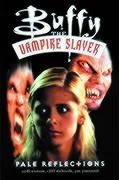
Buffy the Vampire Slayer: Pale Reflections


By Andi Watson, Doug Petrie, Cliff Richards & Joe Pimentel (Dark Horse/Titan Books)
ISBN: 978-1-84023-236-6

Having conquered television, Buffy the Vampire Slayer began a similar crusade with the far harder to please comicbook audiences. Launched in 1998 and offering smart, sassy tales to accompany the funny, action-packed and mega-cool onscreen entertainment, the series began in an original graphic novel (Buffy the Vampire Slayer: the Dust Waltz) before debuting in a monthly series.

She quickly became a major draw for publisher Dark Horse – whose line of licensed comicbook successes included Star Wars, Indiana Jones, Aliens and Predator – and her exploits were substantially supplemented by a profusion of short stories in the company’s showcase anthology Dark Horse Presents and other venues.

Scripted primarily by Andi Watson, this particular UK Titan Books edition – with depiction and delineation from Cliff Richards & Joe Pimentel – features stories set during TV Season 3 and re-presents issues #17-19 (January through March 2000), as well as a delicious and timely morsel first seen in Dark Horse Presents #141, March 1999.

Check your facts here: Buffy Summers was a gormless charm-free cheerleaderValley Girl until the night when she inexplicably turned into a hyper-strong, impossibly durable monster-killer.

After being stalked by a creepy old coot from a secret society of Watchers she discovered that she was the most recent recipient of a millennial mystic curse which transformed mortal maids into living death-machines to all things undead arcane or uncanny: a Slayer.

Moving with her mom to typical California hamlet Sunnydale, Buffy then learned her new hometown was located on the edge of an eldritch gateway known to the unhallowed as The Hellmouth.

Enrolling at Sunnydale High Buffy made some friends and, schooled by new Watcher Rupert Giles, conducted a never-ending war on devils, demons and every shade of predatory supernatural species inexorably drawn to the area…

This slim supernal compilation at last concludes ‘Bad Blood’ – an extended storyline which pitted the daring, darling “Scooby Gang” against ambitious, narcissistic psycho-killer vampire Selke and her new breed of modified demonic thralls.

When vain Selke’s face was ruined in battle she naturally sought out a plastic surgeon. Dr. Flitter took up her cause, restoring and improving the vampire with the promise of immortality as his oft-postponed reward.

However, since scientific procedures didn’t work, he resorted to magic and his researches found a way to turn vampire blood into a super-steroid for Selke and her chosen brood. Now she and her newly-minted children of the night hunt not only humans for food, but other vampires to provide the raw ingredients of the Bad Blood serum…

Despite a rather full dance card, however, Selke cannot forget what Buffy did and is increasingly obsessed with making the Slayer suffer…

Selke’s über-vamps are also making much mischief, and Buffy and recently restored undead lover Angel are finding them almost impossible to destroy…

As a nocturnal civil war breaks out between Selke’s squad and the town’s “normal” vampires, Selke urges Flitter to use the blood to make a Slayer antipersonnel weapon – a sorcerous clone designed to hunt down and slaughter the original…

The saga picks up in ‘Your Cheatin’ Heart’ as Willow, Cordelia, Oz, Xander and Buffy are forced to join in school-type activities by building a float for an upcoming parade. Angel, meanwhile, has captured one of Selke’s new ‘Roid Rage Vamps and started obtaining answers in a manner most un-heroic…

On the midnight streets, Buffy is ambushed by her mystic clone and, after a blistering battle, loses. Elsewhere Selke, unaware that a new faction has sabotaged her modified blood supply, gorges herself on the foul brew…

After disposing of Buffy’s body down a handy manhole, the doppelganger attempts to infiltrate the Scooby Gang, but although she has the Slayer’s memories, her attitudes are seriously skewed. For instance, her knowledge of fashion rivals Cordie’s…

Tensions rise in ‘She’s No Lady’ as the clone starts to degrade. Born of Bad Blood, she casts no reflection and can’t see her face, but once she notices the flesh of her shoulder coming off she heads straight back to Doc Flitter…

The cosmetic alchemist has already discovered that someone has adulterated his buckets of blood and Selke is completely out of control when the clone arrives, leaking from many lesions.

None of them are aware that under Sunnydale Buffy is slowly recuperating, assisted by a shambling earlier prototype previously discarded by Flitter.

As Angel sneaks in and destroys the reservoir of augmented blood, the raging, oblivious Selke orders the duplicate to fetch Buffy’s body and prove she’s dead…

The gory carnival of chaos concludes in ‘Old Friend’ as the clone confronts the Slayer and her earlier incarnation in the sewers, whilst above ground Willow and Giles examine “Buffy’s” blood on a discarded parade costume and uncover the awful truth…

When Selke sees the decimation wrought by Angel, she goes berserk, body rapidly mutating into monstrosity, just as the long-awaited procession begins through Sunnydale. Her depredations are interrupted by the battered but victorious Buffy who spectacularly destroys Selke and ends the Bad Blood menace forever.

However in the shadows, deadly demon lovers Spike and Drusilla fade from sight, taking their new toy Dr. Flitter with them…

Supplemented by the usual wealth of photos and covers by Jeff Matsuda, John Sibal, Randy Green & Andy Owens, this chronicle also includes ‘Killing Time’ – a short adventure by Doug Petrie, Richards and Pimentel wherein three sulky Goth girls manifest chronal ravager Ragginor and the Slayer has to defeat the demon before all time ends…

Here is another superbly accessible magical fight-fest – even for those unfamiliar with the vast backstory: a creepy chronicle of short stirring sagas as easily enjoyed by the most callow neophyte as by any dedicated devotee.
Buffy the Vampire Slayer ™ & © 2000 Twentieth Century Fox Film Corporation. All rights reserved.
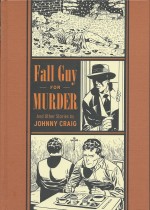
Fall Guy for Murder and Other Stories


By Johnny Craig, with Ray Bradbury, Bill Gaines & Al Feldstein (Fantagraphics Books)
ISBN: 978-1-60699-658-4

From 1950-1954 EC was the most innovative and influential comicbook publisher in America, dominating the genres of crime, horror, adventure, war and science fiction. They even originated an entirely new beast – the satirical comicbook.

After a shaky start, following the death of his father (who actually created Comicbooks in 1933), new head honcho William Gaines and his trusty master-of-all-comics trades Al Feldstein turned a slavishly derivative minor venture into a pioneering, groundbreaking enterprise which completely altered the perception of the industry and art form.

As they began co-plotting the bulk of EC’s output together, intent on creating a “New Trend” of stories aimed at older and more discerning readers – and not the mythical 8-year-old comicbooks ostensibly targeted – they shifted the emphasis of the ailing company towards dark, funny, socially aware and more adult fare.

Their publishing strategy also included hiring some the most gifted writers and artists in the field. One of the very best and most undervalued today was Johnny Craig…

This lavish monochrome hardcover volume, part of Fantagraphics’ EC Library, gathers a chilling collection of Craig’s supernatural suspense and especially his superbly Noir-drenched crime stories in a wonderful primer of peril packed with supplementary interviews, features and dissertations, beginning with the informative and picture-packed ‘Brilliant Good Guys, Even More Brilliant Bad Guys’ by lecturer Bill Mason, after which the succession of classic genre tales begins with  ‘One Last Fling!’ from Vault of Horror #21 October/November 1951. Craig was an absolute master of pen-and-ink illustration, but his scripting was just as slick and deceptively, hilariously seductive.

In his initial yarn here, a circus knife-thrower refused to let the mere fact that his beloved assistant had become a vampire drive them apart, whilst ‘Out of the Frying Pan…’ (from Crime SuspenStories #8, December 1951/January 1952) is a wry gem of misdirection, as a temporarily blind killer lets the wrong little old man plan his escape from hospital for him…

From Vault of Horror #22 (December 1951/January 1952), ‘Fountains of Youth!’ was straightforward supernatural thriller about a vitality-leeching monster, but ‘Understudy to a Corpse!’ (Crime SuspenStories #9, February/March 1952) was a brilliantly twisty murder-plot involving a penniless actor who murdered his uncle and diverted police attention by impersonating the victim post mortem. It did not go according to plan…

‘A Stitch in Time!’ (Vault of Horror #23 February/March 1952) is a grotesque classic in which a tyrannical sweatshop boss pays a ghastly price for abusing the desperate seamstresses in his employ, before ‘…Rocks in His Head!’ from Crime SuspenStories #10 (April/May 1952) sees a harassed hard-pressed surgeon with a greedy young wife making a disastrous choice when faced with a jewel-bedecked corpse to autopsy, and ‘A Bloody Undertaking!’ (Vault of Horror #24, April/May 1952) takes the same theme into supernatural territory as a pretty young thing turns the head of an old country doctor who really should know better…

Regarded as one of the company’s slowest creators, Craig nevertheless found time to illustrate scripts by Gaines & Feldstein such as ‘…On a Dead Man’s Chest!’ (Haunt of Fear #12 March/April 1952) wherein, after a sordid affair and brutal murder, retribution from beyond the grave sought out the victim’s wife and philandering brother…

‘Stiff Punishment!’ from Crime SuspenStories #11 June/July 1952 was all Craig, however, and again dealt with the pressures of greedy young things who wed staid old doctors. This time when the medical lecturer finally snapped he thought he had the perfect way to hide the body – but, ironically, he hadn’t…

In ‘Séance!’ (Vault of Horror #25 June/July 1952) a couple of conmen kill a mark who learns too much but are undone when the widow consults their own spiritualist for answers, after which Gaines & Feldstein scripted a shocking tale of gluttony and a vengeful sword-swallower in the gloriously macabre ‘Fed Up!’ from Haunt of Fear #13 May/June 1952.

The genuine tension of ‘The Execution!’ (Crime SuspenStories #12 August/September 1952), wherein a death row inmate waited for the witness who could save him from the chair, came from one simple shocking fact. In Craig’s stories the good guys didn’t always win, and justice was frequently derailed and even cheated…

‘Two of a Kind!’ (Vault of Horror #26 August/September 1952) offered a sexually charged love story of the most extreme kind of sacrifice, whilst in ‘Silver Threads Among the Mold!’ (Vault of Horror #27 October/November 1952) an avaricious model regrets making a fool of the sculptor who adores and supports her, and ‘Sweet Dreams!’ (Crime SuspenStories #14 December 1952/January 1953) reveals the dire lengths an insomniac will stoop to in search of a little rest.

‘Till Death…’from Vault of Horror #28, December 1952/January 1953 – is, for many fans, the ultimate zombie story as a besotted plantation owner loses his new bride to disease and soon learns to regret using voodoo to restore her to his side.

‘When the Cat’s Away…’ (Crime SuspenStories #15 February/March 1953) is pure Crime Noir as a cuckolded husband deals with his wife and best friend with finesse and grim finality, whilst ‘The Mausoleum!’ from Vault of Horror #29, February/March 1953, sees an English landowner sell his family castle to a ghost-crazy American, lock, stock and damning evidence of the murder he committed to inherit everything…

‘Rendezvous!’ (Crime SuspenStories #16 April/May 1953) brilliantly outlines the sheer dumb luck that scotched the perfect murder/insurance scam, after which ‘Split Personality!’ (Vault of Horror #30 April/May 1953) details the incredible lengths to which a con artist went to deprive identical twin sisters of their fortunes…

‘Touch and Go!’ from Crime SuspenStories #17 June/July 1953 is Craig’s sublimely paranoiac and compulsive adaptation of the Ray Bradbury vignette about a killer who left damning fingerprints, whilst romantic obsession underpins the tragic tale of an artist-turned-mugger who only stole to pay for true love’s medical bills in ‘Easel Kill Ya!’ from Vault of Horror #31 June/July 1953.

This addictive compilation concludes with a devilishly convoluted tale of a Private Eye set up to take the blame for a perfect crime. Written by Gaines & Feldstein, ‘Fall Guy for Murder!’ (Crime SuspenStories #18 August/September 1953) is the quintessential 1950s crime story: smart, scary, devious and morally utterly ambiguous…

The comics classics are then followed by more background revelations via S.C. Ringgenberg’s in-depth personal history in ‘Johnny Craig’ – complete with a stunning selection of Craig’s most eye-catching and controversial covers – and a general heads-up on the short-lived but world-shaking  phenomenon in ‘The Ups and Downs of EC Comics: A Short History’ by author, editor, critic and comics fan Ted White and the comprehensively illuminating ‘Behind the Panels: Creator Biographies’ by Mason, Tom Spurgeon and Janice Lee.

The short, sweet but severely limited output of EC has been reprinted ad infinitum in the decades since the company died. These titanic comics tales revolutionised not just our industry but also impacted the whole world through film and television and via the millions of dedicated devotees still addicted to New Trend tales.

Fall Guy for Murder is the fifth Fantagraphics compendium highlighting the contributions of individual creators, adding a new dimension to aficionados’ enjoyment whilst providing a sound introduction for those lucky souls encountering the material for the very first time.

Whether an aged EC Fan-Addict or the merest neophyte convert, this is a book no comics lover or crime- caper victim should miss…

Fall Guy for Murder and Other Stories © 2013 Fantagraphics Books, Inc. All comics stories © 2013 William M. Gaines Agent, Inc., reprinted with permission. All other material © 2013 the respective creators and owners.
Win’s Christmas Gift Recommendation: Brooding menace and stunning drama leavened with black humour… 10/10

The Amazing, Enlightening and Absolutely True Adventures of Katherine Whaley


By Kim Deitch (Fantagraphics Books)
ISBN: 978-1-60699-631-7

Since the 1960s Kim Deitch has been one of most consistently effective stars of America’s Commix Underground, although as with Harvey Pekar’s American Splendor, it is only relatively recently that he has won wider acclaim. This has been primarily through a series of interconnected prose-and strip fantasies such as Boulevard of Broken Dreams, Shadowland, The Search for Smilin’ Ed and other multi-layered alternative history/faux biographies such as the book under review here.

For the past two decades he has been producing occasional short stories about a down-at-heel carnival and the shabby, eccentric no-hopers who have populated it throughout the 150 years of its existence, the eerie aliens who have preserved its posterity and, of course, the immortal Waldo the Cat.

That saga organically grew into explorations of the minor characters they encountered and soon a great big narrative snowball started rolling…

In The Amazing, Enlightening and Absolutely True Adventures of Katherine Whaley, we return to the increasingly formalised, craftily chronicled Deitch Universe, albeit tangentially, wherein the author focuses on other members of his inexhaustible cast all the while tellingly revealing lost secrets of American history through a lens of scholarly examination and conspiracy theory woven through popular culture scenarios of the past.

Notionally picking up on a minor player last seen in Deitch’s Pictorama, the story here explores the incredible life of an unprepossessing little old lady, as disclosed in a letter left as part of a bequest…

The story-within-a-story begins in the grotty logging town of Lumberton, New York State in 1908, when demure Katherine Whaley, after failing as librarian and school teacher, took a job playing piano in the brand new movie theatre operated by old man Braunton as just another way to deprive lumberjacks and dissolute townies of their hard-earned cash.

The early 20th century was a time of immense and radical social change and after a brush with movie stardom – courtesy of a roving chapter-play Production Company – Katherine makes the acquaintance of the charismatic Charles Varnay and his super-intelligent dog Rousseau, whose esoteric and beguiling beliefs in the nigh-mystical powers of “Enlightenment” carry her off her on an odyssey of self-discovery…

Varnay sees her as the personification of that noble conceptual ideal and wants her to star in a movie serial that will spread his life-changing philosophy to the world’s masses. Naturally, much of her part as The Goddess of Enlightenment involves acting in the nude…

Covering the major cultural landmarks of the early century, from movie mania, the Jazz Age, the Great War and Prohibition, Katherine’s account swings between dubious memoir to laudatory manifesto as her perceptions and opinions of the mysterious Varnay swing from philandering charlatan to messianic superman.

Whilst she might find it hard to accept that the philosopher possesses actual recordings of Jesus Christ delivering his teachings, undiluted by millennia of obfuscating organised religion, there is no doubt that Varnay has great power: after all he stopped her aging and may himself be more than 200 hundred years old…

The beauty of this tale is the complex detail with which it unfolds: the grace and wit with which Deitch overlays historical fact with brilliant fabrication. Thus, I’m certainly not going to spoil the sheer revelatory enchantment for you by giving anything away…

With this surreal historiography of the little-known peripheries of the birth of cinema, Deitch has concocted another utterly unique and absorbing graphic treat – printed in a lavish widescreen format in this stunning monochrome hardback – again sharing the intoxicating joys of living in the past and dwelling in shared social memories.

Combining science-fiction, conspiracy theory, pop history, fact and legend, show-biz razzmatazz and the secret life of Beavers with a highly developed sense of the absurdly meta-real, the author once more weaves an irresistible spell that charms, thrills and disturbs whilst his meticulous drawing holds the reader in a deceptively loose yet inescapable grip.

Follow the secret saga of the World According to Deitch and you too will succumb to the arcane allure of his ever-unfolding cartoon parade revealing the “Americana Way”. In Fact – or Fiction – you might already be there, but you’ll never know unless you look…

© 2013 Kim Deitch. This edition © 2013 Fantagraphics Books, Inc. All Rights Reserved.

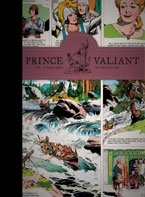
Hal Foster’s Prince Valiant volume 7: 1949-1950


By Hal Foster (Fantagraphics Books)
ISBN: 978-1-60699-645-4

Arguably the most successful comic strip fantasy ever conceived, Prince Valiant in the Days of King Arthur launched as a Sunday page feature on February 13th 1937, a luscious full-colour weekly window onto a perfect realm of perfect adventure and romance.

The strip followed the life and exploits of a refugee boy driven by invaders from his ancestral homeland in Scandinavian Thule who grew up to roam the world and rose to a paramount position amongst the mightiest heroes of fabled Camelot.

Written and drawn by sublime master draftsman and storyteller Harold “Hal” Foster, the epic followed the little princeling through decades of thrilling exploits as he matured into a clean-limbed warrior and eventually family patriarch through a heady sea of wonderment, visiting far-flung lands and siring a dynasty of equally puissant heroes whilst captivating and influencing generations of readers and thousands of creative types in all the arts.

There have been films, animated series and all manner of toys, games and collections based on the strip – one of the few to have lasted from the thunderous 1930s to the present day (over 3900 episodes and counting) – and even in these declining days of the newspaper narrative strip as a viable medium, it still claims over 300 American papers as its home. It has even made it into the very ether with an online edition.

Foster ceaselessly produced the strip, one enchanting page per week until 1971 when, after auditioning such notables as Wally Wood and Gray Morrow, Big Ben Bolt illustrator John Cullen Murphy was chosen to succeed him as illustrator. Foster continued as writer and designer until 1980, after which he retired and Cullen Murphy’s daughter Mairead took over colouring and lettering whilst her brother John assumed the writer’s role.

In 2004 the senior Cullen Murphy also retired (he died a month later on July 2nd) and the strip has since soldiered on under the extremely talented auspices of artists Gary Gianni and latterly Thomas Yeates, with Mark Schultz scripting.

Restored from Foster’s original Printer’s Proofs, this seventh spectacularly luxurious oversized (362 x 264mm) full-colour hardback volume reprints the pages from January 2nd 1949 to 31st December 1950 (#621 to 725 if you’re counting).

What has Gone Before: after an extended sojourn in an incredible New World, Valiant and Aleta have brought their newborn son back to Britain and sought out the warrior’s old comrade Prince Arn to be the child’s Godfather. Val is astounded that the bluff solitary hero is also a husband and currently searching for Godparents for his own newborn son and heir…

Before the Dark Ages delights resume, latest illuminator Thomas Yeates delivers a remarkable introductory essay discussing ‘The Long Shadow of Hal Foster’ and the innumerable artists who owe him a creative debt, after which the never-ending saga picks up with the Princes and their families travelling back to fabled Camelot for a double Christening, presided over by King Arthur himself…

Soon however duty calls again and Valiant, Sir Gawain and hapless, bumbling hedge-wizard Oom Fooyat are dispatched to the wilds of Wales to investigate a nest of vile black magic. Seamlessly blending thrills and grandeur with broad comedy, Foster delivers an enchanting light-hearted romantic romp wherein level-headed Val exposes the macabre happenings at Illwynde Castle and plays matchmaker to more than one of his faithful retinue…

Job done and the fief secure, Gawain and the Prince of Thule return to Camelot, picking up en route a boy with chivalric intentions and the determined courage of a lion. The enigmatic Geoffrey is desperate to win his spurs, but when Valiant introduces the lad to Aleta, the prospective page boy is gripped by a ferocious, life-changing, all consuming crush…

Whilst the well-meaning kid perpetually embarrasses himself in his drive to impress his master’s wife, Arthur despatches Valiant and a small band of knights to Scotland to inspect the wall which keeps the northern savages at bay. Aleta then attempts to keep Geoffrey out of trouble by ordering the puppy to follow and keep her husband safe…

It’s an unlucky decision: as Valiant and his inspection force discover when they see that Hadrian’s Wall has been breached and hundreds of Picts are ravening southward…

Confronted with an impossible situation the Prince again resorts to unconventional tactics and traps the huge barbarian army on the English side whilst sending Geoffrey back to Camelot with a message for Arthur… and to save the hero-struck boy from dying in the unwinnable battle to come…

Breaking all the rules of knighthood for the noblest of reasons, Geoffrey speedily delivers his message and is astounded when Aleta rushes off to join Valiant in Scotland. Again disregarding consequences and probably relinquishing forever his dream of knighthood, the boy follows her northwards…

Their arrival precipitates an unexpected and nigh-miraculous end to the war, but Valiant is close to death. After tending his hurts Aleta decides that she will take her husband back to his Scandinavian homeland, and dispatches the now-exhausted Geoffrey back to Camelot to inform her handmaiden Katwin and nurse Tillicum to obtain a ship and meet her with baby Arn at the village of Newcastle…

Despite dreading the judgement awaiting him at Court, the boy thunders back and, after arranging for his wounded master’s (wonderful wife’s) wishes to be carried out, surrenders himself to his fate…

Of course the King is no fool and a great respecter of honour and courage. He summarily condemns the boy to banishment: for a year and a day Geoffrey must not set foot on English soil…

Mind in a whirl the redoubtable boy is taken to a barge secured by Katwin and sails to Caledonia with the family party to a reunion with Valiant and Aleta…

Soon the group are headed to Thule, bolstered by the bombastic reappearance to boisterous far-larger-than-life Viking Boltar: a Falstaff-like rogue and “honest pirate” not seen since volume 3…

The excitable old rogue ferries the extended family to Val’s cold homeland – with a few unplanned, profitable but dangerous stops along the way – but soon finds himself smitten by the love bug too…

One mystery has been solved, however, as a chance meeting with an old cleric discloses the faithful squire to be actually called Arf, forced from his home when his father Sir Hugo Geoffrey took a new young bride who didn’t want an annoying stepson underfoot. Now she is gone and the boy can return home if he wishes…

Eventually the expanded party reaches the chilly castle of King Aguar and settles in to a long period of snowbound rest and recuperation – until boisterous Jarl Egil makes an inappropriate advance on Aleta and hotheaded Arf dashes to her defence…

Soon the encounter has escalated and Valiant is forced into an utterly unnecessary duel of honour which can only end in pointless tragedy…

Happily the repentant Arf finds a way to satisfy honour all around but the King is plagued by a knotty problem wit cannot solve. Aguar has been seriously considering converting his Norse realm to Christianity, but the many devout missionaries roaming the land are cantankerous idiots all preaching their own particular brand of faith – when not actively fighting each other.

Thus in Spring, he tasks the fully fit Valiant with an embassage to Rome to ask the Pope to send priests and teachers who actually carry the true and official Word of God. Restless and eager Val promptly sets out, accompanied by Arf, the doughty Rufus Regan and new comrade Egil. Their mission coincides with the planting season when Aguar’s men return to their homes to sow the crops for the coming year…

No sooner have they departed however than vassal king Hap-Atla, seething from an old slight delivered to his deceased sire, rebels and besieges Arguar’s castle. With manpower dangerously depleted the situation looks grim until wily Aleta takes control of the situation and scores a devastating victory that contravenes all the rules of manly warfare.

Unseen for three months, Valiant and his companions at last reappear as they land in Rouen to begin the arduous overland trek to the HolyCity. The journey is full of short bursts of violence and outrageous incidents as, since Rome fell to the Vandals, Europe has become a seething mass of lawless principalities.

Most of these improvised kingdoms are run by brigands or worse, all seeking to fill their coffers at any unwary traveller’s expense…

In one unhappy demesne the quartet dethrone a robber baron and nearly end up married to his daughters (young Arf particularly caught the imagination of the decidedly dangerous and ambitious teenager Ollie), whilst in another Val gets hold of an alchemist ruler’s horrific black powder and is almost blown to smithereens.

Eventually however they arrive at the castle of welcoming noble Ruy Foulke and enjoy a pleasant night’s rest – only to awaken and find the place under attack by heinous villain Black Robert and his savagely competent forces…

To Be Continued…

Also included in this striking compendium is an intoxicating glimpse at the author’s virtuosity in ‘“See America First”: Hal Foster’s Union Pacific Paintings’, a series of painted advertising landscapes compiled and discussed by Brian M. Kane.

Rendered in a simply stunning panorama of glowing visual passion and precision, Prince Valiant is a non-stop rollercoaster of boisterous action, exotic adventure and grand romance; blending human-scaled fantasy with dry wit and broad humour, soap opera melodrama with shatteringly dark violence.

Beautiful, captivating and utterly awe-inspiring, the strip is a World Classic of fiction and something no fan can afford to miss. If you have never experienced the intoxicating grandeur of Foster’s magnum opus these magnificent, lavishly substantial deluxe editions are the best way possible to do so and will be your gateway to an eye-opening world of wonder and imagination…

Prince Valiant © 2013 King Features Syndicate. All other content and properties © 2013 their respective creators or holders. All rights reserved.

Win’s Christmas Gift Recommendation: Ideal for anybody who ever strived or dreamed or wished… 10/10 

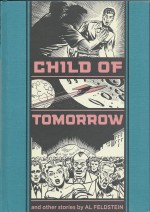
Child of Tomorrow and Other Stories


By Al Feldstein with Graham Ingels, George Roussos, George Olesen, Max Elkan & Sid Check (Fantagraphics Books)
ISBN: 978-1-60699-659-1

EC Comics began in 1944 when comicbook pioneer Max Gaines sold the superhero properties of his All-American Comics company to half-sister National/DC, retaining only Pictures Stories from the Bible. His plan was to produce a line of Educational Comics with schools and church groups as the major target market.

He augmented his core title with Picture Stories from American History, Picture Stories from Science and Picture Stories from World History but the worthy project was already struggling when he died in a boating accident in 1947.

As detailed in the final comprehensive essay in this superb graphic collection, his son William was dragged into the family business, with much support and encouragement from unsung hero Sol Cohen – who held the company together until the initially unwilling Bill Gaines abandoned his dreams of being a chemistry teacher and transformed the ailing enterprise into Entertaining Comics…

After a few tentative false starts and abortive experiments following industry fashions, Gaines took advantage of his multi-talented associate Al Feldstein, who promptly graduated from creating teen comedies and westerns into becoming Gaines’ editorial supervisor and co-conspirator.

As they began co-plotting the bulk of EC’s stories together, they shifted the emphasis of the ailing company in a bold and impressive change of direction. Their publishing strategy, utilising the most gifted illustrators in the field, was to tell a “New Trend” of stories aimed at older and more discerning readers, not the mythical 8-year old all comicbooks ostensibly targeted.

From 1950 to 1954 EC was the most innovative and influential publisher in America, dominating the genres of crime, horror, war and science fiction and the originator of an entirely new beast: the satirical comicbook…

Feldstein had started life as a comedy cartoonist and after creator/editor Harvey Kurtzman departed in 1956, Al became Mad’s Editor for the next three decades…

This volume of the Fantagraphics EC Library gathers a mind-boggling selection of Feldstein fantasy stories in a lavish monochrome hardcover edition, packed with supplementary interviews, features and dissertations, beginning with the informative ‘Cosmic Destruction With a Twist of Wry’ by lecturer Bill Mason and a gushing Introduction from cartoon superstar Gilbert Hernandez. Oddly enough writer-artist Feldstein was no fan of science fiction but was turned on to the genre by Gaines; an insomniac with a brain that always voraciously sought out the fresh and the new…

Feldstein worked on every genre in EC’s stable, but the short, ironic, iconic science thrillers he produced during that paranoid period of Commies and H-Bombs, Flying Saucer Scares and Red Menaces, irrevocably transformed the genre from Space-babes and Ray-gun adventure into a medium where shock and doom lurked everywhere.

His cynically trenchant outlook and darkly comedic satirical stories made the cosmos a truly dangerous, unforgiving place and kept it such – until the Comics Code Authority and television pacified and diminished the Wild Black Yonder for all future generations…

This superb monochrome hardback sampler of cosmic calamity opens with ‘“Things” from Outer Space!’ (originally presented in Weird Science #12, May/June 1950), wherein a scientist’s comely assistant accidentally uncovers alien infiltrators in the highest echelons of America’s government.

From the same month ‘Am I Man or Machine?’ (Weird Fantasy #13) then taps into Noir sensibilities with a tale of true love and tragic sacrifice when an accident victim falls into the hands of scientists too concerned with mere mechanical advancement, oblivious to sentiment…

Weird Science #13 (July/August 1950) tapped into the nation’s unease by gloriously spoofing the Air Force investigation into alien sightings with ‘The Flying Saucer Invasion’, whilst Feldstein and Gaines started a convention of writing themselves into their stories in Weird Fantasy #14 that same month as their comicbook editorial speculation led to enemy agents causing a ‘Cosmic Ray Bomb Explosion!’

Doomsayers and whistleblowers always played a big part in these tales. In ‘Destruction of the Earth!’ (Weird Science #14, September/October 1950), Washington’s refusal to listen to maverick researcher Fredrick Holman had truly catastrophic repercussions, whilst over in that month’s Weird Fantasy (#15) the Capitol was saved from ‘Martian Infiltration!’ by another, friendlier race of visitors…

‘Panic!’ (Weird Science #15, November/December 1950) played with the fact of Orson Welles’ infamous War of the Worlds radio broadcast, but the tone over in Weird Fantasy #16 was far more sardonic when ‘The Last City’ revealed the logical flaw in New York’s plan to erect an impenetrable, air-tight, H-bomb proof force field over the metropolis…

Sex, love and time-travel merged in Weird Science #5 (January/February 1951) as an ordinary Joe took a mysterious tourist trip into the future and brought back heartbreak in the form of a synthetic, build-her-yourself wife – and trust me, the ending is not one you’ll be expecting – whilst in ‘Child of Tomorrow!’ (Weird Fantasy #17) a lucky survivor of an atomic conflagration discovers at first hand the appalling effects of radiation on human reproduction…

The grim warnings and prognostications continued in ‘Spawn of Venus’ (Weird Science #6, March/April 1951) as an exploratory voyage to our sister world brings back something hungry which cannot be killed, whilst in that month’s Weird Fantasy (#6 – as the frankly whacky numbering systems were at last rationalised) a doomed romance was rekindled by fate after a bold astronaut returned from a ‘Space-Warp!’.

‘It Was the Monster from the Fourth Dimension’ (Weird Science #7, May/June 1951) pitted valiant friends against a creature – or a least a portion of it – from outside our limited perceptions, but Feldstein’s wry, cynically dry humour fully informed the tale of a patriotic hillbilly super-prodigy who naturally offered his gifts and services to the bigwigs in Washington in ‘7 Year Old Genius!’ (Weird Fantasy #7, May/June 1951).

Man versus Monster was an inescapably popular and rousing theme of the times and ‘Seeds of Jupiter!’ (Weird Science #8, July/August 1951) is one of the most visually compelling examples of the type, whilst the accidental time-travel by astronauts in Weird Fantasy #8 imaginatively postulated on ‘The Origin of the Species!’ displays the author’s superb ability to build tension, even if you have already guessed the “shock ending”…

Even whilst scripting and illustrating these stories, the tireless Feldstein was becoming increasingly involved in the editorial and production side of the business.

After The Origin of the Species! he stopped drawing science fiction adventures, but wrote stories for other artists to draw. This final section reprints a few of them by less prolific or well known illustrators – who probably won’t have their own book collections – and kicks off with ‘House, in Time!’ (Weird Science #15, November/December 1950) for horror star Graham Ingels to render

In it a young couple rent a perfect dwelling at a ludicrous price, but are unable to comply with the peculiar landlord’s simple request – to never open the back door…

The multi-talented George Roussos limned the next three, beginning with Weird Fantasy #7 (May/June 1951) wherein astronauts discover another Earth ‘Across the Sun!’ and learn a ghastly secret of human development, after which ‘The Escape!’ (Weird Science #8, July/August 1951) delivers a knockout crime thriller of murder in space and inescapable justice.

That motif of cosmic comeuppance also informs ‘The Slave Ship!’ (Weird Fantasy #8, July/August 1951) as piratical traders in human flesh find out just what that feels after aliens abduct them…

Unsung comic strip stalwart George Olesen (Ozark Ike, The Phantom) illustrated ‘The Slave of Evil!’ (Weird Science #9, September/October 1951) wherein a mechanical man displays more humanity than the humans who constructed him, after which veteran Max Elkan revealed the heartbreaking secret of ‘The Connection!’ (Weird Fantasy #9, September/October 1951) between a heartbroken old inventor and a vivacious young orphan girl.

The forays into the fantastic conclude then with ‘Strategy!’ (Weird Science #14, July/August 1952) illustrated by Sid Check, which reveals the big mistake of brain-stealing aliens who picked the wrong man to probe for Earth’s military secrets…

Also adding to the value of this captivating chronicle is ‘Gut and Glory’: an interview with the creator himself, conducted by Gary Groth, the incisive biography ‘Al Feldstein’ by S.C. Ringgenberg, a general heads-up on the entire EC phenomenon in ‘The Ups and Downs of EC Comics: A Short History’ by author, editor, critic and comics fan Ted White and the comprehensively illuminating ‘Behind the Panels: Creator Biographies’ by Bill Mason, Arthur Lortie and Janice Lee.

The short, sweet but severely limited output of EC has been reprinted ad infinitum in the decades since the company died. These astounding stories and art changed not just comics but also infected the larger world through film and television and via the millions of dedicated devotees still addicted to New Trend tales.

However, this series of collections (Child of Tomorrow is the sixth) highlighting thematic contributions of individual creators has added a new dimension to au fait readers’ enjoyment and offers a solid introduction for those lucky souls encountering the material for the very first time.

I strongly suggest that whether you are an aged EC Fan-Addict or callow contemporary convert, this is a book no comics aficionado can afford to miss…

Child of Tomorrow and Other Stories © 2013 Fantagraphics Books, Inc. All comics stories © 2013 William M. Gaines Agent, Inc., reprinted with permission. All other material © 2013 the respective creators and owners.

Win’s Christmas Gift Recommendation: Wide Eyed Wonderment seasoned with wry wit… 9/10

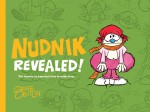
Nudnik Revealed!


By Gene Deitch (Fantagraphics Books)
ISBN: 978-1-60699-651-5

Kim Deitch has been one of the leading lights of America’s Comix Underground since its earliest days. He probably got his artistic acumen, narrative know-how and skewed raconteur’s view from his dad…

Eugene Merril “Gene” Deitch was born in 1924 and began his astounding career as a graphic designer and art director before eventually moving into animation. Over a 65-year career working as producer, scripter, artist, designer and Director for UPA/Columbia Pictures, MGM, Terrytoons/20th Century Fox, King Features and Paramount Pictures, he created cartoons for both movie audiences and television consumption.

In 1961 his cartoon feature of Jules Feiffer’s Munro won the Oscar® for Animated Short Film, and he numbers Tom Terrific, Tom and Jerry, Popeye and Krazy Kat amongst his other major successes. Deitch directed Alice of Wonderland in Paris, adapted the animated feature of Maurice Sendak’s Where the Wild Things Are and is credited with the first ever Tolkien film adaptation with The Hobbit in 1966.

Gene Deitch has resided in Prague for decades where he established a long and fruitful working relationship with Krátký Film s.r.o. studios. This partnership led, in 1964-1965, to a uniquely personal and brilliant run of movie cartoon shorts starring the latest in a shabby yet unbroken line of good-natured, ingenuously bumbling, impoverished cinematic victims of cruel circumstance.

The very first Nudnik cartoon garnered Deitch another Academy Award® nomination and led to the commission of 11 more shorts starring the luckless loafer, conceived and mapped out by Deitch to be constructed by his Iron Curtain cousins …and delivered just as the American tradition of preceding main movie blockbusters with brief cartoons was ending….

Now with those lost classics restored and collected on a commemorative DVD, Deitch has also compiled a glorious oversized (310 x 236mm) full-colour hardback compendium detailing the history and genesis of Nudnik as an accompaniment.

Dedicated to and enamoured of the hallowed concept of the lonely loser, Deitch famously got the idea for his favourite creation after a piece of office machinery tried to kill him. From there the concept of a down-and-out hobo who was a magnet for ever-increasing disaster just seemed to gel…  

Liberally illustrated throughout with original art and documents scrupulous hoarded by Deitch, the disclosures begin in the introductory ‘Here’s Nudnik’ after which the physical genesis of the character is revealed in ‘Nudnik, Master of Failure’…

In ‘What’s a Nudnik?’, Deitch traces the development of his ultimate baggy-pants clown, revealing his personal empathy with his creation, after which ‘The Nudnik Plot’ examines the narrative thrust of the two brief series.

Historical antecedents, poster art and some of the merchandising intended to supplement the character launch all contribute to the story of ‘The Nudnik Look’ before the real meat of this tome begins with Production Scrapbook – Capturing Ideas on Paper’.

This vast collection of utterly fascinating development sketches, preparatory roughs, scene layout drawings, models sheets, animation tests, character designs, episode models, gags, pictorial story snippets and even a complete 1967 “flip-book” adventure (‘The Cut Finger Fumble’ produced for the Montreal World’s Fair) plus more merchandise prototypes all show just how much work goes into making animation.

Then Film Setups – Some actual camera setups, cels, and backgrounds’ reproduces many actual finished scenes from the cartoons whilst Gags – Nudnik gag sketches, some of which were produced as 30-second “blackout” gag films’ reprints whole raw story sequences which show just how similar cartons and comics strips truly are.

At the time, Deitch was still learning how to work with his Czech team and thus his visual instructions were often excessively detailed.

The next section fills out the book with a magical treat for fans and students of the medium: three complete production storyboards, exactly as the actual animators received them and which they used to turn Deitch’s script, ideas and drawings into six minutes of slapstick action and outré sound effects.

The actual tales are all 18 to 20 pages of nine frames each, ‘Home Sweet Nudnik’ (episode 7), ‘Welcome Nudnik’ (episode 3) and ‘Good Neighbor Nudnik’ (episode 11), and work perfectly as comics even as they reveal the secret of animation magic…

This terrific tome then closes with additional features ‘To Russia With Love’ featuring a modern performer celebrating the cartoon clown’s shtick, a salutary example of the unwanted influence of Studio bosses in ‘Peeing in the Soup’ and a warm plug for that aforementioned DVD collection in ‘Nudnik Lives Again’…

Long regarded as a lost masterpiece of the art form, Nudnik Revealed! is a wonderful visual memoir which offers stunning insights into the history of cartoon creation and the mind of a brilliantly imaginative creative force.

Nudnik Revealed! is © 2013 Fantagraphics Books Inc. All contents © 2013 Gene Deitch. All rights reserved.

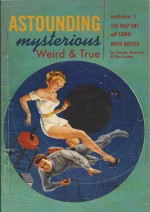
Astounding, Mysterious, Weird & True Volume 1: The Pulp Art of Comic Book Artists


By Steven Brower & Jim Simon (SB Studio Books)
ISBN: 978-1-4820-3313-7

Once upon a time, literacy was at an all-time high in the English-speaking world. A determined push to educate all and sundry took reading out of the hands of a moneyed intelligentsia and made it a tool of the working man, just as print technology was finding cheaper and more effective ways for creators and purveyors to disseminate their wares to growing markets.

Moreover, what everybody in the publishing world knew was what working folk needed more than anything (even religion) was cheap entertainment – the less wholesome and salutary the better…

In Britain we had newspapers, a burgeoning comics sector, “blood and thunder” periodicals and story magazines. In America they had “The Pulps”…

The first was indisputably The Argosy, created by Frank A. Munsey in 1896 and largely superseding most types of the infamous “Dime Novel” which had, with untrammelled sensationalism, ruled the periodical markets since 1860.

Argosy and its end-of-the-century imitators dominated and inspired a publishing phenomenon which eventually covered every genre – or blend of genres – in an industry niche which lasted well into the 1990s, albeit in a much reduced and rarefied form.

As well as spectacular colour covers, almost all pulps had black and white interior illustrations – spots, splashes and spreads – and some even had their own comic strip serials.

There were pulps for every possible taste and topic from romance to mystery to all-out action – including racier “men’s adventures”: two-fisted exotic action-thrillers heavy on mildly fetishistic sadism and bondage themes, with Rugged American men coming to the rescue of white women in peril from thugs and foreigners, saving them (the white women, of course) from “fates worse than death”, but only just in time and never before they had lost most of their clothes (the girls, and often many of the Rugged Americans too…).

One publisher in particular specialised in this niche market, producing a range of saucy genre thrillers all graced with a defining appellative: Spicy Detective, Spicy Western, Spicy Mystery and Spicy Adventure Stories. This was printer-turned-publisher Harry Donenfeld, who occasionally assumed control of companies who couldn’t pay their print bills. In 1934 and knowing pretty well what readers liked, he created a “Men’s Mag” mini empire under the twin banners of Culture and Trojan Publications. Of course, that’s also how he assumed control of the company that became DC Comics less than a decade later…

In 1943 the pressure exerted by various censorious elements in America became too much and Trojan/Culture changed tack and “Spicy” overnight evolved into “Speed Detective”, “Speed Western” and so forth. Perhaps the fact that Donenfeld was sitting on a wholesome family goldmine of comicbook characters such as Superman and Batman had something to do with that…

The story of how Max Gaines turned freebie pamphlets containing reprinted newspaper strips into a discrete and saleable commodity (thereby launching an entire industry, if not art-form) has been told far better elsewhere, but undoubtedly the influence of eye-grabbing pulp pictures as much as those reformatted strips influenced the growth and iconography of comicbooks.

Moreover, with thematic similarities and the same few owners hiring illustrators (and writers), naturally the creatives of one market frequently worked in both – and occasionally all three – arenas.

Now at long last, with comicbooks the indisputable major force in today’s illustrated fiction, comes a superb collection of images gathered together by writer/designer Steven Brower and novelist Jim Simon which shines a welcome light on those artists whose talents were to be found in all areas of popular printed fiction…

This superb gallery begins with ‘Diamonds and Rust’ by Simon; an efficient and studious overview of the history, artists and characters that thrived in those bygone days of wonder before the sublime and stunning panoply of pictures – all accompanied by incisive and revelatory potted biographies – commences.

The images are all culled from such evocative titles as Astounding, If, Courage, Super Science Stories, Weird Tales, Marvel Stories, Galaxy, Nick Carter, Detective, Basketball Stories, Wonder Stories, Big Book, Detective Short Stories, Planet Stories, Adventure, World’s News, Speed Detective, Sky Fighters, Dime Western and many more…

The many artists whose work features in this initial volume can be broken into roughly three categories. The first is pulp masters who also worked in comicbooks such as Edd Cartier, Charles Coll, Virgil Finlay, Kelly Freas, Roy G. Krenkel, Gray Morrow and Alex Schomburg whilst the second is jobbing artists equally at home in newspapers comicbooks, pulps and eventually commercial art.

Those include Benjamin “Stookie” Allen, D, Bruce Berry, Jack Binder, Jon L. Blummer, J. C, Burroughs (son of Tarzan creator Edgar Rice Burroughs), Harry Campbell, Paul Cooper, Harvey Eisenberg, Elton Fax, Harry Fisk, Dan Heilman, Ray Isip, Jeff Jones, Jacob Landau, D.H. Moneypenny, Lou Morales, Leo Morey, Norman Nodel, Neil O’Keefe, George Olesen, Paul Orban, H.L. Parkhurst, Louis Ravielli, Rod Ruth, John Styga, Riley Thomson, Elmer Wexler, Chuck Winter and Cedric Windas.

Finally there are fascinating examples of non-narrative illustration by legendary stars of comics such as Dan Adkins, Murphy Anderson, Dick Ayers, Matt Baker, Dan Barry, C.C. Beck, Pete Constanza, Stan Drake, Bill Draut, Will (or Bill) Ely, Creig Flessel, Dick Fletcher, John Forte, Matt Fox, Dick Giordano, John Giunta, Jerry Iger, Graham Ingels, Jack Kirby, George Klein, Alex Kotsky, Alden McWilliams, Mort Meskin, Irving Novick, Rudy Palais, Alex Raymond, Paul Reinman, Syd Shores, Joe Simon and Wally Wood.

There even a few British superstars included, such as Norman Petit (creator of legendary strips Jane and Susie), Brian Lewis (Dan Dare, Suki, Starlord, 2000AD, House of Hammer) and the inimitable Don Lawrence, artist on Storm, Trigan Empire, Marvelman, Olac the Gladiator, Buffalo Bill and so many more…

Also included in this wonderful celebration is an intriguing selection of Prototypes, displaying potential pulp antecedents of comics characters such as the Joker and Mr. Mxyzptlk…

If you’re of a nostalgic bent or simply a lover of magnificent art and illustration, Astounding, Mysterious, Weird & True is a compendium that will amaze and delight you.

© 2013 Steven Brower & Jim Simon. Diamonds and Rust © 2013 Jim Simon. Text and design © 2013 Steven Brower.

Astounding, Mysterious, Weird & True was made via the CreateSpace Independent Publishing Platform.

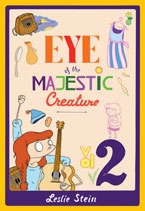
Eye of the Majestic Creature volume 2


By Leslie Stein (Fantagraphics Books)
ISBN: 978-1-60699-672-0

Help Wanted: Girl cartoonist seeks meaning of contemporary existence and like minded individuals to share bewilderment and revelations with.

Interests/Hobbies include: drinking, counting sand, growing stuff, antiquing for pop culture “trash”, drinking, meaningful conversations with musical instruments, playing board games with same, recreational herbal intoxicants, reminiscing about wild-times with gal-pals and old cronies, drinking, visiting difficult relatives.

Employment: unwanted but regrettably necessary. Although a newcomer to the BigCity, is extremely adaptable and willing to do anything – unless it’s hard, boring or she sucks at it…

After graduating from the New York School of Visual Arts, Leslie Stein began producing unbelievably addictive cartoon strips in the self-published Yeah, It Is. Winning a Xeric Grant for her efforts, she then started the even better comicbook Eye of the Majestic Creature, miraculously blending autobiographical self-discovery, surreal free-association, philosophical ruminations, nostalgic reminiscences and devastatingly dry wit to describe modern life as filtered through her seductive meta-fictional interior landscape. Here at play is a creator who sees things as they really aren’t – but makes them authentic and even desirable to everyone willing to pay attention…

This long-awaited second collected volume (gathering issues #5-7) resumes the airy, eccentric and addictive pictorial mood-music as the mythologized autobiography continues to reveal the history of Larrybear – a girl deliberately and determinedly on her own, trying to establish her uniquely singular way of getting by.

Eschewing chronological narrative for an easy, breezy raconteur’s epigrammatic delivery, all illustrated in loose, flowing line-work, detailed stippling, hypnotic pattern-building or even honest-to-gosh representational line-drawing, Stein operates under the credo of “whatever works, works” – and she’s not wrong…

Larrybear makes friends easily. Bums, winos, weirdoes, dropouts, misfits and especially inanimate objects – her BFF is her talking guitar and flatmate Marshmallow – all aggregate around her, sharing her outré interests and ambitions (of a sort) but she just doesn’t want an average life, just more experiences, less hassle and good companions to share it all with …

Delivered in mesmerising, oversized (292 x 202mm) monochrome snippets, these incisive, absurdist, whimsically charming and visually intoxicating invitations into a singularly creative mind and fabulous alternative reality begin with the delightful story of how the country girl hit the untamed New York metropolis and found a job in a clothes shop.

‘Sister Carrie’ is a partly pantomimic tour de force underpinned by pertinent extracts from American Naturalist author Theodore Dreiser’s novel of the same name, revealing how Larrybear’s debilitating daily toil is leavened by new friends, odd customers, alcohol and second-hand sand-counting memorabilia…

Issue #6 takes a ride on the Wayback Machine to the 1980s; disclosing childhood fun and traumas as Larry’s mom meets a guy in a bar and invites the freewheeling Jonathan to join them on a visit to Disneyworld Orlando.

‘Brown Heart’ dips into even more intimate territory as precocious doodler Larrybear accompanies her mom to AA meetings whilst ‘That Sticky Machine’ recounts the girl’s tragic relationship with a gumball machine…

Larry’s brief flirtation as a thirteen year guitarist with politically aware – and older -grunge band Lithium in Chicago neatly segues into a family reunion and Jonathan’s departure…

The final portion of the chronicle opens with ‘A Better Intoxication: the Subconscious Noodle’ as in contemporary New York Larrybear, Marshmallow and drinking buddy/life guru Boris renew their relationship with booze, whilst in ‘Soup’ her new boyfriend Poppin the Flower grows closer after she meets his incredibly difficult dad over a memorable Thanksgiving dinner…

The memories lane ramble then concludes with ‘Who Are You?‘ as after finding an iconic pop culture mask (Booji Boy from Devo, hipsters and post-punks!) Larrybear at last finds the drive and initiative to quit her job…

With additional art and info-features on Dreiser and Booji Boy, this exceptional wander on the wild side is a gloriously rewarding and enticing cartoon experience and one no serious fan of fun and narrative art can afford to miss.

© 2013 Leslie Stein. All Rights Reserved.

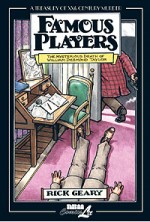
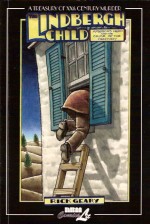
A Treasury of Murder Set (Famous Players, The Lindbergh Child & The Case of Madeleine Smith)


By Rick Geary (NBM/ComicsLit)
ISBN: 978-1-56163-730-0

Master cartoonist Rick Geary is a unique presence in both comics and true crime literature. His compelling dissections of some of the most infamous and groundbreaking murder mysteries since policing began – as graphic novel reconstructions – never fail to darkly beguile or entertain, and now, with Christmas (always a time of drawn knives and frayed tempers) fast approaching, three of his very best have been re-released in an economical set that will delight fans of the genre and certainly make new converts out of dubious scoffers…

Combining a superlative talent for laconic prose, incisive observation and detailed pictorial extrapolation with his fascination for the darker aspects of human history, Geary’s forensic eye scoured the last hundred years or so for his ongoing Treasury of XXth Century Murder series, and this second volume here re-examined a landmark homicide that changed early Hollywood and led in large part to the punishing self-censorship of the Hays Commission Production Code.

Famous Players: The Mysterious Death of William Desmond Taylor opens in 1911 when the first moving picture studio set up in the sunny orange groves of rural Hollywood. Within a decade the wasteland was a burgeoning boomtown of production companies and back lots, where newly beatified movie stars were earning vast sums of money.

As usual in such situations the new industrial community swiftly accumulated a ubiquitous underbelly, becoming a hotbed of vice, excess and debauchery.

William Desmond Taylor was a man with a clouded past and a huge reputation as a movie director and ladies man. On the morning of Thursday February 2nd, 1922 he was found dead in his palatial home by his valet, thus initiating one of the most celebrated (still unsolved) murder cases in Los Angeles’ extremely chequered history.

Uncovering a background of drugs, sex, booze, celebrity and even false identity, this crime was the template for every tale of “Hollywood Babylon” and, even more than the notorious and tragic Fatty Arbuckle sex scandal, drove the movers and shakers of Tinsel-Town to clean up their act – or at least to keep it fully concealed from the prudish, hypocritical public gaze.

Geary is meticulous and logical as he dissects the crime, examines the suspects – major and minor – and dutifully pursues all the players to their recorded ends. Especially intriguing are snippets of historical minutiae and beautifully rendered maps and plans which bring all the varied locations to life (the author should seriously consider turning this book into a Cluedo special edition) and gives us all a fair crack at solving this glamorous cold case…


The first volume in the series was every bit as compelling: a brilliant example of how graphic narrative can be so much more than simple fantasy and entertainment.

The Lindbergh Child: America’s Hero and the Crime of the Century reveals how, after crossing the Atlantic in the monoplane Spirit of St. Louis in May 1927, Charles Lindbergh became the most famous man in the world.

Six years later his son Charles Augustus Lindbergh Jr. was kidnapped from the family home at Hopewell, New Jersey. The boy disappeared on the night of February 29th 1932.

An intense, increasingly hysterical search went on for months as many bogus kidnappers, chancers, grifters and venal intermediaries tried to cash in. The toddler’s decomposed body was eventually discovered in desolate woodlands on Thursday 12th May. The 3-year-old had been dead for months, possibly even killed on the night he was taken…

What followed was one of the most appalling catalogues of police misconduct, legal malfeasance and sordid exploitation (from conmen trying to profit from tragedy) in history as, over the next few years, one suspect was caught, convicted and executed in such slapdash fashion that as late as 1981 and 1986 the conviction was appealed. A large number of individuals have claimed over the decades to actually be the real Lindbergh heir…


Before combining his unique talents for laconic prose, incisive observation and detailed cartooning with an obvious passion for the darker side of modern history, Geary had previously exercised his forensic eye in the gripping Treasury of Victorian Murder sequence.

From that series of graphic inquiries the eighth volume The Case of Madeleine Smith focused on the true and scandalous secret affair between Emile L’Anglier, a low-born French clerk and prim, proper and eminently respectable Miss Madeleine Smith, daughter of a wealthy Scottish merchant.

The slow poisoning of the Gallic Romeo led to a notorious trial in the 19th century and the eventual verdict shocked everyone and satisfied nobody….

The author is a unique talent in the comic industry not simply because of his manner of drawing but because of his subject matter and methodology in telling tales. Geary always presents both facts and the theories – both contemporary and modern – with chilling graphic precision, captivating clarity and devastating dry wit, examining criminology’s greatest unsolved mysteries with a force and power that Oliver Stone would envy.

These compelling cases are a perfect example of how graphic narrative can be so much more than simple fantasy entertainment, and all such merrily morbid murder masterpieces should be mandatory reading for every mystery addict and crime collector.

Seductive storytelling, erudite argument and audacious drawing give these tales an irresistible dash and verve which makes for unforgettable reading.

© 2006, 2008, 2009, 2013 Rick Geary. All Rights Reserved.

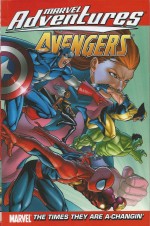
Marvel Adventures Avengers volume 9: The Times They Are A’Changin’


By Paul Tobin, Matteo Lolli, Ig Guara, Casey Jones, Christian Vecchia & Sandro Ribeiro (Marvel)
ISBN: 978-0-7851-3832-7

Since its earliest days Marvel has always courted young comicbook audiences. Whether through animation tie-ins such as Terrytoons Comics, Mighty Mouse, Super Rabbit Comics, Duckula, assorted Hanna-Barbera and Disney licenses and a myriad of others, or original creations such as Tessie the Typist, Millie the Model, Homer the Happy Ghost, Li’l Kids or Calvin, the House of Ideas always understood the necessity of cultivating the next generation of readers.

These days, however, accessible child-friendly titles are in decline and with Marvel’s proprietary characters all over screens large and small, the company generally prefers to create adulterated versions of its own pantheon, making that eventual hoped-for transition to more mature comics as painless as possible.

In 2003 the company created a Marvel Age line which updated and retold classic original tales by Stan Lee, Jack Kirby and Steve Ditko and subsequently merged it with remnants of its failed manga-based Tsunami imprint, which was also intended for a junior demographic.

The experiment was tweaked in 2005, becoming Marvel Adventures with the core titles transformed into Marvel Adventures: Fantastic Four and Marvel Adventures: Spider-Man and the reconstituted classics replaced by all-original yarns. Additional titles included Marvel Adventures: Super Heroes, Power Pack, Hulk and The Avengers, which ran until 2010 when they were cancelled and replaced by new volumes of Marvel Adventures: Super Heroes and Marvel Adventures: Spider-Man.

This particularly light-hearted digest-sized collection re-presents issues #32-35 of Marvel Adventures Avengers (from 2009) and offers a succession of stand-alone yarns that will delight fans with a sense of humour and iota of wit…

What You Need To Know: this incarnation of the World’s Mightiest Superheroes operates an “open-door” policy where almost every metahuman marvel might turn up for duty. However – presumably because of their TV cartoon popularity – the Wondrous Wallcrawler and Jade Juggernaut are on scene in almost every episode…

Written throughout by Paul Tobin, the fast-paced fun begins with ‘The Big Payoff’ illustrated by Matteo Lolli & Christian Vecchia, wherein the team gets a most unpleasant visit from Special Agent Clark Harvey of the Internal Revenue Service.

This weaselling civil servant is ostensibly there to collect the individual Avengers’ taxes, but it’s all a ploy to blackmail the team into forcing a bunch of defaulting villains into paying up…

Smart and deviously hilarious, the clashes between Giant-Girl, Spider-Man and Luke Cage against Whirlwind, the Web-spinner and erudite philosophical monster/political activist Oog or Man-Bull versus Iron Man are entertainment enough, but Iron Man and Giant-Girl overmatched against the Absorbing Man and the childlike Hulk convincing assassin Bullsesye to do his patriotic duty are literally priceless…

When jungle king Ka-Zar visits from the Antarctic lost world all he can think about is learning how to use a car. Sadly Wolverine, Storm, Giant-Girl, Hulk and Spidey all feel safer battling an invasion of super-Saurians unleashed by Stegron the Dinosaur Man than sitting in the same vehicle as the Lord of the Savage Land in ‘You’re Driving Me Crazy’ (art by Ig Guara & Sandro Ribeiro)…

When ancient Egyptian magicians turn time into an out of control merry-go-round, ‘Sgt. Fury and his Howling Commandos!’ (Lolli & Vecchia) are caught up in the assorted eras of chaos, with Ant-Man, Giant-Girl, Tigra, Storm, the Wallcrawler and Hulk frantically fighting just to keep up…

This titanic tiny tome then concludes on a romantic note in ‘Lovers Leaper’, rendered by Casey Jones, when all the female Avengers head off for a vacation break. They foolishly thought Captain America, Cage, Spider-Man, Hawkeye and Wolverine could handle things for awhile, but boys will be slobs and soon the HQ is a ghastly mess of “man-cave” madness…

Moreover, since Hawkeye now needs a date for the Annual Archer Awards, he tries an on-line dating service and manages to upload not just his but all his buddies’ information onto the site…

With seemingly every eligible lady – super-powered and not – in New York City subscribing to the Lovers Leap site, the unsuspecting heroes are soon being bombarded by an army of annoyed women who think they’ve been stood up by the utterly oblivious Avengers.

…And when they try to get the owner to remove their details, the heroes discover former French bad-guy Batroc the Leaper is in charge and unwilling to do them any favours…

Smart and fun on a number of levels, bright and breezy with lots of light-hearted action and many solid laughs, this book really offers a fabulous alternative to the regular Marvel Universe angst and agony.

Even with the violence toned down and “cartooned-up” the stories are superbly thrilling and beautifully depicted: a perfect introduction for kids and adults alike to the vast realm of adventure we all love…

In 2012 the Marvel Adventures line was superseded by specific comicbook titles tied to Disney XD TV shows designated as “Marvel Universe cartoons”, but these collected stories are still an intriguing and perhaps more culturally accessible means of introducing character and concepts to kids born often two generations or more away from those far-distant 1960s originating events.
© 2010, 2011 Marvel Characters, Inc. All rights reserved.