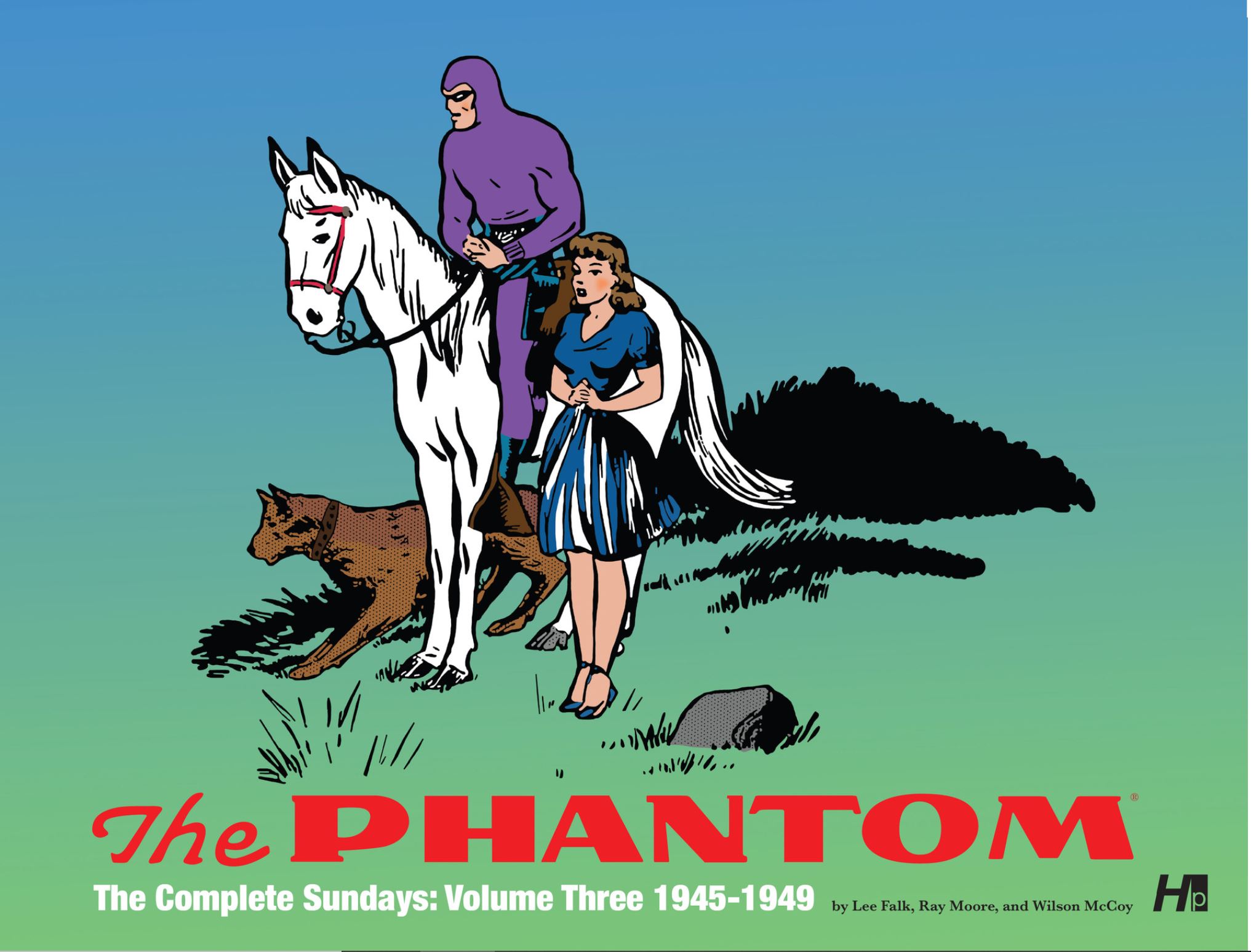
The Phantom: The Complete Sundays Archive Volume Three 1945-1949


By Lee Falk, Ray Moore & Wilson McCoy: introduction by Daniel Herman (Hermes Press)
ISBN: 978-1-61345-100-7 (HB/Digital edition)

Born Leon Harrison Gross, Lee Falk created the Ghost Who Walks at the request of his King Features Syndicate employers who were already making history, public headway and loads of money with his first strip sensation Mandrake the Magician. Although technically not the first ever costumed champion in comics, The Phantom became the prototype paladin to wear a skin-tight body-stocking and the first to have a mask with opaque eye-slits…

The generational champion debuted on February 17th 1936, in an extended sequence pitting him against an ancient global confederation of pirates. Falk wrote and drew the daily strip for the first two weeks before handing over illustration to artist Ray Moore. The spectacular and hugely influential Sunday feature began in May 1939.

For such a long-lived, influential series, in terms of compendia or graphic collections, The Phantom has been quite poorly served in the English language market (except for the Antipodes, where he has always been accorded the status of a pop culture god). Many companies have sought to collect strips from one of the longest continually running adventure serials in publishing history, but in no systematic or chronological order and never with any sustained success. That began to be rectified when archival specialists Hermes Press launched their curated collections…

This third edition is a lovely and large (229 x 330 mm) landscape hardback/digital tome, displaying a complete full colour Sunday per page. Released in March 2016, its 208 pages are stuffed with sumptuous visual goodies like panel and logo close-ups, comics covers and lots of original art and opens with publisher Daniel Herman’s ‘Introduction: The Sunday’s Continue…’ recapping all you need to know about the feature and disclosing how Wilson McCoy assumed the illustrator’s role from Ray Moore – and why nobody knows exactly when he did…

For those who came in late: 400 years previously, a British mariner survived an attack by pirates, and – after washing ashore on the African coast – swore on the skull of his father’s murderer to dedicate his life and that of his descendants to destroying all pirates and criminals. The Phantom fights evil and injustice from his fabulous lair deep in the jungles of Bengali. Throughout Africa and Asia he is known as the “Ghost Who Walks”…

His unchanging appearance and unswerving war against injustice led to his being considered an immortal avenger by the uneducated, credulous and wicked. Down the decades, one heroic son after another has inherited the task, fought and died in an unbroken family line, with the latest wearer of the mask indistinguishable from the first and proudly continuing the never-ending battle.

In his first published exploit the Phantom met and fell for wealthy American adventurer Diane Palmer and his passion for her was soon reciprocated and returned and she became a continuing presence in both iterations of the series as ally, partner, sounding board, a means of reader identification and naturally a plot pawn and perennial hostage to fortune.

Almost every saga featured powerful, capable and remarkably attractive women as both heroes and villains, and in opening tale ‘Queen Pera the Perfect’ (running from December 9th 1945 to March 17th 1946), Diana saw the tables turned…

The aforementioned ruler of remote but rich Karola was constrained to find a husband, and so sent her fanatical minions into the world to find a man worthy of her. They returned with a musical genius, celebrated fighter pilot, champion pugilist and cinema’s greatest lover, but wherever they went they heard legends of an incredible superman…

After The Phantom repeatedly refuses her men’s offer, and gives her stern lesson in manners, she responds by having him imprisoned in her dungeons until he sees sense, and this time it’s his true love who has to save the day…

Spanning March 24th to August 4th 1946, ‘King of Beasts’ sees the liberated champion retuned to Bengali in time for Diana to be unjustly imprisoned. A priceless pearl necklace has been stolen from a maharajah and nobody believes the story of who actually took it: not the police and certainly not American mobster Poison Ivy and his boys…

When The Phantom tries to engineer a jailbreak, he’s caught too and charged with being an accomplice, only for the true thief to free him and Diana by sending a pickpocketing monkey to unlock their cell. In the ensuing flight, Diana is snatched by the mobsters, who don’t believe a word about a hidden mastermind using trained beasts to burgle. That all changes when a trained troop of elephants bust into the bank and porcupines empty a packed casino for their masked master…

With chaos unleashed, The Phantom retrenches and calls in his own equine ally and canine corps. Mighty steed Hero and lupine assistant Devil soon track down the King of Beasts who is far from what anyone expected. However even after he’s handled, there’s still increasingly murderous Poison Ivy to deal with…

Another female fury debuts in ‘The Scarlet Sorceress’ (August 11th – December 22nd) as a royal visit to the Deep Woods of the Bandar People introduces little Princess Valerie and her grandfather the Rajah of Volara. The child will soon become a pawn in a wicked plot…

When the princess of neighbouring kingdom Wogu falls ill, a devious manipulator “prophesies ” that only golden-haired Valerie’s blood can save the ailing waif, prompting a kidnapping and a frantically fast response from the Ghost Who Walks. Not all the monstrous forces set against him can slow the Phantom, but after exposing the witch as a charlatan, the hero discovers that he’s fighting not a villain but another victim. Soon, however, his efforts save all involved and pacify two kingdoms…

December 29th 1946 to June 29th 1947 finds The Phantom once more battling to save Diana after the filthy rich and spoiled Potentate of Ptjar Prince Pepe abducts her to be his very best bride. Law and reason mean nothing to the repulsive despot and by the time the hero reaches the distant kingdom, she is beyond even the Ghost’s reach. His only recourse is to play Pepe’s game and in a dozen days complete ‘The 12 Tasks’ conceived to frustrate and humiliate the hero. However, wit and ingenuity married to his mighty physicality make short work of the impossible – such as capturing an invulnerable giant bandit, emptying a river of carnivorous fish, banishing every shark in the bay or stopping all crime for 24 hours – and despite Pepe’s cheating equivocations the final task changes the nation forever and for the better…

A return to jungle warfare and tribal feuding underpins ‘The Dragon God’ (July 26th to November 16th) as Diana’s interest in an ancient Wambesi idol presages the fire-breathing saurian coming to life and demanding its worshippers kill and plunder their neighbours the Ulangi. With “The Phantom’s Peace” broken, the Ghost Walks amongst them to re-establish order and quickly discovers white instigators and recovered wartime weaponry behind the uprising, but once begun war has its own momentum and tribal grudges run deep and burn forever…

With bloodshed ended, a change of pace and tone heralds the return of an appalling duo who had previously made life miserable for The Phantom. Spanning November 23rd 1947 to May16th 1948, ‘The Marshall Sisters’ sees over-privileged brats Lana and Greta return to Africa in a ruthless no-holds barred competition to seduce and wed the mighty jungle avenger. This is after their last attempt to land the ultimate trophy husband was foiled by Diana Palmer…

When allure, deception and blackmail all fail, the hellions even try shanghaiing and blunt force trauma to achieve their aims, but lose all control when the various thugs they hire hijack the caper…

A relatively short story running from May 23rd through September 5th follows, revealing how a long-running annual sporting contest devised by the original ancestral Phantom has served to ameliorate tribal tensions for four centuries. Although its dollar value is meaningless to the competitors who strive for pride and bragging rights alone, the gem-stuffed urn that acts as ‘The Phantom Trophy’ is an irresistible prize for cop-killing fugitives Spike and Grunt.

When they rope in more scallywags to swipe the prize from the previous holders/custodians, before it can be handed over to the new champions tribal war erupts. Although The Phantom hunts the thieves he might be too late as naked greed turns the rogues against each other…

The final sequence in this volume visits ‘The Haunted Castle’ (September 12th 1948 – February 13th 1949) as Diana goes exploring alone and is propelled into wild unexplored country. As The Phantom and Devil search for her, she wanders a lost valley whose people are enslaved by sinister wizard Great Moogoo who shrinks anyone who opposes him to the size of a plaster gnome and adds them to his terrifying garden…

As the lascivious sorcerer captures her, Diana’s man has tracked her to the stone citadel and begun a one-man siege that exposes his nefarious trickery and wrecks his powerbase…

Taken from America’s immediate post-war period, these brief encounters are bold, brash, uncomplicated fare, full of despicable rogues, lost kingdoms, savage tribes, dangerous but still redeemable dames and very bad guys, but thrillingly reassuring entertainment for all that. Just remember, different times have different values. If the kind of fare you’d encounter in a 1940s Tarzan movie or cop thriller might offend, you should consider carefully before starting this…

Finally rediscovered, these lost treasures are especially rewarding as the material is still fresh, entertaining and addictively compelling. However, even if it were only of historical value (or just printed for Australians – manic devotees of the implacable champion from the get-go) surely the Ghost Who Walks is worthy of a little of your time?
The Phantom® © 1945-1949 and 2016 King Features Syndicate, Inc. ® Hearst Holdings, Inc. Reprinted with permission. All rights reserved.
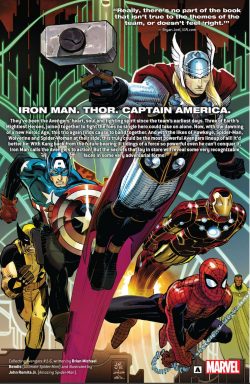
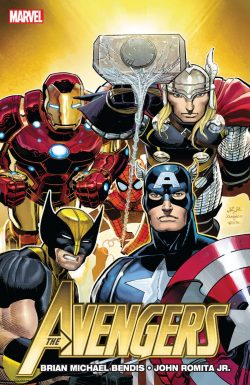
Avengers by Brian Michael Bendis volume 1


By Brian Michael Bendis, John Romita Jr., Klaus Janson, Tom Palmer& various (MARVEL)
ISBN: 978-0-7851-4500-4 (HB/Digital Edition) 978-0-7851-4501-1 (TPB/ Digital Edition)

Probably Marvel’s biggest global franchising success, The Avengers celebrate their 60th anniversary in September 2023, so let’s again acknowledge and anticipate that landmark event with another glorious past triumph…

Once upon a time Norman Osborn was America’s Security Czar: an untouchable “top-cop” in sole charge of a beleaguered nation’s defence and freedom, especially in regard to the USA’s costumed and metahuman community.

When the former-but-still-deranged Green Goblin at last but inevitably overplayed his hand, a coalition of outlawed champions united to defeat him, and his fall from grace was staggering and total.

The chaos and carnage led to a new Age of Heroes, and as part of that resurgence, original Captain America Steve Rogers was appointed Supreme Commander of US metahuman resources. He promptly set about redefining the what, who and how of the World’s Mightiest Heroes which launched a flotilla of new teams and titles, with Avengers volume 4 being the official spine of the comic book franchise.

Available in a number of formats, this initial collection gathers issues #1-6 as written by Brian Michael Bendis and illustrated by John Romita Jr. with inkers Klaus Janson & Tom Palmer colourist Dean White and letterer (VC’s) Cory Petit adding to the spectacle and wonderment. The book spans cover-dates July to December 2010) and opens with a peek at a terrifying future before skipping back to Now where a triumphant, reunited army of heroes is trying to democratically decide just who goes where and does what…

Those deliberations are rudely interrupted in ‘Next Avengers Part One’ when time-tyrant Kang the Conqueror beams in with a frantic warning. He barely opens his mouth before he’s blasted across the city by the wary, twice-shy heroes, but as they converge to press their attack the Conqueror stops all hostilities by brandishing an ultimate weapon.

Iron Man Tony Stark prevents his comrades from finishing off Kang as he recognises the Dark Matter Accelerator. It’s something he thought up and swore never to build. The only way the future Fuhrer can have it is if Stark made it and gave it to him…

In the cautious ceasefire that follows, Kang explains he’s come to beg the aid of the Avengers. In his current future he is one of a team that includes the children of the Avengers, united to stop life-loathing Artificial Intelligence Ultron from exterminating humanity.

They have at last succeeded in destroying the mechanoid marauder but the children are now an even greater menace. Moreover, Kang’s attempts to stop them have resulted in time itself shredding… and all of reality is now collapsing…

The arrogant time-terrorist expects the Avengers to stop their errant offspring, but as Rogers heads off all debate to arbitrarily assemble teams, back in the future Kang and his hidden allies make preparations to carry out their true scheme…

Not every past Avenger is keen to answer the call to reassemble. Simon Williams has come to believe the team has done more harm than good and threatens to stop them if they start up again. ‘Wonder Man Attacks?!!’ sees him make good on his warning whilst a small squad locate Kree outcast Noh-Varr The Protector to request his expertise in time travel.

As the alien and Stark’s efforts finally bear fruit, Wonder Man brutally engages the entire team. In the resultant blockbusting battle, something goes terribly wrong, and an alternate Apocalypse and his horrendous Horsemen materialise, intent on ending mankind.

As the embattled titans swiftly mobilise to tackle the next crisis, a ‘Menace from Beyond Time’ manifests as various time-streams and realities begin to coalesce and overlap in New York City. With All of Everything endangered, a unit of heroes heads into the unhappy future leaving their harried comrades to hold back a tidal wave of time-tossed menaces – and the occasional misplaced hero such as Killraven and Devil Dinosaur

Far away from now, Iron Man, Wolverine, replacement Captain America James “Bucky” Barnes and Noh-Varr witness first-hand the cataclysmic war against Ultron before being ambushed by the next generation in ‘Only the Good Die Young’.

Back in their home era, a multitude of past menaces – from cavemen to cowboys to cosmic devourer Galactus – are keeping the majority of Avengers busy, whilst in the foredoomed tomorrow the questing quartet are painfully discovering they’ve been played by Kang yet again…

Full explanations are promised by an incredibly aged Tony Stark and the architect of the chronal rescue plan: Bruce Banner in his gamma-charged arch-villain persona of ‘The Maestro’

With two Starks, an incredibly sagacious and experienced Banner and new element Noh-Varr all intent on fixing the problem, the sorry story soon comes out. All of creation’s future is stuck in a temporal loop: a cosmic “Groundhog Day” with Kang interminably trapped battling Ultron. Now, with the odds altered by the historical Avengers, there’s a real chance to make things right in one final ‘Battle for the Future’

Tragically, as Thor’s clash with Galactus escalates and the assembled Avengers resolutely resist Apocalypse and his minions in the now, there may not be a past to return to…

Layers of murderous duplicity are peeled back in ‘Next Avengers Part 6: Conclusion’ as a cunning solution to the Ultron-Kang impasse is conceived. However, even as reality reasserts itself and four weary heroes return home, old man Stark takes the risky chance of giving his younger self a deadly device and a portentous warning from the future…

Epic in scale, vast in scope and overflowing with action, this a magnificently rendered tale that might bewilder new readers looking for a post-movie fix, but will delight dyed-in-the-wool Fights ‘n’ Tights fanatics. It comes with a gallery of covers-&-variants by Romita Jr., Janson & Dean White, John Romita Sr., Greg Land & Morry Hollowell, Jim Cheung & Justin Ponsor, Alan Aldridge, Phil Jimenez & D’Armata, plus a massive combined variant cover by Marko Djurdjevic.
© 2018 MARVEL.

Warlock Marvel Masterworks volume 2


By Jim Starlin, with Bill Mantlo, John Byrne, Steve Leialoha, Josef Rubinstein, Al Milgrom, Alan Weiss, Dave Hunt & various (Marvel)
ISBN: 978-0-7851-3511-1 (HB/Digital edition)

During the early 1970s the first inklings of wider public respect for the medium of graphic narratives began to blossom in English-speaking lands. This followed avid response to pioneering stories such as Denny O’Neil & Neal Adams’ “relevancy” Green Lantern run, Stan Lee & John Buscema’s biblically allegorical Silver Surfer or Roy Thomas’ ecologically strident antihero Sub-Mariner. These all led a procession of thoughtfully-delivered attacks on drugs in many titles, and a long running undeclared campaign to support positive racial role models and include characters of colour everywhere on four-colour pages.

Part of a movement and situation mirrored in Europe and Japan, our comics were inexorably developing into a vibrant platform of diversity and forum for debate, engaging youngsters in real world issues germane and relevant to them.

In 1972, Thomas had taken the next logical step: transubstantiating an old Lee & Kirby Fantastic Four throwaway foe into a potent political and religious metaphor for the Questioning Generation…

Debuting in FF #66 (September 1967) mystery menace Him was re-imagined by Thomas & Gil Kane as a modern interpretation of the Christ myth: stationed on an alternate Earth far more like our own than that of Marvel’s fantastic universe.

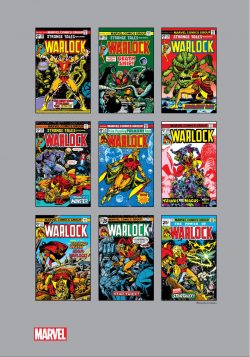
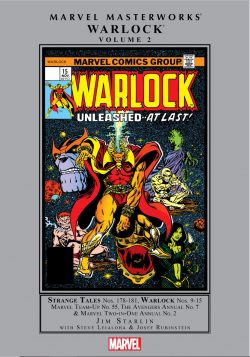
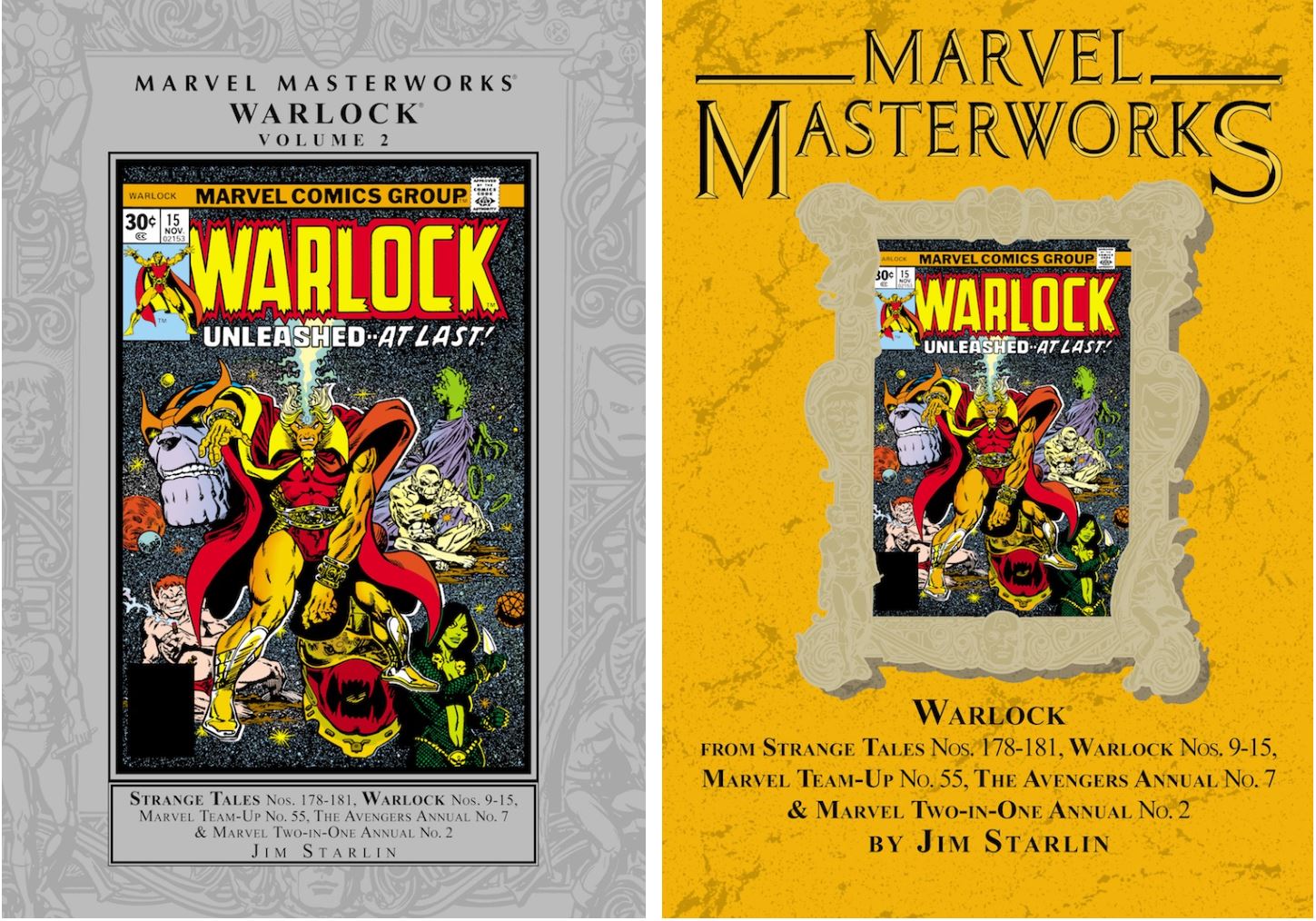
Re-presenting Strange Tales #178-181, Warlock #9-15, Marvel Team-Up #55, Avengers Annual #7 and Marvel Two-in-One Annual #2 – collectively spanning cover-dates February 1975 to the end of 1977, this epic astral adventure also offers a context-soaked Introduction from comics historian/documentarian Jon B. Cook.

For latecomers and those informed only by movies…

It all began with The Power of… Warlock as the artificial man’s origin story – a lab experiment concocted by rogue geneticists – was goosed up after meeting man-made and self-created god The High Evolutionary. He was wrapped up in a bold new experiment to replicate planet Earth on the opposite side of the sun. He replayed – on fast-forward – the development of life, intent on creating humanity without the taint of cruelty and greed and deprived of the lust to kill…

It might well have worked, but when the Evolutionary wearied, his greatest mistake cruelly intervened. Man-Beast was a hyper-evolved wolf with mighty powers, ferocious savagery and ruthless wickedness. He despoiled humanity’s rise, and ensuring the Counter-Earth’s development exactly mirrored its template – with the critical exception of the superheroic ideal. This beleaguered world suffered all mankind’s woes but had no extraordinary beings to save or inspire them.

A helpless witness to desecration, Him crashed free of his life-supporting cocoon to save the Evolutionary and rout Man-Beast and his bestial cronies -a legion of similarly evolved rogue animal-humanoids dubbed “New-Men”). When the despondent, furious science god recovered, he wanted to erase his failed experiment but was stopped by his rescuer.

As a powerless observer, Him had seen the potential and value of embattled humanity. For all their flaws, he believed he could save them from the many imminent dooms caused by their own unthinking actions – pollution, over-population, wars and intolerance. His pleas convinced the Evolutionary to give this mankind one last chance…

The wanderer was hurled down to Counter-Earth, equipped with a strange gem to focus his powers, a mission to find the best in the fallen and a name of his own – Adam Warlock

He battled long and hard and even gathered a band of faithful followers, but was constantly defeated and frustrated by human intransigence and Man-Beast’s forces, who had infiltrated and corrupted all aspects of society – especially America’s political hierarchy and the Military/Industrial complex.

After 8 issues of his struggle and a couple of interventions by Earth’s Incredible Hulk, the saga apparently ended when messianic Adam Warlock died and was reborn, thwarting Satan-analogue Man-Beast with the aid of the Jade Juggernaut: delivering a karmic coup de grace before ascending from Counter-Earth to the beckoning stars…

When the feature returned at the end of 1974 the tone, just like the times, had hugely changed. In the wake of Vietnam and Watergate, hopeful positivity and comfortable naivety had turned to world-weary cynicism and the character was draped in precepts of inescapable doom in the manner of doomed warrior Elric. It was a harbinger of things to come…

The story continues in Strange Tales #178 as ultra-imaginative morbid maverick Jim Starlin (Captain Marvel, Master of Kung Fu, Infinity Gauntlet, Dreadstar, Batman, Kid Kosmos) turns the astral wanderer into a Michael Moorcock-inspired death-obsessed, constantly outraged but exceedingly reluctant and cynical cosmic champion.

The slow spiral to oblivion begins in February cover-dated Strange Tales #178, where Starlin introduces alien Greek Chorus Sphinxor of Pegasus to recap the past by asking and answering ‘Who is Adam Warlock?’

Handling everything but lettering – that’s left to Annette Kawecki – Starlin has solitary wanderer Warlock brooding on a desolate asteroid in the Hercules star cluster just as a trio of brutes attack a frightened girl. Despite his best efforts they execute her, proud of their status as Grand Inquisitors of the Universal Church of Truth and ecstatic to remove one more heathen unbeliever…

Appalled to have failed another innocent, Warlock employs the Soul Gem at his brow to briefly resurrect her and learns of an all-conquering ruthless militant religion intent on converting or eradicating all life. His search triggers a chilling confrontation as ‘Enter The Magus!’ sees the living god of the UCT attack him and crushingly reveal an awful truth: the being who has subjugated countless worlds, exterminated trillions and fostered every dark desire of sentient beings is his own future self.

Adam Warlock than swears that he will battle this impossible situation and do whatever is necessary to prevent himself becoming his worst nightmare…

With Tom Orzechowski on words and Glynis Oliver-Wein doing colours, Starlin’s pilgrimage continues as Warlock attacks an UCT war vessel transporting rebels, “degenerates” and “unproductives” from many converted worlds. The church only deems basic humanoids as sacred and saveable, with most other shapes useful only as fodder or fuel. They make an exception for the universally deplored, vulgar and proudly reprobate race called “Trolls”. In the dungeon-brig of the ship Great Divide, Adam finds his gloomy mood irresistibly lifted by disgusting lout Pip: a troll revelling in his “independent manner and cavalier ways” and not frightened by the imminent death awaiting them all.

Meanwhile, mighty, enhanced true believer Captain Autolycus has received a message from the Temporal Leader of the Faithful. The Matriarch has decided to ignore The Magus’ instruction to capture Warlock and keep him unharmed.

As Adam instructs his fellow prisoners in the nature of rule, Autolycus acts on her command, losing his entire crew and perishing when Warlock breaks loose. After escaping the ‘Death Ship!’, Adam realises Pip has stowed away, keen to share a new adventure, but lets it go. He has a bigger problem: in the climactic final battle, the Soul Gem refused his commands, acting on its own to consume Autolycus’ memories and persona, locking them inside the twisted champion’s head…

In ST #180’s ‘Judgment!’ (with additional inking by Alan Weiss), Pip and Warlock have submerged themselves in the heaving masses of Homeworld whilst hunting the living god they oppose. Terrified of the uncontrollable spiritual vampire on his brow, Adam tries to remove it and discovers it has already stolen him: without it he will perish in seconds…

Pushed into precipitate action and living on borrowed time, Warlock invades the Sacred Palace and is offered a curious deal by the Matriarch and is captured when he refuses. Subjected to ‘The Trial of Adam Warlock’, the appalled adventurer endures a twisted view of the universe courtesy of Grand Inquisitor Kray-Tor, even as in the city, Pip thinks he scored with a hot chick. In truth, he’s been targeted by public enemy number one. Gamora is called “the deadliest woman in the whole galaxy” and has plans for Adam, which include him being alive and free…

Back in court, the golden man has rejected Kray-Tor’s verdict and, disgusted and revolted by the proceedings, foolishly lets his Soul Gem feed. The carnage he triggers and subsequent guilt leaves him catatonic and in the hands of the Matriarch’s cerebral reprogrammers…

Starlin was always an outspoken and driven creator with opinions he struggled to suppress. His problems with Marvel’s working practises underpin ST #181’s ‘1000 Clowns!’ as old pal Al Milgrom inks a fantastic recap and psychological road trip inside the hero’s mind. None of the subtext is germane if you’re just looking for a great story however, and – in-world – Warlock’s resistance to mind-control is mirrored by Pip and Gamora’s advance through the UCT citadel to his side.

Embattled by the psychic propaganda assaulting him, Warlock retreats into the safety of madness, and learns to his horror that this has been what The Magus wanted all along. Now the dark messiah’s victory and genesis are assured…

The triumph was celebrated by the resurrection of the hero’s own title and – cover-dated October 1975 – Warlock #9 revealed the master plan of Adam’s future self. Inked by Steve Leialoha ‘The Infinity Effect!’ saw the mirror images in stark confrontation with evil ascendent, unaware that Gamora was an agent of a hidden third party and that all the chaos and calamity was part of a war of cosmically conceptual forces.

The saga heads into the Endgame as the Magus explains in cruel detail how he came to power and that Adam’s coming days are merely his past, before summoning abstract terror The In-Betweener to usher in their inevitable transformation. There is one problem however: the first time around Adam/Magus was never attacked and almost thwarted by an invisible green warrior woman.

Crushed by the realisation that he will become a mass-murdering spiritual vampire, Warlock reels as the hidden third element arrives to save everything…

‘How Strange My Destiny!’ (#10, inked by Leialoha) finds Pip, Gamora, Adam and mad Titan Thanos battling 25,000 cyborg Black Knights of the Church rapturously paying ‘The Price!’ of devotion in a stalling tactic until the In-Betweener arrives…

Kree Captain Mar-Vell narrates a handy catch-up chapter detailing ‘Who is Thanos?’ as the beleaguered champions escape, before ‘Enter the Redemption Principle!’ explores some of the Titan’s scheme and why he opposes the Magus and his Church, even as the victorious dark deity realises that Thanos’ time probe is the only thing that can upset his existence…

How Strange My Destiny – with finished art by Leialoha from Starlin’s layouts – continues and concludes in #11 as ‘Escape into the Inner Prison!’ sees the Magus and his Black Knight death squads brutally board Thanos’ space ark. A combination of raw power and the Soul Gem buy enough time for Warlock and the troll to use the time probe, which dumps them in the future, just as In-Betweener arrives to convert the hero and supervise ‘The Strange Death of Adam Warlock!’, resulting in a reshuffling of chronal reality and Thanos’ triumph…

After months of encroaching and overlapping Armageddons, Warlock #12 diverts and digresses in ‘A Trollish Tale!’ as Pip’s addiction to hedonism and debauchery entraps him in professional harlot Heater Delight’s plan to escape a life on (non)human sexual trafficking in a star-roaming pleasure cruiser. He’s happy with the promised reward for his efforts, but hadn’t considered that her pimp might object to losing his meal ticket…

Drama returns with a bang in #13 as ‘…Here Dwells the Star Thief!’ introduces a threat to the entire universe stemming from a hospital bed on Earth. New England’s Wildwood Hospital houses Barry Bauman, whose life is blighted by a total lack of connection between his brain and nerve functions. Isolated and turned inward for his entire life, Barry has discovered astounding psychic abilities, the first of which was to possess his nurse and navigate an unsuspected outer world. His intellect also roams the endless universe and brooding, doomed Warlock is there when Barry consumes an entire star just for fun…

Outraged at the wilful destruction, Warlock uses his own powers to trace the psionic force and resolves to follow it back to the planet of his original conception and construction even as ‘The Bizarre Brain of Barry Bauman’ explores the Star Thief’s origins and motivations before formally challenging Adam to a game of “stop me if you can”…

Spitefully erasing stars and terrorising the Earth as Warlock traverses galaxies at top speed, Bauman knows a secret about his foe that makes his victory assured, but still lays traps in his interstellar path. The ‘Homecoming!’ is accelerated by a shortcut through a black hole but when Adam arrives at the Sol system, he receives a staggering shock: his journeys and simple physics have wrought physical changes making it impossible to ever go home again…

Sadly for Barry, his gleeful frustration of his foe distracts him just when he should be paying close attention to his physical body…

As the series abruptly ended again (November 1976), Starlin returned to full art & story chores in #15’s ‘Just a Series of Events!’ Exiled from Earth, Adam rants as elsewhere, Thanos moves on his long-term plans. Without the threat of The Magus, his desire for total stellar genocide can proceed, but he worries that his adopted daughter Gamora might be a problem. He should be more concerned about his own nemesis-by-design Drax the Destroyer

The saga then pauses with Adam, confronting a host of plebian injustices and seemingly gaining dominance over his Soul Gem…

Vanished again, Adam Warlock only languished in limbo for a few months. In mid-December 1976, Marvel Team-Up #55 (cover-dated March 1977) addressed his altered state as Bill Mantlo, John Byrne & Dave Hunt crafted ‘Spider, Spider on the Moon!’

For reason too complicated to explain here, Spider-Man had been trapped in a rocket and blasted into space and was happily intercepted and left in the oxygenated-and heated Blue Area. Warlock then assisted the Arachnid and mysterious alien The Gardener against overbearing ephemera collector The Stranger. He sought possession of the Golden Gladiator’s life-sustaining Soul Gem, but soon discovered an equally fascinating alternate choice…

Despite his sporadic and frankly messy publishing career, Warlock has been at the heart of many of Marvel’s most epochal and well-regarded cosmic comic classics, and ending this compendium is probably the very best: an extended epic spanning two summer annuals and seemingly signalling the end on an era…

‘The Final Threat’ (by Starlin & Joe Rubinstein) comes from Avengers Annual #7, which sees Protector of the Universe Mar-Vell AKA Captain Marvel and Titanian ultra-mentat Moondragon return to Earth with vague anticipations of impending catastrophe. Their premonitions are confirmed when galactic wanderer Adam Warlock arrives with news that death-obsessed Thanos has amassed an alien armada and built a soul gem-fuelled weapon to snuff out stars like candles…

Spanning interstellar space to stop the scheme, the united heroes forestall alien invasion and prevent the Dark Titan from destroying the Sun, but only at the cost of Warlock’s life…

Then ‘Death Watch!’ (Starlin & Rubinstein, Marvel Two-in-One Annual #2) finds Peter Parker plagued by prophetic nightmares. These disclose how Thanos had snatched victory from defeat and now holds the Avengers captive whilst again preparing to extinguish Sol.

With nowhere else to turn, the anguished, disbelieving webspinner heads for the Baxter Building, hoping to borrow a spacecraft, and unaware that The Thing also has a history with the terrifying Titan.

Although utterly overmatched, the mismatched Champions of Life subsequently upset Thanos’ plans for long enough to free the Avengers before the Universe’s true agent of retribution ends the Titan’s threat forever… at least until next time…

The sidereal saga seemingly done, this collection also offers bonus treats in the form of 16 pages of unused pencils by Alan Weiss. The photostats come from an issue lost in transit, and are supplemented by before-&-after panels judged unsuitable by the Comics Code Authority, the various production stages of Starlin & Weiss’ cover art for Warlock #9, with sketches, designs, frontispieces and full pages of original art.

Also on view are Starlin’s wraparound covers from 1983 reprint series Warlock Special Edition #1-6 and 1992-1993’s Warlock reruns (#1-6) in support of the Infinity Gauntlet, plus pertinent house ads and full biographies.

Ambitious, unconventional and beautiful to behold, Warlock’s adventures are very much a product of their tempestuous, socially divisive times. For many, they proved how mature comics might become, but for others they were simply pretty pictures and epic fights with little lasting relevance. What they unquestionably remain is a series of crucial stepping stones to greater epics: unmissable appetisers to Marvel Magic at its finest.
© 2017 Marvel Characters, Inc. All rights reserved.
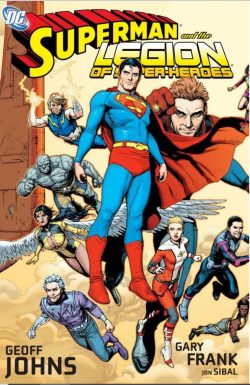
Superman and the Legion of Super-Heroes


By Geoff Johns, Gary Frank, Jon Sibal & various (DC Comics)
ISBN: 978-1-4012-1819-5 (HC/Digital edition) 978-1-4012-1904-8 (TPB/Digital edition)

Superman started the whole modern era of fantasy heroes: outlandish, flamboyant, indomitable, infallible, unconquerable.

He also saved a foundering industry and invented an entirely new genre of storytelling – Super heroes. Since May 1938 he has unstoppably evolved into a mighty presence in all aspects of art, culture and commerce, even as his natal comicbook universe has organically and exponentially expanded.

Long ago and far away a scientifically advanced civilisation perished, but not before its greatest genius sent his baby son to safety in a star-spanning ship. It landed in simple, rural Kansas where the interplanetary orphan was reared by decent folk as one of us…

Once upon a time, in the far future, a band of super-powered kids from dozens of alien civilisations took inspiration from the greatest legend of all time and formed a club of heroes. One day these Children of Tomorrow came back in time and invited that legend to join them…

And thus began the vast and epic saga of Superman and – tangentially – the Legion of Super-Heroes as envisioned by writer Otto Binder & artist Al Plastino in Adventure Comics #247 (cover-dated April 1958 and approximately 20 years after Kal-El’s debut).

Since that time, the fortunes and popularity of the Legion have perpetually waxed and waned, with their future history tweaked and rebooted, retconned and unwritten over and again to comply with editorial diktat and popular trends.

One always popular publishing stratagem is to re-embrace those innocent, silly, joyous, stirring and utterly compelling pre-Crisis on Infinite Earths tales, but shading them with contemporary sensibilities. With this in mind Geoff Johns gradually reinstituted the Lore of the Legion in a number of his assignments during the early part of this century.

Beginning most notably with Justice League of America: The Lightning Saga and culminating in the epic New Krypton and War against Brainiac sagas, the Legion were restored: once again carving out a splendid and unique niche in the DC Universe.

Along the way came this superb, nostalgia-laced cracker which re-established direct contact between the futuristic paladins and the current Man of Tomorrow…

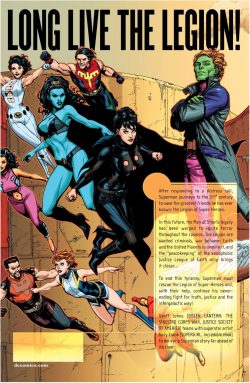
Compiling Action Comics #858-863 (December 2007 through May 2008), this collected chronicle – sporting an Introduction from veteran LSH creator Keith Giffen – finds the Legion back in the 21st century, seeking Superman to save Tomorrow’s World once more.

Long ago the Legion had regularly visited: spiriting the young Kryptonian to a place and time where he didn’t have to hide his true nature. However, once he began his official and adult public career, the visits ceased and his memories were suppressed to safeguard the integrity of history and the inviolability of the timeline.

Now a desperate squad of Legionnaires must reawaken those memories since the Man of Steel is the last hope for a world on the edge of destruction. In the millennium since his debut, the myth of Superman has become a beacon of justice and tolerance throughout the Utopian Universe, but recently a radical, xenophobic anti-alien movement has swept Earth, marginalising, interning and even executing all non-Terrans.

Moreover, a super-powered team of Legion rejects has formed a Justice League of Earth to spearhead a crusade against all extraterrestrial immigrants, and outrageously claim Superman was actually a true-born Earthling. They have even declared him the figurehead and spiritual leader of their pogrom…

Of course, Kal-El of Krypton must travel to the future and not only save the day but scour the racist stain from his name: a task made infinitely harder because Earth-Man, psychotic supremacist leader of the Earth-First faction, has turned yellow sun Sol a power-sapping red…

Bold, thrilling and utterly enthralling, the last-ditch struggle of a few brave aliens against a racist, fascistic and unrepentantly ruthless totalitarian tomorrow is the stuff of pure comic-book dreams. Superman strives to unravel a poisonous future where all his hopes and aspirations have been twisted and soiled, with only his truest childhood friends to aid him. It’s all made chillingly authentic thanks to the incredibly intense and hyper-realistic art of Gary Frank & Jon Sibal, making it all seem not only plausible and inevitable, but also inescapably horrible…

Sweetening the deal is a stunning covers and variants gallery by Frank, Adam Kubert, Steve Lightle, Mike Grell & Al Milgrom, plus pages of notes, roughs and designs from Frank’s preparatory work before embarking on the epic adventure.

Unforgettable, total Fights ‘n’ Tights future shock in the best way possible, and a major high point for fans of all ages…
© 2007, 2008 DC Comics. All Rights Reserved.

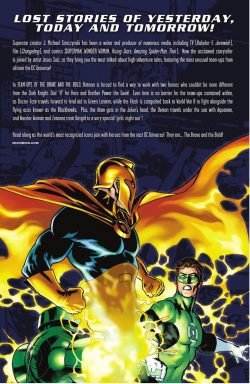
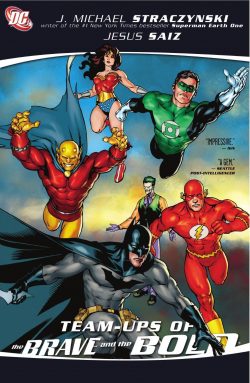
Team-Ups of the Brave and the Bold


By J. Michael Straczynski, Jesus Saiz, Chad Hardin, Justiniano, Cliff Chiang & various (DC Comics)
ISBN: 978-1-4012-2793-7 (HB) 978-1-4012-2809-5 (TPB/Digital edition)

The Brave and the Bold premiered in 1955; an anthology adventure comic featuring short complete tales starring a variety of period heroes and a format mirroring and cashing in on that era’s filmic fascination with historical dramas.

Devised and written by Robert Kanigher, issue #1 led with Roman epic Golden Gladiator, medieval mystery-man The Silent Knight and Joe Kubert’s now legendary Viking Prince. The Gladiator was soon replaced by National Periodicals/DC Comics’ iteration of Robin Hood, and the high adventure theme carried the title until the end of the decade when a burgeoning superhero revival saw B&B remodelled as a try-out vehicle like the astounding successful Showcase.

Deployed to launch enterprising concepts and characters such as Task Force X: The Suicide Squad, Cave Carson, Strange Sports Stories, Hawkman and the epochal Justice League of America, the title then evolved to create a whole sub-genre – although barely anybody noticed at the time…

That innovation was Superhero Team-Ups.

For almost a decade DC had enjoyed great success pairing Superman with Batman and Robin in World’s Finest Comics, and in 1963 sought to create another top-selling combo from their growing pantheon of masked mystery men. It didn’t hurt that the timing also allowed extra exposure for characters imminently graduating to their own starring vehicles after years as back-up features…

This was during a period when almost no costumed heroes acknowledged the jurisdiction or (usually) existence of other costumed champions. When B&B offered this succession of power pairings, they were unknowingly laying foundations for DC’s future close-knit comics continuity. Nowadays, there’s something wrong with any superstar who doesn’t regularly join every other cape or mask on-planet every five minutes or so…

The short-lived experiment eventually calcified as “Batman and…” but, for a while, readers were treated to some truly inspired pairings such as Flash and the Doom Patrol, Metal Men and Metamorpho, Flash and The Spectre or Supergirl and Wonder Woman.

The editors even achieved their aim after Robin, Kid Flash and Aqualad remained together after their initial foray and expanded into the ever-popular Teen Titans

That theme of heroes united together for a specific time and purpose was revived in 2007 for the third volume of The Brave and the Bold, resulting in many exceedingly fine modern Fights ‘n’ Tights classics, and this compilation collects issues #27-33 (November 2009 – June 2010): the first seven issues scripted by TV/comics star scribe J. Michael Straczynski.

The run of easily accessible, stand-alone tales delved into some of the strangest nooks and crannies of the DCU and opens here with ‘Death of a Hero’, illustrated by Jesús Saíz, wherein teenager Robby Reed visits Gotham City and decides to help out a Batman sorely pressed by the machinations of The Joker

The child prodigy had his own series in the 1960s as a kid who found a strange rotary device dotted with alien hieroglyphics that could temporarily transform him into a veritable army of super-beings when he dialled the English equivalents of H, E, R and O…

Here, however, after the lad dials up futuristic clairvoyant Mental Man, the visions he experiences force him to quit immediately and take to his bed…

He even forgets the Dial when he leaves, and it is soon picked up by down-&-out Travers Milton who also falls under its influence and is soon saving lives and battling beside the Dark Knight as The Star. What follows is a meteoric and tragic tale of a rise and fall…

Again limned by Saíz, B&B #28 takes us a wild trip to the ‘Firing Line’ as the Flash (Barry Allen) falls foul of a scientific experiment and winds up stranded in the middle of World War II. Injured and unable to properly use his powers, the diminished speedster is taken under the wing of legendary paramilitary aviator squadron The Blackhawks, but finds himself torn when his scruples against taking life crash into the hellish cauldron of the Battle of Bastogne and his manly, martial love of his new brothers in arms…

Brother Power, The Geek was a short-lived experimental title developed by legendary figure Joe Simon at the height of the hippy-dippy 1960s (or just last week if you’re a baby booming duffer like me).

He/it was a tailor’s mannequin mysteriously brought to life through extraordinary circumstances, just seeking his place in the world: a bizarre commentator and ultimate outsider philosophising on a world he could not understand.

That cerebral angst is tapped in ‘Lost Stories of Yesterday, Today, and Tomorrow’ when the elemental outcast crawls out of wreckage in Gotham City and clashes with Batman as they both strive to save homeless people from authoritarian brutality and greedy arsonists.

Like the times it references, this story is one you have to experience rather than read about…

Straczynski & Saíz play fast and loose with time travel in ‘The Green and the Gold’ as mystic Lord of Order Doctor Fate is helped through an emotional rough patch by Green Lantern Hal Jordan. As a result of that unnecessary kindness, the mage gets to return the favour long after his own demise at the moment the Emerald Warrior most needs a helping hand…

Illustrated by Chad Hardin & Walden Wong and Justiniano, The Brave and the Bold #31 describes ‘Small Problems’ encountered by The Atom after Ray Palmer is asked to shrink into the synapse-disrupted brain of The Joker to perform life-saving surgery. Despite his better judgement, the physicist eventually agrees but nobody could have predicted that he would be assimilated into the maniac’s memories and forcibly relive the Killer Clown’s life…

Straczynski & Saíz reunite as sea king Aquaman and hellish warrior Etrigan the Demon combine forces in a long-standing pact to thwart a revolting Cthonic invasion of ‘Night Gods’ from a hole in the bottom of the ocean before this mesmerising tome concludes with a bittersweet ‘Ladies Night’ from times recently passed, illustrated by Cliff Chiang.

When sorceress Zatanna experiences a shocking dream, she contacts Wonder Woman and Batgirl Barbara Gordon, insisting that they should join her on an evening of hedonistic excess and sisterly sharing. Only Babs is left out of one moment of revelation: what Zatanna foresaw would inescapably occur to her the next day at the hands of the Joker…

Smart, moving and potently engaging, these heroic alliances are a true treat for fans of more sophisticated costumed capers, and skilfully prepared in such a way that no great knowledge of backstory is required. Team-ups are all about finding new readers and this terrific tome is a splendid example of the trick done right…
© 2009, 2010 DC Comics. All Rights Reserved.

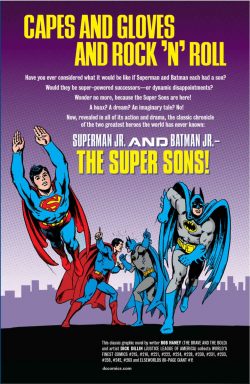
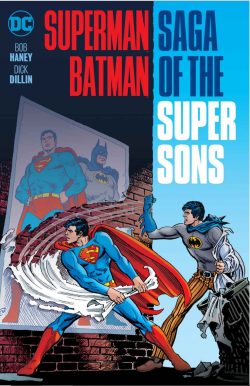
Superman/Batman: Saga of the Super Sons


By Bob Haney & Dick Dillin, with Dennis O’Neil, John Calnan, Ernie Chan, Rich Buckler, Kieron Dwyer & various (DC Comics)
ISBN: 978-1-4012-6968-5 (TPB/Digital edition)

Are you now old enough to yearn for simpler times?

The brilliant expediency of the Parallel Earths concept – and especially its contemporary incarnation Infinite Frontier – lends the daftest tale from DC’s vast back catalogue credibility and contemporary resonance, providing a chance that even the hippest and most happening of the modern pantheon can interact with the most utterly outrageous world concept in the company’s nigh-90-year history. It especially doesn’t hurt here, since – following the Rebirth reboot – the actual sons of the Dark Knight and Man of Tomorrow are now part of an established – and therefore “real” – DC Universe.

Thus, this collection of well-told but initially “imaginary” tales from 1972 to 1976, supplemented by some episodes from more self-conscious times, results from another earnest opportunity to make the fundamental allure of stuffy adult characters relevant to kids and teens.

Written by Bob Haney and drawn by Dick Dillin, The Super-Sons appeared without prior preamble or fanfare in World’s Finest Comics #215, (cover-dated January 1973, and hitting newsstands mid-October 1972). It was a tough time for superhero comics, but a great era for teen rebels. Those free-wheeling, easy-rider, end of the flower-power days generated a huge (and lasting) societal refocussing on “teen consciousness”, and the “Generation Gap” was a phrase on almost every lip.

It didn’t hurt that the concept was already tried and tested. Both Man of Steel and Caped Crusader had already been seen as younger versions of themselves many times over the years, and the evergreen dream of characters who would more closely resonate with youngsters never died in editors’ minds. After all, hadn’t original Boy Wonder Robin been created to give readers someone to closely identify with?

The editors – Murray Boltinoff and E. Nelson Bridwell – clearly saw a way to make their perilously old-school so-very establishment characters instantly pertinent and relevant. Being mercifully oblivious to the more onerous constraints of continuity – some would say logic – they simply and immediately generated tales of the maverick sons of the World’s Finest heroes out of whole cloth.

…And smartly-constructed, well told tales they are. Debut outing ‘Saga of the Super Sons!’ (inked by Henry Scarpelli) sees the young warriors as fully realised young rebels running away from home – on the inevitable motorcycle – and encountering a scurrilous gang-lord.

But worry not, their paternalistic parents are keeping a wary eye on the lads! Speaking as one of the original target market for this experiment, I can admit the parental overview grated then and still does, but as there were so many sequels, enough reader must have liked it…

‘Little Town with a Big Secret!’ appeared in the very next issue: another low key human interest tale, but with a science-fiction twist and the superb inking of Murphy Anderson complimenting Haney & Dillin’s tight murder-mystery yarn.

Crafted by the same team, WF # 221 (January-February 1974) featured ‘Cry Not for My Forsaken Son!’ depicting a troubled runaway boy discovering the difference between merit and worth, and the value of a father as opposed to a biological parent, after which #222’s ‘Evil in Paradise’(inked by Vince Colletta) saw young heroes voyage to an undiscovered Eden to resolve the ancient question of whether Man is intrinsically Good or Evil.

‘The Shocking Switch of the Super-Sons’ (WF #224, cover dated July-August and also inked by Colletta) took teen rebellion to its logical conclusion when a psychologist convinces the boys to trade fathers, whereas ‘Crown for a New Batman!’ provides a radical change of pace as Bruce Wayne Jr. inherits the Mantle and the Mission when dad is murdered!

Never fear, all is not as it seems, fans! This thriller – guest starring Robin – appeared in WFC #228, and was inked by Tex Blaisdell, who inked Curt Swan, on more traditional Lost Civilisation yarn ‘The Girl Whom Time Forgot’ in WF#230…

The Relevancy Era was well over by the time Haney, Dillin & Blaisdell crafted ‘Hero is a Dirty Name’ (#231, July 1975), wherein the Sons are forced to question the motivation for heroism in a thriller guest-starring Green Arrow and The Flash.

In #233’s ‘World Without Men’ (inked by John Calnan) the ever-rambling, soul-searching Super-Sons confront sexual equality issues and unravel a crazy plot to supplant human males, after which ‘The Angel with a Dirty Name’ (by the same team in June 1976’s WFC #238) offers a supervillains and monsters slug-fest indistinguishable from any other Fights ‘n’ Tights tale, before the original series fades out with December’s #242’s in ‘Town of the Timeless Killers’. Illustrated by Ernie Chua (nee Chan) & Calnan, it sees the kids trapped in a haunted ghost town and stalked by immortal gunslingers offering a rather low-key and ignominious close to a bold experiment.

Four years later in mid-March 1980, the boys surprisingly showed up in a momentary revival. Cover-dated June-July and courtesy of Denny O’Neil, Rich Buckler & Dick Giordano in WFC #263, ‘Final Secret of the Super-Sons’ shockingly revealed that the boys were no more than a simulation running on the Man of Steel’s futuristic Super Computer.

In a grim indication of how much of a chokehold shared continuity had grown into, they then escaped into “reality” anyway, accidentally wreaking havoc in a manner The Matrix movies would be proud of…

The collection concludes in a short tale by Haney & Kieron Dwyer from Elseworlds 80-Page Giant in 1999. ‘Superman Jr. is No More!’ is a charming, fitting conclusion to this odd, charming and idiosyncratic mini-saga, embracing the original conceit as it posits what would happen if Superman died and his boy was forced to take over too soon…

Supplemented with a full cover gallery by Nick Cardy, Chan, Calnan, Giordano, Ross Andru & Ty Templeton, these classic yarns are packed with potency and wit. If you’ve an open mind and refined sense of adventure, why not take a look at a few gems (and one or two clunkers) from an era where everybody read comics and nobody took them too seriously?
© 1972, 1973, 1974, 1975, 1976, 1980, 1999, 2017 DC Comics. All Rights Reserved.

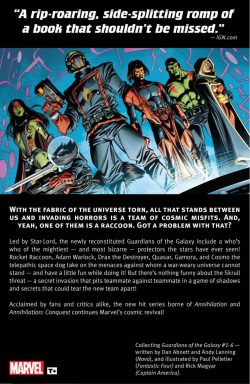
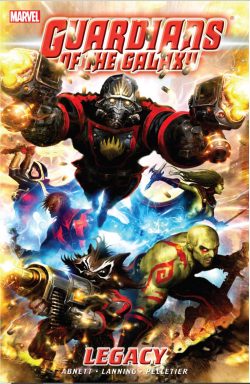
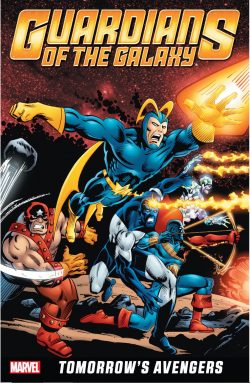
Guardians of the Galaxy volume 1: Legacy


By Dan Abnett & Andy Lanning, Paul Pelletier, Rick Magyar & various (Marvel)
ISBN: 978-0-7851-3326-1 (HB/Digital edition) 978-0-7851-3338-4 (PB)

Following twin cosmic catastrophes (the invasion of our cosmos by the Negative Zone legions of Annihilus and consequent incursion of the shattered survivors of parasitical Phalanx) Marvel breathed new life in many of its moribund cosmic comics characters, and none more so than the rough agglomeration of rootin’, tootin’, blaster-shootin’ outer space reprobates that formed a new 21st century iteration of the Guardians of the Galaxy.

Although heralded since its launch in the early 1960s with making superheroes more realistic, Marvel Comics also maintained its intimate affiliation with outlandish and outrageous cosmic calamity (as wonderfully embodied in their pre-superhero “monster-mag” days), and with an upcoming big-budget movie imminently expected this was a property the company needed to keep in the public eye…

The original Guardians were created by Arnold Drake in 1968 for try-out title Marvel Super-Heroes (#18, cover-dated January 1969): a rag-tag bunch of future-based freedom fighters dedicated to liberating star-scattered humanity from domination – if not extermination – by the sinister Brotherhood of Badoon.

Initially unsuccessful, the space squad floated in limbo until 1974 when Steve Gerber incorporated them into Marvel Two-In-One #4 & 5, Giant Size Defenders #5 and The Defenders (#26-29, July-November 1975), wherein assorted 20th century champions voyaged a millennium into Tomorrow to ensure mankind’s very survival.

This in turn led to the Guardians’ own short-lived series (Marvel Presents #3-12: February 1976-August 1977) until abrupt cancellation left them roaming the Marvel Universe as perennial guest-stars in such titles as Thor, Marvel Team-Up, Marvel Two-in-One and The Avengers. In June 1990 they were back again, securing a relatively successful series (#62 issues, plus annuals and a spin-off miniseries) until the axe fell again in July 1995.

This isn’t them; this is another bunch…

By 2006, reading tastes had once more turned to sky-watching and a massive crossover event involving most of Marvel’s space specialists erupted throughout the Marvel Universe. Annihilation – brainchild of writing team Dan Abnett & Andy Lanning, resulted in a vast reconfiguration (pre- configuration?), creating a set of Galactic Guardians for modern times and tastes.

Among the stalwarts in play were Silver Surfer, Galactus, Firelord (and other heralds of the world-eater), Moondragon, Quasar, Star-Lord, Thanos, Super-Skrull, Tana Nile, Gamora, Ronan the Accuser, Nova, Drax the Destroyer, and a Watcher as well as a host of alien civilisations including the Kree, Skrulls, Xandarians, Shi’ar, and more, all relentlessly falling before an invasion of rapacious Negative Zone bugs and beasties unleashed by undying insectoid horror Annihilus.

That conflagration spawned its own wave of specials, miniseries and new titles and – inevitably – led to a follow-up event…

In Annihilation: Conquest – with Kree and Skrull empires splintered, the Nova Corps of Xandar reduced to one single operative, and wild, ancient gods returned – a sizable proportion of those Negative Zone invaders had tenuously established themselves in territories once home to untold billions.

The Kree Supreme Intelligence was gone and arch-traitor Ronan had become a surprisingly effective ruler of the empire’s remnants. Cosmic Protector Quasar was dead, and Phyla-Vel, (daughter of the first Captain Marvel) had inherited both his powers and title…

Whilst she and psychic demi-goddess Moondragon worked with pacifist Priests of Pama to relieve the suffering of starving survivors, Star-Lord Peter Quill toiled with Ronan to shore up battered interstellar defences of the myriad races in the decimated space-sector.

Quill then brokered an alliance with the Spaceknights of Galador (an old and noble cyborg species most famously represented by 1980s hero Rom) to enhance the all-pervasive etheric war-net, unaware that the system had been treacherously compromised.

When activated, it instantaneously overwrote its own protocols, installing malware that left everywhere ruled by a murderous, electronic sentient parasitic species known as the Phalanx. Their cybernetic credo was “peace and order through assimilation”…

Once again a rag-tag rabble desperately united to repel a cosmic invasion, with Quill commanding a Kree resistance division/Penal Strike Force. The highly engaging intergalactic Dirty Half-Dozen comprised Galactic Warrior Bug (originally from the 1970’s toy/comic-adaptation phenomenon The Micronauts); the current Captain Universe, Shi’ar berserker Deathcry, failed Celestial Madonna Mantis, anamorphic outsider Rocket Raccoon and magnificently whacky “Kirby Kritter” Groot – a Walking Tree and one-time “Monarch of Planet X”.

In combination with stellar stalwarts Drax, “Deadliest Woman in the Galaxy” Gamora and Adam Warlock, the organic underdogs and other special all-stars turned back the techno-parasites and were left to set the saved, badly battered universe back on an even(ish) keel…

The success of all that intergalactic derring-do led in turn to a new series with this initial tome – collecting from July-December 2008 Guardians of the Galaxy (volume 2) #1-6.

It begins with some of the recently acquainted adventurers in the midst of saving the universe a little bit more…

‘Somebody’s Got To Do It’ (by Abnett & Lanning, with art by Paul Pelletier & Rick Magyar) reveals how – thanks to fellow human Nova’s prompting – Star-Lord determined to create a pro-active defence force to handle the next inevitable cosmic crisis as soon as it starts.

To that end, he convinced Drax, Gamora, Groot, Phyla-Vel, Warlock and the raccoon to relocate with him to pan-species science-station Knowhere (situated in the hollowed-out skull of a dead Celestial Space God) to start putting out a never-ending progression of interstellar brush-fires before they become really serious…

The station is guarded and run by Cosmo – a Russian dog with astounding psionic abilities – and is where old comrade Mantis now works as chief medic. It also offers unlimited teleportational transport which the team needs as it tries to prevent an out-of-control Universal Church of Truth Templeship crashing into a time/space distortion and shredding the fabric of reality…

Soon the surly scratch squad are battling savagely crazed missionary-zealots – powered by the worship of enslaved adherents channelled through the vessel’s colossal Faith Generators whilst desperately attempting to divert it before it impacts the fissure in space. Such a collision would cause catastrophic destruction across the galaxy, but the UCT crusaders only see heretics interfering with their mission to convert unbelievers…

The crisis is exacerbated by another small problem: there are very nasty things on the other side of the fissure that really want to come and play in our universe, and when one of them breaks through, the only thing to do is sacrifice the entire ship…

In the aftermath, Warlock reveals that the string of cosmic Armageddons has fundamentally damaged the nature of space, and more fissures will certainly appear. He wants to repurpose the team to find and close them all before anything else escapes.

And on Sacrosanct, homeworld of the Universal Church of Truth, the Matriarch issues a decree for her Cardinals to deal with the interfering unbelievers…

‘Legacy’ sees the squad dash into another Reality rupture which has recently spewed out a huge chunk of limbo-ice, only to find the temporal effluvia is encasing a chunk of Earth’s Avengers Mansion and another appalling atrocity hungry for slaughter. As it attacks, they are saved by a rapidly-thawing, time-lost costumed champion hurling a circular shield with concentric circles and a single star…

The confused hero says he is Vance AstrovikMajor Victory of the Guardians of the Galaxy. He has travelled back from the 30th century, but can’t remember why – or if even if he’s arrived in the right reality…

As the mystery man is probed by telepathic, precognitive Mantis, Quill and Warlock drag the team off to seal another Fissure, and are ambushed by a unit of Cardinals as they enter a vast Dyson Sphere where something horrific is hunting…

As pitched, merciless battle breaks out on the Sphere in ‘Beyond Belief’, Mantis and Major Victory are attacked in Knowhere’s sickbay by a being of incredible power. Astrovik calls the assailant Starhawk, but Mantis can’t glean any information about him from any future she can see…

Within the Sphere, the war between Guardians and Cardinals is abruptly terminated as the bio-horror infesting the solar system-sized construct attacks. Trapped and desperate, Gamora is severely damaged when she uses the artefact’s captive sun to destroy it…

Back home in Knowhere to recuperate in ‘Damages’, the squad is caught in the latest of a series of escalating acts of sabotage. However, the real shock comes as amongst the 38 dead are three Skrulls. The rapacious shape-shifting conquerors have somehow infiltrated the many races using the science station…

Apparently able to defeat all the base’s detectors and confound all the telepaths in situ, the reviled pariahs provoke a wave of panic and top cop Cosmo is soon being challenged by Gorani and Cynosure of the Administrative Council, both demanding swift, strong action…

The news sparks a wave of paranoia and panic amongst the inhabitants and mystery man Astrovik is targeted by a mob, leading to Quill’s team being confined to quarters, where Drax overhears a shocking exchange between Star-Lord and Mantis…

The final two issues here form part of a major company-wide crossover but thankfully can stand alone from that event. It all begins with ‘Deception – a Secret Invasion Story’, wherein Drax goes rogue, hunted throughout the station by super-powered cops whilst his team undergo a trial. Of course, with a suffix like “the Destroyer” there’s little reason to trust the big green galoot, and no chance to stop him as he trashes Cynosure’s superteam The Luminals

Things take a darker turn as Starhawk reappears – this time as a woman – determined to stop the wrong future from happening, as elsewhere, one of group is revealed to be concealing and protecting the dreaded Skrulls,

…And in the bowels of the station Drax expedites his plan to flush out the shape-shifters: after all, everybody knows that they revert to their own forms on death so all he has to do is kill everyone in Knowhere to find them…

The frankly brilliant conclusion occurs in ‘Death – a Secret Invasion Story’ which cleverly and spectacularly wraps up the crossover whilst positioning the assorted heroes for the next major story arc by splitting them up: a fairly natural reaction once the Guardians learn what Quill had Mantis do to create his proposed pro-active strike-force in the days following the Phalanx’s defeat…

This stunning stellar treasure-chest includes a covers-&-variants gallery by Clint Langley & Nic Klein, with a dozen of Langley’s unused Cover Options; a magnificent double-page pencil-art spread by Pelletier plus a Concept Artwork section on the new improved and savagely sinister Starhawk to astound and amaze all lovers of astral action and gritty, funny fantastic fantasy.

Smart, breathtaking adventure with loads of laughs and tremendous imagination, this is superb stuff crucial to your complete enjoyment and, hopefully, set to be re-issued in the wake of the forthcoming major movie…
© 2008 and 2009 Marvel Characters, Inc. All rights reserved.
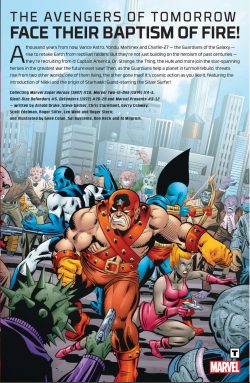
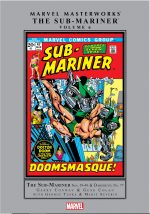
Sub-Mariner Marvel Masterworks volume 6


By Gerry Conway, Roy Thomas, Gene Colan, George Tuska, Marie Severin, Ross Andru & various (Marvel)
ISBN: 978-0-7851-9184-1 (HB/Digital edition)

In his most primal incarnation (other origins are available but may differ due to timeslips, circumstance and screen dimensions) Prince Namor, the Sub-Mariner is the proud, noble and generally bellicose offspring of the union of a water-breathing Atlantean princess and an American polar explorer.

That doomed romance resulted in a hybrid being of immense strength and extreme resistance to physical harm, able to fly and thrive above and below the waves. Over the years, a wealth of creators have played with the fishy tale and today’s Namor is frequently hailed as Marvel’s First Mutant. What remains unchallenged is that he was created by young, talented Bill Everett, for non-starter cinema premium Motion Picture Weekly Funnies: #1 (October 1939) so – technically – Namor predates Marvel, Atlas and Timely Comics.

The Marine Miracleman first caught the public’s avid attention as part of an elementally appealing fire vs. water headlining team-up in the October 1939 Marvel Comics #1 (which renamed itself Marvel Mystery Comics from #2 onwards. The amphibian antihero shared honours and top billing with The Human Torch, having debuted (albeit in a truncated, monochrome version) in the aforementioned promotional booklet which had been designed to be handed out to moviegoers earlier in the year.

The late-starter antihero rapidly emerged as one of the industry’s biggest draws, and won his own title at the end of 1940 (cover-dated Spring 1941). His appeal was baffling but solid and he was one of the last super-characters to vanish at the end of the first heroic age.

In 1954, when Atlas (as the company then was) briefly revived its “Big Three” line-up – the Torch and Captain America being the other two – Everett returned for an extended run of superbly dark, mordantly moody and creepily contemporary fantasy fables. Even so, his input wasn’t sufficient to keep the title afloat and eventually Sub-Mariner sank again.

In 1961, as Stan Lee & Jack Kirby were reinventing superheroes with the Fantastic Four, they revived the awesome, all-but-forgotten aquanaut as a troubled, semi-amnesiac antihero. Decidedly more bombastic, regal and grandiose, this returnee despised humanity: embittered and broken by the loss of his sub-sea kingdom which had been (seemingly) destroyed by American atomic testing. His rightful revenge became infinitely complicated after he became utterly besotted with the FF’s Susan Storm.

Namor knocked around the budding Marvel universe for some years, squabbling with other star turns such as The Hulk, Avengers, X-Men and Daredevil before securing his own series as one half of Tales to Astonish. From there he graduated in 1968 to his own solo title.

This sixth subsea selection trawls The Sub-Mariner #39-49, and includes a crossover confrontation from Daredevil #77. The subsea sagas cumulatively span cover-dates July 1971 to May 1972 and are preceded by heartfelt appreciation and more creative secret-sharing from incoming scripter Gerry Conway in his Introduction ‘See the Sea’ before the (now) dry land dramas recommence…

Previously, Namor had endured months of escalating horror as old enemies like Prince Byrrah, Warlord Krang, Attuma and Dr. Dorcas continuously assaulted his sunken kingdom. They were soundly defeated, and, in the throes of triumph, the Prince announced his marriage to lifelong companion Lady Dorma. He was then betrayed by his most trusted ally whilst sinister shapeshifter Llyra murdered his bride and sought to replace her…

Heartsick, angry and despondent, Namor abdicated the throne: choosing to henceforth pursue the human half of his hybrid heritage as a surface dweller…

The tragedy instantly intensifies in Sub-Mariner #39 as seasoned scripter Roy Thomas bows out with ‘…And Here I’ll Stand!’ Illustrated by Ross Andru & Jim Mooney, it sees the former royal arrive in New York City and move onto abandoned, desolate Prison Island.

However, the intrusion is taken for invasion by the curmudgeonly human authorities who mobilise the military to drive him out. A tense stand-off soon escalates and a typically bombastic response all round reduces Sub-Mariner’s sanctuary to shards and rubble.

In the aftermath, human friends Diane Arliss and Walt Newell (who operates parttime as undersea Avenger Stingray) bring the twice-exiled Prince staggering news…

Meanwhile in Manhattan – and depicted in Daredevil #77 – Conway, Gene Colan & Tom Palmer embroil Namor in a 3-way clash after a strange vehicle materialises in Central Park. Irresistibly summoned by telepathic force, Namor arrives just in time for the Sightless Swashbuckler to jump to a wrong conclusion and attack… Then a late-arriving third hero butts in…

Guest stars abound in ‘…And So Enters the Amazing Spider-Man!’ and when the uncanny alien artefact explodes, a mysterious woman ominously invites DD, the webspinner and Namor to participate in a fantastic battle in a far-flung, dimensionally-adrift lost world. Exhausted by the traditional misunderstanding and subsequent fight, Daredevil begs off and goes home, leaving the wallcrawler to join now-nomadic Namor on a fantastic voyage and bizarre adventure that concludes in the Atlantean’s own comic…

Sub-Mariner #40 sees Conway, Colan & Sam Grainger detail how Spider-Man and Namor are compelled ‘…Under the Name of Ritual…’ to save The People of the Black Sea from murderous usurper Turalla. The telepathic subspecies has undisclosed links to Atlantis and a claim on Namor’s honour: demanding he fight on their behalf since their true king has been missing for decades…

In distant Boston, angry and reclusive elder Stephan Tuval is somehow aware of what’s transpiring and – just when arachnid and amphibian are about to fall in the brutal duel – strikes with all the terrifying power of his mind…

Returned to Manhattan, the weary heroes part, and Sub-Mariner #41 finds Namor following up the revelations shared by Diane and Walt. Illustrated by George Tuska & Grainger, ‘Whom the Sky Would Destroy!’ sees the sea lord struck down over rural New York by mutants artificially created by deranged scientist Aunt Serr.

Her son Rock is terrifying, but the real threat is meek, gentle, deceptive Lucile and before long Namor has fallen to the demonic clan. Seen as raw material, the former prince barely escapes destruction in #42’s ‘…And a House Whose Name…is Death!’ as Conway, Tuska & Mooney briskly build to larger epic featuring Tuval…

If you’re a completist, this issue also offers a brief Mr. Kline interlude, as Conway continued an early experiment in close-linked crossover continuity. Issue #42 contributes to a convoluted storyline involving the mystery mastermind from the future, twisting human lives and events. For the full story you should also track down contemporaneous Daredevil and Iron Man issues: you won’t be any the wiser, but at least you’ll have a complete set…

For one month, Marvel experimented with double-sized comic books (whereas DC’s switch to 52-page issues lasted almost a year: August 1971 to June 1972 cover-dates). November’s Sub-Mariner #43 held an immense, 3-chapter blockbuster beginning with ‘Mindquake!’ as Namor reaches Boston. He has come in search of his father Leonard McKenzie, whom he believed had been killed by Atlanteans in the 1920s. Instead he finds Tuval, driven mad by his re-emerging psychic abilities and now a danger to all.

Crafted throughout by Conway, Colan & Mike Esposito, the tale of the aged tele-potent reveals how he has built a cult around himself ‘…And the Power of the Mind!’, before his increasingly belligerent acts trigger ‘The Changeling War!’ and cause his own downfall…

Cruelly unaware how close he is to his father, Sub-Mariner is then distracted by the return of Llyra and new consort Tiger Shark in #44’s ‘Namor Betrayed!’ With art by the magnificent Marie Severin & Mooney, the story reviews the antihero’s love-hate relationship with Human Torch Johnny Storm, just in time for the shapeshifter to orchestrate a heated clash with the teen hero.

The blistering battle concludes in #45 with McKenzie’s abduction, and ‘…And Fire Stalks the Skies!’ sees Namor surrender himself to save his sire…

Conway, Colan & Esposito then pile on the trauma in #46 as ‘And Always Men Will Cry: Even the Noble Die!’ sees the son’s quest end in death and disaster, despite the best – if badly mismanaged – interventions of the Torch and Stingray.

Doubly orphaned and traumatised, Namor loses his memory again, and is easily gulled by ultimate manipulator Victor Von Doom in #47’s ‘Doomsmasque!’: duly deployed as cannon fodder in the Demon Doctor’s duel with M.O.D.O.K. and AIM to control a reality-warping Cosmic Cube.

The war is dirty and many-sided, with a frontal assault in #48’s ‘Twilight of the Hunted!’ leaving Namor to a pyrrhic triumph in concluding chapter ‘The Dream Stone!’ (inked by Frank Giacoia) before retrenching in confusion to ponder his obscured future…

To Be Continued…

Sunken treasures salvaged here include Everett’s cover to all-reprint Sub-Mariner Annual #2 (January 1972, reprising the underwater portions of Tales to Astonish #74-76); a covers gallery by Sal Buscema, Everett ,Tuska, Gil Kane & Giacoia; original art from Andru & Mooney, Sal B, Severin, Kane, Giacoia & Esposito plus a copious Biographies section.

Many early Marvel Comics are more exuberant than qualitative, but this volume, especially from an art-lover’s point of view, is a wonderful exception: historical treasures with narrative bite that fans will delight in forever. Moreover, as the Prince of Atlantis is now a bona fide big screen sensation, now might be the time to get wise and impress your friends with a sunken treasure…
© 2018 Marvel Characters, Inc. All rights reserved.
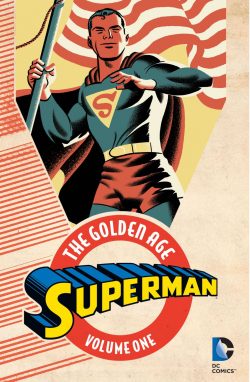
Superman – The Golden Age volume one


By Jerry Siegel & Joe Shuster & various (DC Comics)
ISBN: 978-1-4012-9109-2 (TPB/Digital edition)

Almost exactly 85 years ago, Superman started the whole modern era of fantasy heroes: outlandish, flamboyant indomitable, infallible, unconquerable. He also saved a foundering industry by birthing an entirely new genre of storytelling – the Super Hero.

Since April 18th 1938 (the generally agreed day copies of Action Comics #1 first went on sale) he has grown into a mighty presence in all aspects of art, culture and commerce, even as his natal comic book universe organically grew and expanded.

Within three years of that debut, the intoxicating blend of eye-popping action and social wish-fulfilment that had hallmarked the early exploits of the Man of Tomorrow had grown: encompassing crime-busting, reforming dramas, science fiction, fantasy and even whimsical comedy. However, once the war in Europe and the East seized America’s communal consciousness, combat themes and patriotic imagery dominated most comic book covers, if not interiors.

In comic book terms at least, Superman was soon a true master of the world, utterly changing the shape of the fledgling industry. There was a popular newspaper strip, a thrice-weekly radio serial, games, toys, foreign and overseas syndication and as the decade turned, the Fleischer studio’s astounding animated cartoons.

Moreover, the quality of the source material was increasing with every four-colour release as the energy and enthusiasm of originators Jerry Siegel & Joe Shuster went on to inform and infect the burgeoning studio which grew around them to cope with the relentless demand.

These tales have been reprinted many times, but this superb compilation series is arguably the best, offering the original stories in chronological publishing order and spanning cover-dates June 1938 to December 1939. It features the groundbreaking sagas from Action Comics #1-19 and Superman #1-3, plus his pivotal appearance in New York’s World Fair No. 1. Although most of the early tales were untitled, here, for everyone’s convenience, they have been given descriptive appellations by the editors.

Thus – after describing the foundling’s escape from exploding planet Krypton and offering a scientific rationale for his incredible abilities and astonishing powers in 9 panels – with absolutely no preamble the wonderment begins with Action #1’s primal thriller ‘Superman: Champion of the Oppressed!’ Here, an enigmatic costumed crusader – who secretly masquerades by day as mild-mannered reporter Clark Kent – begins averting numerous tragedies…

As well as saving an innocent woman from the Electric Chair and roughing up an abusive “wife beater”, the tireless crusader works over racketeer Butch Matson and consequently saves feisty colleague Lois Lane from abduction and worse before outing a lobbyist for the armaments industry bribing Senators on behalf of the greedy munitions interests fomenting the war in Europe…

One month later came Action #2 and the next breathtaking instalment as the mercurial mystery-man travels to that war-zone to spectacularly dampen down hostilities already in progress in ‘Revolution in San Monte Part 2’ before ‘The Blakely Mine Disaster’ finds the Man of Steel responding to a coal-mine cave-in and exposing corrupt corporate practises before cleaning up gamblers ruthlessly fixing games and players in #4’s ‘Superman Plays Football’.

The Action Ace’s untapped physical potential is highlighted in the next issue as ‘Superman and the Dam’ pits the human dynamo against the power of a devastating natural disaster, after which issue #6 sees canny chiseller Nick Williams attempting to monetise the hero – without asking first. ‘Superman’s Phony Manager’ even attempts to replace the real thing with a cheap knock-off, but quickly learns a most painful and memorable lesson in ethics…

Although Superman starred on the first cover, National’s cautious editors were initially dubious about the alien strongman’s lasting appeal and fell back upon more traditional genre scenes for the following issues (all by Leo E. O’Mealia and all included here).

Superman – and Joe Shuster’s – second cover graced Action Comics #7 (on sale from October 25th but cover-dated December 1938) prompting a big jump in sales, even as the riotous romp inside revealed why ‘Superman Joins the Circus’ – with the mystery man crushing racketeers taking over the Big Top.

Fred Guardineer produced genre covers for #8 and 9 whilst their interiors saw ‘Superman in the Slums’ working to save young delinquents from a future life of crime and depravity before latterly detailing how the city’s cop disastrous decision to stop the costumed vigilante’s unsanctioned interference plays out in ‘Wanted: Superman’. That manhunt ended in an uncomfortable stalemate that endured for years…

Action Comics #7 had been one of the company’s highest-selling issues ever, so #10 again sported a stunning Shuster shot, whilst Siegel’s smart story ‘Superman Goes to Prison’ struck another telling blow against institutionalised injustice, as the Man of Tomorrow infiltrated a penitentiary to expose the brutal horrors of State Chain Gangs.

Action #11 offered a maritime cover by Guardineer whilst inside heartless conmen driving investors to penury and suicide soon regret the Metropolis Marvel intercession in ‘Superman and the “Black Gold” Swindle’.

Guardineer’s cover of magician hero Zatara for issue #12 was a shared affair, incorporating another landmark as the Man of Steel was given a cameo badge declaring his presence inside each and every issue. Between those covers, ‘Superman Declares War on Reckless Drivers’ is a hard-hitting tale of casual joy-riders, cost-cutting automobile manufacturers, corrupt lawmakers and dodgy car salesmen who all feel the wrath of the hero after a friend of Clark Kent dies in a hit-&-run incident.

By now, the editors had realised that Superman had propelled National Comics to the forefront of the new industry, and in 1939 the company was licensed to create a comic book commemorative edition celebrating the opening of the New York World’s Fair. The Man of Tomorrow naturally topped the bill on the appropriately titled New York World’s Fair Comics at the forefront of such early DC four-colour stars as Zatara, Butch the Pup, Gingersnap and gas-masked vigilante The Sandman.

Following an inspirational cover by Sheldon Mayer, Siegel & Shuster’s ‘Superman at the World’s Fair’ describes how Lois and Clark are dispatched to cover the event, giving our hero an opportunity to contribute his own exhibit and bag a bunch of brutal bandits to boot…

Back in Action Comics #13 (June 1939 and another Shuster cover) the road-rage theme of the previous issue continued with ‘Superman vs. the Cab Protective League’ as the tireless foe of felons faces a murderous gang trying to take over the city’s taxi companies. The tale also introduces – in almost invisibly low key – The Man of Steel’s first recurring nemesis – The Ultra-Humanite

Next follows a truncated version of Superman #1. This is because the industry’s first solo-starring comic book simply reprinted the earliest tales from Action, albeit supplemented with new and recovered material – which is all that’s featured at this point.

Behind the truly iconic and much recycled Shuster cover, the first episode was at last printed in full as ‘Origin of Superman’, describing the alien foundling’s escape from doomed planet Krypton, his childhood with unnamed Earthling foster parents and eventual journey to the big city…

Also included in those 6 pages (cut from Action #1, and restored to the solo vehicle entitled ‘Prelude to ‘Superman, Champion of the Oppressed’”) is the Man of Steel’s routing of a lynch mob and capture of the real killer which preceded his spectacular saving of the accused murderess that started the legend. Rounding off the unseen treasures is the solo page ‘A Scientific Explanation of Superman’s Amazing Strength!’, a 2-page prose adventure of the Caped Crime-crusher, a biographical feature on Siegel & Shuster and a glorious Shuster pin-up from the premier issue’s back cover.

Sporting another Guardineer Zatara cover, Action #14 saw the return of the manic money-mad deranged scientist in ‘Superman Meets the Ultra-Humanite’, wherein the mercenary malcontent switches his incredible intellect from incessant graft, corruption and murder to an obsessive campaign to destroy the Man of Steel.

Whilst Shuster concentrated on the interior epic ‘Superman on the High Seas’ – wherein the heroic hurricane tackles sub-sea pirates and dry land gangsters – Guardineer then made some history as illustrator of an aquatic Superman cover for #15. He also produced the Foreign Legion cover on #16, wherein ‘Superman and the Numbers Racket’ sees the hero save an embezzler from suicide before wrecking another wicked gambling cabal.

Superman’s rise was meteoric and inexorable. He was the indisputable star of Action, plus his own dedicated title and a daily newspaper strip had begun on 16th January 1939, with a separate Sunday strip following from November 5th of that year. The fictive Man of Tomorrow was the actual Man of the Hour and was swiftly garnering millions of new fans.

A thrice-weekly radio serial was in the offing, and would launch on February 12th 1940. With games, toys, and a growing international media presence, Superman was swiftly becoming everybody’s favourite hero…

The second issue of Superman’s own title opened with ‘The Comeback of Larry Trent’ – a stirring human drama wherein the Action Ace clears the name of the broken heavyweight boxer, coincidentally cleaning the scum out of the fight game, and is followed by ‘Superman’s Tips for Super-Health’ before ‘Superman Champions Universal Peace!’ depicts the hero once more tackling unscrupulous munitions manufacturers by crushing a gang who had stolen the world’s deadliest poison gas.

‘Superman and the Skyscrapers’ finds newshound Kent investigating suspicious deaths in the construction industry, drawing his alter ego into conflict with mindless thugs and their fat-cat corporate boss, after which a contemporary ad and a Superman text tale bring the issue to a close.

Action Comics #17 declared ‘The Return of the Ultra-Humanite’ in a vicious and bloody caper involving extortion and the wanton sinking of US ships. and featured a classic Shuster Super-cover as the Man of Steel was awarded all the odd-numbered issues for his attention-grabbing playground.

That didn’t last long: after Guardineer’s final adventure cover – a bi-plane dog fight on #18 – and which led into ‘Superman’s Super-Campaign’ with both Kent and the Caped Kryptonian determinedly crushing a merciless blackmailer, Superman simply monopolised every cover from #19 onwards. That issue disclosed the peril of ‘Superman and the Purple Plague’ as the city reeled in the grip of a deadly epidemic created by Ultra-Humanite.

Closing this frenetic fun and thrill-filled compendium is the truncated contents of Superman #3, offering only the first and last strips originally contained therein, as the other two were reprints of Action Comics #5 and 6.

‘Superman and the Runaway’, however, is a gripping, shockingly uncompromising exposé of corrupt orphanages, after which – following a brief lesson on ‘Attaining Super-Health: a Few Hints from Superman!’ – Lois finally goes out on a date with hapless Clark – but only because she needs to get closer to a gang of murderous smugglers. Happily, Kent’s hidden alter ego is on hand to rescue her in the bombastic gang-busting style in ‘Superman and the Jewel Smugglers’

Although the gaudy burlesque of monsters and super-villains lay years ahead of our hero, these primitive and raw, captivating tales of corruption, disaster and social injustice are just as engrossing and speak powerfully of the tenor of the times then and now! The perilous parade of rip-roaring action, hoods, masterminds, plagues, disasters, lost kids and distressed damsels are all dealt with in direct, enthralling and captivatingly cathartic manner by our relentlessly entertaining champion’s summarily swift and decisive fashion.

As fresh and compelling now as they ever were, these endlessly re-readable epics perfectly display the savage intensity and sly wit of Siegel’s stories – which literally defined what being a Super Hero means – whilst Shuster created the basic iconography for all others to follow.

Golden Age tales are priceless enjoyment. What comics fan could possibly resist them?
© 1938, 1939, 2016 DC Comics. All Rights Reserved.

Guardians of the Galaxy: Tomorrow’s Avengers volume 1


By Arnold Drake, Steve Gerber, Gene Colan, Sal Buscema, Don Heck, Al Milgrom, John Buscema & various (Marvel)
ISBN: 978-0-7851-6687-0 (TPB/Digital edition)

With the final Marvel Cinematic movie interpretation rapidly heaving to, here’s a timely collection ideal for boning up on some of the lesser-known characters, augment cinematic exposure and cater to film fans wanting to follow up with a proper comics experience.

This treasury of torrid tales gathers landmarks and key moments from Marvel Super-Heroes#18, Marvel Two-In-One #4-5, Giant-Size Defenders #5, Defenders #26-29 and the time-busting team’s first solo series as originally seen in Marvel Presents #3-12, collaboratively and monumentally spanning cover-dates January 1969 to August 1977. It features a radically different set-up than that of the silver screen stars, but is grand comic book sci fi fare all the same. One thing to recall at all times, though, is that there are two distinct and separate iterations of the team. The films concentrate on the second, but there are inescapable connections between them so pay close attention…

Despite its key mission to make superheroes more realistic, Marvel also always kept a close connection with its fantasy roots and outlandish cosmic chaos – as typified in the pre-Sixties “monsters-in-underpants” mini-sagas. Thus, this pantheon of much-travelled space stalwarts maintains that wild “Anything Goes” attitude in all of their many and varied iterations.

This blistering battle-fest begins with ‘Guardians of the Galaxy: Earth Shall Overcome!’: first seen in combination new-concept try-out/Golden Age reprint vehicle Marvel Super Heroes #18 (cover-dated January 1969 but on sale from mid-October 1968 – just as the Summer of Love was shutting down).

This terse, grittily engaging episode introduced a disparate band of freedom fighters reluctantly rallying and united to save Earth from occupation and humanity from extinction at the scaly claws of the sinister, reptilian Brotherhood of Badoon.

It starts when Jovian militia-man Charlie-27 returns home from a 6-month tour of scout duty to find his entire colony subjugated by invading aliens. Fighting free, Charlie jumps into a randomly-programmed teleporter and emerges on Pluto, just in time to accidentally scupper the escape of crystalline scientist/resistance fighter Martinex.

Both are examples of radical human genetic engineering: manufactured subspecies carefully designed to populate and colonise Sol system’s outer planets, but now possibly the last individuals of their respective kinds. After helping the mineral man complete his mission of sabotage – by blowing up potentially useful material before the Badoon can get their hands on it – the odd couple set the teleporter for Earth and jump into the unknown. Unfortunately, the invaders have already taken the homeworld…

The Supreme Badoon Elite are there, busily mocking the oldest Earthman alive. Major Vance Astro had been humanity’s first interstellar astronaut; solo flying in cold sleep to Alpha Centauri at a plodding fraction of the speed of light.

When he got there 1000 years later, humanity was waiting for him, having cracked trans-luminal speeds a mere two centuries after he took off. Now Astro and Centauri aborigine Yondu are a comedy exhibit for the cruel conquerors actively eradicating both of their species.

The smug invaders are utterly overwhelmed when Astro breaks free, utilising psionic powers he developed during hibernation, before Yondu butchers them with the sound-controlled energy arrows he carries. In their pell-mell flight, the escaping pair stumble across incoming Martinex and Charlie-27 and a new legend of valiant resistance is born…

The eccentric team, as originally envisioned by Arnold Drake, Gene Colan & Mike Esposito, were presented to an audience undergoing immense social change, with dissent in the air, riot in the streets and the ongoing Vietnam War being visibly lost on their TV screens every night.

Perhaps the jingoistic militaristic overtones were off-putting, or maybe the tenor of the times were against The Guardians, since costumed hero titles were entering a temporary downturn at that juncture, but whatever the reason the feature was a rare “Miss” for the Early Marvel Hit Factory. The futuristic freedom fighters were not seen again for years.

They floated in limbo until 1974 when Steve Gerber incorporated them into some of his assigned titles (specifically Marvel Two-In-One and The Defenders), wherein assorted 20th century champions travelled into the future to ensure humanity’s survival…

From MTIO #4, ‘Doomsday 3014!’ (Gerber, Sal Buscema & Frank Giacoia) sees Ben Grimm/The Thing and Captain America catapulted into the 31st century to free enslaved humanity from the Badoon, concluding an issue later as a transformed and reconfigured Guardians of the Galaxy climb aboard the Freedom Rocket to help the time-lost champions liberate occupied New York before returning home.

The fabulous Future Force repaid that visit in Giant Sized Defenders #5: a diverse-handed production with the story ‘Eelar Moves in Mysterious Ways’ credited to Gerber, Gerry Conway, Roger Slifer, Len Wein, Chris Claremont & Scott Edelman. Dependable Don Heck & Mike Esposito drew the (surprisingly) satisfying cohesive results: revealing how the Defenders met with future heroes Guardians of the Galaxy in a time-twisting disaster yarn where their very presence seemed to cause nature to run wild. It was simply an introduction, setting up a continued epic arc for the monthly comic book…

Beginning with ‘Savage Time’ (Defenders #26 by Gerber, Sal Buscema & Colletta) it depicts The Hulk, Doctor Strange, Nighthawk and Valkyrie accompanying the Guardians back to 3015 AD in a bold bid to liberate the last survivors of mankind from the all-conquering and genocidal Badoon. The mission continued with ‘Three Worlds to Conquer!’, becoming infinitely more complicated when ‘My Mother, The Badoon!’ reveals the sex-based divisions that so compellingly motivate the marauding lizard-men to travel and tyrannise, before triumphantly climaxing in rousingly impassioned conclusion ‘Let My Planet Go!’

Along the way the Guardians had picked up – or been unwillingly allied with – an enigmatic stellar powerhouse dubbed Starhawk. Also answering to Stakar, he was a glib, unfriendly type who referred to himself as “one who knows” and infuriatingly usually did, even if he never shared any useful intel…

Rejuvenated by exposure, the squad rededicated themselves to liberating star-scattered Mankind and having astral adventures, eventually winning a short-lived series in Marvel Presents (#3-12, February 1976-August 1977) before cancellation left them roaming the Marvel Universe as perennial guest-stars in such cosmically-tinged titles as Thor and the Avengers.

The team’s first solo run began with ‘Just Another Planet Story!’by Gerber, Al Milgrom & Pablo Marcos – with the Badoon removed from an exultant Earth and the now purposeless Guardians realising peace and freedom were not for them. Unable to adapt to civilian life they reassembled, stole their old starship The Captain America and rocketed off into the void…

These issues were augmented by text features dubbed ‘Readers Space’, episodically delineating the future history (there was only one back then!) of Marvel Universe Mankind – using various deceased company sci fi series as mile markers, way stations and signposts – and firmly establishing a timeline which would endure for decades.

In MP #4, Gerber & Milgrom descended ‘Into the Maw of Madness!’ as the noble nomads picked up Nikki, a feisty teenage Mercurian survivor of the Badoon genocide, and detected the first inklings that something vast, alien and inimical was coming from “out there” to consume our galaxy. They also met cosmic enigma Starhawk’s better half Aleta: a glamorous woman and mother of his three children. She was sharing his/their body at that time…

When the intrepid star-farers and their ship are swallowed by star-systems-sized monster Karanada they discover a universe inside the undead beast and end up stranded on the ‘Planet of the Absurd’ (Gerber, Milgrom & Howard Chaykin), allowing the author to indulge his taste for political and social satire as our heroes seek to escape a society comprising a vast variety of species which somehow mimics 20th century Earth…

Escape achieved, the fantastic fantasy escalates into top gear when they crash into the heart of the invading force and on a galaxy-sized planet in humanoid form. ‘The Topographical Man’ (inked by Terry Austin) holds all the answers they seek in a strange sidereal nunnery where Nikki is expected to make a supreme sacrifice: one that changes Vance’s life forever in ways he never imagined.

It all transpires as they spiritually unite to ‘Embrace the Void!’ in a metaphysical rollercoaster (Bob Wiacek inks) which at last ends the menace of the soul-sucking galactic devourer.

At this time deadlines were a critical problem and Marvel Presents #8 adapted a story from Silver Surfer #2 (1968) with the team finding an old Badoon data-log and learning ‘Once Upon a Time… the Silver Surfer!’ saved Earth from alien predators in a two-layered yarn attributed to Gerber, Milgrom, Wiacek, Stan Lee, John Buscema & Joe Sinnott…

Back on track for MP #9, Gerber & Milgrom revealed that ‘Breaking Up is Death to Do!’ as the Guardians’ ship is ambushed by the predatory Reivers of Arcturus, leading into the long-awaited and shocking origins of Starhawk and Aleta. It set the assembled heroes on a doomed quest to save the bonded couple’s children from brainwashing, mutation and murder by their own grandfather in ‘Death-Bird Rising!’ before concluding ‘At War with Arcturus!’ (both inked by Wiacek).

The series abruptly concluded just as new scripter Roger Stern signed on with ‘The Shipyard of Deep Space!’, as the beleaguered and battered team escape Arcturus and stumble onto a lost Earth vessel missing since the beginning of the Badoon invasion. Drydock is a mobile space station the size of a small moon, designed to maintain and repair Terran starships. However, what initially seems to be a moving reunion with lost comrades and actual survivors of the many gene-gineered human sub-species eradicated by the saurian supremacists is quickly revealed to be just one more deadly snare for the Guardians to overcome or escape…

This spectacular slice of riotous star-roving is a non-stop feast of tense suspense, surreal fun, swingeing satire and blockbuster action: well-tailored, and on-target to turn curious moviegoers into fans of the comic incarnation, and charm even the most jaded interstellar Fights ‘n’ Tights fanatic.
© 1968, 1974, 1976, 1977, 2014 Marvel Characters Inc. All rights reserved.