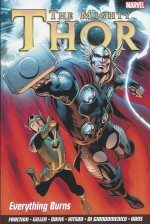
The Mighty Thor: Everything Burns


By Matt Fraction, Kieron Gillen, Alan Davis, Carmine Di Giandomenico, Stephanie Hans, Barry Kitson, Mark Farmer & Jay Leisten (Marvel/Panini UK)
ISBN: 978-1-84653-521-5

In the middle of 1962, Stan Lee and Jack Kirby launched their latest offbeat superhero creation in anthology monsters-and-fantasy title Journey into Mystery #83. The tale introduced crippled American doctor Donald Blake who took a vacation in Norway only to encounter the vanguard of an alien invasion. Fleeing in terror he was trapped in a cave wherein lay an old, gnarled walking stick. When, in helplessness and frustration, the puny human smashed the cane into a huge boulder obstructing his escape, his insignificant frame was transformed into the hulking and brawny Norse God of Thunder, Thor!

The series grew from formulaic beginnings battling aliens, commies and cheap thugs into a vast, breathtaking cosmic playground for Kirby’s burgeoning imagination with Journey into Mystery inevitably becoming the Mighty Thor where, after years of bombastic adventuring, the peculiarities and inconsistencies of the Don Blake/Thor relationship were re-examined and finally clarified to explain how the immortal godling could also be locked within frail Don Blake.

The epic saga took the immortal hero back to his long-distant youth and finally revealed that the mortal surgeon was no more than an Odinian construct designed to teach the Thunder God humility and compassion…

Time passed, Kirby left, and the Thunderer’s fortunes waxed and waned. During the troubled mid-1990’s the title vanished, culled with the Avengers, Iron Man, Captain America and Fantastic Four and subcontracted out to Image creators Jim Lee and Rob Liefield during 1996-1997 in a desperate attempt to improve sales after Marvel’s apocalyptic Onslaught publishing event.

In 1998 Heroes Return and Heroes Reborn saw those properties rejoin the greater Marvel Universe, relaunched with brand new first issues. The Thunder God reappeared a few weeks later. After many phenomenal adventures that second volume concluded with issues #84-85 (November-December 2004) which once-and-for-honestly-all depicted the Really, Truly, We Mean It! End of the Gods and Day of Ragnarok as Thor himself instigated the final fall to end a ceaseless cycle of suffering and destruction, ultimately defeating the ruthless beings who had manipulated the exalted inhabitants of Asgard since time began…

You can’t keep a profitable property down or a great comics character un-resurrected, so he was reborn again when a mysterious voice summoned Thor back to life – and Earth (us fans call it Midgard) – in a crack of spectacular thunder. Revived for an unspecified purpose the solitary and reigning Lord of Asgard swiftly set about retrieving the souls of his fellow godlings, all scattered and hidden inside human hosts before establishing Asgard on Earth, a few paltry feet above the ground of Broxton, Oklahoma…

This small and simple community had experienced a few intriguing neighbours before and eventually adapted to the newcomers despite the chaos, hell and Federal grief the Asgardians seemed to perpetually attract.

This spectacular game-changing epic was designed to celebrate the feature’s anniversary as part of the “50 Years of Thunder” event and collects The Mighty Thor #18-22 as it crossed over with issues #642-645 of sister-series Journey into Mystery through the latter half of 2012 and effectively clears the slate for a whole new approach in future…

What you need to know: after millennia of doctrinaire double-dealing and abusive micro-management All-Father Odin is gone, banished to another dimension, with his puissant kingdom Asgard ruled by his wife Freyja and a council of sister goddesses who act as a co-operative “All-Mother”.

Moreover the eternally capricious and malignant Loki has undergone a few shocking changes too. Resurrected from death and hell by his eternally optimistic half-brother Thor, the trickster has endured life as a woman and currently exists as a (presumably) innocent boy-child: his long-suffering and constantly betrayed family attempting one final gambit to reform the villain and raise a true and decent scion of Asgard.

It seems to be going quite well…

With Matt Fraction, Alan Davis & Mark Farmer taking the Thor segments and Kieron Gillen & Carmine Di Giandomenico on the JiM chapters the saga opens in the newly re-named Asgardia where Freyja dreams of the dark days in prehistory when Odin and his race of Aesir battled her father Freyr, ruler of rival bellicose pantheon the Vanir.

The resulting war was so brutal than when Odin finally claimed victory and forcibly merged the tribes through arranged marriage to Freyja, the new “Asgardians” excised all mention of the conflict from the annals of the kingdom.

However, although a peacefully united god-tribe for uncounted eons, no participant on either side truly forgot the hideous pact which the hard-pressed Vanir had made with demonic fire-lord Surtur in their direst hour of need nor the appalling toll taken during that climactic final climactic clash with their Aesir opponents…

On Earth today strange phenomena occur with disturbing frequency: dead birds fall from the skies in flames, spontaneous blazes and conflagrations erupt which not even weather god Thor can extinguish with storm or blizzard…

And in Hel, at the base of the Nine Realms, the roots of the world-ash Yggdrasil are engulfed in flame…

In Mephisto’s infernal domain the tempter believes he has discerned Loki’s grand scheme whilst in Vanaheim Freyja’s brooding unforgiving sister Gullveig receives an embassage and awesome gifts from an anonymous source. In Asgardia-above-Broxton a concerned council dispatches a party of warriors to investigate its Vanaheim province where the deeply symbolic Temple of Union is ablaze with flames that cannot be extinguished. However when Thor and his comrades Volstagg, Hogun and Fandral lead the mission to the distant conflagration they are attacked and routed by Gullveig and her Vanir troops using terrifying new weapons from another pantheon. The ancient feud is not only fully rekindled but spreading like wildfire…

Thor consults with his redeemed but still canny half-brother in Asgardia but, even as the juvenile sorcerer gropes to understand the machinations of trusted friends turned foe, Loki reveals his greatest mistake since resurrection, whilst in the metaphysical Otherworld which houses Britain’s communal subconscious, that nation’s newest deities “the Manchester Gods” reveal their unwitting and ill-conceived alliance with Reality’s greatest Enemy.

To empower their apotheosis, Wilson and his lords of steam and industry and commerce had employed the craftily offered gifts of the fire demon. The divine Engines of Albion’s Gods of the Cities were the products of Surtur’s hellish forge and now the Lord of Conflagration is exacting a deadly tithe; one increasingly turned against the embattled Aesir…

Following a stormy confrontation wherein Thor putsWilsonand his pantheon on warning, the Asgardian prepare for war against the Vanir. Their resolve is tested when evidence is found incriminating Freyja and the members of the All-Mother as traitors…

With Volstagg, Hogun and Fandral leading, a lynch mob moves to arrest both the Queen and the always-guilty-of-something Loki and Thor is forced to defend the last members of his family from his oldest friends…

Only the forceful presence of guardian god – and purebred Vanir-man – Heimdall contains the explosive situation and reunites the fractured Asgardians, subsequently dispatching them throughout the Nine Realms where Surtur’s demonic forces are laying waste to everything.

For the sake of unity the assembled All-Mother go into voluntary house arrest but panicked Loki flees, convinced he can only trust himself to solve the crisis…

He travels to the land of the dead but abjectly fails to convince dark goddess Hela and her consort Tyr to assist in the war against the Fire Demon, whilst in Muspelheim Surtur and his mysterious ally debate their ultimate plans for the harried, overconfident and increasingly powerless Loki and are waiting when the rejuvenated Prince of Asgard inevitably sneaks into the Demon’s Realm in a vain effort to be the conquering hero…

Soon, in Asgardia valiant Volstagg begins to regret accepting the role of war-king as the conflict against Surtur and the Vanir goes from bad to worse.

In Muspelheim Loki has seemingly turned the situation to his advantage after debating with Surtur and his hidden ally, but it’s hard to find a position of advantage when the Fire Lord’s unswerving, unshakable goal is to burn all life in the universe to cold dead ashes…

However, even as a child Thor’s half-brother is still undoubtedly the wiliest, most cunning creature in creation and Loki has a plan …but is he truly reformed and do his schemes benefit all the Asgardians or only, ultimately, himself…?

The story then explodes into a fearsome melee on all fronts of existence that will enthral fans of cosmic carnage and spectacular action with shining heroism and base betrayal revealing all that is great and self-destructive in Thor and his warrior clan, but even with the last-minute return of a long-lost supernal saviour, the defeat of Surtur’s excoriating scheme and a semblance of normality restored, there is still drama and revelation aplenty in this epic and enchantingly bombastic tale.

The suspenseful aftermath concludes with telling re-examinations of both Loki and Thor (this last illustrated by Barry Kitson) and the disclosure of shocking surprises that will utterly change everything in the world of the gods…

With covers and variants by Davis & Farmer, Stephanie Hans, Pasqual Ferry, Steve McNiven, and an eye-popping montage by most of the artists who’ve worked on the strip over the last five decades, this truly galvanic chronicle combines staggering conflict on a universal scale with fiercely probing characterisation and astounding revelations which add a subtle depth and intensity never before seen in these iconic comic heroes. Magnificently beguiling, this adventure extravaganza packs the proper punch to stun and subjugate comics-continuity veterans and film-fed fanboys alike and will delight Fights ‘n’ Tights followers for years to come

™ & © 2013 Marvel and subs. Licensed by Marvel Characters B.V. through Panini S.p.A,Italy. All Rights Reserved. A British edition published by Panini UK, Ltd.
Immortal Weapons


By many & various (Marvel)
ISBN: 978-0-7851-3848-8

Once upon a time little Danny Rand travelled with his parents and uncle to the chilly Himalayas, searching for the “lost city of K’un Lun” which only appears once every ten years. Within spitting distance of their goal, the boy’s father Wendell was murdered by the uncle and Danny’s mother sacrificed herself to save her child. Alone in the wilderness, the city found him and he spent the next decade mastering all forms of martial arts.

As soon he was able, Danny returned to the real world intent on vengeance, further armed with a mystic punch gained by killing the dragon Shou-Lao the Undying. When Iron Fist eventually achieved his goal the lad was at a loose end and – by default – a billionaire, as his murderous uncle had turned the family business into a multi-national megalith.

Iron Fist sprang out whole-heartedly out of the 1970s Kung Fu Craze, by way of a heartfelt tribute to Bill Everett’s golden Age super-hero Amazing Man (who appeared from 1939-1945 in Centaur Comics) from character originators Roy Thomas and Gil Kane.

The series ran hot and cold in Marvel Premier (#15-25; May 1974 – October 1975), before Chris Claremont & John Byrne steadied the ship and went on to produce a superb run of issues in his own title (Iron Fist #1-15, November 1975 – September 1977) which you can enjoy in the blockbusting, board-breaking Essential Iron Fist volume 1.

After cancellation the character drifted until paired with street-tough hero-for-hire Luke Cage. Power Man & Iron Fist ran from #51 until the book ended in 1986 (#125). The K’un Lun Kid has died, come back and cropped up all over the Marvel universe as guest star, co-star and even in a few of his own miniseries.

Recently revived and somewhat re-imagined as The Immortal Iron Fist, the new series revealed that there has been a steady progression of warriors bearing the title for centuries – if not millennia – and that K’un L’un was not the only magic city. In fact there were at least six others and each had its own supreme martial arts wonder warrior…

There are in fact seven mystical cities in this universe and every 88 years their celestial inter-dimensional orbits coincide to permit a grand martial arts tournament. In the course of the most recent contest we were introduced to a bunch of bizarre and baroque battlers who proved interesting enough to warrant their own shot at stardom…

This spin-off collection concentrates on those alternative champions whilst extemporising on differing aspects of Chinese kung fu culture in popular arts such as cinema, gathering the 5-issue miniseries Immortal Weapons from 2010. The all out action begins with the tempestuous and overbearing ‘Fat Cobra: the Book of the Cobra’ by Jason Aaron & artists Mico Suayan, Michael Lark, Stefano Gaudiano, Roberto de La Torre, Khari Evans, Victor Olazaba & Arturo Lozzi, and finds the burly braggart enjoying wine, women and song – especially women and extra-especially wine – when writer Carmichael appears. Although the very old and very drunk warrior has forgotten, in a more sober moment he commissioned the research to find out everything about the bombastic champion of Peng Lai. Not just because a mighty warrior needs his life recorded, but because after so many years of combat, copulation and booze, Fat Cobra has forgotten.

The petrifiedCarmichaelknows his sponsor won’t like what he has discovered…

‘Bride of Nine Spiders: The Spider’s Song’ (by Cullen Bunn & Dan Brereton, inked by Tom Palmer, Gaudiano & Mark Pennington) also examines the origins of the sinister siren, but links it to a terse tale of terror as one of the demi-divine warrior’s arcane arachnids is trapped on Earth in 1935 and becomes the most coveted eldritch artefact in the world.

When the spider passes to debauched billionaire Desmond Guille, a rival collector hires the infallible Jason Krieg and his team to steal it, but by the time the thieves invade Guille’s island fortress, the Queen of Spiders has at last returned to reclaim her lost love and the mercenaries are trapped in an uncanny nest of appallingly horror…

The oppressive bustling urban nightmare of Colonial Hong Kong is the setting for ‘Dog Brother: Urban Legend’ (by Rick Spears & Tim Green II) as starving foundlings struggle to stay alive in an underworld of ruthless savagery and horrifying depravity, buoyed up only by legends of the mythic champion of the Under-City who only fights for the most weak, lost, abandoned and forgotten.

But just how much must brutalised, emaciated Sihing and Sidai endure before they have fallen far enough for Dog Brother to notice them…?

The next offering examines the nature of an unconquerable Amazon tribe betrayed and enslaved by their own men.

Gulled by the heroic Tiger, a slave nation is only saved when his own cosseted, pampered child rejects the honeyed lies which have kept women in silken bondage. Listening to the clarion call of her own body, the indomitable child recovers not just her honour and power but the destiny of her defeated broken people in ‘Tiger’s Beautiful Daughter: All this Useless Beauty’ by Duane Swierczynski, Khari Evans, Victor Olazaba & Allen Martinez.

‘Prince of Orphans: The Loyal Ten Thousand Dead’ is a spectacular Chinese ghost story from David Lapham, & Arturo Lozzi, as Iron Fist is summoned by the spectral champion John Aman to counter the threat of a legion of vengeful warrior spirits cheated by a false Emperor two millennia past. If they can’t have him, the innocents living in one of the most populous cities on Earth will just have to do, so Danny and the Prince are in for one hell of a fight. At least there’s a dragon on their side – if it doesn’t eat or fry them first…

Each original issue also contained a brief episode starring the controversial Champion of K’un L’un. ‘The Immortal Iron Fist: Caretakers’ was written by Duane Swierczynski with the first two chapters illustrated by Travel Foreman & Gaudiano and the concluding three by Hatuey Diaz.

When Jada Frey got home one night, drug-pushers looking for her older brother murdered their dad and kidnapped her baby brother to force their target out of hiding. Luckily for Jada her kung fu sensei Danny Rand wouldn’t take “leave me alone” for an answer…

Comfortably mixing traditional costume-capers with the best of movie martial arts fantasy, horror movies and urban gangster thrillers, this terrific tome blends compellingly exotic action with supernatural thrills and trenchant, mordant laughs for an explosively visceral time that should appeal equally to superhero fans and martial arts mavens alike.
© 2009, 2010 Marvel Characters, Inc. All Rights Reserved.

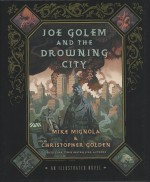
Joe Golem and the Drowning City – an Illustrated Novel


By Mike Mignola & Christopher Golden (St. Martin’s Press)
ISBN: 978-0-312-64473-4

Win’s Christmas Gift Recommendation: merry hell and utterly engrossing… 8/10

As well as being involved with some of the very best superhero yarns of the late 20th century, Legendary fantasist and comics-creator Mike Mignola has carved himself a splendid and memorable niche in the industry’s history by revitalising the sub-genre of horror-heroes via his superb Hellboy, B.P.R.D. and Lobster Johnson tales, creating his own very special dark place where thrill-starved fans can wallow in all things dire and dreadful…

Clearly he has far more ideas than he can successfully manage in one lifetime as well as a deep and abiding love for the classical supernatural thriller medium, as evidenced by this superb pastiche of the writings of horror pioneers H.P. Lovecraft and August Derleth tinctured with lashings of pulp adventure flavourings in the manner of Clark Ashton Smith, Walter B. Gibson and Robert E. Howard…

You won’t remember it, but in 1925 a horrific earthquake shifted the bedrock of Manhattan and half of New York City sank 30-odd feet beneath the greasy, salty waves. The rich glitterati relocated to shiny Uptown towers with the most incredible seafront vistas whilst the less fortunate had to adapt to a life of crushing, inundating poverty and ramshackle survival, scavenging in the appalling, un-policed canals and underwater alleys of the sordidVenice that was “Downtown”.

The decades passed in this tidal backwater and the lowly ones who had no place else to go adapted, as always, to radical changes. One such was Felix Orlov, a stage conjuror who discovered over the years that he had a rare and genuine talent as a medium. Felix could speak to and for the dead but, now in his twilight years, could never leave the drowned theatre he loved. Thus he eked out a tenuous existence among the bereaved and bereft with only 14 year old Molly McHugh as his housekeeper and companion.

Years ago Orlov had saved her from the ubiquitous degenerate prowling scum dubbed Water Rats, and as his faculties diminished she had come to think of him as her father. She was certainly most useful whenever clients came seeking his unique services…

Increasingly over the last fifty years Felix had been plagued by impossible dreams of uncanny rites, shapeless monstrosities and a ghastly sacrifice, but this morning was the worst ever. All the same the old trouper brushed aside Molly’s concerns and carried on with the morning’s scheduled séance. It was the last he would ever conduct…

During contact with the Other Side something appalling and unknown gripped him, just as in the material world impossibly sturdy and terrifyingly vigorous gas-masked thugs burst into his home and kidnapped the possessed Orlov’s withered corporeal frame.

They wanted Molly too but her survival-honed instincts enabled her to escape and lead them a deadly dance through the submerged underworld of Downtown.

She had no plan except escape and was down to her last erg of energy when the mysterious hulking brute named Joe intervened, battling the pursuers and discovering that the hunters were anything but human…

Joe’s rescue of Molly was no accident: he had been dispatched by his boss to save both magician and assistant but had arrived too late. With only half his mission accomplished, the bluff, friendly giant was in no mood to deal with Molly’s very sensible suspicions. When she tried to bolt again, Joe chloroformed her…

The frantic girl awoke within a fantastic sanctum and was introduced to the world’s most famous consulting detective, a ghost-haunted genius who had worked with Scotland Yard since Victoria’s time, now keeping his feeble frame alive long after his human meat had failed by installing self-built organs powered by steam and run by clockwork.

…And magic; bleak, black magic…

The man named Simon Church had an incredible tale to tell: of a prolonged duel with a mad thaumaturgical scientist named Doctor Cocteau, an astounding threat from the outer depths of human imagination, elder gods and the harsh unpalatable truth about Molly’s missing employer and father figure…

What he didn’t tell her was the even more incredible truth about Joe, even as he sent them both off to recover the fabled mystic artefact Lector’s Pentajulum and quite possibly save all of humanity from a madman’s lethal hubris.

However Cocteau wasn’t the only driven savant with an audacious hunger for forbidden knowledge which might result in a malign, supernal invasion from things utterly beyond mortal comprehension…

Fast-paced, moody and completely captivating, this rollercoaster of tension and thrills by Mignola and long-term co-writer Christopher Golden blends the ghastly brooding chills of Cthulu with the derring-do of Indiana Jones in a boldly alternate time and place to maximum effect.

This excellent late night love-affair with a grotesque golden age rattles and roars along buoyed up with ebullient, heroic-culture distillations both refreshingly familiar yet engagingly novel, with ghosts and monsters rubbing misshaped shoulders in sunken lairs and seedy dives (sorry, couldn’t resist) as a tough-as-nails big softie and a hard-bitten slip of a girl unite to save a world not quite our own…

Described as a steam-punk adventure, the scintillating saga contained within this reassuringly square-cut, hardbound and satisfyingly rustic tome is adorned with 69 grittily monochrome full, half, third and quarter-page illustrations by the artist to comprise a joyous homage to the necromantic good old days.

Miss it at your peril, fright fans…
© 2012 Mike Mignola and Christopher Golden. All rights reserved.

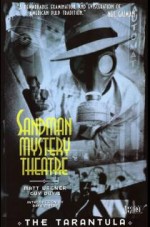
Sandman Mystery Theatre: The Tarantula


By Matt Wagner & Guy Davis (Vertigo)
ISBN: 978-1-56389-195-6

Created by Gardner Fox and first illustrated by Bert Christman, the Sandman premiered in either Adventure Comics #40 July 1939 (two months after Batman debuted in Detective Comics #27) or two weeks earlier in New York World’s Fair Comics 1939, depending on whether some rather spotty distribution records can be believed.

Face and head utterly obscured by a gasmask and slouch hat; caped, business-suited millionaire adventurer Wesley Dodds was cut from the pulp masked mystery-man mould that had made The Lone Ranger, Green Hornet, The Shadow, Phantom Detective, Black Bat, The Spider and so many more such household names and astonishing commercial successes in the early days of mass periodical publication.

Wielding a sleeping-gas gun and haunting the night to battle a string of killers, crooks and spies, he was accompanied in the earliest comicbooks by his plucky paramour Dian Belmont, before gradually losing the readers’ interest and slipping from cover-spot to last feature in Adventure Comics, just as the cloaked pulp-hero avengers he emulated slipped from popularity in favour of more flamboyant fictional fare.

Possessing a certain indefinable style and charm but definitely no more pizzazz, the feature was on the verge of being dropped when the Sandman abruptly switched to a skin-tight yellow-and-purple costume – complete with billowing cape – and gained a boy-sidekick, Sandy the Golden Boy (in Adventure Comics #69, December 1941, courtesy of Mort Weisinger & Paul Norris), presumably to emulate the overwhelmingly successful Batman and Captain America models currently reaping such big dividends.

It didn’t help much but when Joe Simon & Jack Kirby came aboard with #72 that all spectacularly changed. A semi-supernatural element and fascination with the world of dreams (revisited by S&K a decade later in their short-lived experimental suspense series The Strange World of Your Dreams) added a moody conceptual punch to equal the kinetic fury of their art, as Sandman and Sandy became literally the stuff of nightmares to the bizarre bandits and murderous mugs they stalked…

For what happened next you can check out the superb Sandman hardback collection…

Time passed and in the late 1980s Neil Gaiman, Sam Keith & Mike Dringenberg took the property in a revolutionary new direction, eventually linking all the previous decades’ elements into an overarching connective continuity under DC’s new sophisticated suspense imprint Vertigo.

Within a few years the astounding success of the new Sandman prompted the editorial powers-that-be to revisit the stylishly retro original character and look at him through more mature eyes. Iconoclastic creator Matt Wagner (Mage, Grendel, Batman) teamed with artistic maverick Guy Davis (Baker Street, B.P.R.D.) and colourist David Hornung to create a grittier, grimier, far more viscerally authentic 1930s where the mystery man pursued his lonely crusade with chilling verisimilitude.

The tone was darkly modernistic, with the crime-busting playing out in the dissolute dog-days of the Jazz Age and controversial themes such as abuse, sexual depravity, corruption and racism were confronted as well as the rising tide of fascism that swept the world then. This is a warning: Sandman Mystery Theatre is not a kid’s comic…

This first collection reprints the redefining first story-arc from issues #1-4 (April-July 1993) and commences after an absorbing introduction from veteran journalist and music critic Dave Marsh, accompanied by a gallery of the series’ original, groundbreaking photo-covers.

The Tarantula takes us to New York in 1938 where District Attorney Larry Belmont is having the Devil’s own time keeping his wild-child daughter out of trouble and out of the newspapers. She’s out all night, every night with her spoiled friends; drinking, partying and associating with all the wrong sorts of people, but the prominent public official has far bigger problems too. One is the mysterious gas-masked figure he finds rifling his safe soon after Dian departs…

The intruder easily overpowers the DA with some kind of sleeping gas – that also makes you want to blurt out the truth – and disappears, leavingBelmontto awake with a headache and wonder if it was all a dream…

Dian, after her rowdy night of carousing with scandalous BFF Catherine Van Der Meer and her gangster lover, awakes with a similar hangover but still agrees to attend one of her father’s dreary public functions that evening. He is particularly keen that she meet a studious young man named Wesley Dodds, recently returned from years in the Orient to take over his deceased dad’s many business interests.

Dodds is genteel and effete but Dian finds that there’s something oddly compelling about him. Moreover he too seems to feel a connection…

The Gala breaks up early when the DA is informed of a sensational crime. Catherine Van Der Meer has been kidnapped by someone identifying himself as The Tarantula…

Across town, mob boss Albert Goldman is having a meeting with fellow gangsters from the West Coast and as usual his useless son Roger and drunken wife Miriam embarrass him. Daughter Celia is the only one he can depend on these days but even her unwavering devotion seems increasingly divided. After another stormy scene the conference ends early, and the visiting crime-lords are appalled to find all their usually diligent bodyguards asleep in their limousines…

Even with Catherine kidnapped Dian is determined to go out that night, but when Wesley arrives unexpectedly she changes her mind, much to her father’s relief. That feeling doesn’t last long however after the police inform him that the Tarantula has taken another woman…

When a woman’s hideously mutilated body is found Dian inveigles herself into accompanying her father to Headquarters but is soon excluded from the grisly “Man’s Business”. Left on her own she begins snooping in the offices and encounters a bizarre gas-masked figure poring through files. Before she can react he dashes past her and escapes, leaving her to explain to the assorted useless lawmen cluttering up the place.

Furious and humiliated, Dian then insists that she officially identifies Catherine and nobody can dissuade her.

Shockingly the savagely ruined body is not her best friend but yet another victim…

Somewhere dark and hidden Van Der Meer is being tortured but the perpetrator has far more than macabre gratification in mind…

In the Goldman house Celia is daily extending her control over dear old daddy. They still share a very special secret, but these days she’s the one dictating where and when they indulge themselves…

With all the trauma in her life Dian increasingly finds Wesley a comforting rock, but perhaps that view would change if she knew how he spends his nights. Dodds is plagued by bad dreams. Not his own nightmares, but rather the somnolent screams of victims and their cruel oppressors haunt his troubled sleep. What else could a decent man do then, but act to end such suffering?

In a seedy dive, uncompromising Police Lieutenant Burke comes off worst when he discovers the gas-masked lunatic grilling a suspect in “his” kidnapping case and again when this “Sandman” is found at a factory where the vehicle used to transport victims is hidden. Even so, the net is inexorably tightening on both Tarantula and the insane vigilante interfering in the investigation and Burke doesn’t know who he most wants in a nice, dark interrogation room…

As the labyrinthine web of mystery and monstrosity slowly unravels, tension mounts and the death toll climbs but can The Sandman stop the torrent of terror before the determined Dian finds herself swept up in all the blood and death?

Moody, dark and superbly engrossing, these revisionist “anti-superhero” tales offer an impressively human and realistic spin on the genre; one that should delight all those grown-ups who think masks and tights are silly.
© 1993, 1995, 2004 DC Comics. All Rights Reserved.

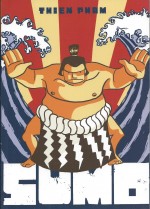
Sumo


By Thien Pham (First Second)
ISBN: 978-1-59643-581-0

Win’s Christmas Gift Recommendation: just because it’s great… 10/10

This book is about looking.

The magically multi-cultural nature of pictures mixed with words continually generates a wealth of absolutely fantastic and improbable gems for readers with eyes and minds wide open. This deliciously absorbing visual poem only arrived in the review books delivery a few days ago and it’s honestly become one of this year’s favourites – one of the most elegiac and gently enthralling visual experiences I’ve encountered in many a year…

It’s all about pasts and futures…

The tale begins in a Japanese Dojo as another rikishi in training greets the dawn. He does his assigned chores and works out with the other jonokuchi in the heya training stable. Despite his superior strength, size and speed, he is again knocked out. The supervising oyakata is in despair and doubts the spirit and determination of his latest find…

Scott thought he was a big man in every sense of the term, but High School Football glory days never turned into the glittering, lucrative Pro career he dreamed of. So he somehow ended up in his small town ofCampbell with his best buddies, drinking beer and wasting his days.

Then when his adored girlfriend Gwen dumped him, even that shallow, pointless life needed to end. They had been together since grade school…

However, years ago a visiting Japanese Sumo trainer had seen the boy play and never forgotten the warrior spirit he saw displayed in that sports arena. When the venerable gentleman offered a chance for fame and glory, Scott thought long and hard…

With nothing to lose, Scott accepts a bizarre offer: move to Japan and try out as a junior wrestler in the decidedly un-All American enterprise known as Sumo…

This is a hard look at expectations and second chances…

The transition hasn’t been what he expected or hoped for. They dyed his hair and changed his name since all Sumo have professional shikona stage-names and looks. Only now “Hakugei” is failing again and if it wasn’t for the trainer’s daughter Asami and the idyllic occasional break spent fishing, his new life would be as intolerable as his old one…

This story is about striving…

With time fast running out, Hakugei has to decide what he really wants and he has to do it before the last match of the mae-zumo tournament. He has to win at least one bout or be sent home in disgrace …and he’s just lost the fourth one in a row…

It’s all about the buildup towards tension’s inevitable release…

This surprisingly contemplative and lyrical exploration of love, hope, honour and gigantic nearly-naked men bitch-slapping each other in truly explosive manner effortlessly blends and intercuts flashbacks and real time to craft a sublimely skilful and colourfully emotive experience. Cartoonist and teacher Thien Pham (Level Up) hypnotically and enthrallingly marries two wildly disparate worlds to produce an enchanting and thoughtful story that will delight and astound. This is a graphic novel you must read over and over again.
© 2012 Thien Pham. All rights reserved.

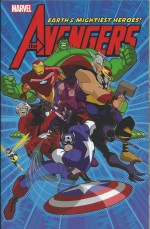
The Avengers: Earth’s Mightiest Heroes volume 1


By Christopher Yost, Scott Wegener Patrick Scherberger & Sandu Florea (Marvel)
ISBN: 978-0-7851-5619-2

Win’s Christmas Gift Recommendation: proper old-fashioned action-adventure for every age of Fights ‘n’ Tights fan… 9/10

Since its earliest days Marvel has always courted the youngest comicbook audiences. Whether through animated movie or TV tie-ins such as Terrytoons Comics, Mighty Mouse, Super Rabbit Comics, Duckula, assorted Hanna-Barbera and Disney licenses and a myriad of others, or original creations such as Tessie the Typist, Millie the Model, Homer the Happy Ghost, Li’l Kids or even Calvin, the House of Ideas has always understood the necessity of cultivating the next generation of readers.

These days, however, accessible child-friendly titles are on the wane and with Marvel the publisher’s proprietary characters all over screens large and small, the company usually prefers to create adulterated versions of its own pantheon, making that eventual longed-for transition to more mature comics as painless as possible.

In 2003 the powers that be created a Marvel Age line which updated and retold classic original tales by Stan Lee, Jack Kirby and Steve Ditko and combined it with the remnants of its failed manga-based Tsunami imprint, which was also intended for a junior demographic. The experiment was tweaked in 2005, becoming Marvel Adventures with core titles transformed into Marvel Adventures: Fantastic Four and Marvel Adventures: Spider-Man with all-original yarns replacing the reconstituted classics. More titles followed, including Marvel Adventures: Super Heroes, Hulk and The Avengers and these all ran until 2010 when they were cancelled and supplanted by new volumes of Marvel Adventures: Super Heroes and Marvel Adventures: Spider-Man which carried on the newly-established continuities.

Never the success the company hoped, Marvel Adventures was superseded in 2012 by specific comics tied to Disney XD television shows, thereafter designated “Marvel Universe cartoons”, using the television shows to reinterpret key moments of the heroes’ stellar history whilst creating a new generation of readers to be hopefully funnelled into the increasingly archaic-seeming world of paper entertainments.

All the same, these tales are an intriguing and perhaps more culturally accessible means of introducing character and concepts to kids born sometimes two, three even four generations removed from those far-distant 1960s-originating events, and this initial volume of the barnstorming adventure ensemble Avengers: Earth’s Mightiest Heroes collects the contents of the first four issues from 2010, scripted by the parent cartoon’s chief writer Christopher Yost.

In short, terse, self-contained and immensely enjoyable romps aimed at kids of 10 and up (parents should note that some of the themes and certainly the level of violence contained in here might not be what everybody considers “All-Ages” action), the greatest champions of the Marvel Universe regularly assemble to save the world from every imaginable menace – and sometimes each other…

The wonderment begins with ‘Adaptation’, illustrated by Scott Wegener which sees freshly thawed WWII hero Captain America coming to terms with life in the 21st century by thrashing international mercenaries Batroc’s Brigade before he and Thor are summoned to aid the team against a bizarre android capable of mimicking their powers, abilities and skills. This is followed by a lower key yarn as Hawkeye and the Black Panther swallow their differences and learn to ‘Trust’ one another in battle against deadly demoness Whiplash in a short, sharp shocker limned by Patrick Scherberger.

The second issue opened with ‘Obsession’ (Wegener art) as Tony Stark‘s ongoing duel with Russian rival Ivan Vanko led to another cataclysmic clash between Iron Man and the deadly Crimson Dynamo. When the collateral damage drew in the rest of the Avengers the battle seemed all but over – until Russian super-team the Winter Guard stepped in claiming prior jurisdiction.

However, even as the dispute with Titanium Man, Ursa Major, Darkstar and Vanguard escalated into all-out war with the Westerners, Baron Zemo and the Masters of Evil were waiting in the wings to recruit Vanko to their vile ranks…

The back-up tale ‘Mutual Respect’ (Scherberger with Sandu Florea inks) featured an unlikely team-up between Ant-Man and the Hulk as the malevolent Mad Thinker apparently attempted to co-opt the Jade Juggernaut’s power, but as usual had actually schemes within schemes going on…

Bored Elders of the Universe the Grandmaster and the Collector visited Earth in ‘Savage’ (Wegener) planning to orchestrate a prize fight between Thor and the Hulk, and that titanic tussle of equals was offset by the brutal back-up ‘Courage’ (Scherberger) where flighty socialite the Wasp was forced to fight alone in arctic conditions to save a severely mauled Captain America from the lethal carnivorous Wendigo…

In ‘Team’ (Wegener with full page splash shots by Scherberger) the entire roster was on hand for a deadly full-length duel with the Masters of Evil and marauding giant robot Ultimo but even their incredible final victory was less trouble than satisfying the Wasp’s persistent demands for a suitable team photo…

This tasty treat also includes a wealth of covers, pin-ups, fact-packed character profiles of Iron Man, Captain America, Thor, Hulk, Wasp, Ant-Man/Giant Man, Hawkeye, Black Panther, close associates and super-spies Nick Fury and the Black Widow and vile villains Baron Zemo, time Conqueror Kang, Baron Strucker, Asgardian god of evil Loki, Ultron, and Masters of Evil Enchantress, Crimson Dynamo and Abomination.

Even then there’s more such as technical gen on ‘Hawkeye’s Bag of Tricks’, the Thunder God’s mystic mallet ‘the Mighty Mjolnir’, Iron Man’s internal systems in ‘Breaking Down the Hud!’ and a quiz daring readers to deduce which villains’ terrible tools belong ‘In Evil Hands!’

Fast-paced and impressive, bright and breezy with lots of light-hearted action and loads of sly laughs, this book truly captures the zest and drive of both traditional comicbook and modern TV superhero shenanigans and will surely delight every unashamed fan of Costumed Dramas whatever their age or inclinations…
© 2010, 2011 Marvel Characters, Inc. All rights reserved.

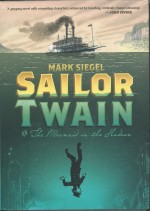
Sailor Twain or the Mermaid of the Hudson


By Mark Siegel (First Second)
ISBN: 978-1-59643-636-7

Win’s Christmas Gift Recommendation: genuinely unmissable… 10/10

Even after decades in the business every so often something comes along that makes me feel like a drooling delirious fanboy again. This time it’s the superb hardback compilation of a fabulous weird tales webcomic that’s certain to become a certifiable classic.

Mark Siegel was born inMichiganand raised inFrance; one of those story-obsessed prodigies who began drawing wonders as a kid and never grew out of it… only better at shaping them.

After a childhood concocting yarns, comics, cartoons, posters and animated films he returned to the USA to study Creative writing and Fine Arts at Brown University. Upon graduation he stayed stateside, tentatively beginning life as a jobbing designer/illustrator.

He got his big break with the award-winning strip-book Seadogs, written by Lisa Wheeler. This was followed by Long Night Moon, To Dance, Boogie Knights and more.

Increasingly intrigued and fascinated by the history and geography of theHudson RiverValleywhere he lives with wife and creative collaborator Sienna Cherson Siegel, the artist began to craft a lyrically beguiling mystery tale from the glittering, sophisticated and callous brutal days of the Riverboats which once plied their glamorous trade along that famed and fabled watercourse. This he published online at sailortwain.com.

Rendered in mercurial melancholic charcoal tones, Sailor Twain tells the tale of a poet who has lost his muse and becomes a riverboat captain to pay for his invalid wife’s medical treatment.

It’s also the tale of French wastrel Dieudonné who inherited his entrepreneurial older brother’s exclusive, high society river boat business when the inspirational Jacques Henri de Lafayette had a breakdown and vanished…

…And finally, it is the sad and sobering tale of a lady who could not accept her place or fate in a savagely proscribed and repressionistic masculine culture…

Set in the transitional era of 1880s New York where and when science and rationality began at last to supersede wonder, mystery and romance, and specifically during the months May to December 1887, the story opens with an enigmatic meeting in ‘Overture’ before ‘Part I: Twain’s Secret’ begins with ‘The Frenchman’s Steamboat’ as the diligent captain of the luxurious Lorelei recalls how the dissolute young European assumed control of a hugely profitable touring business after the elder Lafayette vanished. Also introduced are below-decks crew Horatio and Aloysius, Negro engineers who know more of the route’s peculiar history than they’re willing to share in ‘An Unlikely Survivor’…

The new owner seems a bad sort. In ‘A Prayer Down Below’, he demonstrates an indecent and almost unhealthy interest in bedding women, but after Twain rescues ‘The Mermaid in the Hudson’ and secretes her battered and wounded body in his cabin the trusty salt’s judgemental world is forever changed.

‘Beaverton’s New Book’ introduces another intriguing strand as a publicity-shy yet popular author’s latest sensational publication offers to reveal the “Secrets and Mysteries of the River Hudson” – everything from love-sick ghosts to the cure for a mermaid’s siren song – to both Twain and his increasingly odd employer.

The Captain, obsessed with ministering to the silent, wounded creature hidden in his cabin, is amazed when he is asked to post ‘Lafayette’s Letter’ to the enigmatic author, whilst in ‘South’s Promise’ Lafayette’s debauched dalliances multiply manically as Twain remembers his far-off wife and how her beautiful voice was stilled by disease. Nevertheless ‘Pearl’s Song’ is slowly being forgotten as the seaman becomes increasingly closer to the mythical beauty recovering in his bunk…

The lascivious Frenchman is rapidly losing touch with reality, constantly throwing messages in bottles to the murky roiling river waters as ‘Three Prisoners’ sees the now voluble sea-woman eagerly communicating with Twain just as Lafayette takes him into his confidences over his amorous actions…

Inspired again to write, Twain’s fevered imagination is sent reeling when he realises his employer is seeking ‘The Cure for Mermaids’ and, thanks to the Beaverton book, discovers his uncanny charge’s origins in ‘South of the North River’…

Entranced in a way no other man has been, the worthy Captain is utterly unaware of how the situation is spiralling madly in ‘The Missing Muse’ after which ‘Part II: Camomille’ takes a closer look at the louche Lafayette when ‘The Beaverton Revelation’ exposes the author’s shocking identity and New York Society gathers itself to take its chilly revenge in ‘Ink Stains’…

Lafayette’s carnal campaign hits a strange snag in ‘“The Dame’s Audacious”’, leading to most peculiar dinner conversation in ‘Eclipse’ and the culmination of long-laid plans in ‘Sevening’, all whilst Twain finds to his horror that his submersible companion has vanished in ‘Enticement’.

Before the tragedy moves towards the impossible endgame, she suddenly returns to assuage ‘The Strains of Absence’ prompting fantastic delirium when ‘Twain Dreams’…

‘Part III: World’s End’ moves fully towards otherworldly experiences ‘In the Other Realm’ of ghosts, drowned men and stranger things where the desperately querulous Twain finds ‘The Lost Brother’, learns of ‘A Lady Beguiled’ and discovers the power of ‘The Chained Heart’ as his tumultuous affair ploughs on to an astonishing denouement…

It all comes crashing down in stormy disaster as ‘Part IV: The Twain Shall Meet’ delivers another dreadful blow to the Captain’s divided heart as he and Lafayette mutually incur and endure ‘The Siren’s Wrath’…

…And with the world reshaped and set to (some sort of) rights, an evocative ‘Coda’ lends fruitful finality to the fearsomely fantastic proceedings…

Intoxicatingly complex, expansive and enchanting, seditiously, scarily seductive, the supernatural odyssey of the Lorelei and its doom-gripped crew is a gloriously baroque and simultaneously gothic epic of unnatural desire and supernal suspense that absolutely unwrites the twee, safely sexy modern mythology of marine maidens and restores to them the dolorous drama of sinister, implacable, irresistible sirens.

A perfect fantasy fable for adults, Sailor Twain is a truly graphic novel that every devoted dark dreamer must read.
© 2012 Mark Siegel. All rights reserved.

Secret Identities


By Jeff Yang, Parry Shen, Keith Chow, Jerry Ma & various (The New Press)
ISBN: 978-1-59558-824-1

A little while ago I reviewed Shattered: a splendid anthology of superhero-related stories by and about Asian Americans which, although self-contained, stemmed out of a previous and equally innovative Fights ‘n’ Tights assemblage. Secret Identities was designed to craft an alternative American history and milieu for heroes and villains more in tune with the needs and interests of a vast, neglected sector of the Republic’s readership, and having acquired a copy of that previous tome – still available and worth every penny – I thought I’d share a few further details with you…

Devised and supervised by life-long fans and mature creative types Jeff Yang, Parry Shen, Keith Chow & Jerry Ma, Secret Identities blends enchantingly intimate thoughts and reminiscences about the comics we all grew up knowing with a decidedly fresh approach to old plots, characters and treatments. Featuring the talents of exclusively Asian American creators from comics, the arts, design and computer gaming who smartly re-examine the USA’s signature sequential narrative genre from the social, cultural perspective of a non-WASP, non-Jewish experience, this compilation is a sharply different yet familiar take on the marvellous world of Men in Tights and Women in Control…

Following a close-knit over-arching timeline the book opens with a wonderful Marvel Comics Spoof – The Y-Men #1 – as the editors recall their childhood love affair with costumed characters and reveal how the project really got started. ‘Preface: In the Beginning’ by Jeff Yang & Jef Castro leads seamlessly into the Brave New World as ‘Prologue’ and ‘Driving Steel’ by Yang & Benton Jew take us to the 19th century American West, where immigrant workers struggle to build the trans-continental railroad and Irish Navvies ruthlessly compete with their Chinese counterparts. Sabotage, skulduggery and ill-will run rampant, and only little Negro lad John Henry is party to the fiery true nature of indomitable – and undying – labourer Master Jimson Fo…

‘S.A.M. meets Larry Hama’ by Tak Toyoshima is a breezy interview with the venerable veteran creator on the sense of cartoon affirmative action, after which the saga proper continues with ‘Section One: War and Remembrance’ as Parry Shen & Alexander Tarampi begin to examine the fictional history of Asian American mystery men and metahumans during WWII.

‘9066’ by Jonathan Tsuei & Jerry Ma then details the tragedy of a dedicated crusader who couldn’t get his country to look beyond the colour of his skin and shape of his eyes, whilst in ‘Heroes Without a Country’ (Daniel Jai Lee & Vince Sunico) the same anti-Jap furore almost deprived American super-unit the Sunset Squad of their most valuable asset when raiding a Nazi laboratory of horror…

‘Gaman’ by Jamie Ford & Tarampi reveals the generational fallout of those embattled days to a modern student who learns the hard way just what makes him so different from his school friends, whilst in ‘The Hibakusha’ Shen & Glenn Urieta reveal the secrets and latent dangers of the children born from the atomic devastation of Hiroshima and Nagasaki. So amazing were they that America’s interned them in Area 52 for years…

Marvel, DC and others generously allowed their characters to appear in the autobiographical sections of this collection, and a big-name writer and movie-maker shared a few insights about creativity with Keith Chow & A. L. Baroza in ‘Re-Directing Comics: Greg Pak’ before debuting his spectacular tension-drenched anti-hero after President Obama pardoned a dishonoured hero and potential assassin in ‘The Citizen’ by Pak & Bernard Chang…

‘Sidekicks: Gene Yang & Michael Kang’ finds the editors debating the Asiatic ghetto of faithful retainerdom (Chow & Baroza) after which ‘The Blue Scorpion & Chung’ by Yang & Sonny Liew provides an outrageous and wryly hilarious alternative to the traditional set-up, whilst the tragic story of ‘James’ (Kang & Erwin Haya) shows that the solution is usually in the assistant’s hands all the time…

‘Section Two: When Worlds Collide’ opens with another take on the strange visitor from an alien world scenario, courtesy of Chow & Chi-Yun Lau, after which another long-established comics creator speaks out in ‘Now There’s Something: Greg LaRoque’ (Chow & Alexander Shen), which leads into a compelling genre-bending fantasy of good, evil and family peccadilloes with ‘Trinity’ written and drawn by LaRoque himself.

‘No Exit’ by Naeem Mohaiemen & Urieta is a beautifully sharp examination of dignity and morality set in a Guantanamo-style camp not so very different from the shamefully real one, whilst ‘S.O.S.’ blends outsourcing to India with the back-office requirements of the busy, cost-conscious American superhero crowd in a delightful yarn from Tanuj Chopra & Alex Joon Kim.

Many of the tales in this tome take place in the modern metropolis of Troy, although New York City is the eventual location of Clarence Koo & Jerry Ma’s ‘The Wallpasser’, which mixes people-trafficking and illegal immigration with dark, super-normal forces and broken families before ‘Section Three: Girl Power’ takes a look at the distaff side of culture and super-society, starting with a hilarious silent and salutary fable from Kripa Joshi, whilst ‘You Are What You Eat’ (Lynn Chen & Paul Wei) finds a cake-loving lass given the greatest possible gift by her aged grandmother… and she can fight crime with it too…

‘Sampler’ by Jimmy Aquino & Haya also confronts long-held assumptions and prejudice when a Troy laundry/dry cleaning store frequented by costumed heroes provides a shy retiring seamstress with the opportunity to use her own long-unsuspected super-power, whilst ‘Learn to Share’ by Keiko Agena & Ming Doyle offers a disturbing look at the ethnic adoption experience through the malfunctioning eyes of a little girl with a dark past and terrifying power…

‘A Day at CostumeCo’ by Yang & Baroza introduces a magical family of metas-in-waiting in a masterfully enticing riff on the theme of superhero dynasties. When Vernon and Vivie Chang finally get rebellious big sister Valerie to accept her true nature All Heck breaks loose, after which Hellen Jo discusses the nature of female furies in ‘Supergrrrls’ before Jason Sperber & Chi-Yun Lau open ‘Section Four: Many Masks’; examining the nature of assumed identities in advance of a brief colour section introducing a barrage of new characters and concepts in one-page pinups.

Meta-merc ‘Agent Orange’ by Dustin Tri Nguyen & Dustin Nguyen is followed by supernatural judge ‘Gaze’ (Sung Kang, Billy Tan, Walden Wong & Sean Ellery) and acupuncture-activated go-girl ‘Flight’ by Ian Kim & Jeff Yang. Adulation-powered ‘Shine’ (Leonardo Nam, Anthony Tan & Ruben de Vela) and immortal avenger ‘Jia’ (Kelly Hu, Mark Allen & Cliff Chiang) are followed by Yul Kwon & Deodato Pangandoyon’s escaped North Korean lab rat ‘Cataclysm’ and one-man alien invasion resister ‘Go’ by Kazu Kibuishi, after which Anthony Wu’s army-of-one ‘Parallel Penny’ closes the file on this tantalising taster of things – hopefully – to come…

Returning to moody monochrome, ‘Section Five: Ordinary Heroes’ begins with Raymond Sohn depicting real folks’ definition of heroes before ‘Just Ordinary’ by Nick Huang & Shen takes a trenchant look at society and the media’s unhelpful expectations of what constitutes a champion, whilst ‘Twilight’ (Ted Chung & Anuj Shrestha) takes a hard look at alienation and self-discovery amidst the aftermath of disaster, and only a little time-travelling intervention at last saves ‘David Kim’ from his annoying match-making parents in a light and lovely super-folks RomCom by John Kuramota & Christine Norrie…

‘Meet Joe’ by Koji Steven Sakai & John Franzese shows how a determined kid-hero can buck both public expectations and family pressure, little So-Geum at last develops a super-power ‘On the Third Day’ (Johann Choi) – although not in the way his pushy parents wanted – and ‘Long’ perfectly captures the sheer exuberant joy of extra abilities in a brash bold pantomime by Martin Hsu. The chapter then closes with ‘Justified’ by Ken Wong & Tiffanie Hwang as a young hopeful innocently upsets ingrained ignorance and complacency during an open audition for aspiring mystery men…

‘Section Six: From Headline to Hero’ commences with a discussion of real-world American Asian heroes by Parry Shen & Jeremy Arambulo, after which ’16 Miles’ by Shen & Sarah Sapang extrapolates a poignant story of love and sacrifice in the midst of total terror whilst ‘Taking Back Troy’ (Yang & Francis Tsai) shows the downside of living with superhumans as a school party night goes tragically bad, before the action ends on a promising introductory note as ‘Peril: By the Time I Get to Arizona’ (Chow & Castro) introduces a desperate young man dragged into a world of impossible danger when the father he never knew goes missing and is branded a traitor. Dr. Won Kin Lun was the world’s greatest authority on super-powers and nano-tech and everybody wants his discoveries – except the unwilling, angry, betrayed son he secretly, arbitrarily inflicted them upon…

In ‘Epilogue’ Yang & Castro pensively wrap things up and consider the future but there’s still much to enjoy here. After full contributor biographies the added attractions start with ‘The One that Got Away’ by Larry Hama and there’s also a selection of Behind the Scenes concept art as well as ‘Our Favourite “Dear John” Letter’ – a brilliant manga cartoon apology for not contributing from eventual and actual contributor Jeremy Arambulo. The immersive experience then ends with a complete time-line chart and annotated score-card, ranging from the portentous beginnings in the 1800s to the unleashed future of 2020 and beyond.

Combining the best aspects of many storytelling traditions and artistic styles, utilised by a volunteer army of talented creators whose origins stem from Asia, India and all points East but whose ethnicity is definitely All-American, Secret Identities began a bold experiment in cultural assimilation that will amaze comics fans in search of something a little different…
Compilation © 2009 Jeff Yang, Parry Shen, Keith Chow and Jerry Ma. Individual pieces © 2009 each author. All rights reserved.

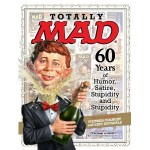
Totally Mad – 60 Years of Humour, Satire, Stupidity and Stupidity


By “The Usual Gang of Idiots” & edited by John Ficarra (Time Home Entertainment)
ISBN: 978-1-61893-030-9

Win’s Christmas Gift Recommendation: a truly timeless tome bringing back a golden age of laughter – no matter how young you are… 10/10

EC Comics began in 1944 when comicbook pioneer Max Gaines sold the superhero properties of his All-American Comics company to half-sister National/DC, retaining only Picture Stories from the Bible. His plan was to produce a line of Educational Comics with schools and church groups as the major target market.

Gaines augmented this core title with Picture Stories from American History, Picture Stories from Science and Picture Stories from World History, but the so-worthy notion was already struggling when he died in a boating accident in 1947.

With disaster looming, his son William was dragged into the family business and with much support and encouragement from unsung hero Sol Cohen – who held the company together until the initially unwilling Bill Gaines abandoned his dreams of a career in chemistry – transformed the ailing enterprise into Entertaining Comics…

After a few tentative false starts and abortive experiments, Gaines and his multi-talented associate Al Feldstein settled into a bold, fresh publishing strategy, utilising the most gifted illustrators in the field to tell a “New Trend” of stories aimed at an older and more discerning readership.

From 1950 to 1954 EC was the most innovative and influential publisher in America, dominating the genres of crime, horror, war and science fiction, spawning a host of cash-in imitations and, under the auspices of writer, artist and editor Harvey Kurtzman, the inventor of an entirely new beast: the satirical comicbook…

Mad also inspired dozens of knock-offs and even a controversial sister publication, Panic.

Kurtzman was a cartoon genius and probably the most important cartoonist of the last half of the 20th century. His early triumphs in the fledgling field of comicbooks (Mad, Two-Fisted Tales, Frontline Combat) would be enough for most creators to lean back on, but Kurtzman was a force in newspaper strips (See Flash Gordon Complete Daily Strips 1951-1953) and a restless innovator, a commentator and social explorer who kept on looking at folk and their doings: a man with exacting standards who just couldn’t stop creating.

He invented a whole new format and gave the USA Populist Satire when he transformed his highly successful full-colour comicbook baby Mad into a mainstream monochrome magazine, safely distancing the outrageously comedic publication from fall-out caused by the 1950s socio-political witch-hunt which eventually killed all EC’s other titles, and bringing the now more socially acceptable publication to a far wider, broader audience.

He pursued his unique brand of thoughtfully outré comedy and social satire with the magazines Trump, Humbug and Help!, all the while conceiving challenging and powerfully effective humour strips such as Little Annie Fannie (for Playboy), The Jungle Book, Nutz, Goodman Beaver, and Betsy and her Buddies. Seemingly tireless, he also inspired the next generation through his creations on Sesame Street and with his teaching of cartooning at the School of Visual Arts in New York. He died far too early in 1993.

…And he was just one of the astonishingly gifted creators who have turned Mad into a staggeringly influential cultural phenomenon and global brand in the intervening years…

Just in time to be an ideal gift, and celebrating the history and progress of an institution we all grew up with if not in, Totally Mad reviews the rise and rise of the magazine with tantalising snippets of gags and features accompanied by great big buckets of captivating excerpts and illustrations from the many brilliant creators who have contributed to its success.

Be Warned: this is not a “best of” collection – it would be impossible to choose, and besides there are hundreds of reprint book compilations and websites for that. This is a celebration of past and present glories and a compulsive taster for further exploration, but with very few complete stories…

At 256 pages this huge (312x235mm) and luxurious compendium includes historical articles, hundreds of pages of amazingly funny art and cleverly barbed observations, divided by decades and augmented by hundreds of full-colour, iconic cover reproductions, referencing favourite features such as Spy vs Spy (both by originator Antonio Prohias and successor Peter Kuper), Mad Fold-Ins, Al Jaffee’s ‘Scenes We’d Like to See’, Dave Berg’s ‘The Lighter Side of…’, ‘Snappy Answers to Stupid Questions’, ‘Mad Mini-Posters’, whilst Film and TV parodies include ‘Gunsmoked’, ‘My Fair Ad-Man’, ‘East Side Story’, ‘Flawrence of Arabia’, ‘Star Blecch’, ‘Jaw’d’, ‘Saturday Night Feeble’, ‘LA Lewd’, ‘Dorky Dancing’, and assorted mega-movie franchises ad infinitum…

Whatever your period, and whichever is your most dearly revered, it’s probably sampled here…

Following an eccentric and loving Introduction from Stephen Colbert and Eric Drysdale -illustrated by Sam Viviano – veteran contributor Frank Jacobs provides a photo-packed profile of the magazine’s unique father-figure by asking – and answering – ‘Who Was Bill Gaines?’ after which ‘Mad in the 1950s’ recalls the Kurtzman era with brightly hued extracts from giant ape spoof ‘Ping Pong!’, ‘Superduperman!’, ‘Lone Stranger Rides Again!’, ‘Sound Effects!’, ‘Melvin of the Apes!’, ‘Mad Reader!’, ‘Bringing Back Father!’ and ‘Starchie’, highlighting the talents of Will Elder, Wallace Wood, Jack Davis, John Severin, Basil Wolverton & Bernie Krigstein, before moving into the magazine phase by spoofing advertising and popular pastimes with ‘Readers Disgust’, ‘What Makes a Glass of Beer Taste so Good?’ and more.

Arch-caricaturist Mort Drucker began his stellar run at this time as did the mildly maniacal Don Martin, whilst proven comics masters Joe Orlando, Wood, Davis and George Woodbridge reached astonishing peaks of artistic excellence with a parade of stunning covers and end-pages by Kurtzman, Kelly Freas, Norman Mingo and others proving as effective now as in your granddad’s day…

In ‘Who is Alfred E. Neuman?’, Jacobs recounts the twisted and turbulent origins of the magazine’s iconic gap-toothed-idiot mascot after which ‘Mad in the 1960s’ highlights the rise of Television and the counter-culture whilst ‘Was Mad Ever Sued?’ finds Jacobs  testifying to some truly daft and troubling moments in the mag’s life…

Some of the very best bits of ‘Mad in the 1970s’ is followed by the conclusion of ‘Who Was Bill Gaines?’ after which Davis, Dick DeBartolo & Jacobs’ legendary ‘Raiders of the Lost Art’ skit opens ‘Mad in the 1980s’ as patriotism, movie blockbusters, Hip-hop and computer games seized the public’s collective imagination…

‘What Were the Mad Trips?’ explores a grand tradition of company holidays, after which the transitional years of ‘Mad in the 1990s’ covers Rap music, the rise of celeb culture and the magazine’s forays into a rapidly changing world. This is followed by ‘Mad After Gaines’ which details the internal adjustments that took place following the death of the hands-on, larger-than life publisher in 1992 whilst ‘Mad in the 2000s’ details the brand’s shift into the digital world, with exemplars from creators old and new spoofing medicines, newspaper strips, elections, dead phrases, celebrity causes, religion, cell-phones, man-boobs, war in Iraq, Obesity, satirical rival ‘The Bunion’, contemporary Racism and media sensations Donald  Trump, whilst parodies included ‘Bored of the Rings’, ‘Sluts in the City’, ‘Spider-Sham’, and so much more…

Current editor John Ficarra provides a suitable Afterword and this magnificent tome also includes a poster pack of a dozen of the very best covers from Mad’s epochal run.

Most of you can happily stop now, but if you’re into shopping lists here’s just a small portion of the other contributing “idiots” who have madr the magazine a national institution… like graft and pimples:

Sergio Aragonés is represented throughout with his Mad Marginals as well as many masterful cartoons and pastiches, and writers include Vic Cohen, Tom Koch, Larry Siegel, Nick Meglin, Earl Doud, Lou Silverstone, Jacobs, DeBartolo, Arnie Kogen, Chevy Chase, Marylyn Ippolito, Max Brandel, Stan Hart, Billy Doherty, Barry Liebman, Desmond Devlin, Russ Cooper, Joe Raiola, Charlie Kadau, Robert Bramble, Michael Gallagher, Butch D’Ambrosio amongst so many others.

All-rounders both scripting and scribbling include Dave Berg, Al Jaffee, Aragonés, Don Martin, John Caldwell, Paul Peter Porges, Don “Duck” Edwing, Tom Cheney, Drew Friedman, Peter Kuper, Christopher Baldwin, Feggo and star artists making a splash range from venerable veterans such as Frank Frazetta, John Cullen Murphy and Angelo Torres to Mark Frederickson, Bob Clarke, Gary Belkin, Paul Coker Jr., Mutz, Jack Rickard, Irving Schild, Gerry Gersten, Rick Tulka, Harry North, Richard Williams, Tom Bunk, Bill Wray, Steve Brodner, Mark Stutzman, Tom Richmond, Gary Hallgren… the list is nigh endless.

Wrist-wreckingly huge, eye-poppingly great and mind-bogglingly fun, this is one all the family will be happy to pore through… and probably fight over.
© 2012 E.C. Publications, Inc. All rights reserved.

A Secret History of Coffee, Coca & Cola


By Ricardo Cortés (Akashic Books)
ISBN: 978-1-61775-134-9

Win’s Christmas Gift Recommendation: potent, punchy and thought-provoking fodder to enjoy after overindulging… 9/10

The astounding power of graphic narrative to efficiently, potently and evocatively disseminate vast amounts of information in layered levels has always been best utilised in works with a political or social component. That’s seldom been better demonstrated than in this stunning and scholarly new picture book from Ricardo Cortés.

Born in 1973, illustrator and artistic intellectual activist Cortés has had a sublimely seditious career thus far. He has made waves in Vanity Fair, Entertainment Weekly, The New York Post, The Village Voice, San Francisco Chronicle, and been challenged on CNN and FOX News after his controversial  children’s book Marijuana: It’s Just a Plant – written by Marsha Rosenbaum – was mentioned in Congress. He followed up by illustrating Adam Mansbach’s Times Best-Selling Go the F**k to Sleep and its sequel Seriously, Just Go to Sleep, and created the colouring book I Don’t Want to Blow You Up! about famous Muslims who aren’t terrorists.

In 2011 the artist received a grant from the Department of Cultural Affairs’ Greater New York Arts Development to create Jury Independence Illustrated – a public booklet dealing with Jury Nullification produced with the intention of educating potential jurors about their powers to acquit if they disagree with specific laws or judicial rulings. Clearly a born troublemaker…

His latest project is a brilliantly engrossing exploration of acceptable addictions blending scrupulously scholarly reportage with a seductively beautiful selection of captivating images and historical reproductions.

The story starts with the origins and history of ‘Coffee‘ from its mythic discovery as a berry fruit for goats in Ethiopia, through being taken up by Yemeni traders who disseminated “qahwah” throughout the Islamic world. A proven intoxicant, concerns over its salubrity, morality and legality grew and it was soon being trafficked by desperate men. In the 16th century the beverage was banned in Mecca, Cairo and elsewhere, but its taste and effects were impossible to resist.

By the time “kahveh” reached Turkeytrading in the beans carried the death penalty. As “Coffee” it reached Europein the 17th century, touted as a miracle cure-all for everything from headache to miscarriage and grew explosively into an intellectual’s seditious vice. In 1675 Charles II ordered it suppressed and closedEngland’s Coffee Houses by Royal Edict.

Things got even stranger in 1820 after the alkaloid “Caffe-ine” was finally distilled from the coffee cherry…

The rest of caffeine’s turbulent and torturous legal and commercial progress to today’s status as the world’s most popular stimulant is followed by the story of ‘Cola and Coca’ in which caffeine’s other singularly popular method of natural dissemination is examined.

The Kola Nut of West Africa is amazingly high in the stimulant alkaloid and has been used for centuries – if not millennia – as a energy-intensifying fortifier by the various tribes and nations either by chewing the raw nut or brewing a drink called “cola”.

Cola is one of the most popular ancient beverages on Earth and when in 1886 Dr. John Pemberton devised his own formulation – dubbed Coca-Cola – by adding a dash of coca leaves, his medicinal tonic, after an initial shaky start, grew to become the most monolithic drinks brand on Earth.

…But not, apparently, without a little government help…

Coca originally came from the Andes of South America where for centuries indigenous peoples used the herbal bounty as a pick-me-up. The Indios chewed coca leaves the way we do gum in the west and in 1499 explorer Amerigo Vespucci brought back tales of the wonder herb’s propensity to promote feats of concentration and endurance.

In 1859 Dr. Karl Scherzer returned to Austria after a two-year scientific voyage aboard the Frigate Novara with sixty pounds of coca, as previously requested by German pharmacologists. Soon after doctoral student Albert Niemann isolated from the samples a new alkaloid which he dubbed “Coca-ine”.

This fresh medical marvel, its transparent crystals easily derived from coca leaves, was from 1884 enthusiastically prescribed by the likes of Sigmund Freud for melancholia and oculist Carl Koller discovered it to be an incredible regional (or as we now know them “local”) anaesthetic, allowing unprecedented new surgical procedures to be performed. It was also used as a commonplace treatment for toothache, labour pains, nervousness, fatigue, impotence, asthma and as a cure for morphine addiction – hence Pemberton’s inclusion of the stuff in his health tonic.

By 1889 cases of compulsive use and abuse began to be reported, leading to heated medical debate, and when the era’s obsessive racial concerns were added to the mix (“cocaine made negroes insane” and it was peddled by “greedy Jewish doctors”) the writing was on the puritanical wall for the foreign import.

On a rising tide of public disapproval the 1914 Harrison Narcotics Act prohibited Cocaine use and coca importation in theUSA. However due to some truly unbelievable backroom dickering, the already powerful Coca-Cola Company secured a constant supply of the banned substance – re-designated “Merchandise No. 5” – for their Schaefer Alkaloid Works in New Jersey – still thriving today as the Stepan Chemical Company.

This mercantile miracle was all due to diligent work of Commissioner Harry J. Anslinger of the Federal Bureau of Narcotics and Ralph Hayes, a former aide to theUS Secretary of War and from 1932, a vice President of the Coca-Cola Company.

Anslinger was a rabid anti-drug zealot, so just why did he spend 40 years – under seven different US Presidents – enforcing draconian and often expensive, nigh-impossible bans on a vast number of natural pharmaceutical products whilst actively securing and defending Coca-Cola’s uninterrupted supply of cocaine?

He even facilitated clandestine schemes to grow coca on American soil and his campaign was so successful that American policy became UN and global norms, forcibly negating all the proven scientific benefits of resources which grew naturally in countries which could never afford Western drugs and chemical advances.

Trust me; you only think you know the answer…

Astonishingly addictive and intoxicatingly revelatory, Coffee, Coca & Cola offers an impressively open-minded history lesson and an incredible look at the dark underbelly of American Capitalism. Exposed here through telling research and beguiling illustrations is a catalogue of hypocrisy wherein successive political administrations and big business always found ways to place commercial interests ahead of any specious moral imperative ingenuously forwarded by the “World’s Cop”.

Learn here how corporations and statesmen conspired to ruthlessly crush the traditions, customs and rituals of other nations and cultures (as recently as 2010, America acted to suppress many sovereign South American countries’ social, spiritual, medicinal and nutritional use of coca) and continue to prevent poor countries utilisation of such ancient natural resources as caffeine and cocaine whilst peddling products inescapably wedded to both American Expansionism and Ideology…

A stunning, hard cover coffee-table book for concerned adults, this captivating chronicle is a true treasure – or perhaps in the parlance of the idiom I might just say – lip-smacking, trust-quenching, cool looking, stimulating, motivating, hard talking, fool busting, fast thinking, hard quizzing… and unmissable.
© 2012 Ricardo Cortés. All rights reserved.