Merry Christmas, Boys and Girls!

In keeping with my self-created venerable Holiday tradition here’s another selection of British Annuals which fundamentally contributed to making me the way I am today, selected not just for nostalgia’s sake but because they are still, interesting, eminently palatable and worthy of your attention, even under here in the disconcertingly futurist yet disappointingly dreary 21st Century (and yes, I am still eagerly anticipating my personal jet-pack and robot-butler under the tree this year…)

After decades when only American comics and nostalgia items were considered collectable or worthy, of late there’s been a welcome resurgence of interest in home-grown comics and stories. If you’re lucky enough to stumble across a vintage volume, I hope my words can convince you to acquire it. However, the best of all worlds would be further collections from those fans and publishers who have begun to rescue this magical material from print limbo in affordable new collections…

Great writing and art is rotting in boxes and attics or the archives of publishing houses, when it needs to be back in the hands of readers once again. On one level the tastes of the public have never been broader than today and a selective sampling of our popular heritage will always appeal to some part of the mass consumer base. Let’s all continue to reward publishers for their efforts and prove that there’s money to be made from these slices of our childhood.

Marvel Comicbook Annual 1970

By various (World Distributors, Ltd.)
No ISBN – Standard Book Number: 7235-0072-X

When Stan Lee stormed the American comic-book industry in the early 1960s, his greatest weapon wasn’t the compact and brilliant talent pool available nor even the proverbial idea whose time had come, but rather his canny hucksterism and grasp of marketing and promotion. DC, Dell/Gold Key and Charlton all had limited overseas licenses (usually in dedicated black-and-white anthologies like Alan Class Comics such as Suspense) but Lee went further, reselling Marvel’s revolutionary early efforts all over the world.

In Britain the material appeared in the aforementioned Class Comics and reformatted in weeklies like Pow, Wham, Smash and even the venerable Eagle. There were two almost wholly Marvel-ised papers, Fantastic and Terrific, which ran from 1967 to 1968 with only one UK originated strip in each. These slick format comics mimicked Marvel’s US “split-books” and originally featured three key Marvel properties in each. Appearing every seven days, however quickly exhausted the company’s back catalogue.

After years of guesting in other publications, Marvel secured their own UK Annuals at the end of the 1960s through the publishing arm of World Distributors and this second sparkling collection from 1969 is one of the very best – and worst!

Gone are the text stories, quizzes and game pages which traditionally padded out most British Christmas books, replaced with cover-to-cover superhero action produced by the emergent House of Ideas at the very peak of its creative powers. Moreover it’s in full colour throughout – an almost unheard of largesse at the time.

Behind the delightful painted wraparound cover the enchantment commences with a magnificent but ultimately frustrating Thor tale (from issue #165 June 1969) from Lee, Jack Kirby & Vince Colletta wherein the Thunder God tackled genetically engineered future man ‘Him!’, before dissolving into a maniacal rage in the first of a two-part tale from his own American comicbook. The story and art are of course, incredible, but – even worse than no batteries on Christmas morning – the concluding instalment isn’t included in this volume. AARRGH!

From Captain America #100, April 1968 ‘This Monster Unmasked!’ by Lee, Kirby & Syd Shores, was the final chapter of an epic adventure (running in Tales of Suspense #97-99 and also not included here) which found the Sentinel of Liberty, his new girlfriend Agent 13 and the Black Panther riotously recapping the hero’s origin whilst battling a resurrected Baron Zemo to save the planet from utter destruction…

‘The Warrior and the Whip!’ by Lee, Gene Colan & Frank Giacoia and ‘At the Mercy of the Maggia’ by Archie Goodwin, Colan & Johnny Craig (Tales of Suspense #98-99, February and March 1968) are less satisfying. Not because the individual episodes are in any way deficient, but because the extended combat between Iron Man, gangsters, AIM Agents and super-creeps constitutes only chapters two and three of a four-part yarn and once again ends on a chilling cliffhanger…

In deference to tradition there is a single-page fact-feature. ‘Triton’s World’, illustrated with traced Kirby fish drawings from various comics, spotlighting a number of outrageous but actual sea-dwellers before the aquatic Inhuman joins the rest of the Royal Family of Attilan in ‘Silence or Death!’ (a Tales of the Inhumans back-up from Thor #149, February 1968) introducing young Prince Black Bolt in a superb and compelling, COMPLETE, five-page clash with Maximus the Mad by Lee, Kirby & Joe Sinnott.

At least the Marvel mayhem ends on a blockbusting high-note with ‘Monster Triumphant!’ from Incredible Hulk #108, October 1968 by Lee, Herb Trimpe & John Severin which, although another concluding chapter, had the decency to nominally recap proceedings before the Green Goliath, Nick Fury Agent of S.H.I.E.L.D. and his soviet counterpart Yuri Brevlov spectacularly scotched the sinister plans of Oriental oligarch the Mandarin to bring this book to a crunchingly cathartic close…

Inexplicably, despite how annoying re-reading these oft-reprinted tales felt today, the pint-sized me (well, quart-sized if I’m totally honest) really loved this collection – the fantastic resilience of youth, I suppose – and I will admit the art has never looked better than on the 96 reassuringly solid extra-large pages here: bold heroes and dastardly villains going wild and forever changing the sensibilities of a staid nation’s unsuspecting, extremely forgiving children. Miraculous, Marvellous Magic!
© 1970 Marvel Comics Group. All rights reserved.

In future years UK Marvel Annuals would provide full colour reprint strip extravaganzas, but in 1966 the material just wasn’t there. Thus this peculiar novelty: a comforting 96 sturdy pages of bold illustrations, games, puzzles and prose stories featuring Marvel’s mightiest in exceedingly British tales of skulduggery and derring-do.

Another factor to consider was the traditions of the UK market. US comics had been primarily strip based since the 1930s, but British weeklies had long provided Boy’s and Girl’s “papers” that were prose-based. In fact DC Thompson had persevered with illustrated text periodicals until well into the 1960s. So the seasonal annuals provided a vital sales peak of the publishing year and a guaranteed promotional push (see Alan Clark’s superb The Children’s Annual for more information). Any comic worth its salt needed a glossy hardback on the shelves over the Christmas period…

Released Christmas 1969, perfectly portioned out to fit into a book intended for a primarily new and young audience.

Land of the Giants Annual 1969

By Tom Gill & various (World Distributors {Manchester} Ltd.)
No ISBN

British Comics have always fed heavily on other media and as television grew during the 1960s – especially the area of children’s shows and cartoons – those programmes increasingly became a staple source for the Seasonal Annual market. There would be a profusion of stories and strips targeting not readers but young viewers and more and more often the stars would be American not British.

Much of this stuff wouldn’t even be as popular in the USA as here, so whatever comic licenses existed usually didn’t provide enough material to fill a hardback volume ranging anywhere from 64 to 160 pages. Thus many Annuals such as Daktari, Champion the Wonder Horse, Lone Ranger and a host of others required original material or, as a last resort, similarly themed or related strips.

Land of the Giants debuted in America in September 1968, the fourth of producer Irwin Allen’s incredibly successful string of TV fantasy series which also included Lost in Space, Voyage to the Bottom of the Sea and The Time Tunnel. The premise was that in the far-future of 1983 the occupants of Sub-Orbital Space-liner flight 703 from Los Angeles to London fell through a space-warp and landed in an incredible world twelve times larger than ours (mimicking the dimensions of the Brobdingnagians in Gulliver’s Travels) but closely paralleling Earth in the primitive era of the mid 1960s.

The motley and disparate passengers and crew of the ailing Spindrift thus had to survive and seek a way to return home whilst giant beasts, agents of the totalitarian government of that colossal planet, greedy opportunists and their own perverse natures all conspired against them…

The TV series generated 51 episodes and ran until 1970, spawning a Viewmaster reel and book, comics, toys and a string of novels by Murray Leinster. Since only one issue of the Gold Key comicbook had been released by the time of publication, (also providing the photo-cover above) this British Land of the Giants Annual compiled in late 1968 for the Christmas market relied heavily on criminally uncredited British filler – in the traditional form of text stories and features.

This book was produced in the standard UK format of full-colour for the American comics reprints and certain sections balanced with the more economical black and one other colour (blue, green brown or purple for the remainder, either brief prose stories or puzzles, games or fact-features on related themes. As for the writers and artists of the originated material your guess is, sadly, as good as or better than mine, but almost certainly generated by the wonderful Mick Anglo’s publishing/packaging company Gower Studios (although much of the innovative and edgily evocative illustration reminds me of Paul Neary’s 1970 Hunter strip in Warren’s Eerie)…

As the book is aimed at youngsters most of the British material is told from the viewpoint of Barry Lockridge – and dog Chipper – travelling unaccompanied to meet his parents in London. The mayhem and mystery begins with the novelette ‘Crash into the Unknown’ recapping the terrifying crash-landing in the Land of the Giants and offering a few hints into the possibly man-made nature of the space-warp which trapped them before the quiz ‘The Name’s the Same’ lightens the mood before ‘The Happy Return’ found the diminutive castaways battling a rogue warp-scientist and Secret Police and the fact-feature ‘Giants of Earth’ recounted a selection of geological behemoths.

The science bits continued with ‘Other Days: Other Giants’ which spotlighted dinosaurs and prehistoric beasts whilst ‘The Bigger They Are’ enumerated historical heroes who battled overwhelming odds. The fantasy adventure resumed in ‘The Toy Trap’ with giant terrorists using remote controlled models to deliver bombs – clockwork vehicles the puny Earthlings desperately needed in this vast expanse of a new world…

After some mind-boggling astronomical ‘Star-Facts’ the US comic strip adventure ‘The Mini-Criminals’ Part I, (illustrated by Tom Gill and perhaps scripted by Paul S. Newman) opened with ‘The Power-Stealers’ as the crew’s perpetual search for fuel sources to re-energise the Spindrift led to their capture by an opportunistic and imaginative thief. In this action-oriented strip the focus was very much on passengers Mark Wilson and fugitive conman Fitzhugh plus he-men crew members Captain Steve Burton and co-pilot Dan Erickson…

‘Barry and the Bankrobbers’ returned to British prose episodes as the boy and his dog stumbled into a bold daylight robbery before ‘The Mini-Criminals’ tempestuously terminated in an explosive showdown after ‘The Torch is Lit’, quickly followed by a themed literary and historical quiz ‘All About Giants’.

The girls got to hog the spotlight in ‘The Lost One’ as stewardess Betty Hamilton and flighty socialite Valerie Scott encountered an Earth astronaut who had been stranded in the Land of the Giants for 32 years whilst, after technological/industrial fact-feature ‘Man-made Monsters’, ‘The Bargain’ found little Barry and a giant toddler saving the day when Herculean fire-fighters extinguished a small grass blaze and inadvertently washed the Spindrift and crew into a sewer grate.

Lemuel Gulliver’s trip to Brobdingnag was reviewed in the article ‘Points of View’ (illustrated by somebody named “Fryer”) whilst the novelette ‘Nightmare in Giantland’ had the crew fall into a fairground only to become a puppet attraction, after which the double-page board-game ‘Terror in the Woods’ offered a few moments of post-Christmas dinner family interaction – as long as you could find some dice – before the adventures culminated in Secret Police espionage and intrigue as the Earthlings became ‘The Mini-Spies’ for an anti-government scientist and this big book of fun, fact and thrills ended educationally with ‘The Giant One’; a visually impressive animal comparison chart matching up Elephants, Rhinos, Buffalo, Brontosauruses (still believed to be real back then, remember?) against the incredible Blue Whale.

These yearly slices of screen-to-page magic were an intrinsic part of growing up in Britain for generations and still occur every year with only the stars/celebrity/shows changing, not the package. The show itself has joined the vast hinterland of fantasy fan-favourites and, if you want to see more, in 2010 Hermes Press collected the material from all five US Land of the Giants comicbooks into one sparkling hardback Land of the Giants the Complete Series which I’ll get around to reviewing one day (so many books, so little time or budget)…
© 1969 Twentieth Century-Fox Television, Inc. and Kent Productions. Inc. All rights reserved throughout the world.

Superman Bumper Book

By various (Top Sellers)
No ISBN: ASIN B000RFBZYI

By the end of the 1960s I was an unashamed addict for all things comic. Whether home grown material targeting every market from football strips in Lion, Tiger or Victor to adapted literary classics in Look and Learn, foreign strip-books such as Asterix and Tintin or the comparatively diminutive American imports from DC, Marvel, Archie, Harvey, Gold Key and Charlton, I wanted them all and relished every graphic moment.

Even re-reading the same stories wasn’t important, as this sparkling book, still riding the coattails of the late 1960s superhero boom sparked in the UK by the live action Batman TV show and the Superman/Superboy animated cartoon show, will attest.

Released for the Christmas market this Superman Bumper Book combined text-stories and puzzle material generated by the Mick Anglo studio with a selection of relatively recent or reprinted Man of Steel yarns, all outrageously re-coloured in the flat yet beguiling full-colour process which graced most Top Seller Annuals.

I suspect the text features were intended for or left over from the 1967-1968, black and white TV Tornado weekly…

The extravaganza opens with an Editorial Direct Current feature exploring the bizarre preponderance of “LL” names in the character’s mythology after which ‘When Superman Killed his Friends’ (by E. Nelson Bridwell & Pete Costanza from Superman #203, January 1968) offered an eerie alien menace and a seemingly impossible dilemma for the Action Ace. This was followed by a prose Batman adventure ‘Mr. Kronos Gets Bats in His Belfry’ probably by Anglo himself and very much in the manner of the Adam West/Burt Ward TV series, after which ‘The Fortress of Fear’ pitted Superman against his own suddenly sentient arctic sanctuary in a chilling thriller originally seen in #204 by Cary Bates & Al Plastino.

Bracketed by a brace of ‘Laugh-In’ pages of spot-gags ‘The Jolly Jailhouse’ (Superman 139, August 1960 by Jerry Coleman & Plastino) provided a light-hearted clash between a would-be dictator and World’s Most Uncooperative political prisoner Clark Kent, after which Special Agent Clint Cutter travelled to the Middle East to squelch a deadly arms race in the prose vignette ‘Guns For Sale’.

Mr. Mxyzptlk was looking for trouble when he manifested a ‘Trio of Steel’ (Superman #135, February 1960, by Jerry Siegel & Plastino) after which the photo-feature ‘Super Tec!’ examined the then current Sexton Blake TV series before Superman returned and was almost killed by the foppish and ludicrously lethal ‘Captain Incredible’ (Action Comics #354, September 1967 and courtesy of Bates & Plastino).

‘Challenge to Superman’ was another Anglo-originated prose short-story after which two more Plastino yarns appeared. ‘Superman’s Black Magic’ (scripted by Siegel for Superman #138, July 1960) saw the hero impersonate the Devil to scam some crooks whilst ‘The Great Mento’ (by Robert Bernstein, #147, August 1961) found the hero apparently helpless against a mind-reading blackmailer. Those comic classics were separated by a cartoon adventure of ‘The Friendly Soul’ by cartoonist and acclaimed industry historian Denis Gifford.

Following a Henry Boltinoff Cap’s Hobby Hints and a photo-feature on ocean-going ‘Super ships’ the seasonal sensationalism wrapped up with a gloriously arch yarn of romantic double-dealing as Lois Lane seemingly became ‘The Bride of Futureman’ in a brilliant piece of fluff from Coleman & Kurt Schaffenberger from Superman #121 (May 1958) or more likely Superman Annual #4 where it was latterly reprinted.

Perhaps their only true value now is as beloved nostalgic icons of times past, but surely that’s the whole point of books like this and comics and toys in general…
© 1970 National Periodical Publications, Inc., USA. Published by Top Sellers, Ltd. All rights reserved.

The Beano Book 1970

By various (DC Thomson)
Retroactively awarded ISBN: 978-0851160078

For many British readers and fans Christmas means The Beano Book (although Scots worldwide have a pretty fair claim that the season belongs to them with collections of The Broons and Oor Wullie making every December 25th massively magical) so I’ve chosen another exquisite edition to encapsulate and epitomise my personal seasonal sympathies. As ever my shamefully meagre knowledge of the creators involved forces me to a few guesses in the hope that someone with better knowledge will correct me whenever I get it embarrassingly wrong again…

This uncharacteristically summery tome opens with a double-page splash of the Bash Street Cats and Dogs (by Gordon Bell, I think) after which Roger the Dodger, Biffo the Bear and the (technically, at least) human Bash Street Kids welcome one and all to this year’s comic masterpiece.

The stories proper begin with a David Sutherland Biffo strip wherein the overworked cover-star goes for a less than restful holiday, whilst the Bash Street Kids find themselves the reluctant owners of an Elephant and the capable Kevin and Kenneth Knight discover action and adventure on a safari to Africa in their wondrous vehicle The Hovertank – a marvellous thriller from (I suspect) Sandy Calder.

Ronald Spencer’s painfully un-PC but exceedingly hilarious Little Plum follows and after puzzle pages ‘Spot the Spots!’ Dennis the Menace makes his first appearance courtesy of David Sutherland, after which ‘Plugorama’ examines notable moments in the life of the Planet’s Ugliest Boy – complete with puzzle page – and Lord Snooty (one of the longest running strips in the comic’s history) is introduced to the world of fashion in a canny yarn from Robert Nixon.

“Fastest boy on Earth” Billy Whizz by Malcolm Judge speeds into the surreal Zone, before Minnie the Minx learns to love and hate ballet lessons in a stunning piece from Jim Petrie after which the two-page Who’s Who quiz is followed by Pups Parade starring the Bash Street Pups (the unlovely pets of those unlovely kids) by Gordon Bell.

Robert Nixon’s Roger the Dodger features a long look at his library of scams and dodges and Snooty returns, testing the shrink-ray of Professor Screwtop, before Dennis spreads his net to terrorise anglers and ‘Here Come the Q-Bikes’ dedicates 16 pages to the adventures of the plucky cyclists and their weaponised velocipedes complete with tests and puzzles from Andy Hutton. The Q-Bikes were a team of young adventurers with technologically advanced push-bikes who always found danger and excitement wherever they pedalled.

Toots of the Bash Street Kids had a solo spot this year combining girly things like cooking and cleaning with malevolence and mayhem after which Biffo visited his voracious cousins The Three Bears in America and came home with a whole new and wholly unwelcome physique. Billy Whizz then revealed the secret of his unique hair-do and Minnie suffered surreal torture at the hands of a hidden hapless enemy…

Smiffy and Billy Whizz revealed some cunning Trick Pics before The Bash Street Cats, Dogs and Kids all failed to take over the Beano Book whilst Roger the Dodger outsmarted himself and The 3 Bears lost out to arch rival Grizzly Gus but still got to gobble all the vittles in a smart yarn by Bob McGrath.

Boy superhero Billy the Cat saved Christmas in a smart thriller by Sandy Calder after which Little Plum was hard pushed to cope with a heavy snowfall and, after a make-your-own-picture-dice page entitled ‘Ma Whizz, the Dodging Bear’, we spend a ‘Weekend with Alfie’ (Billy Whizz’s Kid Brother) thanks to the ever impressive Malcolm Judge and The Three Bears then fail in their attempt to invade the local general store…

An extended Bash Street Kids plumbing fiasco follows that, after which Dennis the Menace brings the fun to a full stop even whilst plugging his own dedicated Christmas Special…

These annuals were traditionally produced in the wonderful “half-colour” British publishers used to keep costs down. This was done by printing sections of the books with only two plates, such as blue/Cyan and red/Magenta: The versatility and colour range this provided was astounding. Even now this technique inescapably screams “Holiday extras” for me and my contemporaries.

This is another astoundingly compelling edition, and even in the absence of legendary creators such as Dudley Watkins, Leo Baxendale and Ken Reid there’s no appreciable decline in the mayhem and anarchy quotas and so much merriment on offer I can’t believe this book is over forty years old. If ever anything needed to be issued as commemorative collections it’s these fabulous DC Thomson annuals…

Divorcing the sheer quality of this brilliant book from nostalgia may be a healthy exercise – perhaps impossible, but I’m perfectly happy to simply wallow in the magical emotions this ‘almost-colourful’ annual still stirs. It’s a fabulous laugh-and-thrill-packed read, from a magical time and turning those stiffened two-colour pages is always an unmatchable Christmas experience, which is still relatively easy to find these days.

Can I interest you in a little slice, perhaps…?
© 1969 DC Thomson & Co., Ltd.

Marvel Masterworks: Golden Age Human Torch #2-5A

New Expanded Review

By Carl Burgos, Bill Everett & others (Marvel)
ISBN: 0-7851-1624-9

Marvel Comics took quite some time before producing expensive hardbound volumes reprinting their earliest comic adventures and this collection of the first four solo outings for one of Timely/Marvel’s Holy Trinity, despite re-resenting some of the most well-regarded and revered adventures of the Golden Age, provides a few solid and somewhat expensive possible reasons why.

Perhaps I’m being overly harsh and hyper-critical: I must admit that there was a lot of material here that I have been waiting most of my life to read. I am however a complete comic nut with broad taste and mutable standards. There are shameful horrors and truly pitiful examples of the medium lurking in my dusty comics boxes. I am not a new, casual or particularly discriminating punter.

Hi – my name’s Win and I’m an old comics collector …

During the early Golden Age, novel ideas and sheer exuberance could take you far, and as the alternative means of entertainment escapism for most kids were severely limited, it just wasn’t that hard to make a go of it as a comic book publisher. Combine that with a creative work-force which kept being drafted, and it’s clear to see why declining standards of story and art didn’t greatly affect month-to-month sales during World War II, but promptly started a cascade-decline in super-hero strips almost as soon as GI boots hit US soil again.

In 1940 the comicbook industry was in a frantic expansion mode and every publisher was trying to make and own the Next Big Thing. The Goodman pulp fiction outfit leapt into the new industry and scored big with anthology Marvel Comics in late 1939 (which became Marvel Mystery with the second issue), with both the Human Torch and Sub-Mariner finding huge favour with the burgeoning, fickle readership. Two out of seven was pretty good: Action and Detective Comics only had the one super-star apiece…

An editorial policy of rapid expansion was in play: release a new book filled with whatever the art and script monkeys of the comics “shop” (freelance creative types who packaged material on spec for publishing houses: Martin Goodman bought all his product from Lloyd Jacquet’s Funnies Inc.) dreamed up, keep the popular hits and disregard everything else.

In quick succession Daring Mystery Comics #1 (January. 1940) and Mystic Comics #1 (March 1940), followed with limited success and a rapid turnover of concepts and features. Timely Comics – or occasionally Red Circle – as the company then called itself, had a huge turnover of characters who only made one or two appearances before vanishing, never to be seen again until variously modern revivals or recreations produced new improved versions of heroes like the Black Widow, Thin Man, original Angel, Citizen V or Red Raven.

That last one is especially relevant. Although fresh characters were plentiful, physical resources were not and when the company’s fourth title Red Raven #1 was released with an August 1940 cover-date it failed to ignite any substantial attention with either title character or B-features Comet Pierce, Mercury, Human Top, Eternal Brain and Magar the Mystic, despite being crammed with the stunning early work of young Jack Kirby.

The entire magazine was killed and its publishing slot and numbering handed over to a proven seller. Thus, Human Torch debuted with #2 (Fall 1940) – the first issue to solo star the flammable android hero, and introduced his own fiery side-kick.

Just so’s you know; the next two releases fared a little better: Captain America Comics #1 (March 1941) and at long last, a solo book for Sub-Mariner (Fall 1941)…

Although the material in this collection is of variable quality and probably not to the tastes of modern fans; for devotees of super-heroes, aficionados of historical works and true Marvel Zombies there’s still lots to offer here…

After a knowledgeable and informative introduction by Roy Thomas, the hot-dogging begins with ‘Introducing Toro – the Flaming Torch Kid’ by Carl Burgos as the blazing star discovered a circus boy who possessed all his own incendiary abilities before fighting a criminal strongman with a ray-gun. The misnamed elder Torch was actually a miraculous android and not at all human but here he found a plucky, excitable teen assistant who would become his faithful comrade for the remainder of his career…

This was followed by Bill Everett’s ‘Sub-Mariner Crashes New York Again!!!’ as the sub-sea Prince once more attacked America, after which ‘Carl Burgos’ Hot Idea’ and ‘Bill Everett’s Hurricane’ were text features supposedly detailing how the respective creators came up with their tempestuous brain-children

The remaining stories are pretty pedestrian. ‘The Falcon’ by Paul Reinman features a young District Attorney who corrected legal shortcomings and miscarriages of justice as a masked vigilante, ‘Microman’ (Harold Delay & Paul Quinn) stars a young boy exploring his own garden at insect size and Mandrake knock-off ‘Mantor the Magician’ by Al Gabriele saw a fez-topped modern wizard battle crooks posing as ghosts.

Joe Simon’s Fiery Mask debuted in Daring Mystery #1 and ended his career here with ‘The Strange Case of the Bloodless Corpses’ as the multi-powered physician hunted a remorseless mad doctor terrorising the city…

Issue #3 is actually pretty impressive, with an ambitious and spectacular untitled 40-page Torch epic which saw Toro seduced by Nazism, before seeing the patriotic light and burning off Hitler’s moustache, whilst the text piece ‘Hot and Wet’ had the two elemental stars debate whose creator was best before a 20-page Sub-Mariner crossover (anticipating Marvel’s successful policy of the 1960s onward) found Namor and the Torch teaming up to trash Nazi vessels destroying Allied convoys, before scuttling a full invasion together.

By Human Torch #4 much of the work is obviously being ghosted to a greater or lesser degree. The Torch takes way too long solving the ever-so-simple ‘Mystery of the Disappearing Criminals’, after which Ray Gill introduced star-spangled hero The Patriot in a 2-page text piece.

At least Everett was still very much in evidence and on top form when the Sub-Mariner took ten beautiful pages to save an Alaskan village from plague, blizzards, an onrushing glacier and incendiary bombs in a genuine forgotten classic before lacklustre Captain America knock-off The Patriot shambled through a proper comic-strip tale of Bundist (that’s German/American Nazi sympathizers to you, kid) saboteurs to close the issue.

That line-up continued in the last issue reprinted here (Human Torch #5A, Summer 1941 and the “A” is because the series did a little lock-step and caught up with itself: the next issue would also be a #5). The fiery star and his Flaming Kid clashed with a mad scientist named Doc Smart in ‘The March of Death’, then joined forces again with Namor in a Stan Lee scripted prose vignette entitled ‘The Human Torch and Sub-Mariner Battle the Nazi Super Shell of Death!’

Sub-Mariner and guest-star the Angel followed, fighting Nazi zombies in ‘Blitzkrieg of the Living Dead’ (attributed to Bill Everett, but clearly overwhelmed by lesser hands in the inking and perhaps even pencilling stages) and The Patriot wraps thing up in a bold and experimental job by future art great Sid Greene wherein the Red, White and Blue Home-front Hero tracked down a Nazi who killed by playing the violin…

I’m happy to have this book, warts and all, but I can understand why anyone other than a life-long Marvel fan would baulk at the steep price-tag in these days of austerity, with a wealth of better-quality and more highly regarded Golden Age material available. Still, value is one thing and worth another, so in the end it’s up to you…
© 1940, 1941, 2005 Marvel Characters, Inc. All Rights Reserved.

Fear Itself


By Ed Brubaker, Matt Fraction, Scott Eaton, Stuart Immonen & various (Marvel/Panini UK)
ISBN: 978-1-84653-494-2

Recently at Marvel, colossal braided mega-crossover events have been somewhat downplayed in favour of smaller mini-epics (the last biggie was Secret Invasion in 2008, I think), but following the release of the Captain America and Thor movies – not to mention the upcoming Avengers celluloid blockbuster – the time obviously seemed right to once more plunge their entire Universe into cataclysmic chaos and rebirth.

Collecting the one-shot Fear Itself Prologue: the Book of the Skull (March 2011) and the subsequent seven-issue core miniseries (which branched out into 30-odd other regular titles, miniseries and specials) this certainly spectacular puff-piece effectively presents a world-changing blockbuster via the comic equivalent of edited highlights whilst tempting readers to find the detail in the numerous spin-off books.

Quite simply: you can happily have old-fashioned funny-book fun and thrills just reading the basic story here and, should you want more, that’s available too

‘Book of the Skull’ by Ed Brubaker, Scott Eaton & Mark Morales follows Sin, daughter of the Fascist monster as she and Baron Zemo uncover a mystic weapon summoned to Earth during World War II, but rendered temporarily harmless in 1942 by The Invaders Captain America, Bucky and Sub-Mariner.

Only it wasn’t so much harmless as waiting for someone with the right blend of madness, need, hunger and sheer evil to wield it…

‘Fear Itself’ by Matt Fraction, Stuart Immonen & Wade von Grawbadger then opens with ‘The Serpent’ as global civil unrest and disobedience escalates into rioting as Sin picks up the mystic hammer which has been waiting for her, and transforms her into Skadi, herald of a dark and deadly menace from out of antediluvian Asgardian history…

The Home of the Gods has fallen to Earth in Oklahoma and, as Iron Man and the Avengers rally there to rebuild the Shining City, Odin appears and forcibly abducts the entire populace, even Thor, whom he has to batter into unconsciousness first.

Meanwhile Skadi has freed ancient fear-feeding god the Serpent from his prison on the sea-floor…

Soon seven other hammers turn the world’s most powerful denizens into harbingers of terror and mass destruction in ‘The Worthy’…

The Juggernaut, Hulk, Absorbing Man, Titania, Attuma, Grey Gargoyle and Thing are devastating the planet, generating global fear to feed the freed Asgardian outcast and in ‘The Hammer that Fell on Yancy Street’ the Avengers suffer their first tragic fatality, whilst in the nether-space which once housed the Citadel of the Gods the imprisoned Thor joins a secret rebellion against the clearly deranged Odin.

The All-Father plans to starve the fear-feeding Serpent of his food-source by scouring Earth of all life…

With ‘Worlds on Fire’ and the carnage and bloodletting ever-increasing, Thor escapes to Earth determined to aid his human allies and thwart his father’s insane scheme, just as retired hero Steve Rogers once again takes up the mantle of America’s Greatest Hero, and Iron Man forms an unlikely alliance to craft magical weaponry to combat the chaos before ‘Brawl’ finds the hammer-wielding Worthy uniting to crush human resistance, with the death-toll and slaughter escalating to extinction-event levels in ‘Blood-Tied & Doomed’ before Iron Man returns to turn the tide and save what remains of the day and humanity in the cataclysmic finale ‘Thor’s Day’ as the true history of the Gods is revealed and all Earths heroes, human, mortal or other, unite for one tragic last hurrah…

And make no mistake, this time even some of the A-list stars don’t make it…

Not that that means anything in comics, but it does make for an impressive – and breathtaking, beautifully illustrated – read, whilst the four portentous Epilogues (by a host of guest-creators) hint at more horror and heartbreak to come…

Owing far more to the aforementioned recent rash of movies and the general timbre of the times than the rugged mythologies created by Stan Lee and Jack Kirby, this is nevertheless a pretty effective cosmic punch-up which resets the playing field for the next few years and should make very friendly future reading for new and returning fans tantalised by the company’s Hollywood iterations.

With a splendid gallery of variant covers from Joe Quesada, Steve McNiven, Pablo Manuel Rivera, Guiseppe Camuncoli, Terry Dodson, Billy Tan, Humberto Ramos, Ed McGuinness, Mike McKone, this plot-light and action-overloaded epic should delight newer or less continuity-locked readers of Costumed Dramas and adventurous art lovers everywhere…

™ & © 2012 Marvel & Subs. Licensed by Marvel Characters B.V. through Panini S.p.A. Italy. A British Edition by Panini UK Ltd.

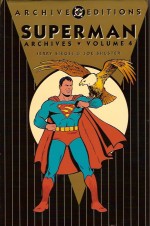
Superman Archives volume 2


By Jerry Siegel & Joe Shuster and the Superman Studio (DC Comics)
ISBN: 0930289-76-5

By 1940 the intoxicating blend of sensational superlative action and social crusading which hallmarked the early exploits of the Man of Tomorrow had gradually expanded to encompass traditional cops-and-robbers crime-busting and outright fantasy and science fictional elements.

With a thrice-weekly radio serial, games, toys, a newspaper strip and a growing international media presence, Superman was swiftly becoming everybody’s hero, as this classic compendium re-presenting issues #5-8 of his landmark solo title ideally illustrates.

This first-edition deluxe hardback opens with a beguiling Foreword from author, strip-writer, historian and fervent fan Ron Goulart but no contents page or creator credits, so for the sake of expediency I’ve used information and story-titles from later collections to facilitate the review. Besides, if you just buy this brilliant, lavish, full-colour hardback treasure-trove, you’ll be too busy reading the glorious stories to worry over such petty details…

Superman #5 (Summer 1940) was the last quarterly issue: from the next the comicbook would be published every two months – a heartbreakingly tough schedule for Jerry Siegel, Joe Shuster and their burgeoning Superman Studio, then comprising Paul Cassidy, Leo Nowak, Dennis Neville and Jack Burnley. They would continue to expand rapidly in the months to come.

This issue is a superb combination of human drama, crime and wicked science beginning with ‘The Slot Machine Racket’, a particularly hard-hitting yarn exposing the rise in gambling machines and one-armed bandits targeting young kids and their meagre allowances, which, after a delightful ‘Super Strength: Rules for Summer Living’ health and exercise feature and a Supermen of America ad, continued in similar vein with ‘Campaign Against the Planet’, wherein corrupt politicians attempted to bribe, intimidate and ultimately end the crusading paper’s search for truth and justice.

After two-fisted genre prose vignette ‘Power of the Press’ by George Chute, arch-villainy manifested with the insidious, toxic threat of ‘Luthor’s Incense Machine’ and, after another text thriller ‘Murder in the Wind’ by Jack Willis, cartoon capers with dizzy Dachshund ‘Shorty’ and a joke page, Superman crushed Big Business chicanery by exposing the scandal of ‘The Wonder Drug’.

Issue #6, produced by Siegel and the Studio, with Shuster only overseeing and drawing key figures and faces, contained four more lengthy adventures and led with ‘Lois Lane, Murderer’ as the Man of Action saved his plucky journalistic rival from a dastardly frame up, then took a break while Chute’s text thriller ‘Too Big for Marbles’ and hobo humorist Driftin’Dave (by Alger) offered a change of pace, after which Superman rescued a small town from a gangster invasion in ‘Racketeer Terror in Gateston.’

Jack Burnley produced the Super Strength exercise tips which preceded ‘Terror Stalks San Caluma’ with our hero’s efforts to avert a disaster hampered by a blackmailer who’d discovered his secret identity. Legend in waiting Gardner Fox authored exotic prose murder-mystery ‘The Strangest Case’ and fact-page ‘Sporting Close-Ups!’ happily set up the stunning final act as the Man of Steel uncovered ‘The Construction Scam’ foiling and spectacularly fixing a corrupt company’s shoddy, death-trap buildings.

Superman #7(November/December1940) firstly found the Action Ace embroiled in local politics when he confronted ‘Metropolis’ Most Savage Racketeers’ and, after a George Papp Fantastic Facts feature and gypsy tall-tale text-piece ‘Rinaldo’s Revenge’ by G.B. Armbruster, proceeding to crush horrific man-made disasters orchestrated by property speculators in ‘The Exploding Citizens’…

Shorty played the canine fool again before the Man of Tomorrow stamped out City Hall corruption in ‘Superman’s Clean-Up Campaign’ – illustrated by Wayne Boring, who inked Shuster on the last tale of this issue where the Caped Crimebuster put villainous high society bandits ‘The Black Gang’ exactly where they belonged… behind iron bars.

Released in time for the Holiday Season, Superman #8 (cover-dated January-February 1941) was another spectacular and varied compendium containing four big adventures and a flurry of filler features.

The fantastic fantasy romp ‘The Giants of Professor Zee’ (illustrated by Paul Cassidy), found the hero battling man-made monsters and merciless greed and, following a page each of ‘Laffs’ and ‘Nature News…’, plumped for topical tension and suspense in ‘The Fifth Column’ (depicted by Boring & Don Komisarow) with Superman rounding up spies and saboteurs, before comprehensively cleaning up uncommon criminals in ‘The Carnival Crooks’ (Cassidy again).

Text tale ‘Knotty Problem’ by Ed Carlisle and Ray McGill’s ‘Snapshots with our Candid Cartoon Camera’ led to a breathtaking disaster tale which this splendid volume. The cover-featured ‘Perrone and the Drug Gang’ featured an increasingly rare comic-book outing for Shuster – inked by Boring – wherein the Metropolis Marvel battled doped-up thugs and the corrupt drug-dealing lawyers who controlled them for – illegal – profit.

One off the most enticing aspects of these volumes is the faithful and entrancing inclusion of all the covers, period ads, pin-ups and special offers… with the Superman merchandise page alone worth the price of admission…

My admiration for the stripped-down purity and power of these Golden Age tales is boundless. Nothing has ever come near them for joyous, child-like perfection and every genuine fan really should make them a permanent part of his or her life.
© 1940, 1990 DC Comics. All Rights Reserved.
Cyberpunk book 1 & 2


By Scot Rockwell, Darryl Banks & Doug Talalla (Innovation)
ASIN: B005KDE9UO & B000GG0BBQ

One of the most ambitious and intriguing cash-ins on the 1990s literary phenomenon dubbed “Cyberpunk” was this challenging and potentially excellent yarn crafted very much in the manner of William Gibson’s Neuromancer which never had the time, editorial support or fanbase to develop into what it could and should have been. The story debuted as a brace of 2-issue miniseries in 1989 before being collected in colourful but exceedingly thin tomes.

It all begins in the near future with ‘Bad Dreams’ as freelance ICEbreaker Topo AKA “the Mole” attempts to infiltrate street-gang the Plastiques before returning his addicted consciousness to the shared cyberspace arena of the “Playing Field”.

Topo despises his meat body and would spend eternity in the neural universe if possible, but when his crusading lover and occasional employer is abducted by her latest target, Roi of Quondam Mechanics the Mole needs the assistance of tech-broker Alma Matrix to balance the scales and even the odds…

Probing the Corporation’s datastore in his avatar-form proves disastrous, but Topo survives and returns to his meat-form changed on a core level into something new and with very dangerous knowledge, leading to a fantastic showdown with Roi in an apocalyptic Playing Field which is catastrophically self-destructing all around them…

Book Two ‘The Masks of Time’ opens three years later as Juno allies with a streetgang called the Hotboys to track down her missing partner Topo who has vanished into cyberspace, obsessed with exploring the farthest frontiers of the digital universe and finding at last the mythical semi-mystical “Edge” of existence.

The rescue mission is doomed from the start. The Hotboys have their own agenda, Juno is unsure of her motives and Topo, deeper than any mind has ever delved, has encountered “Cyberghosts” who reveal a whole new reality…

When Alma Matrix is attacked and forced to intervene in Topo’s extended cerebral suicide, events take a extreme turn and the Mole’s gradual apotheosis resumes; culminating in a spectacular, radical denouement which offers the best available ‘Solace’ for all the conflicted players involved…

Although plainly derivative this smart little sci fi thriller offered a classy introduction to the sub-genre for comics fans and still holds the attention better than most related works, in comics or prose. The painted art ranges from excellent to murkily average but works well within the tale’s multi-level conception and I would certainly look favourably on a “twenty-five years later” sequel should one ever be mooted…
Cyberpunk, Topo, Juno and all other prominent characters and distinctive likenesses are ™ 1989 Scott Rockwell. Story © 1989 Scott Rockwell. Art (Book 1) © 1989 Darryl Banks, (Book 2) © 1990 Doug Tallala All rights reserved.

Out of this World Volume 1


By Raymond Everett Kinstler & various (Malibu)
No ISBN

A little while ago I reviewed the mind-boggling, intellectually challenging science fiction yarns of DC’s Strange Adventures and made a rather offhand remark about the other end of the genre-spectrum then extant.

Whilst Julie Schwartz and his band of writers (many full-time SF authors recruited during the Editor’s early days as a literary agent) pushed conceptual envelopes and opened doors of wonder, another strand focusing on sheer adventure offered the trappings of the form in racy, hard-bitten tales with rocket-ships replacing speeding Sedans or charging steeds, blasters substituting for gats or six-guns, aliens taking the place of Commies, Injuns or mobster-mooks and yes, lots of scantily clad babes in torn clothes or fetching ensembles comprising filmy underwear and large glass domes on their immaculately coiffed, pretty little heads…

These terrifically tacky tales of space sensationalism from another age are a delicious forbidden and oh, so guilty pleasure, thus there’s no real literary justification for today’s featured item, just old fashioned fun and some extremely enticing artwork.

These pre-code tales from minor publishers of the early 1950s are sheer, rockets-roaring, Thud and Blunder classics and might be missing a few technical truths and sensible science facts, but in terms of pulse-pounding excitement and masterful illustration they’re the real deal…

Collected from Avon’s Strange Worlds #9, Strange Planets #16 (an I.W. reprint of Strange Worlds #6), Harvey Comics’ Tomb of Terror #6 and S.P.M’s Weird Tales of the Future #1, the material within is pretty much the best the sub-genre has to offer and opens with the Everett Raymond Kinstler illustrated ‘Ransom – One Million Decimars!’ (Strange Worlds #9, November 1952) as hard-boiled space-cop Mike Grant hunted down the interplanetary mobster who had kidnapped the daughter of Earth’s President…

The same issue also provided the utterly anonymous ‘World of the Monster Brain!’ with its tale of the overthrow of a transdimensional tyrant as well as the thoroughly cathartic save-the-world thriller ‘Radium Monsters’ which looks like early Frank Springer to me…

Extraordinary special Agent Kenton of the Star Patrol spectacularly tackled ‘The Monster-Men of Space!’ in another Kinstler classic from Strange Planets #16 whilst  ‘The Survivors!’ (Tomb of Terror #6 1952, with art tantalisingly reminiscent of Joe Certa) pitted hunk and hot babe against hairy horrors in a post-Armageddon yarn, after which the manic tragedy of ‘The Man Who Owned the Earth’ (Strange Planets #16) was followed by the concluding classic of unwanted immorality in ‘Ten Thousand Years Old!’

This cheap and cheerful black and white compilation, coyly contained behind a cracking Bruce Timm cover, cuts straight to the magnificently cheesy pulp pulchritude pull of this kind of fantasy and although hard to find, difficult to justify, and perhaps a stretch to accept from our advanced perspective here in the future, these stories and their hugely successful ilk were inarguably a vital stepping stone to our modern industry. There is a serious lesson here about acknowledging the ability of comics to appeal to older readers from a time when all the experts would have the public believe that comics were made by conmen and shysters for kiddies, morons and slackers.

Certainly there are also a lot of cheap laughs and guilty gratification to be found in these undeniably effective little tales. This book and the era it came from are worthy of far greater coverage than has been previously experienced but no true devotee should readily ignore this stuff.

© 1989 Malibu Graphics, Inc. All Rights Reserved.

Spider-Man vs. Venom


By David Michelinie & Todd McFarlane (Marvel Comics)
ISBN: 2-48852-363-8,   2nd edition 978-0-87135-616-1

There was a period in the mid 1990s where, to all intents and purposes, the corporate monolith known as Marvel Comics seemed to have completely lost the plot. An awful lot of stories from that period will hopefully never be reprinted, but some of them weren’t completely beyond redemption.

During the Marvel Super Heroes Secret Wars of 1984-1985, Spider-Man picked a super-scientific new costume which turned out to be a hungry alien parasite which slowly began to permanently bond to its unwitting wearer.

After being discovered and removed by Reed Richards of the Fantastic Four “the Symbiote” ultimately escaped and, like a crazed and jilted lover, tried to re-establish its relationship with the horrified hero; seemingly destroying itself in the attempt.

During a stellar run of scripts by David Michelinie, the beast was revived with a new host and became one of the most acclaimed Marvel villains of all time, helped in no small part by the escalating popularity of rising star artist Todd McFarlane…

This rapidly rushed out compendium from 1990 collected literally every scrap of extant material featuring the new nemesis, comprising a teaser page from Amazing Spider-Man #298 (March 1988), two from #299, the entirety of #300 and an epic showdown from # 315-317 (May-July 1989).

Those orphan pages show a shadowy bestial character obsessing over clippings of the Wall-crawler before breaking into the apartment of Peter and Mary Jane Watson-Parker, before the main event begins with ‘Venom’ wherein the monstrous shape-shifting stalker, having terrorised Peter’s new bride, begins a chilling campaign to psychologically punish Spider-Man.

Venom is a huge hulking, distorted carbon copy of the Web-spinner: a murderous psychopath constituted of disgraced reporter Eddie Brock (who obsessively hates Parker the photo-journalist) permanently bonded with the bitter, rejected parasite whose animalistic devotion was spurned by an ungrateful host who even tried to kill it…

The story is a stunning blend of action and suspense with an unforgettable classic duel between Good and Evil which famously saw Spider-Man finally return to his original Ditko-designed costume and kicked off a riotous run of astounding stories from Michelinie & McFarlane, culminating in the titanic triptych ‘A Matter of Life and Debt!’, ‘Dead Meat’ and ‘The Sand and the Fury!’ with Brock bloodily breaking out of super-penitentiary The Vault to resume his campaign of hate while the oblivious Spider-Man is preoccupied with meta-thug Hydro Man and Peter Parker is embroiled in a deadly gambling debt drama concerning Aunt May’s current beau Nathan Lubensky…

Making his way across America, Venom begins to hunt his enemy’s nearest and dearest, starting with old flame and occasional crime-fighting comrade Black Cat, before moving on to Mary Jane and even frail old May Parker…

Pushed to breaking point Spider-Man gives Venom what he’s been demanding: a final all-out, one-on-one battle to the death…

Of course neither character died and the savage, shape-changing Symbiote – a perfect dark-side version of the Amazing Arachnid – went on to his own blood-drenched series. Eventually the spidery foes reached a tenuous détente and Venom became a “Lethal Protector”, dispensing his highly individualistic brand of justice everywhere but Spider-Man’s hometown.

This run of tales pushed the Wondrous Web-spinner to a peak of popularity and critical acclaim, with tense, terse tales of terror and triumph which inevitably resulted in ultimate arch-villain Venom gradually rehabilitating just enough to become one of the grim-and-gritty, dark anti-heroes which positively infested comics of that era (which explains why they’re also included in the sturdy compendium Spider-Man: Birth of Venom which additionally features Secret Wars #8, Amazing Spider #253-259, Fantastic Four #274 and Web of Spider-Man #1).

Whichever book you find however, if you’re a big fan of frantic Fights ‘n’ Tights action comics these are tales you just can’t ignore.
© 1990 Marvel Entertainment Group/Marvel Characters, Inc. All rights reserved.

Showcase Presents Wonder Woman volume 3


By Robert Kanigher, Ross Andru & Mike Esposito (DC Comics)
ISBN: 978-1-84856-474-9

Wonder Woman was created by psychologist and polygraph pioneer William Moulton Marston – apparently at the behest of his formidable wife Elizabeth – and uniquely realised by Harry G. Peter just as the spectre of World War II began to affect America.

She debuted as a bonus in All Star Comics #8 (December 1941) before vaulting into her own cover-featured series in Sensation Comics a month later. An instant hit, she quickly won her own title (cover-dated Summer 1942).

Using the pen-name Charles Moulton, Marston scripted all her adventures until his death in 1947, whereupon Robert Kanigher took over the writer’s role. Venerable co-creator H. G. Peter continued on as illustrator until his death in 1958. Wonder Woman #97, in April of that year, was his last hurrah and the end of an era.

With the exception of Superman, Batman, Wonder Woman and a few anodyne back-up features, costumed heroes had all but died out at the end of the 1940s, replaced by merely mortal champions in a deluge of anthologised genre titles but Showcase #4 rekindled the public’s interest in costumed crime-busters with a new iteration of The Flash in 1956 and the fanciful floodgates opened wide once more…

Whilst re-inventing Golden Age Greats such as Green Lantern, Atom and Hawkman, National/DC gradually updated those hoary survivors who had weathered the backlash and the ever-resilient Amazing Amazon …

Artists Ross Andru & Mike Esposito, who illustrated every script in this all-ages compendium, had debuted as cover artists from #95, but with Wonder Woman #98 (May 1958) they took over the interiors as writer/editor Kanigher reinvented much of the original mythos, tinkering with her origins and unleashing her on an unsuspecting world in a fanciful blend of girlish whimsy, rampant sexism, strange romance, alien invasion, monster-mashing and utterly surreal (some would say-stream-of-consciousness) storytelling…

By the time of this collection, re-presenting issues #138-156 (May 1963-August 1965) of the Amazing Amazon’s adventures, the Silver Age revival of the superhero genre was in full swing and despite individual stories of stunning imagination and excellence the format and timbre of Wonder Woman was looking tired and increasingly out of step with the rest of National/DC’s gradually gelling shared continuity.

While all the other champions and defenders were getting together and teaming up at the drop of a hat – as indeed was the Princess of Power in Justice League of America – within the pages of her own title a timeless, isolated fantasy universe was carrying on much as it always had.

Increasingly however, the Amazon was being sidelined by imaginary stories starring her younger selves Wonder Tot and Wonder Girl and even her mother Hippolyta was regularly stealing the show and the limelight.

With this volume though, the tide finally began to turn back in Diana’s favour…

‘The Kite of Doom! (#138) presented another spectacular “Impossible Day” adventure starring the entire Wonder Woman Family (that would be Princess Diana at three different ages acting in concert with her mother in tales which where outside even the amorphous and negligible continuity of the series, where internal consistency and logic were always notional and extremely mutable) and found the four faces of Wonder Woman again battling nuclear nemesis Multiple Man, alien invaders and the daily blazing fireball of doom…

‘The Day Wonder Woman Revealed her Secret Identity!’ saw the goddess Aphrodite inflict the Amazon with amnesia whilst meddling in her stalled romance with pilot Steve Trevor whilst WW #140 was another Impossible Tale with Wonder Woman transformed into ‘The Human Lightning!’ as Morpheus, god of dreams tested the entire Wonder Family before ‘The Academy of Arch-Villains!’ offered a reward for the destruction of the heroine and had to face the sinister machinations of Angle Man, the Human Fireworks and the diminutive but deadly Mouse Man.

The whole family were imperilled by terrifying trans-dimensional duplicates in ‘Captives of the Mirage Giants!’ another implausible Impossible Tale whilst issue #143 offered two tales, beginning with an alien invasion which could only be foiled by a mystic sword hidden within ‘The Terror Trees of Forbidden Island’, after which Wonder Woman was reduced to helplessness by the malignant Mouse Man and locked in ‘The Amazon Mouse Trap!’

Another brace of yarns featured in #144: the impressively clever ‘Revolt of Wonder Woman!’ wherein the tireless crusader suffered a stress-related breakdown until a blind girl restored her faith and determination and ‘Mer-Boy vs. Bird-Boy!’ with Wingo, an avian rival for Wonder Girl’s affections ,complicating an already busy day as the Teen Titan tackled invading aliens, enemy atomic submarines and the ever-deadly fireball from space…

The Wonder Woman Family were impossibly back to confront bad dreams and time-plunderers in ‘The Phantom Sea-Beast!’ but only Wonder Woman and Diana Prince were on hand to fight the ‘War of the Underwater Giants!’ and win thousands of dollars – for charity, of course – from a story-obsessed millionaire…

WW #147 featured an impossible tale from the Amazon’s teenage years as ‘Bird-Girl – Fish-Girl!’ her sea and sky boyfriends were given their heart’s desire by Athena and Aphrodite and both wished for a more physically compatible inamorata, whilst ‘The Olympics of the Doomed’ celebrated the 1964 Games with a stirring action romp in which the dread Duke of Deception captured Wonder Woman and compelled her to compete in a sudden-death competition on Mars…

In ‘The Last Day of the Amazons!’ the impossible Wonder Family almost triggered the destruction of Paradise Island when Queen Hippolyta’s passion for her long-lost lover causes his statue to come to life in a land where the presence of all males is severely proscribed by the goddesses…

Wonder Woman #150 offered ‘The Phantom Fisher-Bird!’ – a strange but thrilling yarn wherein the Wonder Family were hunted by giant man-birds from another plane of existence and ‘Wonder Girl vs. the Teenage Monster!’ (#151, January 1965) saw the Daring Damsel dogged and desired by a cosmic Glop which absorbed and mimicked anything: machinery, atomic weapons, Rock ‘n Roll records, juvenile delinquency…

With #152 the lass even took cover billing becoming Wonder Woman Presents Wonder Girl and featured another Impossible Tale with the young heroine resisting dinosaurs, mythological demons, invaders from Mars, disastrous weather and the importunate advances of Mer-boy and Bird-Boy in ‘Wonder Girl’s Decision of Doom!’ and found herself adopted by a deranged and traumatised trapeze artist who just knew that he was ‘Wonder Girl’s Mysterious Father!’

A far darker delusion haunted her in #153 as the Duke of Deception engineered ‘Wonder Girl’s Stolen Face!’ and turned her into an uncontrollable beast until Wonder Tot, Hippolyta and Wonder Woman found a face-saving solution…

‘Battle of the Boiling Man!’ in #154 saw the title revert to the mature iteration of the Female Fury in the penultimate Impossible Tale wherein wilful deities, mythical beasts and an ambulatory volcano all conspired to test the Amazons to destruction…

‘I Married a Monster!’ was a take on Beauty and the Beast wherein Wonder Woman, fed up with the constant badgering, bickering and marriage proposals of Steve Trevor, Manno and Wingo, swore off men for good and promptly fell in love with a brooding bad-boy brute trapped in a floating castle…

Just when it seemed the series could sink no lower Wonder Woman #156 changed everything with ‘The Brain Pirate of the Inner World!’ – a stylish adventure written and drawn in an effective and charming pastiche of Moulton & Peter’s glorious Golden Age Amazon.

When Wonder Woman visited the comics emporium of the Dream Merchant she was totally immersed and drawn into one of her past cases: “re-experiencing” a battle with other-dimensional buccaneers who had stolen the mentalities and enslaved the bodies of Steve and her old sidekicks the Holliday Girls…

Wild, bold, action-packed and thrilling, with all that mushy multi-species romance stuff dropped and her younger selves forgotten, a new kind of Wonder Woman was coming…

But not in this eclectic, eccentric collection which ends on this welcome high note.

Always delightful yet often mind-boggling and practically incomprehensible by modern narrative standards, these exuberant, effulgent fantasies are usually illogical and occasionally just plain bonkers, but in those days adventure in the moment was paramount and if you could put rationality and consistency aside for a moment these utterly infectious romps simply sparkled then and now with fun, thrills and sheer spectacle.

Wonder Woman is rightly revered as a focus of female strength, independence and empowerment, but the welcoming nostalgia and easy familiarity of such innocuous imaginative fairytales must be a magical escape for open-minded readers, whilst the true, incomparable value of these stories is the incredible quality entertainment they still offer.

© 1963, 1964, 1965, 2009 DC Comics, Inc. All Rights Reserved.

Heavy Metal Presents New Tales of the Arabian Nights


By Richard Corben & Jan Strnad (Heavy Metal Books/Simon & Schuster)
ISBN: 930-36844-4

Richard Corben is one of America’s greatest proponents of graphic narrative: an animator, illustrator, publisher and cartoonist, springing from the tumultuous wave of independent counterculture commix of the 1960s and 1970s to become a major force in comic storytelling with his own unmistakable style and vision. He is equally renowned for his mastery of airbrush, captivatingly excessive anatomical stylisation and delightfully wicked, darkly comedic horror, fantasy and science fiction tales.

Until relatively recently Corben steered clear of the Fights ‘n’ Tights comicbook mainstream. He didn’t sell out – American publishing simply caught up, finally growing mature enough to accommodate him, due in no small part to his broad and pervasive influence…

Born in Anderson, Missouri in 1940, he graduated with a Fine Arts degree in 1965 and found work as an animator. At that time, the neutered comicbooks of the Comics-Code Authority era were just starting to lose disaffected, malcontent older fans to the hippy-trippy, freewheeling, anything-goes publications of independent-minded creators across the continent who were increasingly making the kind of material Preachers and Mummy and her lawyers wouldn’t approve of…

Creativity honed by the resplendent and explicitly mature 1950s EC Comics, Carl Barks’ perfectly crafted Duck tales and other classy early strips, a plethora of young artists like Corben responded with a variety of small-press publications – including Grim Wit, Slow Death, Skull, Fever Dreams and his own Fantagor – which featured shocking, rebellious, sexed-up, raw, brutal, psychedelically-inspired cartoons and strips blending the new wave of artists’ unconventional lifestyles with their earliest childhood influences… honestly crafting the kind of stories they would like to read.

Corben inevitably graduated to more professional – and paying – venues. As his style and skills developed he worked for Warren Publishing in Eerie, Creepy, Vampirella, Comix International and outrageous adult science fiction anthology 1984/1994. He famously coloured some strips for the revival of Will Eisner’s the Spirit.

Soon after he was producing stunning graphic escapades for a number of companies, making animated movies, painting film posters and producing record covers such as the multi-million-selling Meatloaf album Bat Out of Hell. He never stopped creating comics but preferred personal independent projects with collaborators such as Bruce Jones, Jan Strnad and Harlan Ellison – who provided an effusive introduction here.

In 1975 Corben approached French fantasy phenomenon Métal Hurlant and became a fixture of its American iteration Heavy Metal – from which this stunning saga was collected.

Always garnering huge support and acclaim in Europe, he was regularly collected in luxurious albums even as he fell out of favour – and print – in his own country. This particular tome gathers a particularly impressive fantasy serial from the early days of Heavy Metal (specifically from June 1978 to August 1979) which cunningly reveals the final voyage and fate of a legendary hero…

This superb, criminally out-of-print but still readily available fable opens with a history of the charismatic storyteller Shahrazad and how she charmed her murderously strict husband, then goes on to concentrate on the tale she kept from him; and only shared with her wayward sister Dunyazad… ‘Sinbad in the Land of the Jinn’.

‘The Last Voyage of Sinbad’ begins when merchant Badr al-Bakkar recognises a Sufi sage as the legendary seaman and begs to know what turned such a worldly warrior into a penitent priest. As the broken old wanderer speaks of his secret Eighth Voyage a saga of tragedy and wonder unfolds…

Sinbad was a bored and restless husband who broke many of the Prophet’s Holy Injunctions and, whilst drunk one night, encountered a Jinn who attacked him, claiming the sot had killed his wife.

In retaliation the supernatural horror demanded the life of Sinbad’s beloved spouse Zulaykha, but could not find her…

The woman had vanished from the face of the Earth and the terrified adventurer resolved to find her and save her from the vengeance of the merciless Ifrit.

He is aided in his quest by the enigmatic Akissa, who claims to be the selfsame demon wife Sinbad supposedly murdered. She wishes to be divorced from her brutal trickster husband and offers to guide Sinbad and his crew to the magical realm of Zu’l Janahayn, the Jinni King of Kings who can grant any wish should he please. All they must do is find his floating citadel of Ketra…

And thus begins a quest of shocking terror, stupendous action, wanton debauchery and stunning duplicity, which resulted in the near-breaking of our hero, magical horrors and valiant perseverance…

The artist’s infamous signature-stylisation includes abundant nudity, excessive, balletic violence and astoundingly proportioned male and female physiques and these are all prominently displayed in this cunning and beguiling continuation of the fabulous legend of an immortal hero, which still finds room for a brilliantly contemporary twist…

Richard Corben is a unique visual stylist blessed with a love of the dark and graced with a scathingly sharp sense of humour. Combine that with our apparently insatiable hunger for monsters and mystery and this book becomes the ideal treat to while away the witching hour…
© 1978, 1979 Richard Corben and Jan Strnad. Introduction © 1979 Harlan Ellison. All rights reserved.

Amazing Spider-Man: the Saga of the Alien Costume


By Tom DeFalco, Roger Stern, Ron Frenz, Rick Leonardi & various (Marvel Comics)
ISBN: 978-0-87135-396-2

In the mid 1980s as part of a huge attention-getting exercise Spider-Man exchanged his heavily copyrighted and thoroughly trademarked costume whilst on another planet during the first Marvel Secret Wars. It was replaced with a magnificently stylish black and white number for the duration of the 12 issue maxi-series in his own titles (except the all-reprint Marvel Tales, of course) which over the course of the year revealed the true horrifying nature of the extraterrestrial  ensemble…

Collecting Amazing Spider-Man #252-259 (May-December 1984), continuity-wise this captivating extended epic opens at the conclusion of the Secret Wars Saga with Spider-Man and Curt Connors – occasionally the lethally maniacal monster called the Lizard – explosively returning to Earth after a week when most of the world’s heroes and villains had simply vanished.

To clear up any potential confusion: Marvel Super Heroes Secret Wars debuted in May 1984 and ran for twelve monthly issues until April 1985. In it a selection of metahumans good and bad were shanghaied by a godlike being dubbed The Beyonder and compelled to interminably battle each other. All other Marvel comics of that month chronologically happened in the apparent aftermath of that struggle with most of the heroes and villains returned, coyly refusing to divulge what had happened on Battleworld …a cheap but extremely effective ploy which kept fans glued to the Limited Series in the months that followed.

This compendium from 1988 opens with an introduction and design sketches before catapulting us into action in ‘Homecoming!’ by Roger Stern, Tom DeFalco, Ron Frenz & Brett Breeding as spectators in Central Park see a mysterious black garbed stranger explode out of an alien artefact … only the first of many costumed characters to escape the Beyonder’s world.

Spider-Man takes the shell-shocked Connors back to his family and then begins to explore his new uniform: a thought controlled, self-activating, metamorphic ball with chameleon capabilities and able to construct webbing out of its own mass. The smart-cloth is astonishing, but weary Peter Parker has family to see and a city to reacquaint himself with. The hero promises himself he’ll further research the incredible material at a later date…

The wonderful Rick Leonardi & Bill Anderson illustrated DeFalco’s powerful crime thriller ‘By Myself Betrayed!’ wherein a prominent football player, sucked into gambling and match-fixing, dragged the Web-spinner into conflict with new gang-lord The Rose. As his new uniform increasingly, obsessively amazes Peter with its rather disturbing autonomy (it comes to him unbidden and regularly envelops him while he sleeps), the hero uncomprehendingly alienates his beloved Aunt May when he drops out of college…

‘With Great Power…’ (inked by Joe Rubinstein) found the wall-crawler battling terrorist mercenary Jack O’Lantern for possession of the hi-tech battle-van designed and built by the terrifying Hobgoblin when he should have been reconciling with May, whilst ‘Even a Ghost Can Fear the Night!’ (DeFalco, Frenz & Rubinstein) introduced charismatic septuagenarian cat-burglar Black Fox (whose outfit coincidentally resembled Spidey’s new kit) who became a hapless pawn of the merciless but cash-strapped Red Ghost and his Super-Apes.

Compelled to rob until he was caught by Spider-Man, the Fox orchestrated a spectacular battle between the Wall-crawler and the Ghost before getting away with all the loot…

‘Introducing… Puma!’ found an increasingly weary and listless Spider-Man attacked by a Native American super-mercenary hired by the Rose. The Arachnid’s gang-busting crusade in partnership with reformed thief/new girlfriend Black Cat was making life too hot and unprofitable for the ambitious mobster. That calamitous clash carried over into ‘Beware the Claws of Puma!’ furiously escalating until criminal overlord The Kingpin stepped in to stop it, forcing the Rose to ally himself with the murderous Hobgoblin. The issue ended with an exhausted Parker confronted with a stunning revelation from his old lover Mary Jane Watson…

The shock prompted Peter into seeking out ‘The Sinister Secret of Spider-Man’s New Costume!’ Plagued by nightmares, perpetually tired and debilitated the Web-spinner visited the Fantastic Four and was disgusted and horrified to learn that his suit was alive: a parasite slowly attaching itself to him body and soul…

Meanwhile Hobgoblin and the Rose’s uneasily alliance had resulted in bloody, undeclared war on the Kingpin…

With Reed Richards’ help the creature was removed from Spider-Man and imprisoned and this collection concludes with the poignant ‘All My Pasts Remembered!’ as Mary Jane finally tells Peter her tragic life story after which the free, reinvigorated and re-dedicated hero determined to put a stop to Hobgoblin for good…

But that’s a tale for another tome…

This run of tales marvellously rejuvenated the Amazing Arachnid and kicked off a period of superbly gripping and imaginative stories, culminating with the creation of arch hero/villain Venom (which is why these tales can also be found in the sturdy compendium Spider-Man: Birth of Venom with addition material from Secret Wars #8, Amazing Spider #298-300, 315-317, Fantastic Four #274 and Web of Spider-Man #1).

Whichever book you buy, if you’re a fan of superhero comics these are tales you just don’t want to miss.
© 1988 Marvel Entertainment Group/Marvel Characters, Inc. All rights reserved.