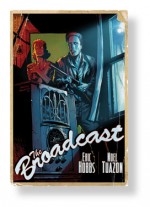
The Broadcast


By Eric Hobbs & Noel Tuazon (NBM/ComicsLit)
ISBN: 978-1-56163-590-0

When you read that as many as one millions Americans were fooled into hysterical panic by Orson Welles’ Halloween radio broadcast of the War of the Worlds it’s had not to think “how dumb are you?” or “don’t you people read books?” but the sad fact remains that a vast proportion of the population heard a portion of the innovative updating of the HG Wells classic on October 30th 1930 and genuinely thought the end of humanity had come.

This superbly low-key monochromatic tale takes a canny peek at human nature in a time of sustained privation (the Great Depression had just hit the USA a damned sight harder than any Martian death-ray could) and urgent – if only imagined – emergency as a small community in rural Indiana endures a couple of unhappy coincidences that result in a horrific confrontation…

At the height of a brutal storm a small band of farmers and families huddle in a barn. It’s been a bad day all around. Young Gavin Baker has finally asked wealthy Thomas Shrader if he could marry his daughter, Kim, but the meeting didn’t go well. Nevertheless the lovers still planned to escape to New York where Kim could become a writer…

Shrader had made a killing bailing out and buying up failing farms over the past year and wasn’t well liked by the newly destitute townsfolk such as widower Jacob Lee or cropper Eli Dawson, but he’s the only employer left so they make do…

A severely beaten, wandering Negro named Martin Steinbeck stumbled into the Baker place later that day. He’d clearly had a brutally rough encounter and was astonished when the family offered him help and sustenance rather than hatred and further violence…

Later, throughout the community the townsfolk tuned in their radios and all caught what they believed to be newscasts reporting Martian invaders blasting New York and New Jersey when suddenly a storm hit and the town lost power. With the phones and lights out, panicked, terrified people all headed towards the Shrader place with its solid storm cellar but when Kim discovered a truck with dead bodies it in, the only conclusion could be that the aliens have already reached the Heartland…

But when the families arrive Shrader delivered an ultimatum: only five people will be allowed refuge, him, his wife and three other and only then if rebellious Kim is one of them…

With imminent doom lurking in the darkness, friendship, civility and human empathy begin to breakdown and a very human atrocity seems inevitable…

This is an enchantingly subtle and impressive tale, carefully avoiding histrionics and bombast, and ultimately uplifting and positive. Eric Hobbs has focused on the communal heroism of the common man and the misty, raw line-and-wash illustration of Noel Tuazon marries dreamy introspection with painful sufferance to give the ensemble cast a look far removed from the general run of modern comics.

The book also contains a photo and clippings gallery displaying the media’s response to the original radio broadcast, deleted scenes, character sketches and a brief commentary on the creator’s working process. Tense, ironic and deeply moving this may well be the sleeper-hit of the year and a major motion picture soon after…

© 2010 Eric Hobbes.

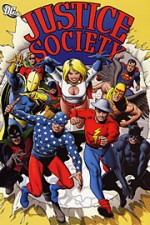
Justice Society Volume 1


By Gerry Conway, Paul Levitz, Wally Wood, Joe Staton & various (DC Comics)
ISBN: 978-1-4012-0970-4

In the turbulent 1970s many old publishing ideas were finally laid to rest. The belief that characters could be “over-exposed” was one of the most long-lasting, garnered from years of experience in an industry that lived or died on that fractional portion of pennies derived each month from the pocket money and allowances of children which wasn’t spent on candy, toys or movies.

By the end of the 1960s comicbook costs and prices were inexorably rising and a proportion of titles – especially the newly revived horror stories – were consciously being produced for older readerships. Nearly a decade of organised fan publications and letter writing crusades had finally convinced publishing bean-counters what editors already knew: grown-ups avidly read comics too; they would happily spend more than kids and they wanted more, more, more of what they loved.

Explicitly: If one appearance per month was popular, extras, specials and second series would be more so. By the time Marvel Wunderkind Gerry Conway was ready to leave Marvel, DC was willing to expand its variegated line-up with some oft-requested fan-favourite characters. Paramount among these was the Justice Society of America, the first comicbook super-team and a perennial gem whose annual guest-appearances in the Justice League of America had become an inescapable and beloved summer tradition.

Thus in 1976 along with Blackhawk, Plastic Man, Secret Society of Super-Villains, Freedom Fighters, Kobra, Blitzkrieg and many others Conway signalled his DC tenure by reviving All Star Comics with number #58 (the original title had transformed overnight into All Star Western with that number running for a further decade as the home of such cowboy crusaders as Strong Bow, the Trigger Twins, Johnny Thunder and Super-Chief.

Set on the parallel world of Earth-2 and in keeping with the editorial sense of keeping the series relevant to young readers too, Conway reintroduced the veteran team and leavened it with a smattering of teen heroes, combined into a contentious, generation-gap fuelled “Super Squad”.

The youngsters included Robin (already a JSA member since the mid 1960s – see Showcase Presents the Justice League of America volume 3), Sylvester Pemberton, The Star-Spangled Kid (in actuality a teen superhero from the 1940s who had spent decades lost in time) and a busty young nymphet who quickly became the feisty favourite of a generation of growing boys: Kara Zor-L AKA Power Girl.

This first of twin volumes gathers all the 1970s tales into a fine showcase of different, ever-changing times and includes All-Star Comics 58-67 plus the seminal DC Special #29 which, after almost four decades, finally gave the JSA an origin…

After a three-page recap by Paul Levitz, Joe Staton & Bob Layton, outlining the history and mechanics of the alternate Earths, the first tale found newly-adopted Star-Spangled Kid chafing at his time-lost plight and revelling in his new powers (he had been given a cosmic power device by retired veteran Starman) in Seattle when a crisis propelled him and elder heroes Flash, Dr. Mid-Nite, Wildcat, Hawkman, Green Lantern and Dr. Fate into a three-pronged calamity devastating that city, Cape Town and Peking (which you youngsters now know as Beijing) with man-made natural disasters.

The veterans split up but were overwhelmed, giving the new kids a chance to shine in ‘All Star Super-Squad’. With the abrasive, impatient Power Girl in the vanguard the entire team is soon on the trail of old foe Degaton and his mind-bending ally in the concluding ‘Brainwave Blows Up!’ by Conway, Ric Estrada and Wally Wood.

Kieth Giffen replaced Estrada in issue #60 for the introduction of psychotic super-arsonist ‘Vulcan: Son of Fire!’ as age divide began to chafe and Power Girl began to tick off and re-educate the stuffy, paternalistic JSA elders. In ‘Hellfire and Holocaust’ the flaming fury mortally wounded Dr. Fate before his own defeat, and a new mystic menace was uncovered.

Conway’s last issue as scripter was #62’s ‘When Fall the Mighty’ as antediluvian sorcerer Zanadu attacked, whilst the criminal Injustice Gang opened their latest attack using mind-control to turn friend against friend…

The cast expanded with the return of Hourman and Power Girl’s Kryptonian mentor, but even they were insufficient to prevent ‘The Death of Doctor Fate’ (written by Paul Levitz and fully illustrated by the inimitable Wally Wood). Attacked on all sides, the team splintered: Wildcat, Hawkman and the Kryptonians tackling the assembled super-villains, Flash and Green Lantern searching Egypt for a cure to Fate’s condition and Hourman, Mid-Nite and Star-Spangled Kid desperately attempting to keep their fallen comrade alive.

They fail and Zanadu attacked again, almost adding Fate’s defenders to his tally until the sorcerer’s very presence called him back from beyond the grave…

With the crisis averted Superman prepared to leave but was quickly embroiled in a manic time-travel assassination plot (Levitz & Wood) that dragged the team and guest-star Shining Knight from an embattled Camelot in ‘Yesterday Begins Today!’ to the far-flung future and ‘The Master Plan of Vandal Savage’ a breathtaking spectacle of drama and excitement that signalled Wood’s departure from the series.

Joe Staton & Bob Layton had the unenviable task of filling his artistic shoes, beginning with #66 as ‘Injustice Strikes Twice!’ with the reunited team, sans Superman, falling prey to an ambush from their arch-enemies, whilst the emotion-warping Psycho-Pirate began to twist Green Lantern into a maniac menace determined to crush Corporate America leading to the return of Earth-2’s Bruce Wayne, who had eschewed his masked persona to become Gotham’s Police Commissioner.

The Injustice Society had monstrous allies and in ‘Attack of the Underlord!’ a subterranean race nearly ended the tea forever. Meanwhile Wayne laid plans to close down the JSA before their increasingly destructive exploits demolished his beloved city…

The modern adventures pause here and this first colourful chronicle closes with the aforementioned classified case from DC Special #29 (September 1977). ‘The Untold Origin of the Justice Society’ by Levitz, Staton & Layton, reveals how in 1940 Adolf Hitler acquired the mystical Spear of Destiny and summoned mythical Teutonic Valkyries to aid in the imminent invasion of Britain.

Alerted to the threat, American President Roosevelt, hampered by his country’s neutrality, asks a select band of masked mystery-men to lend their aid privately. In a cataclysmic escalation the struggle ranged from the heart of Europe, throughout the British Isles and even to the Oval office of the White House before ten bold costumed heroes finally – if only temporarily – stopped the Nazis evil plans…

These classic tales from a simpler time are a glorious example of traditional superhero storytelling at its finest: engaging, exciting and perfectly illustrated. No Fights ‘n’ Tights fan can afford to miss these marvellous sagas.

© 1976, 1977, 2006 DC Comics. All rights reserved.

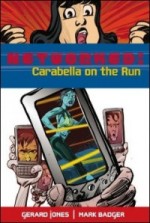
Networked: Carabella on the Run


By Gerard Jones & Mark Badger (Privacy Activism/NBM)
ISBN: 978-1-56163-586-3

Comics are an immensely effective teaching tool and not just for youngsters, either. The organisation Privacy Activism is a non-profit organisation which seeks to educate and inform the public about online safety, democratic principles in a global commercial environment and personal information protection through a variety of methods and after a couple of video game projects has worked here with comicbook creators Gerard Jones and Mark Badger and publisher NBM to produce a graphic novel starring their proprietary character Carabella; a blue-skinned teenaged girl from someplace stranger and nastier than here…

In Networked: Carabella on the Run the defensive, secretive lass is starting college and horrified at how easily her anonymity can be destroyed by even well-meaning friends through online social networking and messaging. Even her picture is soon being beamed all over the planet – all without her permission or knowledge.

Still, it’s not as if she has anything to hide, is it?

She soon strikes up a tentative relationship with Nick, an engineering student who has invented shoes which can film and monitor the wearer’s movement’s, record and broadcast physical responses and generally turn each owner into a walking market research report. Of course that wasn’t his intention – he just though it would be cool for friends to share their lives with others…

Unfortunately where Carabella comes from such information has long been used to oversee, segregate, program and control the population, so when hunters seeking her return align themselves with aggressive venture capitalists and sections of the Government she realises that the privacy, liberty and choices available to her and her friends might become just as obsolete as on her own world…

Combining a sensible, well-reasoned argument for common sense and practical personal protection with solid adventure-thriller plotting and the requisite amount of romance, action and fun, this is a great read with an important message that doesn’t overload the necessity to keep things interesting and enjoyable.

Most of Networked is available online in a slightly altered form if you want a peek, and the printed form is a perfect and potentially reassuring gift for parents to buy their kids alongside the mobile-phones and think-pods they’ll be clamouring for this year.

© 2010 Privacy Activism.

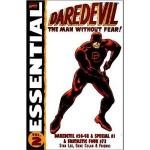
Essential Daredevil volume 2

New, Revised review


By Stan Lee, Gene Colan & various (Marvel)
ISBN 0-7851-905239-1462-9

Marvel Comics built its fan-base through strong and contemporarily relevant stories and art, but most importantly, by creating a shared continuity that closely followed the characters through not just their own titles but also through the many guest appearances in other comics. Such an interweaving meant that even today completists and fans seek out extraneous stories to get a fuller picture of their favourites’ adventures. In such an environment, series such as ‘Essential’ and DC’s ‘Showcase’ are an economical and valuable product that approaches the status of a public service for collectors.

This particular edition, reprinting the exploits of a very different Daredevil to the one radicalised into a grim urban vigilante by Frank Miller and his successors from the 1980’s onwards, covers the period from March 1967 (#26) to January 1969 (#48), and includes the first Annual plus Fantastic Four #73 where a long-running storyline concluded (see what I mean about cross-collecting?).

The adventures are fairly typical 1960’s action-fodder. Matt Murdock is a blind lawyer whose other senses hyper-compensate, making him a formidable acrobat and fighter, and a human lie-detector. Very much a second-string hero for most of his early years, he was nonetheless a popular one, due in large part to the incredibly humanistic art of Gene Colan. He fought gangsters and a variety of super-villains, and even the occasional alien invasion. He also joked and wise-cracked his way through life, unlike the grim and moody quasi-religious metaphor he’s been seen as in latter years.

The action commences with marked improvement in overall story quality as Stan Lee began to use longer soap operatic plot-threads to string together the unique fight scenes of increasingly bold Gene Colan, who was finally shaking off the last remnants of his predecessor’s art style. In a very short time John Romita had made the character his own before moving on to Spider-Man, so when Colan took over he kept the clipped solid, almost chunky lines whilst drawing the Man without Fear, but increasingly drew everything else in his loose, fluid, near-tonal manner.

This clash of visuals was slow to pass but by the time of ‘Stilt-Man Strikes Again’ (DD #26, March 1967) a leaner, moodier hero was emerging. The major push of the next few issues was to turn the hopeless romantic triangle of Matt Murdock, best friend/Law partner Foggy Nelson and their secretary Karen Page into a whacky quadrangle by introducing fictitious twin brother Mike, who would be “revealed” as Daredevil to divert suspicion from the blind attorney who actually battled all those weird villains…

Confused yet…?

Also skulking in the background was arch-villain Masked Marauder who was closing in on DD’s alter ego. He got a lot closer in ‘Mike Murdock Must Die!’ (inked by Frank Giacoia) as Stilt-Man teamed with the Marauder and Spider-Man clashed with old Horn-Head before the villains met their apparent ends.

DD had his first clash with extraterrestrials in #28’s moody one-trick-pony ‘Thou Shalt Not Covet Thy Neighbor’s Planet!’ a Dick Ayers inked thriller wherein the invaders’ blindness rays proved inexplicably ineffective against the Crimson Crime-buster.

John Tartaglione inked the next tale, a solid, action-packed gangster thriller entitled ‘Unmasked!’ whilst issue #30 began a protracted and impressive epic clash with old Thor foes the Cobra and Mister Hyde, complete with Asgardian cameo in ‘…If There Should Be a Thunder God!’

Attempting to catch the criminals DD masqueraded as Thor only to encounter the real McCoy, and was ambushed by the villains once the Thunderer departed. As a result DD lost his compensating hyper-senses and had to undertake a ‘Blind Man’s Bluff!’ which almost fooled Cobra and Hyde… Sadly it all went wrong before it all came right and against all odds Murdock regained his abilities just in time ‘…To Fight the Impossible Fight!’

Daredevil #33 saw the entire cast head to Canada for Expo ’67 (the World’s Fair) encountering another borrowed villain in ‘Behold… the Beetle!’ and its frenetic sequel ‘To Squash the Beetle!’ The first Annual follows; a visually impressive but lacklustre rogues’ gallery riot as five old foes ganged up on Daredevil in ‘Electro and the Emissaries of Evil!’ with the Man without Fear putting a pretty definitive smack-down on the electric felon, the Matador, Gladiator, Stilt-Man and Leapfrog.

Of more interest are the ‘Inside Daredevil’ pages, explaining his powers, how his Billy Club works and the Matt/Mike Murdock situation, with stunning pin-ups of Karen, Foggy, Ka-Zar, DD and a host of old foes. Rounding out the experience is a short comedy tale ‘At the Stroke of Midnight!: an Actual Unrehearsed Story Conference with (and by) Stan and Gene!’

‘Daredevil Dies First!’ pitted the sightless wonder against old Fantastic Four foe Trapster, but Horn-Head was only a stepping-stone in his complex plan to destroy the World’s premier super-team. However DD managed to turn the tables in #36’s ‘The Name of the Game is Mayhem!’ (inked by Giacoia) a clash that left the blind hero weakened and easy prey for another FF arch-foe. Tartaglione returned to ink the startling ‘Don’t Look Now, But It’s… Doctor Doom!’

Helpless before the Iron Dictator DD was trapped in ‘The Living Prison!’ (Giacoia inks) as Doom swapped bodies with the sightless crusader to facilitate an ambush on the FF which culminated in a stupendous Battle Royale in Fantastic Four #73’s crossover conclusion as the Torch, Thing and Mr. Fantastic fought DD, Thor and Spider-Man in ‘The Flames of Battle…’ (by Lee, Jack Kirby & Joe Sinnott). When involved in mind-swap cases it’s always prudent to advise your friends when you regain your original body…

DD finally got to battle some of his own bad-guys in #39 as old foes the Ani-Men returned with a new name and a new boss. ‘The Exterminator and the Super-Powered Unholy Three’ (inked by George Tuska) reintroduced Bird-Man, Ape-Man and Cat-Man in the pay of a criminal genius working with time-based weapons, but the real meat of the tale was Foggy Nelson’s campaign to become New York City’s District Attorney and his revived relationship with ex-con Deborah Harris: now Matt Murdock’s only rival for Karen’s affections was his imaginary twin brother Mike…

That story proceeded in #40, resulting in a spectacular clash ‘The Fallen Hero!’ (inked by Tartaglione) and concluded the only way it could in ‘The Death of Mike Murdock!’ as Matt took advantage of his final battle with the Exterminator to end the charade. He didn’t come clean though, as Daredevil revealed that Mike was only one of a number of Men without Fear in the first part of a prolonged battle with a new nemesis as ‘Nobody Laughs at The Jester!’ (inked by Dan Adkins).

The Malevolent Mountebank only wanted to be more successful as a criminal than he had been as an actor until mayoral candidate Richard Raleigh hired him to spoil incorruptible Foggy Nelson’s campaign for the D.A. post; precipitating a protracted saga which kicked off with a temporarily befuddled DD ‘In Combat with Captain America!’ (inked by Vince Colletta) before being framed for killing the Jester’s alter ego Jonathan Powers in #44’s ‘I, Murderer!’

Defeated by the Jester in ‘The Dismal Dregs of Defeat!’, Horn-Head became a wanted fugitive and after a frenetic manhunt was finally arrested before snatching victory in the thoroughly enthralling conclusion ‘The Final Jest!’ as inker extraordinary George Klein began a long and impressive association with the series.

With the Vietnam War raging a story involving the conflict was inevitable, but #47’s ‘Brother, Take My Hand!’ was so much more than a quick cash-in or even well-meaning examination of contemporary controversy, as Marvel found a new African-American character (one of far too few in those blinkered times).

Newly-blinded veteran Willie Lincoln turned to Matt Murdock and Daredevil for help on his return home. A disgraced cop framed by gang-boss Biggie Benson before joining the army, Lincoln was now back in America to clear his name… at all costs. This gripping, life-affirming crime thriller not only triumphs in Daredevil’s natural milieu of moody urban menace but also sets up a long-running plot that would ultimately change the Man without Fear forever.

The book ends with the return of Stilt-Man in ‘Farewell to Foggy’ as Matt’s oldest friend wins the election for D.A. but acrimoniously turns his back on Murdock, seemingly forever.

This is a good place to end as Stan Lee would hand over the scripting to Roy Thomas soon after this and the social turbulence that marked the end of the 1960s would begin to transform the dashing, wise-cracking Daredevil into something closer to his current dark archetype. But that’s for another volume…

© 1967, 1968, 1969, 2004 Marvel Characters, Inc. All rights reserved.

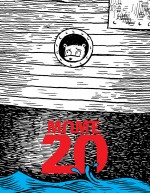
Mome 20: Fall 2010


By various (Fantagraphics Books)
ISBN: 978-1-60699-365-1

Mome is a quarterly compendium of sequential narratives; a magazine that looks like a book, featuring strips, articles, graphic artworks and sometimes interviews from and about a variety of talented, dedicated creators ranging from the internationally renowned to the soon-to-be. It is where the smart kids with the sharpest pencils, shiniest pens, biggest brushes and best software go to play before they blow your minds in great big award-winning graphic novels. It is intense, sometimes hard to read and crafted to the highest production standards. This volume signals five incredibly impressive years and the eclectic graphic mix presented here augurs well for the next fifty…

After the previous edition’s brief sabbatical a number of continued features return, but before that Dash Shaw opens proceedings with an oddly disturbing short romance entitled ‘Blind Date 2’ – cited as “an adaptation of an episode of Blind Date”, followed by a quirkily affecting parable of eternal romantic triangles entitled ‘The Bird, The Mouse and The Sausage’ by Sara Edward-Corbett before the spectacular and disturbing fantasy from The (Shaun) Partridge in the Pear Tree & Josh Simmons continues in part 2 of ‘The White Rhino’ as an extremely obnoxious man also awakes in the nerve-wracking, deceptively welcoming rainbow-nation of Racelandia…

T. Edward Bak’s pictorial biography of 18th century German naturalist Georg Wilhelm Steller finds the Siberian explorer reaping a few well-deserved carnal rewards for his efforts in ‘Wild Man Chapter 2: A Bavarian Botanist in St. Petersburg, part 4’ before Conor O’Keefe returns with the first chapter of another charmingly potent watercolour fantasy in ‘The Coconut Octopus’: part 1 – surreal, nostalgic, seductively compulsive…

Nate Neal (and don’t miss his recently released graphic novel The Sanctuary) goes all song-and-dancey with the magically macabre message of ‘Magpie Inevitability’ before moody World War II mystery ‘Devil Doll’ by Michael Jada and Derek Van Gieson returns with a captivating third part.

Steven Weissman utterly impresses with his time-twisting, haunted boy’s adventure ‘This Already Happened’, award-winning Italian cartoonist Sergio Ponchione reprises his marvelously enticing horror-hunter with ‘The Grotesque Obsession of Professor Hackensack’ and painter Jeremy Tinder explores ‘Time and Space’ with cunning intimacy and wild imagination.

Genteelly experimental and sadly inquisitive Aidan Koch pushes her seductive pencil to explore the transitory briefness of relationships in ‘Green House’ whilst Viennese cartoonist Nicholas Mahler ponders the life of a working comics artist in ‘Convention Tension’ and ‘Goodbye Mr. Nibs’. Fans should prepare for a bracing encounter with themselves…

Cover-featured Ted Stern’s anthropomorphic sad-sacks Fuzz & Pluck return in their ongoing nautical quest for wealth and safety with ‘The Moolah Tree’ part 4 and graphic designer Adam Grano ends this volume with a tantalising glance at his ‘$crapbook’…

Whether you’re new to comics, fresh from the mainstream ghettos or just need something new, Mome always promises – and delivers – a decidedly different read. You may not like all of it, but it will always have something you can’t help but respond to. After half a decade it’s here to stay …so why haven’t you tried it yet?

Mome © 2010 Fantagraphics Books. Individual stories are © the respective creator. All rights reserved.

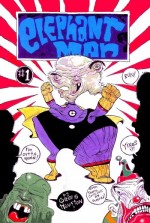
Elephant Man


By Greg Houston (NBM)
ISBN: 978-1-56163-588-7

Cartoonist, caricaturist, designer, educator, actor and big fan of old movies Greg Houston delights in the baroque and comically grotesque; positively revelling in taking taste-free pot-shots at societal and popular culture icons (see Vatican Hustle for more of his measured, manic musings) and his latest brilliant black and white book has a go at the very bedrock of our medium by parodying and pastiching the classic superhero scenario.

Baltimore has its own Costumed Crusader and he is the perfect symbol of a city with so little to recommend it. He doesn’t have any proper powers, but the people love him and on the fifth anniversary of his first appearance the minor metropolis is holding a week of commemorative events.

Local paper the Daily Crab is following events, particularly feisty journo Tracie Bombasso, cub reporter Dud Cawley and mild-mannered, colonically-challenged reporter Jon Merrick (yes, that kind of Elephant Man), despite the rantings of unpopular on-air TV presenter Handsome Dick Denton – but he’s just jealous, right?

Also determined to spoil everything is sinister conjoined villain The Priest, the Rabbi and the Duck, twisted victim of an old joke and a tragic accident involving alcohol and science…

Can Merrick keep his identity secret from his fellow reporters, foil the machinations of Denton and stop the three-headed Hydra of Pique? Of course he can, but along the way there’s bizarre characters old and new (keep your eyes peeled for cameos from Boss Karate Black Guy Jones and other Vatican Hustle alumni), cripplingly painful embarrassing moments and enough ugly hilarity to have a very good time indeed.

And lest you think we’re being unkind to the place let me reveal that Houston is Baltimore born-and-bred…

Beneath the outrageous parody and extreme mock-heroics is another witty and genuinely funny adult romp which pokes edgy fun at everything from politicians to donuts, weathermen to beauticians, making some telling observations about heroes and how to treat them, all rendered in a busy, buzzy, black and white line that appeals and appals in equal amounts.

Warning: this book contains Six-foot talking flies and shaved, car-racing monkeys.

© 2010 Greg Houston. All rights reserved.

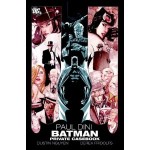
Batman: Private Casebook


By Paul Dini, Peter Milligan, Dustin Nguyen & Derek Fridolfs (DC Comics)
ISBN: 978-1-84856-213-4

Award-winning animator and director Paul Dini once more proves that he’s the best Batman writer of the 21st century in another collection of his pure, modernistically refined and retro scripts, gathered from Detective Comics # 840-645 and DC Infinite Halloween Special #1. A consummate storyteller, Dini is also quite obviously a lover of the character in all aspects over nigh-on eight decades of stalking the scum of the Earth.

This volume, superbly illustrated by Dustin Nguyen & Derek Fridolfs, begins with an astounding resumption of the Caped Crusader’s mission after the cataclysmic events of Batman: The Resurrection of Ra’s Al Ghul. As the Dark Knight hunts a new foe he seizes the chance to finally end the threat of the Demon’s Head forever, in the uncompromising chiller ‘The Resurrection of Ra’s Al Ghul: Epilogue.’

‘The Wonderland Gang!’ sees a collection of Batman’s oldest foes unite as the most obvious team ever when Mad Hatter, Tweedledum & Tweedledee combine forces with the Lion, the Unicorn, the Walrus and the Carpenter to wreak excessive havoc for untold profit in the wealthy palaces of Gotham. Naturally, all is not as it seems…

Peter Milligan wrote ‘The Suit of Sorrows’ as the haunted armour Batman wore in the aforementioned Resurrection of Ra’s Al Ghul begins to exert a malicious influence over his actions. The struggle against the suit and the cult that crafted is a powerful parable of willpower over desire and acts as a prelude to the return of Azrael to the DC Universe – but not in this book…

Dini and some of his favourite heroes and villains return for ‘Opening Night’ as the Penguin, new Ventriloquist and malignant dummy Scarface cross swords with the Gotham Guardian and Zatanna; a complex and beguiling tale that ends in blood-soaked ‘Curtains’ for more than one player in the drama.

Catwoman and reformed consulting detective Edward Nigma go looking for answers as a mutilating murderer haunts the city’s mean streets and not even Batman’s newest weapon “the Heirs of Lupin” (an online community of DC sleuths including Detective Chimp and Oracle) can divine the true secret of ‘The Riddle Unanswered’.

This stellar confabulation ends with a vignette starring Zatanna in solo inaction taken from DC Infinite Halloween Special. ‘Kcirt Ro Taert’ is a spookily shocking shaggy dog story that ends this classy compendium on an unbeatable high note.

Howsoever short-term sales-stunts bend and twist the Batman mythos, the core elements of the character remain unimpeachable and Paul Dini always find a way to satisfactorily blend the contemporary with the classical. His tales of a renewed, determined and darkly benevolent crime-fighter look well set to finally overturn the Grim Sociopath image that has dogged Batman for too long…

These fresh, thrilling and compelling adventures will astonish long-time fans and casual browsers equally. This is the still best Batman in years. By the way if you’re thinking of settling for the softcover edition of this fine collection, be advised that the hardcover has secondary, different front and back covers under the regular and spectacular dust jacket reproduced above. I know how funny we Bat-fans can get if we think we’ve missed something…

© 2007, 2008 DC Comics. All Rights Reserved.

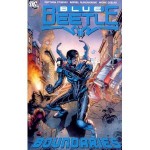
Blue Beetle: Boundaries


By Matthew Sturges, Rafael Albuquerque & Andre Coelho (DC Comics)
ISBN: 978-1-4012-2162-1

At the height of DC’s Infinite Crisis teenager Jaime Reyes found a strange blue bug-shaped jewel. That night it attached itself to his spine transforming him into a bizarre beetle-like warrior. He was promptly swept up in the chaos, aiding Batman and other heroes in a space battle. He was gone for a year…

Inexplicably returned home, Jaime revealed his secret to his family and tried to do some good in his hometown of El Paso but had to rapidly adjust to some big changes. His best bud Paco had joined a gang of super-powered freaks, the local crime mastermind was the foster-mom of his other best bud Brenda and a really scary military dude named Peacemaker started hanging around claiming the thing in Jaime’s back was malfunctioning alien tech, not life-affirming Egyptian magic…

This final volume (collecting issues #29-34 of the fun-filled monthly comic) opens this closing epic with ‘Boundaries part 1: Crossing the Line’ as rightwing hero Peacemaker starts to regret assisting vigilante citizens groups in policing the border against illegal immigrants whilst the Beetle encounters a rather peculiar feral metahuman. Soon he’s dragged into a crazy tussle between villains battling over the rights to a code-name…

Meanwhile, a band of Mexican illegals captured by Peacemaker suddenly become a far bigger problem by using a drug they were smuggling for a criminal mastermind on themselves. Now super-powered and on the run it’s only a matter of time before they hit El Paso and the Beetle gets involved…

‘Exposed Wires’ sees Jaime strike up an uneasy alliance with local crime lord La Dama (and Brenda’s parental guardian) as the anonymous smuggling mastermind moves to recover his power-drug and the fugitives begin to suffer some very dangerous side-effects. ‘Primum Non Nocere’ ( I don’t need to tell you that means “First Do No Harm”, do I?) sees superhero medic Doctor Mid-Nite step in to treat the migrant Metas as racial tensions soar and Hispanic Blue Beetle is suckered into becoming a deputy of the US Border Patrol against his own sentiments and best judgement…

The hidden mastermind is revealed in ‘Backstory’ as events kick into explosive high gear and Jaime’s family come to the rescue, fighting a valiant holding action until the Teen Titans and Peacemaker join the fray in ‘Polarity’ and everything is neatly wrapped up – including the truly captivating human sidebar plot-threads that have made this series so very special – in the perfectly wonderful conclusion ‘Monopoly’.

Sassy, savvy, thrilling, brilliantly inventive and unrelentingly fun, Blue Beetle ends a too-brief run on a classy high note that will satisfy and delight. There are precious few comic-books that combine action and adventure with cleverness and wit, but author Matthew Sturges and artists Rafael Albuquerque & Andre Coelho make this look easy and although long-gone as a monthly series the latest incarnation of the Blue Beetle still survives in trade paperback collections where you can – and should – experience the buzz yourself.

The most recent incarnation of the venerable Blue Beetle pluckily battles on as a back-up feature in Booster Gold and as a member of the perennial Teen Titans, so at least with these fine graphic novels around there’s still a chance for this wonderfully exuberant hero to find the audience he deserves: hopefully to rise like the immortal scarab it references…

Moreover with a TV series apparently completed and only awaiting scheduling, a new comicbook series can’t be too far away, so what better time can there be to finally tune in and catch up with all of these addictive super-teen triumphs?

© 2008, 2009 DC Comics. All rights reserved.

Vlad the Impaler: the Man Who Was Dracula (paperback edition)


By Sid Jacobson & Ernie Colón (Plume/Penguin Group USA)
ISBN: 978-0-452-29675-2

Win’s Christmas Gift Recommendation: 8/10: Perfect spin on the seasonal traditional terror tales

Here’s a handy “heads-up” Horrible History hint if you’re looking for an ideal Christmas gift for your horrors at home: an economical softcover edition of one of the best graphic biographies of 2009 unleashed just in time to read in front of the Yule Log.

As writer and editor, Sid Jacobson masterminded the Harvey Comics monopoly of strips for younger American readers in the 1960s and 1970s, co-creating Richie Rich and Wendy, the Good Little Witch among others, before working the same magic for Marvel’s Star Comics imprint, where he oversaw a vast amount of family-friendly material; both self created – such as Royal Roy or the superb Planet Terry – and a huge basket of licensed properties.

In latter years he has worked closely with fellow Harvey alumnus Ernie Colón on such thought-provoking graphic enterprises as The 9/11 Report: a Graphic Adaptation (2006) and its 2008 sequel, After 9/11: America’s War on Terror. In 2009 their epic Che: a Graphic Biography was released: separating the man from the myth of Ernesto Guevara de la Serna, universal icon of cool rebellion.

Ernie Colón was born in Puerto Rico in 1931: a creator whose work has been loved by generations of readers. Whether as artist, writer, colourist or editor his contributions have benefited the entire industry from the youngest (Monster in My Pocket, Richie Rich and Casper the Friendly Ghost for Harvey Comics, and many similar projects for Marvel’s Star Comics), to the traditional comicbook fans with Battlestar Galactica, Damage Control and Doom 2099 for Marvel, Arak, Son of Thunder and Amethyst: Princess of Gemworld, the Airboy revival for Eclipse, Magnus: Robot Fighter for Valiant and so very many others.

There are also his sophisticated experimental works such as indie thriller Manimal, and his seminal genre graphic novels Ax and the Medusa Chain. Since 2005 he’s been hard at work on the strip SpyCat for Weekly World News.

Jacobson and Colón together are a comics fan’s dream come true and their bold choice of biography and reportage as well as their unique take on characters and events always pays great dividends. Vlad the Impaler is by far their most captivating project to date: a fictionalised account of the notorious Wallachian prince who was raised by his enemies as a literal hostage to fortune, only to reconquer and lose his country not once, but many times.

The roistering, bloody, brutal life of this Romanian national hero and basis of Bram Stoker’s Count Dracula, is a fascinating, baroque, darkly funny yarn, capturing a troubled soul’s battle with himself as much as the Muslim and Christian superpowers that treated his tiny principality as their plaything.

With startling amounts of sex and violence this book makes no excuses for a patriot and freedom fighter who was driven by his horrific bloodlust and (justifiable?) paranoia to become a complete beast: clearly the very worst of all possible monsters – a human one.

Sharp, witty, robust and engaging, with a quirky twist in the tale, this is a good old-fashioned shocker that any history-loving gore-fiend will adore.

Text © 2009 Sid Jacobson. Art © 2009 Ernie Colón. All rights reserved.

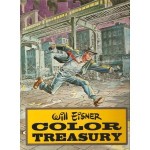
Will Eisner Color Treasury


By Will Eisner, written by Catherine Yronwoode (Kitchen Sink Press)
ISBN: 0-87816-006-X

It is pretty much accepted today that Will Eisner was one of the key creative forces who shaped the American comic book industry, with most of his graphic works more or less permanently in print – as they should be. But as far as I know at least one of his milestones has generally escaped public attention.

From 1936 to 1938 Eisner worked as a jobbing cartoonist in the comics production firm known as the Eisner-Eiger Shop, creating strips to be published in both domestic US and foreign markets. Using the pen-name Willis B. Rensie he created and drew the opening instalments of a huge variety of characters ranging from funny animal to historical sagas,

Westerns, Detectives, aviation action thrillers… and superheroes – lots of superheroes …

In 1940 Everett “Busy” Arnold, head honcho of the superbly impressive Quality Comics outfit, invited Eisner to take on a new challenge. The Register-Tribune newspaper syndicate wanted a 16-page weekly comicbook insert to be given away with the Sunday editions. Eisner jumped at the opportunity, creating three strips which would initially be handled by him before two of them were handed off to his talented assistants. Bob Powell inherited Mr. Mystic and distaff detective Lady Luck fell into the capable hands of Nick Cardy (then still Nicholas Viscardi) and later the inimitable Klaus Nordling.

Eisner kept the lead strip for himself, and over the next twelve years The Spirit became the most impressive, innovative, imitated and talked-about strip in the business. In 1952 the venture folded and Eisner moved into commercial, instructional and educational strips, working extensively for the US military in manuals and magazines like P*S, the Preventative Maintenance Monthly, generally leaving comics books behind.

In the wake of “Batmania” and the 1960s superhero craze, Harvey Comics released two giant-sized reprints with a little material from the artist, which lead to underground editions and a slow revival of the Spirit’s fame and fortune via black and white newsstand reprint magazines. Initially Warren Publishing collected old stories, even adding colour sections with painted illumination from such contemporary luminaries as Rich Corben, but with #17 the title reverted to Kitchen Sink, who had produced the first two underground collections.

Eisner found himself re-enamored with graphic narrative and saw a willing audience eager for new works. From producing new Spirit covers for the magazine (something the original newspaper insert had never needed) he became increasingly inspired. American comics were evolving into an art-form and the restless creator finally saw a place for the kind of stories he had always wanted to tell.

He began crafting some of the most telling and impressive work the industry had ever seen: first in limited collector portfolios and eventually, in 1978, with the groundbreaking graphic novel A Contract With God.

If Jack Kirby is the American comicbook’s most influential artist, Will Eisner is undoubtedly its most venerated and exceptional storyteller. Contemporaries originating from strikingly similar Jewish backgrounds, each used comic arts to escape from their own tenements, achieving varying degrees of acclaim and success, and eventually settling upon a theme to colour all their later works. For Kirby it was the Cosmos, what Man would find there, and how humanity would transcend its origins in The Ultimate Outward Escape. Will Eisner went Home, went Back and went Inward.

This fictionalised series of tales about the Jewish immigrant experience led to a wonderful succession of challenging, controversial and breathtakingly human stories for adults which changed how comics were perceived in America… and all because the inquisitive perfectionist was asked to produce some new covers for old stories.

This glorious oversized hardback (still available through internet retailers) features two full Spirit adventures, fully re-coloured by the master (who was never particularly pleased with how his strips were originally limned), pencil sketches and a magnificent confection of those aforementioned covers – plus some really rare extras.

The eerie 1948 chiller ‘Lorelei of Odyssey Road’ leads off this tome followed by a barely seen science fiction Spirit story. ‘The Invader’ – produced in the 1970s as the result of a teaching gig Eisner had at Sheridan College in Canada.

Eisner created the first page in class to show students the fundamentals of comics creation, and after months of coaxing was convinced to complete the tale, which was published in an extremely limited edition as the Tabloid Press Spirit in 1973. The action and sly, counter-culture comedy is impressively compact and well coordinated: ‘The Invader’ comfortably fits 57 panels into its five pages whereas the old eight-page yarns used to average a mere 50 frames…

Following two gloriously lush wraparound Kitchen Sink covers (complete with a pencil rough) and the hilarious cover to underground anthology Snarf #3, the single page Warren pieces commence. Originally seen on issues #2 through 10 they have all been re-mastered by Eisner and are simply stunning.

After these come the fully-painted wraparounds (all magnificently presented as double-page spreads) that graced the Kitchen Sink Spirit issues #18,-24, #27-29 and #31 and then the rare 1977 Spirit Portfolio is reproduced in the same generous proportions: eleven stunning paintings encapsulating key moments in the masked detective’s astonishing career.

‘The Hideaway’, ‘The Scene of the Crime’, ‘The Women’, ‘The Duel’, ‘Dead End’, ‘The Convention’, ‘The Rescue’, ‘The Chase’, ‘The Capture’ and ‘The City’ plus the portfolio cover are followed by the contents of 1980’s ‘City: a Narrative Portfolio’ a series of evocative black line and sepia ghetto images with obverse blank verse and cameo images dealing with the eternal themes that shape man as a metropolitan dweller. Once more including the cover image, ‘The Spark’, ‘The City’, ‘Predators’, ‘Mugger’, ‘Family’ and ‘Life’ are powerfully moving and magically rendered one-frame stories that presage his growing use of the urban landscape as an integral character in his later works.

With a fascinating biography and commentary from historian and publisher Cat Yronwoode this book is a lavish treat for Eisner aficionados, but the treats still aren’t exhausted: there are also rare colour works and illustrations from Cosmos magazine and Esquire, plus poster art, unpublished Spirit paintings and a preview of his then forthcoming book Big City…

Will Eisner is rightly regarded as one of the greatest writers in American comics but it is too seldom that his incredible draughtsmanship and design sense get to grab the spotlight. This book is a joy no fan or art-lover can afford to be without.
© 1981 Will Eisner. All rights reserved.