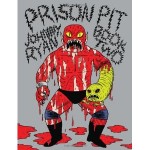
Prison Pit Book Two


By Johnny Ryan (Fantagraphics Books)
ISBN: 978-1-60699-383-5

Johnny Ryan is a cartoonist with an uncompromising vision and an avowed intention of producing shock and even revulsion whenever he wants to. In Prison Pit he pushed the limits of taste with a brutal, primitive cascade of casual violence that sprung, teeth bared and claws extended, from his apparent obsession with casual violence, social decay and the mythology of masked wrestling, as well as his obvious fascination in the “berserk” manga strips of Kentaro Miura.

That initial volume presented a disturbingly child-like view of a science fictional Hell: an extra-dimensional purgatory where the most violent felons were dumped to live or die by a society that had no place for them. This barren landscape was littered with grotesque monsters, vile organisms and the worst specimens of humanity ever captured by the forces of civilisation. C.F., a masked wrestler, was dumped there and told to fight or die…

What followed was non-stop excessive force and graphic carnage: a never-ending Darwinian struggle which saw the wrestler damaged beyond comprehension, altered by horrors internal and external, but nevertheless still clawing his way to the top of the gory, scatological heap…

Unbelievably Ryan has gone even further in this second volume as the wrestler defeats what he had assumed to be the king of the heap, aided by a biological travesty that then turns on him, before being kidnapped by a robotic Dr. Moreau, who transforms the wrestler’s most intimate man-parts into a weapon of interpersonal destruction and sends him off violate a monster. Typically, nobody here is doing anything for anyone else’s benefit…

Man’s oldest gynophobic horrors and most simplistic delight in sheer physical dominance are savagely delineated in this primitive, appalling, cathartic and blackly funny campaign of cartoon horror. Resplendent, triumphant juvenilia is adroitly shoved beyond all ethical limits into the darkest depths of absurdist comedy. Not for children, the faint-hearted or weak-stomached, this is another non-stop rollercoaster of extreme violence, profanity and cartoon shock and awe at its most visceral and compelling.

And now that we’ve put off the intellectual and moral stuck-up sticky-beaks who just love to whine and complain, I’ll let you into a secret: this book is all-out over the top and flat out hilarious. Buy and see if you’re broad-minded, fundamentally honest and purely in need of ultra-adult silliness…

© 2010 Johnny Ryan. All rights reserved.

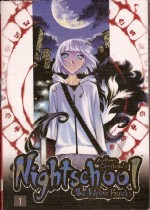
Nightschool: The Weirn Books volume 1


By Svetlana Chmakova (Yen Books)
ISBN: 978-0-7595-2859-8

The sub-genre of supernatural students and spooky schooldays has come a long way since the days of the Worst Witch or even Buffy of Sunnydale High, but this tantalising and impressive entry from Svetlana Chmakova (whose delightful series Dramacon introduced her as a major talent in the international manga world) which stands head and shoulders above the crowd and simply cries out for greater exposure.

PS 13W is just an ordinary High School during the day, but when darkness falls the place is sublet to an entirely different faculty teaching a far more bizarre and dangerous student body (well, different anyway – I’ve seen the everyday shamble of oiks, nerds, preppies and deviants that tumble out of our local educational establishment come chucking out time only to stampede past my front door on their way to celebrate their temporary freedom in mischief, malice and mishap…)

Because this Nightschool caters to such a diverse and often predatory catchment, the usual staff of wizardly teachers and assistants is generally supplemented by a Night Keeper – a supernatural security agent who keeps the peace and minimises collateral damage when students and staff – witches, warlocks (collectively known as Weirn), werewolves, vampires and every shade of juvenile haunt and horror – join in the business of Education.

Sadly the latest Keeper, thoroughly modern Miss Sarah Treveney has something of a punctuality problem… Although the school caters for a broad spectrum of monsters, Sarah’s sister Alexius has to be home-schooled due to an unspecified secret problem, and splitting her time between teaching Alex the magic of the Weirn all day and working all night is taking its toll…

The peace that keeps mortals safe from the assorted eldritch tribes is due to an ancient pact: A Treaty administered by an enigmatic cult of young warriors called Hunters who prowl the city dealing with supernatural threats. They are led by a charismatic teacher called Daemon. Later volumes will eventually reveal a history of ancient strife and impending chaos, but for this first collection (comprising the first six months of the strip) they simply patrol and police the places where rogue night creatures prowl…

When Daemon’s team rescue a young Seer, Marina, from unscrupulous mortals seeking to exploit her prophetic abilities she warns him that a long-dormant menace is breaking the seals which have kept it safely imprisoned for centuries…

Unknown to Sarah, little sister is not the housebound claustrophobe she imagines. Driven by urgings beyond her comprehension Alex often roams the night with only her astral familiar to protect her from mortals and monsters – or is it the other way round?

When she invades a cemetery Alex stumbles across a romantic vampiric tryst and Daemon’s Hunter team in the process of ending it. Suddenly all parties are attacked by Rippers – mindless devolved Nosferatu, all claws and teeth and burning lethal hunger…

When the spectacular battle ends Alex is gone and although more than a match for any known magical threat, three of the Hunters lie mysteriously comatose. The younger Treveny wakes safely at home with no recollection of how she returned, but at the Nightschool things aren’t going so well for Sarah.

Making inroads with the staff and students the Night Keeper thinks she might just make a real go of her job, but when a kid she doesn’t recognize lures her into a horrifying trap she disappears from sight and memory of everybody who once knew her. Moreover, all physical evidence of her existence is fading too. At home Alex sees a photograph gradually disappear and realises she must to something. Girding herself she enrolls in the midnight high school, as all over the cities something very nasty is stalking the Hunters…

This is the merely the opening stage of a much larger and more complex epic, (which has been and is still steadily progressing in monthly installments in the Japanese magazine Yen Plus since August 2008), so it might be preferable to pick up the first three volumes – all that has been collected into books so far – and tackle them at once.

However, the sheer exuberance and quality of storytelling and art here is enough to carry this first book; blending mystery, comedy and spellbinding action with a huge cast of engaging characters. Fun, thrilling and wonderfully addictive.

© 2009 Svetlana Chmakova. All Rights Reserved.

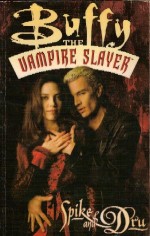
Buffy the Vampire Slayer: Spike and Dru


By Christopher Golden, James Marsters, Ryan Sook, Eric Powell & various (Dark Horse/Titan Books)
ISBN: 978-1-84023-282-0

Vampire love is something of a hot topic these days so let’s take a look at one of the ancient antecedents responsible for this state of affairs – in the shape of a collection of one-shots and short stories originally published by Dark Horse to augment their comicbook franchise of the global mega-hit Buffy the Vampire Slayer.

Buffy was a hip teen cheerleader turned monster killer, and as the TV series developed it soon became clear that the bad-guys were increasingly the fan-faves. Cool vampire villain and über-predator Spike eventually became a love-interest and even a moodily tarnished white knight, but at the time of this collection was still a blood-hungry, immortal immoral jaded psychopath – every girl’s dream date.

His eternal paramour was Drusilla: a demented precognitive vampire who killed him and made him an immortal bloodsucker. She thrived on new decadent thrills and reveled in baroque and outré bloodletting. This collection traces their relationship through the 20th century, laying the seeds for the events of the television episodes and begins with ‘All’s Fair’ scripted by Christopher Golden and illustrated by Eric Powell, Drew Geraci, Keith Barnett, Andy Kuhn, Howard Shum & Norman Lee.

There is an unbroken mystical progression of young women tasked with killing the undead through the centuries, and the book opens during the Chinese Boxer Rebellion in 1900, where Spike and Dru were making the most of the carnage after killing that era’s Slayer. The story then shifts to the Chicago World’s Fair of 1933 where once more the undying lovers are on the murderous prowl. However, the scientific wonders of the modern world are eclipsed by a scientist who has tapped into the realm of Elder Gods as a cheap source of energy. To further complicate matters the dark lovers are being stalked by a clan of Chinese warriors trained from birth to kill the pair to revenge the Slayer killed in Beijing.

Gods, demons, Mad Scientists, Kung Fu killers, Tongs and terror all combine in a gory romp that will delight TV devotees and ordinary horrorists alike.

Decades later the pair were again roaming through America in ‘Queen of Hearts’ (by Golden & Ryan Sook), driving to St Louis where they boarded a gambling palace on a paddle-steamer, just wanting to waste some time and test their luck. Unfortunately the enterprise was run by a sinister luck-demon with as little concept of fair play as Dru and Spike… All the forces of elemental supernature couldn’t prevent the river running red – and numerous other colours – with demon blood…

Author, director and actor James Marsters played the laconic Spike on the TV show and co-wrote the next mini-epic in this tome. ‘Paint the Town Red’ also by Golden & Sook is set just after the undead couple had split up following a terrific spat, and follows the heart-sore Cockney Devil from Sunnydale to an isolated Turkish village where he set up his own private harem and hunting preserve. Everything was perfect until Dru came looking for him with her latest conquest, a resurrected necromancer.

Koines is her love-slave, a wizard capable of controlling corpses with but a thought. Until she set her death-monger against Spike it hadn’t occurred to anybody that vampires are just another sort of cadaver, but once the mage realised he decided to renegotiate the terms of his rather one-sided relationship with the inventively psychotic vampire virago, and Spike found that he was not quite over Dru yet…

The chronicle concludes with the brutally melancholy ‘Who Made Who?’ (Golden, Powell, Barnett & Geraci), a brief yarn set in Rio which revealed why the reunited couple finally called it a day. Cue hearts, flowers, multiple infidelities and a lot of sudden, violent deaths…

These supplementary tales of extremely dark and forbidding romance comprise a thoroughly readable tearjerker with hilariously barbed edges: instantly accessible to not only the dedicated Joss Whedon fan but also any lover of horror stories. If vampires could love I suspect this is how it would really look…
™ & © 2001 Twentieth Century Fox Film Corporation. All Rights Reserved.

Ultimate Avengers 2: Crime and Punishment


By Mark Millar, Lenil Francis Yu & various (Marvel/Panini UK)
ISBN: 978-1-84653-465-2

Marvel Ultimates began in 2000 as a reconfiguration of key characters and concepts to bring them into line with the tastes of modern readers – perceived as a potentially separate buying public from the baby-boomers and their descendents, who were content to stick with the various efforts that had sprung from the fantastic originating talents of Kirby, Ditko and Lee – and one unable or unwilling to deal with the decades of continuity baggage that had accumulated around the originals.

Eventually this darkly nihilistic new universe became as continuity-constricted as its predecessor and in 2008 the cleansing event “Ultimatum” culminated in a reign of terror which apparently (this is still comics, after all) killed three dozen odd heroes and villains plus millions of lesser mortals. Although a good seller (in contemporary terms, at least) the saga was largely trashed by the fans who bought it, and the ongoing new “Ultimatum Comics” line quietly back-pedalled on its declared intentions…

The key and era-ending event was a colossal tsunami that drowned the superhero-heavy island of Manhattan and this second post-tidal wave collection (assembling issues #7-12 of Ultimate Avengers 2) finds the survivors fully adapted to their dried-out world and back in business.

Before the Deluge Nick Fury ran an American Black Ops team of superhumans called the Avengers, but he was eventually toppled from his position for sundry rule-bending antics – and being caught doing them. Now he’s back, running another black ops team doing stuff real heroes wouldn’t dream of…

His far from happy band of brothers consists of Hawkeye – the man who never misses, James Rhodes: a fanatical soldier wearing devastating War Machine battle armour; Gregory Stark, Iron Man’s smarter, utterly immoral older brother, Nerd Hulk, a cloned gamma-monster with all the original’s power but implanted with Banner’s brain and milksop character and ruthless super-spy Black Widow. You can never have enough super-stooges though, and Fury is actively recruiting…

First on his wish-list is the Punisher, a vengeance-crazed vigilante carving his way through the underworld of three continents. It’s hard to imagine an even colder stone-killer than the standard Marvel Universe Frank Castle but creators Mark Millar, Lenil Francis Yu, Gerry Alanguilan & Laura Martin just about manage. However, his campaign of retribution is promptly stopped cold by Captain America.

Imprisoned by Federal authorities, the Punisher never makes it to prison, and soon after a new masked hero with loads of guns and a big skull on his chest reluctantly joins Fury’s death-squad…

The other newbie is super-gangsta Tyrone Cash, whose recruitment causes a lot more collateral damage. Before being blackmailed onto the team the violence-addicted, invulnerable superhuman had another life: a college professor who researched how to maximise human physical potential. One day he just vanished, leaving a pile of rubble and some very instructive data that his student Bruce Banner developed to its ultimate end… much to the world’s eternal regret.

Though not as strong as the Hulk, Cash is homicidally violent and aggressive, and enjoys breaking stuff and hurting people. Only the greatest threat imaginable could force Fury to keep such a dangerous tool around…

And that happens to be a flaming-skulled mutant biker called Ghost Rider who is relentlessly hunting and killing the Vice President’s oldest buddies and has now set his eyeless sights on the Veep himself… Carving a swathe of fiery destruction that leads to the White House itself, the Ghost Rider is utterly unstoppable. No mutant has ever been as powerful. If the press-ganged team didn’t know better, it would seem that the blazing biker is a real ghost… but there’s no such thing, right?

Trenchant, sardonic and incredibly violent, the traditional super-science scenario takes a big, bold step into the realm of satanic, supernatural horror and, as always, the grim-and-gritty heroes are almost indistinguishable from the genuine bad-guys in this stunningly engrossing, anti-heroic epic. No shining knights here, but plenty of dark ones…

Given some distance and far removed from market hype and the frantic, relentless immediacy of the sales arena there’s a far better chance to honestly assess these tales on merit alone, and given such an opportunity you’d be daft not to take a long hard look at this spectacular, beautifully cynical thriller: another breathtaking, sinisterly effective yarn that could only be told outside the Marvel Universe, but it’s also one that should solidly resonate with older fans who love the darkest side of superheroes and especially those casual readers who know the company’s movies better than the comic-books.

™& © 2010 Marvel Entertainment LLC and its subsidiaries. All Rights Reserved. A British edition published by Panini.

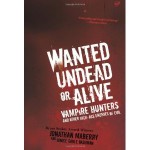
Wanted: Undead or Alive: Vampire Hunters and other Kick-Ass Enemies of Evil


By Jonathan Maberry & Janice Gable Bashman (Citadel Press)
ISBN: 978-0-8065-2821-2

Although out of my usual comfort zone and possibly beyond my usual purview, when this fascinating item thunked onto my doormat I confess I was intrigued enough to stretch a point and review it here – especially with Halloween looming large on the horizon.

Written in a wonderfully accessible style this series of essays, liberally illustrated with both colour and monochrome images, examines the concept of evil monsters and how to fight them in fact and fiction; real life and all the myriad media forms that comprise our global entertainment landscape: books, films, television and comics.

Jonathan Maberry is an award-winning factual and fiction writer with a few comicbook credits to his name and Janice Gable Bashman is a successful thriller author, and together they examine the nature of Darkness as a theoretical and philosophical concept in their introduction ‘That Whole “Good and Evil” Thing’ before moving on to recount ‘The Roots of Good vs. Evil’ and listing the prerequisites for survival in ‘Heroes and Villains’.

Vampires, how they’re interwoven into all the world’s cultures and, of course, how to combat them comes to the fore in ‘It Didn’t Start With Van Helsing’ whilst ‘Hunting the Fang Gang’ provides a comprehensive list of traditional and fictional Nosferatu-killers ranging from Bataks and Dhampyrs to Bram Stoker’s seminal crew and Buffy’s far-ranging friends and descendents…

‘Fangs vs. Fangs’ delineates the monsters who fight for Good – or at least against Greater Evils – and ‘Legendary Heroes’ recounts the brave and the bold of myth, history and fiction who have battled demons, devils and beasts, as well as far more intangible horrors. Gilgamesh, Beowulf, Rocky Balboa, Jack (“24”) Bauer, Emmeline Pankhurst and Mother Theresa are among the many examples that define this pinnacle of human-ness and the chapter also lists the worst monsters ever recorded.

‘Did You Use Protection?’ covers weapons, charms, talismans and practices that assist and arm the devil-slayers, ‘A Priest and a Rabbi Walk into a Crypt’ examines the role of various religions and belief systems and ‘Who You Gonna Call?’ takes a peek at the role of ghosts in history and entertainment.

‘Pulp Friction’ relates the growth of popular entertainment forms and how they have handled heroes and monsters(human, supernatural and even super-scientific) and the comicbook superhero phenomenon gets the same treatment in ‘Spandex to the Rescue’.

The effects of these concepts on discrete sections of the public goes under the microscope in ‘Children Shouldn’t Play with Dead Things’; examining conventions, fan groups, games, tattoos and skin art, Role Playing (both RPGs and LARPs) and Cosplay before the really scary section tackles ‘Real Evil’ with a comprehensive listing of Serial Killers which makes all the preceding fictional Psychos and Mass Murderers look tame and insipid by comparison…

Topped off with the Online Film Critics Society Top 100 Villains of All Time, a list of Spirit Superstitions and the Top 10 Vampire, Werewolf, Demon and Ghost Movies of all time, this superb compendium is a sublime delight for fans and thrill-seekers to dip into over and again.

Stuffed with interviews and commentary from across the spectrum of popular media including Stan Lee, John Carpenter and a host of artists, creators and designers this is a delight no fantasy fan should dare to miss.

© 2004, Jonathan Maberry and Janice Gable Bashman. All rights reserved. An extended edition of this volume is also available as an ebook.

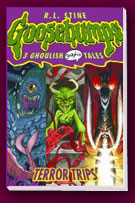
Goosebumps Graphix 2: Terror Trips


Adapted by Jill Thompson, Jamie Tolagson & Amy Kim Ganter (Graphix/Scholastic)

ISBN: 978-0-439-85780-2

How to get children reading has been a desperate quest of educators and parents for decades and the role of comics in that drive has long been a controversial one. Excluding all the arguments over whether sequential narrative hinders, harms or perhaps helps, the only other option was to produce material youngsters might actually want to read.

Enter R.L. Stine in 1992, who wrote sixty-two light-hearted, child-friendly supernatural horror thrillers over the next five years that took the world by storm, spawning movies, TV shows, games and a host of imitators, reconfiguring the iconography of the classic tales of mystery and imagination into modern romps to engage youngsters in the greatest thrill of all – total absorption in the magic of stories. In its various incarnations and reboots Goosebumps has sold more than 300 million copies.

In 2006 Scholastic began a series of themed graphic novel adaptations, using top comicbook and manga talent to convert three books per volume into hip and striking cartoon yarns. I’ve picked the second “Goosebumps Graphix” edition for no other reason than my complete devotion to the work of one of the artists involved (eventually I’m sure I’ll get around to the others…)

Terror Trips leads off with ‘One Day at Horrorland’ (the sixteenth novel in the prose series) adapted and illustrated by the utterly superb Jill Thompson, who despite her incredible body of work, ranging from Sandman to Wonder Woman and her fabulous Scary Godmother books and films is some how still not a household name.

When a day-trip to Zoo Gardens with their parents goes awry, Lizzy, brother Luke and their friend Clay find themselves lost and alone in the best – or perhaps worst – scary theme park ever. If she wasn’t such a big girl now and didn’t know better, Lizzy might almost believe all those monsters and death-traps were real…

Multi-media artist Jamie Tolagson (The Crow, The Dreaming, Books of Magic) translated the truly creepy ‘A Shocker on Shock Street’ (novel #35) with stunning effect. Under-aged horror movie mavens Erin and Josh think they’ve seen everything, but when Erin’s movie director and FX designer dad invites the pair to the studio to see the new “Shock Street” theme park they’re in for the most startling surprise of their young lives – and so is the reader…

The third and final jaunt into jeopardy is ‘Deep Trouble’ (novel #19) adapted by Amy Kim Ganter, manga and webcomic artist (see Sorcerers & Secretaries for a delightful example of her firm grip on fantasy). Here she relates the time William Deep Jr. accompanied his marine biologist father on an expedition to discover if mermaids actually existed. Unfortunately, the worst beasts in the oceans are usually greedy humans, but the sea still had a few undiscovered horrors of its own lying hidden beneath the surface…

This splendid selection is delivered in a variety of black and white styles, and each tale is augmented by a feature explaining the working process of the artists as they translated the story into comics form. Both the novels and comic books are readily available so why not save yourself the cost of outrageous dental bills this Halloween by stocking up on comic chillers such as this and handing out stuff to chew over rather than simply swallow – and remember, if used correctly books are not fattening…?

© 2007 Scholastic Inc. All Rights Reserved.

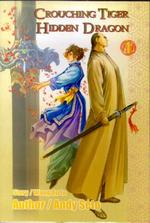
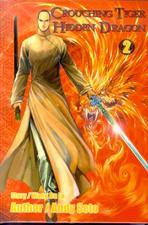
Crouching Tiger, Hidden Dragon volumes 1 & 2


By Wang Du Lu, adapted by Andy Seto (ComicsOne Corp.)
ISBN’s: 978-1-58899-999-3 and 978-1-58899-175-1

Hong Kong comics are beautiful. They’re produced using an intensive studio art-system under the aegis of a master storyteller acting like a tactician and commanding general; which means any individual page might be composed of numerous graphic styles and techniques: literally anything that will get the job done.

And that job is to enhance not nuances of plot but rather details of the dynamic action and poetic mysticism/philosophy of Kung Fu that my western sensibilities just aren’t attuned to. They are astounding to look at, but I don’t expect them to make much sense.

However in this series, adapting an earlier part of the epic tale (a mere part of which inspired the phenomenal Ang Lee movie) the non-stop kinetic hurly burly is nicely tempered by a more universal narrative form that shouldn’t deter even the most hidebound Gwailo like me.

The original saga forms a sequence of five “Wuxia” novels by author Wang Du Lu known as the Crane-Iron Pentalogy which Andy Seto adapted into a twelve volume series of graphic novels. Wuxia is generally translated as “martial arts literature” with Xia denoting “honorable” or “chivalrous” and wu “soldier”, “warrior” or “military.” The film mostly worked from the fourth novel, so this interpretation could be construed as a prequel of sorts.

Chinese languages are hard to master because the tongue is filled with willful ambiguity. Almost pun-like, one translation of Crouching Tiger, Hidden Dragon is “dangerous or talented individuals concealed from view” and the names of the lead characters are also coded symbols for their symbolic characteristics… Don’t let that deter you though, this is classical storytelling winningly wedded to non-stop crackerjack action, magnificently illustrated.

In the first volume masked thieves steal the mighty Green Destiny sword from the palace in Beijing despite the best efforts of master guard Yu Gan Cheung – called “Golden Spear”. Tasked with retrieving the invaluable blade Golden Spear prevaricates. His wife Jeng Ho has called him to help her finally avenge the slaying of her father…

Meanwhile in Hebei Province aged Master Grand Yu knows his prowess is failing, but is proud that his beautiful daughter Yu Shu Lien will soon be an even greater Kung Fu practitioner than he ever was. Whilst travelling to a festival the family is attacked by Jeng’s siblings the Ho brothers, determined to have vengeance for the death of their sire at Grand Yu’s hands.

Elderly and overmatched, Yu is saved by the fantastic fighting skills of his daughter, but the Ho clan are determined to destroy the old Master, if not with Kung Fu then by bribing the corrupt local judges…

Meanwhile Wudan disciple (if regular Shoalin Kung Fu concentrates on outer or corporeal strength Wudan teaches the harnessing of inner strength – Chi: nobody messes with Wudan Masters…) Li Mu Bai is looking for a wife and an emissary tells him of Grand Yu’s accomplished young daughter…

Travelling to Hebai Li challenges Shu Lien to a spectacular duel and finds her satisfactory, but although he would be welcome as a son-in-law Grand Yu has to decline the marriage offer as the girl is already betrothed to another. Decent and honorable Li Mu Bai decides to wander the world alone but the Ho brothers scurrilous plans to destroy the Yu clan draw him inexorably back to the girl he desires above all others…

Volume 2 finds Li following a gang of riders. His sensitive nature instantly knew they planned evil and his honorable spirit drove him to help whomever they wished to harm. Grand Yu’s family are being attacked again by the murderous Ho brothers and Shu Lien has her hands full battling the deadly Jeng Ho when Li arrives to turn the tide.. The combat abruptly ends when the local authorities arrest everybody.

Old Yu is severely drained by the conflict and fares badly under questioning. Moreover the corrupt officials seem to favour the bigger bribes of the Ho faction. Things look bleak for the Yu clan, and Li volunteers to bring more money but before he can leave the old Master passes away.

Although he desperately wants Shu Lien for himself Li promises to convey the girl and her mother to the arranged husband Master Yu picked for her, but when the party arrives more trouble awaits. Shu Lien is betrothed to Chou Mong, the son of a wealthy lord, but the bridegroom-to-be has gone missing. A troublesome son, he was always getting into shameful situations and has now vanished…

Honouring their obligation, the Mongs welcome Shu Lien and her mother into the household until the groom’s whereabouts can be established. The noble Li determines to find the wastrel and return him to his intended bride: the honour-bound but extremely reluctant Shu Lien…

Li’s search takes him to Biejing where the Wudan adept encounters and trounces a terrifying gang of bandits who are holding to ransom all roads into the city…

These digest-sized tomes pack a lot into their pages. As well as the lush and lovely, if panoramically rambling, tale and non-stop breathtaking fight scenes there are also enticing previews of other oriental epics, creator profiles, biographies, art and information pages on the character’s weapons, honorariums from the author’s widow and even Andy Seto’s diary.

Superhero fans might be amazed at the variety of powers a lifetime of knuckle push-ups and bowing can produce, but these tales are wedded to the concept of training and will creating miracles. They are, however, irresistibly exuberant, beautifully illustrated and endlessly compelling. If you’re an open-minded fan, you may find yourself carried away on an incredible tide of non-stop action, apparently shallow characterisation (at least to Western eyes – for the target market the pictures are everything: how a participant looks is his/her interior and exterior) and immense scope of this colossus of a tale.
© 2002, originated by Seto Kim Kiu. All Rights Reserved.

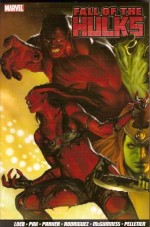
Fall of the Hulks volume 2


By various (Marvel/Panini Publishing UK)
ISBN: 978-1-84653-463-8

In recent years the number of Gamma-mutated monsters rampaging across the Marvel landscape has proliferated to inconceivable proportions. There are assorted Hulks, She-Hulks, Abominations and all kinds of ancillary atomic berserkers roaming the planet so it’s no more than prudent to thin the herd.

The days of Bruce Banner getting angry and going Green are long gone too, so anybody taking their cues from the TV or movie incarnations will be wise to assume a level of unavoidable confusion. Nevertheless this epic story is worth the effort so persist if you can.

Even if you are familiar with Hulk history ancient and modern, you might still founder on the odd point of narrative as this book continues the spectacular saga of the myriad rainbow-coloured gamma-morphs cluttering up the Marvel Universe becoming a brawny army of conquest for the world’s wickedest brain trust. This interim volume collects most – but by no means all – of the issues involved in a major storyline which ran through the various Hulk-related comics during the first half of 2010.

Depending on many lost crannies of lore and broad continuity this book (collecting Incredible Hulk #607-608, Hulk #21, Savage She-Hulks #1 and Red Hulk #2-4) resumes the tale of The Intel, a gang of super-smart bad-guys – the Leader, Egghead, Red Ghost, the Wizard, Mad Thinker and Dr. Doom – who stole the Lost Library of Alexandria, repository of all arcane knowledge, to further their schemes of domination.

Coming together during the early days of the Marvel Universe the cabal also purloined a cosmic-powered Hulk robot designed by Galactus which furthered their long-term plans which included creating a legion of Hulk-like servants, capturing the eight most brilliant men on the planet and of course ruling the world.

Contemporarily if not consequently there are eight Variant Hulks and analogues, but Bruce Banner is not one of them. The mysterious and all-conquering Red Hulk has stolen Banner’s gamma power, leaving nothing but a determined mortal – albeit a brilliant, determined and incredibly driven one. Banner has never been more dangerous…

The origin of the Red Hulk was partially revealed after The Intel replaced Egghead with the biological computer Modok. Events moved swiftly after Dr. Doom betrayed the cabal. Banner joined Red Hulk to stop his assorted foes as the Intel began to capture their intellectual opposite numbers.

Natural enemies, Banner and Red Hulk have become uneasy allies until the Intel are defeated, always pursuing their own agendas and watching each other for the first sign of betrayal. The Intel meanwhile have taken Reed Richards, Dr. Doom, Henry (the Beast) McCoy and T’Challa, the Black Panther and as this volume opens are moving to capture their next target – Henry Pym, size-changing superhero and Earth’s Scientist Supreme in ‘Man With a Plan’.

Chaos builds globally as the assorted Gamma gladiators: Skaar – Son of Hulk, Lyra (Hulk and Thundra’s daughter from an alternate future), Doc Samson, A-Bomb (venerable sidekick Rick Jones transformed into an atomic Abomination), Red She-Hulk and the Red Hulk all clash in interminable, inconclusive battles. Earth’s many costumed champions gather to save the day and Banner gathers his own select team of ruthless Avengers to take the battle to the Intel’s heart…

Doc Samson has been working with the evil geniuses for years and his recent indoctrination of Red She-Hulk has drawn attention from mutant warriors Elektra and Domino. More revelations about Lyra’s origins come to light in ‘The Deal’ whilst Red Hulk’s plan to destroy the cabal comes undone as the superhero assault is thwarted and the rescuers become more super-soldiers for the Intel.

In ‘Mindgame’ Banner’s schemes are no more successful: his team’s raid gathers lots of intelligence but once more The Intel’s forces ultimately overcome all opposition. The only problem they face is the increasing instability of their grotesque pawns – such as the ‘Big, Red, and Deadly!’ She-Hulk.

‘How I Learned to Stop Worrying and Love The A-Bomb’ uncovers more of Samson’s perfidy as Rick Jones realises he has been programmed as a sleeper agent to kill Banner, whilst Lyra clashes with her time-lost mother Thundra and Red She-Hulk in ‘The Savage Sex’ before the book ends on an anticipatory cliffhanger with ‘Best Case Scenario’ as, with the Intel in control of the planet Red Hulk and Banner prepare to bring it all crashing down…

Taken on its own this middle volume sounds utterly incomprehensible: a thin strand of coherent narrative picking its way through a bewildering assortment of block-busting punch-ups and arcane references, but I would advise readers to re-read the previous volume and trust to the writing of Jeph Loeb, Greg Pak, Jeff Parker and Harrison Wilcox, whom I’m sure will produce clarity and closure in the next collection….

Moreover if you’re e a fan of spectacular art the monumental illustrations by Paul Pelletier, Ed McGuinness, Carlos Rodriguez, Fernando Blanco, Ryan Stegman, Salvador Espin with Zach Howard, Vincente Cifuentes, Mark Palmer, Jason Paz, Danny Miki, Tom Palmer and Crimelab Studios are cumulatively breathtaking in scope and power. As always the book includes a gallery of the many cover variants that graced the original comicbook releases

Still flawed, but still not fatally; there’s an ominous gathering impetus that rockets the action (oh, so much action) along here despite all the problems and I’m confident that the conclusion will iron out all my current frowns. However it’s probably sound advice to re-re-read the previous volume before tackling this one and best to study both before the next one comes out…
™& © 2010 Marvel Entertainment LLC and its subsidiaries. All Rights Reserved. A British edition published by Panini.

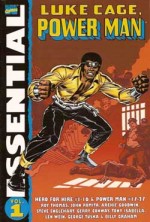
Essential Luke Cage: Power Man volume 1


By Archie Goodwin, Steve Englehart, George Tuska, Billy Graham & others (Marvel)
ISBN: 978-0-7851-1685-1

As a sickly pale kid growing up in a hugely white area of the Home Counties in the 1960s and 1970s, I got almost all my early experience of black people from television and films (for which I’m most profoundly sorry ) – and, of course, comics – for which I’m not.

Blithely unaware of the struggle for equality in my formative years, the incredible consciousness-raising explosion of Black Power after the 1968 Olympic Games rather politicised me, and even though some comics companies had by this time made tentative efforts to address what were national and socio-political iniquities, issues of race and ethnicity took a long time to filter through to the still-impressionable young minds avidly absorbing knowledge and attitudes via four colour pages that couldn’t even approximate the skin tones of African-Americans.

As with television, breakthroughs were small, incremental and too often reduced to a cold-war of daringly liberal “firsts.” Excluding a few characters in Jungle comic-books of the 1940s and 1950, Marvel clearly led the field with a black member of Sgt. Fury’s Howling Commandos team (the historically impossible Gabe Jones who debuted in #1, May 1963, and was accidentally re-coloured Caucasian at the printers, who clearly didn’t realise his ethnicity), as well as the first negro superheroes Black Panther in Fantastic Four #52 (July 1966), and the Falcon in Captain America #117 (September 1969).

The honour of America’s first Black hero to star in his own title came in a little remembered or regarded title from Dell Comics. Lobo was a gunslinger/vigilante in the old west who sought out injustice just like any cowboy hero would, first appearing in December 1965, created by artist Tony Tallarico and scripter D.J. Arneson.

Arguably a greater breakthrough was Joe Robertson, City Editor of the Daily Bugle, an erudite, brave and magnificently ordinary mortal distinguished by his sterling character, not a costume or skin tone and who first appeared in Amazing Spider-Man # 51 (August 1967), proving in every panel that the world wouldn’t end if black folk and white folk worked and ate together…

This big change slowly grew out of raised social awareness during a terrible time in American history – although Britain had nothing to be smug about either. Race riots had started early in the Sixties here and left simmering scars that only comedians and openly racist politicians dared to talk about. Shows such “Till Death Us Do Part” and “Love Thy Neighbour” made subtly telling headway but still raise a shudder when I see clips today…

Slowly more positive ethnic characters were let in, with DC finally getting a Black hero in John Stewart (Green Lantern #87 December 1971/January 1972), although his designation as replacement Green Lantern might be construed as more conciliatory and insulting than revolutionary. The first DC hero with his own title was Black Lightning, who didn’t debut until April 1977, although Jack Kirby had introduced Shilo Norman as Scott Free’s apprentice (and eventual successor) in Mister Miracle ##15 (August (1973).

As usual it took a bold man and changing economics to really promote change, and with declining comics sales at a time of rising Black Consciousness cash – if not cashing in -was probably the trigger for “the Next Step.” Contemporary “Blacksploitation” cinema and novels had fired up commercial interests throughout America and in that atmosphere of outlandish dialogue, daft outfits and barely concealed – if justified – outrage an angry black man with a shady past and apparently dubious morals debuted as Luke Cage, Hero for Hire in the summer of 1972. A year later the Black Panther finally got his own series in Jungle Action #5 and Blade: Vampire Hunter debuted in Tomb of Dracula #10.

This volume collects the first 27 issues of the breakthrough series and begins with Lucas, a hard-case inmate at brutal Seagate Prison. Like all convicts he claimed to have been framed and his uncompromising attitude made mortal enemies of the savage, racist guards Rackham and Quirt whilst not exactly endearing him to the rest of the prison population such as out and out bad-guys Shades and Comanche either…

‘Out of Hell… A Hero!’ was written by Archie Goodwin and illustrated by George Tuska & Billy Graham (with some initial assistance from Roy Thomas and John Romita senior) and saw a new warden arrive promising to change the hell-hole into a proper, legal penal institution. Prison Doctor Noah Burstein then convinced Lucas to participate in a radical experiment in exchange for a parole hearing, having heard the desperate con’s tale of woe…

Lucas had grown up in Harlem, a tough kid who had managed to stay honest even when his best friend Willis Stryker had not. They remained friends even though they walked different paths – at least until a woman came between them. To get rid of his romantic rival Stryker planted drugs and had Lucas shipped off to jail. While he was there his girl Reva, who had never given up on him, was killed when she got in way of bullets meant for Stryker…

With nothing to lose Lucas undergoes Burstein’s process – an experiment in cell-regeneration – but Rackham sabotages it, hoping to kill the con before he can expose the guard’s illegal treatment of convicts. The equipment goes haywire and something incredible occurs. Lucas, super-strong punches his way out of the lab and the through the prison walls, only to be killed in hail of gunfire. His body plunges over a cliff and is never recovered…

Months later a vagrant prowls the streets of New York City and stumbles into a robbery. Almost casually he downs the felon and accepts a reward from the grateful victim. He also has a bright idea. Super-strong, bullet-proof, street-wise and honest, Lucas would hide in plain sight while planning his revenge on Stryker. Since his only skill was fighting, he became a private paladin – A Hero For Hire…

Making allowances for the colourful, often ludicrous dialogue necessitated by the Comics Code’s sanitising of “street-talking Jive” this is probably the grittiest origin tale of the classic Marvel years, and the tense action continued in ‘Vengeance is Mine!’ as the man now calling himself Luke Cage stalked his target. Stryker had risen quickly in the drugs world, controlling a vast portion of the illicit trade as the deadly Diamondback, and the solitary Cage had a big surprise in store when beautiful Doctor Claire Temple came to his aid after a calamitous struggle.

Thinking him fatally shot her surprise was dwarfed by his own when Cage met her boss. Trying to expiate his sins Noah Burstein had opened a rehab clinic on the deadly streets around Times Square, but his efforts had drawn the attention of Diamondback who didn’t like someone trying to cure his paying customers…

Burstein apparently did not recognise him, and even though faced with eventual exposure and return to prison Cage offered to help the doctors. Setting up an office above a movie house on 42nd Street he met a lad who would become his greatest friend: DW Griffith – nerd, film freak and plucky white sidekick. But before Cage could settle in Diamondback struck and the age-old game of blood and honour played out the way it always does…

Issue #3 introduced Cage’s first returning villain in ‘Mark of the Mace!’ as Burstein, for his own undisclosed reasons decided to keep Cage’s secret, and disgraced soldier Gideon Mace launched a terror attack on Manhattan. With his dying breath one of the mad Colonel’s troops hired Cage to stop the attack, which he did in explosive fashion.

Billy Graham pencilled and inked ‘Cry Fear… Cry Phantom!’ in #4 as a deranged and deformed maniac carried out random assaults in Times Square. Or was there perhaps another motive behind the crazed attacks? Steve Englehart took over as scripter and Tuska returned to pencil ‘Don’t Mess with Black Mariah!’ the sordid tale of organised scavengers which introduced unscrupulous reporter Phil Fox, an unsavoury sneak with greedy pockets and a nose for scandal.

The private detective motif proved a brilliant stratagem in generating stories for a character perceived as a reluctant champion at best and outright anti-hero by nature. It allowed Cage to maintain an outsider’s edginess but also meant that adventure literally walked through his shabby door every issue.

Such was the case of ‘Knights and White Satin’ (by Englehart, Gerry Conway, Graham and Paul Reinman) as the swanky, ultra-rich Forsythe sisters hired him to bodyguard their dying father from a would-be murder too impatient to wait the week it would take for the old man to die from a terminal illness. This more-or less straight mystery yarn (not counting the madman and killer-robots) was followed by ‘Jingle Bombs’, a strikingly different Christmas tale by from Englehart Tuska & Graham, before Cage properly entered the Marvel Universe in ‘Crescendo!’ when he was hired by Doctor Doom to retrieve rogue androids that had absconded from Latveria, subsequently hiding as black men among the shifting masses of Harlem.

Naturally Cage accomplished his mission, only to find Doom had stiffed him for the fee. Big mistake…

Issue #9 ‘Where Angels Fear to Tread!’ saw the enraged Hero for Hire borrow a vehicle from the Fantastic Four and play Repo Man in Doom’s own castle just in time to get caught in the middle of a grudge match between the Iron Dictator and an alien invader called the Faceless One.

It was back to street-level basics in ‘The Lucky… and the Dead!’ as Cage took on a gambling syndicate led by the schizophrenic Señor Suerte who doubled his luck as the murderous Señor Muerte (that’s Mr. Luck and Mr. Death to you), a two-part thriller complete with rigged games and death traps that climaxed in the startling ‘Where There’s Life…!’ as the relentless Phil Fox’s finally uncovered Cage’s secret…

Issue #12 saw the first of many battles against alchemical villain ‘Chemistro!’, whilst Graham assumed full art duties with ‘The Claws of Lionfang’ a killer who used big cats to destroy his enemies, and Cage tackled a hyperthyroid lawyer in ‘Retribution!’ as the tangled threads of his murky past slowly became a noose around his neck…

‘Retribution: Part II!’ saw Graham and new kid Tony Isabella share the writer’s role as those many disparate elements converged to expose Cage, and with Quirt kidnapping his girlfriend, fellow Seagate escapees Comanche and Shades stalking him and the New York cops hunting him, the last thing the Hero For Hire needed was a new super-foe, but that’s just what he got in #16’s ‘Shake Hands With Stiletto!’ by Isabella, Graham and inker Frank McLaughlin.

That dramatic finale cleared up a lot of old business and led to a partial re-branding of the nation’s premier black crusader. From #17 onwards the mercenary aspect was downplayed (at least on the covers) as the comic became Luke Cage, Power Man and Len Wein, Tuska and Graham concocted another tumultuous team-up in ‘Rich Man: Iron Man… Power Man: Thief!’ as the still “For Hire” hero was commissioned to test Tony Stark’s security by stealing his latest invention. Unfortunately neither Stark nor Iron Man knew anything about it…

Vince Colletta joined the team as inker for #18’s ‘Havoc on the High Iron!’ as Cage battled a murderous high-tech Steeplejack and the next two issues offered Cage a tantalising chance to clear his name as ‘Call Him… Cottonmouth!’ introduced a crime-lord with inside information of the frame-up perpetrated by Willis Stryker in issue #1. Tragically the hope was snatched away in the Isabella scripted follow-up ‘How Like a Serpent’s Tooth…’

‘The Killer With My Name!’ (Isabella, Wein, Ron Wilson & Colletta) found Cage attacked by old Avengers villain Power Man who wanted his name back, but who changed his mind after waking up from the resultant bombastic battle, whilst Stiletto returned with his brother Discus in ‘The Broadway Mayhem of 1974’ (Isabella, Wilson & Colletta) to reveal a startling connection to Cage’s origins.

All this carnage had sent sometime romantic interest Claire Temple scurrying for points distant, and with #23 Cage and D.W. went looking for her, promptly fetching up in a fascistic planned-community run by old foe Mace. ‘Welcome to Security City’ (inked by Dave Hunt) led directly into a two-part premier for another African-American superhero as Cage and D.W. traced Claire to the Ringmaster’s Circus of Crime in #24’s ‘Among Us Walks… a Black Goliath!’ by Isabella, Tuska & Hunt.

Bill Foster was another educated black supporting character, a biochemist who worked with Henry Pym (the scientist-superhero known as Ant-Man, Giant-Man, Goliath and Yellowjacket over the decades of his costumed career) when he was trapped as a giant, unable to shrink to normal size. Foster first appeared in Avengers #32 (September 1966, or see Essential Avengers volume 2), before fading from view when Pym regained his size-changing ability.

Here it was revealed that Foster was Claire’s ex-husband, and when his own size experiments trapped him at fifteen feet tall, she had rushed back to his colossal side to help him find a cure. When Cage arrived passions were stoked, resulting in a classic heroes-clash moment until the mesmeric Ringmaster hypnotised the combatants, intent on using their strength to feather his own three-ring nest.

‘Crime and Circuses’ (by Isabella, Bill Mantlo, Wilson and Fred Kida) saw the heroes helpless until Claire came to the rescue before making her choice and returning to New York with Luke. Foster soon gravitated to his own short-run series, becoming Marvel’s fourth African American costumed hero under the heavy-handed and rather obvious sobriquet Black Goliath.

A spoof of popular ’70’s TV show provided the theme for ‘Night Shocker!‘ (Englehart, Tuska & Colletta) as Cage hunted an apparent vampire, and this first black and white volume concludes with a touching human drama as Cage was forced to subdue a tragically simple-minded but super-powered wrestler in ‘Just a Guy Named “X”!’ (by Mantlo, George Pérez and Al McWilliams, all paying tribute to the Ditko classic from Amazing Spider-Man #38).

Perhaps a little dated now, these tales were nonetheless instrumental in breaking down one more barrier in the intolerant, WASP-flavoured American comics landscape and their power if not their initial impact remains undiminished to this day. These are tales well worth your time and money.

© 1972, 1973, 1984, 1975, 2005 Marvel Characters, Inc.  All Rights Reserved.

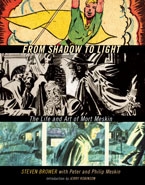
From Shadow to Light: The Life and Art of Mort Meskin


By Stephen Brower with Peter & Philip Meskin (Fantagraphics Books)
ISBN: 978-1-60699-358-3

Win’s Christmas Gift Recommendation: Perfect for art lovers, wannabe illustrators and lovers of pure comic magic  9/10

There’s currently a delightful abundance of beautiful coffee-table art-books/biographies celebrating the too-long ignored founding fathers and lost masters of American comic books, but few have been as well anticipated and hungered for as this magnificent tome highlighting the troubled life and stunning ability of Morton Meskin, one of the guiding spirits of the industry and a man clearly unaware or unwilling to admit just how influential he actually was.

Rather than waste your time being overly specific (just buy the book – it’s extremely informative and truly wonderful) let me just state that Meskin is the kind of creative force that no real fan of the medium can afford to be ignorant of. This lavishly illustrated, oversized tome traces his life and awesome body of work from school days and early career as a pulp magazine illustrator, through his pioneering superhero art for MLJ, DC, Standard and others through the leaner years and appalling treatment by editors in the 1960s through to the superb advertising art of his later life.

A quiet, diligent and incredibly prolific artist (the text contains numerous accounts of “races” with Jack Kirby, vying to see who could produce the most pages in a day!) Meskin’s manner and philosophical approach influenced dozens of major artists – as the testimonials from Kirby, Steve Ditko (a young student from Meskin’s days as a teacher), Jerry Robinson, Joe Kubert, Alex Toth, Carmine Infantino, George Roussos, Will Eisner and so many others attest over and over again.

Evocatively written by creative/art director, designer, educator and biographical author Stephen Brower, with dozens of first hand accounts from family, friends and contemporaries; the sad, unjust life of this major figure of popular art is fully explored and gloriously justified by every miraculous page of his work reproduced herein. As well as dozens of full colour reproductions from his breathtaking Sheena, Queen of the Jungle, Vigilante, Johnny Quick, Seven Soldiers of Victory, Wildcat, Starman, Fighting Yank, Black Terror and particularly Golden Lad and Tom Corbett, Space Cadet superhero action-adventure delights are lesser known gems of crime, horror, historical and mystery tales.

His prolific days at Simon & Kirby’s S&K Studios producing content for Headline, Crestwood and Prize Comics are well represented with many striking examples of his 1900 or so pages of mystery, psycho-drama, western and romance work, as well as Meskin’s latter days at DC, turning mediocre, fright-free mystery yarns and anodyne science fiction tales into stunning exercises of minimalist tension and drama.

Most importantly for collectors and art-fans there is a huge amount of space devoted here to the artist’s unique manner of working; from compelling page layouts and compositions to bold, vibrant inking, and for we comics cognoscenti, the visual El Dorado of never before seen unpublished pages.

There are dozens of penciled, inked and camera-ready art-boards – many shot from actual original artwork – including assorted genre-works (humour, horror, westerns, romances, covers), legendary features such as Boy’s Ranch, Fighting Yank, Black Terror and Captain 3-D) and even complete unpublished stories including a whole Golden Lad superhero romp, a nautical epic from colonial days starring Bill Blade, Midshipman and a positively electric gangland reworking of Macbeth.

Eventually Meskin left the industry, as so many unappreciated master artists did, for advertising work where he found appreciation, security and financial reward, if not creative contentment, and the latter portion of the scintillating tome is filled with not only an amazing selection of magnificent illustrations, sketches, ad layouts and storyboards but also the purely experimental art – painting, prints, collage and lots of lovely drawings in every medium possible – that clearly kept this obsessively questing artisan’s passions fully engaged..

Brilliant, captivating, utterly unforgettable and unknown, Meskin’s enforced anonymity is finally coming to an end and this magical chronicle is hopefully only the first step in rediscovering this major talent. Buy this book and lobby now for complete collected editions of Mark Merlin, Vigilante, Johnny Quick, Golden Lad and all the fabulous rest…

© 2010 Fantagraphics Books. Text © 2010 Stephen Brower. All art © its respective owners and holders. All rights reserved.