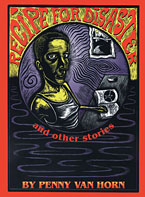
Recipe For Disaster and other Stories


By Penny Van Horn (Fantagraphics Books)
ISBN: 0-56097-330-7

Raised in Rye, New York, Penny (Moran) Van Horn worked in publishing before moving to Austin, Texas to begin her inexplicably low-key career as a cartoonist and storyteller. After years producing some of the most evocative and memorable graphic narratives of the 1990’s independent comics scene for magazines such as Weirdo, Wimmen’s Commix, Snake Eyes, Twisted Sisters and Zero Zero she now primarily works in newspaper illustration and produces a weekly strip for the Austin American-Statesman. She is also adept at painting, lettering and design and recently began experimenting with animation.

Recipe For Destruction is a collection of her early strips: deep, intense concoctions, more black than white, many crafted in her immensely labour-intensive scraperboard illustration style (see also the wonderfully mordant supernatural dark romance The Librarian), and all dwelling in the hazardous borderland between autobiography and bleakly comedic self-exploratory fantasy.

Latterly citing inspiration from such varied sources as Lucille Ball, Dick Van Dyke and Carol Burnett, Van Horn’s introspective retrospective begins with the eponymous ‘Recipe for Disaster’, which describes with harrowing aloofness her brief period of mental instability – her original title for the tale was “Mystical Experience or Nervous Breakdown” – before the book moves on to shorter but no less challenging fare.

‘Ten Dollars for Two Minutes’ details an unpleasant experience with her landlord, ‘Molested’ takes a slightly different glance at modern drama’s favourite plot device and ‘Catholic School’ is for anybody educated by nuns (Big ‘Hi’ to anybody else who survived Sacred Heart Convent Primary School without paying for therapy…) an utterly understandable slice of pictorial vitriol…

‘There’s No Such Thing as a Pregnant Silence’ outlines with frank and memorable humour some clear downsides to the Happy Event, ‘Binge and Purge’ reveals a different manner of addiction, ‘Domestic Bliss’ is a gloriously excessive examination of wedded bliss and ‘A Revealing Dream’ confirms that men’s suspicions of “what women want” has never been more wrong…

‘The Psycho Drifter’ is a remarkably unsettling account of modern dating, whilst ‘Texas Characters’ is plain laugh-out-loud whacky and ‘A Bird in the Beard’ returns to the subject of looking for love with more salutary comic reminiscences. The volume ends with a deeply moving cautionary tale about the heart ruling the head in ‘Mid-Life Crisis’, as well as the inclusion of some entrancingly unlovely pin-ups.

Van Horn’s work is astonishing in its captivating power and subtle influence. Her stories aren’t pretty but they are beautiful, and this collection, still in print and readily available, is one of the best grown-up comics collection around. If you believe that there’s more to strips than fights, tights and honking big guns, this book is all the proof you need.

© 1998 Penny Van Horn. All rights reserved.

On the Odd Hours


By Eric Liberge translated by Joe Johnson (NBM ComicsLit/Louvre: Musée du Louvre Éditions)
ISBN: 978-1-56163-577-1

This is the first time I’ve encountered this series of translated graphic novels so this review is off the cuff and without any previous prejudice and preconception. That sounded pretty poncey and imposing but all it means is: even with all the high tech info systems in the world, occasionally something rather cool can slip by the most avid fan or collector.

In this case it’s the first two books in a patently fascinating collaboration between one of the greatest museums in the world and the, until so recently, scurrilous world of comics. So I’m diving right in with immediate reactions to the third in a series of superior translated bande dessinée courtesy of those fine fellows and folks at NBM.

These tales are produced in close collaboration with the forward-looking authorities of the Louvre, but this is no gosh-wow, “Night-at-the-Museum”, thinly-concealed catalogue of contents from a stuffy edifice of public culture. Rather, here is a startling, beautiful, gloriously compelling adult horror thriller that cleverly incorporates the history, geography, icons and artifacts of the Louvre into the plot and makes the historic building and its contents a vital character in the supernatural drama.

Amongst the history and information pieces at the back of the book is an article on the services for the deaf such as signed tours, and the hearing-impaired guides and lecturers who are part of the staff. This is done to complement the tale of Bastien, an angry young deaf man who turns up at the museum to begin an internship, but somehow becomes a Night Guard, with special responsibilities for The Odd Hours of the clock: those moments when the 200 year old museum slips the shackles of reality and the exhibits escape their bounds, coming to terrifying, chaotic life…

The art is stunning in this extremely adult tome, and the creeping obsessions of Bastien as he struggles to keep his daylight life alive whilst striving to resolve the mystery of the exhibits is both poignant and enthralling.

Why was he selected for the position? Why are the animated beauties and horrors of the museum so much more enticing that his increasingly strident and difficult girlfriend? Most importantly, how can animated artworks be so much more communicative than the flesh and blood inhabitants of his “normal” life?

On the Odd Hours is utterly engrossing and darkly lovely, and despite being the third in the series reads easily as a stand-alone tale. I’m definitely going to track down the preceding volumes and I strongly recommend that you all do likewise.

© 2008 Futuropolis/Musée du Louvre Éditions. English Edition © 2010 NBM. All rights reserved.

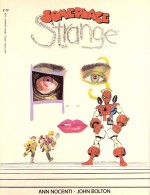
Someplace Strange – An Epic Graphic Novel


By Anne Nocenti & JohnBolton (Marvel)
ISBN: 0-87135-439-X

Once upon a time Marvel led the publishing pack in the development of high quality original graphic novels: mixing creator-owned properties, licensed assets like Conan, special Marvel Universe tales and even new series launches in extravagant over-sized packages (a standard 285 x 220mm rather than the now customary 258 x 168mm) that felt and looked like more than an average comicbook no matter how good, bad or incomprehensible (a polite way of saying outside the average Marvel Zombie’s comfort zone) the contents might be.

This terrifically appetizing tale, developed under the company’s creator-owned Epic imprint, applies the psychic tensions and apprehensions of the Cold War era to Alice in Wonderland territory and features a punky heroine and two sterling young boys who all take an inadvertent side-step into a graphic and ephemeral twilight zone with some long-lasting repercussions.

James or “Spike” is a rather nervous lad, dwelling far too much on the perilous state of the world, terrified of germs and war and atom bombs whilst his little brother Edward (“Captain Zebra” to you) is far more fun-loving, but still overly-impressionable. The birds tell Edward not to worry, but Spike is always afraid and he’s very convincing…

One night scary dreams prompt them to end their night-terrors by getting the Bogeyman first. Setting out for the nearest spooky old house, the lads are prepared for the worst and find it in Joy, a foul-tempered punkette runaway crashing in the old dump. Together they explore the deserted domicile and accidentally fall into a surreal otherplace of familiar monsters and cuddly weirdness.

Although it seems a dangerous and unwelcoming land the true threat is Joy, who draws a picture of her own self-loathing which comes to horrifying life and gives frantic chase…

Combining Bolton’s hyper-real and exceedingly lush painting with Nocenti’s barbed and challenging sense of whimsy, this slight but hugely entertaining fable is a treat for those adults who sometimes wish they weren’t, and a lovely reminder of why kids like to be safely scared sometimes.
© 1988 Anne Nocenti and John Bolton. All Rights Reserved.

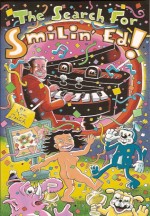
The Search for Smilin’ Ed!


By Kim Deitch (Fantagraphics Books)
ISBN: 978-1-60699-324-8

Kim Deitch has been one of the leading lights of America’s Comix Underground since its earliest days, although as with Harvey Pekar and American Splendor, it is only in recent years that he has won wider acclaim: in his case with 2002’s Boulevard of Broken Dreams. For the past two decades Deitch has been producing occasional short stories about a down-at-heel carnival the shabby, eccentric no-hopers that have populated it through-out the 150 years, the eerie aliens who have preserved its posterity and of course, the immortal Waldo the Cat, star of the graphic novel under review here.

In The Search for Smilin’ Ed! we have a formalised, recognisable Kim Deitch Universe – gloriously captured for your delight and delectation in a fabulous full-colour fold-out bonus feature within this comfortingly eccentric and incredibly accessible chronicle – as the author returns, albeit tangentially, to the outré characters of his fabulous Shadowland collection, expanding his ever-growing cast and still tellingly concerned with an absurdist examination of American popular culture scenarios.

With this surreal historiography of the hunt for a childhood landmark of misspent youth, the author once more shares the intoxicating joys of living in the past and dwelling in shared memories. This reassuringly weighty, mostly black and white tome leads with a terrific potted history and incisive essay, ‘Auguries of Brilliance: The Kim Deitch Universe’ by Comics scholar and educator Bill Kartapoulos, followed by the aforementioned universal crib-sheet fold-out, before the narrative wonderment unfolds in a progression of serialised episodes culled from the hallowed pages of famed alternative comics anthology Zero Zero.

One of Deitch’s most enduring characters is the irascible animated cartoon cat Waldo, who here returns to converse with the author himself as they reminisce, revel and ultimately reveal the hidden history of Smilin’ Ed, a pioneer of children’s television who mysteriously disappeared from public gaze in 1954, and was found dead on his yacht. But was he…?

Deitch’s stories are about stories – and particularly storytellers. As his authorial counterpart and the devilish Waldo converse, a cascade of mysteries are revealed when the monochrome moggy unburdens himself of his role in the vanishment, which in turn leads to a convoluted saga of fame, kidnapped boys, murdered children, fortune, a frog and demons, extraterrestrial cultural anthropologists – or voyeurs (?) – immortal pygmies and a social call to the Drawing Rooms of Hell…

Combining the utterly irresistible power of nostalgia and insatiable curiosity with science-fiction, conspiracy theory, urban history, fact and legend, show-biz razzmatazz, supernatural horror, Film Noir and a highly developed sense of the meta-real, Deitch once more weaves an irresistible spell that charms, thrills and disturbs whilst his meticulous drawing holds the reader in a deceptively fluffy, yet inescapable grip.

This volume further breaks down the thin walls of perceived reality by adding a lithograph ‘Ignacio the Bullfighter’ which was part of the narrative to the extra-textual content and also contains an all-new sequel and 21st century update, ‘Consider the Beaver’, which brings us up to date on the world of Waldo whilst delineating the forced evolution of Mankind’s potential successor. As always fact and fiction are seamlessly blended together until only a hyper-cranked search engine could discern truth from fable…

Follow the saga of the World According to Deitch in this wonderful compendium and you too could join the unfolding cartoon parade of the “Americana Way”. In Fact – or Fiction – you might already be there, but you’ll never know unless you look…

Characters, stories and artwork © 2010 Kim Deitch. All Rights Reserved.

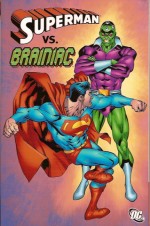
Superman vs. Brainiac


By various (DC Comics)
ISBN: 978-1-4012-1940-6

Superman is the comicbook crusader who started the whole genre and in the decades since his debut in 1938 has probably undertaken every kind of adventure imaginable. With this in mind it’s tempting and very rewarding to gather up whole swathes of his inventory and periodically re-present them in specific themed collections, such as this calculated confection of cosmic clashes with alien arch-foe Brainiac, originally a mere marauding alien but continually refitted over the decades until he now stands as the ultimate artificial nemesis, a thing of cogs, clockwork and computer code.

This superb collection represents appearances both landmark and rare from the many brilliant writers and artists who have contributed to the Kryptonian canon over the years and naturally this terrific tome opens with the extremely impressive introduction ‘The Super-Duel in Space’ by Otto Binder and Al Plastino, from Action Comics #242 (July, 1958) wherein an evil alien scientist attempts to add Metropolis to his collection of miniaturised cities in bottles.

As well as a titanic tussle in its own right, this tale completely changed the mythology of the Man of Steel, by introducing Kandor, a city full of Kryptonians who had escaped the planet’s destruction when Brainiac captured them. Although Superman rescued his fellow survivors, the villain escaped to strike again, and it would be years before the hero could restore the Kandorians to their true size.

Next is a lovely and clever yarn from Superman’s Girl Friend, Lois Lane #17 (May 1960), by Jerry Siegel, illustrated by the exceptional fine art team of Curt Swan and George Klein. ‘Lana Lang, Superwoman’ saw the Man of Tomorrow temporarily imbue both Lana and Lois with superpowers to foil a blackmail/murder plot by the viridian villain, whilst the novel-length saga ‘The Team of Luthor and Brainiac’ by Edmund Hamilton, Swan & Klein (from Superman #167, February 1964) not only teamed the hero’s greatest foes in an uneasy alliance but also revealed that the alien antagonist was actually a malevolent mechanism in humanoid form, designed by the computer-tyrants of the planet Colu to infiltrate and destroy organic civilisations and cultures.

There’s a big jump to the end of the 1970s for the next story, an epic three-part clash that first appeared in Action Comics #489-491 (November 1978-January 1979) scripted by the hugely undervalued Cary Bates and illustrated by Swan & Frank Chiaramonte.

‘Krypton Dies Again’ sees Superman once more battling Brainiac when the light from the decades gone explosion of his homeworld finally reaches Earth. The resultant flash supercharges his Kryptonian cells leaving the Man of Steel helpless. ‘No Tomorrow for Superman!’ finds an increasingly berserk hero unable to cope until joined by Hawkman to finally resolve ‘A Matter of Light and Death!’

In Action Comics #544 (June 1983) both Luthor and Brainiac were given radical makeovers to make them more apposite menaces for the World’s Greatest Superhero. Marv Wolfman and Gil Kane amped up the computer conqueror’s threat-level with ‘Rebirth!’ as cosmic forces reshaped the humanoid horror into a mechanistic angel of death.

When DC Comics decided to rationalise and reconstruct their continuity with Crisis on Infinite Earths in 1985 they used the event to regenerate their key properties at the same time. The biggest gun they had was Superman and it’s hard to argue that the change was not before time. The new, back-to-basics Man of Steel was a sensation and members of his decades-old rogue’s gallery were suitably retooled to match the new, grittier sensibility.

In this continuity ‘The Amazing Brainiac’ was Vril Dox, a monolithic disembodied intellect from the planet Colu who inhabited and transformed the body of showbiz mentalist Milton Moses Fine, (Adventures of Superman #438, March 1988, written by John Byrne& Jerry Ordway, illustrated by Ordway & John Beatty), until it grew beyond physical limits in ‘Man and Machine’ (Action Comics #649, January 1990, by Roger Stern, George Pérez, Kerry Gammill & Brett Breeding) to eventually become a time-travelling ball of malignant computer code, constructing or co-opting ever-more formidable physical forms in its self-appointed mission to eradicate Superman.

By the time of ‘Sacrifice for Tomorrow’ from Action Comics #763 (March 2000), by Joe Kelly, German Garcia, Kano & Mario Alquiza, the fiend had transformed into its 13th iteration and converted Metropolis into an automated City of the Future. It had also learned how to possess human infants – including Lana Lang’s newborn son and Luthor’s daughter Lena… – a chilling thriller to end on, but only a taste of the monstrous horror Brainiac is capable of.

With a pin-up page of Brainiac 13 by Scott Beatty, Steve Kim & Tommy Yune (from Superman: Metropolis Secret Files #1, March 2000) this comprehensive collection is a compelling introduction and overview of the undying enemy alien and a superb treat for fans of every vintage.

© 1958, 1960, 1964, 1978, 1979, 1983, 1988, 1990, 2000, 2008 DC Comics.  All Rights Reserved.

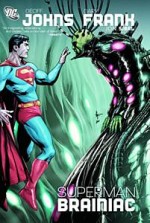
Superman: Brainiac


By Geoff Johns, Gary Frank & Jon Sibal (DC Comics)
ISBN: 978-1-84856-230-1

Since his first appearance in Action Comics #242 (July 1958) the alien reaver Brainiac has been a perennial favourite foe of the Man of Steel, and has remained so even through being subsequently “retooled” many times. Brilliant and relentless, the one thing he/it has never been is really scary – until this latest re-imagining from Geoff Johns and Gary Frank.

In modern DC continuity the raider was a computerised intellect from the planet Colu who inhabited and transformed the body of showbiz mentalist Milton Fine, until it grew beyond physical limits to become a time-travelling ball of malignant computer code, constructing or co-opting ever-more formidable physical forms in its self-appointed mission to eradicate Superman.

Now, in this slim but evocative graphic novel, collecting Action Comics #886-870 and Superman: New Krypton Special #1, the truth is finally revealed. Long ago, an alien invader attacked the planet Krypton: merciless robotic berserkers slaughtered hundreds of citizens before physically removing the entire city of Kandor. Decades later one of those robots lands on Earth only to promptly fall before the Man of Tomorrow’s shattering fists.

This ‘First Contact’ leads to a revelatory conversation with Supergirl, a fortunate survivor of the Kandor Incident, in ‘Hide and Seek’. Every Brainiac Superman has ever faced has only been a pale shadow of the true villain: autonomous automatic probes and programming ghosts of a malevolent entity that has stalked the stars for centuries, stealing representative cities before destroying the redundant worlds they once thrived upon. And now the real Brainiac has found Earth…

What nobody realises is that the Cosmic Kidnapper has been searching the universe ever since Krypton died. He actually wants to possess every last son and daughter of that long-dead world…

Superman rockets into space to find the monster, unaware that the marauder is already en route to Earth, and as the Metropolis Marvel confronts his old foe for the very first time in a titanic, horrific clash, ‘Greetings’ sees Supergirl lead the defence of an embattled planet Earth from the monster’s diabolical mechanical marauders.

The war on two fronts continues in ‘Mind Over Matter’, concluding in an overwhelming tale of ‘Triumph and Tragedy’ as Superman defeats Brainiac and frees an entire city of fellow Kryptonians he never knew still existed, only to lose one of the most important people in his life, ending the adventure on an uncharacteristically sombre, low key note in ‘Epilogue’.

Johns is at the forefront of the creative movement to restore much of DC’s Pre-Crisis on Infinite Earths mythology, and by combining a modern sensibility with much of the visual flavour of Ridley Scott’s Alien movies has added a tangible aura of terror to the wide-eyed imagination and wonder of those old and much-loved tales. The visceral, gloriously hyper-realistic art of Gary Franks and John Sibal adds to the unease, and their deft touch with the welcome tension-breaking comedic breaks is a sheer delight.

This is a Superman yarn that anybody can pick up, irrespective of their familiarity – or lack of – with the character: fast, thrilling, spooky and deeply moving, for all that it’s also the introduction to the major story event New Krypton – but that’s a tale and review for another time…

© 2008, 2009 DC Comics.  All Rights Reserved.

The Best of Marvel Comics volume 1


By various (Marvel)
No ISBN

Here’s a little oddity that might appeal to the collectors amongst you; as well as actually living up to its somewhat hyperbolic title its lush look presaged the high quality, big ticket sensibilities of the modern graphic novel market.

With no particular fanfare this terrific tome leads with a single page recap of the origin of the Fantastic Four (by John Byrne and Pablo Marcos I think) before launching into the origin of the company’s (if not the entire industry’s) first black superhero and Klaw, murderous Master of Sound, in ‘The Black Panther’ and ‘The Way it Began’ from Fantastic Four #52-53, by Stan Lee, Jack Kirby and Joe Sinnott.

This tremendous two-parter comes from that incredibly productive mid 1960s period that resulted in the creation of Galactus, Silver Surfer and the Inhumans along with so many others, and the tale has lost none of its force or impact since.

Next follows a far more modern tale, also preceded by a one-page origin (from Sal Buscema and Sinnott). ‘Sasquatch!’ written by Roger Stern and John Byrne, with art from Sal Buscema and Alfredo Alcala, first appeared in Hulk Annual #8, a colossal clash between the Jade Giant and the shaggy beast-man from Canadian super-squad Alpha Flight.

The company’s Astounding Arachnid mascot and corporate figurehead features heavily here in a bevy of landmark tales, beginning with the poignantly powerful short story ‘The Kid Who Collects Spider-Man!’ (Amazing Spider-Man #248 January 1984) by Stern, Ron Frenz & Terry Austin, and complemented by possibly the Wall-Crawler’s greatest comic book moment in the three-part clash with Doctor Octopus from issues #31-33.

I’ve reviewed ‘If This Be My Destiny…!’, ‘Man on a Rampage!’ and ‘The Final Chapter’ scripted by Lee, plotted and illustrated by the increasingly disaffected by still brilliant Steve Ditko, in a variety of different graphic novel formats (everything from Marvel Masterworks: Amazing Spider-Man 1965 to Essential Spider-Man volume 2) but I can honestly say it has never looked better than here with good old fashioned offset printing and reproduced in the 144-colour palette Ditko intended it for.

Stern and Byrne return with what was for decades the definitive origin of the Sentinel of Liberty in ‘The Living Legend’ from issue #255, the last of their breathtaking run on Captain America. If you’re hungry for more, this tale and all their others can be found in Captain America: War & Remembrance.

There’s more Lee/Kirby magic next with two classic sagas of the Mighty Thor, beginning with ‘The Answer at Last!’ (Thor #159, inked by Vince Colletta) as the secret of the Thunder God’s relationship to feeble mortal Don Blake is revealed, whilst the great Bill Everett provided the embellishment for the bombastic battle-fest ‘The Wrath of the Wrecker!’ (#171).

Doctor Strange gives Roger Stern his last outing of this book in ‘A Mystic Reborn!’, a classy and beautifully illustrated origin and adventure tale pictured by Paul Smith and Terry Austin that first saw the light of Day in issue #56.

No “best of Marvel” would be complete without an X factor, and there’s a wealth of mutant mayhem to end this collection, including one that didn’t even make it onto the contents page. After the single-page “previously on” by Dave Cockrum, ‘He’ll Never Make Me Cry’ by Chris Claremont, John Romita Jr. & Dan Green (Uncanny X-Men #183) re-presents the romantic break-up of Colossus and little Kitty Pryde which resulted in a cathartic clash with the unstoppable Juggernaut.

As an added enticement this book also included an all-new, unpublished Wolverine story set in Triad-infested Japan. ‘The Hunter’ by Claremont & Marshall Rogers is a tasty treat on which to end this impressive and thoroughly delicious concoction. This is a wonderful way to sample the triumphs of a major publishing player: judiciously selected material, well edited and presented. This is what we want and it’s just what the kind of publication the industry needs to lure in new fans…
© 1987 Marvel Entertainment Group, Inc. All Rights Reserved.

Forever Nuts: Happy Hooligan


By Frederick Burr Opper (NBM)
ISBN: 978-1-56163-542-1

Frederick Burr Opper was one of the first giants of comic strips, a hugely imaginative, highly skilled and well-regarded illustrator and political cartoonist who moved into the burgeoning field of newspaper cartooning just as the medium was being born, and his pictorial creations (and even more so his dialogue) have enriched western culture and the English language.

Born in 1857 the son of Austrian immigrants, Opper grew up in Madison, Ohio, and at age 14 joined the Madison Gazette as a printer’s apprentice. Two years later he was in New York. Always drawing, he worked briefly in a store whilst studying at Cooper Union independent school before obtaining a position as student and eventually assistant, to illustration colossus Frank Beard.

Opper sold his first cartoon to Wild Oats in 1876, swiftly following up with further sales to Phunny Phellow, Scribbner’s Monthly, Harper’s Weekly, The Century, St. Nicholas Magazine and Frank Leslie’s Weekly, before joining the prestigious Puck in 1880, drawing everything from spot illustrations, gags, political cartoons and many of the new, full-colour, Chromolithographic covers. He was also a book illustrator of major renown, an incisive humorist, poet and creator of children’s books.

Clearly a forward-looking and perspicacious creator Opper first dipped his toe in the world of newspaper strips with an abortive and short-lived feature in the staid New York Herald in 1897, but after making few inroads he returned to magazine illustration. Undeterred by the failure and after 18 lucrative, influential and solid, steady years, Opper was finally lured away by William Randolph Hearst, joining his growing stable of bold comics pioneers in 1899.

Starting on the New York Journal’s Sunday Color Supplement, he created a wealth of different features beginning with Happy Hooligan which first appeared on 11th March 1900. Although not a regular feature at the start – many cartoon strippers of the fledgling art form were given great leeway to experiment with a variety of ideas in those early days – before too long the feature became simply too popular to miss and Opper settled into a stable tenure that lasted until 1932 when the artist’s failing eyesight led to his retirement and the tramp’s demise. Opper passed away at the end of August 1937.

Opper never used assistants but his imagination and unsurpassed creativity made Hooligan and his other creations household favourites around the world, appealing equally to Presidents and public alike. His next strip Mister Henry Peck (1901) was followed by the highly popular Alphonse and Gaston (1901-1904), Our Antediluvian Ancestors (1903-1904) and the astoundingly madcap Mule strip And Her Name was Maud which began in 1904.  It continued intermittently for decades and on May 23rd 1926, Maud became the regular “topper” to Happy Hooligan, running above the strip until both concluded on October 14th 1932 with the artist’s retirement.

Other strips followed, The Red Rig-a-Jigs (1906), Adolf from Hamburg (1906), King Jake (1907-1908), His Name is Ebenezer/His Name is Smith (1908), Ship Ahoy! (1908), Howsan Lott (1909-1914), Is Boggs Cheerful? He Is! (1908), Scuse Me, Mr. Johnson (1909), The Swift Work of Count DeGink (1916) and The Dubb Family/Down on the Farm (1918-1919, 1921-1923, 1925-1927), but none had the appeal or phenomenal staying power of Happy – or Maud – and had perforce to be abandoned.

Happy Hooligan is an affable, well-meaning but bumbling tramp who wears an old tin-can for a hat. Always ready and eager to assist and wishing nobody ill, this gentle vagrant was usually the inadvertent tool of far more fortunate folk who should know better, or cops a little too fond of the truncheon and nightstick, and generally the harsh, unforgiving cosmos of ill-fortune. It is a strip brimming with invention, pathos, social commentary, delightful wordplay and broad, reckless slapstick. More than one source cites Happy as having a profound influence on Charlie Chaplin’s Little Tramp in both content and tone…

This classy hardback presents a selection of strips from 1902-1913 in the varying forms of colour (two, three and full colour depending presumably on the budget of the local papers these rare survivors were culled from) compiled and edited by Jeffrey Lindenblatt with a fascinating introduction/biography from Allan Holtz who, with collector Cole Johnson, provided the majority of the strips included here.

The strips themselves range from June 8th 1902 to September 7th 1913 and although by no means complete or comprehensive afford a tantalizing glimpse at this iconic, influential and groundbreaking feature. Many of the reprints come from the highly productive and hilarious “Grand Tour” years of 1904 and 1905, (see also Happy Hooligan 1904-1905)

and follow the simple sad-sack across after many abortive, knockabout attempts, across the sea to England and then on to the unsuspecting continents of Europe and Africa before returning to America in 1906.

With brothers Montmorency and Gloomy Gus, plus a burgeoning family of nephews and hangers-on, this too-slim tome ends with some of the optimistic poltroon’s foredoomed attempts to woo Suzanne, the patient and amazingly egalitarian daughter of the Duke of Cabaret. As always these hysterical, rowdy escapades are often exacerbated by occasional visits from the ultra-polite Alphonse and Gaston, Opper’s legendary French gentlemen of extreme etiquette elitism…

Crossovers were not Opper’s only innovation. Happy Hooligan is considered to be the first American strip to depend on word balloons rather than supplemental text, and the humble, heartwarming hobo was also the first strip character to jump to the Silver Screen in six movie shorts from 1900-1902. He was also probably the first mass-market merchandising comics star…

Sadly Opper and his creations become less well-known with each passing year, but the quality of the work can never fail to amuse and inspire. Hopefully this superb graphic appetiser will lead to further collections, and as this book also contains a healthy selection of Opper’s other works from the early Wild Oats and Puck to the aforementioned Gallic gadabouts and the mulish Maud, perhaps we can also look forward to a compendium of his other seminal sketches and comedy classics…

Published in 2009 by NBM. © not invoked.

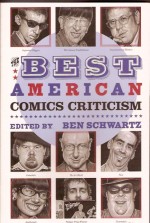
The Best American Comics Criticism


Edited by Ben Schwartz (Fantagraphics Books)
ISBN: 978-1-60699-148-0

If we want to have our particular objet d’art considered as valid, worthwhile and meaningful as those other peculiarly human non-survival oriented pursuits such as literature, poetry, painting sculpture, music, film and others of that ilk, it’s not enough to simply consume the product. Comics needs to be talked up, kicked about and generally deconstructed by people cleverer than us. It also needs to be done in a manner as interesting and beguiling as the art itself

Unlike me, proper critics need to be at once intensely engaged and incisively dispassionate regarding their subject; able to discuss it in a manner the rest of us can understand, and this magnificent compendium gathers together some of the most telling, pertinent and timeless considerations on sequential narrative of this century.

Naturally not everybody in our quirky community wants to spend money reading about comics rather than the items themselves, so if I can’t convince you to try this fabulous book with the absolutely true statement that “this is an immensely enjoyable read which offers you the chance to see your passion in a new light and will definitely open your eyes to new opportunities to read and collect” then please stop here.

If you’re intrigued and still with me I’ll now briefly run down the fabulous treasures in store if you do acquire this incredibly important and entrancing tome.

Divided into History, Fans, Appraisals, Reviews and Interviews, The Best American Comics Criticism covers every aspect of the industry, business and art-form, paying particular attention to that most under-estimated factor in the development of Comics: the unflinching devotees who turned a pastime into consuming passion – the readers and fans.

Brian Doherty leads off the History section with ‘Comics Tragedy: Is the Superhero Invulnerable?’ (from Reason magazine May 2001), followed by Paul Gravett’s ‘Graphic Novels: Can you Hear the Trucks?’ (Comics International March 2005) and concludes with two of R. Fiore’s Funnybook Roulette columns dealing with the aftermath of the 9/11 atrocity, ‘A Moment of Noise’ and ‘Make Me a Liar’ from Comics Journal #247 and 259 (October 2002 and April 2004 respectively).

The fascinating Fan section features ‘American Boys’, an extract from Gerard Jones’ superb Men of Tomorrow: Geeks, Gangsters and the Birth of the American Comic Book followed by a précis from the landmark judicial ruling overturning the copyright decision against Jerry Siegel, and which awarded some of the profits from the creation of Superman to the writers’ heirs, and ‘Then Let Us Commit Them’ a portion of David Hajdu’s book The Ten Cent Plague: The Great Comic Book Scare and How it Changed America.

This section concludes with ‘High Standards’ a cartoon examination of the fanboy phenomenon by Seth which was first seen in Wimbledon Green.

Appraisals sees a number of creators discussing other creators and their work with contributions from Will Eisner, Frank Miller, Howard Chaykin, Steve Ditko, Harold Gray, Frank King, George Herriman, James Thurber, John Stanley, Charles Schulz, Will Elder, Daniel Clowes, Lynda Barry, Phoebe Gloeckner and a dissection of the Masters of American Comics exhibition with contributions from Douglas Wolk, Bob Andelman, Alan Moore, Peter Bagge, Donald Phelps, Ben Schwartz, Jeet Heer, Sarah Boxer, John Updike, Seth, Jonathan Franzen, Daniel Clowes, Ken Parille and Dan Nadel.

The Reviews section opens with Chris Ware’s ‘Töpffer in English’ (from Bookforum, April/May 2008), Rick Moody’s ‘Epileptic: Disorder in the House’ from the New York Times, 23rd January 2005, Robert C. Harvey’s ‘Fun Home: Literary Cartooning in a Graphic World’ (Rants & Raves and Comics Journal – December 2006 and February 2007).

The New York Times of June 1st 2008 provided John Hodgman’s ‘Epics (Kirby’s Fourth World Omnibus; Kirby: King of Comics; Age of Bronze; Y: The Last Man)’ whilst the Amazon Customers Review Section was harvested for an anthology of contributions; ‘Was this Review Helpful to You?: Joe Matt’s Spent and the section closes with another visual treat as Nate Gruenwald pictorially examines ‘C. Spinoza’s Pacho Clokey

The final section is Interviews, with David Hajdu tracking from Carl Barks to Marjane Satrapi in ‘Persian Miniatures’(Bookforum, October/November 2004), Darrell Epp’s April 22nd posting on The Two-Handed Man website ‘It Keeps Ending Up Looking Like it was Drawn By Me: An Interview with Chester Brown’ and three Comics Journal interviews conducted by Gary Groth: Will Elder from #254, Yoshihiro Tatsumi in #281 and Kim Deitch in #292 (July 2003, January 2006 and October 2008 respectively).

A transcribed Art Festival event provided a Conversation Between Daniel Clowes and Jonathan Lethem: “I Could Relate Very Closely to Your Isolation” (Museum of Comic and Cartoon Art, June 12th 2005) whilst The New Art Comics HeroesCon (June 21st 2008) was the forum for Sammy Harkham & Dan Nadel’s closing discussion on the state of the Art.

With a wonderful introduction from Schwartz, loads of pictures, and a copious index and acknowledgements section this scholarly and infectiously accessible tome is just the kind of academic adjunct the comics biz needs, and therefore so do you. Don’t devour this book: pace yourself, dip in, ponder, reflect and, of course, then try out something you haven’t read before…

© 2010 Fantagraphics Books. Individual contributions are © their respective owners. All rights reserved.

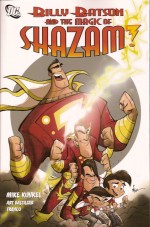
Billy Batson and the Magic of Shazam!


By Mike Kunkel, Art Baltazar, Franco, Byron Vaughns, Ken Branch & Stephen DeStefano (DC Comics)
ISBN: 978-1-4012-2248-2

After the runaway success of Jeff Smith’s magnificent reinvention of the original Captain Marvel (see Shazam! The Monster Society of Evil) it was simply a matter of time before this latest iteration won its own title in the monthly marketplace. What was a stroke of sheer genius was to place the new Billy Batson and the Magic of Shazam! under the bright and shiny aegis of the company’s young reader imprint – what used to be the Cartoon Network umbrella.

Here, slightly askew of the mainstream DC Universe, these frantically ebullient and utterly contagious tales of the orphan Batson and his obnoxious, hyperactive little sister, both gifted by an ancient mage with the powers of the gods, can play out in wild and wooly semi-isolation hampered by nothing except the page count…

Billy Batson is a homeless kid with a murky past and a glorious destiny. One night he followed a mysterious figure into an abandoned subway station and met the wizard Shazam, who gave him the ability to turn into an adult superhero called Captain Marvel. Gifted with the wisdom of Solomon, the strength of Hercules, the stamina of Atlas, the power of Zeus, the courage of Achilles and the speed of Mercury, the lad was sent into the world to do good, a good if immature boy in a super man’s body.

Accompanied by the talking tiger-spirit Mr. Tawky Tawny, Billy tracked down his missing little sister, but whilst battling evil genius Dr. Sivana (US Attorney General and would-be ruler of the universe) he impetuously caused a ripple in the world’s magical fabric through which monsters and ancient perils occasionally slip through. Now, the reunited orphans are trying to live relatively normal lives, but finding the going a little tough.

Firstly, without adults around, Billy often has to masquerade as his own dad and when he’s not at school he’s the breadwinner, earning a living as a boy-reporter at radio and TV station WHIZ. Moreover little Mary also has access to the Power of Shazam, and she’s a lot smarter than he is in using it… and a real pain in Billy’s neck.

Mike Kunkel, inspired creator of the simply lovely Herobear and the Kid, leads off this collection (gathering the first six issues of the monthly comic-book for readers of all ages) writing and drawing a breakneck, riotous romp that reintroduces the new Marvel Family to any new readers and, by virtue of that pesky rift in the cosmic curtain, recreates the Captain’s greatest foe: Black Adam. This time the evil predecessor of the World’s Mightiest Mortal is a powerless but truly vile brat: a bully who returns to Earth after millennia in limbo ready to cause great mischief – but he can’t remember his magic word…

This hilarious tale has just the right amount of dark underpinning as the atrocious little thug stalks Billy and Mary, trying to wheedle and eventually torture the secret syllables from them, and when inevitably Black Adam regains his mystic might and frees the sinister Seven Deadly Evils of Mankind from their imprisonment on the wizard’s Rock of Eternity the stage is set for a classic confrontation.

Pitched perfectly at the young reader, with equal parts danger, comedy, sibling rivalry and the regular outwitting of adults, this first story screams along with a brilliantly clever feel-good finish…

With issue #5 the writing team of Art Baltazar and Franco (responsible for the incomparably compulsive madness of Tiny Titans) took over, and artists Byron Vaughns and Ken Branch handled the first bombastic tale as convict Doctor Sivana unleashes the destructive giant robot Mr. Atom to cover his escape from prison.

The story-section concludes with another funny and extremely dramatic battle – this time against primordial super-caveman King Kull, who wanted to reconquer the planet he ruled thousands of years ago. Older fans of gentle fantasy will be enthralled and delighted here by the singular art of Stephen DeStefano, who won hearts and minds with his illustration of Bob Rozakis’ seminal series Hero Hotline and ‘Mazing Man (both painfully, criminally overdue for graphic novel collections of their own…)

Billy Batson and the Magic of Shazam! is an ideal book for getting kids into comics: funny, thrilling, beautifully, stylishly illustrated and perfectly in tune with what young minds want to see. With a gloriously enticing sketches section and a key code for those pages written in the “Monster Society of Evil Code” this is an addictive treat for all readers who can still revel in the power of pure wonderment and still glory in an unbridled capacity for joy.

© 2008, 2009 DC Comics. All Rights Reserved.