The Man From Harlem


By Guido Crepax, translated by Tom Leighton (Catalan)
ISBN: 0-87416-040-5

Born in Milan in 1933 the son of a noted cellist, Guido Crepax grew in an environment flooded with art and music (his closest childhood friend was the noted musician and conductor Claudio Abado). Inevitably the boy became a creative artist. Whilst studying architecture in the 1950s he freelanced as a graphic designer, illustrator and printmaker, producing book, medical texts and magazine covers, posters and record sleeves most notably for Classical and Jazz musicians ranging from Charlie Parker and Fats Waller to Domenico Modugno.

He won acclaim and advertising awards, but still felt the urge to do more. In 1963 he began drawing comics, and two years later created his most famous character Valentina for the second issue of Linus. She was initially the lead character’s girlfriend, but whereas superhero Neutron soon lost the interest of readers, the sexy, psychedelic, culturally bold and accessible distaff evolved to become an evocative, fantastic, sophisticated, erotic zeitgeist of the 1960s and far, far beyond.

Although noted – if not always revered – for his strongly erotic female characters, Crepax was an astute and sensitive tale-teller and examiner of the human condition, and all his varied works vibrate with strong themes of charged sexuality and violence. There can also be seen a deep understanding of history and moment, particularly in regard to the popular arts. In The Man from Harlem (based I strongly suspect on the old Cab Calloway standard) a young black musician in 1946 New York City faces the biggest dilemma of his life and is forever changed…

Little Johnny Lincoln was just like any other young negro in a white man’s world, but now with the war over, that world has changed, and in certain areas black people are finally getting a chance to show what they can do. Leaving the Stadium where Joe Louis has once more defended his World Heavyweight title, he stumbles into a fracas and knocks out a white man chasing a white woman.

She is just street trash, a hooker, but somehow the musician is drawn to the abrasive desperate young woman and tries to protect her. She claims to have seen her pursuer murder a man, but Lincoln is still determined to shield her – even from the disapprobation of his own kind, as well the guns of the mob who want her silenced…

White gangsters are trying to move in on the Harlem action: a mob war is brewing and even the club where Lincoln plays is smashed up in the turf-battles. Polly becomes a virtual prisoner in his home; she knows that she is bringing trouble to Lincoln and his family, but can’t find the nerve to run or testify to the cops until she has a bitter confrontation with Lincoln’s girlfriend Bessie. Knowing there’s no place for her anywhere Polly heads for the local police station. She doesn’t make it…

Pushed to the edge of endurance, seeing the pitifully few advances and freedoms blacks have won being taken away again, Little Johnny Lincoln picks up a gun and with visions of the Klan blazing in his head goes out to take a White Man’s vengeance…

For anybody else this would be an impressive Noir tale of human dignity, intolerance and justice, but Crepax, ever-experimental, went beyond the twists and turns of his plot (and don’t imagine you’ve guessed the ending: it’s a real surprise) and by innovative design and sharp intercutting with shots of hot Jazz numbers turned the art into an entrancing freeform, tension-building visual soundtrack (much as Bill Sienkiewicz attempted a little later in the Moon Knight tale ‘Hit It!’).

This is a powerful saga magnificently told, using the language, terms and racial epithets prevalent in the 1940s. If the “N” word is going to offend you don’t seek out this superb adult thriller, depicted in a truly unique style and manner: everybody else with their senses of drama, history and perspective intact should go ahead and enjoy a brilliant tale: one desperately in need of reprinting…
© 1978, 1987 Editoriale CEPIM, Milan. English translation © 1987 Catalan Communications. All rights reserved.

Catwoman: Crime Pays


By Will Pfeiffer, David Lopez & Alvaro Lopez (DC Comics)
ISBN: 978-1-84576-972-7

Even the most resonant characters handled by the very best creators have bad patches, especially when tumbled into the destabilising chaos of company crossover events and so much more so when said creators are labouring under the cosh of knowing that the title they’re working on has already been cancelled.

So it is with this compilation of Catwoman (collecting issues #73-77 of her done-and-dusted monthly comic) as the urban defender of the downtrodden, freshly returned from a debilitating role in the Wonder Woman: Amazons Attack! storyline, having given up her daughter and abandoned her old secret identity, only narrowly escapes being blown up in her own apartment mere moments after discovering that somebody has stolen every stick and stitch she possessed…

Determined to discover who took the last remnants of her life, Selina Kyle has to steal one of her old costumes and gear from a demented collector before she goes after The Thief, only to be shanghaied by the Suicide Squad: a clandestine government penal battalion of super-villains, working black ops in return for eventual pardons… She awakens on another planet: a hellworld used as Devil’s Island of Space, where the government has been secretly dumping Earth’s villains without due process… and with no way back.

A world chock-full of metahuman psychopaths, thugs and megalomaniacs is bad enough, but when the likes of Luthor, the Joker, Vandal Savage and Gorilla Grodd start competing for the right to lead it’s going to get a little fraught. How long can Selina last before somebody remembers that she’s been fighting for the other side? And then she falls into a booby-trapped alien device that seems to send her somewhere even weirder and more dangerous…

For a fuller understanding of this tale you will have to read the collected miniseries Salvation Run, and yet again this book ends on a cliffhanger but regardless of those niggles this is still a good solid read and the end is finally in sight, with only one more book to come.

The great shame is that even though creators Pfeifer, Lopez and Lopez knew they were on clean-up detail, and compelled to add material not necessarily of their choosing, they still pulled out all the stops to make this a superbly engaging and compelling experience, and such artistic integrity shouldn’t go unnoticed or un-remarked.

Enjoyable and thrilling for established fans, this isn’t the book to start with if you’re a new reader. Those lucky latecomers should aspire to buy the complete series and indulge in the luxury of reading the lot all at one sitting…

© 2008 DC Comics. All Rights Reserved.

The Death of Captain Marvel – A Marvel Graphic Novel


By Jim Starlin, coloured by Steve Oliff (Marvel)
No ISBN /later editions 978-0-7851-0040-9 and 978-0-7851-0837-5

Often reprinted and now released as a spiffy hardcover in their Premier editions range The Death of Captain Marvel was the first Marvel Graphic Novel and the one that truly demonstrated how mainstream superhero material could breach the wider world of general publishing.

Written and illustrated by Jim Starlin whose earliest efforts in the industry had revitalised the moribund hero with his epic, Jack Kirby-inspired ‘Thanos Saga’ (from issues #25-34 of the fantastically hit-or-miss comicbook) this tale effectively concluded that storyline in a neat symmetrical and textually final manner – although the tale’s success led to some pretty crass commercialisations in its wake…

Mar-Vell was a soldier of the alien Kree empire dispatched to Earth as a spy, but who subsequently went native becoming first a hero and then the cosmically “aware” protector of the universe, destined since life began to be a cosmic champion in its darkest hour. In concert with the Avengers and other heroes he defeated the death-worshipping mad Titan Thanos, just as that villain transformed into God, after which the good Captain went on to become a universal force for good.

That insipid last bit pretty much sums up Mar-Vell’s later career: without Thanos the adventures again became uninspired and eventually just fizzled out. He lost his own comicbook, had a brief shot at revival in try-out book Marvel Spotlight and then just faded away…

Re-enter Starlin, who had long been perceived as obsessed by themes of death, with a rather novel idea – kill him off and leave him dead.

In 1982 that was a bold idea, especially considering how long and hard the company had fought to obtain the rights to the name (and sure enough there’s been somebody with that name in print ever since) but Starlin wasn’t just proposing a gratuitous stunt. The story developed into a different kind of drama: one uniquely at odds with contemporary fare and thinking.

At the end of the Thanos Saga (see The Life of Captain Marvel, or you could try to track down the all-inclusive compendium The Life and Death of Captain Marvel which combines that tome with the contents of the book under discussion here) Mar-Vell defeated a villain called Nitro and was exposed to an experimental nerve gas. Now he discovers that, years later, just as he has found love and contentment, the effects of that gas have caused cancer which has metastasized into something utterly incurable…

Going through the Kree version of the classic Kubler-Ross Cycle: grief: denial, anger, bargaining, depression and acceptance, the Space-Born hero can only watch as all his friends and comrades try and fail to find a cure, before death comes for him…

This is a thoughtful, intriguing examination of the process of dying observed by a being who never expected to die in bed, and argues forcefully that even in a universe where miracles occur by the hour sometimes death might not be unwelcome…

Today, in a world where the right to life is increasingly being challenged and contested by special interest groups, this story is still a strident, forceful reminder that sometimes the personal right to dignity and freedom from distress is as important as any and all other Human Rights.

No big Deus ex Machina, not many fights and no happy ending: but still one of the best stories the House of Ideas ever published.
© 1982 Marvel Comics Group. All Rights Reserved.

How to Draw Disney’s Mulan


By uncredited (Titan Books)
ISBN: 978-1-84023-038-3

I haven’t covered a “How To” book for ages and as this one’s entertaining, wonderfully fit for purpose and readily available it would well serve any budding artists and prospective animators to seek it out and absorb…

Following a brief précis of the story – involving a young girl who rose to prominence in the army of legendary Ancient China – the instructional portion begins with Equipment and Techniques, Designing Characters – animal and human, comedic, villainous and heroic. Costume Design, Staging the Action and Use of Props. This large scale, slim book concludes with a test – Creating a Scene: providing a chance to use the knowledge gained to have fun and practice.

Brilliantly colourful and with clear concise instructions covering the undeniable basics that every artist of any age needs to master, such as stylisation and basic anatomy, and including detailed step-by-step breakdowns and model sheet for every major character from the films this is an indispensable aid and a tremendously inspiring introduction for the aspiring Artist of Tomorrow.
© 1998 Disney Enterprises, Inc. All Rights Reserved.

Modesty Blaise: Death Trap


By Peter O’Donnell & Enric Badia Romero (Titan Books)
ISBN 13: 1-84576-418-0

Modesty Blaise and her devoted deputy Willie Garvin were retired super-criminals who got too rich too young without ever getting too dirty and are now usually complacent and bored out of their brains. When approached by Sir Gerald Tarrant, head of a British spy organization, they jumped at his offer of excitement and a chance to get some real evil sods. From that tenuous beginning in ‘La Machine’ (see Modesty Blaise: the Gabriel Set-Up) the pair began a helter-skelter thrill ride that has pitted them against the World’s vilest villains…

The legendary femme fatale adventurer first appeared in the Evening Standard on May 13th, 1963 and starred in some of the world’s most memorable crime fiction, all in three panels a day. Her creators Peter O’Donnell and Jim Holdaway (who had previously collaborated on Romeo Brown – a light-hearted adventure strip from the 1950’s and itself well overdue for collection) produced story after story until Holdaway’s tragic early death in 1970, whereupon Spanish artist Enric Badia Romero assumed the art reins taking the daredevil duo to even grater heights.

The tales are stylish and engaging spy/crime/thriller fare in the vein of Ian Fleming’s Bond stories (as opposed to the sometimes over-the-top movie exploits). Modesty and Willie are competent and deadly, but all too fallibly human.

Following an intriguing dissertation by fan and historian Lawrence Blackmore on how the strip was censored in America (entitled ‘Preserving Modesty’s Modesty’ ) this twelfth superb black and white volume, collecting strips which originally appeared in the between October 21st 1976 and January 20th 1978, kicks off in high style with the entrancing but ultimately tragic yarn ‘The Vanishing Dollybirds’ wherein the duo are drawn into a web of Arabic white slavery, administered by the frightfully British and thoroughly unpleasant Major Hamilton and his formidable wife Priscilla, not to mention their uniquely fey hitman and murder-artisan, Bubbles.

Combining high-octane drama with sly comedy and all the charms of the circus (Willie bought one when he was feeling bored…) this is a cracking, straightforward tale which acts as pace-setter for ‘The Junk Men’, a moody murder mystery set in Turkey. Willie is playing stuntman on a science fiction film before getting accidentally embroiled in a war between the police and the world’s three biggest drug lords. And whenever Willie is in trouble can Modesty be far away?

Closing the book is a truly sinister plot from a vengeance-crazed Warsaw Pact commissar determined to punish Modesty for past offences in the gripping, brutal thriller ‘Death Trap’. Comrade Director Breslin wants the retired super-criminal to suffer so he begins his campaign by murdering her current lover in the most appalling manner he could conceive of, but the ambitious politician could never imagine just how dangerous an angry Modesty Blaise could be…

Tightly plotted, with twist after turn, and cross after double-cross, this is no simple revenge story but a sharp, incisive romp that uses the madness of the Cold War “Mutually Assured Destruction” philosophy to great advantage and devastating effect…

In an industry where comic themes seem more and more limited and the readership dwindles to a slavish fan base that only wants more and shinier versions of what it’s already had, the beauty of such strips as Modesty Blaise is not simply the timeless excellence of the stories and the captivating wonder of the illustration, but that material like this can’t fail to attract a broader readership to the medium. Its content can hold its own against the best television and film. NCIS, Chuck Bartowski and Sydney Bristow beware – Modesty’s back to show you how it should be done…

© 2007 Associated Newspapers/Solo Syndication.

Jack of Fables: Jack of Hearts


By Bill Willingham, Matthew Sturges, Tony Akins, Steve Leialoha & Andrew Pepoy (Vertigo)
ISBN: 978-1-84576-628-3

In case you didn’t know, Fables are refugee fairytale, storybook and legendary characters who (which?) fled to our mundane Earth from their various mythic realms to escape a mysterious and unbeatable Adversary. Disguising their true natures from humanity they created enclaves where their immortality, magic and sheer strangeness (all the talking animals are sequestered on a remote farm in upstate New York) would not threaten the life of uneasy luxury they built for themselves. Many of these immortals wander the human world, but always under injunction never to draw any attention.

In Fables: Homelands the utterly self-absorbed and absolutely amoral Jack of the Tales (everyman hero of Beanstalk, Giant-killer, Be Nimble fame) did just that by stealing Fabletown funds and becoming a movie producer, creating the three most popular fantasy films of all time, based on (his version) of his life, consequently drawing physical power from the billions who inadvertently “believed” in him – and coining vast amounts of filthy lucre in the process.

A key tenet of the series is that the more “mundies” (that’s mundane humans like you and me… well, me anyway) who think about a fable character, the stronger that character becomes. Books TV, songs, all feed their vitality. In the first volume of his eponymous irreverent series Jack was brought low by the publicity-shy Fables Police: banished from Hollywood and ordered to disappear, with only a suitcase full of cash to tide him over.

He was captured and escaped from a particularly horrific fate – metaphysical neutering by The Golden Bough, a clandestine organisation that had been “vanishing” Fables for centuries – and is now on the run from those selfsame forces (in the attractive shape of the Page Sisters, dedicated hunters of everything Fabulous and Uncanny) after instigating a mass-break-out of forgotten and abridged Fables…

This second volume (collecting issues #6-11 of the Vertigo comicbook) opens with ‘Jack Frost’ illustrated by Steve Leialoha, as the legendary blowhard links up with a few other escapees in snow-bound Wyoming, and “entertains” everyone with the story of how he once knocked-up Lumi, the Snow Queen, after which he then helpfully “borrowed” her role in the supernatural cosmology and almost destroyed the cycle of Seasons before the Queen’s sisters Summer Spring and Autumn brought him to book…

The sharp eyed might notice that although the two chapters smoothly follow one another the attendant reproduced covers indicate that the concluding part was actually #11, not #7. Yes. Correct. You’re not wrong. Chalk it up to the magical drama of deadlines and move on.

‘Viva Las Vegas’ illustrated by Tony Akins and Andrew Pepoy, opens in that legendary Sin City with Jack waking up hung over and married to a cutie who is also the billionaire heiress who will one day inherit much of that aforementioned modern Gomorrah. But things aren’t as great as they seem. For starters Jack has somehow been reunited with fellow escapee Gary, the engagingly peculiar but trouble-attracting Pathetic Fallacy. For another, nobody likes an obvious gigolo gold-digger and everybody is trying to kill him. Most importantly though, the disgustingly bloodthirsty Fable Lady Luck already secretly controls Vegas and doesn’t want someone like Jack around just when her lost magic horseshoe has finally, serendipitously returned to the city after being missing for decades…

Saucy, self-referential, darkly, mordantly funny, this series is a deliciously whimsical fairytale for adults concocted with much more broad, adult, cynical humour and sex than your average comicbook – so mothers and matrons be warned! This enchanting series is a wonderful view of how the world should be and every volume should be compulsory reading for jaded fantasists everywhere.

© 2007 Bill Willingham and DC Comics. All rights reserved.

Jiggs is Back


By George McManus (Celtic Book Company)
ISBN: 0-913666-82-3

Alternatively titled Maggie and Jiggs or Bringing Up Father the comedic magnum opus of George McManus ranks as one of the best and most influential comic strips of all time: a brilliant blend of high satire and low wit that drapes the rags-to-riches American dream with the cautionary admonition to be careful of what you wish for…

Recently this magnificent series was celebrated with a lavish hardcover collection reprinting the strip’s captivating beginnings (see George McManus’s Bringing Up Father: Forever Nuts – Classic Screwball Strips) but that book, wonderful though it is, only prints black and white daily episodes, whilst this colossal softcover from a few years back concentrates on the exceptionally beautiful Sunday colour pages – a perfect proving ground for the artist’s incredible imagination to run wild with slapstick set-pieces, innovative page design and a canny eye for fashion and pattern.

McManus was born on January 23rd of either 1882 or 1883 and drew from a very young age. His father, realising his talent, secured him work in the art department of the St. Louis Republic newspaper. At thirteen he swept floors, ran errands and drew when ordered to. In an era before cheap, reliable photography, news stories were supplemented by drawn illustrations; usually of disasters, civic events and executions: McManus claimed he had attended 120 hangings (a national record!) but still found time to produce cartoons: honing his mordant wit and visual pacing. His first sale was Elmer and Oliver. He hated it.

The jobbing cartoonist had a legendary stroke of luck in 1903. Acting on a bootblack’s tip he placed a $100 bet on a 30-1 outsider and used his winnings to fund a trip to New York City. He splurged his cash reserves but on his last day got two job offers: one from the McClure Syndicate and a lesser bid from Joseph Pulitzer’s New York World.

He took the smaller offer, went to work for Pulitzer and created a host of features for the paper including Snoozer, The Merry Marceline, Ready Money Ladies, Cheerful Charlie, Panhandle Pete, Let George Do It, Nibsy the Newsboy in Funny Fairyland (one of the earliest Little Nemo knock-offs) and his first big hit (1904) The Newlyweds.

This last brought him to the attention of Pulitzer’s arch rival William Randolph Hearst, who, acting in tried and true manner, lured him away with big money in 1912. In Hearst’s papers The Newlyweds became the Sunday page feature Their Only Child, and was soon supplemented by Outside the Asylum, The Whole Blooming Family, Spare Ribs and Gravy and Bringing Up Father.

At first it alternated with other McManus domestic comedies in the same slot, but eventually the artist dropped Oh, It’s Great to be Married!, Oh, It’s Great to Have a Home and Ah Yes! Our Happy Home! as well as his second Sunday strip Love Affairs of a Muttonhead to concentrate on the story of Irish hod-carrier Jiggs whose vast newfound wealth brought him no joy, whilst his parvenu wife Maggie and inexplicably beautiful, cultured daughter Nora sought acceptance in “Polite” society.

The strip turned on the simplest of premises: whilst Maggie and daughter feted wealth and aristocracy, Jiggs, who only wanted to booze and schmooze and eat his beloved corned beef and cabbage, would somehow shoot down their plans – usually with severe personal consequences. Maggie might have risen in society but she never lost her devastating accuracy with crockery and household appliances.

Bringing Up Father debuted on January 12th 1913, originally appearing three times a week, then four and eventually every day. It made McManus two fortunes (the first he lost in the 1929 Stock Market crash), spawned a radio show, a movie in 1928, five more between 1946-1950 (as well as an original Finnish film in 1939) and 9 silent animated short features, plus all the assorted marketing paraphernalia that fetches such high prices in today’s antique markets. The artist died in 1954, and other creators continued the strip until May 28th 2000, its unbroken 87 years making it the second longest running newspaper strip of all time.

McManus said that he got the basic idea from The Rising Generation: a musical comedy he’d seen as a boy: but the premise of wealth not bringing happiness was only the foundation of the strip’s success. Jigg’s discomfort at his elevated position, his yearnings for the nostalgic days and simple joys of youth are something everyone is prey to, but the real magic at work here is the entrancing blend of slapstick, social commentary, sexual politics and fashion delivered by a man who could draw like an angel. The incredibly clean simple lines and the superb use – and implicit understanding – of art nouveau and art deco imagery and philosophy – especially in colour – make this book a stunning treat for the eye.

This glorious rainbow of mirth includes an introduction from Pulitzer-winning author William Kennedy and an incisive analytical commentary from comics historian Bill Blackbeard for those that need or desire a grounding for their reading, but of course what we all want is to revel in the 48 magnificent, full page adventures; thoughtfully divided into ‘The Joys of Poverty’ from 1923, wherein the family suffered a reversal of fortune and became once more poor, but happy; ‘The Vacation’ (December 9th 1939 – July 7th 1940, a spectacular epic following the family, complete with new aristocratic English twit son-in-law, on a city by city tour of America, and ‘Maggie, Do You Remember When…’ (selected from the peak period of the feature ranging from 1933 to 1942): a shamelessly sentimental and dryly witty occasional series of bucolic recollections of “the good old days” that produced some of the most heart-warming and inventive episodes in the series’ 55 year history…

An added surprise for a strip of this vintage is the great egalitarianism of it. Although there is the occasional visual stereotype to swallow and excuse, what we regard as racism is practically absent. The only thing to watch out for is the genteel sexism and class (un)consciousness, although McManus clearly pitched his tent on the side of the dirty, disenfranchised and downtrodden – as long as he could get a laugh out of it… This wonderful, evocative celebration of the world’s greatest domestic comedy strip is a little hard to find but well worth the effort. Hopefully some sagacious entrepreneur will eventually get round to giving Bringing Up Father the deluxe reprint treatment it so deserves

© 1986 Celtic Book Company.

Showcase Presents Brave and the Bold Batman Team-ups Volume 2


By Bob Haney, Jim Aparo, Neal Adams, Nick Cardy & various (DC Comics)
ISBN13: 978-1-84576-813-3

Now settled on a winning format – pairing media superstar Batman with other luminaries of the DC universe in complete stand-alone stories – The Brave and the Bold proceeded to win critical as well as commercial kudos by teaming regular writer Bob Haney with the best artists available. At this time editors favoured regular if not permanent creative teams, feeling that a sense of visual and even narrative continuity would avoid confusion amongst younger readers. During this second collection (reprinting B&B #88-108 in crisp, efficient black and white) a number of stellar artists contributed before the comicbook finally found its perfect draughtsman…

Following a ground-breaking run by the iconoclastic and influential Neal Adams (see Showcase Presents Brave and the Bold Batman Team-ups Volume 1) was always going to be a tough act but veteran Irv Novick – who would unfairly tread in Adams’ mighty shadow on Batman for years to come – did sterling work here on a gritty tale of boxing and Cold War mind-games when the Caped Crusader met Wildcat in ‘Count Ten… and Die!’ (B&B #88, February-March 1970).

Mike Esposito inked that tale before rejoining longtime collaborator Ross Andru for a brief return engagement that began with an eerie thriller pitting Batman against the mystery sensation Phantom Stranger in #89’s ‘Arise Ye Ghosts of Gotham!’ and then switching pace and genre for a time-bending science fiction thriller ‘You Only Die Twice!’ guest-starring interstellar champion Adam Strange.

Issue #91, ‘A Cold Corpse for the Collector’ is a true gem of a tale. Haney was always at his best with terse, human scale dramas, especially “straight” crime thrillers, and his pairing of the Gotham Guardian with Black Canary (transplanted from Earth-2 to replace the “de-powered” Wonder Woman in the Justice League) found the recently widowed heroine searching for the Earth-1 counterpart of her dead husband only to find imminent death in a masterpiece of ironic melodrama. It also signalled the advent of the superb Nick Cardy as illustrator: a run of beautifully drawn and boldly experimental assignments that are still startling to see even four decades later.

The artistic exploration continued in the next issue when Batman traveled to England, embroiled in a moody, gothic murder mystery with a trio of British stereotypes fancifully christened “The Bat Squad.” Although the scratch team never reappeared, ‘Night Wears a Scarlet Shroud!’ remains a period delight and a must for those who still remember when “Eng-ga-land Swung.”

At the end of the 1960s the Comics Code Authority ended its ban on crime and horror comics to allow publishers to exploit the global interest in the supernatural. This had instantly affected comics and more and more stories had macabre overtones. It even led to the revival of horror and suspense anthologies. One such was the venerable House of Mystery; and unquestionably the oddest team-up in B&B history.

Scripted by Denny O’Neil and illustrated by Neal Adams #93’s ‘Red Water, Crimson Death’ is a chilling ghost story with the added advantage of having the Dark Knight’s somber shtick counterbalanced by the musings of the sardonic laconic Cain, ethereal and hip caretaker of that haunted habitat…

Bob Haney, Nick Cardy and the Teen Titans returned for the powerful counter-culture bomb-plot ‘Rebels in the Streets’ whilst a forgotten mystery hero (I won’t spoil it for you) helped Batman get the goods on ruthless, fat-cat industrialist Ruby Ryder in ‘C.O.D. – Corpse on Delivery’, and – somewhat more palatable for continuity bugs – Sgt Rock’s second engagement was set in contemporary times rather than in WWII as the honourable old soldier became a bureaucrat’s patsy in an excellent espionage thriller ‘The Striped-Pants War!’

Haney clearly had a fondness for grizzled older heroes as Wildcat made another comeback in #97’s South-of-the-Border saga ‘The Smile of Choclotan!’, an epic of exploration inked by Cardy over the husky he-man pencils of the hugely underrated Bob Brown. The Phantom Stranger guested next in a truly sinister tale of suburban devil worship which found Batman thoroughly out of his depth in ‘The Mansion of the Misbegotten!’, illustrated by the man who would soon become the only B&B artist: Jim Aparo.

Brown and Cardy returned to draw the Flash saving the Gotham Gangbuster from ghostly possession in ‘The Man who Murdered the Past’ and Aparo illustrated the anniversary 100th issue as Green Lantern, Green Arrow and Black Canary had to take over for a Batman on the verge of death and trapped as ‘The Warrior in a Wheel-Chair’ as well as the outrageous murder-mystery ‘Cold-Blood, Hot Gun’ wherein Metamorpho, the Element Man assisted the Caped Crusader in foiling the World’s most deadly hitman.

Brave and the Bold #102 featured a true rarity: the Teen Titans again featured in an angry tale of the generation gap ‘Commune of Defiance’ which began as an Aparo job, but in a bizarre turnabout Neal Adams – an artist legendary for blowing deadlines – was called in to finish the story, contributing the last nine pages of the tension-packed political thriller. Bob Brown and Frank McLaughlin illustrated ‘A Traitor Lurks Inside Earth!’ a doomsday saga of military computers gone awry featuring the multipurpose Metal Men whilst Aparo handled the poignant story of love from beyond the grave in the eponymously entitled ‘Second Chance for a Deadman?’ from #104.

The aforementioned unpowered Wonder Woman returned after a long absence in Haney and Aparo’s superb revolutionary epic ‘Play Now… Die Later!’ wherein Diana Prince and Batman become pawns in a bloody South American feud exported to the streets of Gotham, and Green Arrow was sucked into a murderous get-rich-quick con in #106’s ‘Double Your Money… and Die’, featuring a surprise star villain.

Black Canary then featured in a clever take on the headline-grabbing – and still unsolved – D.B. Cooper hijacking of a airliner in ‘The 3-Million Dollar Sky’ from B&B #107 (June-July 1973. Inflation sucks: “Cooper” only got $200,000 when he jumped out of that Boeing 727 in November 1971, never to be see again…) and this volume ends with a wonderfully chilling tale of obsession as Sgt. Rock tried once more to catch the greatest monster in history on ‘The Night Batman Sold his Soul!’

These are some of the best and most entertainingly varied yarns from a period of magnificent creativity in the American comics industry. Aimed at a general readership, gloriously free of heavy, cloying continuity baggage and brought to stirring action-packed life by some of the greatest artists in the business, this is a Batman for all seasons and reasons with the added bonus of some of the most fabulous and engaging co-stars a fan could imagine. How could anybody resist? Seriously: can you…?

©1970-1973, 2007 DC Comics. All Rights Reserved.

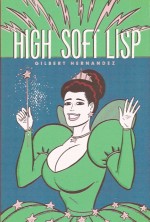
Love and Rockets: New Stories No. 2


By The Hernandez Brothers (Fantagraphics Books)
ISBN: 978-1-60699-168-8

Like clockwork the second volume collecting the latest creations of Los Bros Hernandez appeared and proved well worth the wait, once more leading with the cleanly classical visual sophistication of Jaime’s ‘Ti-Girls Adventures Number 34.

This enchanting super-heroine homage bookends the volume beginning with ‘Part Three: Daughters of Doom’ and concluding with the delightful ‘Part Four: Mothers of Mercy’ which finds time and space for poignancy and (rather surreal) family relationships amidst a joyous, vicarious avalanche of costumed mayhem of the type we loved as kids in the 1960s. Not since Scott McCloud’s delicious tribute ‘Destroy!’ has the poetry of gauntleted fisticuffs been so memorably celebrated…

The central portion features Gilberto who contributed two longer pieces this time: the challenging ‘Sad Girl’ wherein young and pneumatic Killer takes an unorthodox and oblique revenge reminiscent of the heady days of Palomar whilst the boldly experimental graphic mime ‘Hypnotwist’ follows a lost and vulnerable young woman on an astonishingly bizarre voyage of discovery…

As with Love and Rockets: New Stories No. 1 these tales form part of an unfolding work-in-progress, and I’m praying that just as with the original series thirty years ago, some unseen connections will reveal themselves to my hungry eyes in the months to come. And even if they don’t, these are still some of the best drawn and intriguing comics tales of the last few years.

A mature fan’s secret delight, don’t miss these books…

© 2009 Gilberto, Jaime and Mario Hernandez. This edition © 2009 Fantagraphics Books.  All Rights Reserved.

Showcase presents Green Lantern volume 4


By John Broome, Gardner Fox, Dennis O’Neil, Gil Kane & various (DC Comics)
ISBN: 978-1-84856-322-3

Slightly slimmer than the usual phonebook-sized tome the fourth collection starring the Emerald Gladiator of Earth-1 (here reproducing in crisp, stylish black and white the contents of issues #60-75 of the groundbreaking comic book) is a kind of throat-clearing shuffle to allow a fifth volume to begin with the landmark O’Neil/Adams Green Lantern/Green Arrow tales, but that doesn’t by any means imply that the superb collection here is unworthy of your attentions.

By the time this selection of stories began DC was a company in transition – as indeed was America itself – with new ideas (for which, in comic-book terms read “new, young writers”) being given greater headway than ever before: an influx of new kids unseen since the very start of the industry, when excitable young artists and writers ran wild with imagination…

Green Lantern #60 (April 1968) was however an all-veteran outing as Gardner Fox, Gil Kane and Sid Greene introduced a fantastic new foe in ‘Spotlight on the Lamplighter!’, a power-packed, crime-busting morality play that foreshadowed a spectacular team-up classic in the next issue.

Mike Friedrich penned ‘Thoroughly Modern Mayhem!’ but mercifully the story was as wonderful as the title is not, since it cut to the quick of a problem many a kid had posited. If the power ring was so powerful why not just command it to banish all evil? When the old and weary Emerald Crusader of Earth-2 does just that, it takes both him and his Earth-1 counterpart to remedy the shocking consequences…

Issue #62 replaced Kane with Jack Sparling for Fox’s clever scientific mystery ‘Steal Small… Rob Big!’ and Denny O’Neil’s metaphysical, history-warping thriller ‘This is the Way… The World… Ends!’ in #63: whilst Mike Sekowsky and Joe Giella illustrated the O’Neil scripted ‘Death to Green Lantern’ wherein a long-forgotten foe almost destroyed the Green Guardian’s reputation before ending his life. Social historians might like to note the inclusion of benevolent and necessary (plus favourably depicted and written) hippies/flower children acting as more than mere comedic asides: Those times they really were a-changin’…

There was a return to straight superhero drama with Fox, Sekowsky and Giella’s doomsday thriller ‘Dry Up… and Die!’ which apparently ended the criminal career of Doctor Polaris whilst John Broome took GL back to the future for another planet-saving sci-fi romp in #66’s ‘5708 AD… A Nice Year to Visit – But I Wouldn’t Want to Live Then!’

Issue #67 featured two shorter tales, the first of which ‘Green Lantern Does his Ring Thing!’ was a delightful old-school conundrum as old enemy Bill Baggett wrested mental control of the ring away from the Emerald Gladiator (by Fox, Dick Dillin and Giella) whilst ‘The First Green Lantern!’ by Fox and Sid Greene revealed how the Corps began in the first (and only, I think) of a projected series: Tales of the Power Ring.

Contemporary space opera was the order of the day in the intriguing action thriller ‘I Wonder Where the Yellow Went!’ scripted by O’Neil and featuring the wonderfully welcome return of a rejuvenated Gil Kane, aided and abetted by Giella. Kane’s last efforts on the hero he visually created was to be a eye-pooping run of beautiful, dynamic classics, and none more so than the youth-rebellion parable ‘If Earth Fails the Test… it Means War!’, cleverly scripted by Broome and inked by the incomparable Wally Wood.

Vince Colletta inked the less impressive Broome/Kane space spoof ‘A Funny Thing Happened on the Way to Earth’, but honour and quality were restored with the tense countdown to disaster mystery ‘The City that Died!’ (Broome, Kane and Giella): one of two tales in #71, and one that reintroduced Olivia Reynolds – a love interest whose subconscious mind was a planet-shattering energy source. The second story was another jolly Jordan Brothers yarn, from Broome, Dillin and Murphy Anderson, but ‘Hip Jordan Makes the Scene!’ was a regrettably old-fashioned tale of a grifting hippie way out of tune with its readers’ sensibilities – and that’s a shame because it is quite funny…

‘Phantom of the Space Opera!’ by O’Neil, Kane and Giella is a visually magical but rather heavy-handed co-opting of Wagner’s Ring of the Nibelungs, transposed to deep space, but this was more than compensated for by the brilliant two-parter that followed.

‘From Space Ye Came…’ in Green Lantern #73 and its climactic conclusion ‘Lost in Space!’, by Mike Friedrich, Kane and Anderson was an unforgettable clash of ultimate enemies as Sinestro, the renegade Green Lantern, made a brutal attempt on our hero’s life using his foe’s unrequited love for Carol Ferris as a psychological wedge. However the alien mastermind was unaware of just how unstable Ferris was in her dual identity of the gem-possessed Star Sapphire…

With #76 Denny O’Neil would become sole scripter and in collaboration with comics genius Neal Adams completely redefined contemporary superhero strips with relevancy-driven stories. But to complete this book and the first chapter of Hal Jordan/Green Lantern’s chequered career comes the glorious swan-song ‘The Golden Obelisk of Qward!’ as the Emerald Crusader and a desperate doctor invaded the anti-matter universe to save Olivia Reynolds and destroy a weapon capable of demolishing our galaxy. Broome, Kane and Giella went out on a high note blending modern sensibilities with the plot-driven sense of wonder and high-octane action that made Green Lantern such an all-pervasive hit and the very foundation stone of DC mythology.

These tales of wit and courage, illustrated with astounding dynamism defined the Silver Age of comics and they are still as captivating and engrossing now as they ever were – perhaps even more so. If you love the sheer gloss and glamour of superhero fiction, then it never gets better than this…

© 1968, 1969, 1970, 2009 DC Comics. All Rights Reserved.