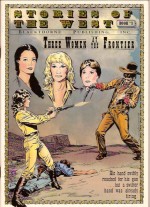
Paper Dolls from the California Girls


By Trina Robbins (Eclipse Books)
ISBN: 0-913035-57-2

I haven’t looked at anything for the sheer fun of it for awhile so here’s a delightful peculiarity from the 1980s: an example of an old hobby that’s just crying out to become the next big fad. As a follow-up to her wacky, wise and wonderful Paper Dolls from the Comics (ISBN: 0-913035-20-3) cartoonist Trina Robbins turned her designing eye on her own strip: California Girls.

One of the last serious attempts at creating a fun comicbook for young girls, the series featured the everyday lives of Maxine and Maureen Muldoon, twins who attend Hollyhock High School with their gal-pals. While not to every fan’s taste the strip consisted of fashion, comedy and everyday adventure, carried out with Robbins’ slick wit and accessible style.

The newspaper comic strip was a powerful and ubiquitous tool used to raise circulation and promote customer loyalty in the first half of the twentieth century, and as well as laughs, thrills and escapism creators frequently added games, cut-out collectible premiums and paper toys to their output in their efforts to win and keep an audience that consisted of the entire family, not just adolescent males of all ages.

One of the most popular and effective – even to this day (don’t take my word for it, crank up that search engine and see for yourself), was the addition of favourite characters in their underwear, with additional clothes you could “dress” them in. You could even design your own outfits for them. The common belief was that young children and girls loved this kind of “dress-up” play, but I suspect many young men also joined in the fun.

This practise migrated to comicbooks, and every youngster and girl friendly title from Sugar and Spike to Millie the Model had their own paper-doll pages. As I’ve mentioned elsewhere, even my exceptionally smart and utterly sensible wife is not immune to the seditious allure of these things.

So grab your crayons to decorate the monochrome pages (there’s a glorious full-colour centre section too), snag some scissors – don’t run! – and revel in the modes and fashions of the 1980s West Coast. And remember if you do come across a copy of this joyous little gem, with today’s scanning and reprographic advances you can easily duplicate all the pages and go mad without destroying this fun and funky little package…
© 1988 Trina Robbins. All Rights Reserved.

Fred Basset 2008


By Michael Martin with Arran Graham (Orion Books)
ISBN: 978-0-7528-9385-3

What’s your favourite biscuit? Do you only eat one sort or do you find that different occasions, different beverages or times of day dictate a little variety: some situation-appropriate flavours?

Graphic narrative is like that. The terrifying realties of We3 (ISBN: 1-84576-159-6), the social significance of Pride of Baghdad (ISBN: 1-84576-242-8) or Maus (978-0-14101-408-1), the flamboyant adventure of Bucky O’Hare (ASIN: B000E4SUCM), gently acerbic political radicalism of Donald Rooum’s Wildcat (ISBN: 0-900384-30-1) or pure fantasy of Mouse Guard: Fall 1152 (ISBN: 1-84576-660-1) all have their place but sometimes all you want or need is a quiet reassuring smile.

Fred Basset began in the Daily Mail on July 8th 1963, the brainchild of professional cartoonist Alexander S. Graham, and soon found a solid fan-base among the generally middle-class readership, many of whom must have identified with the minor daily tribulations of an unnamed young married couple and their avuncular if amusingly haughty pet dog, whose gallery-playing internal monologues – or chats with we observers behind the forth wall – amounted to a daily confirmation of what most pet-owners believed their hairy charges were capable of. Eventually the strip became a regular weekend delight too in the Mail on Sunday. How odd that such a quintessentially English Strip is based on the life-style of the Scottish middle class – or perhaps not…

Alex Graham was born in Scotland in 19 and educated at Dumfries Academy. His first professional sales occurred during World War II, and he thereafter created the strip Wee Hughie for the Dundee Weekly News in 1945, continuing it until 1970. In 1946 he also originated Our Bill and Briggs the Butler, before hitting the global big time with his four-footed raconteur, whom he based in large part upon his own faithful furry companion Frieda. Graham died in December 1991, having drawn over 9,000 strips, black and white and colour, and the strip was continued by his daughter Arran and cartoonist Michael Martin.

The strip has a huge worldwide following, especially in comics-friendly America, Australia and the Scandinavian countries. Known by such varied names as Wurzel in Germany, Lillo il Cane Saggio (Lillo the wise dog) in Italy, Lorang in Norway, Laban in Sweden in Sweden and bafflingly Retu, Pitko and Koiraskoira in Finland, the not-so humble hound even had his own animated TV show in 1976, produced by Bill Melendez Productions (famed for both the Peanuts/Charlie Brown and the Perishers cartoon shows) perfectly voiced by Lionel Jeffries.

Although Fred and his doggie comrades Jock, (a small black Scottish Terrier), Yorky (a Yorkshire Terrier) and, in latter years, Fifi (a saucy Poodle) are obviously immortal, the humans have gradually advanced into middle-ish age. By this year’s collection (the first Fred Basset Book was released in 1963, and ran to #45 in 1993 before becoming annuals such as the one nominally under discussion here, supplemented by a children’s book, a 25-year retrospective and a Bumper Book) they seem quite world-weary, but the situations remain comfortingly constant although a signature of Martin’s tenure is an increasing insertion of the annoyances of contemporary life such as sat navs, catch-phrases and celebrity culture.

So what’s the appeal?

The regular re-application of surreal whimsy to a stable environment has its own subtle satisfaction; and often the panel gags don’t even have a recognisable punch-line – what’s happening on a daily basis is often the cartoon equivalent of old cronies having a bit of a chinwag over the garden wall, a sharing of mutual experience with a dash of hyperbole and a smidgen of one-upmanship… You seldom burst out in a loud guffaw (although that’s not unknown) but you frequently think “Yes! Just like when…”

To those passionate intellectuals among us that might belittle the gag-features that run for decades delighting untold millions of readers I have one last suggestion. If this isn’t your cup of tea – don’t buy it.

There’s plenty who will, including those members of your own family who wouldn’t be caught dead reading your suggestions (and think you’re a trifle odd, besides)…

So, Fred Basset: Comic Strip Positive Reinforcement refreshingly unchanging and amusing. Who’s for a Custard Cream?
© Associated Newspapers plc 2008.

Showcase Presents Phantom Stranger volume 2


By various (DC Comics)
ISBN13: 978-1-4012-1722-8

By the end of 1972 the horror and mystery boom had stabilized into a key component of both DC and Marvel’s core output, with fantasy and sword and sorcery adventurers also scoring well with fans, but the glory days of huge comic-book print-runs were gone forever. However, although a depleted force, superhero comics did not disappear as some older heads suspected they might, and an initially unwieldy amalgam, the horror-hero, soon became a useful crossover sales tool.

Never as common as Marvel’s burgeoning pantheon of spooky crusaders, the most successful of the DC stalwarts were Swamp Thing and the 1950’s revival Phantom Stranger. This volume concludes his impressive second run of tales (see also Showcase Presents the Phantom Stranger volume 1 (ISBN: 978-1-4012-1088-5) and includes not only his crossover trips into the greater DC Universe, but also includes the rare final appearances that seemingly ended his career until revived in the post Crisis on Infinite Earths 1980s.

The monochrome magic begins with an impressive chiller from Bob Haney, Ross Andru and Mike Esposito that originally appeared in the Batman team-up vehicle the Brave and the Bold (#89, April/May 1970). ‘Arise Ye Ghosts of Gotham’ saw a religious sect return to the city that had driven them out two centuries previously, only to awaken the vengeful spirits of their banished ancestors until pacified by our initially squabbling heroes.

The Stranger’s return to Brave and the Bold (#98, October/November 1971), was a much more traditional tale, superbly crafted by Haney and Jim Aparo. ‘Mansion of the Misbegotten!’ was a twist-ridden mystery of demon-cults and possession that fully exploited the world-wide obsession with Satanism that began with Rosemary’s Baby and peaked with The Exorcist, as the Gotham Guardian found himself outwitted, outmatched and in dire need of assistance to foil a seemingly diabolical force threatening the life of his godson.

Following on is ‘A Stranger Walks Among Us!’ by Len Wein, Dick Dillin and Dick Giordano, as the haunted hero saved Halloween and the World’s Greatest Superheroes from a magical murder plot and consequently joined the Justice League of America (in issue #103 of their own comic, December 1972).

From the same month the Stranger’s own solo adventures featured ‘Circle of Evil’ (Phantom Stranger #22) by Wein and Aparo, wherein the coalition of evil calling itself the Dark Circle initiated its master plan by attacking the hero through blind psychic – and nominal love-interest – Cassandra Craft, whilst Ghost-Breaker Dr. Thirteen exposed another hoary hoax in ‘Creatures of the Night’ by Steve Skeates and Tony DeZuniga. These counterpoints to eldritch adventure, although usually excellent, were rapidly reaching their sell-by date, and very soon Thirteen would be battling real monsters he couldn’t rationalize away…

‘Panic in the Night!’ from #23 saw the Stranger and Cassandra in Paris battling analogues of the Phantom of the Opera and Hunchback of Notre Dame as they gathered an unlikely ally for their imminent final clash with the Dark Circle. However, great as this yarn is, the real gem is the back-up feature which transformed Terry Thirteen.

‘The Spawn of Frankenstein!’ saw the discovery of an ice-entombed man-monster lead to dark tragedy. When Victor Adams, a colleague of Dr. Thirteen, attempted to revive the beast it resulted in his death and Thirteen’s wife Marie being crippled and hurled into a coma. The vengeance-crazed Ghost-Breaker resolved to hunt down and destroy the unthinking monster, utterly unaware – and perhaps uncaring – that the beast was both rational and wholly innocent of any misdeed.

Written by Marv Wolfman and illustrated by the unique talent of Michael Kaluta, this debut promised much, but the feature was plagued by inconsistency. Phantom Stranger #24 (March/April 1973) saw the epic conclusion of the long war against the Dark Circle as the hero and Cassandra battled the ‘Apocalypse!’ in the shadow of Mount Corcovado (that’s the one with the Jesus statue “Christo Redentor” overlooking Rio de Janeiro) with old foes Tannarak and Tala, Queen of Darkness along for the spectacular and long-overdue ride.’The Spawn of Frankenstein continued by Wolfman and Kaluta as the revived monster decided to revenge itself upon Victor Adams for dragging him back to cruel, unwanted life (by returning the favour…) by resurrecting the dead scientist in return…

A new tone and a resumption of episodic, supernatural triage marked issue #25 as the mysterious wanderer pitted himself against a voodoo cult in ‘Dance of the Serpent’ (by Wein – from an idea by Michael J Pellowski – and Aparo) whilst Kaluta ended his run on Frankenstein with another untitled tale wherein Rachel Adams (wife of the departed Doctor) was kidnapped by Satanists before being rescued by the monster; a tale that led into #26’s crossover ‘From Dust Thou Art…’ by Wein, Wolfman and Aparo, which teamed the monster and the Stranger against demons in need of earthly bodies.

The radical change was completed with the next issue as innovative horror-anthology artist Gerry Talaoc replaced the sleek, realistic Aparo (who moved on to the Brave and the Bold and a long career illustrating Batman), whilst journeyman mainstay Arnold Drake assumed the writer’s seat. Together they introduced another long-term nemesis for the Stranger in the deeply disturbed psychiatrist and parapsychologist ‘Dr. Zorn: Soul-Master!’

Eschewing the Gothic trappings that had carried the series thus far this driven meddler, callously warping his patients and performing illicit experiments for the US Military-Industrialist Complex, was a far more insidious and freshly contemporary threat in tune with the times. Thwarted but seldom defeated he returned to bedevil the Stranger many times.

Frankenstein was taken over by Steve Skeates and the legendary Bernard Baily (Golden Age co-creator of Hourman and the Spectre) and ‘The Terror and the Compassion’ saw the misunderstood beast stumble into a commune that was actually a demonic coven intent on blood sacrifice and raising the devil…

‘The Counterfeit Madman!’ by the new regular team saw the Stranger explore the mind of mad-dog killer Johnny Ganz. Was the young offender a true psychopath or a cunning crook pretending to be a multiple-personality sufferer? Was there another innocent victim trapped inside the killer’s skull with him? An element of moral ambiguity had been added by Drake that layered the later adventures with enticing and challenging dilemmas absent from most comic fiction and only matched by Steve Gerber’s challenging work on Man-Thing. The back-up,‘Night of the Snake God’ however, was a more traditional tale which continued the Spawn of Frankenstein’s battle against the hippie cult in a solid if undemanding manner.

Zorn returned to his unscrupulous scientific explorations of the supernatural in Phantom Stranger #29’s ‘The Devil Dolls of Dr. Z!’ whilst matters hardly progressed at all in ‘The Snake-God Revealed!’, which saw the Spawn of Frankenstein lose momentum – and story-space – as his strip was reduced to six pages. The next issue led with another contemporary terror in ‘The Children’s Crusade!’ as a modern Pied Piper seduces a town’s young into his charismatic cult whilst ‘Turn-about!’ concludes – and not before time – the exploits of the Spawn of Frankenstein.

Issue #31 (June-July 1974) is an exotic yarn dealing with the aftermath of the Vietnam war as a disgraced US “general” smuggling drugs for a local warlord awakens a slumbering demon in ‘Sacred is the Monster Kang!’ The Stranger tales were usually 12 pages long at this period, but the back-up feature that originally filled up the comics – The Black Orchid – is not included in this volume.

Bill Draut, one of the Stranger’s earliest illustrators returned in #32’s ‘It Takes a Witch…!’ an old-fashioned spooky whodunit, whilst superstar-in-waiting Mike Grell illustrated another Dr. Zorn vehicle that guest-starred the ghost of Boston Brand. In ‘Deadman’s Bluff!’ the ghost’s protracted hunt for his murderer ended as usual in frustration, but an antagonistic partnership was established for the future…

Talaoc returned for ‘A Death in the Family!’ in #34 where a “clean” brother was compelled to assume control of the family’s business – running a crime mob. His guilt was further compounded when his dead sibling returned from the grave to give him a few pointers. Increasingly the Stranger was becoming a mere witness to supernatural events in his own series, so perhaps it’s no coincidence that this issue featured a return for the more hands-on Dr. Thirteen (wife Marie cured and both of them ignoring their brief stint of Frankensteinian tragedy). ‘…And the Dog Howls Through the Night!’ was another straightforward yet gripping adventure from Skeates and Tony Dezuniga, which I suspect had been waiting a few years in a drawer before publication.

‘The Demon Gate’ was the debut tale for writer David Michelinie who made the Stranger a target for the derivative Dr. Nathan Seine who wanted to siphon off the hero’s mystic energy and soul to cure his dying wife, and like ‘Crimson Gold’, a deadly African treasure hunt for Nazi treasure in #36, it briefly betokened a more active role for the immortal wanderer. Drake and Paul Levitz scripted ‘Images of the Dead’ in Phantom Stranger #37, another highly charged moral quandary wherein a young artist was forced to commit reprehensible crimes to earn money for his wife’s hospital bills…

Talaoc made way for fellow Philippino artist Fred Carrillo with issue #38 as Nathan Seine returned to extract a bitter revenge in Levitz’s ‘The Curse of the Stalking Skull’ and this new creative team brought back Boston Brand for ‘Death Calls Twice for a Deadman’ in a last-ditch effort to revive dwindling sales. Including the sometime Batman villain the Sensei signaled a belated return to the company’s over-arching continuity, but it was too little, too late.

Deadman also co-starred in #40’s ‘In the Kingdom of the Blind’ and #41’s concluding chapter (February-March 1976) ‘A Time for Endings’ as Dr. Seine tried to bring Elder Gods to Earth using the long-absent Cassandra Craft as a medium. With the tale’s finish the series ended and the Stranger all-but vanished until the winter of 1978 and a giant-sized tale from DC Super-Stars #18.

‘Phantom Stranger and Deadman’ (by Gerry Conway, Marty Pasko, Romeo Tanghal, Dick Giordano and Bob Layton) was an extended Halloween extravaganza as the mystic champions, with Dr. Thirteen and Tala in attendance, attempted to stamp out an infestation of demons that had infiltrated the comicbook Mecca of the season: Rutland, Vermont (long associated in both Marvel and DC titles as the only place to be on the Eve of All Hallows).

One final tale appeared a few months later in the 150th issue of House of Secrets (February-March 1978) as Conway and Talaoc related a generational tale of restless evil in ‘A God by any Other Name.’ The Stranger and Dr. Thirteen united to complete the work of Rabbi Samuel Shulman and Father John Christian who in the dire environs of London, 1892, joined spiritual forces to destroy the World’s first malignant machine intellect Molloch. But those Satanic Mills have a habit of being rebuilt by greedy men…

More than most the Phantom Stranger is a strong character and concept at the mercy of pitiless fashion. Revived at the end pf the 1960s on a wave of interest in the supernatural, and seemingly immune to harm, he struggled to find an audience in the general marketplace before direct sales techniques made publishing a less hit-or-miss proposition. Blessed with a vast cohort of talented creators, however, the stories themselves have proved to be of lasting quality, and would so easily transfer to today’s television screens that I wonder why they haven’t yet. Mystery, exotic locales, forbidden monsters spectacular effects and a cool hat: C’mon, you know you’d watch it…

But until then you’ll have to thrill and scare yourselves with these fantastic tales.

© 1970, 1971, 1972, 1973, 1974, 1975, 1976, 1978, 2006 DC Comics. All Rights Reserved.

Iznogoud volume 2: The Caliph’s Vacation


By Goscinny & Tabary, translated by Anthea Bell & Derek Hockridge (Cinebook)
ISBN: 978-905460-61-8

During his lifetime (1926-1977) René Goscinny was one of the most prolific, and is still one of the most read, writers of comic strips the world has ever seen. Among his most popular series are Lucky Luke, Le Petit Nicolas and of course Asterix the Gaul. In 1962, scant years after the Suez crisis, the French returned to the deserts when he teamed with Jean Tabary to produce imbecilic Arabian potentate Haroun el-Poussah but it was the villainous foil, power-hungry vizier Iznogoud that stole the show – possibly the conniving little devil’s only successful scheme.

Les Aventures du Calife Haroun el Poussah was created for Record with the first instalment appearing in the January 15th issue in1962. A modest success, it was transferred to Pilot: a magazine created and edited by Goscinny where it was redeveloped to give more emphasis to the scurrilous little weasel who had increasingly stolen the show.

With the emphasis shifted to the shifty shrimp the revamped series, retitled Iznogoud, commenced in Pilote in 1968, becoming a huge favourite, with 27 albums to date, a long-running TV cartoon show and even a live action movie in 2005. When Goscinny died in 1977 Tabary took over writing the strip as well, moving to book-length complete tales, rather than the compilations of short punchy stories that typified their collaborations.

Like all the best storytelling, Iznogoud works on two levels: as a comedic romp of sneaky baddies coming a cropper for younger readers, and as a pun-filled, witty satire for older, wiser heads, much like its more famous cousin Asterix – and also translated here by the master translators Anthea Bell & Derek Hockridge who made the indomitable little Gaul so very palatable to the English tongue. Here their famed skills conjure up the best – and least salacious – bits of the legendary “Carry On films”…

Iznogoud is Grand Vizier to Haroun Al Plassid, Caliph of Ancient Baghdad, but the sneaky little toad has loftier ambitions, or as he is always shouting “I want to be Caliph instead of the Caliph!”

The vile vizier is “aided” – that’s sarcasm, that is – in his schemes by bumbling and reluctant assistant Wa’at Alahf, and in this second delightful translation from CineBook (which was originally the third album Les vacances du calife (1968, Dargaud), they begin their latest campaign of insurrections with ‘Summer Vacation or Never Say Die.’ As the holidays come round again the vizier persuades the Caliph to forego his usual Summer Palace in favour of a quiet bed-sit by the seaside, where an unwary ruler could easily drown or be buried in the sand or lost at sea or be eaten by sharks or…

As usual the plans go painfully awry and it’s back to Baghdad for ‘Good Sports in the Caliphate’ as a hapless magician/weatherman accidentally creates enough snow in the desert to open a ski resort. It doesn’t take much – it never does – to convince Haroun to sample the chilly thrills of skiing, snowboarding, crevasses and avalanches but as usual it’s not the Big Chief who sustains any crippling injuries.

The vacation theme continues with ‘The Caliph’s Cruise’ but after booking passage for Haroun with the unluckiest sea captain alive, the vile vizier doesn’t get off the ship quickly enough and the selection of cannibals, monsters, savages and sea creatures the voyagers encounter find him a far more suitable subject for their unique attentions, whilst in the concluding tale ‘Lihkwid’s Bottle or the Bottle of Lihkwid’ a travelling merchant provides an infallible elixir that will transform the affable potentate into a louse – but only if Iznogoud can trick him into drinking all three gallons of the foul-tasting stuff…

Snappy, fast-paced slapstick and painfully punny word-play abound in these mirthfully infectious tales, and this series is a household name in France; where the name has even entered common usage as a term for a certain type of politician: over-ambitious, unscrupulous – and often of diminutive stature.

When first released here in the 1970s, Iznogoud made little impression but hopefully this snazzy new incarnation of gloriously readable and wonderfully affordable comedy vignettes can finally find an audience among today’s more internationally aware comics-and-cartoon savvy British Kids Of All Ages.

I’m already one of them: How about you…?

© 1968 Dargaud Editeur Paris by Goscinny & Tabary. All Rights Reserved.

Legends: the Collection


By John Ostrander, Len Wein, John Byrne & Karl Kesel (DC Comics)
ISBN: 1-56389-095-X

With the success of Crisis on Infinite Earths (ISBN: 978-1-5638-9750-4) and Marvel’s Secret Wars (ISBN: 978-1-90415-983-4) comicbook publishers had dreams of regular, spectacular sales boosts, but a section of the cantankerous buying public muttered about gimmicks to make them spend more and voiced concerns about keeping the quality high.

At DC fan-interest was still fresh and keen as so many of their major properties – and indeed the entire continuity – was open for radical change, innovation and renewal. So, how best to follow the previous years cosmic catastrophe? Why not a much smaller and more personal Great Disaster, spotlighting those strangers wearing familiar costumes and a bunch of beginnings rather than the deaths and endings of Crisis?

Darkseid of Apokolips decides to attack humanity’s spirit by destroying the very concept of heroism and individuality. To this end he sends the hyper-charismatic New God Glorious Godfrey to America to lead a common man’s crusade against extraordinary heroes, while the God of Evil initiates individual plans intended to demoralize and destroy key champions of Earth. The rampant civil unrest prompts President Ronald Reagan to outlaw costumed crime-busters.

Some comply and many rebel, but as world-wide chaos ensues Darkseid amps up the pressure by adding monstrous artificial threats such as Macro-Man and Brimstone, a sentient mountain of super-heated plasma. With the world in tumult and Godfrey making a power grab using Apokoliptian Warhounds, the destructive anarchy forces the heroes to act: coming together to prevent the conquest of Mankind…

The enthralling core tale contained here can comfortably be read without the assorted spin-offs, crossovers and tie-ins, and it still feels like a magnificent mission statement for that new DC Universe, gritty, witty cohesive and contemporary. This collection also includes covers reproductions of each out-rider installment of the greater story, should you feel like tracking down those missing components…

John Ostrander was new to DC, lured from Chicago’s First Comics with editor Mike Gold where their work on Starslayer, Munden’s Bar and especially Grimjack had made those independent minnows some of the most readable series of the decade. Paired with veteran Len Wein, whose familiarity with the DC stable ensured the scripts would have the right company flavour, they concocted a bold and controversial tale for super-star Superman re-creator John Byrne to draw and the immensely talented Karl Kesel to ink.

Possibly the best and certainly the most cohesive of the company-wide braided mega-series, Legends launched as a six issue miniseries cover-dated November 1986 to April 1987. Like its predecessor the major narrative thread spread out into other DC series, but unlike Crisis each tie-in was consecutively numbered and every pertinent cover was labeled. If you got ’em all you couldn’t help but read them in the right order! The miniseries crossed into 22 other comics and miniseries and premiered three new series, Justice League, Flash and the superb and long neglected Suicide Squad. It even led to another new treatment for Billy Batson in a Shazam! miniseries and a sneak peek at the newly re-minted Wonder Woman.

If anything was ever destined for a complete Absolute Edition…

Until then however you can look for this little cracker and wonder why DC ever let it fall out of print.
© 1986, 1987, 1993 DC Comics. All Rights Reserved.

Michael Moorcock’s Elric: The Dreaming City – Marvel Graphic Novel #2


By Roy Thomas & P Craig Russell (Marvel Comics)
ISBN: 0-939766-12-4

Elric is an absolute icon of the Sword and Sorcery genre: the last ruler of a pre-human civilization. The Melnibonéans are a race of cruel, arrogant sorcerers: dissolute creatures in a slow, decadent decline after millennia of dominance over the Earth. An albino, Elric VIII, 428th Emperor of his line, is physically weak and of a brooding, philosophical temperament, caring for nothing save his beautiful cousin Cymoril, even though her brother Prince Yrrkoon openly lusts for his throne.

Elric doesn’t even really want to rule, but it is his duty, and he is the only one of his race to see the newly evolved race of Man as a threat to the Empire. He owns or is possessed by a black sword called Stormbringer: a magical blade that steals the souls of its victims and feeds their life and vitality to the albino.

In this beautifully realized adaptation Elric has been ousted by Yrrkoon, who has cast Cymoril into an enchanted sleep and holds her hostage. The Faustian albino has entered into a devil’s bargain with assorted human rulers and now guides an armada of ships in an all-out attack on the island citadel of Immyr, determined to raze the city and eradicate his entire race if that what’s necessary to rescue his beloved…

The Dreaming City was the first Elric story Michael Moorcock wrote, appearing in the pulp magazine Science Fantasy #47 in June 1961. An instant hit, the last Emperor became the vanguard of a modern revival of the weird fantasy form and an inadvertent foundation stone for the new-born role-playing game market.

This is a stirring, spectacular, entrancing tale of startling power, as are all the Elric adaptations Russell was involved with (see also the eponymous Elric of Melniboné ISBN: 0-936211-01-6 and Sailor on the Seas of Fate ISBN: 0-915419-24-6) and it’s high time somebody collected them and the Epic Illustrated vignette ‘While the Gods Laugh’ into some kind of definitive edition…
© 1981, 1982 Roy Thomas and P Craig Russell. A Star*Reach Production. Adapted from the original story by and © Michael Moorcock 1961.  All Rights Reserved.

American Century: Scars and Stripes


By Howard Chaykin, David Tischman, Marc Laming & John Stokes (Vertigo)
ISBN: 1-56389-791-1

The “straight” adventure strip, with a free-wheeling hero travelling the globe righting wrongs – long a mainstay of comics and strips – has to a large extent vanished from the assembled genres that make up the modern graphic narrative industry – at least in the English speaking world. Possibly the last – and wickedest – hurrah of the form came from a cruelly underrated series by one of America’s best creators: Howard Chaykin.

Wearing his sly and savvy social and historical commentator’s hat, the fabled bad boy of popular culture and frequent writing partner David Tischman created World War II veteran Harry Block, who won the war but loathed the peace, chafing at his boring pilot’s job, his cheating wife and his smug, scuzzball racist friends as they all chase the new American Dream in the Halcyon summer days of 1949.

When the Korean conflict flares up and he’s recalled to Active Duty, Harry decides enough is enough and flees to South America. If he’s going to be shot at again he wants it to be personal and not because some grasping, incompetent @$$h*le orders it…

Taken from issues #1-4 of American Century, this introductory saga finds him in turbulent Guatemala using the name Harry Kraft and sucked into a CIA-sponsored revolutionary war as his comfy smuggling gig brings him to the attention of Soviet Agent Provocateurs and the beloved “Santa” Rosa, bleached-blonde Angel of the Poor and bed-mate of the increasingly isolated and desperate General/Presidenté DeSantiis.

The American Way just won’t give Harry a break and the murderous, bloody results are going to repaint World maps in ways that ordinary people will regret and resent for decades to come…

Smart, complex, sexily cynical, headily political and darkly comic, this sardonic left-wing parable simmers with attitude and the no-nonsense clear-cut art from Marc Laming and John Stokes continues that splendid tradition of a decent man in a bad place that began with Captain Easy and Terry and the Pirates but adds enough uncompromising contemporary punch, smut and gore to captivate anybody over 16 who’s ever read a newspaper.

The series ran to 27 issues and only this volume and the follow-up American Century: Hollywood Babylon (ISBN: 1-56389-885-3) were ever collected, so there’s plenty more to see should Vertigo ever wise up and continue to re-package them. Of course, best of all would be a couple of definitive editions and an all-new sequel…

© 2001 Howard Chaykin, Inc.and DC Comics. All Rights Reserved.

Colossus: God’s Country


By Anne Nocenti, Rick Leonardi & P Craig Russell (Marvel Comics)
No ISBN:

The world of the X-Men has always been a broad canvas for telling stories and exploring issues and in this collected tale from the always intriguing Marvel Comics Presents (volume 1, issues #10-17) writer Anne Nocenti explores Cold War politics, Free Speech, unthinking patriotism, combative ideology and family dynamics as the Russian mutant Peter Rasputin goes walkabout in America’s heartland.

Bruce fought in Viet Nam but now lives a precarious existence in a ramshackle house with his wife, father-in-law and young son Zackery. Life is tough, the neighbours are snide and unfriendly, but at least they all live free in a proud country…

They’re on a picnic when Zackery stumbles into an execution by cyborg warriors. Luckily Colossus is on hand to prevent the witnesses from becoming collateral damage, but the danger is not over. The killers belong to a clandestine group of US Government “patriots”, agents who defend their country by ignoring its laws, ethics and morals. They can’t afford public scrutiny – especially from the kind of citizens they’re sworn to protect…

Now all Bruce can rely on to save his family is a monstrous commie agent from the “Empire of Evil”…

Action packed and thought-provoking this slim tome (64 pages) is engaging enough mind-candy but as illustrated by the brilliant pairing of grand art stylists Rick Leonardi and P Craig Russell it’s also a visual wonder that few other X-Yarns can touch. Still available from numerous online retailers, and it’s worth every penny…

© 1984 Marvel Entertainment Group, Inc. All Rights Reserved.

Batman: the Strange Deaths of Batman


By various (DC Comics)
ISBN: 978-1-84856-138-0

Compiled on the coat-tails of the Batman RIP publishing event this delightfully eccentric collection celebrating the recurrent demise of the Gotham Guardian digs up a few oddments and some genuine valuable artifacts to amuse, enthrall and amaze.

The wonderment begins with the quirkily eponymous ‘The Strange Death of Batman!’; a highly experimental mystery that first appeared in Detective Comics #347 (January 1966) literally moments before the Dynamic Duo became household names all over the globe due to that incredibly popular TV show. Written by Gardner Fox and illustrated by Carmine Infantino and Joe Giella, it featured possibly Batman’s daftest super-foe – the Bouncer – but still delivers action, drama and an intriguing conundrum to challenge the reader.

It’s followed by ‘Robin’s Revenge’ from World’s Finest Comics #184 (May 1969) wherein writer Cary Bates and artists Curt Swan and Jack Abel recount the imaginary story (see the review for DC’s Greatest Imaginary Stories, ISBN: 978-1-4012-0534-8 for a definition if the term is unknown to you) of Batman’s murder and the dark path that event takes the Boy Wonder down, with a hapless Superman as stand-in guardian helpless to forestall the seemingly inevitable further tragedy…

‘The Corpse that Wouldn’t Die!’ is a superb tale guest-starring the Atom taken from team-up title the Brave and the Bold #115 (October/November 1974). Written by Bob Haney and magnificently drawn by Jim Aparo it details how the Gotham Guardian is killed in the line of duty and how the Tiny Titan reanimates his corpse to conclude the case that finished him…

Next up is an extended saga from Batman #291-294 (September to December 1977) written by author David V Reed and illustrated by John Calnan and Tex Blaisdell. Over four deviously clever issues ‘Where Were You the Night Batman was Killed?’ sees the hordes of costumed foes the Caped Crusader crushed assemble to verify the stories of various felons claiming to have done the deed. This thematic partial inspiration for the recent Neil Gaiman “Last Batman Story” kicks off with ‘The Testimony of the Catwoman’, and follows with the testimonies of the Riddler, Lex Luthor and the Joker before satisfactorily concluding in a grand manner.

‘Buried Alive!’ by Gerry Conway, Rick Buckler and Frank McLaughlin (World’s Finest Comics #269 June/July1981) finds Superman and Robin desperately racing against time hunting for the madman who entombed the Batman, whilst ‘The Prison’ written and inked by John Stanisci, with Sal Buscema pencils, is a moody character piece featuring the post-mortem reflections of Talia, Daughter of the Demon Ra’s Al Ghul which originally appeared in Batman Chronicles #8, Spring 1997.

This odd but engaging tome ends with a frilly, fluffy fantasy from Nightwing #52, (February 2001) as Catwoman imagines a morbidly mirthful ‘Modern Romance’ courtesy of Chuck Dixon, Greg Land and Drew Geraci.

Themed collections can be a rather hit-or-miss proposition, but the quality and variety of these inspired selections makes for a highly enjoyable read and the only regret I can express is that room couldn’t be found to include the various covers that fronted the tales. Include those in a new edition and you’d have a book to die for…

© 1966, 1969, 1974, 1977, 1981, 1997, 2001, 2009 DC Comics. All Rights Reserved.

Time Beavers – First Comics Graphic Novel #2


By Timothy Truman, with Acres, Snyder, Bruzenak & Lessmann (First Comics)
ISBN: 0-915419-01-7

Sometimes there’s a feeling in the air that leads to similar concepts “spontaneously” occurring in different places – Swamp Thing and Man-Thing always spring to mind – and sometimes it’s just a bunch of in-tune creators jumping rapidly onto a bandwagon. That’s probably the only bad thing I can even imply about this superb lost gem of a book from the ever-excellent Tim Truman, aided by co-creator, Mark Acres, co-designer John K Snyder, letterer Ken Bruzenak and colourist Linda Lessmann.

That the 1984 debut of Teenage Mutant Ninja Turtles in some part inspired this superb fantasy I have no doubt, but since it was months ahead of the deluge of cheap knock-offs that followed I suspect that creative appreciation rather than greedy speculation fuelled the tale. Moreover, as the tone and content more closely resembles the Bill Mantlo, Keith Giffen and Sal Buscema character Rocket Racoon (who debuted in the Incredible Hulk #271, May 1982 before Mike Mignola made him a seminal star in a quirky four-issue miniseries), any charge of “cashing in” becomes largely irrelevant.

In a dark place beyond the universe the Great Dam of Time regulates the time streams of each and every dimension, maintained and defended by high-tech Beavers against sinister extra-cosmic Rats called the Radere who utilise vile magic and embrace Chaos. Eternally at war since time began, the Rats have suddenly gained a deadly advantage over the Timeguard by removing three objects of power from the Dam itself, and fled to three separate eras on the key world known as Earth.

Now as the Rat forces mass to finally destroy the critically weakened dam, only the grizzled Captain Slapper, old Doc, faithful Mac and raw recruit Shiner can be spared to follow the Radere to those locations and retrieve the objects before it’s too late.

Even though there are laughs aplenty this deliciously dark fantasy far exceeds its broadly comedic roots, as the hairy heroes save young D’Artagnan and the Queen of France in 17th Century Paris, save Abraham Lincoln from assassins at Gettysburg in 1863 and retrieve the Nagasaki Atom Bomb from Hitler’s bunker in the hours before his suicide in 1945. Despite cosmic catastrophe, sneaky plot-twists and insidious treachery, the Beavers naturally save the day (and years and centuries), but not without suffering tragedy and heartbreak…

Time Beavers is a grand old romp, with strong characterisation and sharp dialogue that elevate this gritty fantasy far beyond its “funny-animal” antecedents, almost into the realm of “Straight” science fiction, captivatingly illustrated with Truman’s trademark graphic intensity. Still readily available, it’s a book that all fans of the medium should get to know.
© 1985 First Comics, Inc. All Rights Reserved.