Rocky volume 2: Strictly Business


By Martin Kellerman (Fantagraphics Books)
ISBN: 978-1-56097-852-7

It’s too rare to see contemporary comics material from anywhere but the English-speaking or Japanese markets, so seeing the second volume of Martin Kellerman’s self-confessed “Fritz the Cat knock-off” is in itself a delight, but once again I fear a lot of the Swedish nuance and integral humour has been lost in a poor translation (I don’t speak the tongue – I’m simply taking the word of those who do).

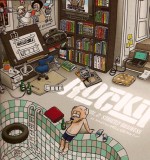
Rocky is a cartoonist (and a dog) in a world of anthropomorphic animals acting out the parts of young folk in modern Stockholm: drinking, swearing, playing computer games, sleeping around and generally wondering what it’s all about while living pointless generation zero lives. Since Rocky is a cartoonist slowly getting established with his autobiographical strip, most of his friends, acquaintances and dalliances end up on public view in his work…

The strips are meticulous and rendered in a scratchy line very reminiscent of the US underground scene. In fact much of the narrative furniture of the strip is indistinguishable from America, with US movies, hip-hop/rap music and even fast food franchises being far more common than native Scandinavian references. I fear that’s the result of Cultural Imperialism rather than translation though: an awful lot of the world looks like Main Street, nowadays.

Which is a pity since, although the strips and Sunday pages here range from competent to riotously funny, the ones that stand out are invariably those where hints of local politics, socially distinct themes and home-grown issues still flavour the gags, quips and brickbats.

Although aiming at twenty-somethings also interested in getting laid, getting wasted and getting rich, Kellerman nonetheless manages to move beyond the ever-fertile grounds of the battle of the sexes, bodily functions and morning-after guilt-trips to produce a lot of work that is truly fresh, funny and uniquely personal. As his strip takes off, his first book collection is released and he takes a room-mate, a number of trips, and a succession of generally disappointed bed-partners…

Less raucous and more considered than the first collection (Rocky: the Big Payback ISBN-13: 978-156097-679-0) there’s the same cast of ne’er-do-wells, unattainable women, slackers of both sexes, salty language and cartoon humping, but the best moments are those where his cronies all seem to be actually settling down. Heck, best bud Manny even has a kid now and his own biological clock seems to be ticking a little louder…

Observational humour can be hit-or-miss at best and I’m decidedly uncomfortable with the translated dialogue, but despite all that there’s still lot to recommend this book, and I’m sure the next one will be even better…
All characters, stories and artwork © 2008 Martin Kellerman, Homework. This book © 2008 Fantagraphics Books. All Rights Reserved.

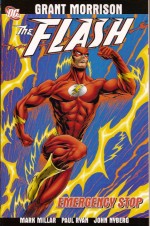
Flash: Emergency Stop


By Grant Morrison, Mark Millar, Paul Ryan & John Nyberg, (DC Comics)
ISBN13: 978-1-84856-148-9

Here’s a good old fashioned Fights and Tights romp given a bit of post-modern gloss as Caledonian wizards Morrison and Millar turn their considerable talents to the third incarnation of the Fastest Man Alive. Reprinting issues #130-135 of the monthly comic, we find Wally West living with his one true love Linda Park, whilst enjoying a celebrity life as the Scarlet Speedster.

The eponymous lead tale begins when a disembodied uniform attacks old villains, absorbing their powers – and eventually their lives – as it undertakes a sinister master-plan. Whether ghost, pre-programmed super-technology or something else, The Suit proves more than a match for Keystone’s peace officers and even her superhuman guardians. Max Mercury, Jay Garrick (the original Flash) and Impulse are not enough to save West from crippling injuries, and it takes a quantum leap in his abilities before Wally can save everybody from certain death…

Following this superb thriller the lads get a chance to show American writers how it’s pronounced as Scottish villain Mirror Master attacks the recuperating hero and his lady in ‘Flash Through the Looking Glass’. As ever the understated excellence of Ryan and Nyberg act as the perfect vehicle for all those high speed thrills, never better than when Jay Garrick takes centre-stage for the moving ‘Still-Life in the Fast Lane’, a poignant parable that shows how even the swiftest men can’t outrun old age and death…

The volume ends on what could have been a desperately annoying note, but is rescued by the sheer writing skill of the scripters. ‘Death at the Top of the World’ is the third and final part of a company crossover that began in Green Lantern #96 and continued in Green Arrow #130, dealing with the assault on an Arctic cruise ship by super-villains Sonar, Heat Wave and Hatchet, and culminating in an attack by the world-class menace Dr. Polaris.

At any other time I would trenchantly bemoan the inconsiderate planning that deemed truncating such an extended tale, but here the concluding part, played as a classic courtroom drama, really does work as a stand-alone story (though who knows how the equivalent GL or GA trade paperbacks would work?) and tops off this thoroughly readable tome in fine style.

Be warned though: the last two pages are a prologue/cliffhanger for the next collection: At least I can be Mister Grumpy about that…

© 1997, 1998, 2008 DC Comics. All Rights Reserved.

Mother, Come Home


By Paul Hornschemeier (Fantagraphics Books)
ISBN: 978-1-56097-973-9

Back in print and in a magnificent deluxe hardback lending it even more gentle gravitas is Paul Hornschemeier’s dreamily magnetic exploration of grief and coping mechanisms. Mother, Come Home originally ran in the marvelous indie publication Forlorn Funnies before being gathered into a lyrically stunning collection in 2004. Now Fantagraphics have produced this beautiful edition of one of the best, most emotionally complex and graphically symbolic tales ever to grace our medium.

Tom is a seven year old boy whose mother has just died. His father, a deeply intellectual college professor of symbolic logic, slowly retreats into a nervous collapse and young Tom assumes the household duties – as much as he is able – bolstered by his love and sense of duty, as well as the innate half-word of fantasy that is the rightful domain of the very young.

Empowered by a dime-store lion-mask his mother bought him he becomes the head of his diminished clan and guardian of the home until his aunt and uncle discover how ill his father has become.

When his father voluntarily commits himself to an institution, Tom goes to live with them, but dreams of reuniting with his real family, even planning a meticulous escape and joyous reunion. But when he takes action the consequences are painfully revelatory, inevitably tragic and hauntingly real…

Rendered in a number of simple, powerful styles, with a mesmeric, muted colour palette binding ostensibly neutral images (that nevertheless burn with a highly charged intensity) with a simplified heavy line, this subtle, seductive, domestic tragedy is a perfect example of how our medium can so powerfully layer levels of meaning and abstract a personal reality until it becomes greater than itself.

Deeply moving, monstrously deep and overwhelmingly simple, Mother, Come Home is a true classic and stands comfortably beside such noteworthy novels as Maus, Barefoot Gen, Stuck Rubber Baby, Pride of Baghdad or Persepolis. This is a comic nobody could ever be embarrassed about reading, but they should feel ashamed if they haven’t…

© 2002, 2003, 2004, 2009 Paul Hornschemeier. All Rights Reserved.

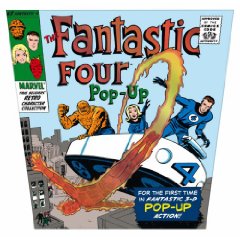
Fantastic Four Pop-Up


By Stan Lee, Jack Kirby & various (Marvel/Templar Publishing)
ISBN: 978-1-84011-670-0

Here’s a hunk of sheer comic extravagance that will appeal to the great, big kid so inadequately buried in us all. Part of a line of publications first released in 2008 (and just now making it into book remainder stores around the country, but also still available online) I got this masterpiece of “paper technology” or pop-up book as part of my recent 50th birthday commiserations.

By selecting pages and scenes from the glory days of Stan and Jack, such as the cover of Fantastic Four #1, the origin of Doctor Doom, the battle against the Molecule Man (FF#20) and many others, the creators have produced a startling, quite literally three-dimensional dossier of the World’s Greatest Magazine heroes and their most dastardly foes. These snippets of King Kirby at his bombastic best include Victor Von Doom, Mole Man, Puppet Master, Sub-Mariner, Super-Skrull, Mad Thinker, and even the incredible Fantasticar, all augmented by the very latest in folding, spindling, sliding and even plastic enhancing techniques.

Delightfully ingenious, fabulously fun and capable of reducing sour old coots to fits of gleeful burbling this is just plain fun and you really, really need it…

TM and © 2008 Marvel Characters inc. All Rights Reserved.

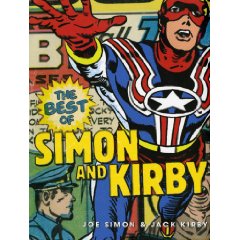
The Best of Simon and Kirby


By Joe Simon, Jack Kirby and various (Titan Books)
ISBN13: 978-1-84576-931-4

There’s a glorious wealth of Jack Kirby material around at the moment and this astounding collection of his collaborations with fellow industry pioneer Joe Simon is a gigantic box of delights that perfectly illustrates the depth and scope of their influence and innovation by reprinting the merest fraction of their output over nearly two decades.

Divided into key genres, supplemented by informative features from that ever-engaging writer and comics historian Mark Evanier, this striking compendium leads with The Heroes. reprinting in eye-popping colour ‘Captain America and the Riddle of the Red Skull’ from the landmark first issue (March 1941), and an untitled adventure of the Golden Age Vision from Marvel Mystery Comics #14 (December 1940).

From S&K’s incredible war-time tenure at National/DC comes ‘The Villain From Valhalla!’, a Sandman yarn first seen in Adventure Comics #75 (June 1942), followed by the origin of the incredible Stuntman in ‘Killer in the Big Top’ (Stuntman Comics #1, April 1946). ‘Assignment: Find the King of the Crime Syndicate’ is a raucous romp from their spoof patriotic hero Fighting American (#2, June 1954) and this section ends with a tale from Adventures of the Fly #1(August, 1959) entitled ‘Come into My Parlor’. Each text section is copiously illustrated and classic covers for each genre further sweeten the pot…

Way out Science Fiction follows, represented here by Solar Patrol in ‘The Tree Men of Uranus’: a Joe Simon solo production from  Silver Streak Comics #2 (January, 1940), the eponymous hero from Blue Bolt Comics #4 (September, 1940) and the magnificently spooky short ‘The Thing on Sputnik 4’ (Race for the Moon #2, September 1958).

War and Adventure highlights some of their most passionate yet largely unappreciated material. Boy Commandos often outsold Superman and Batman during World War II, and the moody ‘Satan Wears a Swastika’ from the first issue of their own title (Winter, 1942) clearly shows why, whilst the nuclear armageddon depicted in ‘The Duke of Broadway: My City is No More’ (Black Cat Comics #5, April 1947) set the bar for all others creators.

Simon and Kirby famously invented the romance comic genre and in The Birth of Romance we can see why the things took off so explosively, if not why all their imitators so timidly bowdlerized their own efforts. ‘Weddin’ at Red Rock’ from Western Love # 1, July 1949, is a raw, wild tale of obsessive passion, whilst ‘The Savage in Me’ (Young Romance Comics #22, June 1950) easily stands up against the best melodramas Hollywood was then producing.

Crime Drama uses three tales from 1947 (at the birth of the trend that led, with horror stories, to the instigation of the Comics Code Authority) to show how the dynamic visual flair of the ex-ghetto kids raised work like ‘Trapping New England’s Chain Murderer!’ (Headline Comics #24, May), the infamous Ma Barker story ‘Mother of Crime’ (Real Clue Crime Comics Vol. 2 #4, June) and ‘The Case Against Scarface’ (Justice Traps the Guilty #1, October) far above most of the avalanche of material all those decent folk and politicians railed against.

The Great Western features some of S&K’s most revered characters with ‘Apache Justice!’ from The Kid Cowboys of Boy’s Ranch #2 (December 1950), a spectacular spread ‘Remember the Alamo!’ from issue #5 and a captivating tale ‘Doom Town!’ starring the masked hero Bulls Eye from the fourth issue of his own short-lived title (February 1955).

Oh! The Horror! holds some especially impressive work, including ‘The Scorn of the Faceless People’ (Black Magic Vol. 1 #2, December 1950), the haunting ‘Up There!’ from #13 (confusingly also numbered as Vol. 2 #7, June 1952) and the remarkable ‘The Woman in the Tower!’ from The Strange World of Your Dreams #3 (November 1952).

Less well known are the forays into Sick Humor as seen here with ‘A Rainy Day with House-Date Harry’ (My Date #4, January 1948), the utterly wonderful parody strip ‘20,000 Lugs under the Sea’ originally seen in From Here to Insanity #11 (August 1955) and a couple of solo pieces from Simon. ‘Lenny Bruce’ and the editorial page are both from satire magazine Sick (Vol. 1 #2, 1960) and readily display the design and literary panache as well as artistic virtuosity he brought to the partnership.

With an extensive but far from complete checklist (talk about impossible tasks!) this tremendous hardcover is a worthy, welcome start towards acknowledging the debt our art-form owes these two unique creators. Now let’s have some more please…

© 2009 Joseph H. Simon and the Estate of Jack Kirby. All other material is © and TM the respective owner and holders and used with permission. All Rights Reserved.

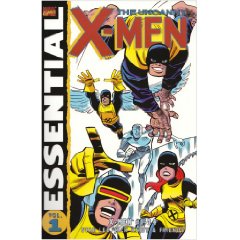
Essential Uncanny X-Men volume 1


By Stan Lee, Jack Kirby, Roy Thomas, Werner Roth, Dick Ayers & various (Marvel)
ISBN: 978-1-90415-963-6

In 1963 things really took off for the budding Marvel Comics as Stan Lee and Jack Kirby expanded their diminutive line of action titles, putting a bunch of relatively new super-heroes (including hot off the presses Iron Man) together as the Avengers, launching a decidedly different war comic in Sgt Fury and his Howling Commandos and creating a group of alienated heroic teenagers who were gathered together to fight a rather specific threat to humanity.

The eponymously entitled X-Men #1 (September 1963) introduced Cyclops, Iceman, Angel and the Beast: very special students of Professor Charles Xavier, a wheelchair-bound telepath dedicated to brokering peace and integration between the masses of humanity and the gradually emerging race of mutant Homo Superior. The story opens as the students welcome their newest classmate, Jean Grey, a beautiful young woman with the ability to move objects with her mind.

No sooner has the Professor explained their mission than an actual Evil Mutant, Magneto, single-handedly takes over the American missile base Cape Citadel. A seemingly unstoppable threat, the master of magnetism is nonetheless driven off by the young heroes on their first mission.

It doesn’t sound like much, but the gritty power of Kirby’s art, solidly inked by Golden Age veteran Paul Reinman, imparted a raw dynamism to the tale which carried the bi-monthly book irresistibly forward. ‘No One Can Stop the Vanisher!’ introduced a federal government connection in FBI agent Fred Duncan, who requested the teens’ assistance in capturing a teleporting mutant who threatened to steal US military secrets.

Issue #3’s ‘Beware of the Blob!’ featured a rare lapse of judgement as Professor X invited a sideshow freak into the team only to be rebuffed by the felonious mutant. Impervious to harm the Blob used his carnival cronies to attack the team, before they could come after him…

With X-Men #4 (March 1964) a thematic sea-change occurred as Magneto returned with ‘The Brotherhood of Evil Mutants!’ intent on conquering a South American country to establish a global powerbase. Mastermind, Toad, Quicksilver and the Scarlet Witch were very much his unwilling thralls in the bombastic struggle that followed, but from then on the heroes were the hunted prey of the malevolent mutants. ‘Trapped: One X-Man!’ in issue #5 saw early results in that secret war as Angel was abducted to Magneto’s orbiting satellite base Asteroid M, and only a desperate battle at the edge of space could save him…

‘Sub-Mariner Joins the Evil Mutants!’ is a self-explanatory tale of gripping intensity elevated to magical levels of artistic quality as the superb Chic Stone replaced Reinman as inker for the rest of Kirby’s tenure, and genuine progress occurred in ‘The Return of the Blob!’ as their mentor left on a secret mission, but not before appointing Cyclops acting team leader. Comedy relief was provided as Lee and Kirby introduced Beast and Iceman to the Beatnik inspired “youth scene” but the high action quotient came courtesy of the troubled teaming of the Blob and Magneto’s brotherhood.

Another invulnerable mutant debuted in ‘Unus the Untouchable!’ a wrestler with an invisible force field who tried to join the Brotherhood by offering to bring them an X-Man. Also notable is the first real incident of “anti-mutant hysteria” when a mob attacked the Beast, a theme that would become a cornerstone of the X-Men mythos.

X-Men #9 is the first true masterpiece of this celebrated title. ‘Enter, the Avengers!’ reunited the mutants with Professor X in the wilds of Europe, as the deadly Lucifer attempted to destroy the world with a super-bomb, subsequently manipulating the teens into an all-out battle with the awesome Avengers. This is still a perfect Marvel comic story today, as is its follow-up ‘The Coming of Ka-Zar!’ a wild excursion to Antarctica, featuring the discovery of the Antediluvian Savage Land and the modern incarnation of one of Marvel/Timely’s oldest heroes (Kazar the Great originated in Marvel Comics #1 November 1939). Dinosaurs, lost cities, spectacular locations, mystery and all-out action: it doesn’t get better than this…

Another turning point occurred in #11 with ‘The Triumph of Magneto!’ as X-Men and Brotherhood both searched for a fantastically powered being called The Stranger. None are aware of his true identity and purpose, but when the Evil mutants found him it spelt the end of their war…

With Magneto gone and the Brotherhood broken Kirby relinquished the pencilling to other hands, although he provided layouts and design for a few more issues. Alex Toth and Vince Colletta proved an uncomfortable mix for #12’s tense drama ‘The Origin of Professor X!’ a two-part saga that introduced Xavier’s half brother Cain Marko and revealed his mystic transformation into an unstoppable human engine of destruction.

The story concluded with ‘Where Walks the Juggernaut’, a compelling tension-drenched tale guest-starring the Human Torch, but most notable for the introduction of penciller Werner Roth (using the name Jay Gavin) who would be associated with the mutants for the next half decade. His inker for this first outing was the infallible Joe Sinnott. Roth was an unsung veteran of the industry, working for the company in the 1950s on such star features as Apache Kid and the inexplicably durable Kid Colt, Outlaw, as well as Mandrake the Magician for King Features Comics and Man from U.N.C.L.E. for Gold Key. As with many pseudonymous creators it was his DC commitments (mostly romance stories) that forced him to disguise his moonlighting until Marvel grew big enough to offer him full-time work.

‘Among us Stalk the Sentinels!’ from issue #14 (inked by Colletta), celebrated the team’s elevation to monthly publication with the first chapter of a three-part saga that introduced anthropologist Bolivar Trask’s solution to the threat of Mutant takeover: super scientific robots that would protect humanity. Sadly their definition of “protect” varied wildly from the expected, but what can you expect when a social scientist dabbles in high-energy physics and engineering?

The X-Men took the battle to the Sentinels secret base and became ‘Prisoners of the Mysterious Master Mold!’ before wrapping up their ferrous foes with ‘The Supreme Sacrifice!’. Veteran Dick Ayers joined as inker with the second chapter and his clean line blended perfectly with Roth’s clean, classicist pencils. They remained a team for years, adding vital continuity to this quirky but never top-selling series.

X-Men #17 dealt with the aftermath of the battle, probably the last time the US Army and government openly approved of the team’s efforts, and the sedate nature of ‘…And None Shall Survive!’ enabled the story to generate a genuine air of apprehension as the Xavier Mansion was taken over by an old foe who picked them off one by one until only the youngest was left to battle alone in the climactic conclusion ‘If Iceman Should Fail..!’

‘Lo! Now Shall Appear… The Mimic!’ in #19 was Stan Lee’s last script, a punchy tale of a troubled teen with the power to copy the knowledge, powers and abilities of anyone in close proximity, before the writing reins were turned over to Roy Thomas in #20, who promptly jumped in guns blazing with ‘I, Lucifer…’ an alien invasion yarn that returned Xavier’s arch-nemesis as well as Unus the Untouchable and the Blob, revealed how Professor X lost the use of his legs, and, with the concluding part ‘From Whence Comes Dominus?’, completely made the book his own.

At this time Marvel Comics had a vast and growing following among older teens and college kids, and the youthful Thomas spoke and wrote as they did. Coupled with his easy delight in large casts this made X-Men a very welcoming read for we adolescents…

The next two-parter resurrected the old Avengers villain Count Nefaria, who used illusion casting technology and a band of other heroes’ second-string foes (Unicorn, Porcupine, Plantman, Scarecrow and the Eel, if you’re wondering) to hold Washington DC hostage and frame the X-Men for the entire scheme. ‘Divided… We Fall!’ and ‘To Save a City!’ comprise a fast-paced, old-fashioned goodies vs. baddies epic with a decided sting in the tail, and this excellent black and white compendium concludes with another standard plot – Evil Scientist Grows Giant Bugs…

‘The Plague of… the Locust!’ from X-Men #24 isn’t the most memorable tale in the canon but reads well enough and has the added drama of Marvel Girl being forced to leave the team to go to college; another deft sop to the audience as it enabled many future epics to include Campus life in the action-packed, fun-filled mix…

These quirky tales are a million miles removed from the angst-ridden, breast-beating, cripplingly convoluted X-brand of today’s Marvel, and in many ways are all the better for it. Well drawn, highly readable stories are never unwelcome or out of favour though, and it should be remembered that everything here informs so very much of the mutant monolith. These are stories for the dedicated fan and newest convert, and never better packaged than in this economical tome. Everyone should have this book.
© 1963, 1964, 1965, 1966, 1999 Marvel Characters, Inc. All Rights Reserved.

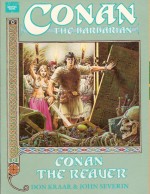
Conan the Reaver – A Marvel Graphic Novel


By Don Kraar & John Severin (Marvel)
ISBN: 0- 87135-289-3

During the 1970’s the American comic book industry opened up after more than fifteen years of cautious and calcified publishing practices that had come about as a reaction to the scrupulously-censorious oversight of the self-inflicted Comics Code Authority: A body created by the publishers to police their product and keep it palatable and wholesome after the industry suffered their very own McCarthy-style Witch-hunt during the 1950s.

One of the first genres to be revisited was Horror/Mystery comics, and from that came the pulp masterpiece Conan the Cimmerian.

Sword & Sorcery stories had been undergoing a prose revival in the paperback marketplace since the release of soft-cover editions of Lord of the Rings (first published in 1954), and the 1960s saw the revival of the two-fisted fantasies of Edgar Rice Burroughs, Otis Adelbert Kline, Fritz Lieber, whilst many modern writers such as Michael Moorcock and Lin Carter kick-started their careers with contemporary versions of man against mage. Undoubtedly the grand master of the genre was Robert E. Howard.

Marvel Comics tested the waters in early 1970 with a little tale called ‘The Sword and the Sorcerers’ (from the horror anthology Chamber of Darkness #4) whose hero Starr the Slayer bore no small resemblance to the Barbarian. It was written by Roy Thomas and drawn by Barry Smith, a recent Marvel find, and one who was just breaking out of the company’s Kirby house-style.

Despite some early teething problems, including being cancelled and reinstated in the same month, the comic-strip adventures of Robert E. Howard’s were as big a success as the prose yarns that led the global boom in fantasy and latterly, the supernatural.

Conan became a huge success, a giant brand that saw new prose tales, movies, a TV series and cartoon show, a newspaper strip and all the other paraphernalia of success. And it all largely stemmed from the vast range of comics initiated by Thomas and Smith.

From the days when he was a Marvel property – period – comes this utterly captivating tale of the Cimmerian wanderer’s days as a thief in the Kingdom of Turan. Striking a deal with a palace guard the young Barbarian infiltrates the Palace, intending to empty the treasure vault of aged King Yildiz, despite the supernatural horror that defends it. However the rudely gallant hero is hampered by his growing affection for the ruler’s child-bride, and increasingly caught up in vicious intrigues that plague the court. Then the King himself offers Conan a devil’s bargain if he will perform one task for him…

Conan the Reaver is rip-roaring pulp fare, brimming with monsters, worldly cynicism, scantily-clad damsels in distress and spectacular action, cannily recounted by veteran scripter Don Kraar (probably best known as the writer of the Tarzan newspaper strip for thirteen years) and magically illustrated by a master of our art-form, whose meticulous style adds gravity and humour as well as solid authenticity to the visuals. Severin is aided in the picture-making magic by his equally talented sister Marie, who coloured this mini-epic.

Still readily available this is a classy tale that will delight any fan of the genre and could easily convert a few die-hards too.
© 1987, 1990 Marvel Comics Group. Conan the Barbarian and all prominent characters are TM Conan Properties Inc. All Rights Reserved

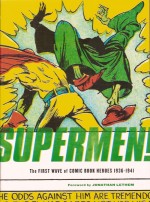
Supermen: the First Wave of Comic Book Heroes 1936-1941


By various, edited by Greg Sadowski (Fantagraphics Books)
ISBN: 978-1-56097-971-5

Long the bastion of the arcane, historic, esoteric and the just plain interesting arenas of the comic book marketplace, Fantagraphics Books fully enters the Fights ‘n’ Tights Game with this magnificent collection of (mostly) superhero tales from the very dawn of the American comic-book industry. Supermen gathers together a selection of stalwarts by names legendary and seminal from the period 1936-1941, combining 9 stunning covers, many interior ads (for further beguiling characters and publications) and twenty full stories of exotic heroes and Mystery-Men from a time when there was no genre, only untapped potential…

After Jonathan Lethem’s introduction the wonderment begins with a two page instalment of Dr. Mystic, the Occult Detective by Jerry Siegel and Joe Shuster, from Comics Magazine #1, May 1936, which after a selection of covers leads into ‘Murder by Proxy’ an adventure of The Clock, by George E. Brenner, from Detective Picture Stories #5 (April, 1937). The Clock has the distinction of being the first masked comic-book hero whereas Dan Hastings by Dan Fitch and Fred Guardineer is accounted the first continuing science fiction hero in comic books, with this appearance from Star Comics #5, 1937.

Dirk the Demon is a boy hero by young Bill Everett, from Amazing Mystery Funnies vol.2 #3 (March 1939), closely followed by a tale of the Flame from Wonderworld Comics #7 (November 1939) by Will Eisner and Lou Fine using the pen-name Basil Berold, whilst super-magician Yarko the Great first appeared in Wonderworld Comics #8, written and drawn by Eisner.

The unique Dick Briefer is represented hereby the Rex Dexter of Mars episode from Mystery Men Comics #4 (November 1939) and Jack Kirby makes his first appearance, working as Michael Griffiths on a tale of Cosmic Carson for the May 1940 issue of Science Comics (#4).

The work of troubled maestro Fletcher Hanks was lost to posterity until recently rediscovered by comics’ intelligentsia in such magazines as Raw! and his woefully short career in comic-books is represented here by two pieces. The first of these is the stunningly surreal and forceful Stardust, the Super Wizard from Fantastic Comics #12, (November 1940). From Pep Comics #3, in April of the same year comes a turning point in the brutal career of Jack Cole’s murderous superhero The Comet, followed by Al Bryant’s monster-hunting vigilante Fero, Planet Detective, (Planet Comics #5, May 1940) and the second Hanks offering, pseudonymously working as Barclay Flagg, is the truly bizarre Fantomah, Mystery Woman of the Jungle from Jungle Comics #4 (April 1940).

Big Shot Comics combined reprints of established newspaper strips with original characters and material. From the first issue in May 1940 comes another Mandrake inspired crusader, Marvello, Monarch of Magicians by Gardner Fox and Fred Guardineer and a plainclothes mystery-man named Tony Trent who fought crime by putting on a hideous mask and calling himself The Face, also written by Fox and drawn by the wonderful Mart Bailey working together as “Michael Blake”. The other major all-new star of Big Shot was the fabulous blend of Batman, G-8 and Doc Savage called Skyman, and this yarn by “Paul Dean” (Fox and Ogden Whitney) is a real cracker.

Jack Cole returns as Ralph Johns to tell a tale of super-speedster Silver Streak (Silver Streak Comics #4, May 1940) which is followed by one of the most famous tales of this era as a daring hero battled the God of Hate in #7’s ‘Daredevil Battles the Claw’ (from January 1941).

The legendary Basil Wolverton is represented here by the cover of Target Comics #7 and a startling story of Spacehawk, Superhuman Enemy of Crime from issue #11, (December 1940) whilst icy hero Sub-Zero stopped crime cold in an episode from Blue Bolt #5, courtesy of rising star Bill Everett, before the pictorial magic concludes with an episode of Joe Simon and Jack Kirby’s incredible Blue Bolt fantasy strip from the tenth issue of the magazine that bore his name (cover-dated the same month as another S&K classic entitled Captain America)…

Augmented by comprehensive background notes on the contents of this treasury of thrills, Supermen is a perfect primer for anyone seeking an introduction to the Golden Age, as well as a delightful journey for long-time fans. I’m sure there’s very little here that most of us have seen before, and as a way of preserving these popular treasures for a greater posterity it is a timely start. Much, much more, please…

All stories are public domain but the specific restored images and design are © 2009 Fantagraphics Books.

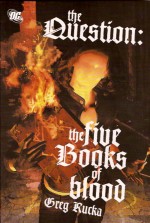
The Question: the Five Books of Blood


By Greg Rucka & various (DC Comics)
ISBN13: 978-1-4012-1799-0

Spinning out of DC’s 52 and Countdown to Final Crisis year-long mega-series, ex-Gotham City cop Renee Montoya took up the faceless mask and obsessions of the shadowy hero known as The Question and sought to track down the physical copies and adherents of the gospel of All Things Evil alternatively known as the Books of Blood or the Crime Bible.

This legendary tome is said to counter all that is good in the world and justify and codify all that is wrong. Driven by a need to understand the evils she fights and stop the spread of this monstrous belief, the driven martial artist hunts for the remaining copies of the book and the distinct factions that protect them promote their teachings. She begins by following – or perhaps being stalked by – a diabolical missionary of sin: a monk of darkness. But as she closes on the secret master of the “Dark Faith” she inexorably nears her own ultimate corruption…

Originally released as five inter-related one-shots entitled Crime Bible: the Five Books of Blood, each chapter of her quest is preceded by a salutary lesson excerpted from the dreadful chronicle, with each Book of Blood illustrated by a different artist or team. ‘The Lesson of Deceit’ leads off with art by Tom Mandrake, followed by ‘The Lesson of Lust’ by Jesus Saiz, ‘The Lesson of Greed’ by Matthew Clark and ‘The Lesson of Murder’ by Diego Olmos, culminating in ‘The Parable of the Faceless’ by Manuel Garcia and Jimmy Palmiotti. But the shock ending is not what it appears as Greg Rucka’s grim tale and Montoya’s dark voyage was designed to lead directly into the final part of the mega-series triptych Final Crisis.

Moody and stylish, this hardcover edition also contains rare promotional materials distributed to retailers in the form of Montoya’s notes collected as a hunting journal.

Although highly readable with many excellent set pieces, this book is inextricably wedded to a much larger story and is pretty much impenetrable to casual readers, and the lack of a conclusive ending (pending the events of the aforementioned Final Crisis) pretty much relegates it to the limited attention of the already converted… which is in many ways the biggest crime.

© 2007, 2008 DC Comics. All Rights Reserved.

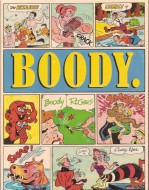
Boody: the Bizarre Comics of Boody Rogers


Edited by Craig Yoe (Fantagraphics Books)
ISBN: 978-1-56097-961-6

The one true invention of American Comic-books is undoubtedly the super-hero, but the pervasiveness of that almighty icon has prevented the wider world from discerning what the readers, fans and collectors have always known, even if they choose nowadays to disregard: the fact that our masters and artisans have always been just as effective and creative in established genres such as crime, horror, westerns and especially comedy.

A perfect exemplar of that fact has finally had his first long overdue retrospective in this fabulous if unstructured collection from Fantagraphics: Gordon “Boody” Rogers.

Born in 1904 he began his drawing career in the 1920s after studying at the Cartoon Academy of the Chicago Academy of Fine Arts and the Chicago Institute. At this time he palled around with Harold Gray, Frank Engli, Chester Gould, and Tex Avery among many other talented art-stars in waiting. When his roommate Zack Mosely began his long-lived aviator strip Smilin’ Jack in 1933, Rogers was his assistant from day one. As a jobbing cartoonist he also worked for such magazines as Life, Judge, Colliers and the Saturday Evening Post on syndicated features and gag strips like ‘Deadwood Gulch’ and ‘Possum Holler’

He was a major contributor to ‘The Funnies’ the very first comic book, published in 1936 (there’s a fascinating example, ‘Rattlesnake Pete’, from this landmark leading off the compilation) before developing his own newspaper strip ‘Sparky Watts’ in early 1939 which he wrote and drew until America joined the war, at which point he enlisted.

On his return he revived Sparky (a physical superman, sans costume, whose wild and wacky adventures were at once a spoof of the ubiquitous mystery men and a snappy, surreal satire on the American Way) for Columbia Comics and created a number of other properties, all in the comedy, teen and gag genres that rose in popularity as the costumed heroes diminished. Obviously seeing another sea-change coming, Rogers retired from the industry at age 48 to open a small chain of art shops in Arizona. He passed away in 1996.

Boody Rogers’ style of work is far more amenable to a British audience reared on Desperate Dan, Pansy Potter and the unrestrained genius of Ken Reid or Leo Baxendale than the rather anodyne fare of post-war America. His wild perambulations and freewheeling style of gag-upon-gag narrative often skirted bounds of taste (as all great humour should) and his influence, as much as Basil Wolverton and EC Comics, can be clearly seen throughout the Underground Comix revolution of the 1960s and 1970s.

The material collected here all comes from Sparky Watts, Babe, Dudley and the anthology title Big Shot Comics and the years 1948-1950. Although to my mind inadequately referenced (I’d love to know which stories appeared exactly when and where), the broad range of tales perfectly illustrates the kind of manic energy and absurdist invention typified by the “Screwball comedies” of the thirties and the madcap pace of the teen movement as immortalised by Bob Montana’s Archie, with arcane dialogue, quick-fire set-ups and punch-lines building one upon another. Rather than being dated, these works – at least to this old coot – have great resonance with the youth culture of today.

They’re also beautifully drawn and a total hoot.

Babe (“the Amazon of the Ozarks”) was a rustic and rambunctious take on Li’l Abner; a physically perfect hottie no man could resist – or beat -  who appeared in Big Shot and Sparky Watts Comics as well as eleven issues of her own title. Following her premiere appearance, we’re also treated to ‘Hideout’ as movie heartthrob Clark Sable tries to escape the onerous attentions of his fans by masquerading as Babe’s dowager cousin Fanny, ‘the Secret of Lighting Juice Tea’ reveals the origins of the hillbilly lass’ rude health, ‘Mrs. Gooseflesh’ is a murderous lady-wrestler who met Babe in the Canvas ring, and ‘the Mysterious Case of Mystery Mountain!’ recounts the peculiarly fetishistic lives of Ozark centaurs living on top of an isolated plateau. Fans in the know will be intrigued to discover that Bondage artist Eric Stanton began his drawing career as Rogers’ assistant…

Jasper Fudd is a prim and prudish, dim-witted yokel who unexpectedly goes to college where he discovers he can run like the wind – given the right motivation – and this was decades before Forest Gump’s mum ever got her first box of chocolates, whilst Dudley, the Prince of Prance is a excellent – if now bewildering – example of the teen oriented strip that spread like measles in the post-war years. Following the Archie/Andy Hardy model, every publisher chased the older kid market with impenetrable tales of Sock-Hops, Jalopies, music that parents couldn’t stand, young love and obnoxious siblings. Gosharootie, how things have changed…

Sparky Watts is the undisputed star, an affable everyman with amazing powers who always seems to be getting into scrapes. He doesn’t fight crime, but empowered by Cosmic Rays which tend to shrink him to microscopic sizes when they fade, he often found himself in strange places meeting the most peculiar creatures, aided (although that’s not really the correct term) by his assistant Slap Happy and the eminent Doc Static.

As well as 10 issues of his own title and the 1943 one-shot Columbia Comics, Boody’s Sparky appeared in Big Shot from #14 (June 1941) through #42, and again from #77-104, whilst other, lesser lights handled the strip during Roger’s war service. The six episodes included here are all from the post-war period but wonderfully display the surreal punch and eye for visual characterisation that exemplified Roger’s work.

This comfortingly substantial tome is a wonderful introduction to a comics master who never disappointed, working in a genre most comics fans won’t even be aware of these days. That’s their loss: don’t let it be yours…

All stories are public domain but the specific restored images and design are © 2009 Fantagraphics Books. All Rights Reserved.