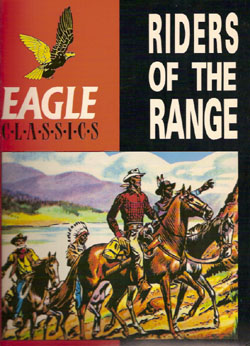
Eagle Classics: Riders of the Range

Eagle Classics: <i>Riders of the Range</i>

By Charles Chilton, Jack Daniel & Frank Humphris (Hawk Books -1990)
ISBN: 0-948248-07-0

In the 1950s Cowboys and Indians ruled the hearts and minds of the public. Westerns were the most popular subject of books, films and comics. The new medium of television screened both recycled cowboy B-movies and eventually serials and series especially created for the stay-at-home aficionado. Some examples were pretty good and became acknowledged as art – as is always the way with popular culture – whilst most others faded from memory, cherished only by the hopelessly nostalgic and the driven.

One medium I didn’t list was radio, an entertainment medium ideal for creating spectacular scenarios and dreamscapes on a low budget. But the BBC (the only legal British radio broadcaster) even managed a halfway decent Western/music show called Riders of the Range. It was written by producer/director Charles Chilton and ran from 1949 until 1953, six series in total.

At the height of its popularity it was adapted as a comic strip in Eagle, which already featured the strip exploits of the immensely successful radio star P.C. 49. The hugely successful comic had already tried a cowboy strip Seth and Shorty, but promptly dropped it. Riders of the Range began as a full colour page in the first Christmas edition (December 22nd 1950, volume 1, No. 37) and ran until 1962, outlasting its own radio show and becoming the longest running western strip in British comics history. In all that time it only ever had three artists.

The first was Jack Daniel, an almost abstract stylist in his designs who worked in bold almost primitive lines, but whose colour palette was years ahead of his time. Crude and scratchy-seeming, his western scenarios were subversive and subliminal in impact. He had previously worked on the newspaper strip Kit Conquest.

Author Chilton had a deep and abiding fascination with the West and often wrote adventures that interwove with actual historical events, such as ‘The Cochise Affair’ reprinted here. This was the second adventure and had heroic Jeff Arnold and sidekick Luke branding cattle for their “6T6” ranch near the Arizona border when they find a raided homestead. A distraught, wounded mother begs for help and reveals that Indians have stolen her little boy. Taking her to Fort Buchanan, Arnold becomes embroiled in a bitter battle of wills between Chief Cochise and Acting Cavalry Commander Lieutenant George N. Bascom. The lean sparse scripts are subtly engaging and Daniel’s unique design and colour sense – although perhaps at odds with the more naturalistic realism of the rest of Eagle‘s drama strips – make this a hugely enjoyable lost gem.

Angus Scott took over from Daniel with ‘Border Bandits’ (September 7th 1951), but was not a popular or comfortable fit and departed after less than a year. With only a single page of his art reprinted here, it’s perhaps fairest to move on to the artist most closely associated with the strip.

Frank Humphris was a godsend. His artwork was lush, vibrant and full-bodied. He was also as fascinated with the West as Chilton himself and brought every inch of that passion to the tales. From July 1952 and for the next decade Chilton and Humphris crafted a thrilling and even educational western saga that is fondly remembered to this day. His tenure is represented here by ‘The War with the Sioux’.

In 1875 gold was discovered in the Black Hills of Dakota and the resultant rush of prospectors resulted in the Cavalry being dispatched to protect them from the incensed Indians. Jeff and Luke are hired as intermediaries and scouts, but are helpless as the situation worsens, resulting in the massacre at Little Big Horn. There have many tales woven into this epochal event, but the patriotically dispassionate creativity of two Britons have united here to craft one of the most beautiful and memorable.

The day of the cowboys’ dominance has faded now but the power of great stories well told has not. This is a series and a book worthy of a more extensive revival. Let’s hope someone with the power to do something about it agrees with me. We’d all be winners then…

Riders of the Range © 1990 Fleetway Publications. Compilation © 1990 Hawk Books.
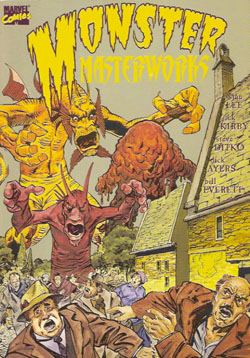
Monster Masterworks

Monster Masterworks

By Stan Lee, Jack Kirby, Steve Ditko, Dick Ayers & Bill Everett (Marvel)
ISBN: 0-8713-5592-2

To dyed-in-the-wool comic-book fanboys there’s a much beloved period in history when a frankly daft and woefully formulaic trend produced utter, joyous magic. We look back on it now and see only the magnificent art, or talk with loving derision of the crazy (often onomatopoeic) names, but deep down we can’t shake the exuberant thrill inside or the frisson of emotion that occurs when we see or even think of them.

Before Jack Kirby and Stan Lee brought superheroes back to Marvel Comics, the company was on its last legs. Trapped in a woefully disadvantageous distribution deal, the company’s output was limited to some sixteen titles. But there was hope. The outside world was gripped in an atomic B-movie monster craze, and Lee, Kirby and Steve Ditko capitalised on it in the anthology mystery titles Journey into Mystery, Strange Tales, Tales to Astonish and Tales of Suspense.

In brief novelettes, dauntless and canny humans outsmarted a succession of bizarre aliens, mad scientists, an occasional ghost or sorcerer (this was, after all, the heyday of the Comics Code Authority and the supernatural was BAD) and a horde of outrageous beasties in a torrent of wonders best described by the catchphrase “monsters-in-their-underpants”.

Simplistic, moralistic, pictorially experimental yet reassuringly predictable in narrative, these Outer Limits-style yarns are sheer fun with no redeeming social context.

This volume (culled from the 1970’s reprints of those 1950s classics) features such by-gone menaces as ‘Groot, the Monster from Planet X!’, ‘The Glop!’, ‘Taboo, the Thing from the Murky Swamp!’, ‘The Blip!’, The Creature from Krogar!’, ‘X – the Thing that Lived!’, ‘Kraa the Unhuman!’, ‘Zzutak – the Thing that Shouldn’t Exist!’, ‘Titan!’, ‘Gigantus!’, Fin Fang Foom and an inhuman host of others, that just cry out to be defeated, and by golly, they brilliantly are, without a single superhero in sight!

Humans – one, Monsters – didn’t.

© 1968-1973, 1989 2007 Marvel Characters Inc. All Rights Reserved.

Jungle Tales of Tarzan

Jungle Tales of Tarzan

By Burne Hogarth (Watson-Guptill Publications)
ISBN: 0-8230-2576-4

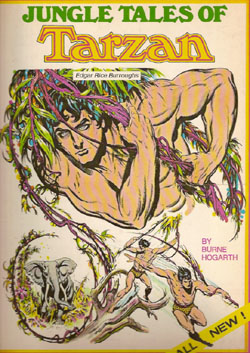
Following his return to graphic narrative with his bravura adaptation of Tarzan of the Apes (ISBN: 0-600-38689-9) Burne Hogarth produced this adaptation of the short tales that formed the novel The Jungle Tales of Tarzan. The book is a series of episodes reminiscent of Kipling’s “Just So” stories, set before the first fateful meeting with Jane and his introduction to civilisation wherein the Lord of the Jungle confronts various cognitive stages in his own development.

If that sounds dry, it’s not. Edgar Rice Burroughs was a master of populist writing and his prose crackles with energy and imagination. With this book he was showing how the Ape-man’s intellectual progress was a metaphor for Man’s social, cerebral and even spiritual growth from beast to human. He also never forgot that people love action.

Hogarth was an intellectual – as the lengthy discussion of his graphic symbolism by Walter James Miller in the preface shows – and the four tales he adapted afforded him vast scope to explore the cherished perfect temple that was the Ideal Man. His flowing organic compositions are strengthened by the absence of colour, allowing the classicism of his line-work to create stark divisions of form and space that contribute to the metaphysical component of ‘Tarzan’s First Love’, ‘The Capture of Tarzan’, ‘The God of Tarzan’ and ‘The Nightmare’. But you don’t need a dictionary to enjoy this work; all you need are eyes to see and a heart to beat faster.

This is vital, violent motion, stretching, running, fighting, surging power and glory. This work needs to be back in print, if only to give comic lovers a thorough cardio-vascular work-out.

© 1976 Edgar Rice Burroughs, Inc. All Rights Reserved.

Laya: The Witch of Red Pooh

Laya: The Witch of Red Pooh

By Yo Yo (Tokyopop)
ISBN 978-1-905239-60-3

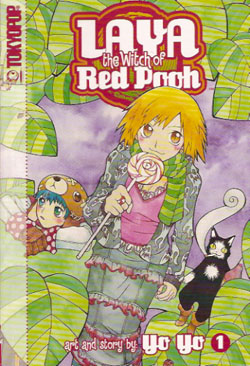
This is a light quirky fairy tale for adults, which blends traditional fantasy elements with modern artefacts and idiom to tell short gag tales. Narrated by a chain-smoking cat in leather boots, it details the sad-sack exploits of cute but uninspiring witch Laya, and the growing coteries of extraordinary friends who come to stay with her in her capacious house in the wild woods.

The creative anachronism and willingness to meddle with both context and the fourth wall might bewilder some readers, but generally the fun and frolics centre around the kind of problems teenaged girls fret about, such as boys, shopping, friends and social or family approval. My old soul wants to call this a very “girly” book but that’s not meant in an accusative or prejudicial way.

There’s fun and meat here but Laya isn’t about depth or challenge, so if you can’t just go with the flow or need a certain amount of tension in your entertainment, you might want to look elsewhere, and parents might want to screen this before letting younger kids at it

Jolly and competent, but not to every fan’s taste.

© 2001 Yo Yo, DAIWON C.I. Inc. English text © 2006 TOKYOPOP Inc. All Rights Reserved.

JSA: Ghost Stories

JSA: Ghost Stories

By Paul Levitz & various (DC Comics)
ISBN 1-84576-441-2

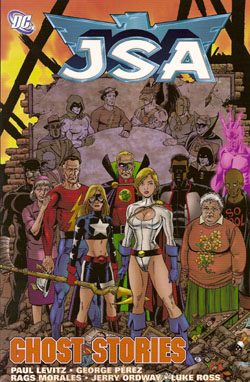
With the cancellation of the monthly comic book an open secret, sentiment seemed to prevail in the DC offices and veteran Justice Society scribe Paul Levitz returned to write the “final” story-arc of the original super-team, before the company wide reboot of the DC universe took permanent hold (Permanent being defined as “until we decide to change our minds again”).

Ghost Stories is a simpler tale from a more traditional perspective, and I suspect, produced for a die-hard audience like myself. It begins with Power Girl learning of and experiencing a 1950’s exploit of Superman and Batman involving the mysterious ‘Gentleman Ghost’. Drawn by George Perez and inked by Bob Smith, ‘Ghosts in the House’ is as much pastiche as prologue, and leads into the next chapter which fell under the umbrella of DC’s One Year Later relaunch.

When the spirits of the dead start appearing to modern day JSA-ers and their families, the heroes mobilise and soon confront the Gentleman Ghost who wants not only revenge but also to live again, which he can only achieve by killing the team. ‘Who’s Afraid of Ghosts?’, ‘When the Dead Call…’ and ‘…The Living Must Answer!’ are illustrated by Rags Morales and Dave Meikis, with flashback sequences by Luke Ross.

Long-time fan and fan-favourite Jerry Ordway returns to draw the series to a close in ‘Where the Highwaymen Rode…’ and ‘Ghost in the Castle’, with the plain, honest indomitable good-defeating-overwhelming-evil plot coming triumphantly together to close the current series in a deeply satisfying manner. This tense, action-packed old-fashioned romp is a fitting close to a possibly over-extended chapter in the long history of this greatest of super-teams. Although possibly not to everyone’s taste, this is a series with more highs than lows for the fan of costumed do-gooding.

© 2006 DC Comics. All Rights Reserved.

How to Draw Manga 1: Getting Started

Wondering, “WHAT SHALL I GET HIM FOR CHRISTMAS?”

How to Draw Manga 1: Getting Started

By K’s Art (Graphic-Sha)
ISBN 10: 1-59396-066-2 ISBN 13: 978-1-59396-066-7

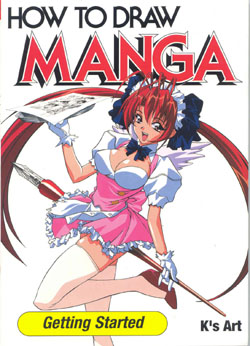
With the popularity of Manga and Anime seemingly unquenchable it might be worthwhile to take a look at the one of the many reference volumes available to the would-be exponent of the Japanese method of comic making.

Getting Started is the first in a long series of books that includes specialised editions covering Maids, Giant Robots, Tone Techniques, Colourful Costumes, Girl’s Life, Guns & Military and Super-Deformed Characters amongst others. It is pretty much the equivalent of a comic strip foundation course, and in many ways it follows the tried and true western publishing format and ideology, although there are a few noticeable – one might say philosophical – differences.

Sub-titled ‘Basic Tools, Tips and Techniques for Aspiring Artists’ there is a heavy emphasis on using the right technology for creating pictures on paper, with great attention paid to which paper, pencils, erasers, pens, markers, rulers, and such paraphernalia. This stressing of the right tool is sensible and correct but I am unsure if this is purely the cultural ethic of a meticulous craft industry, or if it has something to do with the fact that the publishers run an internet Manga art-supplies company. As any artist will attest, we’re all suckers with hungry eyes when it comes to a new, sleek and shiny piece of kit.

Chapter 1 tells in great (some might say excruciating) detail everything anyone could possibly ask regarding not just pens and papers, but even how to recondition nibs and how to blot ink and apply corrective fluid. Chapter 2 deals in the same manner with the creation of characters. This includes Desirable Manga Proportions, Balancing a Frame or a Page, Drawing Heads, and How to use a Mirror.

Everything you need to know about applying those signature Tones and patterns is the topic of chapter 3 followed by a meticulous description of the Japanese way to tell a comic story – featuring Proposal Drafts, Frame Allotment Theory, Transferring Proposal Drafts to the Manga Page, How to Prepare Large Frames and How to Draw Frame Borders, Dialogue Balloons and even Flashes – those spiky circles of lines used to denote strong emotion. Chapter 5 reveals all the secrets behind the creation of backgrounds including a thorough examination of various point perspectives. Each chapter is concluded with a Question and Answer section.

In most ways this is a thorough and informative package, although it should be remembered that some of the tools and materials may not be available in your local art-shop, or may be called by another name. Also worth stressing is that even in Japan the concept of a “right” and “wrong” way to do Manga is just a value judgement, and one that is constantly ignored. All over the planet, the true maxim is, “as long as it can actually be reproduced, whatever works, works”.

Also, the book does seem to be addressing two completely disparate levels of accomplishment, with mind-numbing, patronising simplicity of tone and address side-by-side with passages of extreme complexity. Perhaps there is a more formalised approach to art education at work than we’re used to in the free-wheeling West. On a more personal note, I found the chatty folksiness a little off-putting, and got very tired, very quickly, of the cute talking animals ad-libbing on most pages. Still I’m not the one the book is aimed at, am I?

© 1997 K’s Art. ©1997 Graphic-Sha Publishing Co, Ltd. All Rights Reserved.

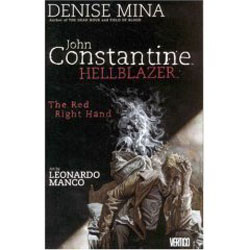
Hellblazer: The Red Right Hand

Hellblazer: The Red Right Hand

By Denise Mina & Leonardo Manco Green (Vertigo)
ISBN 1-84576-568-0

Continuing the epic saga begun in Empathy is The Enemy (ISBN 1-84576-382-3) (see previous review) Denise Mina and Leonardo Manco complete the horrendous storm of events created when a Christian sect accidentally contact an entity that abides in a third spiritual space neither Heaven nor Hell.

A plague of Empathy has infected Glasgow, and ordinary mortals cannot survive other people’s pain. An epidemic of suicides results in the quarantining of the city, but the soldiers policing the cordon will soon be the first new victims as the effect of the mystical Empathy Engine begin to spread.

Degenerate and dissolute trickster magician John Constantine and his dwindling band of resistors are trapped in the city, desperately striving to fix the problem before it goes global, but their resources, and time itself is running out…

Mina and Manco crafted a moody and awesomely daunting premise and carried it to a brilliant conclusion. That they fittingly end it all with an ideal solution that manages to be the wickedly last word in the centuries old rivalry between the Scots and the English is an absolute comedy masterstroke. In a long and varied career, John Constantine has seldom been better.

© 2006, 2007 DC Comics. All Rights Reserved.

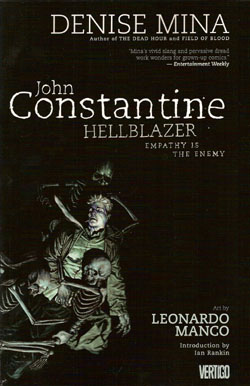
Hellblazer: Empathy is the Enemy

Hellblazer: Empathy is the Enemy

By Denise Mina & Leonardo Manco Green (Vertigo)
ISBN 1-84576-382-3

If a bloke came up to you in a pub and started telling you he felt things too intensely, you’d be pretty suspicious – nervous too, I’ll bet – and for all the right reasons. If you’re John Constantine those reasons include nasty black magic and the imminent destruction of humanity – as usual.

This empathy is crushing, overpowering and contagious. When the spiritually calloused magician gets a sobering dose of debilitating fellow-feeling, he returns to Glasgow with the overly emotional victim on the trail of a decidedly new kind of menace, but one that could spell the end of humanity, unless Constantine is prepared to make a supreme and wholly uncharacteristic sacrifice.

Novelist Denise Mina’s take on Hellblazer is both captivating and surprisingly fresh, and all without iconoclastically breaking the toy she’s been lent. Juggling human horrors such as abuse and isolation with ancient Christian cults, cosmic horrors from the outer dark, angry ghosts, hungry goblins and evangelical do-gooders she has crafted a subversively gripping thriller with a memorable punch and delightful charm. As ever Leonardo Manco’s moody illustration impresses by its subtle understatement.

A wonderful debut (originally published in issues #216-222 of the monthly comic-book), but the impatient might want to ensure that they have the sequel readily to hand before they start this compelling thriller…

© 2006 DC Comics. All Rights Reserved.

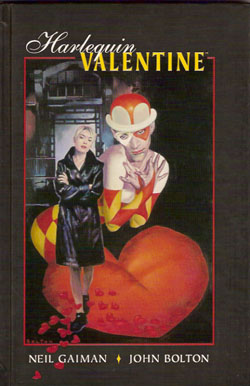
Harlequin Valentine

Harlequin Valentine

By Neil Gaiman & John Bolton (D H Comics)
ISBN: 1-84023-411-3

This pretty but slight romantic horror story features a modern spin on the Commedia dell’arte scenarios performed by the travelling players of Italy’s 15th century. If you’re interested in the details, the history of the art form – which can be traced back to ancient Greece, if not further – are readily researchable on the internet and in many, many books, but for our purposes the cast (archetypes for different characters, drives and philosophies) perform dramas of the most primal and human sort and resonance for the delectation of paying crowds, each in a highly proscribed and defined form. If you get this book there is a very useful Dummies guide by Gaiman at the back.

Possibly the most well known character today is Harlequin the clown (although Punch would come a close second if we still had Punch and Judy men) and this character opens our proceedings by telling we readers directly (in the accepted manner) that he is in love…

Missy is thoroughly modern lass, and her pursuit by the tricky, ruthless supernatural Harlequin makes for a clever exercise but is oddly lacking in passion for such a torrid subject. As ever John Bolton’s photo-realistic art is beautiful and technically brilliant, but it too seems devoid of any emotionalism. Is that perhaps the point? Am I missing something really obvious here?

I’m always happy to see any comic material that breaks out of the mould and these are two of the industry’s most high-profile creators. I’m just a little worried that this one isn’t as clever as it thinks, and after all, nobody likes a smart-ass or a show-off…

Harlequin Valentine™ © 2001 Neil Gaiman. Illustrations © 2001 John Bolton. All Rights Reserved.

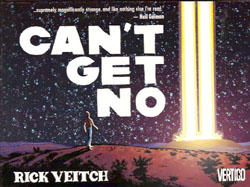
Can’t Get No

Can't Get No

By Rick Veitch (Vertigo)
ISBN 1-4012-1059-7

The terrorist atrocity of September 11th, 2001 changed the world and in our own small corner, generated a number of graphic narrative responses of varying quality not to mention deep emotional honesty. Rick Veitch’s Can’t Get No is as powerful and heartfelt as any, but benefits also from a little time and distance.

Chad Roe’s company sold the world’s most permanent and indelible marker pen, the “Eter-No-Mark”. Everyone was flying high but then the lawsuits hit all at once. A cheap, utterly irremovable felt-pen is a godsend to street-artists and the most virulent graffiti weapon to building owners. As his universe collapses on him Chad goes on a bender, picks up two hippie-artist-chicks in a bar and wakes up a human graffiti, covered literally from head to toe in swirling, organic, totally permanent designs.

Even then he tries so very hard to bounce back. A walking abstract artwork, he is ostracized by mockery, unable to conceal his obvious “otherness”, and neither self-help philosophies, drugs, nor alcohol can make him feel normal again. Defeated, reviled and ultimately spiritually crushed, trapped in a downward spiral, he meets the girls again and find solace and uncomplicated joy in the artist’s world of sex, booze and dope. Lost to “normal” society, he goes on a road-trip with the women but they haven’t even left the city before they’re arrested. It is morning on September 11th. As the girls violently resist the policemen an airplane flies overhead, straight towards the centre of Manhattan…

With no-one looking at him, just another part of the shocked crowd, he watches for an eternity, and then no longer anything but another stunned mortal, he drives away with an Arab family in their mobile home.

And thus begins a psychedelic, introspective argosy through America’s philosophy, symbolism and meta-physicality. With this one act of terrorism changing the nation, Chad is forced on a journey of discovery to find an America that is newborn both inside and out. His travels take him through vistas of predictable cruelty and unexpected tolerance, through places both eerily symbolic and terrifyingly plebeian, but by the end of this modern Pilgrim’s Progress, both he and the world have adapted, accommodated and accepted.

Rick Veitch is a criminally undervalued creator, with a poet’s sensibilities and a disaffected Flower-Child’s perspectives informing a powerful social and creative consciousness – and conscience. Can’t Get No is landmark experiment in both form and content which deserves careful and repeated examination.

Black and white in a landscape format, and eschewing dialogue and personal monologues for ambient text (no word balloons or descriptive captions, just the words that the characters encounter such as signs, newspapers, faxes etc.) this graphic narrative screams out its differences to usual comic strip fare. But the truly magical innovation is the “text-track”, a continual fluid, peroration of poetic statements that supply an evocative counterpoint to the visual component.

Satirical, cynical, strident: Lyricism employed for examination and introspection, in perhaps occasionally over-florid, but nonetheless moving and heartfelt free verse and epigrams don’t make this an easy read or a simple entertainment. They do make it a piece of work every serious consumer of graphic narrative should attempt.

© 2006 Rick Veitch. All Rights Reserved.